

Submitted:
03 November 2026
Posted:
04 November 2026
You are already at the latest version
Abstract
Lao People's Democratic Republic (Lao PDR) has expanded HIV testing and treatment, yet estimated new HIV infections have not declined since 2010. We aimed to identify gaps across prevention, diagnosis and treatment. We conducted a descriptive analysis of national data from the 2025 mid-term review of the national HIV programme, triangulating modelled estimates, surveys, programme data and the HIV registry. In 2025, an estimated 1,269 new infections occurred, 17.7% more than in 2010; men who have sex with men (MSM) accounted for 47%. In 2024, prevention programme coverage was 19.0% among MSM and 70.8% among female sex workers. Pre-exposure prophylaxis clients increased from 156 in 2021 to 1,105 in 2025, of whom 28.4% continued for ≥12 months. The modelled 2024 treatment cascade was 82%–78%–98%. Of 18,618 people initiated on antiretroviral therapy (ART) since 2003, 70.7% were retained in care. This integrated national-level assessment indicates that high viral suppression among people receiving ART with a viral load result has not been accompanied by declining new infections. Gaps in prevention and testing, particularly among MSM, and in long-term retention may limit the population-level impact of treatment. Achieving epidemic control is likely to require a re-orientation towards targeted, scalable and sustainable interventions aligned with the structure of the epidemic, particularly for key populations, alongside strengthened retention in care.
Keywords:
HIV
; Lao PDR
; key populations
; men who have sex with men
; pre-exposure prophylaxis
1. Introduction
HIV remains a public health threat in the Lao People’s Democratic Republic (Lao PDR), with implications for national productivity, poverty reduction, and economic growth [1]. Over the past decade, the country has made sustained political commitment to the HIV response, aligned with the global goal of ending AIDS by 2030, positioning this objective as one of the central pillars of its progress towards Universal Health Coverage and graduation from Least Developed Country status by 2026 [2]. This commitment is consistent with the vision of the 10th National Socio-Economic Development Plan 2026-2030 and is operationalised through the National Strategic Plan on HIV/AIDS and sexually transmitted infections for 2021-2030 [3]. The national HIV response has expanded substantially in recent years, supported by the decentralisation of HIV services, adoption of the Treat All policy, and the integration of HIV services within the broader health system.
Despite these commitments, Lao PDR is one of the countries in the World Health Organization (WHO) Western Pacific Region where estimated new HIV infections have increased since 2010. The estimated annual number of new HIV infections increased from approximately 1,078 in 2010 to 1,269 in 2025, representing a 17.7% increase compared with 2010, while the Region as a whole experienced an 11% reduction over the same period [4]. Moreover, an upward trend is projected, with the number of new HIV infections expected to reach 1,575 in 2030 [5]. Understanding the factors underlying Lao PDR’s expanding HIV epidemic and gaps in the national response is critical for reversing rising infections and achieving global targets. However, the available evidence base remains limited and fragmented, with existing studies often focused on specific populations or settings and providing an incomplete picture of the national epidemic and its drivers [6,7]. In addition, evidence on health-system and programme implementation challenges remains limited [8,9,10].
To address these gaps, this study provides an integrated national-level assessment of the HIV epidemic and response in Lao PDR by triangulating multiple data sources. Specifically, it analyses epidemiological trends, identifies gaps across prevention, testing, and treatment programmes, and examines how programme coverage corresponds to epidemic patterns. This study aims to generate context-specific evidence to inform targeted strategies for reducing new infections and accelerating progress toward ending AIDS as a public health threat by 2030.
2. Materials and Methods
Study design and setting
We conducted a descriptive analysis of secondary national and subnational data on the HIV epidemic and response in Lao PDR. The analysis was undertaken as part of the mid-term review of the national HIV programme conducted in September 2025, which assessed progress towards the National Strategic Plan for HIV 2021-2030[3]. Indicators were guided by the WHO consolidated guideline on person-centred HIV strategic information [11] and the monitoring and evaluation framework in the National Strategic Plan [3].
Multiple data sources were triangulated to characterise HIV burden, coverage of HIV prevention and care, care cascade performance, and key programmatic constraints, enabling contextualised interpretation of findings in a low-prevalence, concentrated epidemic.
HIV service delivery in Lao PDR
Prevention: HIV prevention services are delivered through government facilities, civil society organisations, and community-based platforms. Services include peer outreach, condom and lubricant distribution, sexually transmitted infection screening and treatment, HIV self-testing, index and partner notification, and oral tenofovir-based pre-exposure prophylaxis (PrEP).
Testing: The national HIV diagnostic algorithm employs a standardised three-test strategy (T1–T3). By 2025, 196 HIV Testing and Counselling Centres (formerly Voluntary Counselling and Testing Centres) were operational nationwide, providing rapid T1 and T2 screening, counselling, and referral. These centres are located in 12 health centres, 148 district-level facilities, all provincial and central hospitals, and selected youth, military, and police facilities. Confirmatory testing is performed at 43 Point-of-Care (POC) sites and 11 antiretroviral therapy (ART) sites. Drop-in centres serving key populations provide T1 and T2 testing and refer individuals with reactive results for confirmatory diagnosis.
Treatment
Lao PDR implements a treat-all policy, providing ART to all people diagnosed with HIV. By 2025, HIV treatment services were available through 11 ART sites located in 8 of 17 provinces and Vientiane Capital, located mainly in higher-burden areas. In addition, 43 POC sites across 12 provinces complemented provinces without ART sites and supported earlier treatment initiation. Differentiated service delivery, including multi-month dispensing for stable clients, has been introduced to support retention in care. Viral load (VL) monitoring is supported through the national laboratory network, including GeneXpert platforms at central, provincial, and selected district laboratories.
Data sources
Six data sources were used (Table 1). Modelled estimates of HIV prevalence, incidence, HIV-related deaths, and the number of people living with HIV (PLHIV) at national and provincial levels were obtained from the 2025 round of the AIDS Epidemic Model (AEM), developed by the Government of Lao PDR with technical support from the Joint United Nations Programme on HIV/AIDS (UNAIDS) [5]. The AEM was also used to obtain estimates of key population size—including men who have sex with men (MSM), female sex workers (FSW), transgender people (TG), and people who inject drugs (PWID)—the distribution among new HIV infections by population group, and the modelled treatment cascade. HIV prevalence and condom use among MSM and FSW were derived from the Global AIDS Monitoring database [12], which draws primarily on Integrated Biological and Behavioural Surveillance and HIV Sentinel Surveillance surveys. Routine programme data were obtained from databases maintained by the Center for HIV/AIDS and Sexually Transmitted Infections (CHAS), Ministry of Health: the civil society organisation outreach database[13], PrEP monitoring data (PrEP tracker) [14], the HIV testing and counselling database[14], and the national HIV registry (ARV tracker)[15]. Data were extracted from national information systems using the most recent data available (up to 2024–2025). Provincial population denominators were obtained from the Population and Housing Census 2025[16].
Data analysis
Definitions, numerators, denominators and data sources for all indicators are summarised in Table 2. Descriptive analyses were conducted to characterise the HIV epidemic and programme response at national and, where data were available, subnational levels. Indicators were examined over time to describe epidemiological and programme trends and across population groups and geographic areas to assess differences in HIV burden, prevention coverage, testing and treatment outcomes. We calculated absolute numbers, proportions, rates per 1,000 population, relative changes (%) and percentage-point changes over the available periods. For selected indicators, observed values were compared with national or global HIV programme targets to assess progress and remaining gaps. Provincial distributions of estimated PLHIV, HIV testing and ART clients were compared with provincial population shares. Because the data sources differed in definitions, populations covered, reporting periods and geographic scope, they were analysed separately rather than combined. No statistical hypothesis testing or causal modelling was undertaken. Findings were compared descriptively across data sources and across stages of the HIV prevention and care continuum.
Ethics approval
This study involved secondary analysis of aggregated, de-identified surveillance and programme data, with permission from the Center for HIV/AIDS and Sexually Transmitted Infections (CHAS), Ministry of Health, Lao PDR. No individual-level identifiable data were accessed.
3. Results
3.1. HIV Disease Burden
In 2025, the estimated HIV prevalence among adults aged 15 to 49 years in Lao PDR was 0.43%, and an estimated 21,363 people were living with HIV. The estimated number of new infections was 1,269 in 2025 (Figure 1), which represents a 17.7% increase from 2010. This level remains well above the national target of below 500 new HIV infections per year and the global target of a 90% reduction in new infections to end AIDS as a public health threat by 2030, equivalent to fewer than 108 new HIV infections annually. Modelled predictions suggest a worsening trend: New infections were projected to rise further, reaching 1,575 in 2030. In contrast, estimated HIV-related deaths peaked at 382 in 2022 and subsequently declined to 302 in 2025. They were projected to decline further to 262 in 2030.
The distribution of PLHIV varies across provinces. In 2025, 42.7% of PLHIV were estimated to be in Vientiane Capital and 8.8% in Vientiane Province, while these two provinces accounted for only 19.5% of the national population. Other provinces with more than 1,000 estimated PLHIV included Savannakhet (9.9%), Champasack (7.4%) and Luangprabang (6.6%) (Appendix 1). The HIV epidemic remains concentrated among key populations. The modelled distribution of new HIV infections by population group (Figure 2) indicates a growing contribution from MSM, the largest contributing group in 2025, accounting for 45% of new infections, followed by non-key population females (25%), non-key population males (12%), clients of sex workers (9%), FSW (5%), TG (3%), and males who inject drugs (1%). In 2024, HIV prevalence was 2.4% among MSM and 1.8% among FSW. Between 2013 and 2024, HIV prevalence among MSM fluctuated, ranging from 1.6% to 4.1%. Among FSW, prevalence reached 1.8% in 2024 from 0.8% in 2020, the highest level observed since 2011. By the end of 2024, a cumulative total of 22,760 HIV cases had been reported to the national HIV registry. Between 2015 and 2024, the annual reported number of HIV-related deaths ranged from 200 to 318. In 2024, a total of 2,058 HIV diagnoses were newly reported, including 1,275 (62%) males and 783 (38%) females (male-to-female ratio of 1.6:1). Individuals aged 20–39 years accounted for 73% of newly reported cases, despite representing only 33.7% of the national population.
3.2. Prevention and Behavioural Indicators
In 2024, the estimated population size was 35,309 for MSM, 5,238 for TG, 17,312 for FSW and 1,880 for PWID. Estimated coverage of prevention programmes among key populations was 19.0% for MSM and 70.8% for FSW in 2024. Compared to 2017, estimated coverage increased by 11.4 percentage points among MSM but decreased by 4.6 percentage points among FSW (Figure 3). Reported condom use among MSM increased from 25.7% in 2017 to 64.4% in 2024. Among FSW, condom use exceeded 90.6% in 2020 but declined to 73.3% by 2024 (Figure 4). The annual number of PrEP clients—defined as unique individuals who received PrEP at least once during the reporting year, including both new and continuing users—increased from 156 in 2021 to 1,105 in 2025 (Figure 5). The annual number of new PrEP users rose from 156 in 2021 to 870 in 2024 before declining to 764 in 2025. MSM remained the largest population group among annual PrEP clients, accounting for 684 clients (61.9%) in 2025. PrEP use was concentrated among young adults, with individuals aged 25–29 years (n= 301), 20–24 years (n= 291), and 30–34 years (n= 204) accounting for 72.0% of annual PrEP clients in 2025. PrEP continuation for at least 12 months showed an increasing trend from 10.6% in 2022 to 28.4% in 2025, although fewer than one-third of clients continued PrEP for at least 12 months.
3.3. Testing and Diagnosis
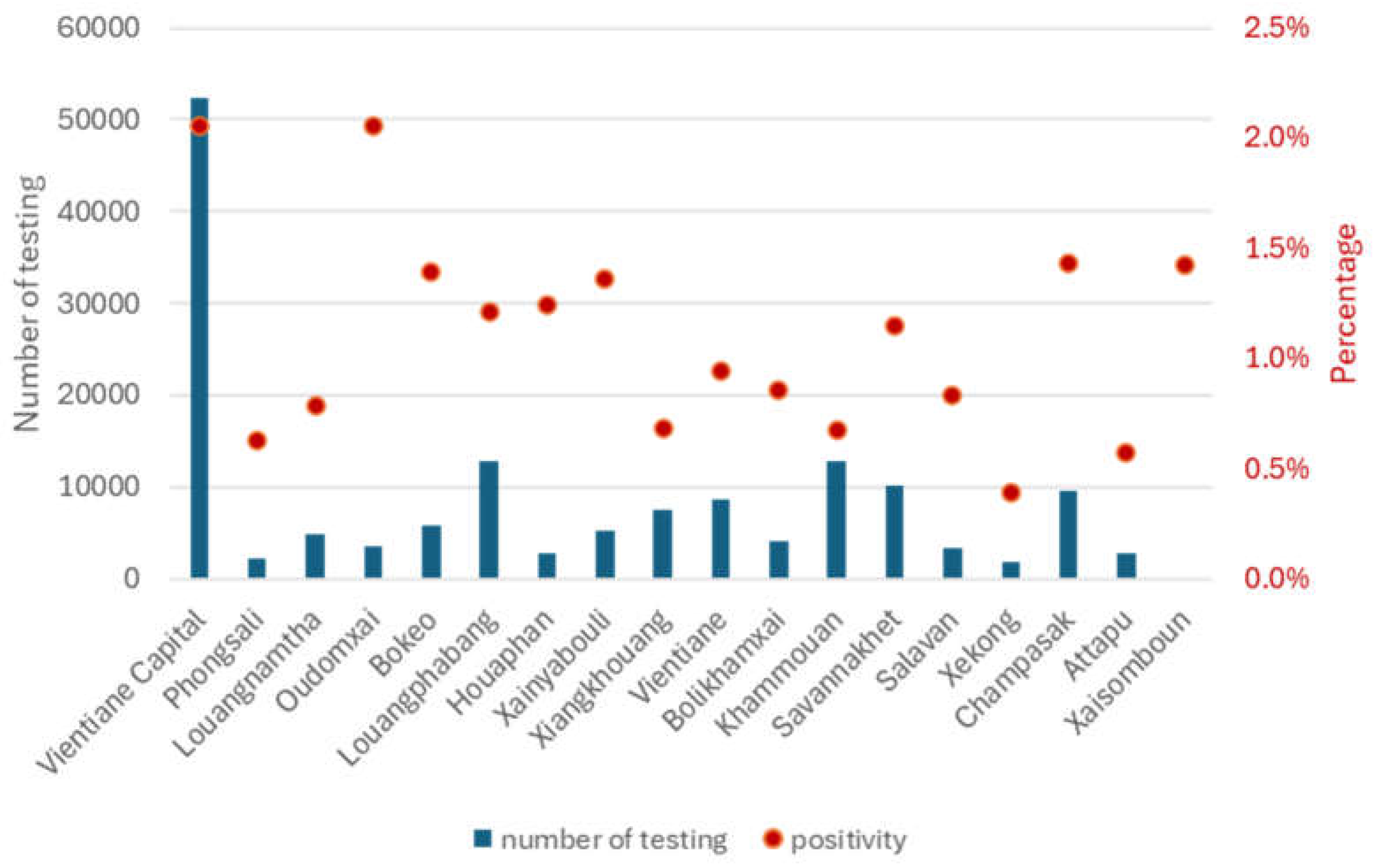
National HIV testing volume increased steadily between 2020 and 2024, rising from 91,513 to 150,458 tests—equivalent to 19.8 tests per 1,000 population—with an overall screening positivity of 1.4% in 2024 (Figure 6). Vientiane Capital accounted for a substantial proportion of national testing, with volumes increasing from 31,108 in 2020 to 52,399 in 2024 and comprising 34.8% of all tests in 2024. The number of HIV screenings conducted and positivity varied substantially across provinces. Luangprabang, Khammuane and Savannakhet conducted more than 10,000 screenings, whereas only 211 screenings were reported in Xaysomboon. The highest positivity rates were observed in Vientiane Capital and Oudomxay (both 2.1%), while lower rates were reported in Attapeu (0.6%), Phongsaly (0.6%), and Sekong (0.4%). (Appendix 2)
Among key populations, 6,697 HIV screenings were conducted among MSM in 2024, equivalent to 19.0% of the estimated MSM population (n= 35,309) (Figure 7). Among FSW, 12,193 HIV screenings were conducted in 2024, equivalent to 70.4% of the estimated FSW population (n=17,312). Among MSM, the estimated testing coverage has increased gradually from 5.8% in 2020 to 19.0% in 2024, accompanied by a decline in positivity from 20.5% to 8.7% during the same period. In contrast, the estimated testing coverage among FSW remained relatively stable at approximately 70% over the same period, with the exception of a decline in 2021.
3.4. Treatment, Retention, and Viral Load Monitoring
In 2024, the modelled treatment cascade indicated that 82% of PLHIV knew their status, 64% were on ART, and 63% were virally suppressed. Against the UNAIDS 95–95–95 targets, this corresponded to 82%–78%–98% (Figure 8), indicating that the third 95% had been achieved, while the first 95% and the second 95% remained below the target. Between 2018 and 2024, the proportion who knew their status increased from 50% to 82%, whereas the proportion of those diagnosed receiving ART declined from 83% to 78%; viral suppression remained at 96%–98%.
From 2003 to 2024, a total of 22,760 HIV infections were diagnosed, of which 20,845 (91.6%) were registered for ART. Among those registered, 89.3% (n= 18,618) initiated treatment, 6.0% died, and 4.6% were lost to follow-up. A total of 13,169 were retained in care during 2003-2024, corresponding to 63.2% of those registered and 70.7% of those who initiated ART. Among those who initiated ART, 18.4% were lost to follow-up, and 10.9% had died (Figure 9). Recent data show that the proportion of ART clients lost to follow-up declined, from 11.8% in 2020 to 5.0% in 2024. Regarding ART initiation, 39% of registered clients started ART on the same day of diagnosis, and 74% within seven days.
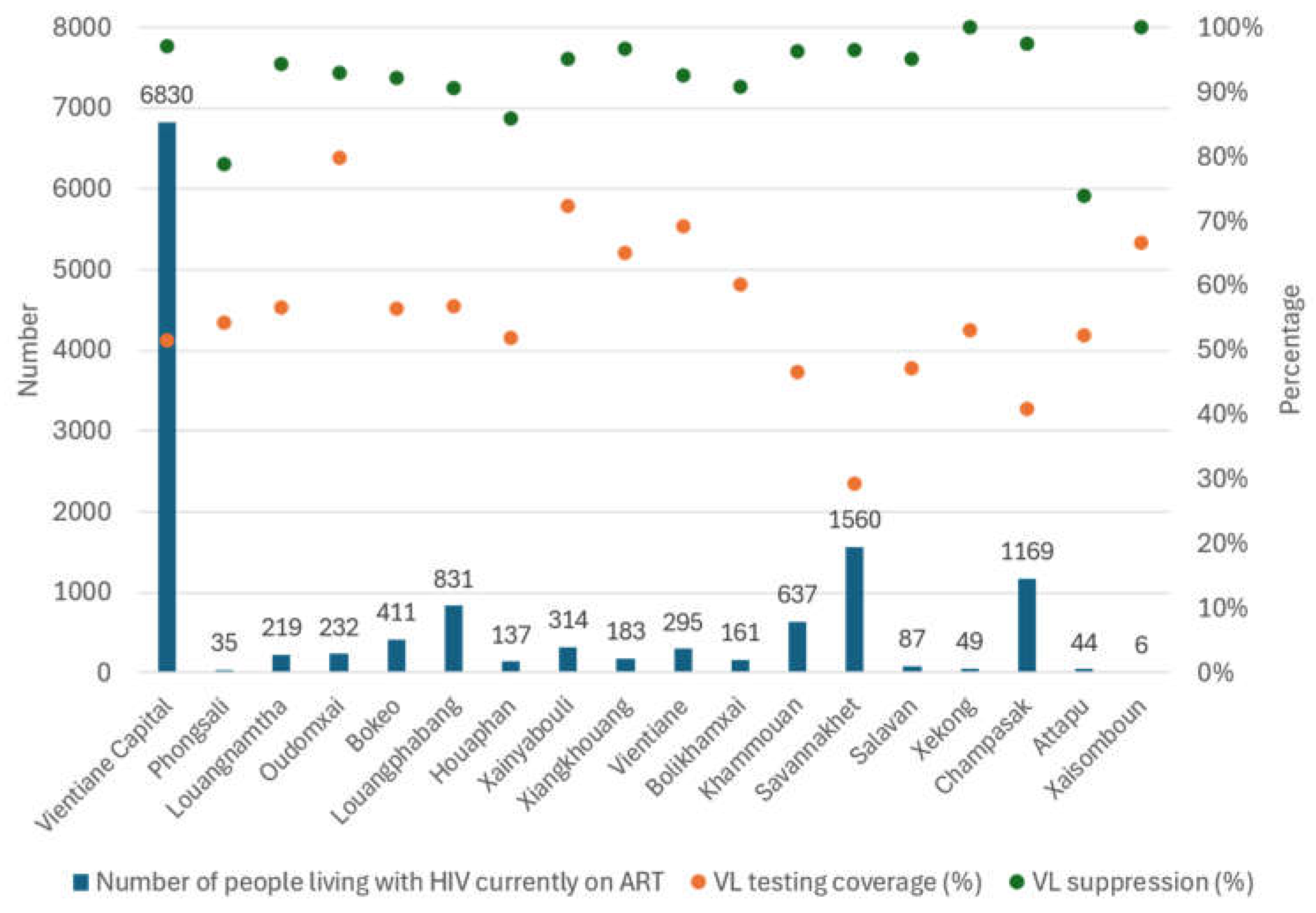
Substantial provincial disparities were observed in the number of ART clients, VL test coverage and viral suppression. Vientiane Capital had the largest number of ART clients, accounting for 52% (n=6,830), whereas Xaysomboon had only 6 clients in 2024. In 2024, VL testing coverage ranged from 29.4% in Savannakhet to79.7% in Oudomxay (median 55.4%). Among ART clients with a documented viral-load result, viral suppression ranged between 73.9% and 100% across provinces (Appendix 3). Viral suppression was below 90% in three provinces: Attapeu (73.9%), Phongsaly (78.9%) and Huaphanh (85.9%).
4. Discussion
Key findings and analytical contribution
This study shows a divergence between high viral suppression among people receiving ART and persistent HIV transmission in Lao PDR. New infections have not declined and are projected to increase in parallel with a decrease in HIV-related deaths. This pattern indicates that improvements in treatment outcomes and survival have occurred alongside continued HIV transmission improvements in treatment outcomes and survival have occurred alongside continued HIV transmission. By examining epidemiological trends alongside programme performance across the continuum of care, this analysis identifies programmatic gaps that may help explain the observed divergence.
Uneven performance across the HIV care continuum
The national HIV response has put in place several key components of an effective response, including expanded HIV testing, decentralised ART delivery, and rapid treatment initiation. High levels of viral suppression among individuals receiving ART indicate good treatment outcomes at the individual level, although VL testing coverage remained incomplete in several provinces. However, the continued absence of a decline in new infections suggests that treatment success alone may be insufficient to reduce ongoing HIV transmission in the current context. The 2024 care cascade (82%–78%–98%) reflects high viral suppression but also reveals substantial gaps in diagnosis and sustained treatment coverage [5]. The largest gap lies in translating HIV diagnosis into sustained ART coverage, with cumulative loss to follow-up of 4.6% among those registered and 18.4% among those who initiated ART. Possible reasons for loss to follow-up include barriers to accessing ART sites, concerns regarding stigma and confidentiality, population mobility, and challenges in maintaining long-term engagement in care. These factors have been widely reported as important determinants of disengagement from HIV care and retention outcomes in diverse settings [17,18,19].
When a substantial proportion of PLHIV remain undiagnosed or are not retained in care, the preventive effect of ART is reduced [17]. This gap reflects uneven performance across the continuum of care, whereby viral suppression among people on ART outpaces performance at earlier stages, including prevention, testing and sustained treatment coverage.
Prevention and testing gaps among key populations
The consequences of these upstream gaps are amplified by the concentrated nature of the epidemic. MSM account for the largest share of estimated new infections in Lao PDR in 2025. Among MSM, relatively small and interconnected sexual networks can sustain ongoing transmission even when overall prevalence is low [20]. In such settings, even modest shortfalls in prevention and testing coverage can have a disproportionate impact on transmission dynamics and overall epidemic trends [21].
Our findings show that prevention coverage among key populations remains limited, with only 19% for MSM and 71% for FSW in 2024. These estimated coverage levels, particularly among MSM, are unlikely to be sufficient for achieving substantial population-level reductions in transmission. The substantial expansion of PrEP services in recent years demonstrates progress in scaling up HIV prevention in Lao PDR. However, the decline in new PrEP users in 2025 suggests that sustaining the pace of programme expansion may become increasingly challenging. While continued expansion of PrEP coverage remains essential, ensuring sustained engagement may become equally important as PrEP programmes mature. Funding constraints and donor transition may further challenge the scale-up and sustainability of PrEP services, highlighting the need for efficient and sustainable service-delivery models. Future implementation research should explore barriers to PrEP continuation, including service accessibility, client satisfaction, stigma, and reasons for discontinuation, to inform further optimisation of PrEP service delivery.
Structural constraints affecting access to HIV services and continuity of care
Programme gaps may be reinforced by structural constraints that limit both access to services and continuity of care. Results indicate marked geographic concentration of PLHIV, ART clients and HIV testing in Vientiane Capital. This spatial concentration may contribute to inequities in access to prevention, testing, and treatment services for populations in other provinces, particularly in settings with low testing coverage and limited service availability. Evidence from Cambodia, another neighbouring country with a concentrated epidemic, indicates that MSM constitute a substantial proportion of newly diagnosed cases and that HIV positivity varies by population group, geographic area and testing setting[22]. Compared with Lao PDR, these findings further emphasise the importance of geographically and population-targeted testing strategies. These system-level constraints intersect with vulnerabilities specific to key populations. Persistently low estimated coverage of HIV prevention programmes and testing among MSM, despite their growing contribution to new infections, is consistent with barriers that may limit timely and sustained engagement with services. This pattern is not unique to Lao PDR. Across Asia, HIV epidemics among MSM have been concentrated in urban areas, and prevention coverage has generally been well below the 60–80% considered necessary to influence epidemic trends [23,24].
While these gaps may partly reflect incomplete programme expansion, they are also consistent with broader structural constraints affecting access and acceptability of services—such as concerns around confidentiality and stigma—that have been widely documented to influence service uptake among key populations[25]. Similar barriers have been reported among MSM in the Philippines, where low testing uptake has contributed to one of the fastest-growing epidemics in the Region[26,27,28], and in Mongolia, where stigma continues to limit access to prevention services[29].
Similar barriers may also contribute to the low continuation of PrEP, thereby limiting its population-level preventive impact. In Viet Nam, differentiated PrEP delivery through private-sector clinics and telehealth has been associated with longer PrEP persistence[30]. This suggests that offering a choice of delivery models could improve PrEP continuation in Lao PDR.
In addition, population mobility, both internal and cross-border, could exacerbate gaps in continuity of care by disrupting patient tracking, follow-up, and long-term engagement with services, particularly in a setting where HIV services are unevenly distributed and concentrated in urban areas [18,19].
Implications for programme strategy and policy
Taken together, the findings suggest that the main constraint on the HIV response in Lao PDR may lie less in the effectiveness of available interventions than in their scale, coverage and reach among the populations and locations contributing most to ongoing transmission. Addressing this would require a shift from broad service expansion towards more targeted, data-driven programme delivery. Scaling up prevention among key populations, with particular focus on MSM, is likely to be central to reducing new infections. Priority actions include expanding PrEP beyond urban centres, strengthening mechanisms to support early continuation and long-term retention, and reinforcing peer-led outreach and community-based service-delivery models, particularly for MSM, as these approaches can improve access to HIV prevention services, increase service uptake among key populations, and strengthen retention in care among populations insufficiently reached through conventional facility-based services[31]
At the same time, improving early diagnosis will require further increases in testing coverage through differentiated approaches, including community-based testing, HIV self-testing, and targeted strategies tailored to key populations[32]. However, gains in testing need to be matched by improvements in linkage to care, ensuring that individuals diagnosed with HIV are promptly initiated on ART. Strengthening referral systems, reducing delays in treatment initiation, and addressing barriers to access—particularly among key populations and in decentralised settings—will be important for translating diagnosis into effective treatment coverage [17].
Together, these measures could help translate treatment success into meaningful reductions in HIV transmission at the population level.
Sustainability and financing of the HIV response
Over the longer term, achieving and sustaining epidemic control will depend on strengthening the resilience of the HIV response through increased domestic investment and deeper integration of HIV services within the broader health system, supporting continuity, efficiency, and sustainability in the context of evolving financing landscapes.
Sustainability is a key challenge for the HIV response in Lao PDR, where the broader health sector continues to face donor-transition pressures, limited domestic fiscal space, and high reliance on external financing [9]. Uncertainty and potential reductions in PEPFAR support have been reported to disrupt key services, such as community-based prevention and PrEP programmes [33,34]. At the same time, declining funding allocation from the Global Fund to Fight AIDS, Tuberculosis and Malaria and increasing co-financing requirements add pressure for greater domestic resource mobilisation, while limited domestic fiscal capacity constrains the Ministry of Health’s ability to fully meet these commitments [35,36]. Together, these challenges could threaten the continuity and scale-up of prevention efforts, particularly for key populations.
Limitations
This study has several limitations. First, the analysis relies on routine programme and surveillance data, which may be affected by incomplete reporting, variability in data quality across sites and over time, and potential underrepresentation of key populations, including those who are harder to reach. Second, estimates derived from the AEM depend on assumptions related to population size and transmission dynamics, introducing uncertainty into incidence estimates. Third, indicators were derived from multiple data sources that differ in definitions, populations covered, reporting periodicity, and geographic scope, limiting comparability across data sources and over time. Fourth, key population indicators are derived from periodic and geographically limited surveys and routine programme data, which may not fully capture temporal trends or represent all subgroups and locations of key populations. In addition, coverage estimates for key populations are sensitive to uncertainties in population size estimates, which may affect interpretation of prevention, testing, and treatment coverage levels. Fifth, increases in newly reported HIV cases may reflect a combination of ongoing transmission and improved case detection and therefore cannot be directly interpreted as direct changes in true incidence. Finally, the descriptive nature of this study limits causal inference regarding the relationship between programme implementation and observed epidemiological trends. Despite these limitations, by triangulating modelled estimates, routine surveillance, programme monitoring and behavioural data from multiple national sources, this study provides an integrated national-level assessment of the HIV epidemic and response in Lao PDR and generates evidence relevant to programme prioritisation and strategic planning.
5. Conclusions
The HIV epidemic in Lao PDR is characterised by high viral suppression alongside persistent HIV transmissions. Gaps in prevention, testing, and retention, particularly among MSM, are likely to limit the population-level impact of the response. Achieving epidemic control is likely to require a reorientation towards targeted, scalable and sustainable interventions aligned with the structure of the epidemic, particularly for key populations, alongside strengthened retention in care.
Author Contributions
Conceptualization, S.S., M.O., R.R., F.M. and K.I.; methodology, S.S., M.O., F.M., R.P.Y., and K.I.; formal analysis, S.S., M.O., F.M. and K.I.; data curation, S.S., B.S., K.T., L.S., V.S., and K.K.; writing—original draft preparation, S.S. and M.O.; writing—review and editing, B.S., K.T., L.S., R.R., V.S., K.K., I.K., F.M., R.P.Y., H.T.G.T. and K.I.; visualization, S.S. and M.O.; supervision, R.R., M.O., F.M., R.P.Y., H.T.G.T. and K.I.; project administration, S.S., B.S., K.T., L.S., V.S., K.K. and I.K. All: authors have read and agreed to the published version of the manuscript.
Funding
This research received no external funding specifically for manuscript preparation. The programme review from which the analysed data were derived was supported by The Global Fund to Fight AIDS, Tuberculosis and Malaria. The funders had no role in the study design, data collection and analysis, decision to publish, or manuscript preparation.
Institutional Review Board Statement
Not applicable.
Informed Consent Statement
Not applicable.
Data Availability Statement
The data used in this study are available from the corresponding author upon reasonable request, subject to approval by the relevant national data custodians and applicable data-governance requirements.
Acknowledgments
The authors thank the Center for HIV/AIDS and Sexually Transmitted Infections, Ministry of Health, Lao PDR, and the national and subnational partners who contributed data, programme information and technical input to the national HIV programme review. We also acknowledge the contributions of provincial health authorities, HIV testing and treatment facilities, civil society organisations and community-based partners involved in the delivery and monitoring of HIV services. The authors would like to thank the Global Fund to Fight AIDS, Tuberculosis and Malaria for its financial support of the review from which the data for this paper were derived.
Conflicts of Interest
The authors declare no conflicts of interest.
Abbreviations
The following abbreviations are used in this manuscript:
| AEM | AIDS Epidemic Model |
| ART | Antiretroviral therapy |
| ARV | Antiretroviral |
| CHAS | Center for HIV/AIDS and Sexually Transmitted Infections |
| FSW | Female sex workers |
| KPSE | Key population size estimation |
| Lao PDR | Lao People’s Democratic Republic |
| LTFU | Lost to follow-up |
| MSM | Men who have sex with men |
| PLHIV | People living with HIV |
| POC | Point-of-Care |
| PrEP | Pre-exposure prophylaxis |
| PWID | People who inject drugs |
| TG | Transgender people |
| UNAIDS | Joint United Nations Programme on HIV/AIDS |
| VL | Viral load |
| WHO | World Health Organization |
Appendix A
Appendix A.1. Population and Estimated Number of People Living with HIV by Province, 2025.
| Province | Population | Population coverage |
Estimated number of PLHIV | Percentage of PLHIV |
| Vientiane Capital | 959,529 | 13.2% | 8,931 | 42.7% |
| Phongsaly | 199,428 | 2.8% | 123 | 0.6% |
| Luangnamtha | 206,243 | 2.8% | 255 | 1.2% |
| Oudomxay | 369,891 | 5.1% | 409 | 2.0% |
| Bokeo | 217,656 | 3.0% | 471 | 2.3% |
| Luangprabang | 497,690 | 6.9% | 1,375 | 6.6% |
| Huaphanh | 305,733 | 4.2% | 293 | 1.4% |
| Xayabury | 401,900 | 5.5% | 711 | 3.4% |
| Xiengkhuang | 298,624 | 4.1% | 415 | 2.0% |
| Vientiane | 459,516 | 6.3% | 1,838 | 8.8% |
| Borikhamxay | 322,056 | 4.4% | 793 | 3.8% |
| Khammuane | 418,172 | 5.8% | 845 | 4.0% |
| Savannakhet | 984,543 | 13.6% | 2,074 | 9.9% |
| Saravane | 464,797 | 6.4% | 392 | 1.9% |
| Sekong | 148,975 | 2.1% | 191 | 0.9% |
| Champasack | 693,317 | 9.6% | 1,544 | 7.4% |
| Attapeu | 186,827 | 2.6% | 177 | 0.8% |
| Xaysomboon | 106,873 | 1.5% | 82 | 0.4% |
| Total | 7,241,770 | 100% | 20,919 | 100% |
PLHIV, people living with HIV.
Appendix A.2. Number of HIV Tests and Positivity Rate by Province, 2024 Data
Appendix A.3. Number of ART Clients, VL Testing Coverage and Viral Suppression Rate by Province, 2024 Data
References
- United Nations Lao People’s Democratic Republic. 2024 Lao PDR annual results report. 2025. [Google Scholar]
- LDC Secretariat Ministry of Foreign Affairs Government of the Lao People’s Democratic Republic. The Lao PDR Smooth Transition Strategy for LDC Graduation in 2026 and beyond. 2025. [Google Scholar]
- Center for HIV/AIDS and Sexually Transmitted Infections (CHAS) Ministry of Health Lao People’s Democratic Republic. National Strategic Plan (2021-2030) and Action Plan (2021-2025) on HIV/AIDS and STI Prevention, Testing, and Treatment Towards Universal Health Coverage [Internet]. Aug 2020. Available online: https://cdn.who.int/media/docs/default-source/wpro---documents/countries/lao-people’s-democratic-republic/our-work/htm-ntd/national-strategic-plan-(2021-2030)-and-action-plan-(2021-2025)-on-hivaids-and-sti-(english).pdf?sfvrsn=fe2162aa_3&download=true (accessed on 4 Jun 2026).
- Joint United Nations Programme on HIV/AIDS (UNAIDS). AIDSinfo [Internet]. 2025 [cited 2025 Oct 31. Available online: https://aidsinfo.unaids.org/ (accessed on 31 Oct 2025).
- UNAIDS and the Government of the Lao People’s Democratic Republic. the AIDS Epidemic Model 2025. 2025. [Google Scholar]
- Sychareun, V.; Vongxay, V.; Thongmyxay, S.; Chaleunvong, K.; Durham, J.; Petitet, P.H. Factors associated with knowledge on HIV, TB and malaria among pregnant women and their perception of access to RDTs for HIV, TB and malaria in Savannakhet Province, Lao PDR. BMC Pregnancy Childbirth 2025, 25. [Google Scholar] [CrossRef]
- He, J.Y.; Wei, Y.; Shi, Y.H.; Yang, M.; Chen, H.C.; Dai, J.; et al. HIV-1 genetic diversity and pretreatment drug resistance in Xishuangbanna, a China-Myanmar-Laos border region. BMC Infect. Dis. 2026, 26. [Google Scholar] [CrossRef]
- Vorasane, S.; Jimba, M.; Kikuchi, K.; Yasuoka, J.; Nanishi, K.; Durham, J.; et al. An investigation of stigmatizing attitudes towards people living with HIV/AIDS by doctors and nurses in Vientiane, Lao PDR. BMC Health Serv. Res. 2017, 17. [Google Scholar] [CrossRef]
- Kim, E.; Park, Y.L.; Lo, Y.R.; Keoprasith, B.; Panyakeo, S. Sustaining essential health services in Lao PDR in the context of donor transition and COVID-19. Health Policy Plan 2024, 39, i131–6. [Google Scholar] [CrossRef]
- Suparak, S.; Ngueanchanthong, K.; Unpol, P.; Jomjunyoung, S.; Thanyacharern, W.; Chisholm, S.P.; et al. Innovating Quality Control and External Quality Assurance for HIV-1 Recent Infection Testing: Empowering HIV Surveillance in Lao PDR. Viruses 2025, 17. [Google Scholar] [CrossRef]
- World Health Organization (WHO). Consolidated guidelines on person-centred HIV strategic information: strengthening routine data for impact; Geneva, 2022. [Google Scholar]
- The Joint United Nations Programme on HIV/AIDS (UNAIDS). Global AIDS Monitoring [Internet]. Available online: https://www.unaids.org/en/global-aids-monitoring.
- Center for HIV/AIDS and STIs (CHAS) Ministry of Health Lao People’s Democratic Republic. CHAS CSO outreach database.
- Center for HIV/AIDS and STIs (CHAS) Ministry of Health Lao People’s Democratic Republic. CHAS VCT database. [CrossRef]
- Center for HIV/AIDS and STIs (CHAS) Ministry of Health Lao People’s Democratic Republic. CHAS HIV ARV tracker.
- Lao Statistics Bureau. POPULATION AND HOUSING CENSUS 2025. 2026. [Google Scholar]
- McCreesh, N.; Andrianakis, I.; Nsubuga, R.N.; Strong, M.; Vernon, I.; McKinley, T.J.; et al. Improving ART programme retention and viral suppression are key to maximising impact of treatment as prevention – a modelling study. In BMC Infect Dis [Internet]; BioMed Central, 2017. [Google Scholar] [CrossRef]
- Thorp, M.; Ayieko, J.; Hoffman, R.M.; Balakasi, K.; Camlin, C.S.; Dovel, K. Mobility and HIV care engagement: a research agenda. J. Int. AIDS Soc. [Internet] 2023, 26, 26058. [Google Scholar] [CrossRef]
- Ayieko, J.; Thorp, M.; Getahun, M.; Gandhi, M.; Maeri, I.; Gutin, S.A.; et al. Geographic Mobility and HIV Care Engagement among People Living with HIV in Rural Kenya and Uganda. In Trop Med Infect Dis [Internet]; Multidisciplinary Digital Publishing Institute, 2023; Volume 8. [Google Scholar] [CrossRef]
- Spicknall, I.H.; Gift, T.L.; Bernstein, K.T.; Aral, S.O. Sexual networks and infection transmission networks among men who have sex with men as causes of disparity and targets of prevention. Sex. Transm. Infect. 2017. [Google Scholar] [CrossRef]
- Mishra, S.; Silhol, R.; Knight, J.; Phaswana-Mafuya, R.; Diouf, D.; Wang, L.; et al. Estimating the epidemic consequences of HIV prevention gaps among key populations. J. Int. AIDS Soc. [Internet] 2021. [Google Scholar] [CrossRef]
- Sokny, L.; Seak, C.C.; Sodara, C. The epidemiological characteristics of newly diagnosed HIV infected cases and associated risk factors in 2022 in Cambodia: a cross-sectional analysis of the B-IACM data. Cambodia J. Public Health 2025, 6. [Google Scholar]
- Beyrer, C.; Baral, S.D.; Van Griensven, F.; Goodreau, S.M.; Chariyalertsak, S.; Wirtz, A.L.; et al. Global epidemiology of HIV infection in men who have sex with men. In Lancet [Internet]; Elsevier B.V., 2012; Volume 380, p. 367. [Google Scholar] [CrossRef]
- Van Griensven, F.; De Lind Van Wijngaarden, J.W. A review of the epidemiology of HIV infection and prevention responses among MSM in Asia. AIDS 2010, 24. [Google Scholar] [CrossRef]
- Sidebottom, D.; Ekström, A.M.; Strömdahl, S. A systematic review of adherence to oral pre-exposure prophylaxis for HIV – how can we improve uptake and adherence? In BMC Infect Dis [Internet]; BioMed Central, 2018; Volume 18. [Google Scholar] [CrossRef]
- De Lind Van Wijngaarden, J.W.; Ching, A.D.; Settle, E.; Van Griensven, F.; Cruz, R.C.; Newman, P.A. “I am not promiscuous enough!”: Exploring the low uptake of HIV testing by gay men and other men who have sex with men in Metro Manila, Philippines. In PLoS One [Internet]; Public Library of Science, 2018; Volume 13. [Google Scholar] [CrossRef]
- Ogaya, J.B.; Guinaran, R.C.; Roxas, N.R.; Ong, C.J.; Gregorio, E.R.; Lucero-Prisno, D.E. Investigating structural and implementation gaps in the escalating HIV epidemic through a retrospective policy analysis of the Philippine HIV response. In Discover Public Health [Internet]; Springer, 2026; p. 23. [Google Scholar] [CrossRef]
- Cordero, D.A. Exploring the HIV Epidemic in the Philippines: Initiatives and Challenges. In J Int Assoc Provid AIDS Care [Internet]; SAGE Publications Inc., 2025; Volume 24, p. 23259582241312296. [Google Scholar] [CrossRef]
- Takaku, M.; Kaneko, N.; Dorjgotov, M.; Galsanjamts, N.; Bat-Ireedui, B.; Gombo, E.; et al. Association between participation in HIV stigma reduction program and HIV prevention awareness among men who have sex with men in Mongolia. In Glob Health Med [Internet]; National Center for Global Health and Medicine, 2025; Volume 7, pp. 400–4. [Google Scholar] [CrossRef]
- Vu, B.N.; Green, K.; Phan, H.; Tran, L.; Phan, P.; Tran, T.; et al. Engaging the private sector as part of HIV pre-exposure prophylaxis service delivery in Vietnam: a comparative analysis of uptake, persistence and HIV seroconversion from 2018 to 2023. Front. Reprod. Health [Internet] Front Reprod. Health 2025, 6. [Google Scholar] [CrossRef]
- Ayala, G.; Sprague, L.; van der Merwe, L.L.-A.; Thomas, R.M.; Chang, J.; Arreola, S.; et al. Peer- and community-led responses to HIV: A scoping review. In PLoS One [Internet]; Public Library of Science, 2021; Volume 16. [Google Scholar] [CrossRef]
- World Health Organization. Consolidated guidelines on differentiated HIV testing services. 2024. [Google Scholar]
- Brazier, E.; Duda, S.N.; Ross, J.; Semeere, A.S.; Tiendrebeogo, T.; Chimbetete, C.; et al. Impact of US government funding freezes on the HIV response: findings from a rapid survey in 32 countries. In Health Affairs Scholar; Oxford University Press, 2026; p. 4. [Google Scholar] [CrossRef]
- The Joint United Nations Programme on HIV/AIDS (UNAIDS). Impact of US funding cuts on HIV programmes in Lao PDR [Internet]. 2025 [cited 2026 Aug 12. Available online: https://www.unaids.org/en/resources/presscentre/featurestories/2025/april/20250414_Lao_PDR_fs (accessed on 12 Aug 2026).
- ten, Brink D; Martin-Hughes, R.; Bowring, A.L.; Wulan, N.; Burke, K.; Tidhar, T.; et al. Impact of an international HIV funding crisis on HIV infections and mortality in low-income and middle-income countries: a modelling study. In Lancet HIV; Elsevier Ltd, 2025; Volume 12, p. e346–54. [Google Scholar] [CrossRef]
- Global Fund to Fight AIDS Tuberculosis and Malaria. The Data Explorer - Lao (Peoples Democratic Republic) [Internet]. 6 Aug 2026. Available online: https://data.theglobalfund.org/location/LAO/access-to-funding (accessed on 6 Aug 2026).
Figure 1.
Trends in estimated new HIV infections, HIV-related deaths, and the number of people living with HIV (PLHIV), Lao People’s Democratic Republic, 2010–2030 Estimates for 2010–2025 are shown in darker shades, with projections for 2026–2030 shown in lighter shades. Estimates were generated using the AIDS Epidemic Model (AEM). The dashed vertical line indicates the transition from historical estimates to projected values. PLHIV, people living with HIV.
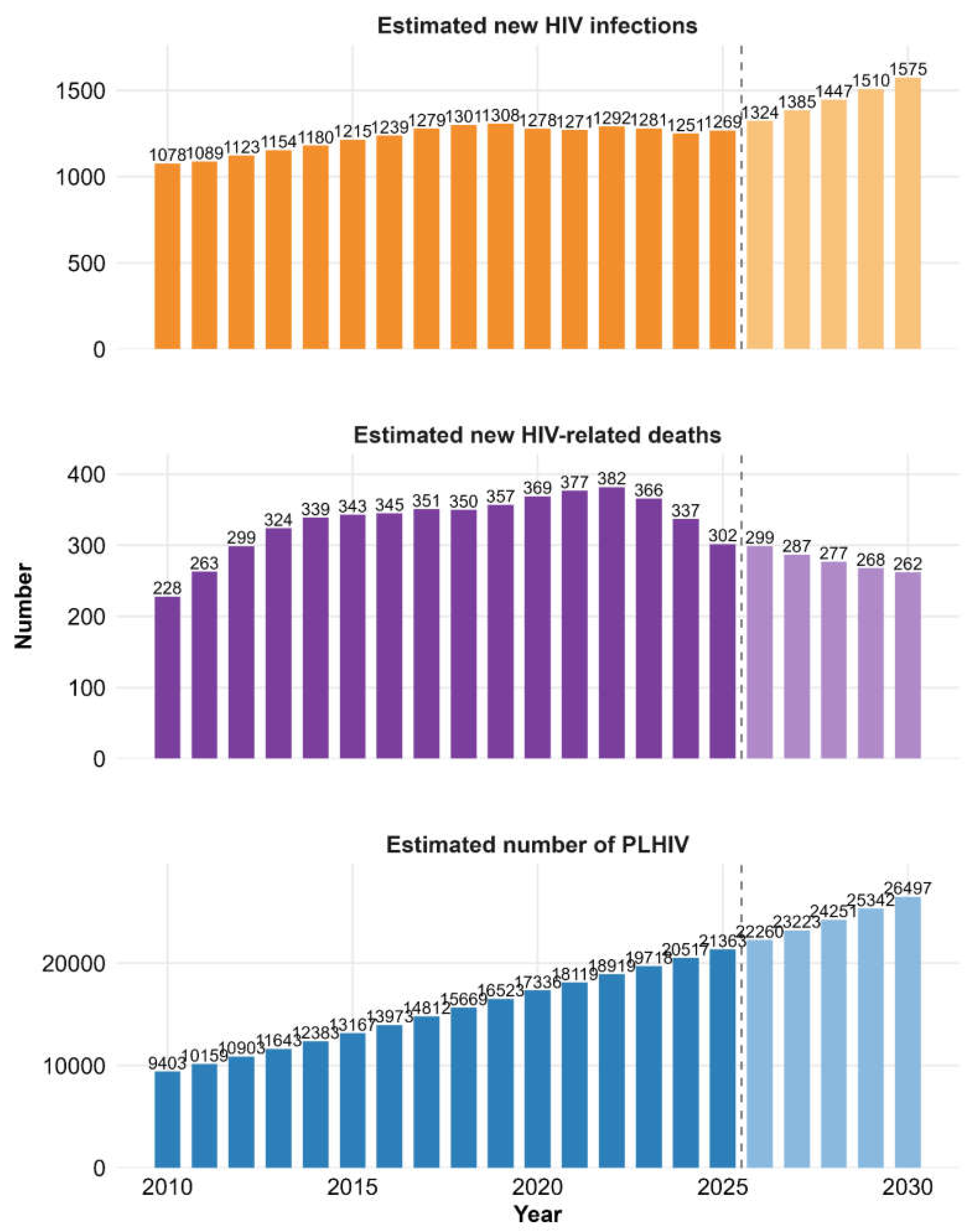
Figure 2.
Estimated annual new HIV infections by population group, Lao People’s Democratic Republic, 1990–2030 Estimates were generated using the AIDS Epidemic Model (AEM); values beyond 2025 represent model projections. FSW, female sex workers; KP, key population; MSM, men who have sex with men; MSW, male sex workers; PWID, people who inject drugs; TG, transgender people.
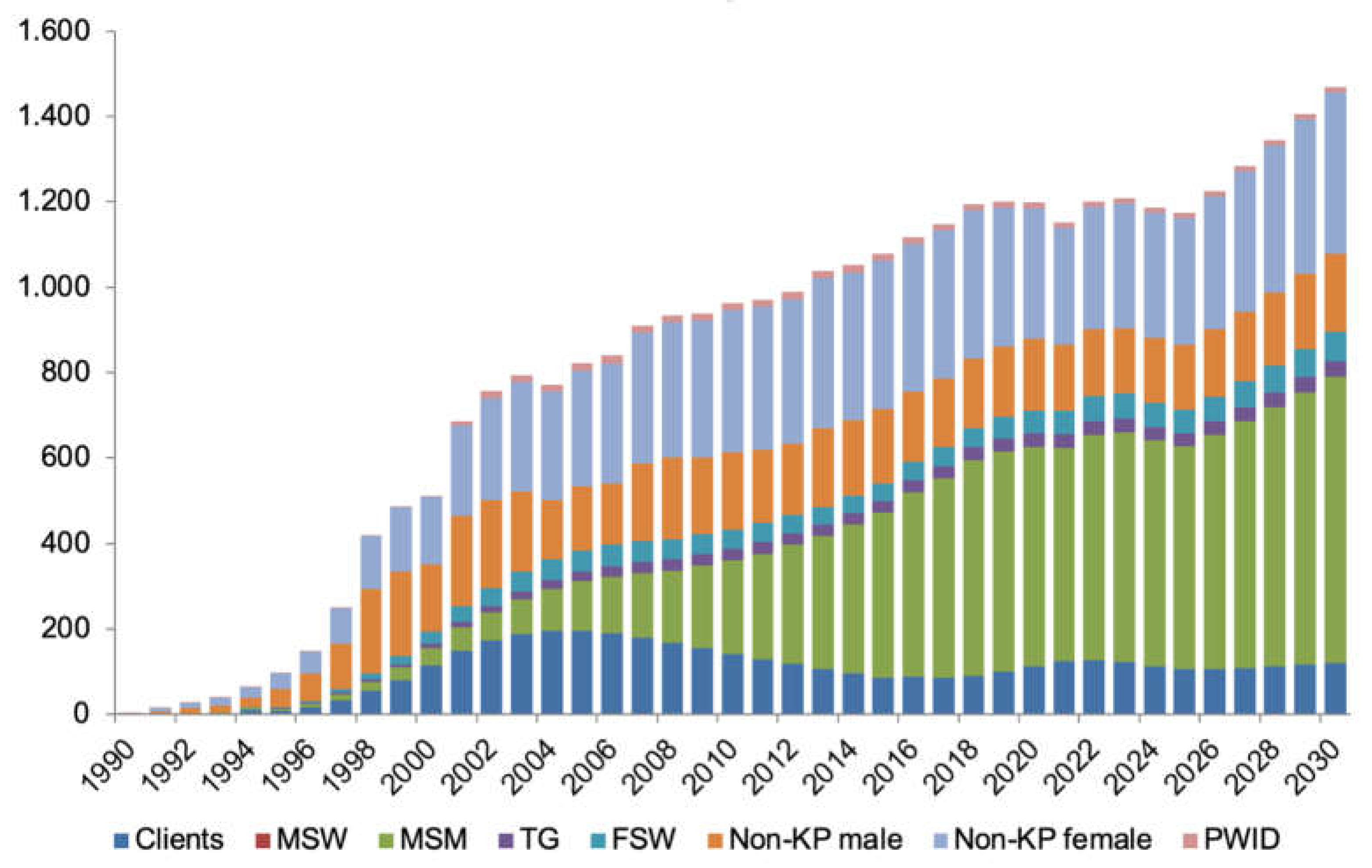
Figure 3.
Coverage of HIV prevention programmes among (A) men who have sex with men and (B) female sex workers Coverage of HIV prevention programmes for MSM or FSW was defined as the percentage of the estimated population that received an HIV prevention package during the reporting year. The numerator was the number of MSM or FSW who received the prevention package, and the denominator was the corresponding key population size estimate. FSW, female sex workers; MSM, men who have sex with men.
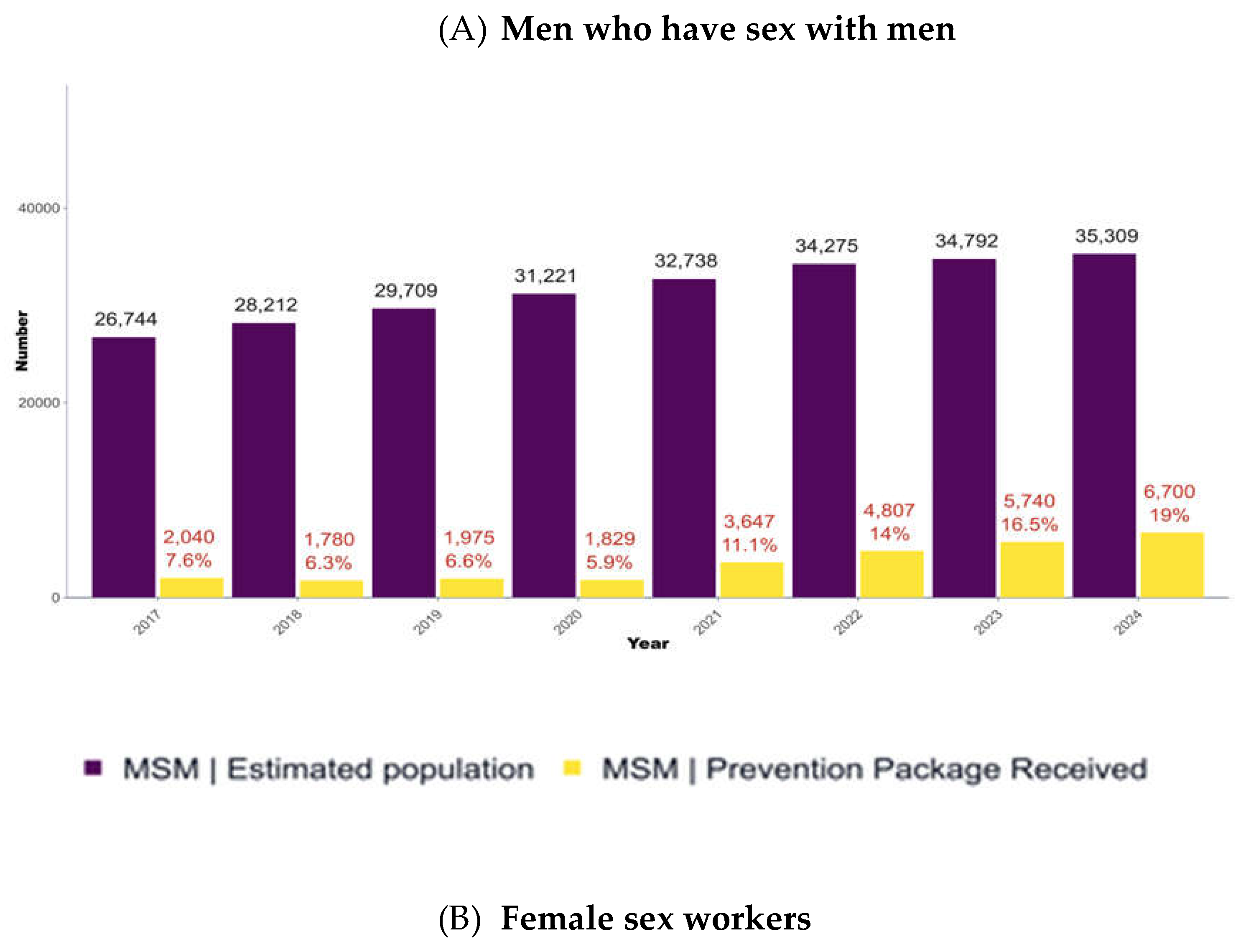
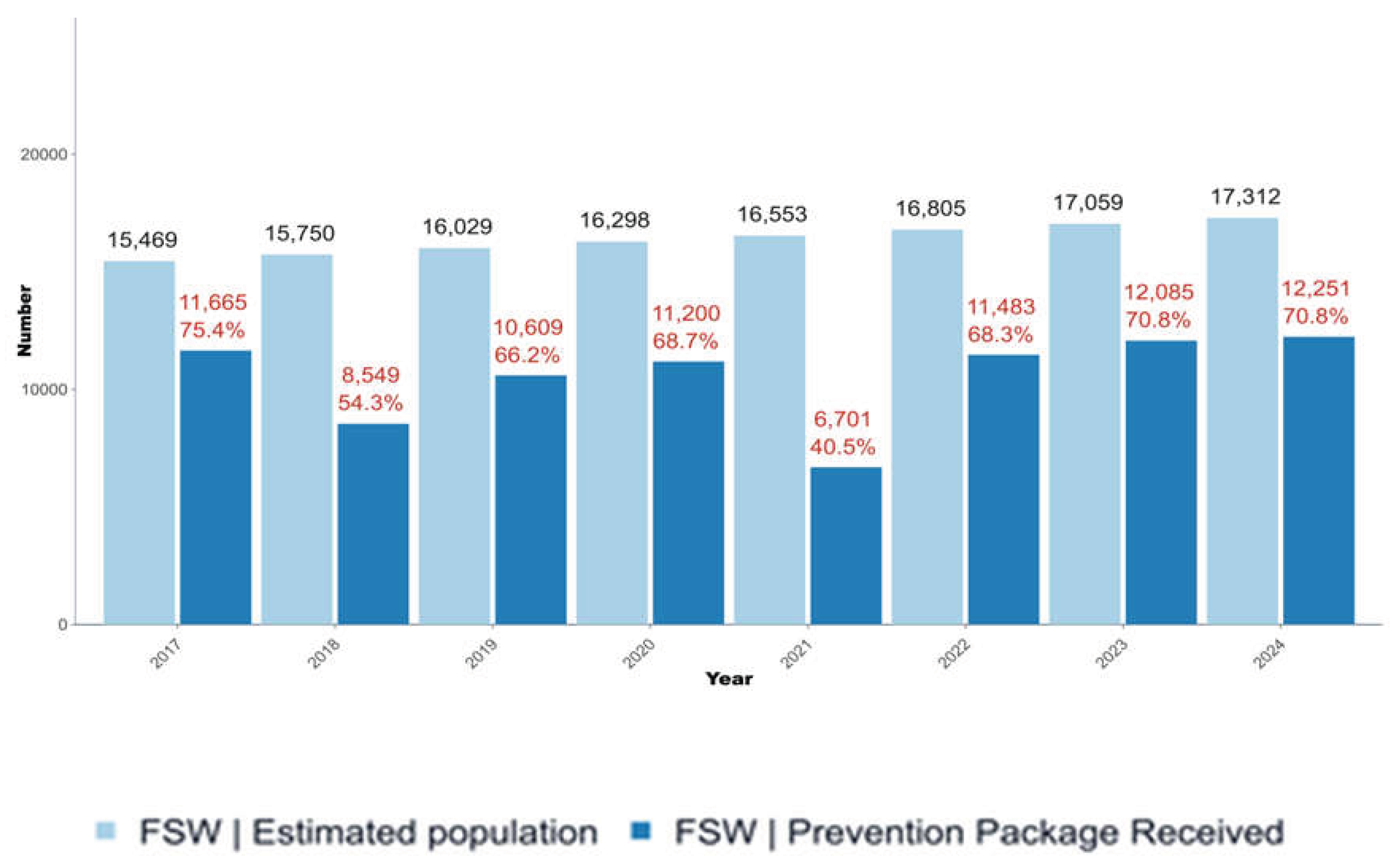
Figure 4.
Condom use among men who have sex with men and female sex workers, Lao People’s Democratic Republic, 2011–2024 Condom use was defined as the percentage of MSM reporting that a condom was used the last time they had anal sex with a non-regular partner in the last 6 months, and female sex workers reporting using a condom with their last client in the last 12 months. The national target for 2025 is 95% for both populations. FSW, female sex workers; MSM, men who have sex with men.
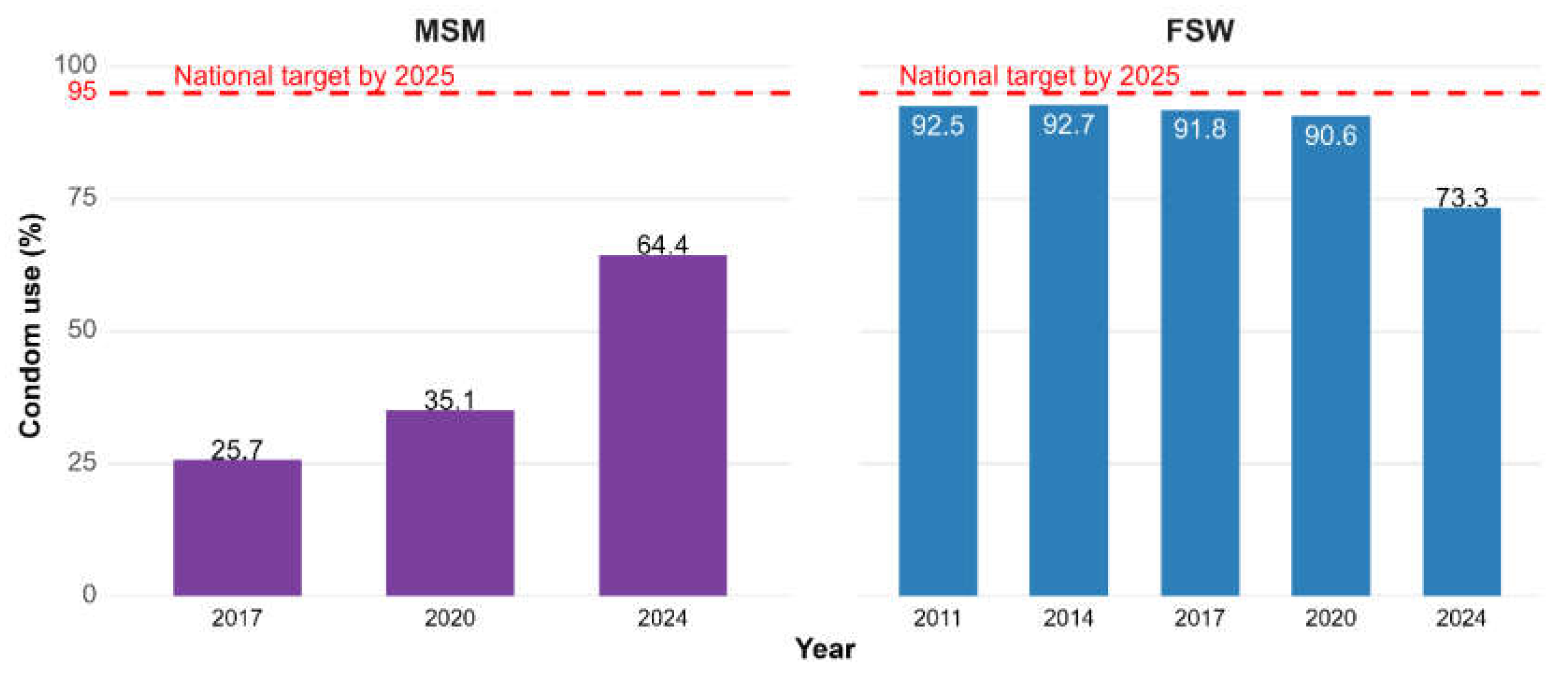
Figure 5.
Uptake of pre-exposure prophylaxis by population type and age group, Lao People’s Democratic Republic, 2021–2025 Panel A: Annual numbers of new PrEP users, clients continuing PrEP for at least 12 months, and annual PrEP clients in Lao PDR, 2021–2025. Annual PrEP clients were defined as unique individuals who received PrEP at least once during the reporting year, including both new and continuing users. Panel B: Distribution of annual PrEP clients by population type in Lao PDR, 2021–2025. Annual PrEP clients were defined as unique individuals who received PrEP at least once during the reporting year, including both new and continuing users. Population types included men who have sex with men (MSM), female sex workers (FSW), transgender people (TG), pregnant women, and the general population. Panel C: Distribution of annual PrEP clients by age group in Lao PDR, 2021–2025. Annual PrEP clients were defined as unique individuals who received PrEP at least once during the reporting year, including both new and continuing users. Age groups were categorized as 0–19, 20–29, 30–39, 40–49, and ≥50 years.
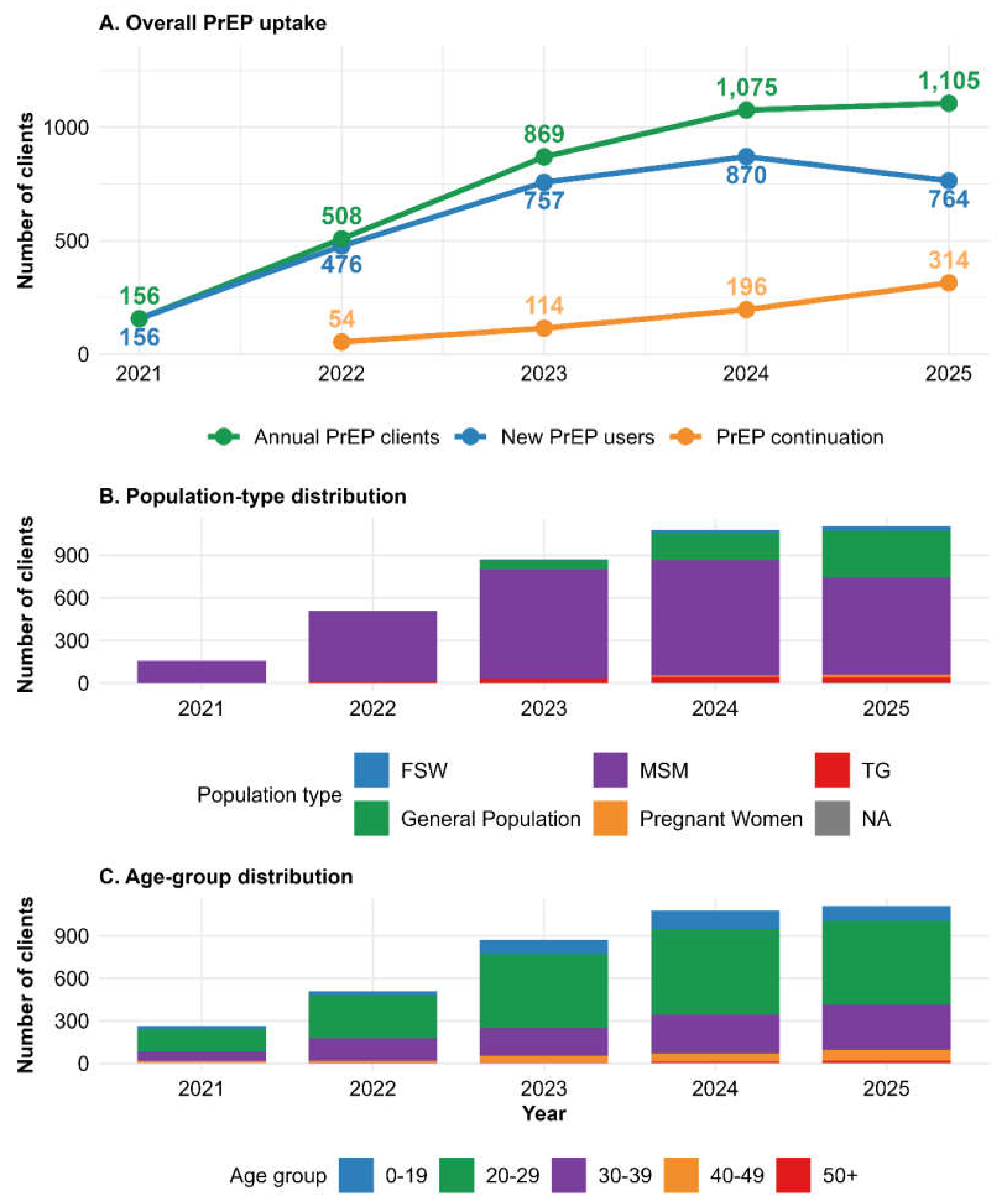
Figure 6.
Number of HIV tests and HIV positivity, national level and Vientiane Capital, Lao People’s Democratic Republic, 2020–2024 Data are presented as the annual number of HIV tests conducted (upper panel) and HIV positivity (%) (lower panel) at the national level and in Vientiane Capital. HIV positivity was calculated as the proportion of tests with a reactive HIV result among all HIV tests conducted during the reporting year. Testing counts are based on routine programme monitoring data and may include repeat testing of the same individual within or across service delivery sites and modalities; therefore, the number of tests reflects testing events rather than unique individuals.
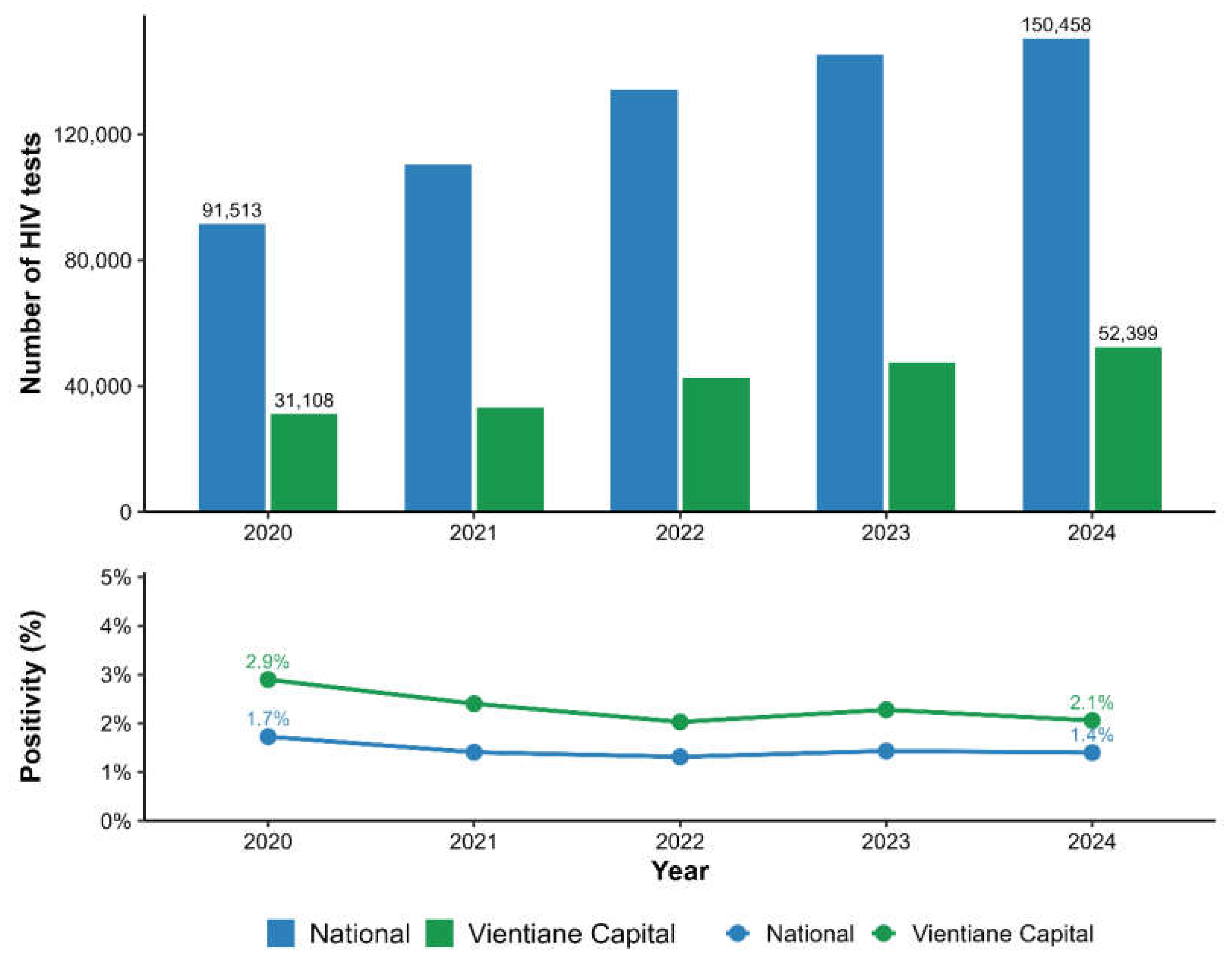
Figure 7.
HIV testing volume, testing coverage and positivity among men who have sex with men and female sex workers, Lao People’s Democratic Republic, 2020–2024 Population coverage was calculated using key population size estimation (see Figure 3) as the denominator and the number of conducted screenings as the numerator. FSW, female sex workers; KPSE, key population size estimation; MSM, men who have sex with men.
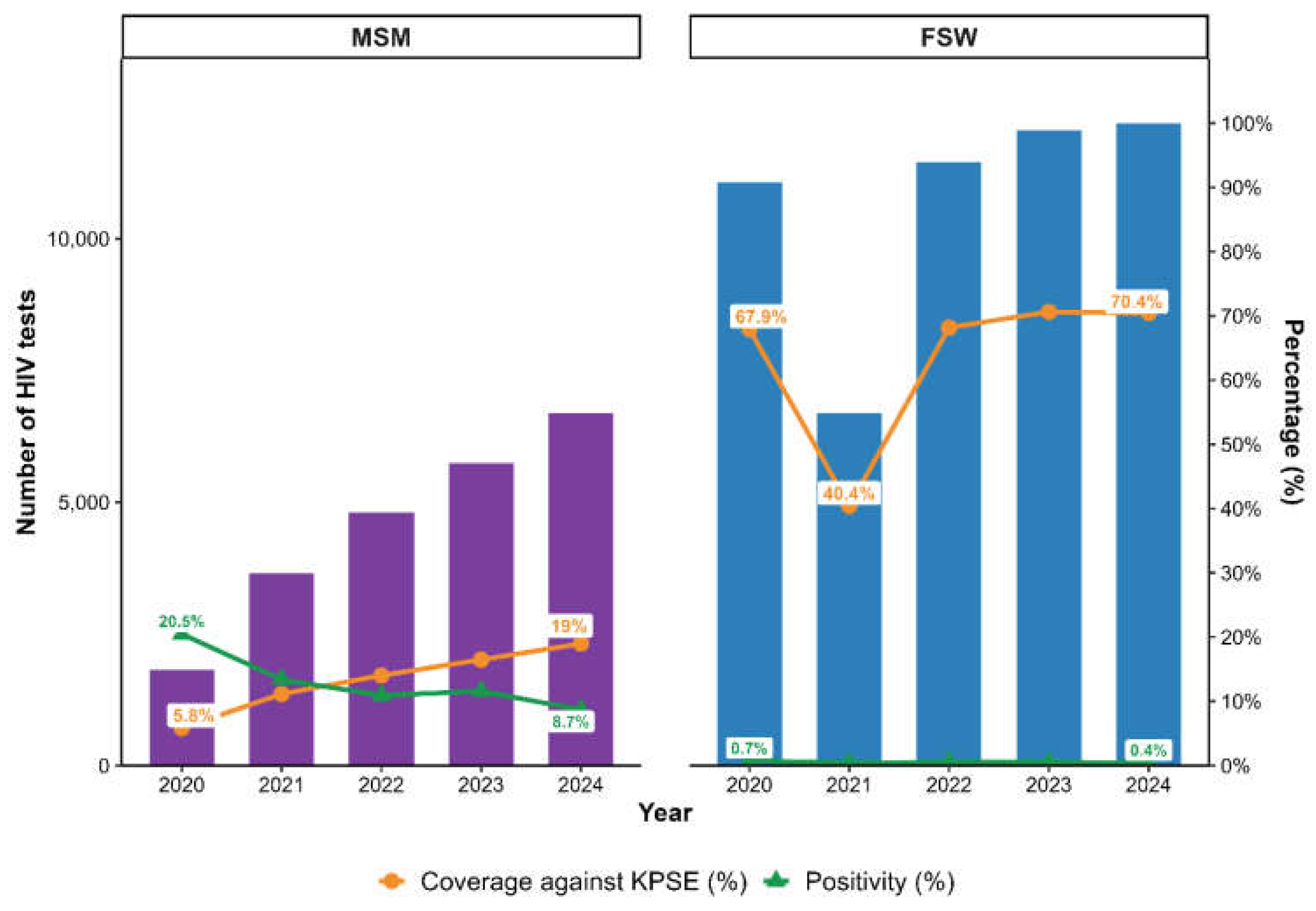
Figure 8.
Progress towards the 95–95–95 targets among people living with HIV, Lao People’s Democratic Republic, 2010–2024 Bars show the estimated percentage of PLHIV who knew their HIV status (first 95), the percentage of those who knew their status who were receiving ART (second 95), and the percentage of those receiving ART who were virally suppressed (third 95). Estimates of viral suppression are available from 2018 onwards. ART, antiretroviral therapy; PLHIV, people living with HIV.
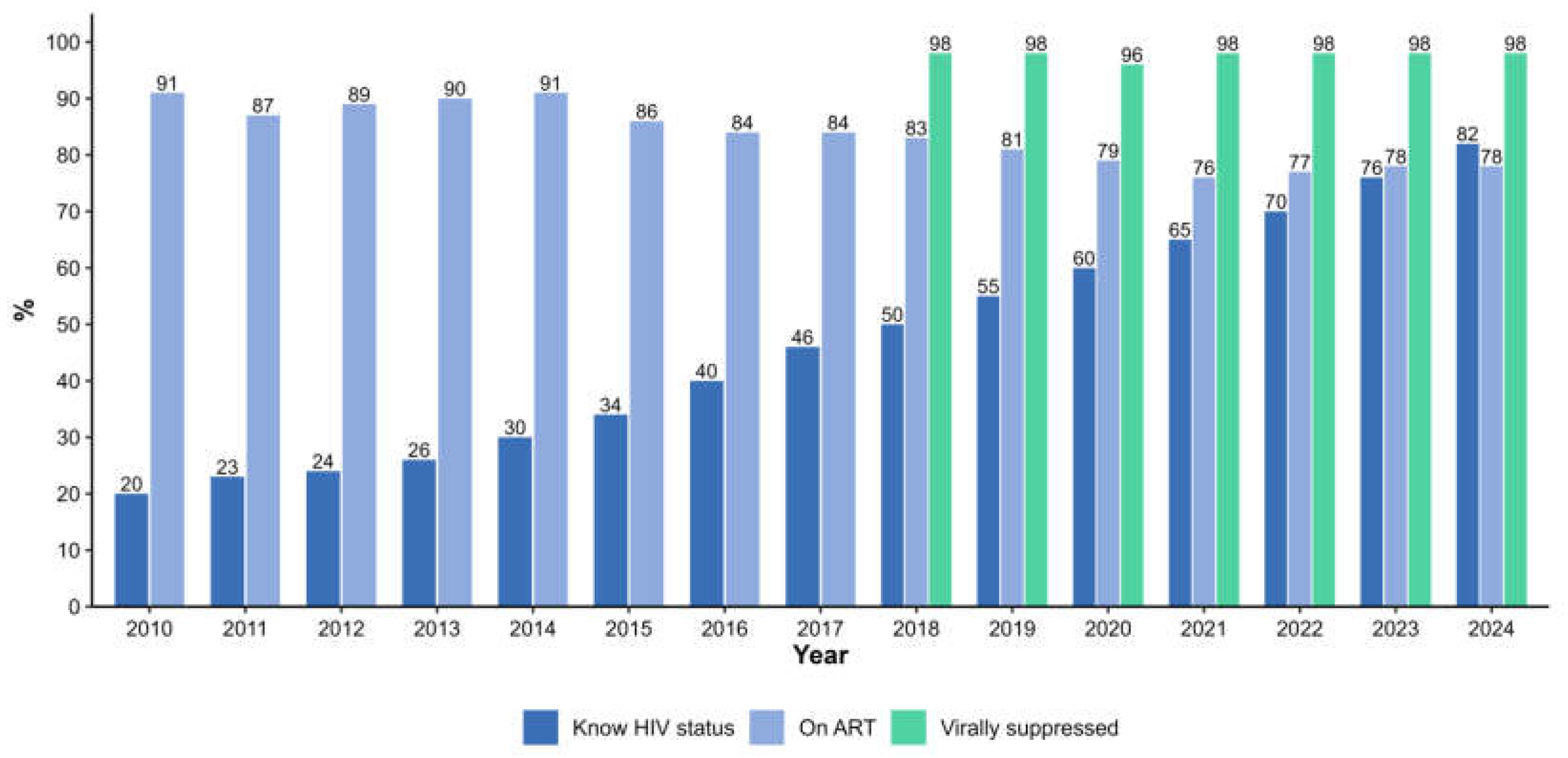
Figure 9.
HIV treatment cascade and losses between stages among people registered for ART, Lao People’s Democratic Republic, 2003–2024 The upper graph shows the cumulative number of people registered for ART, initiated on ART and retained on ART at the end of 2024; percentages are relative to the number registered. The graph below shows outcomes between consecutive stages; percentages are relative to the number at the preceding stage. Loss to follow-up was defined as being more than 28 days late for a scheduled clinic visit or ART refill. Retained but not on ART refers to people who remained registered in care but had not initiated ART. ART, antiretroviral therapy; LTFU, lost to follow-up.
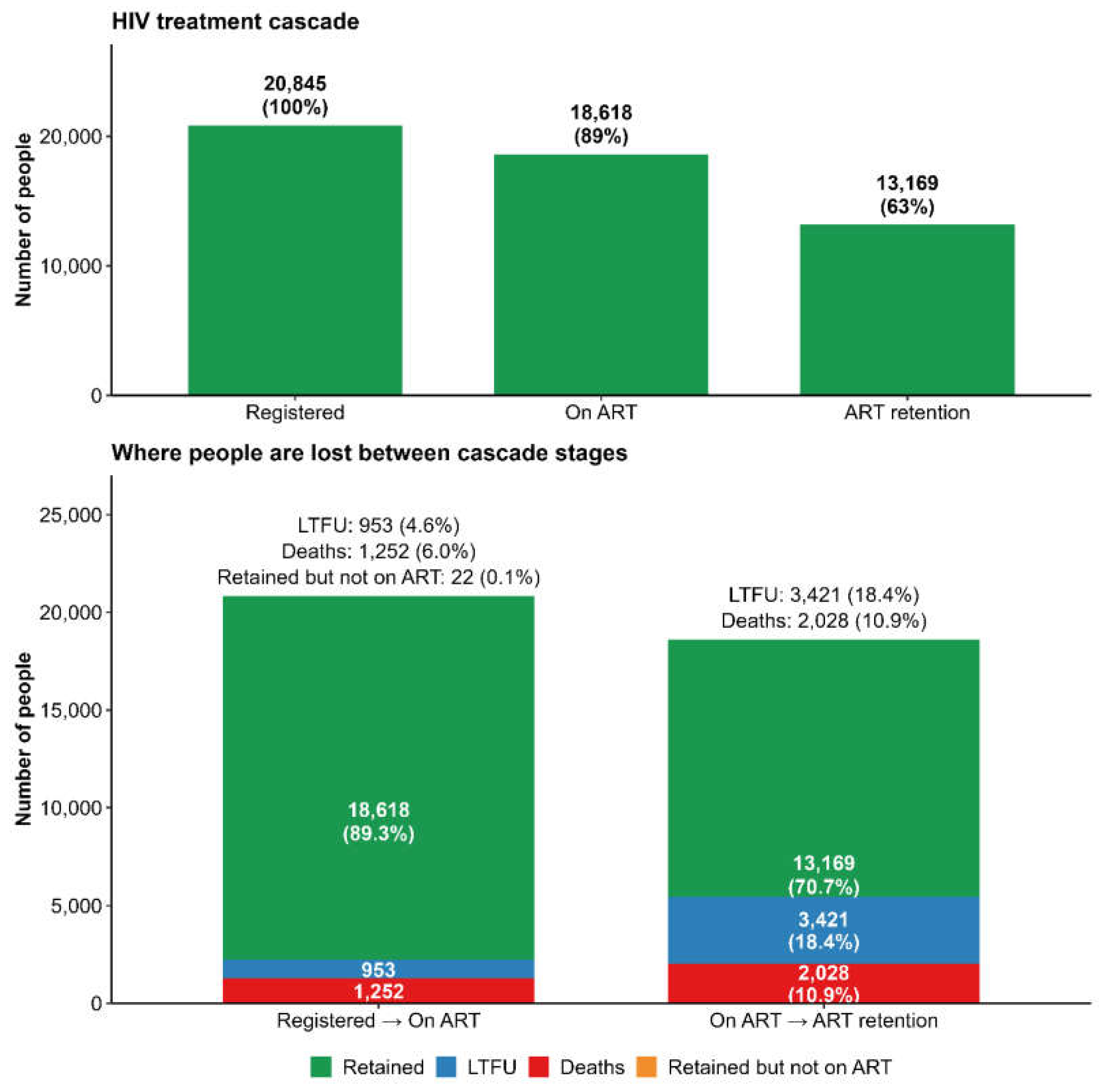

Table 1.
Data sources included in the analysis and their characteristics.
| Data source | Indicators | Years | Population | Key limitation |
| AIDS Epidemic Model (AEM)–Spectrum, 2025 round (Government of Lao PDR and UNAIDS) |
HIV prevalence, new infections, HIV-related deaths and number of PLHIV (national and provincial); key population size estimates; distribution of new infections by population group; modelled treatment cascade | 2010–2025; projections to 2030 | PLHIV; key populations | Model-based estimates depend on assumptions and are subject to uncertainty |
| IBBS and HSS+ surveys, reported through Global AIDS Monitoring | HIV prevalence and condom use among key populations | 2011–2024 (periodic) | MSM and FSW | Periodic, geographically limited surveys may not represent all subgroups or locations |
| CHAS CSO outreach database | Prevention programme coverage among key populations | 2017–2024 | Key populations | Incomplete reporting, reporting delays and variable data quality across sites |
| CHAS PrEP tracker | Number of PrEP clients, new users and continuation | 2021–2025 | PrEP clients | Incomplete reporting, reporting delays and variable data quality across sites |
| CHAS HIV testing and counselling database (CHAS VCT database) |
Number of HIV tests and positivity in the general population and key populations | 2020–2024 | People tested for HIV | Testing events rather than unique individuals; variable data quality across sites |
| National HIV registry (CHAS ARV tracker) | Characteristics of people diagnosed with HIV; ART registration, initiation, retention, VL testing and viral suppression | 2003–2024 | People diagnosed with HIV | Incomplete reporting, reporting delays and variable data quality across sites |
Abbreviations: AEM, AIDS Epidemic Model; ART, antiretroviral therapy; ARV, Antiretroviral; CHAS, Center for HIV/AIDS and Sexually Transmitted Infections; CSO, civil society organisation; FSW, female sex workers; HIV, human immunodeficiency virus; HSS+, HIV Sentinel Surveillance Plus; IBBS, Integrated Biological and Behavioural Surveillance Survey; MSM, men who have sex with men; PLHIV, people living with HIV; PrEP, pre-exposure prophylaxis; UNAIDS, Joint United Nations Programme on HIV/AIDS. VL viral load; VCT, voluntary counselling and testing.
Table 2.
Definitions of the key indicators in the study.
| Indicator | Numerator | Denominator | Source |
| Estimated prevention programme coverage (MSM, FSW) | Number of MSM or FSW who received the HIV prevention package during the reporting year | Estimated MSM or FSW population size |
CHAS CSO outreach database; AEM |
| Condom use (MSM) | MSM reporting condom use at last anal sex with a non-regular partner in the past 6 months | MSM surveyed | Global AIDS Monitoring |
| Condom use (FSW) | FSW reporting condom use with their last client in the past 12 months | FSW surveyed | Global AIDS Monitoring |
| Annual PrEP clients | Unique individuals who received PrEP at least once during the reporting year (new and continuing) | – | CHAS PrEP tracker |
| PrEP continuation (≥12 months) |
PrEP clients who had continued PrEP for at least 12 months | Annual PrEP clients | CHAS PrEP tracker |
| HIV testing positivity | HIV tests with a reactive result | All HIV tests conducted during the reporting year (testing events) | CHAS VCT database |
| Estimated testing coverage (MSM, FSW) | Number of HIV tests conducted among MSM or FSW | Estimated MSM or FSW population size |
CHAS VCT database; AEM |
| Modelled treatment cascade (first, second and third 95) | PLHIV who know their status; PLHIV on ART; PLHIV virally suppressed | All PLHIV; PLHIV who know their status; PLHIV on ART | AEM |
| Retention on ART | People alive and on ART at the end of 2024 | People who initiated ART during 2003–2024 |
National HIV registry (CHAS ARV tracker) |
| Lost to follow-up | People more than 28 days late for a scheduled clinic visit or ART refill | People registered for or initiated on ART |
National HIV registry (CHAS ARV tracker) |
| VL testing coverage | People on ART with a VL test result in the reporting year | All people who received ART in the reporting year | National HIV registry (CHAS ARV tracker) |
| Viral suppression | People with a suppressed VL | People on ART with a VL test result |
National HIV registry (CHAS ARV tracker) |
Abbreviations: AEM, AIDS Epidemic Model; ART, antiretroviral therapy; ARV, Antiretroviral; CHAS, Center for HIV/AIDS and Sexually Transmitted Infections; CSO, civil society organisation; FSW, female sex workers; HIV, human immunodeficiency virus; KP, key population; MSM, men who have sex with men; PLHIV, people living with HIV; PrEP, pre-exposure prophylaxis; VL, viral load; VCT, voluntary counselling and testing.
Disclaimer/Publisher’s Note: The statements, opinions and data contained in all publications are solely those of the individual author(s) and contributor(s) and not of MDPI and/or the editor(s). MDPI and/or the editor(s) disclaim responsibility for any injury to people or property resulting from any ideas, methods, instructions or products referred to in the content. |
© 2026 by the authors. Licensee MDPI, Basel, Switzerland. This article is an open access article distributed under the terms and conditions of the Creative Commons Attribution (CC BY) license (http://creativecommons.org/licenses/by/4.0/).
Copyright: This open access article is published under a Creative Commons CC BY 4.0 license, which permit the free download, distribution, and reuse, provided that the author and preprint are cited in any reuse.