

Submitted:
02 November 2026
Posted:
04 November 2026
You are already at the latest version
Abstract
The growing environmental impact of single-use plastic products, particularly coffee capsules, has increased the need for sustainable design strategies that reduce material complexity while preserving functional performance. This study investigates the development of a monomaterial coffee capsule compatible with commercial systems, aiming to support circular economy principles through eco-design and engineering-driven validation. The approach combines market analysis of existing capsules, CAD-based redesign, and numerical simulation methods to evaluate structural integrity under operational conditions. The redesigned concept is based on recycled PET and integrates simplified geometry with micro-perforated filtration features to replace multi-material components. Iterative structural simulations were employed to optimize the geometry and reduce wall thickness, thereby minimizing material usage while maintaining the required structural integrity and safety. A final optimized configuration with a minimum wall thickness of 0.75 mm and a reinforced base geometry was validated under internal pressure loading conditions. The results show a maximum von Mises stress of approximately 55.86 MPa, remaining below the material yield strength of 68 MPa (82% of this limit), whereas in the original PP + talc capsule the maximum stress (62.26 MPa) exceeds the approximate yield strength of that material (35 MPa). Overall, the optimized design maintains structural safety margins while significantly reducing material usage (25.7% less volume than the original capsule body) and complexity. The results confirm the technical feasibility of a monomaterial coffee capsule through the integration of eco-design principles and simulation-based validation. The proposed approach enables a reduction in environmental impact without loss of mechanical performance or compatibility.
Keywords:
monomaterial coffee capsule
; eco‐design
; structural simulation
1. Introduction
Over the last decades, global plastic production and consumption have increased exponentially, driven by their versatility, low cost, and applicability across diverse industries, including packaging, automotive and consumer goods. In 1950, global production of plastic was approximately 2 million tons per year [1], whereas recent data indicate that production has reached around 413 million tons annually as of 2023 [2]. Single-use plastics have emerged as a particularly salient problem, constituting a substantial proportion of plastic waste and being directly associated with issues such as pollution of terrestrial and marine environments and the emission of greenhouse gases throughout their life cycle [3].
In the context of rising plastic consumption, the proliferation of single-dose coffee capsules exemplifies the profound integration of convenience-driven products into global daily routines. The production of coffee has increased by nearly 200% since 1950 [4], and the ease and expediency with which coffee can be consumed have made capsules the preferred choice for consumers seeking to satisfy their needs quickly and with minimal effort [5]. While these capsules offer practicality and consistency, their widespread use contributes significantly to plastic waste streams, with billions of capsules being disposed of annually [6]. A significant challenge in the recycling of these capsules arises from their small size and complex material composition, which typically involves a combination of polymeric or metallic bodies along with diverse sealing and filter materials to preserve flavor and aroma. This inherent complexity complicates sorting and recovery processes, increasing their environmental footprint and raising concerns related to resource consumption, carbon emissions and plastic pollution [7,8].
As a result of these concerns, the environmental impact of coffee capsules underscores the necessity of integrating eco-design strategies during their development. The objective of such integration is to align the demand for convenience with sustainability goals, thereby minimizing the environmental impacts inherent in the current life cycle of these products.
In the current context, the development of a new product must comply with applicable legislation and align with regulatory frameworks from the conception stage, including guidelines such as the European Strategy for Plastics in a Circular Economy [9] and the Single-Use Plastics Directive [10], as well as the recently adopted Packaging and Packaging Waste Regulation (PPWR), which requires all packaging placed on the EU market to be recyclable by 2030 [11]. The adoption of more sustainable materials, as well as environmentally friendly designs and technologies, should not be regarded merely as an additional requirement but as a fundamental aspect to be considered at every stage of the product development process.
This paper presents the development of a new product that incorporates environmental considerations through the use of recycled materials and innovative design strategies. The proposed design aims to employ a monomaterial approach across the entire capsule structure while integrating additional eco-design principles to support circular economy practices within this sector [12]. In summary, the primary objective of product development in the modern era encompasses not only the design and development of products but also the way these products are utilized throughout their life cycle, including reuse and responsible disposal at the end of their useful life.
To accomplish this goal, it is necessary to adopt interdisciplinary approaches that transcend traditional design and manufacturing methods. Within product development, engineering, which emphasizes the optimization of functionality and efficiency, frequently faces limitations when dealing with challenges that demand a more comprehensive perspective, such as environmental impacts. However, integrating eco-design as a guiding framework in the product development process while using engineering to validate the realization of these goals creates multifaceted advantages [13]. Eco-design involves the development of consumer-oriented products designed to meet user needs while implementing measures to ensure environmental sustainability, while engineering plays a key role in ensuring product functionality and efficiency, collaborating with design to validate proposed innovations [14]. This integration enables a more dynamic and efficient product development process by utilizing the capabilities of both disciplines to develop solutions that address consumer expectations and environmental challenges.
This study aims to explore how the environmentally conscious development of products, grounded in eco-design principles and validated through engineering, can be applied to the case of a coffee capsule compatible with systems and machines already available on the market, promoting circularity without compromising functionality.
Motivation and Research Objectives
The validation of product development must be carried out continuously throughout its different stages, making the use of numerical simulation technologies essential for evaluating a large number of concepts and boundary conditions within a limited timeframe. The use of simulation has been shown to reduce raw material consumption and prototype development time, contributing to faster design iterations and contributing to cost reduction. Furthermore, the reduced reliance on physical prototyping helps minimize the environmental footprint associated with the development of the proposed product [15,16].
During coffee extraction, the capsule is exposed to hot water at temperatures around 60 °C and pressures that can reach approximately 15 bar, according to Bicafé requirements. These operating conditions generate considerable mechanical loads on the capsule, requiring careful structural validation to prevent excessive deformation or failure while maintaining efficient coffee extraction.
Under these operating conditions, structural simulation plays a fundamental role in assessing the load-bearing capacity of the capsule throughout its service life. Furthermore, it contributes to the sustainability of the product in two distinct ways. Firstly, it enables the testing of multiple design iterations without the need for raw materials, which would otherwise be necessary for experimental validation of various concepts. Secondly, during the refinement stages, simulation assists in reducing wall thicknesses to consume less material while ensuring an optimal balance between the final weight of the part and its mechanical performance [17].
The behavior of coffee within the capsule is critical for the final taste and user experience, making it essential to analyze the path that coffee takes within the capsule during extraction. This dynamic interaction has implications for both the quality of the coffee and the quantity of residue generated during disposal. The capsule's sealing process is intended to preserve the coffee's freshness and prevent oxidation. During the extraction process, the capsule is perforated to allow water to flow through the coffee granules, producing the final beverage. This mixture is subjected to a series of filtration stages and engineered barriers intended to retain coffee grounds and prevent their passage to the consumer. The mixture must absorb as much as possible from the coffee grounds to enhance the beverage's flavor. This process requires the internal barriers of the capsule to retain water within the capsule for as long as possible while preventing grounds from passing through [18,19].
This work highlights the integration of product design and engineering validation in the development of everyday products, such as coffee capsules, to ensure functional performance and usability throughout the product development process. The integration of engineering and design in the product development process has been demonstrated to enhance efficiency and ecological viability, resulting in products that outperform those developed without the synergy of these disciplines [13,14]. An initial market study was carried out in order to physically evaluate the best-selling coffee capsules on the Portuguese market, obtaining data such as the number and type of parts in each capsule, their individual weight and the constituent material. The results are presented in Table 1.
The initial study's preliminary findings, which align with the intended development, indicate the absence of single-material capsules that effectively integrate functionality with principles of a circular and sustainable economy. As is evident, the capsules are composed of multiple materials, which complicates their separation at the end of their lifecycle. A review of the capsules to be developed in the future reveals the use of three different materials for the original capsule and six different materials for Sonae's own brand capsules compatible with DeltaQ. This development demonstrates a lack of consideration for environmental sustainability, a concern that this work aims to address.
A comparison of the total weight of DeltaQ capsules, including the coffee content (12,439 g), with their weight devoid of coffee (6,569 g), reveals that, in terms of weight, a greater proportion of the capsules are comprised of support material compared to coffee. This observation is particularly noteworthy given that many individuals tend to prioritize the avoidance of support material in their coffee consumption. Accordingly, this project aims to optimize the design of a coffee capsule by addressing two primary objectives: reducing the number of components through the development of a monomaterial solution and minimizing the overall weight of the capsule. Simplifying the capsule structure is intended to improve material efficiency and manufacturing processes while facilitating end-of-life recycling, thereby supporting the principles of a circular economy. In addition, reducing the weight of the capsule contributes to lowering its environmental impact by decreasing material consumption and the associated use of resources and energy throughout its life cycle.
A key design constraint throughout the development process is the need to preserve the external geometry of the capsule to ensure compatibility with existing coffee machines and maintain its commercial viability. Consequently, all design modifications must be implemented without compromising the dimensional and functional requirements necessary for compatibility with current coffee brewing systems.
2. Materials and Methods
2.1. Baseline Capsule Definition
The baseline model used in this study corresponds to the current DeltaQ coffee capsule configuration, which consists of five main components: the capsule body, the lid, two filters and the sealing film. The body and the lid are made of polypropylene (PP) filled with talc to increase stiffness, while one filter is composed of paper, the other one is made of aluminum and the sealing film is a multilayer structure containing plastics and aluminum. Figure 1 presents images of the capsule.
The assembly process of the baseline capsule relies on thermal and mechanical sealing techniques. The metallic film is heat-sealed to the capsule flange, while the internal filters are press-fitted into the capsule body before final assembly. The lid is welded to the main body using ultrasonic welding, which is one of the main processes to tie together this type of materials [20]. This configuration, although functionally efficient, presents a clear limitation from a circular economy perspective due to the coexistence of multiple materials that hinder recyclability and increase environmental impact. Table 2 summarizes the main properties of the materials used for the baseline and redesigned capsule, including those considered in the structural simulations.
2.2. Material Selection for the Redesigned Capsule
For the development of the new capsule, rPET (recycled polyethylene terephthalate) WORPET LB 0,80, was selected as the material grade. This choice was based on several key factors. Food-grade rPET produced in compliance with Commission Regulation (EU) 2022/1616 [21] is authorized for use in food contact applications, ensuring the relevant safety requirements for consumer use are met. It is readily available in Portugal and guarantees a stable and low-impact supply chain. As a thermoplastic polymer, rPET supports repeated melting and reprocessing, fitting the goals of monomateriality and circular design. Additionally, the mechanical stiffness and heat resistance of this grade are sufficient for operational use inside coffee machines.
Although rPET WORPET LB 0,80 exhibits a slightly higher density than the original material, its superior mechanical strength, allows for the controlled removal excess material from less critical regions of the capsule. This efficient use of the material, improves sustainability, by enabling a reduction in resource consumption without compromising structural integrity. The adoption of rPET WORPET LB 0,80 therefore represents an important step toward a fully monomaterial design, facilitating end-of-life recovery and further reducing the product’s environmental impact.
The structural simulations presented in this study relied on the linear-elastic properties (Young's modulus and Poisson's ratio) specified above for each material. As a complete technical datasheet for the baseline PP + talc grade was not available, only the properties used in the numerical model are reported for this material. The density and the yield strength indicated for this material is an approximate value, based on the average of several commercial talc-filled PP grades.
2.3. Redesign Process and Eco-Design Strategy
The redesign process was guided by the principles of eco-design and design for sustainability (DfS), with a focus on minimizing environmental impact while preserving or even improving the quality of coffee extraction. As previously outlined, the project was driven by two primary objectives: improving the functional performance of the capsule by reducing the presence of coffee grounds in the final beverage and enhancing crema formation, and increasing sustainability by reducing material diversity and simplifying the assembly process.
The new capsule geometry was developed using SolidWorks (Dassault Systèmes) and Shapr3D (Shapr3D Zrt.) software, allowing precise management of wall thickness, joining features, and internal flow channels. Micro-perforated PET films were incorporated as integrated filters, eliminating the need for paper filters and enabling a monomaterial design.
For assembly, several joining techniques were evaluated. Although laser welding was considered due to its precise and localized heat application, it was ultimately not selected. Instead, ultrasonic welding was adopted as the main technique for the rapid, low-degradation joining of polymer parts, and hot plate welding was specifically used to attach the micro-perforated filters to the main capsule structure [20]. The capsule’s design carefully addressed welding areas and material compatibility, ensuring consistent sealing performance without compromising recyclability or negatively affecting the coffee extraction profile.
2.4. Numerical Simulation Procedures
To evaluate the structural performance of the redesigned capsule, structural numerical simulations were conducted using Abaqus (Dassault Systèmes). The evaluation of manufacturability through injection molding simulation and of the coffee extraction process through computational fluid dynamics is planned as future work. Table 3 presents the data input into the software to simulate the different scenarios. All the simulations listed correspond to static structural analyses performed in Abaqus, aimed at evaluating the rigidity and deformation of the capsule under the operational pressure.
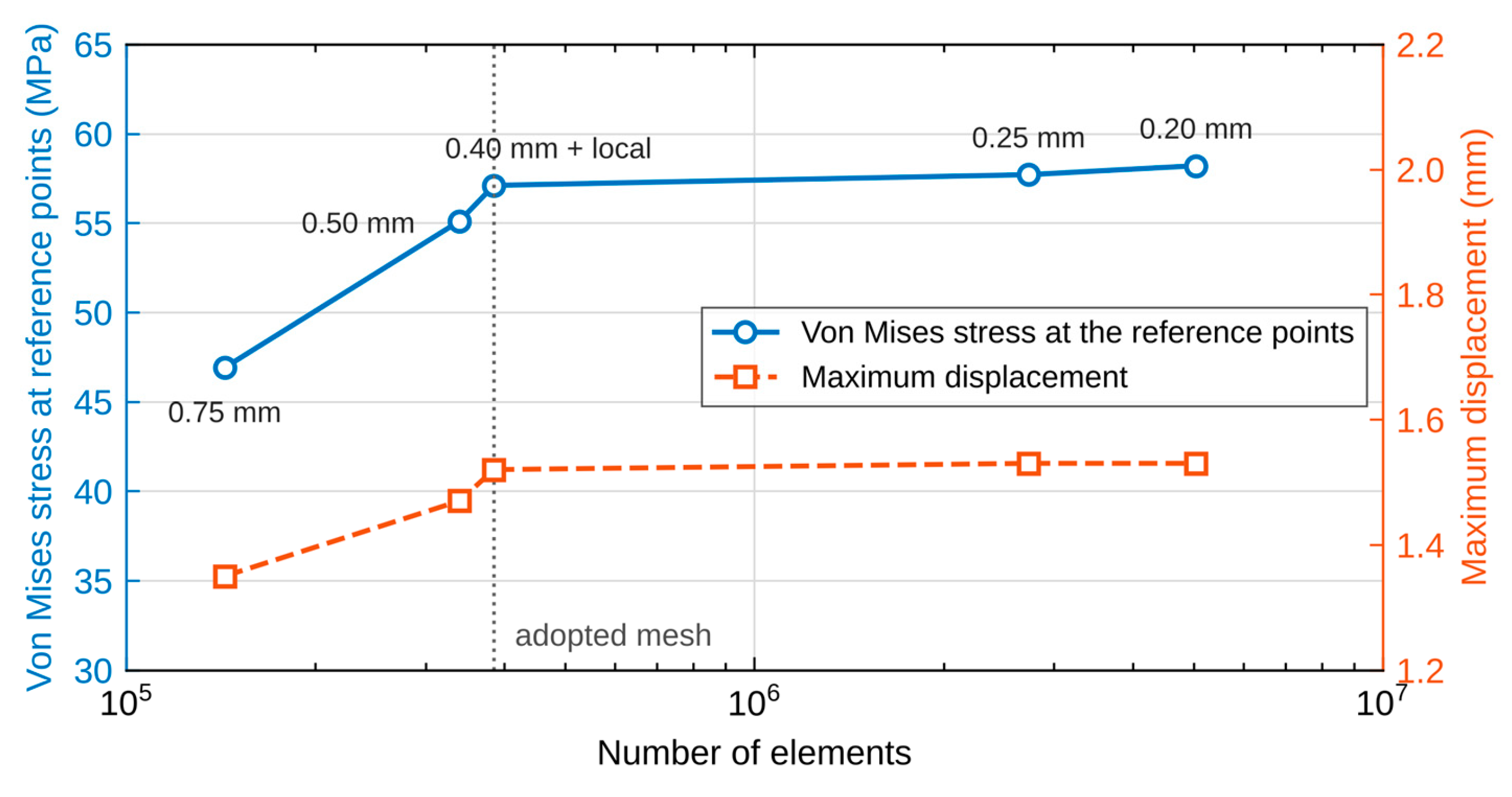
The meshes were refined near thin walls and filtration zones to accurately capture stress gradients. A mesh convergence study was carried out for the baseline model in PP + talc, by comparing the von Mises stress results obtained with successive mesh refinements. The mesh convergence study compared five mesh configurations, with global element sizes between 0.75 mm and 0.20 mm (Table 4 and Figure 3). Convergence was assessed mainly through the von Mises stress obtained at six reference points located on the outer side of the coffee outlet tower, complemented by the maximum displacement of the capsule. The maximum von Mises stress was considered only as a secondary indicator, since it corresponds to localized peaks at sharp geometric transitions. A global element size of 0.40 mm combined with local refinement was adopted. Compared with the 0.25 mm mesh, this configuration differs by 1.1% in the reference stress, 0.7% in the maximum displacement and 1.3% in the maximum stress, while requiring about four times less computation time (986 s versus 4177 s). The finest mesh (0.20 mm) differed from the adopted mesh by only 1.9% in the reference stress, for a computation time about 16 times higher. Figure 2 presents the finite element model and the meshes used. The capsule body and lid were discretized with 379,880 linear tetrahedral elements (C3D4), with no element exceeding an aspect ratio of 5 (average of 1.60 and worst value of 4.33) and no element with a shape factor below 0.0001 (average of 0.67 and worst value of 0.044). No analysis errors were reported and only 13 elements (0.003%) generated analysis warnings. The two rigid surfaces were discretized with 5,000 rigid quadrilateral elements (R3D4), all with an aspect ratio of 1.00 and without errors or warnings.
Figure 2.
Finite element model of the baseline capsule: (a) cross-section of the assembly, showing the capsule body and lid between the two rigid surfaces, the internal pressure load and the reference points (RP) of the rigid surfaces; (b) tetrahedral mesh of the capsule body; (c) tetrahedral mesh of the lid; (d) quadrilateral mesh of the rigid surfaces.
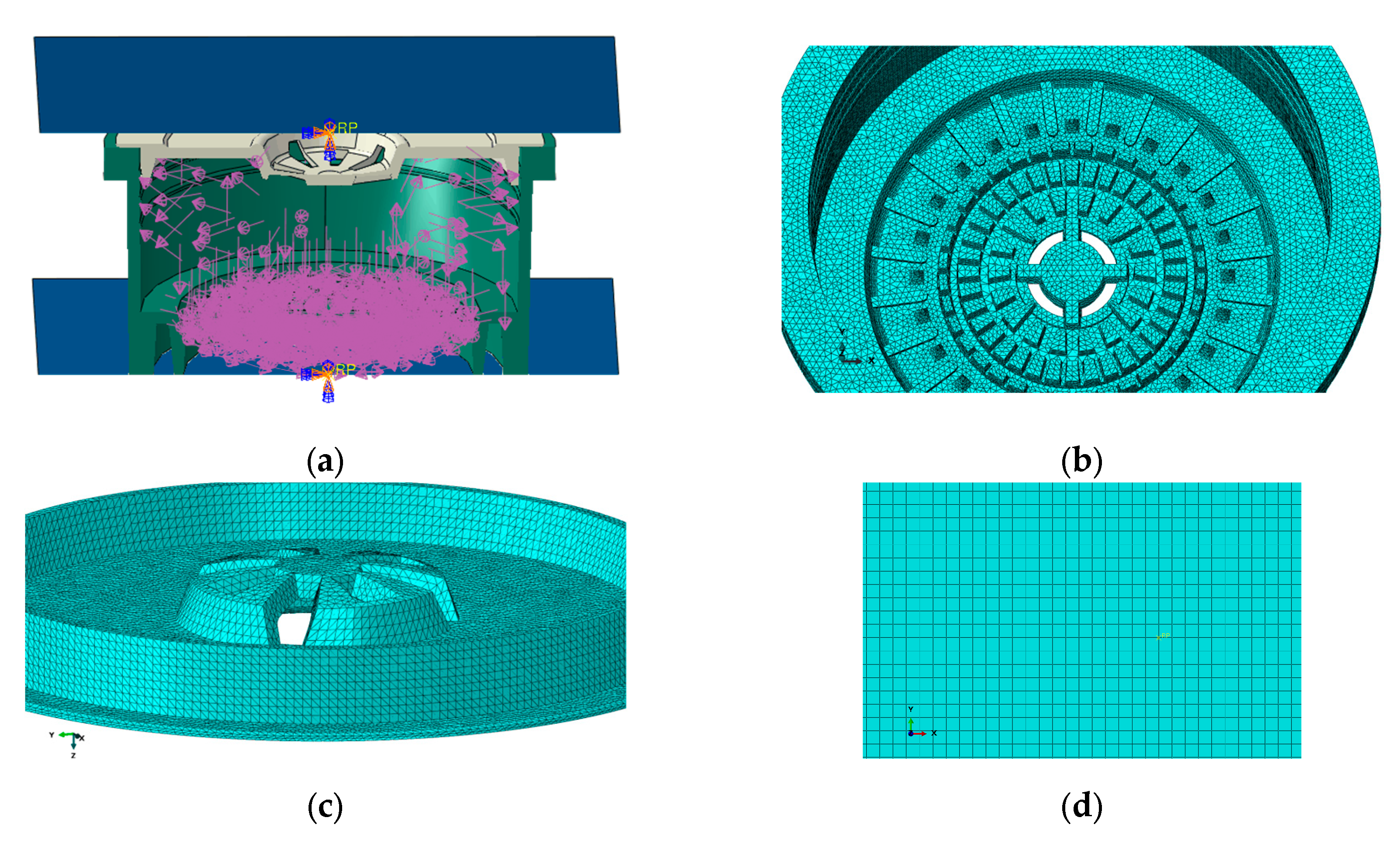

Table 4.
Mesh convergence study for the baseline capsule model in PP + talc.
| Global element size (mm) | Number of elements | Stress at reference points (MPa) | Maximum stress (MPa) | Maximum displacement (mm) | Computation time (s) |
|---|---|---|---|---|---|
| 0.75 | 143,438 | 46.9 | 55.6 | 1.35 | 178 |
| 0.50 | 339,212 | 55.1 | 60.2 | 1.47 | 552 |
| 0.40 + local refinement | 384,880 | 57.1 | 62.3 | 1.52 | 986 |
| 0.25 | 2,732,728 | 57.7 | 63.1 | 1.53 | 4,177 |
| 0.20 | 5,050,465 | 58.2 | 63.9 | 1.53 | 16,035 |
The number of elements includes the capsule body, the lid and the rigid surfaces. The stress at the reference points was obtained at six points located on the outer side of the coffee outlet tower of the capsule base. The configuration adopted in this study is shown in bold.
Figure 3.
Mesh convergence study for the baseline capsule (PP + talc): von Mises stress at the reference points and maximum displacement as a function of the number of elements.
Figure 3.
Mesh convergence study for the baseline capsule (PP + talc): von Mises stress at the reference points and maximum displacement as a function of the number of elements.
2.5. Simulation Workflow and Validation Sequence
To ensure consistency among structural integrity, manufacturability, and functional performance, a sequential simulation workflow was adopted, comprising two initial linear stages followed by an iterative optimization loop. The methodology followed a progressive validation approach, in which material substitution, geometric optimization, and functional redesign were assessed independently before being integrated. Figure 4 presents the simulation workflow adopted in this study.
The validation sequence comprised the following stages. Firstly, a structural analysis of the baseline capsule geometry was performed using the baseline material to establish a reference mechanical behavior. Subsequently, a material reduction strategy was applied to the capsule geometry, with the objective of removing non-critical material while maintaining structural integrity. To this end, structural simulations were iteratively conducted to progressively reduce wall thickness until the minimum thickness capable of withstanding an internal pressure of 15 bar was identified. The minimum thickness was defined by two factors: firstly, structural resistance, and secondly, manufacturability constraints associated with the injection molding process.
The redesigned base geometry was then evaluated through a comprehensive structural analysis on the fully optimized geometry in order to confirm mechanical performance under simulated operational conditions. This process ensured that all design modifications remained compatible with structural, functional and manufacturing requirements.
2.6. Integration and Evaluation of Simulation Results
The optimization of the capsule design was guided by an iterative structural simulation strategy, in which the results obtained at each stage informed the geometric and material decisions adopted in the subsequent stage. This sequential approach enabled a progressive balance between material reduction and mechanical resistance, ensuring that each design modification was validated against the operational loading conditions before proceeding to the next iteration.
Manufacturability (injection molding) and the fluid-dynamic behavior of the coffee extraction process were only considered as design requirements during the conceptual design of the capsule, namely through the minimum wall thickness defined by the industrial partner. However, these aspects fall outside the scope of the structural validation presented in this study, and their detailed numerical evaluation is left for future work.
This structural-simulation-driven strategy guarantees that the final capsule design satisfies the mechanical requirements associated with coffee extraction while adhering to the principles of eco-design, which advocate for efficiency, material reduction, and environmental responsibility throughout the product's lifecycle.
3. Results and Discussion
3.1. Baseline Capsule Characterization
The baseline coffee capsule was characterized through a structural finite element analysis in order to establish a reference mechanical response under operational loading conditions. The analysis focused on the distribution of von Mises stresses in the capsule body and lid when subjected to an internal pressure of 15 bar, representative of the coffee extraction process.
The structural model considered the capsule body and lid as separate components rigidly bonded through a tie constraint, representing the welded interface present in the real product. Two external rigid plates were included to constrain outward deformation of the capsule, reproducing the mechanical confinement imposed by the coffee machine during use. No internal solid contents were considered.
Figure 5 a) presents the von Mises stress distribution in the capsule body using a transparent geometry with an isosurface overlay. This representation highlights localized regions experiencing higher stress levels while allowing the overall geometry and stress gradients to remain visible. The isosurface visualization enables the identification of critical zones concentrated primarily around the capsule base features and local geometric discontinuities. The maximum von Mises stress in the capsule body reaches approximately 62.26 MPa, above the approximate yield strength of the PP + talc material (about 35 MPa, Table 2).
A sectional view of the capsule body with the corresponding von Mises stress distribution is shown in Figure 5 b). This view provides a clearer representation of the stress gradient along the capsule wall and base region, illustrating how stresses develop from the internal pressure loading and are redistributed through the capsule geometry. Higher stress values are observed in the base area and near structural transitions, while the side walls exhibit comparatively lower stress levels.
The von Mises stress distribution obtained for the capsule lid is presented in Figure 5 c). Compared to the capsule body, the lid exhibits a more uniform stress distribution, with stress concentrations primarily located near the welded interface region. No isosurface representation was applied to the lid, as the stress field remains relatively homogeneous and does not present highly localized critical regions.
The results presented in this section characterize the baseline mechanical response of the capsule under internal pressure loading. This baseline serves as a reference for subsequent evaluations of alternative material and geometric configurations throughout the development process.
3.2. Structural Assessment of the Baseline Geometry Using rPET
Following the baseline characterization, a sequence of structural simulations was conducted to evaluate the mechanical performance of the capsule under progressive design modifications. This iterative phase aimed to assess the feasibility of material substitution and subsequent geometric optimization while ensuring structural integrity under operational loading conditions.
As a first step, the baseline capsule geometry was analyzed using rPET instead of the original polypropylene reinforced with talc. This simulation was intended to isolate the effect of material substitution while maintaining the original geometry, boundary conditions and loading scenario. The results obtained from this stage provide a direct comparison with the baseline configuration and establish a new reference for subsequent material reduction and redesign strategies.
The baseline capsule geometry was simulated using rPET as the structural material, with a yield strength of approximately 68 MPa. The same modelling assumptions adopted in the baseline analysis were maintained, including rigid bonding between the capsule body and lid, mechanical confinement through external rigid plates, and an internal pressure of 15 bar.
Figure 6 a) presents the von Mises stress distribution in the capsule body. When compared to the baseline configuration using polypropylene reinforced with talc, the stress distribution pattern remains similar, with higher stresses concentrated in the capsule base region and at geometric transitions. However, the magnitude of the stresses relative to the material yield strength is significantly reduced, indicating a substantially higher safety margin. The maximum von Mises stress in the capsule body reaches approximately 64.91 MPa (95% of the rPET yield strength). This value corresponds to a localized peak in the base region, while most of the capsule volume operates well below this level. In the baseline configuration, by contrast, the maximum stress exceeded the yield strength of PP + talc. Unlike the baseline analysis, no isosurface representation is presented for this configuration, since no region of the capsule body exceeds the rPET yield strength.
The von Mises stress distribution in the capsule lid is shown in Figure 6 b). As observed in the previous analysis, the lid exhibits a relatively uniform stress field, with peak stresses occurring near the center. The maximum stress values remain substantially lower than the yield strength of PET, indicating that the lid is not a critical structural component under the applied loading conditions.
Overall, the substitution of polypropylene reinforced with talc by rPET leads to a considerable increase in structural safety margins without altering the original geometry. These results confirm the suitability of rPET for further optimization stages and support its selection as the material for subsequent material reduction and geometric redesign iterations. It should be noted that this material substitution resulted in an increase in the mass of the capsule body, since rPET exhibits a higher density than the talc-filled polypropylene used in the baseline. This initial mass increase is partly offset by the subsequent reduction achieved in the volume of plastic used, as well as by the replacement of virgin PP with a recycled material, contributing to a lower overall environmental impact.
3.3. Structural Optimization and Minimum Thickness Determination
Based on the stress distribution obtained in the previous structural analyses, a first geometric optimization iteration was carried out with the objective of reducing material usage while preserving structural integrity. The optimization strategy focused on removing material from regions exhibiting low stress levels, particularly along the capsule outer edges and other areas where the von Mises stress remained significantly below the admissible limits.
The material removal was primarily applied to peripheral zones of the capsule body, where the structural contribution to pressure resistance was limited, as well as to secondary geometric features not directly involved in load transfer. This approach aimed to decrease overall material consumption without introducing abrupt geometric discontinuities that could promote stress concentrations. It is important to note that no material was removed from geometrically or functionally restricted zones, namely regions directly associated with other critical processes, such as the ultrasonic welding interface between the capsule body and the lid, as well as the areas involved in the extraction and ejection of the capsule inside the coffee machine.
The modified geometry was subsequently subjected to a new structural simulation under the same loading and boundary conditions. Figure 7 a) illustrates the von Mises stress distribution in the capsule body after material removal, while Figure 7 b) presents the corresponding results for the capsule lid.
The results indicate a predictable redistribution of stresses, with increased stress levels observed in regions adjacent to the modified areas, particularly near the capsule base and internal support features. Despite this redistribution, the maximum von Mises stress in both the capsule body and the lid remained below the yield strength of rPET, confirming that the structure continues to operate within the elastic regime.
No critical stress localization or structural instability was detected, demonstrating that the removal of material from low-stress regions was mechanically acceptable. These results validate the effectiveness of a stress-driven geometric optimization approach and confirm that significant material reduction can be achieved without compromising mechanical performance.
This first geometric iteration establishes a refined structural configuration that balances material efficiency and mechanical resistance, providing a robust foundation for further optimization steps, including thickness reduction.
Following the first geometric iteration focused on material removal from low-stress regions, a more aggressive design step was undertaken by reducing the wall thickness to the minimum value admissible for the injection molding process. According to the manufacturing constraints defined by the industrial partner, a minimum wall thickness of 0.75 mm was imposed as the lower bound for producibility. At this stage, this limit was considered a design target and remains subject to further validation through injection molding simulations.
The structural response of the capsule with a uniform minimum thickness of 0.75 mm was evaluated under the same loading conditions, using PET as the material (yield stress: 68 MPa). The resulting von Mises stress distribution for the capsule body and lid is presented in Figure 8 b) and c), while Figure 8 a) illustrates the corresponding stress isosurface highlighting regions exceeding the material yield stress.
The results indicate that this thickness reduction leads to a significant increase in stress levels, particularly concentrated at the capsule base, namely around the internal ribs and perforation features. Several localized regions clearly exceed the material yield stress, as evidenced by the stress isosurface representation. These overstressed areas are primarily associated with geometric discontinuities and sharp transitions, which act as stress concentrators under internal pressure loading.
Despite the occurrence of stresses above the yield limit, it is important to note that, given the single-use nature of the capsule, limited local plastic deformation would not necessarily compromise the functional performance of the product in real operating conditions. From a purely functional standpoint, global structural collapse is not observed, and deformation remains localized.
Nevertheless, from an engineering and design perspective, the presence of extensive yielding regions is not considered acceptable for a final optimized solution. These results clearly demonstrate that a uniform thickness reduction to the injection molding limit is structurally critical and requires further geometric refinement.
3.4. Final Structural Validation of the Optimized Design
Following the completion of the iterative design process, a final structural simulation was performed to validate the mechanical behavior of the optimized capsule geometry. To eliminate the yielding observed with the uniform 0.75 mm thickness, two alternative base geometries were developed while keeping the minimum wall thickness of 0.75 mm. Base C1 was designed to minimize material usage, whereas base C2 incorporates additional reinforcement features around the base perforations. Figure 9 a) shows the von Mises stress distribution obtained for base C1, with an isosurface overlay highlighting the regions above the rPET yield strength. Although this configuration achieved the lowest volume of the entire optimization sequence (Section 3.5), the maximum stress reached approximately 98.88 MPa, with yielding regions distributed along the outer contour of the base. Base C1 was therefore rejected, and base C2 was adopted as the final design.
The von Mises stress distribution obtained for the optimized capsule body with base C2 (Figure 9 b)) shows a well-defined stress pattern, with peak values concentrated in localized regions of the capsule base, particularly at rib junctions and geometric transitions. These areas correspond to the main load transfer paths induced by internal pressurization and are consistent with the structural behavior observed throughout the design iterations. Compared to earlier thickness-reduction configurations, the extent of highly stressed regions is reduced, indicating an improvement in stress distribution resulting from the geometric refinement of the base.
The von Mises stress distribution indicates that the maximum stress level reaches approximately 55.86 MPa, remaining below the yield strength of the rPET material (68 MPa), which corresponds to 82% of this limit. For this reason, no isosurface representation is presented for base C2. This confirms that no plastic deformation is expected to occur under the applied loading conditions. The stress peaks are localized in well-defined regions of the capsule base, primarily associated with geometric transitions and rib intersections, while the remaining structure operates under significantly lower stress levels. This stress distribution demonstrates that the optimized geometry maintains adequate structural safety margins despite the substantial reduction in material usage.
The stress distribution observed in the capsule lid (Figure 9 c)) remains largely unchanged from previous analyses, as its geometry was not altered during the optimization process. Stress levels in the lid remain well below the material yield limit, confirming that it does not represent a critical structural component under the considered loading conditions.
Overall, the final structural validation demonstrates that the optimized capsule design successfully meets the mechanical requirements associated with coffee extraction while complying with strict material reduction and manufacturability constraints. These results confirm that the adopted multi-step design methodology enables the development of a structurally viable, lightweight capsule, establishing a validated mechanical baseline for the proposed monomaterial solution.
3.5. Volume Optimization and Material Reduction Analysis
To quantify the material savings achieved throughout the iterative redesign process, the total material volume of the capsule body was measured at each stage of the optimization sequence using the CAD models generated in SolidWorks. Table 5 summarizes the resulting volumes, expressed in mm3, together with the percentage reduction relative to the baseline geometry.
The baseline geometry, corresponding to the unmodified capsule body evaluated in Section 3.1, presented a material volume of 5046.71 mm3. Reducing the wall thickness to a uniform value while removing material from low-stress peripheral regions (Section 3.3) lowered the volume to 4582.79 mm3, a reduction of approximately 9.2%. Applying the minimum admissible wall thickness of 0.75 mm across the geometry further reduced the volume to 3584.75 mm3, corresponding to a 29.0% decrease relative to the baseline.
Two alternative base geometries (base C1 and base C2) were then evaluated at the 0.75 mm thickness in order to identify the configuration offering the best combination of structural performance and material efficiency. The C1 base variant achieved the lowest volume of the entire optimization sequence, 3453.32 mm3, corresponding to a reduction of 31.6% relative to the baseline, while the C2 variant resulted in a slightly higher volume of 3751.24 mm3, a reduction of 25.7%. This difference of approximately 297.92 mm3 between the two base concepts reflects the additional reinforcement features incorporated into the C2 geometry to improve stress distribution around the base perforations.
Although base C1 led to the lowest volume, it exceeded the rPET yield strength (Section 3.4). Considering both the volumetric results and the structural performance, the 0.75 mm thickness geometry with base C2 represents the best compromise between material reduction and mechanical safety, and was therefore selected as the final design. This result shows that material cannot simply be removed until the lowest possible volume is reached, since the final solution must balance weight and mechanical capacity. Overall, the complete redesign process achieved a reduction in material volume of approximately 25.7% relative to the original baseline capsule, directly contributing to the reduction of raw material consumption, production costs and environmental impact associated with the monomaterial capsule, in line with the circular economy and eco-design principles outlined in the Introduction [9,10,11,12].
4. Conclusions
This study demonstrated the technical feasibility of redesigning a multi-material coffee capsule into a monomaterial solution based on rPET, through the integration of eco-design principles and engineering-driven structural validation. The proposed design successfully eliminates the paper and aluminum filter components of the baseline capsule in favor of an integrated micro-perforated filtration geometry, while preserving full compatibility with existing coffee machines.
The iterative structural simulation strategy adopted throughout the redesign process enabled a progressive reduction in wall thickness and material usage while maintaining adequate mechanical safety margins. The final optimized geometry, combining a minimum wall thickness of 0.75 mm with the reinforced base configuration (base C2), achieved a maximum von Mises stress of approximately 55.86 MPa, remaining below the 68 MPa yield strength of the rPET material and confirming that no plastic deformation is expected under the operational pressure conditions associated with coffee extraction. The configuration with base C1, although lighter, exceeded the yield strength, which confirms that the final design results from a compromise between material reduction and mechanical capacity.
In terms of material efficiency, the complete redesign process achieved a reduction in material volume of approximately 25.7% relative to the original baseline geometry, directly contributing to lower raw material consumption and a reduced environmental footprint. Combined with the adoption of a single recycled polymer across the entire capsule structure, this reduction supports the circular economy objectives that motivated the present study, facilitating end-of-life sorting and recyclability while reducing dependency on virgin plastic and metallic components.
Overall, the results confirm that a monomaterial coffee capsule can be developed without compromising structural performance or commercial compatibility, demonstrating that eco-design and engineering validation, when applied together, provide an effective pathway toward more sustainable single-use packaging solutions.
Funding
This research work was developed within the scope of the Green Agenda for Business Innovation "Sustainable Plastics - Mobilizing Agenda for Sustainable Plastics", project No. 7, by the "Sustainable Plastics" Consortium, co-financed by NextGenerationEU, through the "Green Agendas/Alliances for Business Innovation" investment of the Recovery and Resilience Plan (PRR).
Abbreviations
The following abbreviations are used in this manuscript:
| CAD | Computer-Aided Design |
| DfS | Design for Sustainability |
| EU | European Union |
| PE | Polyethylene |
| PET | Polyethylene Terephthalate |
| PP | Polypropylene |
| rPET | Recycled Polyethylene Terephthalate |
References
- Geyer, R.; Jambeck, J. R.; Law, K. L. Production, use, and fate of all plastics ever made. Sci. Adv. 2017, vol. 3(no. 7), e1700782. [Google Scholar] [CrossRef]
- PlasticsEurope, "Plastics - the Fast Facts 2024," PlasticsEurope AISBL, Brussels, Belgium, 2024. [Online]. Available: https://plasticseurope.org/knowledge-hub/plastics-the-fast-facts-2024/. 2024.
- Heinrich Boell Foundation and Break Free From Plastic, Plastic Atlas: Facts and Figures about the World of Synthetic Polymers. Berlin, Germany: Heinrich-Boell-Stiftung, 2019.
- Salomone, R. Life cycle assessment applied to coffee production: investigating environmental impacts to aid decision making for improvements at company level. J. Food Agric. Environ. 2003, vol. 1(no. 2), 295–300. [Google Scholar]
- Pinto, S. M.; Gouveia, J. R.; Sousa, M.; Rodrigues, B.; Oliveira, J.; Pinto, C.; Baptista, A. J. Improving coffee capsules recyclability - A combined assessment of circularity and environmental performance of a novel design. Sustain. Prod. Consum. 2024, vol. 46, 233–243. [Google Scholar] [CrossRef]
- Nanni; Colonna, M.; Liberati, G.; Bonoli, A. A novel process for the complete recycling of exhausted coffee capsules with a fully circular approach: Design of the industrial plant and techno-economic analysis of the process. Waste Manag. 2024, vol. 174, 114–125. [Google Scholar] [CrossRef]
- Marinello, S.; Balugani, E.; Gamberini, R. Coffee capsule impacts and recovery techniques: A literature review. Packag. Technol. Sci. 2021, vol. 34(no. 11-12), 665–682. [Google Scholar] [CrossRef]
- Cibelli, M.; Cimini, A.; Cerchiara, G.; Moresi, M. Carbon footprint of different methods of coffee preparation. Sustain. Prod. Consum. 2021, vol. 27, 1614–1625. [Google Scholar] [CrossRef]
- European Commission, "A European Strategy for Plastics in a Circular Economy," COM (2018) 28 final, Brussels, Belgium, Jan. 2018.
- Directive (EU) 2019/904 of the European Parliament and of the Council of 5 June 2019 on the Reduction of the Impact of Certain Plastic Products on the Environment. Off. J. Eur. Union 2019, L 155.
- Regulation (EU) 2025/40 of the European Parliament and of the Council of 19 December 2024 on Packaging and Packaging Waste, Amending Regulation (EU) 2019/1020 and Directive (EU) 2019/904, and Repealing Directive 94/62/EC, Official Journal of the European Union, L series, Jan. 2025.
- Bocken, N. M. P.; de Pauw, I.; Bakker, C.; van der Grinten, B. Product design and business model strategies for a circular economy. J. Ind. Prod. Eng. 2016, vol. 33(no. 5), 308–320. [Google Scholar] [CrossRef]
- M. M. Charter and U. Tischner, Sustainable Solutions: Developing Products and Services for the Future. Sheffield, U.K.: Greenleaf Publishing, 2001.
- Karlsson, R.; Luttropp, C. EcoDesign: what's happening? An overview of the subject area of EcoDesign and of the papers in this special issue. J. Clean. Prod. 2006, vol. 14(no. 15-16), 1291–1298. [Google Scholar] [CrossRef]
- Lukaszewicz, K. Testing virtual prototype of a new product in two simulation environments. Manag. Prod. Eng. Rev. 2019, vol. 10(no. 3), 3–11. [Google Scholar] [CrossRef]
- Alexandru, C. "Virtual prototyping platform for designing mechanical and mechatronic systems," in Product Design, London, U.K.: IntechOpen, 2020. [CrossRef]
- Luttropp, C.; Lagerstedt, J. EcoDesign and The Ten Golden Rules: generic advice for merging environmental aspects into product development. J. Clean. Prod. 2006, vol. 14(no. 15-16), 1396–1408. [Google Scholar] [CrossRef]
- Khamitova, G.; Angeloni, S.; Fioretti, L.; Ricciutelli, M.; Sagratini, G.; Torregiani, E.; Vittori, S.; Caprioli, G. The impact of different filter baskets, heights of perforated disc and amount of ground coffee on the extraction of organic acids and the main bioactive compounds in espresso coffee. Food Res. Int. 2020, vol. 133, 109220. [Google Scholar] [CrossRef]
- Caprioli, G.; Cortese, M.; Sagratini, G.; Vittori, S. The influence of different types of preparation (espresso and brew) on coffee aroma and main bioactive constituents. Int. J. Food Sci. Nutr. 2015, vol. 66(no. 5), 505–513. [Google Scholar] [CrossRef]
- Troughton, M. J. Handbook of Plastics Joining: A Practical Guide, 2nd ed. Norwich, NY, USA: William Andrew, 2008.
- Commission Regulation (EU) 2022/1616 of 15 September 2022 on Recycled Plastic Materials and Articles Intended to Come into Contact with Foods, and Repealing Regulation (EC) No 282/2008. Off. J. Eur. Union 2022, L 243, 3–46.
Figure 1.
Baseline coffee capsule (DeltaQ): (a) assembled capsule; (b) individual components after disassembly.
Figure 1.
Baseline coffee capsule (DeltaQ): (a) assembled capsule; (b) individual components after disassembly.
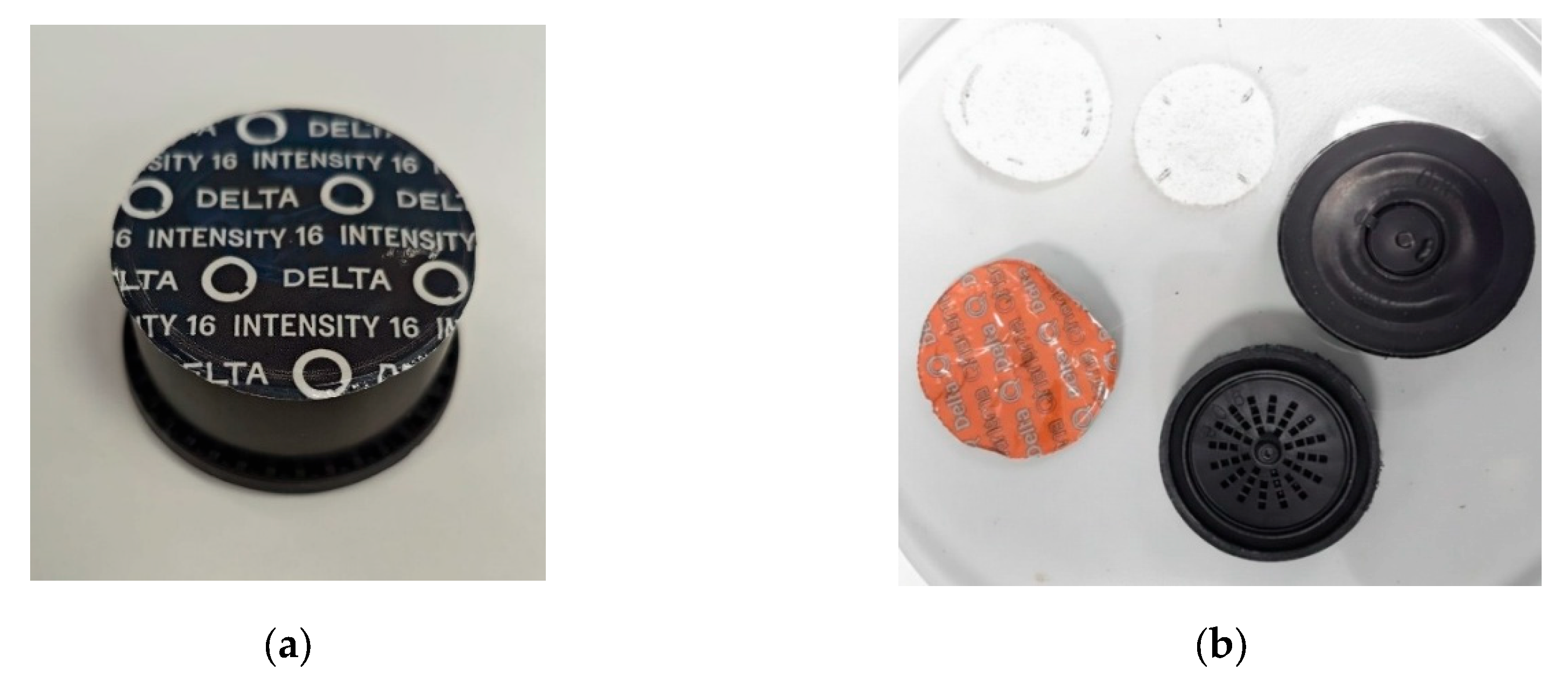
Figure 4.
Structural simulation workflow adopted in this study, showing the initial linear stages (baseline analysis and material substitution), the iterative optimization loop (geometric optimization, thickness reduction and base geometry refinement), the final validation and the design changes introduced between successive concepts.
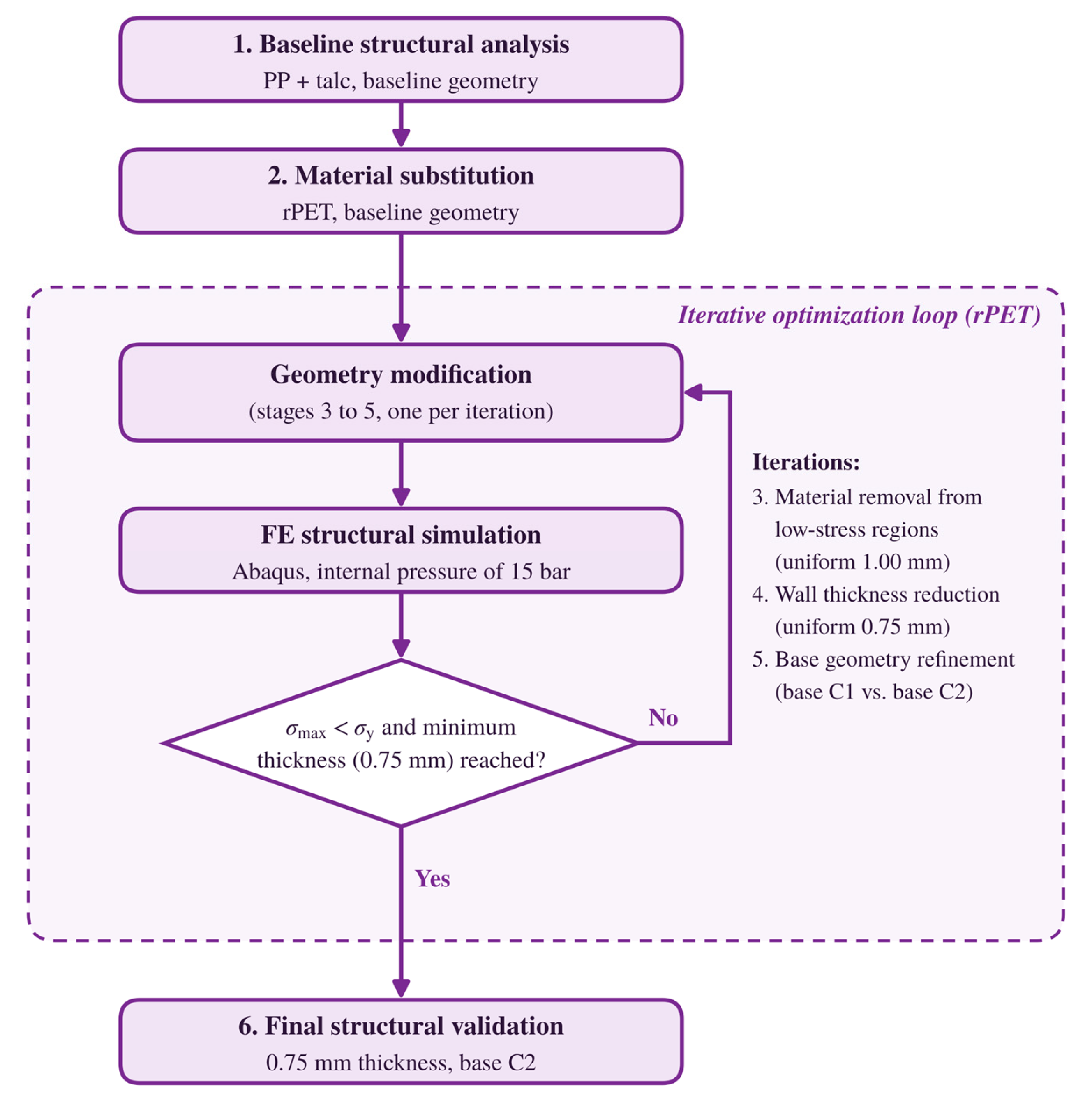
Figure 5.
Baseline Capsule Results: a) Von Mises stress distribution in the capsule body with isosurface overlay; b) Sectional view of the capsule body showing von Mises stress distribution; c) von Mises stress distribution in the capsule lid.
Figure 5.
Baseline Capsule Results: a) Von Mises stress distribution in the capsule body with isosurface overlay; b) Sectional view of the capsule body showing von Mises stress distribution; c) von Mises stress distribution in the capsule lid.
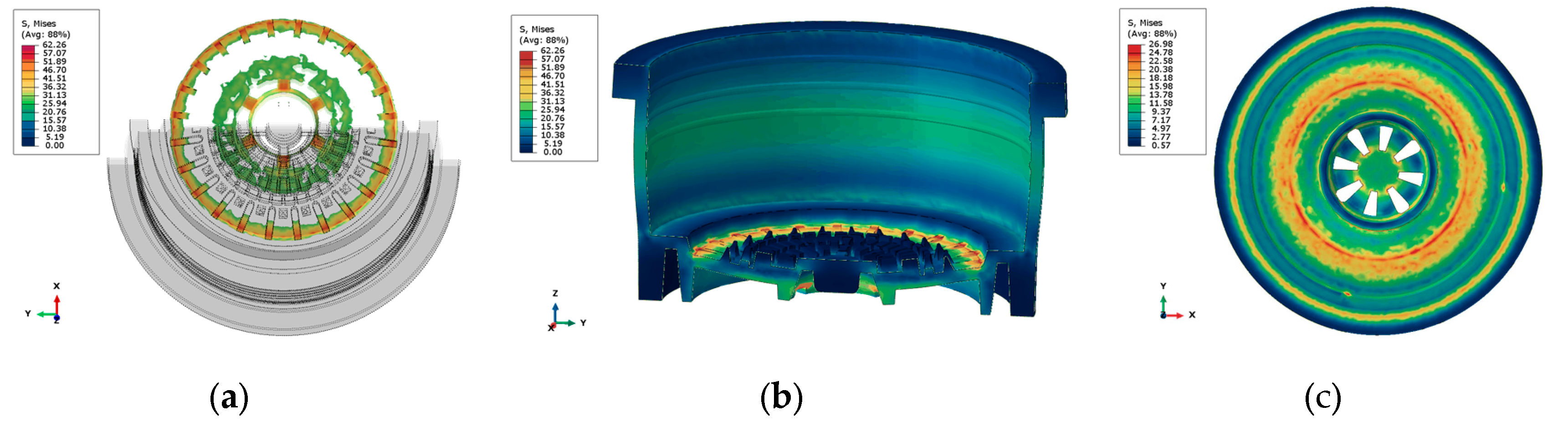
Figure 6.
Baseline Capsule Results with rPET material: a) von Mises stress distribution in the capsule body; b) von Mises stress distribution in the capsule lid.
Figure 6.
Baseline Capsule Results with rPET material: a) von Mises stress distribution in the capsule body; b) von Mises stress distribution in the capsule lid.
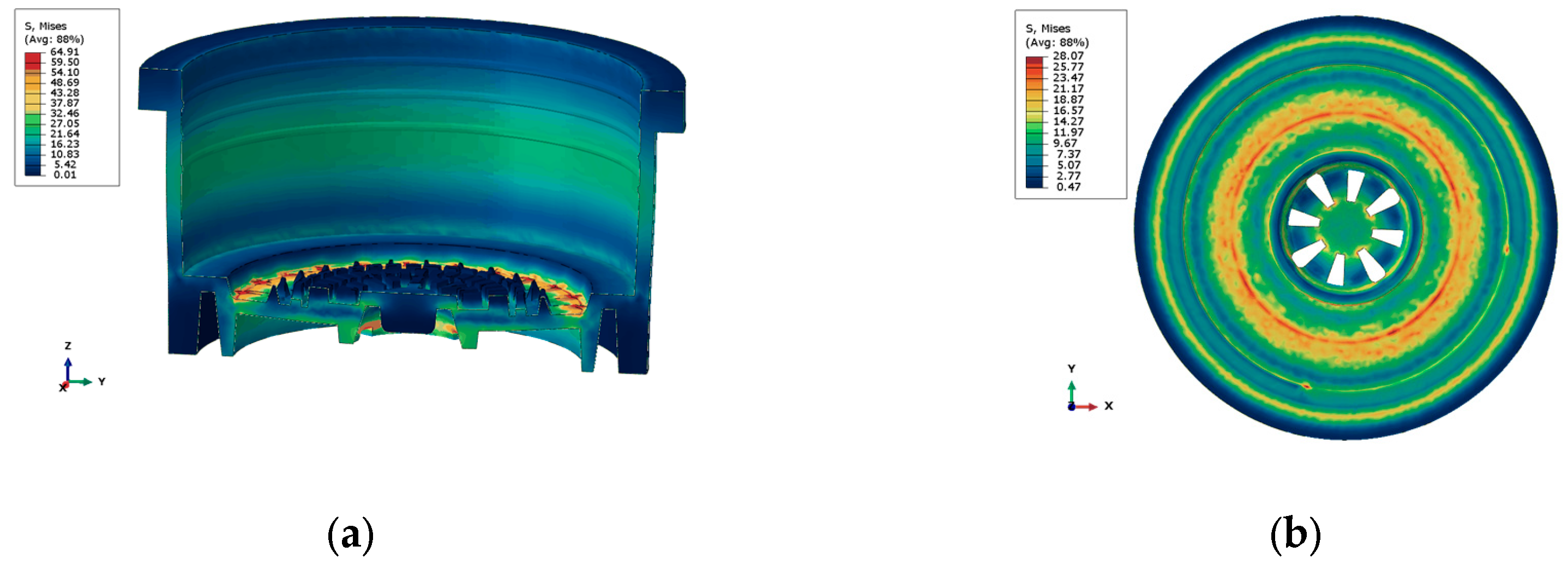
Figure 7.
First geometric iteration (uniform 1.00 mm thickness). a) Von Mises stresses from the capsule body; b) Von Mises stresses from capsule lid.
Figure 7.
First geometric iteration (uniform 1.00 mm thickness). a) Von Mises stresses from the capsule body; b) Von Mises stresses from capsule lid.
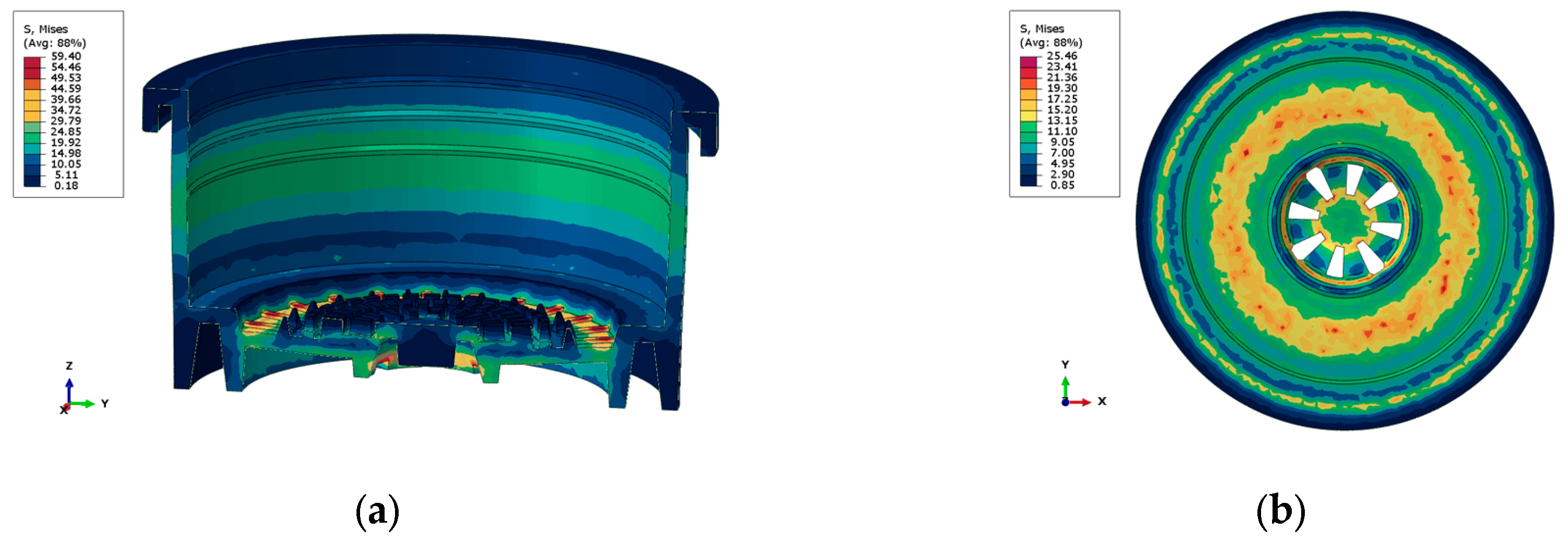
Figure 8.
Uniform 0.75 mm thickness: a) Von Mises stress distribution in the capsule body with isosurface overlay; b) von Mises stress distribution in the capsule body; c) von Mises stress distribution in the capsule lid.
Figure 8.
Uniform 0.75 mm thickness: a) Von Mises stress distribution in the capsule body with isosurface overlay; b) von Mises stress distribution in the capsule body; c) von Mises stress distribution in the capsule lid.
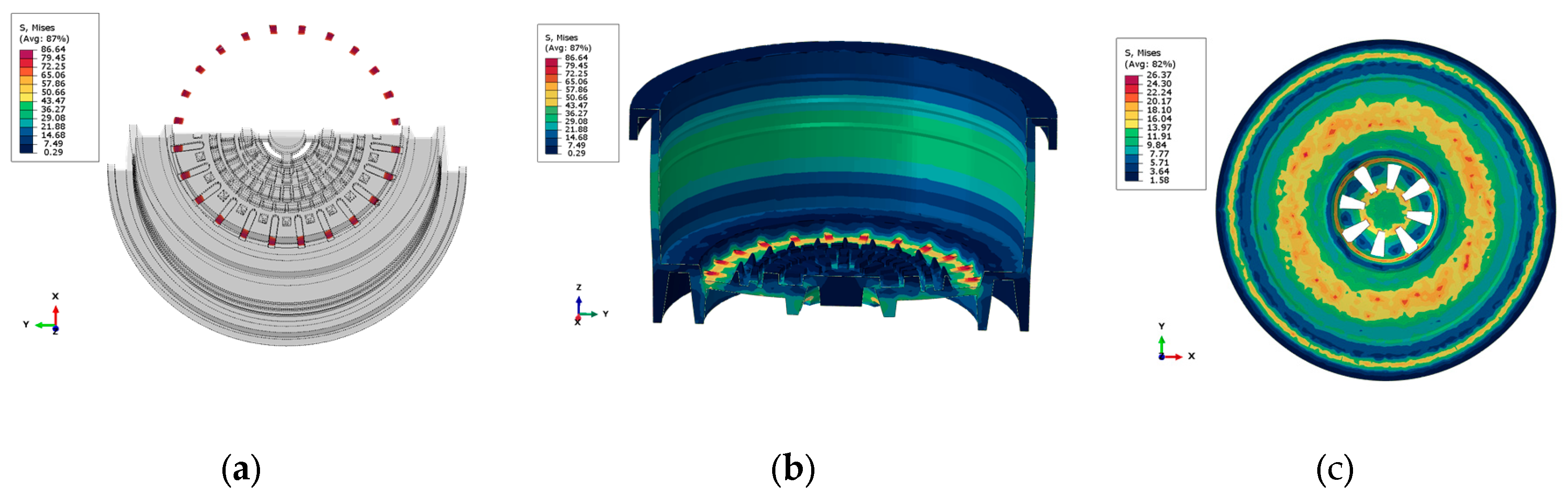
Figure 9.
Base geometry refinement with 0.75 mm thickness: a) von Mises stress distribution in the capsule body with base C1, with isosurface overlay; b) von Mises stress distribution in the capsule body with base C2 (final design); c) von Mises stress distribution in the capsule lid with base C2 (final design).
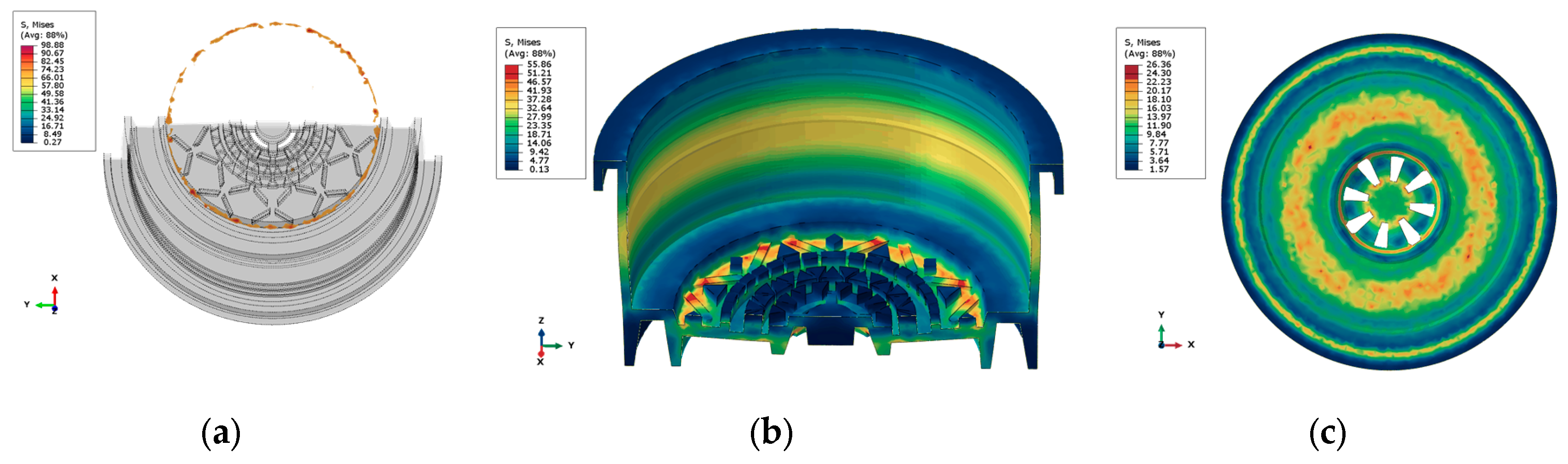
Table 1.
Results of the benchmarking study made in Portugal.
| Coffee capsule brand | Capsules Composition | ||
|---|---|---|---|
| Composition | Material | Mass (g) | |
| DeltaQ | Body | PP + Talc | 6.412 |
| Lid | PP + Talc | ||
| Filter 1 Film Filter 2 |
Paper Multilayer with Metal Metal |
0.023 0.105 0.029 |
|
| DeltaQ (Sonae) | Body | PP + PE Copolymer | 3.929 |
| Lid Film 1 Filter 1 Filter 2 Film 2 |
Metal PP PET + PP (multi-layered due to food contact) Paper Metal |
0.131 0.041 0.074 0.024 0.099 |
|
| Dolce Gusto | Body | 2 Types of PP (multi-layered due to food contact) | 2.277 |
| Film 1 | PP | 0.052 | |
| Film 2 | PET + PP (multi-layered due to food contact) | 0.248 | |
| Film 3 Filter |
Metal PP |
0.109 0.740 |
|
| Dolce Gusto (Sonae) | Body Film 1 Film 2 Film 3 FIlter |
PP + Talc PET + PP (multi-layered due to food contact) PET + PP (multi-layered due to food contact) Metal Paper |
4.113 0.081 0.183 0.066 0.035 |
| Kaffa | Body Film 1 Film 2 Filter |
PP + PE Copolymer PET + PP (multi-layered due to food contact) Metal Paper |
2.357 0.064 0.028 0.024 |
| Bicafé | Body Film 1 Film 2 |
Mix of PE + PP Metal Metal |
1.735 0.041 0.016 |
| Nicola | Body | PP + PE Copolymer | 1.853 |
| Film 1 Film 2 |
Metal Metal |
0.061 0.018 |
|
Table 2.
Main properties of the baseline (PP + talc) and redesigned capsule (rPET WORPET LB 0,80) materials.
Table 2.
Main properties of the baseline (PP + talc) and redesigned capsule (rPET WORPET LB 0,80) materials.
| Property | rPET WORPET LB 0,80 | PP + Talc (baseline) |
|---|---|---|
| Material description | Food-contact recycled PET pellets, post-consumer origin | Talc-filled polypropylene; |
| Specific gravity / density | 1.38 - 1.40 g/cm3 | 0.970 g/cm3 |
| Intrinsic viscosity | 0.80 dL/g | - |
| Crystallinity | 45% | - |
| Moisture content | max. 0.25% | - |
| Melt/processing temperature | 270 ˚C (injection molding) | - |
| Young's modulus (used in structural simulation) | 2900 MPa | 900 MPa |
| Poisson's ratio (used in structural simulation) | 0.39 | 0.43 |
| Yield strength | ~68 MPa | ~35 MPa |
Table 3.
Structural simulations performed in Abaqus and corresponding numerical inputs.
| Simulation | Material | Geometry | Number of Elements | Cross-section / base view |
|---|---|---|---|---|
| 1 | PP + Talc | Baseline | 379,880 (C3D4) + 5,000 (R3D4) | 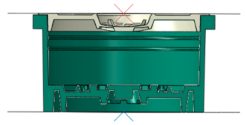 |
| 2 | rPET | Baseline | 379,880 (C3D4) + 5,000 (R3D4) | |
| 3 | rPET | Uniform 1.00 mm thickness | 355,676 (C3D4) + 5,000 (R3D4) | 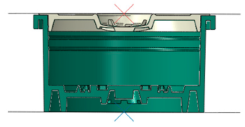 |
| 4 | rPET | Uniform 0.75 mm thickness | 315,613 (C3D4) + 5,000 (R3D4) | 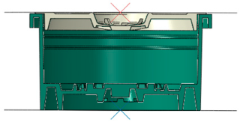 |
| 5 | rPET | 0.75 mm thickness, base C1 | 299,303 (C3D4) + 5,000 (R3D4) |  |
| 6 | rPET | 0.75 mm thickness, base C2 | 325,086 (C3D4) + 5,000 (R3D4) |  |
Cross-sections of the capsule are shown for simulations 1 to 4 (simulations 1 and 2 share the baseline geometry) and views of the capsule base are shown for simulations 5 and 6 with the same cross section than simulation 4.
Table 5.
Material volume of the capsule body across the optimization sequence.
| Simulation | Geometry | Volume (mm3) | Volume Reduction vs. Baseline |
|---|---|---|---|
| 1 | Baseline | 5046.71 | - |
| 2 | Baseline | 5046.71 | 0% |
| 3 | Uniform 1.00 mm thickness | 4582.79 | 9.2% |
| 4 | Uniform 0.75 mm thickness | 3584.75 | 29.0% |
| 5 | 0.75 mm thickness, base C1 | 3453.32 | 31.6% |
| 6 | 0.75 mm thickness, base C2 | 3751.24 | 25.7% |
Simulation 1 corresponds to the baseline geometry in PP + talc and simulations 2 to 6 use rPET. Volume reductions are relative to the baseline geometry.
Disclaimer/Publisher’s Note: The statements, opinions and data contained in all publications are solely those of the individual author(s) and contributor(s) and not of MDPI and/or the editor(s). MDPI and/or the editor(s) disclaim responsibility for any injury to people or property resulting from any ideas, methods, instructions or products referred to in the content. |
© 2026 by the authors. Licensee MDPI, Basel, Switzerland. This article is an open access article distributed under the terms and conditions of the Creative Commons Attribution (CC BY) license.
Copyright: This open access article is published under a Creative Commons CC BY 4.0 license, which permit the free download, distribution, and reuse, provided that the author and preprint are cited in any reuse.