
Submitted:
01 November 2026
Posted:
04 November 2026
You are already at the latest version
Abstract
Fecal incontinence (FI) is the recurrent and uncontrolled passage of fecal material, in-cluding episodes of soiling or underwear staining. Irritable bowel syndrome (IBS) is a disorder of gut-brain interaction characterized by recurrent abdominal pain or dis-comfort associated with altered bowel habits, including diarrhea, constipation, or a mixed pattern. Although these conditions have traditionally been considered sepa-rately, increasing evidence suggests that they frequently overlap, especially in patients with diarrhea-predominant IBS. In this setting, FI should not be regarded as a simple consequence of anal sphincter weakness. Loose stools, urgency, altered colonic transit, rectal hypersensitivity, anorectal sensorimotor dysfunction, pelvic floor impairment, and reduced continence reserve may interact and promote leakage. Additional struc-tural, iatrogenic, and patient-related factors may further increase susceptibility. The overlap is often underrecognized because many patients do not spontaneously report fecal leakage, despite its relevant impact on quality of life and daily functioning. A careful history, direct but non-stigmatizing questioning, physical examination, symp-tom assessment, and selective investigations are therefore essential to identify the dominant clinical phenotype and exclude secondary causes. Treatment should be indi-vidualized and progressive, combining optimization of bowel habits and IBS-directed strategies with anorectal rehabilitation and, when needed, more advanced FI-directed treatments. Recognizing FI as part of the clinical spectrum of IBS may improve diag-nostic accuracy, promote earlier treatment, and support a more integrated and pa-tient-centered approach to care.
Keywords:
fecal incontinence
; IBS
; urgency
; anorectal disorders
1. Introduction
Fecal incontinence (FI) is defined according to Rome V criteria as the recurrent, uncontrolled passage of fecal material for at least three months. Soiling or staining of underwear is included in this definition, whereas isolated mucus discharge and flatus incontinence are generally not included [1].
Continence depends on the coordinated interaction between stool consistency and volume, rectal sensation and compliance, internal and external anal sphincter function and integrity, pelvic floor coordination, and central/autonomic neural control. Despite its clinical relevance, FI remains a stigmatizing symptom and is still frequently underrecognized in everyday clinical practice [1,2].
Irritable bowel syndrome (IBS) is a common disorder of gut-brain interaction (DGBI), characterized by recurrent, but not continuous, abdominal pain and/or discomfort associated with changes in bowel habits, including constipation (IBS-C), diarrhea (IBS-D), or a mixed (IBS-M) bowel pattern. According to Rome V criteria, symptoms should have been present during the previous three months, with symptom onset at least six months before diagnosis [3].
Increasing evidence supports the possible coexistence of IBS and FI in the same patient [4].
When assessing the overlap between IBS and FI, the clinical setting in which patients are recruited is particularly important. Patients referred for proctological evaluation because of FI are likely to represent a selected group of individuals who are already aware of leakage episodes and perceive them as clinically relevant. By contrast, patients seen in gastroenterology clinics for IBS or other DGBI may not recognize leakage as fecal incontinence or may avoid reporting it because of embarrassment. Previous studies have shown that help-seeking for FI is influenced by symptom severity, lifestyle impairment, awareness of available treatments, and the way clinicians ask about the symptom [2,5].
From a practical standpoint, the overlap is most apparent in patients with IBS-D, in whom loose stools, urgency, and visceral hypersensitivity may converge and precipitate leakage. When FI coexists with IBS, patients tend to report more severe symptoms, poorer quality of life, greater psychological distress, and higher healthcare utilization than patients with IBS alone [6,7].
For this reason, FI in IBS should not be interpreted simply as a sphincter failure. It is better described as a multidimensional disorder in which altered bowel habits, urgency, sensory dysfunction, and reduced continence reserve may interact dynamically [8].
The aim of this narrative review is to summarize the epidemiology, pathophysiology, clinical presentation, diagnostic approach, and treatment of FI in patients with IBS.
2. Epidemiology
In the general adult population, FI affects approximately 7% to 15% of individuals, with higher rates in older adults and in the presence of gastrointestinal comorbidity [9,10]. FI is more common in patients with IBS than in the general population, although its true prevalence is likely underestimated because many patients do not report the symptom spontaneously unless specifically asked [2,7,11].
In a large UK Rome IV cohort, 26.9% of patients with IBS met criteria for FI, whereas 55.2% reported at least one leakage episode in the preceding three months [7]. In a self-reported IBS cohort, FI was observed in approximately 57% of patients, with particularly high prevalence in diarrhea-predominant and alternating bowel patterns [11].
Available data suggest that the association between these two conditions is not random. In a population-based Chinese study, IBS was one of the factors most strongly associated with FI, and almost one third of patients with FI had IBS-associated symptoms [12]. Subtype-specific data further indicate a particularly close link with IBS-D: FI has been reported more frequently in IBS-D than in IBS-C or IBS-M cohorts [13]. Older age and female sex are recognized epidemiological factors for FI overall, but sex differences within IBS cohorts are less consistent, suggesting that age, obstetric trauma history, stool pattern, and care-seeking behavior all contribute to the observed burden [9,12].
3. Pathophysiology of FI in IBS and Risk Factors
Stool Consistency, Colonic Motility and Transit
Altered stool form is one of the main mechanisms linking IBS and FI. Liquid or semi-formed stools are more difficult to retain than formed stools because they pass through the anal canal with less resistance and are less effectively contained by a borderline continence mechanism. For this reason, accelerated colonic transit and diarrhea represent major drivers of FI in IBS-D and explain why improving stool consistency is often the first therapeutic target [6,7,14]. Accelerated colonic transit has been reported in up to 45% of patients with IBS-D [15]. Nevertheless, recent studies using high-resolution colonic manometry have shown that the overall frequency of colonic pressure waves, typically ranging from 2 to 4 cycles per minute, as well as their postprandial increase, is comparable in patients with IBS-D and healthy individuals [16]. Therefore, the main motor abnormality in IBS-D appears to lie in the organization rather than the frequency of colonic activity. Although the total number of pressure waves is preserved, these waves are less likely to develop into coordinated propagating sequences, particularly following meals. Patients with IBS-D also exhibit a blunted postprandial increase in propagating activity and a loss of the normal predominance of retrograde propagation [16]. This impaired coordination of colonic motor patterns may lead to the retention of luminal contents and gas, thereby contributing to bloating and abdominal discomfort, especially during the postprandial period [15,16]. Similar mechanisms may also contribute to the development of FI in patients with IBS-D.
In IBS-D, impaired intestinal barrier function may contribute not only to diarrhea but also to symptom persistence. Increased intestinal permeability may expose the mucosa to luminal antigens, microbiota-derived products, and other noxious stimuli, promoting sustained low-grade immune activation and neuroimmune signaling. This process may maintain visceral hypersensitivity and perpetuate abdominal pain, urgency, bloating, and loose stools over time. Therefore, therapies aimed at restoring barrier integrity, such as mucoprotectants, may improve IBS-D symptoms by reducing mucosal exposure to luminal triggers; however, their effect on FI remains indirect because fecal-incontinence-specific endpoints have not been systematically evaluated in available studies [17].
Rectal Sensitivity and Urgency
Rectal hypersensitivity is a recognized feature of IBS and may shorten the interval between rectal filling and the need to defecate [18,19]. Moreover, in patients with IBS and severe urgency, a shorter duration of sustained voluntary squeeze was a significant determinant of the outcome of biofeedback treatment [20]. In patients with IBS and FI, urgency is reported much more frequently as the predominant symptom than in patients with IBS without FI, supporting the idea that a reduced ability to defer defecation may be a key mechanism in the development of leakage [7].
Anorectal Sensorimotor Dysfunction
FI is rarely the consequence of a single abnormality. Reduced resting pressure, impaired squeeze pressure, altered rectal capacity, poor discrimination between gas and stool, and abnormal rectal sensation may all contribute to leakage. In gastroenterological practice, FI often appears to depend less on isolated sphincter injury and more on the interaction between bowel symptoms and anorectal sensorimotor dysfunction [1,2,14].
The role of rectal sensory function was highlighted in a study of 24 patients with FI and formed stools who were treated with biofeedback. Patients who had a first sensory threshold of ≤50 mL and an urge threshold of ≤100 mL before treatment were more likely to benefit from biofeedback. This suggests that the effectiveness of biofeedback was more closely related to improved sensory awareness and timely sphincter activation in response to rectal filling than to a simple isolated increase in squeeze pressure [21].
Pelvic Floor Dysfunction and Descending Perineum
Pelvic floor weakness or incoordination may coexist with IBS-related bowel disturbances and further reduce functional continence reserve. Excessive perineal descent can impair the flap-valve mechanism that normally contributes to continence during increases in intra-abdominal pressure, while evacuation disorders may predispose to seepage and overflow-related leakage [1].
This aspect is particularly relevant in overlap phenotypes, where chronic constipation, incomplete evacuation, and dyssynergic defecation may coexist with urgency or loose stools.
Obstetric Injury and Childbirth-Related Pelvic Floor Damage
Obstetric anal sphincter injury (OASI) is one of the most important structural precipitants of FI in women [22]. It may disrupt the external and/or internal anal sphincter, reduce squeeze or resting pressure, and coexist with pudendal nerve stretch injury, levator trauma, perineal descent, or impaired rectoanal coordination. Recent data confirm its long-term clinical relevance: a systematic review and meta-analysis reported that approximately half of women who give birth after OASI may develop anal incontinence over their lifetime, while a prospective cohort found ongoing anal incontinence in 19.8% and past or ongoing episodes in 35.2% of women after OASI, with a substantial quality-of-life impact [23,24]. Importantly, in IBS-FI overlap, OASI should be interpreted as a reduction in continence reserve: symptoms may become clinically evident when loose stools, urgency, or increased stool frequency exceed the residual capacity of the repaired sphincter-pelvic floor unit. This interaction is supported by a recent prospective cohort showing that IBS significantly worsened FI after primary repair of major OASI and that women with both OASI and IBS had the most severe incontinence scores [25].
Prior Anorectal Surgery and Iatrogenic Reduction of Continence Reserve
Previous anorectal surgery may contribute to FI by directly weakening the internal or external anal sphincter, producing scarring and reducing anal canal compliance, altering the anal sampling mechanism, or unmasking a pre-existing borderline continence reserve. The risk depends strongly on the procedure, baseline continence status, and the amount of sphincter involved. A 2025 systematic review and meta-analysis of excisional hemorrhoidectomy and stapled hemorrhoidopexy found that postoperative incontinence was uncommon but not negligible, with late incontinence rates of 2.48% in randomized controlled trials and 1.44% in non-randomized studies, and emphasized substantial heterogeneity in reporting [26]. After lateral internal sphincterotomy for chronic anal fissure, long-term incontinence may occur but is generally mild and mainly involves gas or liquid stool, consistent with partial internal sphincter division lowering resting tone rather than causing severe solid-stool incontinence in most patients [27]. In anal fistula surgery, continence risk is especially relevant when tracts are high or complex, when repeated procedures are required, when baseline continence is already impaired, or when larger portions of sphincter are divided. A recent study highlights the need to stratify postoperative FI risk according to patient-, fistula-, and procedure-related factors [28]. In IBS-D or IBS-M patients, these iatrogenic changes may remain subclinical until urgency or loose stool overwhelms the reduced continence reserve.
Radiotherapy
Pelvic radiotherapy may contribute to IBS-like bowel dysfunction and reduce continence reserve through several mechanisms. Radiation exposure may induce persistent alterations in colonic motility and anorectal function; accelerated distal colonic transit, reduced rectal compliance, increased stool frequency, urgency, and fecal incontinence have been documented after pelvic radiotherapy [29]. Long-term survivors may also develop radiation-induced urgency and fecal-leakage syndromes [30]. In addition, radiotherapy-related gut dysbiosis and epithelial barrier dysfunction [31], together with bile acid malabsorption and bile acid diarrhea [32], may promote loose stools and urgency. These mechanisms overlap with those relevant to IBS-D and may further reduce continence reserve in patients with coexisting IBS.
Brain-Gut Axis and Psychological Factors
The overlap between IBS and FI also involves central mechanisms. Catastrophizing, gastrointestinal-specific anxiety, body hypervigilance, and symptom-related avoidance behavior may amplify perceived severity and disability, sometimes more than the objective frequency of leakage episodes [36]. GI-specific psychological factors (including symptom-specific anxiety, hypervigilance, avoidance behaviors, and impaired quality of life) should be actively assessed in patients with DGBI. In IBS-FI overlap, these factors may amplify symptom burden, increase fear of accidents, promote avoidance behaviors, and contribute to disability beyond the objective frequency of leakage episodes. A brief psychosocial assessment during the gastroenterology visit may therefore improve biopsychosocial case conceptualization and guide referral for brain-gut behavioral therapies or central neuromodulation when appropriate [37]. The main risk factors for FI in patients with IBS are summarized in Figure 1
4. Clinical Presentation
Patients with both IBS and FI may report urge FI, passive leakage, underwear soiling, and post-defecatory seepage [7,8]. In IBS setting, the most common phenotype is urge-related leakage associated with loose stools, urgency, abdominal pain, bloating, and greater overall IBS symptom severity [6,7]. A careful assessment of bowel habits is essential to distinguish true recurrent FI from diarrhea-related leakage, overflow due to constipation, or seepage related to incomplete evacuation.
The burden of this overlap is considerable. Patients frequently describe embarrassment, limitation of social and professional activities, reduced day-to-day functioning, and psychological distress [7,36]. These consequences are intensified by the unpredictability of bowel symptoms and by persistent concern about accidents occurring in public. Importantly, many patients do not spontaneously disclose fecal leakage; therefore, the absence of reported leakage should not be taken as evidence that the symptom is absent [2,36].
Obesity and Metabolic-Pelvic Floor Load
Obesity should be considered a pathophysiological amplifier rather than only an epidemiological variable. In a United States population-based analysis, waist-to-height ratio was independently associated with increased odds of FI and was a stronger predictor compared to BMI, suggesting that central adiposity may be more relevant than body mass alone [33]. Central adiposity may increase intra-abdominal pressure, thereby chronically loading the pelvic floor and anorectal closure mechanism. This may also coexist with diarrhea-related mechanisms such as accelerated transit or bile acid diarrhea, further loading patients’ pelvic floor and predisposing to FI, leading to a lower threshold for leakage in patients with IBS-D or IBS-M. A high-resolution anorectal manometry cohort further showed that class II-III obesity was independently associated with FI and that increasing BMI or severe obesity was associated with higher first rectal sensation volumes among patients with FI, supporting a possible link between obesity, altered rectal sensation, and delayed protective sphincter recruitment [34]. In a global Rome Foundation population-based study, FI was also more frequent among obese subjects and was strongly associated with urgency, loose stools, abdominal pain, and rectal pain, reinforcing the concept that obesity may interact with DGBI-related bowel and sensory pathways rather than act only through anal sphincter weakness [35].
5. Diagnosis
A detailed clinical history is the first step toward an accurate diagnosis of FI [38]. In patients with IBS, physicians should ask specifically about presence of FI; conversely, IBS symptoms should be explored in patients presenting with fecal leakage. Physicians should approach the symptom with tact and empathy because of its associated stigma [38]. History taking should include stool consistency, bowel frequency, presence of urgency, the temporal relationship between leakage and meals or evacuation, nocturnal symptoms, possible overflow related to constipation, symptoms suggestive of rectal prolapse and relevant obstetric, surgical, neurological, and radiotherapy history. The Bristol Stool Form Scale should always be used to standardize the description of stool form. A careful history should also take into account the use of medications that may potentially alter bowel habits by reducing stool consistency and/ or increasing gastrointestinal motility. Relevant medications that may alter bowel habits are summarized in Table I.
The IBS-FI overlap has particular practical relevance in gastroenterological setting. Patients referred for IBS, functional diarrhea, chronic constipation, or abdominal pain often do not recognize leakage as fecal incontinence. Some may normalize the symptom, whereas others may avoid reporting it because of embarrassment. For this reason, FI should be actively investigated using simple and non-stigmatizing questions, such as: “Do you ever lose stool unexpectedly?”, “Do you ever stain your underwear with stool?”, or “Do you ever have to rush to the toilet and not make it in time?”. Differences in referral pathways may contribute to the underdiagnosis of FI among patients with DGBI in gastroenterology care, despite the negative impact of FI on patients’ quality of life [2,5,7].
Symptom Scores and Patient-Reported Outcomes
Validated instruments should be used whenever possible to quantify baseline severity of FI and monitor treatment response. The Wexner/Cleveland Clinic Fecal Incontinence Score remains the most widely used tool, while the Vaizey/St Mark’s score also includes urgency and the use of constipating medications. The Fecal Incontinence Severity Index (FISI) weights symptom type and frequency, whereas FIQL and similar questionnaires assess the impact on quality of life [8,39,40,41]. In IBS-FI overlap, these tools should be complemented by IBS-specific measures, particularly the IBS Severity Scoring System (IBS-SSS) and, when appropriate, IBS-QOL, because bowel pain, bloating, stool pattern, and quality-of-life impairment may drive treatment decisions as much as leakage frequency [42,43].
Physical Examination
Physical examination remains essential to clarify the underlying mechanism and to exclude organic or structural disease. Abdominal examination should assess distension, tenderness, and fecal loading. Perianal inspection and digital rectal examination should evaluate anal tone, voluntary squeeze, puborectalis contraction, impacted stool, mucosal prolapse, rectocele, skin irritation, hemorrhoids, fissures, fistulas, or other structural abnormalities [2,38].
Anorectal Physiology Testing
Anorectal manometry, endoanal ultrasound, balloon expulsion testing, defecography, or pelvic magnetic resonance imaging should be reserved for patients in whom the mechanism remains uncertain, structural disease is suspected, or symptoms persist despite initial treatment. The clinical phenotype can help guide test selection: urge FI is more often associated with impaired squeeze function, rectal hypersensitivity, and reduced ability to defer defecation, whereas passive FI is more commonly associated with reduced resting tone [38,44]. In patients with mixed symptoms or incomplete evacuation, anorectal testing may identify dyssynergic defecation, rectal hyposensitivity, or impaired rectoanal coordination, shifting management from antidiarrheal-only strategies toward a biofeedback-based approach focused on coordination and sensory discrimination [8,21,45].
Exclusion of Organic Disease
In patients with IBS and FI, particularly when chronic diarrhea or IBS-D is present, the diagnostic workup should rule out secondary causes that can mimic or worsen the overlap phenotype. Selected investigations include full blood count, C-reactive protein, celiac serology, fecal calprotectin, and targeted evaluation for microscopic colitis, small intestinal bacterial overgrowth, carbohydrate malabsorption, and bile acid diarrhea. Alarm features such as weight loss, anemia, rectal bleeding, nocturnal diarrhea, family history of colorectal cancer or inflammatory bowel disease, or late onset of symptoms require careful endoscopic evaluation [1,38,46,47].
According to UEG/ESNM guidance for IBS-D and functional diarrhea, diagnosis should combine a symptom-based approach with exclusion of alarm features and selected investigations. In the same clinical context, patients with chronic diarrhea should also be asked directly about FI using appropriate phrasing, given the stigma and underreporting associated with this symptom [2,46].
A proposed diagnostic approach to IBS-FI overlap is summarized in Figure 2.
6. Treatment
FI should not be viewed as a single, purely sphincter-related disorder. In patients with IBS, particularly IBS-D and IBS-M, FI often results from an interaction among stool consistency, bowel urgency, bowel movement frequency, rectal sensitivity, ability to defer defecation, and sphincter-pelvic floor reserve. This has direct therapeutic implications. Management of FI in this setting cannot be separated from control of the predominant IBS phenotype: reducing diarrhea and urgency may improve continence even without a direct effect on sphincter function. Conversely, persistent leakage despite optimization of bowel habits should prompt dedicated anorectal assessment [6,7,13].
Accordingly, treatment should be progressive and guided by the dominant clinical phenotype.
First-Line Treatment: Conservative and Bowel-Directed Pharmacological Strategies
Conservative measures are the first step for almost all patients and are primarily aimed at symptom control. The immediate goal is to improve stool consistency and make evacuation more predictable, thereby reducing urgency, bowel frequency, and fear of accidents. This can improve patient’s confidence, autonomy, and perceived safety in daily life. Medications that may worsen diarrhea, urgency, or stool consistency should also be reviewed before initiating treatment (Table I).
- Dietary assessment is important. Potential triggers include caffeine, alcohol, excessive fructose or sorbitol intake, artificial sweeteners, and very spicy foods. In patients with IBS-D or prominent bloating, NICE-style dietary advice or a low-FODMAP approach may be considered. Dietary restriction should be targeted, periodically reassessed, and ideally supervised by clinicians or dietitians with specific expertise in functional bowel disorders [46,48,49].
- Soluble fiber, particularly psyllium, may be useful when stools are loose, poorly formed, or variable, because it improves stool consistency and cohesion of the fecal bolus. It should be introduced gradually and taken with a moderate amount of water to minimize bloating and abdominal discomfort [14,38].
- Regarding the pharmacological management of FI, loperamide is the most immediate option when loose or watery stools, increased bowel frequency, urgency, or postprandial leakage is the main feature. It may be used on demand or on a scheduled basis, including before meals in patients with meal-related leakage, because it slows intestinal transit, improves stool consistency, and makes bowel movements more predictable. Its effect is generally stronger on frequency and urgency than on abdominal pain or bloating [14,46].
- Bile acid diarrhea should be considered in patients with persistent watery diarrhea or IBS-D, particularly in the presence of recognized risk factors such as previous cholecystectomy, ileal disease or resection, and abdominal or pelvic radiotherapy. A higher BMI has also been associated with primary BAD. When BAD is suspected, bile acid sequestrants such as cholestyramine, colesevelam, or colestipol may be considered. Whenever available, a positive diagnostic strategy using SeHCAT or other validated biomarkers is preferable to an empirical therapeutic trial; the latter may be considered when testing is unavailable [46,50,51,52].
- In patients with FI related to constipation, fecal loading, or overflow, osmotic or stimulant laxatives should be used cautiously, with the aim of achieving regular rectal emptying without inducing diarrhea. Suppositories, enemas, or micro-enemas may be considered to favor predictable rectal emptying when distal retention or post-defecatory seepage is present [14,45].
- In selected IBS-D phenotypes, rifaximin, eluxadoline (where available), 5-HT3 antagonists (e.g., ondansetron), antispasmodics, or centrally acting neuromodulators may help control the dominant bowel symptoms, but they should not replace anorectal assessment when leakage persists [46].
- Mucoprotectants, such as xyloglucan, gelatin tannate, and pea protein tannins, may be considered as a complementary option in patients with mild-to-moderate IBS-D, loose stools, and urgency, with the aim of improving barrier function, stool consistency, and diarrhea-related symptoms. Their effect on FI remains indirect and has not yet been validated using FI-specific endpoints [17,46].

Table I.
Medications that should be actively reviewed in the clinical history.
| Drug or class | Examples | Why it matters in IBS-FI overlap |
|---|---|---|
| Antidiabetic drugs | Metformin, acarbose, GLP-1 receptor agonists | May induce diarrhea, urgency, or stool loosening. |
| Magnesium-containing agents | Magnesium supplements, antacids, bowel preparations | Can cause osmotic diarrhea and urgency. |
| Laxatives used unnecessarily or at excessive doses | Polyethylene glycol, lactulose, stimulant laxatives | May convert constipation/overflow into diarrhea-related leakage. |
| Cholinesterase inhibitors | Donepezil, rivastigmine, galantamine, pyridostigmine | May increase gastrointestinal motility and diarrhea. |
| Antibiotics or microbiota-altering drugs | Broad-spectrum antibiotics (repeated courses) | May trigger diarrhea or alter stool pattern. |
| Other pro-diarrheal drugs | Orlistat, colchicine, some SSRIs, bile acid preparations | May perpetuate loose stools and urgency. |
Second-Line Therapy: Anorectal Rehabilitation and Biofeedback
Pelvic floor rehabilitation and biofeedback represent the main non-pharmacological non-surgical treatment options after failure or an incomplete response to conservative measures. This approach is particularly indicated in patients with urge FI, reduced squeeze pressure, impaired rectoanal coordination, reduced ability to defer defecation, dyssynergic defecation, seepage related to incomplete evacuation, or abnormalities of rectal sensation [38,45,53].
A recently published position paper acknowledged that pelvic floor rehabilitation protocols are heterogeneous in duration, frequency, techniques used, and follow-up schedules, with few studies comparing their efficacy. Therefore, rather than describing a single universal protocol, it is more accurate to state that treatment is usually delivered as a structured, individualized program, often over multiple sessions, with reassessment based on bowel diaries, symptom scores, and functional findings according to local expertise [53].
Anorectal rehabilitation should include education on functional anorectal anatomy, selective contraction exercises of the external anal sphincter and puborectalis muscle, coordination training, and avoidance of paradoxical abdominal contraction. Home exercises are used to reinforce supervised treatment. When seepage is related to incomplete evacuation, rehabilitation may focus on improving evacuation dynamics and reducing residual rectal content.
Biofeedback adds an instrument-guided component to pelvic floor rehabilitation. It helps patients recognize and modify inadequate contraction, relaxation, or coordination patterns and may be performed using manometric or electromyographic feedback. Because standardized biofeedback protocols have been published, careful consideration of the available literature is recommended to optimize biofeedback treatment outcomes for FI [38,54].
Sensory retraining may be performed through rectal distensions with progressively adjusted volumes when altered rectal sensation is present. The program may also include urge suppression and deferral techniques aimed at improving voluntary control during urgency episodes [21,45].
Pelvic floor rehabilitation protocols for defecation disorders are heterogeneous and should be sequential, multimodal, and tailored to the patient’s functional profile. Rehabilitation may target both motor function and rectal sensory function through kinesiotherapy, biofeedback, functional electrical stimulation, and volumetric rehabilitation; therefore, biofeedback should be integrated into an individualized rehabilitation program rather than used as an isolated technique [53].
Selected FI-Directed Options in Persistent Overlap Phenotypes
Mechanical or device-based options should not be presented as routine IBS therapy. They are better framed as selected FI-directed options for patients in whom the IBS component has been optimized but leakage remains clinically relevant after appropriate phenotyping.
- Anal plugs or anal inserts may be considered in selected patients with predictable episodes, post-defecatory seepage, passive FI, or anal hypotonia, especially as a reversible and intermittent strategy. Their usefulness is limited by tolerability, discomfort, slippage, local pain, irritation, or bleeding; therefore, inspection and digital rectal examination are required before use [14,38].
- Transanal irrigation (TAI) aims to achieve scheduled emptying of the rectum and distal colon, thereby reducing leakage episodes in the following hours. In IBS-FI overlap, it is most rational when incomplete evacuation, fecal retention, overflow FI, or persistent seepage predominates rather than when uncontrolled IBS-D is the main driver. It requires motivation, training, adjustment of irrigation volume, and exclusion of relevant contraindications [38].
- Injectable anal bulking agents may be considered in selected patients with FI, particularly in passive FI or impaired anal closure, after failure of conservative treatment and pelvic floor rehabilitation. These agents are injected into the anal canal to increase tissue bulk and improve anal coaptation. Their role is more limited when the dominant phenotype is urge FI driven by diarrhea or IBS-D [38].Sacral neuromodulation and posterior tibial nerve stimulation
Sacral Neuromodulation and Posterior Tibial Nerve Stimulation
Sacral Neuromodulation (SNM) should be considered a refractory-stage option rather than a separate treatment for IBS. SNM is one of the most relevant options for FI that remains refractory to conservative first- and second-line treatment or pelvic floor rehabilitation. It is usually preceded by a test stimulation phase, with response commonly defined as at least a 50% reduction in FI episodes. In IBS-FI overlap, SNM should be considered only after diarrhea, constipation/overflow, bile acid diarrhea, medication-related diarrhea, and pelvic floor dysfunction have been adequately addressed [14,38].
Posterior tibial nerve stimulation (PTNS or TTNS) is less invasive than SNM and may be considered an intermediate option in selected patients at centers with appropriate expertise. Its role in the treatment algorithm should be considered cautiously because the evidence is variable. If no clinically meaningful improvement is observed after 8-12 weeks, the phenotype should be reassessed and alternative or complementary strategies should be considered [14,38].
Surgery and Last-Line Options
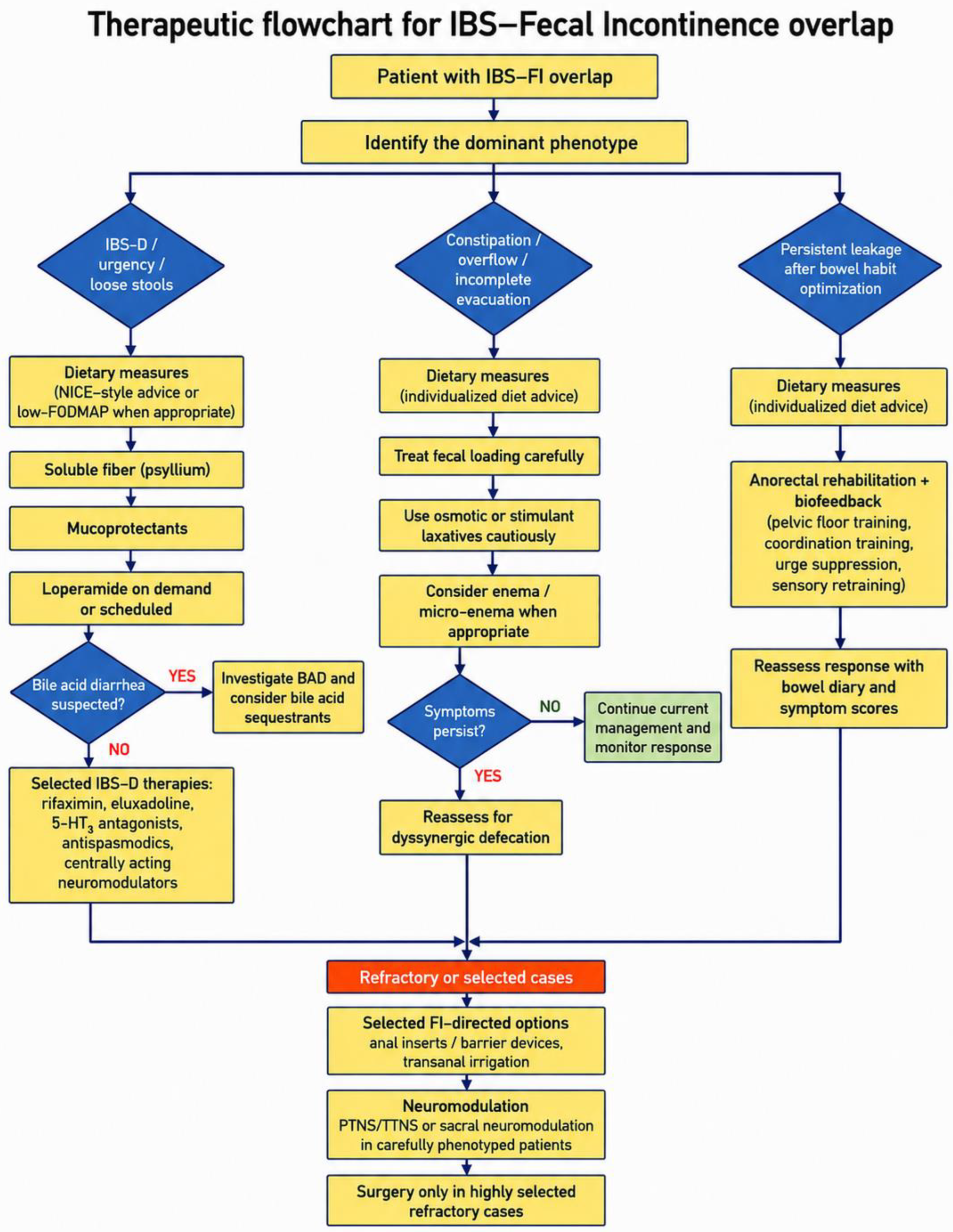
Surgical treatment should be reserved for carefully selected patients in whom conservative treatment, bowel-directed therapy, pelvic floor rehabilitation, devices, and SNM/PTNS have failed or are not appropriate. Sphincteroplasty may be considered in selected patients with a clearly defined external anal sphincter defect, often obstetric in origin, when the anatomical lesion is plausibly related to symptoms. It is not an ideal option when FI is mainly driven by diarrhea, urgency, or IBS-D in the absence of a correctable sphincter defect [8,14]. The therapeutic approach to IBS-FI overlap is summarized in Figure 3.
7. Conclusions
Fecal incontinence appears to be more frequent in patients with IBS than is commonly recognized, particularly in those with an IBS-D phenotype. Nevertheless, it remains largely underdiagnosed, mainly because many patients do not report leakage spontaneously. The association between IBS and FI is unlikely to be incidental: altered stool consistency, fecal urgency, anorectal sensorimotor dysfunction, pelvic floor reserve, and central psychological modulation interact in the development and persistence of symptoms.
From a clinical perspective, the coexistence of IBS and FI identifies a subgroup of patients with poorer quality of life, greater perceived symptom burden, and increased healthcare resource use. Diagnosis is primarily based on a careful clinical history, proactive and non-stigmatizing questioning, a bowel diary, validated scores, and selective anorectal physiology testing when the mechanism remains unclear or symptoms persist despite first-line therapy. Treatment should be individualized and directed toward the dominant pathophysiological driver, combining stool-form optimization, IBS-D-directed therapy, rectal emptying strategies when needed, pelvic floor rehabilitation, and multidisciplinary management in selected cases. The evidence summarized in this review supports three practical messages. First, patients with chronic diarrhea, IBS-D, or IBS-M should be asked proactively about accidental bowel leakage using clear and non-stigmatizing language. Second, severity assessment should include validate questionnaires that capture urgency, fecal leakage, IBS severity, and quality-of-life impairment. Third, treatment should integrate stool-form optimization, IBS symptom-directed therapy, and anorectal rehabilitation, while neuromodulation and surgical approaches should be reserved for carefully phenotype refractory patients.
Data Availability
No new data were created or analyzed in this study. Data sharing is not applicable to this article.
Declaration of AI-Generated Content
The image presented in this manuscript was generated using artificial intelligence (AI). The image was created for illustrative purposes and does not represent real patient data or clinical findings.
Author Contributions
Benedetta Falcone, Christian Lambiase, Rebecca Salemmo, Lorenzo Roncoli, Massimo Bellini, and Giuseppe Chiarioni contributed equally to the conception and design of the review and participated in drafting the manuscript. All authors critically revised the manuscript. All authors read and approved the final version of the manuscript.
Funding
This research received no external funding.
Conflicts of Interest
Giuseppe Chiarioni reports conflicts of interest with Coloplast, Mayoly and Schwabe. All other authors certify that there is no conflict of interest with any financial organization regarding the material discussed in the manuscript.
References
- Rao, S.S.C.; Bharucha, A.E.; Carrington, E.V.; Grossi, U.; Malcolm, A.; Neshatian, L.; Remes-Troche, J.M. Anorectal disorders. Gastroenterology 2026, 170, 1318–1346. [Google Scholar] [CrossRef]
- Savarino, E.V.; Chiarioni, G. Improved diagnosis of faecal incontinence in the gastroenterology domain: the time to act has come. United Eur. Gastroenterol. J. 2024, 12, 425–426. [Google Scholar] [CrossRef]
- Corsetti, M.; Shin, A.; Lacy, B.E.; Cash, B.D.; Simren, M.; Schmulson, M.J.; Hou, X.; Lembo, A. Bowel disorders. Gastroenterology 2026, 170, 1261–1282. [Google Scholar] [CrossRef]
- Lin, L.; Chang, L. Benefits and pitfalls of change from Rome III to Rome IV criteria for irritable bowel syndrome and fecal incontinence. Clin. Gastroenterol. Hepatol. 2020, 18, 297–299. [Google Scholar] [CrossRef]
- Kunduru, L.; Kim, S.M.; Heymen, S.; Whitehead, W.E. Factors that affect consultation and screening for fecal incontinence. Clin. Gastroenterol. Hepatol. 2015, 13, 709–716. [Google Scholar] [CrossRef]
- Simren, M.; Palsson, O.S.; Heymen, S.; Bajor, A.; Tornblom, H.; Whitehead, W.E. Fecal incontinence in irritable bowel syndrome: prevalence and associated factors in Swedish and American patients. Neurogastroenterol. Motil. 2017, 29, e12919. [Google Scholar] [CrossRef]
- Goodoory, V.C.; Ng, C.E.; Black, C.J.; Ford, A.C. Prevalence and impact of faecal incontinence among individuals with Rome IV irritable bowel syndrome. Aliment. Pharmacol. Ther. 2023, 57, 1083–1092. [Google Scholar] [CrossRef]
- Dexter, E.; Walshaw, J.; Wynn, H.; Dimashki, S.; Leo, A.; Lindsey, I.; Yiasemidou, M. Faecal incontinence-a comprehensive review. Front. Surg. 2024, 11, 1340720. [Google Scholar] [CrossRef]
- Whitehead, W.E.; Simren, M.; Busby-Whitehead, J.; Heymen, S.; van Tilburg, M.A.L.; Sperber, A.D.; Palsson, O.S. Fecal incontinence diagnosed by the Rome IV criteria in the United States, Canada, and the United Kingdom. Clin. Gastroenterol. Hepatol. 2020, 18, 385–391. [Google Scholar] [CrossRef]
- Ditah, I.; Devaki, P.; Luma, H.N.; Ditah, C.; Njei, B.; Jaiyeoba, C.; Salami, A.; Ditah, C.; Ewelukwa, O.; Szarka, L. Prevalence, trends, and risk factors for fecal incontinence in United States adults, 2005-2010. Clin. Gastroenterol. Hepatol. 2014, 12, 636–643.e1–e2. [Google Scholar] [CrossRef]
- Atarodi, S.; Rafieian, S.; Whorwell, P.J. Faecal incontinence-the hidden scourge of irritable bowel syndrome: a cross-sectional study. BMJ Open Gastroenterol. 2014, 1, e000002. [Google Scholar] [CrossRef]
- Sun, G.; Trzpis, M.; Ding, H.; Gao, X.; Broens, P.M.A.; Zhang, W. Co-occurrence of fecal incontinence with constipation or irritable bowel syndrome indicates the need for personalized treatment. Neurogastroenterol. Motil. 2023, 35, e14633. [Google Scholar] [CrossRef]
- Pereyra, F.; Bustos Fernandez, L.M.; Schlottmann, F.; Zamora, R.; Marconi, A.; Steinberg, L.; Pereyra, L. Prevalence of extra-intestinal symptoms according to irritable bowel syndrome subtype. Neurogastroenterol. Motil. 2024, 36, e14796. [Google Scholar] [CrossRef]
- Blackett, J.W.; Bharucha, A.E. Fecal incontinence in adults: new therapies. Am. J. Gastroenterol. 2025, 120, 2027–2041. [Google Scholar] [CrossRef]
- Spiller, R.; Aziz, Q.; Creed, F.; Emmanuel, A.; Houghton, L.; Hungin, P.; Jones, R.; Kumar, D.; Rubin, G.; Trudgill, N.; et al. Guidelines on the irritable bowel syndrome: mechanisms and practical management. Gut 2007, 56, 1770–1798. [Google Scholar] [CrossRef]
- Wiklendt, L.; Mohd Rosli, R.; Kumar, R.; Paskaranandavadivel, N.; Bampton, P.A.; Maslen, L.; Costa, M.; Brookes, S.J.; O’Grady, G.; Dinning, P.G. Inhibited postprandial retrograde cyclic motor pattern in the distal colon of patients with diarrhea-predominant irritable bowel syndrome. Am. J. Physiol. Gastrointest. Liver Physiol. 2023, 325, G62–G79. [Google Scholar] [CrossRef]
- Rettura, F.; Lambiase, C.; Tedeschi, R.; Grosso, A.; Cancelli, L.; Ricchiuti, A.; Bottari, A.; Giacomelli, L.; de Bortoli, N.; Bellini, M. Mucoprotectants and gut barrier: mechanisms of action and clinical applications in IBS. Is there a possible role? Front. Pharmacol. 2025, 16, 1538791. [Google Scholar] [CrossRef]
- Mertz, H.; Naliboff, B.; Munakata, J.; Niazi, N.; Mayer, E.A. Altered rectal perception is a biological marker of patients with irritable bowel syndrome. Gastroenterology 1995, 109, 40–52. [Google Scholar] [CrossRef]
- Mearin, F.; Lacy, B.E.; Chang, L.; Chey, W.D.; Lembo, A.J.; Simren, M.; Spiller, R. Bowel disorders. Gastroenterology 2016, 150, 1393–1407. [Google Scholar] [CrossRef]
- Chiarioni, G.; Scattolini, C.; Bonfante, F.; Vantini, I. Liquid stool incontinence with severe urgency: anorectal function and effective biofeedback treatment. Gut 1993, 34, 1576–1580. [Google Scholar] [CrossRef]
- Chiarioni, G.; Bassotti, G.; Stanganini, S.; Vantini, I.; Whitehead, W.E. Sensory retraining is key to biofeedback therapy for formed stool fecal incontinence. Am. J. Gastroenterol. 2002, 97, 109–117. [Google Scholar] [CrossRef]
- Okeahialam, N.A.; Taithongchai, A.; Thakar, R.; Sultan, A.H. The incidence of anal incontinence following obstetric anal sphincter injury graded using the Sultan classification: a network meta-analysis. Am. J. Obstet. Gynecol. 2023, 228, 675–688.e13. [Google Scholar] [CrossRef]
- Carter, E.; Hall, R.; Ajoku, K.; Myers, J.; Kearney, R. Caesarean section and anal incontinence in women after obstetric anal sphincter injury: a systematic review and meta-analysis. BJOG 2025, 132, 1032–1044. [Google Scholar] [CrossRef]
- Rebmann, E.; Hamel, J.F.; Helbert, C.; Lemasson, F.; Legendre, G.; Venara, A. Anal incontinence after obstetrical anal sphincter injury significantly impacts quality of life for women: a cohort study. Langenbecks Arch. Surg. 2024, 409, 67. [Google Scholar] [CrossRef]
- Sarofim, M.; Slaar, A.; Dermout, S.; den Boer, F.; Engel, A. Irritable bowel syndrome worsens faecal incontinence after primary repair of major obstetric anal sphincter injuries. Colorectal Dis. 2024, 26, 508–514. [Google Scholar] [CrossRef]
- Jin, J.Z.; Men, V.; Bahl, P.; Penneru, H.; Yang, R.; Shah, N.; Hill, A.G. The prevalence of incontinence after excisional hemorrhoidectomy and stapled hemorrhoidopexy: a systematic review and meta-analysis. Surgery 2025, 180, 109139. [Google Scholar] [CrossRef]
- Realis Luc, A.; Di Vittori, A.; Salvatore, A.; Gravante, G.; De Simone, V.; Micarelli, A.; Clerico, G.; Trompetto, M.; Gallo, G. Long-term incontinence rates after traditional lateral internal sphincterotomy: a 5-year retrospective analysis from a high-volume tertiary referral center for proctologic disorders. Tech. Coloproctol. 2025, 29, 149. [Google Scholar] [CrossRef]
- Tang, C.; Mei, Z. Risk factors for fecal incontinence after surgery for cryptoglandular anal fistula: protocol of a meta-analytic study. PLoS ONE 2026, 21, e0351563. [Google Scholar] [CrossRef]
- Yeoh, E.K.; Bartholomeusz, D.L.; Holloway, R.H.; Fraser, R.J.; Botten, R.; Di Matteo, A.; Moore, J.W.; Schoeman, M.N. Disturbed colonic motility contributes to anorectal symptoms and dysfunction after radiotherapy for carcinoma of the prostate. Int. J. Radiat. Oncol. Biol. Phys. 2010, 78, 773–780. [Google Scholar] [CrossRef]
- Steineck, G.; Skokic, V.; Sjoberg, F.; Bull, C.; Alevronta, E.; Dunberger, G.; Bergmark, K.; Wilderang, U.; Oh, J.H.; Deasy, J.O.; et al. Identifying radiation-induced survivorship syndromes affecting bowel health in a cohort of gynecological cancer survivors. PLoS ONE 2017, 12, e0171461. [Google Scholar] [CrossRef]
- Wang, Z.; Wang, Q.; Wang, X.; Zhu, L.; Chen, J.; Zhang, B.; Chen, Y.; Yuan, Z. Gut microbial dysbiosis is associated with development and progression of radiation enteritis during pelvic radiotherapy. J. Cell. Mol. Med. 2019, 23, 3747–3756. [Google Scholar] [CrossRef]
- Phillips, F.; Muls, A.C.G.; Lalji, A.; Andreyev, H.J.N. Are bile acid malabsorption and bile acid diarrhoea important causes of loose stool complicating cancer therapy? Colorectal Dis. 2015, 17, 730–734. [Google Scholar] [CrossRef]
- Hiramoto, B.; Flanagan, R.; Muftah, M.; Shah, E.D.; Chan, W.W. Centrally distributed adiposity as a modifiable risk factor for fecal incontinence: United States population-based analysis. Clin. Gastroenterol. Hepatol. 2024, 22, 1908–1916.e1. [Google Scholar] [CrossRef]
- Lodhia, N.A.; Hiramoto, B.; Horton, L.; Goldin, A.H.; Chan, W.W. Obesity is independently associated with increased risk of fecal incontinence and altered rectal sensitivity. Am. J. Gastroenterol. 2025, 120, 2373–2381. [Google Scholar] [CrossRef]
- van Gils, T.; Algera, J.P.; Hreinsson, J.P.; Bangdiwala, S.I.; Tornblom, H.; Sperber, A.D.; Simren, M.; Palsson, O.S. Prevalence and associated factors of fecal incontinence: a global population-based study. Clin. Gastroenterol. Hepatol. 2026, 24, 1970–1980. [Google Scholar] [CrossRef]
- Hunt, M.G.; Wong, C.; Aajmain, S.; Dawodu, I. Fecal incontinence in people with self-reported irritable bowel syndrome: prevalence and quality of life. J. Psychosom. Res. 2018, 113, 45–51. [Google Scholar] [CrossRef]
- Ballou, S.; Vasant, D.H.; Guadagnoli, L.; Reed, B.; Chiarioni, G.; ten Cate, L.; Keefer, L.; Kinsinger, S.W. A primer for the gastroenterology provider on psychosocial assessment of patients with disorders of gut-brain interaction. Neurogastroenterol. Motil. 2024, 36, e14894. [Google Scholar] [CrossRef]
- Assmann, S.L.; Keszthelyi, D.; Kleijnen, J.; Anastasiou, F.; Bradshaw, E.; Brannigan, A.E.; Carrington, E.V.; Chiarioni, G.; Ebben, L.D.A.; Gladman, M.A.; et al. Guideline for the diagnosis and treatment of faecal incontinence: a UEG/ESCP/ESNM/ESPCG collaboration. United Eur. Gastroenterol. J. 2022, 10, 251–286. [Google Scholar] [CrossRef]
- Jorge, J.M.N.; Wexner, S.D. Etiology and management of fecal incontinence. Dis. Colon Rectum 1993, 36, 77–97. [Google Scholar] [CrossRef]
- Vaizey, C.J.; Carapeti, E.; Cahill, J.A.; Kamm, M.A. Prospective comparison of fecal incontinence grading systems. Gut 1999, 44, 77–80. [Google Scholar] [CrossRef]
- Rockwood, T.H.; Church, J.M.; Fleshman, J.W.; Kane, R.L.; Mavrantonis, C.; Thorson, A.G.; Wexner, S.D.; Bliss, D.; Lowry, A.C. Fecal Incontinence Quality of Life Scale: quality of life instrument for patients with fecal incontinence. Dis. Colon Rectum 2000, 43, 9–16. [Google Scholar] [CrossRef]
- Francis, C.Y.; Morris, J.; Whorwell, P.J. The irritable bowel severity scoring system: a simple method of monitoring irritable bowel syndrome and its progress. Aliment. Pharmacol. Ther. 1997, 11, 395–402. [Google Scholar] [CrossRef]
- Patrick, D.L.; Drossman, D.A.; Frederick, I.O.; DiCesare, J.; Puder, K.L. Quality of life in persons with irritable bowel syndrome: development and validation of a new measure. Dig. Dis. Sci. 1998, 43, 400–411. [Google Scholar] [CrossRef]
- Pahwa, A.K.; Khanijow, K.D.; Harvie, H.S.; Arya, L.A.; Andy, U.U. Comparison of patient impact and clinical characteristics between urgency and passive fecal incontinence phenotypes. Female Pelvic Med. Reconstr. Surg. 2020, 26, 570–574. [Google Scholar] [CrossRef]
- Rao, S.S.C.; Benninga, M.A.; Bharucha, A.E.; Chiarioni, G.; Di Lorenzo, C.; Whitehead, W.E. ANMS-ESNM position paper and consensus guidelines on biofeedback therapy for anorectal disorders. Neurogastroenterol. Motil. 2015, 27, 594–609. [Google Scholar] [CrossRef]
- Savarino, E.; Zingone, F.; Barberio, B.; Marasco, G.; Akyuz, F.; Akpinar, H.; Barboi, O.; Bodini, G.; Bor, S.; Chiarioni, G.; et al. Functional bowel disorders with diarrhoea: clinical guidelines of the United European Gastroenterology and European Society for Neurogastroenterology and Motility. United Eur. Gastroenterol. J. 2022, 10, 556–584. [Google Scholar] [CrossRef]
- Barbara, G.; Cremon, C.; Bellini, M.; Corsetti, M.; Di Nardo, G.; Falangone, F.; Fuccio, L.; Galeazzi, F.; Iovino, P.; Sarnelli, G.; et al. Italian guidelines for the management of irritable bowel syndrome: Joint Consensus from the Italian Societies of Gastroenterology and Endoscopy (SIGE), Neurogastroenterology and Motility (SINGEM), Hospital Gastroenterologists and Endoscopists (AIGO), Digestive Endoscopy (SIED), General Medicine (SIMG), Gastroenterology, Hepatology and Pediatric Nutrition (SIGENP) and Pediatrics (SIP). Dig. Liver Dis. 2023, 55, 187–207. [Google Scholar] [CrossRef]
- Chey, W.D.; Hashash, J.G.; Manning, L.; Chang, L. AGA Clinical Practice Update on the role of diet in irritable bowel syndrome: expert review. Gastroenterology 2022, 162, 1737–1745.e5. [Google Scholar] [CrossRef]
- Bellini, M.; Tonarelli, S.; Barracca, F.; Morganti, R.; Pancetti, A.; Bertani, L.; de Bortoli, N.; Costa, F.; Mosca, M.; Marchi, S.; et al. A low-FODMAP diet for irritable bowel syndrome: some answers to the doubts from a long-term follow-up. Nutrients 2020, 12, 2360. [Google Scholar] [CrossRef]
- Barbara, G.; Bellini, M.; Portincasa, P.; Stanghellini, V.; Annibale, B.; Benedetti, A.; Cammarota, G.; Fries, W.; Usai Satta, P.; Corazziari, E.S. Bile acid diarrhea in patients with chronic diarrhea. Current appraisal and recommendations for clinical practice. Dig. Liver Dis. 2025, 57, 680–687. [Google Scholar] [CrossRef]
- Berti, G.; Rettura, F.; Lambiase, C.; Bellini, M. Empirical trial or diagnostic tests for bile acid diarrhea? That is the question! J. Dig. Dis. 2021, 22, 557–558. [Google Scholar] [CrossRef]
- Gracie, D.J.; Kane, J.S.; Mumtaz, S.; Scarsbrook, A.F.; Chowdhury, F.U.; Ford, A.C. Prevalence of, and predictors of, bile acid malabsorption in outpatients with chronic diarrhea. Neurogastroenterol. Motil. 2012, 24, 983–e538. [Google Scholar] [CrossRef]
- Bocchini, R.; Chiarioni, G.; Corazziari, E.; Pucciani, F.; Torresan, F.; Alduini, P.; Bassotti, G.; Battaglia, E.; Ferrarini, F.; Galeazzi, F.; et al. Pelvic floor rehabilitation for defecation disorders. Tech. Coloproctol. 2019, 23, 101–115. [Google Scholar] [CrossRef]
- Chiarioni, G.; Ferri, B.; Morelli, A.; Iantorno, G.; Bassotti, G. Bio-feedback treatment of fecal incontinence: where are we, and where are we going? World J. Gastroenterol. 2005, 11, 4771–4775. [Google Scholar] [CrossRef]
Figure 1.
Pathophysiological mechanisms and risk factors for fecal incontinence in IBS. Bowel dysfunction, altered motility and transit, rectal sensitivity, pelvic floor impairment, obesity, obstetric or surgical injury, and psychological factors may interact to reduce continence reserve and promote leakage.
Figure 1.
Pathophysiological mechanisms and risk factors for fecal incontinence in IBS. Bowel dysfunction, altered motility and transit, rectal sensitivity, pelvic floor impairment, obesity, obstetric or surgical injury, and psychological factors may interact to reduce continence reserve and promote leakage.
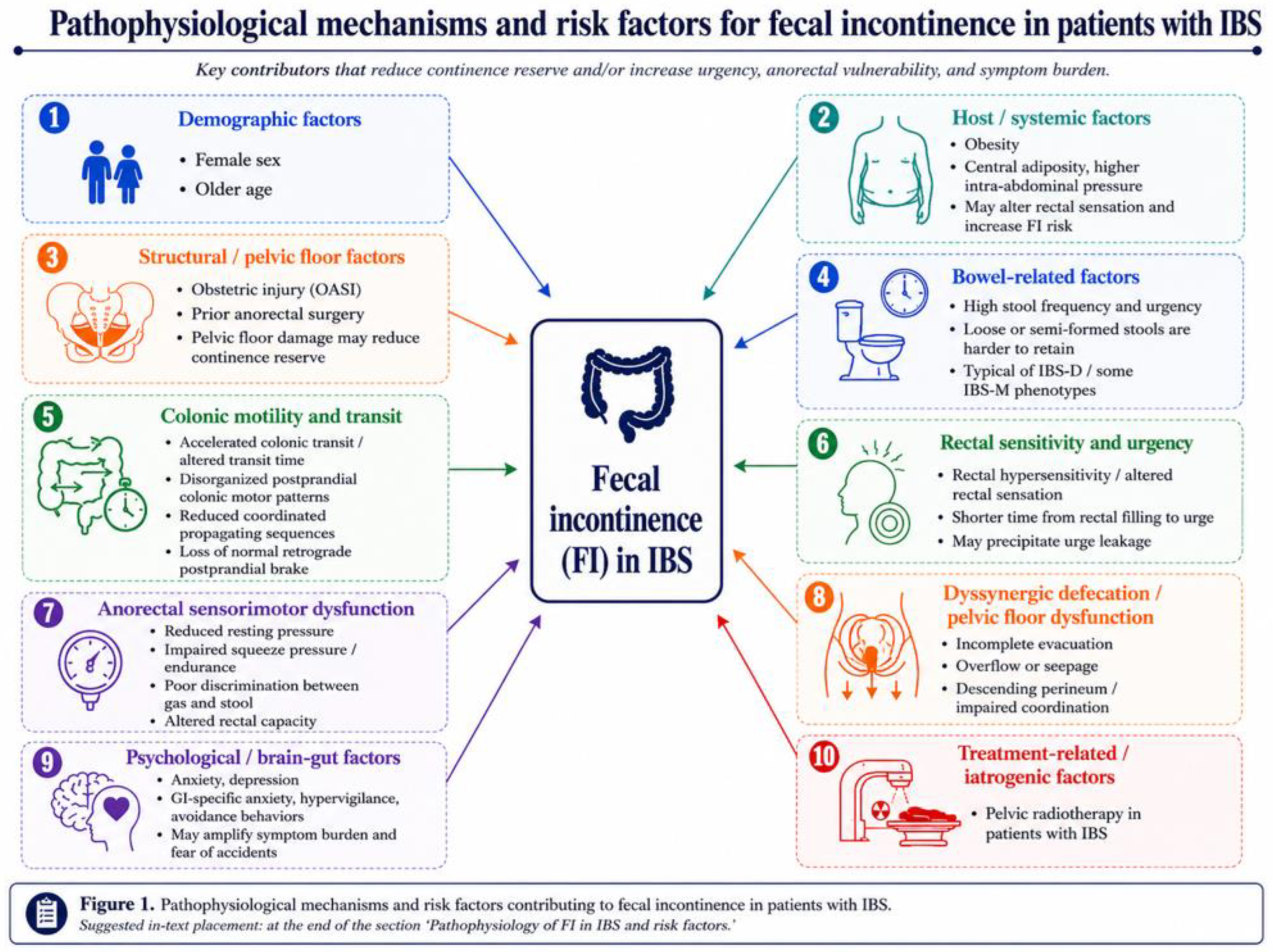
Figure 2.
Diagnostic flowchart for IBS-Fecal Incontinence overlap.
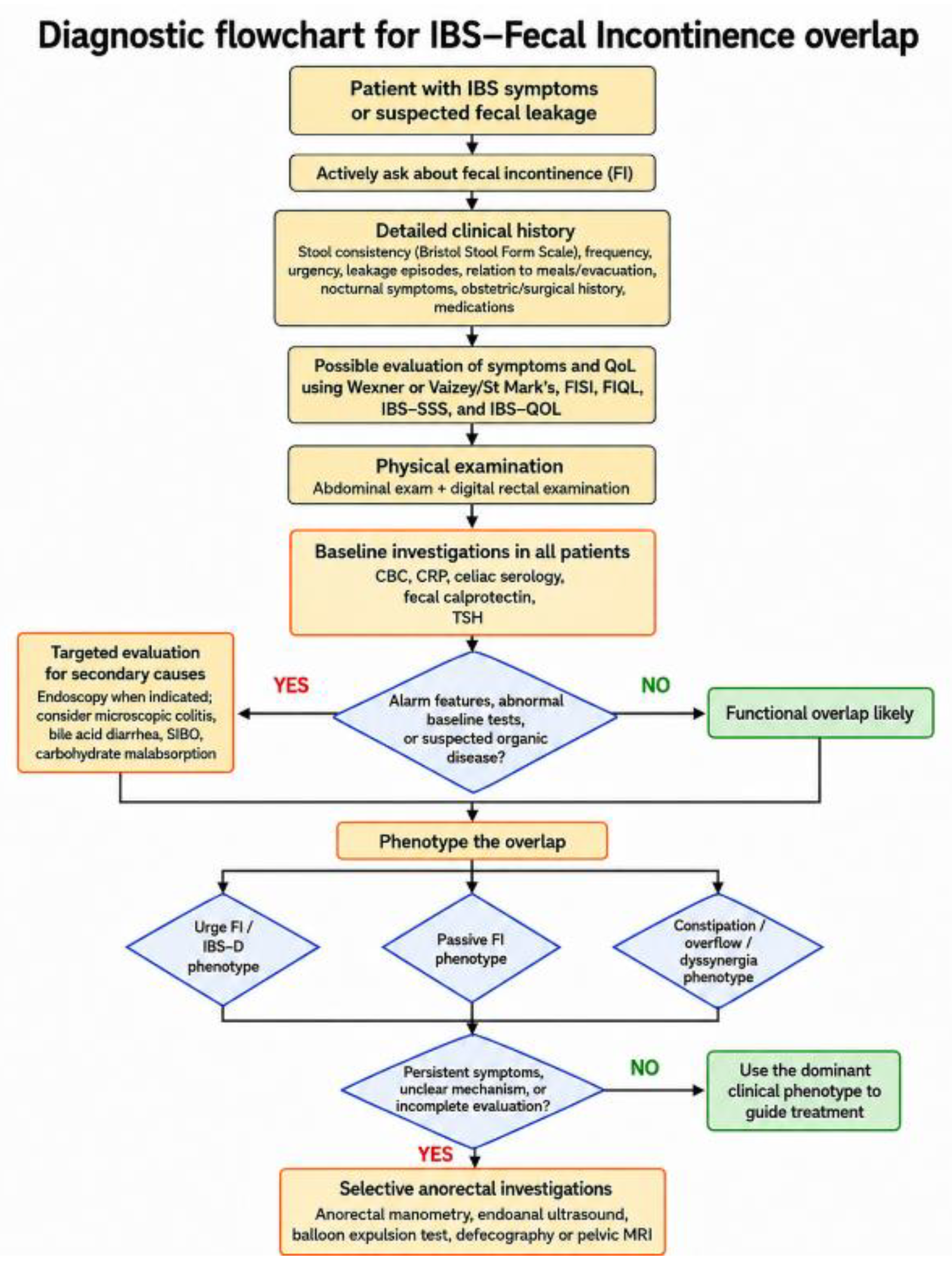
Figure 3.
Therapeutic flowchart for IBS–fecal incontinence overlap. Treatment is guided by the dominant clinical phenotype, with escalation to FI-directed therapies in selected refractory cases.
Figure 3.
Therapeutic flowchart for IBS–fecal incontinence overlap. Treatment is guided by the dominant clinical phenotype, with escalation to FI-directed therapies in selected refractory cases.
Disclaimer/Publisher’s Note: The statements, opinions and data contained in all publications are solely those of the individual author(s) and contributor(s) and not of MDPI and/or the editor(s). MDPI and/or the editor(s) disclaim responsibility for any injury to people or property resulting from any ideas, methods, instructions or products referred to in the content. |
© 2026 by the authors. Licensee MDPI, Basel, Switzerland. This article is an open access article distributed under the terms and conditions of the Creative Commons Attribution (CC BY) license (http://creativecommons.org/licenses/by/4.0/).
Copyright: This open access article is published under a Creative Commons CC BY 4.0 license, which permit the free download, distribution, and reuse, provided that the author and preprint are cited in any reuse.