

Submitted:
31 October 2026
Posted:
03 November 2026
You are already at the latest version
Abstract
The gastrointestinal tract is increasingly recognized as an integrated regulatory system in which digestion, epithelial barrier integrity, host-microbial interactions, immune surveillance, neuroenteric coordination, and metabolic regulation are closely interconnected. Classical Ayurveda has long conceptualized gastrointestinal regulation through the interrelated principles of Agni, Ama, Grahani, Koshtha, Srotas, Dosha, and Nidana Panchaka, providing a systems-oriented framework for understanding digestive physiology and disease. However, contemporary clinical practice and translational research require objective physiological tools capable of complementing classical Ayurvedic assessment without compromising its conceptual or epistemological foundations. This review proposes an Ayurveda Biology and systems medicine framework for integrating representative gastrointestinal biomarkers into Ayurvedic diagnosis, practice, and research. Rather than treating biomarkers as direct biological equivalents of Ayurvedic concepts, the proposed framework interprets them as objective indicators of physiological domains underlying gastric function, digestive transformation, epithelial barrier integrity, host-microbial homeostasis, mucosal immunity, neuroenteric regulation, & energy homeostasis. It further illustrates how these biomarkers may complement Nidana Panchaka and Shatkriyakala, facilitating physiological characterization, clinical stratification, therapeutic monitoring, mechanistic investigation, and translational research while preserving the primacy of classical Ayurvedic reasoning. By bridging classical Ayurvedic physiology with contemporary systems biology and gastroenterology, this framework provides a scientifically rigorous yet conceptually authentic foundation for biomarker-assisted Ayurveda. The proposed Ayurveda Biology model offers a practical translational pathway for strengthening diagnosis, advancing research, fostering interdisciplinary collaboration, and restoring gut health through the convergence of holistic Ayurvedic principles and modern physiological science.
Keywords:
Ayurveda Biology
; Agni
; Grahani
; gastrointestinal biomarkers
; systems medicine
1. Background and Rationale
The gastrointestinal tract is no longer understood merely as a digestive organ. It is now recognised as an integrated regulatory system in which digestion, epithelial barrier function, immune surveillance, microbial metabolism, neuroendocrine signaling, motility and energy homeostasis are closely interconnected.[1,2,3,4] Modern gastroenterology increasingly recognizes this complexity through concepts such as disorders of gut-brain interaction, microbiome-host interaction, mucosal immune activation, barrier dysfunction and metabolic inflammation.[3,4,5,6] Long before the emergence of systems medicine Ayurveda placed gastrointestinal regulation at the center of health and disease through the interrelated concepts of Agni, Ama, Grahani, Koshtha and Srotas, and therefore may provide a mature systems-oriented framework for understanding digestive physiology and its systemic consequences. [7,8,9,10] Although these concepts continue to guide Ayurvedic diagnosis and management, objectively characterizing their underlying physiological domains using contemporary clinical methods remains challenging, thereby limiting their broader integration into evidence-informed research and multidisciplinary healthcare.
However, there is a growing gap between classical Ayurvedic diagnostic frameworks and the demands of contemporary clinical practice. In contemporary clinical practice many patients present with chronic dyspepsia, reflux, bloating, altered bowel habits, food intolerance, chronic diarrhea, inflammatory bowel disease, metabolic syndrome or functional gastrointestinal symptoms despite normal endoscopy or non-specific routine investigations.[5] Indeed, Indian studies have shown that nearly half of patients undergoing upper gastrointestinal endoscopy for dyspepsia demonstrate normal endoscopic findings, highlighting the limitations of structural evaluation alone and emphasizing the need for complementary physiological assessment.[11,12] In such cases, purely symptom-based assessment may not adequately distinguish acid excess from hypochlorhydria, inflammatory diarrhea from functional diarrhea, differentiation of Grahani-associated digestive dysfunction from primary pancreatic exocrine insufficiency and related causes of maldigestion, bile acid diarrhea from irritable bowel syndrome, or reflux-related throat symptoms from non-reflux etiologies.
This does not imply any inadequacy in the principles of Ayurvedic diagnosis. Instead, contemporary integrative clinical practice and translational research increasingly require objective physiological tools that can complement classical Ayurvedic assessment while facilitating interdisciplinary communication and scientific investigation. Such an approach may also facilitate objective characterisation and stratification of complex gastrointestinal states. Appropriately interpreted gastrointestinal biomarkers can fulfill this role when used contextually and in a manner that preserves the epistemological foundations of Ayurveda. Agni should not be reduced to hydrochloric acid, Ama should not be reduced to endotoxin, and Srotas should not be reduced to anatomical ducts. Instead biomarkers reflecting gastric function, epithelial barrier integrity, microbial metabolism, mucosal immunity, neuroenteric regulation, and digestive physiology provide objective measures of the physiological processes that Ayurveda describes qualitatively.
Accordingly, this review proposes an Ayurveda Biology framework for integrating representative gastrointestinal biomarkers into Ayurvedic diagnosis, practice and research. The proposed framework preserves the primacy of Nidana Panchak and Samprapti while incorporating physiological measurements to support clinical stratification, therapeutic monitoring, interdisciplinary communication and translational research.
2. Ayurvedic Ontology of Gastrointestinal Regulation
Ayurveda conceptualizes digestion as a multilevel process of biological transformation governed primarily by Jatharagni and supported by Bhutagni and Dhatvagni. Jatharagni represents not merely digestive heat but the functional capacity responsible for transforming ingested food into Ahara Rasa, facilitating Dhatu nourishment, ensuring appropriate Mala formation and elimination, and ultimately preserving Ojas. Conversely, impairment of Agni leads to incomplete digestion and the generation of Ama, which obstructs Srotas, disturbs Dosha dynamics, and initiates disease processes. [8,9,10,13,14,15,16,17]
Grahani occupies a central position within this framework. Although anatomically associated with the duodenojejunal region, it is fundamentally a functional concept responsible for the retention (Grahana), digestion (Pachana), discrimination (Vivechana), absorption (Shoshana), and onward propulsion (Munchana) of ingested food. Consequently, Grahani should not be viewed as an isolated anatomical structure but as the principal regulatory hub of digestive transformation, functionally integrating the coordinated activities of Amashaya, Grahani and Pakvashaya within the Annavaha Srotas. This integrated system encompasses gastric emptying, pancreatic secretion, bile delivery, intestinal digestion & absorption, host–microbial interactions, epithelial barrier function, mucosal defence, neuroenteric coordination, and the transition of intestinal contents towards the Purishavaha Srotas.
Koshtha describes an individual’s constitutional pattern of gastrointestinal function, reactivity and responsiveness. The classical categories of Mridu Koshtha, Madhyama Koshtha, and Krura Koshtha may be interpreted as reflecting differences in intestinal transit, secretion, stool consistency, and digestive reactivity & responsiveness.[10] Similarly, Srotas represent functional channels responsible for transport, exchange and physiological communication throughout the body. Within the gastrointestinal tract, Annavaha Srotas encompasses the coordinated functions of the Amashaya, Grahani and Pakvashaya, while Purishavaha, Rasavaha and Raktavaha Srotas, together with Manovaha Srotas in selected disorders, contribute to digestive regulation and disease expression. [9]
Disease progression in Ayurveda is inherently dynamic rather than linear. Nidana perturbs Dosha, disturbed Dosha impairs Agni, impaired Agni generates Ama, Ama disrupts Srotas, and progressive Srotodushti culminates in Samprapti, manifesting as disorders such as Ajirna, Amlapitta, Grahani, Atisara, Raktatisara, pravaahika, Udavarta, Vibandha, Arsha, etc. while also contributing to systemic metabolic dysfunction. [8,13,17,18,19,20,21,22] This systems-oriented model closely parallels contemporary concepts of network medicine, in which disease emerges from disturbances across interconnected physiological networks rather than from isolated molecular defects. These concepts describe gastrointestinal regulation as an integrated physiological network rather than a series of isolated digestive events, providing the conceptual foundation for an Ayurveda Biology approach to gastrointestinal biomarkers.
3. Why Biomarkers Are Needed in Contemporary Ayurvedic Practice
The classical Ayurvedic diagnostic framework remains robust and clinically relevant. However contemporary practice and translational research increasingly require objective physiological measurements that complement classical assessment while facilitating interdisciplinary communications and mechanistic understanding.
First, many gastrointestinal disorders are physiologically active much before structural disease becomes apparent. Endoscopy may remain normal in patients with functional dyspepsia, reflux hypersensitivity, bile acid diarrhoea, early epithelial barrier dysfunction, dysbiosis, gastrointestinal dysmotility, and disorders of gut–brain interaction. Though Ayurveda recognizes these disturbances through alterations in Agni, Ama, Grahani, and Vata dynamics, gastrointestinal disorders frequently exhibit overlapping symptom complexes and evolving pathophysiological abnormalities that may not always be readily distinguishable through clinical evaluation alone. This phenomenon has been demonstrated across several gastrointestinal disorders, where objective physiological investigations provide information beyond symptom-based assessment. [23,24] Similar challenges are encountered across all medical systems, where increasing disease complexity and biological heterogeneity contribute to diagnostic uncertainty and delayed recognition.[24,25] In this context, gastrointestinal biomarkers should be regarded as complementary physiological tools that enhance and not replace Ayurvedic clinical reasoning by objectively characterizing underlying functional disturbances, facilitating clinical stratification, and supporting therapeutic monitoring. [24]
Second, similar gastrointestinal symptom complexes may arise from distinct underlying physiological mechanisms, making symptom-based differentiation alone challenging. [5,6,23] Burning, belching and epigastric discomfort may arise from acid excess, bile reflux, hypochlorhydria, gastritis, delayed gastric emptying or visceral hypersensitivity.[26] Loose stools may reflect Pittaja Atisara, Grahani, bile acid diarrhea, pancreatic insufficiency, inflammatory bowel disease or infection. Representative biomarkers may help distinguish the underlying physiological mechanisms responsible for similar clinical presentations
Third, Ayurvedic research requires objective endpoints. If Deepana and Pachana therapy improves appetite, reduces bloating and normalizes stool, biomarkers such as pepsinogen, gastrin-17, fecal elastase, calprotectin, zonulin, sIgA, L-citrulline or electrogastrography can help demonstrate physiological change. [27]
Fourth, patient safety requires timely recognition of clinical red flags that may indicate serious underlying pathology beyond the scope of empirical management alone. High fecal calprotectin, an above threshold pepsinogen I/II ratio, positive Helicobacter pylori biomarkers, low fecal pancreatic elastase, elevated fecal bile acids, increased intestinal fatty acid-binding protein (iFABP), or abnormal gastrointestinal motility tests may identify patients requiring further evaluation, specialist referral, endoscopic assessment, or integrated multidisciplinary care. Within an Ayurveda Biology framework, these biomarkers should not replace classical Ayurvedic assessment but serve as objective indicators that prompt appropriate escalation of care, reduce the risk of delayed diagnosis, and facilitate timely identification of potentially significant gastrointestinal disease. [24,28]
Accordingly, biomarkers should be viewed as objective extensions of Nidana Panchaka rather than replacements for classical Ayurvedic reasoning.
4. GastroPanel as a Core Gastric Biomarker Platform for Ayurvedic Gastroenterology
Among the currently available gastrointestinal biomarker platforms, GastroPanel provides one of the most comprehensive non-invasive assessments of gastric physiology by integrating serum pepsinogen I, pepsinogen II, gastrin-17, and Helicobacter pylori serology into a single functional profile. Collectively, these biomarkers provide information on gastric secretory capacity, antral and corpus mucosal integrity, H. pylori exposure, and the risk of atrophic gastritis, thereby extending assessment beyond symptom-based evaluation.[12]
Pepsinogen I is secreted predominantly by the oxyntic glands of the gastric corpus and fundus, and its reduction reflects loss of functional gastric gland mass. Pepsinogen II is produced throughout the stomach and proximal duodenum and may increase in active gastritis. Consequently, the pepsinogen I/II ratio serves as a sensitive indicator of corpus atrophy. Gastrin-17 reflects antral G-cell function and is influenced by gastric acidity, antral integrity, and physiological feedback mechanisms, while H. pylori antibodies provide evidence of infection when interpreted in conjunction with the remaining biomarkers. [29]
From an Ayurvedic perspective, GastroPanel should not be viewed simply as a measure of gastric acid secretion. In fact it may provide objective insights into physiological domains related to Jatharagni, Pachaka Pitta, Grahani, gastric mucosal integrity, and the early stages of disorders such as Ajirna and Amlapitta. Interpretation, however, should remain contextual. For example, reduced pepsinogen I and a low pepsinogen I/II ratio may reflect impaired gastric secretory capacity and chronic mucosal dysfunction, gastrin-17 primarily reflects gastric acid secretion, but accurate interpretation requires consideration of proton pump inhibitor use, antral mucosal status, and complementary GastroPanel findings.
Accordingly, GastroPanel may complement Ayurvedic assessment in patients presenting with chronic Amlapitta, recurrent Ajirna, persistent dyspepsia, prolonged proton pump inhibitor exposure, suspected H. pylori-associated gastritis, unexplained anaemia, early satiety, postprandial heaviness, or persistent upper gastrointestinal symptoms despite normal endoscopy. Within the framework of Nidana Panchaka, it may contribute to Nidana by identifying contributory factors such as H. pylori infection and altered gastric physiology, to Purvarupa through recognition of early gastric dysfunction, to Rupa and Samprapti by improving physiological characterization of disease, and to Upashaya by objectively monitoring therapeutic response. Recent work has further demonstrated the feasibility of using gastric biomarkers as objective translational endpoints in Ayurvedic interventions for functional dyspepsia. By evaluating changes in pepsinogen I, pepsinogen II, gastrin-17, and related gastric functional parameters alongside clinical outcomes, the study illustrates how classical constructs such as Agni, Grahani, and Amlapitta can be investigated through measurable physiological domains without reducing them to isolated biochemical entities. [27]
Beyond supporting diagnosis and risk stratification, biomarker platforms such as GastroPanel may facilitate mechanistic studies, treatment monitoring, and patient stratification, providing an important proof of concept for an Ayurveda Biology approach to gastrointestinal research.
5. Representative Upper Gastrointestinal Biomarkers
5.1. Gastric and Upper Gastrointestinal Biomarkers
Salivary pepsin is a well-established non-invasive biomarker of gastroesophageal and laryngopharyngeal reflux. Pepsin is synthesized exclusively within the stomach, and its detection in saliva reflects retrograde movement of gastric contents beyond the upper esophageal sphincter.[30] In Ayurvedic terms, this closely corresponds to Urdhwaga Amlapitta, in which abnormal upward movement (Urdhwagamana) of AmlaPitta content occurs due to disturbed Vata directionality, particularly involving Prana and Udana Vayu. These disturbances facilitate the ascent of Pitta from the Amashaya towards the oesophagus, throat, oral cavity, and respiratory interface, giving rise to symptoms such as sour eructation, throat irritation, hoarseness, chronic cough, and oral discomfort.[20] Salivary pepsin may therefore represent an objective physiological marker of a process that Ayurveda describes primarily in terms of disturbed directional movement rather than excessive acidity alone.
Representative biomarkers of pancreatoduodenal physiology include secretin, serum amylase, lipase, and fecal pancreatic elastase.[31,32] Secretin reflects coordinated duodenal acid sensing and pancreatic bicarbonate secretion and may be viewed as part of the regulatory physiology of Grahani, where excessive Pachaka Pitta is balanced by the protective buffering functions of Kledaka Kapha under the coordinating influence of Samana Vata. Likewise, serum amylase and lipase are valuable in differentiating disorders arising from pancreatic injury from those attributable to impaired digestive transformation (Ajirna). Fecal pancreatic elastase provides an objective measure of exocrine pancreatic dysfunction or insufficiency and may be particularly relevant in patients presenting with Ajirna, Grahani, chronic maldigestion, steatorrhoea, weight loss and persistent loose stools, where impaired digestive capacity extends beyond gastric dysfunction alone.[33,34]
5.2. Biomarkers of Intestinal Barrier Integrity and Mucosal Immunity
Maintenance of epithelial integrity and mucosal immune homeostasis is fundamental to gastrointestinal health. Biomarkers such as zonulin, intestinal fatty acid-binding protein (iFABP), L-citrulline, secretory IgA, β-defensins, and fecal calprotectin provide objective assessment of intestinal permeability, enterocyte integrity, absorptive function, mucosal defence, and intestinal inflammation.[35,36]
Within an Ayurveda Biology framework, these biomarkers could be interpreted as representative measures of the physiological functions attributed to Grahani or Pakwashaya than as direct biological equivalents of individual Ayurvedic concepts. Classical texts describe Grahani as responsible for Grahana (retention), Pachana (digestion), Vivechana (discrimination), Shoshana (absorption), and Munchana (onward propulsion).[7] Disruption of these coordinated functions following Agnimandya extends beyond Grahani into Pakwashay resulting in the formation of Ama, thereby compromising the integrity of Annavaha Srotas, and facilitating inappropriate interaction between incompletely processed luminal contents and the intestinal mucosa.[38] Biomarkers reflecting epithelial permeability,[34] enterocyte injury,[39] and mucosal immune activation[40] therefore may provide objective insights into the physiological domains through which Ama and Srotodushti may be investigated.
Similarly, secretory IgA, β-defensins, and fecal calprotectin provide complementary information regarding mucosal immune regulation, epithelial defence, and intestinal inflammation.[41,42,43] These physiological domains resonate with the Ayurvedic concepts of Vyadhikshamatva and Ojas, representing the body's capacity to preserve mucosal integrity while maintaining appropriate host-microbial homeostasis. Elevated fecal calprotectin, in particular, may support clinical suspicion of Pitta-Rakta predominance in conditions resembling Raktatisara, Aam-raktaj pravahika, Pittaj Grahani, or ulcerative colitis-like disorders, while remaining only one component of a broader multidimensional assessment.[44]
5.3. Host-Microbial and Bile Acid Biomarkers
Disturbances in host-microbial interactions increasingly underpin the pathophysiology of chronic gastrointestinal and metabolic disorders. Fecal bile acid estimation is particularly relevant in patients presenting with chronic diarrhoea, where bile acid diarrhoea may clinically resemble Grahani or diarrhoea-predominant irritable bowel syndrome. [45] Within an Ayurvedic framework, these disturbances may reflect impaired Grahani function together with altered regulation of Pitta within the Pakvashaya and Purishavaha Srotas, resulting in disturbed fluid absorption, bowel regulation and altered elimination.
Beyond microbial composition, microbial metabolites including short-chain fatty acids, secondary bile acids, indoles, tryptophan metabolites, trimethylamine-N-oxide, and lipopolysaccharide-associated molecules provide objective measures of host-microbial metabolic interactions.[46,47,48,49,50] These biomarkers offer considerable potential for investigating the biological basis of Ama, dysbiosis, chronic inflammation, and disorders of gut-brain interaction within future Ayurveda Biology research.
5.4. Biomarkers of Neuroenteric Regulation and Energy Homeostasis
Effective digestion depends not only on secretion and absorption but also on coordinated gastrointestinal motility and neuroendocrine regulation. Electrogastrography, gastrointestinal manometry and transit studies provide objective assessment of gastric myoelectrical activity, motor coordination, sphincter function, and gastrointestinal transit, thereby complementing Ayurvedic concepts of Samana Vata and Apana Vata in disorders characterized by impaired gastric emptying, dysmotility, or altered gastrointestinal coordination.[51,52,53]
Gastrointestinal hormones including ghrelin, glucagon-like peptide-1, peptide YY, cholecystokinin, leptin, and serotonin regulate appetite, nutrient sensing, satiety, digestive feedback, energy homeostasis, and gut–brain communication.[2] These mediators provide measurable indices of digestive regulation that may complement classical concepts of Agni, Samana Vata, Santarpana, Apatarpana, and metabolic adaptation.
Therefore the biomarkers discussed in this review should not be viewed as isolated diagnostic entities but as representative measures of physiological domains traditionally described through Agni, Ama, Grahani, Srotas, Dosha, and Vyadhikshamatva. Their principal value lies in serving as objective translational endpoints capable of documenting physiological responses to Ayurvedic interventions while preserving the importance of classical clinical reasoning. Accordingly, biomarkers should be regarded as complementary tools that facilitate mechanistic investigation, treatment monitoring, and evidence generation within an Ayurveda Biology framework. The proposed conceptual integration of representative gastrointestinal biomarkers with Ayurvedic physiological domains and their potential contribution to Ayurvedic clinical assessment is summarized in Table 1.
6. Mapping Biomarkers to Nidana Panchaka and KriyaKala
The integration of gastrointestinal biomarkers into Ayurvedic diagnostics requires a framework that preserves the conceptual integrity of classical clinical reasoning while enabling objective physiological assessment. In Ayurveda, diagnosis extends beyond disease identification and is based on Nidana Panchaka, a five-component framework comprising Nidana (etiological factors), Purvarupa (premonitory manifestations), Rupa (clinical features), Upashaya–Anupashaya (therapeutic response), and Samprapti (pathogenesis). These components provide a dynamic understanding of disease causation, evolution, clinical expression, and response to intervention.[18]
Complementing Nidana Panchaka, the concept of Shatkriyakala describes the six sequential stages of disease evolution, from subtle functional disturbances (Sanchaya and Prakopa) through systemic dissemination (Prasara), localization (Sthana Samshraya), clinical manifestation (Vyakti), and finally disease differentiation (Bheda). This dynamic framework emphasizes opportunities for early recognition and intervention before irreversible structural pathology develops. Together, Nidana Panchaka and Shatkriyakala enable Ayurvedic physicians to understand disease as a continuous, evolving process rather than a static diagnostic entity. [18,54]
In an Ayurveda Biology framework, gastrointestinal biomarkers should therefore be interpreted as representative indicators of physiological domains associated with Agni, Ama, Grahani, Srotas, Vyadhikshamatva, and Dosha dynamics rather than as direct biological equivalents of Ayurvedic concepts. When interpreted in conjunction with classical clinical assessment, they may assist in identifying etiological influences, characterizing early physiological disturbances, supporting clinical stratification, objectively monitoring therapeutic response, and improving understanding of disease mechanisms. The proposed conceptual integration of representative gastrointestinal biomarkers across Nidana Panchaka and Kriyakala is summarized in Table 2. This dynamic framework also provides a rationale for integrating biomarkers capable of detecting physiological disturbances across different stages of Shatkriyakala, thereby complementing classical clinical assessment without altering its conceptual foundations.
7. An Ayurveda Biology and Systems Medicine Framework
Within an Ayurveda Biology[55] framework, gastrointestinal biomarkers should not be interpreted as isolated diagnostic entities but as representative indicators of interconnected physiological domains. Rather than establishing direct biological equivalents of Ayurvedic concepts, they provide objective measures of the functional networks through which Agni, Ama, Grahani, Srotas, Koshtha, Dosha, and Vyadhikshamatva are expressed physiologically. Thus, Agni may be investigated through biomarkers reflecting gastric secretory function, appetite regulation, pancreatic physiology, and gastrointestinal motility; Ama through markers of dysbiosis, microbial metabolism, epithelial permeability, and immune activation; Grahani through measures of digestive transformation, absorptive capacity, and barrier integrity; Koshtha through biomarkers and physiological assessments reflecting gastrointestinal motility & transit, bowel function, secretory activity, and stool characteristics; and Samana Vata & Apana Vata through objective assessment of neuroenteric coordination, gastrointestinal motility and digestive regulation.
Therefore all these physiological domains constitute an integrated regulatory network rather than independent biological processes. Disturbance within one domain may propagate through multiple interconnected pathways.[56] For example, impaired gastric digestion may alter nutrient delivery to the intestine, leading to changes in microbial metabolism, altered gut microbiome, disruption of epithelial barrier function, activation of mucosal immunity, altered enteroendocrine and serotonin signalling, and subsequent disturbances in gastrointestinal motility, ultimately perpetuating impaired digestive transformation. [3,38] Ayurveda conceptualizes this dynamic process through Agnimandya, Ama, Srotodushti, Dosha Prakopa, and progressive Samprapti, whereas systems biology describes it in terms of interacting regulatory networks, feedback loops, and emergent physiological states. It is within this convergence that Ayurveda Biology assumes its greatest value. The objective is not to determine whether zonulin "is" Ama or ghrelin "is" Agni, but whether representative biomarkers can objectively characterize the physiological domains through which classical Ayurvedic concepts become clinically manifested. Such an approach preserves the epistemological foundations of Ayurveda while enabling rigorous mechanistic investigation, biomarker-guided clinical stratification, and translational research. The proposed conceptual framework for integrating representative gastrointestinal biomarkers with classical Ayurvedic clinical reasoning is summarized in Figure 1.
8. Clinical Translation and Conclusions
The integration of gastrointestinal biomarkers into Ayurvedic practice should remain individualized and guided by classical clinical reasoning primarily, rather than by routine laboratory testing. Biomarkers should be selected to address specific physiological questions arising during Nidana Panchaka rather than being used as indiscriminate screening tools. For example, patients presenting with chronic Amlapitta may benefit from objective assessment of gastric physiology using platforms such as GastroPanel and salivary pepsin, whereas those with Grahani, chronic diarrhoea, or suspected malabsorption may require evaluation of intestinal inflammation, exocrine pancreatic function, or bile acid metabolism. Similarly, patients with persistent upper gastrointestinal symptoms despite normal endoscopy may benefit from functional assessment of gastric motility or gastric emptying, while those with obesity, metabolic dysfunction, or altered appetite may be better characterized through biomarkers reflecting neuroendocrine regulation and host-microbial metabolism.
Beyond improving diagnostic precision, biomarker supported assessment has important translational implications. Objective physiological measurements can facilitate appropriate referral, reduce diagnostic uncertainty, improve patient stratification, and provide reproducible endpoints for evaluating the biological effects of Ayurvedic interventions.[24,25,27,57] More importantly, they create a common scientific language through which Ayurvedic physicians, gastroenterologists, and translational researchers can investigate gastrointestinal disorders collaboratively while preserving the primacy of classical Ayurvedic clinical reasoning.
Restoration of gut health has always been a central objective of Ayurveda. Classical concepts such as Agni, Ama, Grahani, Koshtha, Srotas, Dosha, Dhatu, and Nidana Panchaka collectively describe the gastrointestinal tract as an integrated regulatory system in which digestion, absorption, metabolism, immunity and physiological coordination determine both local and systemic health. Contemporary advances in gastroenterology, systems biology, microbiome science, and network medicine increasingly support this systems-oriented view of gastrointestinal regulation.[58,59]
The framework proposed in this review demonstrates how representative gastrointestinal biomarkers can complement, rather than replace, classical Ayurvedic diagnosis by providing objective measures of the physiological domains through which these concepts are expressed. Instead of seeking one-to-one biological equivalents, an Ayurveda Biology approach enables the investigation of Agni, Ama, Grahani, Koshtha, and related constructs through multidimensional physiological assessment while preserving the epistemological foundations of Ayurveda.
Its greatest translational value lies in bridging traditional clinical wisdom with contemporary biomedical science. Objective biomarkers can strengthen diagnostic precision, facilitate patient stratification, enable mechanistic evaluation of Ayurvedic interventions, support therapeutic monitoring, and generate reproducible evidence for clinical research. At the same time, they promote interdisciplinary communication and create opportunities for integrating Ayurvedic principles within precision medicine, systems medicine, and modern gastroenterology without compromising the conceptual integrity of Ayurveda.
As the understanding of gut health continues to evolve, the future of Ayurveda will depend not on replacing its classical foundations but on strengthening them through scientifically rigorous and physiologically meaningful approaches. In this context, Ayurveda Biology provides a practical translational framework through which holistic Ayurvedic principles and contemporary gastrointestinal science can work together to advance research, improve clinical practice, and contribute to restoring gut health.
References
- Bischoff SC. ‘Gut health’: a new objective in medicine? BMC Med. 2011;9:24. [CrossRef]
- Tack J, Verbeure W, Mori H, Schol J, Van den Houte K, Huang IH, et al. The gastrointestinal tract in hunger and satiety signalling. United European Gastroenterol J. 2021;9(6):727-34. [CrossRef]
- Cryan JF, O'Riordan KJ, Cowan CSM, Sandhu KV, Bastiaanssen TFS, Boehme M, et al. The microbiota-gut-brain axis. Physiol Rev. 2019;99(4):1877-2013. [CrossRef]
- Honda K, Littman DR. The microbiota in adaptive immune homeostasis and disease. Nature. 2016;535(7610):75-84. [CrossRef]
- Drossman DA. Functional gastrointestinal disorders: history, pathophysiology, clinical features and Rome IV. Gastroenterology. 2016;150(6):1262-1279. [CrossRef]
- The Lancet Gastroenterology & Hepatology. Rome V: refining the language of gut-brain disorders. Lancet Gastroenterol Hepatol. 2026;11(7):541. [CrossRef]
- Patwardhan K, Ojha SN, Upadhyaya W, Samant A. Grahani Chikitsa Adhyaya. In: Singh G, Goyal M, Deole YS, Basisht G, editors. Charak Samhita New Edition [Internet]. 1st ed. Jamnagar (IN): Charak Samhita Research, Training and Skill Development Centre (CSRTSDC); 2020 [cited 2026 Jul 1, 12:07 UTC]. Available from: https://www.charakasamhitauptodate.com/index.php?title=Grahani_Chikitsa. [CrossRef]
- Dubey M, Deole YS. Ama. In: Basisht G, editor. Charak Samhita New Edition [Internet]. 1st ed. Jamnagar (IN): Charak Samhita Research, Training and Skill Development Centre (CSRTSDC); 2020 [updated 2024 Feb 24; cited 2026 Jul 2, 12:13 UTC]. Available from: https://www.carakasamhitaonline.com/index.php?title=Ama. [CrossRef]
- Singh RH, Sodhi JS. Sroto Vimana Adhyaya. In: Pol A, Deole YS, Basisht G, editors. Charak Samhita New Edition [Internet]. 1st ed. Jamnagar (IN): Charak Samhita Research, Training and Skill Development Centre (CSRTSDC); 2020 [updated 2024 Feb 23; cited 2026 Jul 2, 11:48 UTC]. Available from: https://www.carakasamhitaonline.com/index.php?title=Sroto_Vimana. [CrossRef]
- Karthik KP. Koshtha. In: Deole YS, editor. Charak Samhita New Edition [Internet]. 1st ed. Jamnagar (IN): Charak Samhita Research, Training and Skill Development Centre (CSRTSDC); 2020 [updated 2024 Feb 23; cited 2026 Jul 2, 11:50 UTC]. Available from: https://www.carakasamhitaonline.com/index.php?title=Koshtha. [CrossRef]
- Desai SB, Mahanta BN. A study of clinico-endoscopic profile of patient presenting with dyspepsia. Clin Epidemiol Glob Health. 2018;6(1):34-38. [CrossRef]
- Chhabra M, Kolatkar A, Chawla S, Joshi A, Karjalainen M, Holopainen H, et al. Point-of-care diagnosis of atrophic gastritis by serological biomarker test (GastroPanel® Quick Test) in gastroscopy referral patients in India. J Clin Med. 2025;14(3):787. [CrossRef]
- Deole YS. Agni. In: Basisht G, editor. Charak Samhita New Edition [Internet]. 1st ed. Jamnagar (IN): Charak Samhita Research, Training and Skill Development Centre (CSRTSDC); 2020 [updated 2024 Feb 23; cited 2026 Jul 2, 12:11 UTC]. Available from: https://www.charakasamhitauptodate.com/index.php?title=Agni. [CrossRef]
- Anagha S, Deole YS. Dhatu. In: Basisht G, editor. Charak Samhita New Edition [Internet]. 1st ed. Jamnagar (IN): Charak Samhita Research, Training and Skill Development Centre (CSRTSDC); 2020 [updated 2024 Feb 23; cited 2026 Jul 2, 12:17 UTC]. Available from: https://www.carakasamhitaonline.com/index.php?title=Dhatu. [CrossRef]
- Deole YS, Shilwant AA. Ojas. In: Basisht G, editor. Charak Samhita New Edition [Internet]. 1st ed. Jamnagar (IN): Charak Samhita Research, Training and Skill Development Centre (CSRTSDC); 2020 [updated 2024 Feb 23; cited 2026 Jul 2, 12:18 UTC]. Available from: https://www.carakasamhitaonline.com/index.php?title=Ojas. [CrossRef]
- Anagha S, Deole YS. Mala. In: Basisht G, editor. Charak Samhita New Edition [Internet]. 1st ed. Jamnagar (IN): Charak Samhita Research, Training and Skill Development Centre (CSRTSDC); 2020 [updated 2024 Feb 23; cited 2026 Jul 2, 12:22 UTC]. Available from: https://www.carakasamhitaonline.com/index.php?title=Mala. [CrossRef]
- Deole YS, Shilwant AA. Dosha. In: Basisht G, editor. Charak Samhita New Edition [Internet]. 1st ed. Jamnagar (IN): Charak Samhita Research, Training and Skill Development Centre (CSRTSDC); 2020 [updated 2024 Feb 23; cited 2026 Jul 2, 12:23 UTC]. Available from: https://www.carakasamhitaonline.com/index.php?title=Dosha. [CrossRef]
- Deole YS. Nidana Sthana. In: Basisht G, editor. Charak Samhita New Edition [Internet]. 1st ed. Jamnagar (IN): Charak Samhita Research, Training and Skill Development Centre (CSRTSDC); 2020 [updated 2024 Feb 23; cited 2026 Jul 2, 12:30 UTC]. Available from: https://www.carakasamhitaonline.com/index.php?title=Nidana_Sthana. [CrossRef]
- Singh G. Chikitsa Sthana. In: Deole YS, Basisht G, editors. Charak Samhita New Edition [Internet]. 1st ed. Jamnagar (IN): Charak Samhita Research, Training and Skill Development Centre (CSRTSDC); 2020 [updated 2024 Feb 23; cited 2026 Jul 2, 12:33 UTC]. Available from: https://www.carakasamhitaonline.com/index.php?title=Chikitsa_Sthana. [CrossRef]
- Chandola HM. Acid peptic diseases. In: Deole YS, Anagha S, Basisht G, editors. Charak Samhita New Edition [Internet]. 1st ed. Jamnagar (IN): Charak Samhita Research, Training and Skill Development Centre (CSRTSDC); 2020 [updated 2024 Feb 24; cited 2026 Jul 2, 12:34 UTC]. Available from: https://www.carakasamhitaonline.com/index.php?title=Acid_peptic_diseases. [CrossRef]
- Byadgi PS, Dube N. Atisara Chikitsa Adhyaya. In: Singh G, Goyal M, Deole YS, Basisht G, editors. Charak Samhita New Edition [Internet]. 1st ed. Jamnagar (IN): Charak Samhita Research, Training and Skill Development Centre (CSRTSDC); 2020 [updated 2025 Nov 12; cited 2026 Jul 2, 12:36 UTC]. Available from: https://www.carakasamhitaonline.com/index.php?title=Atisara_Chikitsa. [CrossRef]
- Dubey M, Deole YS. Udavarta. In: Basisht G, editor. Charak Samhita New Edition [Internet]. 1st ed. Jamnagar (IN): Charak Samhita Research, Training and Skill Development Centre (CSRTSDC); 2020 [updated 2024 Feb 24; cited 2026 Jul 2, 12:39 UTC]. Available from: https://www.carakasamhitaonline.com/index.php?title=Udavarta. [CrossRef]
- Bandyopadhyay S, Kolatkar A. Prevalence of upper gastrointestinal symptoms and gastric dysrhythmias in diabetic and non-diabetic Indian populations: a real-world retrospective analysis from electrogastrography data. Diagnostics (Basel). 2025;15(7):895. [CrossRef]
- Committee on Diagnostic Error in Health Care; Board on Health Care Services; Institute of Medicine; National Academies of Sciences, Engineering, and Medicine. Improving Diagnosis in Health Care. Balogh EP, Miller BT, Ball JR, editors. Washington (DC): National Academies Press; 2015.
- Sackett DL, Rosenberg WMC, Gray JAM, Haynes RB, Richardson WS. Evidence based medicine: what it is and what it isn't. BMJ. 1996;312(7023):71-72. [CrossRef]
- Talley NJ, Ford AC. Functional dyspepsia. N Engl J Med. 2015;373(19):1853-1863. [CrossRef]
- Hendre S, Gupte P, Bhalerao S, Mahajan M, Kolatkar AS. Usefulness of Gastropanel for validation of efficacy of drugs from traditional systems of medicine in functional dyspepsia. Asian Pac J Health Sci. 2022;9(4):175-179. [CrossRef]
- Singh H, Meyer AN, Thomas EJ. The frequency of diagnostic errors in outpatient care: estimations from three large observational studies involving US adult populations. BMJ Qual Saf. 2014;23(9):727-731. [CrossRef]
- Germanà B, Di Mario F, Cavallaro LG, Moussa AM, Lecis P, Liatoupolou S, et al. Clinical usefulness of serum pepsinogens I and II, gastrin-17 and anti-Helicobacter pylori antibodies in the management of dyspeptic patients in primary care. Dig Liver Dis. 2005;37(7):501-8. [CrossRef]
- Hayat JO, Gabieta-Somnez S, Yazaki E, Kang JY, Woodcock A, Dettmar P, et al. Pepsin in saliva for the diagnosis of gastro-oesophageal reflux disease. Gut. 2015;64(3):373-80. [CrossRef]
- Camilleri M. Integrated upper gastrointestinal response to food intake. Gastroenterology. 2006;131(2):640-58. [CrossRef]
- Pandol SJ. Integrated response to a meal. JPEN J Parenter Enteral Nutr. 2008;32(5):564-6. [CrossRef]
- Löser C, Möllgaard A, Fölsch UR. Faecal elastase 1: a novel, highly sensitive, and specific tubeless pancreatic function test. Gut. 1996;39(4):580-586. [CrossRef]
- Whitcomb DC, Frulloni L, Garg P, Greer JB, Schneider A, Yadav D, et al. AGA Clinical Practice Update on the epidemiology, evaluation, and management of exocrine pancreatic insufficiency: expert review. Gastroenterology. 2023;164(5):854-868. [CrossRef]
- Fasano A. Zonulin and its regulation of intestinal barrier function: the biological door to inflammation, autoimmunity, and cancer. Physiol Rev. 2011;91(1):151-175. [CrossRef]
- Fasano A. Zonulin and its regulation of intestinal barrier function: the biological door to inflammation, autoimmunity, and cancer. Physiol Rev. 2011;91(1):151-175. [CrossRef]
- Fragkos KC, Forbes A. Citrulline as a marker of intestinal function and absorption in clinical settings: a systematic review and meta-analysis. United European Gastroenterol J. 2018;6(2):181-91. [CrossRef]
- Kolatkar AS, Nakanekar AV. Expanding the scope of Ama: a systems biology framework for metabolic and immune disorders. J Res Ayurvedic Sci. 2026;10(Suppl 1):S79-S90. [CrossRef]
- Crenn P, Messing B, Cynober L. Citrulline as a biomarker of intestinal failure due to enterocyte mass reduction. Clin Nutr. 2008;27(3):328-39. [CrossRef]
- Zhou X, Wu Y, Zhu Z, Lu C, Zhang C, Zeng L, et al. Mucosal immune response in biology, disease prevention and treatment. Signal Transduct Target Ther. 2025;10:7. [CrossRef]
- Mantis NJ, Rol N, Corthésy B. Secretory IgA’s complex roles in immunity and mucosal homeostasis in the gut. Mucosal Immunol. 2011;4(6):603-11. [CrossRef]
- Wehkamp J, Schmid M, Stange EF. Defensins and other antimicrobial peptides in inflammatory bowel disease. Curr Opin Gastroenterol. 2007;23(4):370-8. [CrossRef]
- Jukic A, Bakiri L, Wagner EF, Tilg H, Adolph TE. Calprotectin: from biomarker to biological function. Gut. 2021;70(10):1978-88. [CrossRef]
- Kora RK, Madikonda PK, Johar B. Basti treatment improved faecal calprotectin and faecal elastase of a patient of inflammatory bowel disease with sarcoidosis: a case report. J Ayurveda Integr Med. 2025;16(6):101183. [CrossRef]
- Mehta S, Agarwal S, Pachisia AV, Sachdev V, Agarwal A, Vignesh D, Chauhan A, Madan D, Chaudhari BR, Prasad S, Sarda R, Sengupta A, Rajput MS, Kedia S, Ahuja V, Makharia GK. A single test strategy using spot fecal bile acid test may be a feasible strategy for the diagnosis of bile acid malabsorption. Indian J Gastroenterol. 2026 Mar 19. [CrossRef]
- Koh A, De Vadder F, Kovatcheva-Datchary P, Bäckhed F. From dietary fiber to host physiology: short-chain fatty acids as key bacterial metabolites. Cell. 2016;165(6):1332-45. [CrossRef]
- Cani PD, Amar J, Iglesias MA, Poggi M, Knauf C, Bastelica D, et al. Metabolic endotoxemia initiates obesity and insulin resistance. Diabetes. 2007;56(7):1761-72. [CrossRef]
- Agus A, Planchais J, Sokol H. Gut microbiota regulation of tryptophan metabolism in health and disease. Cell Host Microbe. 2018;23(6):716-24. [CrossRef]
- Chiang JY. Bile acid metabolism and signaling. Compr Physiol. 2013;3(3):1191-212. [CrossRef]
- Nicholson JK, Holmes E, Kinross J, Burcelin R, Gibson G, Jia W, et al. Host-gut microbiota metabolic interactions. Science. 2012;336(6086):1262-7. [CrossRef]
- Koch KL, Stern RM, Stewart WR, Vasey MW. Gastric emptying and gastric myoelectrical activity in patients with diabetic gastroparesis: effect of long-term domperidone treatment. Am J Gastroenter.
- Spencer NJ, Hu H. Enteric nervous system: sensory transduction, neural circuits and gastrointestinal motility. Nat Rev Gastroenterol Hepatol. 2020;17(6):338-51. [CrossRef]
- Holland AM, Bon-Frauches AC, Keszthelyi D, Melotte V, Boesmans W. The enteric nervous system in gastrointestinal disease etiology. Cell Mol Life Sci. 2021;78(10):4713-33. [CrossRef]
- Chauhan A, Semwal DK, Mishra SP, Semwal RB. Ayurvedic concept of Shatkriyakala: a traditional knowledge of cancer pathogenesis and therapy. J Integr Med. 2017;15(2):88-94. [CrossRef]
- Joshi K. Ayurveda biology—the road not trodden. J Ayurveda Integr Med. 2023;14(2):100726. [CrossRef]
- Kitano H. Systems biology: a brief overview. Science. 2002;295(5560):1662-1664. [CrossRef]
- Central Council for Research in Ayurvedic Sciences. General Guidelines for Clinical Evaluation of Ayurvedic Interventions. Guidelines Series III. 1st ed. New Delhi: Ministry of AYUSH, Government of India; 2018. https://ccras.nic.in/wp-content/uploads/2024/07/CCRAS_Guideline-of-Clinical_Evaluation.pdf.
- Chatterjee G, Negi S, Basu S, Faintuch J, O’Donovan A, Shukla P. Microbiome systems biology advancements for natural well-being. Sci Total Environ. 2022;838(Pt 2):155915. [CrossRef]
- Zheng Z, Tang J, Hu Y, Zhang W. Role of gut microbiota-derived signals in the regulation of gastrointestinal motility. Front Med (Lausanne). 2022;9:961703. [CrossRef]
Figure 1.
Ayurveda Biology framework for integrating representative gastrointestinal biomarkers into Ayurvedic clinical reasoning.
Figure 1.
Ayurveda Biology framework for integrating representative gastrointestinal biomarkers into Ayurvedic clinical reasoning.
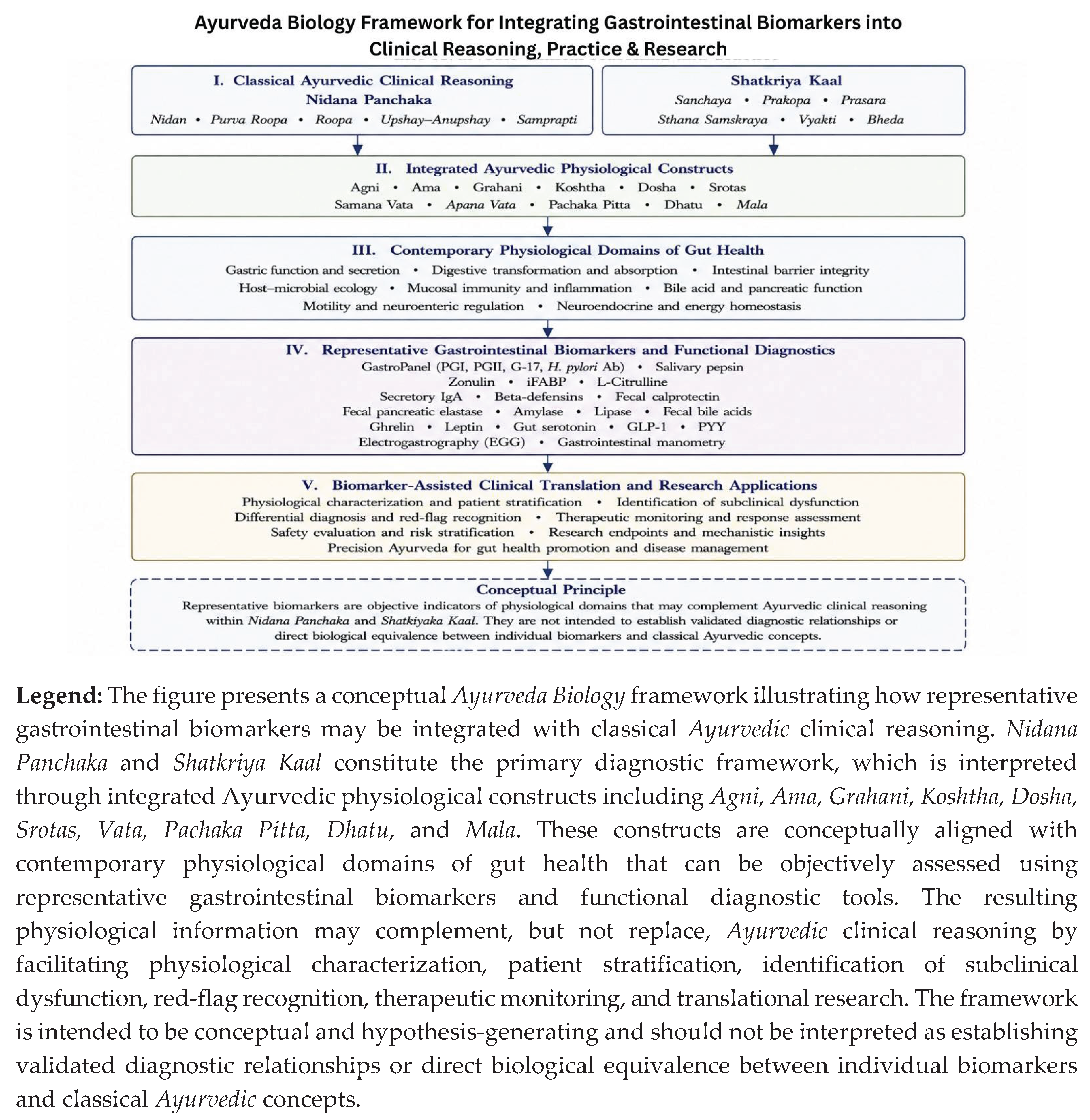

Table 1.
Conceptual integration of representative gastrointestinal biomarkers with Ayurvedic physiological domains and clinical assessment.
Table 1.
Conceptual integration of representative gastrointestinal biomarkers with Ayurvedic physiological domains and clinical assessment.
| Physiological domain | Representative biomarkers / tools | Ayurvedic physiological interpretation | Potential role in clinical assessment | Potential objective and Ayurvedic outcome measures |
|---|---|---|---|---|
| Gastric secretory physiology | GastroPanel: PGI, PGII, G-17, H. pylori serology | Jatharagni, Pachaka Pitta, Amashaya, gastric Grahani function, Amlapitta, Ajirna, Annavaha Srotodushti | Chronic dyspepsia, recurrent Ajirna, Amlapitta, long-term PPI exposure, H. pylori-associated gastritis, gastric atrophy risk | PGI, PGII, PGI/PGII ratio, G-17 pattern; improvement in Agni Bala, Ahara Paka, Udgara, Aruchi, Amlodgara, postprandial heaviness |
| Reflux physiology | Salivary pepsin | Urdhwaga Amlapitta, disturbed Prana-Udana-Samana Vata, upward movement of Amla and Pitta from Amashaya | GERD, laryngopharyngeal reflux, chronic cough, hoarseness, throat irritation, extra-oesophageal reflux | Reduction in salivary pepsin positivity; reduction in Amlodgara, Tikta-Amla Udgara, Kantha Daha, Kasa, Svarabheda |
| Duodenopancreatic digestive capacity | Secretin, amylase, lipase, fecal pancreatic elastase | Jatharagni, Pachaka Pitta, Kledaka Kapha, Samana Vata, Grahani, Agnimandya, Ajirna | Maldigestion, steatorrhoea, chronic loose stools, suspected pancreatic insufficiency, persistent Grahani-like symptoms | Fecal elastase, amylase/lipase where indicated; improvement in Ahara Paka, Mala Pravritti, Pravahana, Udaragaurava, stool consistency |
| Barrier integrity and enterocyte function | Zonulin, iFABP, L-citrulline | Grahani Bala, Annavaha Srotas, Srotodushti, Ama, Sthana Samshraya, impaired Shoshana | Suspected barrier dysfunction, malabsorption, enterocyte injury, chronic inflammatory or metabolic states | Barrier/enterocyte markers; improvement in Grahani Bala, reduction in Ama Lakshana, better Ahara Rasa formation and nutritional status |
| Mucosal immune resilience | Secretory IgA, β-defensins | Vyadhikshamatva, Ojas, Grahani Bala, host–microbial balance at the gut interface | Recurrent gut infections, dysbiosis, mucosal immune dysfunction, gut barrier disorders | sIgA, β-defensin profile; improvement in Bala, Ojas, reduced recurrence, better tolerance to food and environment |
| Intestinal inflammation | Fecal calprotectin | Pitta–Rakta Dushti, inflammatory Grahani–Pakvashaya dysfunction, Raktatisara, Pittaja Grahani | IBD, inflammatory diarrhoea, differentiating inflammatory from functional bowel symptoms | Fecal calprotectin; reduction in Daha, Rakta Yukta Mala, Atisara, abdominal pain, urgency |
| Bile acid homeostasis | Fecal bile acids | Altered Pitta regulation in Grahani, Pakvashaya and Purishavaha Srotas; Pittaja Atisara phenotype | Chronic diarrhoea, suspected bile acid diarrhoea, IBS-D-like symptoms, post-cholecystectomy diarrhoea | Fecal bile acid level; improvement in stool frequency, urgency, Drava Mala, Atisara, Grahani symptoms |
| Host–microbial metabolism | SCFAs, secondary bile acids, indoles, tryptophan metabolites, LPS-related markers | Ama, Agnimandya, altered Ahara Rasa transformation, Srotodushti, disturbed host–microbial balance | Dysbiosis, metabolic inflammation, gut–brain disorders, chronic functional gut symptoms | Microbial metabolites; reduction in Ama Lakshana, improved Agni, reduced bloating, improved bowel regularity |
| Gastric and intestinal motility | Electrogastrography, gastrointestinal manometry | Samana Vata, Apana Vata, Vata Gati, Grahana–Pachana–Vivechana–Munchana coordination | Functional dyspepsia, gastroparesis, constipation, anorectal dysfunction, unexplained nausea, postprandial distress | EGG rhythm, manometry profiles; improvement in Vata Anulomana, Mala Pravritti, nausea & vomoiting early satiety, bloating |
| Gut–brain and metabolic regulation | Ghrelin, GLP-1, PYY, leptin, serotonin | Agni rhythm, Samana Vata, Manovaha Srotas, Santarpana–Apatarpana, Meda Dhatu regulation | Appetite disturbance, obesity, metabolic syndrome, gut–brain interaction disorders | Gut hormone profile; improvement in appetite rhythm, satiety, Agni Bala, Meda regulation, food tolerance |
Abbreviations: PGI, pepsinogen I; PGII, pepsinogen II; G-17, gastrin-17; H. pylori, Helicobacter pylori; PPI, proton pump inhibitor; iFABP, intestinal fatty acid-binding protein; sIgA, secretory immunoglobulin A; SCFAs, short-chain fatty acids; LPS, lipopolysaccharide; EGG, electrogastrography; GLP-1, glucagon-like peptide-1; PYY, peptide YY; GERD, gastroesophageal reflux disease; LPR, laryngopharyngeal reflux; IBD, inflammatory bowel disease; BAD, bile acid diarrhoea. Note: The associations presented represent a conceptual, hypothesis-generating Ayurveda Biology framework intended to facilitate the integration of representative gastrointestinal biomarkers with classical Ayurvedic principles. Representative biomarkers should be interpreted as objective indicators of physiological domains that may complement Ayurvedic clinical reasoning within the frameworks of Nidana Panchaka and Shatkriyakala. They are not intended to establish validated diagnostic relationships, one-to-one correspondence, or direct biological equivalence between individual biomarkers and classical Ayurvedic concepts.
Table 2.
Conceptual application of representative gastrointestinal biomarkers within Nidana Panchaka and Shatkriyakala.
Table 2.
Conceptual application of representative gastrointestinal biomarkers within Nidana Panchaka and Shatkriyakala.
| Representative biomarker(s) | Potential contribution to Nidana Panchaka | Potential contribution across Shatkriyakala | Representative contribution to Ayurvedic clinical reasoning (Samprapti assessment) |
|---|---|---|---|
| GastroPanel (PGI, PGII, G-17, H. pylori) | Supports identification of Nidana (e.g. H. pylori, altered gastric physiology), recognises Purvarupa, refines Rupa, supports Upashaya through objective monitoring | Purvarupa → Vyakti | Assists assessment of Jatharagni, Pachaka Pitta, Amlapitta, Ajirna, Amashay -Grahani Vikriti and progressive of Annavaha Srotodushti. |
| Salivary pepsin | Supports Rupa and Upashaya by objectively documenting reflux physiology | Vyakti | Supports recognition of Urdhwaga Amlapitta arising from disturbed Prana, Udana and Samana Vata, aiding differentiation from non-reflux upper airway disorders. |
| Secretin, amylase, lipase, fecal pancreatic elastase | Refines Rupa and Samprapti by identifying impaired digestive transformation; supports Upashaya through objective follow-up | Vyakti → Bheda | Assists differentiation of Grahani, Ajirna and Agnimandya from disorders primarily resulting from pancreatic exocrine dysfunction. |
| Zonulin, iFABP, L-citrulline | Supports recognition of Purvarupa and evolving Samprapti before overt structural disease; facilitates assessment of therapeutic response | Prasara → Sthana Samshraya | Provides objective evidence supporting early Ama, Srotodushti, impaired Grahani Bala and disturbed Shoshana prior to overt disease manifestation. |
| Secretory IgA, β-defensins | Supports Purvarupa, Rupa and Upashaya by characterising mucosal defence | Sanchaya → Prasara | Assists assessment of Vyadhikshamatva, Ojas, and host–microbial homeostasis at the intestinal interface. |
| Fecal calprotectin | Supports Rupa, Samprapti and Upashaya by objectively documenting intestinal inflammation | Prasara →Vyakti | Assists differentiation of inflammatory conditions such as Pittaja Grahani and Raktatisara from non-inflammatory gastrointestinal disorders while monitoring physiological response. |
| Fecal bile acids | Refines Nidana, Rupa and Samprapti in chronic diarrhoeal disorders | Sthana Samshraya → Vyakti | Supports identification of altered Pitta regulation involving Grahani, Pakvashaya and Purishavaha Srotas, facilitating recognition of bile acid-mediated diarrhoeal phenotypes. |
| Microbial metabolites (SCFAs, secondary bile acids, indoles, LPS-related markers) | Supports Nidana, Purvarupa and evolving Samprapti through objective assessment of host–microbial interactions | Sanchaya → Prasara | Contributes to understanding of Agnimandya, Ama, impaired Ahara Rasa formation and progressive Srotodushti. |
| Electrogastrography and gastrointestinal manometry | Supports Rupa, Upashaya and Samprapti by objectively characterising gastrointestinal motility | Purvarupa → Vyakti | Assists evaluation of disturbed Samana Vata, Apana Vata, Vata Gati and impaired coordination of Grahana, Pachana, Vivechana and Munchana. Phenotyping of chardi, Udavarta, Malavrodha, adhmaan, etc. |
| Ghrelin, GLP-1, PYY, leptin and serotonin | Supports Nidana, Purvarupa and Samprapti through assessment of appetite regulation, satiety and gut–brain communication | Sanchaya → Prasara | Contributes to understanding disturbances in Agni, Santarpana–Apatarpana, Samana Vata, Manovaha Srotas and metabolic adaptation. |
Abbreviations: PGI, pepsinogen I; PGII, pepsinogen II; G-17, gastrin-17; H. pylori, Helicobacter pylori; iFABP, intestinal fatty acid-binding protein; sIgA, secretory immunoglobulin A; SCFAs, short-chain fatty acids; LPS, lipopolysaccharide; EGG, electrogastrography; GLP-1, glucagon-like peptide-1; PYY, peptide YY. Note: The associations presented represent a conceptual Ayurveda Biology framework intended to facilitate the integration of representative gastrointestinal biomarkers with classical Ayurvedic principles. The biomarkers should be interpreted as objective indicators of physiological domains that may complement Ayurvedic clinical reasoning within the frameworks of Nidana Panchaka and Shatkriyakala. They are not intended to establish validated diagnostic relationships or direct biological equivalence between individual biomarkers and classical Ayurvedic concepts.Rather one can think of them as hypothesis-generating.
Disclaimer/Publisher’s Note: The statements, opinions and data contained in all publications are solely those of the individual author(s) and contributor(s) and not of MDPI and/or the editor(s). MDPI and/or the editor(s) disclaim responsibility for any injury to people or property resulting from any ideas, methods, instructions or products referred to in the content. |
© 2026 by the authors. Licensee MDPI, Basel, Switzerland. This article is an open access article distributed under the terms and conditions of the Creative Commons Attribution (CC BY) license (http://creativecommons.org/licenses/by/4.0/).
Copyright: This open access article is published under a Creative Commons CC BY 4.0 license, which permit the free download, distribution, and reuse, provided that the author and preprint are cited in any reuse.