

Submitted:
30 October 2026
Posted:
30 October 2026
You are already at the latest version
Abstract
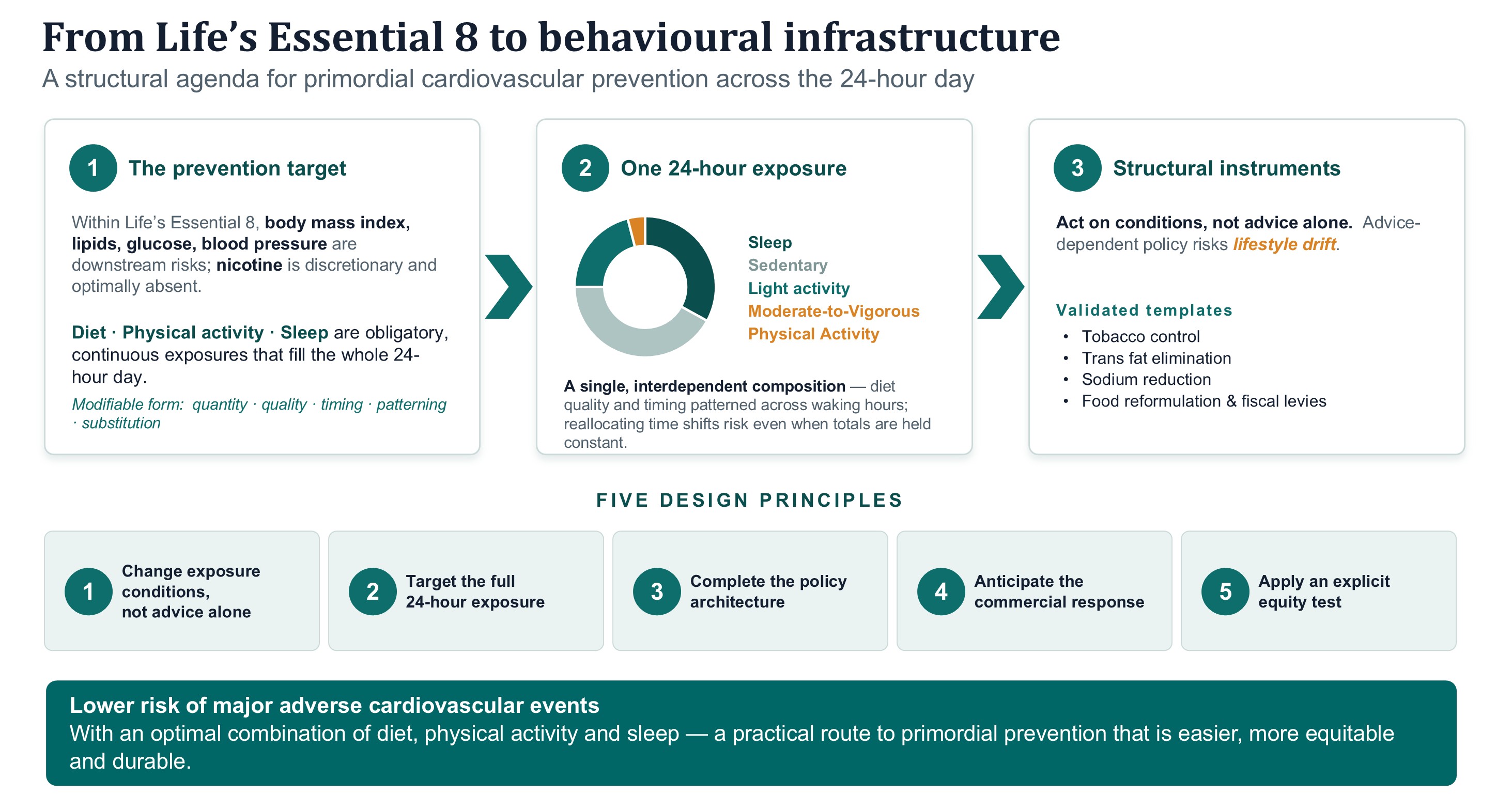
Cardiovascular disease remains the leading cause of death worldwide, and much of its burden is driven by modifiable behaviours. Diet, physical activity and sleep are central to cardiovascular health as they influence common biological pathways, including glucose regulation, endothelial function, blood pressure, inflammation and adiposity. This is increasingly reflected in prevention frameworks. In 2022, the American Heart Association added sleep to Life's Essential 8, recognising it alongside diet and physical activity as a core component of cardiovascular health. In addition, emerging large-scale evidence indicates that the combined pattern of higher diet quality, greater physical activity and healthier sleep across the 24-hour day is associated with greater cardiovascular benefit than any single behaviour alone. Even modest simultaneous improvements across all three behaviours, without a large change in any single behaviour, have been linked to meaningful risk reduction. Yet prevention continues to address these behaviours largely in isolation, relying heavily on individual behaviour change while sleep remains frequently omitted from research and policy. Drawing on previous public health successes, this review argues that individualised prevention messages should be complemented by behavioural infrastructure. Behavioural infrastructure refers to the everyday systems that shape diet, physical activity and sleep as a single 24-hour behavioural exposure, making healthier routines easier, more sustained and equitable. We propose five design principles that transfer a validated structural prevention logic to diet, physical activity and sleep as a practical route to primordial cardiovascular prevention.
Keywords:
cardiovascular disease prevention
; primordial prevention
; Life’s Essential 8
; sleep
; physical activity
; diet
; 24-hour behaviours
; commercial determinants of health
; health equity
; structural intervention
Copyright: This open access article is published under a Creative Commons CC BY 4.0 license, which permit the free download, distribution, and reuse, provided that the author and preprint are cited in any reuse.