

Submitted:
29 October 2026
Posted:
29 October 2026
You are already at the latest version
Abstract
Primary hypertension (PH) in children is an increasingly prevalent multifactorial disorder involving complex interactions between genetic, metabolic, neurohormonal, immune, and environmental factors. Recent studies highlight the potential role of gut microbiota composition and immune dysregulation in the development and progression of PH and hypertension-mediated organ damage (HMOD) in children. The gut microbiota strongly influences immune responses and vascular function through its metabolites, such as short-chain fatty acids (SCFAs), which help maintain the intestinal barrier and modulate inflammation. Conversely, dysbiosis, defined as reduced microbial diversity and increased proinflammatory taxa, can exacerbate systemic inflammation and hypertension. Immune mechanisms, including T helper 17 (Th17) cell polarization and impaired regulatory T cell (Treg) function, facilitate sodium retention, endothelial dysfunction, and organ remodeling. This narrative review summarizes current knowledge of gut microbiota alterations and immunological pathways in pediatric PH, emphasizing the potential of inflammatory markers as early biomarkers. The review also discusses how lifestyle factors such as diet and physical activity modify the gut microbiota-immune axis and blood pressure regulation. Additionally, the study highlights gaps in current knowledge and possible directions for further research. Understanding these pathways offers promising opportunities for early diagnosis, risk stratification, and novel therapeutic interventions to prevent long-term cardiovascular complications in hypertensive children.
Keywords:
primary hypertension
; pediatric hypertension
; gut microbiota
; immune system
; subclinical inflammation
; hypertension-mediated organ damage
; lifestyle interventions
1. Introduction
Arterial hypertension (AH) is a severe global health challenge, with increasing prevalence among children and adolescents. Epidemiological data suggest that about 4% of the pediatric population is affected by this disorder, and this number rises in parallel with obesity and metabolic syndrome [1]. Primary hypertension (PH), formerly considered a disease of adults, is now increasingly recognized as the predominant form of hypertension in developmental age, particularly during adolescence [2,3]. Diagnosing children requires age-, sex-, and height-specific blood pressure percentiles that reflect dynamic physiological changes during growth. The most common observed clinical phenotype in this group is isolated systolic hypertension [4,5].
The pathogenesis of PH in children is multifactorial and remains incompletely unraveled. Traditionally, it involves hemodynamic disturbances such as increased cardiac output and hyperkinetic circulation; neurohormonal dysregulation, including activation of the sympathetic nervous system (SNS) and the renin-angiotensin-aldosterone system (RAAS); and metabolic abnormalities such as insulin resistance [6,7,8]. Moreover, recent studies implicate immune activation and dysregulation as pivotal contributors [9,10]. In particular, chronic low-grade inflammation characterized by elevated proinflammatory cytokines and immune cell activation appears to contribute to endothelial dysfunction, vascular remodeling, and hypertension-mediated organ damage (HMOD), significantly affecting left ventricular hypertrophy (LVH) progression [11].
Gut microbiota, the complex of trillions of microorganisms colonizing the human gastrointestinal tract, profoundly influences human metabolism, immune regulation, and vascular health [12,13,14]. Dysbiosis, or disruption of the gut microbiota composition, including loss of beneficial short-chain fatty acid (SCFA)-producing taxa such as Faecalibacterium and Roseburia, may stimulate systemic inflammation and AH [15,16]. At the molecular level, shifts in gut microbiota alter intestinal barrier integrity, facilitating translocation of bacterial components such as lipopolysaccharides (LPS) that activate the innate immune system [17,18]. Adaptive immune dysregulation, particularly polarization of naive T cells toward proinflammatory Th17 phenotypes with increased interleukin-17A (IL-17A) secretion and reduced regulatory T cells (Tregs) function, further exacerbates sodium retention, vascular constriction, and hypertension progression [19,20,21].
Recent studies highlight the gut-brain-kidney axis as a key integrative mechanism linking gut microbiota to blood pressure regulation. Gut dysbiosis induces not only local and systemic inflammatory responses but also disrupts communication between the nervous, immune, and renal systems, promoting development and maintenance of hypertension [22]. Understanding these complex interactions opens new therapeutic avenues, particularly relevant for early-onset hypertension in children.
In pediatric PH, these gut-immune interactions contribute to early disease onset and progression. Early vascular aging, marked by arterial stiffness and intima-media thickening, as well as cardiac remodeling, has been linked to these pathogenic processes [5,23,24]. Lifestyle factors, including dietary sodium intake and physical activity, modulate gut microbiota and immune responses, presenting opportunities for intervention.
This narrative review synthesizes current insights into gut microbiota alterations and immune mechanisms that underpin primary hypertension in children. We discuss how dysbiosis and immune activation contribute to subclinical inflammation and HMOD, and we highlight the influence of environmental and lifestyle factors. Understanding these integrated pathways is critical for identifying potential biomarkers and targeted therapeutic strategies that may improve cardiovascular outcomes in pediatric hypertensive patients.
2. Gut Microbiota in Pediatric Hypertension
The human gastrointestinal tract hosts a diverse community of microorganisms collectively known as the gut microbiota. This complex ecosystem comprises bacteria, archaea, viruses, and fungi that play key roles in human metabolism, immune modulation, and maintaining intestinal barrier integrity [12,14]. The balance and composition of the gut microbiota are shaped early in life through factors such as birth, diet, antibiotic use, and environmental factors, and although relatively stable in adulthood, remain dynamic during childhood and adolescence [25,26].
In healthy individuals, beneficial microbial taxa primarily belong to the phyla Firmicutes and Bacteroidetes, which are crucial for fermenting dietary fibers into short-chain fatty acids (SCFAs) such as acetate, butyrate, and propionate [27,28]. SCFAs support intestinal epithelial health, modulate immune tolerance, and influence systemic metabolic and cardiovascular function. SCFA production engages host receptors and signaling pathways that promote anti-inflammatory effects, vascular relaxation, and renal sodium excretion, thereby contributing to blood pressure regulation [29,30].
Primary hypertension is associated with alterations in gut microbiota composition, including reduced microbial diversity and depletion of several SCFAs-producing taxa, such as Faecalibacterium, Roseburia, and Ruminococcus [15,16,31]. However, evidence specifically in pediatric PH remains limited. Concurrently, an enrichment of proinflammatory taxa such as Prevotella and Klebsiella is observed, which may increase gut permeability and systemic translocation of endotoxins like LPS [16,17]. This disturbance can cause low-grade systemic inflammation and immune activation – factors strongly linked to endothelial dysfunction and hypertension [6].
Animal and human studies have shown that gut microbiota from hypertensive donors can transfer hypertension phenotypes to recipients, underscoring a causal link between microbiota alterations and blood pressure elevation [32,33]. However, data in pediatric populations remain limited, and the dynamic changes during childhood present unique challenges and opportunities for understanding early microbial contributions to hypertension pathogenesis. Figure 1 shows such a model, based on data from experimental studies and an adult population.
Environmental factors such as dietary sodium intake and physical activity significantly influence gut microbiota and its immunomodulatory functions in children. High-salt diets have been shown to reduce Lactobacillus spp. that modulate proinflammatory Th17 responses and exacerbate salt-sensitive hypertension, while fiber-rich diets and exercise promote SCFA-producing bacteria and alleviate inflammation [13,34,35].
Further research into gut microbiota alterations and their metabolite profiles in pediatric hypertension promises to identify novel biomarkers and therapeutic targets, enabling innovative medicine approaches to prevent early cardiovascular damage and improve long-term outcomes.
3. Immune Mechanisms in Pediatric Hypertension
The immune system's role in the pathogenesis and progression of primary hypertension in children has attracted researchers' interest over recent decades. Pediatric PH is no longer viewed only as a hemodynamic or neurohormonal disorder but as a multifactorial disease involving significant immunological disturbances and chronic low-grade inflammation. This chapter reviews the innate and adaptive immune pathways related to pediatric hypertension and indicates current findings, including studies on pediatric cohorts and experimental models.
3.1. Activation of Immune Responses and Inflammation in Pediatric PH
In children with PH, subclinical inflammation is a distinctive feature. It is thought to act both as an initiating and sustaining factor in blood pressure elevation and hypertension-mediated organ damage. Studies have detected increased levels of high-sensitivity C-reactive protein (hs-CRP) and, in selected studies, proinflammatory cytokines such as interleukin-18 (IL-18) in treatment-naive pediatric patients compared with normotensive children [10,36]. These findings align with adult studies. Still, they are of critical importance in children, offering an early window into the pathophysiology of hypertension before any clear clinical consequences emerge.
hs-CRP, produced by hepatocytes in response to inflammatory stimuli such as interleukin-6 (IL-6), is a reliable biomarker of systemic inflammation and correlates with cardiovascular risk, including arterial stiffness and left ventricular hypertrophy in children [10,37]. Elevated serum levels of adhesion molecules such as intercellular adhesion molecule 1 (ICAM-1) and vascular cell adhesion molecule 1 (VCAM-1) indicate endothelial dysfunction, facilitating leukocyte adhesion to vascular walls – an early step in vascular remodeling and atherosclerosis. Pediatric studies report significantly higher ICAM-1 and VCAM-1 levels in children with PH than in healthy controls, underscoring early vascular immune involvement [10].
3.2. Innate Immune Cells in PH
Innate immune cells, including neutrophils, monocytes/macrophages, and dendritic cells, play a key role in initiating and propagating hypertension-related inflammation. Neutrophil counts and neutrophil-to-lymphocyte ratio (NLR) are consistently elevated in pediatric PH, reflecting enhanced innate immune activation [10,38]. Neutrophils contribute to vascular pathology by increasing reactive oxygen species (ROS) production, which damages the endothelium and causes vasoconstriction [9].
Monocytes infiltrate vascular and renal tissues where they differentiate into proinflammatory macrophages. These macrophages secrete cytokines, matrix metalloproteinases (MMPs), and growth factors such as transforming growth factor-β (TGF-β), leading to extracellular matrix remodeling, fibrosis, and HMOD [18]. The monocyte-to-lymphocyte ratio (MLR) and the monocyte-to-neutrophil ratio (MNR) are reliable markers of systemic inflammation and have been linked to arterial stiffness and LVH in children with PH. Importantly, MNR demonstrates a significant positive correlation with left ventricular mass and diastolic dimensions and appears to be a promising immunological biomarker of cardiac remodeling in pediatric hypertension [39].
3.3. Adaptive Immunity Dysregulation and T Cell Involvement
Adaptive immune responses, particularly T cell activation, play a key role in the chronic inflammation observed in hypertension. Experimental and clinical studies suggest that pediatric patients with PH may have altered T cell subsets characterized by increased proinflammatory Th17 cells, which secrete IL-17A – a cytokine that enhances renal sodium retention and vascular dysfunction – and a reduction in regulatory T cells implicated in immunosuppression [6]. This Th17/Treg imbalance promotes a proinflammatory environment that contributes to persistent hypertension and organ damage.
Evidence from experimental studies using humanized mouse models confirms that angiotensin II, a key factor in hypertension development, promotes T cell infiltration in cardiovascular and renal tissues, activating cytokine cascades that drive tissue remodeling [40]. Experimental and clinical studies indicate that proinflammatory cytokines, including tumor necrosis factor-α (TNF-α), interferon-γ (IFN-γ), interleukin-1β (IL-1β), and interleukin-17A (IL-17A), contribute to the vascular and renal complications of hypertension. In children with PH, signs of low-grade inflammatory activation include increased hs-CRP and selected chemokines and cytokines, although data on children remain limited [37,41]. In particular, IL-18 is expressed on endothelial and vascular smooth muscle cells and is associated with vascular inflammation and HMOD [9].
3.4. Interactions Between Immune, Endocrine, and Sympathetic Nervous Systems in PH
The interaction between immune system activation and neurohormonal systems, such as the RAAS and the SNS, exacerbates the pathogenesis of hypertension. Proinflammatory cytokines increase expression of sodium transporters in the kidneys and adrenergic receptors in vascular smooth muscle, promoting sodium retention, vasoconstriction, and increased vascular stiffness [42,43]. Chronic inflammation also increases SNS activity, which in turn further activates immune cells and increases cytokine release, creating a vicious cycle [8].
3.5. Clinical Markers of Immune Activation and Inflammation
In addition to classic inflammatory markers such as hs-CRP and interleukins, indices derived from the complete blood count (NLR, MLR, MNR, platelet-to-lymphocyte ratio (PLR), and mean platelet volume (MPV)) serve as practical, inexpensive markers of immune status in children with hypertension. Studies consistently report elevated neutrophil, monocyte, and platelet counts, as well as corresponding indices, in children with hypertension, which correlate with blood pressure levels and early cardiac changes [10,38]. Elevated MPV, reflecting platelet reactivity, is associated with cardiovascular risk, although its role in pediatric hypertension requires further study [44].
3.6. Influence of Obesity and Additional Factors on Immune Activation
Obesity, which is present in a significant proportion of children with PH, exacerbates immune system activation due to proinflammatory adipokines released from adipose tissue and systemic metabolic disorders [45]. Elevated body mass index (BMI) shows a positive correlation with markers of inflammation and blood pressure variability in children with PH, which makes it difficult to identify the immune mechanisms specific to hypertension. Comprehensive treatment of hypertension in children should therefore address obesity and lifestyle factors that influence inflammation caused by dysregulation of the immune system and the gut microbiota.
4. Epigenetic Mechanisms in Pediatric Hypertension
Epigenetic regulation, including DNA methylation, histone modifications, and non-coding RNAs such as microRNAs, modulates gene expression without altering the DNA sequence. These mechanisms respond rapidly to environmental and physiological stimuli, integrating genetic, metabolic, and immunological signals that contribute to the pathogenesis of PH in children [46,47].
MicroRNAs are key post-transcriptional regulators that influence hypertension-related pathways, including vascular smooth muscle cell proliferation, endothelial function, inflammation, and renal sodium homeostasis [46,48]. In pediatric PH, dysregulation of specific circulating microRNAs – including miR-16, miR-21, miR-27a/b, miR-133a, and miR-145 – has been linked to blood pressure parameters [49]. For example, miR-16 is involved in adrenergic signaling by regulating the α1A-adrenergic receptor gene (ADRA1A), potentially affecting vascular tone and cardiac hypertrophy [50]. miR-21 regulates inflammatory and fibrotic pathways, including TGF-β signaling, which reinforces its role in vascular remodeling [51]. miR-133 and miR-145 play crucial roles in maintaining the contractile phenotype of vascular smooth muscle cells and in preventing myocardial fibrosis [52,53].
Importantly, epigenetic mechanisms also interact with immune responses in pediatric hypertension. Chronic, mild inflammation, modulated by immune cells and cytokines, can further influence the epigenetic landscape and microRNA expression, creating a feedback loop that exacerbates hypertension and organ damage [9]. MicroRNAs modulate T cell polarization (e.g., Th17/Treg balance) and cytokine production, contributing to the immunological-epigenetic interaction underlying hypertension in children [6].
Thus, microRNA-mediated epigenetic regulation provides valuable insights into the integrated mechanisms linking genetic, immunological, and environmental factors in pediatric hypertension. Elucidating these complex pathways opens promising prospects for developing biomarkers and targeted therapies for early intervention in childhood hypertension.
Recent evidence confirms that specific microRNAs, such as miR-16, miR-21, and miR-145, play crucial roles in hypertension pathogenesis by regulating inflammatory processes, vascular smooth muscle cell proliferation, and cardiac remodeling [48]. Monitoring serum levels of these miRNAs may serve as a useful non-invasive biomarker for early cardiovascular changes in pediatric patients. Moreover, therapies targeting microRNA expression represent a promising direction for clinical research.
5. Immune Mechanisms and Possible Links with Gut Microbiota in Pediatric Hypertension
Recent data suggest that the complex interaction between the gut microbiota and the immune system may be a key factor in the pathogenesis of primary hypertension, especially in children, in whom early-life environmental factors can shape health throughout life. A growing body of evidence suggests that gut microbial communities modulate immune responses that lead to hypertension-promoting inflammation and organ damage, linking dysbiosis to immune cell polarization, salt sensitivity, and blood pressure regulation.
5.1. Gut Microbiota Influence on Immune Activation
The gut microbiota profoundly influences host immunity by interacting with intestinal epithelial cells and mucosal immune components. Commensal bacteria produce metabolites, such as SCFAs, that regulate immune cell differentiation and function, promoting the development of anti-inflammatory Tregs while inhibiting proinflammatory pathways [54,55]. In contrast, dysbiosis, characterized by a loss of beneficial SCFA producers and an enrichment of proinflammatory taxa, increases intestinal permeability, endotoxemia, and systemic immune activation [17]. These conditions stimulate antigen-presenting cells (APCs) and trigger the release of inflammatory cytokines.
5.2. Th17 Cells in Hypertension and the Role of Salt Sensitivity
Th17 cells, a subset of CD4+ T lymphocytes that produce IL-17A, are key immune effectors in hypertension pathogenesis. IL-17A exacerbates vascular inflammation, oxidative stress, and renal sodium retention, thereby contributing to elevated blood pressure and damage to target organs [18,21]. Experimental and human studies have linked increased Th17 cell activity to salt-sensitive hypertension [21,31].
Dietary salt intake is an important environmental factor that modulates Th17 cell polarization. Excess sodium directly influences naive T-cell differentiation toward the proinflammatory Th17 phenotype via signaling pathways involving serum- and glucocorticoid-induced kinase 1 (SGK1) and mitogen-activated protein kinase (MAPK) [56,57]. High-salt diets alter the gut microbiota, reduce the number of Lactobacillus spp., and exacerbate inflammation induced by Th17 cells [58].
5.3. Microbiota-Mediated Salt Sensitivity and Immune Interaction
Wilck and colleagues have significantly expanded our understanding of salt sensitivity in hypertension, showing how gut microbiota dysbiosis influences immune activation and blood pressure regulation. They showed that a high-salt diet induces gut dysbiosis characterized by changes in microbiota composition and metabolite profiles, leading to increased intestinal barrier permeability, endotoxin leakage, and systemic immune activation with a Th17-dominant response. Restoring Lactobacillus spp. through dietary or probiotic interventions alleviated salt-sensitive hypertension by modulating immune responses, specifically by limiting Th17 cell expansion and reducing IL-17A levels [15,17,31].
These findings highlight the gut microbiota–immune axis, through which microbiota signals regulate immune cell phenotypes that, in the context of high salt intake, exacerbate hypertension progression. This axis offers new therapeutic targets to modulate salt sensitivity and immune-mediated vascular dysfunction in pediatric PH.
5.4. Clinical Implications and Future Perspectives
Understanding the bidirectional interactions between the gut microbiota and the immune system, particularly Th17-mediated inflammation and salt sensitivity, opens promising opportunities for early intervention in childhood hypertension. The potential association between these factors and the development of AH is shown in Figure 2. In the proposed model, modulating gut microbiota composition through diet, probiotics, prebiotics, and lifestyle factors may influence immune balance and reduce hypertension risk [13,35,58]. Further research is needed to elucidate the exact mechanisms at play in children, optimize therapies targeting gut microbiota, and incorporate immunological biomarkers into clinical management.
6. Therapeutic Interventions Targeting Gut Microbiota and Immune System in Pediatric Hypertension
Growing knowledge of the gut microbiota-immune system relationship in the pathogenesis of primary hypertension in children may lead to innovative therapeutic strategies. Figure 3 shows selected risk factors for PH development that may serve as targets for potential therapeutic interventions. These interventions aim to restore microbial balance and modulate the immune response, ultimately improving blood pressure control and protecting against hypertensive organ damage. Table 1 summarizes potential interventions targeting gut microbiota in AH.
6.1. Dietary Approaches
Diet strongly affects both gut microbiota composition and immune function. Dietary interventions based on a diet rich in dietary fiber, such as the Mediterranean diet and the Dietary Approaches to Stop Hypertension (DASH) diet, promote the growth of beneficial bacteria that produce SCFAs such as butyrate, acetate, and propionate [13,59,60]. SCFAs support the integrity of the intestinal barrier, reduce systemic inflammation, and regulate vascular tone by activating G protein-coupled receptors (GPR41, GPR43), thereby contributing to a reduction in systolic and diastolic blood pressure [61]. In pediatric patients, early adoption of a diet emphasizing fiber-rich fruits and vegetables and low sodium intake is recommended as part of lifestyle management [62].
In contrast, a diet high in salt and fat disrupts microbial diversity, promotes the growth of proinflammatory taxa, and exacerbates salt-sensitive hypertension by activating the immune system, including Th17 polarization. Experimental studies indicate that high dietary salt intake may promote gut dysbiosis and immune system activation [31,34,58].
6.2. Probiotics and Prebiotics
Supplementation with probiotics containing beneficial live microorganisms, particularly Lactobacillus and Bifidobacterium strains, has demonstrated antihypertensive effects in randomized clinical trials, primarily in adults [63]. These probiotics strengthen intestinal barrier function by upregulating tight junction proteins (occludin, claudin), reducing circulating endotoxin concentrations (e.g., LPS), and inhibiting proinflammatory cytokines (IL-6, TNF-α), thereby modulating innate and adaptive immune responses [64]. Experimental supplementation with Lactobacillus murinus attenuated salt-sensitive hypertension and Th17-mediated immune activation [31].
Fiber-rich diets with reduced sodium intake, such as the DASH and Mediterranean diets, effectively modulate the gut-immune axis, reducing blood pressure and the risk of hypertension-mediated organ damage. Implementing these interventions early in life holds potential for long-term cardiovascular protection [59,65].
Prebiotics – indigestible dietary fibers that serve as substrates for beneficial bacteria – complement the action of probiotics by promoting the growth and activity of health-beneficial microorganisms, increasing levels of SCFAs, and enhancing immune regulation [66]. Synbiotic combinations of probiotics and prebiotics have demonstrated synergistic benefits in improving microbial balance and reducing systemic inflammation [67]. Although data in children remain limited, preliminary results suggest potential to lower blood pressure and reduce inflammation in pediatric PH.
6.3. Fecal Microbiota Transplantation (FMT)
FMT involves transferring microbial communities from healthy donors to recipients to restore gut microbiota diversity and function. Recent studies confirm the potential role of FMT in decreasing blood pressure by correcting dysbiosis and modulating the immune response in models of hypertension [68,69]. Although clinical data in children are lacking, FMT represents a promising future therapeutic approach that could restore immune homeostasis and reverse microbiota changes associated with hypertension.
Although FMT shows promise in modulating gut microbiota to reduce blood pressure, its long-term safety and efficacy in pediatric populations remain insufficiently studied. Potential risks include unintended pathogen transmission and alterations in microbial resistance profiles, especially with prolonged antibiotic use [68]. Careful evaluation and rigorous clinical trials are needed before widespread implementation in children
6.4. Pharmacological Modulation
Drugs traditionally used to treat hypertension may indirectly benefit by modulating the gut microbiota and immune system. For example, RAAS inhibitors, including angiotensin-converting enzyme inhibitors (ACEIs) and angiotensin receptor blockers (ARBs), have demonstrated anti-inflammatory effects in experimental studies and clinical trials involving adults [9]. Experimental evidence and recent studies suggest that new drug classes, such as sodium-glucose cotransporter 2 (SGLT2) inhibitors, reduce oxidative stress and inflammation, in part by interacting with metabolites of gut microorganisms [70].
Antibiotic treatment can alter gut microbiota composition; however, its role remains controversial because it can reduce microbial diversity and promote resistance. Selective antibiotics targeting trimethylamine (TMA)-producing bacteria offer new avenues to reduce trimethylamine N-oxide (TMAO) levels and cardiovascular risk [71].
6.5. Lifestyle Modifications and Exercise
Physical activity benefits gut microbiota composition by increasing the SCFA-producing bacteria and reducing systemic inflammation [35]. Exercise also regulates immune cell populations, supports Treg function, and inhibits proinflammatory pathways associated with hypertension [72]. Pediatric studies show that exercise programs lower blood pressure, improve arterial stiffness, and positively affect blood inflammatory markers and microRNA profiles [73].
7. Gaps in Current Knowledge
Despite significant progress in understanding the role of gut microbiota and immune dysregulation in hypertension, serious knowledge gaps remain, particularly in the pediatric population. Although studies conducted in adults have demonstrated changes in the gut microbiota, activation of the immune system, and their interaction in the pathogenesis of hypertension, studies focusing specifically on children with primary hypertension are few and fragmented.
7.1. Limited Pediatric Data on Gut Microbiota-Immune Axis
Most current knowledge of gut microbiota composition and function, and its immunomodulatory role in hypertension, comes from cohort studies in adults and animal models. Data on children are limited, and few studies have evaluated changes in the gut microbiota and immune profiles, or their combined impact on hypertension and associated organ damage in children. Children's dynamic developmental context, characterized by immune system maturation, microbiota colonization, and physiological growth, differs significantly from adults', necessitating age-appropriate research.
The lack of data specific to children makes it difficult to understand fully whether and how gut dysbiosis and immune dysregulation trigger or perpetuate hypertension in childhood and adolescence. Furthermore, the limited number of longitudinal studies restricts our understanding of microbiota and immune dynamics during disease progression and in response to interventions at these early stages.
7.2. Uncertainty About Microbiota-Immune Interactions and Salt Sensitivity
The relationship between changes in the gut microbiota, immune cell polarization (particularly Th17/Treg imbalance), and salt sensitivity is a rapidly evolving area of research. Although evidence suggests that dietary sodium influences the gut microbiota and activates the immune system in adults, it is unclear to what extent these mechanisms operate similarly in children. Salt sensitivity in children and its underlying mechanisms involving the gut microbiota and the immune system require further clarification to support the development of personalized lifestyle and treatment strategies.
7.3. Challenges in Integrating Microbial, Immune, and Clinical Data
There is a lack of comprehensive studies combining metagenomic, immunological, and metabolomic data, as well as extensive clinical data – including markers of organ damage caused by hypertension – in the field of pediatric PH. This obstructs the identification of reliable biomarkers and pathways for early diagnosis and risk stratification.
7.4. The MIDHAS Study: Addressing the Knowledge Gap
In light of these significant limitations, the MIDHAS (Microbiota and Immune Disorders in Hypertensive Adolescents Study) project was launched to comprehensively characterize the composition and function of the gut microbiota, markers of immune activation – in particular Th17 cells and IL-17A – dietary sodium intake, and their associations with blood pressure and hypertension-induced organ damage in children aged 10-17 years with PH or white-coat hypertension (WCH). The MIDHAS study aims to provide foundational pediatric data linking gut-immune disorders to hypertension phenotypes, accounting for confounders such as obesity, antibiotic use, and diet.
By filling this research gap, MIDHAS aims to identify new pathogenic pathways and early biomarkers, develop preventive strategies, and pave the way for interventions targeting the microbiota and immune system to slow hypertension progression and its cardiovascular and renal complications in adolescents.
Despite accumulating evidence from adult studies, multicenter, prospective research is urgently needed to address the unique developmental aspects of children and adolescents. Integration of metagenomic, immunological, metabolomic, and clinical data will enable identification of specific biomarkers and mechanisms critical for personalized therapeutic strategies targeting the gut-immune-kidney axis in pediatric hypertension [9,77].
Given the pivotal influence of diet and physical activity on gut microbiota composition and immune system regulation, future clinical studies should include long-term evaluation of these lifestyle factors in pediatric hypertension. Such research would provide comprehensive insights into how lifestyle interventions contribute to disease prevention and management in early life [35].
Currently, targeted therapies focusing specifically on modulating gut microbiota and immune responses in children with hypertension are lacking. This highlights the urgent need for well-designed clinical trials in children to explore safe and effective microbiota- and immunomodulatory treatments. Addressing this gap is essential for advancing personalized care in pediatric hypertension.
8. Conclusions
PH in children is a complex, multisystem disorder influenced by the interaction of genetic, metabolic, neurohormonal, immunological, and microbiological factors. The rising prevalence of hypertension in children, combined with the increasing number of cases of obesity and lifestyle-related risk factors, underscores the need for a deeper understanding of its pathogenesis and early markers of disease progression.
Recent evidence suggests that gut microbiota dysbiosis and immune dysregulation might play a key role in the development and maintenance of hypertension in children. Changes in the gut microbiota, particularly decreased beneficial bacteria that produce SCFAs and a corresponding increase in proinflammatory taxa, promote systemic inflammation and immune activation. This immune dysregulation, involving enhanced Th17 cell polarization and impaired Treg function, contributes to sodium retention, endothelial dysfunction, and early vascular and cardiac remodeling, forming a pathogenic link underlying hypertension-mediated organ damage.
Despite significant advances in adult studies and experimental research, pediatric studies analyzing interactions between the gut microbiota and the immune system remain limited. Gaps in knowledge about the dynamics of microbial changes, immune responses, and their associations with clinical phenotypes and treatment outcomes in children have driven targeted studies such as the MIDHAS project.
Integrating microbiological, immunological, and clinical data, including new biomarkers such as circulating microRNAs and immune cell markers, offers promising prospects for early diagnosis, risk stratification, and the development of targeted preventive and therapeutic interventions for hypertension in children.
Lifestyle changes and interventions that modulate the gut microbiota and immune pathways, including increased dietary fiber intake, probiotics, and physical activity, may be key supportive elements in treating hypertension in children and reducing long-term cardiovascular risk.
Future multidisciplinary studies using advanced molecular, bioinformatic, and clinical tools are crucial for unraveling the complex gut microbiota-immune axis, validating biomarkers, and changing research findings into personalized clinical practice. Understanding this axis and targeting it early in life could revolutionize hypertension prevention and treatment, ultimately improving cardiovascular health outcomes throughout life.
Author Contributions
Conceptualization, A.B. and P.S..; methodology, J.B., A.S.-E., P.S.; software, A.B. and P.S.; validation, P.S. and A.M.-W.; formal analysis, P.S. and A.M.-W.; resources, J.B., A. S.-E., P.S., M.M.-W.; writing—original draft preparation, A.B., J.B., A.S.-E., P.S..; writing—review and editing, P.S, M.M.-W.; visualization, A.B.; supervision, P.S. and M.M.-W.; project administration, P.S.; funding acquisition, J.B., P.S., M.M.-W.. All authors have read and agreed to the published version of the manuscript.
Funding
This research received no external funding.
Institutional Review Board Statement
Not applicable.
Informed Consent Statement
Not applicable.
Data Availability Statement
No new data were created or analyzed in this study.
Conflicts of Interest
The authors declare no conflicts of interest.
References
- Song, P.; Zhang, Y.; Yu, J.; Zha, M.; Zhu, Y.; Rahimi, K.; Rudan, I. Global Prevalence of Hypertension in Children: A Systematic Review and Meta-analysis. JAMA Pediatr. 2019, 173, 1154–1163. [Google Scholar] [CrossRef] [PubMed]
- Obrycki, Ł.; Skoczyński, K.; Sikorski, M.; Koziej, J.; Mitoraj, K.; Pilip, J.; Pac, M.; Feber, J.; Litwin, M. Current etiology of hypertension in European children - factors associated with primary hypertension. Pediatr. Nephrol. 2025, 40, 3233–3244. [Google Scholar] [CrossRef] [PubMed]
- Litwin, M. Pathophysiology of primary hypertension in children and adolescents. Pediatr. Nephrol. 2024, 39, 1725–1737. [Google Scholar] [CrossRef] [PubMed]
- Lurbe, E.; Agabiti-Rosei, E.; Cruickshank, J.K.; Dominiczak, A.; Erdine, S.; Hirth, A.; Invitti, C.; Litwin, M.; Mancia, G.; Pall, D.; et al. 2016 European Society of Hypertension guidelines for the management of high blood pressure in children and adolescents. J. Hypertens. 2016, 34, 1887–1920. [Google Scholar] [CrossRef] [PubMed]
- Flynn, J.T.; Khoury, P.R.; Ferguson, M.A.; Hanevold, C.D.; Lande, M.B.; Meyers, K.E.; Samuels, J.A.; Urbina, E.M. Ambulatory Blood Pressure Phenotype and Cardiovascular Risk in Youth: The SHIP-AHOY Study. J. Pediatr. 2025, 282, 114601. [Google Scholar] [CrossRef] [PubMed]
- Madhur, M.S.; Elijovich, F.; Alexander, M.R.; Pitzer, A.; Ishimwe, J.; Van Beusecum, J.P.; Patrick, D.M.; Smart, C.D.; Kleyman, T.R.; Kingery, J.; et al. Hypertension: Do Inflammation and Immunity Hold the Key to Solving this Epidemic? Circ. Res. 2021, 128, 908–933. [Google Scholar] [CrossRef] [PubMed]
- Litwin, M.; Sladowska, J.; Antoniewicz, J.; Niemirska, A.; Wierzbicka, A.; Daszkowska, J.; Wawer, Z.T.; Janas, R.; Grenda, R. Metabolic abnormalities, insulin resistance, and metabolic syndrome in children with primary hypertension. Am. J. Hypertens. 2007, 20, 875–882. [Google Scholar] [CrossRef] [PubMed]
- Trott, D.W.; Harrison, D.G. The immune system in hypertension. Adv. Physiol. Educ. 2014, 38, 20–24. [Google Scholar] [CrossRef] [PubMed]
- Guzik, T.J.; Nosalski, R.; Maffia, P.; Drummond, G.R. Immune and inflammatory mechanisms in hypertension. Nat. Rev. Cardiol. 2024, 21, 396–416. [Google Scholar] [CrossRef] [PubMed]
- Dziedzic-Jankowska, K.; Kołodziej, M.; Skrzypczyk, P. Association of Subclinical Inflammation Markers with Primary Hypertension in Children-A Systematic Review with Meta-Analysis. J. Clin. Med. 2025, 14. [Google Scholar] [CrossRef] [PubMed]
- Dziedzic-Jankowska, K.; Szyszka, M.; Bujanowicz, A.; Stelmaszczyk-Emmel, A.; Skrzypczyk, P. Blood Pressure Variability and Low-Grade Inflammation in Pediatric Patients with Primary Hypertension. J. Clin. Med. 2025, 14. [Google Scholar] [CrossRef] [PubMed]
- Rinninella, E.; Raoul, P.; Cintoni, M.; Franceschi, F.; Miggiano, G.A.D.; Gasbarrini, A.; Mele, M.C. What is the Healthy Gut Microbiota Composition? A Changing Ecosystem across Age, Environment, Diet, and Diseases. Microorganisms 2019, 7. [Google Scholar] [CrossRef] [PubMed]
- Marques, F.Z.; Nelson, E.; Chu, P.Y.; Horlock, D.; Fiedler, A.; Ziemann, M.; Tan, J.K.; Kuruppu, S.; Rajapakse, N.W.; El-Osta, A.; et al. High-Fiber Diet and Acetate Supplementation Change the Gut Microbiota and Prevent the Development of Hypertension and Heart Failure in Hypertensive Mice. Circulation 2017, 135, 964–977. [Google Scholar] [CrossRef] [PubMed]
- Fan, Y.; Pedersen, O. Gut microbiota in human metabolic health and disease. Nat. Rev. Microbiol. 2021, 19, 55–71. [Google Scholar] [CrossRef] [PubMed]
- Li, J.; Zhao, F.; Wang, Y.; Chen, J.; Tao, J.; Tian, G.; Wu, S.; Liu, W.; Cui, Q.; Geng, B.; et al. Gut microbiota dysbiosis contributes to the development of hypertension. Microbiome 2017, 5, 14. [Google Scholar] [CrossRef] [PubMed]
- Yan, Q.; Gu, Y.; Li, X.; Yang, W.; Jia, L.; Chen, C.; Han, X.; Huang, Y.; Zhao, L.; Li, P.; et al. Alterations of the Gut Microbiome in Hypertension. Front Cell Infect. Microbiol. 2017, 7, 381. [Google Scholar] [CrossRef] [PubMed]
- Cani, P.D.; Bibiloni, R.; Knauf, C.; Waget, A.; Neyrinck, A.M.; Delzenne, N.M.; Burcelin, R. Changes in gut microbiota control metabolic endotoxemia-induced inflammation in high-fat diet-induced obesity and diabetes in mice. Diabetes 2008, 57, 1470–1481. [Google Scholar] [CrossRef] [PubMed]
- Norlander, A.E.; Madhur, M.S.; Harrison, D.G. The immunology of hypertension. J. Exp. Med. 2018, 215, 21–33. [Google Scholar] [CrossRef] [PubMed]
- Mikolajczyk, T.P.; Guzik, T.J. Adaptive Immunity in Hypertension. Curr. Hypertens. Rep. 2019, 21, 68. [Google Scholar] [CrossRef] [PubMed]
- Barhoumi, T.; Kasal, D.A.; Li, M.W.; Shbat, L.; Laurant, P.; Neves, M.F.; Paradis, P.; Schiffrin, E.L. T regulatory lymphocytes prevent angiotensin II-induced hypertension and vascular injury. Hypertension 2011, 57, 469–476. [Google Scholar] [CrossRef] [PubMed]
- Madhur, M.S.; Lob, H.E.; McCann, L.A.; Iwakura, Y.; Blinder, Y.; Guzik, T.J.; Harrison, D.G. Interleukin 17 promotes angiotensin II-induced hypertension and vascular dysfunction. Hypertension 2010, 55, 500–507. [Google Scholar] [CrossRef] [PubMed]
- Vallianou, N.G.; Kounatidis, D.; Panagopoulos, F.; Evangelopoulos, A.; Stamatopoulos, V.; Papagiorgos, A.; Geladari, E.; Dalamaga, M. Gut Microbiota and Its Role in the Brain-Gut-Kidney Axis in Hypertension. Curr. Hypertens. Rep. 2023, 25, 367–376. [Google Scholar] [CrossRef] [PubMed]
- Obrycki, Ł.; Sarnecki, J.; Pac, M.; Dereziński, T.; Lewandowska, W.; Feber, J.; Litwin, M. Accelerated vascular age in adolescents with primary hypertension. J. Hypertens. 2023, 41, 171–179. [Google Scholar] [CrossRef] [PubMed]
- Szyszka, M.; Skrzypczyk, P.; Ofiara, A.; Wabik, A.M.; Pietrzak, R.; Werner, B.; Pańczyk-Tomaszewska, M. Circadian Blood Pressure Profile in Pediatric Patients with Primary Hypertension. J. Clin. Med. 2022, 11. [Google Scholar] [CrossRef] [PubMed]
- Nagpal, R.; Tsuji, H.; Takahashi, T.; Nomoto, K.; Kawashima, K.; Nagata, S.; Yamashiro, Y. Ontogenesis of the Gut Microbiota Composition in Healthy, Full-Term, Vaginally Born and Breast-Fed Infants over the First 3 Years of Life: A Quantitative Bird's-Eye View. Front Microbiol. 2017, 8, 1388. [Google Scholar] [CrossRef] [PubMed]
- Yatsunenko, T.; Rey, F.E.; Manary, M.J.; Trehan, I.; Dominguez-Bello, M.G.; Contreras, M.; Magris, M.; Hidalgo, G.; Baldassano, R.N.; Anokhin, A.P.; et al. Human gut microbiome viewed across age and geography. Nature 2012, 486, 222–227. [Google Scholar] [CrossRef] [PubMed]
- Canfora, E.E.; Jocken, J.W.; Blaak, E.E. Short-chain fatty acids in control of body weight and insulin sensitivity. Nat. Rev. Endocrinol. 2015, 11, 577–591. [Google Scholar] [CrossRef] [PubMed]
- Ríos-Covián, D.; Ruas-Madiedo, P.; Margolles, A.; Gueimonde, M.; de Los Reyes-Gavilán, C.G.; Salazar, N. Intestinal Short Chain Fatty Acids and their Link with Diet and Human Health. Front Microbiol. 2016, 7, 185. [Google Scholar] [CrossRef] [PubMed]
- Pluznick, J. A novel SCFA receptor, the microbiota, and blood pressure regulation. Gut Microbes 2014, 5, 202–207. [Google Scholar] [CrossRef] [PubMed]
- Bartolomaeus, H.; Balogh, A.; Yakoub, M.; Homann, S.; Markó, L.; Höges, S.; Tsvetkov, D.; Krannich, A.; Wundersitz, S.; Avery, E.G.; et al. Short-Chain Fatty Acid Propionate Protects From Hypertensive Cardiovascular Damage. Circulation 2019, 139, 1407–1421. [Google Scholar] [CrossRef] [PubMed]
- Wilck, N.; Matus, M.G.; Kearney, S.M.; Olesen, S.W.; Forslund, K.; Bartolomaeus, H.; Haase, S.; Mähler, A.; Balogh, A.; Markó, L.; et al. Salt-responsive gut commensal modulates T(H)17 axis and disease. Nature 2017, 551, 585–589. [Google Scholar] [CrossRef] [PubMed]
- Yang, T.; Santisteban, M.M.; Rodriguez, V.; Li, E.; Ahmari, N.; Carvajal, J.M.; Zadeh, M.; Gong, M.; Qi, Y.; Zubcevic, J.; et al. Gut dysbiosis is linked to hypertension. Hypertension 2015, 65, 1331–1340. [Google Scholar] [CrossRef] [PubMed]
- Adnan, S.; Nelson, J.W.; Ajami, N.J.; Venna, V.R.; Petrosino, J.F.; Bryan, R.M., Jr.; Durgan, D.J. Alterations in the gut microbiota can elicit hypertension in rats. Physiol. Genom. 2017, 49, 96–104. [Google Scholar] [CrossRef] [PubMed]
- Ferguson, J.F.; Aden, L.A.; Barbaro, N.R.; Van Beusecum, J.P.; Xiao, L.; Simmons, A.J.; Warden, C.; Pasic, L.; Himmel, L.E.; Washington, M.K.; et al. High dietary salt-induced dendritic cell activation underlies microbial dysbiosis-associated hypertension. JCI Insight 2019, 5. [Google Scholar] [CrossRef] [PubMed]
- Varghese, S.; Rao, S.; Khattak, A.; Zamir, F.; Chaari, A. Physical Exercise and the Gut Microbiome: A Bidirectional Relationship Influencing Health and Performance. Nutrients 2024, 16. [Google Scholar] [CrossRef] [PubMed]
- Litwin, M.; Feber, J.; Niemirska, A.; Michałkiewicz, J. Primary hypertension is a disease of premature vascular aging associated with neuro-immuno-metabolic abnormalities. Pediatr. Nephrol. 2016, 31, 185–194. [Google Scholar] [CrossRef] [PubMed]
- Litwin, M.; Michałkiewicz, J.; Niemirska, A.; Gackowska, L.; Kubiszewska, I.; Wierzbicka, A.; Wawer, Z.T.; Janas, R. Inflammatory activation in children with primary hypertension. Pediatr. Nephrol. 2010, 25, 1711–1718. [Google Scholar] [CrossRef] [PubMed]
- Musiał, K.; Bargenda-Lange, A.; Mazurkiewicz, P.; Gaik, M.; Gralec, S.; Zwolińska, D. Lymphocyte to monocyte ratio and blood pressure variability in childhood hypertension-a pilot study. Pediatr. Res. 2023, 93, 137–142. [Google Scholar] [CrossRef] [PubMed]
- Dziedzic-Jankowska, K.; Pietrzak, R.; Szyszka, M.; Bujanowicz, A.; Stelmaszczyk-Emmel, A.; Werner, B.; Skrzypczyk, P. Monocyte-to-Neutrophil Ratio as an Immunological Marker of Left Ventricular Hypertrophy in Children with Primary Hypertension. J. Clin. Med. 2025, 14. [Google Scholar] [CrossRef] [PubMed]
- Itani, H.A.; McMaster, W.G., Jr.; Saleh, M.A.; Nazarewicz, R.R.; Mikolajczyk, T.P.; Kaszuba, A.M.; Konior, A.; Prejbisz, A.; Januszewicz, A.; Norlander, A.E.; et al. Activation of Human T Cells in Hypertension: Studies of Humanized Mice and Hypertensive Humans. Hypertension 2016, 68, 123–132. [Google Scholar] [CrossRef] [PubMed]
- Demerath, E.; Towne, B.; Blangero, J.; Siervogel, R.M. The relationship of soluble ICAM-1, VCAM-1, P-selectin and E-selectin to cardiovascular disease risk factors in healthy men and women. Ann. Hum. Biol. 2001, 28, 664–678. [Google Scholar] [CrossRef] [PubMed]
- Carnevale, D.; Perrotta, M.; Pallante, F.; Fardella, V.; Iacobucci, R.; Fardella, S.; Carnevale, L.; Carnevale, R.; De Lucia, M.; Cifelli, G.; et al. A cholinergic-sympathetic pathway primes immunity in hypertension and mediates brain-to-spleen communication. Nat. Commun. 2016, 7, 13035. [Google Scholar] [CrossRef] [PubMed]
- Skrzypczyk, P.; Zacharzewska, A.; Szyszka, M.; Ofiara, A.; Pańczyk-Tomaszewska, M. Arterial stiffness in children with primary hypertension is related to subclinical inflammation. Cent. Eur. J. Immunol. 2021, 46, 336–343. [Google Scholar] [CrossRef] [PubMed]
- Wasilewska, A.; Tenderenda, E.; Taranta-Janusz, K.; Zoch-Zwierz, W. High-sensitivity C-reactive protein and mean platelet volume in paediatric hypertension. Pediatr. Nephrol. 2010, 25, 1519–1527. [Google Scholar] [CrossRef] [PubMed]
- Litwin, M.; Kułaga, Z. Obesity, metabolic syndrome, and primary hypertension. Pediatr. Nephrol. 2021, 36, 825–837. [Google Scholar] [CrossRef] [PubMed]
- Szyszka, M.; Skrzypczyk, P. MicroRNAs in Pediatric Primary Hypertension: Promising Biomarkers or Context-Dependent Regulators?-A Narrative Review. Biomolecules 2026, 16. [Google Scholar] [CrossRef] [PubMed]
- Huntzinger, E.; Izaurralde, E. Gene silencing by microRNAs: contributions of translational repression and mRNA decay. Nat. Rev. Genet 2011, 12, 99–110. [Google Scholar] [CrossRef] [PubMed]
- Szyszka, M.; Pietrzak, R.; Obsznajczyk, K.; Skubisz, K.; Eyileten, C.; Skrzypczyk, P. Circulating miR-16 as an Early Biomarker of Subclinical Myocardial Strain Impairment in Pediatric Primary Hypertension. Int. J. Mol. Sci. 2026, 27. [Google Scholar] [CrossRef] [PubMed]
- Szyszka, M.; Eyileten, C.; Małyszko, J.; Skubisz, K.; Pietrzak, R.; Krysztofiak, H.; Skrzypczyk, P. ATHENA Study - The Role of Circulating Plasma MicroRNAs in Paediatric Patients with Untreated Primary Hypertension: Baseline Expression and Exercise-Induced Changes. Kidney Blood Press Res. 2026, 51, 468–487. [Google Scholar] [CrossRef] [PubMed]
- He, L.; Huang, C. MiR-19b and miR-16 cooperatively signaling target the regulator ADRA1A in Hypertensive heart disease. BioMed Pharmacother. 2017, 91, 1178–1183. [Google Scholar] [CrossRef] [PubMed]
- He, F.; Guan, W. The role of miR-21 as a biomarker and therapeutic target in cardiovascular disease. Clin. Chim. Acta 2025, 574, 120304. [Google Scholar] [CrossRef] [PubMed]
- Kontaraki, J.E.; Marketou, M.E.; Parthenakis, F.I.; Maragkoudakis, S.; Zacharis, E.A.; Petousis, S.; Kochiadakis, G.E.; Vardas, P.E. Hypertrophic and antihypertrophic microRNA levels in peripheral blood mononuclear cells and their relationship to left ventricular hypertrophy in patients with essential hypertension. J. Am. Soc. Hypertens. 2015, 9, 802–810. [Google Scholar] [CrossRef] [PubMed]
- Szyszka, M.; Skrzypczyk, P. MicroRNA-133a and MicroRNA-145 May Be Involved in the Development of Hypertension-Mediated Organ Damage in Children with Primary Hypertension-A Preliminary Study. J. Clin. Med. 2024, 13. [Google Scholar] [CrossRef] [PubMed]
- Arpaia, N.; Campbell, C.; Fan, X.; Dikiy, S.; van der Veeken, J.; deRoos, P.; Liu, H.; Cross, J.R.; Pfeffer, K.; Coffer, P.J.; et al. Metabolites produced by commensal bacteria promote peripheral regulatory T-cell generation. Nature 2013, 504, 451–455. [Google Scholar] [CrossRef] [PubMed]
- Furusawa, Y.; Obata, Y.; Fukuda, S.; Endo, T.A.; Nakato, G.; Takahashi, D.; Nakanishi, Y.; Uetake, C.; Kato, K.; Kato, T.; et al. Commensal microbe-derived butyrate induces the differentiation of colonic regulatory T cells. Nature 2013, 504, 446–450. [Google Scholar] [CrossRef] [PubMed]
- Kleinewietfeld, M.; Manzel, A.; Titze, J.; Kvakan, H.; Yosef, N.; Linker, R.A.; Muller, D.N.; Hafler, D.A. Sodium chloride drives autoimmune disease by the induction of pathogenic TH17 cells. Nature 2013, 496, 518–522. [Google Scholar] [CrossRef] [PubMed]
- Wu, C.; Yosef, N.; Thalhamer, T.; Zhu, C.; Xiao, S.; Kishi, Y.; Regev, A.; Kuchroo, V.K. Induction of pathogenic TH17 cells by inducible salt-sensing kinase SGK1. Nature 2013, 496, 513–517. [Google Scholar] [CrossRef] [PubMed]
- Wang, L.; Hu, J. Unraveling the gut microbiota's role in salt-sensitive hypertension: current evidences and future directions. Front. Cardiovasc. Med. 2024, Volume 11. [Google Scholar] [CrossRef] [PubMed]
- Młynarska, E.; Wasiak, J.; Gajewska, A.; Bilińska, A.; Steć, G.; Jasińska, J.; Rysz, J.; Franczyk, B. Gut Microbiota and Gut-Brain Axis in Hypertension: Implications for Kidney and Cardiovascular Health-A Narrative Review. Nutrients 2024, 16. [Google Scholar] [CrossRef] [PubMed]
- Kret, Z.; Akinola, O.M.; Ahlidja, W.; Joe, B. Food as Medicine for Hypertension: Microbiota as Mediators. Hypertension 2025, 82, 1569–1589. [Google Scholar] [CrossRef] [PubMed]
- Pluznick, J.L. Microbial Short-Chain Fatty Acids and Blood Pressure Regulation. Curr. Hypertens. Rep. 2017, 19, 25. [Google Scholar] [CrossRef] [PubMed]
- Flynn, J.T.; Kaelber, D.C.; Baker-Smith, C.M.; Blowey, D.; Carroll, A.E.; Daniels, S.R.; de Ferranti, S.D.; Dionne, J.M.; Falkner, B.; Flinn, S.K.; et al. Clinical Practice Guideline for Screening and Management of High Blood Pressure in Children and Adolescents. Pediatrics 2017, 140. [Google Scholar] [CrossRef] [PubMed]
- Khalesi, S.; Sun, J.; Buys, N.; Jayasinghe, R. Effect of probiotics on blood pressure: a systematic review and meta-analysis of randomized, controlled trials. Hypertension 2014, 64, 897–903. [Google Scholar] [CrossRef] [PubMed]
- Kaur, H.; Kaur, G.; Ali, S.A. Dairy-Based Probiotic-Fermented Functional Foods: An Update on Their Health-Promoting Properties. Fermentation 2022, 8, 425. [Google Scholar] [CrossRef]
- Zambrano, A.K.; Cadena-Ullauri, S.; Ruiz-Pozo, V.A.; Tamayo-Trujillo, R.; Paz-Cruz, E.; Guevara-Ramírez, P.; Frias-Toral, E.; Simancas-Racines, D. Impact of fundamental components of the Mediterranean diet on the microbiota composition in blood pressure regulation. J. Transl. Med. 2024, 22, 417. [Google Scholar] [CrossRef] [PubMed]
- Markowiak-Kopeć, P.; Śliżewska, K. The Effect of Probiotics on the Production of Short-Chain Fatty Acids by Human Intestinal Microbiome. Nutrients 2020, 12. [Google Scholar] [CrossRef] [PubMed]
- Aditya, M.R.; Hogipranata, M.O.; Simanjuntak, A.M.T.; Rampengan, D.; Kizzandy, K.; Karolina, W.; Pramudya, A.; Sulistomo, H.W. Modulating Gut Microbiota To Control Hypertension: A Systematic Review and Meta-Analysis of Probiotics, Postbiotics, Prebiotics and Synbiotics. Probiotics Antimicrob. Proteins 2026, 18, 6576–6606. [Google Scholar] [CrossRef] [PubMed]
- Lin, L.; Xu, S.; Cai, M.; Li, S.; Chen, Y.; Chen, L.; Lin, Y. Effects of fecal microbiota transfer on blood pressure in animal models: A systematic review and meta-analysis. PLoS ONE 2024, 19, e0300869. [Google Scholar] [CrossRef] [PubMed]
- Fan, L.; Chen, J.; Zhang, Q.; Ren, J.; Chen, Y.; Yang, J.; Wang, L.; Guo, Z.; Bu, P.; Zhu, B.; et al. Fecal microbiota transplantation for hypertension: an exploratory, multicenter, randomized, blinded, placebo-controlled trial. Microbiome 2025, 13, 133. [Google Scholar] [CrossRef] [PubMed]
- Tao, Y.; Zhang, N.; Wang, Z.; Pan, Y.; Zhong, S.; Liu, H. SGLT2 Inhibitors Confer Cardiovascular Protection via the Gut-Kidney-Heart Axis: Mechanisms and Translational Perspectives. J. Cardiovasc. Dev. Dis. 2025, 12, 471. [Google Scholar] [CrossRef] [PubMed]
- Wang, Z.; Roberts, A.B.; Buffa, J.A.; Levison, B.S.; Zhu, W.; Org, E.; Gu, X.; Huang, Y.; Zamanian-Daryoush, M.; Culley, M.K.; et al. Non-lethal Inhibition of Gut Microbial Trimethylamine Production for the Treatment of Atherosclerosis. Cell 2015, 163, 1585–1595. [Google Scholar] [CrossRef] [PubMed]
- De la Fuente, M.; Hernanz, A.; Vallejo, M.C. The immune system in the oxidative stress conditions of aging and hypertension: favorable effects of antioxidants and physical exercise. Antioxid. Redox Signal 2005, 7, 1356–1366. [Google Scholar] [CrossRef] [PubMed]
- Improta Caria, A.C.; Nonaka, C.K.V.; Pereira, C.S.; Soares, M.B.P.; Macambira, S.G.; Souza, B.S.F. Exercise Training-Induced Changes in MicroRNAs: Beneficial Regulatory Effects in Hypertension, Type 2 Diabetes, and Obesity. Int. J. Mol. Sci. 2018, 19. [Google Scholar] [CrossRef] [PubMed]
- Kozioł-Kozakowska, A.; Wójcik, M.; Herceg-Čavrak, V.; Cobal, S.; Radovanovic, D.; Alvarez-Pitti, J.; Hartgring, I.; Piórecka, B.; Gabbianelli, R.; Drożdż, D. Dietary Strategies in the Prevention and Treatment of Hypertension in Children and Adolescents: A Narrative Review. Nutrients 2024, 16. [Google Scholar] [CrossRef] [PubMed]
- Zhao, T.X.; Zhang, L.; Zhou, N.; Sun, D.S.; Xie, J.H.; Xu, S.K. Long-term use of probiotics for the management of office and ambulatory blood pressure: A systematic review and meta-analysis of randomized, controlled trials. Food Sci. Nutr. 2023, 11, 101–113. [Google Scholar] [CrossRef] [PubMed]
- Shremo Msdi, A.; Wang, E.M.; Garey, K.W. Prebiotics Improve Blood Pressure Control by Modulating Gut Microbiome Composition and Function: A Systematic Review and Meta-Analysis. Nutrients 2025, 17. [Google Scholar] [CrossRef] [PubMed]
- O'Donnell, J.A.; Zheng, T.; Meric, G.; Marques, F.Z. The gut microbiome and hypertension. Nat. Rev. Nephrol. 2023, 19, 153–167. [Google Scholar] [CrossRef] [PubMed]
Figure 1.
The consequences of gut microbiota imbalance – risk factor for the development of arterial hypertension in children (SCFA – short-chain fatty acid, LPS – lipopolysaccharide, TMAO - trimethylamine N-oxide).
Figure 1.
The consequences of gut microbiota imbalance – risk factor for the development of arterial hypertension in children (SCFA – short-chain fatty acid, LPS – lipopolysaccharide, TMAO - trimethylamine N-oxide).
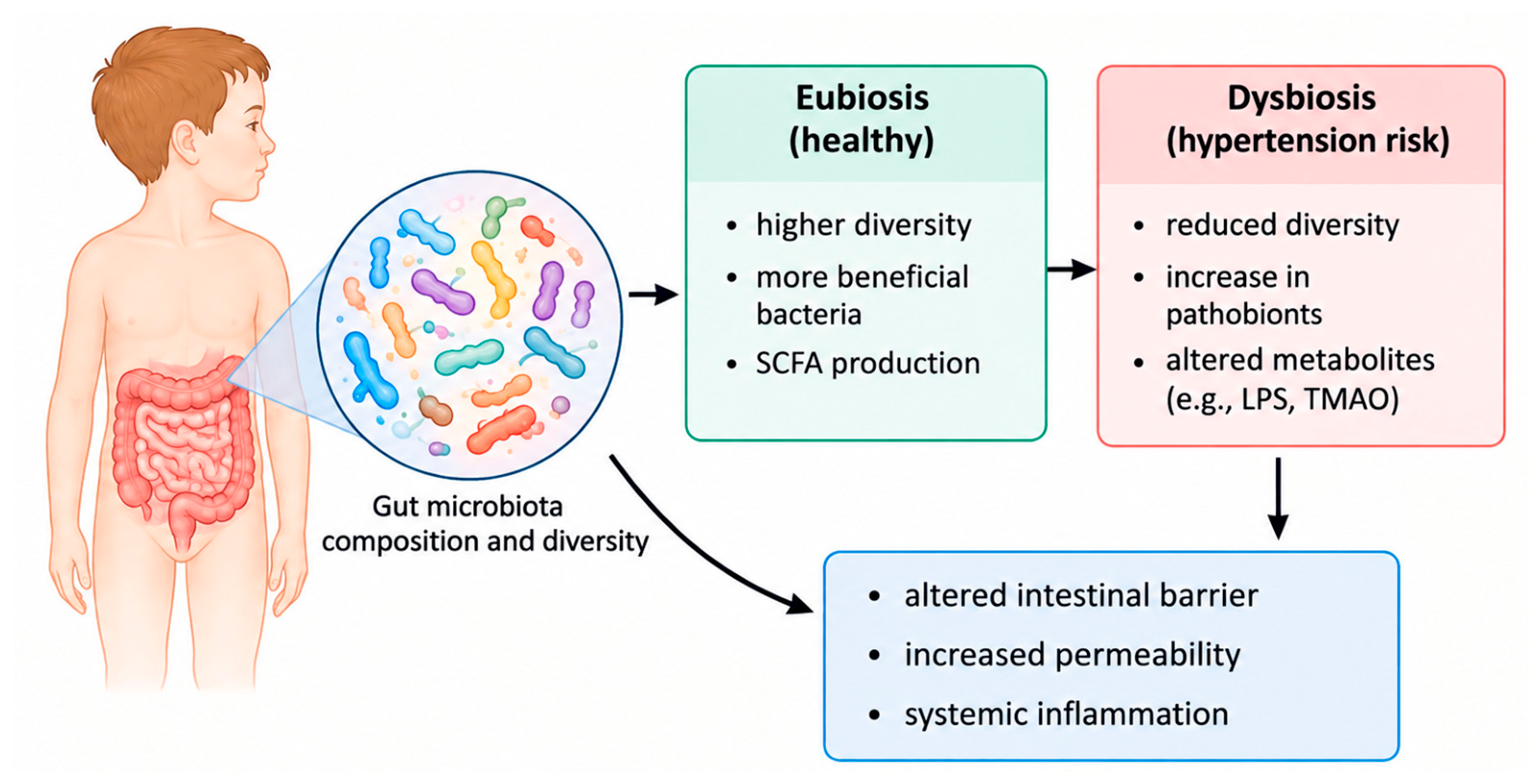
Figure 2.
Pathophysiology of arterial hypertension involving Th17 cell activation, IL-17A, and gut microbiota (SCFA – short-chain fatty acid, IL-17A – interleukin-17A, Th17 - T helper 17).
Figure 2.
Pathophysiology of arterial hypertension involving Th17 cell activation, IL-17A, and gut microbiota (SCFA – short-chain fatty acid, IL-17A – interleukin-17A, Th17 - T helper 17).
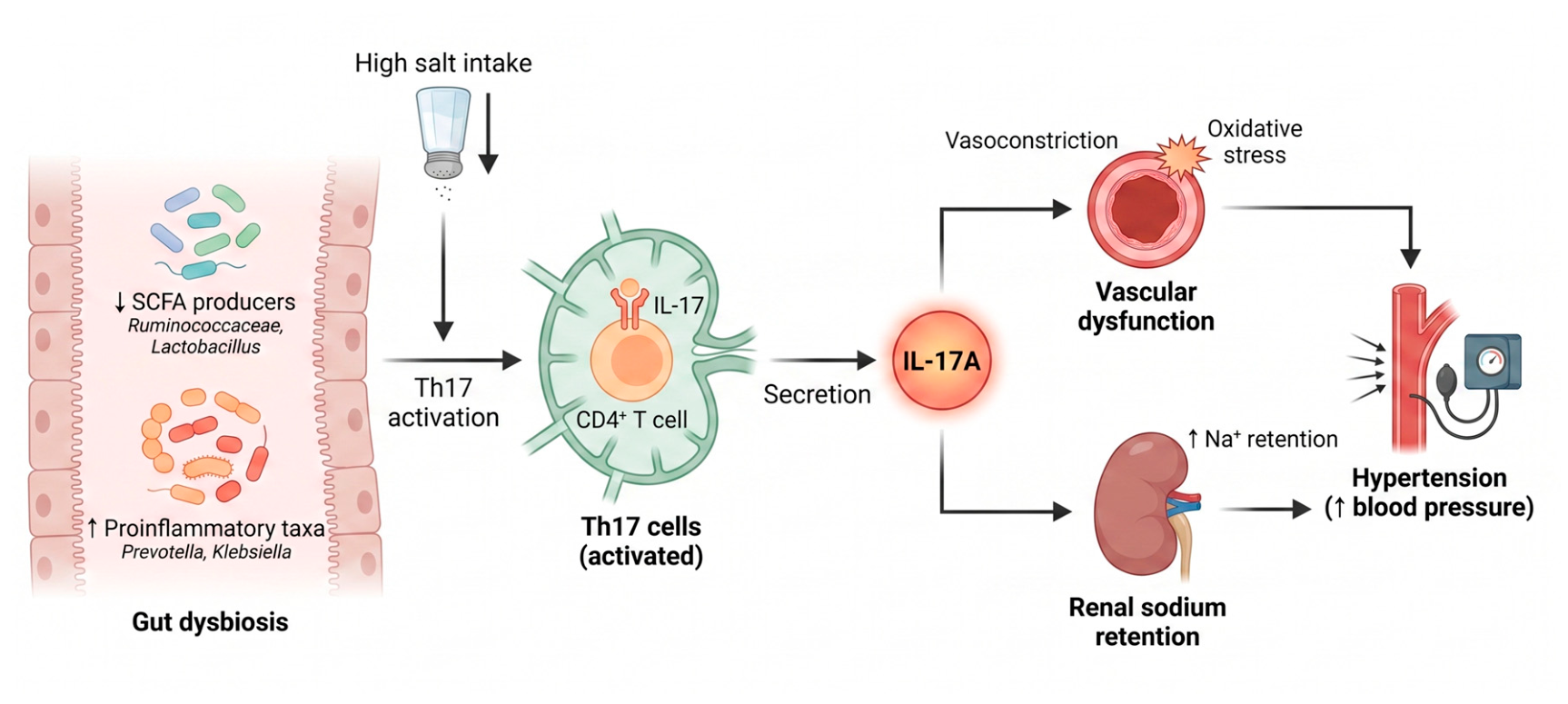
Figure 3.
Environmental and developmental factors influencing gut microbiota and immune pathways in pediatric hypertension: potential targets for antihypertensive treatment (Th17 - T helper 17, IL-17A – interleukin-17A).
Figure 3.
Environmental and developmental factors influencing gut microbiota and immune pathways in pediatric hypertension: potential targets for antihypertensive treatment (Th17 - T helper 17, IL-17A – interleukin-17A).
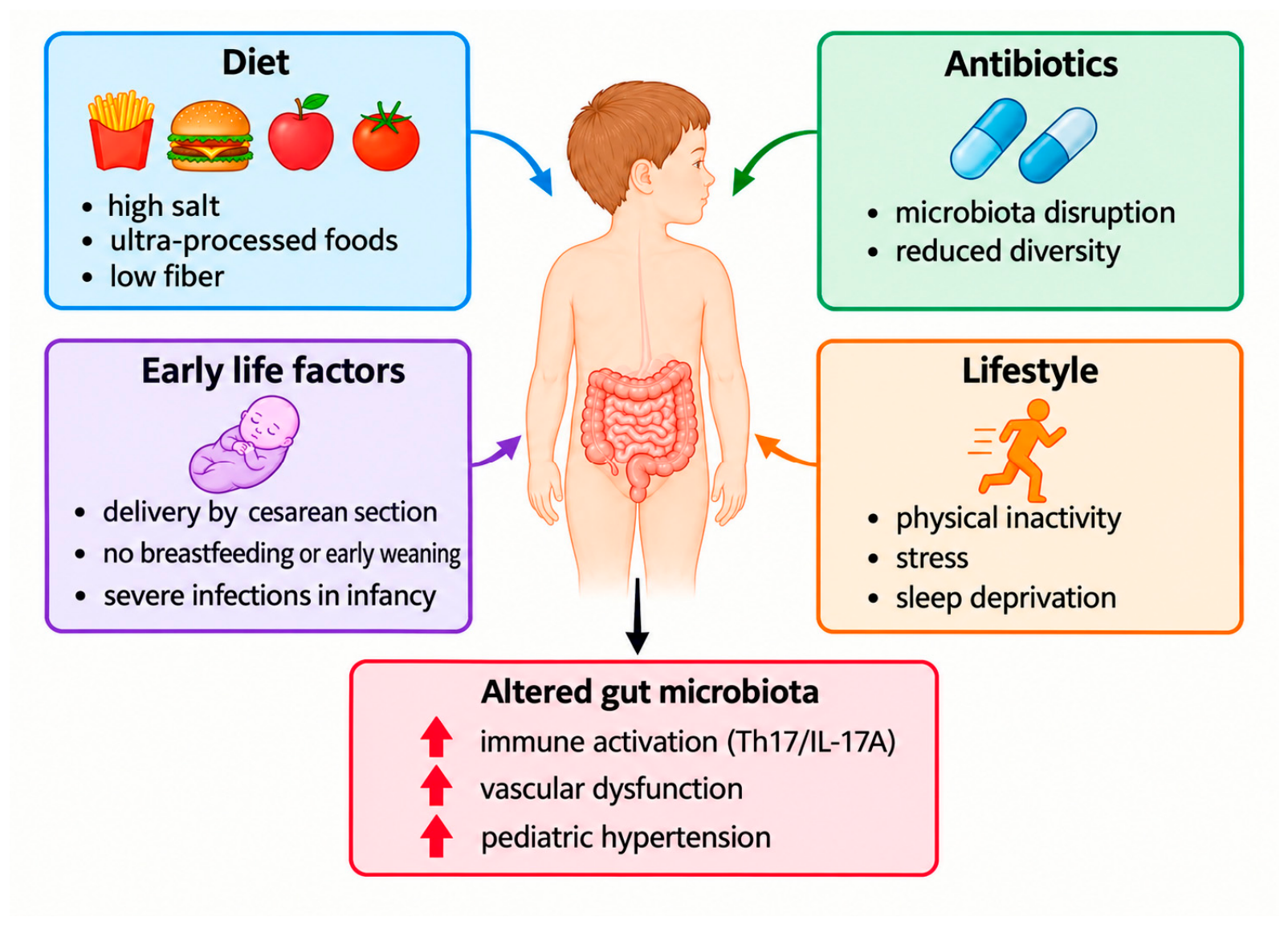

Table 1.
Potential interventions targeting the gut microbiota in arterial hypertension.
| Intervention | Mechanism of Action | Clinical Data and Pediatric Evidence | Remarks/Risks |
|---|---|---|---|
| High-fiber diet (DASH, Mediterranean) | Increases SCFA production, modulates gut microbiota, reduces inflammation and blood pressure | Strong evidence for lowering blood pressure in children [74] | Safe and widely recommended; requires long-term adherence |
| Probiotics and Prebiotics | Improve microbiota balance, strengthen intestinal barrier, modulate immune system | Adult data suggest a beneficial effect of probiotics on blood pressure [75,76] | Strain-specific effects; dosage and long-term impact need more research |
| Fecal Microbiota Transplantation (FMT) | Reverses dysbiosis, restores microbial diversity, modulates immune responses | No pediatric data; animal and adult studies show blood pressure benefits [68,69] | Potential risk of pathogen transmission; safety in children requires confirmation |
| Pharmacological therapy (ACEIs, ARBs, SGLT2i) | Antihypertensive and anti-inflammatory effects; SGLT2i influences microbial metabolites | Widely used; no data on microbiota impact in children | Possible side effects; microbiota interactions need further study |
DASH – Dietary Approaches to Stop Hypertension; ACEIs – Angiotensin-Converting Enzyme Inhibitors; ARBs – Angiotensin II Receptor Blockers; SGLT2i – Sodium-Glucose Cotransporter 2 inhibitor.
Disclaimer/Publisher’s Note: The statements, opinions and data contained in all publications are solely those of the individual author(s) and contributor(s) and not of MDPI and/or the editor(s). MDPI and/or the editor(s) disclaim responsibility for any injury to people or property resulting from any ideas, methods, instructions or products referred to in the content. |
© 2026 by the authors. Licensee MDPI, Basel, Switzerland. This article is an open access article distributed under the terms and conditions of the Creative Commons Attribution (CC BY) license (http://creativecommons.org/licenses/by/4.0/).
Copyright: This open access article is published under a Creative Commons CC BY 4.0 license, which permit the free download, distribution, and reuse, provided that the author and preprint are cited in any reuse.