

Submitted:
26 October 2026
Posted:
28 October 2026
You are already at the latest version
Abstract
Folate (vitamin B9) is an essential micronutrient required for one-carbon metabolism, methylation reactions, and nucleotide biosynthesis. For decades, the food industry has relied on synthetic folic acid for supplementation and food fortification because of its chemical stability. However, folic acid is not a bioavailable form of folate and must undergo a multistep enzymatic reduction and methylation in vivo. This reaction, catalysed by 5,10-methylenetetrahydrofolate reductase (MTHFR), converts folic acid to 5-methyltetrahydrofolate (5-MTHF), which is the form of folate that circulates in plasma, crosses the blood-brain barrier, and is directly involved in remethylating homocysteine. Individuals carrying certain MTHFR polymorphisms may have reduced efficiency in folate metabolism, potentially contributing to the presence of unmetabolized folic acid (UMFA) in the circulation. The potential downstream effects of circulating UMFA remain debated, including its proposed association with the masking of vitamin B12 deficiency. These considerations have driven interest towards preformed 5-MTHF either through chemical synthesis or microbial fermentation. This review explores the fundamentals of folate metabolism, highlighting the critical function of the MTHFR enzyme and the clinical impacts associated with its genetic polymorphisms. Ultimately, it discusses whether naturally occurring or metabolically engineered bacteria capable of producing 5-MTHF could serve as a safe, natural alternative to conventional synthetic folic acid. Additionally, the review covers how microbially and chemically produced 5-MTHF compare in terms of bioavailability, shelf-life stability, and regulatory approval, while weighing both the supportive and sceptical arguments surrounding the evidence base. Although microbial 5-MTHF synthesis offers a more sustainable and stereospecific alternative to chemical synthesis, the current yield remains low (typically below 10 mg/L even in engineered strains) and requires further research and optimization to become industrially competitive; therefore, clinical superiority over folic acid is not consistently demonstrated across outcomes yet. Consequently, current evidence supports sustained investment to discover high folate-producing strains and enhance microbial productivity, while advising caution against overstating the clinical case for completely replacing standard folic acid fortification.
Keywords:
5-methyltetrahydrofolate
; MTHFR polymorphism
; folate metabolism
; microbial biosynthesis
; unmetabolized folic acid
Introduction
Folate is a broad term used for a family of water-soluble B-vitamin compounds sharing a pteroylglutamate backbone. These compounds are important for many essential functions in the body, including the synthesis and repair of DNA, processing amino acids, and supporting the methylation of DNA, proteins, and lipids [1,2]. Humans and other mammals cannot produce folate on their own because they do not have all the enzymes needed for its synthesis. In contrast, many plants, fungi, and microorganisms are able to make folate through their own biosynthetic pathways. Therefore, in order to fulfill physiological folate requirements, humans depend on exogenous sources such as natural foods, fortified products, or dietary supplements [2,3]. The naturally occurring forms of vitamin B9 are referred to as folates, whereas folic acid represents the synthetic form commonly used as supplements and added to fortified foods [4]. Naturally occurring dietary folates exist predominantly as reduced, polyglutamated forms found in leafy vegetables, legumes, and organ meats, but these forms are chemically unstable, susceptible to oxidative degradation during storage and cooking, and show variable bioavailability [5,6,7].
To address widespread folate insufficiency and to reduce the incidence of neural tube defects (NTDs) caused by it, many countries introduced mandatory or voluntary fortification of staple foods with synthetic folic acid beginning in the late 1990s [5,8]. However, folate deficiency still remains a global public health concern. This deficiency is often linked to inadequate dietary intake, poor absorption, or increased physiological demands during pregnancy. Previous reviews of surveys measuring red blood cell (RBC) folate reported the prevalence of folate insufficiency to be more than 40% in most countries [9].
Folate deficiency can cause several health problems and negatively impact normal cell function, reproductive health, and fetal development. It is linked to megaloblastic anemia and elevated homocysteine levels, further leading to an increased risk of cardiovascular diseases and cognitive decline [10,11]. In pregnant women, insufficient folate intake can increase the risk of NTDs in developing fetuses [12]. Conversely, high intakes of folic acid are also alarming, as some studies suggest that the dihydrofolate reductase (DHFR) enzyme required for converting folic acid to its active form has limited activity in humans, leading to unmetabolized folate in circulation. Folic acid intake as little as 280 µg saturates the capacity of DHFR, which is a critical step in folic acid metabolism [13]. Excessive levels of unmetabolized folic acid in the body may have several adverse effects, including a weakened immune system, cognitive decline, masking of Vitamin B12 deficiency, and potentially increased risk of cancer [14]. Therefore, instead of folic acid, naturally available sources of bioavailable folates, especially 5-MTHF, might be beneficial in the prevention of folate deficiency and unmetabolized folate [15]. This distinction has gained clinical significance because of the discovery of common functional polymorphisms in the 5,10-methylenetetrahydrofolate reductase (MTHFR) gene, which reduce enzyme activity. In the body, MTHFR converts 5,10-MTHF to 5-MTHF, the predominant circulating form of folate, which is required for the formation of core methyl donors. These polymorphisms can substantially lower 5-MTHF production in homozygous carriers [11,16].
A recent review published in 2025 reported that the prevalence of MTHFR polymorphisms ranges from about 0-40% depending on the geographic location [16]. For these individuals, dependence on folic acid fortification to meet folate requirements is metabolically inefficient and might cause further issues linked to unmetabolized folic acid; however, the literature shows contradictory opinions. Consequently, there has been growing clinical and commercial interest in delivering pre-formed 5-MTHF directly, and MTHFR polymorphisms are being increasingly emphasized in discussions of personalized nutrition and folate requirements.
5-MTHF, which is chemically synthesized, is now available and increasingly used in prenatal supplements and some fortified foods. However, several sources on the synthesis of 5-MTHF emphasize that the production of 5-MTHF from folic acid typically yields a racemic mixture of (6R, S) 5-MTHF diastereomers. Among these, the 6S diastereomer is the only one that is biologically active and therefore requires separation by chiral resolution from the 6R diastereomer, which is an expensive process [17]. On the other hand, microbial biosynthesis of 5-MTHF, either from naturally folate-producing bacteria or from metabolically engineered production strains, has therefore emerged as an alternative route that is inherently stereospecific and potentially more sustainable [17,18]. Therefore, this review examines the importance of 5-MTHF for people with MTHFR gene polymorphisms and whether microbial production of 5-MTHF could serve as a feasible, scalable production source in the future. The study also critically analyzes the clinical and public-health evidence base, both favorable and unfavorable, for shifting food and supplement fortification strategies from folic acid toward 5-MTHF by reviewing scientific literature and technological developments from 2015 to 2026.
Structure and Forms of Folate
Folate is a conjugated compound composed of three structural components such as, a pteridine ring, para-aminobenzoic acid (PABA), and glutamic acid [19]. Different forms of folate have been identified based mainly on the oxidation state of the pteridine ring. Depending on the chemical form, different groups can be attached to the N5 or N10 position of the tetrahydrofolate (THF) molecule. Folic acid is the fully oxidized form, while dihydrofolate (DHF) is partially reduced, and THF is the completely reduced form. THF can also occur in various forms depending on the groups attached to the N5 and N10 positions. These include 5-MTHF, 5-formyl-THF, 10-formyl-THF, 5,10-methylene-THF, 5-formimino-THF, and 5,10-methenyl-THF [20].
Folate is found in a wide range of food sources including dark leafy green vegetables, legumes, asparagus, and liver [21,22]. However, folate that naturally occurs in these foods is predominantly present in polyglutamate forms, which limit its bioavailability [7].
The bioavailability of food-derived folate varies significantly and is generally estimated to be approximately 50% for most dietary sources [22]. However, certain fruits and vegetables may provide higher folate bioavailability, ranging from about 60% to 90% compared with folic acid [23]. Furthermore, research has also highlighted that folate is susceptible to degradation during common food processing and storage conditions. Common cooking methods, including boiling and steaming, as well as prolonged storage, can result in substantial folate losses of approximately 50%- 90%, as reported in previous studies [5,11,24].
Prior to the absorption of folate in the intestine, its polyglutamate forms must first be converted to monoglutamate forms by an enzyme, pteroyl polyglutamate hydrolase [7], also known as gamma-glutamyl hydrolase [32]. Gamma-glutamyl hydrolase is present near the jejunal region of the small intestine, where it contributes to the digestion and absorption of folate. The activity of this enzyme can be affected by several factors, including zinc availability and pH [33]. Consequently, the dietary inhibitors and the presence of longer polyglutamate chains can reduce folate digestibility and absorption [5,7,11]. In addition to dietary sources, bacteria can produce folates mainly as intracellular polyglutamates. However, some studies have reported that certain bacteria can also release folate in monoglutamate forms into the surrounding medium [34].
Folate Metabolism and the MTHFR Pathway
The folate cycle works as a core metabolic mechanism connecting dietary one-carbon intake to nucleotide biosynthesis, amino acid interconversion, and methylation. When folate is obtained from food sources, dietary folate polyglutamates are hydrolyzed to monoglutamates in the intestinal brush border, absorbed via the proton-coupled folate transporter, and are reduced and methylated within the enterocytes and the liver, after which they are released into the circulation as 5-MTHF. On the other hand, synthetic folic acid does not require conversion to monoglutamates [33]. Folic acid is first reduced to 7,8-DHF and then to 5,6,7,8-THF by an enzyme called DHFR [35]. Despite its role in folate metabolism, DHFR has been reported to have relatively low activity in humans [36]. As a result, folic acid may not be converted rapidly to its biologically active reduced forms. This limited conversion can lower the availability of active folates and may interfere with the metabolic pathways depending on folate [14,37]. Previous research highlights that the DHFR enzyme has low activity, and intake of 266 µg/meal may lead to the appearance of UMFA in circulation [14]. Nevertheless, a recent study suggested that humans might possess two genes related to the DHFR enzyme named DHFR and DHFR2 [38]. The DHFR2 gene in humans plays an indirect but essential role in folate metabolism by regulating the activity of the DHFR gene, rather than acting as a functional enzyme itself [37]. Unlike DHFR, which provides enzymatic activity for the conversion of folic acid to its active form, DHFR2 mainly produces an RNA that influences DHFR expression at both the mRNA and protein levels. Experimental evidence shows that knockout of DHFR2 leads to reduced gene expression and eventually decreased DHFR activity. This results in lower levels of folate intermediates such as 10-formyl-THF and downregulation of other one-carbon metabolism enzymes [37,38].
Role of MTHFR and 5-MTHF in Methylation Pathway
MTHFR is a key enzyme downstream of DHFR in folate metabolism. It is encoded by a gene located on chromosome 1 (1p36.3) and contains 11 exons, varying from 102 to 432 bp [39,40,41]. As mentioned earlier, MTHFR is involved in the conversion of 5, 10-MTHF into 5- MTHF, the main circulating form of folate that can be used in cellular metabolism [42]. The production of 5-MTHF is important because it provides a methyl group required for the conversion of homocysteine back to methionine. Methionine can then be used to synthesize S- adenosylmethionine (SAM) through the activity of methionine adenosyltransferase (MAT) enzymes. SAM is an important methyl donor and is involved in the methylation of a wide range of molecules including DNA, RNA, proteins, lipids, and neurotransmitters [43]. During the normal activity of the MTHFR enzyme, homocysteine levels are kept within a normal range, preventing the accumulation of UMFA. Disruption of this pathway can have critical metabolic consequences. Adequate MTHFR activity supports the continuous conversion of homocysteine to methionine, whereas insufficient production of 5-MTHF can reduce the efficiency of this reaction. Consequently, homocysteine may accumulate and lead to hyperhomocysteinemia, which has been associated with vascular and cellular damage, including cardiovascular complications, oxidative stress, endothelial dysfunction, and changes in neurodegeneration [42,43,44]. A recent study conducted on East Asian and European populations suggested that reduced MTHFR activity is associated with increased risk of small vessel stroke (SVS) and that folic acid supplementation is essential to decrease homocysteine levels [44]. Another study concluded that folate supplementation may help lower homocysteine levels and enhance cognitive function in patients with folate deficiency [10]. However, people with MTHFR mutations cannot convert folic acid to its active form, 5-MTHF, which is essential for the conversion of homocysteine to methionine and further methylation processes [15]. This enzyme therefore plays a dual role by regulating homocysteine concentrations and sustaining the methylation potential necessary for epigenetic and metabolic regulation [41,42]. Maintaining optimal folate status, whether through diet or fortified foods supplemented with probiotic folate-producing bacteria, might support MTHFR function, contributing to cardiovascular health, proper gene regulation, and overall metabolic homeostasis. This explains why 5-MTHF, rather than folic acid or even THF, is considered the physiologically decisive folate type, as it is the form transported in plasma, the only form that can cross the blood-brain barrier, and the substrate for homocysteine remethylation [45]. Therefore, for people with MTHFR polymorphisms, delivering 5-MTHF exogenously in principle bypasses the rate-limiting MTHFR step, which has increased attention toward both pharmaceutical L-methylfolate products and microbial food-grade 5-MTHF production.
MTHFR Polymorphisms Mechanism and Clinical Consequences
MTHFR polymorphisms, particularly C677T and A1298C, are crucial for understanding folate metabolism and its consequences on one-carbon transfer reactions, DNA methylation, and homocysteine homeostasis. The activity of the MTHFR enzyme is impacted by numerous variations in the mthfr gene, reducing its activity and resulting in an increase in blood homocysteine levels [46]. According to a recent study, these variants are remarkably common worldwide; however, the allele frequencies differ among populations. For example, in Chinese pregnant women, almost 60% were heterozygous or homozygous carriers of the 677T variant, which might be associated with an increased risk of pregnancy complications [41]. Another cross-sectional study conducted on women in the Herzegovinian population suggested a high frequency of MTHFR polymorphisms was observed among pregnant women, with C677T and A1298C variants reported in 56.9% and 87.2% of the participants, respectively [47].
In the C677T polymorphism, the MTHFR gene undergoes a substitution at exon 4, causing cytosine (C) to be replaced by thymine (T) at position 677 [39,48]. This results in the transformation from an alanine to a valine at codon 222 in the N-terminal catalytic domain [48,49,50]. This polymorphism results in increased thermolability and reduced enzyme activity, especially in homozygous variants, by reducing the enzyme's affinity for flavin adenine dinucleotide (FAD), which acts as a cofactor during NADPH-dependent reduction of 5,10-MTHF to 5-MTHF [16]. However, studies do not clearly state the exact percentage of folate levels affected. According to some studies, individuals with the homozygous TT variant had low serum folate and significantly high homocysteine levels [51,52], increasing the risk of congenital heart disease by 75% [53].
In the A1298C polymorphism of the MTHFR gene, the substitution occurs at exon 7, causing adenine (A) to be replaced by cytosine (C) at nucleotide position 1298. This DNA base change alters the codon so that it codes for alanine instead of glutamic acid at position 429 of the enzyme, a substitution referred to as Glu429Ala [39,48]. A1298C leads to lower catalytic activity of the enzyme, although little research has focused on that polymorphism [54].
In addition to the common C677T and A1298C polymorphisms, several less frequent MTHFR variants have been recognized that further contribute to variability in folate metabolism and disease susceptibility. The G1793A transition (rs2274976) is another clinically relevant single nucleotide polymorphism found in the human MTHFR gene, located specifically in exon 11. This transition causes an arginine-to-glutamine substitution at codon 594 (Arg594Gln) and might have an influence on the incidence of type 2 diabetes [55]. Enzyme activity estimates for the major MTHFR variants consistently demonstrate significant reductions, with C677T heterozygotes (CT) retaining about 60–70% activity, homozygous mutants (TT) 25–35%, A1298C heterozygotes (AC) retaining about 70–90% activity, homozygous mutants (CC) roughly 60% activity, and compound heterozygotes (C/T + A/C) approximately 30–50%. While less common alleles such as G1793A contribute to further, significantly reduced functional capacity with variability across populations and assay methods[56,58,56,58].
Given these challenges, individualized nutrition strategies that reflect MTHFR genotypes should be developed. While folic acid supplementation and food fortification have been widely used to cope with folate deficiency, these methods may not succeed in individuals with MTHFR polymorphisms, considering the changes in folate bioavailability and metabolism. Therefore, 5-MTHF intake is generally regarded as a more reliable approach, as it bypasses the metabolic abnormality and ensures adequate folate status [15,59].
Clinical Applications of 5-MTHF
5-MTHF has been explored in several areas of clinical medicine because it is the biologically active form of folate and can participate directly in folate-dependent metabolic reactions without requiring conversion by MTHFR [60,61]. Its most developed therapeutic application is in psychiatry, where L-methylfolate has been used as an adjunct to antidepressant treatments in patients who do not respond to selective serotonin reuptake inhibitors (SSRIs). Randomized controlled trials have reported improvement with L-methylfolate, particularly at a dose of 7.5 or 15 mg [62]. In cases of depressive symptoms in people with MTHFR mutations, a study analysed that L-methylfolate resulted in a 25% decrease in PHQ-9 depression scores from baseline [60]. In reproductive medicine, 5-MTHF has been investigated for preconception, pregnancy folate supplementation, infertility, recurrent pregnancy loss, and assisted reproductive outcomes in women with MTHFR polymorphisms [63,64]. Although 5-MTHF produced higher serum folate concentrations in a randomized trial, this did not translate into a significant improvement in ongoing pregnancy rates or a clear advantage in homocysteine reduction, suggesting that better folate bioavailability does not necessarily result in better reproductive outcomes [16]. However, clinical trials found that among the participants consuming 5-MTHF, only 7% had detectable UMFA, compared to participants consuming folic acid, among whom 31% had detectable UMFA [65].
The studies related to the application of 5-MTHF have also extended to cardiovascular and renal disorders caused by elevated homocysteine levels. Recent research in patients receiving hemodialysis found that a combination of L-methylfolate and methylcobalamin was associated with reductions in homocysteine and blood pressure in patients with resistant hypertension; however, the study involved only 51 patients, and the authors emphasized that larger studies are needed to confirm these findings [66]. A preclinical study also evaluated the impact of 5-MTHF combined with Spirulina extract on diabetes. The study reported that 5-MTHF showed higher inhibitory activity against alpha-amylase compared to folic acid [67]. Overall, the evidence for 5-MTHF differs substantially depending on the indication. While adjunctive L-methylfolate has demonstrated clinical benefit in selected patients with treatment-resistant depression, evidence for reproductive, cardiovascular, renal, and other applications remain more limited. Recognizing the value of active folates, recent strategies have increasingly focused on harnessing natural microbial biosynthesis of folates. In this context, folate-producing bacteria, especially Lactic acid bacteria (LAB), could serve as a possible nutritional strategy. Several LAB strains naturally synthesize and release folate during fermentation, offering a potential source of bioavailable folate in functional foods.
Natural Microbial Producers of 5-MTHF
The industrial-scale production of folate is predominantly based on chemical synthesis. Despite its widespread use, this method presents environmental concerns and may not be sufficient to meet the continuously increasing global requirement for folate. These limitations have encouraged the investigation of alternative sources and production approaches [68]. A significant body of food-microbiology research has characterized folate biosynthesis among LAB and related genera traditionally used in fermented foods. This research is usually based on the idea of biofortifying dairy and plant-based fermented products with natural bioactive folate without using chemical additives [69,70,71]. Several microorganisms are naturally capable of producing folate through their own metabolic pathways. In addition, evidence suggests that microorganisms residing in human intestinal microbiota may synthesize folate that can potentially contribute to the folate available to the host [72].
In particular, the LAB have been widely studied for their role in folate production, and several studies have shown that they can increase folate in fermented milk products, including yogurt, milk, and cheese [73,74]. Folate deficiency is a widespread nutritional issue, and biofortifying dairy products through LAB is a promising strategy to enhance natural folate levels. However, the ability of bacteria to produce folate can differ significantly depending on the species and strain. Although some bacteria contribute to folate production, others may reduce its availability by utilizing the vitamin; for instance, several strains of Lactobacillus gasseri and Lacticaseibacillus rhamnosus have been identified as folate consumers [75,76]. The 5-MTHF amounts produced by bacteria are demonstrated in Table 1.
While most studies in the literature usually focus on the total folate content, some have characterized 5-MTHF in bacterial strains. Moreover, the amounts of 5-MTHF produced vary widely depending on the strains. More recent strain-screening studies have continued to identify high-producing isolates from fermented foods. A screening of twenty-nine LAB isolates from Indonesian kefir grains identified L. plantarum RAL25 as an exceptionally strong extracellular producer, generating approximately 21 µg/mL of 5-MTHF in folate-free medium, far exceeding earlier reports for LAB grown without folate-pathway engineering [69]. Because 5-MTHF is chemically unstable once released extracellularly, the same research group evaluated protein-based stabilization, using bovine serum albumin complexation as a model carrier system to protect the vitamin during downstream processing [69].
Similarly, a growing body of literature has reported that LAB species and strains are capable of folate biosynthesis in vitro, noting that reported production capacity has been increasingly documented in the literature since around 2017, which shows growing interest in "biofortification" as an alternative or complementary strategy to synthetic fortification. The production of folate in bacteria involves complex pathways involving 17 genes that are essential for folate biosynthesis.
Genetic Basis of Folate Production
Various bacterial strains can produce folate in their cells and release it into the growth medium, although this ability varies depending on the strain and culture conditions. While polyglutamate derivatives are predominant intracellularly, the monoglutamate form of folate is sometimes found in the extracellular matrix [34]. The release of folate into extracellular media is particularly interesting because extracellular forms may be more accessible for absorption, increasing their value as a natural dietary source [11,34,76,77]. Folate biosynthesis by LAB depends on the availability of several important precursors, including chorismate, PABA, and glutamate. These compounds are incorporated into the pathway through a series of enzyme-mediated reactions leading to the formation of physiologically active THF. Glutamate availability can be supported either by supplementation from culture medium or by endogenous bacterial synthesis through carbon and nitrogen metabolism [78]. However, PABA, which is the core of the folate molecule, is derived from chorismate through reactions associated with the shikimate pathway [20]. Therefore, the de novo synthesis of PABA represents an important determinant of LAB ability to produce folate [18,79,80]. Many LAB lack a complete functional pabA/pabB/pabC gene set and are consequently unable to synthesize PABA independently [11,80,81]. Nevertheless, this capability is present in some L. lactis, L. plantarum, and Bifidobacteria strains, which possess most of the genetic machinery involved in chorismate biosynthesis and can consequently proceed toward PABA formation [20,77].
Folate biosynthesis in most bacterial species occurs in three phases. The primary step in folate formation involves chorismate biosynthesis, which requires seven enzymatic reactions. Firstly, aroF, which encodes 3-deoxy-D-arabino-heptulosonate-7-phosphate (DAHP) synthase (EC 2.5.1.54), initiates the pathway by converting phosphoenolpyruvate and erythrose-4-phosphate to DAHP. This is followed by the formation of 3-dehydroquinate by aroB, which encodes 3-dehydroquinate synthase (EC 4.2.3.4); next, 3-dehydroshikimate is produced by aroD, which encodes 3-dehydroquinate dehydratase (EC 4.2.1.10). Later, shikimate and shikimate-3-phosphate are produced by aroE and aroK, which encode shikimate dehydrogenase (EC 1.1.1.25) and shikimate kinase (EC 2.7.1.71) enzymes. Shikimate-3-phosphate is converted to 5-enolpyruvylshikimate-3-phosphate (EPSP) by aroA encoding 5-enolpyruvylshikimate-3-phosphate synthase (EPSPS) (EC 2.5.1.19). Then EPSP is transformed to chorismate by aroC encoding chorismate synthase (EC 4.2.3.5). Subsequently, chorismate is converted to PABA through combined activity of three genes, pabA, pabB, and pabC. These genes produce enzymes encoding para-aminobenzoate synthase component II (EC 2.6.1.85), para-aminobenzoate synthase component I, and aminodeoxychorismate lyase (EC 4.1.3.38). Thereafter, the third phase comprises the core folate biosynthetic pathway, in which the pteridine and PABA branches converge. folE, encoding GTP cyclohydrolase I (EC 3.5.4.16), initiates the pteridine branch by converting GTP to dihydroneopterin triphosphate. This intermediate is subsequently processed by folQ, encoding dihydroneopterin triphosphate diphosphatase (EC 3.6.1.67), and folB, encoding dihydroneopterin aldolase (EC 4.1.2.25), leading to the formation of 6-hydroxymethyl-7,8-dihydropterin. The folK-encoded hydroxymethyl dihydropterin pyrophosphokinase (EC 2.7.6.3) then activates this compound by pyrophosphorylation. The activated pteridine intermediate is subsequently combined with PABA by folP, encoding dihydropteroate synthase (EC 2.5.1.15), to form dihydropteroate. This intermediate is further converted toward dihydrofolate by folC, encoding dihydrofolate synthase/folylpolyglutamate synthase (EC 6.3.2.17). The folA gene encodes dihydrofolate reductase (EC 1.5.1.3), an enzyme that uses NADPH to convert DHF to THF [20,77]. The THF and its derivatives produced are important for several cellular functions including DNA synthesis, amino acid metabolism, and methylation processes [43,81].
Metabolic Engineering for Enhanced Folate Production
Bacterial strains reported until now produce folate in smaller amounts, which does not fulfill the daily folate requirement. Therefore, several research groups have pursued metabolic engineering strategies on industrially relevant species including Escherichia coli, L. lactis, and Bacillus subtilis to increase the yield of 5-MTHF [82,83,84]. In L. lactis, the overexpression of the MTHFR gene resulted in an increased yield of 18 µg/L, and further combinatorial approaches, including the addition of precursors to media, overexpression of folE to increase upstream folate biosynthesis, and overexpression of glucose-6-phosphate dehydrogenase to improve the availability of NADPH, a redox cofactor for 5-MTHF biosynthesis, resulted in a final yield of 300 µg/L. This is reported as the highest titer achieved in L. lactis to date [85].
In E. coli, metabolic engineering strategies to enhance folate production have focused primarily on increasing pathway flux toward folate biosynthesis and improving the availability of methyl-group (one-carbon) donors required for folate-dependent metabolic reactions. In a study, optimization of fermentation conditions and overexpression of genes such as DHFR and MTHFR, along with the introduction of formate-tetrahydrofolate ligase, formyltetrahydrofolate cyclohydrolase, and methylenetetrahydrofolate dehydrogenase, and reduction of the methionine synthase gene in a BL21(DE3) host increased folate production to 527.84 µg/g dry cell weight compared to the unmodified strain [86]. Moreover, a recent study introduced a novel exogenous one-carbon transfer pathway based on acetyl-CoA degradation to increase the intracellular methyl-donor pool, together with the overexpression of the rate-limiting genes folE, folP, and purU. This strategy resulted in a high 5-MTHF yield of 1.75 mg/L in shake flask fermentation. Further enhancement to 8.2 mg/L was achieved by deleting metE, which encodes methionine synthase and consumes 5-MTHF during methionine biosynthesis, thereby reducing the metabolic drain on the target product [82].
B. subtilis has also become a promising candidate for 5-MTHF biosynthesis due to its GRAS status, which supports its potential in nutraceutical and food applications. In an early systems metabolic engineering study, precursor supply was enhanced while competing metabolic pathways were simultaneously downregulated using CRISPR interference (CRISPRi). Specifically, repression of pheA redirected chorismate-derived metabolic flux from phenylalanine biosynthesis toward the production of folate precursors. This modification increased the 5-MTHF titer to 1.58 mg/L, corresponding to a 153.8-fold improvement compared with the wild-type strain. Subsequent optimization of the culture medium further increased 5-MTHF production to 1.78 mg/L, while the combined concentration of 5-MTHF, 5-formyl-THF, folic acid, and THF reached 3.31 mg/L [83,87]. Additionally, introducing the comGC gene into the genome of B. subtilis B89 resulted in a 5-MTHF yield of 3.41 mg/L, suggesting that this modification might enhance folate biosynthesis [84].
Altogether, these metabolic engineering studies demonstrate significant progress in microbial 5-MTHF production, several challenges still remain undiscussed. These engineering strategies achieved an increased production by two- to three-fold in a relatively short time compared to native LAB. These improvements have mainly been achieved by combining several approaches, including relieving feedback inhibition, redirecting metabolic flux away from competing pathways, increasing the availability of key precursors such as GTP and PABA, improving NADPH supply, and reducing product degradation or by-product formation. Despite these advances, the highest reported 5-MTHF yield of 8.2 mg/L is still considerably lower than the g/L-scale production levels achieved for commercially established microbial products such as riboflavin, vitamin B12, and amino acids [86,88,89]. Therefore, although metabolic engineering has demonstrated the feasibility of microbial 5-MTHF production, further improvements in pathway efficiency, precursor supply, strain stability, and fermentation performance are required before the technology can reach an industrially relevant and commercially viable scale [83,84,86].
Comparison Between Microbial and Chemical Synthesis of 5-MTHF
These days, the production of 5-MTHF is dependent on industrial synthesis, leading to various environmental concerns and the problem of chiral separation [82]. Industrially available forms of 5-MTHF include calcium salt (marketed under trade names including Metafolin®) or, more recently, the glucosamine salt (Quatrefolic®), the latter offering markedly improved aqueous solubility relative to the calcium salt [18]. The primary drawback of chemical synthesis is the stereochemistry when folic acid or THF is reduced to 5-MTHF through hydrogenation or borohydride reduction. The process usually produces a racemic mixture (6R, S)- 5-MTHF, where only the 6S diastereoisomer is biologically active, whereas the 6R form has to be removed since it has no biologically significant role in the human body. Moreover, studies also emphasize that this procedure requires toxic chemicals that might cause safety production issues, and it is also costly [18,45,85]. In contrast, microbial biosynthesis of 5-MTHF is inherently stereospecific, as the folate-synthesizing enzymes might act enantioselectively, producing a single form of 5-MTHF; moreover, bacteria can also be engineered to produce the bioactive form of 5-MTHF [85]. In this way, the costly procedure of separation of 5-MTHF from the racemic mixture and its environmental impact could also be reduced.
However, there is a gap between theoretical advantage and current productivity, as 5-MTHF is produced by bacteria in extremely small amounts and still needs research and optimization strategies to uncover strains that give high yields of folate. Conversely, chemical synthesis benefits from decades of continuous process optimization, high volumetric throughputs, and mature global supply chains. Rigorous techno-economic comparison of chemical and microbial methods for 5-MTHF biosynthesis is not available in contemporary literature, highlighting another knowledge gap that needs attention before claiming industrial scalability and economic superiority of bio-based methods.
Bioavailability and Stability of 5-MTHF
European Food Safety Authority (EFSA) established a comparative analysis between 5-MTHF and folic acid after extensive evaluations. It was found that 5-MTHF (as calcium-L-methylfolate or the glucosamine salt) and folic acid show broadly comparable bioavailability at intakes below 400 µg/day, but that 5-MTHF becomes more bioavailable than folic acid at intakes at or above 400 µg/day [90]. While this might be true for individuals with normal folate metabolism, cases including individuals with MTHFR polymorphisms reveal a different reality. Several previous reviews have also reported clinical trials confirming that 5-MTHF effectively bypasses MTHFR genetic polymorphisms, yielding superior, long-lasting reductions in homocysteine levels compared to folic acid [61]. Furthermore, a 24-week randomized controlled trial suggested 5-MTHF as an alternative to folic acid, as it resulted in lower UMFA levels in maternal and fetal compartments [65]. Another study focusing on couples with recurrent pregnancy loss (RPL) tested the feasibility of randomized clinical trials comparing folic acid, and 5-MTHF had similar results. They highlighted the issue regarding the degradation of 5-MTHF in retained sample matrices, further emphasizing that future investigations must ensure strict stability control for active methyl folate salts in specialized prenatal multivitamin formulations before scaling to definitive clinical efficacy trials [91]. Simulated digestion tests also show that 5-MTHF easily oxidizes into an inactive byproduct called MeFox, depending on the food matrices, and can be almost completely degraded during simulated digestion [92,93]. This should be taken into consideration especially in case of microbial folate production, where longer fermentation times could lead to degradation. Therefore, incorporating micronutrients into food matrices requires targeted reformulation or advanced delivery systems. Recently, studies are being conducted to increase bacterial 5-MTHF stability through a BSA complexation strategy to protect it from hydrolytic or oxidative stress [69,93].
Application in Functional Food and Personalized Nutrition
5-MTHF has numerous applications in food, dietary supplements, and specialized nutritional products. It can be directly used as a folate source in fortified products, or it can be produced through different methods and then added to a food or supplement. Microbial folate production using LAB is gaining attention nowadays as it can naturally increase folate content in fermented foods. This method may also be useful for foods promoted as clean-label and probiotic-related products. Folate-biofortified yogurt has been developed experimentally using folate-producing bacteria to increase the folate content of the final product [94]. However, most studies mention the overall folate produced without analysing individual derivatives [74]. Therefore, research regarding whether these biofortified products could benefit people with MTHFR polymorphisms is still limited. A second approach is to produce and purify 5-MTHF through fermentation and then use it as a standardized fortification ingredient in fortified food or dietary supplements. In this setting, naturally produced 5-MTHF would serve as an alternative to chemically synthesized forms [17,45,83,90].
Growing interest in MTHFR polymorphism and increased awareness of genetic testing may also create a market of nutritional products aimed specifically at people who carry MTHFR variants [47,52,95]. However, this area needs to be approached carefully, as mentioned in previous sections, because there is limited clinical evidence supporting that people with MTHFR variants benefit from 5-MTHF compared to folic acid [61,63,96]. Nevertheless, products designed for specific groups such as pregnant individuals, patients with depression who have not responded adequately to standard antidepressant treatment, or older adults in whom folate and vitamin B12 status may be particularly relevant and could represent potential areas of interest. The biological rationale for these applications is reasonable, although evidence of better clinical outcomes at the population level is still limited [61,96,97].
Infant formulas and prenatal supplements could also become potentially important applications of microbially produced 5-MTHF because adequate folate intake around conception is well established as a means of reducing the risk of neural tube defects. Studies have shown that 5-MTHF can produce similar or high levels of circulating folate at comparable doses [98]. However, for these products, the stability of 5-MTHF is extremely important, as it can degrade rapidly under unfavorable conditions [69,91]. Therefore, ensuring that 5-MTHF remains stable and retains its bioavailability during manufacturing and storage is essential for creating reliable, commercially viable products in these categories.
Challenges, Limitations and Future Perspectives
The industrial translation of microbial 5-MTHF production faces substantial constraints compared with synthetic folic acid, which is a dominant form used for food fortification. Synthetic folic acid offers exceptional chemical stability and high heat resistance, making it the industry standard for dry, high-temperature processed foods. In contrast, 5-MTHF is inherently prone to oxidative degradation and requires protective encapsulation or strict environmental controls during processing. This is especially significant in the case of microbial 5-MTHF production, as the downstream extraction, purification, and cell-separation stages expose it to atmospheric oxygen, light, and elevated temperatures, requiring antioxidant supplementation or protective matrix complexation during downstream processing. Moreover, the 5-MTHF yields produced by bacteria are low, requiring the discovery of strains with higher yield or further systems-level engineering to manufacture strains with high titer. Likewise, the proof that these strains might function in commercial settings is also not confirmed yet, as the literature still lacks rigorous, techno-economic analyses or scale-up evaluations tailored specifically to 5-MTHF fermentation. Therefore, in the future, the field would significantly benefit from the techno-economic analyses directly comparing microbial and chemical production routes along with matrix-specific stability and shelf-life studies across representative food categories. Additionally, rather than relying indefinitely on serum folate as a substitute marker of benefit, future research must prioritize adequately powered, genotype-stratified randomized controlled trials that measure hard clinical outcomes.
Conclusions
Conclusively, 5-MTHF is the bioactive form of folate that serves as a direct substrate for homocysteine remethylation, unlike synthetic folic acid, which requires multi-step enzymatic reduction via DHFR and MTHFR. 5-MTHF is readily bioavailable, bypassing the metabolic bottlenecks in individuals with MTHFR polymorphisms present in a significant portion of the global population. Microbial biosynthesis of 5-MTHF either by LAB or engineered expression hosts (E. coli, L. lactis, and B. subtilis) presents an environmentally sustainable, stereospecific route that eliminates the costly racemate resolution steps involved in chemical synthesis and provides a natural alternative. However, due to the instability of 5-MTHF, bridging the gap between benchtop microbial 5-MTHF biosynthesis and commercial manufacturing still depends on resolving several key engineering and bioprocessing limitations. Nevertheless, this review highlights the feasibility of this approach and the necessity of exploring this area through dedicated future research.
Author Contributions
Sarah Anjam contributed to the conceptualization, literature review, and writing of the original draft. Mehmet Öztürk contributed to the conceptualization, review, and editing of the manuscript.
Conflicts of Interest
The authors declare that they have no conflict of interest.
References
- Abubakr, R.A.H.; Abdel A’al, M.H.; El Moghazy, G.M.; Abd Elrazik, A.B.; Ibrahim, S.A.A. Genetic and biotechnological characterization of folate-producing probiotics isolated from local dairy products. Beni-Suef Univ. J. Basic Appl. Sci. 2025, 14, 62. [Google Scholar] [CrossRef]
- Mosso, A.L.; Jimenez, M.E.; Vignolo, G.; LeBlanc, J.G.; Samman, N.C. Increasing the folate content of tuber-based foods using potentially probiotic lactic acid bacteria. Food Res. Int. 2018, 109, 168–74. [Google Scholar] [CrossRef] [PubMed]
- Zeydanli, M.N.; Yuksekdag, Z.; Cinar Acar, B. Folate production in lactic acid bacteria and determination of folate derivatives by HPLC. Pamukkale Univ. J. Eng. Sci. 2025, 31, 694–700. [Google Scholar] [CrossRef]
- Ložnjak Švarc, P.; Oveland, E.; Strandler, H.S.; Kariluoto, S.; Campos-Giménez, E.; Ivarsen, E.; et al. Collaborative study: Quantification of total folate in food using an efficient single-enzyme extraction combined with LC-MS/MS. Food Chem. 2020, 333, 127447. [Google Scholar] [CrossRef] [PubMed]
- Homayouni Rad, A.; Yari Khosroushahi, A.; Khalili, M.; Jafarzadeh, S. Folate biofortification of yoghurt and fermented milk: a review. Dairy Sci. Technol. 2016, 96, 427–41. [Google Scholar] [CrossRef]
- Liu, F.; Zheng, J.; Mo, Y.; Xiao, Y.; Wang, Y.; Zhang, H.; et al. Complete loss of 5-methyltetrahydrofolate in wheat during simulated gastric digestion. Food Chem. 2025, 495, 146467. [Google Scholar] [CrossRef] [PubMed]
- Ringling, C.; Rychlik, M. Origins of the difference between food folate analysis results obtained by LC–MS/MS and microbiological assays. Anal. Bioanal. Chem. 2017, 409, 1815–25. [Google Scholar] [CrossRef] [PubMed]
- Rodrigues, V.B.; Silva, E.N.D.; Santos, M.L.P. Cost-effectiveness of mandatory folic acid fortification of flours in prevention of neural tube defects: A systematic review. In PLOS ONE; Wieringa, F., Ed.; 2021; Volume 16. [Google Scholar] [CrossRef] [PubMed]
- Rogers, L.M.; Cordero, A.M.; Pfeiffer, C.M.; Hausman, D.B.; Tsang, B.L.; De-Regil, L.M.; et al. Global folate status in women of reproductive age: a systematic review with emphasis on methodological issues. Ann. N Y Acad. Sci. 2018, 1431, 35–57. [Google Scholar] [CrossRef] [PubMed]
- Hama, Y.; Hamano, T.; Shirafuji, N.; Hayashi, K.; Ueno, A.; Enomoto, S.; et al. Influences of Folate Supplementation on Homocysteine and Cognition in Patients with Folate Deficiency and Cognitive Impairment. Nutrients 2020, 12, 3138. [Google Scholar] [CrossRef] [PubMed]
- Anjam, S. Screening of folate biosynthesis and probiotic properties of human-derived lactic acid bacteria. In Bolu Abant Izzet Baysal University; 2026. [Google Scholar]
- Gurugubelli, K.R.; Ballambattu, V.B. Perspectives on folate with special reference to epigenetics and neural tube defects. Reprod. Toxicol. 2024, 125, 108576. [Google Scholar] [CrossRef] [PubMed]
- Plumptre, L.; Masih, S.P.; Ly, A.; Aufreiter, S.; Sohn, K.-J.; Croxford, R.; et al. High concentrations of folate and unmetabolized folic acid in a cohort of pregnant Canadian women and umbilical cord blood. Am. J. Clin. Nutr. 2015, 102, 848–57. [Google Scholar] [CrossRef] [PubMed]
- Hu, J.; Wang, B.; Sahyoun, N.R. Application of the Key Events Dose-response Framework to Folate Metabolism. Crit. Rev. Food Sci. Nutr. 2016, 56, 1325–33. [Google Scholar] [CrossRef] [PubMed]
- Vidmar Golja, M.; Šmid, A.; Karas Kuželički, N.; Trontelj, J.; Geršak, K.; Mlinarič-Raščan, I. Folate Insufficiency Due to MTHFR Deficiency Is Bypassed by 5-Methyltetrahydrofolate. J. Clin. Med. 2020, 9, 2836. [Google Scholar] [CrossRef] [PubMed]
- Araszkiewicz, A.F.; Jańczak, K.; Wójcik, P.; Białecki, B.; Kubiak, S.; Szczechowski, M.; et al. MTHFR Gene Polymorphisms: A Single Gene with Wide-Ranging Clinical Implications—A Review. Genes. 2025, 16, 441. [Google Scholar] [CrossRef] [PubMed]
- Lu, C.; Liu, Y.; Li, J.; Liu, L.; Du, G. Engineering of Biosynthesis Pathway and NADPH Supply for Improved L-5-Methyltetrahydrofolate Production by Lactococcus lactis. J. Microbiol. Biotechnol. 2021, 31, 154–62. [Google Scholar] [CrossRef] [PubMed]
- Rossi, M.; Raimondi, S.; Costantino, L.; Amaretti, A. Folate: Relevance of Chemical and Microbial Production. In Ind Biotechnol Vitam Biopigments Antioxid; Vandamme, E.J., Revuelta, J.L., Eds.; 2016; pp. 103–28. [Google Scholar] [CrossRef]
- Revuelta, J.L.; Serrano-Amatriain, C.; Ledesma-Amaro, R.; Jiménez, A. Formation of folates by microorganisms: towards the biotechnological production of this vitamin. Appl. Microbiol. Biotechnol. 2018, 102, 8613–20. [Google Scholar] [CrossRef] [PubMed]
- Mahara, F.A.; Nuraida, L.; Lioe, H.N.; Nurjanah, S. Hypothetical Regulation of Folate Biosynthesis and Strategies for Folate Overproduction in Lactic Acid Bacteria. Prev. Nutr. Food Sci. 2023, 28, 386–400. [Google Scholar] [CrossRef] [PubMed]
- Delchier, N.; Herbig, A.; Rychlik, M.; Renard, C.M.G.C. Folates in Fruits and Vegetables: Contents, Processing, and Stability. Compr. Rev. Food Sci. Food Saf. 2016, 15, 506–28. [Google Scholar] [CrossRef] [PubMed]
- Marchetta, C.; Devine, O.; Crider, K.; Tsang, B.; Cordero, A.; Qi, Y.; et al. Assessing the Association between Natural Food Folate Intake and Blood Folate Concentrations: A Systematic Review and Bayesian Meta-Analysis of Trials and Observational Studies. Nutrients 2015, 7, 2663–86. [Google Scholar] [CrossRef] [PubMed]
- Ložnjak, P.; García-Salinas, C.; Díaz De La Garza, R.I.; Bysted, A.; Jakobsen, J. The use of a plant enzyme for rapid and sensitive analysis of naturally occurring folates in food by liquid chromatography-tandem mass spectrometry. J. Chromatogr. A 2019, 1594, 34–44. [Google Scholar] [CrossRef] [PubMed]
- Liu, F.; Kariluoto, S.; Edelmann, M.; Piironen, V. Bioaccessibility of folate in faba bean, oat, rye and wheat matrices. Food Chem. 2021, 350, 129259. [Google Scholar] [CrossRef] [PubMed]
- Czarnowska-Kujawska, M.; Gujska, E.; Michalak, J. Folate determination in livers of different animal species. Czech. J. Food Sci. 2020, 38, 43–8. [Google Scholar] [CrossRef]
- Czarnowska-Kujawska, M.; Draszanowska, A.; Gujska, E.; Klepacka, J.; Kasińska, M. Folate Content and Yolk Color of Hen Eggs from Different Farming Systems. Molecules 2021, 26, 1034. [Google Scholar] [CrossRef] [PubMed]
- Islam, M.S.; Mehmood, S.; Zhang, C.; Liang, Q. Identification of the prepared foods promising for dietary folate intake in Beijing, China. Food Sci. Nutr. 2020, 8, 6557–67. [Google Scholar] [CrossRef] [PubMed]
- Kılıç Altun, S.; Durmaz, H.; Paksoy, N.; Aydemir, M. Folic acid, cobalamin, and biotin concentrations in milk samples of sheep, goats, and cows. J. Hell. Vet. Med. Soc. 2024, 75, 8113–20. [Google Scholar] [CrossRef]
- Langyan, S.; Belwal, T.; Wan, C.C.; Yadava, P.; Kaul, T. Editorial: Agro-morphological and nutritional profiling of crops. Front Food Sci. Technol. 2023, 3, 1297763. [Google Scholar] [CrossRef]
- Mönch, S.; Netzel, M.; Netzel, G.; Ott, U.; Frank, T.; Rychlik, M. Folate bioavailability from foods rich in folates assessed in a short-term human study using stable isotope dilution assays. Food Funct. 2015, 6, 241–7. [Google Scholar] [CrossRef] [PubMed]
- Singh, J.; Srivastava, R.P.; Gupta, S.; Basu, P.S.; Kumar, J. Genetic Variability for Vitamin B9 and Total Dietary Fiber in Lentil (Lens culinaris L.) Cultivars. Int. J. Food Prop. 2016, 19, 936–43. [Google Scholar] [CrossRef]
- Garza-Aguilar, S.M.; García-Salinas, C.; Mejía-Ponce, P.M.; Licona-Cassani, C.; Ramos-Parra, P.A.; Díaz De La Garza, R.I. The complexity of folate polyglutamylation in plants: Postharvest ripening and ethylene modulate polyglutamylated profiles in climacteric fruits plus systematic analysis of the glutamyl tail-editing enzymes. Sci. Hortic. 2020, 273, 109588. [Google Scholar] [CrossRef]
- Siatka, T.; Mát’uš, M.; Moravcová, M.; Harčárová, P.; Lomozová, Z.; Matoušová, K.; et al. Biological, dietetic and pharmacological properties of vitamin B9. npj Sci. Food 2025, 9, 30. [Google Scholar] [CrossRef] [PubMed]
- Kopp, M.; Dürr, K.; Steigleder, M.; Clavel, T.; Rychlik, M. Development of stable isotope dilution assays for the quantitation of intra- and extracellular folate patterns of Bifidobacterium adolescentis. J. Chromatogr. A 2016, 1469, 48–59. [Google Scholar] [CrossRef] [PubMed]
- Sehrawat, R.; Pasrija, R.; Rathee, P.; Kumari, D.; Khatkar, A. Molecular modeling, synthesis and biological evaluation of caffeic acid-based Dihydrofolate reductase inhibitors. BMC Chem. 2024, 18, 242. [Google Scholar] [CrossRef] [PubMed]
- Hughes, L.; Carton, R.; Minguzzi, S.; McEntee, G.; Deinum, E.E.; O’Connell, M.J.; et al. An active second dihydrofolate reductase enzyme is not a feature of rat and mouse, but they do have activity in their mitochondria. FEBS Lett. 2015, 589, 1855–62. [Google Scholar] [CrossRef] [PubMed]
- Drago, P.; Bookey, N.; Leung, K.; Henry, M.; Meleady, P.; Greene, N.D.E.; et al. DHFR2 RNA directly regulates dihydrofolate reductase, and its expression level impacts folate one carbon metabolism. FASEB J. 2025, 39, e70391. [Google Scholar] [CrossRef] [PubMed]
- Bookey, N.; Drago, P.; Leung, K.-Y.; Hughes, L.; MacCooey, A.; Ozaki, M.; et al. The Differential Translation Capabilities of the Human DHFR2 Gene Indicates a Developmental and Tissue-Specific Endogenous Protein of Low Abundance. Mol. Cell Proteom. 2024, 23, 100718. [Google Scholar] [CrossRef] [PubMed]
- Meza-Espinoza, J.P. MTHFR C677T Polymorphism and Risk of Acute Lymphoblastic Leukaemia in Mexican Population. Int. J. Hum. Genet. 2022, 22. [Google Scholar] [CrossRef]
- Movazeb, E.; Flores, C.; Ríos, R.; Ríos, S.; Fu, L.; Mendez-Rios, J.D. Evaluation and classification of articles related to the MTHFR gene and OMIM evidence. Gene Clin. Genom. 2025, 3(1), 18–22. [Google Scholar] [CrossRef]
- Pi, T.; Liang, Y.-Q.; Xia, H.-Y.; Liu, Y.-Q.; You, L.-N.; Zhu, Z.; et al. Prevalence of the methylenetetrahydrofolate reductase. Medicine 2020, 99, e22771. [Google Scholar] [CrossRef] [PubMed]
- Raghubeer, S.; Matsha, T.E. Methylenetetrahydrofolate (MTHFR), the One-Carbon Cycle, and Cardiovascular Risks. Nutrients 2021, 13, 4562. [Google Scholar] [CrossRef] [PubMed]
- Barroso, M.; Handy, D.E.; Castro, R. The Link Between Hyperhomocysteinemia and Hypomethylation: Implications for Cardiovascular Disease. J. Inborn Errors Metab. Screen. 2017, 5, 232640981769899. [Google Scholar] [CrossRef]
- Wang, M.; Daghlas, I.; Zhang, Z.; Gill, D.; Liu, D. MTHFR Polymorphisms, Homocysteine Elevation, and Ischemic Stroke Susceptibility in East Asian and European Populations. Neurology 2025, 104, e210245. [Google Scholar] [CrossRef] [PubMed]
- Wang, Y.; Zhang, M.; Li, L.; Yi, J.; Liang, J.; Wang, S.; et al. Biosynthesis of L -5-methyltetrahydrofolate by genetically engineered Escherichia coli. Microb. Biotechnol. 2022, 15, 2758–72. [Google Scholar] [CrossRef] [PubMed]
- Nefic, H.; MackicDjurovic, M.; Eminovic, I. The Frequency of the 677C. Med. Arch. 2018, 72, 164. [Google Scholar] [CrossRef] [PubMed]
- Bošković, A.; Ćuk, A.; Mandrapa, V.; Dugandžić Šimić, A.; Cvetković, I.; Orlović Vlaho, M.; et al. Association of MTHFR polymorphism, folic acid and vitamin B12 with serum homocysteine levels in pregnant women. Biomol. Biomed. 2024, 24, 138–43. [Google Scholar] [CrossRef] [PubMed]
- Castiglia, P.; Sanna, V.; Azara, A.; De Miglio, M.R.; Murgia, L.; Pira, G.; et al. Methylenetetrahydrofolate reductase (MTHFR) C677T and A1298C polymorphisms in breast cancer: a Sardinian preliminary case-control study. Int. J. Med. Sci. 2019, 16, 1089–95. [Google Scholar] [CrossRef]
- Karimian, M.; Colagar, A.H. Association of C677T transition of the human methylenetetrahydrofolate reductase (MTHFR) gene with male infertility. Reprod. Fertil. Dev. 2016, 28, 785–94. [Google Scholar] [CrossRef] [PubMed]
- Zhang, Y.-X.; Yang, L.-P.; Gai, C.; Cheng, C.-C.; Guo, Z.; Sun, H.-M.; et al. Association between variants of MTHFR genes and psychiatric disorders: A meta-analysis. Front Psychiatry 2022, 13, 976428. [Google Scholar] [CrossRef] [PubMed]
- Colson, N.J.; Naug, H.L.; Nikbakht, E.; Zhang, P.; McCormack, J. The impact of MTHFR 677 C/T genotypes on folate status markers: a meta-analysis of folic acid intervention studies. Eur. J. Nutr. 2017, 56, 247–60. [Google Scholar] [CrossRef] [PubMed]
- Hiraoka, M.; Kagawa, Y. Genetic polymorphisms and folate status. Congenit Anom. 2017, 57, 142–9. [Google Scholar] [CrossRef] [PubMed]
- Zhang, R.; Huo, C.; Wang, X.; Dang, B.; Mu, Y.; Wang, Y. Two Common MTHFR Gene Polymorphisms (C677T and A1298C) and Fetal Congenital Heart Disease Risk: An Updated Meta-Analysis with Trial Sequential Analysis. Cell Physiol. Biochem. 2018, 45, 2483–96. [Google Scholar] [CrossRef] [PubMed]
- El-khawaga, O.Y.; Al-azzawy, M.F.; El-Dawa, A.N.; ElSaid, A.M.; Mustafa, W.; Saad, M. Association study between genetic polymorphisms in MTHFR and stroke susceptibility in Egyptian population: a case–control study. Sci. Rep. 2024, 14, 114. [Google Scholar] [CrossRef] [PubMed]
- Lu, X.; Huang, R.; Li, S.; Fang, A.; Chen, Y.; Chen, S.; et al. Associations between Serum Betaine, Methyl-Metabolizing Genetic Polymorphisms and Risk of Incident Type 2 Diabetes: A Prospective Cohort Study in Community-Dwelling Chinese Adults. Nutrients 2022, 14, 362. [Google Scholar] [CrossRef]
- Xie, Z.; Liu, K.; Zhang, S.; Gong, Y.; Wang, Z.; Lu, P. Methylenetetrahydrofolate reductase (MTHFR) polymorphisms in andrology—a narrative review. Transl. Androl. Urol. 2024, 13, 1592–601. [Google Scholar] [CrossRef] [PubMed]
- Sun, T.; Wu, Y.; Kong, L.; Wang, J.; Zhang, F.; Liu, Y.; et al. MTHFR polymorphisms in autoimmune diseases: Mechanistic and clinical perspectives. Autoimmun. Rev. 2026, 25, 103939. [Google Scholar] [CrossRef] [PubMed]
- Lu, Y.-J.; Li, Q.; Chen, L.-X.; Tian, T.; Kang, J.; Hao, Y.-X.; et al. Association between maternal MTHFR C677T/A1298C combination polymorphisms and IVF/ICSI outcomes: a retrospective cohort study. Hum. Reprod. Open 2022, 2023, hoac055. [Google Scholar] [CrossRef] [PubMed]
- Mazokopakis, E.E.; Papadomanolaki, M.G.; Papadakis, J.A. The effects of folinic acid and l-methylfolate supplementation on serum total homocysteine levels in healthy adults. Clin. Nutr. ESPEN 2023, 58, 14–20. [Google Scholar] [CrossRef] [PubMed]
- Rubini, M.; Di Minno, G.; Ferrazzi, E. Is there a multidisciplinary role for 5-methyltetrahydrofolate? The obstetric evidence in perspective. In Eur Rev Med Pharmacol Sci. IT; Verduci Editore s.r.l., 2024; Volume 28, pp. 3934–45. [Google Scholar] [CrossRef] [PubMed]
- Carboni, L. Active Folate Versus Folic Acid: The Role of 5-MTHF (Methylfolate) in Human Health. In Integr Med.; Encinitas, Calif., 2022; Volume 21, pp. 36–41. [Google Scholar]
- Altaf, R.; Gonzalez, I.; Rubino, K.; Nemec, E.C. Folate as adjunct therapy to SSRI/SNRI for major depressive disorder: Systematic review & meta-analysis. Complement Ther. Med. 2021, 61, 102770. [Google Scholar] [CrossRef] [PubMed]
- Menezo, Y.; Elder, K.; Clement, A.; Clement, P. Folic Acid, Folinic Acid, 5 Methyl TetraHydroFolate Supplementation for Mutations That Affect Epigenesis through the Folate and One-Carbon Cycles. Biomolecules 2022, 12, 197. [Google Scholar] [CrossRef] [PubMed]
- Viot, G.; Clement, A.; Clement, P.; Elder, K.; Menezo, Y.J.R. Treatment with 5-MTHF to support the one-carbon cycle can overcome the deleterious impact of a triple SNP mutation in the male partner’s MTHFR gene for a couple with a history of repeated miscarriage. J. Assist Reprod. Genet. 2025, 42, 541–4. [Google Scholar] [CrossRef] [PubMed]
- Draicchio, F.; Hausser, J.; Sharafi, M.; Grier-Welch, A.; Vance, A.; Alamdari, N.; et al. Using 6S-5-methyltetrahydrofolate instead of folic acid in prenatal multivitamin reduces unmetabolized folic acid concentrations in the mother-fetus dyad: a 24-week randomized controlled trial. Front Nutr. 2026, 13, 1679067. [Google Scholar] [CrossRef] [PubMed]
- Salem, M.S.; Hamdy, N.A.; Elghoneimy, H.A.; El Gowelli, H.M. Efficacy of L-methylfolate and methylcobalamin in treating resistant hypertension associated with elevated serum homocysteine in hemodialysis patients. BMC Nephrol. 2026, 27, 123. [Google Scholar] [CrossRef] [PubMed]
- Pathikkal, A.; Bhaskar, T.K.; Prasanthan, A.; Haritha, P.K.; Puthusseri, B.; Rudrappa, S.; et al. 5-Methyltetrahydrofolate and aqueous extract of Spirulina (Arthrospira) ameliorate diabetes and associated complications in STZ-induced diabetic rats. 3 Biotech 2025, 15, 15. [Google Scholar] [CrossRef] [PubMed]
- Yang, H.; Yang, J.; Liu, C.; Lv, X.; Liu, L.; Li, J.; et al. High-Level 5-Methyltetrahydrofolate Bioproduction in Bacillus subtilis by Combining Modular Engineering and Transcriptomics-Guided Global Metabolic Regulation. J. Agric. Food Chem. 2022, 70, 5849–59. [Google Scholar] [CrossRef] [PubMed]
- Mahara, F.A.; Marlina, L.A.; Apriliadi, M.R.S.; Jatmiko, Y.D.; Yusuf, D. Toward stabilization of bioactive folate produced by indigenous lactic acid bacteria via BSA complexation. World J. Microbiol. Biotechnol. 2025, 41, 473. [Google Scholar] [CrossRef] [PubMed]
- Pan, M.; Ye, C.; Song, Y.; Tian, M.; Wang, R.; Chen, P. Isolation of folate-producing probiotics and its regulatory effects on homocysteine metabolism and gut microbiota composition. Microbiology 2026. [Google Scholar] [CrossRef]
- Siqueira, M.F.F.; Massaut, K.B.; Radatz, P.B.; De Souza Sigali, S.; De Lima Costa, I.H.; Viana, P.F.; et al. Benefits of Lactic Acid Bacteria Folate Synthesis in Foods and Risks Associated with Deficiency - a Review. Probiotics Antimicrob. Proteins 2026, 18, 9224–42. [Google Scholar] [CrossRef] [PubMed]
- Engevik, M.A.; Morra, C.N.; Röth, D.; Engevik, K.; Spinler, J.K.; Devaraj, S.; et al. Microbial Metabolic Capacity for Intestinal Folate Production and Modulation of Host Folate Receptors. Front Microbiol. 2019, 10, 2305. [Google Scholar] [CrossRef] [PubMed]
- Bozzetti, M.; Cerri, C.; Morandi, S.; Rocchetti, G.; Mussio, C.; Barbieri, F.; et al. Untargeted Screening Based on UHPLC-HRMS of Total Folates Produced by Lactic Acid Bacteria in Fermented Milk and During Yogurt Shelf Life. Foods 2025, 14, 1112. [Google Scholar] [CrossRef] [PubMed]
- Hosseini, F.; Habibi Najafi, M.B.; Edalatian Dovom, M.R. Screening of lactic acid bacteria for highly producing extra and intracellular folate and their potential use in production of bio-enriched yogurt. LWT 2024, 209, 116766. [Google Scholar] [CrossRef]
- Laiño, J.E.; Juarez Del Valle, M.; Savoy De Giori, G.; LeBlanc, J.G.J. Development of a high folate concentration yogurt naturally bio-enriched using selected lactic acid bacteria. LWT-Food Sci. Technol. 2013, 54, 1–5. [Google Scholar] [CrossRef]
- Mahara, F.A.; Nuraida, L.; Lioe, H.N. Folate in Milk Fermented by Lactic Acid Bacteria from Different Food Sources. Prev. Nutr. Food Sci. 2021, 26, 230–40. [Google Scholar] [CrossRef] [PubMed]
- Mahara, F.A.; Nuraida, L.; Lioe, H. Fermentation of Milk Using Folate-Producing Lactic Acid Bacteria to Increase Natural Folate Content: A Review. J. Appl. Biotechnol. Rep. 2019, 6, 129–36. [Google Scholar] [CrossRef]
- Pierzynowski, S.; Pierzynowska, K. Alpha-ketoglutarate, a key molecule involved in nitrogen circulation in both animals and plants, in the context of human gut microbiota and protein metabolism. Adv. Med. Sci. 2022, 67, 142–7. [Google Scholar] [CrossRef] [PubMed]
- Rossi, M.; Amaretti, A.; Raimondi, S. Folate Production by Probiotic Bacteria. Nutrients 2011, 3, 118–34. [Google Scholar] [CrossRef] [PubMed]
- Sybesma, W.; Starrenburg, M.; Kleerebezem, M.; Mierau, I.; De Vos, W.M.; Hugenholtz, J. Increased Production of Folate by Metabolic Engineering of Lactococcus lactis. Appl. Environ. Microbiol. 2003, 69, 3069–76. [Google Scholar] [CrossRef] [PubMed]
- Andlid, T.A.; D’Aimmo, M.R.; Jastrebova, J. Folate and Bifidobacteria. In Bifidobact Relat; Elsevier, 2018; pp. 195–212. [Google Scholar] [CrossRef]
- Liu, W.; Guo, J.; Lu, W.; Cheng, T.; Li, Y.; Xian, M.; et al. Improved methyl supply for 5-methyltetrahydrofolate production in E. coli through a novel C1 transfer pathway. Microb. Cell Fact. 2025, 24, 83. [Google Scholar] [CrossRef] [PubMed]
- Shi, K.; Shi, W.; Zeng, S.; Yin, X.; Gao, L.; Zhang, D.; et al. Development of Bacillus subtilis cell factories for nutraceuticals production. World J. Microbiol. Biotechnol. 2026, 42, 331. [Google Scholar] [CrossRef] [PubMed]
- Yang, H.; Yang, J.; Liu, C.; Lv, X.; Liu, L.; Li, J.; et al. High-Level 5-Methyltetrahydrofolate Bioproduction in Bacillus subtilis by Combining Modular Engineering and Transcriptomics-Guided Global Metabolic Regulation. J. Agric. Food Chem. 2022, 70, 5849–59. [Google Scholar] [CrossRef] [PubMed]
- Lu, C.; Liu, Y.; Li, J.; Liu, L.; Du, G. Engineering of Biosynthesis Pathway and NADPH Supply for Improved L-5-Methyltetrahydrofolate Production by Lactococcus lactis. J. Microbiol. Biotechnol. 2021, 31, 154–62. [Google Scholar] [CrossRef] [PubMed]
- Wang, Y.; Zhang, M.; Li, L.; Yi, J.; Liang, J.; Wang, S.; et al. Biosynthesis of L -5-methyltetrahydrofolate by genetically engineered Escherichia coli. Microb. Biotechnol. 2022, 15, 2758–72. [Google Scholar] [CrossRef] [PubMed]
- Yang, H.; Liu, Y.; Li, J.; Liu, L.; Du, G.; Chen, J. Systems metabolic engineering of Bacillus subtilis for efficient biosynthesis of 5-methyltetrahydrofolate. Biotechnol. Bioeng. 2020, 117, 2116–30. [Google Scholar] [CrossRef] [PubMed]
- Jiménez-Nava, R.A.; Chávez-Camarillo, GMa; Cristiani-Urbina, E. Biosynthesis, Regulation, and Biotechnological Production Strategies of Riboflavin (Vitamin B2) and Its Derivatives: A Review. Pharmaceuticals 2026, 19, 389. [Google Scholar] [CrossRef] [PubMed]
- Zhao, X.; Fang, H.; Dong, N.; Kong, K.; Zhang, J.; Fan, X.; et al. Enhancing Vitamin B12 Production in Engineered Escherichia coli through Cofactor Engineering and Fermentation Media Optimization. J. Agric. Food Chem. 2025, 73, 9732–42. [Google Scholar] [CrossRef] [PubMed]
- EFSA Panel on Nutrition; Novel Foods and Food Allergens (NDA); Turck, D.; Bohn, T.; Castenmiller, J.; De Henauw, S.; Hirsch-Ernst, K.I.; et al. Conversion of calcium-l-methylfolate and (6S) -5-methyltetrahydrofolic acid glucosamine salt into dietary folate equivalents. EFSA J. IT 2022, 20. [Google Scholar] [CrossRef] [PubMed]
- Ledowsky, C.; Scarf, V.; Rogers, K.; Steel, A. Feasibility of a randomized clinical trial comparing 5-methyltetrahydrofolate and folic acid prenatal multivitamins in couples with recurrent pregnancy loss. Nutr. Res. 2026, 146, 68–81. [Google Scholar] [CrossRef] [PubMed]
- Liu, F.; Zheng, J.; Mo, Y.; Xiao, Y.; Wang, Y.; Zhang, H.; et al. Complete loss of 5-methyltetrahydrofolate in wheat during simulated gastric digestion. Food Chem. 2025, 495, 146467. [Google Scholar] [CrossRef] [PubMed]
- Ringling, C.; Rychlik, M. Simulation of Food Folate Digestion and Bioavailability of an Oxidation Product of 5-Methyltetrahydrofolate. Nutrients 2017, 9, 969. [Google Scholar] [CrossRef] [PubMed]
- Khalili, M.; Rad, A.H.; Khosroushahi, A.Y.; Khosravi, H.; Jafarzadeh, S. Application of Probiotics in Folate Bio-Fortification of Yoghurt. Probiotics Antimicrob. Proteins 2020, 12, 756–63. [Google Scholar] [CrossRef] [PubMed]
- Vidmar Golja, M.; Šmid, A.; Karas Kuželički, N.; Trontelj, J.; Geršak, K.; Mlinarič-Raščan, I. Folate Insufficiency Due to MTHFR Deficiency Is Bypassed by 5-Methyltetrahydrofolate. J. Clin. Med. 2020, 9, 2836. [Google Scholar] [CrossRef] [PubMed]
- Draicchio, F.; Hausser, J.; Sharafi, M.; Grier-Welch, A.; Vance, A.; Alamdari, N.; et al. Using 6S-5-methyltetrahydrofolate instead of folic acid in prenatal multivitamin reduces unmetabolized folic acid concentrations in the mother-fetus dyad: a 24-week randomized controlled trial. Front Nutr. 2026, 13, 1679067. [Google Scholar] [CrossRef] [PubMed]
- Kose, S.; Sayar, K. L-methylfolate in patients with treatment resistant depression: fulfilling the goals of personalized psychopharmacological therapy. Psychiatry Clin. Psychopharmacol. 2018, 28, 359–62. [Google Scholar] [CrossRef]
- Ernawati, E.; Akyuni, Q.; Gumilar, E.; Qonitatillah, J.; Damayanti, D.S.; Dekker, G. Comparative bioavailability of 5-methyltetrahydrofolate and folic acid in pregnant women: A randomized controlled trial. Clin. Nutr. ESPEN 2026, 76, 105107. [Google Scholar] [CrossRef] [PubMed]
- Liu, M.; Chen, Q.; Sun, Y.; Zeng, L.; Wu, H.; Gu, Q.; et al. Probiotic Potential of a Folate-Producing Strain Latilactobacillus sakei LZ217 and Its Modulation Effects on Human Gut Microbiota. Foods 2022, 11, 234. [Google Scholar] [CrossRef] [PubMed]
- Cui, N.; Chen, K.; Cao, F.; Liu, Y.; Ren, D. Screening and application of high-folate-producing lactic acid bacteria in yogurt products. J. Dairy Sci. 2026, 109, 7784–801. [Google Scholar] [CrossRef] [PubMed]
Figure 1.
Approximate range of folate content in selected foods (µg/100 g). Data adapted from [7,25,26,27,28,29,30,31].
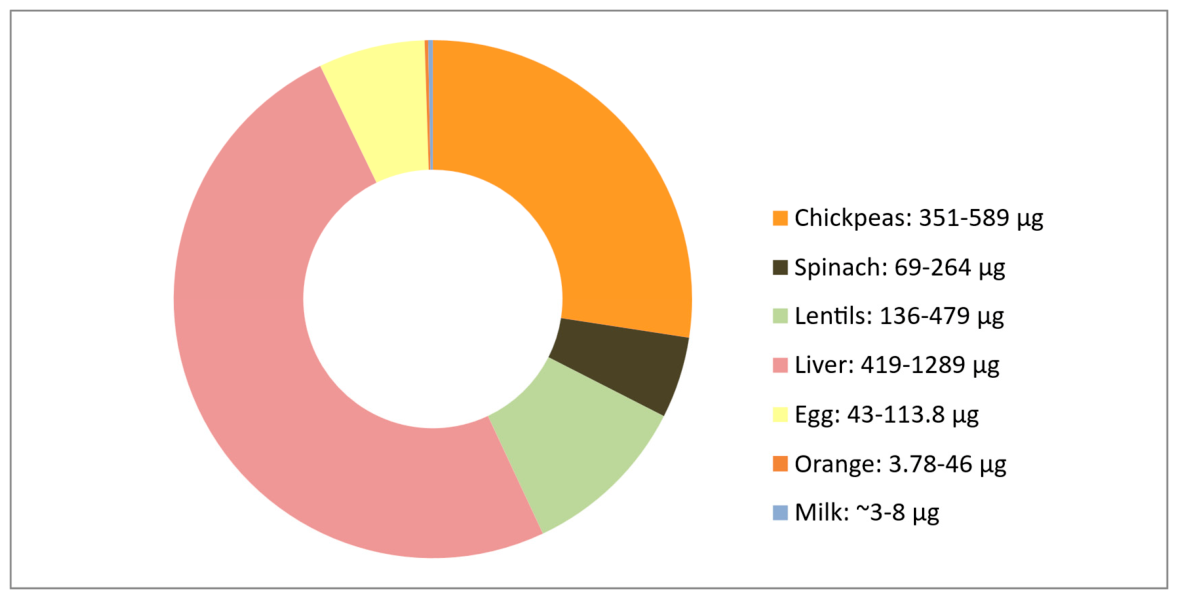
Figure 2.
Overview of folate metabolism and its role in methylation. Abbreviations: AHCY, S-adenosylhomocysteine hydrolase; DHFR, dihydrofolate reductase; DHF, dihydrofolate; MAT, Methionine adenosyltransferase; MTR (B12), methionine synthase (5-methyltetrahydrofolate homocysteine methyltransferase); MT, methyltransferase; MTHFR, methylenetetrahydrofolate reductase; SAH, S-adenosyl-homocysteine; SAM, S- adenosylmethionine; SHMT1, serine hydroxymethyltransferase 1; THF, tetrahydrofolate; 5,10-MTHF, 5,10-Methylenetetrahydrofolate; 5-MTHF, 5-Methyltetrahydrofolate.
Figure 2.
Overview of folate metabolism and its role in methylation. Abbreviations: AHCY, S-adenosylhomocysteine hydrolase; DHFR, dihydrofolate reductase; DHF, dihydrofolate; MAT, Methionine adenosyltransferase; MTR (B12), methionine synthase (5-methyltetrahydrofolate homocysteine methyltransferase); MT, methyltransferase; MTHFR, methylenetetrahydrofolate reductase; SAH, S-adenosyl-homocysteine; SAM, S- adenosylmethionine; SHMT1, serine hydroxymethyltransferase 1; THF, tetrahydrofolate; 5,10-MTHF, 5,10-Methylenetetrahydrofolate; 5-MTHF, 5-Methyltetrahydrofolate.
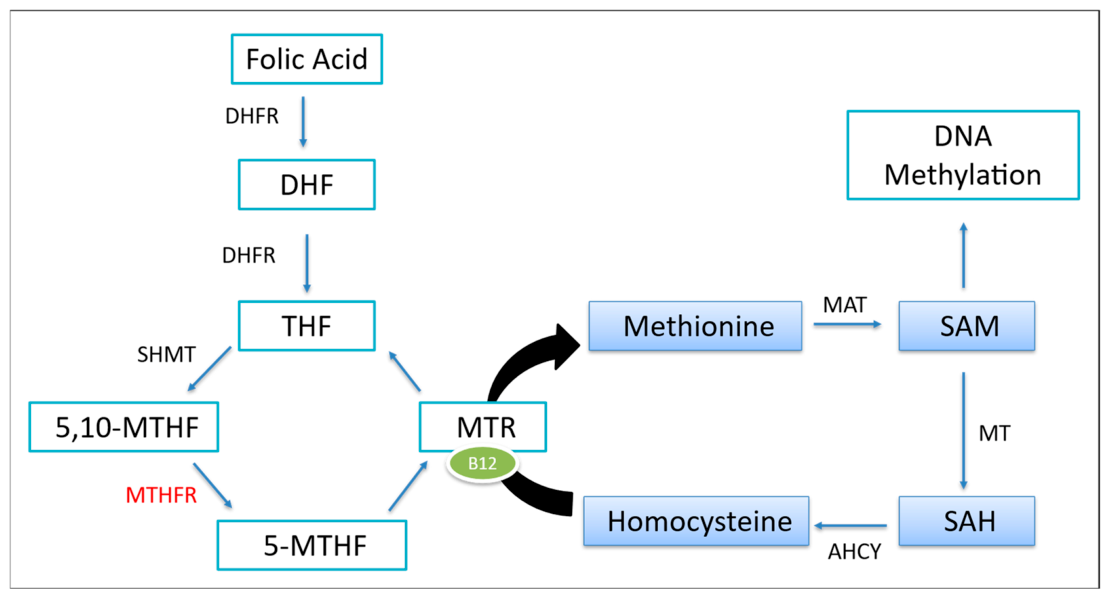

Table 1.
Representative total 5-MTHF reported across natural and metabolically engineered bacterial strains.
Table 1.
Representative total 5-MTHF reported across natural and metabolically engineered bacterial strains.
| Microorganism/ Strain | Type | Total 5-MTHF production reported | Reference |
| Lactococcus lactis | Metabolically engineered | ~ 300 µg/L | [17] |
| Latilactobacillus sakei LZ217 | Natural | 239.70± 0.03 ng/µl | [99] |
| E. coli BL21(DE3) | Metabolically engineered | 8.2 mg/L | [82] |
| Bacillus substillus B89 | Metabolically engineered | 3.41±0.10 mg/L | [84,87] |
| L. delbrueckii subsp. bulgaricus ZN541 | Natural | ~ 2.35 µg/L | [3] |
| Lactobacillus delbrueckii subsp. bulgaricus ZN951 | Natural | ~4.76 µg/L | [3] |
| S. thermophilus Z1052 | Natural | ~0.45 µg/L | [3] |
| Lactiplantibacillus plantarum RAL25 | Natural | 20.94 ± 8.36 µg/mL | [69] |
| Lactiplantibacillus plantarum ZJUIDS16 | Natural | 27.16 μg/mL | [100] |
Disclaimer/Publisher’s Note: The statements, opinions and data contained in all publications are solely those of the individual author(s) and contributor(s) and not of MDPI and/or the editor(s). MDPI and/or the editor(s) disclaim responsibility for any injury to people or property resulting from any ideas, methods, instructions or products referred to in the content. |
© 2026 by the authors. Licensee MDPI, Basel, Switzerland. This article is an open access article distributed under the terms and conditions of the Creative Commons Attribution (CC BY) license (http://creativecommons.org/licenses/by/4.0/).
Copyright: This open access article is published under a Creative Commons CC BY 4.0 license, which permit the free download, distribution, and reuse, provided that the author and preprint are cited in any reuse.