
Submitted:
26 October 2026
Posted:
27 October 2026
You are already at the latest version
Abstract
Prehabilitation, traditionally defined as a trimodal approach combining nutritional support, physical exercise, and psychological support, has been shown to improve nutritional status, reduce postoperative complications, and shorten hospital stays in adults. However, direct extrapolation of adult prehabilitation programmes to paediatric care is inappropriate, as nutritional priorities in children extend beyond preoperative optimisation to supporting adequate growth and development. Furthermore, paediatric patients differ considerably in age, developmental stage, and type of surgery, requiring interventions tailored to individual needs. Medical optimisation, although not strictly a component of prehabilitation, is closely linked to Enhanced Recovery After Surgery (ERAS) pathways. Therefore, this narrative review proposes a multimodal approach to preoperative care in children, encompassing four key components: nutrition, physical exercise, psychological support, and medical optimisation. We review the rationale, available evidence, and practical considerations for each component in children undergoing surgery. Successful implementation requires a multidisciplinary team, including surgeons, anaesthetists, nurses, dietitians, physiotherapists, psychologists, and occupational therapists, with active involvement of caregivers throughout the process. Although paediatric prehabilitation is promising, the available evidence remains limited. Well-designed clinical trials assessing clinically relevant outcomes are needed to establish the effectiveness and safety of individual interventions.
Keywords:
prehabilitation
; paediatric surgery
; perioperative care
; nutritional assessment
; exercise
; enhanced recovery after surgery
1. Introduction
Preoperative malnutrition in children is associated with prolonged hospitalisation, longer intensive care stay, increased duration of mechanical ventilation, and higher healthcare costs [1,2,3]. Surgical stress increases catabolism and metabolic demands, with young children, particularly neonates, being especially vulnerable [4]. Even technically successful surgical procedures may trigger neuroendocrine and inflammatory responses, insulin resistance, protein catabolism, pain, anxiety, and a temporary decline in functional capacity [5,6]. The clinical consequences of these responses depend not only on the extent of surgery but also on the patient’s physiological reserve.
Paediatric prehabilitation has not been formally defined by any scientific society, but it is based on the same principles as prehabilitation in adults [7]. It is generally described as a multimodal, multidisciplinary approach combining nutritional support, physical exercise, and psychological support [4]. The preoperative period provides an opportunity to implement targeted interventions aimed at improving a child’s ability to withstand surgical stress and recover after surgery.
This narrative review examines the rationale, current evidence, and practical considerations for nutritional interventions, physical exercise, psychological support, and medical optimisation in children undergoing surgery. Particular attention is given to differences between paediatric and adult populations that may affect the implementation of prehabilitation programmes.
2. Paediatric ERAS, Prehabilitation and Preoperative Medical Optimisation-Definitions
2.1. Enhanced Recovery After Surgery (ERAS)
Enhanced Recovery After Surgery (ERAS), as defined by ESPEN (2021), is a patient-centric approach aimed at improving postoperative outcomes [7]. The American College of Surgeons (ACS, 2021) describes ERAS as a multimodal, multidisciplinary perioperative care pathway designed to reduce surgical stress, tissue injury, inflammation, and postoperative complications [8]. ERAS encompasses the entire perioperative period, from preoperative assessment and preparation through intraoperative care to postoperative recovery, including nutritional and medical management, according to standardised protocols [4,9].
2.1.1. Core Elements of ERAS
The components of ERAS may vary depending on the type of surgery (e.g., cardiac vs. intestinal surgery), concomitant disease(s) (e.g., congenital heart disease vs. Hirschsprung disease), the child’s age (e.g., neonates vs. older children), and nutritional status (e.g., underweight vs. overweight or obesity) [4,9]. Table 1 summarises the proposed components of paediatric ERAS based on available guidelines, expert position papers and reviews. However, their applicability may differ across clinical settings.
According to the ACS (2021), the core elements of ERAS include preadmission counselling, preoperative medical optimisation, avoidance of prolonged fasting, early mobilisation, early oral nutrition and multimodal analgesia [8]. The ERAS Society Recommendations for Neonatal Perioperative Care (2024) provide a broader framework that also includes team communication, temperature regulation, antibiotic prophylaxis, surgical site preparation, perioperative ventilation, fluid management, glucose control, transfusion thresholds, and parental involvement in the child’s care [10]. ERAS protocols should therefore be tailored to the child’s age, clinical condition, type of surgery, and care setting, and updated as new evidence becomes available. Perioperative care protocols should likewise be adapted to the local context [8].
2.1.2. Role of Multidisciplinary Team
Within the ERAS framework, perioperative care should be provided by a multidisciplinary team, including surgeons, anaesthetists, neonatologists, nurses, dietitians, physiotherapists, and occupational therapists [4,9,10]. To facilitate the implementation of ERAS protocols, the appointment of an ERAS coordinator (e.g., a nurse) is encouraged [8]. Caregivers should also be actively involved in the process. Effective communication, engagement and teamwork are essential for ensuring a safe surgical environment [8]. Successful implementation of ERAS programmes requires ongoing coordination and education of all healthcare professionals involved in perioperative care (Figure 1) [8].
What is needed for successful ERAS implementation? (ACS 2021)
According to the ACS Standards (2021), successful implementation of ERAS protocols requires several key elements [8]:
- A multidisciplinary team, including at least a surgeon, an anaesthetist, and a nurse, responsible for developing, implementing, and evaluating ERAS protocols. Depending on the protocol, involvement of a dietitian, a physiotherapist and a psychologist may also be required. Appointing an ERAS coordinator is considered good practice.
- A standardised perioperative care protocol based on ERAS principles.
- Continuous monitoring of clinical outcomes, including postoperative complications.
- Regular audits to assess adherence to ERAS protocols, evaluate outcomes, and identify areas for improvement.
2.1.3. Barriers and Facilitators
The main barriers to successful ERAS implementation include resistance to change among senior clinicians, insufficient resources to support implementation, and external factors such as patient complexity or rural hospital settings [15]. Important facilitators include adaptation of ERAS programmes to local conditions, achieving and communicating early successes, engagement of both frontline clinical staff and institutional leadership, and regular team meetings.
In paediatrics, successful ERAS implementation depends largely on institutional culture and the healthcare system, engagement of key stakeholders (surgeons, anaesthetists, nurses, other multidisciplinary team members, and caregivers), effective team communication and awareness of ERAS principles, establishment of a framework for data collection, monitoring and reporting, and continuous identification of barriers and facilitators to improve implementation [16].
2.1.4. Benefits of ERAS in Paediatrics
A 2021 systematic review of 16 studies (1723 patients) found that paediatric ERAS protocols reduced hospital length of stay by approximately 2.5 days (mean difference [MD] = -2.54 days, 95% CI − 2.94 to − 2.13), without increasing complication or readmission rates. Moreover, compared with the control group, the ERAS decreased:
- the time to initiate feeds (MD = − 21.20 h, 95% CI − 22.80 to − 19.59),
- time to reach full enteral nutrition (MD = − 2.20 days, 95% CI − 2.72 to − 1.71),
- the use of opioids for postoperative analgesia (MD = -0.86 morphine equivalents mg/kg, 95% CI = − 1.40 to − 0.32) [11].
Although promising, this evidence is based mainly on observational studies (15 of 16 studies included), which limits its certainty.
2.2. Prehabilitation
ESPEN (2021) defines prehabilitation as ‘a trimodal approach including a nutrition, physical exercise and stress-reducing psychological component’, aimed at reducing metabolic risk within the ERAS framework [7]. It involves planned, multidisciplinary interventions delivered between the decision to proceed with surgery and the operation itself, with the aim of improving physiological and psychological reserve before surgery [20].
Prehabilitation has been shown to improve perioperative nutritional status, reduce postoperative complications, improve health-related quality of life, and shorten hospital stays in adults [7,21]. However, its application in children remains limited, and evidence of its effectiveness in paediatric populations is still insufficient.
2.3. Preoperative Medical Optimisation
Preoperative medical optimisation refers to the correction of specific medical conditions or abnormalities (e.g., anaemia, active infection, or uncontrolled asthma). Although such interventions may reduce perioperative risk, their primary aim is not to improve physiological or psychological reserve but rather to eliminate or minimise specific risk factors [22]. ERAS and prehabilitation often overlap in clinical practice. For example, preoperative fasting protocols are generally considered part of ERAS or perioperative care rather than prehabilitation, despite being implemented before surgery [9]. Similarly, preoperative medical optimisation is an important component of ERAS but is not generally considered part of prehabilitation. Throughout this review, these distinctions are maintained where relevant.
3. Why Can Paediatric Prehabilitation Not Be Directly Extrapolated from the Adult Model?
The adult model generally assumes an autonomous patient who can understand long-term risks, follow an exercise programme, modify their diet, stop smoking or drinking alcohol, and report symptoms independently. These assumptions cannot be applied uniformly to children. A six-month-old infant, a five-year-old child, an adolescent with typical cognitive development, and an adolescent with severe neurological disability are all paediatric surgical patients, yet their prehabilitation needs, achievable outcomes, and appropriate interventions differ substantially.
3.1. Growth and Development
In adults, the main aim of nutritional interventions is to preserve or restore metabolic reserve. However, in children, adequate nutritional intake is also required to support normal growth and neurodevelopment. A reduction in energy and nutrient intake that might be temporarily tolerated by an adult may have more serious consequences in children, particularly those with chronic diseases undergoing surgery. Nutritional assessment in paediatric patients is therefore more comprehensive, encompassing not only body weight at a single time point but also age-appropriate anthropometric indices, such as weight-for-age, length- or height-for-age, weight-for-length or height, and BMI-for-age, expressed as z-scores or percentiles, together with changes in these measures over time [23,24].
3.2. Developmentally Appropriate Prehabilitation Methods
In adults, exercise may be prescribed as structured aerobic and resistance training at a defined intensity [25]. In children, exercise-based prehabilitation must be adapted to age and developmental stage. In infants, positioning, respiratory care, feeding support, developmental stimulation, and avoidance of unnecessary immobilisation are more appropriate than conventional exercise programmes [9].
In preschool children, play, short periods of physical activity, and parent-led exercises may be more suitable. Preoperative psychological support should also be adapted to the child’s cognitive and emotional development. Young children may benefit from therapeutic play and familiarisation with an anaesthetic mask, whereas adolescents may require detailed information, involvement in decision-making, and discussions about pain, body image, scarring, or temporary loss of independence [26].
3.3. Role of Caregivers
Caregivers are essential members of the paediatric ERAS team and should be educated and actively involved in prehabilitation from the preoperative stage [4,9]. In many cases, parents or caregivers are responsible for the child’s food and fluid intake, medication administration, transport, daily activities, and communication with the healthcare team. They also play an important role in shaping the child’s emotional response to the upcoming surgery.
3.4. Heterogeneity of Childhood Surgical Conditions
The paediatric surgical population is highly heterogeneous. It includes healthy children undergoing minor elective procedures, as well as neonates with congenital conditions (e.g., congenital heart disease), children with inflammatory bowel disease, patients receiving chemotherapy, and children with severe neurological disabilities or chronic respiratory diseases. The time available before surgery may therefore range from several weeks to only a few hours. Preoperative care should be adapted accordingly, ranging from comprehensive prehabilitation before elective high-risk surgery to shorter, targeted interventions when time is limited, or immediate medical optimisation before urgent surgery, followed by an ERAS-based postoperative care pathway.
A comparison of prehabilitation in adults and children is presented in Table 3. In paediatric patients, interventions must be adapted to age and developmental stage, with active involvement of parents or caregivers throughout the process. A further challenge is the lack of validated, standardised paediatric prehabilitation protocols.
4. Preoperative Nutrition Assessment and Support
Nutrition is considered one of the most important components of paediatric prehabilitation. Surgical stress increases catabolism and metabolic demands associated with healing, while children also require adequate nutrition to support growth and development. Young children, particularly neonates, are especially vulnerable to surgical stress [4].
Malnutrition is a risk factor for postoperative complications in children [27]. Preoperative malnutrition is strongly associated with increased postoperative morbidity in paediatric patients undergoing gastrointestinal surgery [28]. Malnourished children have higher rates of infectious and anastomotic complications and longer hospital stays. In adults, perioperative nutritional support has been shown to reduce postoperative complications and length of hospital stay [29]. However, evidence that preoperative nutritional interventions improve postoperative outcomes in children remains limited.
The main goals of preoperative nutrition in children undergoing surgery are:
- identifying and correcting malnutrition before surgery to reduce the risk of postoperative complications;
- avoiding prolonged preoperative fasting and its adverse metabolic and behavioural effects.
4.1. Nutritional Screening
Preoperative nutritional screening should be routinely performed to identify children at risk of malnutrition, followed by individualised nutritional assessment and management by a multidisciplinary team, including a registered dietitian [8,20]. However, nutritional screening in children undergoing surgery remains insufficiently implemented. It is particularly important in children scheduled for major surgery and should be included in preoperative assessment, including in outpatient settings [23].
Table 4 summarises the available nutritional screening tools validated in paediatric populations. Currently, no screening tool has been specifically developed and validated for paediatric surgical patients. The Subjective Global Nutritional Assessment (SGNA) is a comprehensive nutritional assessment method used in children [23]. Screening tools should be easy to administer and familiar to the healthcare team. Examples include the Screening Tool for Risk on Nutritional Status and Growth (STRONGkids), the Screening Tool for the Assessment of Malnutrition in Paediatrics (STAMP), and the Paediatric Nutrition Screening Tool (PNST) [4,23].
Nutritional assessment should include a physical examination (e.g., loss of subcutaneous fat, muscle wasting, and presence of oedema), current weight and height (or length), growth trajectory, recent weight changes, oral intake, dysphagia, feeding difficulties, elimination diets, and gastrointestinal symptoms [4,23]. Dietary intake and selected laboratory parameters should be assessed when indicated. In children with cancer, inflammatory bowel disease, or complex congenital conditions, normal body weight may coexist with reduced lean body mass or impaired growth [30].
4.2. Preoperative Nutritional Support
All children identified as being at risk of malnutrition or already malnourished should undergo a comprehensive nutritional assessment by a dietitian and receive individualised nutritional support before surgery [4,14,23]. Malnutrition may occur not only in underweight children but also in those with overweight or obesity [36]. Both undernutrition and obesity may be associated with an increased risk of adverse postoperative outcomes [4].
When malnutrition is identified, preoperative nutritional interventions should be tailored to its severity, the child’s age, underlying disease, route and method of feeding, and urgency of surgery. Children with mild or moderate nutritional risk may be managed with dietary counselling aimed at increasing energy and protein intake, together with oral nutritional supplements or enteral nutrition when indicated, with appropriate monitoring [23]. Children at higher nutritional risk may require a coordinated plan including enteral nutrition, correction of specific micronutrient deficiencies, and, when clinically appropriate, reconsideration of the timing of surgery. The main goals of preoperative nutritional support are to improve nutritional status, minimise negative protein balance, and support postoperative recovery and wound healing [23].
In breastfed infants, breast milk should remain the preferred source of nutrition [9,10], although additional lactation support may be needed, particularly for mothers of infants with congenital heart disease [14]. Enteral nutrition is preferred whenever the gastrointestinal tract is functional, while parenteral nutrition should be considered when enteral feeding is not feasible or does not meet nutritional requirements [14].
In children undergoing elective major surgery, nutritional support for 7–10 days or longer may be considered when clinically indicated, although the optimal duration of preoperative nutritional intervention has not been established in paediatric populations [4]. ESPEN recommends 7–14 days of preoperative nutritional therapy for adults at severe nutritional risk undergoing major surgery, even if surgery must be delayed [7]. However, this recommendation cannot be directly extrapolated to children. In urgent oncological or life-saving surgery, postponing the procedure solely to complete a predefined period of nutritional intervention may be harmful. The potential benefits of nutritional optimisation must therefore be balanced against the risks of delaying surgery, including disease progression or infection.
In children, nutritional prehabilitation should also aim to support normal growth, prevent avoidable nutritional deficits, and maintain the ability to continue disease-specific treatment. For example, in a child with cancer, postoperative complications leading to delayed chemotherapy may have more serious clinical consequences than a modest increase in hospital length of stay. Although clinically relevant, this outcome has not been specifically evaluated in paediatric prehabilitation trials.
4.2.1. Preoperative Nutrition Support in Children Undergoing Cardiac Surgeries
A 2025 systematic review and meta-analysis of 21 studies found that malnourished children with congenital heart disease had longer hospital and intensive care unit stays and required prolonged mechanical ventilation compared with well-nourished children [2]. These findings demonstrate an association between malnutrition and adverse postoperative outcomes but do not establish whether correcting malnutrition improves these outcomes.
A 2026 systematic review conducted by members of our research team, including 19 studies (eight RCTs), suggested that preoperative nutritional interventions in children undergoing cardiac surgery are safe and may provide clinical benefits [37]. However, the certainty of evidence was very low, mainly due to substantial heterogeneity in nutritional interventions and the limited number of well-designed controlled trials. Further RCTs using standardised protocols are therefore needed.
4.2.2. Preoperative Nutrition in Children with Hirschsprung Disease
A multicentre RCT by Zhang et al. evaluated the effects of preoperative nutritional support in 110 children with Hirschsprung disease undergoing pull-through surgery [38]. Children with a weight-for-age z-score (WAZ) < −1 received 130–150 kcal/kg/day, with a target WAZ of ≥ −1, whereas those with a baseline WAZ ≥ −1 received 110–130 kcal/kg/day. The intervention lasted at least 7 days and included energy-dense formulas (added to expressed breast milk in breastfed infants) and nasogastric feeding when oral intake was insufficient. Compared with standard care, preoperative nutritional support reduced the incidence of Hirschsprung-associated enterocolitis within three months after surgery (7.27% vs. 29.09%; absolute risk reduction: 21.82%, 95% CI: 7.99%–35.64%), improved nutritional status (weight-for-age and BMI-for-age z-scores), and reduced overall postoperative complications and length of hospital stay.
5. Preoperative Fasting
Prolonged preoperative fasting remains common in paediatric surgical practice. The traditional instruction of “nothing by mouth after midnight” may result in fasting periods considerably longer than recommended, particularly when operating schedules change or families receive simplified instructions. As a result, children may arrive for surgery thirsty, irritable, and dehydrated, which may make venous access more difficult and reduce cooperation. In infants and young children, prolonged interruption of energy and fluid intake is particularly undesirable [39].
The 2022 European Society of Anaesthesiology and Intensive Care (ESAIC) guideline supports shorter fasting periods in children, allowing clear fluids up to 1 hour before anaesthesia in appropriately selected patients [39]. Longer fasting intervals are required for breast milk and formula feeding, and the individual risk of aspiration must always be considered. Similarly, the 2024 ERAS Society recommendations for neonatal perioperative care advise avoiding prolonged fasting, allowing unfortified breast milk up to 4 hours, formula feeding up to 6 hours, and clear fluids up to 1 hour before anaesthesia [10].
Shorter fasting periods should not be interpreted as unrestricted fluid intake. Safe implementation requires clear definitions of permitted fluids, identification of eligible patients, accurate information on the planned time of anaesthesia, and timely updates to fasting instructions when operating schedules change.
6. Preoperative Carbohydrate Loading
The evidence supporting preoperative carbohydrate loading in children is less established than in adults and should be interpreted cautiously. A 2024 scoping review of 11 studies reported inconsistent findings regarding hospital length of stay (LOS) and postoperative complications, although some studies suggested improvements in preoperative comfort and anxiety [40]. A 2026 meta-analysis of 14 RCTs involving 1,428 children found that preoperative carbohydrate loading improved cooperation during anaesthesia induction, reduced postoperative insulin resistance, and decreased the incidence of postoperative nausea and vomiting [41]. The findings also suggested that compound carbohydrate solutions may be more beneficial than standard carbohydrate solutions.
Overall, the available evidence suggests that preoperative carbohydrate loading may be feasible and provide clinical benefits in selected paediatric patients. However, evidence remains insufficient to establish the optimal carbohydrate formulation, dose, and timing of administration [4].
7. Exercise-Based Prehabilitation
Preoperative exercise aims to increase physical activity, improve functional capacity, and enhance the patient’s ability to withstand the physiological stress of surgery [42]. Exercise-based prehabilitation in children should be preceded by an assessment by a physiotherapist as part of a multidisciplinary team. The choice of intervention should take into account the child’s underlying disease, current clinical condition, and planned surgical procedure [42]. Particular caution is needed in children with significant cardiopulmonary disease, severe iron deficiency anaemia, active infection or fever, poorly controlled pain, recent surgery, unstable musculoskeletal conditions, or complications of oncological treatment. In these patients, the type and intensity of exercise should be agreed upon by the multidisciplinary team in consultation with caregivers [43,44].
The effects of exercise-based prehabilitation in children undergoing elective surgery were recently summarised in a systematic review that identified only three studies [42]. Although the findings were promising, the authors concluded that the available evidence remains limited. Nevertheless, supervised exercise-based prehabilitation may be considered in children awaiting elective surgery, particularly when the waiting period allows sufficient time for intervention [42].
For most children, monitoring during exercise-based prehabilitation can be based on clinical assessment, including exercise tolerance, excessive fatigue, disproportionate breathlessness, pain, dizziness, or deterioration in functional performance [43]. More intensive physiological monitoring may be appropriate in selected high-risk patients but is not routinely required. Given the heterogeneity of the paediatric surgical population, no single exercise programme is suitable for all children. The type, intensity, and monitoring of exercise should be individualised according to age, baseline functional capacity, underlying disease, ongoing treatment, and planned surgery, with specialist input when needed.
8. Psychological Prehabilitation and Family Engagement
Preoperative anxiety in children is associated with several adverse perioperative outcomes, including difficulties during anaesthesia induction, prolonged recovery, and increased postoperative analgesic requirements [45]. Previous negative or painful medical experiences, unfamiliar medical environments and terminology, anticipated separation from parents or caregivers, and parental anxiety may all contribute to increased preoperative anxiety. Psychological and behavioural responses to surgical stress may include separation anxiety, sleep disturbances, emergence delirium, behavioural problems, and increased distress during recovery [45]. These findings highlight the importance of including age-appropriate psychological preparation and family-centred education in paediatric prehabilitation programmes [46]. Moreover, psychological preparation of children should also take into account the emotional state and behaviour of their caregivers [47].
Current evidence suggests that structured psychological preparation may reduce anxiety and pain. A systematic review of 15 RCTs involving 1,514 participants found that some preparatory interventions reduced parental anxiety and postoperative pain in children. A meta-analysis of nine RCTs demonstrated a small but statistically significant effect on parental anxiety (SMD = 0.22, 95% CI 0.03–0.41) [48]. Another meta-analysis evaluating play therapy reported reductions in self-reported anxiety among children and parents (seven RCTs, n = 585) and in children’s self-reported pain (three RCTs, n = 237) [49].
Several interventions may be considered to reduce preoperative stress, including behavioural strategies (e.g., distraction through conversation), environmental modifications (e.g., a child-friendly anaesthesia induction room), psychological interventions (e.g., relaxation techniques), and educational approaches (e.g., therapeutic play) [50]. A Cochrane systematic review of 28 RCTs involving 2,681 children identified several potentially beneficial interventions for reducing anxiety during anaesthesia induction, including parental acupuncture, hospital clowns, videos selected by the child, preoperative hypnosis, and handheld video games. However, the evidence was limited and did not support definitive conclusions regarding their effectiveness [51]. The content and methods of psychological preparation should be adapted to the child’s developmental stage, interests, and preferences [47,49]. Younger children may benefit from therapeutic play, videos, or virtual reality, whereas older children and adolescents may prefer clear information, open discussion, and greater involvement in decisions about their care [50].
9. Preoperative Medical Optimisation
Preoperative medical optimisation is not generally considered part of prehabilitation but remains an important component of ERAS and preoperative care in children. Medical optimisation focuses on identifying and correcting specific conditions that may increase perioperative risk [8]. In children, potentially modifiable risk factors include anaemia, active infection, uncontrolled asthma or other respiratory diseases, dehydration, coagulopathy, medication-related risks, chronic corticosteroid therapy, pain, impaired mobility, and instability related to the underlying disease. Ideally, screening for these factors should begin when the decision to proceed with surgery is made, rather than being deferred until hospital admission [52].
Iron-deficiency anaemia is of particular concern before major surgery because it may reduce oxygen-carrying capacity and physiological reserve [4,7]. Assessment of anaemia in children must take into account age-specific haemoglobin thresholds and the underlying cause. Iron deficiency, chronic inflammation, malnutrition, ongoing blood loss, and the effects of oncological treatment may require different diagnostic and therapeutic approaches. When sufficient time is available, clinically significant anaemia should be investigated and, where possible, corrected before major elective surgery.
Active respiratory infections are another important preoperative concern and may require postponement of elective surgery. However, the risks associated with delaying surgery must be weighed against those of proceeding, particularly in children with cancer, progressive disease, sepsis, or other urgent surgical conditions. Decisions regarding the timing of surgery should therefore be based on the child’s clinical condition, the urgency of the procedure, and an individualised multidisciplinary assessment [4].
10. Which Children Should Be Prioritised for Prehabilitation?
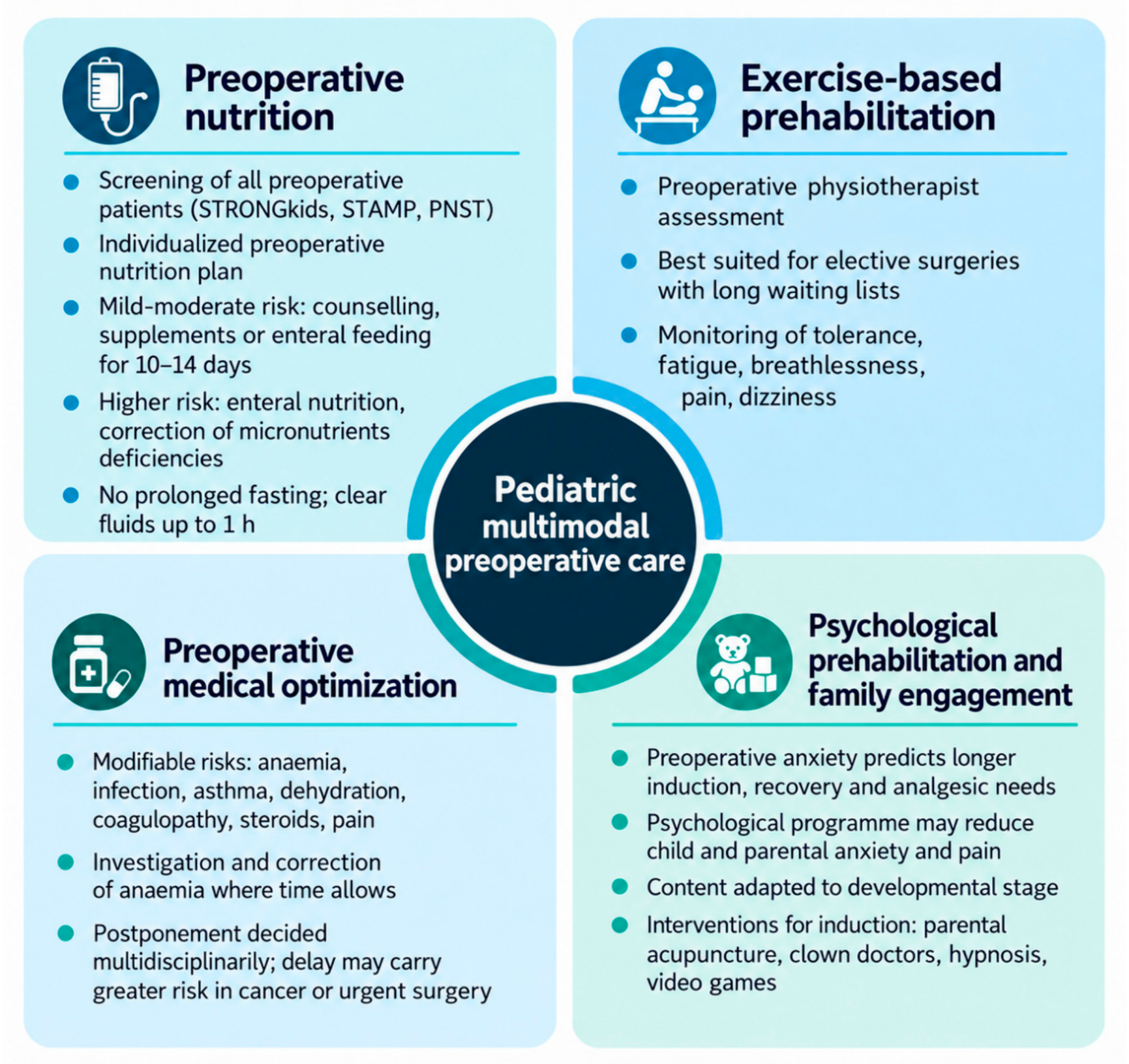
Not every paediatric surgical patient requires comprehensive multimodal preoperative care-Figure 2. Children who may benefit most from prehabilitation include those at increased nutritional risk, those undergoing major surgical procedures (e.g., abdominal, thoracic, cardiac, oncological, or complex reconstructive surgery), and those with significant comorbidities, such as inflammatory bowel disease, severe malnutrition, chronic corticosteroid use, neurological or neuromuscular disorders, or severe disabilities. Children requiring prolonged preoperative hospitalisation may also benefit from targeted interventions [1,38,42,53,54,55].
11. Paediatric Safety Boundaries
Prehabilitation should not delay urgent or time-sensitive surgery solely to complete a predetermined programme or achieve an arbitrary nutritional or functional target [42]. Active infection, haemodynamic or respiratory instability, clinically significant dehydration, uncontrolled pain, acute deterioration of the underlying disease, or other potentially reversible conditions require medical assessment and, where appropriate, optimisation before continuing prehabilitation [4,8].
Decisions to postpone elective surgery for nutritional optimisation in children at high nutritional risk or with malnutrition should be individualised, taking into account both the potential benefits of improving nutritional status and the risks associated with delaying definitive treatment [7].
Exercise-based prehabilitation should be modified or suspended if the child develops chest pain, syncope or presyncope, unexpected or disproportionate breathlessness, new neurological symptoms, significant bleeding, worsening pain, or acute deterioration in general condition [42,43]. Fever, treatment-related toxicity, severe fatigue, or exacerbation of chronic disease may also require temporary suspension and reassessment. Children with significant cardiac or respiratory disease, severe anaemia, ongoing oncological treatment, neuromuscular disorders, or complex physical disabilities may require specific exercise restrictions and closer supervision [56].
Psychological preparation should avoid increasing distress through excessive information or developmentally inappropriate expectations. Information should be accurate and adapted to the child’s developmental stage, communication abilities, and preferences [26,47]. Parents and caregivers should be actively involved throughout the prehabilitation process.
12. Conclusions
Prehabilitation is a promising component of modern paediatric perioperative care. However, adult prehabilitation programmes cannot be directly extrapolated to children. Preoperative care in paediatric patients must account for their ongoing growth and developmental needs, dependence on caregivers, and the wide range of surgical conditions. Nutritional assessment and support play a central role in paediatric prehabilitation, although evidence of their effectiveness remains limited. Exercise-based and psychological interventions may provide additional benefits, but evidence supporting their use is currently limited to specific paediatric surgical populations. Medical optimisation, although not strictly part of prehabilitation, is an essential component of ERAS pathways, focusing on identifying and correcting conditions that may increase perioperative risk. Therefore, we propose a multimodal approach to paediatric preoperative care encompassing four components: nutrition, physical exercise, psychological support, and medical optimisation.
Author Contributions
Conceptualization, P.S.-S., A.S., and A.H.; writing—original draft preparation, P.S.-S., A.S., and A.H.; writing—review and editing, all authors. All authors reviewed and approved the final version of the manuscript. A.S. is the guarantor of the review.
Funding
No external funding was received for the preparation of this review.
Institutional Review Board Statement
Not applicable. This article is a narrative review and does not report original research involving human participants.
Informed Consent Statement
Not applicable.
Data Availability Statement
No new data were created or analyzed in this study. Data sharing is not applicable to this article.
Use of Artificial Intelligence-Assisted Tools
During the preparation of this manuscript, the authors used ChatGPT (OpenAI) and Claude (Anthropic) for language editing, structural feedback, and pre-submission consistency checks. The authors have reviewed and edited the output and take full responsibility for the content of this publication. No AI tool was used to generate original study data. Original concept and content developed by the authors; graphical illustration created with the assistance of AI tools.
Conflicts of Interest
The authors declare no conflicts of interest.
Abbreviations
The following abbreviations are used in this manuscript:
| ACS | American College of Surgeons |
| AI | artificial intelligence |
| BMI | body mass index |
| CHD | congenital heart disease |
| CI | confidence interval |
| ERAS | Enhanced Recovery After Surgery |
| ERP | Enhanced Recovery Protocol |
| ESPEN | European Society for Clinical Nutrition and Metabolism |
| GI | gastrointestinal |
| IBD | inflammatory bowel disease |
| ICU | intensive care unit |
| IV | intravenous |
| LOS | length of stay |
| MD | mean difference |
| MDT | multidisciplinary team |
| mERAS | modified Enhanced Recovery After Surgery |
| OR | odds ratio |
| PNRS | Paediatric Nutritional Risk Score |
| PNSS | Paediatric Nutritional Screening Score |
| PNST | Paediatric Nutrition Screening Tool |
| PYMS | Paediatric Yorkhill Malnutrition Score |
| RCT | randomised controlled trial |
| SGNA | Subjective Global Nutritional Assessment |
| SMD | standardised mean difference |
| STAMP | Screening Tool for the Assessment of Malnutrition in Paediatrics |
| STRONGkids | Screening Tool for Risk on Nutritional Status and Growth |
| TRAD | traditional protocol |
| WAZ | weight-for-age z-score |
References
- Alshehri, A.; Afshar, K.; Bedford, J.; Hintz, G.; Skarsgard, E.D. The relationship between preoperative nutritional state and adverse outcome following abdominal and thoracic surgery in children: Results from the NSQIP database. J. Pediatr. Surg. 2018, 53, 1046–1051. [Google Scholar] [CrossRef] [PubMed]
- Abbas, Q.; Ali, H.; Ahuja, A.K.; Bhatti, O.A.; Ladak, S.; Khan, I.; et al. Preoperative nutrition status in children with congenital heart disease and its impact on postoperative outcomes: a systematic review and meta-analysis. Sci. Rep. 2025, 15, 25738. [Google Scholar] [CrossRef] [PubMed]
- Abdelhadi, R.A.; Bouma, S.; Bairdain, S.; Wolff, J.; Legro, A.; Plogsted, S.; et al. Characteristics of Hospitalized Children With a Diagnosis of Malnutrition: United States, 2010. JPEN J. Parenter. Enter. Nutr. 2016, 40, 623–635. [Google Scholar] [CrossRef] [PubMed]
- Raval, M.V.; Brockel, M.A.; Kolaček, S.; Simpson, K.E.; Spoede, E.; Starr, K.N.P.; et al. Key Strategies for Optimizing Pediatric Perioperative Nutrition-Insight from a Multidisciplinary Expert Panel. Nutrients 2023, 15(5). [Google Scholar] [CrossRef] [PubMed]
- Yuki, K.; Matsunami, E.; Tazawa, K.; Wang, W.; DiNardo, J.A.; Koutsogiannaki, S. Pediatric Perioperative Stress Responses and Anesthesia. Transl. Perioper. Pain Med. 2017, 2, 1–12. [Google Scholar] [PubMed]
- Scott, M.J.; Baldini, G.; Fearon, K.C.; Feldheiser, A.; Feldman, L.S.; Gan, T.J.; et al. Enhanced Recovery After Surgery (ERAS) for gastrointestinal surgery, part 1: pathophysiological considerations. Acta Anaesthesiol. Scand. 2015, 59, 1212–1231. [Google Scholar] [CrossRef] [PubMed]
- Weimann, A.; Braga, M.; Carli, F.; Higashiguchi, T.; Hübner, M.; Klek, S.; et al. ESPEN practical guideline: Clinical nutrition in surgery. Clin. Nutr. 2021, 40, 4745–4761. [Google Scholar] [CrossRef] [PubMed]
- Barnhart, D.; Cartwright, P.; Derkay, C.; et al. Optimal Resources for Children’s Surgical Care 2021 Standards; American College of Surgeons: Chicago, IL, USA, 2022. [Google Scholar]
- Brindle, M.E.; McDiarmid, C.; Short, K.; Miller, K.; MacRobie, A.; Lam, J.Y.K.; et al. Consensus Guidelines for Perioperative Care in Neonatal Intestinal Surgery: Enhanced Recovery After Surgery (ERAS(®)) Society Recommendations. World J. Surg. 2020, 44, 2482–2492. [Google Scholar] [CrossRef] [PubMed]
- Pilkington, M.; Nelson, G.; Pentz, B.; Marchand, T.; Lloyd, E.; Chiu, P.P.L.; et al. Enhanced Recovery After Surgery (ERAS) Society Recommendations for Neonatal Perioperative Care. JAMA Surg. 2024, 159, 1071–1078. [Google Scholar] [CrossRef] [PubMed]
- Loganathan, A.K.; Joselyn, A.S.; Babu, M.; Jehangir, S. Implementation and outcomes of enhanced recovery protocols in pediatric surgery: a systematic review and meta-analysis. Pediatr. Surg. Int. 2022, 38, 157–168. [Google Scholar] [CrossRef] [PubMed]
- Raval, M.V.; Tian, Y.; Schäfer, W.; Balbale, S.N.; Perez, M.N.; Ingram, M.-C.E.; et al. Implementation and Effectiveness of an Enhanced Recovery Protocol for Children Undergoing Surgery: The ENRICH-US Stepped-Wedge Cluster-Randomized Trial. JAMA Surg. 2026, 161, 670–680. [Google Scholar] [PubMed]
- Raval, M.V.; Wymore, E.; Ingram, M.E.; Tian, Y.; Johnson, J.K.; Holl, J.L. Assessing effectiveness and implementation of a perioperative enhanced recovery protocol for children undergoing surgery: study protocol for a prospective, stepped-wedge, cluster, randomized, controlled clinical trial. Trials 2020, 21, 926. [Google Scholar] [CrossRef] [PubMed]
- Mills, K.I.; Kim, J.H.; Fogg, K.; Goldshtrom, N.; Graham, E.M.; Kataria-Hale, J.; et al. Nutritional Considerations for the Neonate With Congenital Heart Disease. Pediatrics 2022, 150. [Google Scholar] [CrossRef] [PubMed]
- Stone, A.B.; Yuan, C.T.; Rosen, M.A.; Grant, M.C.; Benishek, L.E.; Hanahan, E.; et al. Barriers to and Facilitators of Implementing Enhanced Recovery Pathways Using an Implementation Framework: A Systematic Review. JAMA Surg. 2018, 153, 270–279. [Google Scholar] [CrossRef] [PubMed]
- Taylor, C.M.; Weisberg, E.L.; Doyle, N.M.; Glenski, T.A. Error Traps in Developing a Pediatric Enhanced Recovery After Surgery (ERAS) Program. Paediatr. Anaesth. 2025, 35, 199–206. [Google Scholar] [CrossRef] [PubMed]
- Meral, B.; Mutlu, B.; Cömert, H.S.Y. Effect of an enhanced recovery after surgery protocol for children with acute appendicitis: A randomized controlled trial. Int. J. Nurs. Stud. 2026, 182, 105625. [Google Scholar] [CrossRef] [PubMed]
- Tirkey, K.; Ankita; Xess, N.G.; Sahu, S.S.; Singh, A.K.; Ranjan, A.; et al. Efficacy of Enhanced Recovery after Surgery (ERAS) Protocols in Pediatric Colorectal Surgery: A Randomized Controlled Trial. J. Pharm. Bioallied Sci. 2025, 17, S3355–S3357. [Google Scholar] [CrossRef] [PubMed]
- Tang, J.; Liu, X.; Ma, T.; Lv, X.; Jiang, W.; Zhang, J.; et al. Application of enhanced recovery after surgery during the perioperative period in infants with Hirschsprung’s disease – A multi-center randomized clinical trial. Clin. Nutr. 2020, 39, 2062–2069. [Google Scholar] [CrossRef] [PubMed]
- Geomini, L.D.; Janssen, L.; Hoogendoorn, I.; van Susante, L.M.A.; Slooter, G.D.; Janssen-Heijnen, M.L.G. Multimodal prehabilitation versus no prehabilitation to improve functional capacity, reduce postoperative complications and improve quality of life in colorectal cancer surgery. Cochrane Database Syst. Rev. 2026, (8). [Google Scholar] [CrossRef] [PubMed]
- McIsaac, D.I.; Kidd, G.; Gillis, C.; Branje, K.; Al-Bayati, M.; Baxi, A.; et al. Relative efficacy of prehabilitation interventions and their components: systematic review with network and component network meta-analyses of randomised controlled trials. BMJ 2025, 388, e081164. [Google Scholar] [CrossRef] [PubMed]
- Fleurent-Grégoire, C.; Burgess, N.; McIsaac, D.I.; Chevalier, S.; Fiore, J.F., Jr.; Carli, F.; et al. Towards a common definition of surgical prehabilitation: a scoping review of randomised trials. Br. J. Anaesth. 2024, 133, 305–315. [Google Scholar] [CrossRef] [PubMed]
- Martins, D.S.; Piper, H.G. Nutrition considerations in pediatric surgical patients. Nutr. Clin. Pract. 2022, 37, 510–520. [Google Scholar] [CrossRef] [PubMed]
- Orschel, C.; Gaines, B. Nutrition Support in Pediatric Surgical Patients. Surg. Clin. North Am. 2026, 106, 287–306. [Google Scholar] [CrossRef] [PubMed]
- Hurtado-Borrego, J.C.; Bayonas-Ruiz, A.; Bonacasa, B. Exercise-Based Prehabilitation Before Cardiac Surgery: A Systematic Review, Meta-Analysis, Meta-Regression, and Proposal for a Clinical Implementation Model. J. Clin. Med. 2025, 14(22). [Google Scholar] [CrossRef] [PubMed]
- Musselman, E.; Shea, K.; Johnson, L. Developmentally Appropriate Care of Pediatric Patients in the Perioperative Setting. AORN J. 2023, 117, 98–108. [Google Scholar] [CrossRef] [PubMed]
- Díaz-Amaya, M.J.; Rosales-Arreola, L.F.; Hernández-Licona, J.; Pérez-Guillé, B.; Ignorosa-Arellano, K.; Carmona-Librado, S.; et al. Postoperative complications in the pediatric population. Malnutrition or phase angle? Which one do we use? Front. Nutr. 2024, 11, 1474616. [Google Scholar] [CrossRef] [PubMed]
- Putri, A.M.R.Y.; Mariana, N. Preoperative nutritional status as a predictor of postoperative morbidity in pediatric gastrointestinal surgery: a systematic review and meta-analysis. Pediatr. Surg. Int. 2026, 42, 357. [Google Scholar] [CrossRef] [PubMed]
- Zhang, B.; Najarali, Z.; Ruo, L.; Alhusaini, A.; Solis, N.; Valencia, M.; et al. Effect of Perioperative Nutritional Supplementation on Postoperative Complications-Systematic Review and Meta-Analysis. J. Gastrointest. Surg. 2019, 23, 1682–1693. [Google Scholar] [CrossRef] [PubMed]
- Suwannaying, K.; Rujkijyanont, P.; Inaba, H. Nutritional Assessment of Children and Adolescents with Cancer in Various Resource Settings. Cancers 2026, 18, 873. [Google Scholar] [CrossRef] [PubMed]
- Gerasimidis, K.; Keane, O.; Macleod, I.; Flynn, D.M.; Wright, C.M. A four-stage evaluation of the Paediatric Yorkhill Malnutrition Score in a tertiary paediatric hospital and a district general hospital. Br. J. Nutr. 2010, 104, 751–756. [Google Scholar] [CrossRef] [PubMed]
- Xu, Y.; Jiang, Y.; Guo, M.; Wang, Y.; Huang, H.; Xie, J.; et al. Efficiency analysis of nutritional screening tools for children with congenital heart disease: a retrospective observational study. Front. Nutr. 2025, 12, 1572805. [Google Scholar] [CrossRef] [PubMed]
- Huysentruyt, K.; Alliet, P.; Muyshont, L.; Rossignol, R.; Devreker, T.; Bontems, P.; et al. The STRONGkids nutritional screening tool in hospitalized children: A validation study. Nutrition 2013, 29, 1356–1361. [Google Scholar] [CrossRef] [PubMed]
- Lu, L.; Mao, X.; Sheng, J.; Huang, J.; Wang, Y.; Tang, Q.; et al. Development and validation of a pediatric nutritional screening score (PNSS) for hospitalized children. Asia Pac. J. Clin. Nutr. 2018, 27, 65–71. [Google Scholar] [CrossRef] [PubMed]
- White, M.; Lawson, K.; Ramsey, R.; Dennis, N.; Hutchinson, Z.; Soh, X.Y.; et al. Simple Nutrition Screening Tool for Pediatric Inpatients. J. Parenter. Enter. Nutr. 2016, 40, 392–398. [Google Scholar] [CrossRef] [PubMed]
- World Health Organization. The Double Burden of Malnutrition: Policy Brief. 17 May 2017. Available online: https://www.who.int/publications/i/item/WHO-NMH-NHD-17.3 (accessed on 16 August 2026).
- Stróżyk, A.; Halicki, P.; Kołodziej, M.; Horvath, A.; Buczyński, M.; Pietrzak, R. Preoperative Nutrition-Based Interventions in Children Undergoing Cardiac Surgeries-A Systematic Review and Meta-Analysis. Nutrients 2026, 18(3). [Google Scholar] [CrossRef] [PubMed]
- Zhang, H.-Y.; Chen, K.; Zhang, Y.; Gao, T.; Huang, Y.; Ge, L.; et al. Preoperative nutritional support in children with Hirschsprung disease: a prospective multicenter open-label randomized controlled trial. Nat. Commun. 2025, 16, 11171. [Google Scholar] [CrossRef] [PubMed]
- Frykholm, P.; Disma, N.; Andersson, H.; Beck, C.; Bouvet, L.; Cercueil, E.; et al. Pre-operative fasting in children: A guideline from the European Society of Anaesthesiology and Intensive Care. Eur. J. Anaesthesiol. 2022, 39, 4–25. [Google Scholar] [PubMed]
- Widyastuti, Y.; Sari, D.; Fadhila Farid, A.; Rayhan, A. Preoperative Carbohydrate Loading in Pediatric Surgery: A Scoping Review of Current Clinical Trials. F1000Res 2024, 13, 1089. [Google Scholar] [CrossRef]
- Yan, Z.; Xu, Y.; Dai, R.; Wei, J. Effectiveness and safety of preoperative carbohydrate loading in pediatric patients: A systematic review and meta-analysis of randomized controlled trials. J. Pediatr. Surg. 2026, 61, 163095. [Google Scholar] [CrossRef] [PubMed]
- Noronha, J.; Samuel, S.; Singh, V.P.; Prabhu, H.S. Effects of exercise-based prehabilitation in children undergoing elective surgeries: a systematic review. F1000Res 2021, 10, 1262. [Google Scholar] [CrossRef]
- Götte, M.; Gauß, G.; Dirksen, U.; Driever, P.H.; Basu, O.; Baumann, F.T.; et al. Multidisciplinary Network ActiveOncoKids guidelines for providing movement and exercise in pediatric oncology: Consensus-based recommendations. Pediatr. Blood Cancer 2022, 69, e29953. [Google Scholar] [CrossRef] [PubMed]
- Wright, S.; Wiechula, R.; McLiesh, P. The effectiveness of prehabilitation for adults having elective surgery: a systematic review protocol. JBI Database Syst. Rev. Implement. Rep. 2016, 14, 78–92. [Google Scholar] [CrossRef] [PubMed]
- Chow, C.H.; Van Lieshout, R.J.; Schmidt, L.A.; Dobson, K.G.; Buckley, N. Systematic Review: Audiovisual Interventions for Reducing Preoperative Anxiety in Children Undergoing Elective Surgery. J. Pediatr. Psychol. 2016, 41, 182–203. [Google Scholar] [CrossRef] [PubMed]
- Liu, W.; Xu, R.; Jia, J.; Shen, Y.; Li, W.; Bo, L. Research Progress on Risk Factors of Preoperative Anxiety in Children: A Scoping Review. Int. J. Environ. Res. Public Health 2022, 19(16). [Google Scholar] [CrossRef] [PubMed]
- Dai, Y.; Livesley, J. A mixed-method systematic review of the effectiveness and acceptability of preoperative psychological preparation programmes to reduce paediatric preoperative anxiety in elective surgery. J. Adv. Nurs. 2018. [Google Scholar] [CrossRef] [PubMed]
- Kerimaa, H.; Ruotsalainen, H.; Kyngäs, H.; Miettunen, J.; Pölkki, T. Effectiveness of interventions used to prepare preschool children and their parents for day surgery: A systematic review and meta-analysis of randomised controlled trials. J. Clin. Nurs. 2023, 32, 1705–1722. [Google Scholar] [CrossRef] [PubMed]
- Halemani, K.; Issac, A.; Mishra, P.; Dhiraaj, S.; Mandelia, A.; Mathias, E. Effectiveness of Preoperative Therapeutic Play on Anxiety Among Children Undergoing Invasive Procedure: a Systematic Review and Meta-analysis. Indian J. Surg. Oncol. 2022, 13, 858–867. [Google Scholar] [CrossRef] [PubMed]
- Lööf, G.; Lönnqvist, P.A. Role of information and preparation for improvement of pediatric perioperative care. Paediatr. Anaesth. 2022, 32, 600–608. [Google Scholar] [CrossRef] [PubMed]
- Manyande, A.; Cyna, A.M.; Yip, P.; Chooi, C.; Middleton, P. Non-pharmacological interventions for assisting the induction of anaesthesia in children. Cochrane Database Syst. Rev. 2015, (7). [Google Scholar] [CrossRef] [PubMed]
- Agarwal, R.; Wang, T.; Diaz, C.D.; Hackell, J.M. The Pediatrician’s Role in the Evaluation and Preparation of Pediatric Patients Undergoing Anesthesia. Pediatrics 2026, 157(3). [Google Scholar] [CrossRef] [PubMed]
- Amil-Dias, J.; Kolacek, S.; Turner, D.; Pærregaard, A.; Rintala, R.; Afzal, N.A.; et al. Surgical Management of Crohn Disease in Children: Guidelines From the Paediatric IBD Porto Group of ESPGHAN. J. Pediatr. Gastroenterol. Nutr. 2017, 64, 818–835. [Google Scholar] [PubMed]
- St-Laurent, A.; Zysman-Colman, Z.; Zielinski, D. Respiratory prehabilitation in pediatric anesthesia in children with muscular and neurologic disease. Paediatr. Anaesth. 2022, 32, 228–236. [Google Scholar] [CrossRef] [PubMed]
- Lin, T.; Raventhiranathan, N.; Ahmad, M.; Feit, A.L.; Hotze, A.E.; Ker, G.L.; et al. Bringing Clarity to Complex Pediatric Perioperative Care: Development of a Novel Pathway to Support Goal-Directed, Patient-Centered Care. Cancers 2025, 17(9). [Google Scholar] [CrossRef] [PubMed]
- Wurz, A.; McLaughlin, E.; Lategan, C.; Chamorro Viña, C.; Grimshaw, S.L.; Hamari, L.; et al. The international Pediatric Oncology Exercise Guidelines (iPOEG). Transl. Behav. Med. 2021, 11, 1915–1922. [Google Scholar] [CrossRef] [PubMed]
Figure 1.
Role of multidisciplinary team in paediatric ERAS.
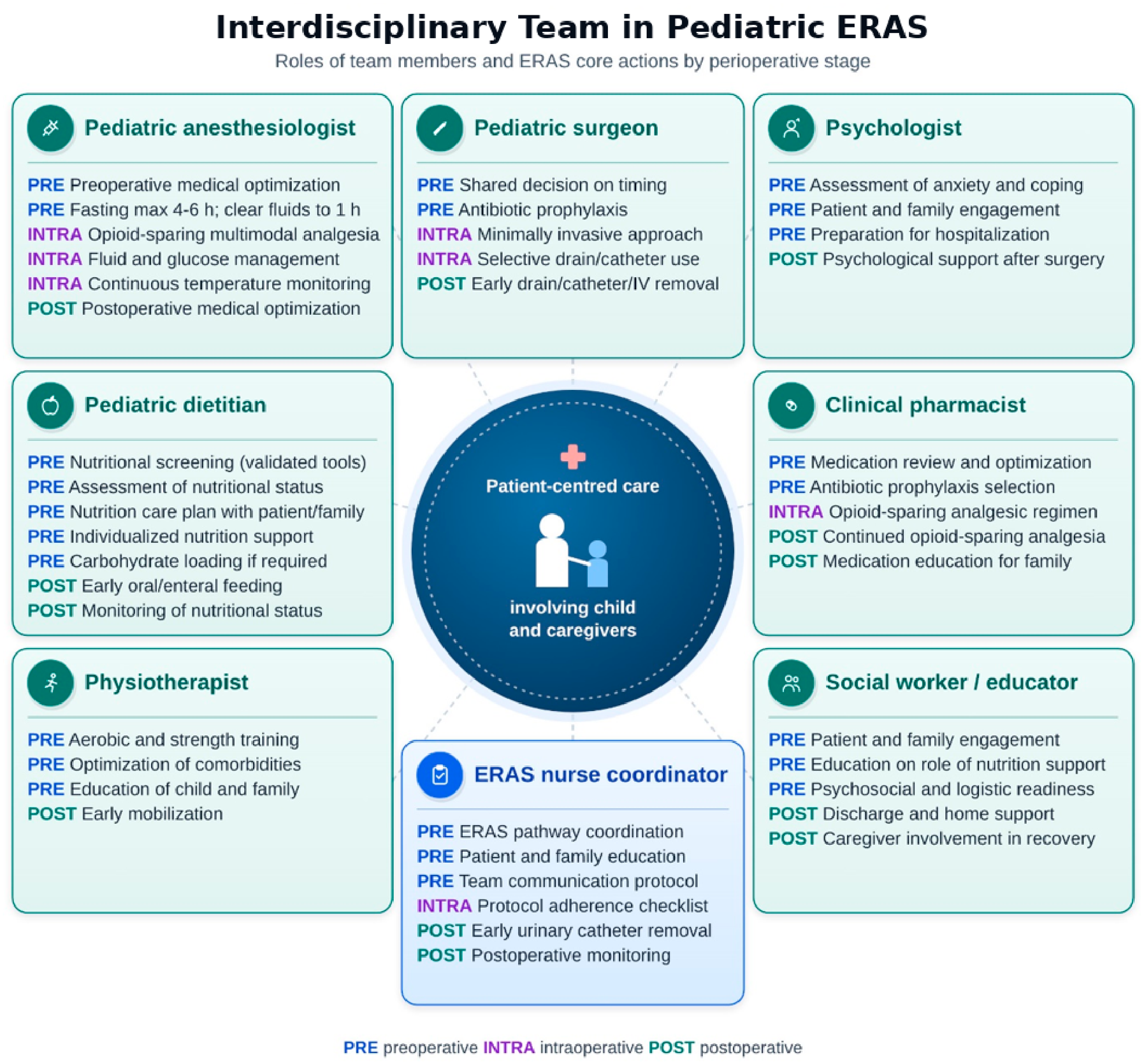
Figure 2.
A conceptual model of paediatric multimodal preoperative care.

| Perioperative stage | Suggested core ERAS elements |
|---|---|
| Preoperative |
|
| Intraoperative |
|
| Postoperative |
|
| |
| |
Table 2.
Summary of RCTs assessing the clinical benefits of ERAS in paediatrics.
| Study, country, year, study design | Population | Intervention vs. Comparator | Key results |
|---|---|---|---|
|
Raval et al., ENRICH-US, USA 2026 [12] Stepped-wedge cluster-RCT |
527 children; 72.5% with IBD | Multifaceted paediatric GI surgery ERP (Enhanced Recovery Protocol) vs. Pre-implementation phase (stepped-wedge design) |
|
|
Meral et al., Turkey 2026 [17] Single-centre RCT |
82 children aged 6–17 years undergoing appendectomy and their parents | Modified ERAS (mERAS) nursing care protocol: perioperative education, bowel motility stimulation, early mobilisation, non-pharmacological perioperative management vs. Standard care |
|
|
Tirkey et al., India 2025 [18] Single-blind RCT |
120 children aged 6 months to 14 years undergoing elective colorectal surgery | Multimodal ERAS protocol vs standard perioperative care with delayed feeding, ambulation, and conventional pain management |
|
|
Tang et al. China 2020 [19] Multicentre RCT |
148 infants (<1 year) with Hirschsprung’s disease undergoing pull-through surgery (73 TRAD; 75 ERAS) | Infant-specific ERAS protocol (15 elements) vs. Traditional protocol (TRAD): bowel preparation (7–10 days, fasting from midnight, no goal-directed fluid protocol, delayed feeding and mobilisation) |
|
CI, confidence interval; ERAS, Enhanced Recovery After Surgery; ERP, Enhanced Recovery Protocol; GI, gastrointestinal; IBD, inflammatory bowel disease; IV, intravenous; LOS, length of stay; MD, mean difference; mERAS, modified Enhanced Recovery After Surgery; OR, odds ratio; RCT, randomised controlled trial; TRAD, traditional protocol.
| Domain | Typical adult focus | Paediatric adaptation |
|---|---|---|
| Physiology |
|
|
| Exercise |
|
|
| Nutrition |
|
|
| Psychological preparation |
|
|
| Adherence |
|
|
| Time window |
|
|
| Programme unit |
|
|
| Evidence |
|
|
Table 4.
Summary of paediatric nutritional screening tools.
| Paediatric nutritional screening tool | Characteristics | Value of each item Total Score |
Specificity | Sensitivity |
|---|---|---|---|---|
| PYMS [31] Condition: hospitalized Age: 1-16 years |
Assesses four domains:
|
Each step is scored up to 2 points. Score: 1 point: medium risk ≥ 2 points: high risk. |
81.97-92% | 59-90.91% |
| STRONGKids Condition: any paediatric patients (hospitalized and non-hospitalized; surgical and non-surgical); children with CHD [32] Age: 0-18 years [32,33] |
Consists of 4 items:
|
Each item scored up to 1–2 points with a maximum total score of 5 points. Score: 0 points: low 1-3 points: medium risk 4-5 points: high risk |
73% (62.3-80.5%) | 68.5% (52.6-78.1%) |
| STAMP Condition: children with CHD [32] Age: 0-18 years |
Evaluates three domains:
|
The total score ranges from 0 to 9. Score: ≥ 4 points: high nutritional risk. |
53.4% (41.0-72.9%) | 88.0% (83.2-100%) |
| PNSS Condition: hospitalized children (surgical and non-surgical; in China)[34] Age: 1 month to 17 years |
Consists of 3 items:
|
Each item is scored 0-2 points, with total score of 6 points. Score: ≥2 points: with or at risk of malnutrition. |
71% | 82%, |
| PNST Condition: hospitalized children [35] Age: 0 to 16 years |
Consists of 4 questions:
|
If two or more ‘Yes’, needs further assessment. | 82.1% | 77.8% |
Paediatric Yorkhill Malnutrition Score (PYMS), Screening Tool for Risk on Nutritional Status and Growth (STRONGkids), Screening Tool for the Assessment of Malnutrition in Paediatrics (STAMP), Paediatric Nutritional Screening Score (PNSS).
Disclaimer/Publisher’s Note: The statements, opinions and data contained in all publications are solely those of the individual author(s) and contributor(s) and not of MDPI and/or the editor(s). MDPI and/or the editor(s) disclaim responsibility for any injury to people or property resulting from any ideas, methods, instructions or products referred to in the content. |
© 2026 by the authors. Licensee MDPI, Basel, Switzerland. This article is an open access article distributed under the terms and conditions of the Creative Commons Attribution (CC BY) license (http://creativecommons.org/licenses/by/4.0/).
Copyright: This open access article is published under a Creative Commons CC BY 4.0 license, which permit the free download, distribution, and reuse, provided that the author and preprint are cited in any reuse.