

Submitted:
04 November 2026
Posted:
06 November 2026
You are already at the latest version
Abstract
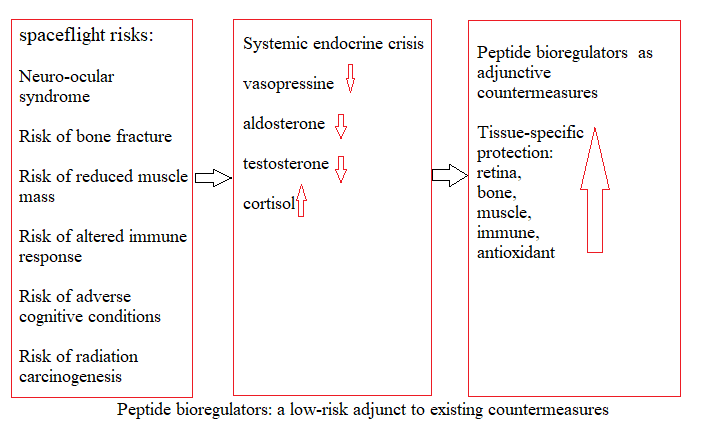
Long-duration space missions expose crews to multiple stressors that cause persistent pathological changes, including spaceflight-associated neuro-ocular syndrome (SANS), muscle and bone atrophy, and immune dysfunction. Existing countermeasures do not fully eliminate these risks. This systematic review evaluates the potential of peptide bioregulators as a novel preventive strategy against these disorders. We conducted a systematic literature review in PubMed, Scopus, and the NASA Human Research Roadmap (1990–2025). Preclinical and clinical data show that peptide bioregulators have tissue-specific effects on key target organs, exhibiting retinoprotective, osteoprotective, myoprotective, immunomodulatory, and antioxidant activities. While limited by the lack of in-flight studies, peptide bioregulators could potentially increase crew resistance to spaceflight stressors. They represent a promising adjunctive strategy that warrants targeted in-flight testing for future missions.
Keywords:
peptide bioregulators
; space medicine
; microgravity
; astronaut health
; adaptation
; oxidative stress
Introduction
Deep space exploration, including planned lunar and Martian missions, involves long-term human exposure to a combination of extreme environmental factors. Modern space medicine considers these factors as major health risks that require effective preventive measures (Table 1)(Afshinnekoo et al., 2020; Blaginin, A.A, 2016). Current countermeasures - physical training, loading suits, pharmacotherapy - do not fully solve the problem. Persistent pathological conditions such as SANS, progressive bone and muscle loss, immune dysfunction, and the effects of chronic radiation remain critical challenges.
Therefore, adjunctive strategies are needed to increase non-specific resistance and maintain the functional reserves of vital systems throughout a mission.
Object of the study: Peptide bioregulators are a promising class of such agents. They are short peptides with tissue-specific regulatory effects. Importantly, Peptide bioregulators are not proposed as an alternative to existing methods but as a potential component of an integrated protection system. They could provide targeted support to organs affected by chronic stress in space.
Aim of the study: This review systematically analyses the potential of peptide bioregulators for preventing the negative effects of key spaceflight factors. We critically assess available data and formulate hypotheses for future research.
Peptide bioregulators are already used in restorative and preventive medicine for patients recovering from acute diseases or exacerbations of chronic conditions. These drugs were developed under the supervision of Professor Vladimir Khavinson. They are short peptides that regulate cell repair and increase stress resistance. They consist of amino acid fragments linked in a specific way (Figure 1). The drugs are produced from extracts of cattle glands and organs, which ensures a good safety profile and high bioavailability (Khavinson, V., et al., 2012).
Peptide bioregulators are short peptide chains (2–20 amino acids) derived from larger proteins or peptide precursors (2–50 amino acids). Amino acids consist of nitrogen, hydrogen, and oxygen atoms and differ only in their side chains (R-groups).
Peptide bioregulators are widely used in sports because they are not classified as doping agents. They increase stress resistance, endurance, and immunity, and strengthen the musculoskeletal system. By activating the formation of new cells, they accelerate recovery of muscle and bone tissue (Khavinson, V.Kh et al., 2021).
No studies of peptide bioregulators have been conducted specifically in the context of space medicine. However, ground-based experiments have been performed in workers exposed to harsh weather conditions. Peptide bioregulators are also widely used in gerontology to slow ageing and increase human lifespan.Most Peptide bioregulators research has been carried out at the Medical Center of the St. Petersburg Institute of Bioregulation and Gerontology.
Materials and Methods
We reviewed the scientific literature on the use of Peptide bioregulators to correct disorders associated with extreme factors. The search was performed in PubMed, Scopus, Russian databases (eLibrary, CyberLeninka), and the NASA Human Research Roadmap for 1990–2025. The keywords used were: "peptide bioregulators", "spaceflight", "microgravity", "weightlessness", "Khavinson peptides". The search returned 215 publications. After screening titles and abstracts, 45 articles met the inclusion criteria. The full text was analysed for 25 key works.
Inclusion criteria: original articles and reviews on peptide bioregulators effects in experimental or clinical settings, and articles describing physiological changes during spaceflight.
Exclusion criteria: unavailable full text, conference abstracts, and publications without specific efficacy data.
This review is hypothesis-generating in nature. We do not claim proven efficacy of peptide bioregulators in spaceflight, but rather synthesize available ground-based evidence to formulate testable hypotheses for future studies in space-relevant models.
Results
Table 2 summarises the literature data on the efficacy of different peptide complexes.Analysis of peptide bioregulators effects in the context of spaceflight physiologySpaceflight-associated neuro-ocular syndrome (SANS).
Problem: SANS is one of the most challenging and poorly correctable consequences of long-term microgravity (Laurie S.S. et al., 2022). Its pathogenesis is primarily attributed to cephalad fluid shifts leading to sustained elevated intracranial pressure. This causes optic disc oedema, flattening of the posterior pole of the eye, and choroidal folds.
Limitations of countermeasures: Existing countermeasures - such as lower body negative pressure suits (e.g., "Chibis") and physical exercise - mainly address fluid redistribution. They do not fully prevent structural changes in the fundus, indicating a need for approaches that protect tissues from secondary damage (Cherkashin, V.A., 2003).
Potential of peptide bioregulators: In ground-based ophthalmology, positive effects have been reported in glaucoma and ischemic retinopathy (Macias et al., 2021; Strakhov et al., 2019). Retinal peptide bioregulators showed retinoprotective and neuroprotective activity: they improved trophism, stimulated reparative processes in ganglion cells, and increased neuronal resistance to hypoxia and oxidative stress.
Critical analysis and hypothesis: We hypothesise that retinal Peptide bioregulators in spaceflight may not lower intracranial pressure but rather increase the tolerance of visual tissues to its pathological effects. Thus, Peptide bioregulators could serve as an adjunctive treatment to reduce structural damage and preserve visual function. This hypothesis requires testing in ground-based models (antiorthostatic hypokinesia) followed by in-flight validation.
Bone Demineralization
Problem: Progressive bone demineralisation is a major effect of microgravity on the musculoskeletal system. NASA classifies it as the "Risk of Bone Fracture due to Spaceflight-induced changes to Bone" (Sibonga J. D. et al., 2024). Without axial loading, bone remodelling becomes unbalanced: osteoclast activity (resorption) exceeds osteoblast activity (formation). Bone mineral density (BMD) decreases by 1–2% per month, especially in weight-bearing areas (spine, femoral neck), significantly increasing fracture risk during flight and after return (McCarthy et al., 2000).
Limitations of countermeasures: Current countermeasures - intensive resistive exercise (e.g., ARED), optimised diet with calcium and vitamin D, and occasionally bisphosphonates - only slow bone loss. BMD recovery after return to Earth takes years and may be incomplete.
Potential of peptide bioregulators: Preclinical studies showed that bone-cartilage peptide bioregulators correct osteopenic conditions. In an ovariectomised rat model (postmenopausal osteoporosis), course administration of peptide bioregulators increased BMD by 10.3% compared to controls and improved bone microarchitecture (Povorozniuk V.V. et al., 2007; Ryzhak, G.A., et al., 2019). The mechanism appears to involve normalisation of osteocyte metabolism and stimulation of osteogenic differentiation of progenitor cells.
Critical analysis and hypothesis: Given the osteoprotective effect of peptide bioregulators in ground-based osteoporosis models, they might mitigate demineralisation rates in space. Bone-targeted peptide bioregulators could act as an adjunctive therapy, shifting the balance toward bone formation and increasing bone resistance to resorption caused by hypokinesia. This would complement physical countermeasures at the biochemical level. Animal studies under antiorthostatic hypokinesia and subsequent human trials are needed.
Muscle Atrophy
Problem: Microgravity causes rapid skeletal muscle atrophy. NASA classifies this as the "Risk of Reduced Muscle Mass, Strength, and Performance". Antigravity muscles (soleus, back muscles, neck extensors) are particularly affected due to decreased protein synthesis, increased catabolism, and a shift from slow oxidative to fast glycolytic fibres. This results in significant loss of muscle mass, strength, and endurance, compromising task performance and increasing injury risk (Liu et al., 2024).
Limitations of countermeasures: The main countermeasure is high-intensity resistive exercise on specialised devices (e.g., ARED). Although relatively effective for preserving strength, it does not fully prevent muscle mass loss, particularly in the lower leg. The imbalance between anabolic signals from training and catabolic signals from the microgravity environment persists. Full recovery after flight takes considerable time(Liu et al., 2024).
Potential of peptide bioregulators: Studies in elite athletes exposed to high physical loads showed that muscle-derived peptide bioregulators normalised myocyte functional activity, optimised metabolism, and improved post-exercise recovery (Ploutz-Snyder R. et al., 2024). This suggests that peptide bioregulators can modulate muscle metabolism under stress.
Critical analysis and hypothesis: Peptide bioregulators may reduce catabolism and enhance recovery in muscle tissue during spaceflight. They would not replace exercise but provide metabolic support, enhancing the anabolic response to training and increasing resistance of muscle fibres to atrophy. This hypothesis requires studies combining Peptide bioregulators with exercise programmes under simulated microgravity.
Immune Dysfunction
Problem: Long-term spaceflight substantially alters immune function. NASA defines this as the "Risk of Adverse Health Effects Due to Alterations in Host-Microorganism Interactions" (Mann V. et al., 2019). Changes include suppression of cellular immunity (reduced T-cell proliferation and NK-cell cytotoxicity), reactivation of latent viruses (e.g., herpes), and chronic low-grade inflammation. These increase crew vulnerability to infections and may have long-term health consequences.
Limitations of countermeasures: Current approaches are primarily preventive: pre-flight quarantine, monitoring of environmental and crew microbiomes, and antiviral drugs. They do not fully compensate for immune dysregulation caused by microgravity, radiation, and stress. Pharmacological immunomodulation in flight carries side effect risks and lacks specificity (Mann V. et al., 2019).
Potential of peptide bioregulators: Thymus- and pineal-derived peptide bioregulators have significant immunomodulatory potential. In vitro experiments on rat spleen cell cultures showed that thymus peptide bioregulators reduced immune cell apoptosis by 29–42% and stimulated proliferation under stress. They also regulated heat shock protein synthesis, which is key for cellular protection [18]. Clinical observations in cancer patients after aggressive therapy confirmed that such peptide bioregulators maintain haematological and immunological parameters and reduce infectious complications (Khavinson, V.Kh et al., 2021).
Critical analysis and hypothesis: Immunomodulatory peptide bioregulators may help correct the immune alterations described by NASA. They could maintain the pool of functional immunocompetent cells and reduce latent virus reactivation by increasing immune system stress resistance. However, immunomodulator use in space requires careful dosing. Peptide bioregulators could be considered for maintaining immune homeostasis during long missions, but in-depth preclinical studies in realistic models are needed.
Neurobehavioral and Psychophysiological Disorders
Problem: Long-term isolation, confinement, high workload, and separation from Earth create a complex risk that NASA calls the "Risk of Adverse Cognitive or Behavioral Conditions and Psychiatric Disorders" (Fryc and Michnik, 2024). Key manifestations include psychological stress, sleep disruption, cognitive deficits (reduced memory, concentration, decision-making speed), and increased risk of interpersonal conflicts. These factors directly affect mission safety and success.
Limitations of countermeasures: Existing countermeasures include psychological selection, ground support, work-rest scheduling, and in extreme cases, hypnotics or anxiolytics. These measures are reactive or may cause side effects (e.g., drowsiness) that are unacceptable during critical operations. Objective psychophysiological monitoring tools exist (e.g., stabilography(Ploutz-Snyder R. et al., 2024)), but effective preventive pharmacological means to increase CNS resilience to chronic stress are lacking.
Potential of peptide bioregulators: Studies of cerebral peptide bioregulators under extreme ground-based conditions (e.g., in Arctic polar explorers) showed that they enhance CNS adaptive reserves. Their use was associated with improved psychophysiological status, increased stress resilience, and normalisation of higher nervous activity (Cherkashin, V.A., 2003). In athletes performing complex coordination sports, peptide bioregulators improved cognitive functions and psychological stability under competitive stress (Khavinson, V.Kh et al., 2012). In a controlled study in healthy volunteers, intranasal Cortexin improved statokinetic stability (Buynov, L.G et al., 2014). A 10-day Cortexin course significantly increased tolerance time to vestibular loads induced by Coriolis acceleration, reduced dizziness, and improved computer stabilography parameters (reduced rate of increase in statokinesiogram length and area, and reduced amplitude of centre-of-gravity oscillations). This indicates improved balance and coordination. The effect lasted up to 30 days (Buynov, L.G et al., 2014).
Critical analysis and hypothesis: Cerebral peptide bioregulators could provide neuroprotective and adaptogenic support for crews during long-duration missions. Unlike sedatives, they may increase CNS stress resilience and maintain cognitive function - i.e., preventive strengthening of psychophysiological resources rather than symptom relief. This aligns with NASA's strategic goal of maintaining operator reliability. Testing requires long-term isolation simulations (e.g., SIRIUS, Mars-500) with assessment of Peptide bioregulators effects on cognitive and behavioural outcomes.
Radiation Exposure
Problem: Beyond Earth's magnetosphere, crews are chronically exposed to galactic cosmic rays (GCR) and solar particle events. NASA classifies this as the "Risk of Radiation Carcinogenesis" and the "Risk of Acute and Late Central Nervous System Effects from Radiation Exposure" (Afshinnekoo et al., 2020). GCR cause difficult-to-repair DNA damage, oxidative stress, chronic inflammation, and increase long-term cancer risk. Data also indicate potential negative CNS effects, including cognitive deficits and neurodegenerative changes.
Limitations of countermeasures: Passive radiation shielding is the primary countermeasure, but its mass makes it impractical for whole-spacecraft protection. Pharmacological radioprotectors effective against acute exposure are generally toxic and unsuitable for long-term use. Low-toxicity agents that increase resistance to chronic radiation stress are urgently needed (Afshinnekoo et al., 2020).
Potential of peptide bioregulators: Pineal- and thymus-derived peptide bioregulators show marked antioxidant and cytoprotective activity. In vitro and animal studies demonstrate that they reduce oxidative stress markers, activate heat shock protein synthesis (which repairs denatured proteins), and modulate DNA repair systems (Khavinson, V.Kh et al., 2021). These mechanisms are fundamental for protecting cells from radiation damage.
Critical analysis and hypothesis: Because peptide bioregulators modulate key cellular stress responses (oxidative, proteotoxic, genotoxic), they may reduce the non-cancer consequences of chronic radiation exposure. Peptide bioregulators are not classical radioprotectors and cannot significantly reduce radiation dose. However, they may increase healthy tissue resistance to radiation damage, potentially reducing late effects and maintaining the functional integrity of the immune and nervous systems. Animal studies with chronic low-dose irradiation analogous to GCR are needed.
Thus, the literature analysis reveals the potential of peptide bioregulators to correct key spaceflight-associated disorders.

Table 2.
Potential of peptide bioregulators for mitigating key spaceflight risks: evidence base analysis.
Table 2.
Potential of peptide bioregulators for mitigating key spaceflight risks: evidence base analysis.
| NASA risk | Target system | Peptide complex (source) | Study type/level of evidence | Key observed effects | Reference |
| SANS (Neuro-ocular syndrome) | Visual analyser | Retinal tissue PBs | Clinical study in glaucoma patients | Retinoprotective effect: improved visual acuity, retinal electrophysiology, visual fields. Hypothetical: protection against chronic oedema/ischaemia | (Macias et al., 2021; Strakhov et al., 2019) |
| Risk of bone fracture | Bone tissue | PBs from calf bone and cartilage | Preclinical in vivo (rat osteoporosis model) | Osteoprotective effect: significant BMD increase (+10.3%), improved bone microarchitecture | (Povorozniuk V.V. et al., 2007; Ryzhak, G.A., et al., 2019) |
| Risk of reduced muscle mass | Muscle system | PBs from calf muscle | Clinical study in athletes | Normalization of myocyte functional activity, improved metabolic recovery after exercise | (Ploutz-Snyder R. et al., 2024) |
| Risk of altered immune response | Immune system | Thymus and pineal PBs | In vitro+clinical observation | Immunomodulatory effect: 29-42% reduction in immune cell apoptosis, stimulation of proliferation, maintenance of hematological parameters |
(Khavinson, V.Kh et al., 2021) |
| Risk of adverse cognitive conditions | Nervous system and vestibular system | PBs from brain tissue | Observational study in extreme conditions; clinical study in healthy volunteers | Adaptogenic and neuroprotective effect: increased stress resilience, improved psychophysiological status. Improved statokinetic stability | (Buynov, L.G et al., 2014; Cherkashin, V.A., 2003) |
| Risk of radiation carcinogenesis | Systemic protection/cellular homeostasis | Thymus and pineal PBs | Experimental in vitro | Antioxidant and cytoprotective effect: regulation of heat shock protein synthesis, reduction of oxidative stress markers | (Song et al., 2025) |
Adaptogenic effect of peptide bioregulators in ground-based models of extreme exposures. An important addition to the above tissue-specific effects comes from a study by Shustov et al. (2018), which examined the ability of peptide bioregulators to increase overall non-specific resistance to extreme factors that simulate spaceflight conditions. The authors systematically investigated thymalin, thymogen, cortexin, epithalamin, and prostatylen in laboratory animals exposed to acute hypoxia, hyperthermia, and hypothermia (Shustov, E.B., et al., 2018).
After single administration, prostatylen, epithalamin, and thymogen showed the strongest antihypoxic activity. Thymogen at 0.01 mg/kg increased mean survival time at 10,000 m altitude more than 3.5-fold. Importantly for long-duration missions, the study also evaluated course administration. One day after a three-day course, when the direct antihypoxic effect was no longer detectable, resistance to extreme hypoxia was still significantly increased. Thymogen over a wide dose range increased survival time at 11,500 m by 236–857%, and the proportion of highly resistant animals increased by 60–76%. For temperature factors, epithalamin at 0.1 mg/kg increased hyperthermia tolerance by 92–122%, with 100% of animals becoming highly resistant. On hypothermia models, epithalamin and cortexin showed the strongest protective effects. None of the tested Peptide bioregulators reduced animal resistance to extreme exposures (Shustov, E.B., et al., 2018).
The authors concluded that epithalamin and thymogen have the most universal protective effects against hypoxia, hyperthermia, and hypothermia. These data show that peptide bioregulators not only have direct pharmacological effects during acute exposure but also, when given as a course, induce a sustained increase in non-specific resistance - an important property for prophylactic agents during long-term exposure to the complex stressors of spaceflight.
This analysis shows that peptide bioregulators are a promising class of compounds for adjunctive correction of a wide range of disorders associated with key spaceflight factors. A strength of this approach is its systemic nature: different peptide complexes can provide targeted support to the organs most affected by microgravity, isolation, and radiation (CNS, bone, muscle, immune system).
Integrated Analysis of Potential and Limitations
We have shown that peptide bioregulators are not a panacea and do not replace existing countermeasures. Their potential role is different:
· for SANS - not normalizing intracranial pressure, but protecting ocular structures from its pathological consequences;
· for bone and muscle atrophy - not replacing exercise, but providing metabolic support that enhances the effectiveness of physical training and increases tissue resistance to catabolism;
· for immune dysfunction - fine modulation to reduce virus reactivation and maintain immune homeostasis;
· for radiation exposure - not classical radioprotection, but increasing cell resistance to oxidative and genotoxic stress.
Thus, peptide bioregulators offer not an alternative but a strategy of biochemical enhancement of the body, increasing its adaptive reserve.
Limitations
This review has several important limitations that must be acknowledged.First, no studies of peptide bioregulators have been conducted in actual spaceflight or in integrated ground-based models that fully reproduce the complex space environment (simultaneous microgravity, radiation, and isolation). All identified effects are derived from models of osteoporosis, sports physiology, Arctic expeditions, and other terrestrial extremes. Direct extrapolation to astronauts is therefore preliminary and hypothesis-generating only.
Second, a significant proportion of the studies were performed by a single research school (St. Petersburg Institute of Bioregulation and Gerontology). Independent confirmation of the reported effects is needed.
Third, there are no available data on the pharmacokinetics, optimal dosing regimens, or potential side effects of peptide bioregulators specifically under weightlessness or in the context of long-term spaceflight.
Fourth, this review is hypothesis-generating by design. We do not claim proven efficacy in spaceflight, but rather synthesize available ground-based evidence to formulate testable hypotheses for future research.
These limitations do not invalidate the potential of peptide bioregulators but highlight the need for targeted,well-controlled studies in space-relevant conditions before any clinical recommendations can be made.
Relation to Existing and Emerging Approaches
Peptide bioregulators should be assessed within the broader context of space medicine development. Unlike many pharmacological agents, peptide bioregulators have tissue specificity and low toxicity, which is advantageous for long-term use. Their potential advantage over other emerging approaches (e.g., gene therapy or stem cells) lies in the relative simplicity of production, standardisation, and administration. However, integrating peptide bioregulators into crew medical support systems requires targeted preclinical and clinical studies.
Future directions and recommendations for research.
To translate the hypothesis of peptide bioregulators applicability into practice, the following steps are needed:
1. Preclinical studies in relevant models: animal experiments under long-term antiorthostatic hypokinesia, isolation, and chronic low-dose irradiation to assess efficacy and safety of specific peptide complexes;
2. Ground-based isolation experiments: inclusion of peptide bioregulators regimens in the medical support programmes of projects such as SIRIUS to evaluate effects on psychophysiological status and immunity under conditions closely resembling spaceflight;
3. Development of formulations and administration schedules: creation of dosage forms convenient for use in weightlessness (e.g., nasal sprays, fast-dissolving tablets) and optimisation of dosing regimens.
Discussion
1. In conclusion, this systematic review has identified the hypothetical potential of peptide bioregulators for adjunctive correction of disorders associated with key spaceflight risks, including SANS, bone demineralisation, muscle atrophy, immune dysfunction, and radiation effects;
2. Based on ground-based evidence, peptide bioregulators exhibit tissue-specific retinoprotective, osteoprotective, myoprotective, immunomodulatory, and antioxidant activities. Course administration of thymogen and epithalamin induces sustained non-specific resistance to hypoxia, hyperthermia, and hypothermia in animal models;
3. However, due to the absence of in-flight data, the lack of integrated ground-based models, and the predominance of studies from a single research school, no definitive conclusions about peptide bioregulators efficacy in spaceflight can be drawn at this stage;
4. We therefore propose testable hypotheses for future research: (a) preclinical trials in animals under long-term antiorthostatic hypokinesia combined with chronic low-dose irradiation; (b) ground-based isolation experiments with human participants (e.g., SIRIUS, Mars-500) to assess psychophysiological and immunological effects; and (c) development of space-suitable formulations (nasal sprays, fast-dissolving tablets);
5. Thymogen and epithalamin are identified as priority candidates for subsequent testing in hypoxia and hyperthermia models within ground-based isolation experiments.
Author Contributions
L.S. conceived the study, performed the literature search, analyzed the data, and wrote the manuscript.
Data Availability
All data analyzed during this study are included in this published article. The literature search strategy and datasets generated during the current study are available from the corresponding author on reasonable request.
References
- Afshinnekoo, E., Scott, R.T., MacKay, M.J., et al., 2020. Fundamental Biological Features of Spaceflight: Advancing the Field to Enable Deep Space Exploration. Cell. 183(5), pp.1162-1184. [CrossRef] [PubMed]
- Blaginin, A.A., 2016. Aviatsionnaya i kosmicheskaya meditsina s fiziologieyletnogotruda [Aviation and Space Medicine with Physiology of Flight Work]. St. Petersburg: VMedA. [In Russian].
- Buynov, L.G., Sorokina, L.A., Voyeykov, I.M., Shabanov, P.D., 2014. Vliyanie korteksina na statokineticheskuyu ustoychivost cheloveka [Effect of cortexin on human statokinetic stability]. Reviews on Clinical Pharmacology and Drug Therapy. 12(4), pp.69-71. [In Russian].
- Cherkashin, V.A., 2003. Effektivnost primeneniya peptidnykh bioregulyatorov u lits raznogo vozrasta v usloviyakh Kraynego Severa [Efficacy of peptide bioregulators in persons of different ages in the Far North]. PhD thesis. St. Petersburg Institute of Bioregulation and Gerontology. [In Russian].
- Fryc, D., Michnik, R., 2024. Intrasubject and intersubject variability of stabilography parameters in normal conditions and simulated space mission isolation. Journal of Biomechanics. 176, p.112378. [CrossRef] [PubMed]
- Khavinson, V.Kh., Kozlov, K.L., Trofimov, A.V., 2012. Peptidnye bioregulyatory – novyy klass geroprotektorov [Peptide bioregulators – a new class of geroprotectors]. Advances in Gerontology. 25(4), pp.696-708. [In Russian]. [PubMed]
- Khavinson, V.Kh., Linkova, N.S., Chalisova, N.I., Ivko, O.M., 2021. Timalin: primenenie dlya immunokorrektsii i molekulyarnye aspekty biologicheskoy aktivnosti [Thymalin: use for immunocorrection and molecular aspects of biological activity]. Advances in Modern Biology. 141(1), pp.25-31. [In Russian].
- Khavinson, V.Kh., Hokkanen, V.M., Trofimova, S.V., 1999. Peptidnye bioregulyatory v lechenii diabeticheskoy retinopatii [Peptide bioregulators in the treatment of diabetic retinopathy]. St. Petersburg: Foliant. [In Russian].
- Khavinson, V.Kh., Trofimova, S.V., Trofimov, A.V., 2012. Metodika povysheniya rezervnykh vozmozhnostey organizma sportsmenok vysshey kvalifikatsii [Method for increasing the reserve capacity of the body of elite female athletes]. St. Petersburg: SPbIBG. [In Russian].
- Khavinson, V., Linkova, N., Dyatlova, A., et al., 2023. Senescence-Associated Secretory Phenotype of Cardiovascular System Cells and Inflammaging: Perspectives of Peptide Regulation. Cells. 12(1), p.106. [CrossRef] [PubMed]
- Krittanawong, C., Isath, A., Kaplin, S., et al., 2023. Cardiovascular disease in space: a systematic review. Progress in Cardiovascular Diseases. 81, pp.33-41.
- Laurie, S.S., Macias, B.R., Pardon, L.P., 2022. Risk of Spaceflight Associated Neuro-Ocular Syndrome (SANS): Evidence Report HRP-47060. Houston, TX: NASA Lyndon B. Johnson Space Center.
- Liu, Y., Cao, X., Zhou, Q., et al., 2024. Mechanisms and Countermeasures for Muscle Atrophy in Microgravity. Cells. 13(24), p.2120. [CrossRef] [PubMed]
- Macias, B.R., Ferguson, C.R., Patel, N., et al., 2021. Changes in the Optic Nerve Head and Choroid Over 1 Year of Spaceflight. JAMA Ophthalmology. 139(6), pp.663-667. [CrossRef] [PubMed]
- Mann, V., Sundaresan, A., Mehta, S.K., et al., 2019. Effects of microgravity and other space stressors on immunosuppression and viral reactivation with potential nervous system involvement. Neurology India. 67(Suppl), pp.S198-S203.
- McCarthy, I., Goodship, A., Herzog, R., 2000. Investigation of bone changes in microgravity during long and short duration space flight: comparison of techniques. European Journal of Clinical Investigation. 30(12), pp.1044-1054. [CrossRef] [PubMed]
- Ploutz-Snyder, R., Ryder, J., English, K., et al., 2024. Risk of Reduced Muscle Mass, Strength, and Performance: Evidence Report HRP-47048. Houston, TX: NASA Lyndon B. Johnson Space Center.
- Povorozniuk, V.V., Khavinson, V.Kh., Makogonchuk, A.V., 2007. Effect of peptide regulators on the structural and functional status of bone tissue in ageing rats. Advances in Gerontology. 20(2), pp.134-137. [PubMed]
- Russomano, T., da Rosa, M., et al., 2019. Space motion sickness: a common neurovestibular dysfunction in microgravity. Neurology India. 67(Suppl), pp.S214-S218.
- Ryzhak, G.A., Popovich, I.G., Khavinson, V.Kh., 2019. Perspektivy primeneniya peptidnogo bioregulyatora dlya profilaktiki i lecheniya vozrast-assotsiirovannykh zabolevaniy oporno-dvigatelnogo apparata [Prospects for the use of a peptide bioregulator for the prevention and treatment of age-associated musculoskeletal diseases]. Patogenez. 17(3), pp.13-24. [In Russian].
- Shustov, E.B., Gasanov, M.T., Kapanadze, G.D., et al., 2018. Peptidnaya bioregulyatsiya rezistentnosti k ekstremalnym vozdeystviyam [Peptide bioregulation of resistance to extreme influences]. Biomedicine. (2), pp.7-14. [In Russian].
- Sibonga, J.D., Spector, E.R., Yardley, G., Alwood, J.S., 2024. Risk of Bone Fracture due to Spaceflight-induced Changes to Bone Health: Evidence Report HRP-47096. Houston, TX: NASA Lyndon B. Johnson Space Center.
- Song, Y., Lei, L., Cai, X., et al., 2025. Immunomodulatory peptides for tumor treatment. Advanced Healthcare Materials. 14(5), p.2400512. [CrossRef] [PubMed]
- Strakhov, V.V., Yartsev, A.V., Alekseev, V.V., et al., 2019. Structural and functional changes in the retinal layers in patients with primary glaucoma and possible means of retinoprotection. VestnikOftalmologii. 135(2), pp.70-82. [CrossRef] [PubMed]
- Vishwanath, R., Biswas, A., Modi, U., et al., 2025. Programmable short peptides for modulating stem cell fate in tissue engineering and regenerative medicine. Journal of Materials Chemistry B. 13(8), pp.2573-2591. [CrossRef] [PubMed]
- Sinclair, A.J., Walker, B.R., Nightingale, P.G., et al., 2023. Exenatide reduces intracranial pressure in idiopathic intracranial hypertension: a randomised controlled trial. Brain, 146(5), pp.1829-1840.
Figure 1.
Structure of a peptide bioregulator.
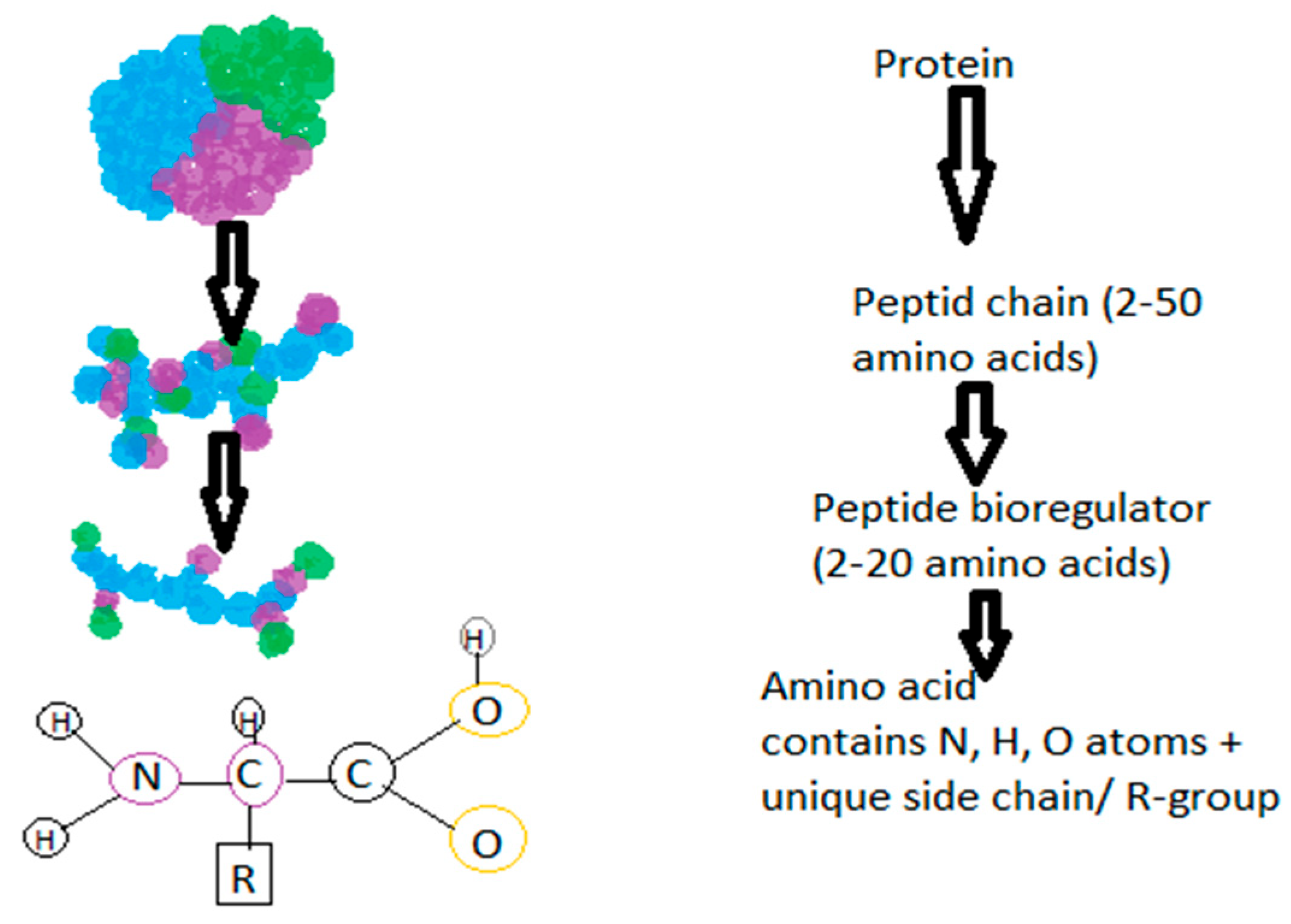
Table 1.
Classification of spaceflight factors.
| Risk category | Key factors | Main physiological consequences and target systems |
| Space environment-related factors | Microgravity Ionizing radiation (galactic cosmic rays, solar proton events) Altered gas composition Meteoroid hazard |
Fluid circulation dysregulation, musculoskeletal atrophy (SANS1, osteopenia, sarcopenia) Carcinogenesis, CNS damage, oxidative stress Hypoxia/hypercapnia |
| Isolation and space-related factors | Long-term isolation Limited habitable space2 Constant noise/vibration Artificial living environment |
Neurobehavioral changes, stress, sleep disruption increased risk of crew conflicts due to limited habitable volume Sensory deprivation/overload Circadian rhythm disruption |
| Distance from Earth-related factors | Communication delay Limited resources Medical care autonomy Emergency evacuation constraints |
Need for autonomous decision–making Limited diagnostic and evacuation capabilities Risk of inadequate medical care in off-nominal situations |
1SANS - spaceflight-associated neuro-ocular syndrome 2Habitable space - the volume available for living and working.
Disclaimer/Publisher’s Note: The statements, opinions and data contained in all publications are solely those of the individual author(s) and contributor(s) and not of MDPI and/or the editor(s). MDPI and/or the editor(s) disclaim responsibility for any injury to people or property resulting from any ideas, methods, instructions or products referred to in the content. |
© 2026 by the authors. Licensee MDPI, Basel, Switzerland. This article is an open access article distributed under the terms and conditions of the Creative Commons Attribution (CC BY) license (http://creativecommons.org/licenses/by/4.0/).
Copyright: This open access article is published under a Creative Commons CC BY 4.0 license, which permit the free download, distribution, and reuse, provided that the author and preprint are cited in any reuse.