

Submitted:
24 October 2026
Posted:
27 October 2026
You are already at the latest version
Abstract
Background: Depression is a major cause of disability worldwide. Pharmaceutical antidepressants are standard treatments for moderate to severe depression; however, adverse effects, tolerability concerns, and incomplete treatment responses have increased interest in herbal alternatives. Evidence directly comparing herbal and pharmaceutical antidepressants remains inconsistent. Objective: To examine and synthesise evidence on the comparative efficacy, safety, and tolerability of herbal versus pharmaceutical antidepressants in adults with depression. Methods: A scoping review was conducted using MEDLINE, EMBASE, PsycINFO, AMED, CENTRAL, and grey literature sources. Eligible studies were primary comparative clinical studies involving adults aged 18 years and older with depressive disorders or clinically significant depressive symptoms. Data were synthesised according to Joanna Briggs Institute methodology and PRISMA-ScR guidelines. Results: Twenty-one comparative studies met the inclusion criteria. Hypericum perforatum (St John’s wort) was the most frequently investigated herbal intervention, while selective serotonin reuptake inhibitors, serotonin–norepinephrine reuptake inhibitors, and tricyclic antidepressants were the main pharmaceutical comparators. Standardised Hypericum perforatum preparations demonstrated efficacy comparable to selective serotonin reuptake inhibitors in mild to moderate depression. Pharmaceutical antidepressants, however, showed more consistent benefits in moderate to severe depression. Herbal interventions were generally associated with fewer adverse effects and lower treatment discontinuation rates. Conclusion: Herbal antidepressants, particularly standardised Hypericum perforatum preparations, may offer an effective and better-tolerated treatment option for some adults with mild to moderate depression. However, variations in study design, intervention standardisation, and reporting limit definitive conclusions. Further high-quality comparative research is required to strengthen the evidence base and guide clinical decision-making and support evidence-based treatment recommendations. What this study adds: This review highlights the severity-dependent efficacy and tolerability of pharmaceutical and natural antidepressants. Standardized Hypericum perforatum is identified as a potentially useful and better-tolerated treatment for mild-to-moderate depression, but it also highlights safety issues, especially herb–drug interactions, and important data gaps that need to be studied.
Keywords:
depression
; herbal antidepressants
; pharmaceutical antidepressants
; Hypericum perforatum
; SSRIs
; tolerability
; efficacy
1. Introduction
Depression is one of the leading causes of disability worldwide and contributes greatly to the global burden of disease across all age groups and income settings (WHO, 2025; GBD 2019 Collaborators, 2020). Recent global health estimates confirm that depressive disorders affect approximately 332 million people worldwide [1,2]. It is characterised by persistent low mood, loss of interest or pleasure, changes in sleep and appetite, fatigue, and difficulty in thinking or concentrating [3,4]. Depression not only affects mental health but also reduces quality of life, work productivity, and social functioning. Despite effective treatments being available, many people especially in low- and middle-income countries do not receive adequate care due to limited access to mental health services [5,6,7].
Pharmaceutical antidepressants remain a key treatment for moderate to severe depression and are recommended in most clinical guidelines [8,9]. These include selective serotonin reuptake inhibitors (SSRIs), serotonin–norepinephrine reuptake inhibitors (SNRIs), tricyclic antidepressants (TCAs), and others. Research shows that antidepressants are generally more effective than placebo, but their effectiveness varies between drugs [9]. However, they can take time to work and may not fully relieve symptoms in all patients. Side effects such as nausea, sleep problems, weight gain, and sexual dysfunction can also reduce adherence and lead some patients to stop treatment [10,11]. Because of these limitations, there is growing interest in alternative and complementary treatments.
In recent years, the use of herbal and complementary medicines for mental health has increased [12]. Many people prefer herbal treatments because they are seen as more natural and potentially safer. The most studied herbal treatment for depression is Hypericum perforatum also known as St John’s wort, which has shown antidepressant effects in clinical studies [13,14]. It is thought to work by affecting serotonin, dopamine, and glutamate systems, as well as reducing inflammation [12]. Other herbs such as Withania somnifera, Crocus sativus, and Rhodiola rosea have also shown possible benefits for mood and anxiety in early research [15,16,17].
Some studies suggest that certain herbal treatments, especially Hypericum perforatum, may be as effective as standard antidepressants for mild to moderate depression and may cause fewer side effects [13,14]. However, there are concerns about the quality and consistency of herbal products. Differences in plant sources, preparation methods, and dosages can lead to inconsistent results across studies [18,19]. In addition, herbal medicines can interact with prescription drugs. For example, Hypericum perforatum can reduce the effectiveness of many medications by affecting liver enzymes involved in drug metabolism [19,20].
Recent studies continue to explore herbal treatments either alone or alongside standard antidepressants [21,22]. Some trials report improvements in depressive symptoms and stress levels, but the evidence is still inconsistent. Differences in study design, patient populations, and outcome measures make it difficult to compare results across studies. Although many reviews have focused on individual herbal treatments [23,24], there is still limited work that directly compares herbal and pharmaceutical antidepressants across effectiveness, safety, and tolerability. Because interest in complementary treatments is increasing, it is important to summarise the existing evidence and identify gaps in research. The scoping review is suitable because it examines available evidence and highlights areas where more research is needed [25,26]. Therefore, this scoping review aimed to examine and synthesise the available evidence on the comparative efficacy, safety, and tolerability of herbal versus pharmaceutical antidepressants in adults with depression.
2. Results
2.1. Study Selection
The study selection process is presented in Figure 1 using the PRISMA 2020 flow diagram. A total of 3182 records were identified through database searching, with 19 additional records identified from grey literature sources. After removal of 1013 duplicates, 2188 records were screened by title and abstract. Following screening, 2045 records were excluded due to non-eligible participant groups, non-comparative study designs, and lack of depression-specific outcomes. A total of 143 full-text articles were assessed for eligibility. Of these, 122 studies were excluded for the following reasons: lack of comparator group (n = 45), ineligible interventions (n = 29), insufficient outcome data (n = 21), non-human studies (n = 12), and methodological limitations (n = 15). Finally, 21 primary comparative studies met the inclusion criteria and were included in the review.
The characteristics of the included studies, including study design, interventions, comparators, and study type, are summarised in Table 1.
2.2. Characteristics of Included Studies
The included studies varied in design and were conducted across multiple countries. A range of herbal and pharmaceutical antidepressants were evaluated. Herbal interventions included Hypericum perforatum (St John’s wort), Crocus sativus (saffron), Withania somnifera, and other plant-based preparations. Pharmaceutical comparators included selective serotonin reuptake inhibitors (SSRIs), serotonin–norepinephrine reuptake inhibitors (SNRIs), and tricyclic antidepressants (TCAs). Treatment duration varied across studies, and depression severity was assessed using validated scales such as the Hamilton Depression Rating Scale (HDRS), Beck Depression Inventory (BDI), and Montgomery Asberg Depression Rating Scale (MADRS). Detailed study characteristics are presented in Table 2.
2.3. Comparative Synthesis of Outcomes
Across the included studies, both herbal and pharmaceutical antidepressants were associated with improvements in depressive symptoms. Findings were broadly consistent across studies but varied in strength depending on depression severity and study design. Hypericum perforatum showed comparable efficacy to SSRIs in patients with mild to moderate depression in several trials, with no major differences reported between groups. However, pharmaceutical antidepressants, particularly SNRIs and TCAs, demonstrated more consistent and stronger effects in moderate to severe depression. In terms of safety, herbal antidepressants were generally associated with fewer and milder adverse effects. Reported side effects of herbal treatments included mild gastrointestinal symptoms, dizziness, and photosensitivity. In contrast, pharmaceutical antidepressants were more frequently associated with sexual dysfunction, weight gain, sleep disturbances, and gastrointestinal effects. A key safety concern for herbal treatments, particularly Hypericum perforatum, was the risk of drug interactions due to cytochrome P450 enzyme induction. Discontinuation rates were generally lower in herbal treatment groups in several studies, likely due to better tolerability. However, reporting of adherence and discontinuation outcomes was inconsistent across studies. A summary of comparative outcomes is presented in Table 3.
3. Discussion
3.1. Principal Findings
This scoping review examined comparative evidence on herbal and pharmaceutical antidepressants in adults with depression. The evidence shows a consistent pattern. Standardised Hypericum perforatum appears to have similar efficacy to selective serotonin reuptake inhibitors (SSRIs) in mild to moderate depression, with generally better tolerability. In contrast, pharmaceutical antidepressants show more consistent and stronger effects in moderate to severe depression but are associated with more frequent adverse effects. These findings are consistent with previous evidence suggesting that antidepressant effects vary according to baseline severity and that Hypericum perforatum may be effective in mild to moderate depressive episodes [9,13,14,23].
3.2. Severity-Dependent Efficacy
A clear pattern of severity-dependent efficacy was observed across the included studies. In mild to moderate depression, Hypericum perforatum showed similar reductions in depressive symptoms compared with SSRIs, suggesting it may be a potential alternative in less severe cases. In contrast, SSRIs, serotonin–norepinephrine reuptake inhibitors (SNRIs), and tricyclic antidepressants (TCAs) showed more consistent and stronger effects in moderate to severe depression. This aligns with evidence from large network meta-analyses showing that antidepressant effects are generally more pronounced in more severe depression [9,11].
3.3. Safety, Tolerability, and Discontinuation
Herbal antidepressants were generally associated with fewer and milder adverse effects compared with pharmaceutical antidepressants. However, the overall certainty of evidence is limited due to heterogeneity in study design and reporting. Reported side effects for herbal treatments included mild gastrointestinal discomfort, dizziness, and photosensitivity. In contrast, pharmaceutical antidepressants were more frequently associated with sexual dysfunction, weight gain, sleep disturbance, and gastrointestinal effects, which are well-known contributors to reduced adherence [11,21]. Lower discontinuation rates were more commonly reported in herbal treatment groups, likely due to improved tolerability. However, differences in how adherence and discontinuation were measured across studies limit direct comparison. Overall, herbal interventions may be better tolerated in some populations, which may also reflect patient preference for natural or plant-based treatments [12,24].
3.4. Safety Considerations: Herb–Drug Interactions
Despite generally favourable tolerability, herbal antidepressants are not without important safety risks. The most clinically significant concern is the potential for herb–drug interactions, particularly with Hypericum perforatum. It is known to induce cytochrome P450 enzymes, especially CYP3A4, which can reduce the effectiveness of several co-administered medications [19,20]. This interaction risk is particularly important in patients receiving multiple medications and limits the safe use of Hypericum perforatum in routine clinical practice without careful monitoring.
3.5. Clinical Implications
The findings suggest that standardised Hypericum perforatum may be considered as a treatment option for mild to moderate depression in selected patients, particularly those who prefer herbal treatments or experience poor tolerability with SSRIs. This is broadly consistent with guideline discussions that acknowledge its potential use under specific conditions [8,14].
However, pharmaceutical antidepressants remain the first-line treatment for moderate to severe depression due to their more consistent and robust evidence base. Treatment decisions should therefore be individualised, taking into account symptom severity, tolerability, safety considerations, and patient preference. Herbal antidepressants should not be used as first-line treatment without clinical supervision due to potential interaction risks.
3.6. Evidence Limitations
The evidence base is limited by substantial heterogeneity in herbal formulations, antidepressant comparators, dosing regimens, and outcome measures. Most studies were short term (≤12 weeks), limiting conclusions about long-term effectiveness and safety. In addition, variability in the standardisation of herbal products, particularly differences in active compound concentrations in Hypericum perforatum, reduces comparability across studies. Inconsistent reporting of adverse events and discontinuation outcomes further limits synthesis and interpretation of findings [20].
4. Materials and Methods
4.1. Study Design and Framework
This scoping review was conducted to examine the available evidence on the comparative efficacy, safety, and tolerability of herbal versus pharmaceutical antidepressants in adults with depression. The review followed Joanna Briggs Institute (JBI) guidance for scoping reviews and was reported in accordance with the PRISMA-ScR checklist [26,27]. The methodological approach was guided by the Arksey and O’Malley (2005) framework.
4.2. Information Sources and Search Strategy
A comprehensive literature search was conducted in MEDLINE (PubMed), EMBASE, PsycINFO, the Allied and Complementary Medicine Database (AMED), and the Cochrane Central Register of Controlled Trials (CENTRAL). These databases were selected to capture biomedical, psychiatric, and complementary medicine literature relevant to this review topic. Additional sources included grey literature searches, and reference list screening of included studies to improve comprehensiveness and reduce publication bias. The search strategy combined controlled vocabulary (MeSH and Emtree terms) with free-text keywords related to depression, herbal medicines, and antidepressants, consistent with recommendations for systematic and scoping review searches (Tricco et al., 2018; Peters et al., 2020; DeMars and Perruso, 2022).
4.3. Eligibility Criteria
Eligibility criteria were defined using the Population, Concept and Context (PCC) framework [26,28]. The population included adults aged 18 years and older with a diagnosis of depression or clinically significant depressive symptoms, based on Diagnostic and Statistical Manual of Mental Disorders (DSM) or International Classification of Diseases (ICD) diagnostic criteria [1], or validated rating scales such as the Hamilton Depression Rating Scale (HDRS), Beck Depression Inventory (BDI), or Montgomery-Asberg Depression Rating Scale (MADRS). The concept of interest was the comparative evaluation of herbal and pharmaceutical antidepressants in terms of efficacy, safety, tolerability, and treatment discontinuation. The context included studies conducted in clinical, outpatient, primary care, psychiatric, and community settings.
Eligible herbal interventions included oral, standardised plant-based medicines, while pharmaceutical comparators included standard antidepressants such as selective serotonin reuptake inhibitors (SSRIs), serotonin–norepinephrine reuptake inhibitors (SNRIs), and tricyclic antidepressants (TCAs). Only primary comparative clinical studies were included, such as randomised controlled trials, crossover trials, quasi-experimental studies, and controlled clinical trials. Case reports, animal studies, and non-comparative designs were excluded. Only English-language publications were considered.
Both primary and secondary evidence sources were included to examine the available literature.
4.4. Study Selection, Data Extraction, and Synthesis
All identified records were imported into Zotero, and duplicates were removed prior to screening. A total of 3182 records were retrieved from database searches and 19 from grey literature sources. After removal of 1013 duplicates, the remaining records were screened for eligibility in two stages: title and abstract screening followed by full-text review. Screening was performed independently. Following full-text assessment, 21 studies met the inclusion criteria and were included in the final analysis.
Findings were synthesised using a narrative approach due to heterogeneity in study designs, interventions, and outcome measures. Results were organised according to efficacy, safety, tolerability, and treatment discontinuation outcomes. In line with scoping review methodology, formal risk-of-bias assessment was not performed, but methodological limitations of included studies were considered when interpreting findings.
5. Conclusions
This scoping review mapped comparative evidence on herbal and pharmaceutical antidepressants in adults with depression. Overall, the findings show a consistent pattern of severity-dependent treatment effects. Standardised Hypericum perforatum appears to have comparable efficacy to SSRIs in mild to moderate depression and is generally better tolerated. In contrast, pharmaceutical antidepressants demonstrate stronger and more consistent effects in moderate to severe depression but are associated with more frequent adverse effects. Herbal treatments were generally better tolerated and associated with lower discontinuation rates; however, important safety concerns remain, particularly herb–drug interactions involving cytochrome P450 enzyme induction with Hypericum perforatum. These risks limit its use in patients receiving multiple medications.
The evidence base is limited by heterogeneity in study design, herbal standardisation, comparators, outcome measures, and short follow-up durations. These limitations reduce comparability across studies. Herbal antidepressants may be considered as a potential option for mild to moderate depression in selected populations but should not replace conventional antidepressant therapy in moderate to severe depression. Future research should focus on well-standardised, long-term comparative trials with consistent outcome measures to strengthen the evidence base.
References
- World Health Organization. Depression fact sheet. 2025. Available from: https://www.who.int.
- Chen XD, Li F, Zuo H, Zhu F. Trends in prevalent cases and disability-adjusted life-years of depressive disorders worldwide: Findings from the Global Burden of Disease Study from 1990 to 2021. Depression and Anxiety. 2025;2025:5553491. [CrossRef]
- Tolentino JC, Schmidt SL. DSM-5 criteria and depression severity: Implications for clinical practice. Frontiers in Psychiatry. 2018;9:450. [CrossRef]
- MacKinnon DF, Chen LN. Depressive disorders. In A. Tasman et al. (Eds.), Tasman’s Psychiatry. Springer. 2024. [CrossRef]
- Suhas S, Selvaraj S, Shenoy S, Venkatasubramanian G. Mental health in developing countries. In D. N. Albertson, D. K. Tracy, D. W. Joyce, & S. S. Shergill (Eds.), Research methods in mental health: A comprehensive guide (pp. 233–248). Cambridge University Press. 2025.
- Patel V, Saxena S, Lund C, et al.. The Lancet Commission on global mental health and sustainable development. The Lancet. 2018;392(10157):1553–1598. [CrossRef]
- Komu CK, Ngigi M, Melson AJ. Barriers and facilitators to accessing mental health services for adults in Sub-Saharan Africa: A systematic review. Mental Health Science. 2025;3:e70006. [CrossRef]
- NICE.. Depression in adults: Treatment and management (NICE Guideline NG222). 2022. Available from: https://www.nice.org.uk/guidance/ng222.
- Cipriani A, Furukawa TA, Salanti G, et al.. Comparative efficacy and acceptability of 21 antidepressant drugs for the acute treatment of adults with major depressive disorder. The Lancet. 2018;391(10128):1357–1366. [CrossRef]
- Rush AJ, Trivedi MH, Wisniewski SR, et al.. Acute and longer-term outcomes in depressed outpatients requiring one or several treatment steps: A STAR*D report. American Journal of Psychiatry. 2006;163(11):1905–1917. [CrossRef]
- Gartlehner G, Hansen RA, Morgan LC, Thaler K, Lux L, Van Noord M, Mager U, Thieda P, Gaynes BN, Wilkins T, Strobelberger M, Lloyd S, Reichenpfader U, Lohr KN. Comparative benefits and harms of second-generation antidepressants for treating major depressive disorder: An updated meta-analysis. Annals of Internal Medicine. 2011;155(11):772–785. [CrossRef]
- Sarris J, Panossian A, Schweitzer I, Stough C, Scholey A. Herbal medicine for depression, anxiety and insomnia: A review. European Neuropsychopharmacology. 2011;21(12):841–860.
- Linde K, Berner MM, Kriston L. St John’s wort for major depression. Cochrane Database of Systematic Reviews. 2008;2008(4):CD000448. [CrossRef]
- Apaydin EA, Maher AR, Shanman R, Booth MS, Miles JN, Sorbero ME, Hempel S. A systematic review of St. John’s wort for major depressive disorder. Systematic Reviews. 2016;5:148. [CrossRef]
- Sarris J, Murphy J, Mischoulon D, et al.. Adjunctive nutraceuticals for depression: A systematic review. American Journal of Psychiatry. 2016;173(6):575–587. [CrossRef]
- Bangratz M, Ait Abdellah S, Berlin A, Blondeau C, Guilbot A, Dubourdeaux M, Lemoine P. A preliminary assessment of a combination of rhodiola and saffron in the management of mild-moderate depression. Neuropsychiatric Disease and Treatment. 2018;14:1821–1829. [CrossRef]
- Lopresti AL, Smith SJ, Malvi H, Kodgule R. An investigation into the stress-relieving and pharmacological actions of an ashwagandha extract: A randomized, double-blind, placebo-controlled study. Medicine. 2019;98(37):e17186. [CrossRef]
- Barnes J, Anderson LA, Phillipson JD. St John’s wort (Hypericum perforatum L.): A review of its chemistry, pharmacology and clinical properties. Journal of Pharmacy and Pharmacology. 2001;53(5):583–600. [CrossRef]
- Izzo AA, Ernst E. Interactions between herbal medicines and prescribed drugs: An updated systematic review. Drugs. 2009;69(13):1777–1798. [CrossRef]
- Barnes J, Anderson LA, Phillipson JD. St John’s wort (Hypericum perforatum L.): Botanical, chemical, pharmacological and clinical advances. Journal of Pharmacy and Pharmacology. 2019;71(1):1–3. [CrossRef]
- Firth J, Teasdale SB, Allott K, Siskind D, Marx W, Cotter J, Veronese N, Schuch F, Smith L, Solmi M, Carvalho AF, Vancampfort D, Berk M, Stubbs B. The efficacy and safety of nutrient supplements in the treatment of mental disorders: A meta-review of meta-analyses of randomized controlled trials. World Psychiatry. 2019;18(3):308–324. [CrossRef]
- Sarris J, Marx W, Ashton MM, Ng CH, Galvao-Coelho N, Ayati Z, et al.. Plant-based medicines in psychiatric disorders: A meta-review. Canadian Journal of Psychiatry. 2021;66(10):849–862. [CrossRef]
- Yeung KS, Hernandez M, Mao JJ, Haviland I, Gubili J. Herbal medicine for depression and anxiety: A systematic review with assessment of potential psycho-oncologic relevance. Phytotherapy Research. 2018;32(5):865–891. [CrossRef]
- Urbanska N, Ashaolu TJ, Mattova S, Simko P, Kiskova T. The potential of selected plants and their biologically active molecules in the treatment of depression and anxiety disorders. International Journal of Molecular Sciences. 2025;26(5):2368. [CrossRef]
- Arksey H, O’Malley L. Scoping studies: Towards a methodological framework. International Journal of Social Research Methodology. 2005;8(1):19–32. [CrossRef]
- Peters MDJ, Marnie C, Tricco AC, Pollock D, Munn Z, Alexander L, et al.. Updated methodological guidance for the conduct of scoping reviews. JBI Evidence Synthesis. 2020;18(10):2119–2126. [CrossRef]
- Tricco AC, Lillie E, Zarin W, et al.. PRISMA extension for scoping reviews (PRISMA-ScR): Checklist and explanation. Annals of Internal Medicine. 2018;169(7):467–473. [CrossRef]
- Chan SL, Ho CZH, Khaing NEE, Ho E, Pong C, Guan JS, et al.. Frameworks for measuring population health: A scoping review. PLoS ONE. 2024;19(2):e0278434. [CrossRef]
- Ahmadpanah M, Ramezanshams F, Ghaleiha A, Akhondzadeh S, Sadeghi Bahmani D, Brand S. Crocus sativus L. (saffron) versus sertraline on symptoms of depression among older people with major depressive disorders: A double-blind, randomized intervention study. Psychiatry Research. 2019;282:112613. [CrossRef]
- Akhondzadeh Basti A, Moshiri E, Noorbala AA, Jamshidi AH, Abbasi SH, Akhondzadeh S. Comparison of petal of Crocus sativus L. and fluoxetine in the treatment of depressed outpatients: A pilot double-blind randomized trial. Progress in Neuro-Psychopharmacology & Biological Psychiatry. 2007;31(2):439–442. [CrossRef]
- Akhondzadeh S, Fallah-Pour H, Afkham K, Jamshidi AH, Khalighi-Cigaroudi F. Comparison of Crocus sativus L. and imipramine in the treatment of mild to moderate depression: A pilot double-blind randomized trial. BMC Complementary and Alternative Medicine. 2004;4:12. [CrossRef]
- Akhondzadeh S, Kashani L, Fotouhi A, Jarvandi S, Mobaseri M, Moin M, Khani M, Jamshidi AH, Baghalian K, Taghizadeh M. Comparison of Lavandula angustifolia Mill. tincture and imipramine in the treatment of mild to moderate depression: A double-blind, randomized trial. Progress in Neuro-Psychopharmacology & Biological Psychiatry. 2003;27(1):123–127. [CrossRef]
- Araj-Khodaei M, Noorbala AA, Yarani R, Emadi F, Emaratkar E, Faghihzadeh S, Parsian Z, Alijaniha F, Kamalinejad M, Naseri M. A double-blind, randomized pilot study for comparison of Melissa officinalis L. and Lavandula angustifolia Mill. with fluoxetine for the treatment of depression. BMC Complementary Medicine and Therapies. 2020;20:207. [CrossRef]
- Behnke K, Jensen GS, Graubaum HJ. Hypericum perforatum versus fluoxetine in the treatment of mild to moderate depression. Advances in Therapy. 2002;19:43–52. [CrossRef]
- Brenner R, Azbel V, Madhusoodanan S, Pawlowska M. Comparison of an extract of hypericum (LI 160) and sertraline in the treatment of depression: A double-blind, randomized pilot study. Clinical Therapeutics. 2000;22(4):411–419. [CrossRef]
- Cui YH, Zheng Y. A meta-analysis on the efficacy and safety of St John’s wort extract in depression therapy in comparison with SSRIs in adults. Neuropsychiatric Disease and Treatment. 2016;12:1715–1723. [CrossRef]
- Davidson JR, Gadde KM, Fairbank JA, et al.. Effect of Hypericum perforatum (St John’s wort) in major depressive disorder: A randomized controlled trial. JAMA. 2002;287(14):1807–1814. [CrossRef]
- Gastpar M, Singer A, Zeller K. Comparative efficacy and safety of a once-daily dosage of Hypericum extract STW3-VI and citalopram in patients with moderate depression: A double-blind, randomised, multicentre, placebo-controlled study. Pharmacopsychiatry. 2006;39(2):66–75. [CrossRef]
- GBD 2019 Diseases and Injuries Collaborators.. Global burden of 369 diseases and injuries in 204 countries and territories, 1990–2019: A systematic analysis for the Global Burden of Disease Study 2019. The Lancet. 2020;396(10258):1204–1222. [CrossRef]
- Ghajar A, Neishabouri SM, Velayati N, Jahangard L, Matinnia N, Haghighi M, Ghaleiha A, Afarideh M, Salimi S, Meysamie A, Akhondzadeh S. Crocus sativus L. versus citalopram in the treatment of major depressive disorder with anxious distress: A double-blind controlled clinical trial. Pharmacopsychiatry. 2017;50(4):152–160. [CrossRef]
- Hu Y, Wang Y, Chen C, Yang W, Zhu W, Wang Y, Liu P. A randomized, placebo-controlled, double-blind study on the effects of SZL on patients with mild to moderate depressive disorder compared with fluoxetine. Journal of Ethnopharmacology. 2021;281:114549. [CrossRef]
- Kashani L, Eslatmanesh S, Saedi N, Niroomand N, Ebrahimi M, Hosseinian M, Foroughifar T, Salimi S, Akhondzadeh S. Comparison of saffron versus fluoxetine in treatment of mild to moderate postpartum depression: A double-blind, randomized clinical trial. Pharmacopsychiatry. 2017;50(2):64–68. [CrossRef]
- Linde K, Berner M, Egger M, Mulrow C. St John’s wort for depression: Meta-analysis of randomized controlled trials. British Journal of Psychiatry. 2005;186:99–107. [CrossRef]
- Mao JJ, Xie SX, Zee J, Soeller I, Li QS, Rockwell K, Amsterdam JD. Rhodiola rosea versus sertraline for major depressive disorder: A randomized placebo-controlled trial. Phytomedicine. 2015;22(3):394–399. [CrossRef]
- Marx W, Lane M, Rocks T, Ruusunen A, Loughman A, Lopresti A, Marshall S, Berk M, Jacka F, Dean OM. Effect of saffron supplementation on symptoms of depression and anxiety: A systematic review and meta-analysis. Nutrition Reviews. 2019;77(8):557–571. [CrossRef]
- Moreno RA, Teng CT, Almeida KM, Tavares HJ. Hypericum perforatum versus fluoxetine in the treatment of mild to moderate depression: A randomized double-blind trial in a Brazilian sample. Brazilian Journal of Psychiatry. 2006;28(1):29–32. [CrossRef]
- Nikfarjam M, Rakhshan R, Ghaderi H. Comparison of Lavandula officinalis and venlafaxine in treating depression: A double-blind clinical trial. Journal of Clinical and Diagnostic Research. 2017;11(7):KC01–KC04. [CrossRef]
- Noorbala AA, Akhondzadeh S, Tahmacebi-Pour N, Jamshidi AH. Hydro-alcoholic extract of Crocus sativus L. versus fluoxetine in the treatment of mild to moderate depression: A double-blind randomized pilot trial. Journal of Ethnopharmacology. 2005;97(2):281–284. [CrossRef]
- Ren Y, Zhu C, Wu J, Zheng R, Cao H. Comparison between herbal medicine and fluoxetine for depression: A systematic review of randomized controlled trials. Complementary Therapies in Medicine. 2015;23(5):674–684. [CrossRef]
- Shafiee A, Jafarabady K, Seighali N, Mohammadi I, Rajai Firouz Abadi S, Abhari FS, Bakhtiyari M. Effect of saffron versus selective serotonin reuptake inhibitors in treatment of depression and anxiety: A meta-analysis of randomized controlled trials. Nutrition Reviews. 2025;83(3):e751–e761. [CrossRef]
- Shahmansouri N, Farokhnia M, Abbasi SH, Kassaian SE, Noorbala Tafti AA, Gougol A, Yekehtaz H, Forghani S, Mahmoodian M, Saroukhani S, Arjmandi-Beglar A, Akhondzadeh S. A randomized, double-blind clinical trial comparing the efficacy and safety of Crocus sativus L. with fluoxetine for improving mild to moderate depression in post-percutaneous coronary intervention patients. Journal of Affective Disorders. 2014;155:216–222. [CrossRef]
- Su R, Fan J, Li T, Cao X, Zhou J, Han Z, Ma Y. Jiawei Xiaoyao capsule treatment for mild to moderate major depression with anxiety symptoms: A randomized, double-blind, double-dummy, controlled, multicenter, parallel-treatment trial. Journal of Traditional Chinese Medicine. 2019;39(3):410–417.
- Szegedi A, Kohnen R, Dienel A, Kieser M. Acute treatment of moderate to severe depression with Hypericum extract WS 5570 (St John’s wort): Randomised controlled double-blind non-inferiority trial versus paroxetine. BMJ. 2005;330(7490):503. [CrossRef]
- Van Gurp G, Meterissian GB, Haiek LN, McCusker J, Bellavance F. St John’s wort or sertraline? Randomized controlled trial in primary care. Canadian Family Physician. 2002;48:905–912.
- Woelk H. Comparison of St John’s wort and imipramine for treating depression: Randomised controlled trial. BMJ. 2000;321(7260):536–539. [CrossRef]
- World Health Organization. International classification of diseases for mortality and morbidity statistics (11th revision). 2022. Available from: https://icd.who.int/.
Figure 1.
PRISMA 2020 flow diagram of study selection process.
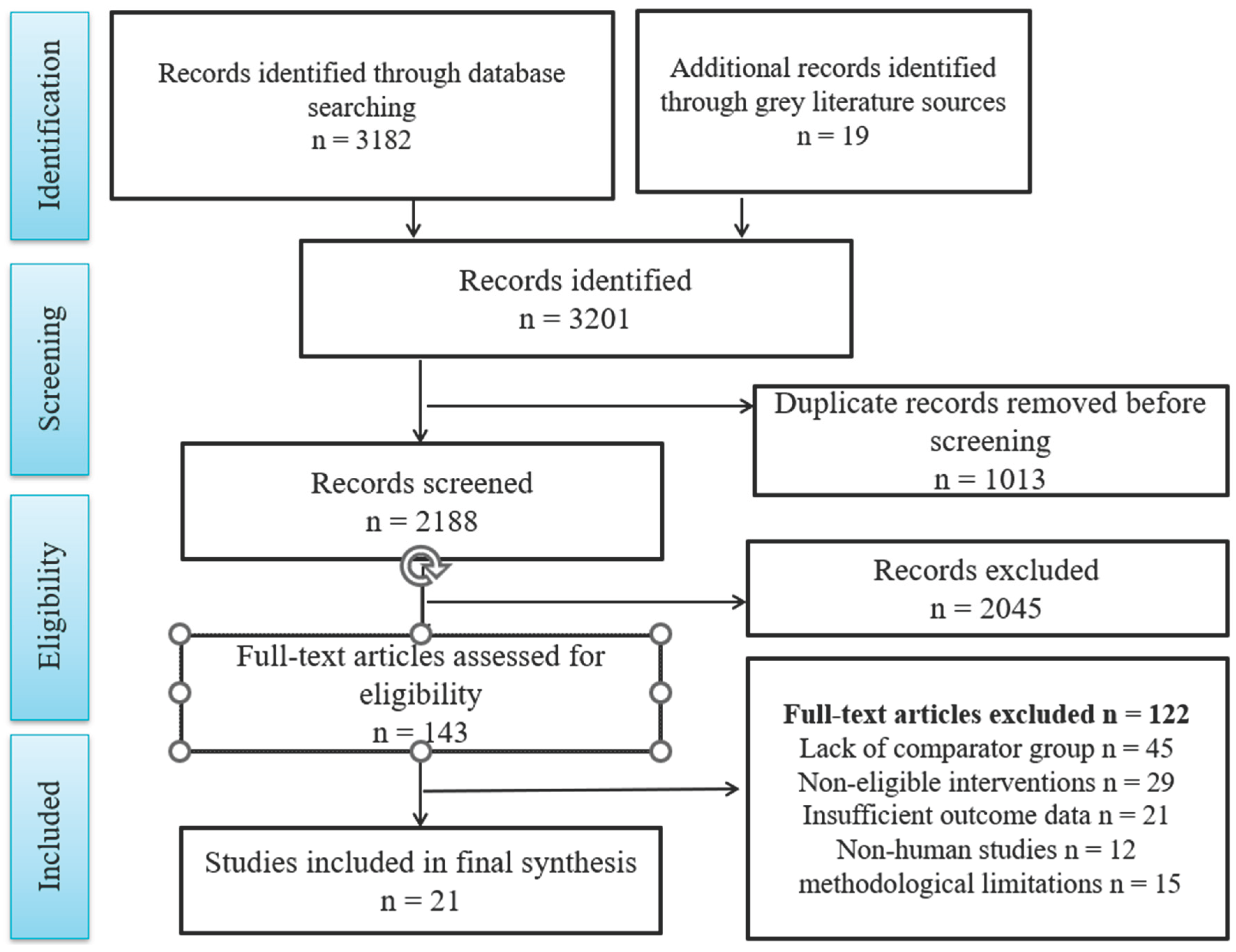

Table 1.
Characteristics of included studies on herbal and pharmaceutical antidepressants in adults with depressive disorders.
Table 1.
Characteristics of included studies on herbal and pharmaceutical antidepressants in adults with depressive disorders.
| Year | Authors | Title | Herbal intervention | Comparator | Type of evidence |
|---|---|---|---|---|---|
| 2000 | Woelk | Comparison of St John's wort and imipramine for treating depression: randomised controlled trial. | Hypericum perforatum | Imipramine | RCT |
| 2000 | Brenner et al. | Comparison of an extract of hypericum (LI 160) and sertraline in the treatment of depression: a double-blind, randomized pilot study. | Hypericum perforatum | Sertraline | RCT |
| 2002 | Behnke et al. | Hypericum perforatum versus fluoxetine in the treatment of mild to moderate depression. | Hypericum perforatum | Fluoxetine | RCT |
| 2002 | Van Gurp et al. | St John's wort or sertraline? Randomized controlled trial in primary care. | Hypericum perforatum | Sertraline | RCT |
| 2002 | Davidson et al. | Effect of Hypericum perforatum (St John's wort) in major depressive disorder: a randomized controlled trial. | Hypericum perforatum | Fluoxetine | RCT |
| 2005 | Szegedi et al. | Acute treatment of moderate to severe depression with hypericum extract WS 5570 (St John's wort): randomised controlled double blind non-inferiority trial versus paroxetine. | Hypericum perforatum | Paroxetine | RCT |
| 2006 | Gastpar et al. | Comparative efficacy and safety of a once-daily dosage of hypericum extract STW3-VI and citalopram in patients with moderate depression: a double-blind, randomised, multicentre, placebo-controlled study. | Hypericum perforatum | Citalopram | RCT |
| 2006 | Moreno et al. | Hypericum perforatum versus fluoxetine in the treatment of mild to moderate depression: a randomized double-blind trial in a Brazilian sample. | Hypericum perforatum | Fluoxetine | RCT |
| 2005 | Linde et al. | St John's wort for depression: meta-analysis of randomised controlled trials. | Hypericum perforatum | SSRIs | Meta-analysis |
| 2016 | Cui and Zheng | meta-analysis on the efficacy and safety of St John's wort extract in depression therapy in comparison with selective serotonin reuptake inhibitors in adults. | Hypericum perforatum | SSRIs | Meta-analysis |
| 2005 | Noorbala et al. | Hydro-alcoholic extract of Crocus sativus L. versus fluoxetine in the treatment of mild to moderate depression: a double-blind, randomized pilot trial. | Crocus sativus | Fluoxetine | RCT |
| 2004 | Akhondzadeh et al. | Comparison of Crocus sativus L. and imipramine in the treatment of mild to moderate depression: a pilot double-blind randomized trial. | Crocus sativus | Imipramine | RCT |
| 2007 | Akhondzadeh et al. | Comparison of petal of Crocus sativus L. and fluoxetine in the treatment of depressed outpatients: a pilot double-blind randomized trial. | Crocus sativus | Fluoxetine | RCT |
| 2014 | Shahmansouri et al. | A randomized, double-blind, clinical trial comparing the efficacy and safety of Crocus sativus L. with fluoxetine for improving mild to moderate depression in post percutaneous coronary intervention patients. | Crocus sativus | Fluoxetine | RCT |
| 2017 | Kashani et al. | Comparison of Saffron versus Fluoxetine in Treatment of Mild to Moderate Postpartum Depression: A Double-Blind, Randomized Clinical Trial. | Crocus sativus | Fluoxetine | RCT |
| 2017 | Ghajar et al. | Crocus sativus L. versus Citalopram in the Treatment of Major Depressive Disorder with Anxious Distress: A Double-Blind, Controlled Clinical Trial.. | Crocus sativus | Citalopram | RCT |
| 2019 | Ahmadpanah et al. | Crocus Sativus L. (saffron) versus sertraline on symptoms of depression among older people with major depressive disorders-a double-blind, randomized intervention study. | Crocus sativus | Sertraline | RCT |
| 2003 | Akhondzadeh et al. | Comparison of Lavandula angustifolia Mill. tincture and imipramine in the treatment of mild to moderate depression: a double-blind, randomized trial. | Lavandula angustifolia | Imipramine | RCT |
| 2017 | Nikfarjam et al. | Comparison of Effect of Lavandula officinalis and Venlafaxine in Treating Depression: A Double Blind Clinical Trial. | Lavandula officinalis | Venlafaxine | RCT |
| 2020 | Araj-Khodaei et al. | A double-blind, randomized pilot study for comparison of Melissa officinalis L. and Lavandula angustifolia Mill. with Fluoxetine for the treatment of depression. | Melissa officinalis + Lavandula angustifolia | Fluoxetine | RCT |
| 2021 | Hu et al. | Randomized, placebo-controlled, double-blind study on the effects of SZL on patients with mild to moderate depressive disorder with comparison to fluoxetine. | SZL herbal formula | Fluoxetine | RCT |
| 2015 | Mao et al. | Rhodiola rosea versus Sertraline for major depressive disorder: A randomized placebo-controlled trial. Phytomedicine. | Rhodiola rosea | Sertraline | RCT |
| 2019 | Su et al. | Jiawei Xiaoyao capsule treatment for mild to moderate major depression with anxiety symptoms: a randomized, double-blind, double-dummy, controlled, multicenter, parallel-treatment trial. | Jiawei Xiaoyao capsule | SSRIs | RCT |
| 2019 | Marx et al. | Effect of saffron supplementation on symptoms of depression and anxiety: a systematic review and meta-analysis. | Crocus sativus | Antidepressants | Meta-analysis |
| 2025 | Shafiee et al. | Effect of Saffron Versus Selective Serotonin Reuptake Inhibitors (SSRIs) in Treatment of Depression and Anxiety: A Meta-analysis of Randomized Controlled Trials. | Crocus sativus | SSRIs | Meta-analysis |
| 2016 | Sarris et al. | Adjunctive Nutraceuticals for Depression: A Systematic Review and Meta-Analyses. | Mixed herbal | Antidepressants | Systematic review |
| 2015 | Yi et al. | Comparison between herbal medicine and fluoxetine for depression: a systematic review of randomized controlled trials. | Herbal medicines | Fluoxetine | Systematic review |
RCT: Randomized controlled trial.
Table 2.
Summary of methodological and clinical characteristics across included studies.
| Category | Summary of findings |
|---|---|
| Study designs | Mostly randomized controlled trials, with some controlled trials and systematic reviews/meta-analyses. |
| Geographic distribution | Studies conducted across Europe, Asia, and the Middle East. |
| Herbal interventions | Mainly Hypericum perforatum and Crocus sativus, with other herbs such as lavender, saffron, rhodiola, and lemon balm. |
| Pharmaceutical comparators | Mainly SSRIs (especially fluoxetine and sertraline), with some SNRIs, TCAs, and placebo. |
| Depression severity | Mostly mild to moderate depression; fewer studies included moderate to severe cases. |
| Outcome measures | Common scales included HDRS, BDI, and MADRS. |
| Treatment duration | Mostly short-term studies (about 4–12 weeks). |
| Scope of evidence | Studies assessed efficacy, safety, tolerability, and discontinuation, but with high variability. |
Table 3.
summary of comparative outcomes of herbal and pharmaceutical antidepressants.
| Domain | Herbal antidepressants | Pharmaceutical antidepressants | Overall synthesis |
|---|---|---|---|
| Efficacy (mild–moderate depression) | Hypericum perforatum and other herbal extracts showed similar symptom reduction to SSRIs in several studies | SSRIs showed comparable effects in mild–moderate depression | Comparable efficacy in mild–moderate depression |
| Efficacy (moderate–severe depression) | Limited and inconsistent evidence of benefit | SNRIs and TCAs showed stronger and more consistent effects | Pharmaceuticals more effective in severe depression |
| Safety and adverse effects | Generally mild effects (e.g., gastrointestinal discomfort, dizziness, photosensitivity) | More frequent adverse effects (e.g., sexual dysfunction, weight gain, insomnia) | Herbal treatments better tolerated overall |
| Discontinuation | Lower discontinuation in several studies, likely due to better tolerability | Higher discontinuation linked to side effects | Herbal treatments may improve adherence |
| Drug interactions | Significant interactions reported, especially CYP450 induction (Hypericum perforatum) | No equivalent interaction risk within class | Herbal therapies require caution in polypharmacy |
| Evidence consistency | High variability in formulations and dosing | More standardized treatments | Herbal evidence less consistent |
Disclaimer/Publisher’s Note: The statements, opinions and data contained in all publications are solely those of the individual author(s) and contributor(s) and not of MDPI and/or the editor(s). MDPI and/or the editor(s) disclaim responsibility for any injury to people or property resulting from any ideas, methods, instructions or products referred to in the content. |
© 2026 by the authors. Licensee MDPI, Basel, Switzerland. This article is an open access article distributed under the terms and conditions of the Creative Commons Attribution (CC BY) license (http://creativecommons.org/licenses/by/4.0/).
Copyright: This open access article is published under a Creative Commons CC BY 4.0 license, which permit the free download, distribution, and reuse, provided that the author and preprint are cited in any reuse.