

Submitted:
23 October 2026
Posted:
26 October 2026
You are already at the latest version
Abstract
Background: Clinical evidence on intravenous oxyhydrogen nanobubbles and aerobic fitness remains limited. This article reports individual outcomes, intervention completion, and documented tolerability in nine Indonesian Navy personnel who received HHO-IGDS. Participants were monitored from before the intervention through the final assessment. Methods: This case series reports findings from an open-label, uncontrolled study with pre-intervention and post-intervention assessments in nine Indonesian Navy personnel in Surabaya, Indonesia. Nine men aged 22–32 years completed ten scheduled infusion sessions between July 24 and August 14, 2026. The planned regimen increased the volume of HHO concentrate from 1 to 5 mL, administered with 500 mL of a formulation labeled IFA + Mg. All participants continued their military duties, exercise, and routine physical training during the infusion period. Reported VO₂ values, body composition summaries, and pre-infusion and post-infusion observations were reviewed. Changes in VO₂max were analyzed descriptively and using a paired t-test, with the Wilcoxon test as a sensitivity analysis. The magnitude of change was reported as the mean difference with a 95% confidence interval and Cohen’s dz effect size. Results: Mean VO₂max increased from 50.20 ± 4.98 to 57.12 ± 6.67 mL/kg/min, with a mean change of 6.92 mL/kg/min (95% CI: 2.37–11.47), equivalent to a 13.78% increase relative to the baseline mean. The paired t-test indicated a statistically significant difference (t(8) = 3.51; p = 0.0080), with consistent findings from the Wilcoxon test (p = 0.0195) and a Cohen’s dz of 1.17. Seven participants showed an increase and two a decrease, with individual changes ranging from −2.26 to +15.74 mL/kg/min. All participants completed ten intervention sessions, yielding 90 documented sessions. Mean post-infusion changes relative to pre-infusion values were −2.39 mmHg for systolic blood pressure, +0.51 mmHg for diastolic blood pressure, −0.18 percentage points for oxygen saturation, and −2.16 beats/min for heart rate. No serious adverse events or emergency treatment were documented in the records reviewed. One participant reported dizziness before the seventh session, which diminished afterward. Conclusion: Mean VO₂max increased significantly after ten HHO-IGDS sessions in Indonesian Navy personnel who continued their routine activities and physical training. All participants completed the intervention without documented serious adverse events. These findings describe increased VO₂max in most participants and the feasibility of completing the intervention series.
Keywords:
oxyhydrogen
; nanobubble
; case series
; cardiorespiratory fitness
; intravenous administration
; military personnel
; tolerability
1. Introduction
Aerobic fitness is an important component of the physical readiness required for military duties involving endurance [1]. A principal measure of aerobic fitness is maximal oxygen uptake (VO₂max), which reflects the body’s ability to take up, transport, and utilize oxygen during maximal physical exertion [2]. It can be assessed using cardiopulmonary exercise testing (CPET), which measures oxygen uptake and gas exchange during exercise to evaluate cardiorespiratory and metabolic responses to increasing workloads [3]. Change in VO₂max was selected as the primary outcome because it provides an objective measure of the change in aerobic capacity from before to after an intervention [4]. Research on HHO-IGDS in Indonesian Navy personnel is therefore needed to characterize changes in aerobic capacity following administration, together with its tolerability and feasibility. Both group-level and individual analyses were undertaken because changes in VO₂max may vary among individuals undergoing the same program [5].
Molecular hydrogen has been investigated as an approach to supporting exercise capacity and physical recovery. In a controlled study of healthy individuals, two weeks of hydrogen-rich water consumption increased peak oxygen uptake, whereas a single dose produced no significant increase [6]. Research in athletes has also reported potential benefits of hydrogen-rich water for muscle recovery after strenuous exercise [7]. Intravenous oxyhydrogen nanobubble administration has been described in a case series involving patients with chronic kidney disease; however, that study did not assess aerobic fitness in military personnel [8]. These findings cannot be directly applied to HHO-IGDS for improving VO₂max because the formulation, route of administration, participant characteristics, and outcomes differ. Studies specifically assessing changes in VO₂max following HHO-IGDS administration are therefore required.
This case series reports changes in VO₂max in nine Indonesian Navy personnel who received ten HHO-IGDS sessions in a single-group study with pre-intervention and post-intervention assessments. In addition to group-level and individual changes in VO₂max, it describes intervention completion, pre-infusion and post-infusion vital signs, and symptoms recorded during the study. The report aims to characterize changes in aerobic fitness, intervention feasibility, and observed tolerability as a basis for further research.
2. Methods
2.1. Study Design and Reporting Framework
This interventional study used a one-group pretest–posttest design. It was open-label, with no control group, randomization, or blinding. Nine Puskopaska personnel from the Indonesian Navy received ten HHO-IGDS infusion sessions and underwent VO₂max assessment using CPET with a COSMED K5 device before and after the intervention series. Each participant was the unit of analysis, with paired comparisons between baseline and final measurements. Findings are presented as a case series describing participant characteristics, intervention delivery, changes in VO₂max, vital signs, and symptoms recorded during the study. Individual findings are supplemented by group-level statistical analyses to describe the magnitude of change and variation among participants.
2.2. Setting and Participants
Pre-intervention and post-intervention VO₂max assessments were performed at the Anti-Doping Education Laboratory, Faculty of Sports and Health Sciences, Universitas Negeri Surabaya. Infusions were administered at the RAHO Armada facility in the Perak area of Surabaya. Baseline assessment took place on July 24, 2026, followed by ten scheduled infusion visits through August 14. Final assessments were recorded on August 26 for seven participants and August 31 for two participants, corresponding to 12 and 17 days after the final scheduled infusion, respectively.
Purposive sampling was used to recruit active-duty Puskopaska personnel, with nine primary participants and three reserves specified. This report includes nine men with complete fitness values and monitoring records for ten sessions. Reported ages ranged from 22 to 32 years. Eligibility included willingness to participate and a health status compatible with the study procedures; severe chronic disease or concomitant medication potentially affecting exercise testing were considered grounds for exclusion.
Throughout the infusion period, all participants continued their military duties, exercise, and routine physical training. The study period also coincided with joint training involving Kopaska and the US Navy SEALs. The intensity, duration, frequency, and individual participation in specific joint-training activities were not recorded systematically.
2.3. Planned Intervention and Documented Exposure
The intervention comprised ten intravenous hydrogen–oxygen nanobubble (HHO-IGDS) sessions, scheduled three times per week. The planned HHO concentrate volume increased progressively to 1, 2, 3, and 4 mL during the first four sessions and was maintained at 5 mL per session from sessions five through ten. At each session, the concentrate was planned to be administered with 500 mL of IFA + Mg infusion fluid. Administration was scheduled for July 24, 27, 29, and 31 and August 3, 5, 7, 10, 12, and 14, 2026. The planned regimen is presented in Table 1. Completion of all ten sessions was assessed from each participant’s infusion records.
2.4. Assessment of Fitness and Body Composition
Cardiorespiratory fitness was assessed by treadmill CPET using a COSMED K5 device at the Anti-Doping Education Laboratory, Faculty of Sports and Health Sciences, Universitas Negeri Surabaya. Testing was performed before and after the ten-session HHO-IGDS series using the same device and testing procedures. Breath-by-breath respiratory gas analysis measured oxygen uptake (VO₂), carbon dioxide production (VCO₂), and ventilation during exercise. The validity and reliability of the COSMED K5 in breath-by-breath mode have been evaluated previously [9]. Baseline testing was performed on July 24, 2026; final testing took place on August 26, 2026, for seven participants and August 31, 2026, for two participants.
The primary outcome was the change in body mass–normalized VO₂max, expressed in mL/kg/min. Absolute change was calculated by subtracting the pre-intervention value from the post-intervention value; relative change was calculated as this difference divided by the baseline value and expressed as a percentage. Positive and negative values indicated increases and decreases in VO₂max, respectively. Measurements were analyzed as paired data at the group level and presented for each participant to describe individual variation. Additional assessments included body weight (kg), muscle mass (kg), and body fat percentage (%), recorded at baseline and the final assessment. Changes in these parameters were analyzed descriptively as exploratory outcomes to complement the interpretation of VO₂max changes.
2.5. Monitoring and Data Management
Safety and tolerability were assessed through clinical status, reported symptoms, and measurements of blood pressure, SpO₂, heart rate, and perfusion index before and after each infusion. Symptoms and adverse events were summarized from individual clinical records. Feasibility was assessed by completion of ten intervention sessions and both fitness assessments. Data were coded and organized by participant, session, and measurement time; the 90 paired session observations represented repeated measurements in nine participants.
Analyses included nine participants with complete paired VO₂max data. Data are presented as mean ± standard deviation, median, and range. Absolute change was calculated as the final value minus the baseline value, and relative change was expressed as a percentage of baseline. The normality of paired differences was examined using the Shapiro–Wilk test. Pre–post differences were analyzed using a paired t-test, with a 95% confidence interval for the mean change and an exact two-sided Wilcoxon signed-rank test as an additional analysis. Effect size was calculated as Cohen’s dz, with statistical significance set at p < 0.05. Individual changes are also presented. Vital signs were summarized as each participant’s mean pre-infusion and post-infusion values across ten sessions and then summarized at the group level. Symptoms, feasibility, and body composition changes were analyzed descriptively.
2.6. Ethics and Consent
The study received ethical approval from the Health Research Ethics Committee of Yayasan Inovasi Molekuler Indonesia under approval number 001/SKLE/KEP-IMI/X/2025, protocol number KEP-IMI/2025-08/001/KL, dated October 16, 2025. All participants provided informed consent after receiving information about the study objectives, procedures, benefits, and risks. Participation was voluntary, and participants could withdraw at any time without consequences for their military service. Confidentiality was maintained by using participant codes during data processing and reporting.
3. Results
3.1. Overview and Intervention Completion
All nine documented cases had paired fitness values and records for ten infusion sessions; thus, 90 of 90 scheduled visits were completed in this group. The reported mean age was 26.33 ± 3.28 years. Mean reported VO₂ was 50.20 ± 4.98 mL/kg/min at baseline and 57.12 ± 6.67 mL/kg/min at the final assessment, with medians of 51.00 and 54.69 mL/kg/min, respectively. Seven participants had higher final values and two had lower values. The mean difference was +6.92 ± 5.92 mL/kg/min, with a median of +8.66 and a range of −2.26 to +15.74. The 13.78% difference between group means is neither the mean individual percentage change nor an estimate of the intervention effect. All infusion visits were completed while participants continued their routine activities and training.

Table 2.
Individual reported fitness values.
| ID | Age (years) |
Baseline | Final assessment |
Difference | Change (%) |
|---|---|---|---|---|---|
| P01 | 27 | 52.10 | 50.96 | -1.14 | -2.19 |
| P02 | 29 | 51.00 | 54.69 | +3.69 | +7.24 |
| P03 | 32 | 45.80 | 54.46 | +8.66 | +18.91 |
| P04 | 26 | 43.20 | 52.45 | +9.25 | +21.41 |
| P05 | 22 | 53.80 | 65.67 | +11.87 | +22.06 |
| P06 | 24 | 59.20 | 65.67 | +6.47 | +10.93 |
| P07 | 22 | 45.00 | 60.74 | +15.74 | +34.98 |
| P08 | 28 | 52.20 | 62.20 | +10.00 | +19.16 |
| P09 | 27 | 49.50 | 47.24 | -2.26 | -4.57 |
VO₂ values and differences are expressed in mL/kg/min. All nine cases had ten documented sessions.
Individual pre-intervention and post-intervention VO₂max values are shown in Figure 1. In the two participants whose VO₂max decreased, testing was reportedly interrupted by equipment malfunction or a power outage and had to be repeated.
3.2. Individual Case Descriptions
The nine participants were male Indonesian Navy personnel aged 22–32 years. All completed ten HHO-IGDS sessions and underwent fitness assessments before and after the intervention. VO₂max increased in seven participants and decreased in two.
P01. This 27-year-old participant’s VO₂max decreased from 52.10 to 50.96 mL/kg/min, a change of −1.14 mL/kg/min (−2.19%). Body weight increased from 70.95 to 72.80 kg. Dizziness was recorded before the seventh session and diminished afterward. No discontinuation due to symptoms was recorded. During a follow-up interview, the participant reported a technical interruption during fitness testing that required the test to be repeated.
P02. This 29-year-old participant’s VO₂max increased from 51.00 to 54.69 mL/kg/min, a change of +3.69 mL/kg/min (+7.24%). This was the smallest increase among the seven participants whose VO₂max improved. Body weight increased from 63.55 to 66.80 kg. No symptoms were recorded during the intervention series.
P03. This 32-year-old participant’s VO₂max increased from 45.80 to 54.46 mL/kg/min, a change of +8.66 mL/kg/min (+18.91%). Body weight increased from 71.45 to 72.80 kg. No symptoms were recorded during the intervention series.
P04. This 26-year-old participant had the lowest baseline VO₂max, at 43.20 mL/kg/min. At the final assessment, VO₂max increased to 52.45 mL/kg/min, a change of +9.25 mL/kg/min (+21.41%). Body weight decreased from 88.00 to 87.55 kg. No symptoms were recorded during the intervention series.
P05. This 22-year-old participant’s VO₂max increased from 53.80 to 65.67 mL/kg/min, a change of +11.87 mL/kg/min (+22.06%). Body weight increased from 72.15 to 74.60 kg. No symptoms were recorded during the intervention series.
P06. This 24-year-old participant had the highest baseline VO₂max, at 59.20 mL/kg/min. At the final assessment, VO₂max increased to 65.67 mL/kg/min, a change of +6.47 mL/kg/min (+10.93%). Body weight increased from 66.10 to 68.05 kg. No symptoms were recorded during the intervention series.
P07. This 22-year-old participant showed the largest increase in VO₂max, from 45.00 to 60.74 mL/kg/min, a change of +15.74 mL/kg/min (+34.98%). Body weight increased from 62.15 to 64.60 kg. No symptoms were recorded during the intervention series.
P08. This 28-year-old participant’s VO₂max increased from 52.20 to 62.20 mL/kg/min, a change of +10.00 mL/kg/min (+19.16%). Body weight increased from 69.80 to 71.50 kg. No symptoms were recorded during the intervention series.
P09. This 27-year-old participant’s VO₂max decreased from 49.50 to 47.24 mL/kg/min, a change of −2.26 mL/kg/min (−4.57%). Body weight increased from 61.75 to 64.95 kg. No symptoms were recorded during the intervention series. During a follow-up interview, the participant reported a technical interruption during fitness testing that required the test to be repeated.
3.3. Documented Tolerability and Vital Signs
Monitoring records from the ten intervention sessions contained no documented symptoms for eight of the nine participants. P01 reported dizziness before the seventh session, which diminished afterward. Earlier session notes for this participant did not contain sufficiently specific symptom descriptions. All participants completed the intervention series without documented discontinuation due to clinical symptoms. No serious adverse events or need for emergency medical treatment were recorded during the monitoring period.
Table 3.
Descriptive summary of vital signs from 90 paired session records.
| Parameter | Mean before |
Mean after |
Range before |
Range after |
|---|---|---|---|---|
| Systolic BP (mmHg) | 118.53 | 116.14 | 97–138 | 95–130 |
| Diastolic BP (mmHg) | 73.94 | 74.46 | 57–90 | 59–86 |
| SpO₂ (%) | 98.01 | 97.83 | 95–99 | 96–99 |
| Heart rate (beats/min) | 75.14 | 72.99 | 55–105 | 58–95 |
Note: Data comprise 90 paired pre-infusion and post-infusion measurements from nine participants, each completing ten sessions. Ranges represent minimum and maximum values across all sessions. Data are presented descriptively to characterize vital signs before and after infusion over the ten-session intervention. Measurements were repeated in the same participants and were therefore not treated as independent observations.
The pooled mean changes were −2.39 mmHg for systolic blood pressure, +0.51 mmHg for diastolic blood pressure, −0.18 percentage points for SpO₂, and −2.16 beats/min for heart rate. Values were calculated before rounding; subtracting rounded means in the table may therefore yield a difference of 0.01. Session-level fluctuations and limitations in symptom documentation remain relevant despite the small changes in pooled means. Participant-level means are presented in Supplementary Table S1.
3.4. Additional Body Composition Findings
Mean body weight increased from 69.54 kg at baseline to 71.52 kg at the final assessment. Mean muscle mass increased from 32.02 to 32.98 kg, whereas mean body fat percentage changed from 18.40% to 18.61%.
4. Discussion
This case series showed increased VO₂max in seven of nine Indonesian Navy personnel after ten HHO-IGDS sessions. Mean VO₂max increased from 50.20 ± 4.98 to 57.12 ± 6.67 mL/kg/min, although the magnitude of change varied among individuals and two participants showed decreases. All participants completed the intervention series, with vital signs monitored before and after each session. Eight participants had no recorded symptoms, whereas one reported dizziness before the seventh session that diminished afterward. These findings describe changes in aerobic fitness and the feasibility of the intervention in the group studied.
4.1. Relationship to the Exercise Literature
Studies of hydrogen administration to support physical performance have yielded mixed findings, including for oxygen uptake during exercise [6,10]. Hori et al. (2020) reported increased peak oxygen uptake (VO₂max) after two weeks of hydrogen-rich water consumption in healthy participants undergoing incremental cycling tests [6]. Recent studies have also reported changes in muscle function and sports performance, although the outcomes differed from VO₂max [11,12,13]. In a randomized study of 22 elite female athletes, Ogannisyan et al. (2025) reported increased muscle torque and decreased creatine kinase levels during follow-up in the hydrogen-rich water group, without significant changes in questionnaire-based stress and recovery scores [11]. Sládečková et al. (2026) conducted a randomized, double-blind, placebo-controlled crossover trial in 12 finswimmers. The time to complete a 400-m swim was 0.6% shorter after hydrogen-rich water consumption than after placebo (p = 0.003) [12]. Chen et al. (2026) reported higher mean power, a lower fatigue index, and recovery of selected heart rate variability parameters after acute hydrogen-rich water consumption in 13 male collegiate athletes performing repeated cycling sprints [13]. Intravenous oxyhydrogen nanobubble administration was reported by Indrajani et al. (2025) in a series of three patients with chronic kidney disease who received ten infusions over two to three months [8].
4.2. Potential Biological Basis of Changes in Aerobic Capacity
Aerobic capacity depends on the body’s ability to deliver oxygen to muscle and use it to generate energy through mitochondrial oxidative phosphorylation [14]. Human studies indicate that skeletal muscle mitochondrial respiratory capacity may exceed the oxygen supply available from the circulation during maximal exercise; improved mitochondrial function alone therefore does not necessarily increase VO₂max [14]. In the context of HHO-IGDS, molecular hydrogen (H₂) and oxygen (O₂) provide a basis for hypothesizing effects on aerobic metabolism, but this relationship requires evidence of gas delivery to tissues and changes in cellular function after administration [14,15,16].
Experimental evidence concerning H₂ primarily relates to cellular responses to oxidative stress. Ohsawa et al. (2007) showed that H₂ reduced oxidative injury in cellular models and animal models of cerebral ischemia–reperfusion injury, with activity against hydroxyl radicals [15]. Murakami et al. (2017) subsequently found that H₂ exposure in SH-SY5Y neuroblastoma cells increased mitochondrial membrane potential and ATP levels, accompanied by activation of antioxidant defenses through the Nrf2 pathway [16]. This response was associated with mitohormesis, a process whereby mild stress induces adaptations that increase cellular resistance to subsequent stress [16]. These findings provide a basis for investigating the effects of H₂ on energy metabolism.
Evidence more directly related to muscle activity was reported by Mizuno et al. in a 2026 study of hydrogen-rich water in mice [17]. After at least four weeks of consumption, mice showed increased running distance and reduced markers of oxidative stress, inflammation, and muscle damage. This study supports the possible involvement of muscle redox responses in changes in endurance [17]. These findings suggest that molecular hydrogen may influence the cellular redox environment and mitochondrial responses to oxidative stress. Because high-intensity physical activity increases metabolic rate and may increase reactive oxygen species production, modulation of redox responses could theoretically help preserve cellular function and energy metabolism during activity.
Oxygen is required as the terminal electron acceptor in the mitochondrial electron transport chain, supporting ATP production through oxidative phosphorylation [14]. In addition to the potential mechanisms of HHO-IGDS, concurrent training must be considered when interpreting changes in VO₂max. All participants continued exercise and routine physical training during the infusion period. During an overlapping period, the joint Kopaska–US Navy SEAL exercise, JCET Flash Thunder Iron 2026, was reported to take place in Surabaya on August 4–24, 2026, covering close-quarters combat, sniper training, and military parachuting [31]. This information provides context for unit activities during the study but does not describe each participant’s training load. Helgerud et al. showed that structured aerobic training can increase VO₂max [18]. The increases observed in this series therefore occurred during HHO-IGDS administration accompanied by physical training, and their respective contributions cannot be separated in a study without a control group.
Figure 4.1. Framework of the potential relationship between HHO-IGDS and changes in VO₂max. HHO-IGDS contains H₂ and O₂. Molecular hydrogen may modulate redox responses and mitochondrial function, including oxidative stress responses and mitochondrial adaptation. Oxygen is essential to aerobic metabolism and ATP production. Intravenous oxyhydrogen (HHO) nanobubbles are described as increasing VO₂max by enhancing oxygen availability in muscle tissue and improving oxygen transport and utilization during physical activity. Oxyhydrogen nanobubbles represent a novel therapeutic approach to improving health. Oxyhydrogen is a mixture of molecular hydrogen and molecular oxygen [19], both of which are basic elements of the body [20].
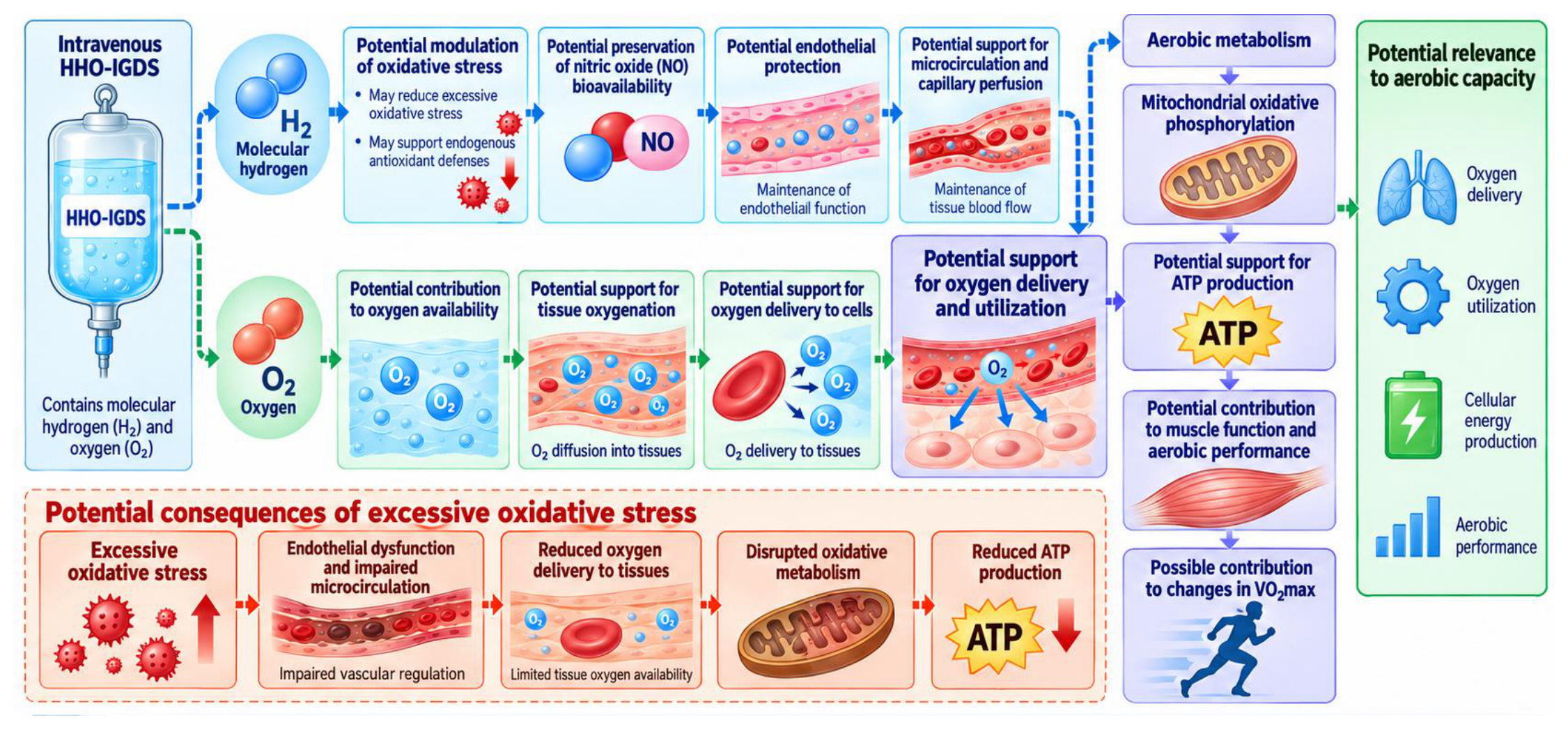
Hydrogen acts as an antioxidant by reducing hydroxyl radicals (•OH) and peroxynitrite (ONOO⁻) [15] and increasing the expression of endogenous antioxidants such as superoxide dismutase (SOD) and catalase (CAT) [21]. Hydrogen may also alleviate ischemia–reperfusion injury associated with imbalances in oxygen supply and distribution from blood to tissues in the presence of oxidative stress [22]. Oxygen provision is known to counter mitochondrial damage, energy deficiency, and cell death caused by tissue hypoxia, which can contribute to degenerative disease [23]. HHO is considered safe for the body because of its potential to improve quality of life and tissue function [24,25]. Hydrogen within oxyhydrogen nanobubbles also acts as a selective antioxidant that protects mitochondria, reduces oxidative stress and inflammation, and preserves nitric oxide (NO)-mediated vasodilation, thereby supporting the overall efficiency of aerobic metabolism [26]. These pathways could theoretically support energy production and oxygen utilization during physical activity and represent potential biological mechanisms underlying aerobic performance.
4.2.1. Oxidative Stress, Endothelial Function, and Tissue Perfusion
The increase in VO₂max in most participants can be considered in relation to microcirculatory function, oxygen delivery, and muscle metabolism. Excessive oxidative stress can impair endothelial function and reduce nitric oxide (NO) bioavailability, limiting the adjustment of blood flow to tissue oxygen demand [34]. In patients with peripheral artery disease, impaired endothelial function in muscle arterioles is associated with reduced oxygen delivery and utilization and lower mitochondrial respiration [32]. These findings support a role for the microcirculation in aerobic metabolism, although they derive from a different population. Molecular hydrogen (H₂) may protect the endothelium by modulating oxidative stress. Ishibashi et al. (2020) reported improved peripheral endothelial function after two weeks of hydrogen-rich water consumption in a randomized controlled trial involving 68 individuals [33]. In animal studies, hydrogen-rich saline reduced vascular dysfunction in hypertensive rats and protected the microvascular endothelial glycocalyx in rats with hemorrhagic shock [34,35]. This evidence supports the potential vascular protective effects of H₂ but does not establish that HHO-IGDS repairs capillary damage in military personnel.
This mechanism is relevant because participants continued physical training and military duties during the intervention. Research in Marine officer candidates showed increases in inflammatory markers and plasma antioxidant capacity after strenuous training, with some inflammatory markers associated with sleep disturbance and perceived stress [38]. Increased oxidative stress markers have also been observed after simulated acute threats [39]. Physical and psychological demands may therefore influence redox responses, although they do not necessarily indicate endothelial damage. In addition to H₂, the O₂ component could theoretically support oxygen availability for aerobic metabolism. Experimental studies suggest that micro/nanobubbles and oxygen-loaded nanobubbles have potential as oxygen delivery systems [36,37]. Endothelial protection, maintenance of perfusion, and oxygen availability are potential pathways supporting mitochondrial ATP production [14,32,33,34,35]. However, endothelial function, muscle perfusion, and oxidative stress biomarkers were not measured in this series. These mechanisms therefore provide a potential biological explanation, while the observed changes in VO₂max cannot be separated from the effects of concurrent training.
Figure 4.2.
Hypothesized HHO-IGDS pathways for oxygen delivery.
4.3. Measurement and Interpretation of Individual Changes
Analysis of nine paired measurements showed a mean VO₂max increase of 6.92 mL/kg/min (95% CI: 2.37–11.47), equivalent to 13.78% of the baseline mean. The paired t-test indicated a statistically significant difference between baseline and final assessments (t(8) = 3.51; p = 0.0080), with a consistent result from the exact two-sided Wilcoxon signed-rank test (p = 0.0195). Agreement between the two analyses supports a change in the group studied. A Cohen’s dz of 1.17 indicates that the mean change was relatively large compared with the standard deviation of individual changes. However, the relatively wide confidence interval indicates uncertainty in the magnitude of the increase. Although the VO₂max increase was statistically significant, the absence of a control group limits assessment of the contribution of HHO-IGDS to this change [27].
The increase in the group mean was not uniform across participants. VO₂max increased in seven participants and decreased in two, with individual changes ranging from −2.26 to +15.74 mL/kg/min. This variation describes pre–post differences but is insufficient to classify participants as biological responders or nonresponders to HHO-IGDS. An individual’s change may reflect intervention responses, physiological variation over time, and measurement error [28], including adaptations during the study and the participant’s condition at testing. Mohammad et al. (2025) showed that peak oxygen uptake can vary across repeated assessments, including in healthy individuals; a change between two measurements therefore cannot be attributed entirely to a biological response to an intervention [29].
P07 showed the largest increase, at 15.74 mL/kg/min (34.98%), whereas P04 increased by 9.25 mL/kg/min (21.41%). Both had relatively low baseline values within the group, at 45.00 and 43.20 mL/kg/min, respectively. However, P06, who had the highest baseline value of 59.20 mL/kg/min, also increased by 6.47 mL/kg/min (10.93%). Baseline values alone therefore do not explain the magnitude of individual changes. P05 and P08 increased by 11.87 and 10.00 mL/kg/min, respectively, while P03 and P02 increased by 8.66 and 3.69 mL/kg/min. Although all participants completed ten intervention sessions, this does not imply equivalent training loads, military duties, or recovery conditions. Differences in training intensity and consistency during the study are possible explanations. All participants continued their routine activities and physical training during the infusion period, but individual training loads were not recorded systematically. Differences in VO₂max increases among P02–P08 therefore cannot be linked to specific training intensities or individual responses to HHO-IGDS. A controlled exercise study by Moreno-Cabañas et al. (2025) highlights the importance of accounting for biological variation and measurement error when evaluating individual changes after a standardized training program [30].
VO₂max decreased in P01 and P09 by 1.14 mL/kg/min (2.19%) and 2.26 mL/kg/min (4.57%), respectively. Both participants reported technical or electrical interruptions that required testing to be repeated. Repeated testing may have affected performance, particularly if recovery after the first attempt was inadequate. This explanation remains hypothetical because the duration of the initial test and the recovery interval were not fully documented. Attainment of peak values during CPET depends on participant effort, the exercise protocol, and testing quality [3]. The decreases in P01 and P09 therefore cannot be attributed definitively to an intervention-related reduction in aerobic capacity or solely to testing interruptions [3,29].
4.4. Safety and Feasibility
All nine participants completed ten intervention sessions, totaling 90 infusions. No symptoms were documented for P02, P03, P04, P05, P06, P07, P08, or P09 throughout the sessions. P01 reported dizziness before the seventh session that diminished afterward. Earlier records for P01 also contained nonspecific complaints whose nature and timing could not be determined. No serious adverse events, emergency treatment, or symptom-related discontinuations were documented in any participant. These findings describe the clinical experience during the observation period. Completion of all sessions while participants continued routine activities and training indicates that the infusion visits could be undertaken alongside military duties in this group. Operational performance was not measured, so continued activity is not evidence of improved operational capability. P01’s recorded symptoms did not prevent intervention completion, but their relationship to HHO-IGDS could not be determined. The findings therefore support intervention feasibility in the participants analyzed, while safety findings remain limited to symptoms and events documented during observation.
5. Conclusion
Among nine Indonesian Navy personnel who continued their routine activities and physical training, mean VO₂max increased from 50.20 ± 4.98 to 57.12 ± 6.67 mL/kg/min after ten HHO-IGDS sessions, with a statistically significant difference (p = 0.008). Most participants showed an increase. All completed the intervention series without documented serious adverse events or symptom-related discontinuation. These findings support the feasibility of administering the intervention alongside routine activities in the group studied.
Supplementary Materials
The following supporting information can be downloaded at the website of this paper posted on Preprints.org.
Abbreviation
HHO-IGDS, Hydrogen–Oxygen Intelligent Gas Delivery System.
References
- Sax van der Weyden, M.; Merrigan, J.J.; Martin, J. Long Duration Load Carriage Performance Is Associated With Army Combat Fitness Test Scores and Fat-Free Mass. J. Strength Cond. Res. 2024, 38(11), 1959–1966. [Google Scholar] [CrossRef] [PubMed]
- Wagner, P.D. Determinants of maximal oxygen transport and utilization. Annu Rev. Physiol. 1996, 58, 21–50. [Google Scholar] [CrossRef] [PubMed]
- Glaab, T.; Taube, C. Practical guide to cardiopulmonary exercise testing in adults. Respir. Res. 2022, 23(1), 9. [Google Scholar] [CrossRef] [PubMed] [PubMed Central]
- Bruggisser, F.; Wagner, J.; Niemeyer, M.; et al. A verification phase adds little value to the determination of maximum oxygen uptake in well-trained adults. Eur. J. Appl. Physiol. 2024, 124, 1669–1681. [Google Scholar] [CrossRef]
- Bouchard, C.; An, P.; Rice, T.; Skinner, J.S.; Wilmore, J.H.; Gagnon, J.; Pérusse, L.; Leon, A.S.; Rao, D.C. Familial aggregation of VO(2max) response to exercise training: results from the HERITAGE Family Study. J. Appl. Physiol. (1985) 1999, 87(3), 1003–8. [Google Scholar] [CrossRef] [PubMed]
- Hori, A.; Sobue, S.; Kurokawa, R.; Hirano, S.I.; Ichihara, M.; Hotta, N. Two-week continuous supplementation of hydrogenrich water increases peak oxygen uptake during an incremental cycling exercise test in healthy humans: a randomized, single-blinded, placebo-controlled study. Med. Gas. Res. 2020, 10(4), 163–169. [Google Scholar] [CrossRef] [PubMed] [PubMed Central]
- Sládečková, B.; Botek, M.; Krejčí, J.; Valenta, M.; McKune, A.; Neuls, F.; Klimešová, I. Hydrogen-rich water supplementation promotes muscle recovery after two strenuous training sessions performed on the same day in elite fin swimmers: randomized, double-blind, placebo-controlled, crossover trial. Front. Physiol. 2024, 15, 1321160. [Google Scholar] [CrossRef]
- Indrajani, O.; Hernowo, A.T.; Ekasari, C.P.; Yudhanata, R.; Sumitro, S.B. The Effect of Intravenous Oxyhydrogen Nanobubble on Chronic Kidney Disease: Case Series. Clin. Ther. Epub. 2025, 47(9), e13–e17. [Google Scholar] [CrossRef] [PubMed]
- Guidetti, L.; Meucci, M.; Bolletta, F.; Emerenziani, G.P.; Gallotta, M.C.; Baldari, C. Validity, reliability and minimum detectable change of COSMED K5 portable gas exchange system in breath-by-breath mode. PLoS ONE 2018, 13(12), e0209925. [Google Scholar] [CrossRef]
- Valenta, M.; Botek, M.; Krejčí, J.; McKune, A.; Sládečková, B.; Neuls, F.; et al. Acute pre-exercise hydrogen rich water intake does not improve running performance at maximal aerobic speed in trained track and field runners: a randomized, double-blind, placebo-controlled crossover study. PLoS ONE 2022, 17(12), e0279307. [Google Scholar] [CrossRef]
- Ogannisyan, M.; Slivin, A.; LeBaron, T.W.; Tarnava, A.; Karmazin, V.; Bazanovich, S.; et al. Hydrogen-rich water decreases muscle damage and improves power endurance in elite athletes: a randomized, double-blinded, placebo-controlled trial. J. Lifestyle Med. 2025, 15(1), 8–17. [Google Scholar] [CrossRef]
- Sládečková, B.; Krejčí, J.; McKune, A.; Pyne, D.B.; Bajgar, R.; Botek, M. Hydrogen-rich water as a performance-enhancing aid in national-level finswimmers: a randomized, double-blind, placebo-controlled crossover study. Int. J. Sports Physiol. Perform. 2026, 21(7), 824–830. [Google Scholar] [CrossRef]
- Chen, Z.; Chi, M.; Liu, R.; Ma, L.; Shen, Y. Effects of hydrogen-rich water supplementation on exercise performance, autonomic nervous system recovery, and blood lactate concentration during repeated sprint exercise in male university athletes. J. Sports Sci. Med. 2026, 25(3), 744–752. [Google Scholar] [CrossRef]
- Boushel, R.; Gnaiger, E.; Calbet, J.A.L.; Gonzalez-Alonso, J.; Wright-Paradis, C.; Sondergaard, H.; et al. Muscle mitochondrial capacity exceeds maximal oxygen delivery in humans. Mitochondrion 2011, 11(2), 303–307. [Google Scholar] [CrossRef]
- Ohsawa, I.; Ishikawa, M.; Takahashi, K.; Watanabe, M.; Nishimaki, K.; Yamagata, K.; et al. Hydrogen acts as a therapeutic antioxidant by selectively reducing cytotoxic oxygen radicals. Nat. Med. 2007, 13(6), 688–694. [Google Scholar] [CrossRef]
- Murakami, Y.; Ito, M.; Ohsawa, I. Molecular hydrogen protects against oxidative stress-induced SH-SY5Y neuroblastoma cell death through the process of mitohormesis. PLoS ONE 2017, 12(5), e0176992. [Google Scholar] [CrossRef]
- Mizuno, E.; Sato, T.; Okada, K.; Miura, I.; Shoda, J.; Saito, M.; Mori, Y.; Oh, S.; Isobe, T. Hydrogen-rich water improves endurance by reducing skeletal muscle oxidative stress and inflammatory responses. Front. Nutr. 2026, 13, 1722091. [Google Scholar] [CrossRef]
- Helgerud, J.; Høydal, K.; Wang, E.; Karlsen, T.; Berg, P.; Bjerkaas, M.; et al. Aerobic high-intensity intervals improve VO₂max more than moderate training. Med. Sci. Sports Exerc. 2007, 39(4), 665–671. [Google Scholar] [CrossRef]
- Russell, G.; Thomas, A.D.; Nenov, A.; Mannings, G.; Hancock, J.T. The therapeutic potential of oxyhydrogen gas in oncology: A study on Epstein-Barr Virus-Immortalised B-Lymphoblastoid (TK6) cells. Hydrogen 2023, 4, 746–759. [Google Scholar] [CrossRef]
- Aversa, R.; Petrescu, V.; Apicella, A.; Petrescu, I.T. The basic elements of life. AJEAS 2016, 9(4), 1189–97. [Google Scholar] [CrossRef]
- Wang, F.; Yu, G.; Liu, S.Y.; Li, J.B.; Wang, J.F.; Bo, L.L. Hydrogen-rich saline protects against renal ischemia/reperfusion injury in rats. J. Surg. Res. 2011, 167(2), 339–344. [Google Scholar] [CrossRef]
- Wang, B.; Li, Z.; Mao, L.; Zhao, M.; Yang, B.; Tao, X.; Li, Y.; Yin, G. Hydrogen: A novel treatment strategy in kidney disease. Kidney Dis. 2022, 8, 126–136. [Google Scholar] [CrossRef]
- Heiden, M.G.V.; Cantley, L.C.; Thompson, C.B. Understanding the Warburg Effect: The metabolic requirements of cell proliferation. Science 2009, 324, 1029–1033. [Google Scholar] [CrossRef]
- Inovasi Molekuler Indonesia (IMI). Peningkatan Sistem Imun melalui Infus Gelembung Nano Hidrogen (GNH). 2023. Available online: https://institutmolekul.id/file/Booklet%202.pdf.
- Kementerian Kesehatan Republik Indonesia. Misteri dan Keajaiban Nanobubbles dalam Kesehatan. 2023. Available online: https://ayosehat.kemkes.go.id/misteri-dan-keajaiban-nanobubbles.
- LeBaron, T.; Kharman, J.; McCullough, M. Effects of an H2-infused, Nitric Oxide-Producing Functional Beverage on Exercise and Cognitive Performance. J. Sci. Med. 2021, 3(2), 1–15. [Google Scholar] [CrossRef]
- Wasserstein, R.L.; Lazar, N.A. The ASA’s statement on p-values: context, process, and purpose. Am. Stat. 2016, 70(2), 129–133. [Google Scholar] [CrossRef]
- Atkinson, G.; Batterham, A.M. True and false interindividual differences in the physiological response to an intervention. Exp. Physiol. 2015, 100(6), 577–588. [Google Scholar] [CrossRef]
- Mohammad, M.; Thomsen, R.S.; Rasmussen, I.E.; Andersen, A.B.; Hartmann, J.P.; Berg, R.M.G. Test-retest reliability of cardiopulmonary exercise test-derived metrics in individuals with COPD versus healthy controls. Clin. Physiol. Funct. Imaging 2025, 45(1), e12927. [Google Scholar] [CrossRef]
- Moreno-Cabañas, A.; Morales-Palomo, F.; Alvarez-Jimenez, L.; Mora-Gonzalez, D.; Garcia-Camacho, E.; Martinez-Mulero, B.; et al. Clinical and physiological effects of high-intensity aerobic training on metabolic syndrome: understanding the individual exercise response variability. J. Appl. Physiol. 2025, 138(1), 144–156. [Google Scholar] [CrossRef]
- Titin, Eka. Kopaska dan US Navy SEAL latihan tempur jarak dekat hingga sniper. Indonesia Defense [Internet]. 18 August 2026. Available online: https://indonesiadefense.com/kopaska-dan-us-navy-seal-latihan-tempur-jarak-dekat-hingga-sniper/ (accessed on 15 October 2026).
- Park, S.Y.; Pekas, E.J.; Anderson, C.P.; et al. Impaired microcirculatory function, mitochondrial respiration, and oxygen utilization in skeletal muscle of claudicating patients with peripheral artery disease. Am. J. Physiol. Heart Circ. Physiol. 2022, 322(5), H867–H879. [Google Scholar] [CrossRef]
- Ishibashi, T.; Kawamoto, K.; Matsuno, K.; Ishihara, G.; Baba, T.; Komori, N. Peripheral endothelial function can be improved by daily consumption of water containing over 7 ppm of dissolved hydrogen: a randomized controlled trial. PLoS ONE 2020, 15(5), e0233484. [Google Scholar] [CrossRef]
- Zheng, H.; Yu, Y.S. Chronic hydrogen-rich saline treatment attenuates vascular dysfunction in spontaneous hypertensive rats. Biochem Pharmacol. 2012, 83(9), 1269–1277. [Google Scholar] [CrossRef]
- Kimura, A.; Suehiro, K.; Yamada, T.; Shinta, Y.; Juri, T.; Fujimoto, Y.; et al. Protective effects of hydrogen-rich saline against hemorrhagic shock in rats via an endothelial glycocalyx pathway. Biomedicines 2025, 13(4), 833. [Google Scholar] [CrossRef]
- Matsuki, N.; Ishikawa, T.; Ichiba, S.; Shiba, N.; Ujike, Y.; Yamaguchi, T. Oxygen supersaturated fluid using fine micro/nanobubbles. Int. J. Nanomed. 2014, 9, 4495–4505. [Google Scholar] [CrossRef]
- Knowles, H.J.; Vasilyeva, A.; Sheth, M.; Pattinson, O.; May, J.; Rumney, R.M.H.; et al. Use of oxygen-loaded nanobubbles to improve tissue oxygenation: bone-relevant mechanisms of action and effects on osteoclast differentiation. Biomaterials 2024, 305, 122448. [Google Scholar] [CrossRef]
- Kargl, C.K.; Gage, C.R.; Forse, J.N.; Koltun, K.J.; Bird, M.B.; Lovalekar, M.; et al. Inflammatory and oxidant responses to arduous military training: associations with stress, sleep, and performance. Med. Sci. Sports Exerc. 2024, 56(12), 2315–2327. [Google Scholar] [CrossRef]
- McAllister, M.J.; Martaindale, M.H. Women demonstrate lower markers of stress and oxidative stress during active shooter training drill. Compr. Psychoneuroendocrinology 2021, 6, 100046. [Google Scholar] [CrossRef]
Figure 1.
Reported baseline and final VO₂ values in nine participants. Lines connect measurements from the same participant. The graph depicts numerical differences and does not imply equivalence of testing methods or a causal intervention effect.
Figure 1.
Reported baseline and final VO₂ values in nine participants. Lines connect measurements from the same participant. The graph depicts numerical differences and does not imply equivalence of testing methods or a causal intervention effect.
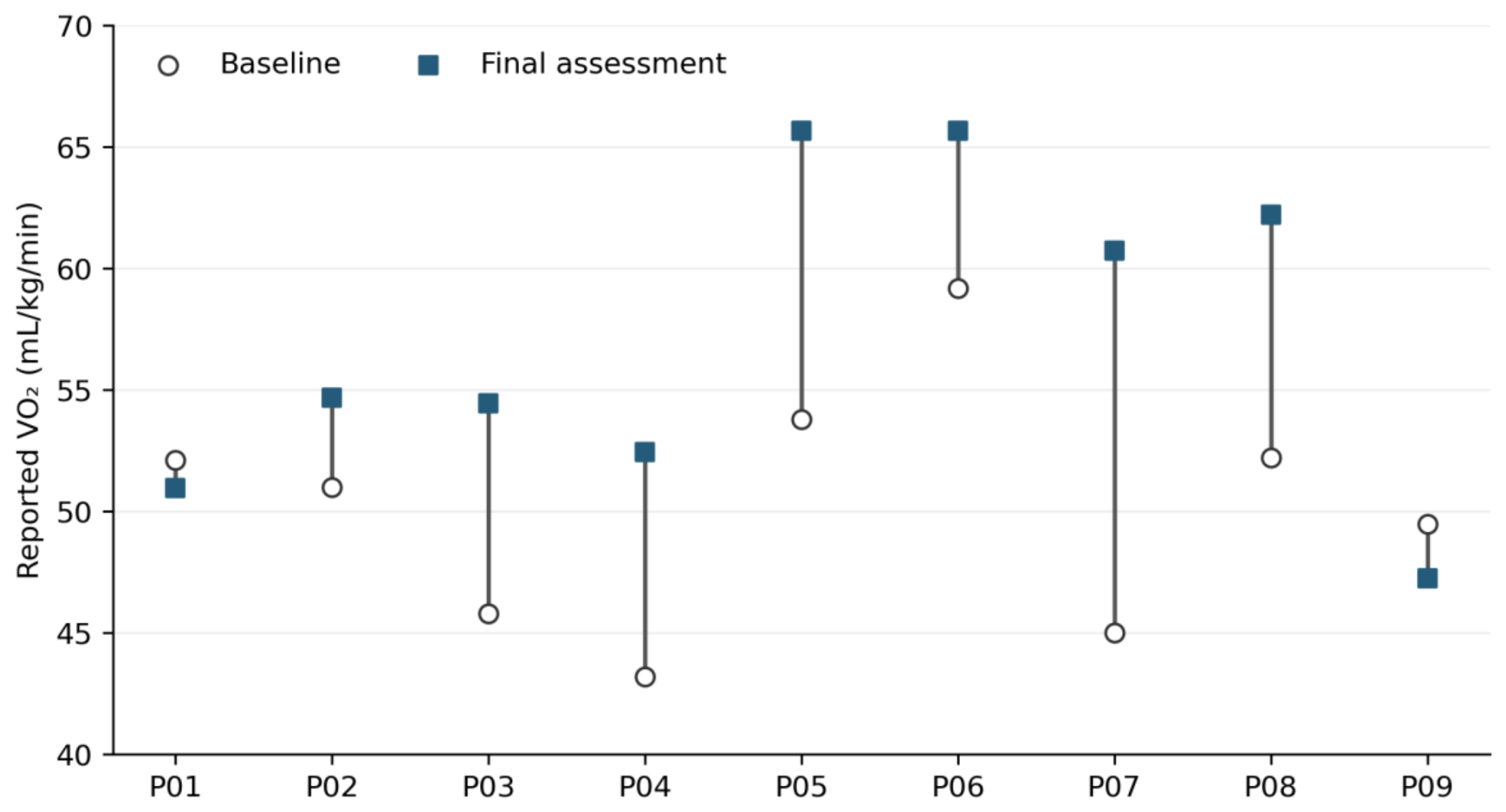
Figure 4.1.
Framework of the potential relationship between HHO-IGDS and changes in estimated VO₂max.
Figure 4.1.
Framework of the potential relationship between HHO-IGDS and changes in estimated VO₂max.
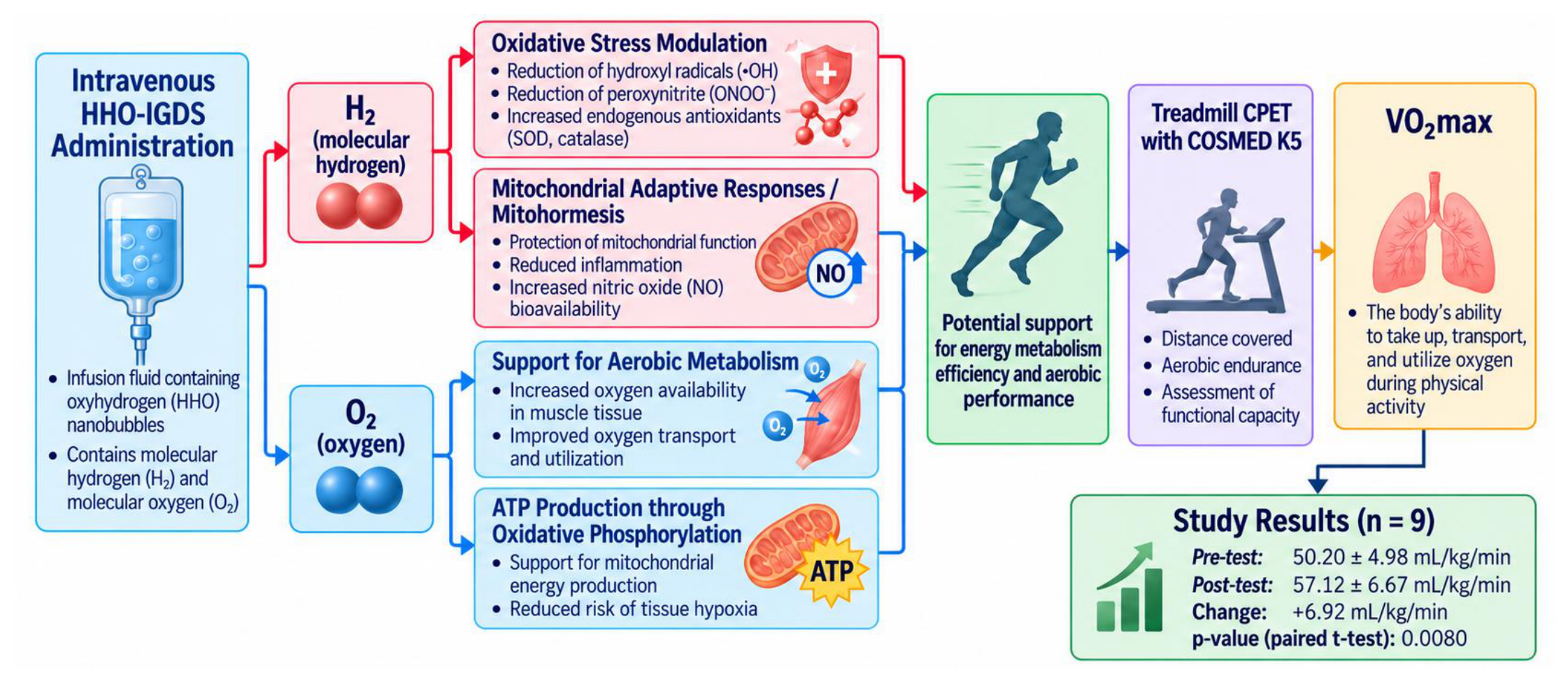
Table 1.
Planned infusion regimen.
| Session | Date (2026) | Concentrate (mL) |
IFA + Mg (mL) |
|---|---|---|---|
| 1 | 24 July | 1 | 500 |
| 2 | 27 July | 2 | 500 |
| 3 | 29 July | 3 | 500 |
| 4 | 31 July | 4 | 500 |
| 5–10 | 3–14 August | 5 per session | 500 per session |
All nine participants completed ten intervention sessions; therefore, all 90 planned sessions were completed.
Disclaimer/Publisher’s Note: The statements, opinions and data contained in all publications are solely those of the individual author(s) and contributor(s) and not of MDPI and/or the editor(s). MDPI and/or the editor(s) disclaim responsibility for any injury to people or property resulting from any ideas, methods, instructions or products referred to in the content. |
© 2026 by the author. Licensee MDPI, Basel, Switzerland. This article is an open access article distributed under the terms and conditions of the Creative Commons Attribution (CC BY) license.
Copyright: This open access article is published under a Creative Commons CC BY 4.0 license, which permit the free download, distribution, and reuse, provided that the author and preprint are cited in any reuse.