

Submitted:
22 October 2026
Posted:
23 October 2026
You are already at the latest version
Abstract
Introduction: Management accounting practices, including costing, budgeting, performance measurement, decision support and accounting information systems, are frequently linked with improved SME performance. However, the supplied evidence also indicates that benefits depend on organisational capability, information quality, management commitment, participation and implementation conditions. Direct evidence from SMEs located specifically in Soweto is absent from the supplied synthesis. Methods: The researcher-selected databases and information sources were Google Scholar and ERIC. The eligibility protocol restricted publication years to from 2020. The exact calendar date of search execution was not recorded in the verified identification provenance; this is distinct from the publication-year eligibility range. Google Scholar and ERIC were the researcher-selected information sources. The eligibility period was from 2020, while the search execution date was not recorded. Results: Costing, budgeting and performance evaluation were recurring practices. The dominant evidence pattern associated management accounting with improved financial, operational and managerial performance, although direct effects were inconsistent and mediated pathways were common. Budgeting, intellectual capital, performance measurement, decision quality and reporting quality acted as important mechanisms. Resource constraints, limited expertise, weak formalisation, inadequate information, cybersecurity concerns and limited risk-management capability restricted effective implementation. Participative, ethical and risk-aware use strengthened organisational relevance. Discussion/Conclusion: Management accounting practices appear generally beneficial when embedded in capable organisational systems rather than adopted as isolated tools. Nevertheless, conclusions for Soweto remain cautious because no supplied study directly examined Soweto SMEs. Future research should generate location-specific, longitudinal and methodologically transparent evidence focused on township, informal, micro and small-enterprise conditions.
Keywords:
management accounting practices
; organisational performance
; small and medium-sized enterprises
; Soweto
; thematic synthesis
1. Introduction
Small and medium-sized enterprises rely on internal information to plan, control costs, allocate resources, monitor performance and make operational decisions. The supplied literature presents management accounting practices as encompassing costing, budgeting, performance evaluation, decision support, strategic management accounting, management accounting information systems and related control processes. Across the evidence base, these practices are treated not merely as record-keeping activities but as organisational mechanisms that can connect information with performance management.
The literature indicates that practical tools are more commonly adopted than sophisticated strategic practices. Costing supports price determination, product costing and cost control, while budgeting supports planning and coordination. In one Nigerian study, cash-budget preparation was more common than sales and purchase budgeting, suggesting that short-term routines may be more established than comprehensive forecasting (Etim et al., 2020). Evidence from Nepal similarly indicated that budgeting was the most frequently used management accounting dimension, whereas strategic management accounting was least used (Shrestha et al., 2026).
The supplied studies generally associate management accounting with improved performance, although the relationship is not uniform. Positive relationships have been reported between management accounting practices and hotel SME performance, accounting information systems and business performance, management accounting information and intellectual capital, and accounting practices and value creation (Alvarez et al., 2021; Hariyati et al., 2022; [Author not available], 2025). Other evidence indicates that individual practices may lose significance when considered alongside other dimensions, and that the variety of performance measures alone does not necessarily improve performance (Shrestha et al., 2026; Rikhardsson et al., 2020).
The evidence therefore increasingly points to mediated and context-dependent pathways. Budget practice may mediate the relationship between information technology and enterprise performance, while intellectual capital, performance measurement systems, decision quality and financial reporting quality may convert accounting information into organisational outcomes (Khairani & Zaitul, 2026; Hariyati et al., 2022; Nhon, 2021; Jiofack et al., 2025). Implementation is also shaped by skills, financial resources, management commitment, information quality, participation, external expertise and risk governance (Binh & Phuong, 2026; Ibrahim et al., 2020; Roffia et al., 2024; Mokalapa et al., 2024).
The review was conducted because the supplied research problem concerns SMEs in Soweto, yet the verified synthesis found no direct empirical study of SMEs located specifically in Soweto. The available evidence is drawn largely from other South African settings and from Nigeria, Vietnam, Indonesia, Nepal, Malaysia, Cameroon and other contexts. It is therefore insufficiently understood how management accounting practices operate in township-based, informal, micro and small-enterprise environments in Soweto, including how local resource conditions, institutional relationships, digital maturity and governance practices shape performance outcomes. A systematic review is needed to consolidate the available evidence, preserve contradictory findings, distinguish methodological appraisal from bibliometric prominence and clarify the limits of transferability to Soweto.
2. Research Objectives
RO1: To examine how Management accounting practices influences Organisational performance management among Small and Medium Sized Enterprises (SMEs) within Soweto, South Africa.
RO2: To identify the principal opportunities, benefits and enabling conditions associated with Management accounting practices in relation to Organisational performance management.
RO3: To analyse the challenges, risks, ethical considerations and implementation barriers associated with Management accounting practices for Small and Medium Sized Enterprises (SMEs).
RO4: To examine the contextual, institutional and practice-related factors that shape the adoption and effective use of Management accounting practices within Soweto, South Africa.
RO5: To identify gaps in the available evidence and derive implications for future research, policy and practice relevant to Management accounting practices and organisational performance management in Small and Medium Sized Enterprises in Soweto.
3. Research Methods
3.1. Review Design
The selected review type was a Systematic Review. A systematic design was appropriate because the project required transparent identification, screening, critical appraisal and synthesis of evidence concerning management accounting practices and organisational performance management. The present review is reported using the persisted PRISMA workflow and the verified screening, CASP and thematic-synthesis workspaces.
3.2. Search Strategy and Information Sources
The researcher-selected databases and information sources were Google Scholar, ERIC. The eligibility protocol restricted publication years to From 2020. The exact calendar date of search execution was not recorded in the verified identification provenance; this is distinct from the publication-year eligibility range.
3.3. Inclusion and Exclusion Criteria
Inclusion
- Studies focusing on Small and Medium Sized Enterprises (SMEs) as the primary unit of analysis.
- Studies examining the application or implementation of management accounting practices (MAPs).
- Studies measuring or discussing the impact on organisational performance management.
- Studies conducted within the geographic context of Soweto, South Africa.
- Peer-reviewed journal articles published between 2020 and the present.
- Studies written in the English language.
- Studies that explicitly investigate the relationship between management accounting practices and organisational performance.
Exclusion
- Studies focusing on large corporations or entities that do not meet the SME classification.
- Studies that do not address management accounting practices or tools.
- Studies that do not report on organisational performance outcomes.
- Studies conducted outside of the geographic context of Soweto, South Africa.
- Non-peer-reviewed literature, including grey literature, theses, dissertations, or conference proceedings.
- Studies published prior to the year 2020.
- Studies written in languages other than English.
- Studies that only discuss financial accounting or external reporting without reference to internal management accounting practices.
3.4. Screening and Study Selection
The PRISMA selection counts are persisted, but the decision rule used during title/abstract screening is not available in the verified audit payload. COSTAQDA therefore reports the recorded workflow counts without reconstructing an unverified screening procedure.
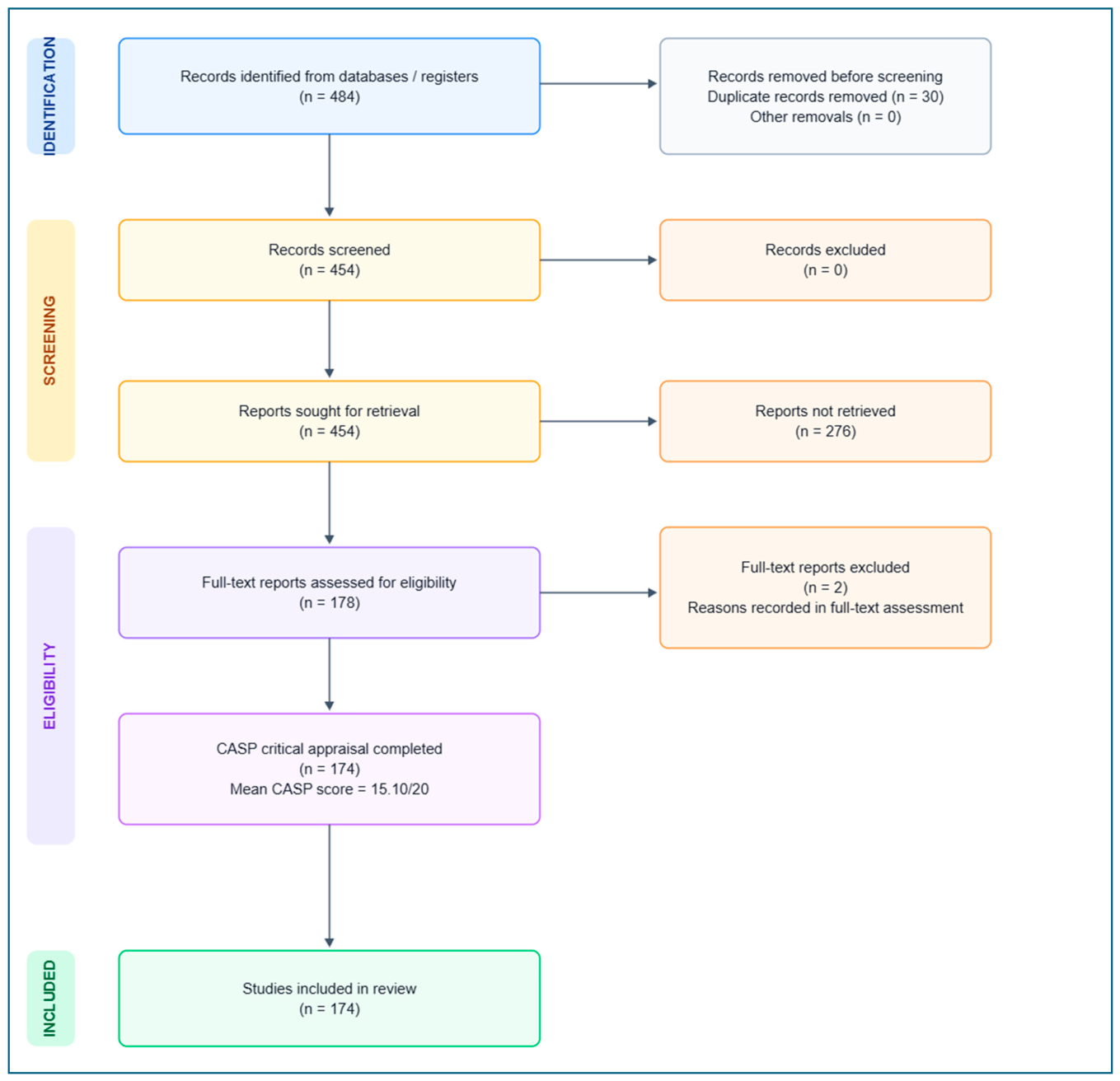
The persisted PRISMA workflow records 484 identified records, 30 duplicates, 454 records screened, 454 reports sought for retrieval, 0 records excluded at the title/abstract stage, 178 full texts assessed, 2 full-text exclusions and 174 included records. These counts describe study selection and are not substantive review findings.
Figure 1.
PRISMA 2020 Flow Diagram — Identification, Screening, Eligibility and Included. Source: COSTAQDA PRISMA Workflow, navigation item 8: PRISMA Flow Diagram; four-stage structure showing Identification, Screening, Eligibility (including CASP critical appraisal) and Included; adapted from PRISMA 2020 (Page et al., 2021).
Figure 1.
PRISMA 2020 Flow Diagram — Identification, Screening, Eligibility and Included. Source: COSTAQDA PRISMA Workflow, navigation item 8: PRISMA Flow Diagram; four-stage structure showing Identification, Screening, Eligibility (including CASP critical appraisal) and Included; adapted from PRISMA 2020 (Page et al., 2021).
3.5. Critical Appraisal
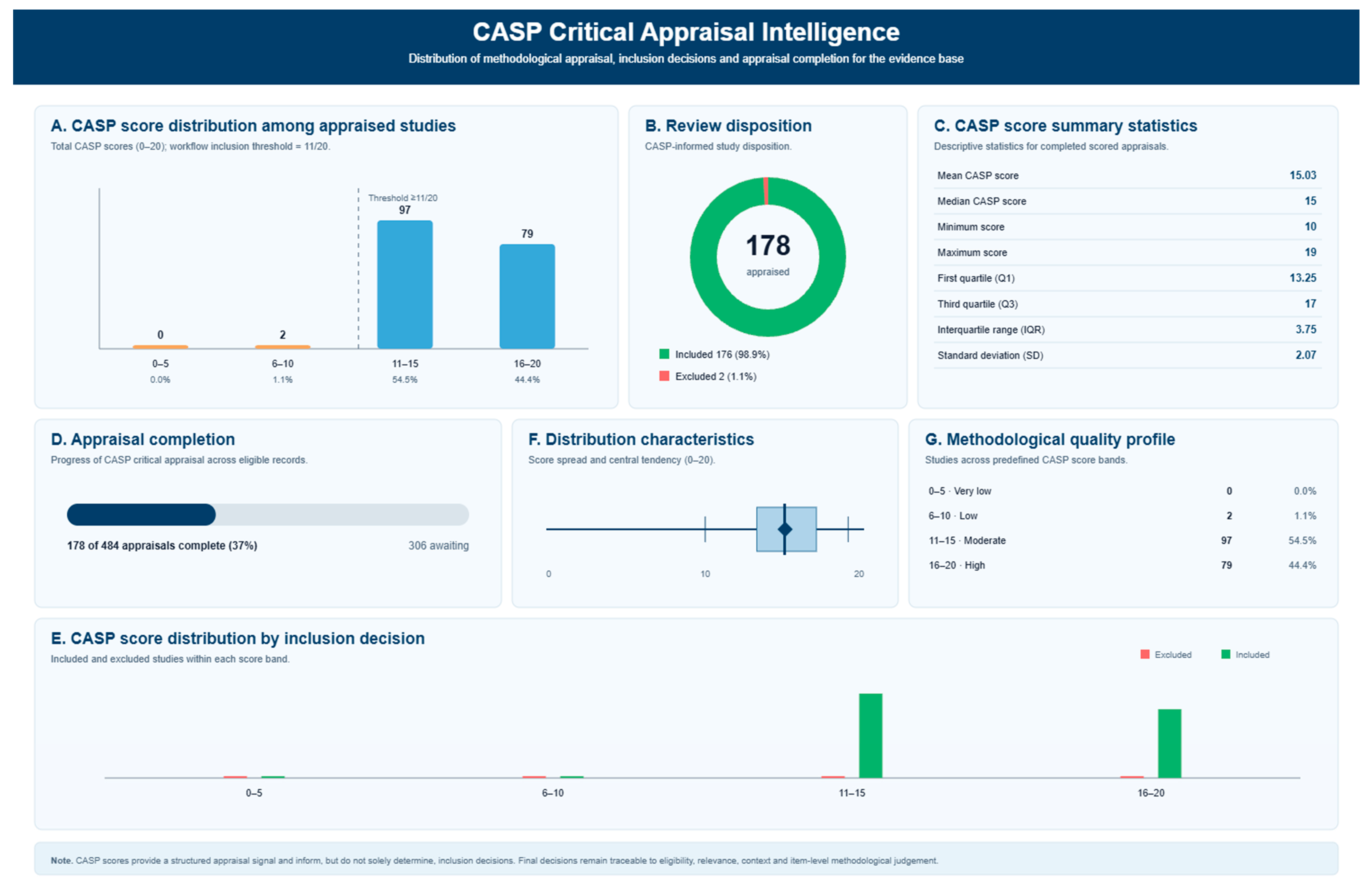
The Critical Appraisal Skills Programme (CASP) was used in the PRISMA full-text workspace. CASP appraisals were completed for all 174 currently included studies. The reported mean CASP score was 15.1, with individual scores ranging from 11 to 19 in the supplied appraisal records. CASP outcomes were not treated as an unquestioned total-quality score. The appraisal workspace records methodological concerns across studies, including concerns about sampling, study design, measurement, analysis, reporting and applicability. Several appraisals were completed conservatively because the configured appraisal service was unavailable; unsupported criteria were recorded as Can't tell and require researcher verification.
Figure 2.
CASP Critical Appraisal Intelligence — PRISMA Workflow, Step 6: Full-Text Screening. Source: COSTAQDA PRISMA Workflow, navigation item 6: Full-Text Screening (CASP critical appraisal outputs). The Word figure is generated from the same deterministic COSTAQDA CASP visual.The actual CASP figure is rendered by the frontend/export layer. Its narrative is that CASP was completed for 174 of 174 included studies, with a mean score of 15.1. The figure represents appraisal outputs, not a definitive aggregate measure of study quality. Interpretation therefore considers the pattern of methodological concerns and the degree to which design, measurement, analysis and reporting limitations affect confidence in particular findings.
Figure 2.
CASP Critical Appraisal Intelligence — PRISMA Workflow, Step 6: Full-Text Screening. Source: COSTAQDA PRISMA Workflow, navigation item 6: Full-Text Screening (CASP critical appraisal outputs). The Word figure is generated from the same deterministic COSTAQDA CASP visual.The actual CASP figure is rendered by the frontend/export layer. Its narrative is that CASP was completed for 174 of 174 included studies, with a mean score of 15.1. The figure represents appraisal outputs, not a definitive aggregate measure of study quality. Interpretation therefore considers the pattern of methodological concerns and the degree to which design, measurement, analysis and reporting limitations affect confidence in particular findings.
3.6. Data Extraction
The project-level data-extraction field was not recorded as a separate structured procedure. Nevertheless, the verified qualitative synthesis demonstrates that extraction occurred at finding level: 1,096 extracted findings contributed by 138 studies were available for synthesis, with finding IDs and study IDs retained for traceability. Extracted material included findings concerning practices, performance relationships, mediating mechanisms, barriers, digital implementation, participation, risk, ethics and governance.
3.7. Data Synthesis and Analysis
Qualitative evidence synthesis was conducted on 1096 extracted findings contributed by 138 studies. The COSTAQDA synthesis engine applied thematic synthesis, moving from traceable finding-level evidence to 8 initial codes, 3 categories, 1 descriptive themes and 4 analytical themes.
Theme development was constrained to the extracted finding-level evidence supplied by eligible studies. Each synthesised theme retained supporting study IDs and finding IDs, while contradictory evidence was preserved where identified. Titles, abstracts and bibliographic prominence were not treated as substitutes for extracted qualitative findings.
Recorded synthesis limitations included: The supplied findings contain no direct empirical study of SMEs located specifically in Soweto. The synthesis therefore relies largely on evidence from other South African settings and SMEs in Nigeria, Vietnam, Indonesia, Nepal, Malaysia, Cameroon and other contexts; transfer to Soweto should be treated cautiously.; The evidence set is methodologically heterogeneous and predominantly quantitative, despite the requested qualitative evidence synthesis. Several entries are partial extracts, tables, references or methodological statements rather than complete findings.; Many studies are cross-sectional or correlational. Positive associations should not be interpreted as definitive causal effects, particularly where mediation, reverse causality, self-reporting or common-method bias may be present.; The supplied findings provide limited evidence on ethical dilemmas specific to management accounting practice in SMEs. Ethical evidence is mainly framed through ethical culture, governance, data security, internal control and business ethics rather than detailed participant accounts.; The evidence is uneven across SME size, sector, ownership structure and technological maturity. Findings from manufacturing, hospitality, retail, professional services and other sectors may not apply equally to informal, township-based or micro-enterprise settings in Soweto..
3.8. Bibliometric Intelligence and Confidence in the Evidence Base
Bibliometric intelligence provides a structural view of the evidence base that complements PRISMA selection, critical appraisal and qualitative synthesis. The following analyses examine citation relationships, scholarly influence, evidence connectivity and knowledge development within the included corpus. They provide contextual evidence about the intellectual structure and provenance of the literature and are not substitutes for methodological quality appraisal.
3.8.1. Local Citation Network
The Local Citation Network maps citation relationships within the included evidence base. It shows how studies are connected within the review corpus and supports examination of intellectual connectedness, centrality, bridging and isolation. These citation relationships describe the structure of the literature and do not, by themselves, establish methodological quality or validity.
Figure 3.
Local Citation Network. Source: COSTAQDA PRISMA Workflow, navigation item 12: Bibliometric Intelligence — Local Citation Network.
Figure 3.
Local Citation Network. Source: COSTAQDA PRISMA Workflow, navigation item 12: Bibliometric Intelligence — Local Citation Network.
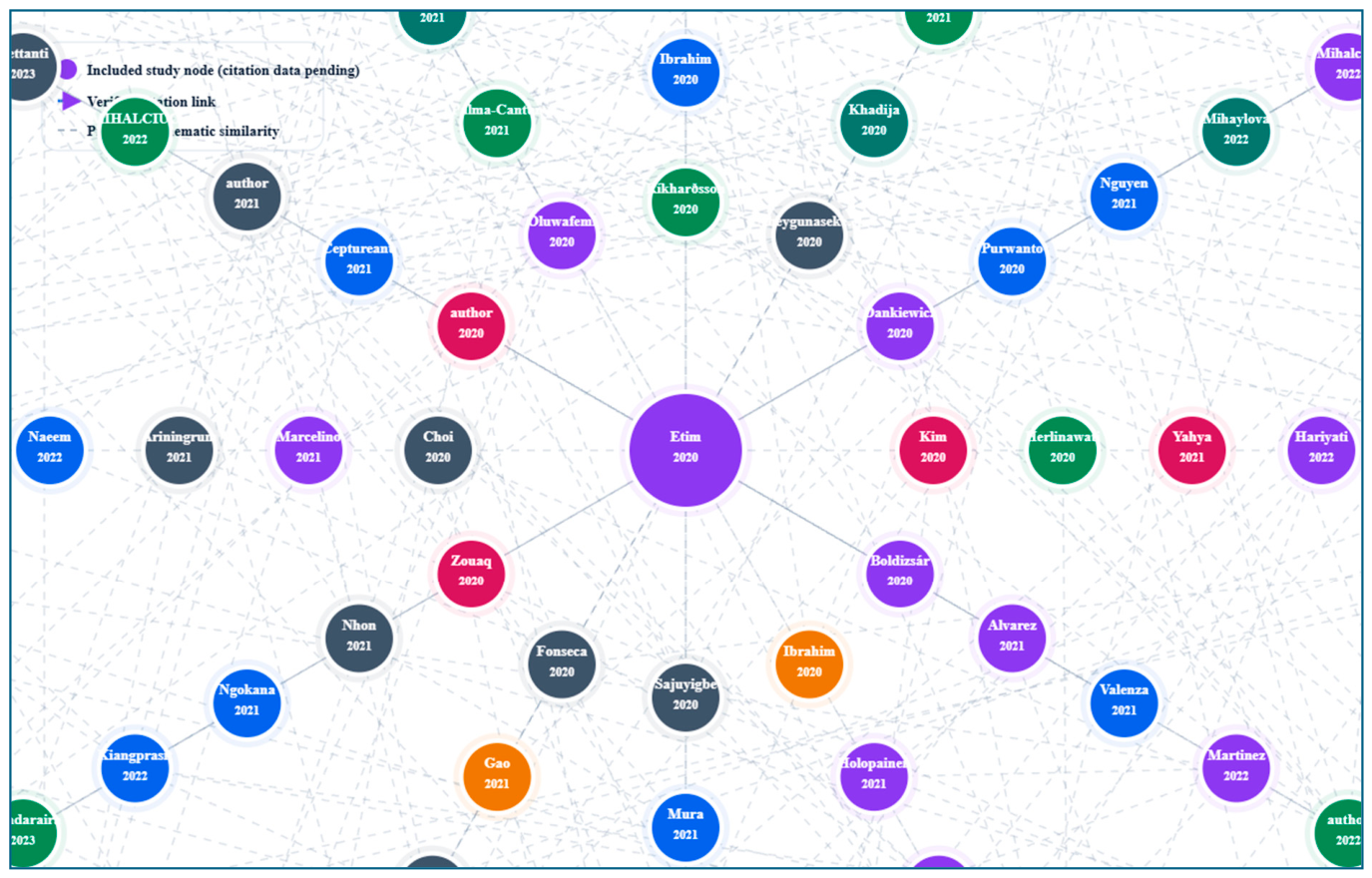
Figure 4.
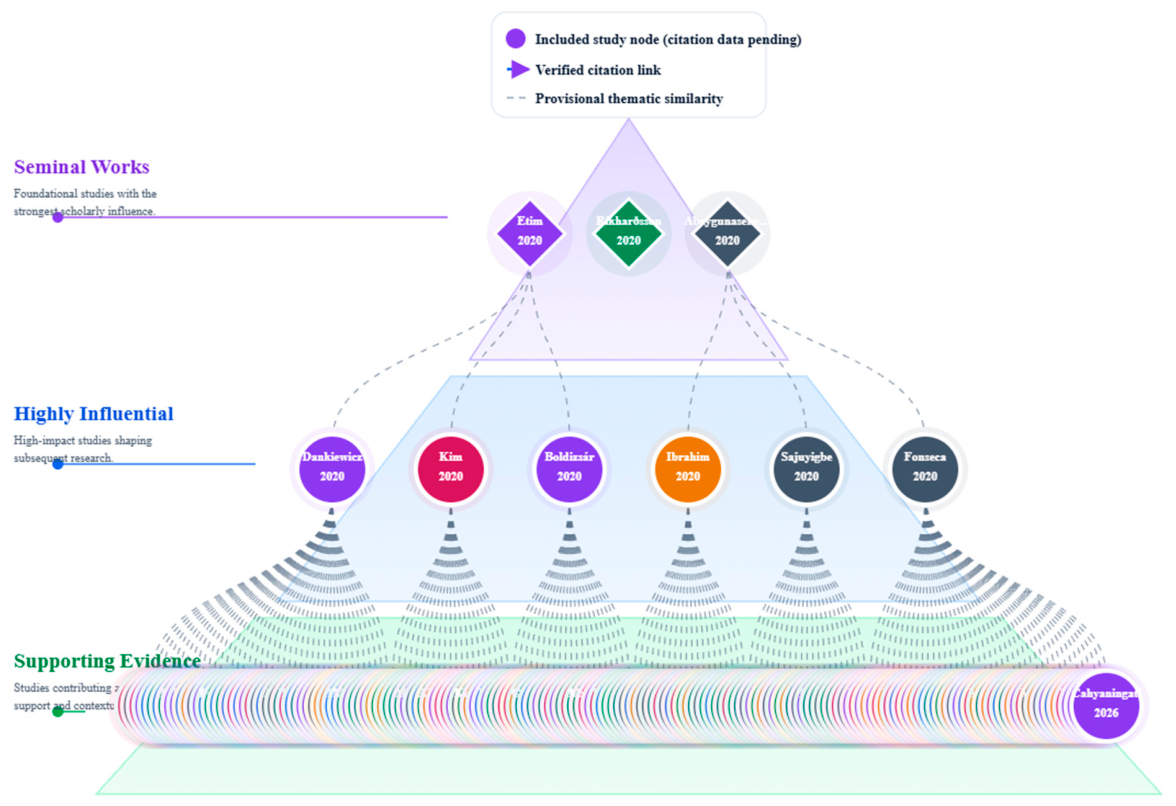
Influence Pyramid — Bibliometric Intelligence, Step 12. Source: COSTAQDA PRISMA Workflow, navigation item 12: Bibliometric Intelligence — Influence Pyramid.
Figure 4.
Influence Pyramid — Bibliometric Intelligence, Step 12. Source: COSTAQDA PRISMA Workflow, navigation item 12: Bibliometric Intelligence — Influence Pyramid.
3.8.2. Influence Pyramid
The Influence Pyramid represents the distribution of scholarly influence within the included evidence base. It helps identify how bibliometric prominence is distributed across the reviewed studies. Influence is interpreted separately from methodological quality, which is assessed through critical appraisal.
The Influence Pyramid figure is available and rendered by the frontend/export layer. Its interpretation is limited to bibliometric prominence or influence within the included-study evidence ecosystem. It is not a measure of methodological quality, causal validity or confidence. Bibliometric prominence was therefore used only to contextualise the visibility and connectedness of evidence, never to upgrade CASP appraisal or determine substantive inclusion.
3.8.3. Evidence Strength
The Evidence Strength analysis examines the structure and strength of relationships within the evidence ecosystem assembled for the review. It complements, but does not replace, CASP methodological appraisal and must not be interpreted as a direct estimate of causal effect.
Figure 5.
Evidence Strength Network. Source: COSTAQDA PRISMA Workflow, navigation item 12: Bibliometric Intelligence — Evidence Strength Network.
Figure 5.
Evidence Strength Network. Source: COSTAQDA PRISMA Workflow, navigation item 12: Bibliometric Intelligence — Evidence Strength Network.
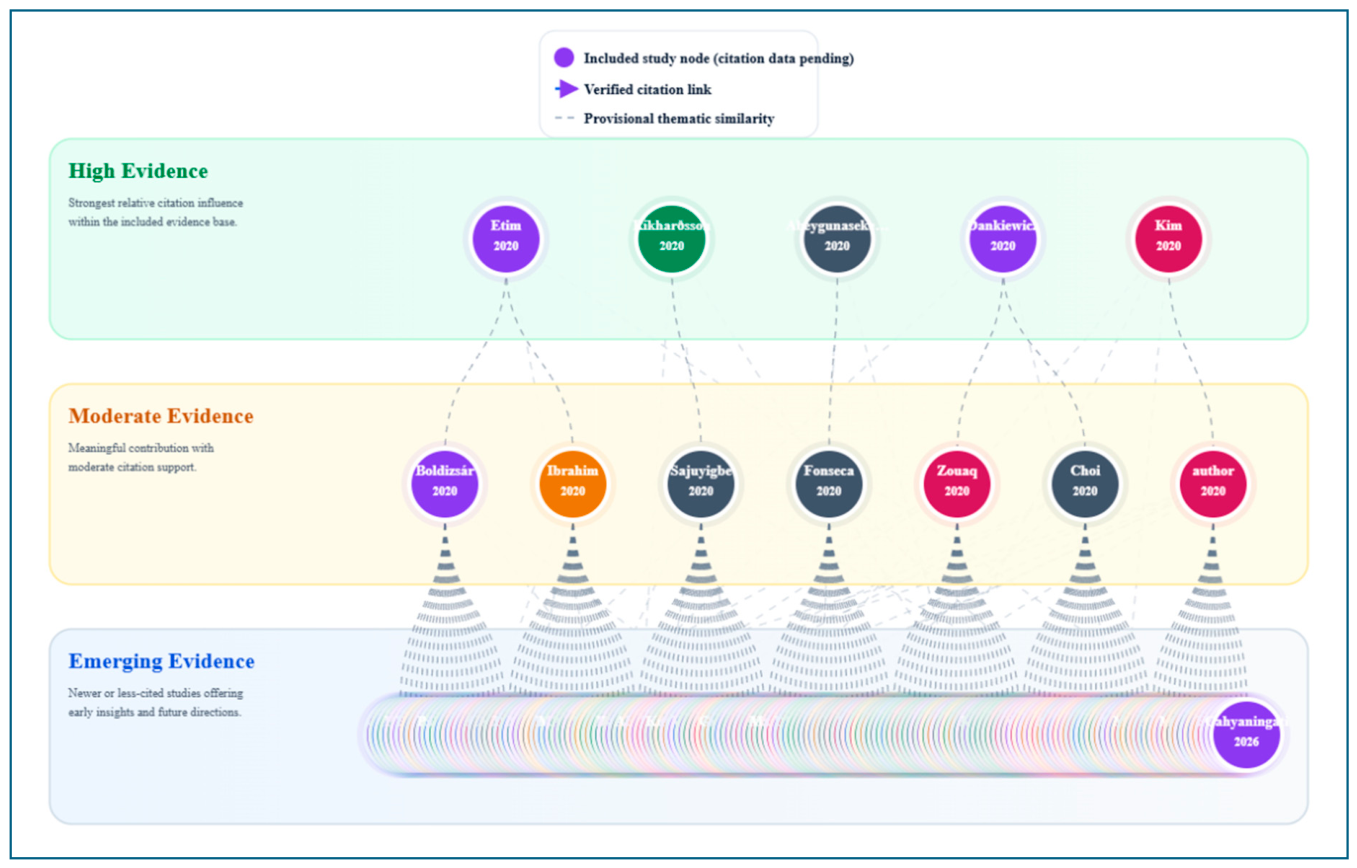
The Evidence Strength Network figure is available and rendered by the frontend/export layer. It represents the structure and strength of relationships within the evidence ecosystem, including links among studies and thematic areas. It does not replace CASP critical appraisal and should not be interpreted as a direct quality score. Confidence was derived from the combined interpretation of network structure, extracted finding convergence and divergence, CASP appraisal and transparent selection.
3.8.4. Knowledge Evolution
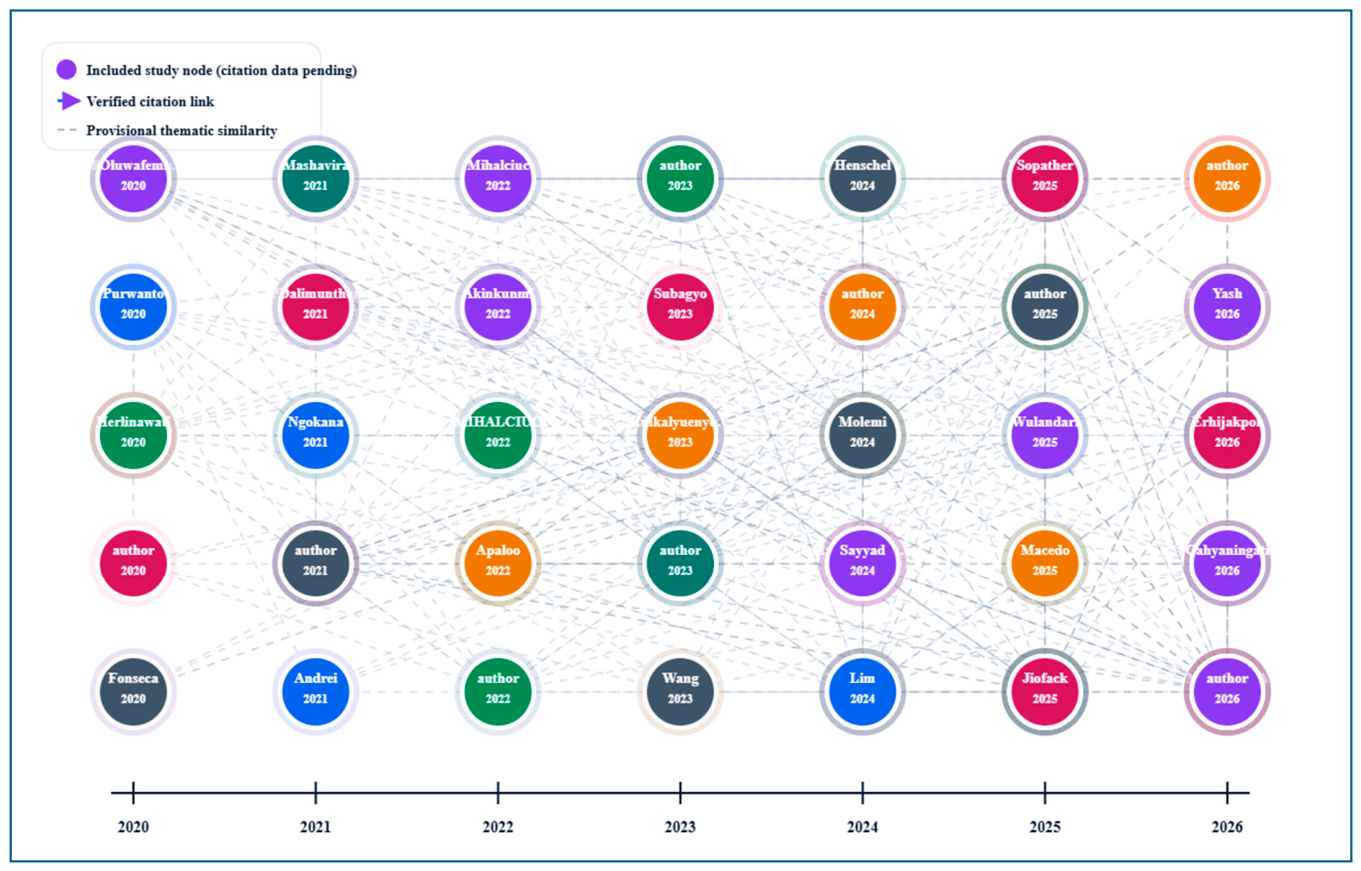
Knowledge Evolution examines the temporal and intellectual development of the included evidence base. It traces how research contributions develop over time and, where supported by the Step 12 data, how later studies extend, connect, challenge or consolidate earlier contributions.
Figure 6.
Knowledge Evolution. Source: COSTAQDA PRISMA Workflow, navigation item 12: Bibliometric Intelligence — Knowledge Evolution.
Figure 6.
Knowledge Evolution. Source: COSTAQDA PRISMA Workflow, navigation item 12: Bibliometric Intelligence — Knowledge Evolution.
3.8.5. Integrated Confidence in the Synthesised Evidence
Confidence was assessed by triangulating transparent PRISMA selection, CASP methodological appraisal, evidence convergence and divergence, and bibliometric intelligence rather than citation counts alone. The supplied project did not record a separate formal confidence method or a methodological-limitations field. Accordingly, confidence statements in this review are qualitative and cautious. Positive associations are interpreted as more credible where findings converge across studies and mechanisms are explicitly tested, but causal claims are restricted because many studies are cross-sectional or correlational and may be affected by self-reporting, reverse causality, mediation assumptions or common-method bias.
4. Findings
4.1. Search and Selection Results
The recorded selection process produced 174 included studies from 484 identified records after removal of 30 duplicates. The evidence used for thematic synthesis was narrower than the final inclusion count: 138 studies contributed 1,096 extracted findings. The difference between 174 included studies and 138 synthesis-contributing studies is reported as a feature of the verified workspace rather than explained through an unrecorded exclusion rule.
4.2. Characteristics of Included Studies
The included evidence was geographically and methodologically heterogeneous. The verified synthesis explicitly states that no supplied empirical study examined SMEs located specifically in Soweto. Evidence instead came largely from other South African settings and from SMEs in Nigeria, Vietnam, Indonesia, Nepal, Malaysia, Cameroon and other countries. The studies covered manufacturing, hospitality, retail, professional services, healthcare, technology, logistics and other sectors, with variation in SME size, ownership, technological maturity and degree of formalisation (Etim et al., 2020; Alvarez et al., 2021; Shrestha et al., 2026; Mokalapa et al., 2024).
The evidence set was predominantly quantitative, although qualitative case studies, conceptual studies, literature reviews and mixed-method contributions were also present. The synthesis report describes several entries as partial extracts, tables, references or methodological statements rather than complete findings. This heterogeneity limited direct comparison and supported thematic rather than meta-analytic synthesis.
4.3. Methodological Strengths and Limitations of Included Studies
A methodological strength was the retention of study-level and finding-level traceability through supporting and contradictory study IDs. The CASP workspace also ensured that all 174 included studies received a completed appraisal. However, the appraisal records contain methodological concerns across many studies, and several were conservatively appraised because the configured appraisal service was unavailable. The evidence was also predominantly cross-sectional or correlational, limiting causal interpretation. The available extracts were uneven in completeness, and some evidence came from non-journal publication types despite the protocol specifying peer-reviewed journal articles.
4.4. Thematic Synthesis
Thematic synthesis is a systematic qualitative evidence-synthesis method used to integrate findings across multiple studies while retaining a transparent connection to the underlying evidence. The process moves iteratively from extracted study findings to coding, the grouping of related codes into descriptive categories or themes, and the development of higher-order analytical themes that answer the review question and research objectives. Its purpose is not merely to count how often an idea appears, but to identify patterned meaning across studies, examine convergence and divergence, preserve contextual differences, and develop an auditable interpretation that remains traceable to the contributing evidence.
In this review, thematic synthesis was applied to the verified extracted findings retained in the active COSTAQDA project. Findings were compared across eligible studies, coded and grouped according to conceptual similarity, and then developed into 5 analytical themes represented across 24 evidence-contributing studies. The active synthesis retained 32 verified theme-to-study support assignments, allowing the analytical interpretation to remain traceable to the underlying studies rather than being reconstructed from titles or bibliographic prominence. The resulting analytical themes include “Management accounting practices and organisational performance management”, “Opportunities, benefits and enabling conditions”, “Challenges, risks, ethical considerations and implementation barriers”, “Contextual, institutional and practice-related factors shaping adoption”, with the widest cross-study support recorded for “Management accounting practices and organisational performance management” (7 contributing studies). Table 1 therefore operationalises the synthesis as an auditable evidence map linking each analytical theme to the studies that supplied verified supporting findings.

Table 1.
Thematic Synthesis Matrix.
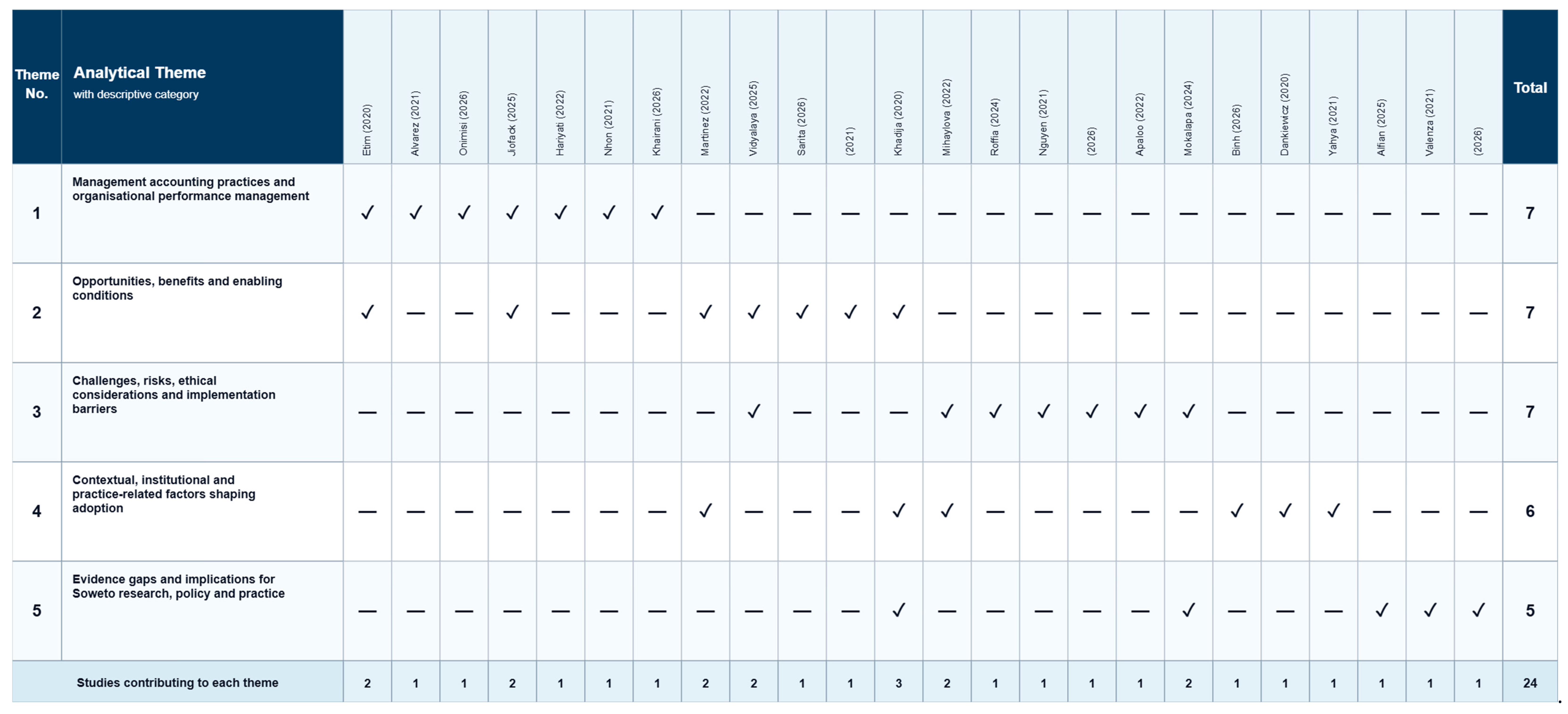 |
Legend: Only studies contributing verified extracted qualitative evidence are displayed. ✓ = verified extracted evidence from the study supports the theme; — = the study contributed to the synthesis but no supporting extracted finding from that study was assigned to this theme. An em dash does not indicate contradictory evidence.
Table 1 presents the thematic synthesis matrix linking the verified analytical themes only to studies with verified extracted evidence supporting at least one of the themes displayed in the matrix. Any study with no verified supporting contribution to any displayed theme is excluded, even if it was included elsewhere in the systematic review or qualitative evidence base. Rows represent analytical themes and columns represent theme-contributing studies. A check mark (✓) indicates that at least one verified extracted finding from that study was assigned to the theme; an em dash (—) indicates that the study contributed evidence to the synthesis overall but no supporting extracted finding from that study was assigned to that particular theme. The absence of a supporting assignment must not be interpreted as contradictory evidence. The totals report the number of evidence-contributing studies providing verified support to each theme. The matrix therefore functions as an audit trail between thematic interpretation and the underlying finding-level evidence rather than as a measure of methodological quality or effect size.
The most widely supported analytical theme was "Management accounting practices and organisational performance management", with verified support from 7 of 24 studies. The least widely distributed theme was "Evidence gaps and implications for Soweto research, policy and practice", with verified support from 5 of 24 studies. Differences in the number of supporting studies indicate the distribution of traceable thematic evidence across the included literature, not the relative importance or quality of a theme. Themes supported by fewer studies may still be analytically important when the underlying findings are conceptually rich, contextually distinctive or directly relevant to the review question. Conversely, wider study support indicates cross-study recurrence but does not by itself establish stronger methodological quality. The thematic patterns shown in Table 1 should therefore be interpreted alongside critical appraisal, contextual variation, contradictory findings where verified, and the detailed theme-led discussion that follows.
4.5. RO1: Management Accounting Practices and Organisational Performance Management
Across the supplied studies, management accounting practices were generally associated with improved organisational, financial, operational or managerial performance. Costing, budgeting, performance evaluation, decision support and management accounting information systems were repeatedly linked with better performance outcomes in SMEs and related small-business settings (Etim et al., 2020; Alvarez et al., 2021; Hariyati et al., 2022; Shrestha et al., 2026). In hotel SMEs, users of management accounting practices were reported to have better performance than non-users, while budgeting remained a foundational practice even where more strategic tools were less established (Alvarez et al., 2021).
The relationship was not uniformly direct. In Nepalese manufacturing SMEs, budgeting, performance measurement, decision support and costing were positively correlated with firm performance, but costing was not significant when other management accounting dimensions were controlled (Shrestha et al., 2026). Similarly, performance-measure variety alone was not linked to management satisfaction or firm performance, although satisfaction with the measurement system was positively related to performance (Rikhardsson et al., 2020). These findings indicate that the usefulness of management accounting depends on how information is interpreted and used rather than on the mere presence or number of practices.
Several studies identified mediated pathways. Management accounting information systems were associated with business performance through intellectual capital, and balanced performance measurement mediated relationships between intellectual capital and firm performance (Hariyati et al., 2022; Nhon, 2021). Budget practice mediated the relationship between information technology tools and enterprise performance in one MSME study, while computerised accounting influenced operational performance through financial reporting quality (Khairani & Zaitul, 2026; Jiofack et al., 2025).
4.6. RO2: Opportunities, Benefits and Enabling Conditions
The most consistently reported opportunity was the practical use of costing and budgeting to improve planning, pricing, cost control, resource allocation and performance monitoring. Costing supported price determination, product costing and cost control, while budgeting supported coordination and the comparison of actual results with planned outcomes (Etim et al., 2020; Vuong, 2023). Participative budgeting was described as the preferred budgeting approach in one Vietnamese SME study, with communication across divisions and management presented as important for linking budgets to organisational goals (Vuong, 2023).
Digital tools expanded these opportunities by improving data timeliness, forecasting, reporting, cost analysis and decision support. Digital transformation was associated with real-time information, automated processes, improved forecasting and stronger internal control, while cloud, ERP and computerised accounting technologies were linked with operational and reporting benefits (Vidyalaya & Anand, 2025; Sarita, 2026; Jiofack et al., 2025). However, the evidence indicates that digital tools create value through implementation and use rather than through acquisition alone.
Enabling conditions included management commitment, human capability, reliable data, information integration, training, participative communication, intellectual capital and performance measurement capability. Management commitment was positively related to accounting information system use, and accounting system use was positively related to individual performance (record-1791881123093-r1k0b8; [Author not available], 2021). Evidence on performance systems also emphasised shared goals, stakeholder involvement and communication as conditions that make information relevant to organisational coordination (Khadija & Mustapha, 2020; Vuong, 2023).
4.7. RO3: Challenges, Risks, Ethical Considerations and Implementation Barriers
The supplied evidence identifies recurring constraints involving limited finance, inadequate skills, weak information bases, insufficient accounting knowledge and difficulty investing in systems or related capabilities. SMEs may rely on external accountants or basic tools because internal expertise and formal systems are limited; external accounting arrangements can also restrict the development of management accounting information for strategic use (Mihaylova & Papazov, 2022; Ibrahim et al., 2020). Cost accounting implementation is similarly affected by firm age, resource limitations and the complexity of systems (Roffia et al., 2024).
Digital implementation introduces additional risks. Cybersecurity, data quality, system integration, user training and management support were identified as necessary conditions, while insufficient funds, trained staff and cybersecurity capability were reported as obstacles (Vidyalaya & Anand, 2025). Accounting information quality also depends on human capability: reliable information does not automatically guarantee better decisions when users lack the capacity to interpret and apply it (Nguyen & Ho, 2021).
Risk and ethical evidence was more limited and was framed mainly through ethical culture, governance, internal control, data security and enterprise risk management rather than detailed accounts of ethical dilemmas. Studies nevertheless linked ethical leadership, codes of conduct, internal controls and risk management with more responsible and performance-relevant accounting environments (Mokalapa et al., 2024; [Author not available], 2026). In contrast, evidence from Nigerian SMEs showed limited risk knowledge and weak risk-management practices, indicating that risk-aware use cannot be assumed from the existence of accounting systems (Apaloo & Bright, 2022).
4.8. RO4: Contextual, Institutional and Practice-Related Factors Shaping Adoption
Adoption varied according to organisational size, sector, resource endowment, formalisation, management capability, access to external expertise and technological maturity. Strategic management accounting was less developed in resource-constrained SMEs, while budgeting and more routine practices were more common (Shrestha et al., 2026; Mihaylova & Papazov, 2022). Evidence from risk-management studies also suggested that medium-sized enterprises may possess greater confidence and capability than micro-enterprises, indicating that size can shape both adoption and effective use (Dankiewicz et al., 2020; Apaloo & Bright, 2022).
Institutional and relational conditions were also important. Participation, communication, stakeholder involvement and management commitment helped align accounting information with organisational goals, whereas weak information bases and limited planning restricted strategic use (Vuong, 2023; Khadija & Mustapha, 2020). External accountants, professional services, government support, training and infrastructure may compensate for internal resource limitations, but the evidence does not establish which institutional arrangements would be most appropriate for Soweto.
Contextual transferability is a major limitation. The supplied evidence spans countries, sectors and enterprise types that differ from Soweto's township and local-enterprise environment. Findings from manufacturing SMEs, formal businesses or technologically mature firms may not apply equally to informal, micro, family-owned or community-based enterprises. The synthesis therefore supports contextual propositions for investigation rather than direct claims about Soweto SMEs.
4.9. RO5: Evidence Gaps and Implications for Soweto Research, Policy and Practice
The clearest evidence gap is geographic: no supplied study directly examined SMEs located in Soweto. The review therefore cannot provide a location-specific estimate of the relationship between management accounting practices and organisational performance management in Soweto. It also cannot establish how township conditions, informal business practices, local support institutions, sector composition, ownership structures or municipal and community relationships modify that relationship.
Further gaps concern causality, longitudinal change, ethics and implementation. Many studies were cross-sectional or correlational, and positive associations may reflect reverse causality, mediation assumptions, common-method bias or self-reporting. Ethical evidence was largely conceptual or governance-oriented, with limited direct examination of dilemmas involving data use, confidentiality, manipulation of internal information, algorithmic decision-making or conflicts between owner and employee interests (Mokalapa et al., 2024; [Author not available], 2026).
The evidence also lacks consistent reporting of SME size, sector, informality, ownership, management accounting maturity and use of external accounting services. These gaps constrain subgroup comparisons and make it difficult to identify which practices are feasible for micro and informal enterprises. The review supports future Soweto research that combines local empirical data with transparent methodological reporting and direct attention to implementation conditions.
5. Discussion
The review question asked whether management accounting practices are related to organisational performance in SMEs in Soweto. The supplied evidence supports a generally positive relationship between management accounting practices and performance, but it does not establish that relationship specifically in Soweto. The most defensible conclusion is therefore conditional: management accounting practices are likely to support performance when they are embedded in reliable information systems, capable decision processes and appropriate organisational controls, but the magnitude and form of the relationship in Soweto remain unknown.
The RO1 findings show convergence around costing, budgeting, performance evaluation, decision support and accounting information systems as relevant practices. However, the divergence between positive bivariate associations and weaker or non-significant direct effects indicates that practices should not be interpreted as independent levers operating uniformly across firms. The evidence on performance-measure variety is especially important because it shows that more measures do not automatically produce better performance; usefulness, interpretation and organisational fit matter (Rikhardsson et al., 2020).
For RO2, the review indicates that the principal benefits arise when practices improve planning, coordination, resource allocation, cost visibility, information quality and decision support. Mediation findings strengthen this interpretation: intellectual capital, performance measurement, financial reporting quality and budget practice help explain how information and technology become performance-relevant (Hariyati et al., 2022; Nhon, 2021; Khairani & Zaitul, 2026; Jiofack et al., 2025). These mechanisms suggest that practice-oriented interventions should focus on usable routines and capabilities rather than on sophisticated systems alone.
For RO3, the evidence indicates that implementation barriers are not peripheral. Limited funds, inadequate skills, weak information, cybersecurity risks, poor formalisation and limited risk knowledge can prevent SMEs from converting accounting information into action (Ibrahim et al., 2020; Vidyalaya & Anand, 2025; Apaloo & Bright, 2022). Ethical evidence is less developed than the evidence on resource constraints. Governance studies support the importance of ethical leadership, codes of conduct, internal control and stakeholder accountability, but they do not provide sufficient direct evidence about ethical dilemmas specific to management accounting in small and informal enterprises (Mokalapa et al., 2024; [Author not available], 2026).
For RO4, contextual differences explain part of the divergence across studies. Sector, firm size, technological maturity, ownership, access to external accountants and institutional support alter the feasibility and use of management accounting practices. A sophisticated practice that is feasible in a formal manufacturing SME may be inappropriate for a micro-enterprise with limited records and owner-centred decision-making. This is particularly important for Soweto, where the supplied evidence cannot establish the distribution of formal, informal, township-based or micro-enterprise contexts.
For RO5, the synthesis contributes a clear research agenda rather than a location-specific causal conclusion. Future work should directly sample Soweto SMEs, distinguish enterprise size and formality, examine mechanisms over time, and combine survey evidence with interviews, observations and documentary analysis. Such research would test whether the capability-mediated model identified in the wider literature applies under Soweto's institutional and practice conditions.
6. Conclusion
The systematic review indicates that management accounting practices are generally associated with improved SME performance management, particularly when costing, budgeting, performance measurement and accounting information are integrated with decision-making, planning, control, organisational capability and governance. The evidence also shows that benefits are not uniformly direct: mediation through budgeting, intellectual capital, performance measurement, decision quality and reporting quality is common, while resource, expertise, digital, risk and ethical conditions shape implementation.
The review answers RO1 through RO4 by identifying a conditional and capability-mediated relationship, recurring benefits, implementation barriers and contextual influences. It answers RO5 by demonstrating that the available evidence cannot establish the relationship for Soweto because no supplied study directly examined SMEs located there. Conclusions for Soweto should therefore remain cautious until location-specific empirical research is undertaken.
7. Recommendations
Practice: SME owners and managers should prioritise feasible combinations of costing, cash and operational budgeting, performance monitoring and decision-support information, while linking these tools to clear goals, regular review and practical control routines. Implementation should be matched to available skills, resources, data quality and technological maturity (Etim et al., 2020; Vuong, 2023; Shrestha et al., 2026).
Practice: Digital accounting and performance systems should be introduced with user training, management commitment, information-security safeguards, data-quality controls and integration with existing workflows. Technology adoption should be evaluated through actual use and decision benefits rather than installation alone (Ibrahim et al., 2020; Vidyalaya & Anand, 2025; Khairani & Zaitul, 2026).
Policy: SME-support initiatives relevant to Soweto should consider accessible accounting training, affordable advisory or external-accounting support, digital infrastructure, cybersecurity guidance and practical tools designed for micro and informal enterprises. These recommendations are derived from the recurring resource, capability and implementation barriers in the supplied evidence, but their local design requires consultation with Soweto SME stakeholders.
Policy: Support programmes should encourage participative planning, ethical leadership, internal control, responsible data use and risk awareness rather than treating management accounting as a purely technical compliance activity (Vuong, 2023; Mokalapa et al., 2024; Apaloo & Bright, 2022).
Research: Conduct a location-specific mixed-method study of SMEs in Soweto that measures management accounting practices, organisational performance management and mediating capabilities, while stratifying by enterprise size, sector, formality, ownership, technology use and access to external expertise.
Research: Use longitudinal or repeated-measures designs where feasible to distinguish adoption, implementation quality and performance change. Future studies should explicitly examine causal mechanisms, ethical dilemmas, data governance, cybersecurity, informal practices and the role of township institutions and support networks.
Funding
No funding was sought for this project.
Competing interests
The authors declare no competing interests regarding this project.
AI-assisted technology and COSTAQDA declaration
COSTAQDA was used as an AI-assisted evidence-synthesis and manuscript-development environment. AI-assisted functions supported the organisation, synthesis and presentation of verified project evidence and manuscript preparation within the documented COSTAQDA workflow. AI did not replace researcher responsibility for study selection, eligibility decisions, critical appraisal, verification of extracted evidence, interpretation of findings or final scholarly judgement. The human authors reviewed and approved the final manuscript and remain responsible for its accuracy, integrity, interpretations, citations and conclusions.
References
- Alvarez, P.; Sensini, L.; Bello, C.; Vazquez, M. Management Accounting Practices and Performance of SMEs in the Hotel Industry: Evidence from an emerging economy. Int. J. Bus. Soc. Sci. 2021. [Google Scholar] [CrossRef]
- Alvarez, P.; Sensini, L.; Bello, C.; Vazquez, M. Management Accounting Practices and Performance of SMEs in the Hotel Industry: Evidence from an emerging economy. Int. J. Bus. Soc. Sci. 2021. [Google Scholar] [CrossRef]
- Apaloo, S.; Bright, D. The Effect of Risk Management Practices on Performance of Small and Medium Scale Enterprises. Enterp. Risk Manag. 2022. [Google Scholar] [CrossRef]
- Binh, D.; Phuong, N. T. L. Contextual drivers of management accounting organization and business performance in Vietnamese SMEs. In Discover Sustainability; 2026. [Google Scholar] [CrossRef]
- Etim, E. O.; Umoffong, N. J.; Goddymkpa, C. P. Management Accounting Practices and the Performance of Small and Medium-Sized Enterprises in Akwa Ibom State, Nigeria. Bus. Perspect. Rev. 2020. [Google Scholar] [CrossRef]
- Hariyati, H.; Nuswantara, D. A.; Hidayat, R. A.; Putikadea, I. Management accounting information system and intellectual capital: a way to increase SME’s business performance. In Jurnal Siasat Bisnis; 2022. [Google Scholar] [CrossRef]
- Ibrahim, F.; Ali, D. N. H.; Besar, N. S. A. Accounting Information Systems (AIS) in SMEs. Int. J. Asian Bus. Inf. Manag. 2020. [Google Scholar] [CrossRef]
- Jiofack, C. L. G.; Djekna, V.; Guimezap, T. G.; Fonchamnyo, C. D. Computerised Accounting, Financial Reporting Quality, and the Operational Performance of Selected Small and Medium-Sized Enterprises in Cameroon. Open J. Account. 2025. [Google Scholar] [CrossRef]
- Khairani, M.; Zaitul. BRIDGING THE GAP: HOW MANAGEMENT ACCOUNTING PRACTICES MEDIATE THE EFFECT OF IT TOOLS ON ENTERPRISE PERFORMANCE – EVIDENCE FROM MSMEs. IC-BESTS International Conference on Business Economics Technology and Social Sciences, 2026. [Google Scholar] [CrossRef]
- Mihaylova, L.; Papazov, Е. Strategic management accounting in Bulgarian manufacturing SMEs. Management 2022. [Google Scholar] [CrossRef]
- Mokalapa, P. M.; Oyedokun, G. E.; Fowokan, T. Effect of Corporate Governance Practices on the Performance of an Established Medium-Sized Enterprise in the Mining Industry in South Africa. Small Bus. Account. Manag. Entrep. Rev. 2024. [Google Scholar] [CrossRef]
- Nhon, H. T. Exploring the Mediating Role of The Balance Use of the Performance Measurement System on the Relationship Between Intellectual Capital and Firm Performance. Business Management and Strategy 2021. [Google Scholar] [CrossRef]
- Nguyen, T. T. C.; Ho, M. H. Evaluation of Accounting Information Quality of Small and Medium-Sized Enterprises: An Empirical Study in Vietnam. J. Asian Financ. Econ. Bus. 2021. [Google Scholar] [CrossRef]
- Rikhardsson, P.; Wendt, S.; Arnardóttir, A. A.; Sigurjónsson, Þ. O. Is more really better? Performance measure variety and environmental uncertainty. Int. J. Product. Perform. Manag. 2020. [Google Scholar] [CrossRef]
- Roffia, P.; Benavides, M. M.; Carrilero, A. Cost accounting practices in SMEs: liability of age and other factors that hinder or burst its implementation in turbulent years. Int. Entrep. Manag. J. 2024. [Google Scholar] [CrossRef]
- Shrestha, L. M.; Khatri, S. K.; Shrestha, S.; Shrestha, U. K. Management Accounting Practices and Firm Performance: Evidence from Nepal’s Manufacturing Sector. NPRC J. Multidiscip. Res. 2026. [Google Scholar] [CrossRef]
- Vidyalaya, S. K.; Anand, P. Digital Transformation and Management Accounting Practices in SMEs. Int. J. Innov. Res. Anal. 2025. [Google Scholar] [CrossRef]
- Vuong, T. K. The State of Art in the Effective Budget Process for Small and Medium-Sized Enterprises. Int. J. Econ. Financ. Issues 2023. [Google Scholar] [CrossRef]
- Mfolo, L.; Costa, K. Qualitative Evidence Synthesis Using COSTAQDA; 2024. [Google Scholar]
- Page, M. J.; McKenzie, J. E.; Bossuyt, P. M.; Boutron, I.; Hoffmann, T. C.; Mulrow, C. D.; et al. The PRISMA 2020 statement: an updated guideline for reporting systematic reviews. BMJ 2021, 372, n71. [Google Scholar] [CrossRef] [PubMed]
Disclaimer/Publisher’s Note: The statements, opinions and data contained in all publications are solely those of the individual author(s) and contributor(s) and not of MDPI and/or the editor(s). MDPI and/or the editor(s) disclaim responsibility for any injury to people or property resulting from any ideas, methods, instructions or products referred to in the content. |
© 2026 by the authors. Licensee MDPI, Basel, Switzerland. This article is an open access article distributed under the terms and conditions of the Creative Commons Attribution (CC BY) license (http://creativecommons.org/licenses/by/4.0/).
Copyright: This open access article is published under a Creative Commons CC BY 4.0 license, which permit the free download, distribution, and reuse, provided that the author and preprint are cited in any reuse.