

Submitted:
22 October 2026
Posted:
23 October 2026
You are already at the latest version
Abstract
Background: Patients with non-small cell lung cancer (NSCLC) increasingly receive oral targeted therapies and immune checkpoint inhibitors, creating complex medication-management and tox-icity-monitoring needs. Pharmacists may contribute through medication optimization, adherence support, patient education, drug-interaction management and multidisciplinary toxicity preven-tion. Objective: To map the published evidence describing pharmacist and pharmaceutical-care roles relevant to medication safety, adherence, toxicity management, and treatment continuity in NSCLC. Methods: A scoping review was conducted using PubMed/MEDLINE and Web of Science, supplemented by citation/other searching. The search was limited to English-language publica-tions from the 10-year period preceding the final search date (28 August 2016 to 28 August 2026). After reconciliation, 481 unique records were screened. Eligibility was assessed using an NSCLC-specific population criteria and pharmacy/pharmaceutical-care concept criteria. Evidence was classified as core/direct or contextual/supporting. The selection process was reported according to PRISMA-ScR. Results: Of 481 unique records screened, 444 were excluded at title/abstract screen-ing and 37 reports progressed to eligibility assessment. Twenty-two were excluded at eligibility, leaving 15 sources of evidence: 11 core/direct sources and four contextual/supporting sources. Core evidence covered medication optimization and drug–drug interactions, adherence monitoring, adverse-event/toxicity management, patient education, and pharmacist-led ambulatory or multi-disciplinary services. Conclusions: The evidence indicates that pharmacists can contribute mean-ingfully to medication safety, adherence, toxicity management, and treatment continuity in NSCLC. However, the evidence base remains heterogeneous and includes observational and con-textual sources. Larger prospective multicenter studies and economic evaluations are needed to establish the long-term clinical and health-system impact of standardized pharmacy services.
Keywords:
non-small cell lung cancer
; clinical pharmacy
; pharmaceutical care
; medication adherence
; drug–drug interactions
; adverse-event management
; oral anticancer therapy
; scoping review
1. Introduction
Lung cancer remains a major global public-health problem and the leading cause of cancer mortality, with approximately 2.6 million new cases and 1.9 million deaths worldwide in 2024 [1]. Non-small cell lung cancer (NSCLC) accounts for approximately 85% of all lung cancers and comprises a biologically and clinically heterogeneous group. The principal histologic subtypes are adenocarcinoma and squamous-cell carcinoma, with less common variants including large-cell carcinoma, adenosquamous carcinoma, and sarcomatoid carcinoma. [2] Its management has shifted from a model dominated by surgery, radiotherapy and cytotoxic chemotherapy towards precision oncology. Molecular profiling and predictive biomarkers increasingly guide targeted treatment for actionable genetic alterations such as EGFR, ALK, ROS1, BRAF, MET, RET, KRAS, ERBB2 and NTRK, while PD-L1 expression and clinical factors inform immune checkpoint inhibitor strategies. These approaches are now used across metastatic, adjuvant, neoadjuvant and locally advanced settings, expanding treatment options but also increasing the complexity of sequencing, resistance management and longitudinal monitoring [3,4]. Resistance management involves strategies to overcome or prevent loss of treatment efficacy due to tumor adaptation, such as adjusting therapies or combining agents. Longitudinal monitoring refers to ongoing assessment of disease status through repeated imaging, molecular testing, and clinical evaluation to guide timely modifications in therapy. Earlier Bulgarian data also documented EGFR mutations and treatment outcomes with gefitinib in patients with NSCLC [5].
The growing use of prolonged oral targeted therapies has transferred an important part of treatment management to patients and caregivers. Correct dosing, food-related administration requirements, storage, refill coordination and persistence must be maintained outside direct clinical supervision, while concomitant medicines may alter exposure or increase toxicity. Multimorbidity, polypharmacy and changes in renal or hepatic function further increase the need for repeated medication reconciliation and screening throughout treatment process [6,7,8]. Adherence is therefore a clinical determinant of treatment exposure, effectiveness and safety rather than a purely behavioral outcome. It is also linked to better Quality of Life values and overall well-being of patients, including those with chronic oncological or hematological conditions. [9]. Barriers may include adverse effects, complex instructions, limited health literacy, beliefs about therapy, financial or logistical difficulties and fragmented communication. In a prospective multicenter NSCLC study conducted by hospital pharmacists, 85.3% of patients met the prespecified adherence threshold, whereas non-adherence was associated with shorter time to progression [10]. Broader oral-oncology evidence also indicates that structured pharmacist-led interprofessional support can improve adherence [11].
Treatment-related toxicity adds further complexity. Oral kinase inhibitors may cause dermatologic, gastrointestinal, cardiovascular, ocular, hepatic or metabolic adverse effects, while immune checkpoint inhibitors can produce immune-related adverse events affecting multiple organ systems and sometimes appearing after treatment has stopped [3,4]. Because early symptoms may be nonspecific, safe treatment depends on anticipatory counselling, timely symptom reporting, surveillance, appropriate supportive care and coordinated decisions regarding dose interruption, modification, rechallenge or discontinuation. Adherence and toxicity are closely linked: unmanaged adverse effects may lead to missed doses or discontinuation, while unrecognized non-adherence may be interpreted as treatment failure [8,10]. A recent systematic review and meta-analysis confirmed that clinically important severe immune-related adverse events remain a relevant risk of checkpoint-inhibitor therapy [12].
These medication-management demands create a clear role for pharmacists across inpatient, ambulatory and specialty-pharmacy settings. Relevant activities include medication-history review, detection of drug–drug and drug–food interactions, assessment of organ-function-related dosing, support for treatment access and continuity, patient education, adherence monitoring, toxicity surveillance and communication with the multidisciplinary team [8,13,14,15,16,17,18]. NSCLC-specific studies provide early evidence that these activities may improve clinical outcomes and healthcare service delivery. A specialist cancer pharmacist integrated into a multidisciplinary lung-cancer clinic documented 154 interventions and improved medication adherence and patient satisfaction [13]. Pharmacist-led education and monitoring supported afatinib toxicity management [19], while clinical-pharmacist review in patients receiving erlotinib was associated with fewer clinically significant drug interactions [6]. More recent studies have linked pharmacist-managed EGFR-inhibitor care with higher adherence and more timely imaging [14], ambulatory oncology-pharmacy services with fewer unexpected outpatient and emergency-department visits [15], pharmacist-led osimertinib consultation with longer treatment duration and lower discontinuation [16], and multidisciplinary prophylactic care with reduced severe skin toxicity during nivolumab-plus-ipilimumab treatment [17]. Complementing these intervention studies, a recent pharmacovigilance analysis in NSCLC patients treated with EGFR inhibitors identified a possible relationship between category D/X potential drug–drug interactions and reported adverse drug reactions, further emphasizing the importance of interaction screening [20].
Despite these encouraging findings, the evidence is dispersed across countries, healthcare systems, treatment classes, practice settings, study designs and outcome definitions. Pharmacy involvement ranges from a single medication review to repeated telephone monitoring, dedicated outpatient clinics, specialty-pharmacy management and participation in multidisciplinary pathways. Studies also differ in population composition, intervention intensity and whether outcomes are clinical, patient reported, process based, utilization related or economic. This heterogeneity limits conventional effectiveness synthesis and makes it difficult to determine which service components should be standardized, how frequently patients should be re-assessed, and which outcomes should be monitored. A scoping approach is therefore appropriate for mapping how pharmaceutical care has been conceptualized and implemented in NSCLC and for identifying gaps in the evidence.
Accordingly, this scoping review was aimed to map the nature, extent and characteristics of evidence on pharmacist and pharmaceutical-care roles in NSCLC, with particular attention to medication optimization and drug–drug interactions, adherence and persistence, toxicity prevention and management, patient education, treatment continuity, healthcare utilization and pharmacist-led or multidisciplinary oncology services. By distinguishing core/direct intervention evidence from contextual/supporting evidence, the review also sought to characterize practice settings and intervention models, identify the most developed areas of pharmacy practice and define priorities for future clinical, implementation and economic research.
2. Materials and Methods
2.1. Review Design and Reporting
This scoping review was aimed to map the nature, extent, and characteristics of published evidence on pharmacist and pharmaceutical-care involvement in non-small cell lung cancer (NSCLC). Reporting followed the PRISMA extension for Scoping Reviews (PRISMA-ScR) [21]. The review focused on how pharmacy-related activities have been implemented across the NSCLC treatment pathway and on the medication-related, adherence, toxicity, treatment-continuity, patient-reported, healthcare-utilization, and economic outcomes described in the literature. Because the purpose was evidence mapping across heterogeneous study designs and service models, the synthesis was descriptive rather than based on a pooled treatment-effect estimate. A review protocol was developed and used to guide the conduct of the scoping review; however, it was not registered in a public registry.
2.2. Review Question and Eligibility Framework
The review question was operationalized around three elements: the population of interest (patients with NSCLC), the concept (pharmacist involvement, clinical pharmacy, hospital pharmacy, or pharmaceutical care), and the care context (inpatient, outpatient/ambulatory, specialty-pharmacy, community-pharmacy, or multidisciplinary oncology settings). Eligible sources were required to contain an NSCLC-specific or separable NSCLC population and a substantive pharmacy/pharmaceutical-care component relevant to medication optimization, adherence or persistence, drug–drug or drug–food interactions, adverse-event/toxicity prevention or management, patient education, supportive care, treatment continuity, or pharmacist-led oncology services. Mixed lung-cancer studies were considered only when the NSCLC population or NSCLC-relevant findings could be identified. Study design was not restricted to randomized trials because the objective was to characterize the diversity of available evidence. Interventional and observational studies, service evaluations, and relevant practice-based evidence were eligible; protocols, quality-measure initiatives, and non-interventional pharmacotherapeutic studies were retained when they informed pharmacy practice but were classified separately as contextual/supporting evidence. Records failing either the NSCLC population criteria or the substantive pharmacy/pharmaceutical-care concept criteria were excluded. Eligibility was restricted to English-language publications issued during the 10-year period preceding the final search date (28 August 2016 to 28 August 2026).
2.3. Information Sources and Search Strategy
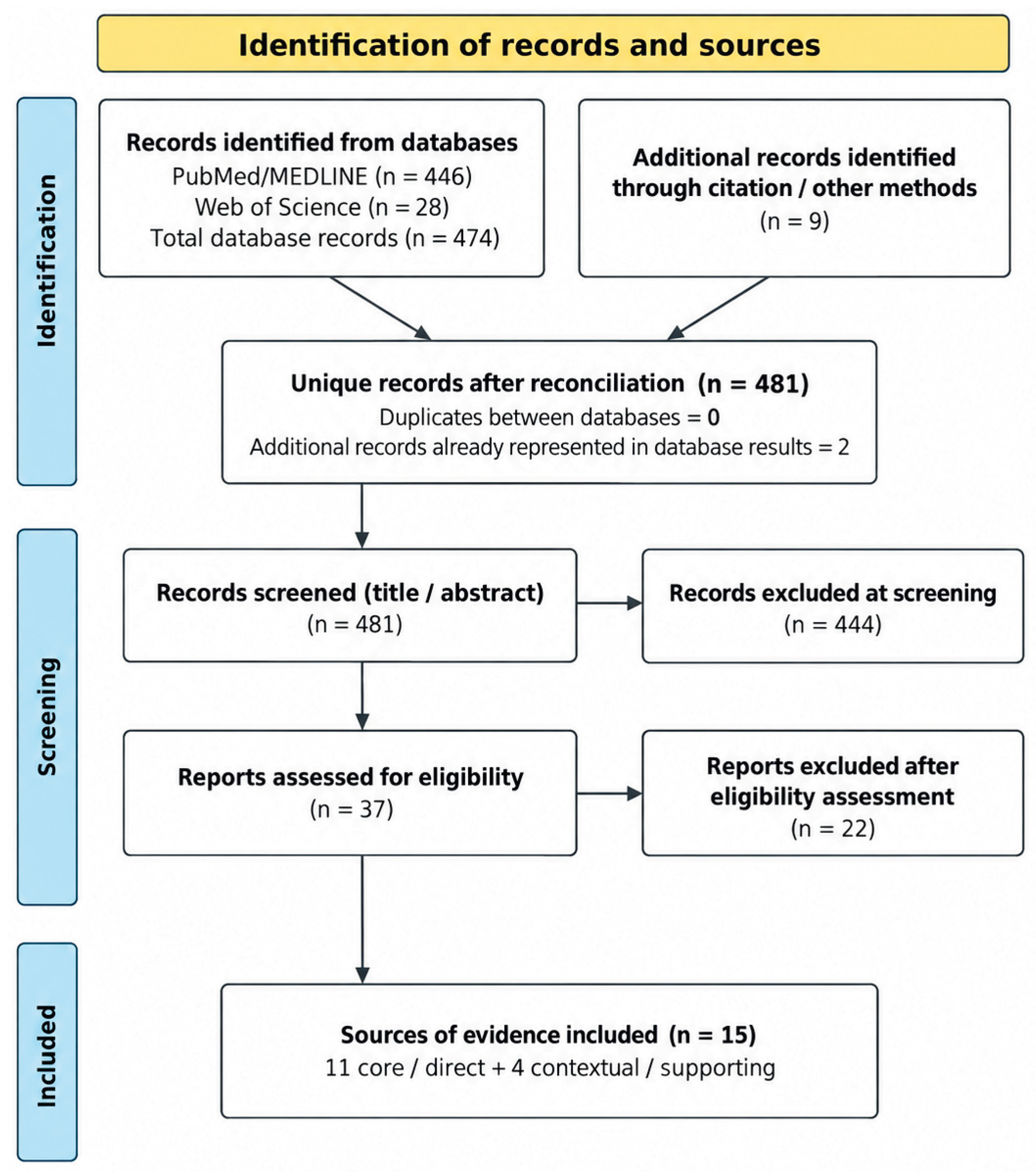
PubMed/MEDLINE and Web of Science were searched by more than one author during July and August 2026, with the final search conducted on 28 August 2026. Additional records were identified through citation and supplementary searching during the same period. The final PubMed/MEDLINE search strategy was: ((((((non-small cell lung cancer [Title/Abstract]) OR (NSCLC[Title/Abstract])) AND (toxicity [Title/Abstract])) OR (adverse events management [Title/Abstract])) AND (hospital pharmacist [Title/Abstract])) OR (clinical pharmacist [Title/Abstract])) OR (pharmacist [Title/Abstract])) AND (patient outcomes [Title/Abstract]). The Web of Science strategy was: non-small cell lung cancer OR NSCLC (Topic) AND Pharmacy OR hospital pharmacy OR clinical pharmacy OR pharmaceutical care (Topic) AND toxicity OR adverse events (Topic) AND patient outcomes OR clinical outcomes OR supportive care OR treatment outcomes (Topic). Database outputs and records identified by supplementary methods were reconciled before screening. PubMed/MEDLINE yielded 446 records and Web of Science 28 records (474 database records in total). Nine additional records were identified through citation and supplementary searching, of which two were already represented in the database results, resulting in 481 unique records for screening.
2.4. Selection of Sources and Evidence Classification
The 481 reconciled records were screened at title/abstract level against the NSCLC population and pharmacy/pharmaceutical-care concept criteria. Records considered potentially relevant were advanced to full-text eligibility assessment using the same criteria. A total of 444 records were excluded at title/abstract screening, and 37 reports underwent detailed eligibility assessment; 22 were excluded at this stage, leaving 15 included sources. The selection process and record counts are shown in the PRISMA-ScR flow diagram (Figure 1). Title/abstract screening and full-text eligibility assessment were conducted independently by two reviewers. Any discrepancies were discussed and resolved by consensus. Included sources were subsequently classified as (1) core/direct evidence when pharmacist or pharmacy care was directly evaluated or represented a substantive component of the NSCLC intervention or service, or (2) contextual/supporting evidence when the source was relevant to pharmacy practice but did not directly evaluate a discrete pharmacist-delivered intervention. This distinction was retained throughout data charting and synthesis to avoid attributing intervention effectiveness to studies that primarily described pharmacotherapeutic context, protocols, or quality frameworks.
2.5. Data Charting and Data Items
Data were charted using a structured extraction framework reflecting the variables presented in the evidence tables. Extracted items included bibliographic/publication characteristics, study population and clinical setting, treatment context where relevant, study design, classification as core/direct or contextual/supporting evidence, pharmacist role or pharmacy-related activity, intervention or exposure, outcomes assessed, and principal findings. Particular attention was given to medication optimization and drug–drug interactions, adherence and persistence, adverse-event/toxicity management, patient education, longitudinal pharmacy follow-up, multidisciplinary collaboration, treatment continuity, healthcare utilization, and economic outcomes. Data charting was undertaken independently by two reviewers using the structured framework. Differences in extracted information or interpretation were discussed and resolved by consensus. Where a source did not evaluate a discrete pharmacist intervention, its findings were charted as contextual evidence rather than interpreted as evidence of pharmacist effectiveness.
2.6. Synthesis of Evidence
A descriptive thematic synthesis was used to organize the included evidence rather than calculate a pooled effect estimate. Core/direct sources were mapped according to recurring pharmacy-practice domains: medication optimization and drug–drug interaction management; adherence support; toxicity/adverse-event prevention and management; patient education; ambulatory or longitudinal pharmacy care; and multidisciplinary care. Contextual/supporting sources were summarized separately to clarify the pharmacotherapeutic, quality-measurement, or protocol-related context without conflating them with direct intervention evidence. Study-level characteristics are presented in Table 1, the thematic synthesis in Table 2, and detailed pharmacy roles, outcomes, and principal findings in Supplementary Table S1. Owing to heterogeneity in study designs, patient populations, treatment regimens, intervention intensity, and outcome definitions, no quantitative meta-analysis was undertaken.
2.7. Critical Appraisal
A formal risk-of-bias or methodological-quality appraisal of the included sources was not undertaken. This decision was consistent with the mapping purpose of the scoping review, which sought to characterize the extent, nature, and range of the available evidence rather than estimate a pooled causal effect. Nevertheless, study design, comparator structure, sample size, potential selection bias, confounding, and the evidentiary status of each source were considered during interpretation. Two reviewers independently classified the included sources as core/direct or contextual/supporting evidence, and disagreements were resolved through discussion and consensus. Accordingly, findings from observational, nonrandomized, protocol, and contextual sources were interpreted cautiously and were not treated as equivalent evidence of intervention effectiveness.
3. Results
3.1. Study Selection
PubMed/MEDLINE yielded 446 records and Web of Science yielded 28, giving 474 database records. Nine additional records were identified through citation and supplementary searching; two were already represented in the database results. After reconciliation, 481 unique records were screened. Four hundred forty-four records were excluded at title/abstract screening, leaving 37 reports for eligibility assessment. Twenty-two reports were excluded after eligibility assessment, and 15 sources of evidence were included in the final review. Of these, 11 were classified as core/direct evidence and four as contextual/supporting evidence. The complete selection process is shown in Figure 1.
3.2. Characteristics and Evidence Domains
The 11 core/direct sources described complementary pharmacy roles spanning medication review, adherence support, patient education, toxicity management, drug–drug interaction screening and longitudinal follow-up. In a multidisciplinary lung-cancer clinic, 48 patients received pharmacist review and 154 interventions, with significant improvements in medication adherence and satisfaction [13]. Pharmacist-led education and adverse-event monitoring supported proactive management of afatinib-related toxicity [19], while clinical-pharmacist review during erlotinib treatment was associated with fewer clinically significant drug interactions and longer progression-free survival [6]. Pharmaceutical-care assessment also identified actionable toxicity, education and interaction-related problems [22].
More recent studies extended these roles across contemporary NSCLC treatment. A prospective pharmaceutical-care program during chemotherapy plus PD-1/PD-L1 therapy documented 67 pharmacist interventions among 30 patients and evaluated adverse-event changes [23]. A hospital cohort demonstrated a high burden of polypharmacy and potentially significant drug–drug interactions [7]. Pharmacist-managed oral EGFR-inhibitor care in 1,327 patients was associated with higher adherence and more frequent imaging [14], while an ambulatory oncology-pharmacy service involving 137 patients was associated with fewer unexpected outpatient and emergency-department visits and lower emergency-department expenditure [15].
Pharmacist consultation for osimertinib was associated with longer treatment duration and lower discontinuation [16], and multidisciplinary prophylactic care incorporating pharmacist-led education and monitoring reduced severe skin toxicity during nivolumab-plus-ipilimumab treatment [17]. In a prospective multicenter study conducted by hospital pharmacists, 85.3% of patients met the prespecified adherence threshold, and non-adherence was associated with shorter time to progression [10]. Detailed study characteristics are presented in Table 1, thematic domains in Table 2, and study-level outcomes in Supplementary Table S1.
3.3. Contextual and Supporting Evidence
Four sources were retained as contextual/supporting evidence. The HYCIS-XL cohort, conducted by hospital pharmacists, compared cisplatin hydration schemes and renal-function decline without evaluating a pharmacist-delivered intervention [24]. An integrated specialty-pharmacy initiative developed quality measures for TKI use in NSCLC [18], while a hospital-pharmacy publication described a prospective adherence study protocol without completed outcome data [25]. An observational pharmacy-department study examined nutritional status and osimertinib treatment tolerance [26]. These sources informed the pharmacotherapeutic and service context but were not treated as direct evidence of pharmacist intervention.
3.4. Summary of Included Evidence

Table 1.
Characteristics of the 15 included sources of evidence.
| PMID | Classification | Population/setting | Pharmacy role/activity | Design | Ref. |
| 25227909 | Core/direct | Lung cancer; multidisciplinary lung-cancer clinic | Specialist clinical cancer pharmacist; medication review, adherence and education | Prospective service evaluation | [13] |
| 30832554 | Core/direct | EGFR-mutant NSCLC; afatinib | Pharmacist-led education; AE monitoring and management | Retrospective observational | [19] |
| 32349642 | Core/direct | NSCLC; erlotinib | Clinical-pharmacist DDI identification and management | Prospective intervention + matched control | [6] |
| 33729519 | Core/direct | Lung cancer receiving systemic therapy | Pharmaceutical-care assessment; toxicity, education and DDI-related problem identification | Retrospective record analysis | [22] |
| 36330095 | Core/direct | Advanced NSCLC; chemotherapy + PD-1/PD-L1 inhibitors | Pharmaceutical care; medication review, education, AE monitoring | Prospective interventional | [23] |
| 37222813 | Core/direct | NSCLC; university hospital | Polypharmacy and PDDI identification | Retrospective observational | [7] |
| 39042924 | Core/direct | NSCLC; oral EGFR inhibitors | Pharmacist-managed ambulatory clinic; adherence monitoring and education | Observational cohort | [14] |
| 39752872 | Core/direct | NSCLC; oral targeted therapy | Pharmacist-managed oncology ambulatory care; symptoms and medication support | Retrospective cohort | [15] |
| 40156301 | Core/direct | EGFR-mutant NSCLC; osimertinib | Pharmacist-led outpatient consultation and AE intervention | Observational cohort | [16] |
| 40587818 | Core/direct | Treatment-naïve NSCLC; nivolumab + ipilimumab ± chemotherapy | Multidisciplinary prophylaxis with pharmacist-led education/monitoring | Retrospective before/after | [17] |
| 40748483 | Core/direct | Locally advanced/metastatic NSCLC; oral antineoplastic therapy | Hospital-pharmacist adherence monitoring | Prospective multicenter observational | [10] |
| 32533904 | Contextual | NSCLC; cisplatin/pemetrexed | Hospital-pharmacy pharmacotherapeutic context; hydration protocol | Retrospective cohort | [24] |
| 32615867 | Contextual | NSCLC; oral TKIs | Integrated specialty-pharmacy quality-measure development | Quality-measure development | [18] |
| 39003231 | Contextual | Locally advanced/metastatic NSCLC; oral chemotherapy | Hospital-pharmacy adherence/pharmaceutical-care protocol | Protocol | [25] |
| 40077797 | Contextual | NSCLC; osimertinib | Pharmacotherapeutic follow-up/nutritional assessment related to treatment tolerance | Observational | [26] |
Table 2.
Thematic synthesis of pharmacist roles.
| Evidence domain | Core sources | Role mapped | Overall interpretation |
| Medication optimization / DDIs | [6,7,13,22] | Medication review; DDI identification; polypharmacy assessment | Consistent evidence that pharmacists identify actionable medication-related problems |
| Adherence | [10,13,14] | Education; follow-up; PDC/adherence monitoring | Adherence support is a recurrent role, especially for oral therapy |
| Toxicity / AE management | [15,16,17,19,23] | Proactive monitoring, prevention, symptom management | Evidence supports active pharmacist participation in toxicity surveillance and management |
| Patient education | [13,15,17,19] | Counselling; AE recognition; self-management | Education is frequently embedded in pharmacist-led services |
| Ambulatory / longitudinal pharmacy care | [13,14,15,16] | Dedicated clinics; longitudinal medication follow-up | Services can extend pharmacist involvement across the treatment course |
| Multidisciplinary care | [6,13,17] | Pharmacist–oncologist–nurse collaboration | Integration facilitates medication safety and toxicity prevention |
4. Discussion
This scoping review identified a heterogeneous but clinically coherent body of evidence describing how pharmacists contribute to NSCLC care across medication optimization, drug–drug interaction management, adherence support, patient education, toxicity prevention and longitudinal ambulatory follow-up. Although the included studies varied in design, setting and outcome selection, their findings converge on a common interpretation: pharmacist involvement is most valuable at points where treatment effectiveness depends on the reliable translation of a complex regimen into day-to-day medication use. This is particularly relevant in contemporary NSCLC, where molecularly selected oral therapies and immunotherapy-based regimens require repeated assessment rather than a single dispensing or counselling encounter [3,4,8]. The results therefore support viewing pharmaceutical care as a longitudinal component of the treatment pathway, beginning before therapy initiation and continuing through dose modification, toxicity management, treatment transition and discontinuation.
Medication safety emerged as a central and highly actionable theme. The erlotinib intervention study showed that structured clinical-pharmacist review can reduce clinically significant interactions and was associated with longer progression-free survival [6], while the hospitalized-patient study documented a high baseline burden of polypharmacy and potentially important interactions [7]. These findings are complementary rather than interchangeable: the former provides direct evidence of an intervention, whereas the latter defines the size of the medication-safety problem that an intervention might address. Pharmacovigilance evidence in EGFR inhibitor-treated NSCLC further supports the relevance of this problem, with more suspected adverse drug reactions reported in cases involving category D/X potential drug–drug interactions [20]. In practice, relevant risks may arise from altered absorption, metabolic inhibition or induction, additive cardiovascular or bleeding effects, overlapping organ toxicity, and interactions with nonprescription or complementary products. Because concomitant therapy and organ function can change during treatment, reconciliation and interaction screening should be repeated at treatment initiation, after hospital discharge, when supportive medicines are added, and whenever a dose or anticancer regimen changes [6,7,8].
Adherence was another recurrent domain, but the evidence indicates that it should be understood as a dynamic clinical process rather than a fixed patient characteristic. The specialist lung-cancer clinic evaluation reported improved adherence after pharmacist involvement [13], the large EGFR-inhibitor cohort found higher adherence in pharmacist-managed care [14], and the prospective multicenter study found that non-adherence was associated with shorter time to progression [10]. These observations are consistent with broader oral-oncology evidence showing that pharmacist-led interprofessional support can improve adherence [11]. Evidence from a Bulgarian hospital-pharmacy study in chronic myeloid leukemia also illustrates the relevance of adherence assessment and patient-related factors during long-term oral anticancer treatment [9]. The likely mechanisms extend beyond reminders: pharmacists can clarify administration instructions, distinguish intentional from unintentional non-adherence, address toxicity-driven dose omission, coordinate refills, identify access barriers and communicate emerging problems before they result in prolonged treatment interruption. Consequently, adherence assessment should combine refill-based measures with direct patient discussion and clinical review, because a high proportion of days covered does not confirm correct administration, while a missed refill does not reveal whether the cause was toxicity, hospitalization, cost, planned interruption or disease progression.
The toxicity-management findings further illustrate why continuity of pharmacy contact may affect treatment delivery. Evidence ranged from pharmacist-led education and adverse-event monitoring for afatinib [19] to prospective pharmaceutical care during chemo-immunotherapy [23], osimertinib consultations associated with longer treatment duration and lower discontinuation [16], and multidisciplinary prophylactic care that reduced severe skin toxicity, systemic corticosteroid use and discontinuation during nivolumab-plus-ipilimumab treatment [17]. Across these studies, the intervention was not simply the detection of an adverse event; it included anticipatory counselling, preventive supportive care, early symptom recognition, structured follow-up and timely escalation. This distinction is important because many toxicities are more manageable when addressed before they become severe. Pharmacists can therefore act as an accessible surveillance point, while decisions about diagnosis, immunosuppression, dose interruption, rechallenge or permanent discontinuation remain coordinated within the multidisciplinary team [3,4,12,17].
The findings also suggest that the value of pharmacy services may be expressed through healthcare utilization and treatment continuity rather than through a simple reduction in the recorded incidence of adverse events. In the Taiwanese ambulatory-care study, service users had more documented skin-related adverse events but fewer unexpected outpatient and emergency-department visits and lower emergency-department expenditure [15]. Increased documentation may reflect better ascertainment rather than worse safety: proactive follow-up can identify manageable symptoms that might otherwise remain unreported until they precipitate urgent care. Similarly, longer treatment duration in the osimertinib service [16] may represent improved tolerability and persistence, although it may also be influenced by patient selection and disease-related factors. Future evaluations should therefore report process, clinical and utilization outcomes together so that increased detection is not misinterpreted as increased harm and prolonged therapy is not automatically attributed to the intervention.
Several practical implications follow from the mapped evidence. A reproducible NSCLC pharmacy pathway could include baseline medication reconciliation and interaction screening; education on dosing, food requirements, missed doses and storage; assessment of adherence barriers and medicine access; proactive toxicity counselling; early contact after treatment initiation; and documented escalation criteria for urgent symptoms. Follow-up intensity could be risk stratified, with closer monitoring for patients with polypharmacy, organ dysfunction, previous non-adherence, limited health literacy, recent hospitalization or high-risk regimens. The quality-measure framework retained as contextual evidence is relevant because it identifies safety, efficacy, persistence and patient-reported outcomes as complementary service domains [18]. Contemporary standards for medically integrated oral anticancer dispensing similarly emphasize patient safety, education, adherence, access, care coordination and operational quality, supporting the direction of these findings beyond the NSCLC-specific literature [27].
Service design should also account for the fact that pharmacist activity is embedded within a wider cancer-care system. The favorable outcomes in several studies may reflect not only the pharmacist’s individual recommendations but also faster communication with oncologists and nurses, standardized supportive-care protocols, improved documentation and easier access to advice between scheduled visits [13,15,16,17]. This team-mediated mechanism is a strength from an implementation perspective, but it complicates attribution. Studies should therefore describe intervention components, professional responsibilities, contact frequency, referral pathways, prescriptive authority and acceptance of pharmacist recommendations. Without this information, apparently similar “pharmacist-led” services may represent substantially different levels of clinical intensity and may not be readily transferable across institutions or healthcare systems.
Interpretation must nevertheless remain cautious. Most direct studies were observational, retrospective, nonrandomized or conducted in single centers; sample sizes and comparator definitions varied, and adjustment for baseline differences was not uniform. Patients referred to pharmacy services may differ from nonusers in motivation, disease course, access to care or perceived risk, creating selection bias and residual confounding. Some outcomes, such as adherence, intervention counts, adverse-event detection and treatment duration, were measured differently across studies and may be influenced by documentation intensity. The contextual sources further broaden the map but do not demonstrate pharmacist effectiveness: the hydration study examined a pharmacotherapeutic process [24], the quality initiative proposed measures [18], the adherence publication was a protocol [25], and the nutrition study did not test a discrete pharmacy intervention [26]. For these reasons, the review supports the plausibility and clinical relevance of integrated pharmaceutical care but cannot establish a pooled causal treatment effect or identify a single superior service model.
Future research should prioritize prospective multicenter evaluations of standardized pharmacist-led pathways, particularly for oral targeted therapies and immune checkpoint inhibitor toxicity. Studies should use clearly defined comparators and patient-centered outcomes, including treatment persistence, quality of life, hospitalization, emergency-department use, and total healthcare costs. Implementation and economic evaluations are also needed to determine which pharmacy-service models are scalable and cost-effective. Digital adherence monitoring, structured toxicity assessment, and clinical decision-support tools represent additional areas for investigation.
5. Strengths and Limitations
The main strength of this review is the explicit audit trail linking database records to final eligibility decisions and distinguishing core/direct evidence from contextual/supporting sources. Another strength is the use of an NSCLC-specific population criterion rather than including oncology pharmacy studies in which NSCLC results could not be separated.
Limitations include the heterogeneity of included evidence and the fact that several sources are observational or contextual. In addition, the systematic database search was limited to two bibliographic databases—PubMed/MEDLINE and Web of Science. Although citation and supplementary searching identified additional records, relevant studies indexed only in other databases, such as Embase, Scopus, CINAHL or International Pharmaceutical Abstracts, may have been missed; consequently, the review may not capture the complete breadth of pharmacy-practice evidence relevant to NSCLC. Some records identified through broad pharmacy-related searches required judgment about whether pharmacy records, pharmacy authorship, or pharmacotherapeutic context represented a substantive pharmacy-care component; these were conservatively classified as contextual when a direct pharmacist intervention was not demonstrated. The review therefore maps the available evidence rather than estimating a pooled causal effect.
The absence of a formal risk-of-bias appraisal limits the ability to quantify the methodological robustness of individual studies. This limitation was mitigated through independent review by two reviewers, explicit classification by study design and evidentiary status, and cautious interpretation that avoided causal conclusions.
6. Conclusions
This scoping review mapped 15 sources on pharmacist and pharmaceutical-care roles in NSCLC, including 11 core/direct and four contextual/supporting sources. Across heterogeneous settings, the evidence converged on medication review, drug–drug interaction and polypharmacy management, adherence support, patient education, toxicity surveillance, supportive care, and longitudinal coordination within multidisciplinary oncology services. Pharmacist involvement was associated with fewer clinically significant interactions, improved adherence, better toxicity management, longer treatment persistence, fewer unplanned healthcare encounters and lower emergency-department expenditure [6,7,10,13,14,15,16,17,19,22,23].
These findings support the clinical relevance of structured pharmaceutical care at critical points in the NSCLC pathway, particularly for patients receiving oral targeted therapies, those with complex polypharmacy and those requiring intensive toxicity monitoring. A standardized pathway could include medication reconciliation and interaction assessment, education on administration and missed doses, evaluation of adherence and access barriers, treatment-specific toxicity counselling, early follow-up and explicit escalation criteria. However, most direct studies were observational, retrospective, single-center or nonrandomized, and intervention content and outcome definitions varied. The contextual sources inform pharmacotherapeutic processes and quality domains but do not establish the effectiveness of a discrete pharmacist intervention [18,24,25,26].
Accordingly, the available evidence indicates clinical relevance, feasibility and probable benefit rather than a definitive causal effect or a single superior service model. Future research should prioritize prospective multicenter comparative studies of standardized pharmacist-led pathways and assess treatment persistence, severe adverse events, quality of life, healthcare utilization and costs. Implementation and economic evaluations, together with digital adherence and toxicity-monitoring approaches, are needed to determine scalability and support integration of pharmaceutical care into personalized NSCLC management [18,27].
Supplementary Materials
The following supporting information can be downloaded at the website of this paper posted on Preprints.org. Table S1. Pharmacy roles, outcomes and key findings.
Author Contributions
Conceptualization, N.N., Ts.A. M.Y., G.P.; methodology, N.N, G.P.; literature search and data curation, N.N. Ts.A.; formal analysis and data synthesis, N.N.; writing—original draft preparation, N.N., Ts.A., M.Y.; writing—review and editing, N.N., G.P.; visualization and tables, N.N, M.Y.; supervision, G.P.; project administration, N.N., Ts.A. All authors have read and agreed to the published version of the manuscript.
Funding
This research was funded by the Ministry of Education and Science of Bulgaria under Programme “Education” 2021-2027, Project No. BG05SFPR001-3.004-0026-C01 "Multidisciplinary panel of project-based PhD studies focused on health, biotechnology and blue growth in the Black Sea region", co-funded by the European Union (ESF+).
Data Availability Statement
No new data were created or analyzed in this study. Data sharing is not applicable to this article, as it is based exclusively on previously published studies.
Conflicts of Interest
The authors declare no conflict of interest.
References
- Sung, H.; Filho, A.M.; Laversanne, M.; Ferlay, J.; Siegel, R.L.; Soerjomataram, I.; et al. Global cancer statistics 2024: GLOBOCAN estimates of incidence and mortality worldwide for 34 cancers in 186 countries. CA Cancer J. Clin. 2026, 76(4), e70090. [Google Scholar] [CrossRef] [PubMed]
- Hendriks, L.E.; Kerr, K.M.; Menis, J.; Mok, T.S.K.; Nestle, U.; Passaro, A.; et al. Non-small-cell lung cancer. Nat. Rev. Dis. Primers 2024, 10, 71. [Google Scholar] [CrossRef] [PubMed]
- Jeon, H.; Wang, S.; Song, J.; Gill, H.; Cheng, H. Update 2025: Management of non-small-cell lung cancer. Lung 2025, 203(1), 53. [Google Scholar] [CrossRef] [PubMed]
- Bouchard, N.; Daaboul, N. Lung cancer: targeted therapy in 2025. Curr. Oncol. 2025, 32(3), 146. [Google Scholar] [CrossRef] [PubMed]
- Damyanov, D.; Koynov, K.; Naseva, E.; Bichev, S. EGFR mutations in patients with non small-cell lung cancer in Bulgaria and treatment with gefitinib. J. BUON 2015, 20(1), 136–141. [Google Scholar] [PubMed]
- Kovacevic, T.; Vezmar Kovacevic, S.; Stanetic, M.; Kovacevic, P.; Miljkovic, B. Impact of pharmacist's intervention on decreasing erlotinib interactions in the treatment of lung cancer patients in low resource settings. J. Oncol. Pharm. Pract. 2021, 27(2), 350–358. [Google Scholar] [CrossRef] [PubMed]
- Albayrak, A.; Düzenli, T.; Kayıkçıoğlu, E. Potential drug-drug interactions in patients with non-small cell lung cancer at a university hospital in Turkey. J. Cancer Res. Clin. Oncol. 2023, 149(12), 9621–9627. [Google Scholar] [CrossRef] [PubMed]
- Kobayashi, K. Managing adherence, exposure, and toxicity in oral anticancer therapies. J. Pharm. Health Care Sci. 2025, 11, 28. [Google Scholar] [CrossRef] [PubMed]
- Getova-Kolarova, V.; Kamusheva, M.; Kokudeva, N.; Doneva, M.; Getov, I. Medication adherence in chronic myeloid leukemia: a hospital pharmacy-level analysis. Eur. J. Hosp. Pharm. 2026, 33(3), 244–248. [Google Scholar] [CrossRef] [PubMed]
- Mangues-Bafalluy, I.; Bernardez, B.; Martínez-Sesmero, J.M.; Navarro-Ruiz, A.; Martín-Conde, M.T.; Rubio-Salvador, A.R.; et al. Adherence to oral antineoplastic therapy among patients with advanced or metastatic non-small cell lung cancer: a noninterventional, prospective study. J. Cancer Res. Clin. Oncol. 2025, 151(8), 224. [Google Scholar] [CrossRef] [PubMed]
- Bandiera, C.; Cardoso, E.; Locatelli, I.; Zaman, K.; Diciolla, A.; Digklia, A.; et al. A pharmacist-led interprofessional medication adherence program improved adherence to oral anticancer therapies: the OpTAT randomized controlled trial. PLoS ONE 2024, 19(6), e0304573. [Google Scholar] [CrossRef] [PubMed]
- Shen, X.; Yang, J.; Qian, G.; Sheng, M.; Wang, Y.; Li, G.; et al. Treatment-related adverse events of immune checkpoint inhibitors in clinical trials: a systematic review and meta-analysis. Front Oncol. 2024, 14, 1391724. [Google Scholar] [CrossRef] [PubMed]
- Walter, C.; Mellor, J.D.; Rice, C.; Kirsa, S.; Ball, D.; Duffy, M.; et al. Impact of a specialist clinical cancer pharmacist at a multidisciplinary lung cancer clinic. Asia Pac. J. Clin. Oncol. 2016, 12(3), e367–e374. [Google Scholar] [CrossRef] [PubMed]
- Ng, S.; Baker, N.; Niu, F.; Katzel, J.A.; Bergere, H.T.; Whang, M.; et al. Impact of pharmacist managed oral epidermal growth factor receptor inhibitors. J. Oncol. Pharm. Pract. 2025, 31(6), 902–909. [Google Scholar] [CrossRef] [PubMed]
- Liu, D.C.; Hung, C.L.; Chen, Y.W.; Kuo, L.N.; Hsin, Y.C.; Kuo, C.N. Effectiveness of pharmacist-managed oncology ambulatory care for patients with non-small cell lung cancer in Taiwan. J. Food Drug Anal. 2024, 32(4), 558–567. [Google Scholar] [CrossRef] [PubMed]
- Tsukiyama, S.; Tsukiyama, I.; Sugita, H.; Ohnishi, M.; Tanaka, H.; Kubo, A.; et al. Effects of consultations and interventions in a pharmacist-led outpatient clinic on duration of treatment and adverse events with osimertinib. J. Oncol. Pharm. Pract. 2026, 32(6), 1057–1065. [Google Scholar] [CrossRef] [PubMed]
- Sumi, T.; Kanamaru, K.; Tsuji, S.; Kagawa, M.; Ishigooka, T.; Matsuura, K.; et al. Prophylactic interventions to prevent severe skin toxicities in patients with non-small cell lung cancer treated with nivolumab + ipilimumab with or without chemotherapy. JCO Oncol. Pract. 2026, 22(4), 602–610. [Google Scholar] [CrossRef] [PubMed]
- Crothers, G.; Shah, N.B.; Kim, M.; Zuckerman, A.D. Development of a quality measures tool for the utilization of tyrosine kinase inhibitors in non-small cell lung cancer: an integrated specialty pharmacy initiative. J. Oncol. Pharm. Pract. 2020, 26(6), 1441–1451. [Google Scholar] [CrossRef] [PubMed]
- Khrystolubova, N.; Shieh, M.; Patel, A.J.; Bailey, R. Pharmacist-led patient education and adverse event management in patients with non-small cell lung cancer receiving afatinib in a community-based, real-world clinical setting. J. Oncol. Pharm. Pract. 2020, 26(1), 13–22. [Google Scholar] [CrossRef] [PubMed]
- Mutafova, I.; Grigorov, E.; Getova-Kolarova, V.; Georgiev, K.D. The Possible Relationship Between Adverse Drug Reactions and Potential Drug–Drug Interactions in Patients with NSCLC Treated with EGFR Inhibitors. Pharmacoepidemiology 2026, 5(2), 11. [Google Scholar] [CrossRef]
- Tricco, A.C.; Lillie, E.; Zarin, W.; O'Brien, K.K.; Colquhoun, H.; Levac, D.; et al. PRISMA extension for scoping reviews (PRISMA-ScR): checklist and explanation. Ann. Intern Med. 2018, 169(7), 467–473. [Google Scholar] [CrossRef] [PubMed]
- MacLean, F.M.; Boyter, A.C.; Mullen, A.B.; Lowrie, R. Pharmaceutical care issues in lung cancer: can community pharmacists support patients receiving systemic anticancer therapy? Int. J. Pharm. Pract. 2021, 29(2), 145–151. [Google Scholar] [CrossRef] [PubMed]
- Kou, W.; Lin, Y.Y.; Su, F.; Xiang, Y.; Qiao, H.; Wu, X.; et al. The influence of pharmaceutical care in patients with advanced non-small-cell lung cancer receiving combination cytotoxic chemotherapy and PD-1/PD-L1 inhibitors. Front Pharmacol. 2022, 13, 910722. [Google Scholar] [CrossRef] [PubMed]
- Niggebrugge-Mentink, K.L.; Beex-Oosterhuis, M.M.; Ter Horst, P.G.J.; van de Poll, M.E.C.; Dieleman, H.; van Kesteren, C. Difference in decline in renal function due to cisplatin after a short or long hydration scheme in non-small-cell lung cancer: a retrospective cohort study (HYCIS-XL). J. Clin. Pharm. Ther. 2020, 45(5), 1153–1158. [Google Scholar] [CrossRef] [PubMed]
- Mangues-Bafalluy, I.; Bernárdez, B.; Martínez-Sesmero, J.M.; Navarro-Ruiz, A.; Rubio-Salvador, A.R.; Martín-Conde, M.T. Treatment adherence to oral chemotherapy in patients with locally advanced or metastatic non-small cell lung cancer: protocol for a hospital pharmacy-based real-world study. Farm Hosp. 2025, 49(2), 117–121. [Google Scholar] [CrossRef] [PubMed]
- Barca-Díez, C.; Palmeiro-Carballa, R.; Castro-Luaces, S.; Fortes-González, M.S.; Vazquez-Blanco, S.; Martínez-López-De-Castro, N.; et al. Nutritional status and its impact on treatment tolerance in non-small-cell lung cancer patients receiving osimertinib. Nutrients 2025, 17(5), 927. [Google Scholar] [CrossRef] [PubMed]
- Raez, L.E.; Gregg, X.T.; Doshi, G.K.; Freeswick, S.; Cox, A.; Dave, N.; et al. Patient-centered standards for medically integrated dispensing: ASCO-NCODA standards. JCO Oncol. Pract. 2025. [Google Scholar] [CrossRef] [PubMed]
Figure 1.
PRISMA-ScR flow diagram based on the final reconciled eligibility audit.
Disclaimer/Publisher’s Note: The statements, opinions and data contained in all publications are solely those of the individual author(s) and contributor(s) and not of MDPI and/or the editor(s). MDPI and/or the editor(s) disclaim responsibility for any injury to people or property resulting from any ideas, methods, instructions or products referred to in the content. |
© 2026 by the authors. Licensee MDPI, Basel, Switzerland. This article is an open access article distributed under the terms and conditions of the Creative Commons Attribution (CC BY) license (http://creativecommons.org/licenses/by/4.0/).
Copyright: This open access article is published under a Creative Commons CC BY 4.0 license, which permit the free download, distribution, and reuse, provided that the author and preprint are cited in any reuse.