

Submitted:
17 October 2026
Posted:
23 October 2026
You are already at the latest version
Abstract
Plant-derived compounds are increasingly being investigated as potential alternatives or supplements to conventional insecticides. This study evaluated the insecticidal activity of linalool and its ester derivative against adults of Eurygaster integriceps and Eurygaster maura, two important pests of cereal crops. Llinalool monomethyl succinate derivative were synthesized, and their formation was assessed using thin-layer chromatography and Fourier-transform infrared spectroscopy. Linalool, formulated as an aqueous emulsion, and linalyl monomethyl succinate, formulated as an aqueous alcoholic solution, were selected for laboratory bioassays. Their insecticidal activity was evaluated at concentrations of 1%, 5%, 10%, and 20%, with a 0% vehicle control, following topical application. Both formulations caused concentration-dependent mortality and reduced locomotor activity in the tested insects. At a concentration of 20%, the linalool emulsion caused 100% mortality in both species within 24 h, while linalyl monomethyl succinate produced 90% mortality within 72 h under the reported experimental conditions. These findings indicate that linalool and linalyl monomethyl succinate are promising candidates for further investigation as insecticidal agents against E. integriceps and E. maura. Additional field studies and assessments of their environmental fate and non-target effects are required before their potential application in integrated pest management can be established.
Keywords:
linalool ester derivative
; insecticidal properties
; linalool
; toxic effect
; laboratory screening
; bioinsecticide
; linalyl monomethyl succinate
1. Introduction
The widespread use of synthetic insecticides for agricultural pest management has contributed to the development of insecticide resistance and raised concerns regarding their effects on human health and the environment [1,2]. These challenges have stimulated interest in alternative pest-management strategies, including insect-control agents derived from plants. Plants produce diverse secondary metabolites that may exert toxic, repellent, antifeedant, or attractant effects on insects [3]. However, their biological activity depends on their chemical composition, concentration, formulation, mode of application, and target species [4,5,6,7,8].
The sunn pests Eurygaster integriceps Puton and Eurygaster maura (L.) (Hemiptera: Scutelleridae) are economically important pests of wheat and other cereal crops in parts of Europe and Asia. Their feeding can reduce both grain yield and technological quality, while conventional insecticides remain an important component of their control [9]. Consequently, identifying plant-derived compounds with activity against these pests may contribute to the development of alternative or complementary control approaches.
Essential oils are complex mixtures of volatile secondary metabolites, particularly monoterpenes and sesquiterpenes, many of which possess insecticidal or behavior-modifying activity. Linalool (Figure 1) is an oxygenated monoterpene alcohol occurring in the essential oils of numerous aromatic plants. In a laboratory fumigation assay evaluating 42 pure volatile compounds, Kordali et al. (2017) reported that linalool caused 100% mortality of adult granary weevils, Sitophilus granarius (L.), within 24 h at both tested doses [10]. Oxygenated monoterpenes were generally more toxic than monoterpene hydrocarbons in that assay. However, these findings were obtained through fumigation and therefore do not establish the effectiveness of linalool after topical application to Eurygaster species.
Coriandrum sativum L. is an aromatic and essential-oil-producing plant whose fruit essential oil is frequently characterized by a high proportion of linalool. Linalool-rich coriander essential oil and isolated linalool have demonstrated fumigant activity against several stored-product insect species [11]. Nevertheless, the available evidence does not establish whether chemical modification of linalool can produce formulations suitable for aqueous application while retaining contact insecticidal activity against E. integriceps and E. maura.
Therefore, the objectives of the present study were to obtain and characterize the essential oil of C. sativum fruits, synthesize ester derivatives of linalool, and evaluate the topical insecticidal activity of a linalool emulsion and an aqueous–ethanolic solution of linalyl monomethyl succinate against adults of E. integriceps and E. maura. Mortality was evaluated at different concentrations and exposure periods to determine the concentration- and time-dependent effects of the tested formulations.
2. Methods and Materials
Gas chromatography–mass spectrometry (GC–MS) analysis was performed using an Agilent 5000 gas chromatograph equipped with a split inlet and operated in electron-impact ionization mode. Separation was achieved on an HP-5ms Ultra Inert capillary column (30 m × 0.25 mm internal diameter, 0.25 µm film thickness). The injection volume was 0.25 µL, and samples were introduced in splitless mode at an inlet temperature of 280 °C. A splitless Ultra Inert liner with a single constriction and glass wool was used together with a gold-plated Ultra Inert seal and washer. Hydrogen was used as the carrier gas at a constant flow rate of 1.2 mL min−1.
The oven temperature was initially maintained at 50 °C for 1 min, then increased to 180 °C at 20 °C min−1, to 195 °C at 0.5 °C min−1, and finally held isothermal for 20 min. The transport-line temperature was 320 °C. The transfer line, ion source, and quadrupole temperatures were maintained at 250, 230, and 150 °C, respectively. Mass spectra were recorded in electron-impact mode at 70 eV over an m/z range of 25–600, with a solvent delay of 3.5 min.
Fourier-transform infrared spectra were recorded using a Rayleigh WQF-530A spectrometer equipped with a QUEST attenuated-total-reflectance attachment. Spectra were acquired over the range of 7800–350 cm−1 using 10 scans and an acquisition time of 1 min. The spectral resolution was 0.85 cm−1, and the reported wavenumber accuracy was ±0.01 cm−1. The instrument was equipped with a deuterated L-alanine-doped triglycine sulfate detector and a Michelson interferometer. The reported signal-to-noise ratio was 20,000:1. Reaction progress was monitored by thin-layer chromatography on Silufol plates using petroleum ether–diethyl ether (1:4, v/v) as the mobile phase. The separated compounds were visualized by exposure to iodine vapor.
All reagents and solvents were of analytical grade and delivered from Manufacturer: Sigma-Aldrich; LLC”ChemExspress”, supplier: DiagLabTrade (Tashkent, Uzbekistan). hexane (CAS No 110-54-3, chemically pure), diethyl ether (CAS No 60-29-7, purity), Na2SO4 (CAS No 7757-82-6, pure for analysis), Na2CO3 (CAS No 497-19-8, chemically pure), NaCl (CASNo7647-14-5,purity), succinic anhydride (CAS No108-30-5, chemically pure), methyl alcohol (CAS No 320390, ≥99.8%, ACS reagent), ethyl alcohol (CAS No 64-17-5, pure), DMAP (CAS No 1122-58-3, pure ≤100%), Tween 80 (CAS No 9005-65-6, pure).
- Extraction of essential oil from Coriandrum sativum seeds
Hydrodistillation of Coriandrum sativum seeds Essential Oil
A 150 g sample of Coriandrum sativum L. fruits was cleaned to remove extraneous material and ground using a laboratory mill. The ground material was transferred to a hydrodistillation flask, and 750 mL of distilled water was added, corresponding to a plant-material-to-water ratio of 1:5 (g/mL). The flask was connected to a hydrodistillation apparatus equipped with a condenser and a graduated receiving vessel. Hydrodistillation was performed for 150 min. During distillation, the condensed aqueous phase was continuously returned to the distillation flask through the capillary arm of the apparatus, while the essential oil accumulated as the upper phase in the receiving vessel. After completion of the process and cooling to room temperature, the essential oil was separated, and its volume was recorded. The essential oil obtained from the seeds (Coriandrum sativum L.) consisted predominantly of monoterpenes -linalool and terpene alcohols. GC–MS analysis detected 17 volatile compounds in the essential oil of C. sativum, collectively accounting for 99.19% of the total chromatographic peak area. Linalool was the predominant constituent, representing approximately 75% of the essential-oil composition.
The essential oil with 75% linalool yield, was used in further experiments without further purification.
Monoterpenes were present in high concentrations, contributed to the characteristic aroma, and exhibited pronounced therapeutic properties, including antioxidant, anticonvulsant, antiulcer, anti-inflammatory, antiseptic, antitumor, and analgesic activities [12,13].
- 2.
- Synthesis of Linalyl derivative.
Synthesis monomethyl succinate ether
In a round-bottomed flask, succinic anhydride (0.2 mol) were mixed with methyl alcohol (0.24 mol). The mixture was refluxed in a water bath for 20 min. The flask containing the reaction mixture was periodically swirled. After the reaction was complete, the flask was placed in a water bath and held for 20–25 min. Excess methyl alcohol was distilled under water-jet pump vacuum. The residue was poured into a porcelain dish, and the mixture was gradually cooled. The crystals were scraped from the sides of the dish to prevent the formation of a solid mass. The reaction product was dried to constant weight during 5 days, under vacuum conditions. Product of reaction was purified by recrystallization from ethyl alcohol. mp 56–59 °C (Literary data: mp 54–57 °C). Yield of product—70%.
Synthesis of Linalyl monomethyl succinate.
Linalool (0.0032 mol) and an equimolar amount of the monomethyl succinate ether (0.0032 mol) were dissolved in 25 mL of dichloromethane under a nitrogen atmosphere. DMAP (0.0032 mol) was then added, and the reaction mixture was stirred under reflux for 12 h. Reaction progress was monitored by thin-layer chromatography (TLC), using petroleum ether–diethyl ether (1:4, v/v) as the mobile phase. Proguct of reaction was purified by flash chromatography, performed on Merck 60 F254 silica gel using ether–diethyl ether mixtures. The desired product was obtained in 65% yield, Rf = 0.74. IR spectrum (cm−1): 2972, 1726, and 916.
- 3.
- Evaluation of Insectotoxicity after linalool and linalool derivative treatment on Eurygaster integriceps and Eurygaster maura.
Under laboratory conditions, the insecticidal activities of linalool and linalyl monomethyl succinate against adults of Eurygaster integriceps and Eurygaster maura were evaluated. Linalool was formulated as an aqueous emulsion. For that was prepared 20% solution of linalool in water, as complete solubility of linalool was not achieved, 5 mL of Tween 80 was added to the solution. After was resulted linalool emulsion.
Linalyl monomethyl succinate solution was prepared as an aqueous–alcoholic solution, at the same concentration like linalool solution. Two prepared experimental solutions were deluted by water till concentrations of 0% (control), 1%, 5%, 10%, and 20%. For each species, 40 adults, comprising 20 females and 20 males, were tested at each concentration. Each treatment was conducted in triplicate. For topical application, the head of an entomological pin was dipped into the test solution. The first drop was allowed to fall from the pin, and the second was applied to the mesothorax of each insect. Following treatment, the insects were individually transferred to experimental chambers containing fresh flowering clover, and green clover were pre-treated by corresponding test solution (1%, 5%, 10%, and 20%) with syringe spraying. The chambers were maintained under laboratory conditions for four days, after which insect mortality was recorded.
Table 1 and Table 2 showed the results of the detected insectotoxicity on adults of Eurygaster integriceps and Eurygaster maura after linalool solutions treatment.
According to the Table 1 and Table 2, the linalool emulsion caused rapid and effective mortality in both insect species in a condition of topical treatment. The insects, treated by linalool solutions at concentrations of 20%, were observed 100% mortality, during the first 24 h.
On the Figure 1 displays the results of dependence the cumulative insect mortality by exposure time and toxicants concentration.
According to the Figure 1, the 20%—solution of linalool were observed the cumulative insect mortality during the first 24 h.
Table 3 and Table 4 showed the results of the detected insectotoxicity on adults of Eurygaster integriceps and Eurygaster maura after linalyl monomethylsuccinate solutions treatment.
According to the Table 3 and Table 4, the linalyl monomethylsuccinate solutions caused rapid caused effective and rapid 75% mortality in insects within the first three days of the test period.
On the Figure 2 displays the time of insectotoxic effect after linalyl monomethylsuccinate solutions treatment.
During the 24 h, the first insectotoxic effect were observed on adults of Eurygaster integriceps and Eurygaster maura, after 20%—solution of linalyl monomethylsuccinate treatment.
According to our observations, insects moved less actively after treatment by testing solutions, with subsequent slowing of their motor activity. Overall, an solution of linalyl monomethyl succinate caused effective and rapid 75% mortality in insects within the first three days of the test period.
3. Discussion
The aim of this study was to evaluate the insecticidal activity of linalool and its ester derivative against Eurygaster integriceps and Eurygaster maura, two important pests of cereal crops [14]. Many plant extracts and essential oils contain monoterpenes, sesquiterpenes, and other compounds with biological activity that may be useful in developing new plant-derived insecticides [15,16,17,18]. Linalool is a naturally occurring monoterpene with potential application as an active insecticidal compound. An essential-oil fraction rich in linalool was obtained from seeds of Coriandrum sativum L. by hydrodistillation. The linalool content of the resulting fraction was up to 75%. To evaluate its insecticidal activity, linalool was formulated as an aqueous emulsion using Tween 80 (polyoxyethylene sorbitan monooleate; average molecular mass approximately 1310 g mol−1) as the emulsifying agent. To investigate whether esterification could modify the physicochemical and insecticidal properties of linalool, linalool ester derivative—linalyl monomethyl succinate were synthesized according to the general reaction scheme presented below: monomethyl succinate ether were used as the HOOC–R component. The derivative were synthesized according to previously described methods [19,20]. Reaction progress was monitored by thin-layer chromatography (TLC), using petroleum ether–diethyl ether (1:4, v/v) as the mobile phase. Fourier-transform infrared (FTIR) spectra were recorded to characterize the synthesized derivative and identify their principal functional groups. Linalool and linalyl monomethyl succinate were selected for evaluating insecticidal activity against adults of Eurygaster integriceps and Eurygaster maura. Linalool was formulated as an aqueous emulsion, whereas linalyl monomethyl succinate was prepared as an aqueous–alcoholic solution.
Scheme 1.

Stock formulations containing 20% of each test compound were initially prepared. These formulations were subsequently diluted to obtain test concentrations of 1%, 5%, 10%, and 20%. The corresponding vehicle without the active compound was used as the 0% control.
Both test formulations produced concentration-dependent insecticidal effects and changes in insect behavior.
The experimental formulations exhibited insecticidal activity and produced behavioral effects that varied with concentration.
On the Figure 3 displays the cumulative mortality in dependence of time in a condition of linalool solution treatment.
As shown in Figure 3, the linalool solution caused rapid mortality in adults of both Eurygaster integriceps and Eurygaster maura. At the highest tested concentration (20%), 100% mortality was recorded for both species within the first 24 h after treatment.
On the Figure 4 displays observed insectotoxity of adults of both Eurygaster integriceps and Eurygaster maura after solution of linalyl monomethyl succinate treatment in dependence of concentration and observation period.
As shown in Figure 4, treated insects exhibited progressively reduced locomotor activity. Topical application of the aqueous–alcoholic formulation of linalyl monomethyl succinate resulted in 90% cumulative mortality within 72 h. Overall, linalool and its ester derivative exhibited insecticidal activity and produced concentration-dependent effects on insect behavior.
4. Conclusions
The increasing demand for environmentally compatible crop-protection strategies has encouraged the development of integrated pest management (IPM) programs that combine different preventive, biological, behavioral, and chemical approaches. Plant-derived bioactive compounds may contribute to these programs by providing potential alternatives or supplements to conventional insecticides. In the present study, ester derivative of linalool were synthesized and characterized to identify compounds with potential insecticidal activity. Linalool, formulated as an aqueous emulsion, and linalyl monomethyl succinate, formulated as an aqueous–alcoholic solution, were selected for laboratory evaluation against adults of Eurygaster integriceps and Eurygaster maura. Both formulations exhibited insecticidal activity following treatment and produced concentration-dependent effects on insect locomotor behavior. The linalool emulsion caused 100% mortality in both species within 24 h at the highest tested concentration of 20%, whereas linalyl monomethyl succinate resulted in 90% mortality within 72 h under the reported experimental conditions. These findings indicate that linalool and linalyl monomethyl succinate are potential candidates for further investigation as insecticidal agents against these cereal pests.
Additional studies are required to determine their dose–response relationships, lethal concentrations, modes of action, formulation stability, residual activity, environmental fate, and effects on non-target organisms. Their efficacy and safety must also be validated under semi-field and field conditions before their suitability for incorporation into IPM programs can be established.
Author Contributions
Conceptualization: G.O. and O.K.; methodology: U.T.; synthesis: G.O. and O.K.; IR analysis: U.T., O.M., and G.O.; writing: G.O. and U.T. All authors have read and agreed to the published version of the manuscript.
Funding
Funding for this research was provided by the Academy of Sciences of the Republic of Uzbekistan.
Institutional Review Board Statement
The housing of the biomaterial in the laboratory conditions and the experimental protocol complied with “Rules for working with experimental animals” developed and approved by the Ministry of Health of the USSR (1977) and the principles of the Declaration of Helsinki (2000). Biotesting was conducted according to authorization by the Ethics Committee for Animal Experiments based on a protocol approved by the Committee on Animal Ethics of the Institute of Bioorganic Chemistry, AS RUz (Protocol No. 139/3b of 20 January 2025).
Informed Consent Statement
Not applicable.
Data Availability Statement
The data that support the findings of this study are available from the corresponding author upon reasonable request.
Conflicts of Interest
The authors declare no conflict of interest.
References
- George David, R.; Finn Robert, D.; Graham Kirsty, M.; et al. Present and future potential of plant-derived products to control arthropods of veterinary and medical significance. Parasites Vectors 2014, 7, 28. [Google Scholar] [CrossRef]
- Mohafrash Samia M.M., Fallatah Sahar Ahmed, Farag Shaimaa Mahmoud, et al. Mentha spicata essential oil nanoformulation and its larvicidal application against Culex pipiens and Musca domestica. Ind. Crops Prod. 2020, 157. [CrossRef]
- Tilyabaev, Z.; Kh, H.; Shakizyanova, G.S.; Togaev, U.R.; Prokofyeva, O.B.; Abdullaeva, L.K.; Babaev, B.N. Results of research of some pheromones from insect pest in Uzbekistan. Uzb. Biol. J. 2017, 6, 17–22. [Google Scholar]
- Zibaee, A.; Bandani AReza. AStudy on the toxicity of a Medicinal plant Artemisia annua, L. (Asteracea) extractes to the Sunn pest, Eurygaster integriceps Puton (Hemiptera: Scutelleridae). J. Plant Prot. Res. 2010, 50, 79–85. [Google Scholar] [CrossRef]
- Togaev, U.; Khaitbaev, K.; Tilyabaev, Z.; Toshov, K.; Khaitbaev, A. Investigation of the attractive properties of compounds in Anacanthotermes turkestanicus. Nat. Volatiles Essent. Oils 2021, 8, 12564–12573. [Google Scholar]
- Zhang, Zhilin; Xie, Yongjian Wang; Yong; et al. Toxicities of monoterpenes against housefly, Musca domestica L. (Diptera: Muscidae). Environ. Sci. Pollut. Res. 2017, 24. I.31., 24708–24713. [Google Scholar] [CrossRef] [PubMed]
- Sanches Politi Flavio Augusto, Nascimento Juliana Damieli, da Silva Alexander Alves, et al. Insecticidal activity of an essential oil of Tagetes patula L. (Asteraceae) on common bed bug Cimex lectularius L. and molecular docking of major compounds at the catalytic site of ClAChE1. Parasitol. Res. 2017, 116 I.1, 415–424. [CrossRef] [PubMed]
- Preti Michele, Knight Alan L., Favaro Riccardo, et al. Comparison of New Kairomone-Based Lures for Cydia pomonella (Lepidoptera: Tortricidae) in Italy and USA. Insects 2021, 12. [CrossRef] [PubMed]
- Ugurlu Karaagac, S.; Kocak, E.; Babaroglu, N.E.; Gokdogan, A. Susceptibility of Different Strains of the Sunn Pest, Eurygaster integriceps Put. and Eurygaster maura L. to Fenitrothion and Alpha-cypermethrin in Turkey. J. Entomol. Res. Soc. 2011, 13, 45–51. [Google Scholar]
- Kordali Saban, Usanmaz Ays, Bayrak Neslihan, et al. Fumigation of Volatile Monoterpenes and Aromatic Compounds Against Adults of Sitophilus granarius (L.) (Coleoptera: Curculionidae). Rec. Nat. Prod. 2017, 11. I.4, 362–373.
- Sriti Eljazi, J.; et al. Chemical composition and insecticidal activity of essential oil from coriander fruit against three stored-product insects. Int. J. Food Prop. 2017, 20. [Google Scholar] [CrossRef]
- Fometu, S.S.; Shittu SRichard, A.H.; et al. Essential oils and their applications—A mini review. Adv. Nutr. FoodScience 2019, 4, 1–13. [Google Scholar] [CrossRef]
- Solonnikova, N. V.; Ksandopulo, S. Yu.; Solonnikov, D. A. Technological features of coriander and accumulation of essential oil during microwave heating. Electron. Online Polythematic J. “Scientific Work. KubSTU” 2015, 370–381. [Google Scholar]
- Shakirzyanova, G.; Togaev, U.; Kholbekov, O.; Xudoynazarov, M. Identification and synthesis of semiochemical substances analogues of stink bugs. Chem.Proc. 2025, 18, 57, P.1-10. [Google Scholar] [CrossRef]
- Weaver, D.K.; Dunkel, F.V.; Ntezurubanza, L.; Jackson, L.L.; Stock, D.T. The efficacy of linalool, a major component of freshly-milled Ocimum canum Sims (Lamiaceae), for protection against postharvest damage by certain stored product Coleoptera. J. Stored Prod. Res. 1991, 27, 213–220. [Google Scholar] [CrossRef]
- Wink, M. Production and Application of Phytochemicals from an Agricultural Perspective; Oxford University Press (OUP): Oxford, UK, 1993; pp. 171–213. [Google Scholar] [CrossRef]
- Chaudhury, M.F.B. Biopesticides and pest management in the developing world. Proceedings. (ed. M. F. B. Chaudhury); ICIPE Sci. Press: Nairobi, Kenya, 1990; pp. 1–224. [Google Scholar]
- Chochieva, A. R.; Bolieva, L. Z.; Reshetnikova, V. V. On the mechanism of oncoprophylactic action of a compound of the limonene monoterpene group. Russ. Biother. J. 2012, 11, 61a. [Google Scholar]
- Shakirzyanova, G.; Izotova, L.; Eshimbetov, A.; Kholbekov, O.; Babaev, B.; Togaev, U.; Ibragimov, B. Synthesis and structural investigation of new derivate of 5-mercapto-3-phenyl-1,3,4-thiadiazol-2-thione, J. New Mater. Compd. Appl. 2025, 9, 1–16. [Google Scholar] [PubMed]
- Chanmiya Sheikh Md, Shunsuke Takagi, Toshiaki Yoshimura , Hiroyuki Morita—Mechanistic studies of DCC/HOBt-mediated reaction of 3-phenylpropionic acid with benzyl alcohol and studies on the reactivities of ‘active ester’ and the related derivatives with nucleophiles. Tetrahedron 2010, 66, 7272–7278. [CrossRef]
Figure 1.
Chemical structure of linalool.
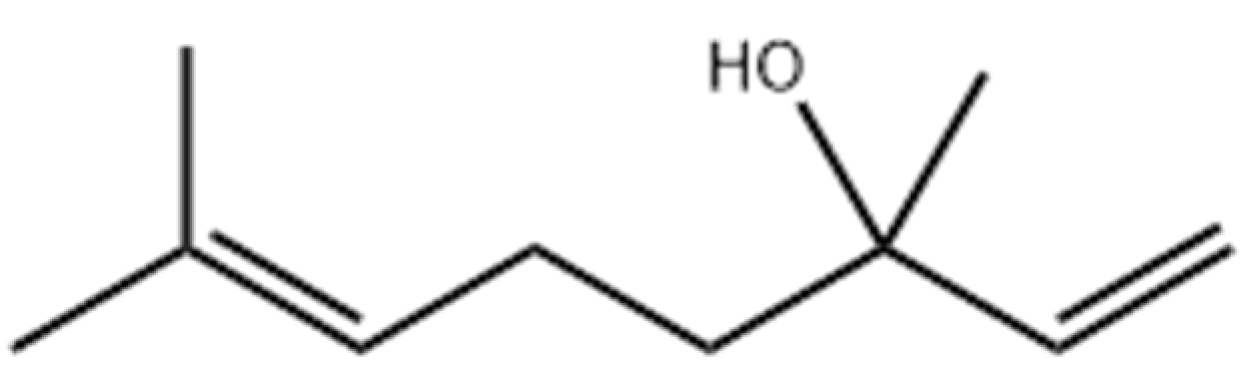
Figure 1.
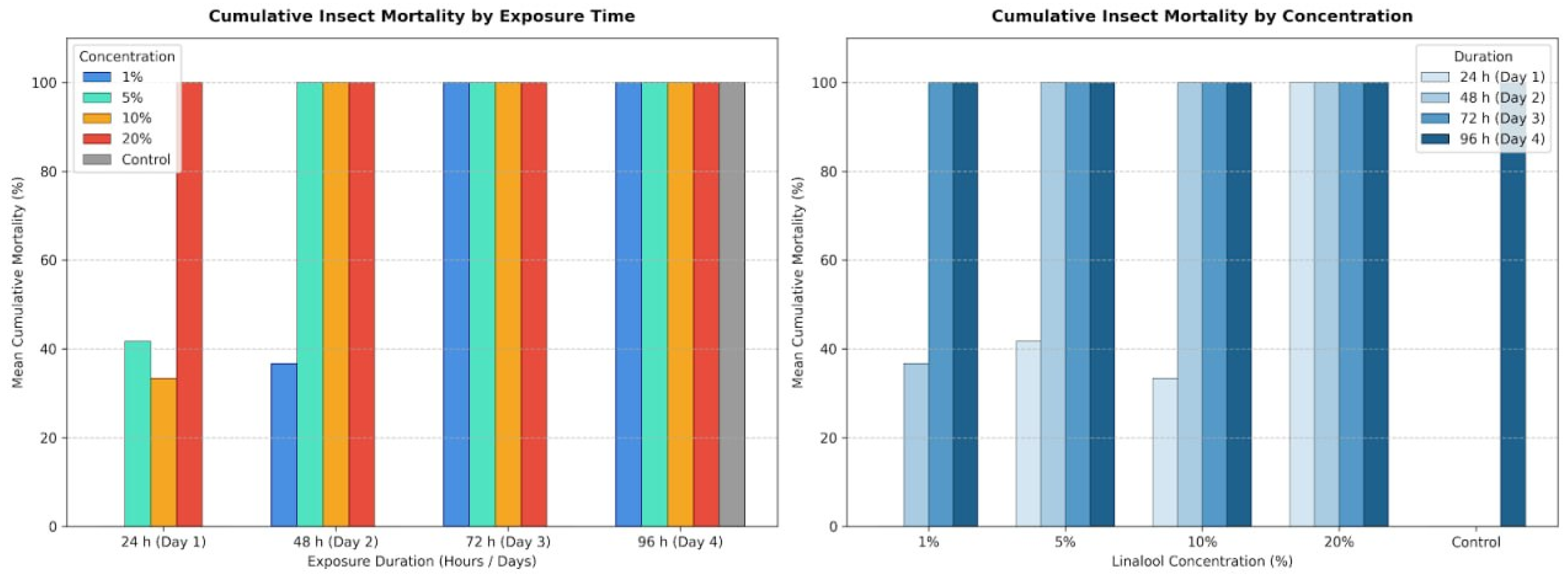
Figure 2.
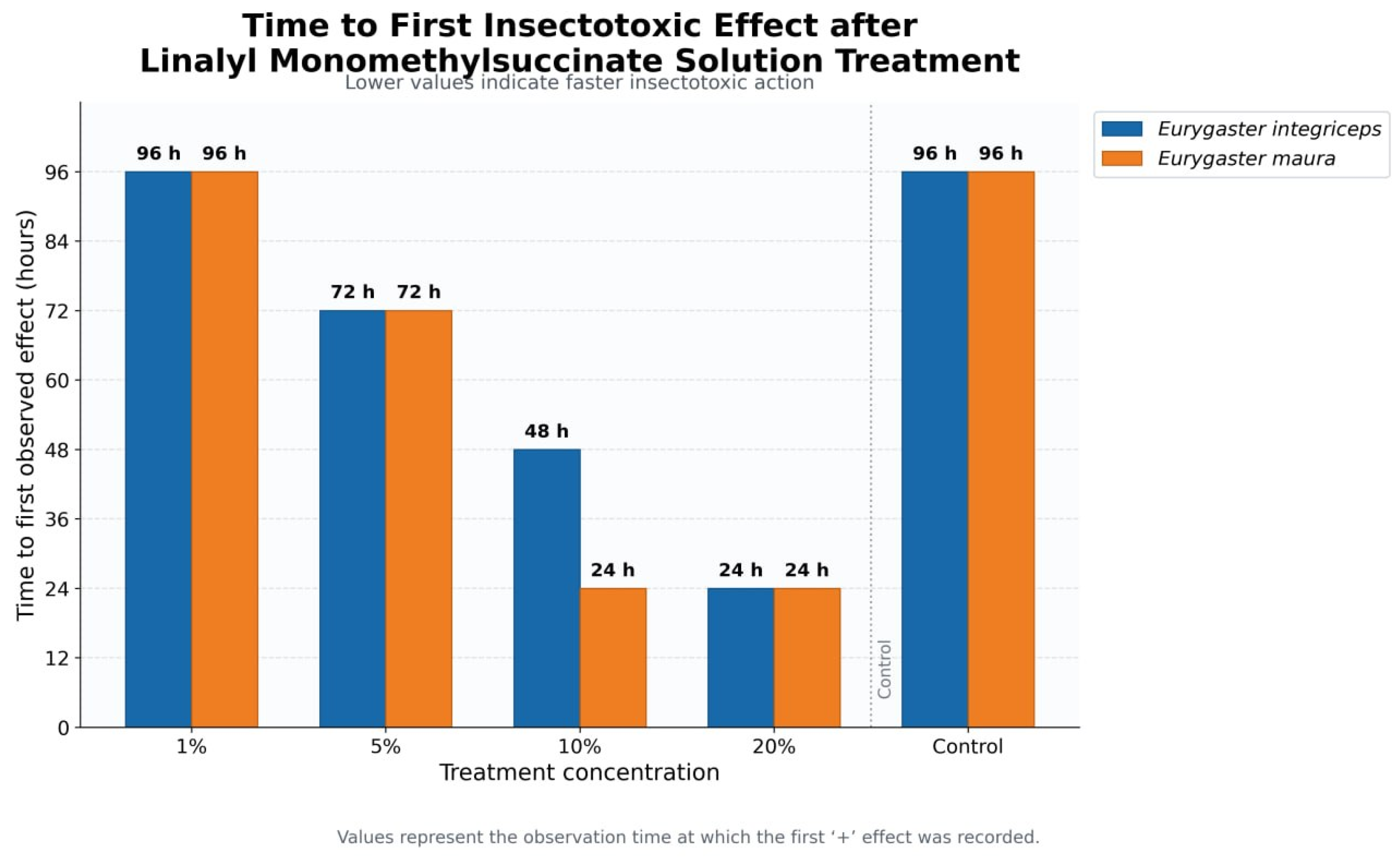
Figure 3.
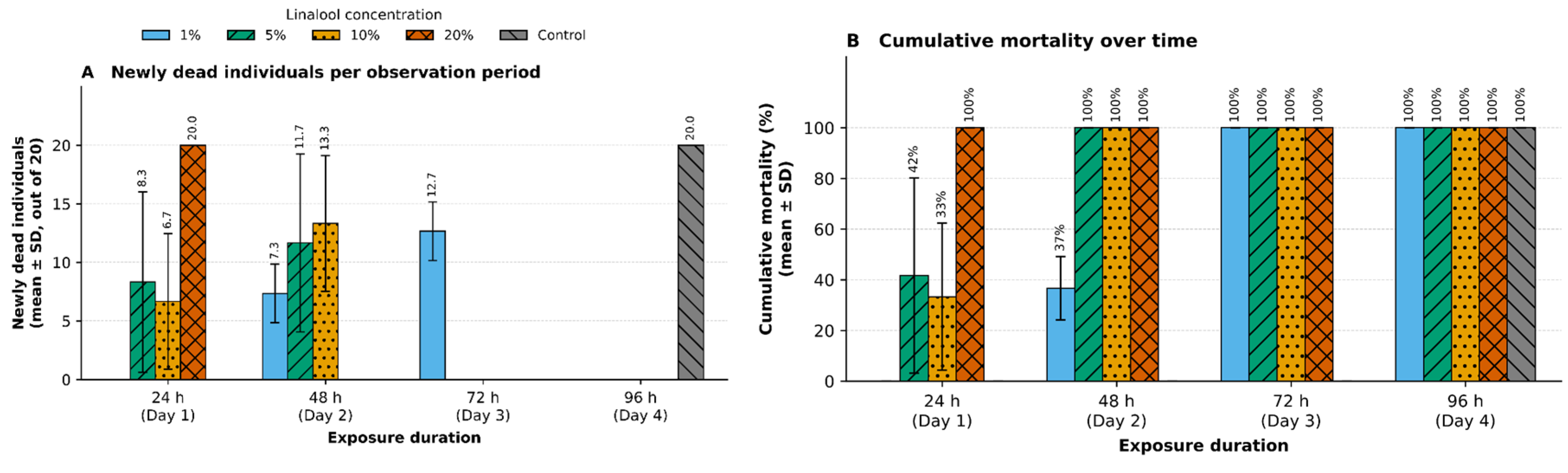
Figure 4.
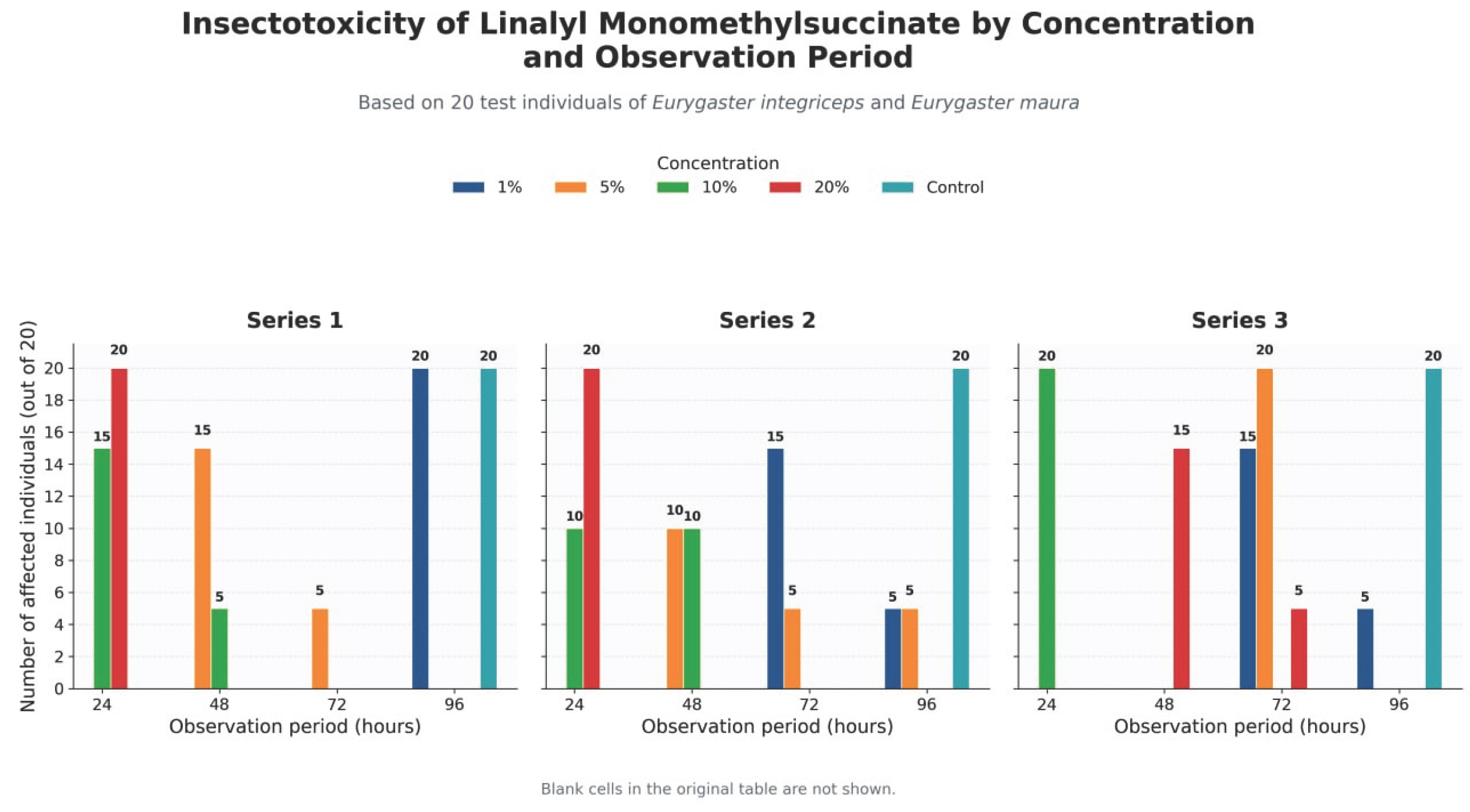

Table 1.
Insectotoxicity after linalool treatment.
| linalool Treatment | Eurygaster integriceps | Eurygaster maura | |||||||||
|---|---|---|---|---|---|---|---|---|---|---|---|
| Concentrations % | Concentrations % | ||||||||||
| Days | Hours | 1 | 5 | 10 | 20 | Control | 1 | 5 | 10 | 20 | Control |
| 1 | 24 | + | + | + | |||||||
| 2 | 48 | + | + | + | |||||||
| 3 | 72 | + | + | + | |||||||
| 4 | 96 | + | |||||||||
Table 2.
Depending insectotoxicity from concentration linalool solutions and period, with three replicates, on base of 20 test individuals of Eurygaster integriceps, Eurygaster maura.
Table 2.
Depending insectotoxicity from concentration linalool solutions and period, with three replicates, on base of 20 test individuals of Eurygaster integriceps, Eurygaster maura.
| Duration | Linalool Treatment | |||||||||||||||
|---|---|---|---|---|---|---|---|---|---|---|---|---|---|---|---|---|
| Concentration,% | Concentration,% | Concentrations,% | ||||||||||||||
| days | hours | 1 | 5 | 10 | 20 | к | 1 | 5 | 10 | 20 | к | 1 | 5 | 10 | 20 | к |
| 1 | 24 | 15 | 10 | 20 | 10 | 10 | 20 | 20 | ||||||||
| 2 | 48 | 10 | 5 | 10 | 5 | 10 | 10 | 7 | 20 | 20 | ||||||
| 3 | 72 | 10 | 15 | 13 | ||||||||||||
| 4 | 96 | 20 | 20 | |||||||||||||
Table 3.
Insectotoxicity after linalyl monomethylsuccinate solution treatment.
| Linalyl Monomethylsuccinate Solution Treatment | Eurygaster integriceps | Eurygaster maura | |||||||||
|---|---|---|---|---|---|---|---|---|---|---|---|
| Concentrations % | Concentrations % | ||||||||||
| Days | Hours | 1 | 5 | 10 | 20 | Control | 1 | 5 | 10 | 20 | Control |
| 1 | 24 | + | + | + | |||||||
| 2 | 48 | + | |||||||||
| 3 | 72 | + | + | ||||||||
| 4 | 96 | + | + | + | + | ||||||
Table 4.
Depending insectotoxicity from concentration linalyl monomethylsuccinate solution on base of 20 test individuals of Eurygaster integriceps, Eurygaster maura.
Table 4.
Depending insectotoxicity from concentration linalyl monomethylsuccinate solution on base of 20 test individuals of Eurygaster integriceps, Eurygaster maura.
| Duration | Treatment of Monomethylsuccinate Linalyl Solutions | |||||||||||||||
|---|---|---|---|---|---|---|---|---|---|---|---|---|---|---|---|---|
| Concentrations,% | Concentrations,% | Concentrations,% | ||||||||||||||
| days | hours | 1 | 5 | 10 | 20 | к | 1 | 5 | 10 | 20 | к | 1 | 5 | 10 | 20 | к |
| 1 | 24 | 15 | 20 | 10 | 20 | 20 | ||||||||||
| 2 | 48 | 15 | 5 | 10 | 10 | 15 | ||||||||||
| 3 | 72 | 5 | 15 | 5 | 15 | 20 | 5 | |||||||||
| 4 | 96 | 20 | 20 | 5 | 5 | 20 | 5 | 20 | ||||||||
Disclaimer/Publisher’s Note: The statements, opinions and data contained in all publications are solely those of the individual author(s) and contributor(s) and not of MDPI and/or the editor(s). MDPI and/or the editor(s) disclaim responsibility for any injury to people or property resulting from any ideas, methods, instructions or products referred to in the content. |
© 2026 by the authors. Licensee MDPI, Basel, Switzerland. This article is an open access article distributed under the terms and conditions of the Creative Commons Attribution (CC BY) license (http://creativecommons.org/licenses/by/4.0/).
Copyright: This open access article is published under a Creative Commons CC BY 4.0 license, which permit the free download, distribution, and reuse, provided that the author and preprint are cited in any reuse.