

Submitted:
21 October 2026
Posted:
23 October 2026
You are already at the latest version
Abstract
Thrombocytopenia is one of the most common hematological complications of chronic liver disease (CLD) and becomes clinically relevant mainly when invasive diagnostic or therapeutic procedures are required. Its pathogenesis is multifactorial and includes splenic sequestration secondary to portal hypertension, reduced hepatic thrombopoietin (TPO) synthesis, bone marrow suppression, immune-mediated platelet destruction, and increased platelet consumption. In line with the concept of rebalanced hemostasis, platelet count alone is a poor predictor of procedural bleeding in CLD, and contemporary guidelines increasingly emphasize procedure-specific bleeding risk and patient-related factors rather than correction of an isolated laboratory value. Prophylactic platelet concentrate (PC) transfusion provides only a transient and often unpredictable platelet increment in this population and carries the risk of transfusion reactions, alloimmunization, and platelet transfusion refractoriness. This review summarizes the pathophysiology and clinical significance of thrombocytopenia in CLD, critically evaluates the indications for and efficacy of PC transfusion, and discusses alternative strategies, including recombinant human TPO, TPO receptor agonists (TPO-RAs), splenic interventions, and portal decompression. PC transfusion remains essential when rapid correction is required, particularly in active bleeding or urgent procedures, whereas the TPO-Ras, avatrombopag and lusutrombopag, offer an effective oral alternative in selected patients undergoing elective procedures. A management algorithm integrating these considerations is proposed.
Keywords:
chronic liver disease
; cirrhosis
; thrombocytopenia
; platelet transfusion
; platelet concentrate
; thrombopoietin receptor agonists
; avatrombopag
; lusutrombopag
; periprocedural bleeding
1. Introduction
Thrombocytopenia and/or platelet dysfunction are among the most common hematological complications of chronic liver disease (CLD). Thrombocytopenia frequently precedes the clinical signs of hepatic decompensation (ascites, encephalopathy) and is often the first manifestation of CLD. From a clinical perspective, thrombocytopenia is of particular importance when patients with CLD require invasive diagnostic or therapeutic procedures—given the risk of procedure-related bleeding, the decision regarding prophylactic platelet concentrate (PC) transfusion becomes a significant challenge.
The traditional perception of CLD as an acquired bleeding disorder has, however, undergone substantial revision. Abnormalities frequently observed in laboratory tests, including thrombocytopenia and prolongation of the prothrombin time and international normalized ratio (PT/INR), do not fully reflect the complex changes in hemostasis associated with CLD [1,2,3,4]. Reduced levels of procoagulant factors are accompanied by reduction of natural anticoagulants, while thrombocytopenia may be partially compensated by increased levels of von Willebrand factor and decreased activity of ADAMTS13 [5]. These simultaneous changes have led to the concept of “rebalanced hemostasis”, in which the activity of the coagulation system may shift toward either bleeding or thrombosis, depending on the clinical context [6].
Nevertheless, prophylactic PC transfusion has traditionally been used to increase platelet counts in thrombocytopenic patients with CLD before invasive procedures. A platelet count of 50 × 10⁹/L has frequently been used as a target in clinical practice, particularly before procedures considered to carry a higher bleeding risk. However, the evidence supporting a universal platelet threshold is limited, and recommendations differ among professional societies [1,2,3,7,8,9,10]. Current guidelines increasingly emphasize assessment of the overall clinical situation and procedure-specific bleeding risk rather than correction of an isolated laboratory abnormality. In particular, routine correction of thrombocytopenia is generally not recommended before procedures associated with a low risk of bleeding [2,3,7].
Increasing attention is also being paid to the fact that PC transfusion is not a procedure without physiological consequences. In patients with CLD, the rise in platelet count following transfusion may be unpredictable and short-lived [2,10]. The PC transfusion also carries risks typical of blood components use, including febrile or allergic transfusion reactions, alloimmunization, transfusion-related acute lung injury (TRALI) and very rarely transfusion-transmitted infection [2,11]. Repeated transfusions can additionally lead to platelet transfusion refractoriness due to alloimmunization, potentially limiting the efficacy of subsequent interventions. Furthermore, concerns have been raised that administering pro-hemostatic blood components like PC and plasma to CLD patients, with an impaired hemostatic balance, could potentially shift that balance toward a hypercoagulable state [2].
The evolving understanding of hemostasis in CLD has stimulated the development of alternative management strategies for thrombocytopenia in this patient population. The greatest interest focuses on therapy with thrombopoietin receptor agonists (TPO-RAs)—avatrombopag and lusutrombopag. Additionally, modern approaches are no longer limited solely to increasing platelet count, but also involve assessing whether parameter correction is actually necessary, identifying which patients stand to benefit most from intervention, and determining which therapeutic strategy offers the most favorable efficacy-to-safety ratio [1,2,3,7,9,10].
This review summarizes the pathophysiological basis and clinical significance of thrombocytopenia in CLD, critically evaluates the indications and efficacy of PC transfusion, and discusses alternative strategies, with particular emphasis on TPO-RAs.
2. Pathophysiological Basis of Thrombocytopenia in Chronic Liver Disease
The pathophysiology of thrombocytopenia in CLD is complex and multifactorial (Figure 1). Although hypersplenism and splenic sequestration have traditionally been considered the predominant mechanisms, reduced platelet production, bone marrow suppression, immune-mediated platelet destruction, and increased platelet consumption may also contribute [12,13,14].
Portal hypertension promotes splenic congestion and enlargement, resulting in increased sequestration of circulating platelets. In parallel, progressive hepatic dysfunction may reduce the production of thrombopoietin (TPO), which is synthesized predominantly by the liver and represents the principal physiological regulator of megakaryopoiesis and platelet production [12,13,14]. Reduced TPO-mediated stimulation of megakaryocytes therefore provides an additional mechanism for thrombocytopenia in advanced liver disease and constitutes the biological rationale for the use of TPO receptor agonists in this population.
Platelet production may be further impaired by bone marrow suppression associated with alcohol use, viral infection, medications, and other factors accompanying CLD [12,14]. Increased platelet destruction due to immune-mediated mechanisms has been described particularly in chronic hepatitis C infection, but may also occur in autoimmune liver diseases [15,16]. Excessive platelet consumption is also significant, resulting from a shift in the hemostatic balance toward a hypercoagulable state accompanied by hyperfibrinolysis [17,18]. Consequently, the relative contribution of individual mechanisms varies according to the etiology and severity of liver disease.
3. Thrombocytopenia and Bleeding Risk in Chronic Liver Disease
In patients with CLD, particularly cirrhosis, platelet count alone is a poor predictor of bleeding risk and should not be used in isolation to determine the need for prophylactic PC transfusion [1,2]. This reflects the complex rebalancing of hemostasis in cirrhosis, in which thrombocytopenia and reduced levels of procoagulant factors coexist with compensatory changes in prohemostatic and anticoagulant pathways [1,2,6]. Consequently, mild-to-moderate thrombocytopenia does not generally require correction in the absence of active bleeding or a planned procedure associated with a clinically relevant bleeding risk [1,2].
The management of thrombocytopenia before invasive procedures should therefore be individualized according to the bleeding risk of the procedure, severity of thrombocytopenia, urgency of the intervention, and additional patient-related risk factors, including renal dysfunction, infection or sepsis, and severity of liver disease [1,2,3,7,8]. Routine correction of thrombocytopenia is generally not recommended before procedures associated with a low risk of bleeding, whereas a more individualized approach is warranted for high-risk procedures [1,2,3,7,8,9,10]. Procedural bleeding risk categories and the corresponding approach to thrombocytopenia are summarized in Table 1.
For procedures associated with a higher bleeding risk, the optimal platelet threshold remains uncertain and recommendations differ among professional societies [1,3,7,8]. A platelet count of ≥50 × 10⁹/L is frequently used as a pragmatic target, particularly for high-risk procedures, whereas some recommendations accept lower thresholds of approximately 30 × 10⁹/L [7]. Therefore, a universal platelet threshold cannot be recommended for all invasive procedures in patients with CLD, and the decision to increase the platelet count should be based on the individual clinical and procedural context rather than an isolated laboratory value [1,2,3,7,8,9,10].
Importantly, platelet transfusion thresholds established for the general thrombocytopenic population should not be directly extrapolated to patients with cirrhosis. Whereas general transfusion guidelines provide procedure-specific numerical platelet thresholds, contemporary liver disease guidelines increasingly emphasize procedural bleeding risk, patient-specific risk factors, and individualized assessment rather than correction of an isolated platelet count (Table 2) [1,2,3,7,8,9,10].
Accordingly, prophylactic PC transfusion should not be performed solely to normalize the platelet count. When correction of severe thrombocytopenia is considered necessary, the choice between PC transfusion and alternative strategies, including TPO-RAs in patients undergoing scheduled procedures, should take into account the urgency of the intervention, anticipated duration of the platelet response, potential adverse effects, and patient-specific thrombotic and bleeding risks [1,2,3,8,11].
4. Management of Thrombocytopenia in Chronic Liver Disease
4.1. Platelet Concentrate Transfusion
PC transfusion is a widely available and rapidly acting method of increasing the platelet count in patients with thrombocytopenia. However, it provides only transient correction of thrombocytopenia and does not address its underlying mechanisms [2,11]. Moreover, PC transfusion requires access to blood components and appropriate transfusion facilities and may be associated with adverse transfusion reactions, most importantly alloimmunization leading to platelet transfusion refractoriness, and other transfusion-related complications [2,11,19]. These limitations are particularly relevant in patients with CLD, in whom hypersplenism and increased platelet consumption may result in a smaller and less predictable post-transfusion platelet increment [2,11]. Consequently, the decision to administer prophylactic PC transfusion should not be based only on the platelet count but should take into consideration the presence of active bleeding, urgency and bleeding risk of the planned procedure, severity of thrombocytopenia, and availability of alternative strategies [1,2]. PC transfusion remains particularly relevant when rapid correction of severe thrombocytopenia is required, including emergency procedures and clinically significant active bleeding, whereas alternative approaches may be considered in appropriately selected patients undergoing elective procedures [1,2,11].
4.2. Platelet Dose and Expected Response
A standard adult therapeutic dose generally consists of one apheresis platelet unit or an equivalent pooled platelet concentrate, both corresponding to 2.2 × 10¹¹ platelets/m². Alternatively, a lower dose of 1.1 × 10¹¹ platelets/m² has been evaluated in patients with hypoproliferative thrombocytopenia undergoing chemotherapy or hematopoietic stem-cell transplantation. In this population, the lower dose provided comparable protection against bleeding to the standard dose of 2.2 × 10¹¹ platelets/m² and reduced the total number of platelets transfused, although more frequent transfusions were required. Importantly, this strategy has not been specifically evaluated in patients with CLD, and its applicability to this population therefore remains uncertain [20].
In an average adult, one therapeutic dose would ordinarily be expected to increase the peripheral platelet count by approximately 30–50 × 10⁹/L [20]. However, the increment may be substantially lower in the presence of splenomegaly, ongoing bleeding, infection, disseminated intravascular coagulation, or increased platelet consumption [19,20].
The efficacy of transfusion can be assessed clinically and, when appropriate, by measurement of the post-transfusion platelet count. Platelet increment may be assessed using the absolute platelet increment (API), corrected count increment (CCI), or percent platelet recovery (PPR) (Table 3). CCI and PPR account for patient size and the number of platelets transfused and are therefore more useful than the absolute increment when platelet transfusion refractoriness is suspected. An inadequate platelet increment within 10–60 minutes after transfusion may suggest immune-mediated refractoriness, particularly HLA alloimmunization, whereas an initially adequate increment followed by a substantial decline at 18–24 hours is more consistent with accelerated non-immune platelet consumption or sequestration, including bleeding, sepsis, disseminated intravascular coagulation, or splenomegaly [19,21].
Routine or prophylactic PC transfusion should generally be avoided in immune-mediated or thrombotic thrombocytopenic disorders, including thrombotic thrombocytopenic purpura (TTP), immune thrombocytopenia (ITP), heparin-induced thrombocytopenia (HIT), and post-transfusion purpura (PTP) [22,23,24,25]. The principal mechanisms underlying thrombocytopenia in these disorders and the rationale for avoiding or considering routine PC transfusion are summarized in Table 4. In these conditions, thrombocytopenia results predominantly from accelerated platelet destruction, consumption, or pathological platelet activation rather than impaired platelet production; consequently, transfused platelets may provide only a limited or transient increase in platelet count [22,23,24,25]. In TTP and HIT, routine prophylactic platelet transfusion is particularly discouraged because of the underlying prothrombotic nature of these disorders and concerns regarding potential exacerbation of thrombotic complications [22,25]. Nevertheless, these conditions should not be regarded as absolute contraindications to platelet transfusion. In TTP and HIT, transfusion may be considered in the presence of severe or life-threatening bleeding or, in selected circumstances, when an urgent invasive procedure is required [22,23]. In ITP, transfused platelets are susceptible to immune-mediated destruction and platelet transfusion is therefore generally reserved for critical or life-threatening bleeding, typically in combination with therapies directed at the underlying immune process, such as intravenous immunoglobulin and corticosteroids [24]. Similarly, in PTP, management is primarily directed toward suppression of the immune-mediated platelet destruction, with intravenous immunoglobulin constituting first-line therapy; platelet transfusion is generally reserved for patients with severe bleeding [25].
4.3. Recombinant Human Thrombopoietin and Thrombopoietin Receptor Agonists
Initially, considerable expectations were associated with the development of recombinant human TPO (rhTPO), which, through a substitution mechanism, effectively increased platelet counts in thrombocytopenia of various etiologies [26]. However, concerns emerged following reports of neutralizing antibodies that cross-reacted with endogenous TPO and, in some patients, resulted in persistent or worsening thrombocytopenia [27]. These safety concerns limited the further development of some early recombinant TPO formulations and stimulated the search for alternative strategies to activate the TPO pathway, ultimately contributing to the development of TPO-RAs. Nevertheless, rhTPO itself has not been universally abandoned and continues to be investigated and used in selected clinical settings, with studies evaluating its efficacy and safety in patients with chronic liver disease and thrombocytopenia (Table 5).
These limitations have stimulated the development of alternative approaches to the periprocedural management of thrombocytopenia in CLD. TPO-RAs have emerged as an increasingly important alternative to prophylactic platelet transfusion for the management of severe thrombocytopenia in selected patients with CLD undergoing planned invasive procedures [33,34,35]. These agents stimulate the TPO receptor (c-Mpl) expressed on megakaryocytes and their progenitor cells, activating intracellular signaling pathways, including the JAK–STAT pathway, and thereby promoting megakaryocyte proliferation, differentiation, and maturation, ultimately increasing platelet production [35,36]. TPO-RAs do not simply substitute for endogenous TPO; depending on the agent and its receptor-binding site, their effects may complement endogenous TPO-mediated signaling.
Several TPO-RAs have been developed, including eltrombopag, romiplostim, avatrombopag, lusutrombopag, and hetrombopag. Their efficacy and safety have been evaluated across clinical studies of varying design, size, and therapeutic setting. The major clinical studies investigating TPO-RAs in patients with CLD and thrombocytopenia are summarized in Table 6.
Among these agents, avatrombopag and lusutrombopag have been most extensively evaluated for the peri-procedural management of thrombocytopenia in CLD and have demonstrated a significant reduction in the requirement for prophylactic platelet transfusion or rescue therapy compared with placebo [33,34,35]. In contrast, the ELEVATE trial of eltrombopag was terminated prematurely because of an increased incidence of portal venous thrombosis, highlighting that efficacy and safety findings should not be generalized across the entire TPO-RA class [34,38].
The timing of TPO-RA administration depends on the specific agent. For avatrombopag, treatment is administered for 5 consecutive days, with the planned procedure generally performed 5–8 days after the last dose. Lusutrombopag is administered once daily for up to 7 days, with the procedure performed within the subsequently defined treatment window [33,35]. These regimens produce a transient increase in platelet count sufficient to cover the peri-procedural period, after which platelet counts gradually decline toward baseline. Phase III trials of avatrombopag (ADAPT-1 and ADAPT-2) and lusutrombopag (L-PLUS 1 and L-PLUS 2) demonstrated that a substantial proportion of treated patients avoided PC transfusion and rescue therapy for bleeding [33,34,35]. Thus, TPO-RAs, particularly avatrombopag and lusutrombopag, provide an effective oral alternative to prophylactic PC transfusion in appropriately selected patients with CLD and severe thrombocytopenia undergoing elective invasive procedures. Nevertheless, their impact on clinically important bleeding outcomes and their cost-effectiveness relative to other management strategies remain less certain, with economic analyses yielding differing conclusions [42,43].
4.4. Other Therapeutic Options for Thrombocytopenia in Chronic Liver Disease
In selected patients in whom an adequate platelet response cannot be achieved with TPO-RAs, or in whom PC transfusion is ineffective or inappropriate, other therapeutic strategies may occasionally be considered. These approaches should be tailored to the predominant mechanism of thrombocytopenia and generally have a limited role in routine periprocedural management of patients with CLD [14,44].
4.4.1. Splenic Invasive Interventions
In patients with cirrhosis and clinically significant hypersplenism, interventions aimed at reducing splenic platelet sequestration include splenectomy and partial splenic embolization (PSE). Splenectomy can result in a substantial and sustained increase in platelet count; however, its use is limited by the invasive nature of the procedure and the risk of serious complications, particularly portal or splenic vein thrombosis, perioperative bleeding, and severe infection [14,44,45]. A systematic review and meta-analysis including patients with cirrhosis reported a substantial incidence of splanchnic vein thrombosis following splenectomy, further supporting careful patient selection [44]. Consequently, splenectomy is not routinely performed in CLD patients solely for correction of thrombocytopenia and is generally reserved for selected patients with severe hypersplenism in whom the anticipated benefits outweigh the procedural risks [14,44].
Total splenic artery embolization was historically investigated as a less invasive alternative to splenectomy but has largely been abandoned because extensive splenic infarction is associated with potentially severe complications, including splenic abscess, rupture, sepsis, and death [14]. Partial splenic embolization (PSE) was subsequently developed to preserve viable splenic tissue while reducing splenic sequestration. PSE can produce a clinically relevant increase in platelet count in patients with cirrhosis and hypersplenism and generally has a more favorable risk–benefit profile than total splenic embolization or splenectomy [14,44,46]. However, its efficacy and complication rate depend on the extent of splenic embolization: greater embolized volumes are associated with a larger hematological response but also with a higher risk of complications [14,46]. Potential adverse events include post-embolization syndrome, splenic abscess, infection, and portal or splenic vein thrombosis [44,45,46]. Although the increase in platelet count may persist for months or longer in some patients, platelet counts may gradually decline during follow-up [14,44].
Radiofrequency ablation (RFA) of the spleen has also been investigated as a minimally invasive treatment for hypersplenism in patients with cirrhosis. In a randomized study comparing splenic RFA with splenectomy, both interventions initially increased platelet and leukocyte counts, although the hematological response after RFA declined over time and depended on the proportion of splenic tissue ablated [47]. These findings suggest that splenic RFA may represent an option in selected patients; however, the available evidence remains limited and the procedure has not become a standard strategy for management of thrombocytopenia in CLD [47].
4.4.2. Portal Decompression
Because portal hypertension contributes to splenic congestion and platelet sequestration, portal decompression with a transjugular intrahepatic portosystemic shunt (TIPS) may improve thrombocytopenia in some patients with cirrhosis, particularly those with more severe baseline thrombocytopenia [48,49]. However, the platelet response following TIPS is variable, and available studies have reported inconsistent results [48,49,50]. Importantly, thrombocytopenia alone is not an established indication for TIPS. The procedure should be performed according to established indications related to complications of portal hypertension, such as recurrent or refractory variceal bleeding and refractory ascites, with a potential improvement in platelet count regarded as an additional rather than primary therapeutic effect [48,49,50].
4.4.3. Management of Immune-Mediated Thrombocytopenia
When thrombocytopenia in a patient with liver disease has a substantial immune-mediated component, management should be directed at the underlying mechanism rather than at hypersplenism. This distinction is particularly relevant in patients with concomitant immune thrombocytopenia (ITP). Corticosteroids and intravenous immunoglobulin (IVIG) remain important therapies when a rapid increase in platelet count is required in ITP [24,51]. IVIG can produce a relatively rapid but usually transient platelet response and is therefore particularly useful in patients with severe bleeding or when an urgent increase in platelet count is required [24].
In patients with critical bleeding due to ITP, current recommendations support complex treatment, including high-dose corticosteroids and IVIG together with PC transfusion, with antifibrinolytic therapy considered when appropriate [51]. In this setting, PC transfusion should not be withheld because of anticipated immune-mediated platelet destruction; rather, it is used to provide an immediate hemostatic effect while therapies directed against the underlying immune process take effect [24,51].
The use of corticosteroids in patients with CLD nevertheless requires careful consideration of the underlying liver disease, comorbidities, and infectious risk. Therefore, corticosteroids and IVIG should not be regarded as general treatments for thrombocytopenia associated with cirrhosis but rather as targeted therapies when an immune-mediated mechanism, such as concomitant ITP, has been established or is strongly suspected [24,51].
5. Conclusions
Thrombocytopenia in CLD is a complex and multifactorial condition that requires an individualized approach rather than management based solely on platelet count. Although PC transfusion remains an important option when rapid correction is required, particularly in active bleeding or urgent invasive procedures, its effect is transient and its use may be associated with relevant complications. In patients undergoing elective procedures, TPO-RAs, particularly avatrombopag and lusutrombopag, provide an effective alternative to prophylactic platelet transfusion in appropriately selected patients. Therefore, the optimal management strategy should integrate procedural bleeding risk, urgency of intervention, severity and mechanism of thrombocytopenia, and individual bleeding and thrombotic risks. A proposed algorithm for the management of thrombocytopenia associated with CLD is presented in Figure 2.
Author Contributions
Conceptualization, P.R. (Piotr Radziwon); writing—original draft preparation, P.R. (Piotr Radziwon), T.W., J.T. and P.R. (Paweł Radziwon); writing—review and editing, P.R. (Piotr Radziwon) and T.W.; supervision, P.R. (Piotr Radziwon). All authors have read and agreed to the published version of the manuscript.
Funding
This research received no external funding.
Institutional Review Board Statement
Not applicable.
Informed Consent Statement
Not applicable.
Data Availability Statement
No new data were created or analyzed in this study. Data sharing is not applicable to this article.
Acknowledgments
During the preparation of this manuscript, the authors used ChatGPT (OpenAI; GPT-5.6 Sol) for the purposes of improving language and readability and refining wording and organization and Gemini (Google; Gemini 3.6 Flash) for preparation of the Figure 1. The authors have reviewed and edited the output and take full responsibility for the content of this publication.
Conflicts of Interest
The authors declare no conflicts of interest.
References
- European Association for the Study of the Liver. EASL Clinical Practice Guidelines on prevention and management of bleeding and thrombosis in patients with cirrhosis. J. Hepatol. 2022, 76, 1151–1184. [Google Scholar] [CrossRef]
- Roberts, L.N. How to manage hemostasis in patients with liver disease during interventions. Hematol. Am. Soc. Hematol. Educ. Program 2023, 2023, 274–280. [Google Scholar] [CrossRef]
- Northup, P.G.; Garcia-Pagan, J.C.; Garcia-Tsao, G.; Intagliata, N.M.; Superina, R.A.; Roberts, L.N.; Lisman, T.; Valla, D.C. Vascular liver disorders, portal vein thrombosis, and procedural bleeding in patients with liver disease: 2020 practice guidance by the American Association for the Study of Liver Diseases. Hepatology 2021, 73, 366–413. [Google Scholar] [CrossRef]
- Czempik, P.F.; Gałuszewski, M.; Olszewski, J.; Kaczara, S. Hemostasis in Liver Disease Within Patient Blood Management: A Scoping Review of the Current Literature. J. Clin. Med. 2026, 15, 3296. [Google Scholar] [CrossRef]
- Uemura, M.; Fujimura, Y.; Matsumoto, M.; Ishizashi, H.; Kato, S.; Matsuyama, T.; Isonishi, A.; Ishikawa, M.; Yagita, M.; Morioka, C.; et al. Comprehensive analysis of ADAMTS13 in patients with liver cirrhosis. Thromb. Haemost. 2008, 99, 1019–1029. [Google Scholar] [CrossRef]
- Lisman, T.; Hernandez-Gea, V.; Magnusson, M.; Roberts, L.; Stanworth, S.; Thachil, J.; Tripodi, A. The concept of rebalanced hemostasis in patients with liver disease: Communication from the ISTH SSC Working Group on Hemostatic Management of Patients with Liver Disease. J. Thromb. Haemost. 2021, 19, 1116–1122. [Google Scholar] [CrossRef]
- Damjanovska, S. Peri-Procedural Management of Bleeding Risk in Cirrhosis. In American Association for the Study of Liver Diseases; Available online; AASLD Liver Fellow Network, 1 July 2024; (accessed on 30 September 2026). [Google Scholar]
- Patel, I.J.; Rahim, S.; Davidson, J.C.; Hanks, S.E.; Tam, A.L.; Walker, T.G.; Wilkins, L.R.; Sarode, R.; Weinberg, I. Society of Interventional Radiology consensus guidelines for the periprocedural management of thrombotic and bleeding risk in patients undergoing percutaneous image-guided interventions—Part II: Recommendations. J. Vasc. Interv. Radiol. 2019, 30, 1168–1184.e1. [Google Scholar] [CrossRef]
- Korsak, J.; Fabijańska-Mitek, J.; Jędrzejczak, W.W.; Nowacka, E.; Radziwon, P.; Rzepecki, P. Wytyczne w Zakresie Leczenia Krwią i Jej Składnikami oraz Produktami Krwiopochodnymi w Podmiotach Leczniczych [Guidelines for the Treatment with Blood, Blood Components and Blood-Derived Products in Healthcare Facilities], (In Polish), 3rd ed.; PZWL: Warsaw, Poland, 2020. [Google Scholar]
- Metcalf, R.A.; Nahirniak, S.; Guyatt, G.; Bathla, A.; White, S.K.; Al-Riyami, A.Z.; Jug, R.C.; La Rocca, U.; Callum, J.L.; Cohn, C.S.; et al. Platelet transfusion: 2025 AABB and ICTMG international clinical practice guidelines. JAMA 2025, 334, 606–617. [Google Scholar] [CrossRef]
- Nilles, K.M.; Caldwell, S.H.; Flamm, S.L. Thrombocytopenia and procedural prophylaxis in the era of thrombopoietin receptor agonists. Hepatol. Commun. 2019, 3, 1423–1434. [Google Scholar] [CrossRef]
- Mitchell, O.; Feldman, D.M.; Diakow, M.; Sigal, S.H. The pathophysiology of thrombocytopenia in chronic liver disease. Hepat. Med. 2016, 8, 39–50. [Google Scholar] [CrossRef]
- Scharf, R.E. Thrombocytopenia and hemostatic changes in acute and chronic liver disease: Pathophysiology, clinical and laboratory features, and management. J. Clin. Med. 2021, 10, 1530. [Google Scholar] [CrossRef]
- Hayashi, H.; Beppu, T.; Shirabe, K.; Maehara, Y.; Baba, H. Management of thrombocytopenia due to liver cirrhosis: A review. World J. Gastroenterol. 2014, 20, 2595–2605. [Google Scholar] [CrossRef]
- Panzer, S.; Seel, E.; Brunner, M.; Körmöczi, G.F.; Schmid, M.; Ferenci, P.; Peck-Radosavljevic, M. Platelet autoantibodies are common in hepatitis C infection, irrespective of the presence of thrombocytopenia. Eur. J. Haematol. 2006, 77, 513–517. [Google Scholar] [CrossRef]
- Huang, C.E.; Chen, W.M.; Wu, Y.Y.; Shen, C.H.; Hsu, C.C.; Li, C.P.; Chen, M.C.; Chang, J.J.; Chen, Y.Y.; Lu, C.H.; et al. Comparison of antiplatelet antibody profiles between hepatitis C virus-associated immune thrombocytopenia and primary immune thrombocytopenia. Platelets 2021, 32, 1043–1050. [Google Scholar] [CrossRef]
- Kujovich, J.L. Hemostatic defects in end stage liver disease. Crit. Care Clin. 2005, 21, 563–587. [Google Scholar] [CrossRef]
- Ikura, Y.; Ohsawa, M.; Okada, M.; Iwai, Y.; Wakasa, K. The significance of platelet consumption in the development of thrombocytopenia in patients with cirrhosis. Am. J. Med. Sci. 2013, 346, 199–203. [Google Scholar] [CrossRef]
- Cohn, C.S. Platelet transfusion refractoriness: How do I diagnose and manage? Hematol. Am. Soc. Hematol. Educ. Program 2020, 2020, 527–532. [Google Scholar] [CrossRef]
- Slichter, S.J.; Kaufman, R.M.; Assmann, S.F.; McCullough, J.; Triulzi, D.J.; Strauss, R.G.; Gernsheimer, T.B.; Ness, P.M.; Brecher, M.E.; Josephson, C.D.; et al. Dose of prophylactic platelet transfusions and prevention of hemorrhage. N. Engl. J. Med. 2010, 362, 600–613. [Google Scholar] [CrossRef]
- Youk, H.J.; Hwang, S.H.; Oh, H.B.; Ko, D.H. Evaluation and management of platelet transfusion refractoriness. Blood Res. 2022, 57, S6–S10. [Google Scholar] [CrossRef]
- García Muñoz, N.; Ortega, S.; Solanich, X.; Cid, J.; Díaz, M.; Moreno, A.B.; Ancochea, Á.; Santos, M.; Hernández, I.; Sanchez, J.M.; et al. Diagnosis and clinical management of thrombotic thrombocytopenic purpura (TTP): A consensus statement from the TTP Catalan group. Blood Transfus. 2024, 22, 176–184. [Google Scholar] [CrossRef]
- Cuker, A.; Arepally, G.M.; Chong, B.H.; Cines, D.B.; Greinacher, A.; Gruel, Y.; Linkins, L.A.; Rodner, S.B.; Selleng, S.; Warkentin, T.E.; et al. American Society of Hematology 2018 guidelines for management of venous thromboembolism: Heparin-induced thrombocytopenia. Blood Adv. 2018, 2, 3360–3392. [Google Scholar] [CrossRef]
- Provan, D.; Arnold, D.M.; Bussel, J.B.; Chong, B.H.; Cooper, N.; Gernsheimer, T.; Ghanima, W.; Godeau, B.; González-López, T.J.; Grainger, J.; et al. Updated international consensus report on the investigation and management of primary immune thrombocytopenia. Blood Adv. 2019, 3, 3780–3817. [Google Scholar] [CrossRef]
- Hawkins, J.; Aster, R.H.; Curtis, B.R. Post-transfusion purpura: Current perspectives. J. Blood Med. 2019, 10, 405–415. [Google Scholar] [CrossRef]
- Soff, G.A.; Ray-Coquard, I.; Rivera, L.; Fryzek, J.; Mullins, M.; Bylsma, L.C.; Park, J.K. Systematic literature review and meta-analysis on use of thrombopoietic agents for chemotherapy-induced thrombocytopenia. PLoS ONE 2022, 17, e0257673. [Google Scholar] [CrossRef]
- Li, J.; Yang, C.; Xia, Y.; Bertino, A.; Glaspy, J.; Roberts, M.; Kuter, D.J. Thrombocytopenia caused by the development of antibodies to thrombopoietin. Blood 2001, 98, 3241–3248. [Google Scholar] [CrossRef]
- Han, Y.; Lin, N.; Xu, J.; Wang, S.; Jin, J.; Shang, J.; Xin, Y.; Tan, Y.; Zhang, D.; Hou, J.; et al. Recombinant human thrombopoietin reduces the need for platelet transfusion in patients with chronic liver disease and thrombocytopenia. Am. J. Hematol. 2026, 101, 2571–2580. [Google Scholar] [CrossRef]
- Ding, J.N.; Feng, T.T.; Sun, W.; Cai, X.Y.; Zhang, Y.; Zhao, W.F. Recombinant human thrombopoietin treatment in patients with chronic liver disease-related thrombocytopenia undergoing invasive procedures: A retrospective study. World J. Gastrointest. Surg. 2022, 14, 1260–1271. [Google Scholar] [CrossRef]
- Feng, R.; Liu, Y.; Zhu, X.L.; Zhai, W.Y.; He, Y.; Fu, H.X.; Jiang, Q.; Jiang, H.; Lu, J.; Liu, H.; et al. Recombinant human thrombopoietin increases platelet count in severe thrombocytopenic patients with hepatitis B-related cirrhosis: Multicentre real-world observational study. J. Viral Hepat. 2022, 29, 306–316. [Google Scholar] [CrossRef]
- Liu, G.; Tang, F.; Wang, T.; Yan, J.Q.; Li, F.H.; Ha, F.S.; Zhang, X.; Jing, L.; Liang, J. Efficacy of recombinant human thrombopoietin in patients with acute-on-chronic liver failure and thrombocytopenia: A prospective, open-label study. World J. Gastroenterol. 2025, 31, 105004. [Google Scholar] [CrossRef]
- Wei, X.; Ma, L.; Liu, W.B.; Kuang, Y.M.; Qin, X.M.; Wei, J.F.; Kang, Y. Recombinant human thrombopoietin for chronic liver disease-associated thrombocytopenia with or without concomitant infections: A real-world retrospective study. Front. Pharmacol. 2026, 17, 1732969. [Google Scholar] [CrossRef]
- Terrault, N.; Chen, Y.C.; Izumi, N.; Kayali, Z.; Mitrut, P.; Tak, W.Y.; Allen, L.F.; Hassanein, T. Avatrombopag before procedures reduces need for platelet transfusion in patients with chronic liver disease and thrombocytopenia. Gastroenterology 2018, 155, 705–718. [Google Scholar] [CrossRef]
- Peck-Radosavljevic, M.; Simon, K.; Iacobellis, A.; Hassanein, T.; Kayali, Z.; Tran, A.; Makara, M.; Ben Ari, Z.; Braun, M.; Mitrut, P.; et al. Lusutrombopag for the treatment of thrombocytopenia in patients with chronic liver disease undergoing invasive procedures (L-PLUS 2). Hepatology 2019, 70, 1336–1348. [Google Scholar] [CrossRef]
- Flisiak, R.; Antonov, K.; Drastich, P.; Jarcuska, P.; Maevskaya, M.; Makara, M.; Puljiz, Ž.; Štabuc, B.; Trifan, A. Practice guidelines of the Central European Hepatologic Collaboration (CEHC) on the use of thrombopoietin receptor agonists in patients with chronic liver disease undergoing invasive procedures. J. Clin. Med. 2021, 10, 5419. [Google Scholar] [CrossRef]
- Saab, S.; Brown, R.S., Jr. Management of thrombocytopenia in patients with chronic liver disease. Dig. Dis. Sci. 2019, 64, 2757–2768. [Google Scholar] [CrossRef]
- Hidaka, H.; Kurosaki, M.; Tanaka, H.; Kudo, M.; Abiru, S.; Igura, T.; Ishikawa, T.; Seike, M.; Katsube, T.; Ochiai, T.; et al. Lusutrombopag reduces need for platelet transfusion in patients with thrombocytopenia undergoing invasive procedures. Clin. Gastroenterol. Hepatol. 2019, 17, 1192–1200. [Google Scholar] [CrossRef]
- Afdhal, N.H.; Giannini, E.G.; Tayyab, G.; Mohsin, A.; Lee, J.W.; Andriulli, A.; Jeffers, L.; McHutchison, J.; Chen, P.J.; Han, K.H.; et al. Eltrombopag before procedures in patients with cirrhosis and thrombocytopenia. N. Engl. J. Med. 2012, 367, 716–724. [Google Scholar] [CrossRef]
- Afdhal, N.H.; Dusheiko, G.M.; Giannini, E.G.; Chen, P.J.; Han, K.H.; Mohsin, A.; Rodriguez-Torres, M.; Rugina, S.; Bakulin, I.; Lawitz, E.; et al. Eltrombopag increases platelet numbers in thrombocytopenic patients with HCV infection and cirrhosis, allowing for effective antiviral therapy. Gastroenterology 2014, 146, 442–452.e1. [Google Scholar] [CrossRef]
- Basu, P.; Nair, T.J.; Krishnaswamy, N.V.; Shah, N.J.; Brown, R.S., Jr. Single use of romiplostim thrombopoietin analogue (TPO) in severe thrombocytopenia for outpatient percutaneous liver biopsy in patients with chronic liver disease (CLD): A randomized double blinded prospective trial. In Proceedings of the SAGES Annual Meeting, 2012. [Google Scholar]
- Moussa, M.M.; Mowafy, N. Preoperative use of romiplostim in thrombocytopenic patients with chronic hepatitis C and liver cirrhosis. J. Gastroenterol. Hepatol. 2013, 28, 335–341. [Google Scholar] [CrossRef]
- Armstrong, N.; Büyükkaramikli, N.; Penton, H.; Riemsma, R.; Wetzelaer, P.; Huertas Carrera, V.; Swift, S.; Drachen, T.; Raatz, H.; Ryder, S.; et al. Avatrombopag and lusutrombopag for thrombocytopenia in people with chronic liver disease needing an elective procedure: A systematic review and cost-effectiveness analysis. Health Technol. Assess. 2020, 24, 1–220. [Google Scholar] [CrossRef]
- Mladsi, D.; Barnett, C.; Aggarwal, K.; Vredenburg, M.; Dieterich, D.; Kim, R. Cost-effectiveness of avatrombopag for the treatment of thrombocytopenia in patients with chronic liver disease. Clin. Outcomes Res. 2020, 12, 515–526. [Google Scholar] [CrossRef]
- Maan, R.; de Knegt, R.J.; Veldt, B.J. Management of thrombocytopenia in chronic liver disease: Focus on pharmacotherapeutic strategies. Drugs 2015, 75, 1981–1992. [Google Scholar] [CrossRef]
- Wu, Y.; Li, H.; Zhang, T.; Bai, Z.; Xu, X.; Levi Sandri, G.B.; Wang, L.; Qi, X. Splanchnic vein thrombosis in liver cirrhosis after splenectomy or splenic artery embolization: A systematic review and meta-analysis. Adv. Ther. 2021, 38, 1904–1930. [Google Scholar] [CrossRef]
- Yoshida, H.; Mamada, Y.; Taniai, N.; Tajiri, T. Partial splenic embolization. Hepatol. Res. 2008, 38, 225–233. [Google Scholar] [CrossRef]
- Feng, K.; Ma, K.; Liu, Q.; Wu, Q.; Dong, J.; Bie, P. Randomized clinical trial of splenic radiofrequency ablation versus splenectomy for severe hypersplenism. Br. J. Surg. 2011, 98, 354–361. [Google Scholar] [CrossRef]
- Massoud, O.I.; Zein, N.N. The effect of transjugular intrahepatic portosystemic shunt on platelet counts in patients with liver cirrhosis. Gastroenterol. Hepatol. (N. Y.) 2017, 13, 286–291. [Google Scholar]
- Bucsics, T.; Hoffman, S.; Grünberger, J.; Schoder, M.; Wolf, F.; Bauer, D.; Simbrunner, B.; Hartl, L.; Jachs, M.; Scheiner, B.; et al. Covered transjugular intrahepatic portosystemic shunt improves hypersplenism-associated cytopenia in cirrhosis. Dig. Dis. Sci. 2022, 67, 5693–5703. [Google Scholar] [CrossRef]
- Jabbour, N.; Zajko, A.; Orons, P.; Irish, W.; Fung, J.J.; Selby, R.R. Does transjugular intrahepatic portosystemic shunt (TIPS) resolve thrombocytopenia associated with cirrhosis? Dig. Dis. Sci. 1998, 43, 2459–2462. [Google Scholar] [CrossRef]
- Chowdhury, S.R.; Sirotich, E.; Guyatt, G.; Modi, D.; Cuker, A.; Breakey, V.R.; Grace, R.F.; Pai, M.; Beck, C.E.; Yan, J.W.; et al. Guideline on the emergency management of critical bleeding in patients with immune thrombocytopenia. Blood Adv. 2026, 10, 5558–5575. [Google Scholar] [CrossRef]
Figure 1.
Pathomechanisms of thrombocytopenia and thrombocytopathy in liver disease. FDP, fibrin degradation products; Gp, glycoprotein; HBV, hepatitis B virus; HCV, hepatitis C virus; NO, nitric oxide; PGI2, prostacyclin; TPO, thrombopoietin.
Figure 1.
Pathomechanisms of thrombocytopenia and thrombocytopathy in liver disease. FDP, fibrin degradation products; Gp, glycoprotein; HBV, hepatitis B virus; HCV, hepatitis C virus; NO, nitric oxide; PGI2, prostacyclin; TPO, thrombopoietin.
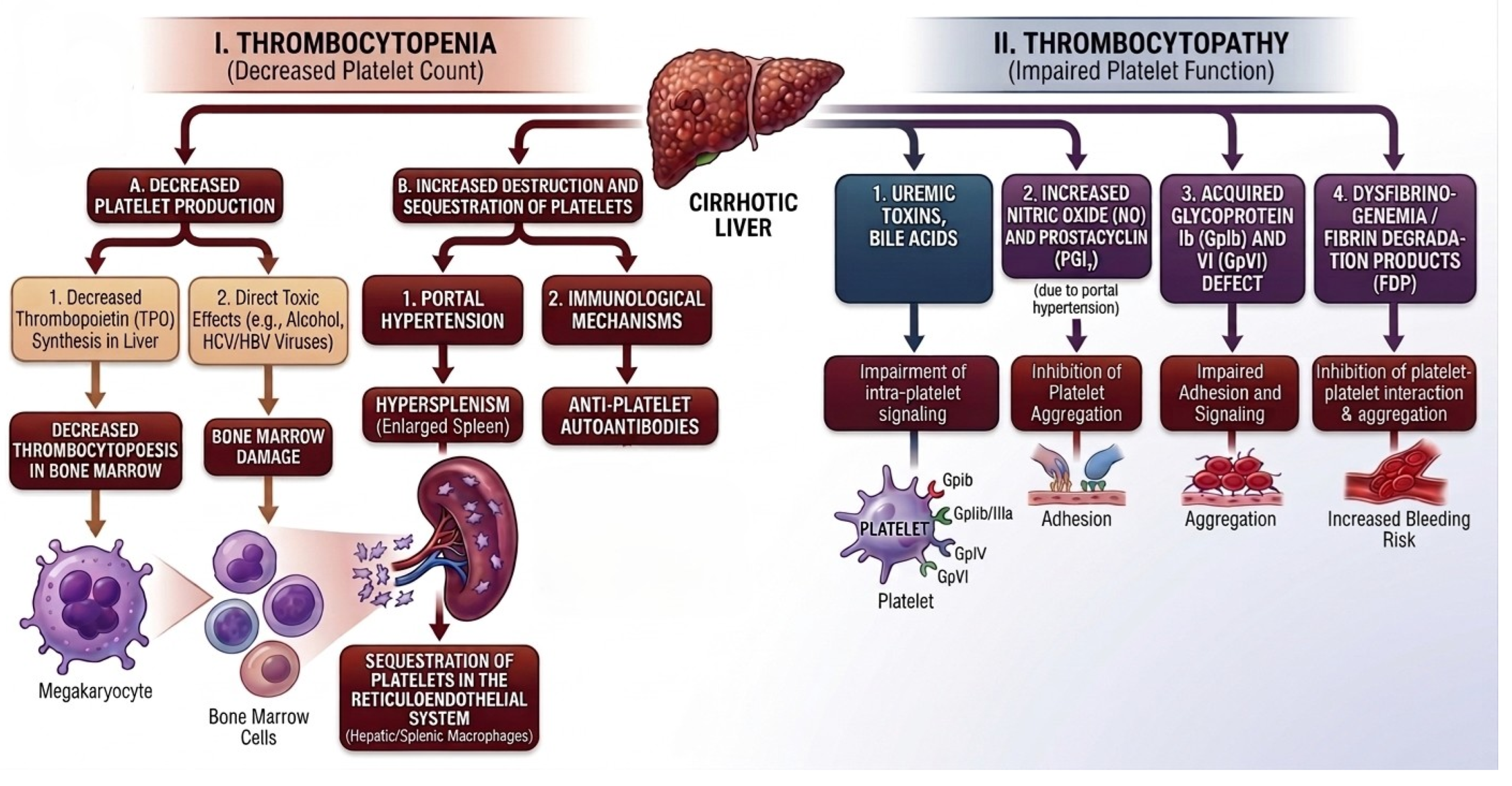
Figure 2.
Proposed algorithm for the management of thrombocytopenia associated with chronic liver disease. DIC, disseminated intravascular coagulation; PC, platelet concentrate; PLT, platelet count; TPO-R, thrombopoietin receptor.
Figure 2.
Proposed algorithm for the management of thrombocytopenia associated with chronic liver disease. DIC, disseminated intravascular coagulation; PC, platelet concentrate; PLT, platelet count; TPO-R, thrombopoietin receptor.
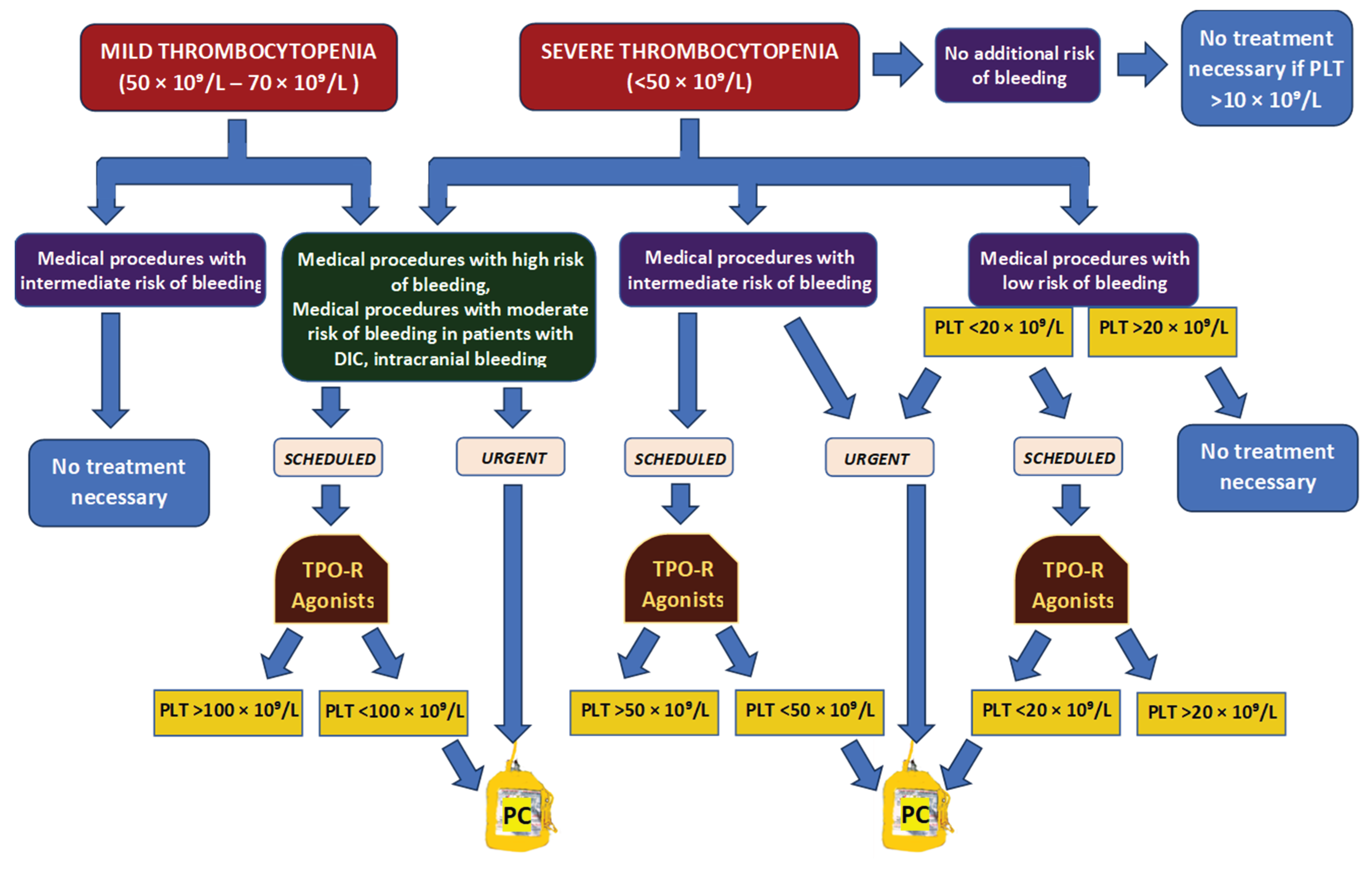

Table 1.
Bleeding-risk classification of invasive procedures in patients with chronic liver disease and considerations for management of thrombocytopenia [1,3,8].
| Procedural bleeding risk | Examples | Management of thrombocytopenia | Practical considerations |
|---|---|---|---|
| Low risk | Paracentesis; thoracentesis; diagnostic endoscopy; central line placement | Correction of thrombocytopenia is not recommended if platelet count is >20 × 10⁹/L | Platelet count alone should not determine whether the procedure can be performed. Consider additional bleeding-risk modifiers, particularly active infection/sepsis, AKI/CKD, ACLF, active bleeding, and concomitant antithrombotic therapy |
| High risk | Major surgery; percutaneous solid-organ biopsy, including percutaneous liver biopsy*; transjugular liver biopsy** endoscopic polypectomy; endoscopic mucosal/submucosal resection; ERCP with sphincterotomy; EUS-FNA; percutaneous gastrostomy; percutaneous liver tumor ablation*** TIPS; dental extraction | Individualized assessment. Correction may be considered in severe thrombocytopenia, but no universally accepted platelet threshold exists. | Suggested thresholds differ among societies. A platelet count of ≥50 × 10⁹/L is frequently used, whereas some recommendations accept ≥30 × 10⁹/L. AASLD does not recommend a single universal threshold because of insufficient evidence |
| Procedures in which even minor bleeding may have major consequences | Neurosurgery; intracranial procedures; selected spinal or ophthalmic procedures | Procedure-specific assessment is required; higher platelet targets may be appropriate. | These procedures should not be extrapolated from routine hepatology procedures; multidisciplinary assessment is appropriate because the consequences of bleeding, rather than its frequency alone, determine clinical risk. |
* Percutaneous liver biopsy is classified as low bleeding risk by EASL but as high bleeding risk by AASLD and SIR. ** Transjugular liver biopsy is classified as low bleeding risk by EASL and SIR but as high bleeding risk by AASLD. *** Percutaneous liver tumor ablation is classified as low bleeding risk by EASL but as high bleeding risk by AASLD and SIR. Abbreviations: AASLD, American Association for the Study of Liver Diseases; ACLF, acute-on-chronic liver failure; AKI, acute kidney injury; CKD, chronic kidney disease; EASL, European Association for the Study of the Liver; ERCP, endoscopic retrograde cholangiopancreatography; EUS-FNA, endoscopic ultrasound-guided fine-needle aspiration; SIR, Society of Interventional Radiology; TIPS, transjugular intrahepatic portosystemic shunt.
Table 2.
General platelet transfusion thresholds before invasive procedures versus the approach in patients with cirrhosis.
Table 2.
General platelet transfusion thresholds before invasive procedures versus the approach in patients with cirrhosis.
| Clinical setting / procedure | General platelet transfusion guidance* | Approach in patients with cirrhosis |
|---|---|---|
| Central venous catheter placement | Transfusion if platelet count <10 × 10⁹/L for placement at compressible sites | Routine correction based solely on platelet count is generally not recommended for low-risk procedures |
| Lumbar puncture | Transfusion if platelet count <20 × 10⁹/L | No specific platelet threshold; procedure-specific assessment is required |
| Low-risk interventional radiology procedure | Transfusion if platelet count <20 × 10⁹/L | Routine correction is generally not required for low-risk procedures |
| High-risk interventional radiology procedure | Transfusion if platelet count <50 × 10⁹/L | No universally accepted threshold. Suggested safe thresholds range from approximately 30 to 50 × 10⁹/L, depending on the society |
| Major surgery | Transfusion if platelet count <50 × 10⁹/L | Severe thrombocytopenia may warrant correction, but the decision should incorporate procedural risk and patient-specific factors rather than platelet count alone |
* General thresholds are based primarily on the 2025 AABB/ICTMG international platelet transfusion guidelines [9] and should not be interpreted as liver disease-specific recommendations. AABB, Association for the Advancement of Blood & Biotherapies; ICTMG, International Collaboration for Transfusion Medicine Guidelines.
| Parameter | Calculation | Timing | Expected / satisfactory response | Inadequate response / suggested refractoriness |
|---|---|---|---|---|
| Absolute platelet increment (API/PI) | Post-transfusion platelet count—pre-transfusion platelet count | 1 h | ≥10 × 10⁹/L | <10 × 10⁹/L |
| 24 h | ≥5 × 10⁹/L | <5 × 10⁹/L | ||
| Corrected count increment (CCI) | Platelet increment (×10⁹/L) × BSA (m²) / number of platelets transfused (×10¹¹) | 10–60 min / 1 h | ≥7.5 × 10⁹/L | <7.5 × 10⁹/L* |
| 18–24 h | ≥4.5–5 × 10⁹/L | <4.5–5 × 10⁹/L | ||
| Percent platelet recovery (PPR) | Platelet increment × estimated blood volume / number of platelets transfused × 100% | 10–60 min / 1 h | ≥30% | <30% |
| 18–24 h | ≥20% | <20% |
* Some studies and guidelines use CCI <5 × 10⁹/L after two consecutive transfusions to define platelet transfusion refractoriness; a cutoff of <7.5 × 10⁹/L is also commonly used. Therefore, CCI should be interpreted together with the timing of measurement and clinical context rather than as an absolute diagnostic threshold. Abbreviations: API, absolute platelet increment; BSA, body surface area; CCI, corrected count increment; PI, platelet increment; PPR, percent platelet recovery.
Table 4.
Thrombocytopenic disorders in which routine PC transfusion should generally be avoided [22,23,24,25].
| Condition | Main mechanism of thrombocytopenia | Rationale for avoiding routine PC transfusion | When PC transfusion may be considered |
|---|---|---|---|
| Thrombotic thrombocytopenic purpura (TTP) | Platelet consumption in platelet-rich microthrombi associated with severe ADAMTS13 deficiency | Transfused platelets may contribute to ongoing microvascular thrombosis; routine prophylactic transfusion is discouraged | Severe or life-threatening bleeding; selected urgent invasive procedures when benefits outweigh risks |
| Immune thrombocytopenia (ITP) | Autoantibody-mediated platelet destruction, predominantly through splenic clearance | Transfused platelets are susceptible to the same immune-mediated destruction and may therefore produce only a transient response | Critical or life-threatening bleeding, usually together with IVIG and corticosteroids |
| Heparin-induced thrombocytopenia (HIT) | PF4/heparin antibody-mediated platelet activation with marked thrombotic potential | HIT is primarily a prothrombotic disorder; routine platelet transfusion is discouraged because of concern regarding thrombotic complications | Active bleeding or a high risk of major bleeding |
| Post-transfusion purpura (PTP) | Alloantibody-mediated destruction of transfused and autologous platelets, commonly involving HPA antibodies | Transfused platelets may be rapidly destroyed, resulting in limited therapeutic efficacy | Severe or life-threatening bleeding; treatment should primarily target the immune mechanism, with IVIG as first-line therapy |
Abbreviations: ADAMTS13, a disintegrin and metalloproteinase with a thrombospondin type 1 motif, member 13; HIT, heparin-induced thrombocytopenia; HPA, human platelet antigen; ITP, immune thrombocytopenia; IVIG, intravenous immunoglobulin; PC, platelet concentrate; PF4, platelet factor 4; PTP, post-transfusion purpura; TTP, thrombotic thrombocytopenic purpura.
Table 5.
Clinical studies of recombinant human thrombopoietin in patients with chronic liver disease and thrombocytopenia.
Table 5.
Clinical studies of recombinant human thrombopoietin in patients with chronic liver disease and thrombocytopenia.
| Study | Design / population | n | Main findings |
|---|---|---|---|
| Xu et al., 2026 (CTR20230919) [28] | Multicenter, randomized, double-blind, placebo-controlled; CLD-associated thrombocytopenia undergoing elective invasive procedures | 120 | Sustained PLT ≥50 × 10⁹/L: 85.0% vs 12.5%; avoided transfusion: 92.5% vs 25.0% |
| Ding et al., 2022 [29] | Retrospective; CLD-associated thrombocytopenia undergoing invasive procedures | 100 | rhTPO associated with increased PLT (78% of patients) Mean platelet count after rhTPO treatment: 101.53 ± 81.81 × 10⁹/L (baseline: 42.88 ± 16.72 × 10⁹/L) Platelet transfusion avoidance: 90% |
| Feng et al., 2022 [30] | Multicenter observational study; HBV cirrhosis with severe thrombocytopenia | 349 | rhTPO associated with increased PLT and fewer clinically relevant bleeding events |
| Liu et al., 2025 [31] | Prospective open-label controlled study; ACLF + PLT <50 × 10⁹/L | 70 | rhTPO associated with greater PLT recovery and reduced bleeding compared with control |
| Wei et al., 2026 [32] | Single-center, retrospective, observational study; CLD thrombocytopenia ± infection | 259 | Overall response 57.6% after matching; response similar with vs without infection |
Abbreviations: ACLF, acute-on-chronic liver failure; CLD, chronic liver disease; HBV, hepatitis B virus; n, number of patients; PLT, platelet count; rhTPO, recombinant human thrombopoietin.
Table 6.
Major clinical trials and studies of thrombopoietin receptor agonists in patients with chronic liver disease and thrombocytopenia.
Table 6.
Major clinical trials and studies of thrombopoietin receptor agonists in patients with chronic liver disease and thrombocytopenia.
| Drug / trial | Population and arms | n | Primary endpoint | Main result |
|---|---|---|---|---|
| Avatrombopag—ADAPT-1 [33] | Patients with thrombocytopenia and CLD; Arms: 2 cohorts according to baseline platelet count (below 40 × 10⁹/L or 40–50 × 10⁹/L) and within each cohort randomized (2:1) to 5 daily doses of avatrombopag (60 mg if baseline platelet count below 40 × 10⁹/L or 40 mg if 40–50 × 10⁹/L) or placebo |
231 | The proportion of patients not requiring platelet transfusions or rescue procedures for bleeding up to 7 days following a scheduled procedure | Primary endpoint: 65.6% (60 mg avatrombopag) vs 22.9% (placebo); 88.1% (40 mg avatrombopag) vs 38.2% (placebo) |
| Avatrombopag—ADAPT-2 [33] | 204 | Primary endpoint: 68.6% (60 mg avatrombopag) vs 34.9% (placebo); 87.9% (40 mg avatrombopag) vs 33.3% (placebo) |
||
| Lusutrombopag—L-PLUS 1 [37] | Patients with CLD, platelets <50 × 10⁹/L, planned procedure Arms: Lusutrombopag 3 mg orally once daily for up to 7 days vs matching placebo once daily for up to 7 days |
96 | The proportion of patients not requiring platelet transfusion before the primary invasive procedure. | Primary endpoint: 79.2% (lusutrombopag) vs 12.5% (placebo) |
| Lusutrombopag—L-PLUS 2 [34] | 215 | The proportion of patients not requiring platelet transfusion before the primary invasive procedure and no rescue therapy for bleeding through 7 days after the procedure | Primary endpoint: 64.8% (lusutrombopag) vs 29.0% (placebo) Rescue therapy for bleeding: 0%=0 patients (lusutrombopag) vs 1.9%=2 patients (placebo) |
|
| Eltrombopag—ELEVATE [38] | Patients with CLD, platelets <50 × 10⁹/L, planned procedure; Arms: eltrombopag 75 mg once daily for 14 days or placebo before an elective invasive procedure |
292 | The proportion of patients not requiring platelet transfusion before, during, and up to 7 days after the elective invasive procedure | Primary endpoint: 72% (eltrombopag) vs 19% (placebo) |
| Eltrombopag—ENABLE-1 [39] | Patients with chronic HCV infection and thrombocytopenia; All patients initially received open-label eltrombopag 25–100 mg/day until the platelet threshold required to start antiviral therapy was reached (≥90 × 10⁹/L in ENABLE-1, ≥100 × 10⁹/L in ENABLE-2). Arms: eltrombopag + peginterferon alfa-2a + ribavirin or placebo + peginterferon alfa-2a + ribavirin |
715 | Sustained virologic response (SVR): undetectable HCV RNA 24 weeks after completion of antiviral therapy (SVR24) |
Primary endpoint: 23% (eltrombopag) vs 14% (placebo) |
| Eltrombopag—ENABLE-2 [39] | 805 | Primary endpoint: 19% (eltrombopag) vs 13% (placebo) | ||
| Romiplostim—pilot trial [40] | Patients with CLD and thrombocytopenia (PLT <60 × 10⁹/L) scheduled for percutaneous liver biopsy. Arms: romiplostim vs eltrombopag vs platelet transfusion |
65 | Primary endpoint not prespecified/reported in the published abstract Main efficacy outcome: Change in platelet count before liver biopsy |
Pre-biopsy mean PLT: 232 × 10⁹/L (romiplostim) vs 183.8 × 10⁹/L (platelet transfusion) vs 189.9 × 10⁹/L (eltrombopag); PLT remained elevated at 4 weeks |
| Romiplostim—single-arm clinical study [41] | HCV-related cirrhosis with thrombocytopenia undergoing elective surgery Single arm: romiplostim |
35 | Primary endpoint not prespecified/reported in the published study Target: Achievement of PLT ≥70 × 10⁹/L enabling planned surgery |
33/35 (94.3%) achieved PLT ≥70 × 10⁹/L; no postoperative bleeding or thrombotic complications |
Abbreviations: CLD, chronic liver disease; HCV, hepatitis C virus; n, number of patients; PLT, platelet count; SVR, sustained virologic response.
Disclaimer/Publisher’s Note: The statements, opinions and data contained in all publications are solely those of the individual author(s) and contributor(s) and not of MDPI and/or the editor(s). MDPI and/or the editor(s) disclaim responsibility for any injury to people or property resulting from any ideas, methods, instructions or products referred to in the content. |
© 2026 by the authors. Licensee MDPI, Basel, Switzerland. This article is an open access article distributed under the terms and conditions of the Creative Commons Attribution (CC BY) license (http://creativecommons.org/licenses/by/4.0/).
Copyright: This open access article is published under a Creative Commons CC BY 4.0 license, which permit the free download, distribution, and reuse, provided that the author and preprint are cited in any reuse.