

Submitted:
18 October 2026
Posted:
20 October 2026
You are already at the latest version
Abstract
Halite, with primary fluid inclusions, is an invaluable archive of past oceanographic, climatic and atmospheric conditions – windows into the geologic past. This is particularly important for time intervals that lack, or have limited, biological evidence that can be used to constrain atmospheric oxygen levels. Everything from physical observations to petrography, geochemistry, microthermometry and mass spectrometry are critical in determining the best-preserved material. The proposed Holistic Oxygen Carbon dioxide Climate and Seawater Evaluation (HOCCSE) method fulfills this requirement, but it applies only to fluid inclusions in halite that contain trapped air bubbles varying in size from the nano- to macro-scale. The constraining factors for recognizing bubbles are their respective N2/Ar ratios and argon contents, thus by definition, it excludes atmospheric gas dissolved within the fluid of the inclusions. Liquid-vapor homogenization temperatures (Th°C) and measured CO2 contents serve a dual purpose in characterizing both ambient (local) and global climate conditions. Furthermore, the atmospheric gas parameters are useful in defining the temperature, dissolved oxygen and pH of the formation waters/brines. Using the HOCCSE method we re-examined the halite of the Tonian Browne Formation (Officer Basin, Australia). The initial presentation of our results (Blamey et al., 2016) led to considerable debate as to the environmental environment of the Earth during the Tonian and how it fits into the generally modeled conditions. The entrapped air suggest that the Tonian atmosphere consisted of the following gases (adjusted for humid conditions): 84.19 % N2, 9.99 % O2, 0.831 % Ar and 0.951 % CO2. Th°C of local seawater range from 34 to 41°C, which are slightly higher than those calculated using Climate Sensitivity equations and adjusted for a fainter sun, range from 27–30°C. However, when the warming contribution of methane to the climate is considered, the increased temperatures vary from 32 to 38°C. Seawater conditions during this period were quite suitable for marine life requiring at least 100 µmol/kg of dissolved oxygen and a pH of greater than 7.5. These atmospheric, seawater and climate parameters support the concept that Tonian conditions resembled a hothouse, but with environmental conditions suitable for a habitable and biologically evolving Earth.
Keywords:
halite
; fluid inclusions
; holistic gas content method
; atmospheric gases: N2
; O2
; Ar
; CO2
; CH4
; climate – air temperatures
; surface seawater – temperature
; dissolved oxygen
; pH
1. Introduction
The evolution of life is intricately linked, in part, to that of the atmosphere, hydrosphere and climate, and of specific interest are the changes in oxygen and carbon dioxide contents through the ages. Most of our knowledge and information about the ancient Earth Systems are based on redox-sensitive proxies and sophisticated computer modeling. Despite substantial advances, understanding the evolution of Earth’s major systems remains a significant challenge [1,2,3,4,5,6,7,8,9,10,11,12,13,14,15]. A detailed examination of a 1-billion-year segment of Earth’s atmospheric oxygen history clearly documents the difficulty mentioned by Lyons et al. [1] as well as many other authors (see Figure 1). Although consensus exists for several specific oxygenation events, the figure clearly highlights the broader lack of agreement. We may be able to recognize rises and falls in atmospheric and seawater oxygen contents; however, quantifying their actual levels is significantly more complex. This difficulty in determining the amount of oxygen in the Earth Systems is equally evidenced by that of the other atmospheric gases (e.g., N2, CH4, CO2).
In 1970, Freyer and Wagener [16] published an article entitled “Untersuchungen alter Luftproben aus Salzen des deutschen Zechstein” where they documented the presence of gases in several evaporite rocks, suggesting that these gases may preserve information about the atmosphere at the time of salt formation. They followed this publication with an expanded version [17], where they were able to resolve the presence of N2, O2, Ar, CO2, CH4 and H2, (and sometimes H2S) in halite fluid inclusions. Furthermore, they experimented with a number of methods of how best to release the gas content for mass spectrometric analysis and decided on the salt heating-dissolution method because their primary interest was nitrogen, oxygen and argon. The ranges of their measurements were quite extensive with exceptionally large amounts of argon, which they determined to be mostly of radiogenic origin (Table 1) but with a K-Ar age appropriate for the Permian Zechstein. They concluded that N2, O2 and the non-radiogenic Ar fraction were components of the ancient atmosphere, while H2S, CH4 and H2 probably were products of organic decomposition processes. Although, some oxygen was consumed by oxidation processes, overall, the major gases represent “whiffs of old air”, and we should be able to trace the gas contents back as far as there are preserved evaporite units [16]. In a 2001 paper, Goldstein [19] strongly suggested that all types and forms of heating (from field to lab) must be avoided if we are to garner factual atmospheric gas compositions from halite fluid inclusions.
2. Method History & Development
After a hiatus of over 40 years, Blamey et al. [13] built on the work of Freyer and Wagener [16,17], who demonstrated the potential of halite for reconstructing ancient atmospheric oxygen contents . The greatest improvement was in the gas liberation process that involved cold crush (room temperature) and fast-scan steps instead of the heating and dissolution ones used by earlier investigators. In some studies, the water (vapor) component of the halite fluid inclusions is trapped and frozen out following crushing [15], while others [13] keep the water vapor before sending the gas(es) to the mass spectrometer for measurement [13,18]. Analyses by this later method have detection limits of 1 femto mol and errors of about 5 % based on synthetic gas inclusions and standard gases evaluations. The main objective of Blamey et al. [13] was to determine the oxygen content of the Tonian atmosphere using halite from the Browne Formation, which, based on specific selection parameters applied at the time, was estimated at 10.9 % pO2 (Table 1).
Yeung [14] re-evaluated the results reported by Blamey et al. [6] without the benefit of unreported microthermometry and other geochemical information for the analyzed samples and nevertheless argued that Tonian atmospheric O2 was nowhere near the proposed ~50 % of present atmospheric levels (PAL). Instead, he invoked (a) concomitant trapping of air dissolved in brines, (b) contamination by modern air, (c) signals of mass-dependent fractionation, and (d) biogeochemical cycling within the fluid inclusions, thereby dismissing the majority of the Blamey et al. [6] dataset as unrepresentative of the Tonian atmosphere. Yeung [14] further supported his interpretation by suggesting that the gas-crush results of sample #1478 provided the only “true” representation of Tonian atmospheric composition, despite our assessment indicating that this sample has undergone severe diagenetic alteration [20] (Table 1, Supplement 1).
Yeung [14] not only advocated for a Tonian O2 value of 1.5 % but, more importantly, proposed that this estimate was “…more consistent with existing models of atmospheric oxygenation in the late Neoproterozoic…” [14, p. 73]. However, the low atmospheric Ar value that paired with such low O2 concentrations remained surprising and subject to considerable speculation, as it was inconsistent with the results covering Earth’s history [30].
Subsequently, Blamey and Brand [18] presented a screening protocol used in their previous study [13], along with an expanded dataset of gas results from the Browne Formation and modern halite. The multi-step screening protocol used to identify and obtain primary gas results from halite fluid inclusions was described in detail by Blamey and Brand [18] and is therefore not reiterated here. Blamey and Brand [18] also documented that the presence and decomposition of organic matter within fluid inclusions may impact the overall gas contents (their Figure 7, [16,18]). In this study, we will present in summary their current results [18] and the results of their earlier study (Table 1) [13]. A side-by-side comparison clearly shows significant differences in gas results for the Tonian atmosphere (N2, O2, Ar, CO2 and N2/Ar) as advocated by Yeung [14] and those advanced by the Blamey group [13,18].
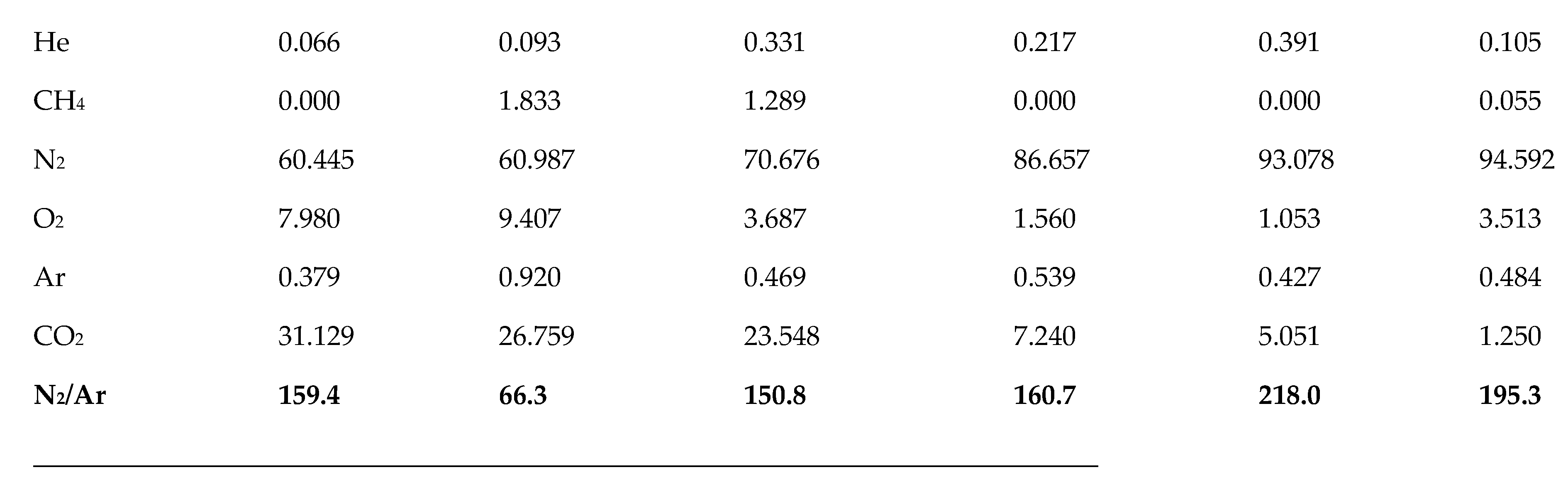
More recently, Park and Schaller [15] initiated another attempt at resolving the discrepancies between the various studies dealing with the gas results from the Browne Formation for the Tonian atmosphere [13,14,18]. They too [15] used the data presented by the Blamey group [13,18] for the Browne Formation halite horizons. Currently, it remains unclear whether freezing out water prior to gas analysis introduces significant analytical differences that affect the comparability of results. They [15] suggested that, because the type and relative proportions of different inclusion phases are unknown for each crush, a new method (MAGPI) was required to address this uncertainty by repartitioning the ‘raw’ results to derive representative atmospheric contents. Unfortunately, they selected endmembers for their method from samples NS1502 and NS1482 to represent the fully aqueous and fully gaseous fluid inclusion gas phases. Their respective N2/Ar ratios of 79.7 and 195.3 are both too high for their claimed phase states (Table 2). According to MAGPI repartitioning, the atmospheric gas content during the Tonian was 92.83 % N2, 6.62 % O2, 0.47 % Ar and 0.08 % CO2 [15], which as before, was different from the original estimates determined by the Blamey group [13,18]. Interestingly, their N2/Ar ratio of 196.8 was similar to that of Yeung [14] but dissimilar to the ratio (101) calculated by the Blamey group [18] (Table 1) for mostly air bubble fluid inclusions. Collectively, these four studies raise important issues concerning the acquisition of primary gas contents from fluid inclusions in ancient halite. These uncertainties must therefore be addressed before proceeding with halite-based gas analyses. The proposed HOCCSE method fulfills this need for specific fluid-inclusion types, particularly those containing gas bubbles, whereas the MAGPI method may require further refinement for inclusions in which gases are dissolved within the fluid phase.
3. HOCCSE Method
The HOCCSE (Holistic Oxygen Carbon dioxide Climate & Seawater Evaluation) method integrates insights from previous studies, irrespective of their differing interpretations and conclusions, including those of Yeung [14] and Park and Schaller [15] and our own work [13,18,21]. An important consideration is defining the criteria that characterize halite as primary and determining how these criteria can be evaluated using available analytical techniques. The simple assumption that a single parameter is sufficient in identifying preserved from altered specimens whether carbonates, halite or fluid inclusions is scientifically fortuitous [19,22,23,24]. A more stringent set of guidelines is required to identify the most suitable halite fluid inclusions for gas mass spectrometric analysis, followed by rigorous validation and verification procedures to ensure the veracity of the resulting gas measurements.
The amount of halite needed for gas analysis has been substantially reduced since the earliest attempts to extract gas contents from fluid inclusions. It is important to recognize that fluid inclusions are microscopic and highly variable in type [21]; however, the development of higher-resolution mass spectrometers made pushing this boundary possible. It is reasonable to assume that an individual crush may involve the opening of many fluid inclusions of different types. Figure 2 shows fluid inclusions scattered on a single plane of a thin section, with many one-phase (liquid, red arrow) and two-phase (liquid and gas, green arrow) inclusions. Fluid inclusions in halite may hold a variety of phases. Single-phase inclusions may contain either solely fluid (Figure 3A) or gas/air (Figure 3B). In this study, the halite fluid inclusions of interest are those exhibiting two phases, with gas/air entrained within the fluid phase (Figure 3C). Furthermore, it is possible that three-phase fluid inclusions, carrying both gas/air and solid material, may form within halite crystals (Figure 3D). We must note that two-phase fluid inclusions may contain air/gas as macro-, to micro- to nano-bubbles (Figure 3E), as well, contain air/gas dissolved within the liquid phase (Figure 3F). Restricting our selection of two-phase fluid inclusions containing gas/air bubbles provides a constraint on gas composition based on the N2/Ar ratio of 83.6 in modern air, as confirmed by capillary-tube experiments [18]. In contrast, targeting gases dissolved within fluid inclusions requires additional consideration of Henry’s Law and the saturation state governing gas incorporation before determining the composition of the ambient atmosphere [15].
A flowchart (Figure 4) was developed to guide the sampling, analytical, and evaluation procedures used to quantify the relative amount of air (trapped in “bubbles”) within two-stage halite fluid inclusions. This process involves multiple assessments of the diagenetic integrity of the halite and its respective inclusions, beginning with visible inspection of the selected material. Thus, unlike earlier studies, various steps dictate whether a sample is of primary or secondary nature [13,14,18,20]. Throughout this continuous evaluation, samples may be rejected at any stage if they fail to meet the criteria for inclusion in the final data set (Figure 4).
The flowchart is subdivided into four distinct stages with their own and specific requirements (Figure 4). The first stage deals with the sample material, its location, age and paleo-location, followed by three other stages and rejection of compromised material at any stage.
3.1. Stage I – Location, Age, Paleo-location
Documenting the location and accessibility of the sample material is essential for facilitating independent and follow-up investigations. In most instances, locations will be repositories administered by a government or private agency. Halite, by virtue of being an evaporite mineral, is assumed to be from depositional locations associated with a warm, humid and windy climate [22]. Plate tectonics and continental drift through geologic time can shift continents across climatic zones; thus, paleolatitude provides important context for interpreting the climatic conditions recorded by the sample (Suppl Figure 1 and Figure 2).
3.2. Stage II – Diagenetic Assessment
Halite can be subdivided very efficiently into clear and cloudy varieties (Figure 5), with the latter being the one with high potential for fluid inclusions. The clear halite usually reflects post-depositional re-crystallization and thus is either free of inclusions or contains ones describing the diagenetic realm [13,18,22]. The cloudy material then moves on to more detailed geochemical and petrographic investigation (Figure 4).
Strontium isotopes are a powerful tool in identifying marine from continental origins as well as diagenetic ones for carbonates and evaporite minerals [23,24]. Generally altered material – carbonate-halite – will transition to more 87Sr/86Sr enriched values (Suppl Figure 1). Samples A, B, and C represent altered halite from the Browne Formation, including sample NS1478 (A), which Yeung [14] interpreted as primary. The 40Ar/36Ar isotopic ratio is similarly effective for identifying halite hosts containing leaked inclusions and the build-up/depletion of radiogenic argon within the gas component [18, Figure 10]. Overall, the general chemistry of the halite may provide insight into its preservation; however, additional analyses are required to further assess the integrity of its fluid inclusions.
Next, we evaluate fluid inclusion shape and the temperature at time of formation of individual inclusions (Suppl. Figure 3) [18]. Pristine fluid inclusions may occur as single-phase inclusions (Suppl. Figure 3A, a), or as two-phase inclusions containing gas bubbles that range from partially occupying the inclusion (Suppl Figure 3A, b) to occupying the entire inclusion volume (Suppl. Figure 3A, c). If post-depositional impact is extreme, it may completely distort the shape of the original inclusion by either necking or extension (Suppl. Figure 3B) while maintaining its gas/air bubble. Supplementary Figure 3C shows a gas/air bubble within a fluid inclusion exhibiting somewhat distorted crystal faces, whereas another inclusion preserves well-defined, undistorted faces (Suppl. Figure 3D). Microthermometry provides additional information critical to the separation of primary and secondary material (Figure 6). This analytical technique relies on the thermodynamic properties and phase changes within halite fluid inclusions to determine liquid-vapor homogenization temperatures (Th°C). Microthermometry work should include the characterization of fluid inclusion morphology (Suppl. Figure 3B), as well as Th°C, which may be inconsistent (Suppl. Figure 3C) or consistent (Suppl. Figure 3D) with expected formation conditions, respectively. At this stage, the investigator may submit the best-preserved material for mass spectrometric gas analysis or all samples to establish boundaries between primary gas/air compositions and those that are modified by post-depositional processes [13,18].
3.3. Stage III – Gas Analysis
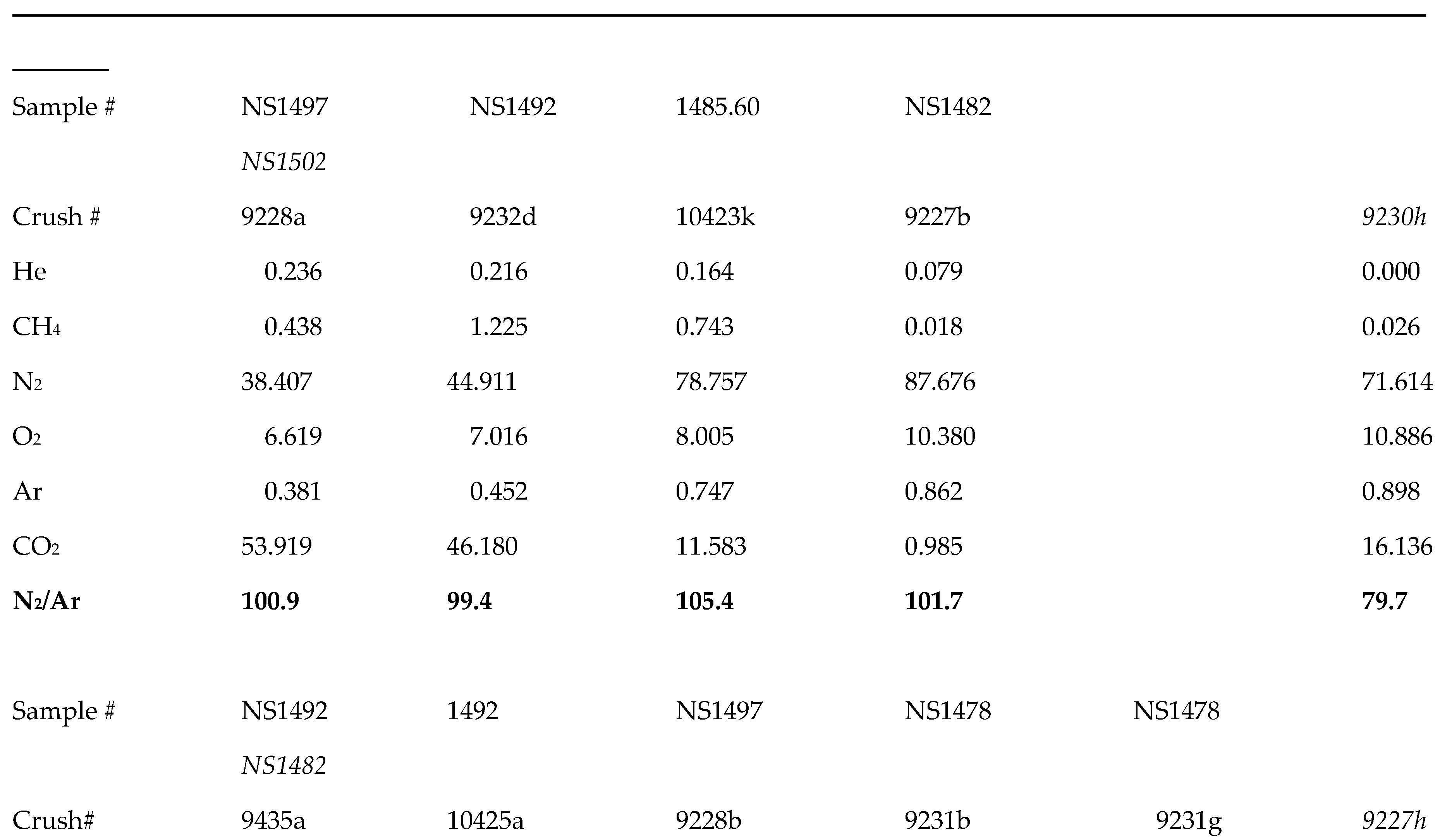
The mass spectrometric analysis has been described in detail by the Blamey group [13,18] and is therefore not reiterated here, except to note that samples are grouped into pristine and secondary batches based on fluid inclusion morphology and microthermometry (Figure 6). This grouping is only temporary and awaits further evaluation once gas contents have been measured. Raw mass spectrometric numbers must first be converted to water-free results (e.g., Table 2, plus the calculation of ratios such as N2/Ar (others are optional). Re-examination of samples using pAr and 87Sr/86Sr shows that material with primary gas contents define a tight cluster in both geochemical parameters (Figure 7A). A similar pattern is noticed when the sample batch is plotted with respect to argon gas and associated homogenization temperatures (Figure 7B). Not only is there a distinction in the clustering but also in the variance between well-preserved gas contents and those subjected to post-depositional processes.
3.3.1. Stage IIIa – Validation
The preservation of primary gas signatures can be further evaluated from the gas compositions themselves, particularly their N2/Ar ratio and argon contents. Figure 8 and Figure 9 compile atmospheric N2 and Ar trends through geologic time [26,27,28,29,30,31], providing constraints on the expected ranges of these gases for the selected time interval. Thus, samples yielding N2/Ar ratios of 104.3 ±4.6 were considered to satisfy the preliminary criterion for preservation of primary nitrogen (Figure 10). All results were then sorted into two bins, 1) those with N2/Ar ratios within the expected range for the selected time interval and 2) those falling outside this range and therefore interpreted as secondary in nature. Subsequently, the gas results that satisfied the N2/Ar criterion were further screened based on their argon contents, which exhibit a proportional relationship with carbon dioxide (Figure 10). For example, sample NS1478, clearly identified as altered through detailed geochemical and microthermometry analyses (Figure 7A; crush 9227b, Table 2) also fails this screening criterion. It must be emphasized that the N2/Ar ratios and co-determined Ar contents are only applicable to fluid inclusions populated by entrained air bubbles, including everything from nano to macro sizes (Figure 3E–3F). Fluid inclusion deemed primary need not contain identical or similar gas content; rather, their overall gas compositions are defined by the relative proportions of the five major gases (N2, O2, CH4, CO2, Ar). The gas composition with the lowest CO2 content, or the intercept of the Ar axis, defines the inferred original atmospheric gas concentrations (Figure 10).
3.3.2. Stage IIIb – Verification
Only the samples (crushes) and their associated gases with N2/Ar ratios that satisfy the assessment criteria in Stages II and IIIa will be subjected to further verification of their geochemical integrity. The fit of the determined N2/Ar ratio and Ar content of the best-preserved material requires further verification against temperature estimates derived from (a) fluid inclusion microthermometry, (b) Climate Sensitivity equations of CO2 (with and without CH4), and (c) climate model simulations for the time interval under investigation.
Paleoclimate reconstructions must also be considered in the context of reduced solar luminosity, which was approximately 5–6% lower during the Neoproterozoic than today. Pierrehumbert et al. [32] proposed that maintaining a climate comparable to the present would therefore require a CO2 contribution equivalent to 3,360 ppm. During the early Neoproterozoic, continental plates assembled into one large supercontinent situated predominantly at tropical latitudes under greenhouse climate conditions [32,33,34]. Thus, a global greenhouse of about 30°C for the Tonian is a reasonable assumption. An atmospheric CO2 concentration of 9500 ppmv, adjusted for the3360 ppmv required to compensate for reduced solar luminosity, yields a concentration of about 6140 ppmv (Table 3). Using climate sensitivity equations, the estimated sea/air temperatures of Australia at a paleolatitude of approximately 60°N ranged from 26°–30°C under dry and humid air conditions. When methane is included as a contributing greenhouse gas [32], the estimated temperature range is increases to approximately 32°–38°C. Furthermore, the microthermometry Th°C range of 34–41°C is within expected parameters for an evaporative environment [22] and complies with a global greenhouse climate [32,33,34] for the Officer Basin near 60°N paleolatitude (Suppl. Figure 2).
3.4. Stage IV – Application
In Stage IV, measured and calculated results are compiled for the material under investigation.
3.4.1. Stage IVa – Atmosphere
The first results represent gas compositions measured from bubbles trapped within the fluid inclusions of primary depositional marine halite. The absolute best measurement confirms an N2/Ar ratio for the Tonian of about 101, while the Ar content is about 0.8 mol % (Figure 8 and Figure 9). Based on the regression of results with the appropriate N2/Ar ratio, the best sample and measurements give an oxygen content ranging from 10.4 to 9.99 %, while the corresponding CO2 content is about 9500 ppm (Table 3).
3.4.2. Stage IVb – Climate
Microthermometry indicates local halite formation temperatures of pproximately 34–41 °C for the high-latitude Browne Formation of the Officer Basin, ancient Australia (Table 3, Suppl. Figure 2). These temperatures are unusually high for latitudes north of 60° but are consistent with greenhouse to potentially hothouse conditions or localized depositional environments conductive to halite formation [49]. Climate sensitivity equations using atmospheric CO2 yield global temperatures of approximately 26–30°C after accounting for reduced solar luminosity during the Tonian, approximately 15°C warmer than present-day conditions (Supplementary Figure 4). When methane is added to the equation, the estimated global mean temperature increases to 32–39°C, remaining consistent with expected greenhouse conditions for this time interval (Table 3). Both calculated global temperature ranges are compatible with those advanced by modeling parameters (Table 3) [32].
3.4.3. Stage IVc – Surface Seawater
With atmospheric gas contents identified and quantified, if the atmosphere is in equilibrium with surface seawater and salina brines, the dissolved oxygen content and pH of the formational brine can be calculated. Assuming a saline solution of at least 40 ppt and a temperature of about 35°C, the formational fluid had at least an oxic configuration of dissolved oxygen (DO) greater than 97 µmol/kg (Table 3). Similarly, seawater pH can be calculated using carbonate equilibria parameters and equations of the commensurate dissociation of CO2, with the CO2 content adjusted for reduced solar luminosity yielding a pH of approximately 7.5 (Table 3).
4. Discussion
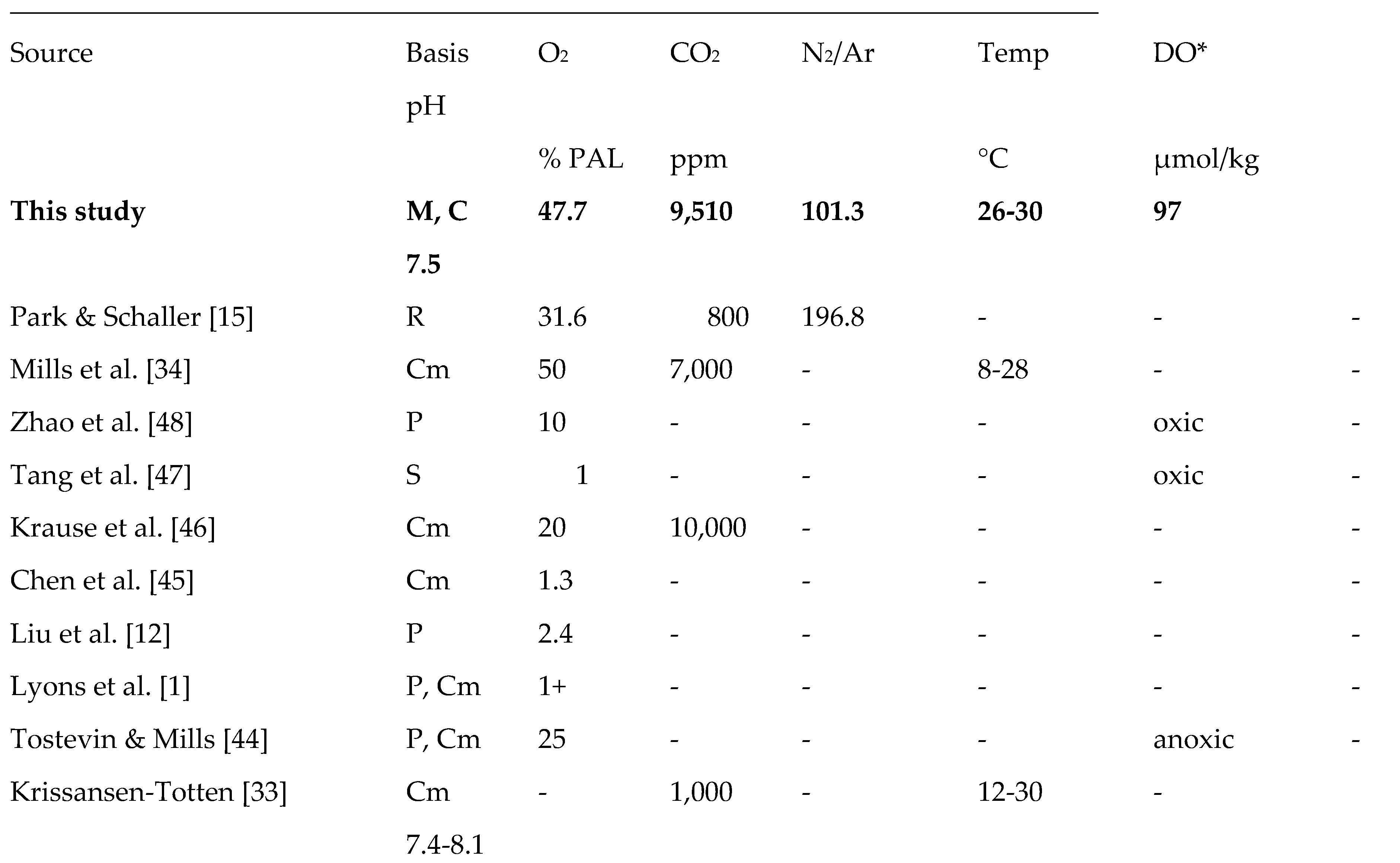
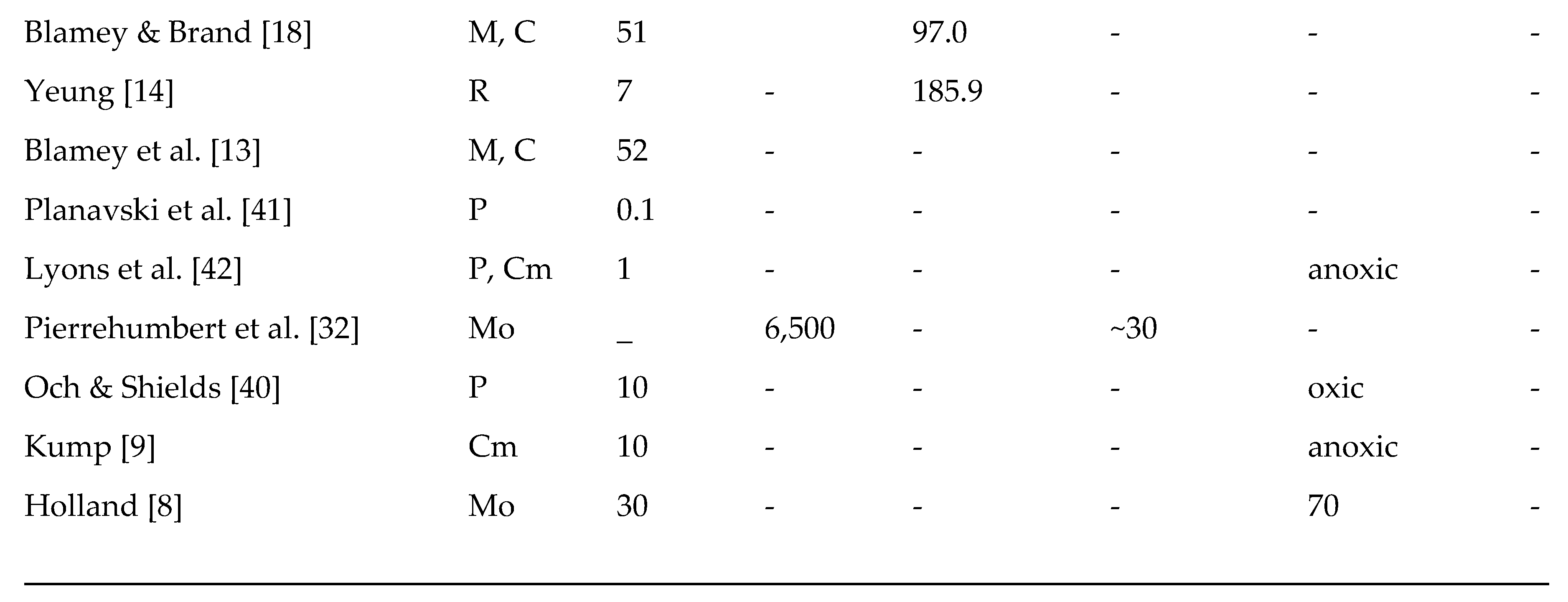
Rather than a traditional comparison with previous studies, we provide a concise summary supported by tabulated data documenting the evolution of chemical parameters within the Neoproterozoic (Tonian) atmosphere, hydrosphere and climate system. Although not exhaustive, the compilation includes the major studies published over the past two decades (Table 4; listed in ascending chronological order). Aside from Blamey et al. [13] and subsequent recalculations of their results by Yeung [14] and Park and Schaller [15], most studies rely on modeling or proxy data, including trace elements, rare-earth elements and isotopes from ancient sediments at uncertain water depths. In contrast, primary depositional halite forms in shallow seawater or continental brine conditions [22]. Furthermore, the depositional origin of halite is easily ascertained by Sr isotopes and Br contents [13,18], which are equally useful in distinguishing diagenetic/altered from sedimentary halite [18].
The comparison begins with Holland’s [8] summary of the redox state of the atmosphere and oceans. The assigned age of 836–821 Ma for the Browne Formation halite places it into Stage 4 of Holland [8], who referred to as the blustery and baleful stage. We extrapolated the maximum values for atmospheric O2, and shallow ocean DO from Figure 10, which are presented in Table 4 as 30% PAL and 70 µmol/kg, respectively. From this baseline, reconstructed oxygen levels of the atmosphere and oceans are highly variable (Table 4), with most values extrapolated from modeling and proxy studies falling below those proposed by Holland [8]. Many studies (ten in Table 4) embrace the low oxygen content of the atmosphere advanced in the study by Lyons et al. [42] and the concurrent anoxic state of the shallow ocean water [e.g., 1, 12, 41, 45, 47]. However, the literature supporting oxygen levels equal to or above (six studies in Table 4) that of Holland [8] has risen dramatically since the paradigm study appeared measuring gas contents in fluid inclusion air bubbles [13] from the Browne Formation. The modeling study of Mills et al. [34] with its proposed 50 % PAL oxygen atmosphere is almost identical to the composition determined with the HOCCSE method (this study) during the Neoproterozoic.
There are fewer studies that present evidence for the CO2 composition of the Neoproterozoic, specifically the Tonian period (Table 4). They can be divided into two groups, with Group 1 proposing CO2 levels of 1000 ppm or less, while Group 2 advances levels that were equal to or higher than 6500 ppm. The CO2 levels reported by Group 1 appear inconsistent with a period characterized by reduced solar luminosity and no physical evidence of global glaciation. Instead, as proposed by Group 2, the Tonian Earth was dependent on greenhouse gases to maintain higher temperatures and ice-free conditions [32,52,53]. Consequently, the global mean surface temperature estimates of the few Precambrian climate studies are in general agreement with the warming potential of greenhouse gas compositions recorded in Tonian halite (Table 4).
The dissolved oxygen contentrations in surface seawater show variable agreement with estimated atmospheric oxygen levels (Table 4). This comparison assumes that surface seawater would be in equilibrium with that of the atmosphere, and anything with an atmospheric oxygen content about 30–50% PAL would be somewhat dysoxic to oxic. In contrast, anything with atmospheric oxygen contents of 25% PAL or less would be dysoxic to anoxic (Table 4).
The argon content of the atmosphere is an important component for atmospheric reconstructions in deep time [30], especially when coupled with N2/Ar ratios measured from halite fluid inclusions [18, this study]. The coupled evaluation of N2/Ar and Ar content is a key component of the HOCCSE method for reconstructing ancient atmospheric, climatic and seawater conditions. Thus, an N2/Ar ratio of approximately 104 and an Ar content of 0.831 mol% are consistent with the Tonian atmosphere [this study], whereas values of 196.8 and 0.47 mol% [15] and 185.9 and 0.497 mol% [14], respectively, are inconsistent with atmospheric gases trapped as bubbles or dissolved within fluid inclusions (Figure 8 and Figure 9). The additional discrepancy of anomalously low CO2 contents raises further questions regarding whether the MAGPI-derived gas compositions presented by the authors [15] are consistent with expected Tonian conditions.
5. Conclusions
The proposed new method of analysing gas contents and temperatures in halite fluid inclusions provides new insight into measuring the evolution of the ancient atmosphere, climate and hydrosphere. This method specifically targets gases entrapped within bubbles of halite-hosted fluid inclusions, distinguishing it from the MAGPI method, which highlights the gases dissolved within the liquid-phase. The HOCCSE method suggests that atmospheric oxygen, carbon dioxide and nitrogen/argon ratio during the Tonian were 47.7% PAL, 9510 ppm, 101.3, respectively. Local and global temperature estimates derived from microthermometry and climate sensitivity calculations, adjusted for lower solar luminosity, support global greenhouse conditions during the Tonian, with temperatures ranging from 26–30+°C.
We agree with Cole et al. [51] that no consensus exists regarding surface oxygen levels (atmosphere and oceans) during the late Precambrian, underscoring the need for further research to constrain the evolution of ancient Earth Systems. Resolving these uncertainties is critical to understanding the emergence and evolution of life on Earth, and potentially on extraterrestrial bodies.
Acknowledgments
we thank Mike Lozon (Brock University) for drafting our figures. We acknowledge NSERC (Natural Science and Engineering Research Council of Canada) for research grants to UB and NJFB. AKM thanks the NSERC and Ontario Graduate (OGS) scholarship programs for support. We thank the guest editors for their kind invitation to contribute to their Special Issue in Minerals, and the reviewers for their constructive comments.
References
- Lyons, T.; Diamond, Ch.W.; Planavsky, N.J.; Reinhard, C.T.; Li, C. Oxygenation, Life, and the Planetary System during Earth’s Middle History: an overview. Astrobiology 2021, 21, 906–923. [Google Scholar] [CrossRef] [PubMed]
- Berkner, L.V.; Marshall, L.C. History of major atmospheric components. Proc. Natl. Acad. Sci. 1965, 53, 1215–1225. [Google Scholar] [CrossRef]
- Cloud, P. Beginnings of biospheric evolution and their biogeochemical consequences. Paleobiology 1976, 2, 351–387. [Google Scholar] [CrossRef]
- Runnegar, B. Oxygen requirements, biology and phylogenetic significance of the Late Precambrian worm Dickinsonia, and the evolution of the burrowing habit. Alcheringia 1982, 6, 223–239. [Google Scholar] [CrossRef]
- Kasting, J.F. Earth’s early atmosphere. Science 1993, 259, 920–926. [Google Scholar] [CrossRef] [PubMed]
- Ohmoto, H. When did the Earth’s atmosphere become oxic? Geochem. News 1997, 93(-13), 26–27. [Google Scholar]
- Canfield, D.E. The early history of atmospheric oxygen: homage to Robert A Garrels. Annu. Rev. Earth Planet. Sci. 2005, 33, 1–36. [Google Scholar] [CrossRef]
- Holland, H.D. The oxygenation of the Atmosphere and oceans. Philos. Trans. R. Soc. 2006, b. 361, 903–915. [Google Scholar] [CrossRef] [PubMed]
- Kump, L. R. The rise of atmospheric oxygen. Nature 2008, 451, 277–278. [Google Scholar] [CrossRef] [PubMed]
- Reinhard, C.T.; Planavsky, N.J.; Gill, B.C.; Ozaki, K.; Robbins, L.J.; Lyons, T. W.; Konhauser, K.O. Evolution of global phosphorous cycle. Nature 2017, 541, 386–389. [Google Scholar] [CrossRef] [PubMed]
- Large, R.R.; Mukherjee, I.; Gregory, D.; Steadman, J.; Corkrey, R.; Danyyushevsky, L.V. Atmosphere oxygen cycling through the Proterozoic and Phanerozoic. Miner. Depos. 2019. [Google Scholar] [CrossRef]
- Liu, X.-M.; Kah, L.; Knoll, A.N.; Cui, H.; Wang, Ch.; Bekker, A.; Hazen, R.M. A persistently low level of atmospheric oxygen in Earth’s middle age. Nat. Commun. 2021, 12, 351–357. [Google Scholar] [CrossRef] [PubMed]
- Blamey, N.J.F.; Brand, U.; Parnell, J.; Spear, N.; Lécuyer, C.; Benison, K.; Meng, F.; Ni., P. Paradigm shift in determining Neoproterozoic atmospheric oxygen. Geology 2016, 44, 651–654. [Google Scholar] [CrossRef]
- Yeung, L.Y. Low oxygen and argon in the Neoproterozoic atmosphere at 815 Ma. Earth Planet. Sci. Lett. 2017, 480, 66–74. [Google Scholar] [CrossRef]
- Park, J.G.; Schaller, M.F. Constraints on Earth’s atmospheric evolution from a gas-aqueous partition of fluid inclusion volatiles. Gondwana Res. 2025, 139, 204–215. [Google Scholar] [CrossRef]
- Freyer, H.D.; Wagener, K. Untersuchungen alter Luftproben aus Salzen des deutschen Zechsteins. Z. Für Naturforschung 1970, 25, 1427–1430. [Google Scholar] [CrossRef]
- Freyer, H.D.; Wagener, K. Review on present results on fossil atmospheric gases trapped in evaporites. Pageoph 1975, 113, 403–418. [Google Scholar] [CrossRef]
- Blamey, N.J.F.; Brand, U. Atmospheric gas in modern and ancient halite fluid inclusions: a screening protocol. Gondwana Res. 2019, 69, 163–176. [Google Scholar] [CrossRef]
- Goldstein, R.H. Fluid inclusions in sedimentary and diagenetic systems. Lithos 2001, 55, 159–193. [Google Scholar] [CrossRef]
- Morrison, A.K. A geochemical, diagenetic, and stratigraphic update of carbonates and halite of the Browne Formation, Officer Basin, Western Australia. B.Sc. thesis, University of Western Ontario, 2023; p. 99p. [Google Scholar]
- Bekaert, D.V.; Avice, G.; Marty, B. Fluid inclusions: tiny windows into global paleo-environments. Commun. Earth Environ. 2025, 6, 820–833. [Google Scholar] [CrossRef] [PubMed]
- Schreiber, B.C.; El Tabakh, M. Deposition and early alteration of evaporites. Sedimentology 2000, 47, 215–238. [Google Scholar] [CrossRef]
- Brand, U.; Veizer, J. Chemical diagenesis of a multicomponent carbonate system-1: trace elements. J. Sediment. Petrol. 1980, 50, 1219–1236. [Google Scholar] [CrossRef]
- Brand, U.; Blamey, N.; Garbelli, C.; Griesshaber, E.; Posenato, R.; Angiolini, L.; Azmy, K.; Farabegoli, E.; Came, R. Methane hydrate: killer cause of Earth’s greatest mass extinction. Paleoworld 2016, 25, 496–507. [Google Scholar] [CrossRef]
- Zaky, A.H.; Brand, U.; Buhl, D.; Blamey, N.; Bitner, M.A.; Logan, A.; Gaspard, D.; Popov, A. Strontium isotope geochemistry of modern and ancient archives: tracer of secular change in ocean chemistry. Can. J. Earth Sci. 2019, 56, 245–264. [Google Scholar] [CrossRef]
- Berner, R.A. Geological nitrogen cycle and atmospheric N2 over Phanerozoic time. Geology 2006, 34, 413–415. [Google Scholar] [CrossRef]
- Förster, M.W.; Foley, S.F.; Alard, O.; Buhre, S. Partitioning of nitrogen during melting and recycling in subduction zones and the evolution of atmospheric nitrogen. Chem. Geol. 2019, 525, 334–342. [Google Scholar] [CrossRef]
- Marty, B.; Zimmermann, L.; Pujol, M.; Burgess, R.; Philipott, P. Nitrogen isotopic composition and density of the Archean atmosphere. Science 2013, 342, 101–104. [Google Scholar] [CrossRef] [PubMed]
- Nishizawa, M.; Sano, Y.; Ueno, Y.; Maruyama, S. Speciation and isotope ratios of nitrogen in fluid inclusions from seafloor hydrothermal deposits at ~3.5 Ga. Earth Planet. Sci. Lett. 2007, 254, 332–344. [Google Scholar] [CrossRef]
- Pujol, M.; Marty, B.; Burgess, R.; Turner, G.; Philippot, P. Argon isotopic composition of Archean atmosphere probes early Earth geodynamics. Nature 2013, 498, 87–92. [Google Scholar] [CrossRef] [PubMed]
- Stuart, F.M.; Mark, D.F.; Gandanger, P.; McConville, P. Earth-atmosphere evolution based on new determination of Devonian atmosphere Ar isotopic composition. Earth Planet. Sci. Lett. 2016, 446, 21–26. [Google Scholar] [CrossRef]
- Pierrehumbert, R.T.; Abbot, D.S.; Voigt, A.; Koll, D. Climate of the Neoproterozoic. Annu. Rev. Earth Planet. Sci. 2011, 39, 417–460. [Google Scholar] [CrossRef]
- Krissansen-Totten, J.; Arney, G.N.; Catling, D.C. Constraining the climate and ocean pH of the early Earth with a geological carbon cycle model. Proc. Natl. Acad. Sci. 2018, 115, 4105–4110. [Google Scholar] [CrossRef] [PubMed]
- Mills, B.J.; le Hir, G.; Merdith, A.; Gurung, K.; Bowyer, F.T.; Krause, A.J.; Sanchez-Baracaldo, P.; Hunter, S.J.; Zhang, Y. Exploring Neoproterozoic climate and biogeochemical evolution in the SCION model. Glob. Planet. Change 2025, 249, 104791. [Google Scholar] [CrossRef]
- Cox, P.M.; Huntingford, Ch.; Williamson, M.S. Emergent constraint on equilibrium climate sensitivity from global temperature variability. Nature 2018, 553, 319–323. [Google Scholar] [CrossRef] [PubMed]
- Tierney, J.E.; Zhu, J.; King, J.; Malevich, S.B.; Hakim, G.J.; Poulsen, Cr. J. Glacial cooling and climate sensitivity revisited. Nature 2020, 584, 569–573. [Google Scholar] [CrossRef] [PubMed]
- Weiss, R.F. The solubility of nitrogen, oxygen and argon in water and seawater. Deep-Sea Res. 1970, 17, 721–735. [Google Scholar] [CrossRef]
- Sander, R. Compilation of Henry’s law constants (version 4.0) for water as solvent. Atmos. Chem. Phys. 2015, 15, 4399–4981. [Google Scholar] [CrossRef]
- Garrels, R.M.; Christ, Ch. L. Solutions, Minerals and Equilibria; Harper & Row Publishers: New York, 1965; 437 p. [Google Scholar]
- Och, L.M.; Shields-Zhou, G.A. The Neoproterozoic oxygenation event: environmental perturbations and biogeochemical cycling. Earth-Science-Reviews 2012, 110, 26–57. [Google Scholar] [CrossRef]
- Planavsky, N.J.; Reinhard, C.T.; Wang, X.; et al. Low Mid-Proterozoic atmospheric oxygen levels and the delayed rise of animals. Science 2014, 346, 635–638. [Google Scholar] [CrossRef] [PubMed]
- Lyons, T.W.; Reinhard, C.T.; Planavsky, N.J. The rise of oxygen in Earth’s early ocean and atmosphere. Nature 2014, 506, 307–315. [Google Scholar] [CrossRef] [PubMed]
- Tyson, R.V.; Pearson, T.H. Modern and ancient continental shelf anoxia: an overview. In Modern and ancient continental shelf anoxia (p. 1-24); Tyson, R.V., Pearson, T.H., Eds.; Geological Society Special Publication: London, U.K., 1991. [Google Scholar]
- Tostevin, R.; Mills, B.J. Reconciling proxy records and models of Earth’s Oxygenation during the Neoproterozoic and Palaeozoic. Interface Focus 2020, 10, 20190137. [Google Scholar] [CrossRef] [PubMed]
- Chen, G.; Cheng, Q.; Lyons, T.W.; Shen, J.; Agterberg, F.; Huang, N.; Zhao, M. Reconstructing Earth’s atmospheric oxygenation history using machine learning. Nat. Commun. 2022, 13, 5862. [Google Scholar] [CrossRef] [PubMed]
- Krause, A.J.; Mills, B.J.W.; Merdith, A.S.; Lenton, T.M.; Poulton, S.W. Extreme variability in atmospheric oxygen levels in the late Precambrian. Sci. Adv. 2022, 8, eabm8191. [Google Scholar] [CrossRef] [PubMed]
- Tang, Q.; Cui, H.; Zhang, F. Neoproterozoic Earth-life system. Precambrian Res. 2022, 368, 106486. [Google Scholar] [CrossRef]
- Zhao, M.; Mills, B.J.W.; Homoky, W.B.; Peacock, C.L. Oxygenation of the Earth aided by mineral-organic carbon preservation. Nat. Geosci. 2023, 16, 262–267. [Google Scholar] [CrossRef]
- Benison, K.C. Acid saline fluid inclusions: examples from modern and Permian extreme lake systems. Geofluids 2013, 13, 579–593. [Google Scholar] [CrossRef]
- Brand, U.; Davis, A.M.; Shaver, K.K.; Blamey, N.J.F.; Heizler, M.; Lécuyer, C. Atmospheric oxygen of the Paleozoic. Earth-Science-Reviews 2021, 216, 103560. [Google Scholar] [CrossRef]
- Cole, D.B.; Mills, D.B.; Erwin, D.H.; Sperling, E.A.; Porter, S.M.; Reinhard, C.T.; Planavsky, N.J. On the co-evolution of surface oxygen levels and animals. Geobiology 2019, 18, 260–281. [Google Scholar] [CrossRef] [PubMed]
- Kasting, J.F. Faint young Sun redux. Nature 2010, 464, 687–689. [Google Scholar] [CrossRef] [PubMed]
- Spencer, J. The Faint Young Sun Problem Revisited. GSA Today 2019, 29. [Google Scholar] [CrossRef]
Figure 1.
Multitude of postulated atmospheric oxygen contents during the Meso-Neoproterozoic. Modeled oxygen contents range from less than 0.1 % PAL to 100 % PAL. The latest supplements to the figure are results measured by Blamey et al. [13] on fluid inclusions from the Tonian Browne Formation of the Officer Basin, Australia. Results of this study include additional acquisitions of gases from fluid inclusions of the [13] dataset as well as new samples and crushes (Table 2).
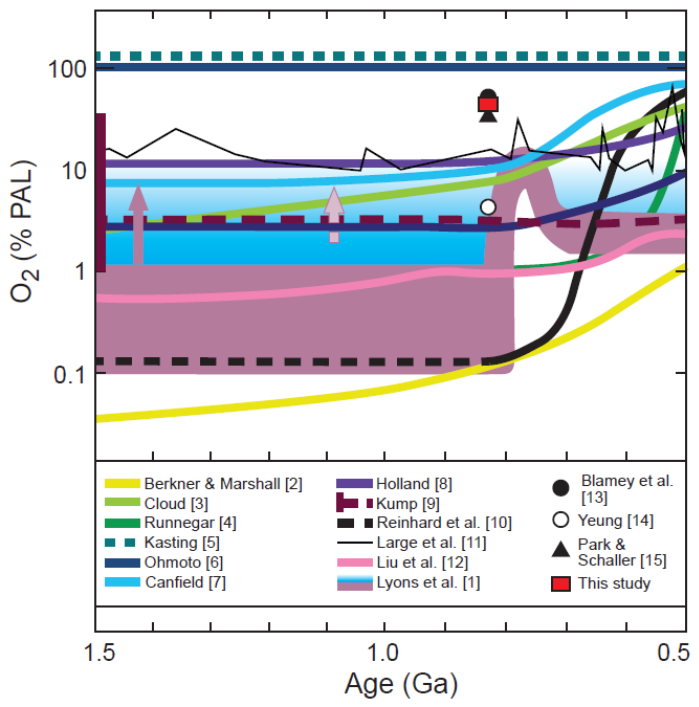
Figure 2.
Fluid inclusions on a plane of halite from the Browne Formation. A wide range of fluid inclusion types are present in this compilation. The ‘red’ arrow points to a 1-phase fluid inclusion (may consist of just liquid and/or liquid with dissolved gases). The ‘green’ arrow points to a 2-phase fluid inclusion clearly showing a bubble in the right-side portion of the inclusion.
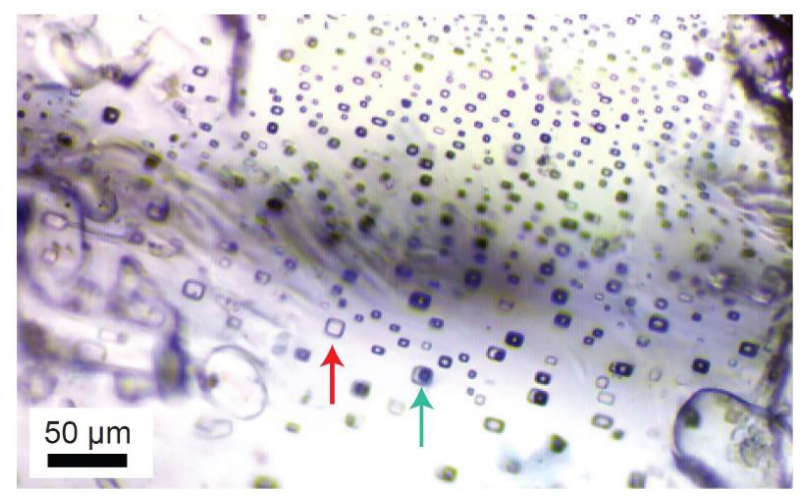
Figure 3.
Representatives of the various phases within fluid inclusions observed in modern and ancient halite. Plate A – 1-phase fluid inclusion consisting of just liquid. Plate B – 1-phase fluid inclusion containing possibly dissolved gas/air. Plate C – 2-phase fluid inclusion consisting of both a liquid phase with an entrained gas/air bubble. Plate D – 3-phase fluid inclusion consisting of three coeval phases of a liquid, gas and solid. Plate E – 2-phase fluid inclusion with a macro bubble of gas/air. Plate F – 2-phase fluid inclusion with a micro (nano) bubble of gas/air.
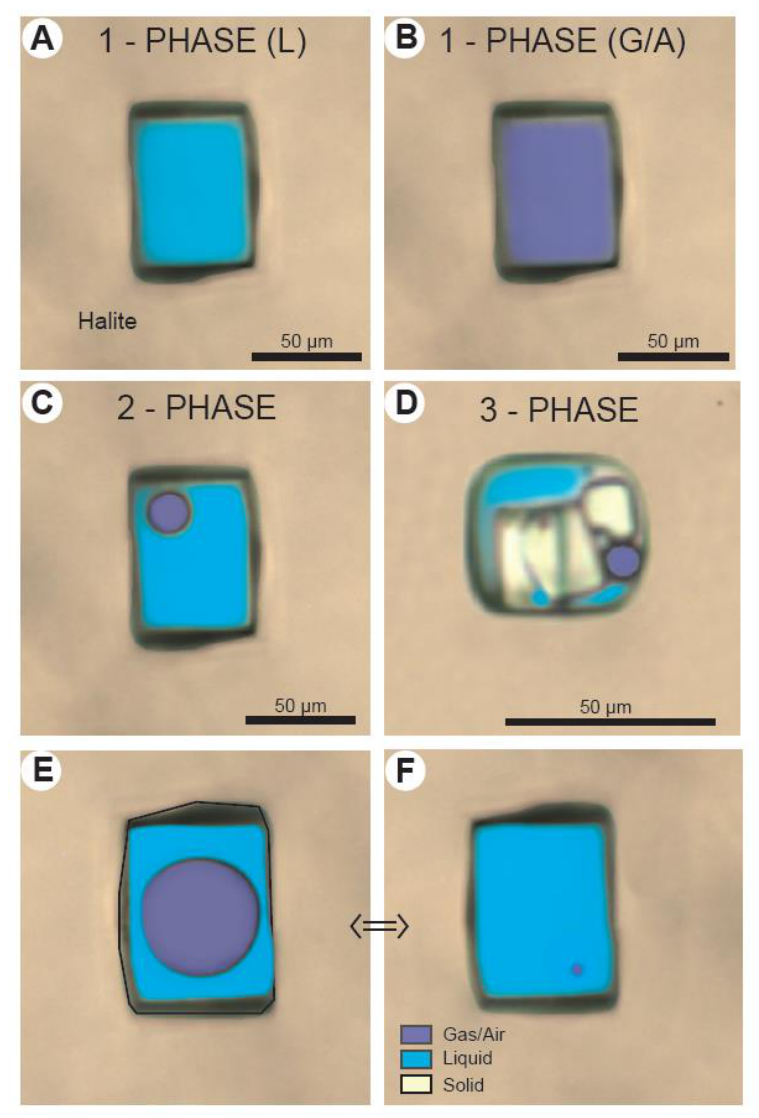
Figure 4.
Flowchart of HOCCSE (Holistic Oxygen Carbon dioxide Climate and Seawater Evaluation) method to extract and evaluate the gas contents of halite fluid inclusions. Stage I involves the sampling scheme with assignment of location and paleo-age & location of the sample set. The sample material can be efficiently subdivided into clear and cloudy halite, with the latter moving on for further evaluation. Stage II involves the detailed assessment of the diagenetic integrity of both the solid (host) and fluid inclusions. The solid host material is evaluated using Sr and Ar isotopes for their integrity and primary robustness, and the retention/sealing of fluid inclusion contents. The second part of the diagenetic evaluation examines the shape of fluid inclusions measured for their homogenization temperatures (Th°C). Samples that pass all these steps will be passed on for their gas content measurements. Altered material may also be tested for gas contents if that happens to be its objective. Stage III consists of three steps, with the first one being the determination of gases, including water, trapped with the examined halite. The objective is to obtain gas measurements that are representative of nano to macro air bubbles. This is achieved by specific N2/Ar and argon screening assignable to entrained ‘bubbles’ and not dissolved gas(es). The consistency of the gas content of CO2 using climate sensitivity equations will be compared to the microthermometry determined Th°C. Samples that are identified as pristine, gas content and Th°C, will be used to calculate the atmospheric, climate conditions and seawater compositions in Stage IV. Atmosphere gases (N2, O2, Ar, CO2, CH4) can be determined for dry and humid conditions, while the ambient temperatures will be collected from the CO2 – climate sensitivity relationship and Th°C of the fluid inclusion gas. With Henry’s Law and equilibria formulas we can determine the dissolved oxygen content and pH of the formational seawater (brine).
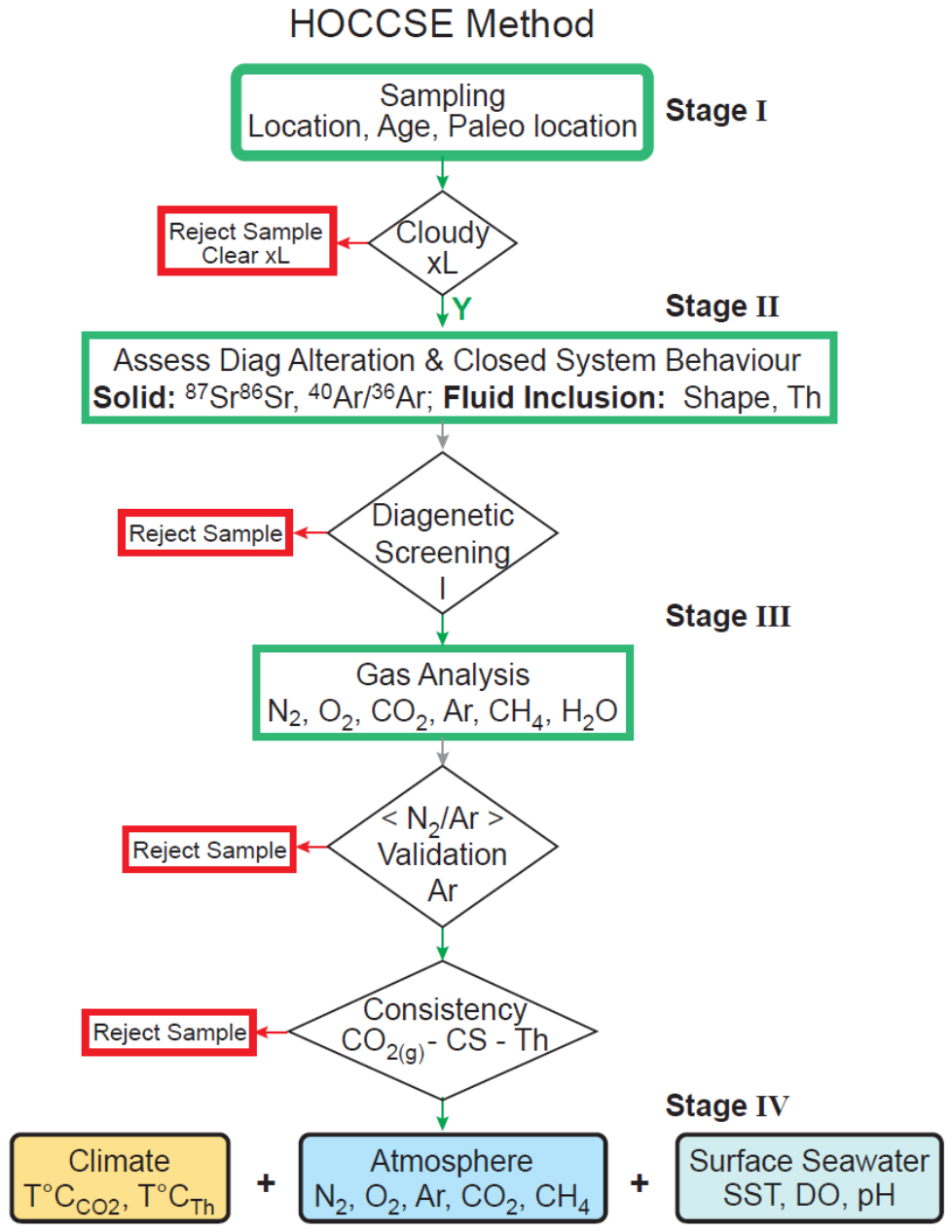
Figure 5.
Examples of clear (A) and cloudy (B) halite. Clear halite is usually of a diagenetic (secondary) nature, whereas cloudy halite may have formed in a depositional saline environment (modified after [50]).
Figure 5.
Examples of clear (A) and cloudy (B) halite. Clear halite is usually of a diagenetic (secondary) nature, whereas cloudy halite may have formed in a depositional saline environment (modified after [50]).
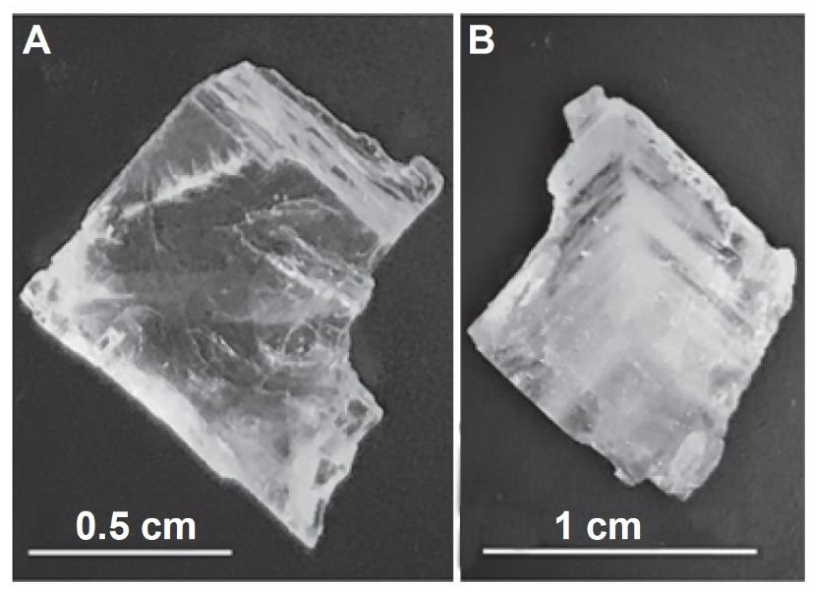
Figure 6.
Summary homogenization temperature (Th°C) plot of all halite examined from the Browne Formation [cf. 20]. Two groups are recognized – red results with temperatures exceeding depositional conditions, while green results are within acceptable depositional parameters [20,50]. Material is judged and sorted based on both Th and fluid inclusion shape [20].
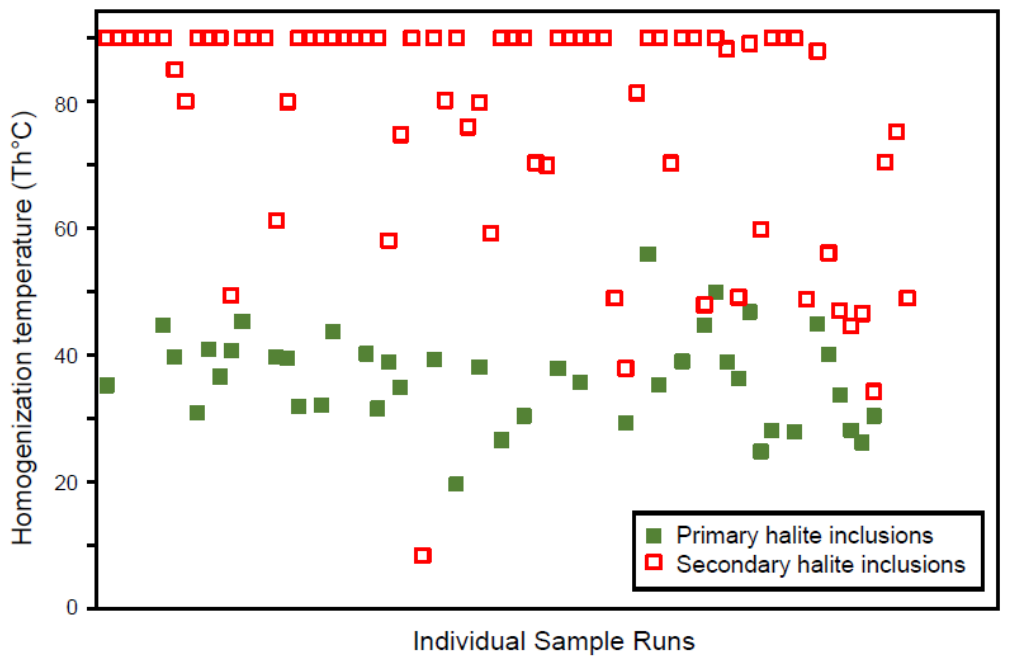
Figure 7.
Diagenetic evaluation of the solid (host) halite (A) and of the fluid inclusions using microthermometry (B). Contentious sample #1478 is identified in the examined batch by Sr isotopes that are clearly outside the range of pristine material (cf. Suppl Fig. 1).
Figure 7.
Diagenetic evaluation of the solid (host) halite (A) and of the fluid inclusions using microthermometry (B). Contentious sample #1478 is identified in the examined batch by Sr isotopes that are clearly outside the range of pristine material (cf. Suppl Fig. 1).
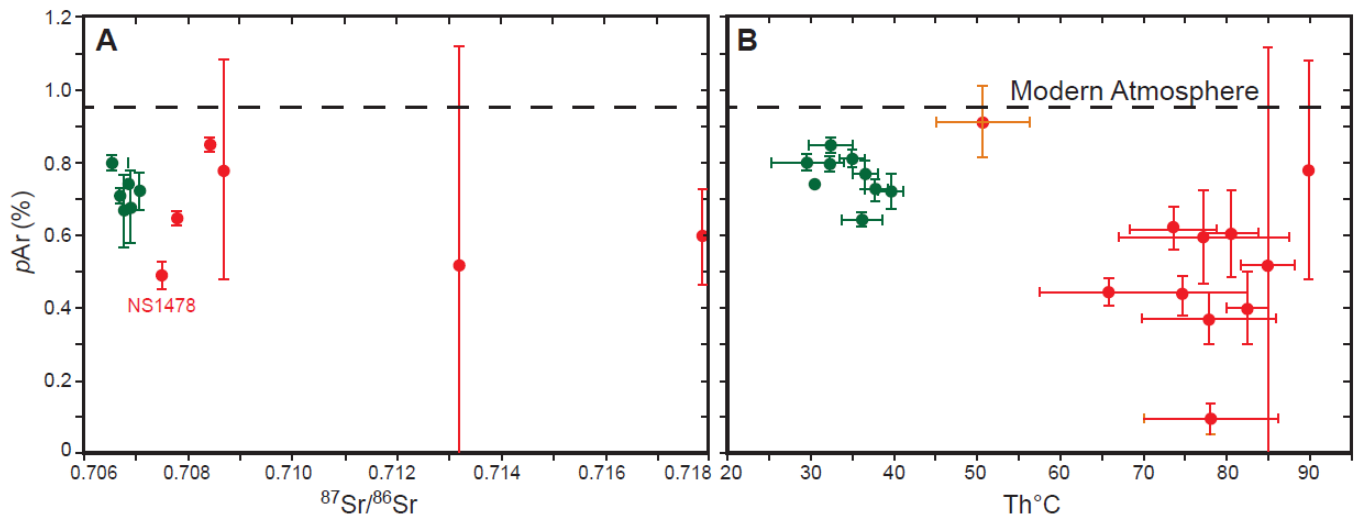
Figure 8.
Reconstruction of Ar isotope and argon content with Geologic Time. Results are based on computations of gas trapped in several mediums [21,30,31]. Shaded part of trend defines the natural variation interval.
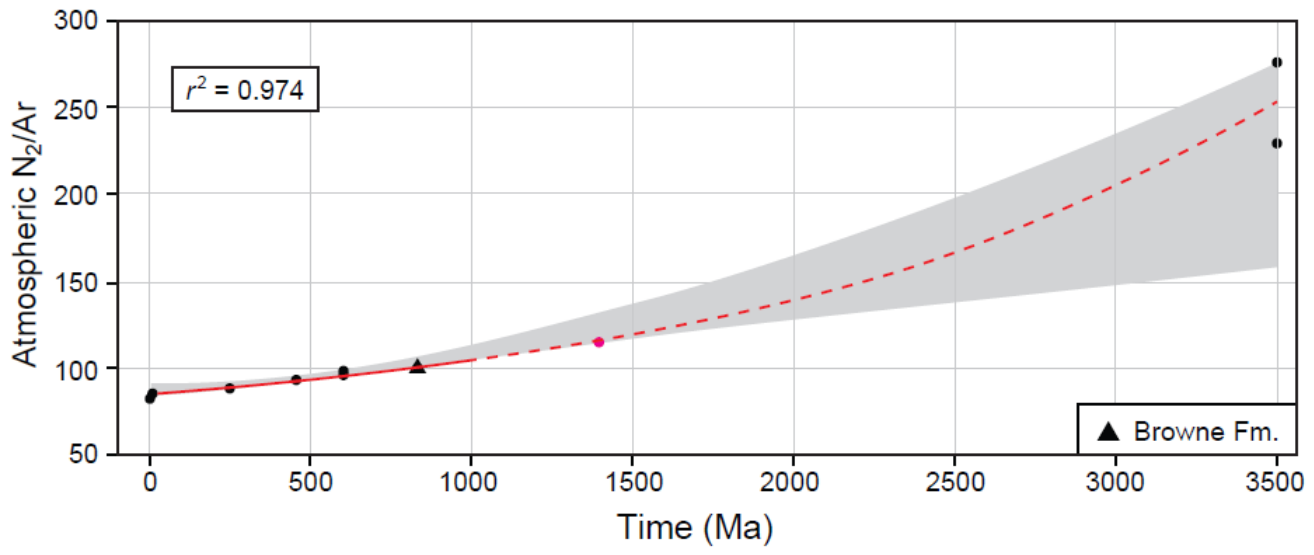
Figure 9.
Reconstruction of atmospheric N2/Ar ratio with Geologic Time. Results are from several sources [21,26,27,28,29] and modern atmosphere to calculate the trend and 95 % confidence window (shaded portion).
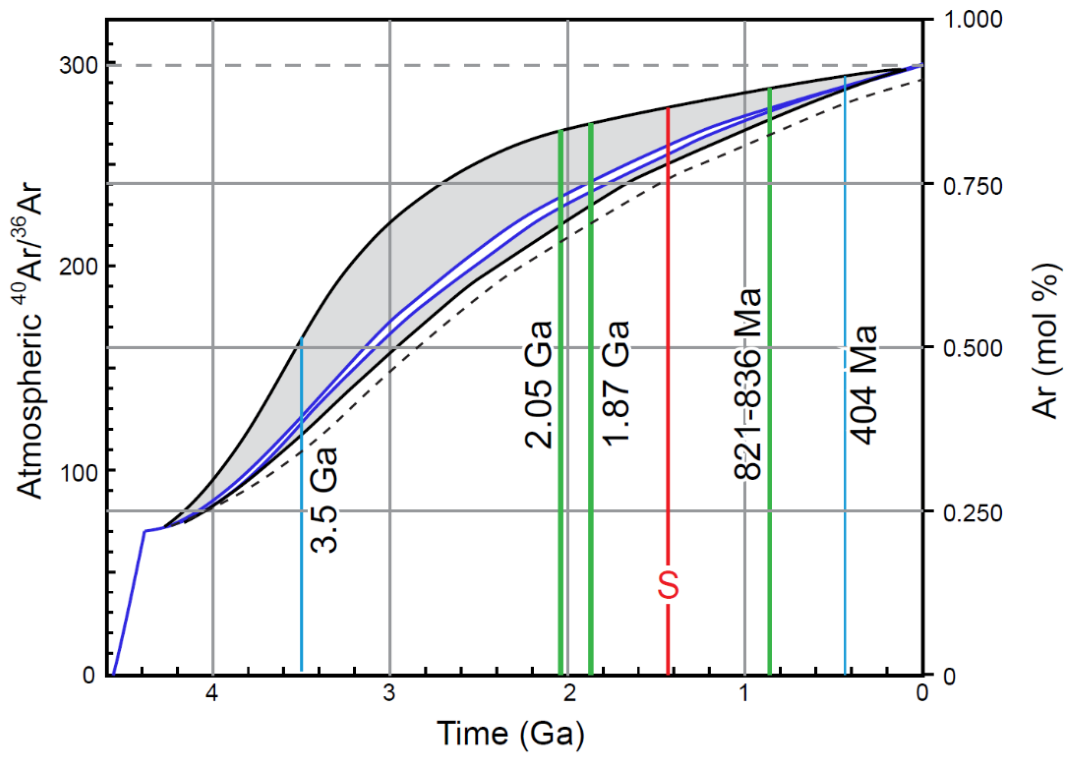
Figure 10.
Evaluation of individual gas contents using their un-reconstructed N2/Ar (solid dots). Gas measurements within the parameters specified for gas/air trapped in bubbles of 2-stage are defined by their consistent ratios (e.g., crush 9227h, 10423k, 9232d, 9228a). N2/Ar ratios outside the realm of unaltered ‘bubbles and dissolved gas contents fall below as well as above the re-constructed N2/Ar ratio line (e.g., 10425a, 9231b, 9227h, 9231g, 9228b, 9435a). N2/Ar ratio of sample #1478 – example crushes are in bold of series (Table 2).
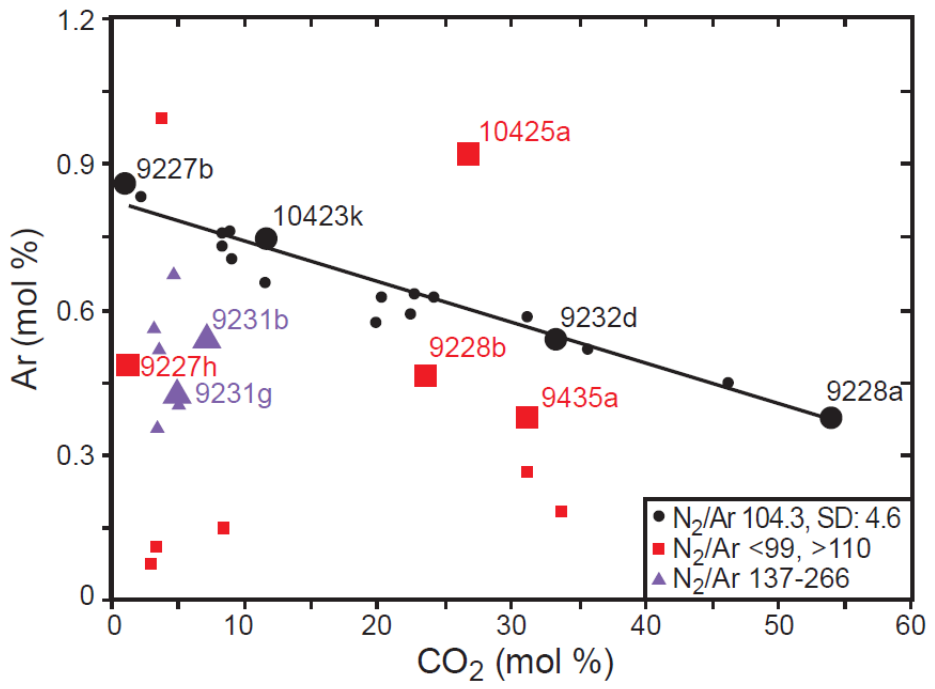

Table 1.
Measured atmospheric gases in modern atmosphere and in ancient halites (Permian Zechstein, Germany; Tonian Browne Formation, Australia).
Table 1.
Measured atmospheric gases in modern atmosphere and in ancient halites (Permian Zechstein, Germany; Tonian Browne Formation, Australia).
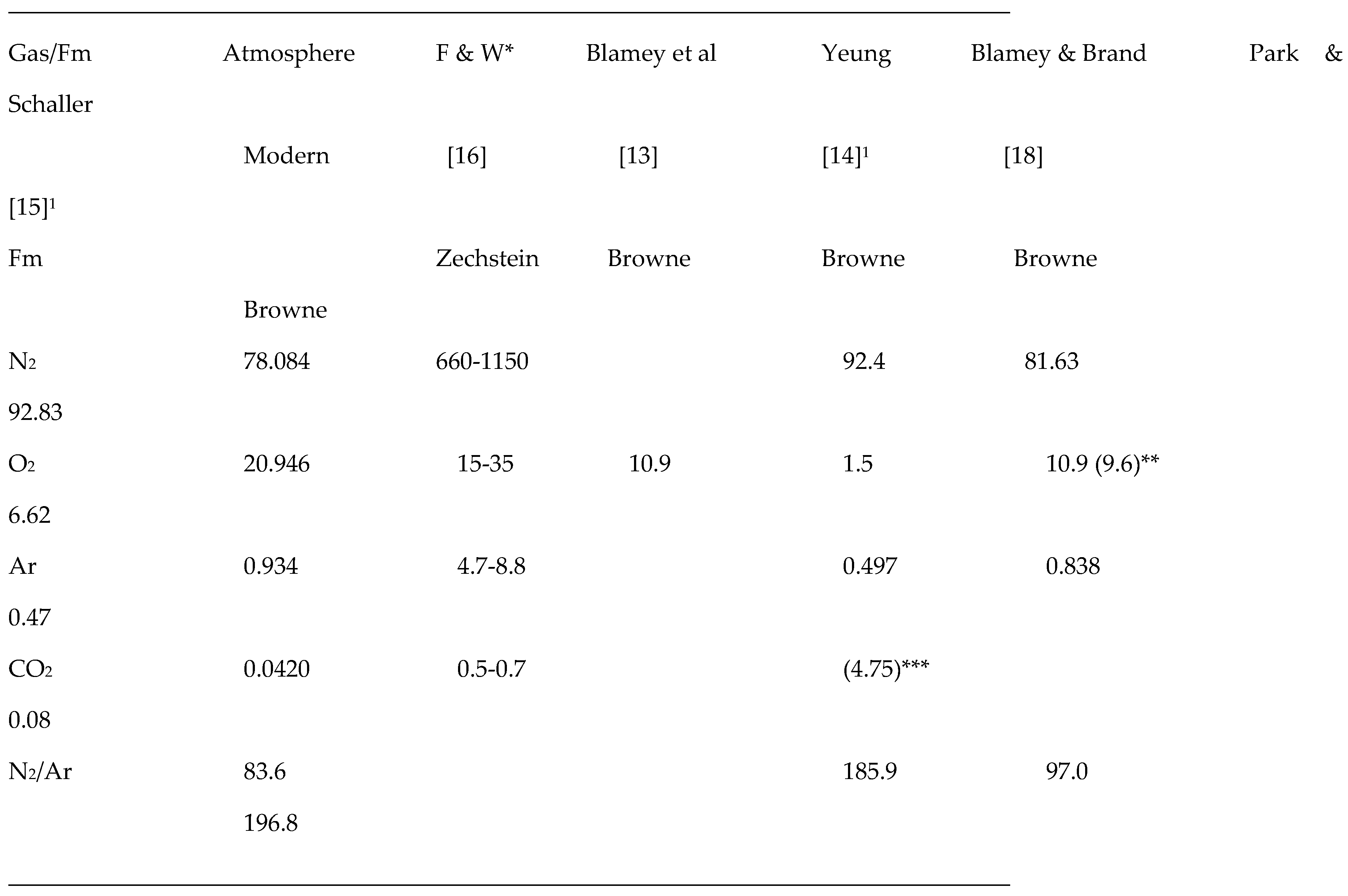 |
Table 2.
Gas contents of select halite samples (crush #) from the Browne Formation, Officer Basin, Australia (larger symbols in figure 10). Includes crushes selected by Park and Schaller [15] as end-members of their MAGPI method (sample labels in italics).
Table 2.
Gas contents of select halite samples (crush #) from the Browne Formation, Officer Basin, Australia (larger symbols in figure 10). Includes crushes selected by Park and Schaller [15] as end-members of their MAGPI method (sample labels in italics).
|
Table 3.
Measured and calculated parameters of Tonian atmosphere, climate and surface seawater based on fluid inclusion gas chemistry.
Table 3.
Measured and calculated parameters of Tonian atmosphere, climate and surface seawater based on fluid inclusion gas chemistry.
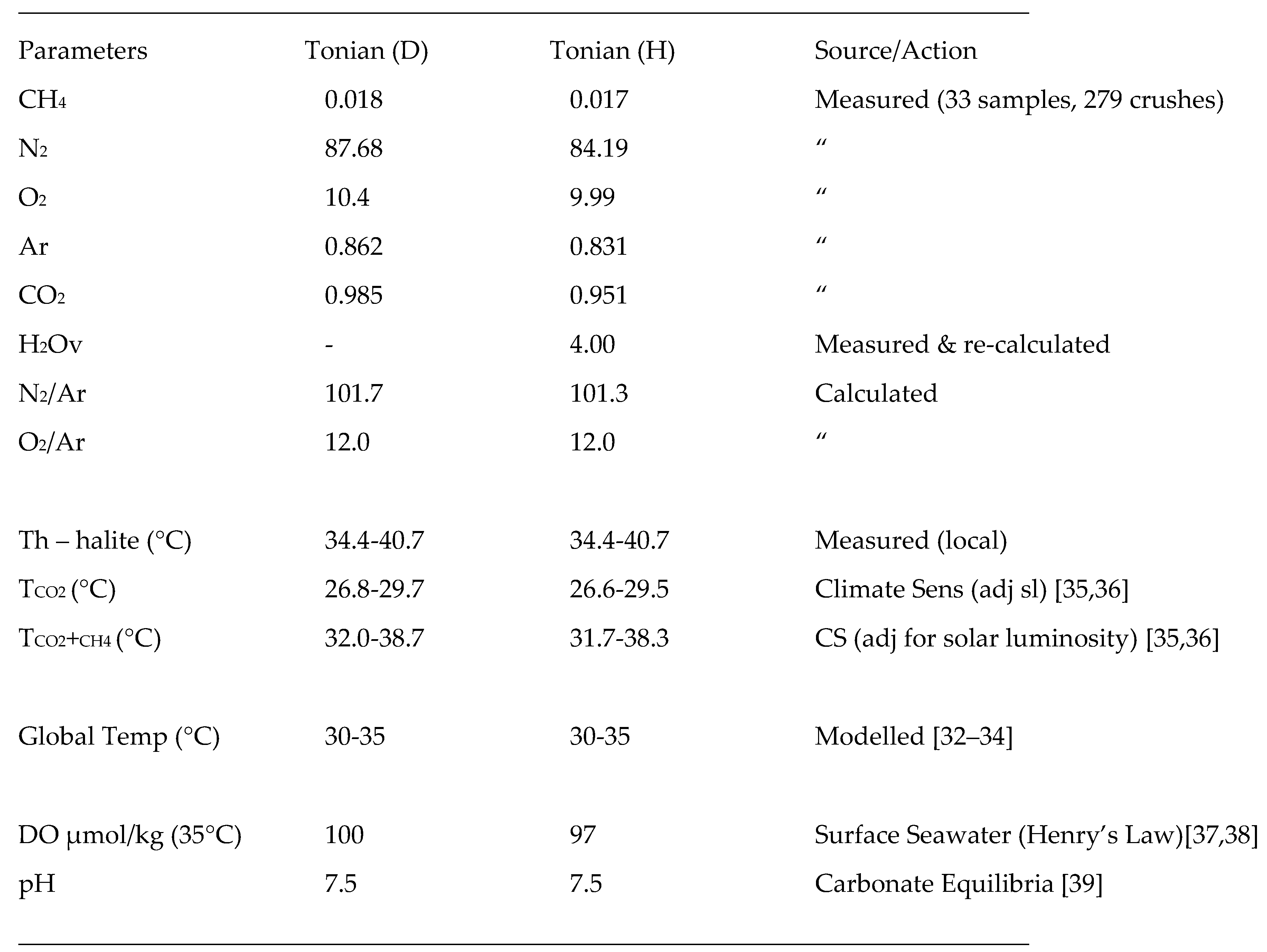 |
Table 4.
Compilation of atmospheric and seawater gas contents proposed for parts or all of the Neoproterozoic (Tonian).
Table 4.
Compilation of atmospheric and seawater gas contents proposed for parts or all of the Neoproterozoic (Tonian).
|
Note: O2 % PAL – values are the average (maximum) values reported by specific authors or extrapolated from their diagrams; * - for an ambient water temperature of 25-30°C; P – proxy, S – synopsis, Cm – computer modeling, Mo – modeling, M – measurements, R – re-calculated, C – calculated, H – humid air; 1- 1.1 Ga.
Disclaimer/Publisher’s Note: The statements, opinions and data contained in all publications are solely those of the individual author(s) and contributor(s) and not of MDPI and/or the editor(s). MDPI and/or the editor(s) disclaim responsibility for any injury to people or property resulting from any ideas, methods, instructions or products referred to in the content. |
© 2026 by the authors. Licensee MDPI, Basel, Switzerland. This article is an open access article distributed under the terms and conditions of the Creative Commons Attribution (CC BY) license (http://creativecommons.org/licenses/by/4.0/).
Copyright: This open access article is published under a Creative Commons CC BY 4.0 license, which permit the free download, distribution, and reuse, provided that the author and preprint are cited in any reuse.