
Submitted:
16 October 2026
Posted:
19 October 2026
You are already at the latest version
Abstract
Against the background of China's Rural Revitalisation Strategy, agricultural livestreaming has become an important link between the production and marketing of agricultural products. Drawing on the stimulus-organism-response (S-O-R) framework, this study examines consumers who watch livestreams supporting farmers. Data were collected from 482 valid questionnaire responses, and confirmatory factor analysis, regression analysis, and bootstrap mediation analysis were used to examine the mechanisms underlying consumers' purchase intentions. The results show that agricultural livestreaming characteristics have a significant positive effect on purchase intention. Perceived value and perceived trust both mediate this relationship, with perceived trust accounting for the stronger indirect effect. These findings suggest that livestreams supporting farmers operate not only through immediate promotional stimulation but also through an ongoing communication process that shapes consumers' evaluations and judgements. The study extends understanding of the psychological mechanisms underlying agricultural livestreaming and provides practical implications for improving content presentation and strengthening consumer trust.
Keywords:
agricultural livestreaming
; livestreaming characteristics
; perceived value
; perceived trust
; purchase intention
1. Introduction
Within China’s Rural Revitalisation Strategy, the integration of digital technologies and e-commerce into the agricultural sector has created new channels for marketing agricultural products, expanding market access and contributing to farmers’ income growth. The Ministry of Agriculture and Rural Affairs, together with ten other departments, issued an implementation plan to promote agricultural product consumption. The plan encourages platforms to train farmers as livestreamers, establish dedicated agricultural livestreaming channels, and provide supporting resources. These measures offer policy guidance for the standardised and scaled development of agricultural livestreaming [1]. According to the 55th Statistical Report on China’s Internet Development released by the China
Internet Network Information Center (CNNIC), China had 1.108 billion Internet users by December 2024, representing an Internet penetration rate of 78.6%. Among them, 974 million were online shoppers, accounting for 87.9% of all Internet users. This large digital consumer base provides substantial market potential for agricultural livestreaming [2]. In 2024, China’s online retail sales of agricultural products increased by 15.8% year on year, while rural e-commerce continued to expand rapidly [3]. Agricultural livestreaming has therefore become an increasingly important interface connecting agricultural production with consumer demand.
Despite its rapid expansion, agricultural livestreaming continues to face important operational challenges. Traffic is highly concentrated among leading streamers, while many smaller livestream rooms struggle to attract and retain viewers. Content formats are often homogeneous, the value of agricultural products is not always communicated clearly, and sustained psychological connections with consumers can be difficult to establish. These problems may constrain the long-term development of agricultural livestreaming. A central research issue is therefore to identify which livestreaming characteristics shape consumers’ purchase decisions and through which psychological mechanisms these effects occur. Perceived value and perceived trust are particularly relevant because they capture two distinct evaluations that consumers make before purchase: whether the offering is worthwhile and whether the information and seller can be relied upon. Examining these mechanisms can clarify how agricultural livestreaming affects purchase intention and provide evidence for improving livestream practices and supporting the high-quality development of rural e-commerce.
This study adopts the stimulus-organism-response (S-O-R) framework proposed by Mehrabian and Russell (1974) [4]. The framework suggests that environmental stimuli influence behaviour through individuals’ internal cognitive and affective states. In the present context, agricultural livestreaming characteristics represent external stimuli (S), perceived value and perceived trust capture consumers’ internal evaluations (O), and purchase intention represents the behavioural response (R). Based on this logic, the study examines the effect of agricultural livestreaming characteristics on purchase intention and tests the parallel mediating roles of perceived value and perceived trust. In doing so, it seeks to explain not only whether agricultural livestreaming influences purchase intention, but also how value evaluation and trust formation transmit this effect. The findings provide practical implications for improving agricultural livestreaming content, strengthening consumer relationships, and supporting rural e-commerce development.
2. Literature Review and Hypothesis Development
2.1. S-O-R Theory
The stimulus-organism-response (S-O-R) theory, introduced by Mehrabian and Russell in 1974, explains how environmental stimuli influence behavioural responses through an individual’s internal state. Compared with the traditional stimulus-response (S-R) model, the S-O-R framework explicitly incorporates the organism (O), typically represented by cognitive and affective processes, as the mechanism through which external cues are interpreted before behaviour occurs.
The S-O-R framework has been widely applied in livestreaming e-commerce to explain how platform, streamer, and content-related stimuli shape consumer responses. Liudingiridium and Tian Yu (2024) found
that streamer characteristics positively affected consumers’ purchase intentions through perceived risk and trust [5]. Linbaodeng and Guoqianqian (2024) applied the framework to publishing-industry livestreaming and showed that presentation mode, host identity, interactivity, and book selection influenced persuasive outcomes through changes in consumers’ cognition and emotion [6]. In the context of agricultural product e-commerce, Lisihe (2025) further reported that livestream interaction indirectly affected purchase intention by shaping perceived trust and perceived value [7]. Together, these studies indicate that the S-O-R framework is well suited to explaining how livestreaming characteristics are translated into purchase-related responses through consumers’ internal evaluations.
2.2. Agricultural Livestreaming Characteristics and Purchase Intention
Agricultural livestreaming differs from general e-commerce livestreaming because the products, production settings, and identities of sellers are closely connected to agricultural production. Prior research characterises agricultural livestreaming through three main dimensions: streamer interactivity, content professionalism, and livestream presence [8]. Purchase intention refers to consumers’ willingness to purchase the promoted product, recommend it to others, and select the livestream channel as a purchasing venue [9]. These three characteristics provide complementary informational and experiential cues that may influence consumers’ willingness to buy.
Many streamers who participate in farmer-supporting livestreams are agricultural producers, operators, or individuals with direct knowledge of the products being sold. When a streamer demonstrates a product in real time and responds immediately to questions about attributes such as taste, size, origin, or cultivation, the interaction can increase information transparency and signal responsiveness [10]. Existing studies indicate that timely responses, authentic expressions, and experience-based explanations can strengthen consumers’ purchase intentions [11,12]. Such interaction reduces the psychological distance between consumers and producers while making product information easier to verify, thereby increasing consumers’ willingness to purchase through the livestream.
Agricultural livestreams also differ from conventional promotional broadcasts in the depth of product and production information that they can provide. In addition to displaying product appearance and price, streamers can explain planting environments, growth cycles, cultivation methods, quality standards, and other field-based knowledge. This professional information can enhance the perceived authenticity and diagnostic value of product claims. Songqian and Zhengzhilei (2025) suggest that interactive settings supported by professional content can foster quasi-social relationships between viewers and streamers and thereby increase purchase intention [13]. Content professionalism may therefore influence consumer decisions not only by reducing information asymmetry but also by strengthening trust and perceived value.
A further distinctive feature of agricultural livestreaming is its frequent use of production sites, orchards, farms, and other origin-based settings. These visual environments can create a strong sense of presence by allowing viewers to experience the product within its production context. Zhangjieqiong et al. (2022) found that perceived presence significantly increased users’ intentions to continue using and recommending livestreaming services [14]. In farmer-supporting livestreams, origin-based scenes can similarly enhance telepresence by making viewers feel closer to the planting, harvesting, and production process. This immersive experience can improve product understanding and increase consumers’ willingness to purchase.
Taken together, streamer interactivity, content professionalism, and livestream presence constitute a set of complementary external stimuli that can shape consumers’ evaluations and behavioural responses in agricultural livestreaming environments. Accordingly, the following hypothesis is proposed:
H1.
Agricultural livestreaming characteristics positively affect consumers’ purchase intentions.
2.3. The Mediating Role of Perceived Value
S-O-R theory suggests that behavioural responses depend on how individuals evaluate and interpret external stimuli. In agricultural livestreaming, consumers must assess whether the products and the overall purchasing experience provide sufficient benefits relative to the costs and effort involved. Perceived value therefore represents an important cognitive evaluation linking livestream stimuli to purchase intention. Zeithaml (1988) emphasised that consumers’ subjective assessments of value influence their behavioural choices [15], while Sweeney and Soutar (2001) further showed that purchase intention tends to emerge after consumers have formed a favourable value judgement [16].
Research on livestreaming e-commerce increasingly identifies perceived value as an important mechanism through which livestream characteristics influence consumer behaviour. Yaoyuting and Zhujiqing (2024) found that interactions within livestream rooms significantly enhanced consumers’ perceived value, which subsequently increased purchase intention [9]. Similarly, Lisihe (2025) reported that, in agricultural livestreaming, livestream characteristics influenced consumers through a process of value evaluation rather than through direct stimulation alone [7]. Agricultural livestreaming can increase perceived value by providing richer product information, reducing search costs, offering interactive service, and highlighting the social meaning associated with supporting farmers. These value-related evaluations may in turn translate livestreaming characteristics into stronger purchase intentions. Based on the preceding arguments, the following hypothesis is proposed:
H2.
Perceived value mediates the relationship between agricultural livestreaming characteristics and purchase intention.
2.4. The Mediating Role of Perceived Trust
Within the S-O-R framework, the organism (O) can encompass multiple internal cognitive and evaluative processes rather than a single psychological response. In addition to value assessment, trust is particularly important in online transactions characterised by uncertainty and limited opportunities for direct product inspection. Perceived trust reflects consumers’ subjective assessment of whether the seller, information source, and transaction outcome are reliable and credible [17,18]. It therefore represents a distinct psychological mechanism through which livestreaming cues may influence purchase decisions.
In livestreaming e-commerce, consumers cannot fully verify product quality before purchase and must therefore rely on cues such as streamer behaviour, information transparency, product demonstrations, and service interactions. These external cues can shape whether consumers regard the streamer and the information provided as trustworthy. Previous research has shown that perceived trust, in turn, influences purchase intention. He Shan (2024), for example, found that perceived trust mediated the relationship between admiration for livestreamers and consumers’ purchase intentions [19].
Similarly, Qian Xiaoao and Liu Jiaguo (2025) showed that perceived trust acted as an intermediary mechanism linking virtual streamer characteristics to consumers’ purchase intentions [20].
Agricultural livestreaming characteristics may strengthen perceived trust by increasing transparency, reducing uncertainty, and allowing consumers to observe the consistency between product claims, streamer behaviour, and production settings. Interactive responses can signal responsiveness, professional content can increase information credibility, and origin-based livestream scenes can make product information more verifiable. These trust-building processes should reduce perceived transaction risk and increase consumers’ willingness to purchase. Accordingly, the following hypothesis is proposed:
H3.
Perceived trust mediates the relationship between agricultural livestreaming characteristics and purchase intention.
Figure 1 presents the proposed research model. Agricultural livestreaming characteristics are conceptualised as a multidimensional construct comprising streamer interactivity, content professionalism, and livestream presence. Perceived value and perceived trust are specified as parallel mediators linking these characteristics to purchase intention, providing the basis for the empirical tests that follow.
3. Research Design
A questionnaire survey was used to collect data on agricultural livestreaming characteristics, perceived value, perceived trust, and purchase intention. The empirical analysis proceeded in three stages. First, the measurement properties of the constructs were assessed. Second, regression analysis was used to examine the relationships among the focal variables. Third, bootstrap mediation analysis was conducted to test the parallel indirect effects of perceived value and perceived trust.
3.1. Scale Design
Agricultural livestreaming characteristics (ALSC) were measured using the scale developed by Zhang Bei and Zhu Jichan (2024), which adapts established livestreaming measures to an agricultural context [8]. The construct contains three dimensions: streamer interactivity, content professionalism, and livestream presence. These dimensions capture the interpersonal, informational, and experiential characteristics of agricultural livestreaming.
The scale has been applied to farmer-supporting livestream contexts and is designed to capture how streamer behaviour, content quality, and livestream experience are perceived by consumers. The items were retained with contextual wording appropriate to agricultural products and livestreaming situations.
Perceived value (PV) and perceived trust (PT) were measured using scales refined by Han Xiaoyi (2020). The perceived value scale contains four items and the perceived trust scale contains five items [21]. Both constructs were treated as separate latent variables representing consumers’ overall value and trust evaluations in agricultural livestreaming. The original item structures were retained, with only minor contextual adjustments to ensure that the statements referred explicitly to agricultural livestreaming and farmer-supporting consumption.
Purchase intention (PI) was measured using the scale adopted by Yaoyuting and Zhujiqing (2024), which adapts established purchase-intention measures to livestreaming e-commerce [9]. The scale contains three items capturing willingness to purchase, willingness to recommend, and willingness to choose the livestream channel when buying the product. The complete measurement items and their sources are reported in Table 1.
3.2. Respondents and Data Collection
Data were collected through an online questionnaire created and distributed using the Questionnaire Star platform. The survey link was primarily disseminated through WeChat to reach consumers with relevant livestreaming experience. A screening question was used to identify respondents who had previously watched livestreams supporting farmers; respondents without such experience were screened out before completing the substantive items. Additional quality-control procedures were applied during data cleaning. Responses completed in less than three minutes, responses showing highly repetitive or mechanically regular patterns, and observations identified as abnormal during data inspection were removed. In total, 550 questionnaires were collected. After screening and data cleaning, 482 valid responses were retained, yielding an effective response rate of
87.6%. The final sample size was sufficient for the measurement, regression, and mediation analyses conducted in this study.
Table 2 summarises the demographic characteristics of the sample. Women accounted for 67.4% of respondents and men for 32.6%. The largest age group was 19-30 years (49.6%), followed by respondents aged 31-40 years (28.4%). In terms of education, 64.5% of respondents held a bachelor’s degree. Overall, the sample was concentrated among female, young and middle-aged, and relatively well-educated consumers with experience of farmer-supporting livestreams.
4. Data Analysis
4.1. Descriptive Statistics
The item-level descriptive statistics show that mean scores were generally above the scale midpoint, ranging from 3.64 to 4.07, with standard deviations between 0.83 and 1.05. The items were subsequently aggregated by construct. Table 3 reports the mean and standard deviation for each focal variable, providing an overall description of respondents’ evaluations of agricultural livestreaming characteristics, perceived value, perceived trust, and purchase intention.
4.2. Reliability and Validity Analysis
SPSS 27.0 was used to assess internal consistency and the suitability of the data for factor analysis. As shown in Table 4, Cronbach’s α exceeded 0.80 for all constructs, indicating strong internal consistency. The measurement items were adapted from established scales, providing a basis for content validity. The Kaiser-Meyer-Olkin (KMO) measure of sampling adequacy was 0.976, and Bartlett’s test of sphericity was significant (p < 0.001), indicating that the correlation structure was appropriate for factor analysis.
AMOS 28.0 was then used to conduct confirmatory factor analysis (CFA) and assess the measurement model. The model demonstrated a good overall fit (χ2/df = 2.417, RMSEA = 0.054, CFI = 0.974, NFI = 0.957, IFI = 0.974, TLI = 0.970). Standardised factor loadings met the recommended criteria. The average variance extracted (AVE) for each construct exceeded 0.50, and composite reliability (CR) exceeded 0.70, supporting convergent validity. The CFA results also supported the multidimensional representation of agricultural livestreaming characteristics through streamer interactivity, content professionalism, and livestream presence.
Overall, the measurement results indicate satisfactory reliability and convergent validity, providing an adequate basis for examining the structural relationships and mediation mechanisms proposed in the research model.
4.3. Path Analysis
After validating the measurement model, regression analysis was conducted in SPSS 27.0 to examine the relationships among the study variables. The analysis first estimated the direct association between agricultural livestreaming characteristics (ALSC) and purchase intention (PI), and then examined the relationships of ALSC with perceived value (PV) and perceived trust (PT) before estimating the joint model including both mediators.
As shown in Table 5, Model 1 indicates that agricultural livestreaming characteristics have a significant positive effect on purchase intention (β = 0.804, p < 0.001), supporting H1. Models 2 and 3 show that agricultural livestreaming characteristics are positively associated with perceived value (β = 0.844, p < 0.001) and perceived trust (β = 0.822, p < 0.001), respectively. In Model 4, perceived value (β = 0.248, p < 0.001) and perceived trust (β = 0.524, p < 0.001) both have significant positive effects on purchase intention. The coefficient for agricultural livestreaming characteristics remains significant but decreases to β = 0.164 (p < 0.001), compared with β = 0.804 in Model 1. This pattern is consistent with partial mediation through perceived value and perceived trust.
4.4. Mediation Analysis
The parallel mediation effects were tested using PROCESS Model 4 in SPSS 27.0. Agricultural livestreaming characteristics (ALSC) were specified as the independent variable, purchase intention (PI) as the dependent variable, and perceived value (PV) and perceived trust (PT) as parallel mediators. Indirect effects were estimated using 5,000 bootstrap resamples and 95% confidence intervals.
The results show that agricultural livestreaming characteristics retain a significant direct effect on purchase intention (β = 0.1646, p < 0.001). They also have significant positive effects on perceived value (β = 0.7828, p < 0.001) and perceived trust (β = 0.8201, p < 0.001). When the two mediators are included simultaneously, both contribute significantly to explaining purchase intention, indicating that perceived value and perceived trust transmit part of the effect of agricultural livestreaming characteristics on purchase intention.
The total indirect effect is 0.6423, with a 95% bootstrap confidence interval of [0.5436, 0.7285], which excludes zero. The specific indirect effect through perceived value is 0.2098 (95% CI = [0.1096, 0.3054]), while the indirect effect through perceived trust is 0.4325 (95% CI = [0.3293, 0.5231]). Both indirect effects are therefore statistically significant, supporting H2 and H3. The indirect effect through perceived trust is larger than that through perceived value, indicating that trust formation plays the more prominent mediating role in the relationship between agricultural livestreaming characteristics and purchase intention.
Because the direct effect of agricultural livestreaming characteristics on purchase intention remains significant after perceived value and perceived trust are included, the results indicate partial rather than full mediation. Taken together, the findings support a parallel mediation mechanism in which agricultural livestreaming characteristics influence purchase intention both directly and indirectly through consumers’ value and trust evaluations.

Table 6.
Bootstrap results for the mediation effects.
| Mediation path | Effect | Boot SE | Boot LLCI | Boot ULCI |
| ALSC → PV → PI | 0.2098 | 0.0500 | 0.1096 | 0.3054 |
| ALSC → PT → PI | 0.4325 | 0.0495 | 0.3293 | 0.5231 |
| Total indirect effect | 0.6423 | 0.0476 | 0.5436 | 0.7285 |
Note: Bootstrap resamples = 5,000. Boot LLCI and Boot ULCI denote the lower and upper bounds of the 95% bootstrap confidence interval, respectively. An indirect effect is considered significant when the confidence interval does not include zero.
Figure 2 summarizes the estimated paths and standardized coefficients obtained from the empirical analyses.
5. Conclusions and Implications
5.1. Research Conclusions
The empirical results show that agricultural livestreaming characteristics positively influence consumers’ purchase intentions and that this relationship operates through both perceived value and perceived trust. Among the study constructs, perceived value has the highest mean score, suggesting that respondents generally recognise both the utilitarian value of the promoted agricultural products and the broader value associated with supporting farmers. Streamer interactivity, content professionalism, and livestream presence jointly contribute to purchase intention. The mediation results further show that perceived value and perceived trust partially transmit this effect. Importantly, the indirect effect through perceived trust is larger than the indirect effect through perceived value, indicating that consumers’ willingness to purchase depends not only on whether the product and experience are perceived as valuable, but also on whether the streamer and the information provided are regarded as credible and reliable.
5.2. Theoretical and Practical Implications
The findings indicate that the effectiveness of agricultural livestreaming cannot be understood solely in terms of information delivery or short-term promotional stimulation. Its influence also depends on how livestreaming changes the cognitive relationship between consumers and agricultural products. Real-time interaction allows consumers to ask questions and obtain immediate responses; professional content helps them understand product attributes and production processes; and origin-based scenes make agricultural products more concrete and observable. Together, these features transform products that would otherwise be evaluated through limited online information into offerings that consumers can more readily perceive, interpret, and assess.
The first mechanism identified in this study is value formation. Through repeated product demonstrations, explanations, and interactions, consumers can gradually assess product quality, usefulness, price-related benefits, service experience, and the social meaning associated with supporting farmers. Purchase intention is therefore not necessarily generated by a single promotional cue; rather, it can emerge through the accumulation of value-related information. The second mechanism is trust formation. Trust becomes particularly important when consumers must make purchase decisions without directly inspecting agricultural products. The decision to purchase depends not only on price and product benefits, but also on the perceived reliability of the communicator and the credibility and consistency of the information provided. Streamers who respond transparently, demonstrate products credibly, and maintain consistency between claims and observable production contexts can reduce uncertainty and strengthen confidence. Purchase intention thus reflects both an evaluation of product value and an assessment of whether the livestream relationship is trustworthy.
From a practical perspective, farmer-supporting livestreams should be managed as relationship-building and information-processing environments rather than as channels focused exclusively on promotional intensity. Platforms and streamers can improve effectiveness by increasing meaningful interaction, providing verifiable and professional product information, and using authentic production settings to make product claims more transparent. These practices can help consumers form more stable evaluations of value and trust.
Accordingly, the objective of agricultural livestreaming should not be limited to stimulating impulsive purchases. A more sustainable approach is to use continuous information sharing and interactive communication to clarify product value, reduce uncertainty, and strengthen trust. By supporting consumers’ value judgements and credibility assessments simultaneously, agricultural livestreaming can foster more durable purchase intentions while contributing to the broader development of rural e-commerce.
References
- The reference appears to be a citation for a governmental document. It should be formatted correctly for academic writing. Here is a refined version: Ministry of Agriculture and Rural Areas Notice on the Distribution of the Implementation Plan for Promoting the Consumption of Agricultural Products [z], Nongshifa [2025] No. 2. 17 July 2025. Available online: http://big5.www.gov.cn/gate/big5/www.gov.cn/zhengce/zhengceku/202507/content_7034022.htm.
- The 55th Statistical Report on China’s Internet Development, released by the China Internet Network Information Center on 17 January 2025, offers detailed insights into the nation’s digital landscape
- The head of the Circulation Development Department at the Ministry of Commerce addressed the advancements in China’s wholesale and retail sectors for 2024
- Liudingiridium, Tian Yu. “Research on the Impact of E-commerce Anchor Characteristics on Consumers’ Purchase Intention: Based on the S-O-R Theory” [j]. New Media Res. 2024, 10(07), 32–37+49.
- Linbaodeng, Guoqianqian. An empirical study on the factors influencing the persuasive effect of live broadcasting in the publishing industry [j]. J. Ningde Norm. Univ. (Philosophy and Social Sciences Edition) 2024, (01), 115–126. [Google Scholar]
- Lisihe. Research on the S-O-R Model for Consumption Decisions in the Direct Broadcast of Agricultural Products. Heilongjiang Sci. 2025, vol. 16(no. 21), 143–146. [Google Scholar]
- Bei, Zhang; Jichan, Zhu. investigate strategies to boost consumers’ willingness to support farmers in live broadcast settings. Their study, “How to Improve the Willingness of Consumers to Help Farmers in the Live Broadcast Scenario?—The Mediating Role of Perceived Value,”. Appear. J. Guangxi Univ. (Philosophy and Social Sciences Edition) 2024, 46(06), 157–169. [Google Scholar]
- Zhou, J.; Zhou, J.; Ding, Y.; et al. The enchantment of danmaku: A social interaction perspective on gift-giving within live streaming platforms. Electron. Commer. Res. Appl. 2019, 34, 100815. [Google Scholar]
- Sunsuhong. Research Review on the Impact of Anchor Behaviour Characteristics of E-commerce Live Rooms on Consumers’ Purchase Intention. E-Commer. Rev. 2025, vol. 14(no. 11), 460–467. [Google Scholar]
- The entire flight is remarkable. Research on how anchor characteristics affect consumer purchasing decisions in live e-commerce [j]. E-Commer. Rev. 2025, 14(12), 1943–1949.
- Zhangjieqiong, Hanshenghao, and Gao Weiwei. Immersive: Analysis on the Behavioural Willingness Mechanism of Webcast Users. Foreign Econ. Manag. 2022, vol. 44(no. 11), 49–62.
- He Shan’s research investigates the impact of anchor worship on consumers’ purchasing intentions during live product broadcasts. The study particularly explores the mediating roles of perceived trust and identity. This work was published in the Journal of Chaohu University. 2024, 26(06), 36–45.
- Qian Xiaoao and Liu Jiaguo explore how the characteristics of virtual anchors affect consumers’ purchase intentions, with a particular emphasis on perceived trust. Times Econ. Trade 2025, 22(04), 80–86.
- Hanxiaoyi. Research on the Mechanism of E-commerce Anchor Attributes on Consumers’ Online Behaviour Intention. Doctoral dissertation, Jilin University, 2020. [Google Scholar]
Figure 1.
Theoretical model.
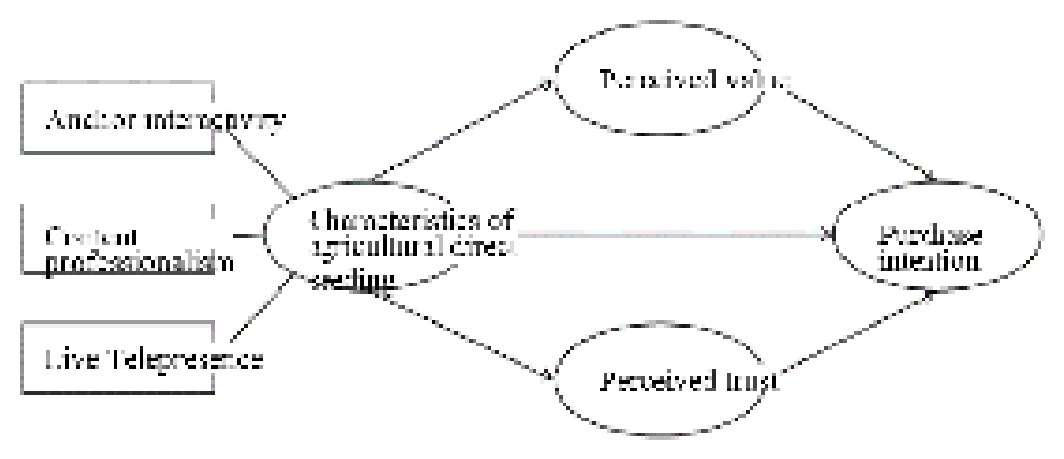
Figure 2.
Estimated paths of the research model. Note: Values are standardized path coefficients. *** p < 0.001.
Figure 2.
Estimated paths of the research model. Note: Values are standardized path coefficients. *** p < 0.001.
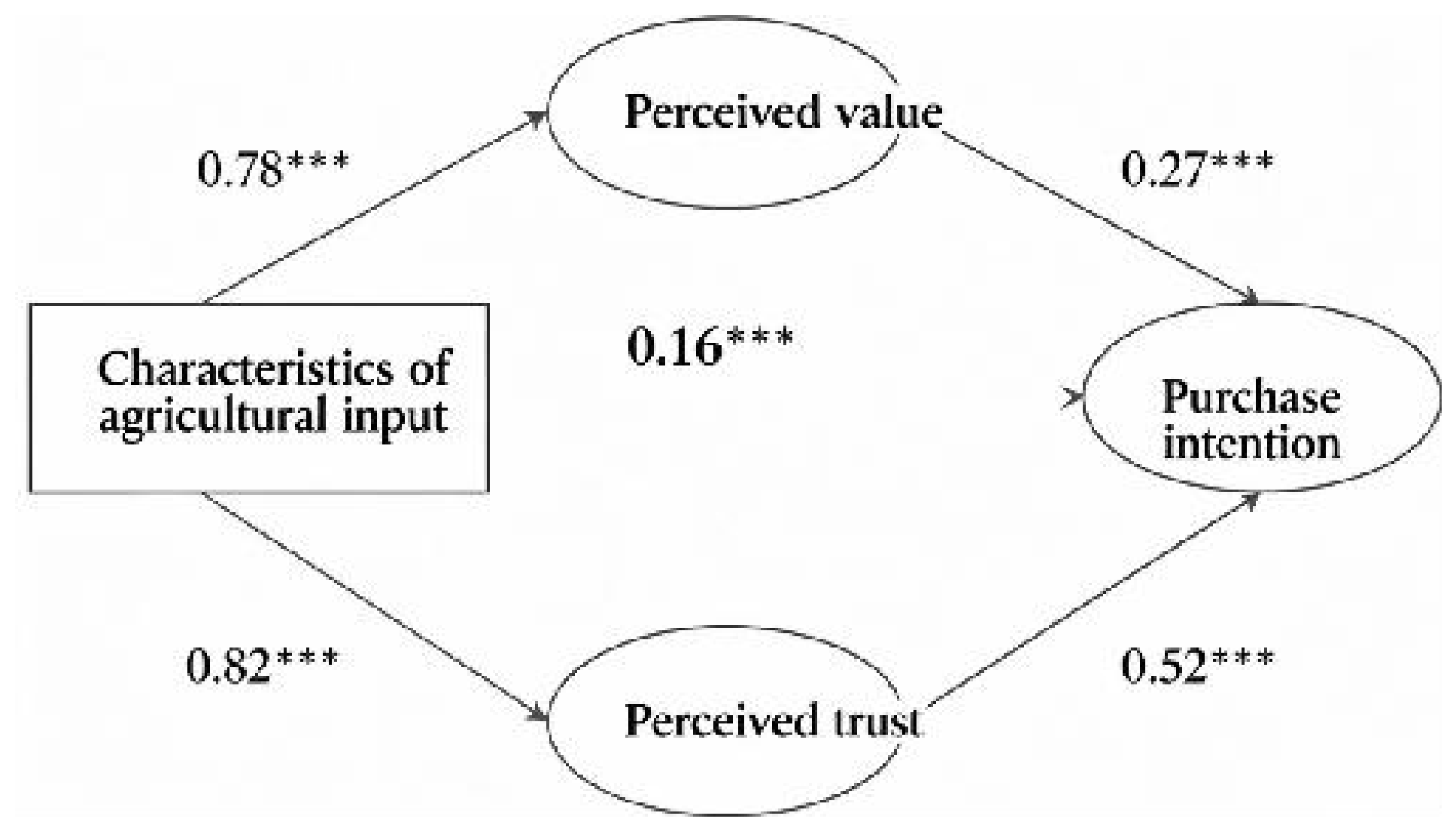
Table 1.
Measurement scales.
| Variable | Dimension | Item | Source |
| Agricultural direct seeding characteristics (ALSC) | Streamer interactivity (AI) | AI1 I can interact with the agricultural livestreamer in real time when product details are introduced. | Zhang Bei and Zhu Jichan (2024) [8] |
| AI2 The livestreamer responds to my questions about agricultural product information and farmers’ stories. | |||
| AI3 When I ask about the product’s origin or cultivation process, the livestreamer provides a detailed response. | |||
| Content professionalism (LCE) | LCE1 The information about the origin of the agricultural products provided in the livestream is reliable. | ||
| LCE2 The certification information provided for the agricultural products in the livestream is reliable. | |||
| LCE3 The quality commitments made for the agricultural products in the livestream are credible. | |||
| Livestream presence (LP) | LP1 During the livestream, I feel as though the agricultural products are right in front of me. | ||
| LP2 During the livestream, I feel as though I am surrounded by the planting and harvesting environment. | |||
| LP3 During the livestream, I feel as though I am shopping in the field or orchard. | |||
| Perceived value (PV) | PV1 The livestreamer’s professional knowledge helps me understand the product better and recognise its value. | Han Xiaoyi (2020) [21] | |
| PV2 The livestream offers benefits to consumers while also supporting farmers, which makes me perceive value on both sides. | |||
| Variable | Dimension | Item | Source |
| Perceived value (PV) | PV3 By watching the livestream, I learn additional knowledge about the relevant products. | ||
| PV4 Interaction with the livestreamer improves my perception of the service experience. | |||
| Perceived trust (PT) | PT1 I trust the livestreamer when their expression and manner appear sincere and confident. | Han Xiaoyi (2020) [21] | |
| PT2 The livestreamer’s persuasive explanation increases my confidence in the information provided. | |||
| PT3 Product recommendations and demonstrations by the livestreamer increase my sense of trust. | |||
| PT4 The services provided by the livestreamer during interaction increase my confidence in the transaction. | |||
| PT5 Repeatedly watching the livestreamer increases my sense of emotional trust. | |||
| Purchase intention (PI) | PI1 After watching the livestream, I would like to purchase the product. | ||
| PI2 After watching the livestream, I would be willing to recommend the product to family and friends. | |||
| PI3 If I decide to buy this product, I would choose to purchase it through the livestream. |
Table 2.
Demographic characteristics of the sample.
| Sample characteristic | Category | n | Percentage (%) |
| Gender | Male | 157 | 32.6 |
| Female | 325 | 67.4 | |
| Age | 18 years and under | 79 | 16.4 |
| 19 – 30 years old | 239 | 49.6 | |
| 31 – 40 years old | 137 | 28.4 | |
| 41 – 50 years old | 15 | 3.1 | |
| 51 years old and above | 12 | 2.5 | |
| education | High school and below | 31 | 6.4 |
| junior college | 110 | 22.8 | |
| undergraduate course | 311 | 64.5 | |
| Master and above | 30 | 6.2 |
Table 3.
Descriptive statistics for the main research variables.
| Variable | N | Mean | Standard deviation |
| Anchor interactivity | 482 | 3.82 | 1.00 |
| (AI) | |||
| Content | 482 | 3.84 | 0.91 |
| Professionalism (LCE) | |||
| Live presence (LP) | 482 | 3.74 | 1.00 |
| Perceived value (PV) | 482 | 3.87 | 0.87 |
| Perceived trust (PT) | 482 | 3.78 | 0.93 |
| Purchase intention (PI) | 482 | 3.78 | 0.91 |
Table 4.
Reliability and convergent validity results.
| Latent variable | Item | Standardized factor loading | Cronbach’s α | CR | AVE |
| Anchor interactivity (AI) | AI1 | 0.830 | 0.879 | 0.881 | 0.711 |
| AI2 | 0.871 | ||||
| AI3 | 0.827 | ||||
| Content Professionalism (LCE) | LCE1 | 0.861 | 0.901 | 0.903 | 0.756 |
| LCE2 | 0.859 | ||||
| LCE3 | 0.883 | ||||
| Live presence (LP) | LP1 | 0.846 | 0.908 | 0.902 | 0.756 |
| LP2 | 0.894 | ||||
| LP3 | 0.893 | ||||
| Perceived value (PV) | PV1 | 0.851 | 0.895 | 0.898 | 0.688 |
| PV2 | 0.801 | ||||
| PV3 | 0.809 | ||||
| PV4 | 0.839 | ||||
| Perceived trust (PT) | PT1 | 0.880 | 0.931 | 0.932 | 0.733 |
| PT2 | 0.853 | ||||
| PT3 | 0.835 | ||||
| PT4 | 0.884 | ||||
| PT5 | 0.817 | ||||
| Purchase intention (PI) | PI1 | 0.869 | 0.890 | 0.891 | 0.731 |
| PI2 | 0.850 | ||||
| PI3 | 0.851 |
Table 5.
Regression results for the path analysis.
| Model | Dependent variable | Independent variable | β | t | R2 | Adjusted R2 |
| Model 1 | PI | ALSC | 0.804*** | 29.579 | 0.646 | 0.645 |
| Model 2 | PV | ALSC | 0.844*** | 34.458 | 0.712 | 0.712 |
| Model 3 | PT | ALSC | 0.822*** | 31.618 | 0.676 | 0.675 |
| Model 4 | PI | ALSC | 0.164*** | 4.110 | 0.802 | 0.800 |
| PV | 0.248*** | 5.120 | ||||
| PT | 0.524*** | 11.500 |
Note: *** p < 0.001. The reported coefficients are standardised regression coefficients.
Disclaimer/Publisher’s Note: The statements, opinions and data contained in all publications are solely those of the individual author(s) and contributor(s) and not of MDPI and/or the editor(s). MDPI and/or the editor(s) disclaim responsibility for any injury to people or property resulting from any ideas, methods, instructions or products referred to in the content. |
© 2026 by the author. Licensee MDPI, Basel, Switzerland. This article is an open access article distributed under the terms and conditions of the Creative Commons Attribution (CC BY) license.
Copyright: This open access article is published under a Creative Commons CC BY 4.0 license, which permit the free download, distribution, and reuse, provided that the author and preprint are cited in any reuse.