Preprint
Article

This version is not peer-reviewed.

Plasmodium falciparum and Oxidative Stress—An In Vitro Study with Pro- and Antioxidants Alone and Combined

Submitted:

17 October 2026

Posted:

19 October 2026

You are already at the latest version

Abstract

The possible role of oxidizing free radicals and antioxidants in the pathogenesis of malaria is unclear, but several studies suggest a useful role of oxidative stress in containing parasitaemia. Importantly, the combined effects of pro- and antioxidants on Plasmodium falciparum growth remain unclear. P. falciparum growth after exposure to a long chain polyunsaturated fatty acid with oxidative properties, docosahexaenoic acid (DHA 22:6 n-3), and the antioxidants albumin and vitamin E was investigated in a 48-hour in vitro assay. DHA at concentrations 150 μM or higher had a nearly full suppressive effect on P. falciparum growth in vitro. In contrast, P. falciparum growth was enhanced when stimulated with the antioxidants albumin (10 and 15 g/L) or vitamin E (10 and 20 mg/L) alone. When combining DHA with albumin or vitamin E there was still a significant suppressive effect of DHA on parasite growth. Conclusion: The pro-oxidant DHA suppresses P. falciparum growth, even in the presence of the otherwise growth stimulating antioxidants albumin and vitamin E. This suggests that a balance between pro- and antioxidants may influence a P. falciparum infection in vivo and may explain earlier clinical and parasitological findings in for example malnourished children.
Keywords: 
;  ;  ;  ;  ;  ;  

1. Introduction

Oxygen derived metabolites like oxidising free radicals (FRs) are closely linked to human disease [1]. The main oxidizing FRs are oxygen-derived metabolites (superoxide anion O2−, hydrogen peroxide H2O2, hydroxyl radical OH), nitrogen dioxide, ozone and lipid peroxides. Antioxidants like albumin, the glutathione enzyme system and the vitamins A (beta-carotene), B2 (riboflavin), C and E will neutralize the effect of the FR. Under normal conditions, there is a physiological steady state between oxidants and antioxidants, but many human diseases, like some forms of malnutrition, are characterized by an imbalance resulting in a generalized state of oxidative stress [1]. This oxidative stress may influence the in vivo survival of human pathogens like Plasmodium falciparum [2,3].
Malaria is a major threat to global human health with over half a million deaths each year with P. falciparum as a main culprit [4]. Most studies have demonstrated that malnutrition is associated with greater malaria morbidity, but some studies have shown increased parasitaemia and malaria disease when refeeding patients with protein energy malnutrition (PEM) (Table S1) [5,6,7,8,9]. The reasons for this are unclear but may be related to increased availability of plasmodial nutrients and/or reduced oxidative stress. PEM may be categorized according to different states of malnutrition and oxidative stress: (i) kwashiorkor, with marked protein deficiency (hypoalbuminemia 10–25 g/L) and increased oxidative stress; (ii) marasmus, with energy deficiency and weight loss but serum albumin >30 g/L and less oxidative stress than kwashiorkor; (iii) kwashiorkor/marasmus, a combination form with poor prognosis [10]. We have previously shown significantly lower parasitaemia in children with kwashiorkor as compared to marasmus, while other studies have not distinguished between these three groups of PEM possibly confounding the effect of oxidative stress [11]. Oxidative stress is part of the normal physiologic response to infections and may have a protective role in containing parasitaemia in malaria [2,3]. Increased oxidative stress caused by kwashiorkor may thus help to suppress parasitaemia, whereas dietary intake of antioxidants like protein-rich foods and vitamins could increase the growth of parasites [5,9] (see also Table S1).
The long chain polyunsaturated fatty acids (PUFAs) are important components of the phospholipids in cell membranes but are sensitive to oxidative stress. When exposed to oxygen, the long chain fatty acids are easily oxidized, thereby increasing the oxidative stress by forming fatty acid radicals which may start a FR chain reaction leading to cell death and organ damage [12]. PUFAs are poorly synthesized in the human body, and the structure of these phospholipids will reflect dietary intake. Docosahexaenoic acid (DHA 22:6 n-3) is an omega-3 fatty acid and a major representative of those long chain PUFAs with 6 double bonds [13]. DHA and fish oil rich in DHA has been shown to inhibit growth of P. falciparum in vitro and of P. berghei in murine models, and it has been speculated that this might be related to lipid peroxidation [14,15,16,17,18,19,20,21,22,23,24,25]. Albumin is the most important antioxidant in serum and will prevent peroxidation of lipids like PUFA [26]. The level of serum albumin reflects dietary protein intake and will be low in protein malnutrition like kwashiorkor (10–25 g/L vs normal >40 g/L) [10]. Vitamin E has antioxidant properties that inhibits formation of radicals produced from long chain PUFAs both in vitro and in vivo, and has been shown to affect plasmodium growth in different study models [27,28,29,30]. Vitamin E is a fat-soluble vitamin, and malnourished children have a high risk of vitamin E deficiency contributing to oxidative stress [31,32].
The combined effects of pro- and antioxidants on P. falciparum growth have only been partly clarified [2,3]. In this study, we demonstrate for the first time the combined effects of physiologic concentrations of the antioxidants albumin and vitamin E and the pro-oxidant docosahexaenoic acid (DHA) on parasite growth in a P. falciparum in vitro model.

2. Materials and Methods

2.1. Parasites, Culture Medium and Stimulants

The P. falciparum strain F32 from Tanzania previously adapted to continuous culture was used. The culture medium consisted of RPMI 1640, supplemented with Hepes buffer (25 mM), NaHCO3 (0.2% w/v), glutamine (2 mM), gentamycin (25 mg/L), human O+ serum (10% v/v) and washed human O+ erythrocytes to a final haematocrit concentration of 2% and a basal parasite density of 0.2% infected erythrocytes. Assays for the combination of DHA/vitamin E and DHA/albumin were also run with basal parasite density 0.5%. Albumin (human fatty acid free, globulin free lyophilised powder, purity 99%), cat. no. A1887, Sigma, St. Louis, MO, USA, was used. Vitamin E as d-alpha tocopherol (2,5,7,8-tetramethyl-2-(4′,8′,12′-trimethyltridecyl)-6-chromanol) was supplied by Pronova Biocare, Norway. DHA (C22:6, n-3, purity 99%) was from Sigma, St. Louis, MO, USA (cat. no. D2534). Ethanol was used to dissolve DHA, and lecithin was used as an emulsifier for vitamin E and DHA.

2.2. In Vitro Assay

Aliquots of 100 μL culture medium with infected erythrocytes were loaded into each well of microtiter plates. The antioxidant albumin was added to give final albumin concentrations of 4.2; 7.5; 10; 15; 20; 40; 50 g/L. The antioxidant vitamin E was added to give final concentrations of 0.1; 1; 10; 20 mg/L. The pro-oxidant DHA was added to give final concentrations of 10; 50; 150; 1000 μM. DHA 1000 μM in combination with vitamin E was only run at basal parasite density 0.2%.
Tests for the effect of DHA were run in three parallel wells for each concentration. Tests for albumin and vitamin E were run in four parallel wells for each concentration. The tests for possible interaction between DHA, albumin or vitamin E were performed in single wells in a chessboard system with different concentrations of albumin and vitamin E, respectively, for each DHA concentration.
Control experiments were run in parallel without any added DHA, vitamin E and albumin, but with ethanol or lecithin added to give the same final concentration as the highest concentrations in the test system.
The plates were incubated for 48 hours at 37 °C by the candle jar method. After removal of the supernatants, parasite growth was estimated by determination of parasite counts (number of infected erythrocytes per 10,000 erythrocytes) on Giemsa-stained thin blood films by light microscopy as previously described [33].

2.3. Statistical Analysis

Statistical analyses were performed using GraphPad Prism 10 (graphpad.com). The effect of DHA, albumin and vitamin E, respectively, on parasite growth was analysed using the ANOVA test. Post hoc analyses compared parasite growth in lowest vs other concentration of stimuli by unpaired t-test. The combined effect of DHA/albumin and DHA/vitamin E on parasite growth was analysed using the 2-way ANOVA test. A p-value of <0.05 was considered significant. The effect of added lecithin or ethanol on parasite growth was analysed using unpaired t-test. No generative artificial intelligence was used to generate data, text or graphics for this study.

3. Results

3.1. Effects of Individual Test Compounds

Parasite growth was significantly affected by increasing concentrations of DHA (p < 0.0001) (Figure 1a). It was nearly abolished in wells with a DHA concentration at and above 150 μM as compared to wells with lower or no addition of DHA (DHA 0 μM vs 150 and 1000 μM, p = 0.0013 and p = 0.0017, respectively).
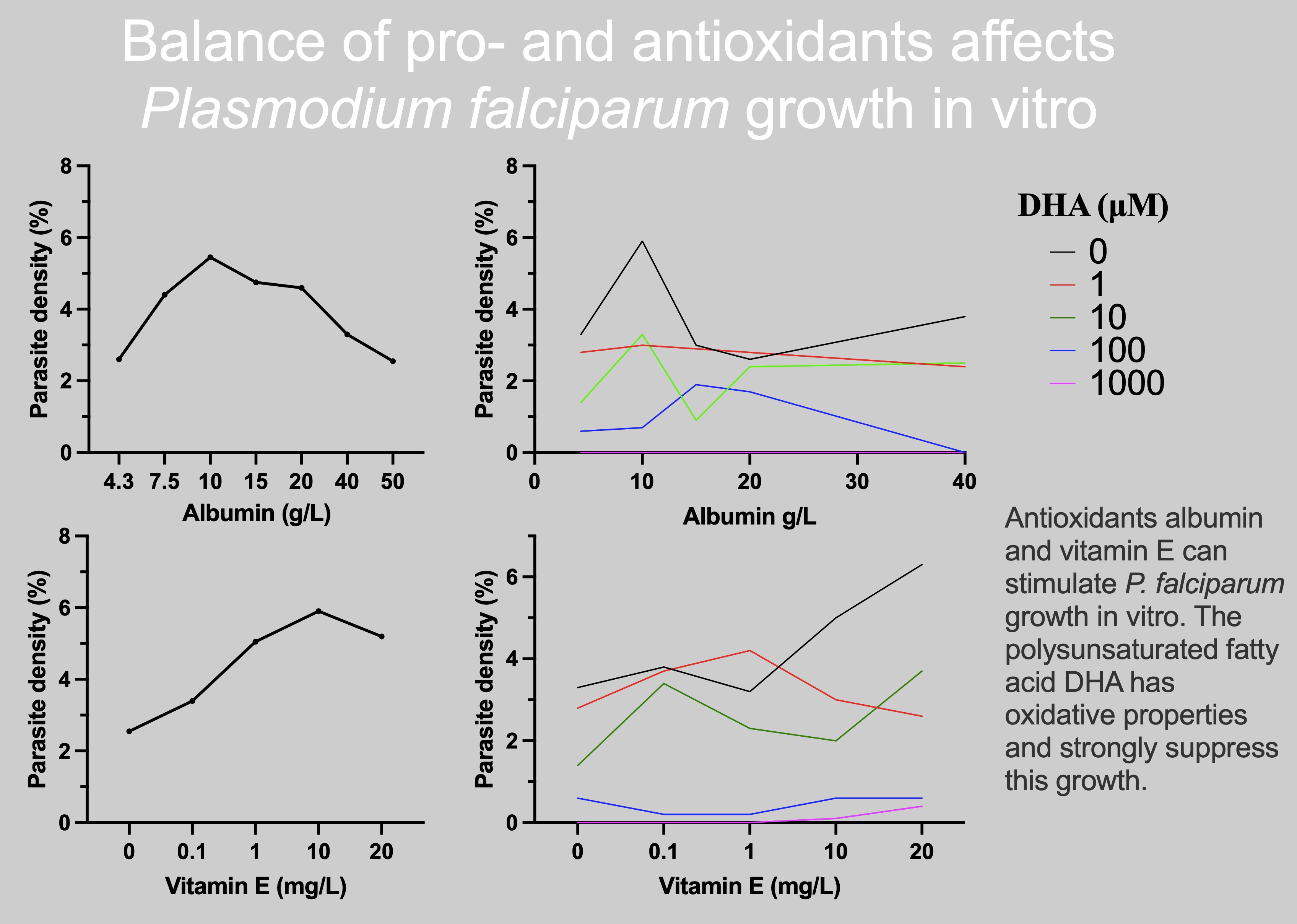
Different concentrations of albumin had a significant influence on parasite growth but with a biphasic pattern (p = 0.0016) (Figure 1b). Medium concentrations of albumin (10–15 g/L) were associated with the highest increase in parasite density compared to low concentration of albumin (albumin 4.3 g/L vs 10 and 15 g/L, p = 0.0017 and p = 0.0036, respectively), while there was no significant difference in parasite density between low and high (40–50 g/L) concentrations of albumin.
Parasite growth was also significantly influenced by the addition of vitamin E in cell cultures (p < 0.0001) (Figure 1c). High concentrations of vitamin E had a stimulatory effect on parasite growth while there was no significant effect of lower concentrations of vitamin E (0 mg/L vs 10 and 20 mg/L, p = 0.0002 and p = 0.0011, respectively) (Figure 1c).

3.2. Combined Effects of DHA, Albumin and Vitamin E

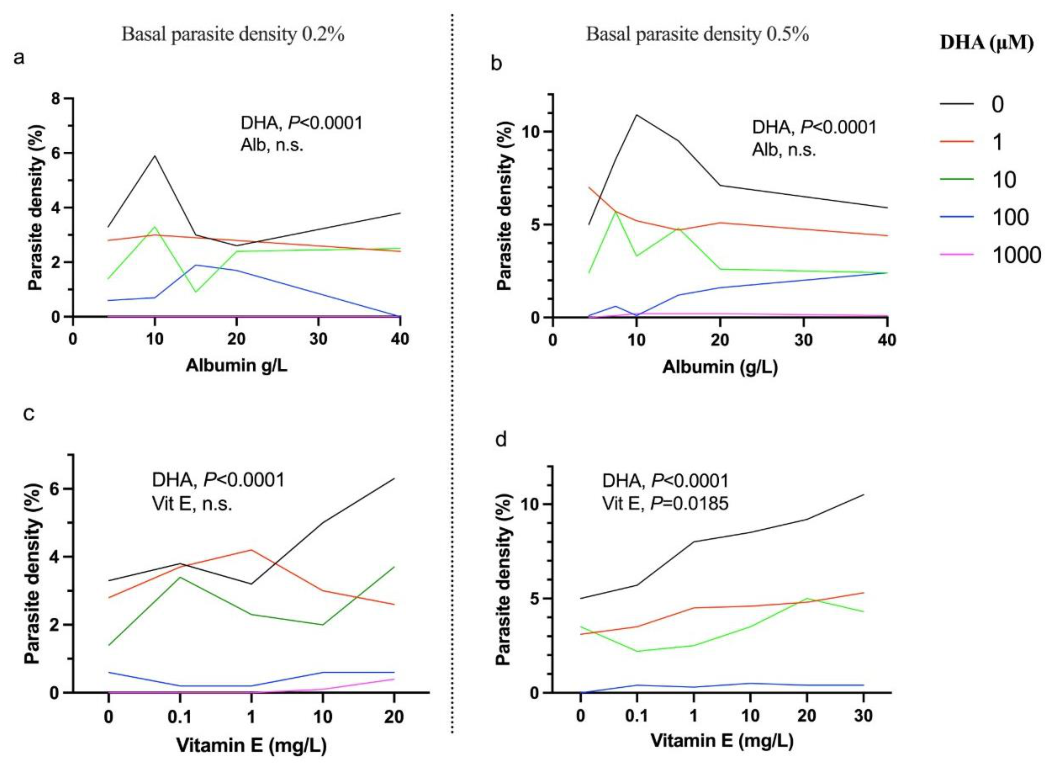
When studying the combined effects of different concentrations of DHA and albumin we found a strong suppression of parasite growth with increased levels of DHA irrespective of albumin (Figure 2a,b) (F4,16 = 16.94/p < 0.0001 and F4,20 = 33.30/p < 0.0001, basal parasite density 0.2% and 0.5%, respectively). There was a trend towards a biphasic effect of albumin as described above but this was not significant (F4,16 = 1.166/p = 0.362 and F5,20 = 0.8359/p = 0.54, basal parasite density 0.2% and 0.5%, respectively). Likewise, DHA had a significant effect on parasite density also when combined with vitamin E, with a near total suppression of parasite growth at concentrations 100 μM or more (Figure 2c,d) (F4,16 = 27.60/p < 0.0001 and F3,15 = 62.55/p < 0.0001, basal parasite density 0.2% and 0.5%, respectively). Vitamin E had a significant effect on parasite growth at basal parasite density 0.5%, but not at 0.2% (F5,15 = 3.8/p = 0.0185 and F4,16 = 1.332/p = 0.3008, respectively).
Neither a change of the morphology of the uninfected red cells nor haemolysis was induced with DHA alone or in combination with vitamin E or albumin. Control experiments with added lecithin or ethanol did not show any significant change to parasite counts compared to unstimulated wells (mean 2.95% vs 2.63%, p = 0.436 and 2.5% vs 2.4%, p > 0.793, lecithin vs unstimulated and ethanol vs unstimulated, respectively).

4. Discussion

In this study, we demonstrate that a stimulatory effect of the antioxidants albumin and vitamin E on the in vitro growth of P. falciparum can be suppressed by the pro-oxidant DHA. DHA has a suppressive effect on parasite growth when given alone but also in combination with albumin or vitamin E. Albumin given alone in concentration 10–15 g/L stimulates parasite growth while no such effect is seen in higher concentrations. Vitamin E has a positive effect on parasite growth when given alone in high concentration of 10–20 mg/L and also partly affects parasite growth in combination with DHA. The results suggest that the balance and mutual neutralization of pro- and antioxidants may influence the growth of P. falciparum.
Godfrey was first to show a suppressive effect of fish oil on growth of P. berghei in a murine model of malaria and its partial reversal by vitamin E which he attributed to a shift in the oxidative state [19]. Kumaratilake et al. have previously found a suppressive effect of DHA 60 μM on P. falciparum growth in vitro that could be reversed by adding vitamin E 17 mg/L [21]. In our study, we find that DHA in physiological concentrations >100 μM suppress parasite growth irrespective of different concentrations of vitamin E and albumin [34]. The possible mechanism by which DHA influences parasite growth is unclear, but Ommi et al. found that DHA 40–1000 μM significantly inhibited growth of the mature stages of P. falciparum, possibly through interacting with heme [23]. It is further well known that the rapid regeneration of parasites in malarial infection, with 10 to 20 merozoites produced within one red blood cell every 48 h, requires a high degree of plasmodial membrane biogenesis. Phospholipids containing DHA are essential lipids of plasmodial membranes, and the erythrocyte phospholipid content increases at least 5- to 6-fold after malarial infection resulting in increased oxidative stress [35]. We have previously demonstrated a long lasting antiparasitic effect of a diet of peroxide-prone fatty acids of fish oil in mice, while the antioxidant vitamin E reversed the suppressive action of the same diet [18]. Our present study seems to support these findings, even if vitamin E could not reverse the effect of DHA. Albumin showed an effect on parasite growth in medium range concentrations in our study, and this might be related to the biphasic relationship between albumin, fatty acids and erythrocyte osmotic fragility [36].
The mean serum concentration of DHA in healthy adults is 185 μM; the normal range of vitamin E in serum is 5.5–20 mg/L and that of serum albumin 35–50 g/L [34,37]. These concentrations are similar to those influencing P. falciparum growth in our in vitro study. However, the concentrations of PUFAs, vitamin E and albumin in vivo are dependent on many factors, including dietary intake, and a direct comparison is more complex and will require further studies. Protein malnourishment clinically presents itself as kwashiorkor and is characterized not only by low levels of albumin but also of low levels of the antioxidant enzyme glucose-6-phosphodehydrogenase (G6PD) and increased levels of the oxidants fatty acids and iron with the result increased oxidative stress [10]. Further, vitamin E is a fat-soluble vitamin, and malnourished children have a high risk of vitamin E deficiency contributing to oxidative stress [31,32]. As previously stated, some studies indicate that PEM may protect against malaria disease and decrease parasitaemia [5,9]. Intake of dairy products, meat, wheat germ oil, sunflower oil and others rich in antioxidants like vitamin E and protein will decrease oxidative stress even if the clinical effects of antioxidant diets varies [1].
The observed findings of increased malaria disease and parasitaemia during refeeding with diets rich in protein and antioxidants could therefore be a result of a shift in the oxidant/antioxidant balance (Table 1) [5,6,7,8,9]. These observations concord with our findings that the in vitro growth of P. falciparum is enhanced by albumin and vitamin E.
Interestingly, the Plasmodium parasite synthesizes vitamin E to avoid oxidative stress and also exhibits an intense glutathione metabolism to protect the trophozoite [38,39]. The antimalarial drug artemisinin has oxidative properties, and it has been demonstrated that artemisinin-resistant parasites have enhanced adaptive responses against oxidative stress [40]. The impact of pro- and antioxidants on the effect of antimalarials therefore needs to be studied further.
There are important clinical limitations to an in vitro study like the present, most importantly related to the total effect of refeeding in a malnourished state. The suppression of malaria in kwashiorkor could be related to deficiency of necessary nutrients for the parasite. Nonetheless, our study adds insight to the specific effects of DHA, albumin and vitamin E on parasite growth which appear to have correlations to clinical and parasitological findings in for example children with PEM. A more complete understanding requires further clinical trials.

5. Conclusions

The in vitro P. falciparum growth was enhanced by the presence of the antioxidants albumin and vitamin E and suppressed by the oxidant fatty acid DHA even in the presence of otherwise stimulating antioxidants. This suggests that a balance between pro- and antioxidants may influence a P. falciparum infection in vivo, and a protective role of oxidative stress in containing parasitaemia. A shift in the balance of pro- and antioxidants may be of importance for the observed increase in malaria seen during refeeding for PEM like kwashiorkor, pointing to the need for increased awareness of malaria exacerbations in this patient group.

Supplementary Materials

The following supporting information can be downloaded at the website of this paper posted on Preprints.org: Table S1: Association of pro- and antioxidants and malnutrition status to oxidative stress, malaria and P. falciparum/berghei growth in different studies.

Author Contributions

Conceptualization, P.F. and A.B.; methodology, P.F. and A.B.; investigation, P.F. and A.B.; formal analysis, B.F.; data curation, P.F. and A.B.; writing—original draft preparation, P.F. and B.F.; writing—review and editing, A.B. and B.F.; funding acquisition, A.B. All authors have read and agreed to the published version of the manuscript.

Funding

This research was funded by the Swedish Research Council, grant number VR 2017-05644.

Institutional Review Board Statement

Ethical review and approval were waived for this study, as it was conducted entirely in vitro on an established laboratory strain of P. falciparum and did not involve identifiable human participants or animals.

Data Availability Statement

Data are available to readers on reasonable request to the corresponding author.

Conflicts of Interest

The authors declare no conflicts of interest. The funders had no role in the design of the study; in the collection, analyses, or interpretation of data; in the writing of the manuscript; or in the decision to publish the results.

Abbreviations

The following abbreviations are used in this manuscript:
DHA Docosahexaenoic acid
FR Free radical
G6PD Glucose-6-phosphate dehydrogenase
PEM Protein energy malnutrition
PUFA Polyunsaturated fatty acid

References

  1. Halliwell, B. Understanding mechanisms of antioxidant action in health and disease. Nat. Rev. Mol. Cell Biol. 2024, 25, 13–33. [Google Scholar] [CrossRef]
  2. Pawłowska, M.; Mila-Kierzenkowska, C.; Szczegielniak, J.; Woźniak, A. Oxidative Stress in Parasitic Diseases—Reactive Oxygen Species as Mediators of Interactions between the Host and the Parasites. Antioxidants 2023, 13, 38. [Google Scholar] [CrossRef]
  3. Vasquez, M.; Zuniga, M.; Rodriguez, A. Oxidative Stress and Pathogenesis in Malaria. Front. Cell. Infect. Microbiol. 2021, 11, 768182. [Google Scholar] [CrossRef]
  4. World Malaria Report 2024: Addressing Inequity in the Global Malaria Response; World Health Organization: Geneva, Switzerland, 2024.
  5. Das, D.; Grais, R.F.; Okiro, E.A.; Stepniewska, K.; Mansoor, R.; van der Kam, S.; Terlouw, D.J.; Tarning, J.; Barnes, K.I.; Guerin, P.J. Complex interactions between malaria and malnutrition: a systematic literature review. BMC Med. 2018, 16, 186. [Google Scholar] [CrossRef]
  6. Murray, M.J.; Murray, A.B. Starvation suppression and refeeding activation of infection. An ecological necessity? Lancet 1977, 1, 123–125. [Google Scholar] [CrossRef]
  7. Murray, M.J.; Murray, A.B.; Murray, M.B.; Murray, C.J. Somali food shelters in the Ogaden famine and their impact on health. Lancet 1976, 1, 1283–1285. [Google Scholar] [CrossRef]
  8. Sady, H.; Chaima, D.; Hallamaa, L.; Kortekangas, E.; Ashorn, U.; Banda, J.; Mangani, C.; Maleta, K.; Ashorn, P.; Fan, Y.M. Effect of dietary intervention on the prevalence of asymptomatic malaria among 6–18-month-old children in rural Malawi. Malar. J. 2023, 22, 266. [Google Scholar] [CrossRef]
  9. Shankar, A.H. Nutritional modulation of malaria morbidity and mortality. J. Infect. Dis. 2000, 182 (Suppl. S1), S37–S53. [Google Scholar] [CrossRef]
  10. Pham, T.P.; Alou, M.T.; Golden, M.H.; Million, M.; Raoult, D. Difference between kwashiorkor and marasmus: Comparative meta-analysis of pathogenic characteristics and implications for treatment. Microb. Pathog. 2021, 150, 104702. [Google Scholar] [CrossRef]
  11. Fevang, P.; Havemann, K.; Fevang, B.; Høstmark, A.T. Malaria and Malnutrition: Kwashiorkor Associated with Low Levels of Parasitaemia. Malar. Res. Treat. 2018, 2018, 7153173. [Google Scholar] [CrossRef]
  12. Bochkov, V.N.; Oskolkova, O.V.; Birukov, K.G.; Levonen, A.L.; Binder, C.J.; Stöckl, J. Generation and biological activities of oxidized phospholipids. Antioxid. Redox Signal. 2010, 12, 1009–1059. [Google Scholar] [CrossRef]
  13. Spector, A.A. Essentiality of fatty acids. Lipids 1999, 34 (Suppl.), S1–S3. [Google Scholar] [CrossRef]
  14. Alhusseiny, S.M.; El-Beshbishi, S.N. Omega polyunsaturated fatty acids and parasitic infections: An overview. Acta Trop. 2020, 207, 105466. [Google Scholar] [CrossRef]
  15. Blok, W.L.; Vogels, M.T.; Curfs, J.H.; Eling, W.M.; Buurman, W.A.; van der Meer, J.W. Dietary fish-oil supplementation in experimental gram-negative infection and in cerebral malaria in mice. J. Infect. Dis. 1992, 165, 898–903. [Google Scholar] [CrossRef]
  16. Carpinter, B.A.; Renhe, D.C.; Bellei, J.C.B.; Vieira, C.D.; Rodolphi, C.M.; Ferreira, M.V.R.; de Freitas, C.S.; Neto, A.; Coelho, E.A.F.; Mietto, B.S.; et al. DHA-rich fish oil plays a protective role against experimental cerebral malaria by controlling inflammatory and mechanical events from infection. J. Nutr. Biochem. 2024, 123, 109492. [Google Scholar] [CrossRef]
  17. David-Vieira, C.; Carpinter, B.A.; Bezerra-Bellei, J.C.; Machado, L.F.; Raimundo, F.O.; Rodolphi, C.M.; Renhe, D.C.; Guedes, I.R.N.; Gonçalves, F.M.M.; Pereira, L.; et al. Lung Damage Induced by Plasmodium berghei ANKA in Murine Model of Malarial Infection is Mitigated by Dietary Supplementation with DHA-Rich Omega-3. ACS Infect. Dis. 2024, 10, 3607–3617. [Google Scholar] [CrossRef]
  18. Fevang, P.; Sääv, H.; Høstmark, A.T. Dietary fish oils and long-term malaria protection in mice. Lipids 1995, 30, 437–441. [Google Scholar] [CrossRef]
  19. Godfrey, D.G. Antiparasitic action of dietary cod liver oil upon Plasmodium berghei and its reversal by vitamin E. Exp. Parasitol. 1957, 6, 555–565. [Google Scholar] [CrossRef]
  20. Krugliak, M.; Deharo, E.; Shalmiev, G.; Sauvain, M.; Moretti, C.; Ginsburg, H. Antimalarial effects of C18 fatty acids on Plasmodium falciparum in culture and on Plasmodium vinckei petteri and Plasmodium yoelii nigeriensis in vivo. Exp. Parasitol. 1995, 81, 97–105. [Google Scholar] [CrossRef]
  21. Kumaratilake, L.M.; Robinson, B.S.; Ferrante, A.; Poulos, A. Antimalarial properties of n-3 and n-6 polyunsaturated fatty acids: in vitro effects on Plasmodium falciparum and in vivo effects on P. berghei. J. Clin. Investig. 1992, 89, 961–967. [Google Scholar] [CrossRef]
  22. Levander, O.A.; Ager, A.L., Jr.; Morris, V.C.; May, R.G. Plasmodium yoelii: comparative antimalarial activities of dietary fish oils and fish oil concentrates in vitamin E-deficient mice. Exp. Parasitol. 1990, 70, 323–329. [Google Scholar] [CrossRef]
  23. Ommi, N.B.; Abdullah, M.; Guruprasad, L.; Babu, P.P. Docosahexaenoic acid is potent against the growth of mature stages of Plasmodium falciparum; inhibition of hematin polymerization a possible target. Parasitol. Int. 2022, 89, 102581. [Google Scholar] [CrossRef]
  24. Taylor, D.W.; Levander, O.A.; Krishna, V.R.; Evans, C.B.; Morris, V.C.; Barta, J.R. Vitamin E-deficient diets enriched with fish oil suppress lethal Plasmodium yoelii infections in athymic and scid/bg mice. Infect. Immun. 1997, 65, 197–202. [Google Scholar] [CrossRef]
  25. Vreden, S.G.; Blok, W.L.; Sauerwein, R.W.; Oettinger, M.C.; Verhave, J.P.; Meuwissen, J.E.; Van der Meer, J.W.; Van den Broek, M.F. Inhibition of Plasmodium berghei liver schizont development and reduction of cytokine production capacity in rats by dietary fish oil supplementation. Am. J. Trop. Med. Hyg. 1995, 53, 206–210. [Google Scholar] [CrossRef]
  26. De Simone, G.; di Masi, A.; Ascenzi, P. Serum Albumin: A Multifaced Enzyme. Int. J. Mol. Sci. 2021, 22, 10086. [Google Scholar] [CrossRef]
  27. Ariefta, N.R.; Kume, A.; Nishikawa, Y.; Taniguchi, T.; Umemiya-Shirafuji, R.; Kasai, S.; Suzuki, H. Effect of α-Tocopheryloxy Acetic Acid on the Infection of Mice with Plasmodium berghei ANKA In Vivo and Humans with P. falciparum In Vitro. Acta Parasitol. 2022. [Google Scholar] [CrossRef]
  28. Kawamura, K.; Kume, A.; Umemiya-Shirafuji, R.; Kasai, S.; Suzuki, H. Effect of α-tocopheryloxy acetic acid, a vitamin E derivative mitocan, on the experimental infection of mice with Plasmodium yoelii. Malar. J. 2021, 20, 280. [Google Scholar] [CrossRef]
  29. Kume, A.; Kasai, S.; Furuya, H.; Suzuki, H. α-Tocopheryl succinate-suppressed development of cerebral malaria in mice. Parasitol. Res. 2018, 117, 3177–3182. [Google Scholar] [CrossRef]
  30. Liao, S.; Omage, S.O.; Börmel, L.; Kluge, S.; Schubert, M.; Wallert, M.; Lorkowski, S. Vitamin E and Metabolic Health: Relevance of Interactions with Other Micronutrients. Antioxidants 2022, 11, 1785. [Google Scholar] [CrossRef]
  31. Abrol, P.; Sharma, N.; Lal, H. Vitamin E status in protein energy malnutrition. Indian J. Clin. Biochem. 1997, 12, 125–127. [Google Scholar] [CrossRef]
  32. Becker, K.; Bötticher, D.; Leichsenring, M. Antioxidant vitamins in malnourished Nigerian children. Int. J. Vitam. Nutr. Res. 1994, 64, 306–310. [Google Scholar]
  33. Gupta, S.; Thapar, M.M.; Wernsdorfer, W.H.; Björkman, A. In vitro interactions of artemisinin with atovaquone, quinine, and mefloquine against Plasmodium falciparum. Antimicrob. Agents Chemother. 2002, 46, 1510–1515. [Google Scholar] [CrossRef]
  34. Grimsgaard, S.; Bønaa, K.H.; Hansen, J.B.; Myhre, E.S. Effects of highly purified eicosapentaenoic acid and docosahexaenoic acid on hemodynamics in humans. Am. J. Clin. Nutr. 1998, 68, 52–59. [Google Scholar] [CrossRef]
  35. Tewari, S.G.; Swift, R.P.; Reifman, J.; Prigge, S.T.; Wallqvist, A. Metabolic alterations in the erythrocyte during blood-stage development of the malaria parasite. Malar. J. 2020, 19, 94. [Google Scholar] [CrossRef]
  36. Oettl, K.; Stauber, R.E. Physiological and pathological changes in the redox state of human serum albumin critically influence its binding properties. Br. J. Pharmacol. 2007, 151, 580–590. [Google Scholar] [CrossRef]
  37. Traber, M.G. Vitamin E inadequacy in humans: causes and consequences. Adv. Nutr. 2014, 5, 503–514. [Google Scholar] [CrossRef]
  38. Becker, K.; Rahlfs, S.; Nickel, C.; Schirmer, R.H. Glutathione—functions and metabolism in the malarial parasite Plasmodium falciparum. Biol. Chem. 2003, 384, 551–566. [Google Scholar] [CrossRef]
  39. Sussmann, R.A.C.; Fotoran, W.L.; Kimura, E.A.; Katzin, A.M. Plasmodium falciparum uses vitamin E to avoid oxidative stress. Parasites Vectors 2017, 10, 461. [Google Scholar] [CrossRef]
  40. Rocamora, F.; Zhu, L.; Liong, K.Y.; Dondorp, A.; Miotto, O.; Mok, S.; Bozdech, Z. Oxidative stress and protein damage responses mediate artemisinin resistance in malaria parasites. PLoS Pathog. 2018, 14, e1006930. [Google Scholar] [CrossRef]
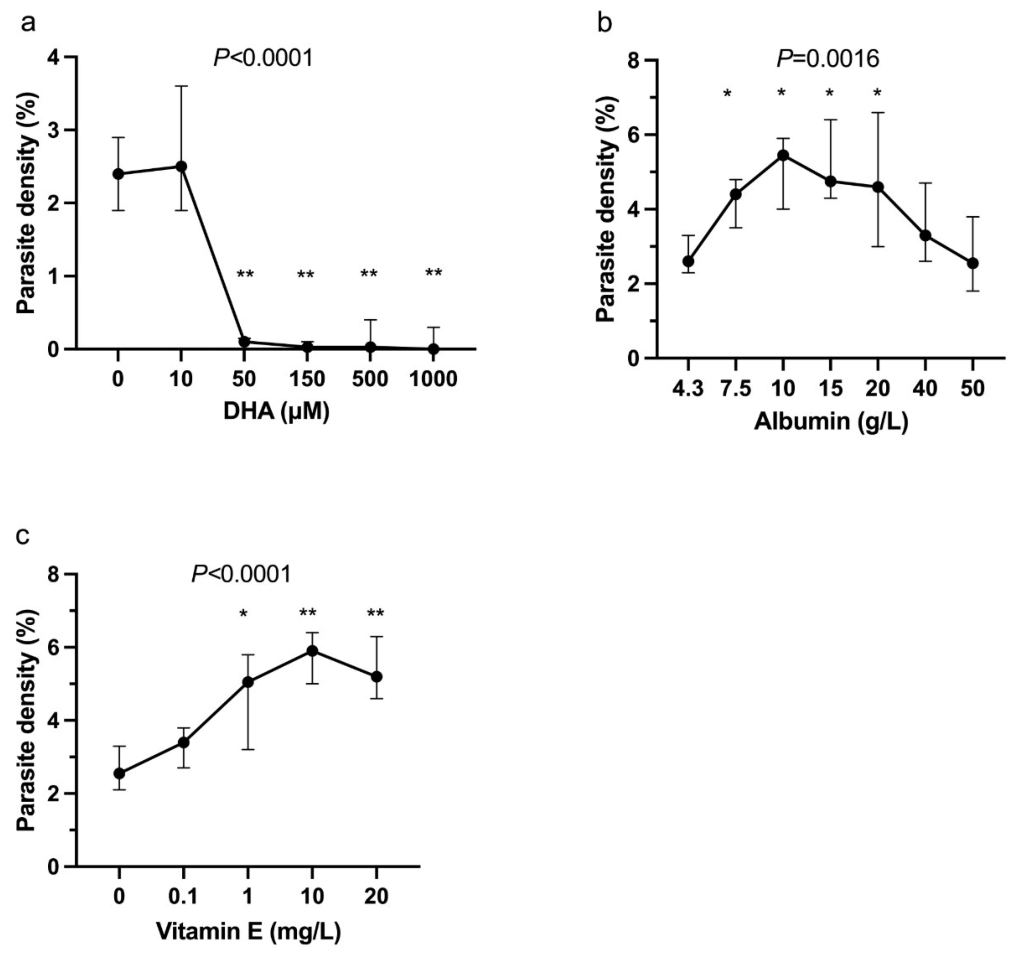
Figure 1. Parasite density (% infected erythrocytes, median and range) after 48 hours in vitro culture with different concentrations of DHA (a), albumin (b) and vitamin E (c). Basal parasite density 0.2%. p: ANOVA test. * p < 0.05, ** p < 0.001 compared to lowest concentration of stimulant (unpaired t-test).
Preprints 238877 g001
Figure 2. Parasite density after 48 hours in vitro culture with different concentrations of DHA combined with increasing doses of either albumin (a,b) or vitamin E (c,d). Basal parasite density 0.2% (a,c) and 0.5% (b,d). n.s. = not significant. p: 2-way ANOVA.
Preprints 238877 g002
Table 1. Source and effect of pro- and antioxidants on oxidative stress and in vitro growth of P. falciparum.
Active Substance Sources Oxidative Stress P. falciparum Growth
Pro-oxidants PUFA, DHA (ω-3) Fish oil, seeds and vegetable oil ↑ ↓
Antioxidants Albumin Dairy, egg, meat ↓ ↑
Vitamin E Wheat germ oil, seeds ↓ ↑
PUFA (polyunsaturated fatty acid); DHA (docosahexaenoic acid). ↑ increase; ↓ decrease.
Disclaimer/Publisher’s Note: The statements, opinions and data contained in all publications are solely those of the individual author(s) and contributor(s) and not of MDPI and/or the editor(s). MDPI and/or the editor(s) disclaim responsibility for any injury to people or property resulting from any ideas, methods, instructions or products referred to in the content.
Copyright: This open access article is published under a Creative Commons CC BY 4.0 license, which permit the free download, distribution, and reuse, provided that the author and preprint are cited in any reuse.