

Submitted:
15 October 2026
Posted:
16 October 2026
You are already at the latest version
Abstract
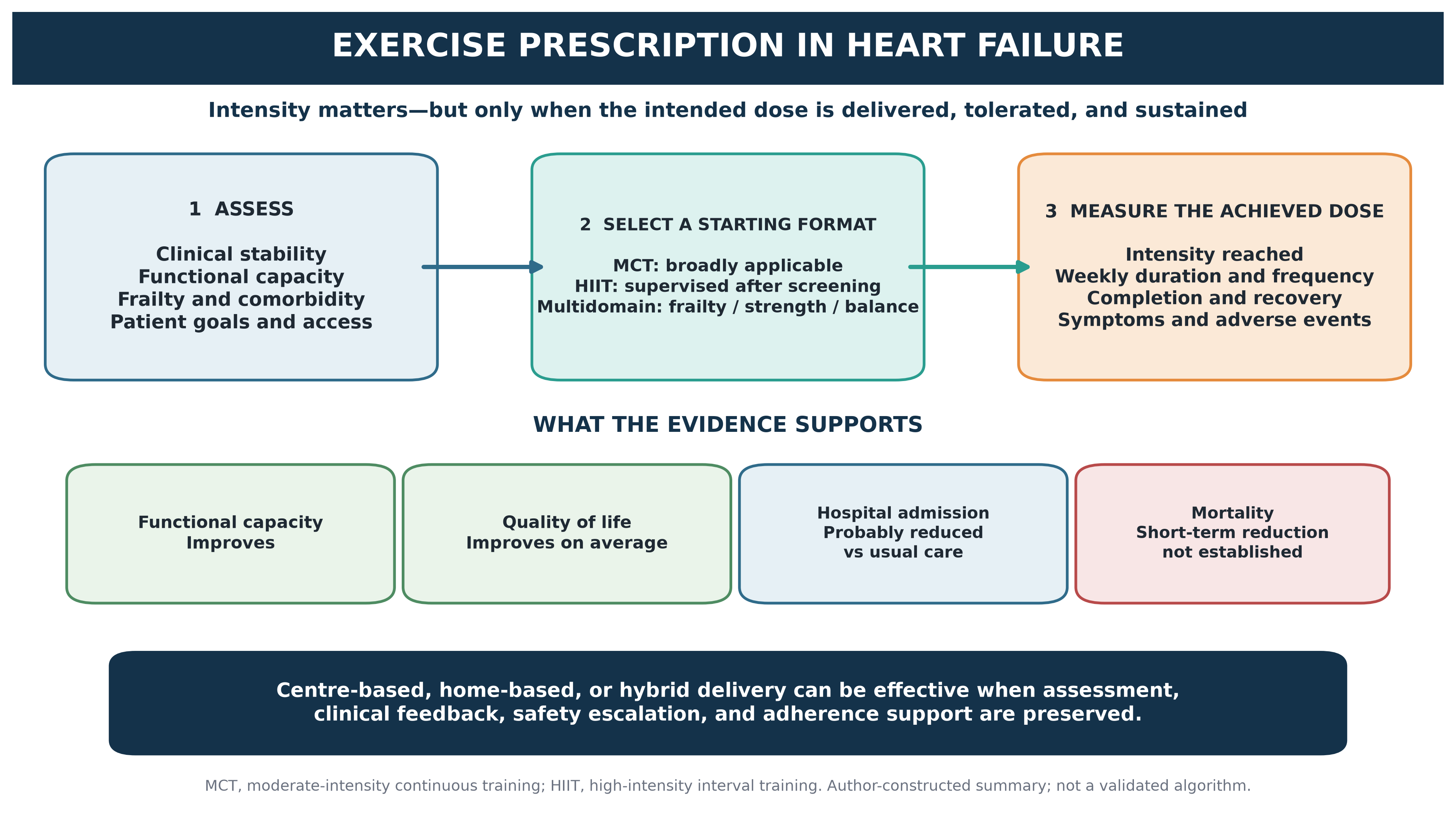
Exercise-based cardiac rehabilitation improves functional capacity and quality of life in clinically stable patients with heart failure, but the comparative value of high-intensity interval training (HIIT) and moderate-intensity continuous training (MCT) remains uncertain. This narrative review updates evidence through August 2026 from PubMed/MEDLINE, publisher records, and professional-society sources, prioritizing randomized trials, systematic reviews, meta-analyses, and guidance documents. Rehabilitation probably reduces all-cause hospital admission and improves quality of life, although a short-term mortality reduction has not been established. Meta-analyses report a modest average HIIT advantage in peak oxygen uptake, about 1.5–1.8 mL/kg/min, but heterogeneity is substantial. SMARTEX-HF did not show HIIT superiority in heart failure with reduced ejection fraction, and OptimEx-Clin did not show a clinically important advantage in heart failure with preserved ejection fraction. Outcomes are influenced by achieved intensity, weekly duration, total work, adherence, frailty, comorbidity, supervision, and access. MCT remains a broadly applicable foundation, whereas supervised HIIT is reasonable for selected patients who can reach and recover from the intended workload. Home-based and hybrid models may extend access when assessment, feedback, safety escalation, and programme fidelity are maintained. Exercise prescription should be individualized around the dose patients can safely receive.
Methods: This narrative review was updated through August 2026 using PubMed/MEDLINE and targeted searches of publisher and professional-society websites. Randomized trials, systematic reviews, meta-analyses, major guidance documents, and selected human mechanistic studies were prioritized. Numerical estimates were included only when traceable to a primary report or authoritative evidence synthesis. Because the review was not designed as a systematic review, no exhaustive study count or PRISMA flow diagram is claimed.
Conclusion: HIIT is a useful option, not a universal replacement for MCT. A defensible prescription begins with clinical stability and functional assessment, selects a feasible initial modality, measures the achieved dose, and adapts the programme according to symptoms, response, preference, and access. The central clinical question is not which intensity is inherently best, but which programme can be delivered safely, accurately, and consistently to a particular patient.
Keywords:
high-intensity interval training (HIIT)
; moderate-intensity continuous training (MCT)
; heart failure
1. Introduction
Heart failure is a heterogeneous clinical syndrome associated with impaired functional capacity, recurrent hospitalization, reduced quality of life, and substantial health-system burden. In India, available epidemiological data and registry initiatives indicate an important and evolving burden, while access to specialist care and structured rehabilitation remains uneven [1,2]. Exercise intolerance occurs across the ejection-fraction spectrum and reflects varying combinations of limited cardiac reserve, chronotropic incompetence, pulmonary and vascular dysfunction, skeletal-muscle abnormalities, frailty, obesity, anaemia, and other comorbid conditions.
Exercise-based cardiac rehabilitation is recommended for clinically stable patients with heart failure [3,4,5]. The 2024 Cochrane update, which included 60 randomized trials and 8,728 participants, found that rehabilitation probably reduces all-cause hospital admission and improves health-related quality of life, but did not demonstrate a reduction in all-cause mortality during follow-up of up to 12 months [6]. This distinction is clinically important. Exercise training is part of comprehensive heart-failure care, but the evidence is stronger for functional and patient-reported outcomes than for survival.
HF-ACTION remains the largest randomized evaluation of aerobic training in ambulatory HFrEF. The unadjusted primary analysis did not show a statistically significant reduction in all-cause death or hospitalization, whereas prespecified covariate adjustment suggested a modest benefit [7]. A companion analysis showed an early and sustained, but small, additional improvement in Kansas City Cardiomyopathy Questionnaire score [8]. Subsequent observational analysis within the exercise arm linked moderate weekly exercise volumes with lower event risk, although that analysis was not a randomized dose comparison [9]. Together, these findings support regular exercise while cautioning against interpreting intensity as an isolated therapeutic exposure.
MCT has traditionally formed the aerobic foundation of cardiac rehabilitation. HIIT alternates higher-intensity work intervals with lower-intensity recovery and can increase time near the upper aerobic range. An influential single-centre trial reported larger physiological gains with aerobic interval training [10], but later multicentre trials highlighted limitations involving dose matching, protocol fidelity, patient selection, and adherence [11,12]. This review therefore addresses three related but distinct questions: what exercise-based rehabilitation achieves compared with no structured training; whether HIIT offers an additional benefit over MCT; and how programme delivery and achieved dose influence effectiveness.
2. Methods
2.1. Review Design and Information Sources
This article is a narrative review. The literature update was conducted through August 2026 using PubMed/MEDLINE and targeted searches of publisher and professional-society websites. Search concepts included *heart failure*, *cardiac rehabilitation*, *exercise training*, *high-intensity interval training*, *aerobic interval training*, *moderate-intensity continuous training*, *exercise dose*, *peak oxygen uptake*, *left-ventricular remodelling*, *safety*, *frailty*, *adherence*, *home-based rehabilitation*, *telerehabilitation*, and the trial names *HF-ACTION*, *SMARTEX-HF*, *OptimEx-Clin*, *REHAB-HF*, *REACH-HF*, and *EXIT-HF*.
Randomized trials directly comparing HIIT and MCT were prioritized, followed by systematic reviews and meta-analyses, heart-failure rehabilitation guidance, and selected human mechanistic studies. Evidence from HFrEF and HFpEF was considered separately where possible. Additional attention was given to older and recently hospitalized patients and to home-based or hybrid delivery because these groups and settings are important to implementation. Reference details and numerical estimates were verified against PubMed, DOI, or the publisher record. Citation claims that could not be matched to a verifiable publication were excluded.
2.2. Evidence Interpretation
Formal duplicate screening, risk-of-bias scoring, and de novo meta-analysis were not performed. The synthesis distinguishes physiological efficacy from clinical effectiveness, separates rehabilitation-versus-control evidence from HIIT-versus-MCT evidence, and treats mechanistic studies as supportive rather than determinative. Cross-trial comparisons require caution because programmes differ in interval structure, target intensity, total work, duration, supervision, comparator exposure, background therapy, and adherence.
2.3. Use of Generative AI and AI-Assisted Technologies
During development of an earlier version, ChatGPT (OpenAI) and Manus (Manus AI) were used to assist with language drafting and preliminary conceptual graphics. The authors subsequently re-examined the manuscript, verified the bibliography against primary or authoritative records, rewrote the scientific narrative, and replaced the preliminary generative-AI illustrations with author-constructed graphics produced reproducibly using Python and Matplotlib. During revision, Manus was used for language editing, literature organization, reference cross-checking, document formatting, tracked-change preparation, and quality-control support. Neither ChatGPT nor Manus was used to generate or analyse original patient-level data, conduct a statistical meta-analysis, determine study eligibility autonomously, or make authorship decisions. The authors critically reviewed and approved every statement, table, figure, and reference and take full responsibility for the accuracy, originality, integrity, and final content of the work.
3. What Exercise-Based Rehabilitation Achieves
3.1. Clinical Events and Quality of Life
The effects of exercise-based rehabilitation should be separated from the comparative effects of two intensity strategies. In the 2024 Cochrane review, all-cause mortality up to 12 months was similar with rehabilitation and usual care (risk ratio [RR] 0.93, 95% confidence interval [CI] 0.71-1.21; 34 trials; 3,941 participants; low-certainty evidence). All-cause hospital admission was lower (RR 0.69, 95% CI 0.56-0.86; 23 trials; 2,283 participants; moderate-certainty evidence), whereas the estimate for heart-failure-specific admission was imprecise (RR 0.82, 95% CI 0.49-1.35) [6]. The Minnesota Living with Heart Failure Questionnaire improved by a mean of 7.39 points (95% CI 4.77-10.30 points in favour of rehabilitation), which is potentially clinically meaningful at the group level [6].
In HF-ACTION, the primary composite of all-cause death or hospitalization occurred in 65% of the exercise group and 68% of usual care (unadjusted hazard ratio [HR] 0.93, 95% CI 0.84-1.02; P=0.13). After prespecified adjustment, the HR was 0.89 (95% CI 0.81-0.99; P=0.03), and the adjusted HR for cardiovascular death or heart-failure hospitalization was 0.85 (95% CI 0.74-0.99; P=0.03) [7]. These modest adjusted effects should not be converted into a stronger claim of mortality reduction.
HF-ACTION also found a 1.93-point additional improvement in KCCQ overall summary score at three months with exercise versus usual care (95% CI 0.84-3.01) [8]. This was statistically significant but smaller than commonly used thresholds for a clinically important individual change. The result illustrates why reporting an effect estimate together with its scale and clinical context is more informative than describing an intervention simply as “effective.”
3.2. Functional Capacity
Functional outcomes are the most consistent benefit of exercise training. The magnitude of improvement depends on baseline impairment, programme exposure, measurement method, and comparator. Peak oxygen uptake is valuable because it integrates central and peripheral responses and has prognostic relevance, but a gain in VO₂peak should not be assumed to translate directly into fewer clinical events.
The contemporary evidence therefore supports exercise-based rehabilitation as a component of comprehensive care, while leaving open the question of which exercise format is best for an individual patient.
4. HIIT Versus MCT: Comparative Evidence
4.1. Peak Oxygen Uptake and Functional Capacity
Earlier small studies reported relatively large gains with interval training. In the trial by Wisløff and colleagues, aerobic interval training produced greater improvements in VO₂peak and several cardiovascular measures than continuous moderate exercise [10]. The study established biological plausibility and stimulated further research, but its small sample and intensive supervision limit generalizability.
SMARTEX-HF provided a more pragmatic multicentre test in HFrEF. At 12 weeks, HIIT was not superior to MCT for change in left-ventricular end-diastolic diameter or VO₂peak [11]. Importantly, achieved intensities overlapped: many participants assigned to HIIT trained below target, while many assigned to MCT trained above target. The study therefore demonstrates both the absence of observed superiority and the difficulty of maintaining separation between exercise prescriptions in routine delivery.
Earlier comparative syntheses were generally directionally favourable to HIIT for aerobic capacity while emphasizing small samples, heterogeneous protocols, and uncertainty about dose matching [13,14,15]. More recent meta-analyses reach a similar but better quantified conclusion. Yang and colleagues included 13 randomized trials and reported mean differences favouring HIIT for VO₂peak (+1.78 mL/kg/min, 95% CI 0.80-2.76), six-minute walk distance (+28.13 m, 95% CI 14.56-41.70), left-ventricular ejection fraction (+3.13 percentage points, 95% CI 1.25-5.02), and MLHFQ score (-4.45 points, 95% CI -6.25 to -2.64) [16]. Chen and colleagues included 15 randomized trials and 553 participants; the pooled VO₂peak difference was +1.49 mL/kg/min (I²=66%) [17]. The apparent benefit was larger with long-interval, higher-volume HIIT in HFrEF, whereas the pooled HFpEF estimate was small and not statistically significant.
These pooled estimates are useful but should not be treated as a uniform treatment effect. Small studies, differences in total work, incomplete blinding, heterogeneous exercise protocols, and variable adherence all influence the estimate. Another recent synthesis similarly reported an overall advantage with HIIT but attenuation in isocaloric comparisons [18]. The most defensible interpretation is that HIIT can provide a modest additional aerobic stimulus in selected patients, particularly when the intended intensity is achieved, but superiority is not assured.
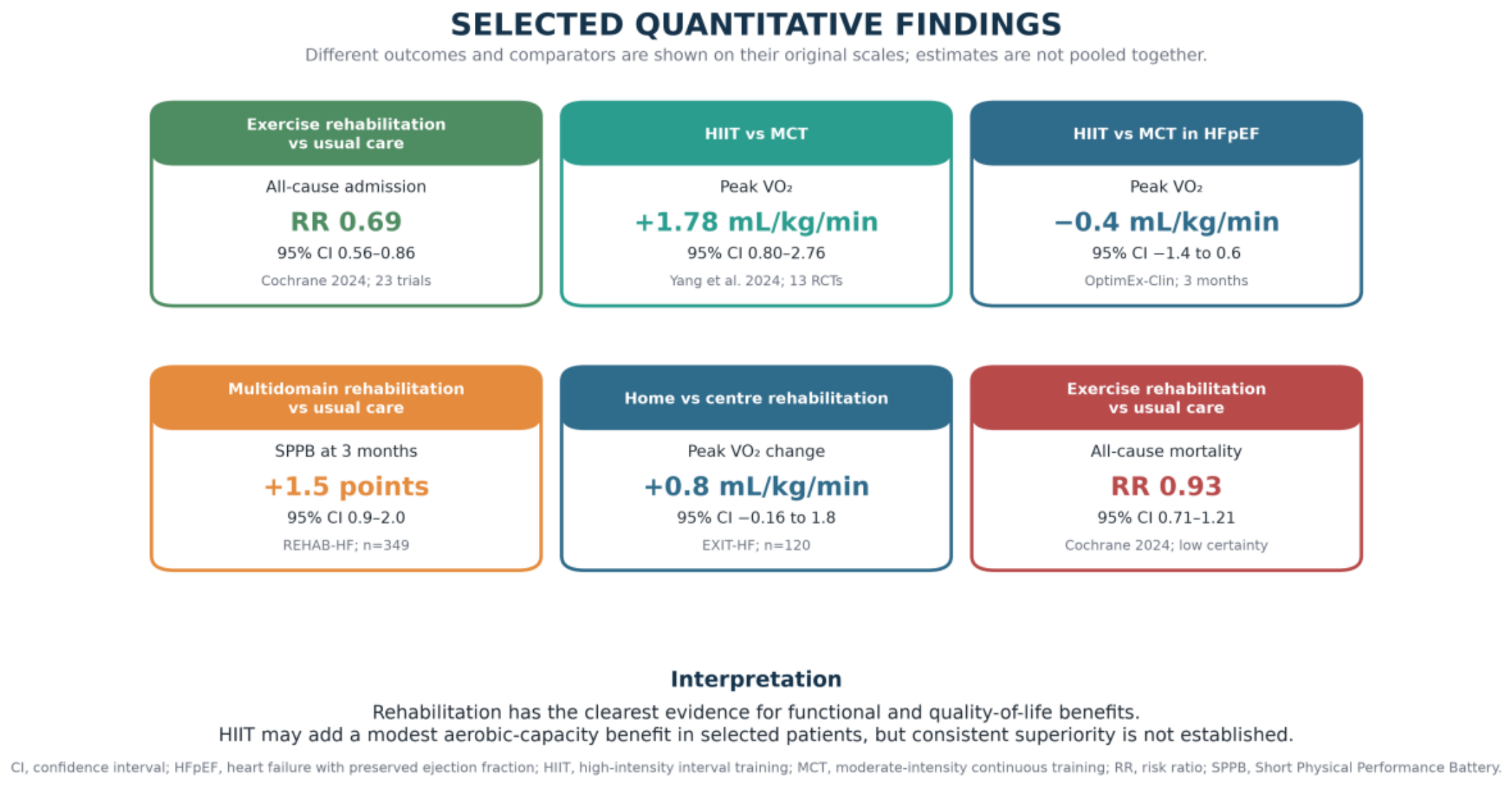
Figure 1.
Selected quantitative findings from contemporary heart-failure rehabilitation evidence. Values are published aggregate estimates and are displayed on their original scales; they are not pooled together. The figure distinguishes rehabilitation-versus-control effects from HIIT-versus-MCT effects and includes confidence intervals where available [6,7,11,16,17,20,28,31,32].
4.2. Left-Ventricular Function and Remodelling
The early Wisløff trial reported favourable changes in remodelling with aerobic interval training [10]. Later multicentre data did not reproduce a clear advantage [11]. Meta-analyses suggest that exercise training can improve left-ventricular ejection fraction in HFrEF, but HIIT has not consistently shown superiority over MCT [19,20]. Reverse remodelling should therefore be described as a possible response in some populations rather than a defining effect of HIIT.
4.3. Evidence in HFpEF
Exercise training improves exercise tolerance in HFpEF, but intensity-specific evidence is mixed. A small pilot study reported improvement in VO₂peak and selected diastolic indices with HIIT [12]. In the larger OptimEx-Clin trial, three-month VO₂peak changes were +1.1 mL/kg/min with HIIT, +1.6 with MCT, and -0.6 with guideline-based activity advice. The HIIT-versus-MCT difference was -0.4 mL/kg/min (95% CI -1.4 to 0.6), and neither strategy met the prespecified 2.5 mL/kg/min clinically important difference versus control [21].
A 2025 secondary analysis of measured training exposure added an important qualification. VO₂peak improved by 9.2% with MCT and 8.7% with HIIT (P=0.67). One HIIT session had approximately 42% greater estimated energy expenditure than one MCT session; after adjustment for energy expenditure, the between-mode difference was negligible. Within both groups, frequency and weekly duration were positively associated with improvement [22]. This supports a practical conclusion: in HFpEF, completing more appropriate exercise may matter more than pursuing a higher nominal intensity.
HFpEF populations are commonly older and have obesity, atrial fibrillation, pulmonary disease, frailty, or musculoskeletal limitation. These factors affect whether a target intensity can be reached and sustained. Ejection fraction alone is therefore an insufficient basis for choosing a modality.
4.4. Biomarkers and Mechanisms
A 2025 meta-analysis reported lower BNP or NT-proBNP after HIIT compared with mixed control conditions, but heterogeneity was extreme (I²=98%), and effects on C-reactive protein, tumour necrosis factor-α, and interleukin-6 were not statistically significant [24]. These data are hypothesis-generating. Biomarker changes should not be used as surrogates for comparative clinical benefit.
4.5. Comparative Safety
In SMARTEX-HF, serious adverse events by 52 weeks occurred in 39% of the HIIT group, 25% of the MCT group, and 34% of the exercise-recommendation group; the overall difference was not statistically significant (P=0.16) [11]. The study was not powered to establish rare-event equivalence. Its findings support feasibility under screening and supervision, not unrestricted unsupervised HIIT.

Table 1.
places the principal quantitative studies in context.
| Evidence source | Population and comparison | Quantitative result | Interpretation for practice |
|---|---|---|---|
| Cochrane review, 2024 [6] | 60 trials, 8,728 participants; exercise-based rehabilitation versus control | All-cause admission RR 0.69 (95% CI 0.56-0.86); mortality RR 0.93 (0.71-1.21); MLHFQ mean difference -7.39 (-10.30 to -4.77) | Supports rehabilitation broadly; does not establish HIIT superiority |
| HF-ACTION [7,8] | 2,331 stable outpatients with HFrEF; aerobic training versus usual care | Primary unadjusted HR 0.93 (0.84-1.02); adjusted HR 0.89 (0.81-0.99); KCCQ between-group difference +1.93 points | Modest clinical and health-status effects; adherence declined over time |
| SMARTEX-HF [11] | 261 patients with HFrEF; HIIT, MCT, or exercise advice | No significant HIIT-versus-MCT difference in VO₂peak or LV end-diastolic diameter; intensity overlap was substantial | Fidelity can erase the intended contrast between modalities |
| OptimEx-Clin [21] | 180 patients with HFpEF; HIIT, MCT, or activity advice | HIIT versus MCT VO₂peak difference -0.4 mL/kg/min (95% CI -1.4 to 0.6) | Does not support routine HIIT superiority in HFpEF |
| OptimEx exposure analysis [22] | 107 HFpEF participants completing three-month assessment | VO₂peak +9.2% MCT versus +8.7% HIIT; P=0.67; frequency and duration associated with response | Achieved dose and adherence may matter more than intensity label |
| Yang meta-analysis [16] | 13 randomized trials; predominantly HFrEF | VO₂peak +1.78 mL/kg/min; 6MWD +28.13 m; MLHFQ -4.45 points with HIIT | Suggests modest physiological advantage; study heterogeneity limits certainty |
| Chen meta-analysis [17] | 15 randomized trials, 553 participants | Overall VO₂peak +1.49 mL/kg/min; HFrEF long/high-volume HIIT +2.11; HFpEF +0.55, P=0.32 | Protocol and phenotype influence effect; HFpEF superiority not established |
| REHAB-HF [29] | 349 older patients hospitalized with acute HF; multidomain rehabilitation versus usual care | Three-month SPPB difference +1.5 points (95% CI 0.9-2.0); no significant six-month event reduction | Frailty-focused multidomain rehabilitation addresses needs beyond aerobic intensity |
| REACH-HF [31] | 216 patients with HFrEF; facilitated home programme versus usual care | MLHFQ difference -5.7 points at 12 months (95% CI -10.6 to -0.7) | Structured home rehabilitation can improve disease-specific quality of life |
| EXIT-HF [32] | 120 patients across EF spectrum; home versus centre rehabilitation | VO₂peak difference 0.8 mL/kg/min (95% CI -0.16 to 1.8); adherence 84% versus 81% | Monitored home rehabilitation was noninferior in this single-centre trial |
Table 1. Quantitative evidence relevant to exercise prescription and delivery in heart failure. Estimates should be interpreted within each study’s design and population. 6MWD indicates six-minute walk distance; CI, confidence interval; EF, ejection fraction; HFpEF, heart failure with preserved ejection fraction; HFrEF, heart failure with reduced ejection fraction; HIIT, high-intensity interval training; HR, hazard ratio; KCCQ, Kansas City Cardiomyopathy Questionnaire; LV, left ventricular; MCT, moderate-intensity continuous training; MLHFQ, Minnesota Living with Heart Failure Questionnaire; RR, risk ratio; SPPB, Short Physical Performance Battery; VO₂peak, peak oxygen uptake.
5. Mechanistic Context: Why Responses Differ
5.1. Exercise Intolerance Is Multisystemic
Exercise intolerance in heart failure cannot be explained by resting ejection fraction alone. Limited stroke-volume reserve, impaired chronotropic response, elevated filling pressures, pulmonary vascular dysfunction, endothelial dysfunction, abnormal skeletal-muscle perfusion, reduced oxidative capacity, muscle atrophy, and comorbid disease contribute in different proportions [23,26]. In severe chronic heart failure, skeletal-muscle fibre atrophy and a shift toward faster, more fatigable phenotypes have been associated with impaired VO₂peak [26].
Exercise training can improve several points in this oxygen-transport pathway. MCT and HIIT both increase repeated demand on cardiac output, vascular conductance, and skeletal-muscle oxygen extraction. A higher-intensity interval may provide a stronger transient stimulus, while a longer continuous session may accumulate a similar or greater total workload. The net adaptation depends on recovery, frequency, total work, and the patient’s capacity to repeat the exposure.
5.2. Human Mechanistic Evidence
A molecular substudy of OptimEx-Clin evaluated skeletal-muscle changes after training in HFpEF [25]. Such studies connect clinical interventions with tissue-level responses, but small mechanistic samples cannot establish mediation of clinical endpoints. Similar caution applies to endothelial function, autonomic balance, and natriuretic peptide changes. These observations support biological plausibility; they do not prove that one exercise intensity has a unique mechanism or superior clinical effect.
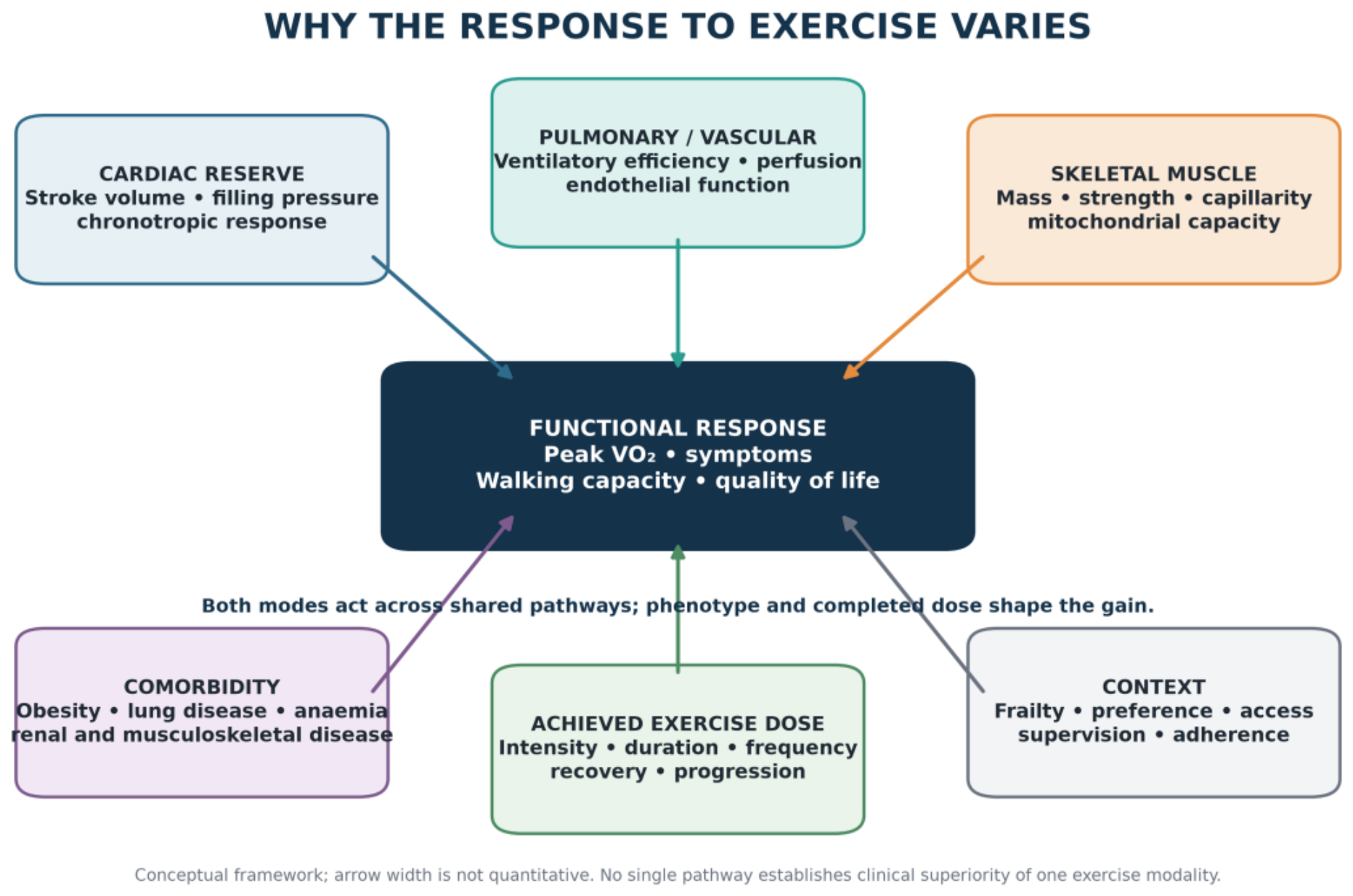
Figure 2.
Multisystem determinants and adaptations in heart-failure exercise training. Exercise tolerance reflects cardiac reserve, pulmonary and vascular function, skeletal muscle, autonomic regulation, comorbidity, and frailty. MCT and HIIT act across overlapping pathways; the achieved dose and the patient’s limiting phenotype influence the observed response. Arrows are conceptual rather than quantitative [23,25,26].
6. From Prescribed Intensity to Achieved Dose
6.1. MCT as a Foundation
MCT is usually prescribed as sustained aerobic work at a moderate relative intensity, guided by cardiopulmonary exercise testing (CPET) where available and supplemented by workload, heart rate, symptoms, and perceived exertion. It is appropriate for initial conditioning, patients who prefer continuous exercise, and those who cannot tolerate repeated high-intensity intervals. MCT should still be progressed; an indefinitely low workload may be safe but physiologically insufficient.
6.2. HIIT as a Family of Protocols
HIIT is not a single intervention. The commonly studied 4×4-minute model uses four high-intensity intervals separated by active recovery, whereas shorter intervals may improve tolerability [10,11,23]. Meta-analysis suggests that long-interval, higher-volume protocols may produce larger VO₂peak gains in HFrEF [17], but these findings arise from indirect subgroup comparisons and should not be converted into a universal protocol.
6.3. Frequency, Duration, and Adherence
The intended prescription is not the same as the dose received. HF-ACTION adherence declined after the supervised phase [7]. Within its exercise arm, moderate volumes of 3 to <7 MET-h/week were associated with lower subsequent event risk, but the dose analysis was observational and susceptible to healthy-adherer and reverse-causation effects [9]. In OptimEx-Clin, objectively recorded frequency and weekly duration were associated with VO₂peak improvement within both MCT and HIIT, whereas higher relative intensity alone did not explain response [22].
These data support routine reporting of four variables: prescribed intensity, achieved intensity, weekly duration, and completion rate. Without them, an apparently negative intensity trial may be a test of implementation rather than physiology.
Figure 3.
Phenotype- and context-informed selection of an aerobic-training format. The framework begins with clinical stability and exercise assessment, uses MCT as a broadly applicable initial option, and introduces supervised HIIT when the patient can reach and recover from higher-intensity intervals. Progression is based on achieved dose, symptoms, preference, and adherence. This is an author-proposed framework, not a validated risk score or autonomous prescribing algorithm [11,21,22,23].
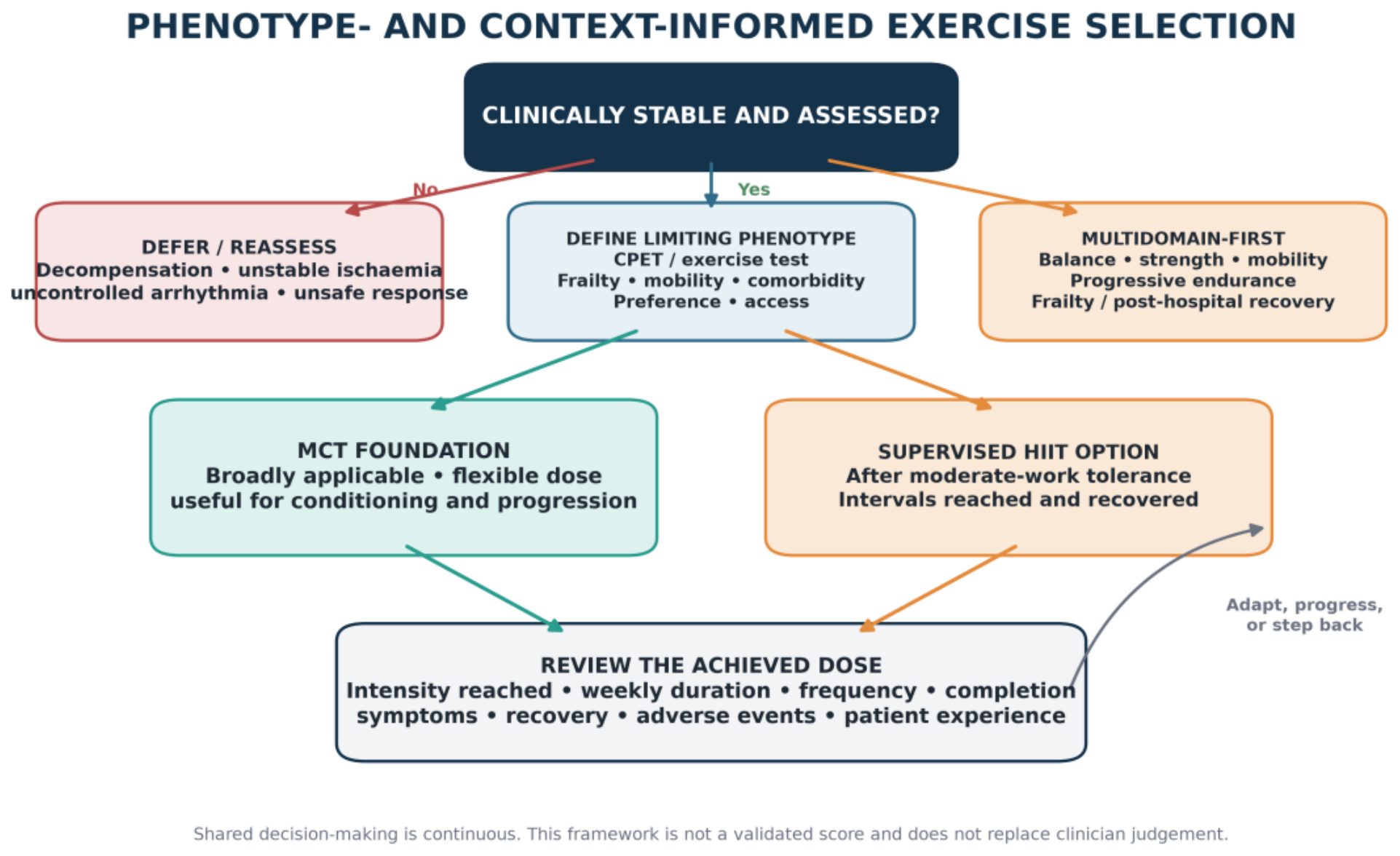
Table 2.
summarizes practical starting ranges; local protocols and individual assessment take precedence.
Table 2.
summarizes practical starting ranges; local protocols and individual assessment take precedence.
| Component | MCT | HIIT | Practical safeguards |
|---|---|---|---|
| Candidate | Stable patient able to perform sustained aerobic work | Stable, screened patient able to tolerate and recover from repeated vigorous efforts | Begin with the format most likely to be completed safely and repeatedly |
| Initial intensity | Commonly 40-70% heart-rate or VO₂ reserve, or RPE approximately 11-14 | Work intervals commonly 80-95% peak heart rate or an equivalent CPET-derived zone; active recovery at lower intensity | Fixed heart-rate targets may be unreliable with beta-blockade, atrial fibrillation, chronotropic incompetence, or pacing |
| Session structure | Continuous or accumulated bouts; commonly 20-45 minutes after warm-up | Long- or short-interval formats; 4×4 minutes is studied but not mandatory | Progress total duration and recovery before assuming that more intensity is required |
| Frequency | Commonly 3-5 sessions/week, individualized | Commonly 2-3 sessions/week during introduction, individualized | Weekly duration and consistency should be documented |
| Monitoring | Symptoms, RPE, heart rate, blood pressure, workload, rhythm when indicated | Same measures, with closer observation during initiation and progression | CPET is preferred when available; stop criteria and escalation pathways should be explicit |
| Main strength | Broad applicability and flexible dosing | More time near upper aerobic intensity and a possible additional fitness stimulus | Patient preference and programme fidelity may outweigh theoretical efficacy |
| Main limitation | May be under-dosed if workload is not progressed | More demanding supervision and greater risk of prescription-delivery mismatch | Neither modality has established comparative superiority for mortality or hospitalization |
7. Populations Requiring a Broader Rehabilitation Model
7.1. Older and Recently Hospitalized Patients
A debate limited to HIIT versus MCT may overlook patients whose main limitation is frailty rather than aerobic conditioning. REHAB-HF enrolled 349 older patients hospitalized with acute decompensated heart failure and used an early, progressive, multidomain intervention targeting strength, balance, mobility, and endurance. At three months, the adjusted mean SPPB score was 8.3 with rehabilitation and 6.9 with usual care, a difference of 1.5 points (95% CI 0.9-2.0) [29]. Six-month rehospitalization and mortality were not significantly reduced.
A prespecified analysis suggested numerically larger functional effects in HFpEF than HFrEF, but interaction testing was generally not significant and the subgroup findings remain hypothesis-generating [30]. The practical lesson is not that one ejection-fraction group should receive preferential access. It is that older patients after hospitalization may require balance and strength training, mobility practice, nutritional and medication review, and gradual endurance progression before vigorous intervals are considered.
7.2. Comorbidity and Symptom Phenotype
Obesity, chronic lung disease, anaemia, renal dysfunction, neuropathy, arthritis, cognitive impairment, depression, and social constraints can determine the attainable exercise dose. Patients with atrial fibrillation or chronotropic incompetence may need workload, RPE, and symptom-guided prescription rather than rigid heart-rate targets. Device detection thresholds should be reviewed before vigorous exercise in patients with implantable cardioverter-defibrillators [23].
Table 3.
summarizes how phenotype and programme context can inform an initial strategy.
| Domain | MCT-first or multidomain-first considerations | Factors that may support supervised HIIT |
|---|---|---|
| Recent clinical course | Recent decompensation, incomplete optimization, uncertain haemodynamic response | Sustained stability without exercise contraindication |
| Frailty and mobility | Balance impairment, sarcopenia, falls risk, or marked deconditioning requiring multidomain rehabilitation | Independent mobility and ability to complete moderate training |
| Symptoms and testing | Very low capacity, exertional hypotension, arrhythmia concern, or poorly characterized limitation | Predictable exercise response and reliable test-derived intensity zones |
| Comorbidity | Severe pulmonary, musculoskeletal, neurological, or cognitive limitation | Comorbidities controlled sufficiently for repeated vigorous efforts |
| Preference | Preference for steady exercise or anxiety about vigorous effort | Preference for intervals and willingness to follow structured progression |
| Programme capacity | Limited monitoring or delayed access to clinical escalation | Trained supervision, monitoring, and rapid escalation pathways |
| Adherence likelihood | Continuous or accumulated bouts are more likely to be maintained | Variety or shorter work periods improve attendance and completion |
8. Home-Based, Hybrid, and Resource-Constrained Delivery
Access may be a larger determinant of population benefit than the distinction between two aerobic protocols. In India and other resource-constrained settings, programmes should prioritize scalable assessment, education, progressive aerobic activity, resistance and balance training where appropriate, medication optimization, and follow-up. Where CPET is unavailable, symptom-limited exercise testing, six-minute walk distance, workload, heart rate, blood pressure, and RPE can support prescription while acknowledging their limitations [23].
The REACH-HF trial evaluated a facilitated home-based self-care and rehabilitation programme in HFrEF. At 12 months, MLHFQ score was 5.7 points better than usual care (95% CI 0.7-10.6 points in favour of intervention), while clinical events did not differ significantly [31]. EXIT-HF directly compared home- and centre-based rehabilitation. The home programme used four supervised sessions plus 20 home sessions with telephone and wearable-data monitoring; centre-based rehabilitation used 24 supervised sessions. The between-group difference in VO₂peak change was 0.8 mL/kg/min (95% CI -0.16 to 1.8), and adherence was 84% versus 81%, supporting noninferiority in this single-centre population [32].
A telerehabilitation meta-analysis of 17 studies and 2,206 participants reported pooled improvements versus control in six-minute walk distance (+15.86 m), VO₂peak (+1.85 mL/kg/min), and MLHFQ score (-6.62 points), but heterogeneity was high for all three outcomes [27]. Digital delivery should therefore be described as a promising means of extending access, not as a uniform intervention with a single effect size.
Figure 4.
Clinician-supervised continuum from centre-based assessment to home or hybrid rehabilitation. Objective measurements and patient-reported symptoms are reviewed by the rehabilitation team; progression or treatment change occurs through defined clinical oversight and safety escalation. Digital tools facilitate communication and monitoring but do not independently prescribe high-intensity exercise [23,27,31,32].
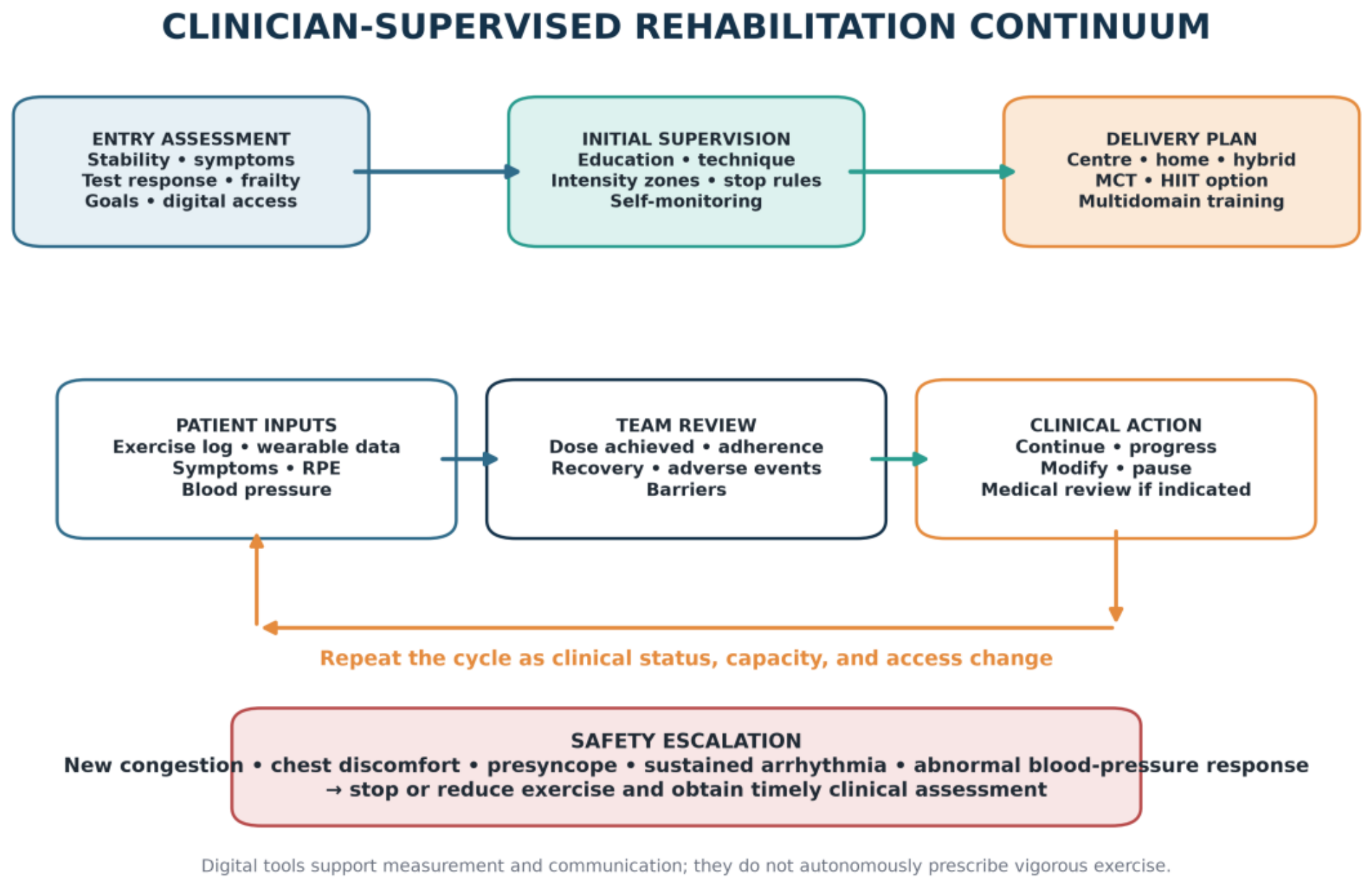
Table 4.
Evidence and practical considerations for rehabilitation delivery. Home-based and hybrid rehabilitation require structured assessment, feedback, and escalation; they should not be equated with autonomous or unmonitored exercise.
Table 4.
Evidence and practical considerations for rehabilitation delivery. Home-based and hybrid rehabilitation require structured assessment, feedback, and escalation; they should not be equated with autonomous or unmonitored exercise.
| Delivery model | Supporting evidence | Potential advantage | Principal limitation |
|---|---|---|---|
| Centre-based supervised rehabilitation | Established trial and programme experience [3,6] | Direct observation, rapid adjustment, access to equipment | Travel, capacity, cost, and geographic access |
| Facilitated home programme | REACH-HF: MLHFQ -5.7 points versus usual care at 12 months [31] | Accessibility, self-management, caregiver involvement | Depends on structured facilitation; not equivalent to an unsupervised exercise leaflet |
| Monitored home versus centre programme | EXIT-HF: noninferior VO₂peak change; adherence 84% versus 81% [32] | Fewer centre visits with wearable and telephone monitoring | Single-centre trial; requires technology and clinical review |
| Telerehabilitation | Pooled functional and quality-of-life improvements with high heterogeneity [27] | Reach, convenience, continuity, asynchronous review | Digital access, data quality, privacy, and heterogeneous programme content |
| Early multidomain post-hospital rehabilitation | REHAB-HF: SPPB +1.5 points at three months [29] | Addresses strength, balance, mobility, and frailty | Resource intensive; no proven six-month event reduction |
9. Safety and Monitoring
Exercise should be initiated when heart failure is clinically stable and contraindications have been assessed. Acute decompensation, unstable ischaemia, uncontrolled arrhythmia, symptomatic severe valvular obstruction, acute myocarditis or pericarditis, and concerning haemodynamic responses warrant deferral or specialist evaluation [23]. NYHA class alone should not determine eligibility.
Initial sessions should characterize symptoms, workload tolerance, blood-pressure response, rhythm, and recovery. Warning features include progressive chest discomfort, presyncope, sustained symptomatic arrhythmia, a fall in systolic blood pressure with increasing workload, disproportionate dyspnoea, new congestion, or prolonged post-exercise symptoms. Programmes need a documented response pathway rather than relying on a generic instruction to stop exercise.
Beta-blockers may blunt heart-rate response, atrial fibrillation introduces beat-to-beat variability, and device programming can constrain the upper training range. RPE, workload, and CPET-derived ventilatory thresholds can complement heart-rate targets [23]. A safe programme is one that can be modified promptly when the patient’s clinical status changes.
10. Research Priorities
Future comparative trials should measure the dose that patients actually receive. Reports should include achieved intensity, time in target zone, weekly duration, energy expenditure where feasible, session completion, protocol crossover, and reasons for non-adherence. Core outcomes should include VO₂peak, symptoms, quality of life, adverse events, hospitalization, and mortality, with follow-up long enough to assess maintenance.
Pragmatic trials are needed in women, older adults, HFpEF, frailty, multimorbidity, and lower-resource settings. The REHAB-HF experience shows that strength, balance, and mobility may be as relevant as aerobic intensity in recently hospitalized patients [29]. Delivery research should compare centre-based, home-based, and hybrid programmes using common outcome definitions and should report technology access, clinician workload, and equity.
Mechanistic studies should be prespecified and linked to clinical outcomes. Digital decision support requires prospective evaluation of wearable accuracy, data governance, escalation rules, and unintended consequences. Until validated, algorithms should support clinicians rather than autonomously prescribe vigorous exercise.
11. Limitations
This narrative review is susceptible to selection bias and does not provide a formal risk-of-bias assessment or new meta-analysis. The literature is heterogeneous in phenotype, exercise protocol, comparator intensity, programme duration, supervision, background therapy, and adherence. Quantitative estimates were retained on their original scales and should not be compared as if obtained from one population. Several mechanistic observations derive from small studies, and subgroup findings should be considered exploratory. Evidence in women, older adults, patients with multiple comorbidities, and low-resource settings remains comparatively limited.
12. Conclusion
Exercise-based cardiac rehabilitation improves functional capacity and quality of life and probably reduces all-cause hospital admission in patients with heart failure, but a short-term mortality benefit has not been established. HIIT may provide a modest additional improvement in VO₂peak under some conditions, particularly in selected HFrEF populations and adequately delivered protocols. Multicentre evidence does not establish consistent superiority for remodelling, quality of life, hospitalization, or mortality, and HFpEF data do not support a routine preference for HIIT.
MCT remains a valid and broadly applicable foundation. HIIT is a reasonable supervised option after clinical assessment and initial conditioning when the patient can achieve and recover from the intended workload. For older, frail, recently hospitalized, or highly comorbid patients, a multidomain approach may be more appropriate than an intensity-centred prescription.
The most useful shift is from debating protocol labels to measuring delivery. A programme that is accessible, accurately prescribed, completed regularly, and adjusted to the patient’s response is more likely to help than a theoretically superior protocol that cannot be sustained.:
Author Contributions
Conceptualization, Gaurav Narain Gupta, Munish Narain Gupta, Sumit Kumar Gupta and Sweta Gupta; Methodology, Gaurav Narain Gupta and Sumit Kumar Gupta; Investigation, Gaurav Narain Gupta, Munish Narain Gupta, Sumit Kumar Gupta and Sweta Gupta; Writing – Original Draft Preparation, Gaurav Narain Gupta; Writing – Review & Editing, Munish Narain Gupta, Sumit Kumar Gupta and Sweta Gupta; Visualization, Gaurav Narain Gupta and Sweta Gupta; Supervision, Gaurav Narain Gupta; Project Administration, Gaurav Narain Gupta. All authors approved the submitted version and agree to be accountable for the work.
Funding
This research received no external funding. No external funding was received for the article processing charge.
Institutional Review Board Statement
Not applicable. This narrative review and conceptual framework does not report research involving human participants, animals, or identifiable personal data.
Informed Consent Statement
Not applicable.
Consent for Publication: Not applicable.
Data Availability Statement
No new datasets were generated or analyzed for this review. All information is derived from publicly available sources cited in the manuscript.
Acknowledgments
Durin:g the preparation of this manuscript, the authors used ChatGPT (OpenAI) and Manus (Manus AI) for language drafting and editing, literature organization, reference cross-checking, document formatting, tracked-change preparation, quality-control support, and preliminary conceptual graphics. The authors reviewed and edited the output and take full responsibility for the content of this publication. Preliminary generative-AI illustrations were replaced with author-constructed graphics produced reproducibly using Python and Matplotlib.
Conflicts of Interest
The authors declare no conflict of interest.
Protocol and Reporting
No registered systematic-review protocol is claimed. The article is presented as a narrative review and conceptual framework, with methods and evidence boundaries stated above.
References
- Huffman, M.D.; Prabhakaran, D. Heart failure: epidemiology and prevention in India. Natl. Med. J. India 2010, 23(5), 283–288. [Google Scholar] [PubMed]
- Harikrishnan, S.; Bahl, A.; Roy, A.; Mishra, A.; Prajapati, J.; Nanjappa, M.C.; et al. National Heart Failure Registry, India: design and methods. Indian Heart J. 2019, 71(6), 488–491. [Google Scholar] [CrossRef] [PubMed]
- Bozkurt, B.; Fonarow, G.C.; Goldberg, L.R.; et al. Cardiac rehabilitation for patients with heart failure: JACC Expert Panel. J. Am. Coll. Cardiol. 2021, 77(11), 1454–1469. [Google Scholar] [CrossRef] [PubMed]
- Heidenreich, P.A.; Bozkurt, B.; Aguilar, D.; et al. 2022 AHA/ACC/HFSA guideline for the management of heart failure. Circulation 2022, 145(18), e895–e1032. [Google Scholar] [CrossRef] [PubMed]
- McDonagh, T.A.; Metra, M.; Adamo, M.; et al. 2021 ESC guidelines for the diagnosis and treatment of acute and chronic heart failure. Eur. Heart J. 2021, 42(36), 3599–3726. [Google Scholar] [CrossRef] [PubMed]
- Molloy, C.; Long, L.; Mordi, I.R.; et al. Exercise-based cardiac rehabilitation for adults with heart failure. Cochrane Database Syst. Rev. 2024, 3(3), CD003331. [Google Scholar] [CrossRef] [PubMed]
- O’Connor, C.M.; Whellan, D.J.; Lee, K.L.; et al. HF-ACTION Investigators. Efficacy and safety of exercise training in patients with chronic heart failure: HF-ACTION randomized controlled trial. JAMA 2009, 301(14), 1439–1450. [Google Scholar] [CrossRef] [PubMed]
- Flynn, K.E.; Piña, I.L.; Whellan, D.J.; et al. Effects of exercise training on health status in patients with chronic heart failure: HF-ACTION randomized controlled trial. JAMA 2009, 301(14), 1451–1459. [Google Scholar] [CrossRef] [PubMed]
- Keteyian, S.J.; Leifer, E.S.; Houston-Miller, N.; et al. Relation between volume of exercise and clinical outcomes in patients with heart failure. J. Am. Coll. Cardiol. 2012, 60(19), 1899–1905. [Google Scholar] [CrossRef] [PubMed]
- Wisløff, U.; Støylen, A.; Loennechen, J.P.; et al. Superior cardiovascular effect of aerobic interval training versus moderate continuous training in heart failure patients: a randomized study. Circulation 2007, 115(24), 3086–3094. [Google Scholar] [CrossRef] [PubMed]
- Ellingsen, Ø.; Halle, M.; Conraads, V.; et al. High-intensity interval training in patients with heart failure with reduced ejection fraction. Circulation 2017, 135(9), 839–849. [Google Scholar] [CrossRef] [PubMed]
- Angadi, S.S.; Mookadam, F.; Lee, C.D.; Tucker, W.J.; Haykowsky, M.J.; Gaesser, G.A. High-intensity interval training vs moderate-intensity continuous exercise training in heart failure with preserved ejection fraction: a pilot study. J. Appl. Physiol. (1985) 2015, 119(6), 753–758. [Google Scholar] [CrossRef] [PubMed]
- Gomes Neto, M.; Durães, A.R.; Conceição, L.S.R.; et al. High intensity interval training versus moderate intensity continuous training on exercise capacity and quality of life in patients with heart failure with reduced ejection fraction: a systematic review and meta-analysis. Int. J. Cardiol. 2018, 261, 134–141. [Google Scholar] [CrossRef] [PubMed]
- Araújo, B.T.S.; Leite, J.C.; Fuzari, H.K.B.; et al. Influence of high-intensity interval training versus continuous training on functional capacity in individuals with heart failure: a systematic review and meta-analysis. J. Cardiopulm. Rehabil. Prev. 2019, 39(5), 293–298. [Google Scholar] [CrossRef] [PubMed]
- Okamura, M.; Shimizu, M.; Yamamoto, S.; Nishie, K.; Konishi, M. High-intensity interval training versus moderate-intensity continuous training in patients with heart failure: a systematic review and meta-analysis. Heart Fail Rev. 2023, 28(5), 1113–1128. [Google Scholar] [CrossRef] [PubMed]
- Yang, C.; Zhang, L.; Cheng, Y.; et al. High intensity interval training vs moderate intensity continuous training on aerobic capacity and functional capacity in patients with heart failure: a systematic review and meta-analysis. Front Cardiovasc Med. 2024, 11, 1302109. [Google Scholar] [CrossRef] [PubMed]
- Chen, X.; Zhang, T.; Hu, X.; et al. High-intensity interval training programs versus moderate-intensity continuous training for individuals with heart failure: a systematic review and meta-analysis. Arch. Phys. Med. Rehabil. 2025, 106(1), 98–112. [Google Scholar] [CrossRef] [PubMed]
- Conceição, L.S.R.; Gomes-Neto, M.; Rocha, C.S.G.; Coelho, A.O.; Carvalho, V.O. Effect of high-intensity interval training versus moderate intensity continuous training in heart failure patients on cardiorespiratory fitness and quality of life: a systematic review and meta-analysis. Respir. Med. 2026, 253, 108662. [Google Scholar] [CrossRef] [PubMed]
- Tucker, W.J.; Beaudry, R.I.; Liang, Y.; et al. Meta-analysis of exercise training on left ventricular ejection fraction in heart failure with reduced ejection fraction: a 10-year update. Prog. Cardiovasc Dis. 2019, 62(2), 163–171. [Google Scholar] [CrossRef] [PubMed]
- Cornelis, J.; Beckers, P.; Taeymans, J.; Vrints, C.; Vissers, D. Comparing exercise training modalities in heart failure: a systematic review and meta-analysis. Int. J. Cardiol. 2016, 221, 867–876. [Google Scholar] [CrossRef] [PubMed]
- Mueller, S.; Winzer, E.B.; Duvinage, A.; et al. Effect of high-intensity interval training, moderate continuous training, or guideline-based physical activity advice on peak oxygen consumption in patients with heart failure with preserved ejection fraction: a randomized clinical trial. JAMA 2021, 325(6), 542–551. [Google Scholar] [CrossRef] [PubMed]
- Mueller, S.; Kabelac, M.; Fegers-Wustrow, I.; et al. OptimEx-Clin Study Group. Comparison of exercise training modalities and change in peak oxygen consumption in heart failure with preserved ejection fraction: a secondary analysis of the OptimEx-Clin trial. Eur. J. Prev. Cardiol. 2025, 32(11), 926–936. [Google Scholar] [CrossRef] [PubMed]
- Taylor, J.L.; Myers, J.; Bonikowske, A.R. Practical guidelines for exercise prescription in patients with chronic heart failure. Heart Fail Rev. 2023, 28(6), 1285–1296. [Google Scholar] [CrossRef] [PubMed]
- Zhang, W.; Hwang, J.; Lu, B.; Xu, X. Effects of high-intensity interval training on biomarkers and inflammatory factors in patients with heart failure: a meta-analysis of randomized controlled trials. Front Cardiovasc Med. 2025, 12, 1641635. [Google Scholar] [CrossRef] [PubMed]
- Winzer, E.B.; et al. Impact of different training modalities on molecular alterations in skeletal muscle of patients with heart failure with preserved ejection fraction: a substudy of the OptimEx trial. Circ. Heart Fail. 2022, 15, e009124. [Google Scholar] [CrossRef] [PubMed]
- Vescovo, G.; Volterrani, M.; Zennaro, R.; et al. Apoptosis in the skeletal muscle of patients with heart failure: investigation of clinical and biochemical changes. Heart 2000, 84(4), 431–437. [Google Scholar] [CrossRef] [PubMed]
- Cavalheiro, A.H.; Silva Cardoso, J.; Rocha, A.; Moreira, E.; Azevedo, L.F. Effectiveness of tele-rehabilitation programs in heart failure: a systematic review and meta-analysis. Health Serv. Insights 2021, 14, 11786329211021668. [Google Scholar] [CrossRef] [PubMed]
- Piepoli, M.F.; Davos, C.; Francis, D.P.; Coats, A.J. ExTraMATCH Collaborative. Exercise training meta-analysis of trials in patients with chronic heart failure (ExTraMATCH). BMJ 2004, 328(7433), 189. [Google Scholar] [CrossRef] [PubMed]
- Kitzman, D.W.; Whellan, D.J.; Duncan, P.; et al. Physical rehabilitation for older patients hospitalized for heart failure. N Engl. J. Med. 2021, 385(3), 203–216. [Google Scholar] [CrossRef] [PubMed]
- Mentz, R.J.; Whellan, D.J.; Reeves, G.R.; et al. Rehabilitation intervention in older patients with acute heart failure with preserved versus reduced ejection fraction. JACC Heart Fail. 2021, 9(10), 747–757. [Google Scholar] [CrossRef] [PubMed]
- Dalal, H.M.; Taylor, R.S.; Jolly, K.; et al. The effects and costs of home-based rehabilitation for heart failure with reduced ejection fraction: the REACH-HF multicentre randomized controlled trial. Eur. J. Prev. Cardiol. 2019, 26(3), 262–272. [Google Scholar] [CrossRef] [PubMed]
- Schmidt, C.; Magalhães, S.; Gois Basilio, P.; et al. Center- vs home-based cardiac rehabilitation in patients with heart failure: EXIT-HF randomized controlled trial. JACC Heart Fail. 2025, 13(5), 695–706. [Google Scholar] [CrossRef] [PubMed]
Disclaimer/Publisher’s Note: The statements, opinions and data contained in all publications are solely those of the individual author(s) and contributor(s) and not of MDPI and/or the editor(s). MDPI and/or the editor(s) disclaim responsibility for any injury to people or property resulting from any ideas, methods, instructions or products referred to in the content. |
© 2026 by the authors. Licensee MDPI, Basel, Switzerland. This article is an open access article distributed under the terms and conditions of the Creative Commons Attribution (CC BY) license (http://creativecommons.org/licenses/by/4.0/).
Copyright: This open access article is published under a Creative Commons CC BY 4.0 license, which permit the free download, distribution, and reuse, provided that the author and preprint are cited in any reuse.