

Submitted:
30 October 2026
Posted:
02 November 2026
You are already at the latest version
Abstract
Rehabilitation technologies can create opportunities for feedback, assistance, adjustable practice, and interaction that are difficult to reproduce in some clinical settings. Yet an engaging device or a sophisticated interface does not, by itself, establish a reason to use it with a particular patient. Clinicians often encounter a practical question before adopting an exergame, an extended-reality system, interactive biofeedback, or a robotic device: what would this technology contribute to the treatment that a reasonable alternative would not? Existing frameworks address treatment specification, gaming-based rehabilitation, device matching, and technology adoption. Building on these contributions, this Perspective proposes Technology-Enhanced Rehabilitation (TER) as a brief, non-prescriptive clinical reasoning guide organized around four questions: What does the patient need to change? What relevant contribution might the technology add compared with a reasonable alternative? Is that contribution worthwhile and feasible for this patient and context? Is the expected value being realized? A hypothetical case involving return to recreational football after persistent knee pain illustrates decisions to use, trial, adapt, or forgo an exergame. The proposal does not assert that interactive technologies are superior to conventional rehabilitation, introduce new treatment mechanisms, or offer validated decision rules. Its purpose is to make the rationale for choosing—and choosing not to use—technology explicit, clinically discussable, and open to future evaluation.
Keywords:
clinical reasoning
; technology-enhanced rehabilitation
; exergaming
; virtual reality
; rehabilitation technology
; therapeutic decision-making
Start with the Patient, Not the Device
“Should I buy a virtual-reality headset or a motion-controlled gaming console for my clinic?” The question is understandable. Interactive technologies are increasingly visible, and their capacity to deliver feedback, simulation, movement-based challenges, and data makes them attractive to rehabilitation professionals. But a purchase question is not yet a treatment question. Before selecting a platform, a clinician must determine what needs to change for a particular patient and whether the technology could make a clinically worthwhile contribution to that change.
Technology may enable a treatment activity, extend access to practice, or make feedback easier to understand. It can also demand time, money, technical expertise, and tolerability that could be spent on other care. A patient’s enthusiasm for a game is relevant to acceptability, but enjoyment is not equivalent to therapeutic effectiveness; conversely, a familiar conventional exercise is not necessarily the best option merely because it is simpler. The issue is not whether technology belongs in rehabilitation. It is when, why, and for whom its use is justified.
This Perspective presents the Technology-Enhanced Rehabilitation (TER) guide as a way to organize that judgment. TER is intended for clinicians considering technologies whose interactive features are used deliberately within treatment, including motion-based exergames, virtual or augmented environments, real-time biofeedback, and interactive robotic systems. It is not a device-ranking system, purchasing checklist, treatment protocol, or scoring instrument. Nor does it assume that every technology-enhanced intervention must outperform conventional care. It asks clinicians to make the expected contribution visible before use, and to revisit that judgment afterward.
The Contribution Is a Clinical Question, Not a New Treatment Theory
TER does not begin from a theoretical vacuum. The Rehabilitation Treatment Specification System (RTSS) distinguishes treatment targets, ingredients, hypothesized mechanisms, and downstream aims [1,2]. Espy and colleagues proposed a clinical decision-making framework for selecting, adapting, modulating, and progressing video games and virtual reality according to person, task, and environmental demands [3]; the “Kinect-ing” with Clinicians resource supports therapeutic game selection and use [4]. Hohl and colleagues addressed indications, device characteristics, dosing, and clinical reflection in exoskeleton-assisted rehabilitation [5]. Matching Person & Technology (MPT) emphasizes person–technology fit and collaborative decisions [6], while Rehab TIPS and RiTe address selection, adoption, and implementation of rehabilitation technologies [7,8]. These models operate at different, partly overlapping levels; none should be treated as absent simply to justify another guide. A longitudinal qualitative study of clinicians integrating advanced rehabilitation technologies documented the work involved in determining technological “value-add,” negotiating patient expectations, and reconciling devices with conventional care [9].
These contributions overlap with TER. Assessing fit, comparing options, monitoring response, and discontinuing an unsuitable device are established clinical concerns, not original concepts introduced here. The principle that a device is not therapeutic merely because it is a technology has also been articulated in neurorehabilitation [10]. TER does not seek to replace these approaches or claim priority over their components. Its narrower proposal is to foreground one patient-specific treatment question across different interactive technologies: Does this technology offer a clinically relevant and feasible contribution, compared with a reasonable alternative, that justifies using it here and now? The following four questions are practical prompts—not an empirically validated sequence or proof of improved decisions.
Four Questions for a Technology Decision
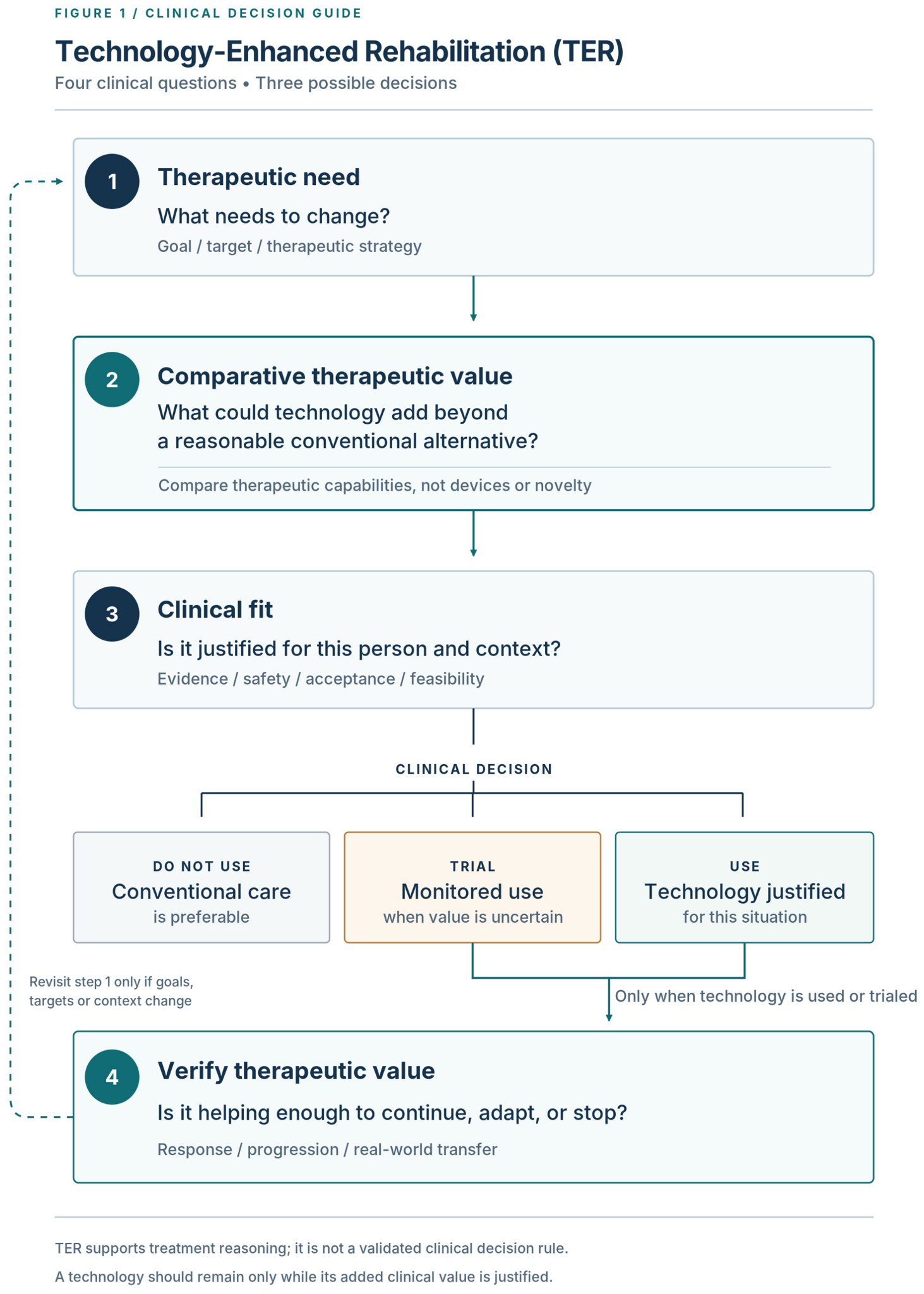
Figure 1 summarizes the pathway. The first three questions inform the initial decision to use a technology, conduct a monitored trial, or prefer a reasonable alternative. The fourth question examines whether anticipated value is realized when technology is used or trialed, with reassessment when the patient’s needs or circumstances change.
1. What Does This Patient Need to Change?
A meaningful activity or participation goal gives treatment its direction, but that goal alone does not specify what an intervention should provide. The clinician should identify the immediate therapeutic target and the proposed strategy: for example, building confidence and capacity during progressively less predictable changes of direction, improving a specific motor skill through feedback and practice, or making a home exercise program accessible enough to be performed. RTSS is useful here because it discourages confusing a treatment label or device with the ingredient intended to influence a target [1,2].
The question is deliberately technology-neutral. If a patient needs progressive practice, the need is not “virtual reality”; it is practice with identifiable demands that can be adjusted and monitored. If the difficulty is remembering exercises at home, the need may concern access to instructions and reliable completion rather than an immersive experience. Some clinical needs can be met adequately without any digital system.
2. What Might Technology Add Compared with a Reasonable Alternative?
Before choosing a device, the clinician should name the alternative that would otherwise be offered. This may be therapist-guided practice, exercise with ordinary objects, non-digital feedback, or another accessible technology. The comparison is not between a sophisticated product and an imaginary version of “usual care”; it is between two credible ways of addressing the same target.
The proposed contribution should be stated as a capability relevant to the target: feedback about a signal the person cannot readily perceive, controllable task difficulty, repeatable practice, individualized assistance, or supported practice beyond the clinic. Therapeutic-exergame design work starts from exercise requirements, progression parameters, and safety constraints rather than game features alone [11]. Contemporary discussion of exergames likewise cautions against treating enjoyment as their only potential contribution [12]. In exploratory playtesting of wearable augmented-reality games, physical therapists identified ways to adapt movement demands, challenge, and context for possible clinical use [13]. These are useful design and practice insights—not evidence that any particular game improves patient outcomes. A feedback display may be distracting or inaccurate; a game can reward a compensation; an ordinary exercise may create the same therapeutic challenge. A feature matters only when it changes what the patient can meaningfully practice, understand, tolerate, or accomplish.
Relevant clinical evidence must still be examined. In a systematic review and meta-analysis of 28 randomized trials involving 1,114 adults with chronic musculoskeletal pain, findings for virtual-reality-assisted active training differed by body region and type of technology; no statistically significant effects were detected for knee pain in the analyzed outcomes and time points [14]. That does not prove that virtual reality never benefits knee pain, and these results cannot be extrapolated to the specific exergame in our example. Rather, it illustrates why evidence of a technological capability is not interchangeable with evidence of clinical effectiveness. The clinician should consider applicability, adverse effects, measurement quality, and uncertainty instead of assuming superiority from novelty.
3. Is the Proposed Contribution Worthwhile for This Patient and Context?
A theoretically relevant capability may have little practical value if it cannot be delivered as intended. The clinician should consider preferences, symptoms, sensory and mobility demands, accessibility, digital familiarity, fatigue, safety, and potential adverse effects such as cybersickness with immersive systems. The clinician’s competence, setup and supervision time, equipment reliability, space, cost, and measurement quality also matter. Person–technology matching and implementation frameworks address these issues [6,7,8], and qualitative research confirms that integration entails substantial clinical work shaped by local circumstances [9].
The judgment is comparative. Technology might be justified even without a unique therapeutic mechanism if it meaningfully improves access, practice opportunities, or acceptability for the individual patient. It may also be rejected despite an impressive feature when the burden is disproportionate to the likely contribution. No universal score or cost threshold is proposed. Patient preference informs shared decisions, while safety requirements and device-specific contraindications remain non-negotiable.
4. Is the Expected Value Being Realized?
Choosing technology is a provisional clinical decision, not an irreversible commitment. Before its use, the clinician should define what would justify continuing, adapting, or stopping it. Relevant indicators depend on the target: quality and amount of practice, response to a specified challenge, completion of prescribed home activity, tolerability, or change in meaningful function. Game scores and minutes of device use can describe what happened within an interface, but do not automatically demonstrate benefit beyond it. Prior gaming and exoskeleton frameworks similarly emphasize adaptation, reflection, and progression [3,5].
The decision may be to use the technology, to decline it because a reasonable alternative is sufficient, or to conduct a bounded therapeutic trial when a relevant contribution is plausible but uncertain. A trial should include an observable clinical target, a sensible comparison where feasible, a review point, and reasons to modify or discontinue the technology. Where the goal is real-world movement or participation, evaluation should include performance beyond the interface. Where the immediate purpose is access or adherence, those outcomes should be measured directly and connected to the broader rehabilitation goal. Improvement, lack of benefit, excessive burden, or a changed patient need can all justify a different choice.
What Counts as a Meaningful Technological Capability?
The four questions deliberately avoid treating platforms as therapeutic categories. An immersive headset, a camera-tracked game, and a wearable sensor are not interchangeable because each may detect, deliver, and modify different aspects of an intervention. Four examples illustrate how capabilities become clinically relevant only when linked to a therapeutic need.
Adjustable task demands. An exergame may change timing, position, predictability, or cognitive requirements of movement targets. This could help grade a challenge if the clinician can control the movement demands that matter. Pirovano and colleagues place exercise requirements and progression parameters ahead of game design [11]; Xu and colleagues describe how therapists explored adaptations of AR play during structured playtesting, rather than testing patient outcomes [13]. The comparison remains whether therapist-led cues or ordinary equipment can provide a similar challenge with less burden.
Augmented information. Real-time visual or auditory biofeedback may make a muscle-activation signal or movement characteristic easier to perceive. The clinical question is whether the signal is valid, the patient can interpret it, and feedback changes relevant practice or decisions. A display is not proof of learning or transfer, and more information is not always better [1,3,11].
Assistance and graded loading. Interactive robotic systems may provide a form or amount of physical support that changes the practice a person can safely perform. Hohl and colleagues describe the importance of matching specific exoskeleton functions to the patient’s gait limitations and reassessing their use [5]. The broader TER question remains whether such assistance contributes enough to the actual treatment goal to warrant its costs and demands.
Access, engagement, and opportunities for practice. A digital system may make practice more accessible or acceptable, support repetition, or extend opportunities beyond supervised sessions. Engagement is a potential route to practice rather than a clinical outcome in itself [12]. Its practical value depends on the individual and context; sustained use and implementation require clinician and patient involvement, not rewards or novelty alone [7,8,9].
These examples are not a catalogue of proven mechanisms. They are prompts for identifying what, specifically, clinicians expect from a technology before integrating it into care.
Applying TER: A Hypothetical Return-to-Football Decision
Consider an adult with persistent knee pain who wants to return to recreational football. The person completes predictable strengthening and movement tasks but is hesitant when the direction of movement is unexpected. A reasonable plan might include graded exposure to increasingly uncertain multidirectional tasks. Fear-avoidance theory offers one conceptual rationale for addressing threatening and avoided movements [15]; graded exposure has been studied in chronic nonspecific low-back pain [16]. Neither source establishes that this particular exergame is effective for persistent knee pain. The case is hypothetical and illustrates decisions, not a tested protocol. The clinical requirement is relevant, progressive movement practice; a game is not yet indicated.
The clinician has two feasible options. One involves floor markings, cones, and therapist-delivered visual or verbal cues, allowing the pace and unpredictability of reactive movements to be changed. The second uses a camera-tracked exergame in which targets appear in different locations and at adjustable speeds. Both could plausibly support practice. The exergame might offer more varied stimuli, sustained engagement, or easier repeatability. It might also encourage short, game-specific movements that bear little relation to the person’s intended return to football. Before selection, the clinician must inspect what the software measures, whether it reliably recognizes the desired movement, and how the task can be progressed. A high score is not a substitute for this analysis.
Under TER, three different decisions can be reasonable. If conventional practice already provides the necessary challenge and is acceptable to the patient, no game is required. If the exergame offers an identifiable and feasible advantage—for example, adaptable stimulus timing that the clinician cannot readily reproduce while supervising safely—it may be integrated. If the advantage is plausible but uncertain, the clinician and patient may agree to a monitored trial rather than assuming benefit.
For that trial, the clinician would document the intended target, the exergame’s expected contribution, and the observation that would prompt continuation or withdrawal. During sessions, the therapist would record the quality of change-of-direction practice, symptom response, tolerance, and whether the challenge remains appropriate. Follow-up should include a comparable non-game task and the person’s confidence with football-related movement, rather than relying only on in-game improvement. If the exergame proves engaging but fails to produce relevant practice, it should be modified or replaced. If ordinary therapist-led tasks achieve the same purpose more efficiently, returning to them is a successful clinical decision—not a failure to innovate.
A different patient may need a different answer. Someone learning to activate a muscle could potentially benefit from gamified electromyographic feedback if the signal is reliable and the information helps address a specific target. For another person, simple therapist cues may be easier, less distracting, and just as useful. TER does not privilege either option; it requires a defensible reason for the choice.
A Brief Record for Everyday Practice
The guide is intended to be used in conversation or documented in a few sentences rather than completed as a formal assessment. A clinician might write: “The patient needs to practice reacting to less predictable lateral movement cues. The camera-based game may add adjustable target timing relative to therapist-led cueing. The patient accepts the interface and can use it safely, but its movement detection must be checked. We will retain it only if it supports quality reactive practice and progress is evident in a comparable task outside the game.”
This record is not a score or validated checklist. Its function is to expose the clinical reasoning so that a patient, colleague, educator, or researcher can question it. It also makes “no technology needed” a legitimate and visible outcome.
Why Offer TER If Other Frameworks Already Exist?
The strongest claim for TER is not conceptual primacy. RTSS specifies treatment ingredients; Espy and Levac provide guidance for gaming; Hohl offers a device-specific pathway; MPT, Rehab TIPS, and RiTe address fit, selection, adoption, and evaluation [1,2,3,4,5,6,7,8]. Practice-based work likewise describes the active clinical reasoning required to integrate technologies [9,13]. The proposed contribution is more modest: four memorable questions that keep the patient-specific comparative value of technology visible before and during treatment. TER is a proposal for organizing and communicating existing reasoning, not proof that existing frameworks omit these concepts or that this sequence improves outcomes.
Limitations are substantial. TER arises from a targeted, nonsystematic reading of relevant literature, not a formal mapping of all decision-making models; the selection of cited frameworks may be incomplete. The four questions have not been tested for content validity, comprehensibility, reliability, usefulness, or effects on patient outcomes. This hypothetical example cannot establish which technology works best for a diagnosis or predict an individual’s response. A systematic review on VR-assisted active training includes heterogeneous interventions and has limits for extrapolation between body regions [14]. Decisions still require condition-specific clinical evidence, patient preferences, professional judgment, and applicable safety and regulatory guidance. Privacy, accessibility, equity, cost, and technical constraints may exceed what four brief questions capture.
These limitations invite testing, not a claim that TER is already validated. Patients, clinicians, educators, and technology researchers could first examine whether the questions are clear and whether important decisions are missing. Case-based usability work could test how clinicians apply them, including when they decide against technology. A separate scoping review could map decision frameworks more comprehensively, and later studies could assess feasibility and effects on decision quality and patient-relevant outcomes. Such findings may refine—or challenge—the proposed guide.
Conclusions
Technology is not the treatment. A game, headset, sensor, or robot is valuable only insofar as its capabilities contribute to a clinically appropriate strategy for a particular person. TER proposes four practical questions to keep that judgment explicit: identify the patient’s therapeutic need, compare the expected contribution with a reasonable alternative, evaluate patient- and context-specific feasibility, and reconsider the choice in light of what happens. Sometimes technology will be justified; sometimes it will merit a monitored trial; sometimes the better choice will be not to use it. The proposal is an invitation to reason, use, question, and refine—not a rule that technology should be used or avoided.
Author Contributions
Nelson W. Adrian-Serrano: Conceptualization; literature investigation; visualization; writing—original draft; writing—review and editing. The author assumes full responsibility for the content.
Funding
This work received no specific grant from any funding agency in the public, commercial, or not-for-profit sectors.
Data availability
No original research dataset was generated or analyzed for this conceptual essay. Materials necessary to interpret the proposed clinical reasoning guide are contained in the manuscript.
Acknowledgments
The author thanks Javi Guerra for constructive feedback on clinical applicability and practical clarity, and Claudio Carvajal-Parodi for critical comments concerning conceptual foundations, related frameworks, and areas requiring clarification. Their observations informed the revision without implying endorsement of its conclusions.
Conflicts of Interest
The author declares no competing interests.
Generative AI disclosure
OpenAI ChatGPT (GPT-6) was used to assist with English-language editing. An OpenAI image-generation tool was used to prototype the conceptual illustration in Figure 1. These tools were not used as evidence sources or to generate clinical or research data. The author is responsible for reviewing and verifying cited sources, interpreting the evidence, and approving the final content.
Previous version
An earlier version of this essay was posted on Preprints.org on October 15, 2026: Adrian-Serrano NW. Technology Is Not the Treatment: An Integrative Clinical Reasoning Framework for Technology-Enhanced Rehabilitation. https://doi.org/10.20944/preprints202610.1471.v1. This follow-up version substantially simplifies the proposal, makes clinical comparison with reasonable alternatives central, and updates the positioning relative to published frameworks.
Ethics approval and informed consent
Not applicable. This essay contains no research involving human participants, animals, identifiable patient information, or patient records. Clinical examples are hypothetical.
References
- Hart, T.; Dijkers, M.P.; Whyte, J.; et al. A theory-driven system for the specification of rehabilitation treatments. Arch. Phys. Med. Rehabil. 2019, 100(1), 172–180. [Google Scholar] [CrossRef]
- Van Stan, J.H.; Dijkers, M.P.; Whyte, J.; et al. The Rehabilitation Treatment Specification System: implications for improvements in research design, reporting, replication, and synthesis. Arch. Phys. Med. Rehabil. 2019, 100(1), 146–155. [Google Scholar] [CrossRef]
- Espy, D.D.; Reinthal, A.; Dal Bello-Haas, V. A clinical decision-making framework for the use of video gaming as a therapeutic modality. Front Neurol. 2021, 12, 610095. [Google Scholar] [CrossRef]
- Levac, D.; Espy, D.; Fox, E.; Pradhan, S.; Deutsch, J.E. “Kinect-ing” with clinicians: a knowledge translation resource to support decision making about video game use in rehabilitation. Phys. Ther. 2015, 95(3), 426–440. [Google Scholar] [CrossRef]
- Hohl, K.; Giffhorn, M.; Jackson, S.; Jayaraman, A. A framework for clinical utilization of robotic exoskeletons in rehabilitation. J. Neuroeng. Rehabil. 2022, 19, 115. [Google Scholar] [CrossRef]
- Scherer, M.J.; Craddock, G. Matching Person & Technology (MPT) assessment process. Technol. Disabil. 2002, 14(3), 125–131. [Google Scholar] [CrossRef]
- Rauzi, M.R.; Balakrishnan, S.; Flynn, S.M.; Keysor, J.J.; Hoenig, H.M. Guiding technology adoption in rehabilitation: a framework from the Rehabilitation Technology Implementation for Promising Solutions (Rehab TIPS) Workgroup. Arch. Phys. Med. Rehabil. 2026, 107(1), 123–133. [Google Scholar] [CrossRef]
- Stockley, R.C.; Gooch, H.; Jarvis, K.A.; Watkins, C.L. Understanding digital health technology implementation in rehabilitation and development of the Rehabilitation Technologies Implementation model. npj Digit Med. 2026, 9, 421. [Google Scholar] [CrossRef]
- Pearce, L.M.N.; Hassett, L.; Sherrington, C.; Pryor, J. Human interactions remain at the heart of rehabilitation with advanced technology: a practice-embedded longitudinal qualitative study with allied health clinicians. J. Neuroeng. Rehabil. 2025, 22, 52. [Google Scholar] [CrossRef]
- Morone, G.; Paolucci, S.; Mattia, D.; et al. The 3Ts of the new millennium neurorehabilitation gym: therapy, technology, translationality. Expert Rev. Med. Devices 2016, 13(9), 785–787. [Google Scholar] [CrossRef]
- Pirovano, M.; Surer, E.; Mainetti, R.; Lanzi, P.L.; Borghese, N.A. Exergaming and rehabilitation: a methodology for the design of effective and safe therapeutic exergames. Entertain Comput. 2016, 14, 55–65. [Google Scholar] [CrossRef]
- Manser, P.; de Bruin, E.D.; Temprado, J.J.; Bherer, L.; Herold, F. Beyond “just” fun: the role of exergames in advancing health promotion and disease prevention. Neurosci. Biobehav Rev. 2025, 176, 106260. [Google Scholar] [CrossRef]
- Xu, B.; Wu, W.; Kweon, S.; Harteveld, C.; Chukoskie, L. “It Depends”: Re-Authoring Play Through Clinical Reasoning in Wearable AR Rehab Games. In Proceedings of the 2026 CHI Conference on Human Factors in Computing Systems, 2026; ACM; p. 844. [Google Scholar] [CrossRef]
- Lo, H.H.M.; Zhu, M.; Zou, Z.; et al. Immersive and nonimmersive virtual reality–assisted active training in chronic musculoskeletal pain: systematic review and meta-analysis. J. Med. Internet Res. 2024, 26, e48787. [Google Scholar] [CrossRef]
- Vlaeyen, J.W.S.; Crombez, G.; Linton, S.J. The fear-avoidance model of pain. Pain 2016, 157(8), 1588–1589. [Google Scholar] [CrossRef]
- López-de-Uralde-Villanueva, I.; Muñoz-García, D.; Gil-Martínez, A.; et al. A systematic review and meta-analysis on the effectiveness of graded activity and graded exposure for chronic nonspecific low back pain. Pain Med. 2016, 17(1), 172–188. [Google Scholar] [CrossRef]
Figure 1.
Proposed Technology-Enhanced Rehabilitation (TER) clinical reasoning guide. Questions 1–3 inform the decision to prefer conventional care, conduct a monitored trial, or use technology. Question 4 applies only when technology is trialed or used, guiding continuation, adaptation, or discontinuation according to response and meaningful transfer. The dashed return pathway is conditional: therapeutic needs are revisited when goals, targets, or context change. The guide is conceptual, not a validated decision algorithm.
Disclaimer/Publisher’s Note: The statements, opinions and data contained in all publications are solely those of the individual author(s) and contributor(s) and not of MDPI and/or the editor(s). MDPI and/or the editor(s) disclaim responsibility for any injury to people or property resulting from any ideas, methods, instructions or products referred to in the content. |
© 2026 by the author. Licensee MDPI, Basel, Switzerland. This article is an open access article distributed under the terms and conditions of the Creative Commons Attribution (CC BY) license.
Copyright: This open access article is published under a Creative Commons CC BY 4.0 license, which permit the free download, distribution, and reuse, provided that the author and preprint are cited in any reuse.