
Submitted:
14 October 2026
Posted:
15 October 2026
You are already at the latest version
Abstract
Bacterial antimicrobial resistance (AMR) represents a global public health crisis that threatens to render conventional antibiotic regimens obsolete. The clustered regularly interspaced short palindromic repeats-associated protein 9 (CRISPR/Cas9) system has emerged as a revolutionary tool in molecular biology, offering unmatched sequence-specific genome-editing capabilities. By leveraging custom single-guide RNAs (sgRNAs), CRISPR/Cas9 can precisely target, cleave, or modify specific genomic and plasmid-borne resistance determinants, thereby neutralizing resistance pathways or directly inducing lethal double-strand breaks in pathogenic bacteria. Beyond simple gene disruption, CRISPR-based tools can eliminate resistance-carrying plasmids, block horizontal gene transfer (HGT), impair virulence pathways, and dismantle biofilm architectures while preserving commensal microflora. This narrative review provides a rigorous, updated synthesis of the structural and mechanical framework of CRISPR/Cas9, its targeted application across major multidrug-resistant (MDR) pathogens, a side-by-side analysis of various delivery systems, and the current balance of therapeutic promise against biological, ecological, and translational safety risks. Furthermore, we outline synergistic integrations with advanced nanocarriers, bacteriophage platforms, synthetic biology, and antimicrobial peptides (AMPs), laying out a prospective roadmap toward publishable clinical translation.
Keywords:
CRISPR/Cas9
; antimicrobial resistance (AMR)
; gene editing
; plasmid curing
; bacteriophage therapy
; single-guide RNA (sgRNA)
; multidrug resistance
1. Introduction
Antimicrobial resistance (AMR) is a rapidly accelerating global health crisis that threatens to undermine modern medical interventions [1,2]. The widespread dissemination of multidrug-resistant (MDR), extensively drug-resistant (XDR), and pandrug-resistant (PDR) bacterial strains has severely limited clinical treatment options [1,3]. Broad-spectrum antibiotics, while historically effective, suffer from two major drawbacks: they accelerate the evolutionary selection pressure driving resistance, and they disrupt the host’s protective commensal microbiome [3,4]. Consequently, there is an urgent imperative to develop sequence-specific, targeted antimicrobial therapeutics capable of selectively neutralizing pathogens without disturbing beneficial microflora [4,5].
Among prospective next-generation biotechnologies, the clustered regularly interspaced short palindromic repeats-associated protein 9 (CRISPR/Cas9) genome-editing framework stands out for its high specificity and modular adaptiveness [1,5]. Originally discovered as a prokaryotic adaptive immune mechanism against mobile genetic elements (MGEs) and bacteriophages, CRISPR/Cas9 has been repurposed into an exceptionally versatile genome-engineering toolkit [6,7]. When deployed against bacterial pathogens, CRISPR/Cas9 can be engineered to target specific antibiotic resistance genes (ARGs) or essential chromosomal loci [1,7]. By inducing double-strand DNA breaks (DSBs) or targeted transcriptional repressions, CRISPR platforms can re-sensitize resistant bacteria to conventional antibiotics, cure resistance plasmids, or directly induce lethal auto-cleavage of the bacterial genome [1,8].
Despite its vast potential, transitioning CRISPR/Cas9 from proof-of-concept laboratory studies to real-world clinical applications requires overcoming substantial hurdles [5,8]. Key translational challenges include achieving efficient sequence delivery across dense bacterial walls, suppressing host immune responses, navigating anti-CRISPR (Acr) bacterial counter-defenses, and evaluating long-term ecological impacts [5,8,9]. This narrative review provides a detailed examination of the operational mechanics, target genetic pathways, comparative delivery modalities, safety considerations, and future prospects of CRISPR/Cas9 technology as a weapon against antimicrobial resistance.
2. Structural and Operational Mechanics of CRISPR/Cas9 Systems
2.1. The Native Prokaryotic Adaptive Immune Pathway
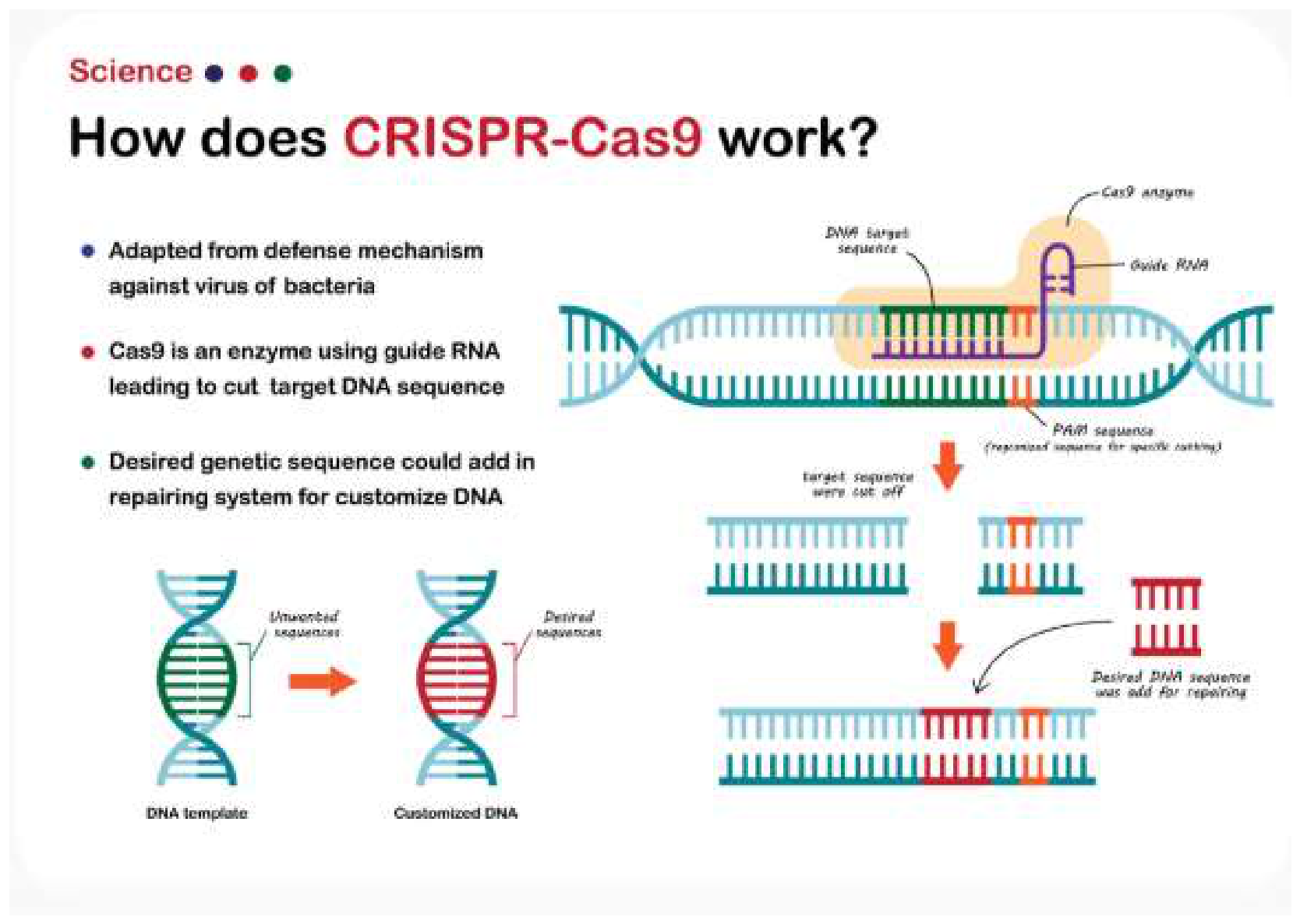
In prokaryotic organisms, the CRISPR/Cas framework functions as an adaptive immune system that safeguards archaeal and bacterial hosts against foreign genetic invasion, such as phages and conjugative plasmids [6,10]. This defensive response occurs across three coordinated phases: Adaptation, Expression, and Interference [6,11].
- Adaptation (Spacer Acquisition): Upon invasion by a foreign nucleic acid, the Cas1–Cas2 endonuclease complex recognizes the target DNA, excises a short conserved segment known as a protospacer, and integrates it into the host’s genomic CRISPR array as a novel “spacer” [6,9,12]. This integration creates a temporal, heritable genetic memory of past infections [6,13].
- Expression (crRNA Biogenesis): When re-exposed to a previously encountered pathogen, the genomic CRISPR array is transcribed into a long precursor CRISPR RNA (pre-crRNA) transcript [11,12]. Concurrently, a small non-coding trans-activating crRNA (tracrRNA) is transcribed nearby [11,13]. The tracrRNA hybridizes with the repeat regions of the pre-crRNA, forming a double-stranded RNA complex that is processed by endogenous RNase III and Cas proteins into mature crRNA units [11,13].
- Interference: Each mature crRNA–tracrRNA duplex forms a ribonucleoprotein (RNP) complex with the Cas9 endonuclease [11,13]. The complex searches for invasive DNA containing a target sequence complementary to the 20-nucleotide spacer region of the crRNA, positioned adjacent to a short conserved sequence known as the Protospacer Adjacent Motif (PAM; e.g., 5′-NGG-3′ for Streptococcus pyogenes Cas9) [1,12]. Upon PAM recognition and DNA strand invasion, the two catalytic domains of Cas9—HNH and RuvC—cleave the complementary and non-complementary target strands, respectively, generating a double-strand break (DSB) that degrades the foreign DNA [1,8,12].
Figure 1.
Sequential stages of the native prokaryotic Type II CRISPR/Cas9 adaptive immune mechanism. Prokaryotic Type II CRISPR-Cas9 adaptive immune mechanism. Source: Trinset / Getty Images.
Figure 1.
Sequential stages of the native prokaryotic Type II CRISPR/Cas9 adaptive immune mechanism. Prokaryotic Type II CRISPR-Cas9 adaptive immune mechanism. Source: Trinset / Getty Images.
2.2. Re-Engineered Synthetic CRISPR/Cas9 Systems
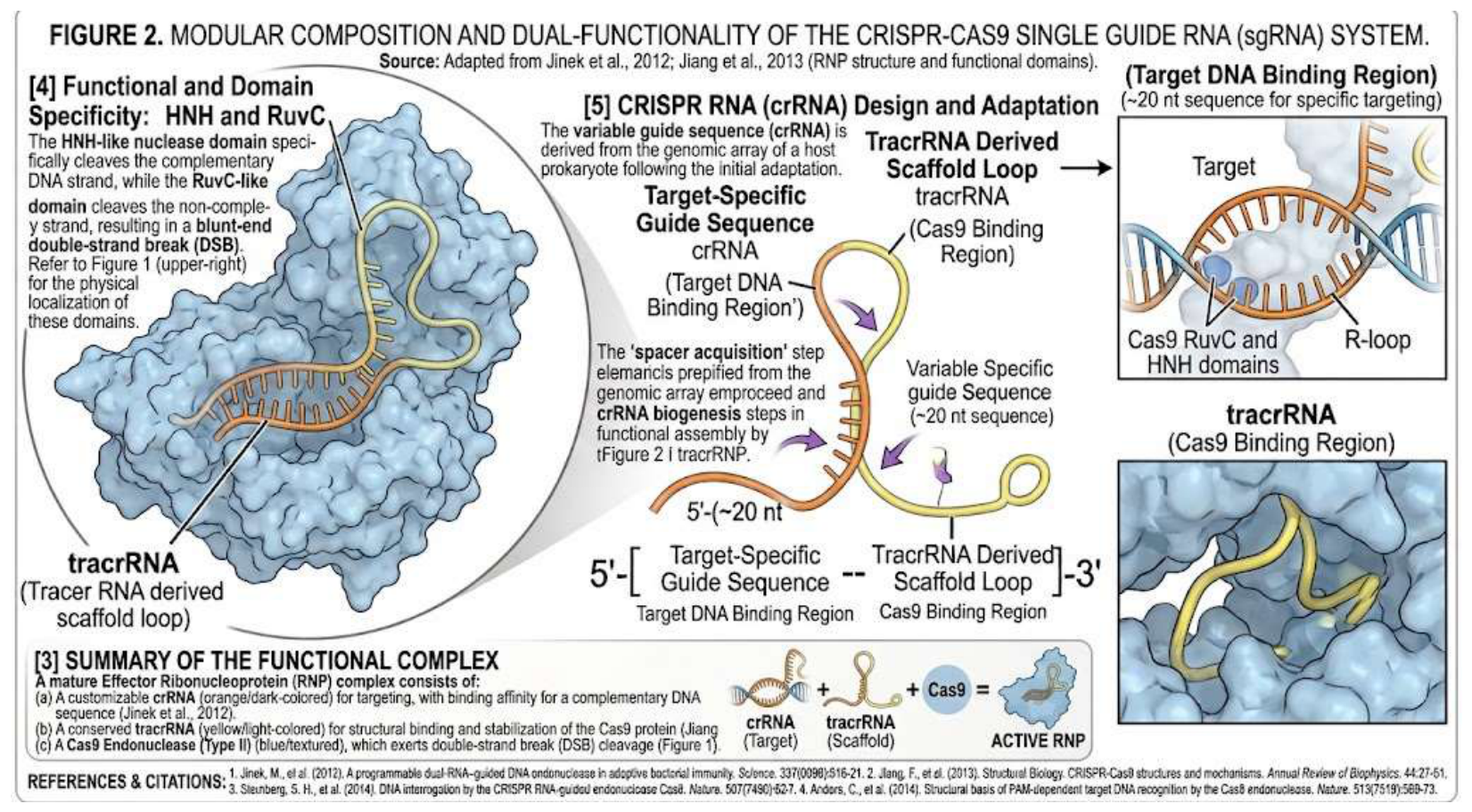
To simplify molecular cloning and experimental applications, Jinek and colleagues synthetically fused the dual-RNA structure (crRNA and tracrRNA) into a single continuous transcript called a single-guide RNA (sgRNA) [1,8]. The 5′ terminus of the sgRNA contains a customizable 20-nucleotide sequence that dictates target specificity, while the remaining 3′ scaffold region binds to the Cas9 protein [1,14]. This two-component setup (sgRNA + Cas9) allows scientists to target almost any genomic or extrachromosomal sequence containing a matching PAM site [1,15].
Figure 2.
Structural schematic of an engineered Single-Guide RNA (sgRNA).
Following Cas9-induced double-strand cleavage, the target cell attempts to repair the damaged DNA [28,29]. In prokaryotes and eukaryotes, these repairs proceed through two primary pathways:
- Non-Homologous End Joining (NHEJ): An error-prone process that directly re-ligates broken DNA ends without requiring a repair template [28]. This pathway frequently introduces insertions or deletions (indels) that cause frameshift mutations, disrupting the target gene’s coding sequence [28,29]. While ubiquitous in eukaryotic cells, classical NHEJ machinery is absent or inefficient in most bacterial species [28].
- Homology-Directed Repair (HDR): A high-fidelity repair mechanism that requires an exogenous or endogenous homologous DNA template to guide repair [28,29]. In the presence of a engineered donor DNA construct, HDR can introduce precise sequence alterations, substitute specific bases, or insert novel functional genes [28,29].
2.3. Engineered Cas9 Derivatives: dCas9 and nCas9
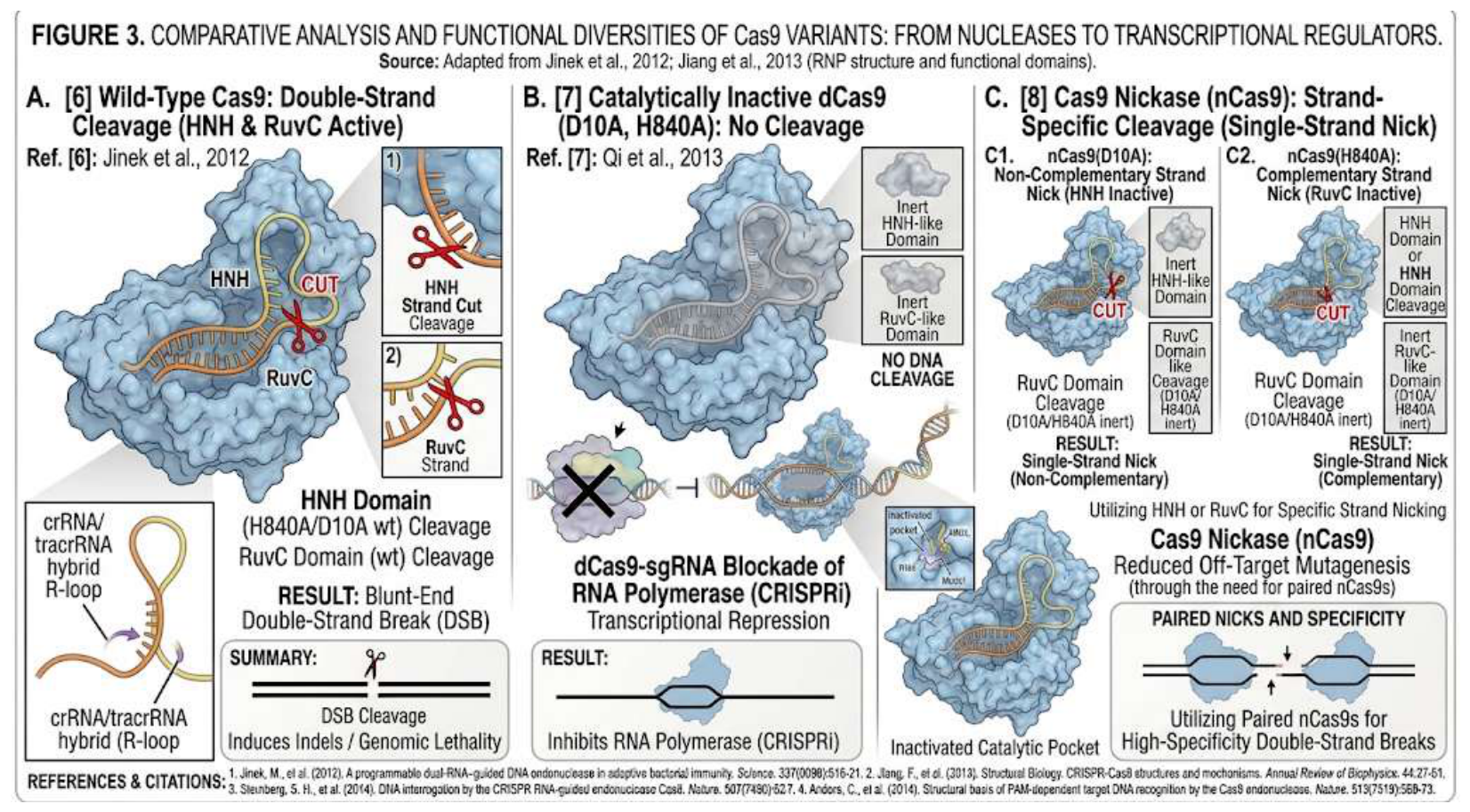
Beyond simple DNA cleavage, molecular engineering has expanded the CRISPR toolkit by introducing mutations into the catalytic domains of Cas9 [1,16]:
- Deactivated Cas9 (dCas9): Point mutations in both the HNH (H840A) and RuvC (D10A) catalytic domains eliminate nuclease cleavage activity while retaining sequence-specific DNA-binding capability [16,22]. When targeted to a promoter or coding region, dCas9 physically blocks transcription elongation—a strategy known as CRISPR interference (CRISPRi) [16,26]. Fusing dCas9 to transcriptional activator domains (CRISPRa) or epigenetic modifiers enables precise regulation of gene expression without introducing permanent DNA breaks [16,22,25].
- Cas9 Nickase (nCas9): Inactivating a single catalytic domain (either HNH or RuvC) yields a nickase variant capable of creating single-stranded nicks rather than double-stranded breaks [1,16]. Paired nicking strategies using dual nCas9-sgRNA complexes can dramatically reduce off-target cleavage events while preserving high editing efficiency [1,16].
Figure 3.
Functional comparisons of Wild-Type Cas9, Deactivated dCas9, and Cas9 Nickase variants.
3. Mechanisms of CRISPR/Cas9 Action Against Antimicrobial Resistance
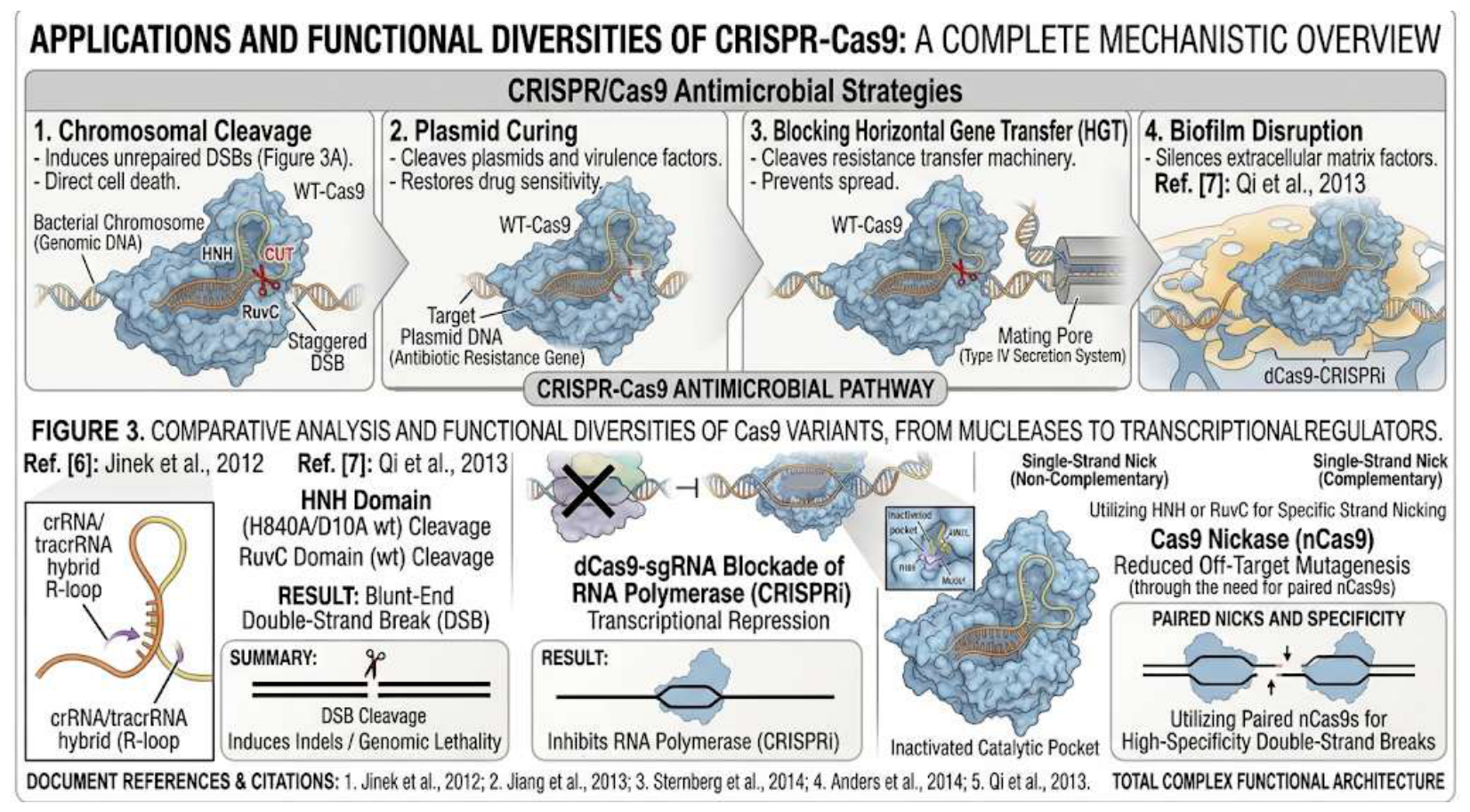
CRISPR/Cas9 platforms offer versatile strategies to eliminate resistance mechanisms, re-sensitize pathogens, and suppress gene transfer [1,30,31].
Figure 4.
Primary modalities for targeting bacterial resistance with CRISPR/Cas9.
3.1. Direct Chromosomal Cleavage and Bacterial Autolysis
Unlike eukaryotic organisms, most bacteria lack robust non-homologous end joining (NHEJ) repair systems [28,30]. Consequently, when Cas9 generates a double-strand break (DSB) within a chromosomal locus, the bacterial cell cannot easily repair the damaged DNA [30,32]. Chromosomal cleavage triggers rapid genomic degradation by endogenous exonucleases, causing cell death [30,32]. Targeting essential survival genes or chromosomally integrated antibiotic resistance genes thus functions as a sequence-specific bactericidal agent [32,33].
3.2. Plasmid Curing and Re-Sensitization
Many clinically relevant resistance determinants—such as extended-spectrum $\beta$-lactamases (ESBLs), carbapenemases, and colistin resistance markers—are encoded on multi-copy extrachromosomal plasmids [30,34,35]. Programming CRISPR/Cas9 to target plasmid-specific sequences induces plasmid linearization and subsequent degradation by host nucleases, a process called “plasmid curing” [34,35]. Curing these resistance vectors strips the host bacteria of their defense mechanisms, restoring sensitivity to conventional antibiotic therapies without harming the host cell [34,35,36].
3.3. Interruption of Horizontal Gene Transfer (HGT)
Horizontal gene transfer (HGT) via conjugation, transformation, and transduction drives the rapid global spread of multidrug resistance across diverse bacterial populations [30,34]. By targeting shared plasmid backbones, transposons, or insertion sequences involved in conjugation, CRISPR/Cas9 platforms can cleave these mobile elements during transfer [34,37]. This intervention blocks the dissemination of resistance factors across both pathogenic strains and commensal microflora [34,37].
3.4. Biofilm Disruption and Virulence Attenuation
Bacterial biofilms present a major clinical obstacle, creating protective matrices that reduce antibiotic penetration and shield pathogens from host immune responses [30,38]. CRISPR/Cas9 and dCas9 (CRISPRi) platforms can be targeted to key genes involved in biofilm matrix synthesis, quorum sensing, and virulence factor expression [30,38]. Suppressing these pathways disrupts biofilm structure, renders bacteria planktonic, and restores susceptibility to both host immune defenses and standard antibiotic treatments [30,38].
4. Targeted Resistance Genes Across Major Pathogens
CRISPR/Cas9 technology has been deployed against a wide array of resistance targets in both Gram-positive and Gram-negative pathogens [1,30,39].

Table 1.
Summary of CRISPR/Cas9 targets, host pathogens, and therapeutic outcomes across clinical AMR strains.
Table 1.
Summary of CRISPR/Cas9 targets, host pathogens, and therapeutic outcomes across clinical AMR strains.
| Host Pathogen | Targeted Resistance Determinants | Resistance Mechanism | Phenotypic and Clinical Impact | Primary References |
|---|---|---|---|---|
| Staphylococcus aureus (MRSA) | mecA, aacA-aphD, grlA, grlB | Penicillin-binding protein 2a (PBP2a), aminoglycoside modification, fluoroquinolone mutations | Restores sensitivity to $\beta$-lactams, aminoglycosides, and fluoroquinolones; induces strain-specific autolysis. | [18,39,40,41] |
| Enterococcus faecalis / E. faecium (VRE) | vanA, vanB gene clusters | Cell wall peptidoglycan precursor modification | Cures vancomycin resistance plasmids; eliminates VRE colonisation in intestinal models. | [42,48,49] |
| Streptococcus pneumoniae | erm(B), mef(A/E), mutated pbp2b/2x | Ribosomal methylation, efflux pumps, altered penicillin-binding proteins | Reverses macrolide and $\beta$-lactam resistance; reduces systemic colonization. | [43,50] |
| Escherichia coli | blaCTX-M, blaSHV, blaTEM, mcr-1 to mcr-10 | Extended-spectrum $\beta$-lactamases, phosphoethanolamine transferase | Neutralizes ESBL activity; reverses colistin resistance; cures conjugative resistance plasmids. | [7,51,52] |
| Klebsiella pneumoniae | blaKPC, blaNDM, blaOXA-48, blaVIM | Carbapenem hydrolyzing $\beta$-lactamase enzymes | Cleaves carbapenemase plasmids; re-sensitizes MDR strains to carbapenems in vitro and in vivo. | [3,4,35,53] |
| Pseudomonas aeruginosa | blaVIM, blaIMP, mexAB-oprM, mexCD-oprJ | Metalloproteinases, multidrug efflux pump systems | Suppresses efflux pump activity; increases intracellular drug retention; restores carbapenem sensitivity. | [1,31,54] |
| Acinetobacter baumannii | blaOXA-23, blaOXA-24, adeABC cluster | Class D carbapenemases, resistance-nodulation-division (RND) efflux | Reverses carbapenem resistance; lowers minimum inhibitory concentrations (MICs) across clinical isolates. | [30,32,55] |
| Mycobacterium tuberculosis | katG, rpoB, gyrA, rrs, eis loci | Mutations altering catalase-peroxidase, RNA polymerase, DNA gyrase, and rRNA | Restores sensitivity to isoniazid, rifampicin, fluoroquinolones, and aminoglycosides. | [1,40,56] |
5. Delivery Systems for Bacterial CRISPR/Cas9 Therapeutics
The clinical application of CRISPR/Cas9 as an antimicrobial relies heavily on the development of safe and efficient delivery vehicles capable of introducing the Cas9 protein and guide RNA into target bacterial cells [1,36,46].
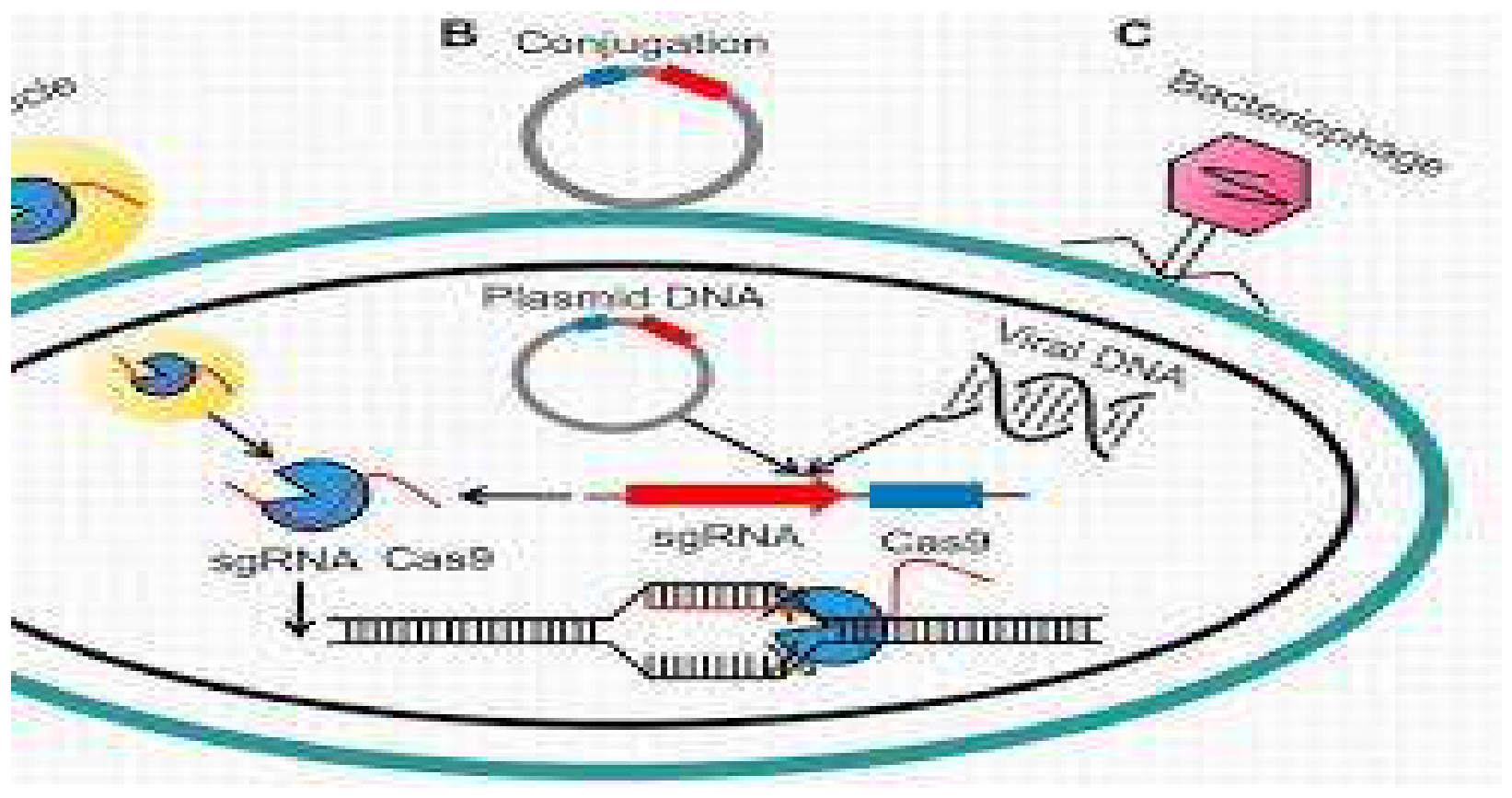
Figure 5.
Overview of primary delivery modalities for bacterial CRISPR systems(103).
5.1. Bacteriophage-Mediated Vector Delivery (Phagemids)
Engineered bacteriophages (phagemids) represent one of the most effective methods for delivering CRISPR components into target bacteria [36,42]. Phagemids combine phage capsids with plasmid vectors containing CRISPR sequences [36,72].
5.2. Conjugative Plasmid Transfer Systems
Conjugative plasmids leverage natural bacterial conjugation machinery to spread CRISPR constructs through dense bacterial communities, such as those found in gut microbiota or bio-films [74,88].
5.3. Nanoparticle and Non-Viral Delivery Systems
Synthetic nanocarriers—including lipid nanoparticles (LNPs), polymeric nanoparticles, and gold nanoparticles—offer a non-viral strategy for delivering CRISPR RNPs or plasmids [4,75,80].
5.4. Engineered Probiotic Living Therapeutics
Synthetic biology allows for the engineering of harmless commensal bacteria (e.g., Escherichia coli Nissle 1917, Lactobacillus spp.) to serve as live therapeutic delivery vehicles [76,81].
Table 2.
Comparative assessment of primary CRISPR delivery modalities in bacterial applications.
| Delivery Category | Core Mechanisms of Entry |
Primary Advantages |
Critical Limitations |
Current Level of Validation | Primary References |
|---|---|---|---|---|---|
| Bacteriophage Vectors (Phagemids) | Receptor-mediated viral DNA injection | High cell-entry efficiency; strong strain selectivity; natural infection pathways | Narrow host range; potential neutralizing immune response; risk of lysogenic integration | Advanced in vivo animal models | [36,42,72,79] |
| Conjugative Plasmids | Direct cell-to-cell mating bridge transfer | Capable of spreading through dense bacterial communities in situ | Variable conjugation rates; risk of off-target transfer to commensals | Preclinical in vivo gut models | [74,88] |
| Synthetic Nanoparticles (LNPs/Polymers) | Membrane fusion, endocytosis, or physical pore penetration | Protects payload from degradation; low immunogenicity; biofilm penetration | High production costs; potential carrier toxicity; challenges in targeted selectivity | Preclinical in vitro and animal models | [4,75,80,83] |
| Engineered Probiotics | Continuous in situ production and conjugative transfer | Long-term colonization; localized release within target host niches | Biocontainment risks; complex regulatory approval path for live GMOs | In vitro and preliminary in vivo models | [76,81] |
6. Biological, Ecological, and Translational Risks
While CRISPR/Cas9 therapeutics offer significant promise, several biological, ecological, and translational challenges must be addressed prior to clinical implementation [5,87,89].
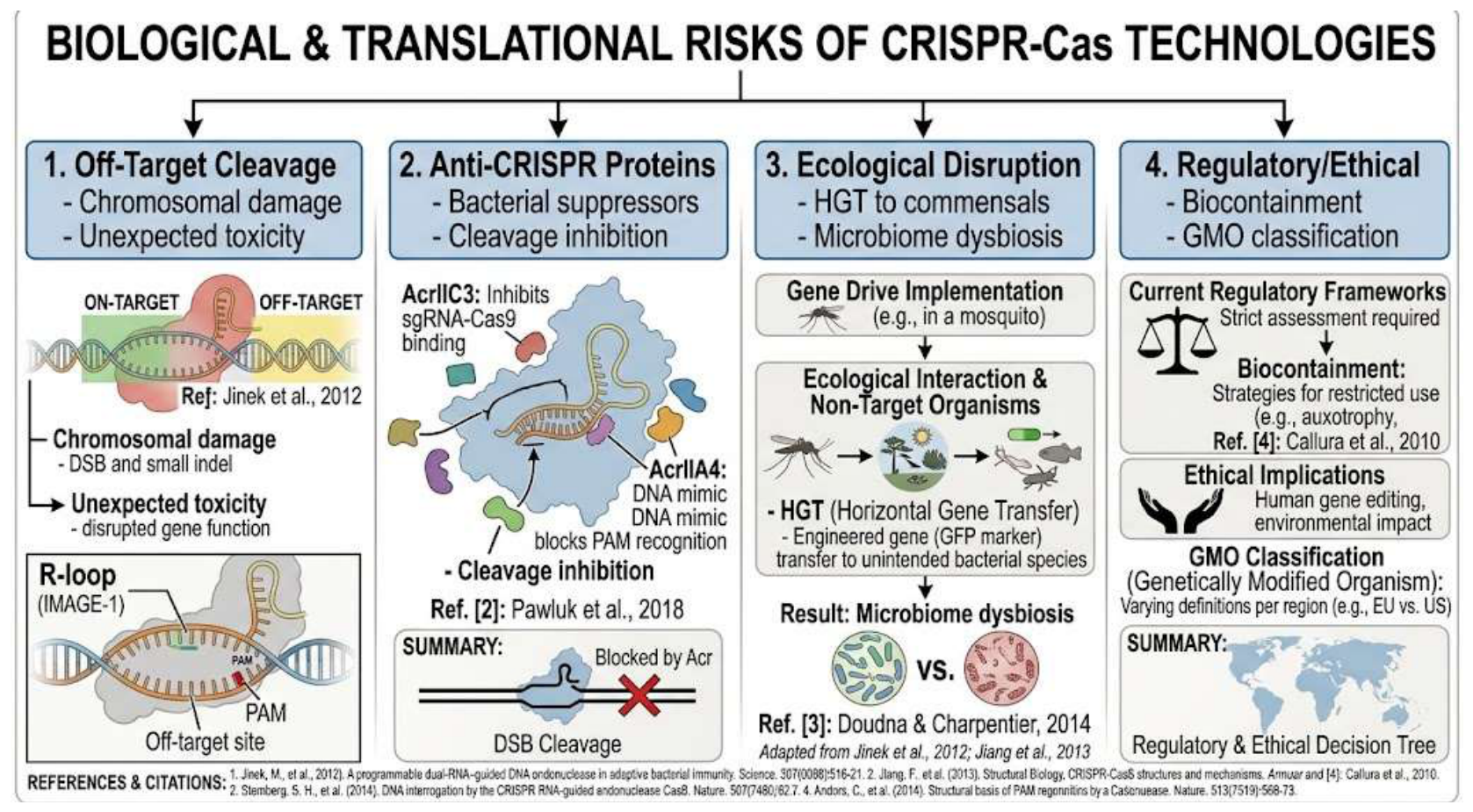
Figure 6.
Major risk categories associated with clinical and environmental deployment of CRISPR antimicrobials.
Figure 6.
Major risk categories associated with clinical and environmental deployment of CRISPR antimicrobials.
6.1. Off-Target Effects and Genomic Instability
Although CRISPR/Cas9 is highly sequence-specific, non-specific binding and cleavage can occur at genomic sites displaying sequence similarity to the target sgRNA [62,65,69]. Off-target cleavage in host bacterial genomes can lead to unintended mutations, rearrangements, or altered phenotypic behaviors [65,66]. When applied in human or animal host tissues, off-target editing of host eukaryotic DNA must be strictly avoided [69,70]. Implementing high-fidelity Cas9 variants (e.g., SpCas9-HF1, eSpCas9) and carefully designing sgRNAs using computational algorithms can reduce off-target cleavage events [66,99].
6.2. Bacterial Resistance to CRISPR and Anti-CRISPR (Acr) Proteins
Bacteria possess diverse evolutionary mechanisms to resist CRISPR-mediated targeting [53,86]. Single point mutations within the protospacer or adjacent PAM region can abolish sgRNA binding, enabling escape mutants to rapidly emerge under selection pressure [53,97]. Additionally, many bacteriophages and mobile genetic elements encode anti-CRISPR (Acr) proteins [53,86]. These small proteins physically bind to Cas9 or block sgRNA association, completely neutralizing cleavage activity [53,86]. Overcoming Acr-mediated inhibition and managing escape mutations are critical considerations for durable therapy design [53,86].
6.3. Ecological Impacts and Off-Target Microbiome Disruption
Deploying CRISPR antimicrobials in vivo carries potential risks for native commensal microbial communities [58,63,87]. If delivery vectors transfer CRISPR constructs to non-target beneficial bacteria, off-target genomic cleavage or plasmid curing could alter microbiome composition, potentially causing dysbiosis [58,63,97]. Furthermore, releasing engineered gene drive systems or live GMOs into natural environments raises concerns regarding unpredictable gene transfer and long-term ecosystem disruption [59,63,101].
6.4. Regulatory, Manufacturing, and Ethical Frameworks
The clinical translation of CRISPR-based therapeutics faces complex regulatory and manufacturing hurdles [58,67,68]. Classifying these therapies—whether as biological drugs, gene therapies, or live biotherapeutic products—requires establishing standardized frameworks for clinical evaluation, safety testing, and quality control [67,68,71]. Mass production of high-purity phagemids or nanoparticles under Good Manufacturing Practice (GMP) standards remains a key technical challenge [46,70]. In addition, public perception and regulatory oversight surrounding genetically modified organisms (GMOs) require robust biosafety containment strategies to prevent unintended environmental release [58,67,68].
Table 3.
Risk factors, underlying mechanisms, and potential mitigation strategies for CRISPR/Cas9 therapeutic translation.
Table 3.
Risk factors, underlying mechanisms, and potential mitigation strategies for CRISPR/Cas9 therapeutic translation.
| Identified Risk Domain | Primary Underlying Mechanism | Clinical & Ecological Implications | Proposed Mitigation Strategies |
Primary References |
|---|---|---|---|---|
| Off-Target Cleavage | Mismatched binding of sgRNA to unintended genomic loci | Unintended mutations; cell toxicity; unpredictable genetic alterations | Use high-fidelity Cas9 variants (SpCas9-HF1); optimize sgRNA design using AI modeling | [65,66,69,99] |
| Bacterial Escape Mutants | Point mutations in target protospacer or PAM site | Re-emergence of resistant bacterial sub-populations under selection | Deploy multiplexed sgRNAs targeting multiple conserved genes simultaneously | [53,97,100] |
| Anti-CRISPR (Acr) Inhibition | Phage-encoded Acr proteins bind Cas9 and block nuclease function | Loss of CRISPR therapeutic activity in Acr-expressing strains | Engineer Cas9 variants that evade Acr binding; combine CRISPR with non-Cas adjuvants | [53,86] |
| Microbiome Dysbiosis | Unintended delivery and cleavage in beneficial commensal strains | Disruption of gut microflora; secondary infections (e.g., Clostridioides difficile) | Use narrow-spectrum phage vectors; implement strain-specific promoters | [58,63,87,97] |
| Environmental GMO Escape | Uncontrolled transfer of engineered delivery vectors to wild strains | Unpredictable ecological shifts; spread of modified genetic constructs | Implement synthetic kill switches; utilize non-replicative phagemids | [58,63,68,81] |
7. Synergistic Integrations and Advanced Emerging Technologies
Combining CRISPR/Cas9 with complementary biotechnologies offers new avenues for improving delivery efficiency, reducing resistance, and enhancing therapeutic efficacy [4,91,95].
7.1. Nanotechnology-Enhanced Delivery Systems
Combining CRISPR constructs with inorganic or organic nanoparticles improves therapeutic delivery into challenging biological environments [4,75,91]. Encapsulating Cas9–sgRNA complexes within functionalized lipid nanoparticles or polymeric vectors protects the payload from enzymatic degradation, enhances cellular uptake, and improves penetration through thick bacterial biofilms [4,75,92]. Functionalizing nanoparticle surfaces with targeted ligands or antibodies allows for selective binding to specific bacterial surface antigens, minimizing non-target uptake [4,80,91].
7.2. Multiplexed Single-Guide RNA Strategies
Deploying single sgRNAs leaves therapeutic systems vulnerable to escape mutations [93,100]. Multiplexed CRISPR platforms address this limitation by expressing multiple sgRNAs simultaneously from a single transcript [93,94]. By targeting several distinct resistance genes or combining resistance target genes with essential chromosomal loci, multiplexed systems dramatically reduce the likelihood of bacterial escape, as acquiring simultaneous mutations across multiple target sites is extraordinarily rare [93,94,100].
7.3. Synthetic Biology and Live Probiotic Therapeutics
Integrating CRISPR/Cas9 into synthetic biology circuits enables the creation of intelligent, responsive live therapeutics [76,81]. Commensal bacteria can be engineered with inducible promoters that trigger the production and conjugative transfer of CRISPR platforms only in the presence of specific pathogen signals or inflammation markers [76,81]. Incorporating synthetic kill switches ensures that engineered probiotics self-destruct once their therapeutic objective is complete, providing strict biocontainment [76,81].
7.4. Combination Therapies with Antimicrobial Peptides (AMPs)
Co-administering CRISPR/Cas9 platforms with antimicrobial peptides (AMPs) creates a powerful multi-stage therapeutic effect [91,95]. AMPs permeabilize the bacterial outer and inner membranes, facilitating the entry of CRISPR delivery vectors (e.g., phagemids or nanoparticles) into the target cell [91,95]. Simultaneously, CRISPR-mediated plasmid curing or gene knockout restores sensitivity to co-administered traditional antibiotics or the AMPs themselves, resulting in synergistic antimicrobial activity [91,95,96].
8. Strategic Roadmap for Clinical and Translational Implementation
Transitioning CRISPR-based antimicrobials from preclinical research to routine clinical practice requires a systematic, phased implementation roadmap [46,89,97].
Target Identification & In Silico Optimization: Utilize high-throughput genomic sequencing and bioinformatic pipelines to select conserved, high-impact target sequences across pathogenic strains while screening for potential off-target matches in host human genomes [89,96].
9. Conclusion
CRISPR/Cas9 technology represents a transformative frontier in the fight against bacterial antimicrobial resistance. By enabling precise, sequence-specific targeting of antibiotic resistance determinants, mobile genetic elements, and essential chromosomal genes, CRISPR platforms offer a powerful alternative to traditional broad-spectrum antibiotics. The ability to cure resistance plasmids, prevent horizontal gene transfer, disrupt biofilms, and re-sensitize MDR pathogens while preserving beneficial commensal microflora addresses key limitations of current antimicrobial strategies.
However, realizing the full translational potential of CRISPR/Cas9 antimicrobials requires addressing critical challenges, including delivery vector efficiency, bacterial anti-CRISPR defenses, off-target effects, and complex regulatory considerations. Continued interdisciplinary collaboration combining gene editing, nanotechnology, synthetic biology, and clinical microbiology will be essential to overcome these hurdles. With sustained innovation and careful safety evaluation, CRISPR/Cas9 platforms hold immense promise as next-generation precision antimicrobials to combat the global burden of drug-resistant bacterial infections.
Author Contributions
MG: Writing-original draft, writing-review, conceptualization, investigation and editing. All authors read and approve the manuscript for publication.
Funding
This research received no external funding.
Institutional Review Board Statement
Not applicable.
Informed Consent Statement
Not applicable.
Data Availability Statement
The original contributions presented in this study are included in the article. Further inquiries can be directed to the corresponding author.
Conflicts of Interest
The author declares no conflicts of interest.
References
- Tavakoli, K.; Pour-Aboughadareh, A.; Kianersi, F.; Poczai, P.; Etminan, A.; Shooshtari, L. Applications of CRISPR-Cas9 as an advanced genome editing system in life sciences. BioTech 2021, 10, 14. [Google Scholar] [CrossRef] [PubMed]
- Hibstu, Z.; Belew, H.; Akelew, Y.; Mengist, H.M. Phage Therapy: A Different Approach to Fight Bacterial Infections. Biol. Targets Ther. 2022, ume 16, 173–186. [Google Scholar] [CrossRef] [PubMed]
- Javed, M.U.; Hayat, M.T.; Mukhtar, H.; Imre, K. CRISPR-Cas9 System: A Prospective Pathway toward Combatting Antibiotic Resistance. Antibiotics 2023, 12, 1075. [Google Scholar] [CrossRef] [PubMed]
- Wan, F.; Draz, M.S.; Gu, M.; Yu, W.; Ruan, Z.; Luo, Q. Novel Strategy to Combat Antibiotic Resistance: A Sight into the Combination of CRISPR/Cas9 and Nanoparticles. Pharmaceutics 2021, 13, 352. [Google Scholar] [CrossRef] [PubMed]
- Ahmed, M.M.; Kayode, H.H.; Okesanya, O.J.; Ukoaka, B.M.; Eshun, G.; Mourid, M.R.; Adigun, O.A.; Ogaya, J.B.; Mohamed, Z.O.; Lucero-Prisno, D. CRISPR-Cas Systems in the Fight Against Antimicrobial Resistance: Current Status, Potentials, and Future Directions. Infect. Drug Resist. 2024, ume 17, 5229–5245. [Google Scholar] [CrossRef] [PubMed]
- Lee, H.; Sashital, D.G. Creating memories: molecular mechanisms of CRISPR adaptation. Trends Biochem. Sci. 2022, 47, 464–476. [Google Scholar] [CrossRef] [PubMed]
- Lee, D.; Muir, P.; Lundberg, S.; Lundholm, A.; Sandegren, L.; Koskiniemi, S. A CRISPR-Cas9 system protecting E. coli against acquisition of antibiotic resistance genes. Sci. Rep. 2025, 15, 1–10. [Google Scholar] [CrossRef] [PubMed]
- Hossain, M.A. CRISPR-Cas9: A fascinating journey from bacterial immune system to human gene editing; Elsevier, 2021; pp. 63–83. [Google Scholar] [CrossRef] [PubMed]
- Hu, C.; Almendros, C.; Nam, K.H.; Costa, A.R.; Vink, J.N.A.; Haagsma, A.C.; Bagde, S.R.; Brouns, S.J.J.; Ke, A. Mechanism for Cas4-assisted directional spacer acquisition in CRISPR–Cas. Nature 2021, 598, 515–520. [Google Scholar] [CrossRef] [PubMed]
- Saeed, K.; Ayub, F.; Durrani, M.A.; Mujahid, M. CRISPR Cas systems: From bacterial defense mechanisms to revolutionary tools reshaping genetic research and translation therapeutics. Microbe 2025, 7. [Google Scholar] [CrossRef]
- Charpentier, E.; Richter, H.; van der Oost, J.; White, M.F. Biogenesis pathways of RNA guides in archaeal and bacterial CRISPR-Cas adaptive immunity. FEMS Microbiol. Rev. 2015, 39, 428–441. [Google Scholar] [CrossRef] [PubMed]
- Abbas, S.; Saeed, A.; Bibi, M.; Perveen, S.; Masood, N. CRISPR-Cas: From bacterial immunity to precision genome engineering. Gene Rep. 2025, 40. [Google Scholar] [CrossRef]
- Newsom, S.; Parameshwaran, H.P.; Martin, L.; Rajan, R. The CRISPR-Cas Mechanism for Adaptive Immunity and Alternate Bacterial Functions Fuels Diverse Biotechnologies. Front. Cell. Infect. Microbiol. 2021, 10. [Google Scholar] [CrossRef] [PubMed]
- Llargués-Sistac, G.; Bonjoch, L.; Castellvi-Bel, S. HAP1, a new revolutionary cell model for gene editing using CRISPR-Cas9. Front. Cell Dev. Biol. 2023, 11, 1111488. [Google Scholar] [CrossRef] [PubMed]
- Zhang, M.-L.; Li, H.-B.; Jin, Y. Application and perspective of CRISPR/Cas9 genome editing technology in human diseases modeling and gene therapy. Front. Genet. 2024, 15, 1364742. [Google Scholar] [CrossRef] [PubMed]
- Bendixen, L.; Jensen, T.I.; Bak, R.O. CRISPR-Cas-mediated transcriptional modulation: The therapeutic promises of CRISPRa and CRISPRi. Mol. Ther. 2023, 31, 1920–1937. [Google Scholar] [CrossRef] [PubMed]
- Shabbir, M.A.B.; Shabbir, M.Z.; Wu, Q.; Mahmood, S.; Sajid, A.; Maan, M.K.; Ahmed, S.; Naveed, U.; Hao, H.; Yuan, Z. CRISPR-cas system: biological function in microbes and its use to treat antimicrobial resistant pathogens. Ann. Clin. Microbiol. Antimicrob. 2019, 18, 1–9. [Google Scholar] [CrossRef] [PubMed]
- Gründling, A.; Ji, Q.; Salipante, S.J. Using CRISPR–Cas9-Based Methods for Genome Editing inStaphylococcus aureus. Cold Spring Harb. Protoc. 2023, 2024. [Google Scholar] [CrossRef] [PubMed]
- Hofmann, R.; Herman, C.; Mo, C.Y.; Mathai, J.; Marraffini, L.A. Deep mutational scanning identifies Cas1 and Cas2 variants that enhance type II-A CRISPR-Cas spacer acquisition. Nat. Commun. 2025, 16, 1–13. [Google Scholar] [CrossRef] [PubMed]
- Barrangou, R.; Marraffini, L.A. CRISPR-Cas Systems: Prokaryotes Upgrade to Adaptive Immunity. Mol. Cell 2014, 54, 234–244. [Google Scholar] [CrossRef] [PubMed]
- Hille, F.; Charpentier, E. CRISPR-Cas: biology, mechanisms and relevance. Philos. Trans. R. Soc. B Biol. Sci. 2016, 371, 20150496. [Google Scholar] [CrossRef] [PubMed]
- Omachi, K.; Miner, J.H. Comparative analysis of dCas9-VP64 variants and multiplexed guide RNAs mediating CRISPR activation. PLoS ONE 2022, 17, e0270008. [Google Scholar] [CrossRef] [PubMed]
- Javaid, N.; Pham, T.L.H.; Choi, S. Functional Comparison between VP64-dCas9-VP64 and dCas9-VP192 CRISPR Activators in Human Embryonic Kidney Cells. Int. J. Mol. Sci. 2021, 22, 397. [Google Scholar] [CrossRef] [PubMed]
- Chavez, A.; Tuttle, M.; Pruitt, B.W.; Ewen-Campen, B.; Chari, R.; Ter-Ovanesyan, D.; Haque, S.J.; Cecchi, R.J.; Kowal, E.J.K.; Buchthal, J.; et al. Comparison of Cas9 activators in multiple species. Nat. Methods 2016, 13, 563–567. [Google Scholar] [CrossRef] [PubMed]
- Fu, Y.; Yang, X.; Li, S.; Ma, C.; An, Y.; Cheng, T.; Liang, Y.; Sun, S.; Cheng, T.; Zhao, Y.; et al. Dynamic properties of transcriptional condensates modulate CRISPRa-mediated gene activation. Nat. Commun. 2025, 16, 1–19. [Google Scholar] [CrossRef] [PubMed]
- Cai, R.; Lv, R.; Shi, X.; Yang, G.; Jin, J. CRISPR/dCas9 Tools: Epigenetic Mechanism and Application in Gene Transcriptional Regulation. Int. J. Mol. Sci. 2023, 24, 14865. [Google Scholar] [CrossRef] [PubMed]
- Khurana, A.; Sayed, N.; Singh, V.; Khurana, I.; Allawadhi, P.; Rawat, P.S.; Navik, U.; Pasumarthi, S.K.; Bharani, K.K.; Weiskirchen, R. A comprehensive overview of CRISPR/Cas 9 technology and application thereof in drug discovery. J. Cell. Biochem. 2022, 123, 1674–1698. [Google Scholar] [CrossRef] [PubMed]
- Xue, C.; Greene, E.C. DNA Repair Pathway Choices in CRISPR-Cas9-Mediated Genome Editing. Trends Genet. 2021, 37, 639–656. [Google Scholar] [CrossRef] [PubMed]
- Chauhan, V.P.; Sharp, P.A.; Langer, R. Altered DNA repair pathway engagement by engineered CRISPR-Cas9 nucleases. Proc. Natl. Acad. Sci. 2023, 120. [Google Scholar] [CrossRef] [PubMed]
- Allemailem, K. Recent Advances in Understanding the Molecular Mechanisms of Multidrug Resistance and Novel Approaches of CRISPR/Cas9-Based Genome-Editing to Combat This Health Emergency. Int. J. Nanomed. 2024, ume 19, 1125–1143. [Google Scholar] [CrossRef] [PubMed]
- Mayorga-Ramos, A.; Zúñiga-Miranda, J.; Carrera-Pacheco, S.E.; Barba-Ostria, C.; Guamán, L.P. CRISPR-Cas-Based Antimicrobials: Design, Challenges, and Bacterial Mechanisms of Resistance. ACS Infect. Dis. 2023, 9, 1283–1302. [Google Scholar] [CrossRef] [PubMed]
- Wu, Y.; Battalapalli, D.; Hakeem, M.J.; Selamneni, V.; Zhang, P.; Draz, M.S.; Ruan, Z. Engineered CRISPR-Cas systems for the detection and control of antibiotic-resistant infections. J. Nanobiotechnology 2021, 19, 1–26. [Google Scholar] [CrossRef] [PubMed]
- Janik, E.; Niemcewicz, M.; Ceremuga, M.; Krzowski, L.; Saluk-Bijak, J.; Bijak, M. Various Aspects of a Gene Editing System—CRISPR–Cas9. Int. J. Mol. Sci. 2020, 21, 9604. [Google Scholar] [CrossRef] [PubMed]
- Olatunji, A.O.; Olaboye, J.A.; Maha, C.C.; Kolawole, T.O.; Abdul, S. Next-Generation strategies to combat antimicrobial resistance: Integrating genomics, CRISPR, and novel therapeutics for effective treatment. Eng. Sci. Technol. J. 2024, 5, 2284–2303. [Google Scholar] [CrossRef]
- Tao, S.; Chen, H.; Li, N.; Liang, W. The Application of the CRISPR-Cas System in Antibiotic Resistance. Infect. Drug Resist. 2022, ume 15, 4155–4168. [Google Scholar] [CrossRef] [PubMed]
- Khambhati, K.; Bhattacharjee, G.; Gohil, N.; Dhanoa, G.K.; Sagona, A.P.; Mani, I.; Le Bui, N.; Chu, D.; Karapurkar, J.K.; Jang, S.H.; et al. Phage engineering and phage-assisted CRISPR-Cas delivery to combat multidrug-resistant pathogens. Bioeng. Transl. Med. 2022, 8, e10381. [Google Scholar] [CrossRef] [PubMed]
- Gholizadeh, P.; Köse, Ş.; Dao, S.; Ganbarov, K.; Tanomand, A.; Dal, T.; Aghazadeh, M.; Ghotaslou, R.; Rezaee, M.A.; Yousefi, B.; et al. How CRISPR-Cas System Could Be Used to Combat Antimicrobial Resistance. Infect. Drug Resist. 2020, ume 13, 1111–1121. [Google Scholar] [CrossRef] [PubMed]
- Vaghari-Tabari, M.; Hassanpour, P.; Sadeghsoltani, F.; Malakoti, F.; Alemi, F.; Qujeq, D.; Asemi, Z.; Yousefi, B. CRISPR/Cas9 gene editing: a new approach for overcoming drug resistance in cancer. Cell. Mol. Biol. Lett. 2022, 27, 1–29. [Google Scholar] [CrossRef] [PubMed]
- Ates, A.; Tastan, C.; Ermertcan, S. Precision genome editing unveils a breakthrough in reversing antibiotic resistance: CRISPR/Cas9 targeting of multi-drug resistance genes in methicillin-resistant Staphylococcus aureus. bioRxiv. [CrossRef]
- Serajian, S.; Ahmadpour, E.; Oliveira, S.M.R.; Pereira, M.d.L.; Heidarzadeh, S. CRISPR-Cas Technology: Emerging Applications in Clinical Microbiology and Infectious Diseases. Pharmaceuticals 2021, 14, 1171. [Google Scholar] [CrossRef] [PubMed]
- Shabbir, M.A.B.; Shabbir, M.Z.; Wu, Q.; Mahmood, S.; Sajid, A.; Maan, M.K.; Ahmed, S.; Naveed, U.; Hao, H.; Yuan, Z. CRISPR-cas system: biological function in microbes and its use to treat antimicrobial resistant pathogens. Ann. Clin. Microbiol. Antimicrob. 2019, 18, 1–9. [Google Scholar] [CrossRef] [PubMed]
- Balcha, F.B.; Neja, S.A. CRISPR-Cas9 mediated phage therapy as an alternative to antibiotics. Anim. Dis. 2023, 3, 1–11. [Google Scholar] [CrossRef]
- Li, X.; Zhong, J.; Li, H.; Qiao, Y.; Mao, X.; Fan, H.; Zhong, Y.; Imani, S.; Zheng, S.; Li, J. Advances in the application of CRISPR-Cas technology in rapid detection of pathogen nucleic acid. Front. Mol. Biosci. 2023, 10, 1260883. [Google Scholar] [CrossRef] [PubMed]
- Agha, A.S.A.; Al-Samydai, A.; Aburjai, T. New frontiers in CRISPR: Addressing antimicrobial resistance with Cas9, Cas12, Cas13, and Cas14. Heliyon 2025, 11, e42013. [Google Scholar] [CrossRef] [PubMed]
- Al-Ouqaili, M.T.S.; Ahmad, A.; Jwair, N.A.; Al-Marzooq, F. Harnessing bacterial immunity: CRISPR-Cas system as a versatile tool in combating pathogens and revolutionizing medicine. Front. Cell. Infect. Microbiol. 2025, 15, 1588446. [Google Scholar] [CrossRef] [PubMed]
- Khoshandam, M.; Soltaninejad, H.; Mousazadeh, M.; Hamidieh, A.A.; Hosseinkhani, S. Clinical applications of the CRISPR/Cas9 genome-editing system: Delivery options and challenges in precision medicine. Genes Dis. 2024, 11, 268–282. [Google Scholar] [CrossRef] [PubMed]
- Ates, A.; Tastan, C.; Ermertcan, S. CRISPR-Cas9-Mediated Targeting of Multidrug Resistance Genes in Methicillin-Resistant Staphylococcus aureus. Cris. J. 2024, 7, 374–384. [Google Scholar] [CrossRef] [PubMed]
- Moitra, A.; Chakraborty, A.; Dam, B. CRISPR-Cas9 system: A potent tool to fight antibiotic resistance in bacteria. Microbe 2024, 5. [Google Scholar] [CrossRef]
- Tao, S.; Hu, C.; Fang, Y.; Zhang, H.; Xu, Y.; Zheng, L.; Chen, L.; Liang, W. Targeted elimination of Vancomycin resistance gene vanA by CRISPR-Cas9 system. BMC Microbiol. 2023, 23, 1–7. [Google Scholar] [CrossRef] [PubMed]
- Schroeder, M.R.; Lohsen, S.; Chancey, S.T.; Stephens, D.S. High-Level Macrolide Resistance Due to the Mega Element [mef(E)/mel] in Streptococcus pneumoniae. Front. Microbiol. 2019, 10, 868. [Google Scholar] [CrossRef] [PubMed]
- Wan, P.; Cui, S.; Ma, Z.; Chen, L.; Li, X.; Zhao, R.; Xiong, W.; Zeng, Z. Reversal of mcr-1-Mediated Colistin Resistance in Escherichia coli by CRISPR-Cas9 System. Infect. Drug Resist. 2020, ume 13, 1171–1178. [Google Scholar] [CrossRef] [PubMed]
- Nittayasut, N.; Yata, T.; Chirakul, S.; Techakriengkrai, N.; Chanchaithong, P. Non-replicative phage particles delivering CRISPR-Cas9 to target major blaCTX-M variants. PLoS ONE 2024, 19, e0303555. [Google Scholar] [CrossRef] [PubMed]
- Kadkhoda, H.; Gholizadeh, P.; Kafil, H.S.; Ghotaslou, R.; Pirzadeh, T.; Rezaee, M.A.; Nabizadeh, E.; Feizi, H.; Aghazadeh, M. Role of CRISPR-Cas systems and anti-CRISPR proteins in bacterial antibiotic resistance. Heliyon 2024, 10, e34692. [Google Scholar] [CrossRef] [PubMed]
- Qadri, H.; Shah, A.H.; Mir, M. Novel Strategies to Combat the Emerging Drug Resistance in Human Pathogenic Microbes. Curr. Drug Targets 2021, 22, 1424–1436. [Google Scholar] [CrossRef] [PubMed]
- Tao, S.; Chen, H.; Li, N.; Liang, W. The Application of the CRISPR-Cas System in Antibiotic Resistance. Infect. Drug Resist. 2022, ume 15, 4155–4168. [Google Scholar] [CrossRef] [PubMed]
- Zhang, H.; Cheng, Q.-X.; Liu, A.-M.; Zhao, G.-P.; Wang, J. A Novel and Efficient Method for Bacteria Genome Editing Employing both CRISPR/Cas9 and an Antibiotic Resistance Cassette. Front. Microbiol. 2017, 8, 812. [Google Scholar] [CrossRef] [PubMed]
- Hartenian, E.; Doench, J.G. Genetic screens and functional genomics using CRISPR/Cas9 technology. FEBS J. 2015, 282, 1383–1393. [Google Scholar] [CrossRef] [PubMed]
- Ayanoğlu, F.B.; ELÇİN, A.E.; ELÇİN, Y.M. Bioethical issues in genome editing by CRISPR-Cas9 technology. Turk. J. Biol. 2020, 44, 110–120. [Google Scholar] [CrossRef] [PubMed]
- Zentner, G.E.; Wade, M.J. The promise and peril of CRISPR gene drives: genetic variation and inbreeding may impede the propagation of gene drives based on the CRISPR genome editing technology. BioEssays. [CrossRef] [PubMed]
- Gan, W.C.; Ling, A.P. CRISPR/Cas9 in plant biotechnology: applications and challenges. BioTechnologia 2022, 103, 81–93. [Google Scholar] [CrossRef] [PubMed]
- Salib, A.; Cayabyab, F.; Yoshihara, E. Stem cell-derived islets for type 2 diabetes. Int. J. Mol. Sci. 2022, 23(9). [Google Scholar] [CrossRef] [PubMed]
- Hahn, F.; Nekrasov, V. CRISPR/Cas precision: do we need to worry about off-targeting in plants? Plant Cell Rep. 2019, 38, 437–441. [Google Scholar] [CrossRef] [PubMed]
- Esvelt, K.M.; Gemmell, N.J. Conservation demands safe gene drive. PLoS Biol. 2017, 15, e2003850–e2003850. [Google Scholar] [CrossRef] [PubMed]
- Garrood, W.T.; Kranjc, N.; Petri, K.; Kim, D.Y.; Guo, J.A.; Hammond, A.M.; Morianou, I.; Pattanayak, V.; Joung, J.K.; Crisanti, A.; et al. Analysis of off-target effects in CRISPR-based gene drives in the human malaria mosquito. Proc. Natl. Acad. Sci. 2021, 118. [Google Scholar] [CrossRef] [PubMed]
- Guo, C.; Ma, X.; Gao, F.; Guo, Y. Off-target effects in CRISPR/Cas9 gene editing. Front. Bioeng. Biotechnol. 2023, 11, 1143157. [Google Scholar] [CrossRef] [PubMed]
- Asmamaw Mengstie, M.; Teshome Azezew, M.; Asmamaw Dejenie, T.; Teshome, A.A.; Tadele Admasu, F.; Behaile Teklemariam, A.; et al. Recent advancements in reducing the off-target effect of CRISPR-Cas9 genome editing. Biol. Targets Ther. 2024, 18, 21–28. [Google Scholar] [CrossRef] [PubMed]
- Brokowski, C.; Adli, M. CRISPR Ethics: Moral Considerations for Applications of a Powerful Tool. J. Mol. Biol. 2019, 431, 88–101. [Google Scholar] [CrossRef] [PubMed]
- Fatollahi Arani, S.; Zeinoddini, M. Gene editing: biosecurity challenges and risks. J. Police Med. 2023, 12(1), 1–19. [Google Scholar] [CrossRef]
- Tao, J.; Bauer, D.E.; Chiarle, R. Assessing and advancing the safety of CRISPR-Cas tools: from DNA to RNA editing. Nat. Commun. 2023, 14, 1–16. [Google Scholar] [CrossRef] [PubMed]
- Ewaisha, R.; Anderson, K.S. Immunogenicity of CRISPR therapeutics—Critical considerations for clinical translation. Front. Bioeng. Biotechnol. 2023, 11, 1138596. [Google Scholar] [CrossRef] [PubMed]
- Shahid, A.; Zahra, A.; Aslam, S.; Shamim, A.; Ali, W.R.; Aslam, B.; Khan, S.H.; Arshad, M.I. Appraisal of CRISPR Technology as an Innovative Screening to Therapeutic Toolkit for Genetic Disorders. Mol. Biotechnol. 2025, 68, 71–94. [Google Scholar] [CrossRef] [PubMed]
- Citorik, R.J.; Mimee, M.; Lu, T.K. Sequence-specific antimicrobials using efficiently delivered RNA-guided nucleases. Nat. Biotechnol. 2014, 32, 1141–1145. [Google Scholar] [CrossRef] [PubMed]
- Bikard, D.; Euler, C.W.; Jiang, W.; Nussenzweig, P.M.; Goldberg, G.W.; Duportet, X.; A Fischetti, V.; A Marraffini, L. Exploiting CRISPR-Cas nucleases to produce sequence-specific antimicrobials. Nat. Biotechnol. 2014, 32, 1146–1150. [Google Scholar] [CrossRef] [PubMed]
- Rodrigues, M.; McBride, S.W.; Hullahalli, K.; Palmer, K.L.; Duerkop, B.A. Conjugative Delivery of CRISPR-Cas9 for the Selective Depletion of Antibiotic-Resistant Enterococci. Antimicrob. Agents Chemother. 2019, 63. [Google Scholar] [CrossRef] [PubMed]
- Yu, M.; Liu, X.; Cheng, H.; Kuang, L.; Zhang, S.; Yan, X. Latest progress in the study of nanoparticle-based delivery of the CRISPR/Cas9 system. Methods 2021, 194, 48–55. [Google Scholar] [CrossRef] [PubMed]
- Cruz, K.C.P.; Enekegho, L.O.; Stuart, D.T. Bioengineered Probiotics: Synthetic Biology Can Provide Live Cell Therapeutics for the Treatment of Foodborne Diseases. Front. Bioeng. Biotechnol. 2022, 10, 890479. [Google Scholar] [CrossRef] [PubMed]
- Lei, L.; Pan, W.; Shou, X.; Shao, Y.; Ye, S.; Zhang, J.; Kolliputi, N.; Shi, L. Nanomaterials-assisted gene editing and synthetic biology for optimizing the treatment of pulmonary diseases. J. Nanobiotechnology 2024, 22, 1–29. [Google Scholar] [CrossRef] [PubMed]
- Qi, L.S.; Larson, M.H.; Gilbert, L.A.; Doudna, J.A.; Weissman, J.S.; Arkin, A.P.; Lim, W.A. Repurposing CRISPR as an RNA-guided platform for sequence-specific control of gene expression. Cell Correction in Cell 2021, 184, 844, https://doi.org/10.1016/j.cell.2021.01.019.. 2013, 152, 1173–1183. [Google Scholar] [CrossRef] [PubMed]
- Fage, C.; Lemire, N.; Moineau, S. Delivery of CRISPR-Cas systems using phage-based vectors. Curr. Opin. Biotechnol. 2021, 68, 174–180. [Google Scholar] [CrossRef] [PubMed]
- Wan, F.; Draz, M.S.; Gu, M.; Yu, W.; Ruan, Z.; Luo, Q. Novel Strategy to Combat Antibiotic Resistance: A Sight into the Combination of CRISPR/Cas9 and Nanoparticles. Pharmaceutics 2021, 13, 352. [Google Scholar] [CrossRef] [PubMed]
- Ma, J.; Lyu, Y.; Liu, X.; Jia, X.; Cui, F.; Wu, X.; et al. Engineered probiotics as living therapeutics. Microb. Cell Fact. Correction in Microb Cell Fact. 2022;21(1):93. https://doi.org/10.1186/s12934-022-01820-6.. 2022, 21(1), 72. [Google Scholar] [CrossRef] [PubMed]
- Müller, V.; Rajer, F.; Frykholm, K.; Nyberg, L.K.; Quaderi, S.; Fritzsche, J.; Kristiansson, E.; Ambjörnsson, T.; Sandegren, L.; Westerlund, F. Direct identification of antibiotic resistance genes on single plasmid molecules using CRISPR/Cas9 in combination with optical DNA mapping. Sci. Rep. 2016, 6, 37938. [Google Scholar] [CrossRef] [PubMed]
- Sachithanandan, J.S.; Deepalakshmi, M.; Rajamohamed, H.; Mary, P.; Mohankumar, M.; Vikashini, S. Revolutionizing Antimicrobial Solutions Nanotechnology, CRISPR-Cas9 and Innovative Approaches to Combat Drug Resistance in ESKAPE Pathogens. J. Pure Appl. Microbiol. 2024, 18, 808–822. [Google Scholar] [CrossRef]
- Sagalakova, V.; Garkusha, N. CRISPR-Cas9 in gene therapy. Lang. Sci. 2019, 8. [Google Scholar]
- Liu, Y.; Wang, L.; Zhang, Q.; Fu, P.; Zhang, L.; Yu, Y.; Zhang, H.; Zhu, H. Structural basis for RNA-guided DNA degradation by Cas5-HNH/Cascade complex. Nat. Commun. 2025, 16, 1–11. [Google Scholar] [CrossRef] [PubMed]
- Pawluk, A.; Davidson, A.R.; Maxwell, K.L. Anti-CRISPR: discovery, mechanism and function. Nat. Rev. Microbiol. 2017, 16, 12–17. [Google Scholar] [CrossRef] [PubMed]
- Piergentili, R.; Del Rio, A.; Signore, F.; Ronchi, F.U.; Marinelli, E.; Zaami, S. CRISPR-Cas and Its Wide-Ranging Applications: From Human Genome Editing to Environmental Implications, Technical Limitations, Hazards and Bioethical Issues. Cells 2021, 10, 969. [Google Scholar] [CrossRef] [PubMed]
- Duan, C.; Cao, H.; Zhang, L.-H.; Xu, Z. Harnessing the CRISPR-Cas Systems to Combat Antimicrobial Resistance. Front. Microbiol. 2021, 12. [Google Scholar] [CrossRef] [PubMed]
- Ahmed, M.M.; Kayode, H.H.; Okesanya, O.J.; Ukoaka, B.M.; Eshun, G.; Mourid, M.R.; Adigun, O.A.; Ogaya, J.B.; Mohamed, Z.O.; Lucero-Prisno, D. CRISPR-Cas Systems in the Fight Against Antimicrobial Resistance: Current Status, Potentials, and Future Directions. Infect. Drug Resist. 2024, ume 17, 5229–5245. [Google Scholar] [CrossRef] [PubMed]
- Yeh, T.-K.; Jean, S.-S.; Lee, Y.-L.; Lu, M.-C.; Ko, W.-C.; Lin, H.-J.; Liu, P.-Y.; Hsueh, P.-R. Bacteriophages and phage-delivered CRISPR-Cas system as antibacterial therapy. Int. J. Antimicrob. Agents 2022, 59, 106475. [Google Scholar] [CrossRef] [PubMed]
- Zohra, T.; Numan, M.; Ikram, A.; Salman, M.; Khan, T.; Din, M.; Salman, M.; Farooq, A.; Amir, A.; Ali, M. Cracking the Challenge of Antimicrobial Drug Resistance with CRISPR/Cas9, Nanotechnology and Other Strategies in ESKAPE Pathogens. Microorganisms 2021, 9, 954. [Google Scholar] [CrossRef] [PubMed]
- Wan, F.; Draz, M.S.; Gu, M.; Yu, W.; Ruan, Z.; Luo, Q. Novel Strategy to Combat Antibiotic Resistance: A Sight into the Combination of CRISPR/Cas9 and Nanoparticles. Pharmaceutics 2021, 13, 352. [Google Scholar] [CrossRef] [PubMed]
- Zhang, S.; Guo, F.; Yan, W.; Dai, Z.; Dong, W.; Zhou, J.; Zhang, W.; Xin, F.; Jiang, M. Recent Advances of CRISPR/Cas9-Based Genetic Engineering and Transcriptional Regulation in Industrial Biology. Front. Bioeng. Biotechnol. 2020, 7, 459. [Google Scholar] [CrossRef] [PubMed]
- Prasad, K.; George, A.; Ravi, N.S.; Mohankumar, K.M. CRISPR/Cas based gene editing: marking a new era in medical science. Mol. Biol. Rep. 2021, 48, 4879–4895. [Google Scholar] [CrossRef] [PubMed]
- Getahun, Y.A.; Ali, D.A.; Taye, B.W.; Alemayehu, Y.A. Multidrug-Resistant Microbial Therapy Using Antimicrobial Peptides and the CRISPR/Cas9 System. Veter-Med. Res. Rep. 2022, ume 13, 173–190. [Google Scholar] [CrossRef] [PubMed]
- Wu, Y.; Battalapalli, D.; Hakeem, M.J.; Selamneni, V.; Zhang, P.; Draz, M.S.; Ruan, Z. Engineered CRISPR-Cas systems for the detection and control of antibiotic-resistant infections. J. Nanobiotechnology 2021, 19, 1–26. [Google Scholar] [CrossRef] [PubMed]
- Pursey, E.; Sünderhauf, D.; Gaze, W.H.; Westra, E.R.; Van Houte, S. CRISPR-Cas antimicrobials: Challenges and future prospects. PLoS Pathog. 2018, 14, e1006990. [Google Scholar] [CrossRef] [PubMed]
- Harrington, L.B.; Burstein, D.; Chen, J.S.; Paez-Espino, D.; Ma, E.; Witte, I.P.; Cofsky, J.C.; Kyrpides, N.C.; Banfield, J.F.; Doudna, J.A. Programmed DNA destruction by miniature CRISPR-Cas14 enzymes. Science 2018, 362, 839–842. [Google Scholar] [CrossRef] [PubMed]
- Kleinstiver, B.P.; Pattanayak, V.; Prew, M.S.; Tsai, S.Q.; Nguyen, N.T.; Zheng, Z.; Joung, J.K. High-fidelity CRISPR–Cas9 nucleases with no detectable genome-wide off-target effects. Nature 2016, 529, 490–495. [Google Scholar] [CrossRef] [PubMed]
- Baym, M.; Stone, L.K.; Kishony, R. Multidrug evolutionary strategies to reverse antibiotic resistance. Science 2016, 351, aad3292–aad3292. [Google Scholar] [CrossRef] [PubMed]
- Esvelt, K.M.; Smidler, A.L.; Catteruccia, F.; Church, G.M. Concerning RNA-guided gene drives for the alteration of wild populations. eLife 2014, 3, e03401. [Google Scholar] [CrossRef] [PubMed]
- Jinek, M.; Chylinski, K.; Fonfara, I.; Hauer, M.; Doudna, J.A.; Charpentier, E. A Programmable dual-RNA-guided DNA endonuclease in adaptive bacterial immunity. Science 2012, 337, 816–821. [Google Scholar] [CrossRef] [PubMed]
- Neil, K.; Allard, N.; Roy, P.; Grenier, F.; Menendez, A.; Burrus, V.; Rodrigue, S. High-efficiency delivery of CRISPR-Cas9 by engineered probiotics enables precise microbiome editing. Mol. Syst. Biol. 2021, 17, e10335. [Google Scholar] [CrossRef] [PubMed]
Disclaimer/Publisher’s Note: The statements, opinions and data contained in all publications are solely those of the individual author(s) and contributor(s) and not of MDPI and/or the editor(s). MDPI and/or the editor(s) disclaim responsibility for any injury to people or property resulting from any ideas, methods, instructions or products referred to in the content. |
© 2026 by the authors. Licensee MDPI, Basel, Switzerland. This article is an open access article distributed under the terms and conditions of the Creative Commons Attribution (CC BY) license (http://creativecommons.org/licenses/by/4.0/).
Copyright: This open access article is published under a Creative Commons CC BY 4.0 license, which permit the free download, distribution, and reuse, provided that the author and preprint are cited in any reuse.