
Submitted:
13 October 2026
Posted:
14 October 2026
You are already at the latest version
Abstract
Polygonatum odoratum is widely consumed as a functional food and is traditionally used for respiratory complaints, yet the material basis of its anti-pneumonia activity and the effect of extraction solvent on that activity remain unclear. Here, untargeted LC-QTOF-MS profiling of the aqueous extract was combined with TCMSP database mining to screen potential active components, and their core targets and binding modes were predicted by network pharmacology and molecular docking. Of 38 potential active components screened by oral bioavailability and drug-likeness, 28 were mapped to 123 pneumonia-related targets. IL6, AKT1, IL1B, TNF, TGFB1, TP53, MMP9, PIK3CG, HIF1A and CASP3 occupied hub positions in the PPI network and were enriched in the IL-17, TNF and PI3K-Akt pathways. Molecular docking of 7 representative components against 9 core targets gave 24 systems with binding energies all below −4.8 kcal/mol, and different components frequently occupied the same binding pocket, indicating a multi-component, multi-target mode of action. Critically, all nine docking targets were functionally interrogated in LPS/IFN-γ-stimulated MLE-12 cells: the 50% methanol extract significantly improved 9 of 10 indicators, outperforming the aqueous extract on all 10, with significant differences in p-AKT and p-CREB (P < 0.05). Medium-lipophilic homoisoflavonoids are therefore the principal material basis of the anti-pneumonia activity, and hydroalcoholic extraction better retains them. These findings support the use of P. odoratum as a functional food ingredient for respiratory health.
Keywords:
Polygonatum odoratum
; anti-pneumonia
; LC-QTOF-MS
; network pharmacology
; molecular docking
; homoisoflavonoids
; functional food
; extraction solvent
1. Introduction
Pneumonia is an infectious disease of the lung caused by bacteria, viruses or fungi. It is the predominant type of lower respiratory infection (LRI) and remains one of the leading causes of morbidity and mortality worldwide. According to the Global Burden of Disease Study 2021, there were approximately 344 million incident cases and 2.18 million deaths from lower respiratory infections globally in 2021, with pneumonia being the most typical disease type [1]. Although antibiotics and glucocorticoids remain the mainstay of clinical treatment for pneumonia, the emergence of antimicrobial resistance and the adverse effects of long-term glucocorticoid use have prompted growing interest in safe and readily available alternatives with anti-pneumonia and lung-protective properties, particularly functional food ingredients.
Polygonatum odoratum (Mill.) Druce is a perennial herb of the genus Polygonatum in the family Asparagaceae. P. odoratum is widely used as a daily dietary ingredient or functional food material in East and Southeast Asia, and is also recognized as a medicinal herb with health-promoting properties in traditional medicine [2]. Due to its long history of safe use and stable consumption basis, P. odoratum has been frequently applied in the regulation of pulmonary-related symptoms, reflecting its traditional recognition in respiratory health maintenance. Modern pharmacological studies have demonstrated that P. odoratum and its extracts exhibit multiple bioactivities, including antioxidant [3], anti-inflammatory [4], immunomodulatory [5] and metabolic regulatory [6] effects, among which the anti-inflammatory properties are particularly prominent. Related studies have suggested that its anti-pneumonia effect may be associated with the regulation of inflammation-related signalling pathways [4]. In addition, both in vitro and in vivo experimental models have confirmed its potential protective effects on lung tissues, including the attenuation of lipopolysaccharide (LPS)-induced acute lung injury [7] and the alleviation of allergic airway inflammation [8] and the amelioration of idiopathic pulmonary fibrosis [9].
The pharmacological activities of P. odoratum are closely associated with its diverse chemical constituents, mainly including polysaccharides, flavonoids, saponins and steroidal components. Polysaccharides have been widely reported to exhibit immunomodulatory and anti-inflammatory activities, which may be achieved through the regulation of macrophage activation and inflammatory cytokine release [5]. Flavonoids, predominantly homoisoflavonoids, which are characteristic of the genus Polygonatum, generally display antioxidant and anti-inflammatory properties by scavenging free radicals and modulating inflammation-related signalling pathways, thereby alleviating oxidative stress-induced damage [10,11,12]. Saponins have immunoregulatory and anti-inflammatory effects, and may influence cytokine networks as well as inflammatory cascade responses [13,14]. Saponin-rich fractions of P. odoratum have also been shown to improve glucose metabolism [6]. In addition to these well-documented classes, phenylpropanoid-derived amides such as n-coumaroyltyramine have recently attracted attention for their anti-inflammatory potential [15]. Collectively, these constituents constitute the material basis underlying the multi-target and multi-pathway pharmacological activities of P. odoratum. However, the key bioactive components responsible for its anti-pneumonia effects, as well as their corresponding molecular targets, remain insufficiently elucidated. This is partly because the chemical characterization of P. odoratum has largely relied on conventional isolation procedures or database-based prediction, which may overlook minor yet bioactive constituents and thus fail to fully reflect its material basis.
In this study, network pharmacology combined with molecular docking was employed to screen and predict the potential anti-pneumonia active components of P. odoratum and their mechanisms of action. First, untargeted metabolomics based on LC-QTOF-MS was applied to characterize the chemical constituents of the aqueous extract of P. odoratum. The identified metabolites were then merged with components retrieved from the TCMSP database to construct a set of potential active components, and a “component–target–pathway” network was constructed by network pharmacology. Molecular docking was further performed to verify the binding affinity between the key components and 9 core targets. On this basis, an LPS/IFN-γ-induced MLE-12 cell model was established to verify the anti-pneumonia effect of the aqueous and 50% methanol extracts at both the cytokine and signalling pathway levels. This study aimed to reveal the material basis and mechanistic characteristics of the anti-pneumonia effect of P. odoratum, thereby providing a theoretical basis for its application as a functional food material in respiratory health promotion and disease intervention.
2. Materials and Methods
2.1. Materials and Reagents
Polygonatum odoratum (Mill.) Druce (cv. Gaohe) was collected from the Germplasm Resource Conservation Nursery of the Hunan Provincial Research Centre of Medicinal Plants and was botanically identified as Polygonatum odoratum of the genus Polygonatum in the family Asparagaceae. Three-year-old rhizomes were taken, washed, sliced, freeze-dried and ground for later use.
Aqueous extract of P. odoratum (PO-W): 10 g of dried P. odoratum powder was weighed, 100 mL of distilled water was added, and the mixture was soaked for 30 min and refluxed at 100 °C twice for 1 h each time. The two filtrates were combined, pre-frozen at −80 °C and freeze-dried to constant weight to obtain PO-W lyophilised powder, which was sealed and stored at −20 °C for later use. 50% methanol extract of P. odoratum (PO-M): 10 g of dried P. odoratum powder was weighed, 100 mL of 50% methanol was added, and the mixture was refluxed at 100 °C twice for 1 h each time. The filtrates were combined, methanol was recovered under reduced pressure, and the concentrate was pre-frozen at −80 °C and freeze-dried to constant weight to obtain PO-M lyophilised powder, which was sealed and stored at −20 °C for later use.
Mouse alveolar type II epithelial cells MLE-12 (FH1103, Shanghai Fuheng Biotechnology Co., Ltd.) were cultured in DMEM/F12 complete medium (ZY-CM6090M, Shanghai Zeye Biotechnology Co., Ltd.) in a 37 °C, 5% CO2 constant-temperature incubator. Cells were passaged every 2–3 days, and cells in the logarithmic growth phase were used for subsequent experiments.
Lipopolysaccharide (LPS, L8880), recombinant mouse IFN-γ (P00564), CCK-8 kit (CA1210) and Griess reagent (G9440) were purchased from Beijing Solarbio Science & Technology Co., Ltd. IL-6 (PI326), TNF-α (PT512) and MMP-9 (PM733) ELISA kits were purchased from Shanghai Beyotime Biotechnology Co., Ltd. p-p65 (Ser536) (ZC-54456), p-AKT (Ser473) (ZC-38461), p-CREB (Ser133) and cAMP ELISA kits were purchased from Shanghai ZCIBIO Technology Co., Ltd. All ELISA assays were performed strictly according to the instructions of the respective kits.
TriQuick total RNA extraction reagent (R1100), universal reverse transcription kit (M-MLV, RP1105) and 2× SYBR Green PCR Mastermix (SR1120) were purchased from Beijing Solarbio Science & Technology Co., Ltd.
4′,5,7-Trihydroxy-6,8-dimethyl-homoisoflavanone (4′,5,7-THDHF, STG0270110), 4′-methoxy-5,7-dihydroxy-6,8-dimethyl-homoisoflavanone (4′-MDHDMHF, ST17720120), (Z)-3-(4-hydroxy-3-methoxyphenyl)-N-[2-(4-hydroxyphenyl)ethyl]acrylamide (Z-HMP-HEAA, STE9900205) and n-coumaroyltyramine (ST17920110) were purchased from Shanghai Standard Technology Service Co., Ltd. 4′,5,7-trihydroxy-6-methyl-8-methoxy-homoisoflavanone (4′,5,7-THMHF, FT74039) was purchased from Amerigo Scientific. Quercetin (Q4951), rutaecarpine (R3277) and isorhamnetin (17794) were purchased from Sigma-Aldrich, all with a purity of ≥ 95% (HPLC).
2.2 Component Identification Based on Lc-Qtof-Ms
The aqueous extract of P. odoratum (PO-W) was used as the study object, with 6 biological replicates. The samples were vacuum freeze-dried and ground into powder with a grinder at 30 Hz for 1.5 min. 50 mg of sample powder was precisely weighed, 1200 μL of pre-cooled (−20 °C) 70% methanol aqueous solution was added, and the mixture was vortexed once every 30 min (30 s) for a total of 6 times. After centrifugation at 12,000 rpm for 3 min, the supernatant was taken and filtered through a 0.22 μm microporous membrane into an injection vial for analysis. Separation was performed on an ultra-high-performance liquid chromatography system (LC-30A, Shimadzu) with a Waters ACQUITY Premier HSS T3 column (1.8 μm, 2.1 mm × 100 mm). Mobile phase A was 0.1% formic acid aqueous solution and mobile phase B was 0.1% formic acid in acetonitrile. The gradient elution programme was: 0–2 min, 5%→20% B. 2–5 min, 20%→60% B. 5–6 min, 60%→99% B. 6–7.5 min, maintained at 99% B. 7.5–7.6 min, returned to 5% B and held for 2.4 min. The column temperature was 40 °C, the flow rate was 0.4 mL/min and the injection volume was 4 μL. The same elution gradient was used for positive and negative ion modes. Data were acquired on a quadrupole time-of-flight mass spectrometer (TripleTOF 6600+, SCIEX) in information-dependent acquisition (IDA) mode with Analyst TF 1.7.1 software (Sciex, Concord, ON, Canada). The ion source parameters were: ion source gas 1 (GAS1) 50 psi, ion source gas 2 (GAS2) 50 psi, curtain gas (CUR) 25 psi, ion source temperature (TEM) 550 °C, declustering potential (DP) 60 V (positive mode)/−60 V (negative mode), and ion spray voltage floating (ISVF) 5000 V (positive mode)/−4000 V (negative mode). The TOF MS scan parameters were: mass range 50–1000 Da, accumulation time 200 ms, dynamic background subtraction on. The product ion scan parameters were: mass range 25–1000 Da, accumulation time 40 ms, collision energy 30 V (positive mode)/−30 V (negative mode), collision energy spread 15 V, resolution UNIT, charge state 1–1, intensity threshold 100 cps, isotope exclusion range 4 Da, mass tolerance 50 ppm, and maximum number of candidate ions per scan cycle 18.
Raw data were converted into mzXML format by ProteoWizard, and peak extraction, peak alignment and retention time correction were performed by XCMS. Peaks with a missing rate > 50% in each group of samples were filtered, and missing values were filled by the KNN method. After normalisation by the SVR method, metabolite identification and annotation were carried out by the metDNA method with comparison against public mass spectral databases (HMDB, Metlin, etc.). Identification results with a fold-change score ≥ 0.5 and a quality control sample coefficient of variation (CV) < 0.5 were finally retained.
2.3. Network Pharmacology Screening
2.3.1. Screening and Integration of Potential Active Components
The metabolites identified by untargeted metabolomics of the aqueous extract of P. odoratum by LC-QTOF-MS were annotated against databases and constituted the set of potential active components of P. odoratum. Meanwhile, “Polygonatum odoratum” was used as the search term to query the Traditional Chinese Medicine Systems Pharmacology Database and Analysis Platform (TCMSP, https://tcmsp-e.com/) to obtain all chemical constituent information of P. odoratum. With oral bioavailability (OB) ≥ 30% and drug-likeness (DL) ≥ 0.18 as the screening thresholds, active components meeting the criteria were extracted, and their pharmacokinetic parameters including TCMSP identifier (Mol ID), molecule name, octanol–water partition coefficient (AlogP), number of hydrogen bond donors (Hdon), number of hydrogen bond acceptors (Hacc), OB, DL, topological polar surface area (TPSA) and half-life (HL) were recorded. The two sets of results were merged and de-duplicated to jointly constitute the set of potential active components of P. odoratum. The structural formulae of the components were obtained from databases or drawn according to chemical names for subsequent molecular docking analysis. Through the “Related Targets” function of the TCMSP database, the potential active components were mapped to their targets and the corresponding target protein names were obtained.
2.3.2. Screening of Pneumonia-Related Targets
With “pneumonia” as the search term, the GeneCards database (https://www.genecards.org/) was queried to collect disease target genes related to pneumonia. The component targets and the pneumonia disease targets were intersected to construct the potential target set for the anti-pneumonia effect of P. odoratum. All target genes were standardised and annotated through the UniProt database (https://www.uniprot.org/) with the species restricted to Homo sapiens and uniformly converted into gene symbols to ensure the accuracy of subsequent analyses.
2.3.3. Construction of the Component–target Association Network
The screened active components and their corresponding targets were imported into Cytoscape 3.9.1 software to construct a bipartite component–target (C–T) network. Network topology analysis was performed with the Network Analyzer plugin to calculate the topological parameters of each node, including degree, betweenness centrality and closeness centrality. The degree represents the number of edges directly connected to a node and reflects the connectivity of the node in the network. Core targets in the network were screened according to the degree value in order to identify the key targets through which P. odoratum exerts its anti-pneumonia effect.
2.3.4. Kegg Pathway Enrichment and Go Functional Enrichment Analysis
The obtained list of potential target genes was imported into the DAVID database (v6.8, https://david.ncifcrf.gov/) for Kyoto Encyclopedia of Genes and Genomes (KEGG) pathway enrichment analysis. Enrichment results were cross-checked using the Metascape online analysis platform (https://metascape.org/). Gene Ontology (GO) functional enrichment analysis was performed with Metascape. Both platforms were run with the species set to Homo sapiens. KEGG analysis was used to clarify the main signalling pathways in which the target genes participate, whereas GO analysis revealed the functional characteristics of the target genes from the three dimensions of biological process (BP), molecular function (MF) and cellular component (CC). The significance threshold for enrichment analysis was set as adjusted P value (ADJ.P) < 0.05. Enrichment bubble plots were drawn using R software (v4.2.1) and the ggplot2 package, with −log10(ADJ.P) as the ordinate and the enrichment ratio as the abscissa, bubble size representing the number of enriched genes and colour gradient representing the significance level.
2.4. Molecular Docking of Potential Active Components with Targets
Three-dimensional crystal structures of the core target proteins were downloaded from the Protein Data Bank (PDB, https://www.rcsb.org/), including interleukin-6 (IL6, PDB ID: 1ALU), tumour necrosis factor (TNF, PDB ID: 2AZ5), protein kinase B α (AKT1, PDB ID: 4EKL), matrix metalloproteinase-9 (MMP9, PDB ID: 1L6J), peroxisome proliferator-activated receptor γ (PPARG, PDB ID: 1FM6), nuclear factor κB p65 subunit (RELA, PDB ID: 1NFI), protein kinase A catalytic subunit α (PRKACA, PDB ID: 3DND), inducible nitric oxide synthase (NOS2, PDB ID: 4NOS) and β2-adrenergic receptor (ADRB2, PDB ID: 2RH1). Water molecules and original ligands in the target protein structures were removed with PyMOL 2.5 software and the complete polypeptide chains were retained. The receptors were pre-treated with the Meeko 0.8.0 toolkit for hydrogen addition and Gasteiger charge assignment and saved in PDBQT format. The three-dimensional structures of the active components were obtained from the TCMSP or PubChem database and converted into PDBQT format by RDKit.
Molecular docking calculations were completed with AutoDock Vina 1.2.7. According to the docking results of each target protein, the binding energy, key binding residues and binding site region information of each system were recorded. When multiple conformations were obtained for the same system, the conformation with a lower binding energy and a binding site consistent with the functional site reported in the literature was selected for analysis. The docking results were visualised in three dimensions with PyMOL software.
2.5. Cell Culture and Establishment of the Inflammatory Model
The culture conditions of MLE-12 cells were the same as those in Section 2.1. Six groups were set up in the experiment. Control group (CTR): cultured normally without LPS/IFN-γ stimulation or drug treatment. Model group (MOD): stimulated with 1 μg/mL LPS combined with 20 ng/mL IFN-γ for 24 h. P. odoratum aqueous extract group (PO-W): pre-treated with 200 μg/mL PO-W for 2 h and then co-stimulated with 1 μg/mL LPS + 20 ng/mL IFN-γ for 24 h. P. odoratum 50% methanol extract group (PO-M): pre-treated with 200 μg/mL PO-M for 2 h and then co-stimulated with 1 μg/mL LPS + 20 ng/mL IFN-γ for 24 h. Component group: pre-treated with 0.1 mM monomeric compound for 2 h and then co-stimulated with LPS + IFN-γ for 24 h. Positive drug group: pre-treated with 0.1 mM positive drug for 2 h and then co-stimulated with LPS + IFN-γ for 24 h.
The monomeric compounds and positive drugs used in the component group and the positive drug group were set separately according to the core target corresponding to each detection indicator. The specific correspondence was as follows: quercetin was used for the detection of cell viability, IL-6 and p-AKT, with dexamethasone (cell viability, IL-6) and rosiglitazone (p-AKT) as the positive drugs respectively. Rutaecarpine was used for the detection of TNF-α, MMP-9, PPARG and p-CREB, with dexamethasone (TNF-α, MMP-9), rosiglitazone (PPARG) and propranolol (p-CREB) as the positive drugs respectively, isorhamnetin was used for the detection of p-p65, with dexamethasone as the positive drug, and 4′,5,7-THDHF was used for the detection of cAMP and nitrite, with propranolol (cAMP) and dexamethasone (nitrite) as the positive drugs respectively.
2.6. in Vitro Activity Validation
2.6.1. Cck-8 Assay for Cell Viability
After treatment, the cells were digested with trypsin and resuspended, and 5 × 10³ cells were seeded per well in a 96-well plate. 10 μL of CCK-8 solution was added to each well, and the plate was further incubated at 37 °C in a 5% CO2 incubator for 2 h. The absorbance (optical density, OD value) at 450 nm of each well was measured with a multimode microplate reader. Three replicate wells were set for each group and the experiment was independently repeated three times.
2.6.2. Elisa
The culture supernatant of each group was collected and centrifuged at 12,000 rpm and 4 °C for 10 min to remove cell debris, and the resulting supernatant was used for the determination of IL-6, TNF-α and MMP-9 contents. The cells of each group were lysed in the following ways and the supernatant was taken for the detection of the corresponding indicators: lysis with RIPA lysis buffer (containing a phosphatase inhibitor cocktail) on ice for 30 min followed by centrifugation at 12,000 rpm and 4 °C for 15 min, with the supernatant used for the determination of p-p65 (Ser536), p-AKT (Ser473) and p-CREB (Ser133). Lysis with 0.1 M HCl for the determination of cAMP. All ELISA assays were performed strictly according to the instructions of the respective kits.
2.6.3. Determination of Nitrite Content
The nitrite content in the culture supernatant was determined by the Griess method to reflect the level of NO production. The assay was carried out according to the kit instructions, and the absorbance was measured at a wavelength of 540 nm.
2.6.4. Real-Time Quantitative Pcr
Total RNA was extracted from the cells of each group according to the instructions of the TriQuick total RNA extraction reagent (R1100), and the A260/A280 ratio and concentration were determined with a nucleic acid protein analyser. RNA with an A260/A280 ratio between 1.8 and 2.0 was used for subsequent experiments. Using total RNA as the template, reverse transcription was performed according to the instructions of the universal reverse transcription kit (M-MLV, RP1105) to synthesise the first strand of cDNA, and the product was stored at −20 °C for later use.
The specific primer sequences of the target gene PPARG and the internal reference gene GAPDH are as follows, and the primers were synthesised by Sangon Biotech (Shanghai) Co., Ltd.: GAPDH, Forward: TGATGGGTGTGAACCACGAG, Reverse: AGTGATGGCATGGACTGTGG. PPARG, Forward: AAGCCGTGCAAGAGATCACA, Reverse: TGGTCATGAATCCTTGGCCC. The reaction system was 20 μL, containing 10 μL of 2× SYBR Green PCR Mastermix (SR1120), 0.4 μL each of the upstream and downstream primers (10 μmol/L), 2 μL of cDNA template, and nuclease-free water to make up to 20 μL. The reaction was carried out on a real-time quantitative PCR instrument with the following temperature programme: pre-denaturation at 95 °C for 30 s. Then 40 cycles of denaturation at 95 °C for 5 s and annealing/extension at 60 °C for 30 s. After the cycles, melting curve analysis (95 °C for 15 s, 60 °C for 60 s, 95 °C for 15 s) was performed to confirm the specificity of the amplification products. Three replicate wells were set for each sample. With GAPDH as the internal reference, relative gene expression was calculated by the 2−ΔΔCt method, with the control group as the calibrator sample.
2.7. Statistical Analysis
All in vitro experiments were independently repeated 3 times, and quantitative data are expressed as mean ± standard deviation (mean ± SD). Data were organised using Microsoft Excel 2024 and plotted using GraphPad Prism 9. Comparisons between two groups were performed using unpaired two-tailed Student’s t-test. P < 0.05 was considered statistically significant.
3. Results
3.1. Screening of Potential Active Components of P. Odoratum
Untargeted metabolomic analysis of the aqueous extract of P. odoratum by LC-QTOF-MS identified a total of 3,148 compounds. According to the first-level classification of substances, 21 categories were covered in total, among which the nine most abundant were amino acids and their derivatives (687, 21.8%), benzene and substituted derivatives (433, 13.8%), organic acids (380, 12.1%), alkaloids (176, 5.6%), alcohols and amines (158, 5.0%), glycerophospholipids (149, 4.7%), heterocyclic compounds (139, 4.4%), flavonoids (108, 3.4%) and phenolic acids (91, 2.9%), while the remaining 12 categories (including those classified as “Others” in the database) together accounted for 827 compounds (26.3%). Comparison of the above 3,148 compounds with the TCMSP database showed that 123 compounds could obtain corresponding pharmacokinetic information in TCMSP. Meanwhile, 62 compounds were retrieved from the TCMSP database using “Polygonatum odoratum” as the search term. With oral bioavailability (OB) ≥ 30% and drug-likeness (DL) ≥ 0.18 as the screening thresholds, 30 compounds (from the LC-QTOF-MS identification results) and 8 compounds (from the TCMSP database) met the criteria in the two parts respectively. After merging and de-duplication of the two sets of results, 38 potential active components were obtained in total (Table 1).
3.2. Screening of Potential Anti-Pneumonia Targets of P. Odoratum and Ppi Network Analysis
The 38 potential active components obtained in Section 3.1 were mapped to their targets through the TCMSP database, of which 28 components could retrieve corresponding targets, giving 218 component-related targets in total. Meanwhile, “pneumonia” was used as the search term to query the GeneCards database, giving 9,400 pneumonia-related targets in total. After screening with a Relevance Score > 20, 2,743 targets were obtained, which became 2,736 after de-duplication. Intersection of the 218 component targets with the 2,736 pneumonia-related targets gave 123 potential targets in total, suggesting that the above components may exert their anti-pneumonia effect through these 123 targets.
To further identify the interaction relationships among the 123 potential targets, the targets were imported into the STRING database (species: human. Minimum interaction confidence 0.4) to construct a protein–protein interaction (PPI) network. The resulting network contained 123 nodes and 2,913 edges, with an average degree of 47.37, a network density of 0.388 and an average clustering coefficient of 0.469, indicating close interaction relationships among the targets (Figure 1A). The top 40 targets ranked by degree were used to draw the core subnetwork, which contained 40 nodes and 761 edges (Figure 1B). Among them, IL6, AKT1, IL1B, TNF, TGFB1, TP53, MMP9, PIK3CG, HIF1A and CASP3 had the highest degree values and were located at hub positions of the network. The above core targets are mainly involved in inflammatory responses, apoptosis, hypoxic responses and the PI3K-AKT signalling pathway, suggesting that they are the key targets through which P. odoratum exerts its anti-pneumonia effect.
To clarify the association characteristics between components and targets, a component–target association network was further constructed (Figure 2). The network consists of 28 active components in the inner circle and 123 potential targets in the outer circle, forming 252 component–target associations in total, of which 27 components have effective associations. According to chemical structure, the 28 components can be classified into flavonoids (11), alkaloids (8), terpenoids (5), amides (2), and lignans and phenylpropanoids (1 each), with flavonoids accounting for the highest proportion (39.3%). In terms of network connectivity, quercetin connects the largest number of targets, reaching 101, accounting for 82.1% of the potential targets, suggesting that it is the core active component. Isorhamnetin (19), Vestitol and rutaecarpine (13 each), and Artemetin and Isosinensetin (11 each) follow. The above components act synergistically on the hub targets of the network through multiple targets, suggesting that P. odoratum may exert its anti-pneumonia effect in a multi-component, multi-target mode.
3.3. Go Functional Enrichment and Kegg Pathway Enrichment Analysis.
GO functional enrichment analysis of the 123 potential targets enriched 2,696 terms in total, of which 1,143 were statistically significant (P < 0.05), including 1,019 biological process (BP) terms, 41 cellular component (CC) terms and 83 molecular function (MF) terms (Figure 3). BP mainly involves the regulation of cell proliferation, negative regulation of apoptotic processes, inflammatory response and cellular response to oxygen-containing compounds, suggesting that these components may act by regulating cell survival and inflammatory responses. CC is significantly enriched in secretory granule lumen, membrane raft and caveola, indicating that their targets are mostly localised in cell membrane signal transduction regions and secretory structures. MF is concentrated in cytokine activity, RNA polymerase II transcription factor binding, ubiquitin-like protein ligase binding and growth factor activity, involving inflammatory cytokine release and the regulation of protein degradation. The above results suggest that the active components of P. odoratum may intervene in the occurrence and development of pneumonia by regulating inflammatory responses, apoptosis and membrane receptor signal transduction through multiple targets.
To further clarify the signalling pathways of the anti-pneumonia effect of P. odoratum, KEGG pathway enrichment analysis was performed on the 123 potential targets, enriching 231 pathways in total, of which 198 were statistically significant (P < 0.05). The most highly enriched pathways included pathways in cancer, lipid and atherosclerosis, the AGE-RAGE signalling pathway, fluid shear stress and atherosclerosis, the PI3K-Akt signalling pathway, the IL-17 signalling pathway and the TNF signalling pathway (Figure 4). Among them, the IL-17 and TNF signalling pathways directly participate in pulmonary inflammatory cell infiltration and cytokine release and are key links in the pathological process of pneumonia. The PI3K-Akt pathway regulates cell survival, proliferation and apoptosis and is closely related to lung tissue injury repair, and the enrichment of lipid metabolism and atherosclerosis-related pathways suggests that they may improve pulmonary vascular endothelial inflammation and oxidative stress. It is worth noting that the “pathways in cancer” contains a large number of shared signalling nodes of inflammation and apoptosis, and its enrichment in inflammation research mainly reflects signalling crosstalk rather than a specific anti-cancer effect.
3.4. Molecular Docking of Potential Active Components with Core Targets
Based on the component–target association network constructed in Section 3.2, the components and targets involved in docking were screened according to the following principles. For components: the connectivity of the component–target network was taken as the main criterion, and components associated with more targets were preferred. Structural diversity was also taken into account, covering categories such as flavonols, isoflavones, polymethoxyflavones, alkaloids and sesquiterpene lactones. In addition, homoisoflavonoids are characteristic components of P. odoratum reported in the literature, and although their contribution to the network was limited, they were still included (MOL010396, 4′,5,7-THDHF). For targets: both the core degree of the PPI network and the component coverage were considered, and the homoisoflavonoid targets PRKACA, NOS2 and ADRB2 were included. Finally, 7 compounds and 9 targets were selected, namely ADRB2, AKT1, IL6, MMP9, NOS2, PPARG, PRKACA, RELA and TNF, and molecular docking was performed only for component–target pairs with interaction relationships, completing 24 docking systems in total. The crystal structure information, docking ligands, binding energies, binding sites and corresponding protein structural functional regions of each target are shown in Table 2. The binding energies of the 24 systems ranged from −4.824 to −9.935 kcal/mol, with an average binding energy of −7.92 kcal/mol, among which 19 systems had a binding energy ≤ −7.0 kcal/mol and 6 systems ≤ −9.0 kcal/mol, indicating that most components have good binding affinity with the targets. The lowest-energy conformations of the docking systems are summarised in Figure 5.
3.5. in Vitro Anti-Pneumonia Activity of P. Odoratum Extracts and Monomeric Components
An in vitro inflammatory model was established by stimulating MLE-12 cells with 1 μg/mL LPS combined with 20 ng/mL IFN-γ, and 10 indicators were detected, namely cell viability, IL-6, TNF-α, p-p65, p-AKT, MMP9, PPARG, p-CREB, cAMP and nitrite (Figure 6). Compared with the control group, the cell viability of the model group decreased significantly (P = 0.0347), while the levels of IL-6, TNF-α, p-p65, p-AKT, MMP-9, p-CREB, cAMP and nitrite increased significantly and the protein level of PPARG decreased significantly (P < 0.05), indicating that the inflammatory model was successfully established.
Compared with the model group, all indicators showed an improving trend after treatment with the P. odoratum aqueous extract (PO-W) and the 50% methanol extract (PO-M). Notably, PO-M significantly improved 9 of the 10 indicators (P < 0.05), whereas PO-W significantly improved 5 of them (IL-6, TNF-α, PPARG, cAMP and nitrite), indicating that the P. odoratum extracts have a protective effect against LPS/IFN-γ-induced cellular inflammatory injury.
The four monomeric components all showed significant improving effects on the corresponding indicators (P < 0.05): quercetin significantly increased cell viability and decreased the levels of IL-6 and p-AKT. Rutaecarpine significantly decreased the levels of TNF-α, MMP9 and p-CREB and increased the expression of PPARG. Isorhamnetin significantly decreased the level of p-p65, and 4′,5,7-THDHF significantly decreased the levels of cAMP and nitrite. The effects of the above monomers were generally comparable to those of the corresponding positive drugs, indicating that they are the main material basis for the anti-pneumonia effect of P. odoratum.
Comparison of the effects of the two extracts showed that the improvement by PO-M was greater than that by PO-W in all 10 indicators in terms of mean values, among which the differences in p-AKT and p-CREB were statistically significant (P < 0.05), indicating that the in vitro anti-pneumonia activity of the 50% methanol extract is generally superior to that of the aqueous extract.
The above 10 indicators collectively cover all 9 core targets involved in the molecular docking, namely IL6 (IL-6), TNF (TNF-α), RELA (p-p65), AKT1 (p-AKT), MMP9 (MMP-9), PPARG (PPARG), PRKACA (p-CREB and cAMP), ADRB2 (cAMP) and NOS2 (nitrite), thereby providing functional validation for all docking targets.
4. Discussion
4.1. Flavonoids Are the Main Material Basis for the Anti-Pneumonia Effect of P. Odoratum
In this study, 38 potential active components meeting the requirements of oral bioavailability and drug-likeness were obtained by screening with LC-QTOF-MS combined with the TCMSP database, including 11 flavonoids, 8 alkaloids, 5 terpenoids and 2 amides, with flavonoids accounting for the highest proportion. The 28 components could be mapped to 218 targets, which were intersected with 2,736 pneumonia-related targets to give 123 potential targets, among which IL6, AKT1, IL1B, TNF, TGFB1, TP53, MMP9, PIK3CG, HIF1A and CASP3 were located at hub positions of the PPI network and mainly participate in inflammatory responses, apoptosis, hypoxic responses and the PI3K-Akt signalling pathway. Component–target association analysis showed that quercetin connected the largest number of targets (101, accounting for 82.1% of the potential targets), followed by isorhamnetin (19), Vestitol and rutaecarpine (13 each), and Artemetin and Isosinensetin (11 each).
The flavonoids of P. odoratum are characterised by homoisoflavonoids, which possess well-defined anti-inflammatory and antioxidant activities [10,11]. Zhou et al. isolated several homoisoflavonoid components from P. odoratum and confirmed their strong free radical scavenging capacity [3]. Ning et al. reported that homoisoflavanone-1 from P. odoratum can inhibit the proliferation of A549 lung cancer cells and induce their apoptosis by activating the p38/p53 pathway, suggesting that this class of components has potential value in the intervention of pulmonary diseases [16]. Homoisoflavonoids from the structurally similar Ophiopogon japonicus can also significantly inhibit LPS-induced NO production in BV-2 cells, with an IC50 of 5.1–20.1 μmol/L [12]. The homoisoflavonoid components obtained by screening in this study, 4′,5,7-THDHF, 4′,5,7-THMHF and 4′-MDHDMHF, all came from the TCMSP database, and their shared C6–C4–C6 skeleton and benzopyranone core may constitute the common structure–activity basis. In addition, natural n-coumaroyltyramine has been confirmed to possess definite anti-inflammatory and antioxidant activities [15], consistent with the result of this study in which it was identified as a potential active component. The above evidence collectively suggests that homoisoflavonoids and phenylpropanoid-derived amides may be the core material basis for the anti-pneumonia effect of P. odoratum.
4.2. Multiple Components Act Synergistically by Binding to the Same Target Through Similar Sites
The molecular docking results revealed that different potential components share largely overlapping binding sites when docked with the same target, suggesting that they may competitively or synergistically regulate target activity by occupying the same functional pocket. For ADRB2, 4′,5,7-THDHF, Vestitol and quercetin all bind to the orthosteric ligand pocket formed by the GPCR seven-transmembrane helix bundle, with key contact residues including PHE193, ASP113, VAL114 and ASN293, and binding energies of −9.935, −9.872 and −9.708 kcal/mol, respectively. This site is the classical orthosteric pocket through which β2 receptor agonists such as salbutamol act [17,18], suggesting that these components may exert lung-protective effects by agonising the β2 receptor. It has been confirmed that activation of the β2-adrenergic receptor can induce the differentiation of M2 regulatory macrophages, thereby alleviating endotoxaemia and acute lung injury [19]. As a downstream second messenger of the β2 receptor, cAMP plays a multi-directional regulatory role in macrophages, and changes in its level can affect the release of pro-inflammatory cytokines and the resolution of inflammation [20].
For NOS2, all 4 components bind to the L-arginine substrate-binding site (GLU377, GLN263, PRO350, ARG388, etc.), which is the classical target region through which iNOS inhibitors act [21,22]. In PPARG, all 4 components fall into the hydrophobic pocket of the ligand-binding domain (LBD), overlapping with the binding region of the co-crystallised ligand BRL (ILE341, SER342, ARG288, etc.). In PRKACA, all 4 components bind to the ATP-binding site (THR183, ALA70, LEU173, etc.), competitively inhibiting kinase activity with ATP. Rutaecarpine showed the strongest binding to both PRKACA (−9.415 kcal/mol) and TNF (−9.518 kcal/mol), whereas 4′,5,7-THDHF, although involving only two targets, ADRB2 and NOS2, obtained the optimal binding energies among all 24 docking systems in these two systems (−9.935 and −9.289 kcal/mol), indicating that it may specifically exert its anti-pneumonia effect through these two targets. These binding sites were all located in the functional regions of the target proteins rather than at random surface positions, which supports the reliability of the network pharmacology predictions.
4.3. Enrichment of Medium-Lipophilic Components Makes the 50% Methanol Extract More Active
The lipophilicity parameters (AlogP) of the main potential active components of P. odoratum in this study exhibited clear medium-lipophilic characteristics. The AlogP values of the three homoisoflavonoids 4′,5,7-THMHF, 4′,5,7-THDHF and 4′-MDHDMHF were 3.11, 3.61 and 3.86, respectively, and those of the two phenylpropanoid-derived amides n-coumaroyltyramine and Z-HMP-HEAA were 2.88 and 2.86, respectively, while quercetin and isorhamnetin, which occupy key positions in the component–target interaction analysis, were also relatively lipophilic (1.50 and 1.75). Previous studies have demonstrated that alcohol–water mixed solvents possess a significantly higher extraction efficiency for medium-polarity flavonoids than pure water, and that an appropriate proportion of water can improve solvent penetration into the plant matrix and facilitate mass transfer [23,24]. For plants of the genus Polygonatum, the polarity of the extraction solvent is one of the key factors determining the yield of flavonoids [25]. We therefore speculated that 50% methanol has a higher solubilising capacity for the above components and can thus more fully enrich the homoisoflavonoids and amides in P. odoratum, whereas traditional water decoction, although favourable for the dissolution of water-soluble components such as polysaccharides [2,7,26], is insufficient for the extraction of such medium-lipophilic small molecules, thereby limiting the full exertion of their anti-pneumonia efficacy.
The contents of the individual active components in the two extracts determined in the present study are provided in the original data files of this study, which have been deposited in the Figshare repository (see the Data Availability Statement for the accession link). This dataset is consistent with the results of the in vitro activity validation, in which the mean improvement by the 50% methanol extract was greater than that by the aqueous extract across all 10 inflammatory indicators, among which the differences in p-AKT and p-CREB were statistically significant (P < 0.05). Polygonatum polysaccharides have been confirmed to prevent LPS-induced acute lung injury through the TLR4/MyD88/NF-κB pathway [26] and possess good water solubility, suggesting that the water-soluble polysaccharides and lipophilic small molecules in P. odoratum may exert synergistic lung-protective effects through distinct pathways. Therefore, in the development of P. odoratum functional foods, the use of methanol extraction or alcohol–water mixed extraction may be more conducive to retaining its anti-pneumonia active components, whereas the water extraction process still has advantages if polysaccharides are the main functional target. These results provide an experimental basis for optimising the processing and utilisation of P. odoratum.
5. Conclusions
In this study, LC-QTOF-MS component identification, network pharmacology, molecular docking and in vitro cell validation were integrated to elucidate the material basis and mechanisms underlying the anti-pneumonia effect of P. odoratum. Through combined screening with LC-QTOF-MS and the TCMSP database, a set of potential active components meeting the drug-likeness requirements was obtained, among which flavonoids represented by homoisoflavonoids accounted for the highest proportion. After intersecting the targets of these components with pneumonia-related targets, a set of potential targets was identified, among which IL6, AKT1, IL1B, TNF, TGFB1, TP53, MMP9, PIK3CG, HIF1A and CASP3 were located at hub positions of the PPI network and were significantly enriched in inflammation-related signalling pathways such as IL-17, TNF and PI3K-Akt. Molecular docking revealed that the representative components bound to their targets with favourable binding affinity, and that multiple components could act on the same target through highly overlapping binding sites, suggesting that P. odoratum exerts its anti-pneumonia effect through a multi-component, multi-target mode. In vitro validation further showed that both the P. odoratum aqueous extract and the 50% methanol extract could significantly ameliorate LPS/IFN-γ-induced inflammatory injury in MLE-12 cells, and that the improving effect of the 50% methanol extract was generally superior to that of the aqueous extract, which is consistent with the more sufficient enrichment of its medium-lipophilic active components in the alcohol–water mixed solvent. This study provides the first comparison of the effects of aqueous and aqueous-methanol extraction on the anti-pneumonia activity of P. odoratum, and demonstrates that the enrichment difference of medium-lipophilic active components constitutes the material basis for the superior activity of the 50% methanol extract. These findings provide a direct experimental basis for the selection of extraction processes in the development of P. odoratum-based functional foods, and indicate that methanol extraction or alcohol–water mixed extraction should be preferred in order to fully retain the anti-pneumonia active components of P. odoratum, whereas water extraction remains advantageous when polysaccharides are the target functional ingredients.
Data Availability Statement
All original data generated in the present study, including the LC-QTOF-MS metabolomic dataset and the quantification data of the individual active components, are included in the article and the Supplementary Material, and have been deposited by the authors in the Figshare repository (https://doi.org/10.6084/m9.figshare.34063224). These data were generated by the authors of this study. Further inquiries can be directed to the corresponding authors.
Author Contributions
ZW: Conceptualization (equal), Methodology (lead), Data curation (lead), Validation (lead), Writing—original draft (lead), Writing—review & editing (lead), Funding acquisition (equal). ZL: Data curation (equal). JX: Validation (equal), Writing—review & editing (equal), Funding acquisition (equal). YT: Writing—review & editing (equal). WG: Data curation (equal). MS: Data curation (equal). LZ: Methodology (equal). AL: Writing—review & editing (equal). RS: Conceptualization (lead), Supervision (lead), Funding acquisition (equal). All authors contributed to the article and approved the submitted version.
Funding
This research was funded by the Agricultural Science and Technology Innovation Project of Hunan Province (2026CX86), the Earmarked Fund for HARS-Chinese Medicinal Materials (HARS-11), the Provincial Special Project under the Chenzhou National Sustainable Development Agenda Innovation Demonstration Zone (2024sfq16), and the Changsha Science Fund for Distinguished Young Scholars (kq2601022).
Acknowledgments
The authors thank the Germplasm Resource Conservation Nursery of the Hunan Provincial Research Centre of Medicinal Plants for providing the plant material, and acknowledge the technical support in LC-QTOF-MS analysis.
Conflicts of Interest
The authors declare that the research was conducted in the absence of any commercial or financial relationships that could be construed as a potential conflict of interest.
Generative AI Statement
The author(s) declare that generative AI was used in the creation of this manuscript. The large language model Kimi K3 (Moonshot AI, Beijing, China) was used to refine the language of the completed draft—that is, to improve its grammar, phrasing and readability after the study had been completed and the original text written by the authors. Kimi was not used for the design of the study, data collection or analysis, interpretation of the results, or the preparation of any figures or tables. All AI-assisted text was carefully reviewed, verified and substantively edited by the authors, who take full responsibility for the content of the published work.
References
- Bender, R.G.; Sirota, S.B.; Swetschinski, L.R.; et al. Global, regional, and national incidence and mortality burden of non-COVID-19 lower respiratory infections and aetiologies, 1990–2021: a systematic analysis from the Global Burden of Disease Study 2021. Lancet Infect. Dis. 2024, 24(9), 974–1002. [Google Scholar] [CrossRef] [PubMed]
- Zhao, P.; Zhao, C.; Li, X.; et al. The genus Polygonatum: A review of ethnopharmacology, phytochemistry and pharmacology. J. Ethnopharmacol. 2018, 214, 274–291. [Google Scholar] [CrossRef] [PubMed]
- Zhou, X.; Zhang, Y.; Zhao, H.; et al. Antioxidant homoisoflavonoids from Polygonatum odoratum. Food Chem. 2015, 186, 63–68. [Google Scholar] [CrossRef] [PubMed]
- Zheng, B.; Che, X.; Chen, Z.; et al. Polygonatum odoratum (Mill.) Druce alleviates lipopolysaccharide-induced inflammation and improves the ovarian function in polycystic ovary syndrome rats. Am. J. Reprod. Immunol. 2025, 94(1), e70116. [Google Scholar] [CrossRef] [PubMed]
- Zhao, P.; Zhou, H.; Zhao, C.; et al. Purification, characterization and immunomodulatory activity of fructans from Polygonatum odoratum and P. cyrtonema. Carbohydr. Polym. 2019, 214, 44–52. [Google Scholar] [CrossRef] [PubMed]
- Deng, Y.; He, K.; Ye, X.; et al. Saponin rich fractions from Polygonatum odoratum (Mill.) Druce with more potential hypoglycemic effects. J. Ethnopharmacol. 2012, 141(1), 228–233. [Google Scholar] [CrossRef] [PubMed]
- Liu, J.; Chen, B.; Jiang, M.; et al. Polygonatum odoratum polysaccharide attenuates lipopolysaccharide-induced lung injury in mice by regulating gut microbiota. Food Sci. Nutr. 2023, 11(11), 6974–6986. [Google Scholar] [CrossRef] [PubMed]
- Cui, T.; Liu, J.; Chen, B.; et al. Polygonatum odoratum polysaccharide ameliorates the allergic airway inflammation through regulating the gut microbiota and inhibiting gut-lung migration of ILC2s. J. Funct. Foods 2024, 118, 106276. [Google Scholar] [CrossRef]
- Cao, X.; Kuang, S.; Jiang, K.; et al. Pharmacological mechanism of active components in Polygonatum odoratum for idiopathic pulmonary fibrosis: a study integrating bioinformatics and experimental validation. Front. Pharmacol. 2026, 17, 1717994. [Google Scholar] [CrossRef] [PubMed]
- Ye, X.P.; Hu, Y.Y.; Chen, Y.X.; et al. Flavonoids from the genus Polygonatum: biological activities and biosynthesis mechanism. Front. Nutr. 2025, 12, 1574182. [Google Scholar] [CrossRef] [PubMed]
- Liu, H.; Qu, Z.; He, B.; et al. Phytochemistry, biological synthesis, and pharmacology of flavonoids from genus Polygonatum. Molecules 2026, 31(10), 1558. [Google Scholar] [CrossRef] [PubMed]
- Li, N.; Zhang, J.; Zeng, K.; et al. Anti-inflammatory homoisoflavonoids from the tuberous roots of Ophiopogon japonicus. Fitoterapia 2012, 83(6), 1042–1045. [Google Scholar] [CrossRef] [PubMed]
- Xu, C.; Xia, B.; Zhang, Z.; et al. Research progress in steroidal saponins from the genus Polygonatum: Chemical components, biosynthetic pathways and pharmacological effects. Phytochemistry 2023, 213, 113731. [Google Scholar] [CrossRef] [PubMed]
- Bai, H.; Li, W.; Zhao, H.; et al. Isolation and structural elucidation of novel cholestane glycosides and spirostane saponins from Polygonatum odoratum. Steroids 2014, 80, 7–14. [Google Scholar] [CrossRef] [PubMed]
- Bakrim, S.; Elouafy, Y.; Touhtouh, J.; et al. Exploring the chemistry, biological effects, and mechanism insights of natural coumaroyltyramine: First report. Fitoterapia 2024, 178, 106182. [Google Scholar] [CrossRef] [PubMed]
- Ning, D.; Jin, M.; Xv, T.; et al. Homoisoflavanone-1 isolated from Polygonatum odoratum arrests the cell cycle and induces apoptosis in A549 cells. Oncol. Lett. 2018, 16(3), 3545–3554. [Google Scholar] [CrossRef] [PubMed]
- Yang, F.; Ling, S.; Zhou, Y.; et al. Different conformational responses of the β2-adrenergic receptor-Gs complex upon binding of the partial agonist salbutamol or the full agonist isoprenaline. Natl. Sci. Rev. 2021, 8(9), nwaa284. [Google Scholar] [CrossRef] [PubMed]
- Cherezov, V.; Rosenbaum, D.; Hanson, M.; et al. High-resolution crystal structure of an engineered human β2-adrenergic G protein-coupled receptor. Science 2007, 318(5854), 1258–1265. [Google Scholar] [CrossRef] [PubMed]
- Grailer, J.; Haggadone, M.; Sarma, J.; et al. Induction of M2 regulatory macrophages through the β2-adrenergic receptor with protection during endotoxemia and acute lung injury. J. Innate Immun. 2014, 6(5), 607–618. [Google Scholar] [CrossRef] [PubMed]
- Serezani, C.H.; Ballinger, M.N.; Aronoff, D.M.; et al. Cyclic AMP: master regulator of innate immune cell function. Am. J. Respir. Cell Mol. Biol. 2008, 39(2), 127–132. [Google Scholar] [CrossRef] [PubMed]
- Yamamoto, M.; Tochino, Y.; Chibana, K.; et al. Nitric oxide and related enzymes in asthma: relation to severity, enzyme function and inflammation. Clin. Exp. Allergy 2012, 42(5), 760–768. [Google Scholar] [CrossRef] [PubMed]
- Muijsers, R.; Ark, I.; Folkerts, G.; et al. Apocynin and 1400W prevents airway hyperresponsiveness during allergic reactions in mice. Br. J. Pharmacol. 2001, 134(2), 434–440. [Google Scholar] [CrossRef] [PubMed]
- Chaves, J.; de Souza, M.; Silva, L.; et al. Extraction of flavonoids from natural sources using modern techniques. Front. Chem. 2020, 8, 507887. [Google Scholar] [CrossRef] [PubMed]
- de Siqueira, F.C.; Barbosa-Carvalho, A.P.P.; Costa Leitão, D.S.T.; et al. Scavenging capacity of extracts of Arrabidaea chica leaves from the Amazonia against ROS and RNS of physiological and food relevance. Antioxidants 2022, 11(10), 1909. [Google Scholar] [CrossRef] [PubMed]
- Tang, Z.X.; Ye, X.P.; Jiang, Z.B.; et al. Recent advances in flavonoids from the genus Polygonatum: extraction and processing methods. Front. Sustain. Food Syst. 2025, 9, 1569034. [Google Scholar] [CrossRef]
- Liu, T.; Zhao, L.; Chen, S.; et al. Polygonatum sibiricum polysaccharides prevent LPS-induced acute lung injury by inhibiting inflammation via the TLR4/MyD88/NF-κB pathway. Exp. Ther. Med. 2020, 20(4), 3733–3739. [Google Scholar] [CrossRef] [PubMed]
Figure 1.
Protein–protein interaction (PPI) network of the potential anti-pneumonia targets of Polygonatum odoratum. NOTE: A, PPI network of the 123 potential targets. B, core subnetwork of the top 40 hub targets ranked by degree (40 nodes, 761 edges).
Figure 1.
Protein–protein interaction (PPI) network of the potential anti-pneumonia targets of Polygonatum odoratum. NOTE: A, PPI network of the 123 potential targets. B, core subnetwork of the top 40 hub targets ranked by degree (40 nodes, 761 edges).
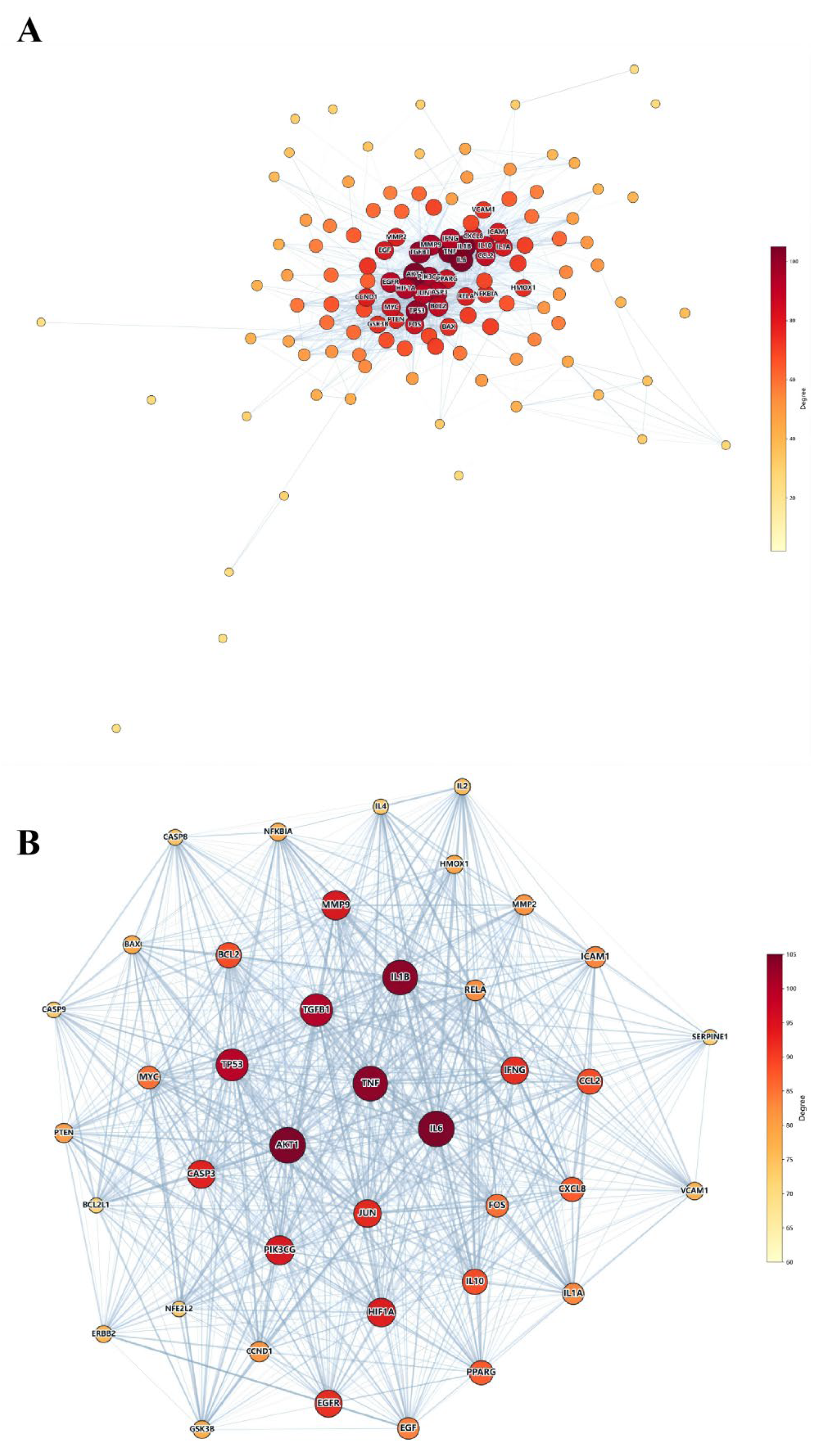
Figure 2.
Component–target association network of the potential active components of Polygonatum odoratum and pneumonia-related targets.
Figure 2.
Component–target association network of the potential active components of Polygonatum odoratum and pneumonia-related targets.
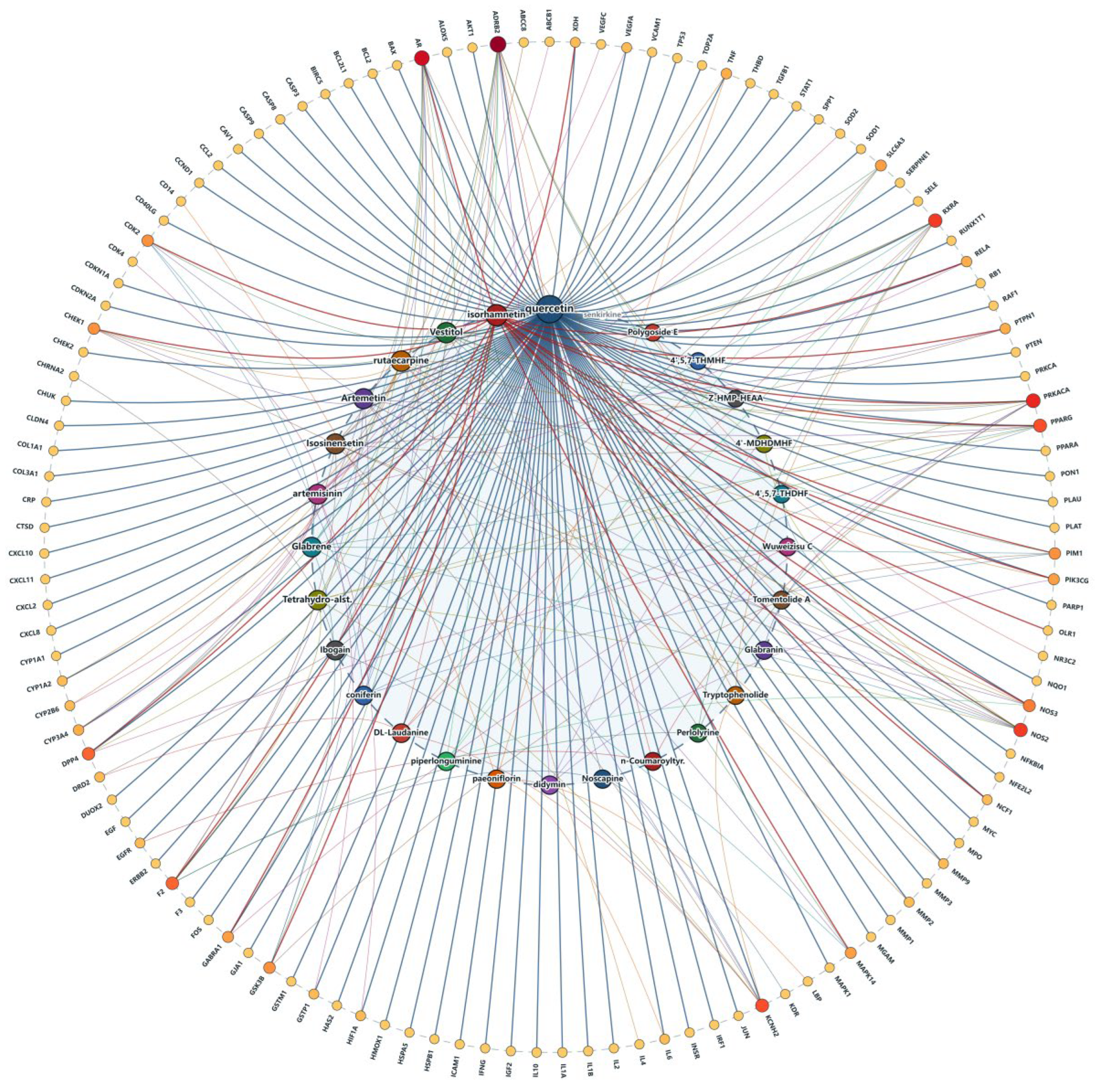
Figure 3.
Gene Ontology (GO) functional enrichment analysis of the potential anti-pneumonia targets of Polygonatum odoratum. NOTE: BP, biological process. CC, cellular component. MF, molecular function.
Figure 3.
Gene Ontology (GO) functional enrichment analysis of the potential anti-pneumonia targets of Polygonatum odoratum. NOTE: BP, biological process. CC, cellular component. MF, molecular function.
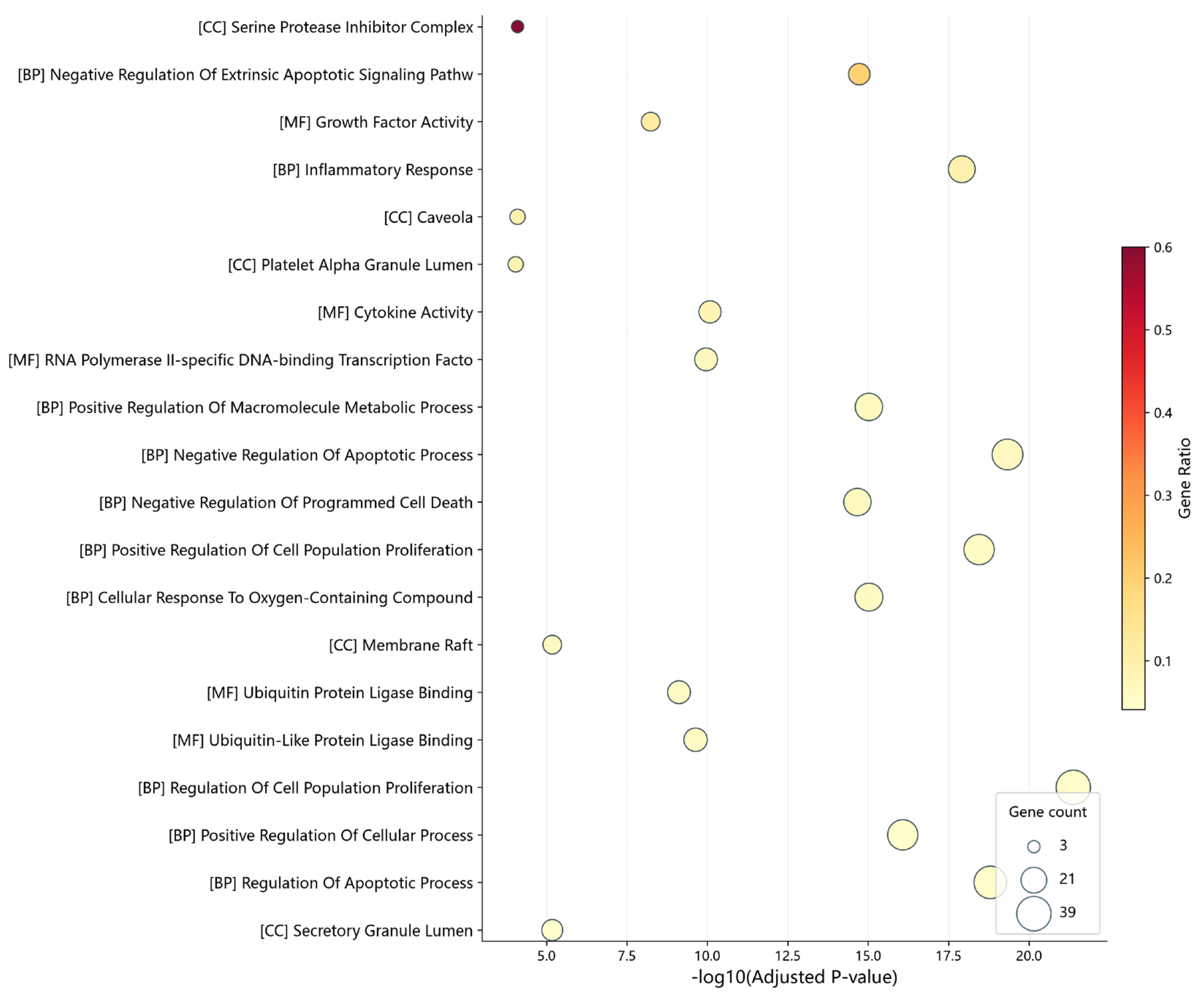
Figure 4.
Kyoto Encyclopedia of Genes and Genomes (KEGG) pathway enrichment analysis of the potential anti-pneumonia targets of Polygonatum odoratum.
Figure 4.
Kyoto Encyclopedia of Genes and Genomes (KEGG) pathway enrichment analysis of the potential anti-pneumonia targets of Polygonatum odoratum.
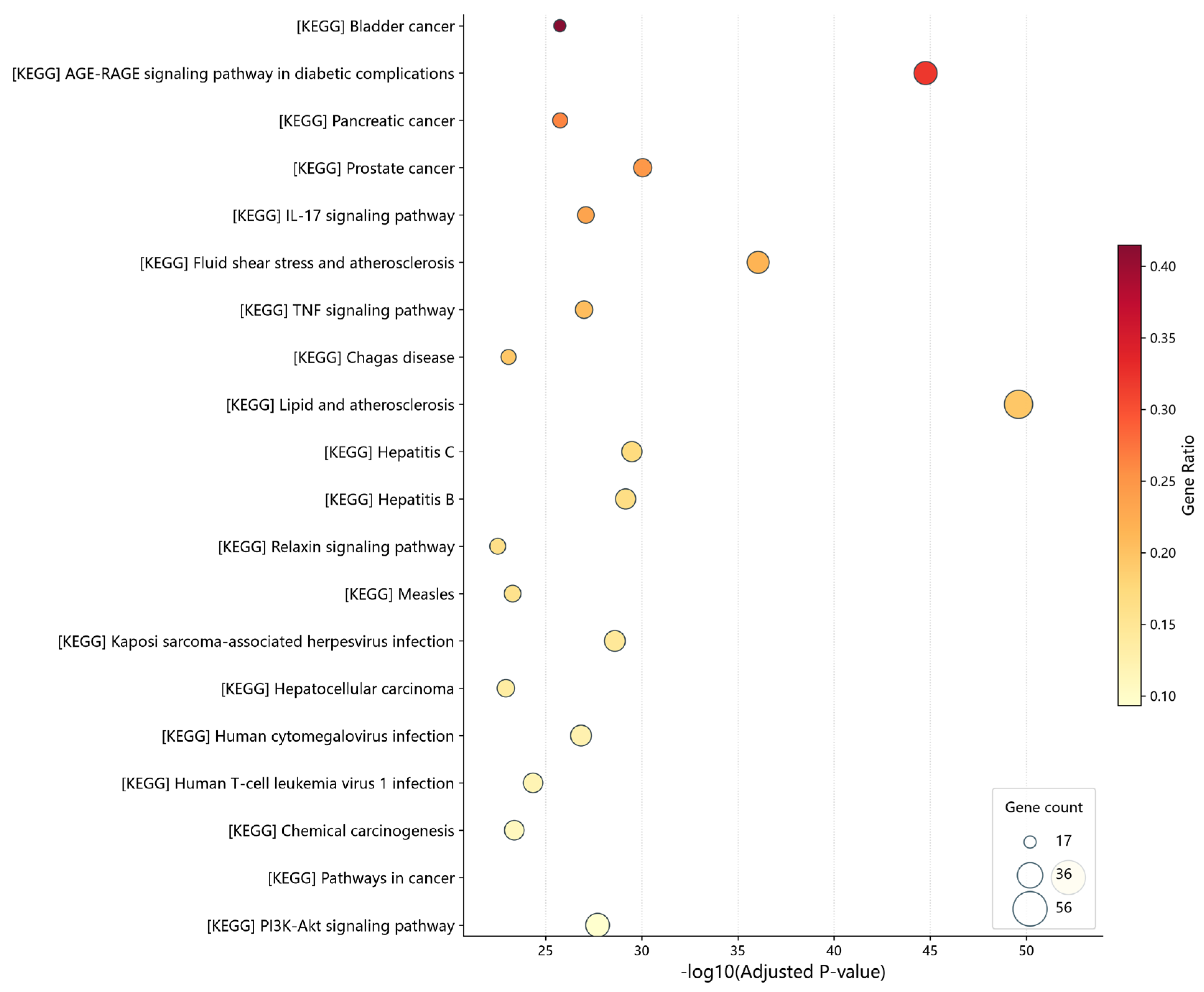
Figure 5.
Molecular docking binding conformations of the potential active components of Polygonatum odoratum with the core anti-pneumonia targets. NOTE: A, ADRB2 vs 4′,5,7-THDHF, B, ADRB2 vs quercetin, C, ADRB2 vs Vestitol, D, AKT1 vs quercetin, E, IL6 vs quercetin, F, MMP9 vs quercetin, G, MMP9 vs rutaecarpine, H, NOS2 vs 4′,5,7-THDHF, I, NOS2 vs Artemetin, J, NOS2 vs isorhamnetin, K, NOS2 vs Vestitol, L, PPARG vs Artemetin, M, PPARG vs isorhamnetin, N, PPARG vs quercetin, O, PPARG vs Vestitol, P, PRKACA vs isorhamnetin, Q, PRKACA vs quercetin, R, PRKACA vs rutaecarpine, S, PRKACA vs Vestitol, T, RELA vs artemisinin, U, RELA vs isorhamnetin, V, RELA vs quercetin, W, TNF vs quercetin, X, TNF vs rutaecarpine.
Figure 5.
Molecular docking binding conformations of the potential active components of Polygonatum odoratum with the core anti-pneumonia targets. NOTE: A, ADRB2 vs 4′,5,7-THDHF, B, ADRB2 vs quercetin, C, ADRB2 vs Vestitol, D, AKT1 vs quercetin, E, IL6 vs quercetin, F, MMP9 vs quercetin, G, MMP9 vs rutaecarpine, H, NOS2 vs 4′,5,7-THDHF, I, NOS2 vs Artemetin, J, NOS2 vs isorhamnetin, K, NOS2 vs Vestitol, L, PPARG vs Artemetin, M, PPARG vs isorhamnetin, N, PPARG vs quercetin, O, PPARG vs Vestitol, P, PRKACA vs isorhamnetin, Q, PRKACA vs quercetin, R, PRKACA vs rutaecarpine, S, PRKACA vs Vestitol, T, RELA vs artemisinin, U, RELA vs isorhamnetin, V, RELA vs quercetin, W, TNF vs quercetin, X, TNF vs rutaecarpine.
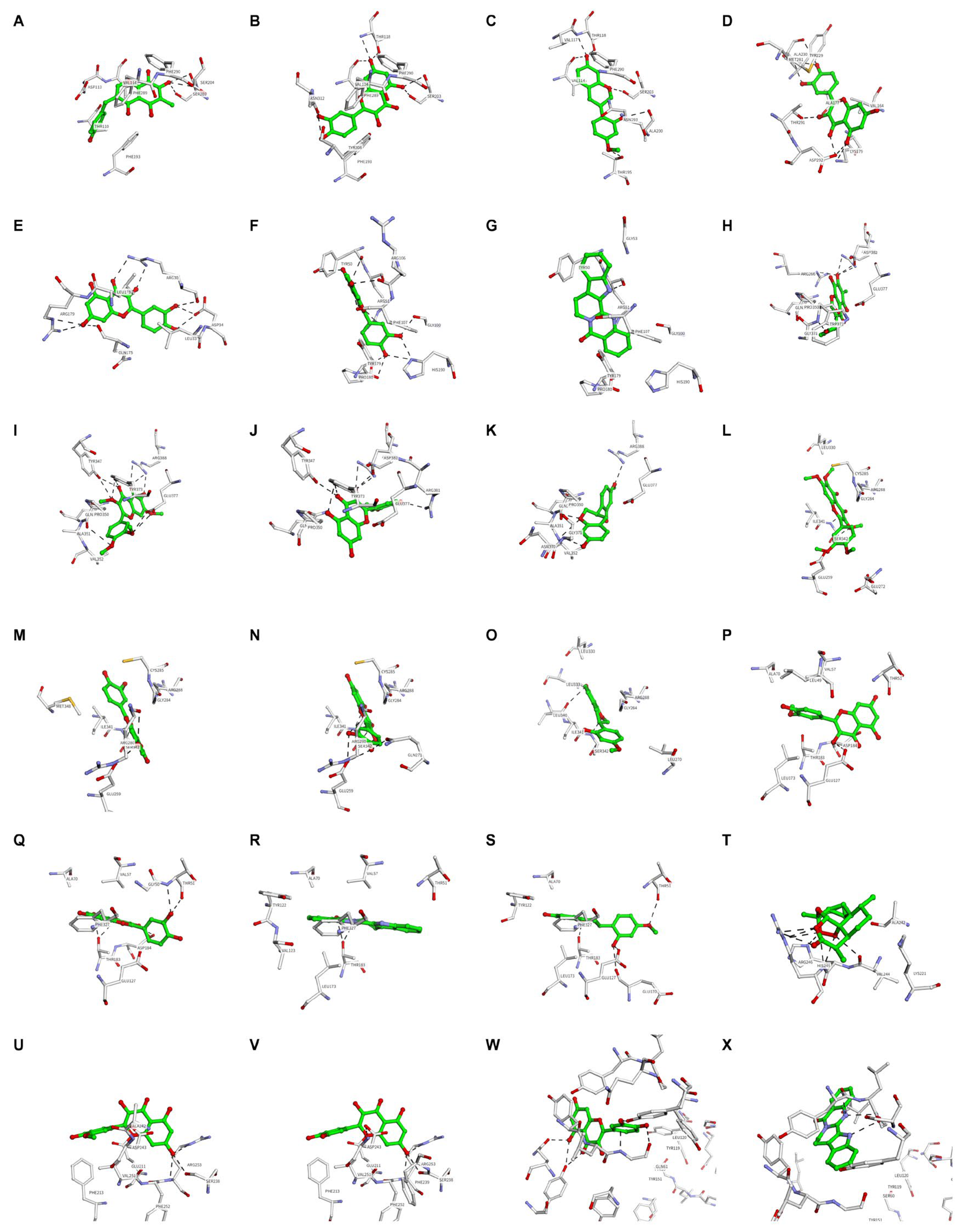
Figure 6.
In vitro anti-pneumonia activity of Polygonatum odoratum extracts and monomeric components in LPS/IFN-γ-stimulated MLE-12 cells. NOTE: A, Cell Viability. B, IL-6. C, TNF-α. D, p-p65. E, p-AKT. F, MMP-9. G, PPARG expression. H, p-CREB. I, cAMP. J, nitrite. (# indicates a statistically significant difference between MOD and CTR at P < 0.05.* indicates a statistically significant difference between the intervention group and MOD at P < 0.05.).
Figure 6.
In vitro anti-pneumonia activity of Polygonatum odoratum extracts and monomeric components in LPS/IFN-γ-stimulated MLE-12 cells. NOTE: A, Cell Viability. B, IL-6. C, TNF-α. D, p-p65. E, p-AKT. F, MMP-9. G, PPARG expression. H, p-CREB. I, cAMP. J, nitrite. (# indicates a statistically significant difference between MOD and CTR at P < 0.05.* indicates a statistically significant difference between the intervention group and MOD at P < 0.05.).
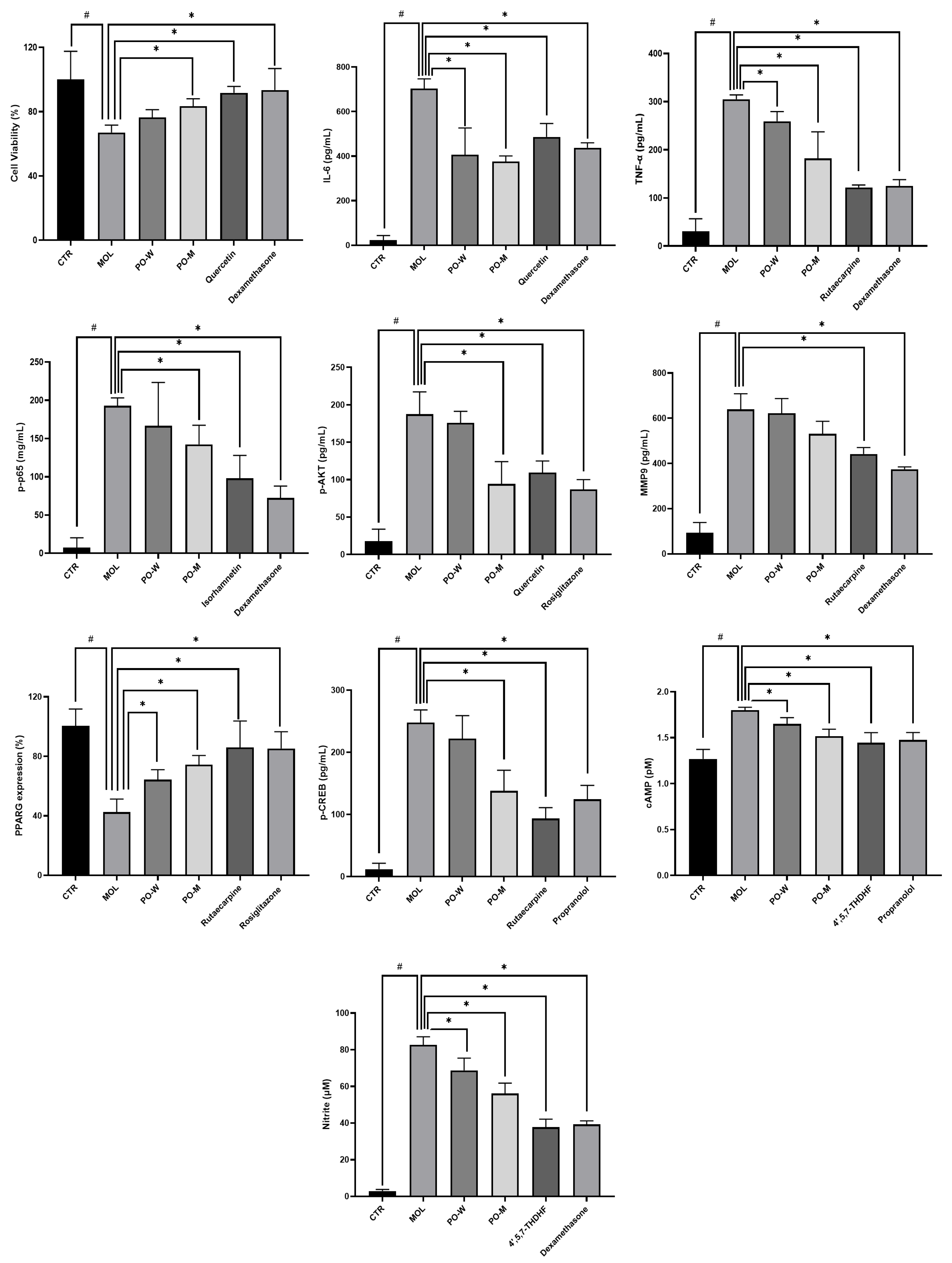

Table 1.
Potential active components of Polygonatum odoratum identified by LC-QTOF-MS and TCMSP.
| Mol ID | Molecule Name | AlogP | Hdon | Hacc | OB (%) | DL | TPSA | HL | Source |
|---|---|---|---|---|---|---|---|---|---|
| MOL000519 | coniferin | 3.16 | 2 | 4 | 31.11 | 0.323 | 74.60 | 28.10 | LC-QTOF-MS |
| MOL007424 | artemisinin | 3.14 | 0 | 5 | 49.88 | 0.306 | 53.99 | -0.591 | LC-QTOF-MS |
| MOL005922 | Acanthoside B | 0.196 | 5 | 13 | 43.35 | 0.767 | 174.99 | 2.94 | LC-QTOF-MS |
| MOL001559 | piperlonguminine | 2.93 | 1 | 4 | 30.71 | 0.180 | 47.56 | 8.66 | LC-QTOF-MS |
| MOL010023 | senkirkine | 1.69 | 1 | 7 | 56.16 | 0.406 | 93.14 | 5.71 | LC-QTOF-MS |
| MOL001924 | paeoniflorin | -1.28 | 5 | 11 | 53.87 | 0.787 | 164.37 | 13.88 | LC-QTOF-MS |
| MOL008992 | Wuweizisu C | 4.87 | 0 | 6 | 46.27 | 0.844 | 55.38 | 8.72 | LC-QTOF-MS |
| MOL003348 | adhyperforin | 9.07 | 1 | 4 | 44.03 | 0.613 | 71.44 | 0.838 | LC-QTOF-MS |
| MOL005619 | Tomentolide A | 4.66 | 0 | 5 | 33.83 | 0.855 | 65.74 | 15.39 | LC-QTOF-MS |
| MOL008457 | Tetrahydroalstonine | 2.66 | 1 | 4 | 32.42 | 0.813 | 54.56 | 10.55 | LC-QTOF-MS |
| MOL005849 | didymin | 2.55 | 2 | 5 | 38.55 | 0.239 | 75.99 | 16.86 | LC-QTOF-MS |
| MOL005229 | Artemetin | 2.31 | 1 | 8 | 49.55 | 0.479 | 96.59 | 15.01 | LC-QTOF-MS |
| MOL013277 | Isosinensetin | 3.06 | 0 | 7 | 51.15 | 0.441 | 76.36 | 15.84 | LC-QTOF-MS |
| MOL004911 | Glabrene | 3.77 | 2 | 4 | 46.27 | 0.439 | 58.92 | 3.63 | LC-QTOF-MS |
| MOL002140 | Perlolyrine | 3.20 | 2 | 3 | 65.95 | 0.275 | 62.05 | 12.62 | LC-QTOF-MS |
| MOL000289 | pachymic acid | 6.54 | 2 | 5 | 33.63 | 0.811 | 83.83 | 9.27 | LC-QTOF-MS |
| MOL012436 | Grayanotoxin I | -0.353 | 5 | 7 | 60.55 | 0.612 | 127.45 | 1.93 | LC-QTOF-MS |
| MOL009330 | Noscapine | 3.01 | 0 | 8 | 53.29 | 0.879 | 75.69 | 13.55 | LC-QTOF-MS |
| MOL000354 | isorhamnetin | 1.75 | 4 | 7 | 49.60 | 0.306 | 120.36 | 14.34 | LC-QTOF-MS |
| MOL002662 | rutaecarpine | 3.36 | 1 | 3 | 40.30 | 0.598 | 50.68 | 8.21 | LC-QTOF-MS |
| MOL004910 | Glabranin | 4.42 | 2 | 4 | 52.90 | 0.312 | 66.76 | 16.24 | LC-QTOF-MS |
| MOL010603 | Paederoside | -1.35 | 4 | 11 | 57.19 | 0.759 | 186.51 | 13.72 | LC-QTOF-MS |
| MOL000500 | Vestitol | 3.15 | 2 | 4 | 74.66 | 0.209 | 58.92 | 3.00 | LC-QTOF-MS |
| MOL010646 | trichilin A | 0.800 | 3 | 13 | 39.59 | 0.276 | 191.56 | -2.45 | LC-QTOF-MS |
| MOL000098 | quercetin | 1.50 | 5 | 7 | 46.43 | 0.275 | 131.36 | 14.40 | LC-QTOF-MS |
| MOL011073 | Scillaren A | 0.593 | 7 | 13 | 56.12 | 0.207 | 208.74 | 14.59 | LC-QTOF-MS |
| MOL003196 | Tryptophenolide | 4.61 | 1 | 3 | 48.50 | 0.444 | 46.53 | 4.42 | LC-QTOF-MS |
| MOL005223 | DL-Laudanine | 3.60 | 1 | 5 | 69.09 | 0.367 | 51.16 | 2.45 | LC-QTOF-MS |
| MOL000529 | Ibogain | 4.26 | 1 | 2 | 50.52 | 0.628 | 28.26 | 8.65 | LC-QTOF-MS |
| MOL000940 | bisdemethoxycurcumin | 3.26 | 2 | 4 | 77.38 | 0.261 | 74.60 | 4.69 | LC-QTOF-MS |
| MOL010387 | 3-0-beta d-glucopyranosy-(1-2)-beta-d-xylopyranosy-(1-3)]-beta-d- slucpyranosy-(1-4)-galactopyranosy-25(S)-spirost-5(6)-en-3beta,14alpho-dioL ot | 3.50 | 2 | 4 | 104.58 | 0.790 | 58.92 | 5.51 | TCMSP |
| MOL010395 | 4′,5,7-trihydroxy-6-methyl-8-methoxy-homoisoflavanone | 3.11 | 3 | 6 | 89.70 | 0.330 | 96.22 | 15.97 | TCMSP |
| MOL010396 | 4′,5,7-trihydroxy-6,8-dimethyl-homoisoflavanone | 3.61 | 3 | 5 | 59.76 | 0.300 | 86.99 | 15.38 | TCMSP |
| MOL010408 | polygosides E_qt | 4.37 | 2 | 3 | 38.73 | 0.780 | 57.53 | 5.70 | TCMSP |
| MOL010411 | 4′,5,7-trihydroxy-6-methyl-homoisoflavanone | 3.12 | 3 | 5 | 82.94 | 0.270 | 86.99 | 15.17 | TCMSP |
| MOL010412 | 4′-methoxy-5,7-dihydroxy-6,8-dimethyl-homoisflavanone | 3.86 | 2 | 5 | 57.14 | 0.340 | 75.99 | 15.31 | TCMSP |
| MOL000332 | n-coumaroyltyramine | 2.88 | 3 | 4 | 85.63 | 0.200 | 69.56 | 4.82 | TCMSP |
| MOL000483 | (Z)-3-(4-hydroxy-3-methoxy-phenyl)-N-[2-(4-hydroxyphenyl)ethyl]acrylamide | 2.86 | 3 | 5 | 118.35 | 0.260 | 78.79 | 4.26 | TCMSP |
Table 2.
Molecular docking results of the potential active components of Polygonatum odoratum with core anti-pneumonia targets.
Table 2.
Molecular docking results of the potential active components of Polygonatum odoratum with core anti-pneumonia targets.
| Target | PDB ID | Resolution | Ligand | Binding energy (kcal/mol) | Binding sites | Functional region |
|---|---|---|---|---|---|---|
| ADRB2 | 2RH1 | 2.4 Å | 4′,5,7-trihydroxy-6,8-dimethyl-homoisoflavanone (4′,5,7-THDHF) | -9.935 | PHE193/ASP113/THR110 | GPCR seven-transmembrane (7TM) helix bundle; orthosteric ligand-binding pocket |
| quercetin | -9.708 | VAL114/PHE193/PHE290 | GPCR seven-transmembrane (7TM) helix bundle; orthosteric ligand-binding pocket | |||
| Vestitol | -9.872 | VAL114/ASN293/PHE290 | GPCR seven-transmembrane (7TM) helix bundle; orthosteric ligand-binding pocket | |||
| AKT1 | 4EKL | 2.0 Å | quercetin | -8.61 | ALA230/MET281/LYS179 | Protein kinase catalytic domain; ATP-binding site (hinge region and catalytic cleft) |
| IL6 | 1ALU | 1.9 Å | quercetin | -6.725 | ARG30/ASP34/GLN175 | Four-helix bundle cytokine; site I (IL-6/IL-6Rα interface) |
| MMP9 | 1L6J | 2.5 Å | quercetin | -6.678 | ARG51/PHE107/TYR179 | MMP catalytic domain; catalytic zinc and substrate-binding cleft |
| rutaecarpine | -7.185 | ARG51/TYR179/PHE107 | MMP catalytic domain; catalytic zinc and substrate-binding cleft | |||
| NOS2 | 4NOS | 2.25 Å | 4′,5,7-trihydroxy-6,8-dimethyl-homoisoflavanone (4′,5,7-THDHF) | -9.289 | GLU377/PRO350/GLN263 | NOS oxygenase (heme) domain; L-arginine substrate-binding site (above HEM) |
| Artemetin | -8.421 | PRO350/GLU377/ARG388 | NOS oxygenase (heme) domain; L-arginine substrate-binding site (above HEM) | |||
| isorhamnetin | -8.078 | ARG388/ARG381/ASP382 | NOS oxygenase (heme) domain; L-arginine substrate-binding site (above HEM) | |||
| Vestitol | -8.435 | PRO350/ALA351/VAL352 | NOS oxygenase (heme) domain; L-arginine substrate-binding site (above HEM) | |||
| PPARG | 1FM6 | 2.1 Å | Artemetin | -7.434 | ILE341/ARG288/SER342 | Nuclear receptor ligand-binding domain (LBD, α-helical sandwich H1–H12); hydrophobic ligand pocket |
| isorhamnetin | -8.118 | ILE341/SER342/ARG280 | Nuclear receptor ligand-binding domain (LBD, α-helical sandwich H1–H12); hydrophobic ligand pocket | |||
| quercetin | -8.485 | SER342/GLY284/ILE341 | Nuclear receptor ligand-binding domain (LBD, α-helical sandwich H1–H12); hydrophobic ligand pocket | |||
| Vestitol | -7.625 | ILE341/ARG288/GLY284 | Nuclear receptor ligand-binding domain (LBD, α-helical sandwich H1–H12); hydrophobic ligand pocket | |||
| PRKACA | 3DND | 2.26 Å | isorhamnetin | -7.767 | GLU127/ASP184/LEU49 | PKA catalytic domain; ATP-binding site (N- and C-lobes and hinge region) |
| quercetin | -8.01 | THR183/THR51/ASP184 | PKA catalytic domain; ATP-binding site (N- and C-lobes and hinge region) | |||
| rutaecarpine | -9.415 | THR183/LEU173/ALA70 | PKA catalytic domain; ATP-binding site (N- and C-lobes and hinge region) | |||
| Vestitol | -8.071 | THR183/LEU173/THR51 | PKA catalytic domain; ATP-binding site (N- and C-lobes and hinge region) | |||
| RELA | 1NFI | 2.7 Å | artemisinin | -4.824 | ARG246/HIS245/VAL244 | Rel homology domain (RHD, Ig-like β-barrel); p65–p50 dimerization interface |
| isorhamnetin | -5.42 | ASP243/VAL251/ARG253 | Rel homology domain (RHD, Ig-like β-barrel); p65–p50 dimerization interface | |||
| quercetin | -5.268 | VAL251/ASP243/ARG253 | Rel homology domain (RHD, Ig-like β-barrel); p65–p50 dimerization interface | |||
| TNF | 2AZ5 | 2.1 Å | quercetin | -7.189 | TYR119(A)/GLY121/TYR151(A) | TNF homology domain (jelly-roll β-sandwich trimer); subunit interface |
| rutaecarpine | -9.518 | TYR119(B)/LEU120/GLY121(B) | TNF homology domain (jelly-roll β-sandwich trimer); subunit interface |
Disclaimer/Publisher’s Note: The statements, opinions and data contained in all publications are solely those of the individual author(s) and contributor(s) and not of MDPI and/or the editor(s). MDPI and/or the editor(s) disclaim responsibility for any injury to people or property resulting from any ideas, methods, instructions or products referred to in the content. |
© 2026 by the authors. Licensee MDPI, Basel, Switzerland. This article is an open access article distributed under the terms and conditions of the Creative Commons Attribution (CC BY) license (http://creativecommons.org/licenses/by/4.0/).
Copyright: This open access article is published under a Creative Commons CC BY 4.0 license, which permit the free download, distribution, and reuse, provided that the author and preprint are cited in any reuse.