

Submitted:
12 October 2026
Posted:
14 October 2026
You are already at the latest version
Abstract
Resveratrol is a phenolic compound with recognized antioxidant activity; however, its application is limited by its low stability and poor gastrointestinal bioavailability. This study investigated the functionalization of zein with resveratrol through a free radical-mediated grafting reaction using an ascorbic acid/hydrogen peroxide redox system and evaluated the effect of dialysis on the resulting conjugates. The materials were characterized by UV–Vis, FTIR, XPS, XRD, SEM, DSC, and TGA. Protein and total phenolic contents were determined using the Bradford and Folin–Ciocalteu assays, antioxidant activity was evaluated by ABTS and DPPH, and stability was assessed under simulated gastrointestinal digestion. Spectroscopic, structural, morphological, and thermal analyses indicated modifications in the zein matrix after functionalization, with dialysis producing a more homogeneous surface morphology. The functionalized materials exhibited significantly higher antioxidant activity than native zein, reaching ABTS and DPPH inhibition values of 87–93% and 84–86%, respectively, comparable to free resveratrol. During simulated gastrointestinal digestion, the conjugates maintained resveratrol contents between 885.9 and 1115.0 μmol GAE/g, although significant time-dependent variations were detected within each treatment (p < 0.05). Overall, free radical-mediated functionalization provided zein–resveratrol conjugates with improved physicochemical stability while preserving the antioxidant properties of resveratrol, supporting their potential application as protein-based delivery systems for phenolic bioactive compounds.
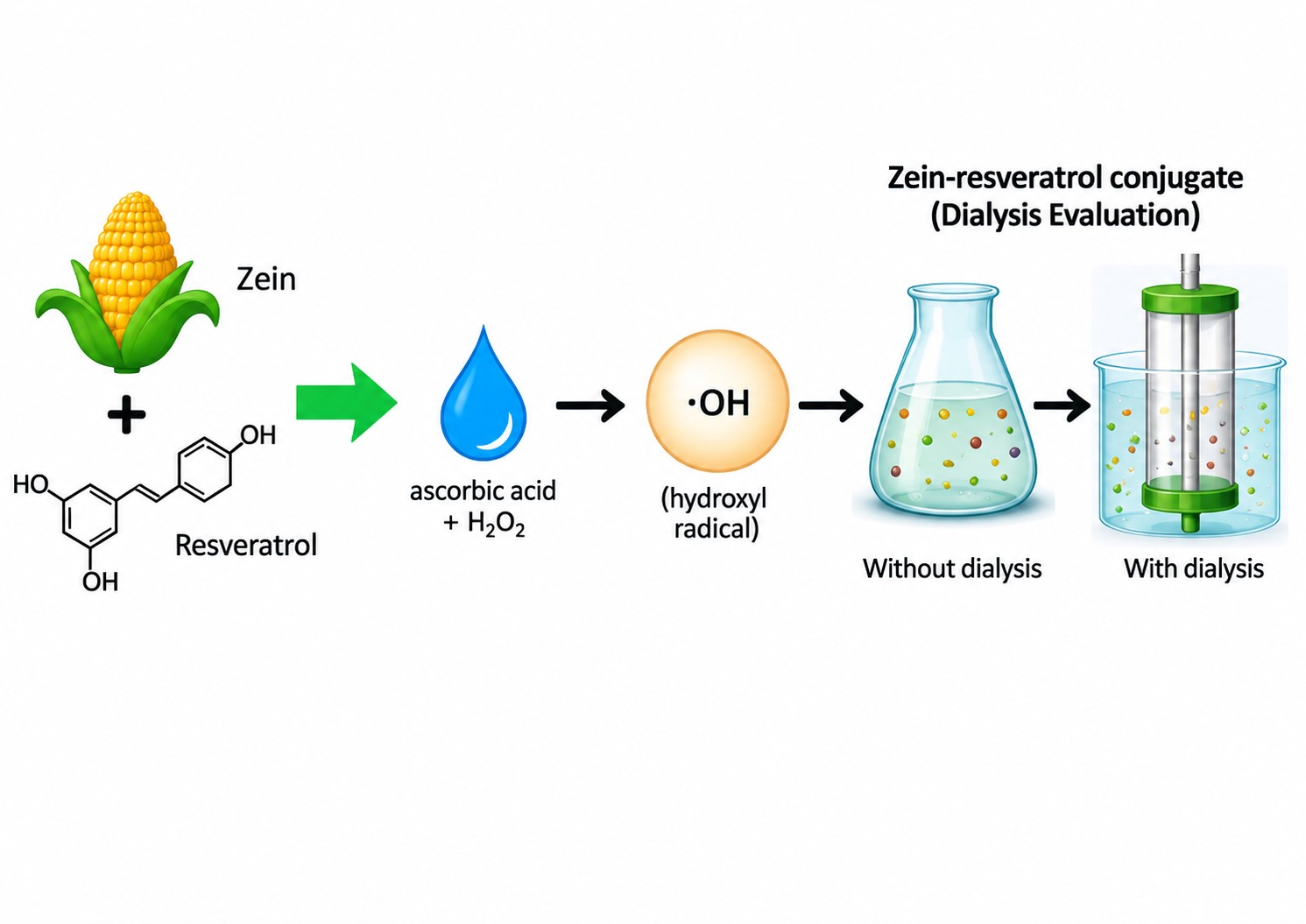
Keywords:
functionalization
; zein
; resveratrol
; free radical
; antioxidant activity
; gastrointestinal stability
1. Introduction
The functionalization of renewable biopolymers has emerged as a key strategy for developing sustainable materials for food, pharmaceutical, and biomedical applications. By enabling the controlled modification of physicochemical properties while preserving their intrinsic biocompatibility, biodegradability, and low toxicity, functionalization expands the range of applications of naturally derived polymers. In particular, the covalent incorporation of bioactive molecules, such as phenolic compounds, has been shown to improve the stability, antioxidant activity, mechanical performance, and biological functionality of biopolymeric matrices, while enhancing the bioavailability of poorly soluble compounds [1].
Free radical-grafting functionalization has attracted considerable attention because it represents an efficient and environmentally friendly approach for promoting covalent bond formation between biopolymers and bioactive molecules. Unlike conventional chemical coupling methods, free radical grafting does not require highly toxic cross-linking reagents or metal catalysts, making it a safer and more sustainable alternative. As a result, free radical grafting has become an attractive strategy for producing protein–polyphenol and polysaccharide–polyphenol conjugates with enhanced antioxidant, antimicrobial, and physicochemical properties while avoiding the use of hazardous coupling reagents [2,3].
One of the major advantages of free radical-mediated functionalization is that it can be performed under mild reaction conditions, typically in aqueous media, at room temperature, and using relatively safe initiator systems such as the ascorbic acid/hydrogen peroxide redox pair. This system generates hydroxyl radicals capable of activating the polymer backbone without the need for harsh organic solvents or energy-intensive reaction conditions. Therefore, free radical grafting is considered consistent with the principles of green chemistry because it reduces energy consumption, minimizes hazardous waste generation, decreases the use of toxic reagents, improved atom economy, simplified reaction schemes, and lower energy requirements, making it particularly attractive for the sustainable modification of natural polymers [3]
Beyond its environmental advantages, free radical-induced covalent conjugation also enhances the performance of biopolymers as carriers for bioactive compounds. Covalent protein–polyphenol conjugates exhibit improved oxidative stability and enhanced protection of phenolic compounds during processing and storage. In addition, they display greater resistance to gastrointestinal degradation and more controlled release profiles. These characteristics have promoted their application in functional foods, nutraceuticals, active packaging, and controlled drug delivery systems. These advantages have accelerated the development of functional biomaterials capable of preserving the biological activity of sensitive phytochemicals throughout processing, storage, and gastrointestinal digestion. [4,5].
Resveratrol (3,5,4′-trihydroxystilbene) is a naturally occurring polyphenolic stilbene widely distributed in grapes, berries, peanuts, and several medicinal plants. It has attracted considerable attention because of its broad spectrum of biological activities, including antioxidant, anti-inflammatory, antimicrobial, cardioprotective, neuroprotective, and anticancer effects. These bioactivities are primarily attributed to its ability to scavenge reactive oxygen species, modulate redox homeostasis, and regulate multiple cellular signaling pathways. However, the practical application of resveratrol is limited by its poor aqueous solubility, chemical instability under light, oxygen, and alkaline conditions, and low oral bioavailability resulting from rapid metabolism. Consequently, the development of sustainable strategies to improve its physicochemical stability and preserve its biological activity has become a major research focus. In this context, the covalent functionalization of natural biopolymers such as zein represents a promising green chemistry approach to enhance the stability, functionality, and application potential of resveratrol in food, biomedical, and pharmaceutical systems [6,7].
Zein is the major storage protein of maize and is recovered as a coproduct of the corn wet-milling industry. Zein is generally recognized as safe (GRAS) for specific applications, especially as a functional component in food due to its biocompatibility and degradability [8]. Consequently, its utilization contributes to the valorization of agro-industrial residues by transforming a low-value byproduct into a high-value functional biomaterial [7,8,9]. This approach supports circular economy principles while reducing agricultural waste generation. Due to its biodegradability, biocompatibility, film-forming ability, and reactive functional groups, zein has attracted considerable attention as a sustainable biopolymer for the covalent functionalization of bioactive compounds [12,13,14]
To the best of our knowledge, no previous study has systematically evaluated whether eliminating the dialysis step after free radical-mediated zein functionalization can reduce the environmental footprint of the process without affecting the properties of the resulting conjugate. Therefore, the objective of this study was to develop a zein–resveratrol conjugate through free radical-mediated grafting that does not generate toxic compounds and to evaluate whether the dialysis purification step can be omitted without compromising the physicochemical properties, antioxidant activity, or stability of the resulting material. By integrating agro-industrial byproducts with a simplified functionalization process, this study aimed to develop a more sustainable biomaterial consistent with the principles of green chemistry because it employs renewable feedstocks, minimizes hazardous reagents, reduces waste generation, and has the potential to simplify downstream processing.
2. Materials and Methods
2.1. Materials
Resveratrol was purchased from BulkSupplements (Henderson, NV, USA). Zein (Z3625) was obtained from Sigma-Aldrich (St. Louis, MO, USA). L-Ascorbic acid, 2,2-diphenyl-1-picrylhydrazyl (DPPH), 2,2′-azinobis(3-ethylbenzothiazoline-6-sulfonic acid) (ABTS), Trolox (6-hydroxy-2,5,7,8-tetramethylchroman-2-carboxylic acid), Folin–Ciocalteu reagent, and sodium carbonate were purchased from Sigma-Aldrich (St. Louis, MO, USA). Absolute ethanol and 30% hydrogen peroxide (H₂O₂) were obtained from Fermont (Productos Químicos de Monterrey S.A. de C.V., Monterrey, Nuevo León, Mexico). All other chemicals and reagents were of analytical grade and used without further purification.
2.2. Synthesis of Functionalized Zein-Resveratrol by Free Radical Grafting Method
Functionalized zein-resveratrol was prepared using a free radical grafting reaction based on previous work with some modifications as shown in Figure 1 [15]. First, 0.5 g of zein was dissolved in 50 mL 70% (v/v) ethanol-water solution and 1 mL of free radical solution was added which was prepared by mixing 0.054 g of ascorbic acid and 1 mL, 30% (v/v)) of hydrogen peroxide. The mixture was then incubated for 30 minutes, after which 0.5 g of resveratrol was added and left for another 15 minutes. Finally, the pH of the solution was regulated to 7.5 using 0.1 M NaOH solution and left under agitation to react for 24 h. For the dialyzed material, the incubated solution was placed in membranes with a weight cutoff (MWCO) of 1000 Da and were then placed in 70% (v/v) ethanol solution under agitation for another 24 h at 25 °C.
Prior to characterization, samples were dried using a rotary evaporator at 40 °C and 130 rpm and subsequently ground into powder samples for all analyses, except for UV-Vis spectroscopy, which was performed in solution.
2.3. Structural Analysis of Functionalized Zein-Resveratrol
2.3.1. UV-Vis Spectroscopy
To analyze the functionalized zein-resveratrol, solutions of pure resveratrol (0.5 g in 50 mL of 70% (v/v) ethanol), pure zein (0.5 g in 50 mL of 70% (v/v) ethanol), and functionalized zein-resveratrol (0.5 g resveratrol and 0.5 g zein in 50 mL of 70% (v/v) ethanol) were prepared, as well as an aqueous solution of ethanol 70% (v/v) as a blank. The samples were scanned using a UV-Vis spectrophotometer (Caray 60 UV-Vis Agilent Technologies) using a wavelength range of 200 to 500 nm.
2.3.2. Attenuated Total Reflectance Fourier Transform Infrared Spectroscopy (ATR-FTIR)
Fourier transform infrared (FTIR) spectroscopy was performed using a spectrophotometer (Cary 630 FTIR spectrophotometer, Agilent Technologies) on functionalized zein-resveratrol and its precursors. This involved preparing the samples of pure resveratrol, pure zein, and functionalized zein-resveratrol with and without dialysis as indicated previously for UV-Vis analysis. The spectra of samples were then recorded using the spectrophotometer within the spectral range of 4000–650 cm⁻¹.
2.3.4. X-Ray Photoelectron Spectroscopy (XPS)
The surface chemical composition of powdered native zein, free resveratrol (used as control samples), and functionalized zein-resveratrol with and without dialysis was characterized by X-ray photoelectron spectroscopy (XPS) [16]. Analyses were performed using a PHI 5100 PerkinElmer X-ray photoelectron spectrometer equipped with a Mg Kα X-ray source (1253.6 eV). Spectra were acquired using a dwell time of 50 ms and a pass energy of 17.9 eV. The X-ray anode was operated at 15 kV and 150 W. The obtained spectra were deconvoluted using AAnalyzer software (CINVESTAV, Querétaro, Mexico). Binding energy calibration was performed by referencing the aliphatic C1s peak to 284.8 eV.
2.3.3. X-Ray Diffraction (XRD)
Using a powder X-ray diffractometer (Bucker D8 advance Vantec, Germany; Department of Physics, University of Sonora) with a radioactive Cu Kα (1.5406 Å) source and a Ni filter, as well as a detector (LYNEYE-2), previously powdered samples were analyzed. These samples, corresponding to zein and resveratrol as controls and functionalized with and without dialysis, were analyzed. The interplanar spacing d for a given scattering angle 2θ was calculated using Bragg’s law equation, where λ is the wavelength of the Cu Kα radiation.
2.3.4. Scanning Electron Microscopy (SEM)
Morphological analysis was performed using a JEOL 7800F scanning electron microscope (Pleasanton, CA, USA) operated at an accelerating voltage of 10 kV, with magnifications of 500×, 1000×, and 5000×. Samples were mounted on aluminum stubs and coated with a thin layer of gold prior to analysis.
2.3.5. Differential Scanning Calorimetry and Thermogravimetric Analysis (DSC/TGA)
The thermal stability of previously pulverized zein and resveratrol samples was evaluated as controls, along with functionalized samples with and without dialysis. Analyses were carried out using an STA 6000 simultaneous DSC–TGA instrument. Samples were heated from 30 to 600 °C at a rate of 10 °C/min under a nitrogen atmosphere.
2.3.6. Determination of Total Phenolic Content
The total phenolic content (TPC) associated with the zein matrix was determined with minor modifications [17]. Free resveratrol, native zein, and functionalized zein-resveratrol with and without dialysis were evaluated. Sample dilutions were prepared at concentrations of 31.25, 62.5, 125, 250, 500, 1000, 2000, and 4000 μg/mL.
Aliquots of 30 μL of each sample were transferred into a 96-well microplate, followed by the addition of 150 μL of 1 N Folin–Ciocalteu reagent. After incubation for 5 min in the dark, 120 μL of 20% (w/v) sodium carbonate (Na₂CO₃) solution was added. The reaction mixture was incubated for 30 min at room temperature, and absorbance was measured at 760 nm using a microplate reader (Multiskan GO, Thermo Fisher Scientific Inc., NY, USA). Results were expressed as μmol gallic acid equivalents per gram of sample (μmol GAE/g).
2.3.7. Protein Content Determination by the Bradford Assay
Protein content was determined using the Bradford colorimetric assay with bovine serum albumin (BSA) as the calibration standard. Standard solutions of BSA were prepared at concentrations of 0.25, 0.50, 0.80, 1.00, and 1.40 mg/mL. A calibration curve was obtained by mixing 50 μL of each standard with 1.5 mL of Bradford reagent, using distilled water as the blank. Absorbance was measured at 595 nm.
For sample analysis, 10 mg of each functionalized material was dispersed in 1 mL of absolute ethanol under stirring for 5 min. Subsequently, 300 μL of distilled water was added, and stirring was continued for an additional 5 min. To reduce the ethanol concentration to levels compatible with the Bradford assay, 8.7 mL of distilled water was gradually added under continuous stirring. The resulting dispersions were sonicated for 10 min. Finally, 50 μL of each dispersion was mixed with 1.5 mL of Bradford reagent, and absorbance was recorded at 595 nm. Protein concentration was determined by interpolation from the BSA calibration curve.
2.3.8. Antioxidant Activity 2.3.8.1. ABTS Radical Scavenging Assay
The ABTS radical scavenging assay was performed [17]. Potassium persulfate solution was prepared by dissolving 16.55 mg of K₂S₂O₈ in 25 mL of distilled water. Subsequently, 38.41 mg of ABTS was dissolved in 10 mL of the potassium persulfate solution and allowed to react for 12 h in the dark. Before use, the ABTS•⁺ working solution was diluted with 70% ethanol to obtain an absorbance of 0.70 ± 0.02 at 734 nm.
Free resveratrol, native zein, and functionalized zein-resveratrol samples (with and without dialysis) were evaluated at concentrations of 250, 500, 1000, 2000, and 4000 μg/mL. Twenty microliters of each sample were mixed with 280 μL of ABTS•⁺ solution in a 96-well microplate. After incubation for 7 min in the dark, absorbance was measured at 734 nm using a Multiskan GO microplate reader (Thermo Fisher Scientific Inc., NY, USA). Antioxidant activity was expressed as μmol Trolox equivalents per gram of sample (μmol TE/g) and percentage inhibition, calculated as:
2.3.8.2. DPPH Radical Scavenging Assay
The DPPH radical scavenging assay was performed [17]. Briefly, 2.5 mg of DPPH was dissolved in 80 mL of 70% ethanol, and the solution was adjusted to an absorbance of 0.70 ± 0.02 at 515 nm.
Free resveratrol, native zein, and functionalized zein-resveratrol samples (with and without dialysis) were analyzed at concentrations of 250, 500, 1000, 2000, and 4000 μg/mL. Twenty microliters of each sample were mixed with 280 μL of DPPH solution in a 96-well microplate and incubated in the dark for 30 min. Absorbance was measured at 515 nm using a Multiskan GO microplate reader (Thermo Fisher Scientific Inc., NY, USA). Results were expressed as μmol Trolox equivalents per gram of sample (μmol TE/g) and percentage inhibition.
2.4. Stability in Simulated Gastrointestinal Conditions
The stability of free resveratrol, native zein, and functionalized zein-resveratrol (with and without dialysis) was evaluated under simulated gastrointestinal conditions according to [18].
For the gastric phase, 4 mg of each sample was dispersed in 5 mL of distilled water and adjusted to pH 2 using 6 M HCl under continuous stirring. Subsequently, 0.6 mL of porcine pepsin solution (315 U/mL prepared in 0.1 M HCl) was added, and the final volume was adjusted to 10 mL with distilled water. Samples were incubated at 37 °C for 2 h with constant agitation (80 rpm).
Following gastric digestion, the pH was adjusted to 5.0 using 0.045 M NaHCO₃, and 2.4 mL of pancreatin–bile solution (pancreatin, 4 mg/mL) was added. The intestinal phase was initiated by adjusting the pH to 7.0 with 0.005 M NaHCO₃, followed by incubation at 37 °C for an additional 2 h under continuous agitation.
Aliquots (300 μL) were collected at 30-min intervals throughout digestion (30, 60, 90, 120, 150, 180, 210, and 240 min). Enzymatic activity was immediately stopped by freezing the samples. The aliquots were centrifuged at 10,000 rpm for 15 min, and the supernatants were used for subsequent analyses.
The amount of released resveratrol was estimated by determining the total phenolic content using the Folin–Ciocalteu assay according to ISO 14502-1 (2005). Briefly, 40 μL of each supernatant was mixed with 300 μL of distilled water and 80 μL of Folin–Ciocalteu reagent diluted 1:10 with distilled water. After 5 min, 120 μL of 20% (w/v) sodium carbonate solution was added. Samples were incubated at room temperature for 60 min, and absorbance was measured at 765 nm. Total phenolic content was expressed as μmol gallic acid equivalents (GAE) per total digest volume.
2.5. Statistical Analysis
All experiments were performed in triplicate, and results are expressed as mean ± standard deviation (SD). Physicochemical characterization data were analyzed descriptively. For antioxidant activity and total phenolic content statistical differences among concentrations were evaluated using one-way analysis of variance (ANOVA). When significant differences were detected, means were compared using Tukey’s multiple comparison test at a significance level of p < 0.05. Statistical analyses were performed using InfoStat software (version 2020; InfoStat Group, Faculty of Agricultural Sciences, National University of Córdoba, Córdoba, Argentina).
3. Results and Discussion
3.1. Functionalization of Zein with Resveratrol
3.1.1. Functionalization of Zein by Free Radical Grafting Method
The objective of the reaction was to covalently functionalize zein with resveratrol through a free radical grafting mechanism initiated by the ascorbic acid/hydrogen peroxide redox system. This strategy promotes the formation of stable covalent linkages between the protein matrix and the polyphenol without the use of toxic radical initiators. As illustrated in Figure 2, ascorbic acid is readily oxidized in the presence of hydrogen peroxide, producing the resonance-stabilized ascorbyl radical together with highly reactive hydroxyl radicals (•OH). Owing to their strong oxidizing capacity, hydroxyl radicals abstract hydrogen atoms from the phenolic hydroxyl groups of tyrosine residues in zein, generating phenoxy macroradicals delocalized over the aromatic ring. These protein-centered radicals subsequently react with the phenolic groups of resveratrol through radical coupling, leading to the formation of stable covalent aryl ether (C–O–C) linkages.
Similar free radical grafting strategies have been extensively used to obtain covalent protein–polyphenol conjugates with improved physicochemical and biological properties. Recent studies have demonstrated that covalent conjugation enhances the structural stability of proteins while increasing the antioxidant activity, thermal stability, emulsifying properties, and resistance of polyphenols to environmental degradation. In particular, covalent zein–resveratrol conjugates prepared through free radical grafting exhibited significantly improved thermal stability and antioxidant capacity compared with native zein, confirming the effectiveness of this approach for producing stable functional conjugates. Likewise, recent reviews have highlighted that radical-mediated grafting is among the most effective and sustainable strategies for producing protein–polyphenol conjugates because it promotes stable covalent interactions without the need for toxic chemical crosslinkers while preserving the biological activity of both components [19,20,21]
In agreement with these reports, the present results indicate that radical-mediated functionalization effectively increased the reactivity of zein, promoting stable binding with resveratrol while preserving the structural integrity of the protein matrix. Similar improvements have been reported for other plant proteins functionalized with polyphenols through free radical methods, including enhanced antioxidant capacity, greater resistance to environmental stresses, and improved stability during storage and processing.
3.2. Chemical and Structural Characterization of Functionalized Zein-Resveratrol
3.2.1. UV-Vis Spectroscopy
The samples were characterized using UV-Vis absorption spectroscopy to identify electronic changes associated with potential interactions between zein and resveratrol. Comparative analysis of the spectra shown in Figure 3, of the pure compounds and the functionalized system allowed for the evaluation of modifications in the resveratrol conjugate system following its interaction with the protein.
Free resveratrol exhibited its characteristic absorption bands between 200 and 230 nm, which are attributed to the π→π* electronic transitions of the aromatic rings and the conjugated stilbene system. The extended π-electron delocalization between the aromatic rings and the ethylenic bridge contributes to the electronic stability of resveratrol and is responsible for its absorption in the ultraviolet region. In contrast, native zein displayed a less intense absorption in this region, mainly associated with peptide bonds and the presence of aromatic amino acid residues, consistent with previous reports indicating that proteins exhibit a characteristic absorption maximum near 214 nm due to peptide bond transitions [22].
Following functionalization, both dialyzed and non-dialyzed conjugates exhibited a bathochromic shift relative to the individual components, indicating alterations in the electronic environment of the chromophoric groups. A bathochromic shift generally reflects a decrease in the energy required for electronic excitation because of increased electron delocalization. This behavior suggests that the interaction between resveratrol and zein modifies the conjugated electronic system of the polyphenol, most likely through the formation of covalent linkages that extend or perturb the π-electron distribution. Similar spectral shifts have been described for zein–polyphenol systems.
The maximum absorption band of zein shifted from 250 to 253 nm after complexation with ellagic acid through hydrophobic interactions and hydrogen bonding, indicating structural modifications in the protein[23]. Likewise, it was demonstrated that conjugation between proteins and phenolic compounds commonly induces shifts in the maximum absorption wavelength, proposing this behavior as a reliable spectroscopic indicator of successful protein–polyphenol conjugation[24]. Although the magnitude of the shift observed in the present study was modest, its occurrence in both functionalized samples supports the existence of changes in the electronic structure resulting from the incorporation of resveratrol into the zein matrix.
3.2.2. Attenuated Total Reflectance Fourier Transform Infrared Spectroscopy (ATR-FTIR)
Functionalized zein-resveratrol was characterized using Attenuated Total Reflectance Fourier Transform Infrared Spectroscopy (ATR-FTIR) to identify functional groups and detect chemical modifications by comparison with pure resveratrol and zein. The resulting FTIR spectra are shown in Figure 4.
In the spectrum of pure resveratrol, characteristic absorption bands corresponding to specific functional groups were observed. A broad band at 3128.15 cm⁻¹ was attributed to O–H stretching vibrations of hydroxyl groups. A weak band at 3016.27 cm⁻¹ indicated =C–H stretching of aromatic hydrogens, confirming the presence of unsaturation. Aromatic C=C stretching bands were observed at 1603.01, 1583.69, and 1509.22 cm⁻¹. Phenolic O–H bending was evident at 1378.20 cm⁻¹, while the C–O stretching of phenolic compounds was observed at 1143.74 cm⁻¹. Additionally, a band at 963.07 cm⁻¹, characteristic of a trans-alkene configuration, indicated the presence of trans-resveratrol, the most stable isomer [25]. Bands between 827.91–769.98 cm⁻¹ were associated with =C–H aromatic vibrations conjugated with olefinic groups, further supported by peaks near 674.78 cm⁻¹.
The spectrum of pure zein exhibited bands characteristic of proteins. A band at 3285.29 cm⁻¹ corresponded to N–H stretching (amide A) and O–H stretching from amino acid side chains. The band at 2921.04 cm⁻¹ was attributed to C–H stretching of aliphatic side chains such as leucine, isoleucine, and alanine, which are abundant due to zein’s hydrophobic nature. The amide I band at 1643.41 cm⁻¹ was assigned to C=O stretching of peptide bonds and predominant presence of alfa helixes [26] The N–H bending and C–N stretching (amide II) appeared at 1515.09 cm⁻¹, and the C–N stretching of amide III was observed at 1232.24 cm⁻¹, reflecting typical protein secondary structure[27].
The third and fourth spectra show the functionalized product with and without dialysis. A detailed comparison of the spectra revealed that the bands corresponding to the characteristic functional groups of both zein and resveratrol remained in almost identical positions with minimal variations in intensity.Although no adittional absorption bands were detected, a slight shift of the C-O stretching band from 1142 to 1146 cm⁻¹ was observed, suggesting modifications in the chemical environment that may be associated with the formation o a new ether bond between zein and resveratrol. On the contrary, the similarity of the spectra suggests that the degree of binding or interaction between zein and resveratrol is similar under both conditions.
3.2.3. X-Ray Photoelectron Spectroscopy (XPS)
X-ray photoelectron spectroscopy (XPS) was performed to investigate the surface chemical composition and bonding environments of zein, resveratrol and the functionalized materials. The survey spectra in Figure 5 revealed the expected C1s, O1s, and N1s signals for all samples containing zein, whereas nitrogen was absent in free resveratrol, confirming the different elemental compositions of the starting materials. Carbon represented the predominant element in all samples due to the aromatic structure of resveratrol and the hydrophobic amino acid residues that constitute the zein matrix. In contrast, nitrogen originated exclusively from the peptide backbone of zein, while oxygen was associated with phenolic hydroxyl groups from resveratrol and carbonyl-containing functionalities present in the protein.
Compared with native zein, both functionalized materials exhibited clear changes in the relative intensity of the carbon- and oxygen-containing species, indicating modifications in the surface chemical environment after the incorporation of resveratrol. Similar changes have been reported during the covalent functionalization of proteins with phenolic compounds, where alterations in the relative abundance of carbon and oxygen containing chemical states are considered evidence of successful surface modification [20,28]. The proposed radical-mediated grafting mechanism generates protein macroradicals that subsequently react with phenolic radicals from resveratrol to form covalent C–O–C (ether) linkages [28]. Consequently, successful grafting is expected to increase the contribution of C–O species within the C1s spectrum together with modifications in the oxygen-containing components detected in the O1s region, as previously described for protein–polyphenol conjugates [14].
The high-resolution XPS spectra of free resveratrol are presented in Figure 6. The C1s spectrum (Figure 6a) showed two main components centered at 284.8 eV and 286.2 eV, assigned to C–C/C=C/C–H bonds from the aromatic rings and ethylene bridge, and C–O bonds from phenolic hydroxyl groups, respectively, in agreement with the chemical structure of resveratrol and previous reports [29] The O1s spectrum (Figure 6b) exhibited a single component centered at 532.8 eV, corresponding to C–O and O–H environments characteristic of phenolic hydroxyl groups [30] These spectra are consistent with the expected surface chemistry of resveratrol.
The high-resolution spectra of native zein are shown in Figure 7. The C1s spectrum (Figure 7a) exhibited three components centered at 284.8, 286.0, and 288.0 eV, corresponding to C–C/C–H, C–N, and amide carbonyl (C=O) environments, respectively, which are characteristic of protein backbones [31]. The O1s spectrum (Figure 7b) displayed two contributions at 531.0 and 532.0 eV, assigned to carbonyl oxygen and C–O groups associated with peptide bonds and oxygen-containing amino acid residues. In addition, the N1s spectrum (Figure 7c) presented a single peak centered at 399.0 eV, corresponding to amide nitrogen in peptide linkages, in agreement with previous XPS studies of proteins[32]
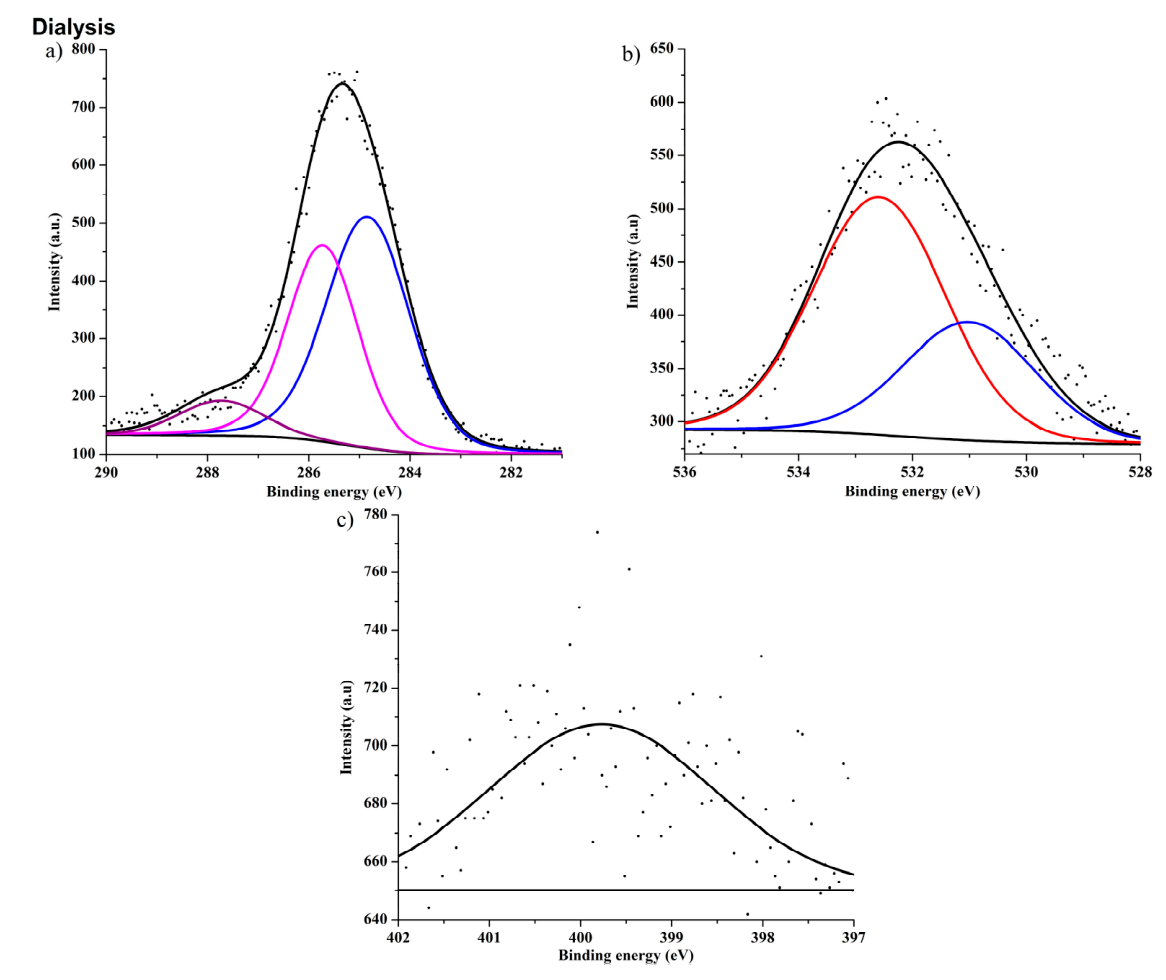
The dialyzed functionalized zein-resveratrol (Figure 10) retained the characteristic signals of the protein while exhibiting modifications in both the C1s and O1s regions. The C1s spectrum consisted of components centered at 284.8, 286.0, and 287.7 eV, corresponding to C–C/C=C/C–H, C–O/C–N, and amide carbonyl environments, respectively. The persistence of the contribution at 286.0 eV indicates that oxygenated carbon species remained on the surface after dialysis, suggesting that a fraction of resveratrol remained associated with the zein matrix. In the O1s region, two components centered at 531.0 and 532.0 eV were observed.
Compared with native zein, changes in the relative intensities of these contributions suggest modifications in the chemical environment of oxygen-containing functional groups after functionalization. In particular, the increased contribution near 532.0 eV is consistent with a higher abundance of C–O-containing environments, which agrees with the FTIR results and may reflect the formation of additional oxygen-containing linkages between zein and resveratrol. The N1s spectrum remained centered at approximately 399–400 eV, although with lower intensity than in native zein, suggesting partial coverage of the protein surface by resveratrol-derived species. Similar attenuation of substrate signals following polyphenol incorporation has been reported for protein-based and biomaterial systems [33]
Figure 8.
Deconvolution of high-resolution spectra for the a) C1s, b) O1s, and c) N1s levels of functionalized zein-resveratrol with dialysis.
Figure 8.
Deconvolution of high-resolution spectra for the a) C1s, b) O1s, and c) N1s levels of functionalized zein-resveratrol with dialysis.
The non-dialyzed functionalized zein-resveratrol (Figure 9) exhibited the same binding energy positions observed for the dialyzed material, with C1s components at 284.8, 286.0, and 288.0 eV, an O1s envelope centered between 531–532 eV, and an N1s peak at approximately 399 eV. However, the C1s and O1s signals showed higher relative intensities than those of the dialyzed sample, indicating a greater abundance of oxygenated carbon species at the surface. Because XPS probes only the outermost few nanometers of a material, these differences are consistent with the presence of free or weakly associated resveratrol remaining on the surface in the absence of dialysis, which also explains the greater attenuation of the N1s signal.
The XPS results demonstrate that dialysis effectively removed loosely adsorbed resveratrol while preserving molecules strongly associated with the zein surface. More importantly, the simultaneous increase in C–O-containing species and the redistribution of oxygen chemical states, together with the complementary UV–Vis and FTIR evidence, strongly support the occurrence of radical-mediated covalent functionalization between zein and resveratrol. The surface chemical modifications observed after purification indicate that the retained resveratrol is not merely physically adsorbed but is likely incorporated through stable covalent interactions.
3.2.3. X-Ray Diffraction
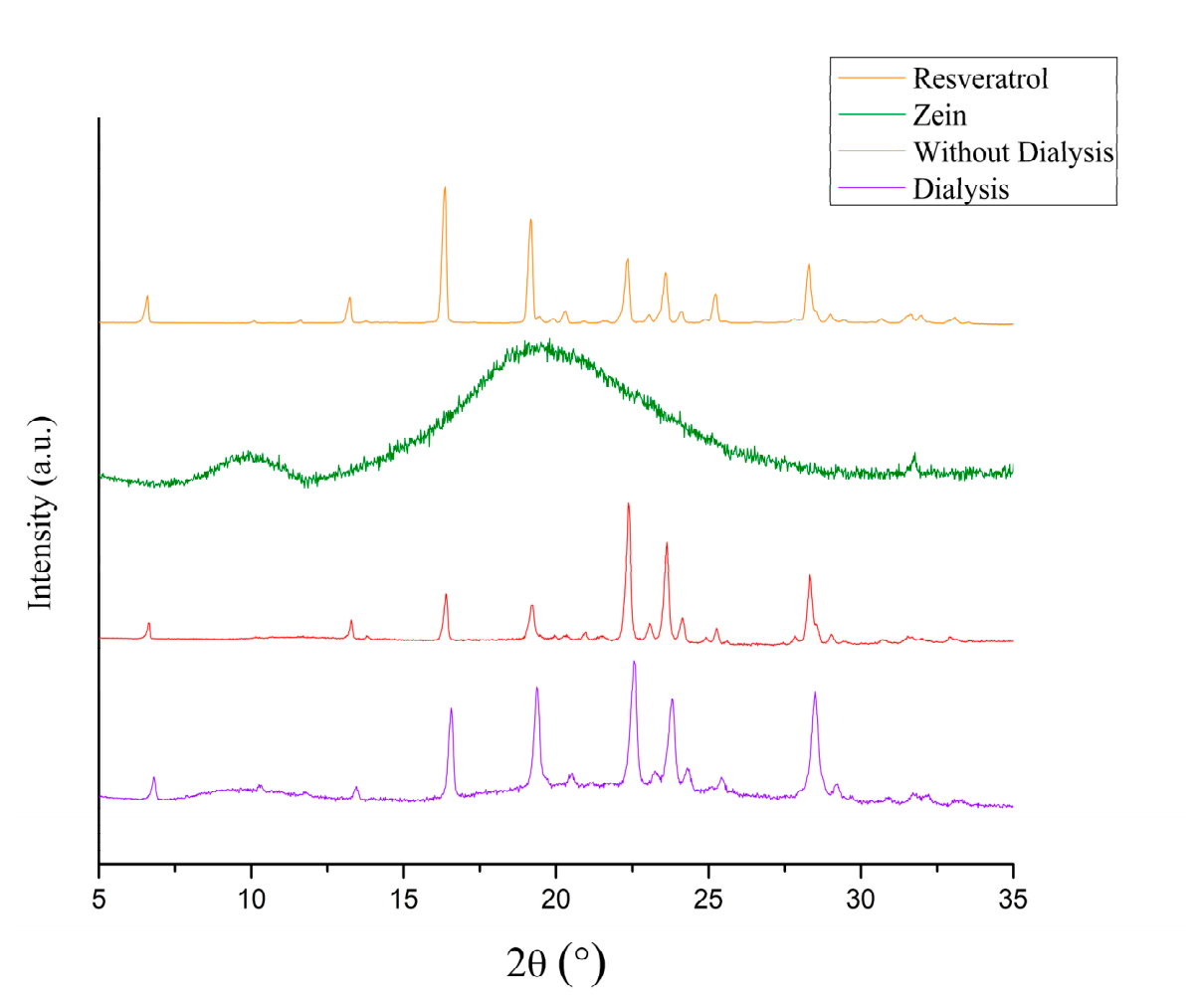
X-ray diffraction (XRD) analysis presented in Figure 10, allowed us to determine the physical state of zein, resveratrol, and the functionalized materials, as well as to evaluate the effect of dialysis on their crystallinity. This technique, based on Bragg’s law (nλ = 2d·sinθ), distinguishes between crystalline structures (intense and well-defined peaks) and amorphous structures (broad and diffuse signals).
Pure resveratrol exhibited intense and well-defined peaks at 2θ (6.6, 16.4, 19.2, 22.3, and 28.3°), confirming its crystalline nature, consistent with previous studies [15,16,17,18]. In contrast, zein showed an amorphous pattern with two broad maxima at 9.8° and 19.5°, associated with its α-helix-rich structure and short-range order [34]. The calculated d spacings (9.05 and 4.55 Å) correspond to the packing between helices and the distance between peptide chains, respectively [35]
In the functionalized materials, differences were observed depending on the treatment. The non-dialyzed sample showed residual resveratrol peaks superimposed on the amorphous halo of zein, while the dialyzed sample showed a marked decrease in the intensity of the crystalline peaks and a predominance of amorphous signals. This behavior suggests the incorporation of resveratrol into the protein matrix and an alteration in its structural organization. Similar results have been reported, where the disappearance or reduction of crystalline peaks after encapsulation or purification processes indicates the dispersion of the compound in an amorphous form and changes in molecular [3,34].
Taken together, the results show that functionalization induces a partial transition of resveratrol from a crystalline state to a more amorphous one, associated with new interactions with zein and modifications in the supramolecular organization of the system.
Figure 10.
X-ray diffraction (XRD) patterns of free resveratrol (orange), pure zein (green), functionalized material without dialysis (red), functionalized material with dialysis (violet).
Figure 10.
X-ray diffraction (XRD) patterns of free resveratrol (orange), pure zein (green), functionalized material without dialysis (red), functionalized material with dialysis (violet).
3.2.4. Scanning Electron Microscopy (SEM)
Scanning electron microscopy (SEM) analysis was performed to morphologically characterize the materials at microscale, allowing observation of structural features such as particle size, shape, surface roughness, aggregation, and surface distribution. This technique is particularly useful for protein–polyphenol systems to evaluate morphological changes associated with molecular interactions or structural modifications.
The SEM micrographs Figure 11, show that resveratrol exhibits well-defined crystalline structures with needle-like or prismatic morphology, consistent with the structures [36] This behavior is attributed to its rigid molecular structure and its tendency to form ordered crystals through π–π stacking interactions between aromatic rings [37,38]. These structures are further stabilized by intermolecular interactions involving hydroxyl groups present in trans-resveratrol [39]
In contrast, zein exhibits an amorphous and irregular morphology with lamellar aggregates or collapsed structures, consistent with its hydrophobic protein nature and its tendency to aggregate upon drying [40]. The absence of well-defined crystalline structures indicates a predominantly amorphous material, in agreement with X-ray diffraction (XRD) results.
The functionalized systems showed significant morphological differences. The non-dialyzed sample exhibited a heterogeneous morphology, with both amorphous aggregates and partially crystalline structures, suggesting incomplete interaction between zein and resveratrol and the possible presence of free or weakly associated resveratrol. The persistence of crystalline domains indicates that the interactions were insufficient to disrupt π–π stacking. Such behavior is consistent with systems where compounds form irregular structures and heterogeneous aggregates when they are not fully integrated into the matrix or are associated through non-covalent interactions. In contrast, the dialyzed sample showed a more pronounced morphological transformation, characterized by a reduction in crystalline structures and the formation of more homogeneous and compact particles. This behavior is consistent with XRD results, where the dialyzed system exhibited a more amorphous structure compared to the non-dialyzed sample, indicating improved incorporation of resveratrol into the protein matrix.
3.2.4. Thermal Analysis 3.2.4.1. DSC
The DSC thermograms of free resveratrol, native zein, and the zein–resveratrol conjugates are presented in Figure 12. Free resveratrol exhibited a sharp thermal event between 255 and 270 °C, in agreement with the thermal transition previously reported [41]. Although this transition is commonly described in the literature as an endothermic melting event, the exothermic profile observed in the present study can be explained by the overlap of melting and thermal degradation processes. Under inert atmospheres, resveratrol has been reported to undergo degradation within a similar temperature range, where endothermic and exothermic events may occur simultaneously, masking the characteristic melting peak [42]. This interpretation is also consistent with the TGA results, which showed the onset of mass loss within the same temperature interval, indicating that thermal decomposition accompanies the phase transition.
Unlike free resveratrol, native zein did not exhibit a well-defined melting peak, reflecting its predominantly amorphous structure, as previously confirmed by XRD analysis. Instead, the thermogram displayed broad thermal transitions associated with conformational rearrangements and progressive denaturation of the protein. Similar thermal behavior has been widely reported for zein and is attributed to the gradual disruption of hydrophobic interactions and hydrogen bonding that stabilize its secondary structure rather than to the melting of a crystalline phase.
The non-dialyzed conjugate retained a weak thermal transition in the region characteristic of free resveratrol, although with substantially lower intensity. This residual event suggests that a fraction of resveratrol remained unbound or only weakly associated with the protein matrix after synthesis. In contrast, the dialyzed conjugate exhibited a marked reduction of the characteristic resveratrol thermal signal, indicating that the purification step effectively removed free crystalline resveratrol while retaining molecules more strongly associated with the zein matrix. Similar reductions or disappearance of the characteristic thermal transition of phenolic compounds have been reported after their incorporation into protein-based delivery systems and are generally attributed to molecular dispersion or strong interactions with the carrier matrix that suppress the thermal behavior of the free compound [43]
When considered together with the XRD, FTIR, UV–Vis, and XPS results, the DSC analysis further supports the successful incorporation of resveratrol into the zein matrix. The attenuation of the characteristic thermal transition after dialysis is consistent with the removal of unbound resveratrol and the formation of a more homogeneous conjugated material, providing additional evidence that the purification step improved the structural stability of the zein–resveratrol system.
3.2.4.1. TGA and DTG
The thermogravimetric (TGA) and derivative thermogravimetric (DTG) analyses of free resveratrol, native zein, and the zein–resveratrol conjugates are shown in Figure 13. Free resveratrol exhibited a major weight-loss event between 280 and 300 °C, consistent with its thermal decomposition previously reported [44] The corresponding DTG profile displayed a single degradation maximum within the same temperature range, confirming that the observed mass loss resulted from chemical decomposition of the polyphenol.
Native zein exhibited an initial weight loss below 120 °C, attributed to the evaporation of residual moisture, followed by a major degradation event between 300 and 350 °C associated with decomposition of the protein backbone. The corresponding DTG peak centered near 320 °C agrees with previous reports describing thermal degradation of zein through disruption of peptide bonds and α-helical domains [45,46,47] These results are consistent with the characteristic thermal behavior of zein proteins and confirm their relatively high thermal stability.
Both functionalized materials exhibited a larger initial weight loss below 120 °C than native zein, which can be attributed to the removal of physically adsorbed water and residual volatile compounds. Similar behavior has been reported for zein-based systems containing resveratrol, where the presence of the polyphenol and structural modifications increase the amount of retained moisture without indicating structural degradation [40,48,49]
More importantly, the degradation profiles of the conjugates differed from those of the individual components. The non-dialyzed conjugate exhibited a broader degradation region and a less defined DTG peak, suggesting the coexistence of thermal events associated with both free resveratrol and the protein matrix. This behavior is consistent with the presence of residual non-bound resveratrol remaining after synthesis. In contrast, the dialyzed conjugate displayed a more gradual degradation profile and a dominant DTG peak resembling that of native zein, indicating that dialysis effectively removed loosely associated resveratrol while preserving molecules more strongly integrated within the protein matrix. The simplified degradation profile after purification suggests a more homogeneous material with stronger interactions between zein and resveratrol.
These thermal results are consistent with the spectroscopic characterization and compositional analyses, which demonstrated that dialysis eliminated free resveratrol while retaining the conjugated fraction. Similar observations have been reported for protein-based delivery systems, where incorporation of resveratrol into protein matrices modifies the thermal degradation profile by reducing the contribution of crystalline free resveratrol and promoting a more homogeneous thermal behavior [3].
3.2.5. Determination of Total Phenolic Content
The total phenolic content (TPC) of free resveratrol, zein, and the dialyzed and non-dialyzed zein–resveratrol conjugates was determined using the Folin–Ciocalteu assay (Figure 14). Although this method is widely employed to estimate phenolic compounds, it primarily measures the overall reducing capacity of a sample through electron transfer reactions rather than the absolute concentration of phenolics [50,51] Consequently, the measured response depends not only on the amount of phenolic compounds but also on their accessibility and chemical environment.
A progressive decrease in the Folin–Ciocalteu response was observed with increasing sample concentration for all evaluated systems, including free resveratrol, zein, and both functionalized materials. Two-way ANOVA confirmed that both sample type and concentration significantly affected the measured total phenolic content (p < 0.05). Tukey’s multiple comparison test further demonstrated that free resveratrol exhibited the highest reducing capacity at the lowest concentrations (0.03 and 0.06 mg mL⁻¹), whereas zein consistently showed the lowest values. Both functionalized materials displayed intermediate responses, with the non-dialyzed conjugate presenting significantly higher values than the dialyzed sample across all concentrations, suggesting the presence of a larger amount of surface-associated resveratrol prior to purification.
The lower response observed for the dialyzed conjugate is consistent with the removal of non-bound resveratrol during dialysis, leaving predominantly molecules strongly associated with the zein matrix. This interpretation agrees with the XPS results, which showed that dialysis reduced the contribution of loosely adsorbed phenolic species while preserving surface chemical modifications associated with covalently bound resveratrol. Therefore, the reduced Folin–Ciocalteu response after dialysis should not be interpreted as a lower grafting efficiency but rather as evidence that purification eliminated physically adsorbed molecules that could otherwise contribute to the reducing capacity.
The decrease in reducing capacity observed at higher concentrations may also be explained by the formation of protein–polyphenol complexes. Covalent and non-covalent interactions, including hydrogen bonding, hydrophobic interactions, van der Waals forces, and π–π stacking, can modify the spatial orientation of phenolic hydroxyl groups, decreasing their accessibility to the Folin–Ciocalteu reagent [20,28]. Because the assay relies on the electron-donating ability of exposed hydroxyl groups, reduced accessibility can lead to an apparent decrease in total phenolic content without necessarily reflecting a reduction in the actual amount of resveratrol present [52]
In addition, free resveratrol is susceptible to oxidation, leading to the formation of quinones and other oxidation products with lower reducing capacity toward the Folin–Ciocalteu reagent [53]. Therefore, the decrease in the analytical signal observed at higher concentrations likely reflects changes in the chemical reactivity and accessibility of phenolic groups rather than an actual loss of resveratrol. These results indicate that the Folin–Ciocalteu assay is sensitive to the structural changes produced during zein–resveratrol conjugation and support the conclusion that functionalization and subsequent dialysis modify the availability of phenolic groups while preserving resveratrol associated with the protein matrix.
3.2.6. Protein Content by the Bradford Assay
The protein and resveratrol contents of the zein–resveratrol conjugates are summarized in Table 1. The dialyzed conjugate exhibited a significantly higher protein content (0.827 ± 0.040 mg mL⁻¹) than the non-dialyzed sample (0.457 ± 0.016 mg mL⁻¹). This increase is attributed to the removal of low-molecular-weight compounds, particularly unbound resveratrol and other soluble species, during dialysis, resulting in an enrichment of the retained protein fraction. In addition, previous studies have shown that protein–polyphenol interactions can interfere with the Bradford assay by altering protein conformation or reducing the accessibility of amino acid residues involved in Coomassie Brilliant Blue binding. Consequently, the removal of free phenolic compounds during dialysis may improve the accuracy of protein quantification [54]
In contrast, the non-dialyzed conjugate exhibited a significantly higher total phenolic content (704.96 ± 30 μmol GAE g⁻¹ dry sample) than the dialyzed material (622.06 ± 10.8 μmol GAE g⁻¹ dry sample). This reduction indicates that dialysis effectively removed a fraction of free or weakly adsorbed resveratrol while retaining molecules more strongly associated with the zein matrix. Similar behavior has been reported for protein–polyphenol conjugates, where dialysis selectively eliminates non-bound phenolic compounds while preserving those stabilized through hydrophobic interactions, hydrogen bonding, or covalent linkages, thereby increasing the purity and structural stability of the conjugated material [1]
These results are consistent with the spectroscopic analyses (UV–Vis, FTIR, and XPS), which indicated that dialysis removed loosely associated resveratrol without disrupting the stable interactions formed during the radical-mediated grafting process. The simultaneous increase in protein content and decrease in measurable phenolic content after dialysis therefore support the effectiveness of the purification step in enriching the conjugated fraction while eliminating excess free resveratrol.
3.2.7. Antioxidant Activity 3.2.7.1. ABTS Radical Scavenging Assay
The antioxidant activity of free resveratrol, native zein, and the zein–resveratrol conjugates was evaluated using the ABTS radical scavenging assay (Figure 15). Two-way ANOVA revealed a significant effect of both sample type and concentration on antioxidant activity (p < 0.0001). Free resveratrol exhibited the highest radical scavenging capacity, reaching inhibition values between 93.40 and 94.59% at concentrations of 1–4 mg mL⁻¹. In contrast, native zein showed significantly lower inhibition (14.19–49.41%), confirming its limited intrinsic antioxidant capacity. Both dialyzed and non-dialyzed conjugates displayed inhibition values ranging from 87 to 93%, and in several concentrations no significant differences were observed relative to free resveratrol according to Tukey’s test.
The high radical scavenging activity retained by both conjugates indicates that the radical-mediated grafting process and subsequent dialysis did not significantly impair the antioxidant properties of resveratrol. This finding suggests that the phenolic hydroxyl groups responsible for electron and hydrogen atom donation remained sufficiently accessible after conjugation. Similar results have been reported [55], where it was demonstrated that zein-based delivery systems effectively preserved the antioxidant activity of encapsulated resveratrol, allowing the polyphenol to maintain a radical scavenging capacity significantly higher than that of the protein matrix alone. Although the present study involves covalent functionalization rather than encapsulation, both approaches indicate that zein can stabilize resveratrol without substantially compromising its antioxidant functionality.
When antioxidant activity was expressed as Trolox equivalents (Figure 15a), the same overall trend was observed. The highest value corresponded to free resveratrol at 0.25 mg mL⁻¹ (1756.09 μmol TE g⁻¹ dry sample), followed by the non-dialyzed (1651.05 μmol TE g⁻¹ dry sample) and dialyzed conjugates (1581.33 μmol TE g⁻¹ dry sample). However, Trolox equivalent values progressively decreased as sample concentration increased, despite the radical inhibition percentages remaining constant or even increasing. This apparent discrepancy reflects the calculation procedure of the assay rather than a reduction in antioxidant effectiveness.
Previous studies have shown that the ABTS assay exhibits optimal linearity only within a defined concentration range, and deviations from this range may underestimate antioxidant capacity when expressed as Trolox equivalents. High sample-to-radical ratios can rapidly consume the available ABTS•⁺ radicals, producing signal saturation and reducing the linear relationship between absorbance and antioxidant concentration [56]. In addition, concentrated protein-based colloidal systems may exhibit increased turbidity and particle aggregation, causing light scattering that interferes with spectrophotometric measurements and contributes to lower calculated Trolox equivalent values [57]. Therefore, the decrease observed in μmol TE g⁻¹ at higher concentrations is more likely associated with methodological limitations than with a loss of antioxidant activity.
3.2.7.1. DPPH Radical Scavenging Assay
The antioxidant activity of free resveratrol, native zein, and the zein–resveratrol conjugates was further evaluated using the DPPH radical scavenging assay (Figure 16). The inhibition percentage is presented in Figure 16b. Two-way ANOVA showed that both sample type and concentration significantly affected the antioxidant response (p < 0.0001). Free resveratrol exhibited the highest radical scavenging activity, reaching 86.00% inhibition at 4 mg mL⁻¹, followed by the dialyzed (84.49%) and non-dialyzed (83.78%) conjugates, which showed no significant differences from free resveratrol at the highest concentration according to Tukey’s test. In contrast, native zein displayed considerably lower inhibition values (11–21%) across all concentrations, confirming that the antioxidant activity of the conjugates is primarily derived from the incorporated resveratrol.
The progressive increase in DPPH scavenging activity with increasing concentration is consistent with the well-established antioxidant mechanism of resveratrol, whose phenolic hydroxyl groups readily donate hydrogen atoms or electrons to neutralize free radicals. The resulting phenoxyl radicals are highly stabilized through resonance within the stilbene structure, explaining the strong radical scavenging capacity of this polyphenol [58]. The comparable antioxidant performance of both conjugates indicates that radical-mediated grafting did not substantially alter the redox-active hydroxyl groups responsible for antioxidant activity, suggesting that the functionalization process preserved the bioactivity of resveratrol despite its incorporation into the zein matrix.
These findings agree with previous reports describing zein-based delivery systems for resveratrol. It has been demonstrated that zein matrices effectively preserve the antioxidant capacity of resveratrol by protecting the polyphenol against oxidative degradation [55] and it has been reported that resveratrol-loaded zein nanoparticles maintained high free radical scavenging activity owing to the structural stability provided by the protein carrier[59]. Although the present work employed covalent functionalization rather than physical encapsulation, the results similarly demonstrate that zein can serve as an effective carrier without compromising the antioxidant properties of resveratrol.
When antioxidant activity was expressed as Trolox equivalents (Figure 16a), the same ranking among samples was observed. Free resveratrol showed the highest antioxidant capacity at 0.25 mg mL⁻¹ (4647.73 μmol TE g⁻¹ dry sample), followed by the non-dialyzed (3552.40 μmol TE g⁻¹ dry sample) and dialyzed conjugates (3425.18 μmol TE g⁻¹ dry sample), whereas native zein exhibited the lowest values throughout the concentration range. However, as observed for the ABTS assay, the calculated Trolox equivalent values progressively decreased with increasing concentration despite the continuous increase in radical inhibition. This apparent inconsistency likely reflects methodological limitations of the assay rather than a reduction in antioxidant effectiveness.
The DPPH assay is highly dependent on the stoichiometric relationship between the radical and the antioxidant concentration. At elevated antioxidant concentrations, rapid depletion of DPPH radicals may lead to deviations from the linear calibration range, resulting in an underestimation of antioxidant capacity when expressed as Trolox equivalents. Moreover, concentrated protein-based dispersions may exhibit increased aggregation and turbidity, producing light-scattering effects that interfere with spectrophotometric measurements and reduce the calculated antioxidant capacity [60,61] Therefore, the decline in μmol TE g⁻¹ values at higher concentrations should be interpreted as an analytical limitation rather than evidence of reduced radical scavenging activity.
3.1. Stability Under Simulated Gastrointestinal Digestion
The gastrointestinal stability of the zein–resveratrol conjugates was evaluated using an in vitro digestion model that simulated gastric (pH 2, pepsin) and intestinal (pH 7, pancreatin) conditions. Unlike conventional delivery systems designed to promote rapid release, the objective of the present conjugates was to preserve resveratrol during transit through the upper gastrointestinal tract, thereby increasing the likelihood of its delivery to the distal intestine, where it may interact with the gut microbiota.
The total phenolic content (TPC) is presented in Table 2 where it remained within a relatively narrow range throughout the simulated digestion, indicating that both free resveratrol and the zein-based conjugates retained a substantial proportion of their phenolic constituents under the evaluated conditions. During the simulated gastric phase (30–120 min), TPC values ranged from approximately 1023 to 1115 μmol GAE/g, with no marked reductions in any treatment. The acidic gastric environment probably contributed to maintaining the chemical stability of resveratrol, which has been reported to be more stable under acidic than alkaline conditions. Moreover, the hydrophobic nature of zein may have acted as a physical barrier, reducing the exposure of resveratrol to the surrounding medium and limiting its degradation during the gastric stage.
The statistical analysis revealed significant differences among sampling times within each treatment (Tukey, p < 0.05), indicating that the phenolic content changed during digestion. However, these comparisons were performed independently for each treatment; therefore, the assigned statistical groups describe temporal variations rather than differences among materials. Free resveratrol exhibited significant fluctuations throughout digestion, reaching its highest TPC at 90 min (1116.4 ± 7.2 μmol GAE/g) and lower values during both the gastric and intestinal stages. These variations are consistent with the susceptibility of resveratrol to structural modifications during gastrointestinal digestion, including oxidation and isomerization, which can alter its reducing capacity without necessarily indicating complete degradation of the molecule.
A more pronounced decrease was observed for the functionalized material prepared without dialysis, whose TPC decreased from 1115.0 ± 17.8 μmol GAE/g at the beginning of the gastric phase to 885.9 ± 14.0 μmol GAE/g after 210 min of digestion. The broader distribution of statistical groups suggests that this material experienced greater temporal variation than the other treatments. This behavior may be associated with the presence of free or weakly associated resveratrol remaining after synthesis, which is more susceptible to diffusion, oxidation, or structural rearrangements under simulated gastrointestinal conditions.
In contrast, the dialyzed conjugate exhibited comparatively smaller fluctuations throughout digestion, with TPC values ranging between 928.4 ± 22.5 and 1104.4 ± 16.8 μmol GAE/g. Although significant differences among sampling times were also detected, the overall variation was less pronounced than that observed for the non-dialyzed material. This behavior suggests that dialysis removed loosely associated resveratrol and other low-molecular-weight compounds, retaining predominantly those molecules more strongly associated with the zein matrix. Consequently, the dialyzed conjugate displayed a more homogeneous response during digestion. This interpretation is further supported by the physicochemical characterization, since FTIR, XPS, XRD, DSC, TGA, and SEM consistently indicated a more integrated and structurally homogeneous material after dialysis.
The enhanced stability observed by the conjugates agrees with previous studies describing zein-based delivery systems for resveratrol. Huang et al. reported that zein–pectin core–shell nanoparticles effectively protected encapsulated resveratrol during simulated gastrointestinal digestion, minimizing premature release and improving its stability [62]. Likewise it was demonstrated that resveratrol encapsulated in nanoemulsions stabilized with zein-based conjugates exhibited sustained release under simulated gastrointestinal conditions [63]. In both studies, the protective effect was attributed to the compact hydrophobic structure of zein, which limits the penetration of digestive fluids, reduces enzymatic accessibility, and minimizes pH-induced degradation. The present findings are consistent with these observations, indicating that the zein matrix contributed to preserving the phenolic content of resveratrol throughout the simulated gastrointestinal process while limiting premature release.
5. Conclusions
Zein was functionalized with resveratrol through a free radical-mediated grafting reaction using an ascorbic acid/hydrogen peroxide redox system. The physicochemical characterization revealed structural, chemical, morphological, and thermal modifications in the protein matrix after functionalization. FTIR and XPS analyses showed changes in the chemical environment of the conjugates that were consistent with the formation of interactions between zein and resveratrol, while XRD, SEM, DSC, and TGA indicated modifications in structural organization, surface morphology, and thermal behavior. In addition, dialysis produced a more homogeneous material by removing free or weakly associated resveratrol while retaining the fraction more strongly associated with the protein matrix. Although dialysis reduced the measurable phenolic content, the purified conjugates maintained high antioxidant activity, indicating that the retained resveratrol preserved its antioxidant functionality.
The antioxidant assays demonstrated that the zein–resveratrol conjugates retained antioxidant activities comparable to free resveratrol and significantly higher than native zein. These findings indicate that the grafting process preserved the redox properties of resveratrol following its incorporation into the protein matrix, supporting the potential of zein as a carrier for phenolic antioxidants.
The in vitro gastrointestinal digestion study showed that the conjugates exhibited limited variation in resveratrol content under simulated gastric and intestinal conditions. This behavior suggests that the zein matrix reduced premature release of the polyphenol during digestion, which may increase the likelihood of its availability in the distal regions of the gastrointestinal tract.
Free radical-mediated grafting represents an effective and sustainable strategy for covalently functionalizing zein with resveratrol, enhancing its stability while preserving its antioxidant activity, thereby expanding its potential for applications in functional foods, nutraceuticals, and bioactive delivery systems.
References
- Wang, X.; Liu, Z.; Liu, X.; Ma, W.; Li, L.; Wang, Y. Protein-based grafting modification in the food industry: Technology, applications and prospects. Trends Food Sci. Technol. 2024, vol. 153, 104751. [Google Scholar] [CrossRef]
- Ozuna-Valencia, K. H.; et al. Improving the Properties of Polysaccharide-Based Films by Incorporation of Polyphenols Through Free Radical Grafting: A Review. Polysaccharides 2024, vol. 5(no. 4), 672–697. [Google Scholar] [CrossRef]
- Chen, X.; Yu, C.; Zhang, Y.; Wu, Y.-C.; Ma, Y.; Li, H.-J. Co-encapsulation of curcumin and resveratrol in zein-bovine serum albumin nanoparticles using a pH-driven method. Food Funct. 2023, vol. 14(no. 7), 3169–3178. [Google Scholar] [CrossRef]
- Huynh, H. D.; et al. Recent Insights into Protein-Polyphenol Complexes: Molecular Mechanisms, Processing Technologies, Synergistic Bioactivities, and Food Applications. Molecules 2026, vol. 31(no. 2), 287. [Google Scholar] [CrossRef]
- Çalbaş, B.; et al. Protein–polymer bioconjugation, immobilization, and encapsulation: a comparative review towards applicability, functionality, activity, and stability. Biomater. Sci. 2024, vol. 12(no. 11), 2841–2864. [Google Scholar] [CrossRef]
- Amri; Chaumeil, J. C.; Sfar, S.; Charrueau, C. Administration of resveratrol: What formulation solutions to bioavailability limitations? J. Control. Release 2012, vol. 158(no. 2), 182–193. [Google Scholar] [CrossRef]
- Vikal, et al. Resveratrol: A comprehensive review of its multifaceted health benefits, mechanisms of action, and potential therapeutic applications in chronic disease. Pharmacol. Res.-Nat. Prod. 2024, vol. 3, 100047. [Google Scholar] [CrossRef]
- HUANG, E. L.; OZTURK, O. K. Zein-based oleogels: Oil type impact on functionality in plant-based fat alternatives in 3D printing. Int. J. Biol. Macromol. 2025, vol. 329, 147840. [Google Scholar] [CrossRef]
- Zhang, X.; Dong, C.; Hu, Y.; Gao, M.; Luan, G. Zein as a structural protein in gluten-free systems: an overview. Food Sci. Hum. Wellness 2021, vol. 10(no. 3), 270–277. [Google Scholar] [CrossRef]
- Cagnin, B. de F.; Garcia, T. de S.; Rocha; Prudencio, S. H. Bioactive Peptides from Corn (Zea mays L.) with the Potential to Decrease the Risk of Developing Non-Communicable Chronic Diseases: In Silico Evaluation. Biology 2024, vol. 13(no. 10), 772. [Google Scholar] [CrossRef]
- Jaski, C.; et al. , Zein - a plant-based material of growing importance: New perspectives for innovative uses. Ind. Crops Prod. 2022, vol. 186, 115250. [Google Scholar] [CrossRef]
- Liu, X.; et al. Research advances in Zein-based nano-delivery systems. Front. Nutr. 2024, vol. 11. [Google Scholar] [CrossRef]
- Nayak, P.; Pandey, S.; Husain, Z.; Priya; Paliwal, R.; Paliwal, S. R. Zein-based drug delivery carriers for biomedical applications: An updated overview. Int. J. Biol. Macromol. 2026, vol. 337, 149291. [Google Scholar] [CrossRef]
- Ren, G.; et al. , The fabrication of novel zein and resveratrol covalent conjugates: Enhanced thermal stability, emulsifying and antioxidant properties. Food Chem. 2022, vol. 374, 131612. [Google Scholar] [CrossRef]
- Moreno-Vásquez, M. J.; et al. Characterization of Epigallocatechin-Gallate-Grafted Chitosan Nanoparticles and Evaluation of Their Antibacterial and Antioxidant Potential. Polymers 2021, vol. 13(no. 9), 1375. [Google Scholar] [CrossRef]
- Moreno-Vásquez, M. J.; et al. Functionalization of chitosan by a free radical reaction: Characterization, antioxidant and antibacterial potential. Carbohydr. Polym. 2017, vol. 155, 117–127. [Google Scholar] [CrossRef]
- Garcia-Larez, F. L.; Tapia-Hernández, J. A.; Quintana, D. S. Z.; Moreno-Vásquez, M. J.; Rodríguez-Félix, F.; Del-Toro-Sánchez, C. L. Valorization of three pecan nutshell cultivars by ultrasound assisted extraction of polyphenolic compounds and its potential free radical inhibition. 2022. [Google Scholar] [CrossRef]
- Rodríguez-Félix, F.; et al. Preparation and Characterization of Quercetin-Loaded Zein Nanoparticles by Electrospraying and Study of In Vitro Bioavailability. J. Food Sci. 2019, vol. 84(no. 10), 2883–2897. [Google Scholar] [CrossRef]
- Yan, S.; Regenstein, J. M.; Qi, B.; Li, Y. Construction of protein-, polysaccharide- and polyphenol-based conjugates as delivery systems. Crit. Rev. Food Sci. Nutr. 2025, vol. 65(no. 7), 1363–1381. [Google Scholar] [CrossRef]
- Yan, X.; et al. A review of the structure, function, and application of plant-based protein–phenolic conjugates and complexes. Compr. Rev. Food Sci. Food Saf. 2023, vol. 22(no. 2), 1312–1336. [Google Scholar] [CrossRef]
- Wang; Li, J.; Yang, H.; Zhang, Y.; Zhu, M.; Xiao, Z. Production, characterization, and application of zein–polyphenol complexes and conjugates: A comprehensive review. Food Chem. 2025, vol. 467, 142309. [Google Scholar] [CrossRef]
- Liu, J.; Yong, H.; Yao, X.; Hu, H.; Yun, D.; Xiao, L. Recent advances in phenolic–protein conjugates: synthesis, characterization, biological activities and potential applications. RSC Adv. 2019, vol. 9(no. 61), 35825–35840. [Google Scholar] [CrossRef]
- Zhao, S.; et al. , Explore the Interaction between Ellagic Acid and Zein Using Multi-Spectroscopy Analysis and Molecular Docking. Foods 2022, vol. 11(no. 18), 2764. [Google Scholar] [CrossRef]
- Wang, B.; Pham, L. B.; Adhikari, B. Complexation and conjugation between phenolic compounds and proteins: mechanisms, characterisation and applications as novel encapsulants. Sustain. Food Technol. 2024, vol. 2(no. 5), 1206–1227. [Google Scholar] [CrossRef]
- Moyano-Mendez, J. R.; et al. Enhanced antioxidant effect of trans -resveratrol: potential of binary systems with polyethylene glycol and cyclodextrin. Drug Dev. Ind. Pharm. 2014, vol. 40(no. 10), 1300–1307. [Google Scholar] [CrossRef]
- Ali, S.; Khatri, Z.; Oh, K. W.; Kim, I.-S.; Kim, S. H. Zein/cellulose acetate hybrid nanofibers: Electrospinning and characterization. Macromol. Res. 2014, vol. 22(no. 9), 971–977. [Google Scholar] [CrossRef]
- Corradini; Curti, P.; Meniqueti, A.; Martins, A.; Rubira, A.; Muniz, E. Recent Advances in Food-Packing, Pharmaceutical and Biomedical Applications of Zein and Zein-Based Materials. Int. J. Mol. Sci. 2014, vol. 15(no. 12), 22438–22470. [Google Scholar] [CrossRef]
- Feng, Y.; Jin, C.; Lv, S.; Zhang, H.; Ren, F.; Wang, J. Molecular Mechanisms and Applications of Polyphenol-Protein Complexes with Antioxidant Properties: A Review. Antioxidants 2023, vol. 12(no. 8), 1577. [Google Scholar] [CrossRef]
- Kitzmann, J.; et al. Perfluorodecyltrichlorosilane-based seed-layer for improved chemical vapour deposition of ultrathin hafnium dioxide films on graphene. Sci. Rep. 2016, vol. 6(no. 1), 29223. [Google Scholar] [CrossRef]
- El-Sayed, S. A. M.; Fouad, G. I.; Rizk, M. Z.; Beherei, H. H.; Mabrouk, M. Comparative Neuroprotective Potential of Nanoformulated and Free Resveratrol Against Cuprizone-Induced Demyelination in Rats. Mol. Neurobiol. 2025, vol. 62(no. 3), 2710–2725. [Google Scholar] [CrossRef]
- Shukla, R.; Cheryan, M. Zein: the industrial protein from corn. Ind. Crops Prod. 2001, vol. 13(no. 3), 171–192. [Google Scholar] [CrossRef]
- Vanea; Simon, V. XPS study of protein adsorption onto nanocrystalline aluminosilicate microparticles. Appl. Surf. Sci. 2011, vol. 257(no. 6), 2346–2352. [Google Scholar] [CrossRef]
- Morra, M.; et al. Preliminary Evaluation of Bioactive Collagen–Polyphenol Surface Nanolayers on Titanium Implants: An X-ray Photoelectron Spectroscopy and Bone Implant Study. J. Funct. Biomater. 2024, vol. 15(no. 7), 170. [Google Scholar] [CrossRef]
- Lin, Z.; et al. Design and Characterization of a Novel Core–Shell Nano Delivery System Based on Zein and Carboxymethylated Short-Chain Amylose for Encapsulation of Curcumin. Foods 2024, vol. 13(no. 12), 1837. [Google Scholar] [CrossRef]
- Feng, Y.; Lee, Y. Microfluidic fabrication of hollow protein microcapsules for rate-controlled release. RSC Adv. 2017, vol. 7(no. 78), 49455–49462. [Google Scholar] [CrossRef]
- Argenziano, M.; Ansari, I. A.; Muntoni, E.; Spagnolo, R.; Scomparin, A.; Cavalli, R. Lipid-Coated Nanocrystals as a Tool for Improving the Antioxidant Activity of Resveratrol. Antioxidants 2022, vol. 11(no. 5), 1007. [Google Scholar] [CrossRef]
- Mikulski, D.; Eder, K.; Molski, M. Quantum-chemical study on stacking interactions between bioactive polyphenols (trans-resveratrol, trans-piceatannol) and ribonucleosides. Insight into minimum energy geometries of π–π stacked systems. Comput. Theor. Chem. 2014, vol. 1046, 118–125. [Google Scholar] [CrossRef]
- Shahidi; Dissanayaka, C. S. Phenolic-protein interactions: insight from in-silico analyses – a review. Food Prod. Process. Nutr. 2023, vol. 5(no. 1), 2. [Google Scholar] [CrossRef]
- Caruso; Tanski, J.; Villegas-Estrada, A.; Rossi, M. Structural Basis for Antioxidant Activity of trans -Resveratrol: Ab Initio Calculations and Crystal and Molecular Structure. J. Agric. Food Chem. 2004, vol. 52(no. 24), 7279–7285. [Google Scholar] [CrossRef]
- Chen, S.; Jia, J.; Du, J.; Qin, N.; Xia, X. Fabrication of a zein-phloretin complex and nanoparticles: interaction mechanism and characterization. RSC Adv. 2026, vol. 16(no. 9), 7717–7725. [Google Scholar] [CrossRef]
- Ansari, K. A.; Vavia, P. R.; Trotta, F.; Cavalli, R. Cyclodextrin-Based Nanosponges for Delivery of Resveratrol: In Vitro Characterisation, Stability, Cytotoxicity and Permeation Study. AAPS PharmSciTech 2011, vol. 12(no. 1), 279–286. [Google Scholar] [CrossRef]
- da Silva, R. de C.; et al. , Resveratrol: A thermoanalytical study. Food Chem. 2017, vol. 237, 561–565. [Google Scholar] [CrossRef]
- Zhou; Wang, Y.; Li, S.; Lu, M. Improving chemical stability of resveratrol in hot melt extrusion based on formation of eutectic with nicotinamide. Int. J. Pharm. 2021, vol. 607, 121042. [Google Scholar] [CrossRef]
- Takács, K.; Pregi, E.; Vági, E.; Renkecz, T.; Tátraaljai, D.; Pukánszky, B. Processing Stabilization of Polyethylene with Grape Peel Extract: Effect of Extraction Technology and Composition. Molecules 2023, vol. 28(no. 3), 1011. [Google Scholar] [CrossRef]
- Zhong, Q.; Jin, M. Zein nanoparticles produced by liquid–liquid dispersion. Food Hydrocoll. 2009, vol. 23(no. 8), 2380–2387. [Google Scholar] [CrossRef]
- Weng; Zou, Y.; Zhang, Y.; Zhang, H. Stable encapsulation of camellia oil in core–shell zein nanofibers fabricated by emulsion electrospinning. Food Chem. 2023, vol. 429, 136860. [Google Scholar] [CrossRef]
- Chen, L.; et al. Co-encapsulation of quercetin and resveratrol: Comparison in different layers of zein-carboxymethyl cellulose nanoparticles. Int. J. Biol. Macromol. 2024, vol. 278, 134827. [Google Scholar] [CrossRef]
- Wei, L.; Zhu, S.; Xiong, G.; Li, J.; Zhang, W. Citric acid vapor-assisted crosslinking of zein/PEG composite nanofiber membrane embedded with nisin by electrospinning for the cooled goose meat preservation. Curr. Res. Food Sci. vol. 10, 100983, 2025. [CrossRef]
- Guo, N.; et al. The effects of ultrasound-assisted glycosylation modification on zein protein structure and resveratrol grafting. Ultrason. Sonochem. 2026, vol. 129, 107853. [Google Scholar] [CrossRef]
- Prior, R. L.; Wu, X.; Schaich, K. Standardized Methods for the Determination of Antioxidant Capacity and Phenolics in Foods and Dietary Supplements. J. Agric. Food Chem. 2005, vol. 53(no. 10), 4290–4302. [Google Scholar] [CrossRef]
- Munteanu, G.; Apetrei, C. Analytical Methods Used in Determining Antioxidant Activity: A Review. Int. J. Mol. Sci. 2021, vol. 22(no. 7), 3380. [Google Scholar] [CrossRef]
- Pérez, M.; Dominguez-López, I.; Lamuela-Raventós, R. M. The Chemistry Behind the Folin–Ciocalteu Method for the Estimation of (Poly)phenol Content in Food: Total Phenolic Intake in a Mediterranean Dietary Pattern. J. Agric. Food Chem. 2023, vol. 71(no. 46), 17543–17553. [Google Scholar] [CrossRef]
- Eghbaliferiz, S.; Iranshahi, M. Prooxidant Activity of Polyphenols, Flavonoids, Anthocyanins and Carotenoids: Updated Review of Mechanisms and Catalyzing Metals. Phyther. Res. 2016, vol. 30(no. 9), 1379–1391. [Google Scholar] [CrossRef]
- Shahidi, F.; Dissanayaka, C. S. Phenolic-protein interactions: insight from in-silico analyses – a review. Food Prod. Process. Nutr. 2023, vol. 5(no. 1), 2. [Google Scholar] [CrossRef]
- Liang, X.; Cheng, W.; Liang, Z.; Zhan, Y.; McClements, D.; Hu, K. Co-Encapsulation of Tannic Acid and Resveratrol in Zein/Pectin Nanoparticles: Stability, Antioxidant Activity, and Bioaccessibility. Foods 2022, vol. 11(no. 21), 3478. [Google Scholar] [CrossRef]
- Ferri, M.; Gianotti, A.; Tassoni, A. Optimisation of assay conditions for the determination of antioxidant capacity and polyphenols in cereal food components. J. Food Compos. Anal. 2013, vol. 30(no. 2), 94–101. [Google Scholar] [CrossRef]
- Abramovič, H.; Grobin, B.; Poklar Ulrih, N.; Cigić, B. The Methodology Applied in DPPH, ABTS and Folin-Ciocalteau Assays Has a Large Influence on the Determined Antioxidant Potential. Acta Chim. Slov. 2017, vol. 64(no. 2), 491–499. [Google Scholar] [CrossRef]
- Günal-Köroğlu, D.; Lorenzo, J. M.; Capanoglu, E. Plant-Based Protein-Phenolic Interactions: Effect on different matrices and in vitro gastrointestinal digestion. Food Res. Int. 2023, vol. 173, 113269. [Google Scholar] [CrossRef]
- Shi, Q.; et al. , In vitro antioxidant and antitumor study of zein/SHA nanoparticles loaded with resveratrol. Food Sci. Nutr. 2021, vol. 9(no. 7), 3530–3537. [Google Scholar] [CrossRef]
- de Menezes, B. B.; Frescura, L. M.; Duarte, R.; Villetti, M. A.; da Rosa, M. B. A critical examination of the DPPH method: Mistakes and inconsistencies in stoichiometry and IC50 determination by UV–Vis spectroscopy. Anal. Chim. Acta 2021, vol. 1157, 338398. [Google Scholar] [CrossRef]
- Knez, E.; Kadac-Czapska, K.; Grembecka, M. Evaluation of Spectrophotometric Methods for Assessing Antioxidant Potential in Plant Food Samples—A Critical Approach. Appl. Sci. 2025, vol. 15(no. 11), 5925. [Google Scholar] [CrossRef]
- Huang, X.; et al. , Encapsulation of resveratrol in zein/pectin core-shell nanoparticles: Stability, bioaccessibility, and antioxidant capacity after simulated gastrointestinal digestion. Food Hydrocoll. 2019, vol. 93, 261–269. [Google Scholar] [CrossRef]
- Zhu, P.; He, J.; Huang, S.; Han, L.; Chang, C.; Zhang, W. Encapsulation of resveratrol in zein-polyglycerol conjugate stabilized O/W nanoemulsions: Chemical stability, in vitro gastrointestinal digestion, and antioxidant activity. LWT 2021, vol. 149, 112049. [Google Scholar] [CrossRef]
Figure 1.
Functionalization synthesis process with and without dialysis.
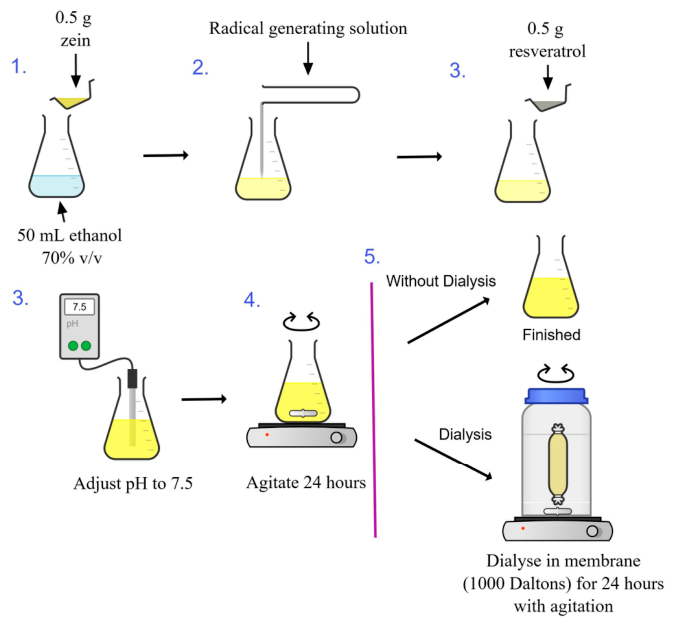
Figure 2.
Proposed mechanism of free radical grafting to obtain functionalized zein-resveratrol.
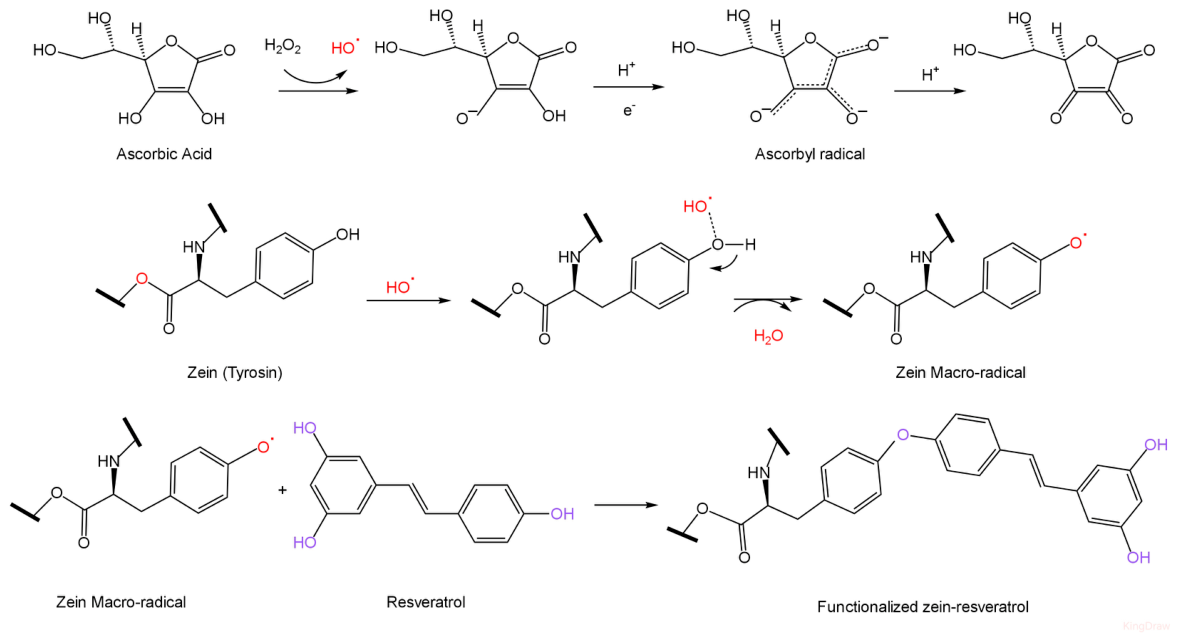
Figure 3.
UV-Vis absorbance spectra of free resveratrol (orange), zein (green) and functionalized zein-resveratrol (magenta) in a wavelength range of 200 to 500 nm.
Figure 3.
UV-Vis absorbance spectra of free resveratrol (orange), zein (green) and functionalized zein-resveratrol (magenta) in a wavelength range of 200 to 500 nm.
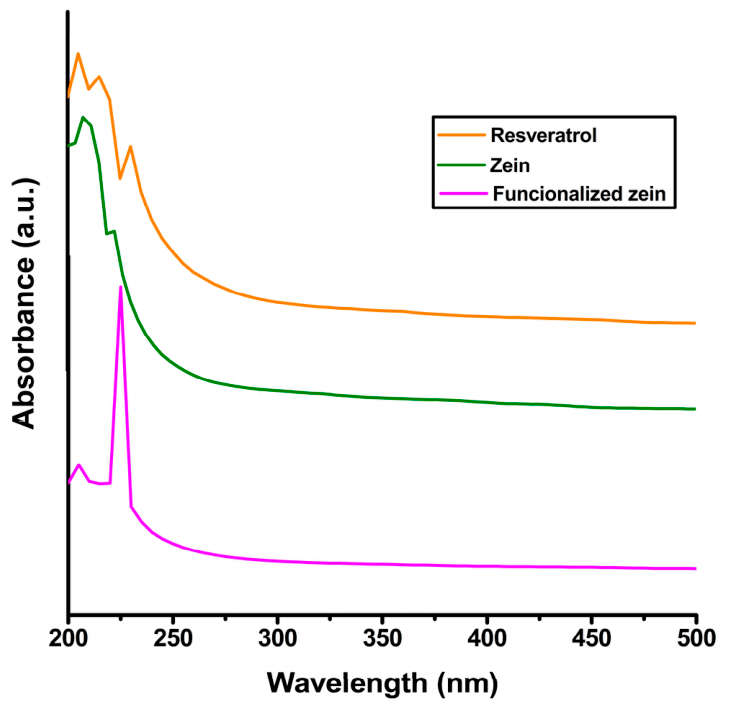
Figure 4.
Attenuated Total Reflectance Fourier Transform Infrared (ATR-FTIR) spectra of free resveratrol (orange), pure zein (green), functionalized material without dialysis (red), functionalized material with dialysis (violet) using a spectral range of 4000-650 cm-1.
Figure 4.
Attenuated Total Reflectance Fourier Transform Infrared (ATR-FTIR) spectra of free resveratrol (orange), pure zein (green), functionalized material without dialysis (red), functionalized material with dialysis (violet) using a spectral range of 4000-650 cm-1.
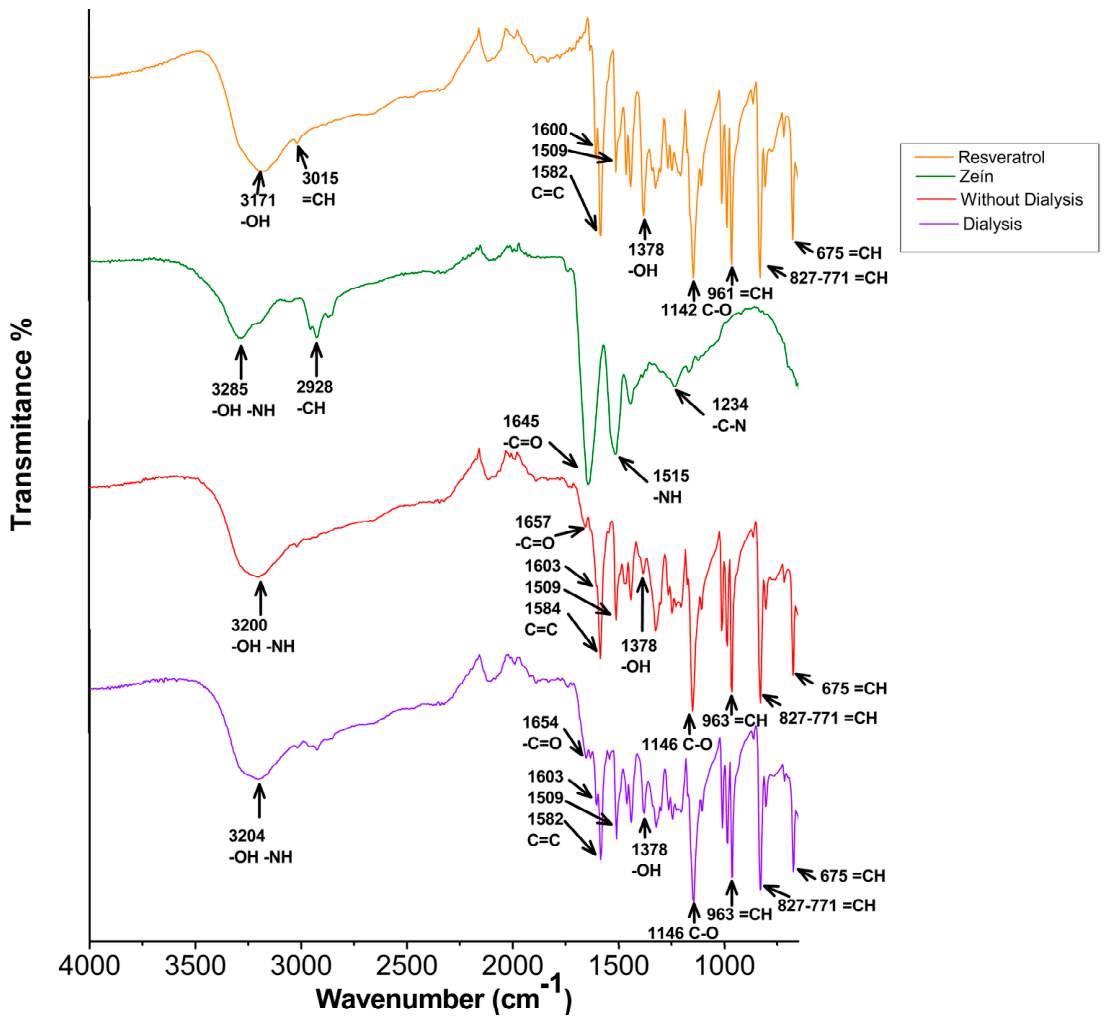
Figure 5.
XPS survey spectra of resveratrol (orange), zein (green), functionalized zein-resveratrol without dialysis (red), and functionalized zein-resveratrol with dialysis (violet).
Figure 5.
XPS survey spectra of resveratrol (orange), zein (green), functionalized zein-resveratrol without dialysis (red), and functionalized zein-resveratrol with dialysis (violet).
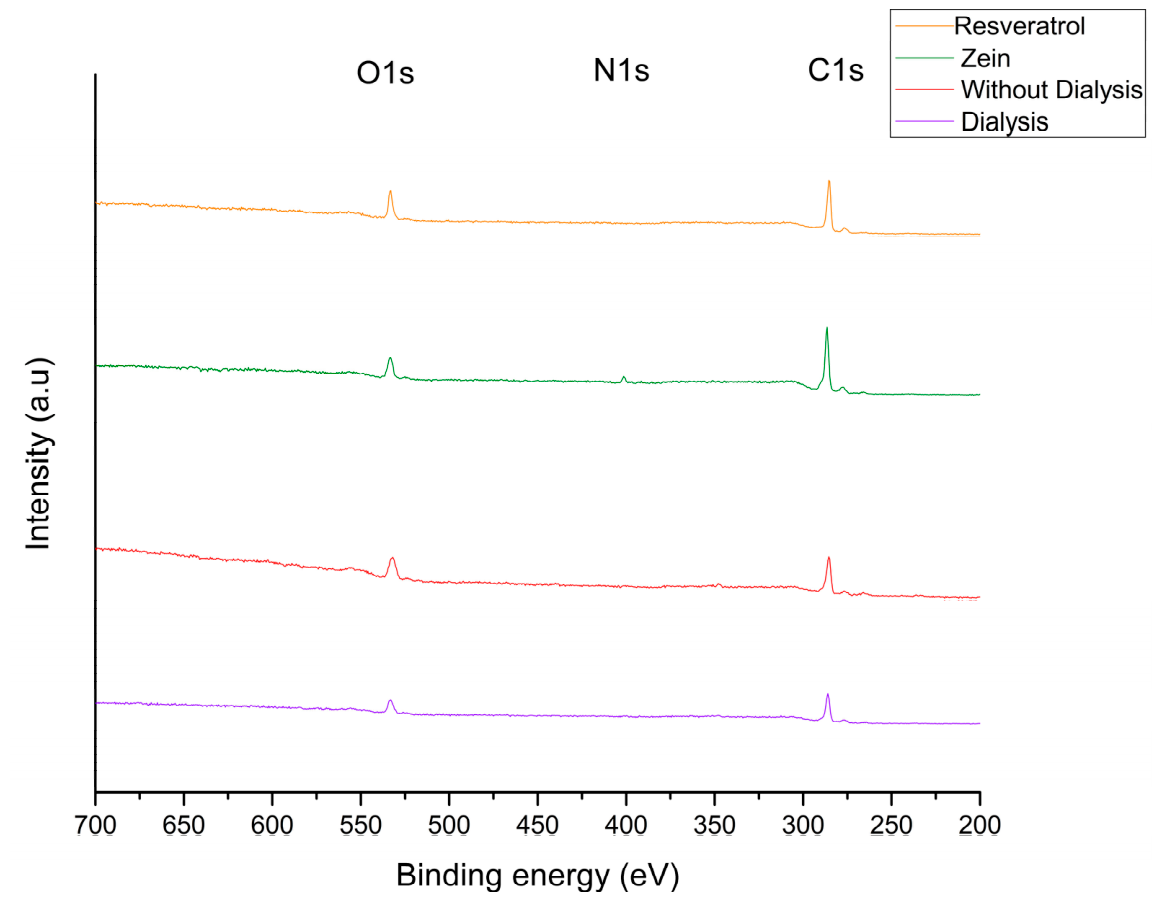
Figure 6.
Deconvolution of high-resolution spectra for the a) C1s and b) O1s levels of resveratrol.
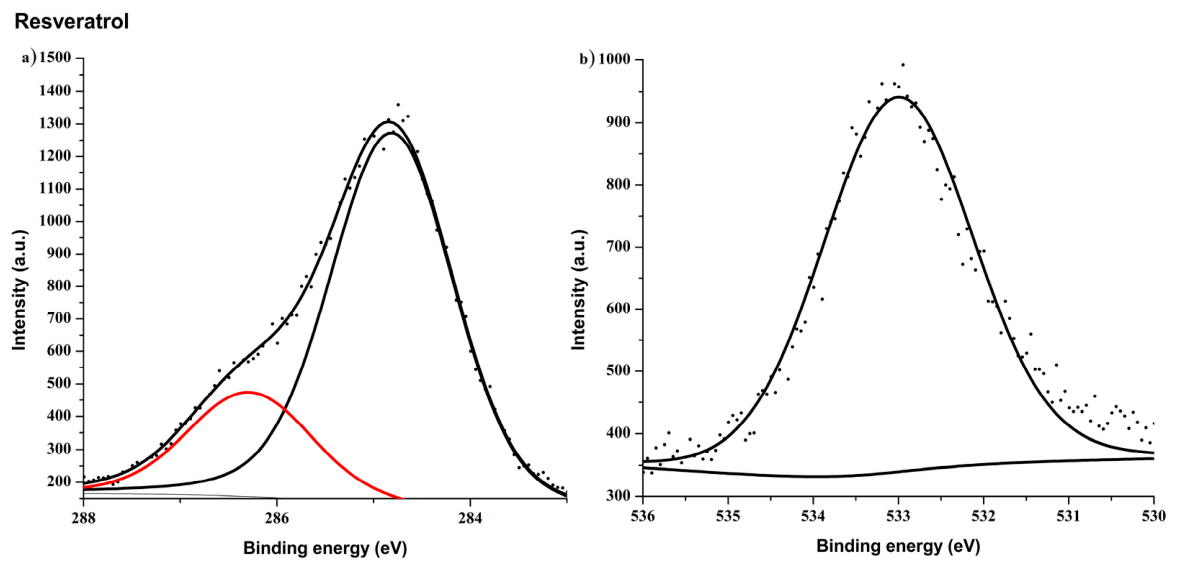
Figure 7.
Deconvolution of high-resolution spectra for the a) C1s, b) O1s, and c) N1s levels of zein.
Figure 7.
Deconvolution of high-resolution spectra for the a) C1s, b) O1s, and c) N1s levels of zein.
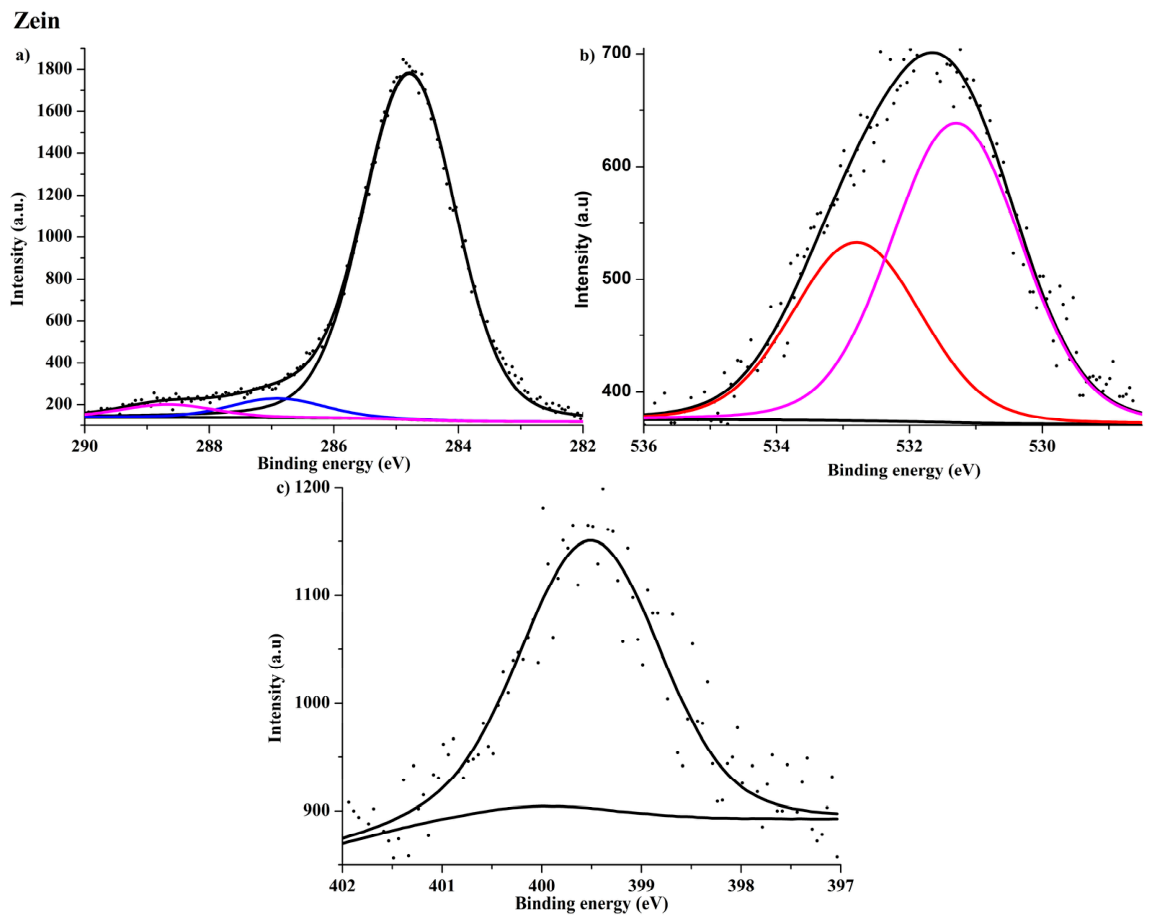
Figure 9.
Deconvolution of high-resolution spectra for the a) C1s, b) O1s, and c) N1s levels of functionalized zein-resveratrol with dialysis.
Figure 9.
Deconvolution of high-resolution spectra for the a) C1s, b) O1s, and c) N1s levels of functionalized zein-resveratrol with dialysis.
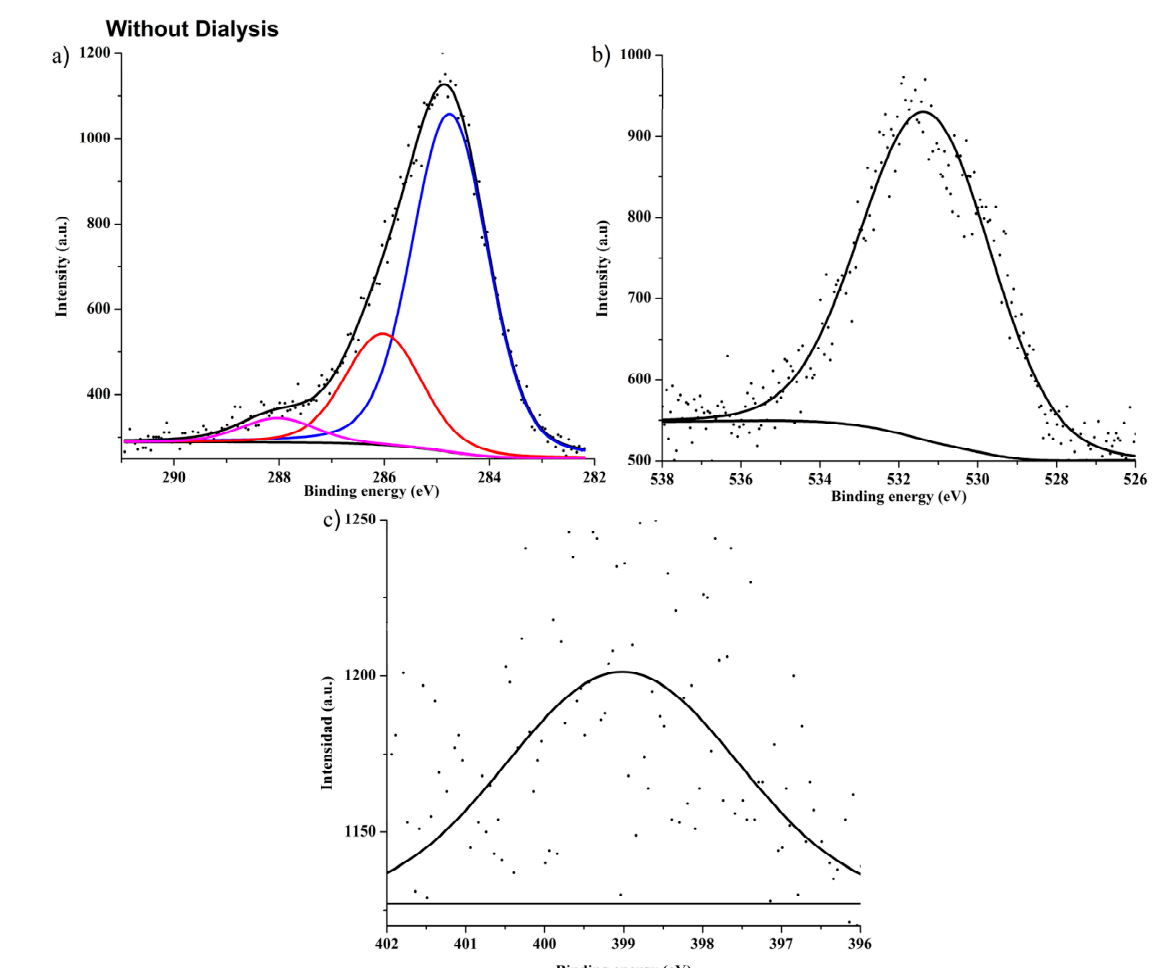
Figure 11.
X-ray diffraction (XRD) patterns of free resveratrol (orange), pure zein (green), functionalized material without dialysis (red), functionalized material with dialysis (violet).
Figure 11.
X-ray diffraction (XRD) patterns of free resveratrol (orange), pure zein (green), functionalized material without dialysis (red), functionalized material with dialysis (violet).
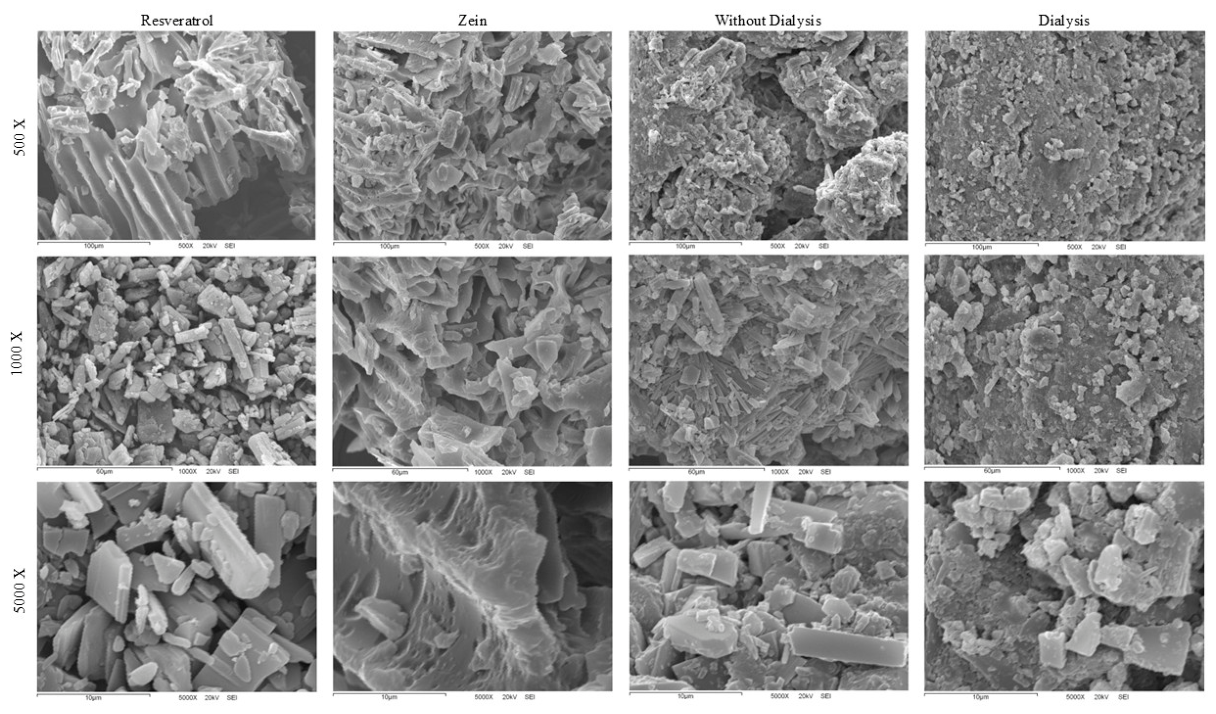
Figure 12.
Differential scanning calorimetry (DSC) thermograms of free resveratrol (orange), pure zein (green), functionalized material without dialysis (red), functionalized material with dialysis (violet).
Figure 12.
Differential scanning calorimetry (DSC) thermograms of free resveratrol (orange), pure zein (green), functionalized material without dialysis (red), functionalized material with dialysis (violet).
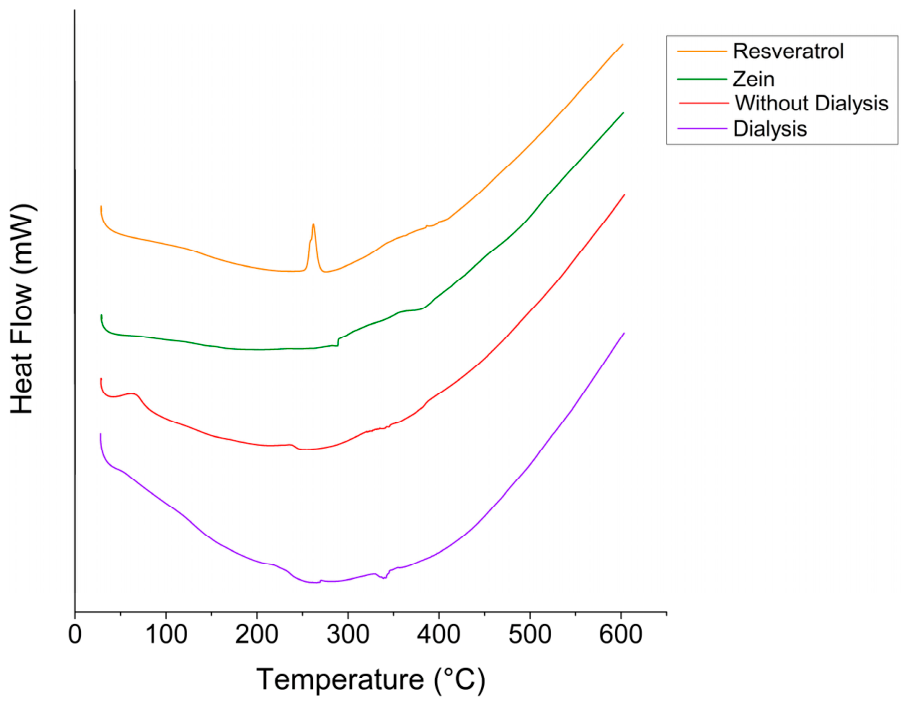
Figure 13.
TGA and DTG curves of a) free resveratrol (orange), b) pure zein (green), c) functionalized material without dialysis (red), d) functionalized material with dialysis (violet).
Figure 13.
TGA and DTG curves of a) free resveratrol (orange), b) pure zein (green), c) functionalized material without dialysis (red), d) functionalized material with dialysis (violet).
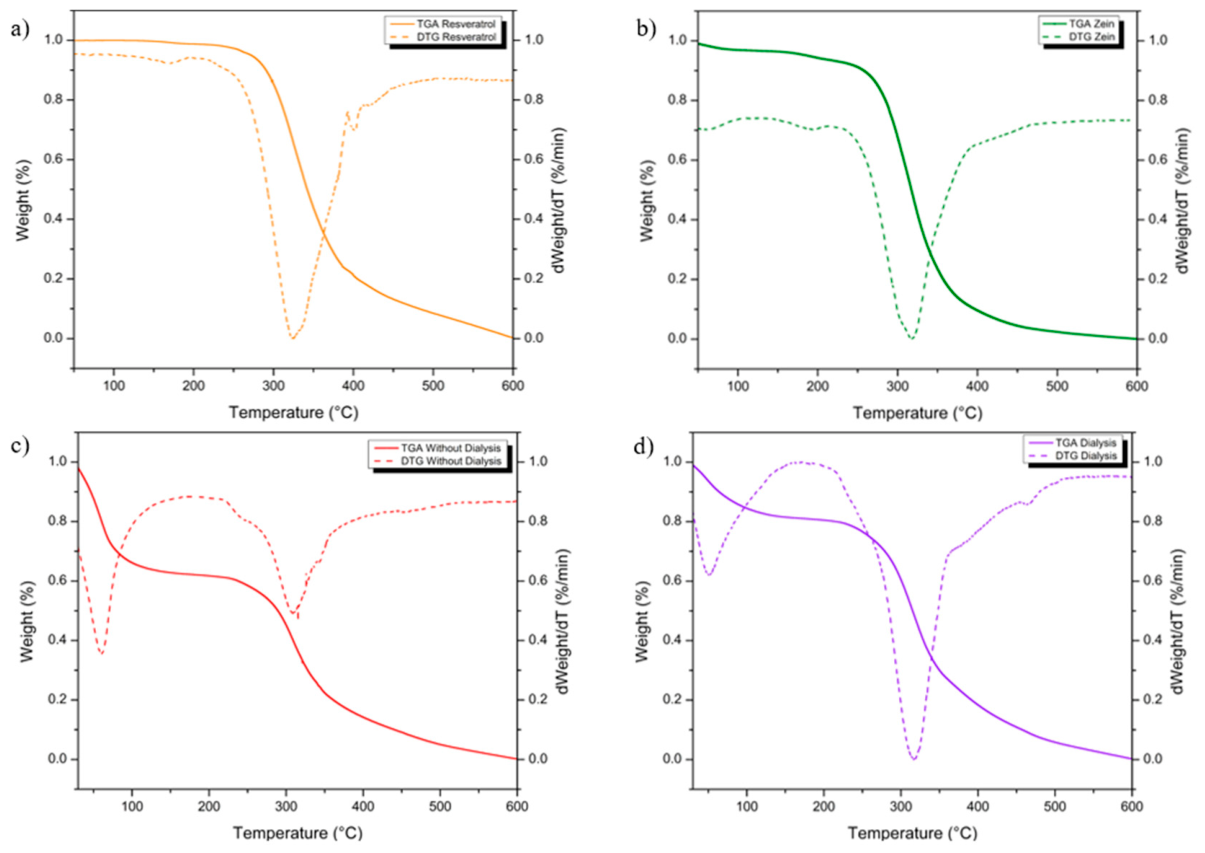
Figure 14.
Total phenol content of free resveratrol (orange), pure zein (green), functionalized material without dialysis (red), and functionalized material with dialysis (violet)1. 1Means with different letters indicate significant differences between concentrations within each treatment (Tukey, p < 0.05). No statistical comparisons were made between treatments.
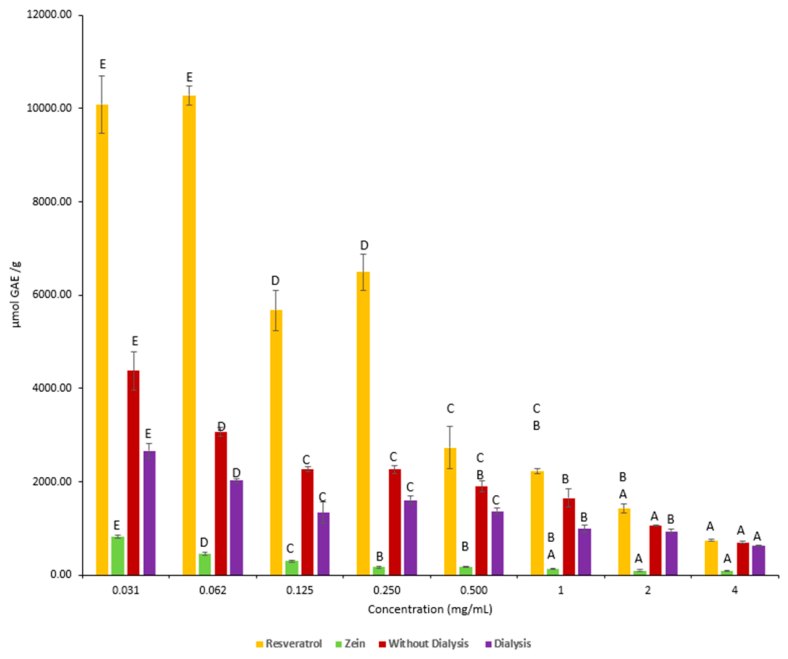
Figure 15.
A) µmol TE/g DW of free resveratrol (orange), pure zein (green), functionalized zein-resveratrol without dialysis (red), functionalized zein-resveratrol with dialysis (violet); B) Percentage inhibition of ABTS•+ radical for free resveratrol (orange), pure zein (green), functionalized zein-resveratrol without dialysis (red), functionalized zein-resveratrol with dialysis (violet)1. 1Means with different letters indicate significant differences between concentrations within each treatment (Tukey, p < 0.05). No statistical comparisons were made between treatments.
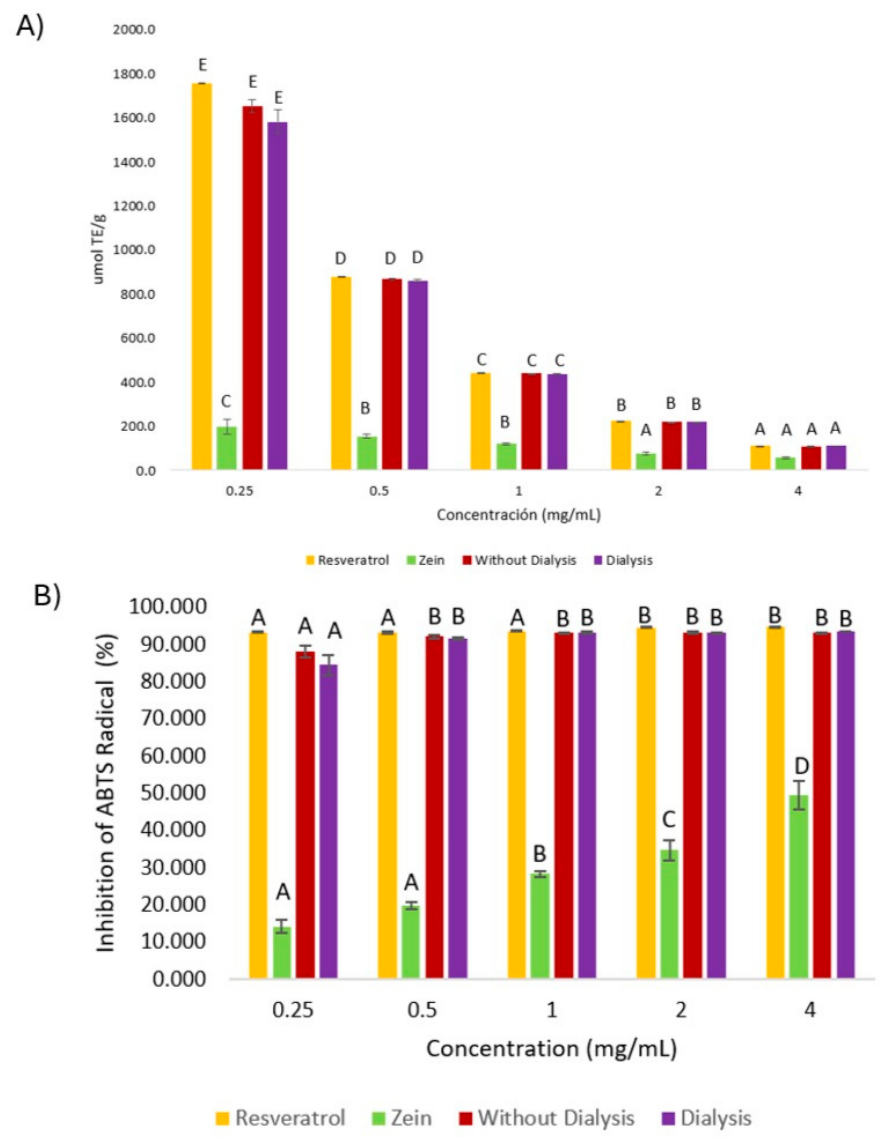
Figure 16.
A) µmol TE/g DW of free resveratrol (orange), pure zein (green), functionalized zein-resveratrol without dialysis (red), functionalized zein-resveratrol with dialysis (violet); B) Percentage inhibition of DPPH• radical for free resveratrol (orange), pure zein (green), functionalized zein-resveratrol without dialysis (red), functionalized zein-resveratrol with dialysis (violet)1. 1Means with different letters indicate significant differences between concentrations within each treatment (Tukey, p < 0.05). No statistical comparisons were made between treatments.
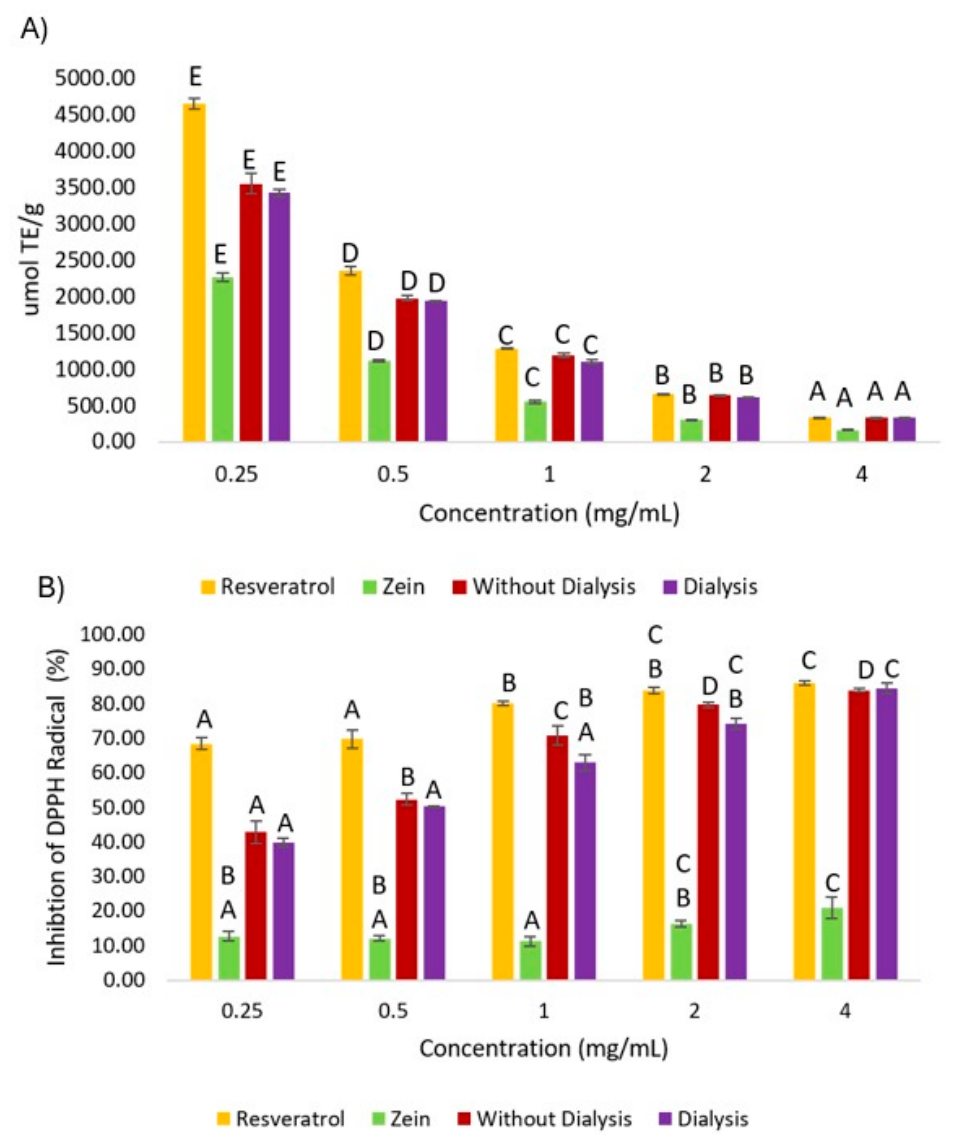

Table 1.
Protein content of the functionalized samples determined by the Bradford method, and resveratrol concentration for a sample concentration of 4 mg/mL.
Table 1.
Protein content of the functionalized samples determined by the Bradford method, and resveratrol concentration for a sample concentration of 4 mg/mL.
| Sample | Concentration of protein mg/mL | Concentration of resveratrol (μmol GAE g⁻¹ dry sample) |
|---|---|---|
| Without dialysis | 0.457 ± 0.016 | 704.96 ± 30 |
| Dialysis | 0.827 ± 0.040 | 622.06 ± 10.8 |
Table 2.
In vitro analysis of resveratrol, pure zein, functionalized zein-resveratrol without dialysis and with dialysis. 1.
Table 2.
In vitro analysis of resveratrol, pure zein, functionalized zein-resveratrol without dialysis and with dialysis. 1.
| Time (min) | Resveratrol (μmol GAE/g) | Without Dialysis (μmol GAE/g) | Dialysis (μmol GAE/g) |
|---|---|---|---|
| Simulated Gastric Phase | |||
| 30 | 1028 ± 20.7A | 1115 ± 17.8 D | 1104.4 ± 16.8 D |
| 60 | 1080.6 ± 10.5B | 1089.9 ± 16.3 D | 1091.7 ± 23.2 CD |
| 90 | 1116.4 ± 7.2B | 1095.6 ± 32.3 D | 1090.9 ± 13.7 CD |
| 120 | 1023.2 ± 26.3 A | 1109.4 ± 11.7 D | 1084.4 ± 10.1 CD |
| Simulated Intestinal Phase | |||
| 150 | 1030 ± 19.2 A | 954.9 ± 25.4 B | 1050.8 ± 16.5 C |
| 180 | 985.4 ± 4.7 A | 1013.8 ± 4.7 C | 1069.5 ± 16.2 CD |
| 210 | 1001.8 ± 11.5 A | 885.9 ± 14 A | 928.4 ± 22.5 A |
| 240 | 1014.7 ± 13.9 A | 952 ± 12.6 B | 987.3 ± 14.5 B |
1Means with different letters indicate significant differences between time within each treatment (Tukey, p < 0.05). No statistical comparisons were made between treatments.
Disclaimer/Publisher’s Note: The statements, opinions and data contained in all publications are solely those of the individual author(s) and contributor(s) and not of MDPI and/or the editor(s). MDPI and/or the editor(s) disclaim responsibility for any injury to people or property resulting from any ideas, methods, instructions or products referred to in the content. |
© 2026 by the authors. Licensee MDPI, Basel, Switzerland. This article is an open access article distributed under the terms and conditions of the Creative Commons Attribution (CC BY) license.
Copyright: This open access article is published under a Creative Commons CC BY 4.0 license, which permit the free download, distribution, and reuse, provided that the author and preprint are cited in any reuse.