

Submitted:
10 October 2026
Posted:
13 October 2026
You are already at the latest version
Abstract
Background: Manual IV medication preparation requires multiple discrete steps, each a potential point of process deviation, while manufacturer-prepared ready-to-use (MP-RTU) products avoid many manual compounding steps. Peer-reviewed literature describing and quantifying real-world process-error and workforce-time-waste (WTW) differences between traditional IV piggyback (IVPB) and MP-RTU products remains limited. Methods: Two complementary studies were conducted. The Alpha study was a prospective, direct-observation study of 100 micafungin (47 steps) and 100 norepinephrine (15 steps) preparations at a 541-bed hospital. The Bravo study was a retrospective operational analysis of utilization, request burden, time-to-administration, and preparation cost for four medications at a 615-bed hospital. Results informed a decision-analytic cost-effectiveness model (1-year horizon, health-system perspective) comparing MP-RTU with IVPB, with sensitivity analyses. Results: Micafungin preparations contained 208 process errors (4.4%; 67% with ≥ 1 error), concentrated in drug withdrawal, syringe assembly, and material collection; norepinephrine preparations contained 100 errors (6.7%; 70% with ≥ 1 error), concentrated in hood preparation/compounding. Pharmacy-prepared insulin and vasopressin showed higher request burden and roughly 2-hour longer time to administration than MP-RTU equivalents. MP-RTU dominated IVPB in the model, with a base-case incremental cost-effectiveness ratio of −$4,954.15 per additional error avoided, robust across sensitivity analyses. Conclusions: Manual IV preparation introduced process-error and operational-burden that was either reduced or absent with MP-RTU; this was also less costly and more effective in the model. Findings support considering process-error opportunity and operational burden, not acquisition cost alone, when evaluating IV medication-preparation strategies.
Keywords:
manufacturer-prepared ready-to-use
; IV bags
; IV piggyback
; medication preparation errors
; workforce time waste
; cost-effectiveness analysis
1. Introduction
Preventable adverse drug events from inpatient injectable medications result in more than 1 million hospitalizations and add an estimated $2.7 to $5.1 billion in medical costs to the US health care system annually [1], with roughly half of such events involving intravenous (IV) medications [2]. IV therapy remains essential across acute and chronic care settings because it enables rapid systemic effect, precise titration, and high bioavailability. Traditional delivery via IV piggyback (IVPB) has long been the standard approach in most hospitals, but it typically requires reconstitution, manual dilution, and other compounding steps that introduce opportunities for medication error, contamination, and delay. IVPB preparation exposes multiple points of risk, including compounding errors such as incorrect concentration, sterility breaches in high-volume or time-sensitive settings, and delays in administration during peak demand.
A systematic review found that 31% of practitioners preparing or admixing injectable medications were aware of or had personally experienced a preparation error, with wrong dose, concentration, diluent, or diluted volume (82%) and labeling errors (81%) the most common [3]. The same review found substantially higher microbial contamination rates for parenteral preparation performed in clinical, rather than pharmacy, environments (1.09-20.7%), reflecting the influence of environment, staffing, training, frequency, and aseptic technique [3]. Recognizing these risks, the Institute for Safe Medication Practices (ISMP) recommends that, to the maximum extent possible, commercially prepared, MP-RTU parenteral products and unit-dose syringes be used in place of manually compounded sterile products, and that adult IV push medications be supplied in ready-to-administer form to minimize manipulation outside the pharmacy sterile-compounding area [4]. The Consensus Development Conferences on the Safety of IV Drug Delivery Systems similarly ranked manufacturer-prepared, point-of-care-activated, and pharmacy-based admixture systems as the safest available delivery approach across safety, cost, simplicity, and training domains, concluding that the organizational costs of inaction “far exceed an institutional financial investment in the safest systems for the patient and staff” [5].
Manufacturer-prepared ready-to-use (MP-RTU) IV medications are pre-formulated in standardized concentrations and packaging, supplied in flexible containers or prefilled syringes, and typically barcoded to support digital medication-administration systems. Because they do not require on-site reconstitution or dilution, MP-RTU products can eliminate several of the manual, error-prone steps associated with IVPB preparation. A prior continuous-observation workflow time study similarly demonstrated that manual IV push preparation generates measurable non-value-added labor, or workforce time waste (WTW), that ready-to-administer formulations can reduce [6]. Despite these theoretical and observational advantages, health systems continue to face barriers to MP-RTU adoption, including limited drug availability, higher upfront acquisition cost, and storage considerations. Limited published, peer-reviewed pharmacoeconomic evidence exists to help health systems determine the net cost-effectiveness of MP-RTU products relative to traditional IVPB preparation.[7,8]
Much of the existing literature on ready-to-administer and MP-RTU injectable products has evaluated preparation time, cost, or error outcomes in isolation, and relatively few studies have combined direct observation of the preparation process itself with system-level operational data and a formal economic model within the same research program. A process error, as used throughout this study, refers specifically to nonadherence to an institution's standard operating procedure (SOP) for a discrete, observable preparation step; it is distinct from, and does not by itself establish, a medication error that reaches a patient or a preventable adverse drug event. Characterizing process errors at this granular level is nonetheless clinically meaningful, because sterile-compounding workflows create opportunities for deviation upstream of the point at which a pharmacist performs final product verification, and some deviations, particularly those involving aseptic technique or critical-site manipulation, may not be apparent from inspection of the finished preparation alone. Similarly, framing operational burden as workforce time waste (WTW) situates preparation-related labor within the broader medication-use system, extending beyond the physical act of compounding to include the communication, troubleshooting, and delay generated when a medication is not immediately available at the point of care.
The purpose of this research was therefore threefold: (1) to characterize process errors occurring during manual preparation of two commonly used IV medications through observation, and to identify the preparation stages and individual steps in which those errors were concentrated; (2) to quantify workforce time waste associated with pharmacy-prepared versus MP-RTU IV medications across four complementary operational domains, medication utilization, request burden, time to administration, and preparation cost; and (3) to use these real-world empirical findings as inputs to a decision-analytic cost-effectiveness analysis comparing MP-RTU products with traditional IVPB preparation from a health-system perspective, expressed as the incremental cost per additional process error avoided.
2. Materials and Methods
This research comprised two complementary, site-based empirical studies, the results of which were used as inputs to a decision-analytic cost-effectiveness model. The Alpha study characterized process errors during direct observation of manual IV medication preparation. The Bravo study characterized workforce time waste across the broader medication-use system. Both studies were approved by their respective institutional review boards prior to data collection (see Institutional Review Board Statement).
2.1. Alpha: Process-Error Observation Study
2.1.1. Design and Setting
A prospective, direct-observation study was conducted at a 541-bed tertiary, not-for-profit hospital in the United States from 1 March through 31 May 2026 to characterize process errors associated with IV medication preparation. Four medications were initially evaluated based on institutional utilization and preparation modality: micafungin, norepinephrine, insulin, and vasopressin. During the study period, micafungin was manually prepared by pharmacy personnel on a patient-specific basis, and norepinephrine was prepared in batches when on-site preparation was required; insulin and vasopressin were supplied as MP-RTU or outsourced products and did not require on-site compounding. As such, insulin and vasopressin were excluded from the study. Direct observation of preparation-process errors was conducted for micafungin and norepinephrine only, in a centralized IV preparation room equipped with two ISO-classified compounding hoods and an observation window that allowed real-time monitoring without entering or disrupting the sterile environment.
2.1.2. Observation Instruments, Training, and Procedures
Standardized observation instruments were developed separately for micafungin and norepinephrine from each medication's institutional standard operating procedure (SOP). The micafungin instrument comprised 47 discrete, observable process steps spanning material retrieval through sterile compounding, documentation, pharmacist verification, and final disposition; the norepinephrine instrument comprised 15 steps spanning inventory assessment, IV-room entry, hood preparation and compounding, pharmacist verification, and labeling/distribution. Each step was scored as completed correctly, completed incorrectly, or not applicable. Steps were subsequently organized into functionally related observation analysis groups (10 groups for micafungin; 5 for norepinephrine) while individual step-level data were retained for granular analysis.
Site pharmacists responsible for sterile-compounding oversight served as observers and were trained on the standardized instruments, applicable SOPs, and classification criteria prior to data collection. Pharmacy technicians were aware that preparation activities could be observed. Observers did not intervene during preparation; each preparation proceeded through completion and routine pharmacist verification, consistent with usual practice. A total of 100 patient-specific micafungin preparations and 100 batched norepinephrine preparations were directly observed.
2.1.3. Process-Error Definition and Analysis
A process error was defined as any applicable, directly observed preparation step not completed in accordance with the site's established SOP, and therefore represented nonadherence to a specified preparation process rather than direct evidence that an incorrect medication reached a patient or resulted in harm. Because more than one process error could occur within a single preparation, errors were evaluated at the individual step level, the observation-analysis-group level, and the individual-preparation level. Process-error rate was calculated at each level as the number of observed process errors divided by the number of applicable process-error opportunities (observations classified as not applicable were excluded from the denominator). Because micafungin and norepinephrine differed substantially in preparation modality, SOP-defined workflow, and number of process-error opportunities, analyses focused on characterizing the frequency and distribution of process errors within each workflow rather than on direct statistical comparison between medications. Annual and study-period dispensing data for all four medications were also collected to contextualize the observed preparations within routine institutional utilization.
2.2. Bravo: Workforce Time Waste Analysis
2.2.1. Design and Setting
A retrospective operational analysis was conducted at a 615-bed academic community-based hospital in Tampa, Florida, using calendar-year 2025 (and select 2026) medication dispensing records, electronic medication-request data, medication-administration timing data, automated-dispensing-cabinet (ADC) timestamps, and internal pharmacy preparation-cost estimates. Workforce time waste (WTW) was defined as non-value-added labor and workflow burden generated when medications require pharmacy preparation, additional medication requests, inventory troubleshooting, manual compounding, pharmacist verification, and delayed availability prior to administration, extending the concept beyond sterile-compounding time alone to the broader medication-use process [6]. Four medications were evaluated (insulin, micafungin, norepinephrine, vasopressin), selected to represent a mix of manufacturer-prepared MP-RTU and pharmacy-prepared (RxPrep) products. Because insulin experienced a temporary MP-RTU shortage in December 2025 and vasopressin transitioned from an RxPrep to an MP-RTU product between December 2025 and April 2026, these two medications additionally permitted within-medication comparison of RxPrep and MP-RTU workflows.
2.2.2. Data Collection and Outcomes
Four complementary analyses were conducted. First, medication-utilization analysis summarized annual and monthly dispense volumes by product type. Second, medication-request analysis summarized total requests, the proportion categorized as stockout-related, request turnaround time, request subtypes, pharmacy response categories, and medication request-to-dispense ratios, because each request may require nursing time to identify and submit the issue and pharmacy time to review, communicate, troubleshoot, and potentially prepare or redistribute product. A focused monthly analysis evaluated whether insulin request burden increased during the December 2025 MP-RTU shortage. Third, a time-to-medication-administration analysis compared, for RxPrep products, the interval from medication-request timestamp to administration timestamp with, for MP-RTU products, the interval from ADC dispense timestamp to administration timestamp, for two natural comparisons: RxPrep insulin during the December 2025 shortage versus MP-RTU insulin, and RxPrep vasopressin (December 2025) versus MP-RTU vasopressin (April 2026, after institutional transition). Fourth, a preparation-cost analysis estimated direct resource utilization for RxPrep insulin and RxPrep vasopressin, including drug acquisition cost, technician preparation time, pharmacist verification time, and consumable compounding supplies (syringes, empty sterile bags, transfer devices, labels).
2.3. Decision-Analytic Cost-Effectiveness Model
A decision-analytic model was developed from a health-system perspective, focused on inpatient medical/surgical, critical care, and operating/procedural units, using a 1-year time horizon and a sample size of 5,805 administrations, based on annual Alpha-site dispensing of norepinephrine and micafungin. A simple decision tree included sequential nodes representing preparation modality (MP-RTU vs. IVPB), drug (norepinephrine or micafungin), occurrence of a process error, type of error (harmful vs. non-harmful), and, for harmful errors, severity (significant, serious, or life-threatening), consistent with the adverse-drug-event severity classification of Hug et al. [9] (e.g., a rash as significant, gastrointestinal bleeding requiring transfusion as serious, and an event requiring intensive-care transfer as life-threatening). Effectiveness was measured as the number of preparation errors occurring at the end of each model arm; costs included drug acquisition cost and preparation-related cost. The incremental cost-effectiveness ratio (ICER) calculated as (C₁ − C₂)/(E₁ − E₂), where C and E represent costs and number of errors for MP-RTU (1) and IVPB (2), respectively, served as the primary economic outcome [10,11,12,13].
Effectiveness inputs (process-error probabilities for norepinephrine and micafungin) were obtained from Alpha. Cost inputs included average wholesale price (AWP) of each drug and medication-turnaround costs (technician salary and time associated with medication requests) from Bravo and the US Bureau of Labor Statistics [19], and costs associated with harmful and non-harmful errors, and the probability and severity distribution of errors leading to patient harm, from Hug et al. [9]. All costs were converted to 2025 USD using the Consumer Price Index. TreeAge Pro Healthcare 2026, R2 (TreeAge Software, Plymouth, MA) [14] was used to construct the model and conduct the analyses.
A one-way sensitivity analysis (OWSA) varied each parameter individually across its lower and upper bound (obtained from published 95% confidence intervals, or a ±10% margin when a confidence interval was unavailable) and recalculated the ICER, with the most influential parameters presented in a tornado diagram. A probabilistic sensitivity analysis (PSA) used Monte Carlo simulation with 10,000 iterations, in which all model parameters were varied simultaneously according to an appropriate probability distribution (gamma, beta, or Dirichlet, as applicable) based on each parameter's mean and standard deviation, to assess overall parameter uncertainty and generate a distribution of ICER values.
2.4. Statistical Analysis
Descriptive statistics were used for all study measures. For continuous variables, the number of assessments, mean, standard deviation, and median (minimum, maximum) were reported; for categorical variables, frequencies and percentages were reported, with 95% confidence intervals calculated where appropriate. Because Alpha and Bravo addressed different, complementary outcomes at different sites, and because process-error opportunities differed structurally between micafungin and norepinephrine, formal between-medication or between-site hypothesis testing was not the primary analytic approach; rather, analyses focused on characterizing the frequency, distribution, and operational and economic implications of observed process errors and workforce time waste.
3. Results
3.1. Alpha: Process-Error Observation Study
Across the four medications, 7,887 doses were dispensed annually, with norepinephrine accounting for the majority (n = 5,264; 67%), followed by vasopressin (n = 1,531; 19%), insulin (n = 551; 7%), and micafungin (n = 541; 7%). During the 3-month study period, 1,883 doses were dispensed with a proportional distribution similar to annual utilization (Table 1). The 100 observed micafungin preparations represented 94.3% of the 106 micafungin doses dispensed during the study period, while the 100 observed norepinephrine preparations represented 8.3% of the 1,212 norepinephrine doses dispensed.
Across 100 micafungin preparations (47 process steps; 10 observation analysis groups), 208 process errors were identified, an overall process-error rate of 4.4%. Process errors occurred across all 10 groups; the greatest absolute number occurred during Drug Withdrawal from Vial (n = 68; 6.8% group rate), followed by Syringe Assembly (n = 37; 7.4%) and Order & Material Collection (n = 35; 7.0%), which together accounted for 67.3% of all micafungin process errors. IV Workflow Documentation had the highest group-level rate (8.0%). At the individual-step level, the most frequent errors involved maintaining first air across the syringe Luer Lock (24% of observations), vial positioning after pushing air into the airspace (23%), and pushing air into the vial airspace (18%).
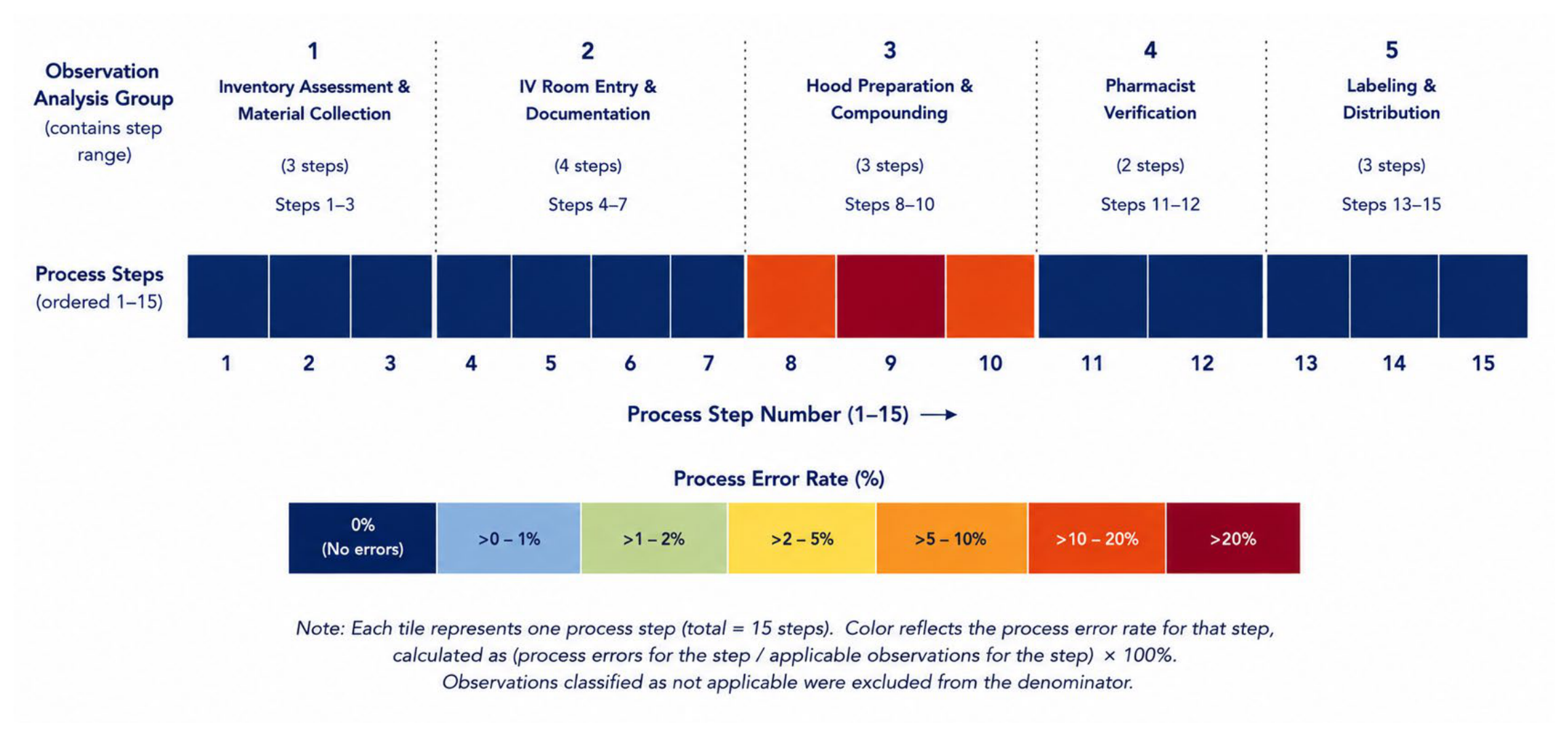
Across 100 norepinephrine preparations (15 steps; 5 groups), 100 process errors were identified, an overall rate of 6.7%. All 100 errors occurred within the three-step Hood Preparation & Compounding group (33.3% group rate); no errors occurred in the remaining four groups. Individual-step rates within this group ranged from 30% (cleaning products with sterile isopropyl alcohol upon placement in the hood; spraying gloved hands with sterile isopropyl alcohol upon hood entry) to 40% (maintaining first air and aseptic technique during compounding) (Table 2).
At the preparation level, 33 of 100 micafungin preparations (33%) were completed without an observed process error, while 67% contained at least one error and 37% contained three or more (range, 0–7). Among norepinephrine preparations, 30% were error-free, 70% contained at least one error, and no preparation contained more than two errors (Table 3). Thus, although a similar proportion of preparations contained at least one process error for both medications, micafungin preparations demonstrated substantially greater accumulation of multiple errors within a single preparation, consistent with its larger number of discrete process steps (47 vs. 15).
Figure 1 presents heat maps of the observed process-error rate for each of the 47 micafungin and 15 norepinephrine process steps, illustrating that micafungin errors were broadly distributed across the workflow while norepinephrine errors were concentrated in aseptic hood-preparation activities.
Figure 1a.
Heat map of micafungin process-error rate by step (N = 100 preparations).
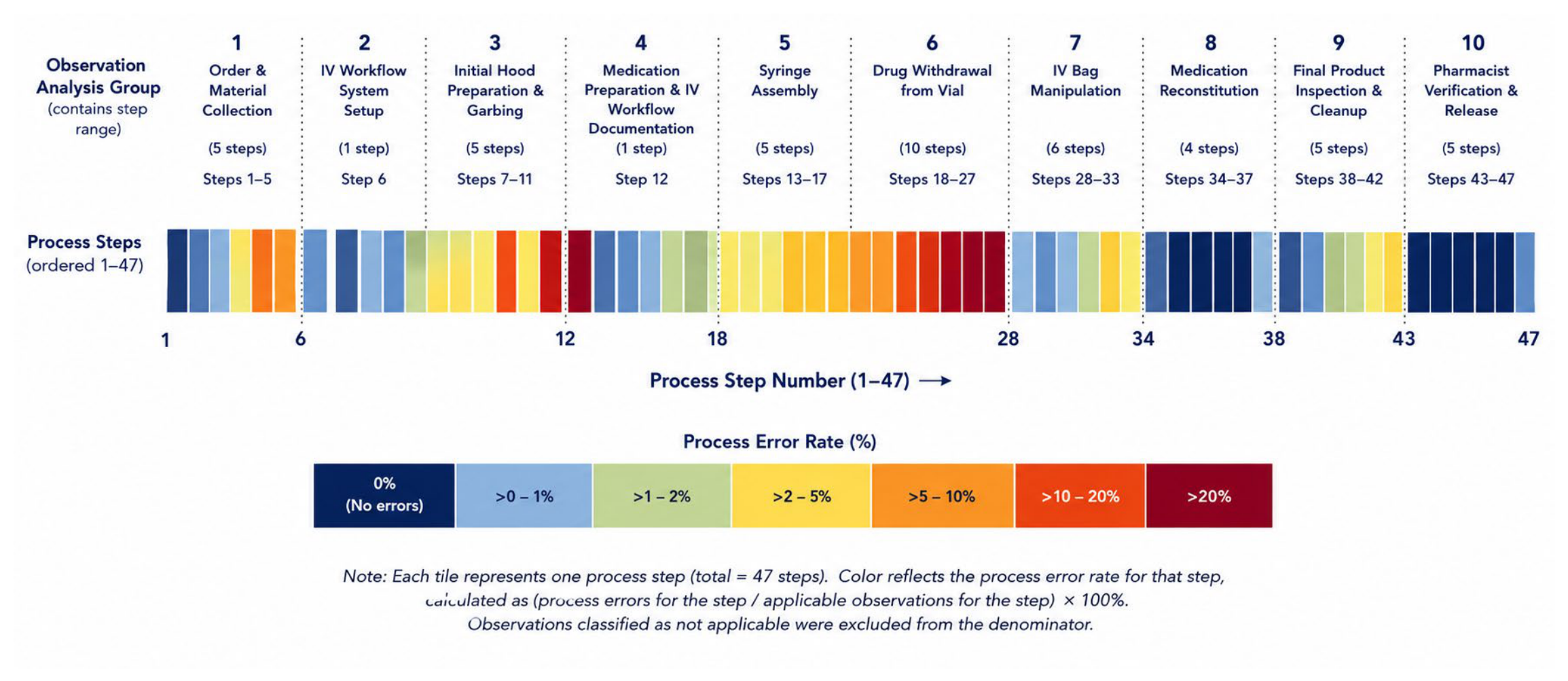
Figure 1b.
Heat map of norepinephrine process-error rate by step (N = 100 preparations).
3.2. Bravo: Workforce Time Waste Analysis
During 2025, 3,520 insulin infusions (164 RxPrep in December 2025 during an MP-RTU shortage), 832 micafungin RxPrep doses, 6,113 norepinephrine MP-RTU products, and 2,606 RxPrep vasopressin products were dispensed. A total of 3,977 medication requests were identified across the four medications. Vasopressin, reported predominantly as an RxPrep product, generated the highest request-to-dispense ratio (1.234) compared with norepinephrine (0.073, predominantly MP-RTU), insulin (0.077, predominantly MP-RTU outside the shortage period), and micafungin (0.053) (Table 4). A focused monthly analysis demonstrated that insulin requests rose from a baseline generally below 0.08 requests per dispense to 0.690 in December 2025, coincident with the MP-RTU shortage and introduction of RxPrep insulin (174 monthly requests vs. a mean of under 20 in prior months).
Time-to-administration analyses demonstrated that RxPrep workflows were associated with meaningfully longer intervals to administration than MP-RTU workflows for both medications evaluated (Table 5). For insulin, RxPrep use during the December 2025 shortage was associated with a mean administration-time difference of approximately 2 hours 1 minute (median, 1 hour 5 minutes) compared with MP-RTU insulin. For vasopressin, RxPrep use in December 2025 was associated with a mean difference of approximately 2 hours 6 minutes (median, 1 hour 51 minutes) compared with MP-RTU vasopressin in April 2026, after the institution transitioned product formulations.
Preparation-cost analysis estimated a total per-dose preparation cost of $5.11 for RxPrep insulin and $25.73 for RxPrep vasopressin, incorporating drug acquisition cost, technician preparation and set-up time, pharmacist verification time, and compounding consumables (syringes, sterile bags, needles, labels, and personal protective equipment); these costs are not incurred when an equivalent MP-RTU product is available.
3.3. Cost-Effectiveness Analysis Results
In the base-case decision-analytic model, the estimated cost per administration was $9,742.08 for MP-RTU compared with $11,662.73 for traditional IVPB. The mean number of errors per administration was 0 for MP-RTU compared with 0.3877 for IVPB, a 100% relative reduction in modeled process errors. MP-RTU was therefore the dominant strategy, being both less costly and more effective, with a base-case ICER of −$4,954.15 per additional error avoided (Table 6). Extrapolated to 5,805 administrations over a 1-year horizon, use of MP-RTU was projected to avoid approximately 2,251 process errors and generate approximately $11.15 million in annual cost savings relative to IVPB.
In the one-way sensitivity analysis, the ICER ranged from −$6,889.01 to −$3,019.29 per additional error avoided and remained negative (i.e., MP-RTU remained dominant) across the full range of every parameter tested (Figure 2). The model was most sensitive to the cost of non-harmful errors and the cost of no errors, followed by the cost of serious errors and the probability of possible harm; the model was comparatively less sensitive to the remaining parameters, including drug AWP and medication-turnaround costs. In the probabilistic sensitivity analysis (10,000 Monte Carlo iterations), approximately 80% of simulated ICER values fell between −$6,699.12 and −$3,183.35, and 95% fell between −$7,629.68 and −$2,276.38 (Figure 3), consistent with and supporting the robustness of the base-case result.
4. Discussion
This combined analysis found that manual IV medication preparation introduced multiple, discrete opportunities for process error and generated measurable workforce time waste, both of which were reduced or eliminated when MP-RTU products were available, and that these real-world findings translated into a decision-analytic model in which MP-RTU dominated traditional IVPB on both cost and effectiveness.
Manual compounding introduces multiple workflow steps at which deviations may occur, particularly around aseptic technique, critical-site handling, and documentation. Although a similar proportion of micafungin and norepinephrine preparations contained at least one process error (67% and 70%, respectively), the two workflows differed considerably in where and how extensively errors accumulated. Micafungin, with 47 discrete process steps, showed errors distributed across all 10 observation analysis groups and accumulating to as many as seven errors in a single preparation, with more than one-third of preparations containing three or more errors. Norepinephrine, with 15 steps, confined all observed errors to three steps within hood preparation and compounding, with no preparation exceeding two errors. This pattern is consistent with a systems-level principle rather than a causal claim about relative medication safety: every required manual manipulation is a process that must be performed correctly, and each preparation step eliminated by an MP-RTU formulation also eliminates the corresponding opportunity for a process error. Because technicians were aware that preparation activities could be observed, a Hawthorne effect may have increased adherence to SOPs during the study; if so, the observed error rates, which nonetheless reached 18–24% for several micafungin steps and 30–40% for norepinephrine hood-preparation steps, likely represent conservative estimates of process-error frequency during unobserved routine practice.
Time-to-administration analyses for both insulin and vasopressin showed an approximately 2-hour mean delay associated with RxPrep relative to MP-RTU workflows, suggesting that delays propagate downstream from pharmacy preparation into nursing workflow and, ultimately, time to therapy. Because WTW was estimated from electronic request, dispense, and administration timestamps rather than direct time-motion observation, these findings likely underestimate the true operational burden of manual preparation, since informal troubleshooting that did not generate a documented request would not be captured.
The workforce-time-waste findings demonstrate that operational burden associated with manual preparation extends well beyond time spent compounding. Vasopressin, predominantly supplied as an RxPrep product, generated 3,215 medication requests for 2,606 dispenses, resulting in a request-to-dispense ratio of 1.23 requests per dispense. In contrast, MP-RTU norepinephrine generated 447 requests for 6,113 dispenses, corresponding to 0.073 requests per dispense. This represents approximately a 17-fold greater request burden for vasopressin and likely reflects recurring nursing and pharmacy communication, troubleshooting, product preparation, and medication redistribution activities. Similarly, insulin generated 271 requests for 3,520 dispenses overall (0.077 requests per dispense); however, during the December 2025 MP-RTU shortage, insulin requests increased to 174 requests for only 252 dispenses, resulting in a request-to-dispense ratio of 0.69 compared with approximately 0.03 during January through November 2025. This represents more than a 20-fold increase in medication request burden when MP-RTU product availability was limited, suggesting that workforce time waste increases when MP-RTU products are unavailable and pharmacy-prepared alternatives are required.
The decision-analytic model integrated these observational findings with published estimates of the cost and probability of adverse drug events by severity [9] to estimate the economic implications of process-error opportunity. MP-RTU was the dominant strategy in the base case, and this conclusion was robust to both one-way and probabilistic sensitivity analysis, with the overall direction of the ICER remaining favorable across the full range of every parameter tested. Notably, the model was most sensitive to the cost of non-harmful and error-free preparations rather than to drug acquisition cost, indicating that the economic value of MP-RTU in this model was driven primarily by the costs associated with medication errors and their potential consequences rather than by differences in drug costs.
These findings are consistent with the broader literature on ready-to-administer injectable products. A systematic review of 16 studies evaluating ready-to-administer IV products found they were generally associated with fewer preparation errors, shorter preparation times, and reduced medication waste, with variable but generally favorable economic evaluations [15]. A cost-minimization analysis of ready-to-administer prefilled syringes in a Dutch hospital similarly found lower total costs driven largely by reductions in preparation errors and contamination [16]. A systematic review of 24 studies comparing prefilled syringes with conventional preparation reported reductions in medication errors ranging from approximately 10% to 73%, alongside reductions in adverse drug events, drug waste, and preparation time [17]. More broadly, reported IV medication administration error rates vary widely across hospital studies (5.0–62.9%), reflecting errors in dose, diluent, route, rate, technique, omission, and timing [18], underscoring IV medication preparation and administration as an important and heterogeneous patient-safety concern to which this study's findings on process-error opportunity are directly relevant, without establishing that MP-RTU products eliminate such errors entirely.
From a systems-engineering and patient-safety perspective, these findings reinforce the principle that the safest step in a medication-use process is often the one that does not have to be performed at all. Human-factors research in high-risk industries has long emphasized that reducing the number of manual steps in a process reduces the number of opportunities for a deviation to occur, independent of the skill or diligence of the individual performing the task; the micafungin and norepinephrine findings in this study, in which 37% and 0%, respectively, of preparations accumulated three or more process errors, illustrate how workflow complexity itself, not only individual performance, shapes the distribution of risk within a preparation. Viewed this way, MP-RTU adoption functions less as a tool for improving individual technician performance and more as a structural intervention that redesigns the workflow to remove entire categories of opportunity for deviation, consistent with the ISMP's and the IV Drug Delivery Safety Consensus Conference's longstanding preference for commercially prepared, ready-to-administer products over manually compounded alternatives whenever feasible [4,5].
These findings also carry practical implications for pharmacy leaders managing sterile-compounding operations under conditions of staffing constraint or shortage. For example, the December 2025 insulin MP-RTU shortage observed in the Bravo study demonstrated that WTW is not a fixed institutional characteristic but can shift rapidly when product availability changes, with downstream consequences for nursing workflow, medication request volume, and time to therapy that were measurable using data most institutions already collect through ADC systems, electronic medication-request platforms, and the electronic health record. This suggests that other health systems could feasibly replicate elements of the Bravo study methodology using existing operational data to monitor WTW as a leading indicator during shortages or formulary transitions, without requiring a dedicated observational study. Future research should extend the direct-observation methodology used in the Alpha study to additional medications and sites, formally assess inter-rater reliability among observers, and, where feasible, link observed process errors to downstream clinical outcomes, adverse drug event surveillance data, or near-miss reporting systems to more directly establish the relationship between preparation-process deviation and patient harm. Prospective, multi-site replication of the decision-analytic model, incorporating site-specific acquisition costs and error probabilities, would also help clarify the extent to which the economic findings reported here generalize beyond the two study institutions and the two medications evaluated in the cost-effectiveness analysis.
4.1. Limitations
Several limitations should be considered. Both studies were conducted at single institutions, and preparation workflows, staffing models, technologies, and pharmacy operations may differ elsewhere, limiting generalizability. Direct preparation-process observation in Alpha was available only for micafungin and norepinephrine, because insulin and vasopressin did not require on-site compounding during the observation period; the study therefore does not provide a within-medication comparison of manually prepared and MP-RTU versions of the same product. Micafungin and norepinephrine were evaluated using medication-specific observation instruments with different numbers and types of process steps, so between-medication comparisons should be interpreted descriptively rather than as evidence that one medication or preparation modality is inherently more error-prone. Technician awareness of observation raises the possibility of a Hawthorne effect that may have led to underestimation of process errors relative to unobserved practice.
In Bravo, WTW was estimated indirectly from timestamped electronic records rather than direct time-motion measurement, likely underestimating true operational burden, and the insulin and vasopressin natural-experiment comparisons spanned different calendar periods, so secular trends in census, staffing, and seasonal acuity cannot be excluded as contributors to observed differences. The preparation-cost analysis relied on standard time and cost estimates rather than direct time-motion measurement of individual compounding episodes. Finally, as a model-based economic evaluation, the cost-effectiveness results depend on the accuracy of published inputs for the probability, severity, and cost of adverse drug events [9], and the model’s finding of a 100% reduction in process errors applies only to the specific preparation steps observed in Alpha; it should not be interpreted as evidence that MP-RTU products eliminate all medication-use errors, and the CEA itself was limited to norepinephrine and micafungin in the inpatient setting because the Alpha study could not assess process errors for the other two medications. The model assumes that observed preparation-process deviations can be mapped to published probabilities and costs of downstream harm; however, Alpha did not directly evaluate whether individual observed process errors resulted in medication errors, adverse drug events, or patient harm. In addition, drug-cost inputs based on AWP may not reflect institution-specific acquisition prices, contracting, or rebates.
4.2. Implications
Collectively, these findings support consideration of process-error opportunity and operational burden, alongside acquisition cost, preparation time, workflow efficiency, and other clinical and operational outcomes, when health systems evaluate IV medication-preparation strategies. Each manual compounding, reconstitution, transfer, or manipulation step represents an opportunity for deviation from standardized procedure, and eliminating that step through use of an MP-RTU product removes the corresponding opportunity for error, communication waste, and delay. Because the economic value of MP-RTU in this model was driven primarily by avoided error-related costs rather than by drug pricing, hospital decision-makers and formulary committees may benefit from evaluating the full medication-use pathway, rather than acquisition cost in isolation, when assessing the value of MP-RTU IV products.
5. Conclusions
Manual pharmacy preparation of IV medications introduced multiple, discrete opportunities for process error and measurable workforce time waste through increased medication requests, delayed administration, and added preparation cost, all of which were reduced or absent when MP-RTU products were available. These findings do not directly demonstrate medication error, contamination, or patient harm, but they identify quantifiable, real-world process-error and operational-burden opportunities that are eliminated when on-site manual preparation is not required. Together, the two empirical studies provided inputs for a decision-analytic cost-effectiveness analysis in which MP-RTU was less costly and more effective than traditional IVPB. As MP-RTU availability continues to expand, evidence of this kind can help health-system administrators and clinicians evaluate the clinical and economic benefits of ready-to-use IV products and inform adoption and procurement decisions.
Author Contributions
Conceptualization, LL, MS, and JBH; methodology, LL, MS, WPR, and JBH; formal analysis, LL and WPR; investigation, MS and WPR; data curation, PA, LL and WPR; writing—original draft preparation, JBH and DD; writing—review and editing, LL, MS, DD, PA, and JBH; supervision, DD, MS and JBH; project administration, MS and JBH; funding acquisition, JBH. All authors have read and agreed to the published version of the manuscript.
Funding
This research was funded by Baxter Healthcare Corporation. The funder had no role in the study design; collection, analysis, or interpretation of data; preparation of the manuscript; or decision to publish the results.
Institutional Review Board Statement
For the Alpha site, the study was reviewed by the Institutional Review Board, Protocol #2026-549, and was determined to be approved/exempted. For the Bravo site, the study was reviewed under Protocol/Exemption #FWA 00006065 and was determined to be approved/exempted on January 13, 2026. This study was conducted in accordance with the Declaration of Helsinki.
Informed Consent Statement
Not applicable. This study did not involve identifiable patient data or a patient-facing intervention; data were derived from direct observation of pharmacy staff preparation processes and retrospective, de-identified operational and administrative records.
Data Availability Statement
The data presented in this study are available on request from the corresponding author. The data are not publicly available due to institutional/confidentiality restrictions of the participating health systems.
Acknowledgments
The authors thank the pharmacy staff at the sites for their participation in and support of this research. In addition, we would like to thank Colin Kehus, Noshin Mahmud, Jackson Gum, and Britteny Cherestal for their assistance with this work.
Conflicts of Interest
JBH is the founder and President of Hertig Healthcare Advising, Inc., which received an investigator-initiated grant from Baxter Healthcare Corporation to conduct this research. All other authors have no additional conflicts of interest to report.
References
- Lahue, B.J.; Pyenson, B.; Iwasaki, K.; Blumen, H.E.; Forray, S.; Rothschild, J.M. National burden of preventable adverse drug events associated with inpatient injectable medications: healthcare and medical professional liability costs. Am. Health Drug Benefits 2012, 5, 1–10. [Google Scholar]
- Hertig, J.B.; Degnan, D.D.; Scott, C.R.; Lenz, J.R.; Li, X.; Anderson, C.M. A Comparison of Error Rates Between Intravenous Push Methods: A Prospective, Multisite, Observational Study. J. Patient Saf. 2018, 14, 60–65. [Google Scholar] [CrossRef]
- Larmené-Beld, K.H.M.; Frijlink, H.W.; Taxis, K. A systematic review and meta-analysis of microbial contamination of parenteral medication prepared in a clinical versus pharmacy environment. Eur. J. Clin. Pharmacol. 2019, 75, 609–617. [Google Scholar] [CrossRef]
- Institute for Safe Medication Practices. Safe Practice Guidelines for Adult IV Push Medications; ISMP: Horsham, PA, USA, 2015. Available online: https://www.ismp.org/sites/default/files/attachments/2017-11/ISMP97-Guidelines-071415-3.%20FINAL.pdf (accessed on August 2026).
- Gabay, M.; Hertig, J.B.; Degnan, D.; Burger, M.; Yaniv, A.; Mclaughlin, M.; et al. Third Consensus Development Conference on the Safety of Intravenous Drug Delivery Systems-2018. Am. J. Health Syst. Pharm. 2020, 77, 215–220. [Google Scholar] [CrossRef]
- Hertig, J.; Jarrell, K.; Arora, P.; Nwabueze, J.; Moureaud, C.; Degnan, D.D.; et al. A Continuous Observation Workflow Time Study to Assess Intravenous Push Waste. Hosp. Pharm. 2021, 56, 584–591. [Google Scholar] [CrossRef]
- Hicks, R.W.; Becker, S.C. An Overview of Intravenous-related Medication Administration Errors as Reported to MEDMARX®, a National Medication Error-reporting Program. J. Infus. Nurs. 2006, 29, 20–27. [Google Scholar] [CrossRef]
- Fahimi, F.; Ariapanah, P.; Faizi, M.; Shafaghi, B.; Namdar, R.; Ardakani, M.T. Errors in preparation and administration of intravenous medications in the intensive care unit of a teaching hospital: An observational study. Aust. Crit. Care 2008, 21, 110–116. [Google Scholar] [CrossRef]
- Hug, B.L.; Keohane, C.; Seger, D.L.; Yoon, C.; Bates, D.W. The costs of adverse drug events in community hospitals. Jt. Comm. J. Qual. Patient Saf. 2012, 38, 120–126. [Google Scholar] [CrossRef]
- Siegel, J.E.; Weinstein, M.C.; Russell, L.B.; Gold, M.R. Recommendations for Reporting Cost-effectiveness Analyses. JAMA 1996, 276, 1339–1341. [Google Scholar] [CrossRef]
- Cohen, D.J.; Reynolds, M.R. Interpreting the Results of Cost-Effectiveness Studies. J. Am. Coll. Cardiol. 2008, 52, 2119–2126. [Google Scholar] [CrossRef]
- Hoch, J.S.; Dewa, C.S. A Clinician's Guide to Correct Cost-Effectiveness Analysis: Think Incremental Not Average. Can. J. Psychiatry 2008, 53, 267–274. [Google Scholar] [CrossRef]
- Drummond, M.F.; Sculpher, M.J.; Claxton, K.; Stoddart, G.L.; Torrance, G.W. Methods for the Economic Evaluation of Health Care Programmes, 4th ed.; Oxford University Press: Oxford, UK, 2015. [Google Scholar]
- TreeAge Pro Healthcare 2026, R2; TreeAge Software: Plymouth, MA, USA; Available online: http://www.treeage.com (accessed on August 2026).
- Al-Rawi, S.; Greening, M.; Ladds, S. Economic evidence for licensed ready-to-administer intravenous products compared with standard vials and ampoules: a systematic review. Anaesthesia 2026, 81, 867–874. [Google Scholar] [CrossRef]
- Larmené-Beld, K.H.M.; Spronk, J.T.; Luttjeboer, J.; Taxis, K.; Postma, M.J. A Cost Minimization Analysis of Ready-to-Administer Prefilled Sterilized Syringes in a Dutch Hospital. Clin. Ther. 2019, 41, 1139–1150. [Google Scholar] [CrossRef]
- Benhamou, D.; Weiss, M.; Borms, M.; et al. Assessing the Clinical, Economic, and Health Resource Utilization Impacts of Prefilled Syringes Versus Conventional Medication Administration Methods: Results From a Systematic Literature Review. Ann. Pharmacother. 2024, 58, 921–934. [Google Scholar] [CrossRef]
- Rajakumar, S.; Rajah, R.; Thanimalai, S.; et al. Intravenous Medication Administration Errors in Hospitalised Patients: An Updated Systematic Review. J. Eval. Clin. Pract. 2025, 31, e70167. [Google Scholar] [CrossRef]
- U.S. Bureau of Labor Statistics. Occupational Employment and Wage Statistics, May 2023. Available online: https://www.bls.gov/oes/2023/may/oes292052.htm (accessed on August 2026).
Figure 2.
Tornado diagram for the one-way sensitivity analysis of the incremental cost-effectiveness ratio (ICER), MP-RTU versus IVPB.
Figure 2.
Tornado diagram for the one-way sensitivity analysis of the incremental cost-effectiveness ratio (ICER), MP-RTU versus IVPB.
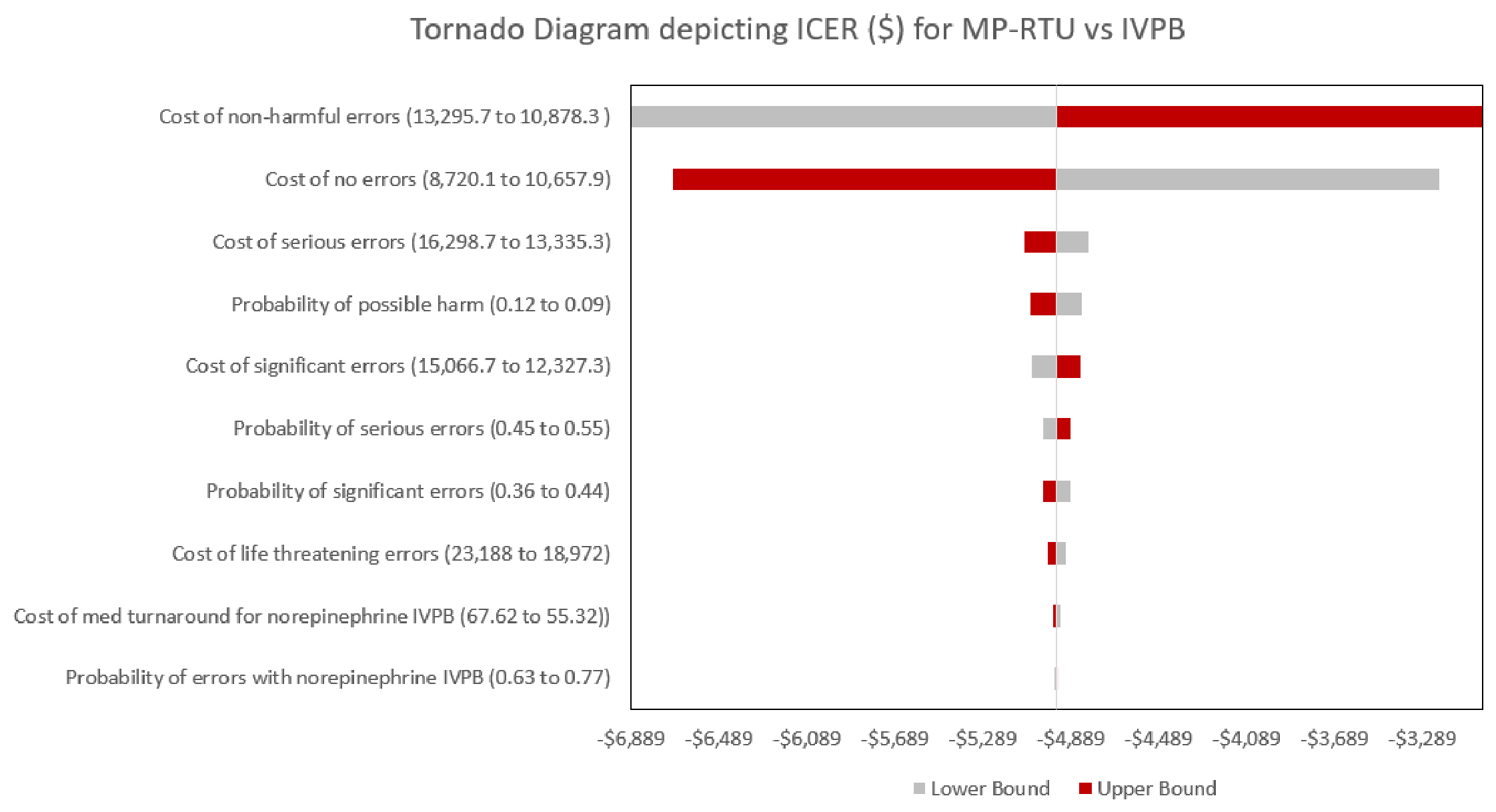
Figure 3.
Monte Carlo probability distribution of the incremental cost-effectiveness ratio (ICER), MP-RTU versus IVPB (10,000 iterations).
Figure 3.
Monte Carlo probability distribution of the incremental cost-effectiveness ratio (ICER), MP-RTU versus IVPB (10,000 iterations).
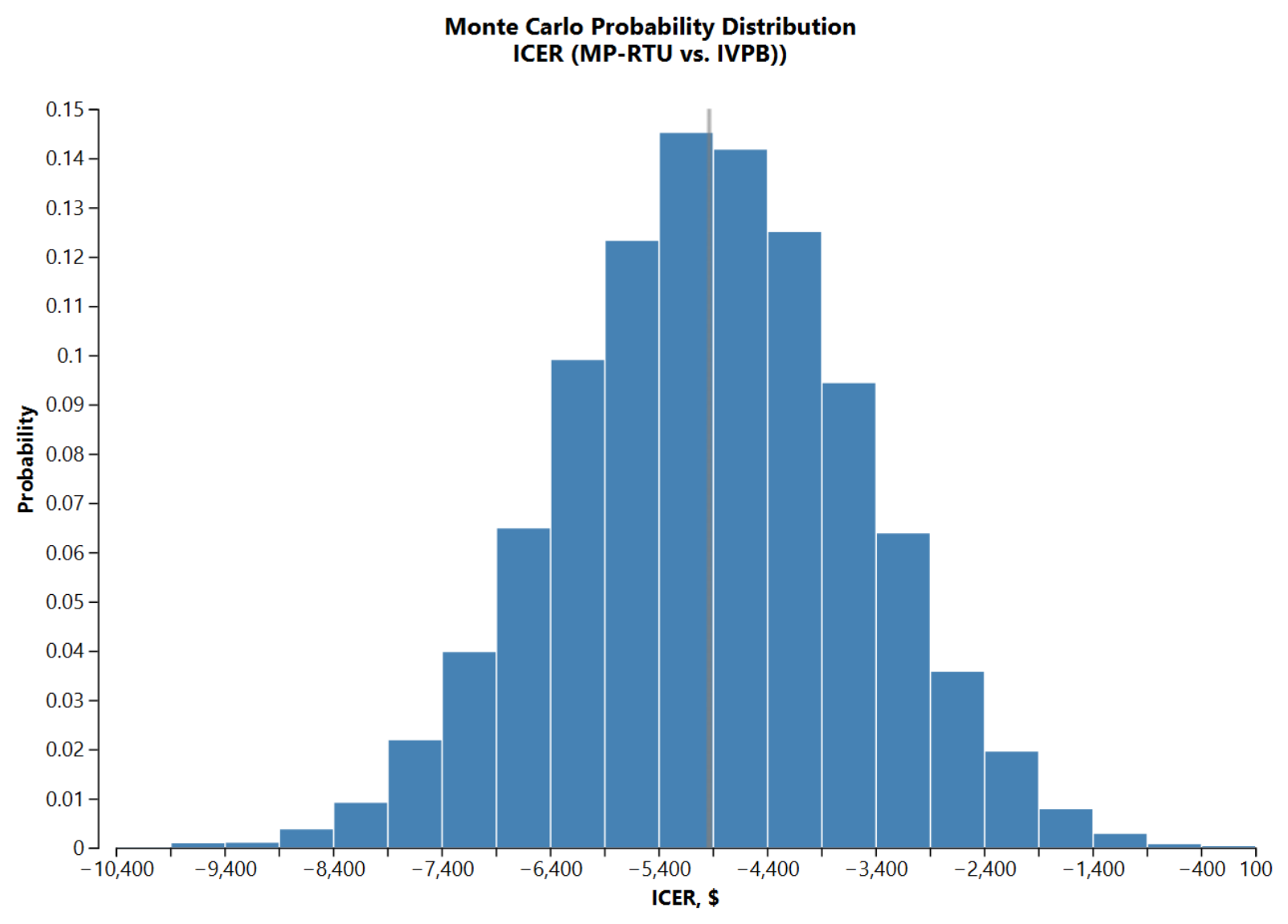

Table 1.
Annual and study-period medication utilization and direct observations.
| Medication | Annual doses (%) | Study-period doses (%) a | Direct observations a | Observation rate (%) | Preparations with ≥ 1 error, n (%) |
|---|---|---|---|---|---|
| Norepinephrine | 5,264 (67%) | 1,212 (64%) | 100 | 8.3% | 70 (70%) |
| Micafungin | 541 (7%) | 106 (6%) | 100 | 94.3% | 67 (67%) |
| Vasopressin | 1,531 (19%) | 424 (23%) | 0 | 0.0% | — |
| Insulin | 551 (7%) | 141 (7%) | 0 | 0.0% | — |
| Total | 7,887 | 1,883 | — | — | — |
a Study period: March–May 2026.
Table 2.
Frequency and rate of process errors by observation analysis group.
| Medication | Observation analysis group | Process steps, n | Process errors, n | Error rate, % |
|---|---|---|---|---|
| Micafungin | Order & Material Collection | 5 | 35 | 7.0% |
| Micafungin | IV Workflow System Setup | 1 | 1 | 1.0% |
| Micafungin | Initial Hood Preparation & Garbing | 5 | 25 | 5.0% |
| Micafungin | IV Workflow Documentation | 1 | 8 | 8.0% |
| Micafungin | Syringe Assembly | 5 | 37 | 7.4% |
| Micafungin | Drug Withdrawal from Vial | 10 | 68 | 6.8% |
| Micafungin | IV Bag Manipulation | 6 | 17 | 2.8% |
| Micafungin | Medication Reconstitution | 4 | 4 | 1.0% |
| Micafungin | Final Product Inspection & Cleanup | 5 | 12 | 2.4% |
| Micafungin | Pharmacist Verification & Release | 5 | 1 | 0.2% |
| Micafungin total | — | 47 | 208 | 4.4% |
| Norepinephrine | Inventory Assessment & Material Collection | 3 | 0 | 0.0% |
| Norepinephrine | IV Room Entry & Documentation | 4 | 0 | 0.0% |
| Norepinephrine | Hood Preparation & Compounding | 3 | 100 | 33.3% |
| Norepinephrine | Pharmacist Verification | 2 | 0 | 0.0% |
| Norepinephrine | Labeling & Distribution | 3 | 0 | 0.0% |
| Norepinephrine total | — | 15 | 100 | 6.7% |
Table 3.
Distribution of process errors per directly observed preparation.
| Process errors per preparation, n | Micafungin, n (%) | Norepinephrine, n (%) |
|---|---|---|
| 0 | 33 (33%) | 30 (30%) |
| 1 | 17 (17%) | 40 (40%) |
| 2 | 13 (13%) | 30 (30%) |
| 3 | 10 (10%) | 0 (0%) |
| 4 | 10 (10%) | 0 (0%) |
| 5 | 10 (10%) | 0 (0%) |
| 6 | 4 (4%) | 0 (0%) |
| 7 | 3 (3%) | 0 (0%) |
| Total | 100 (100%) | 100 (100%) |
Table 4.
Medication request burden, 2025.
| Medication | Total requests | Stockout-related, % | Requests per dispense |
|---|---|---|---|
| Vasopressin | 3,215 | 77.7% | 1.234 |
| Norepinephrine | 447 | 76.3% | 0.073 |
| Insulin | 271 | 85.6% | 0.077 |
| Micafungin | 44 | 72.7% | 0.053 |
Table 5.
Time to medication administration, RxPrep versus MP-RTU workflows.
| Comparison | Mean time difference favoring MP-RTU | Median time difference favoring MP-RTU |
|---|---|---|
| Insulin (RxPrep Dec 2025 vs. MP-RTU Dec 2025) | 2 h 01 min | 1 h 05 min |
| Vasopressin (RxPrep Dec 2025 vs. MP-RTU Apr 2026) | 2 h 06 min | 1 h 51 min |
Table 6.
Base-case results of the cost-effectiveness analysis, MP-RTU versus IVPB.
| Strategy | Cost per administration | Incremental cost | Errors per administration | Incremental errors | ICER |
|---|---|---|---|---|---|
| MP-RTU | $9,742.08 | — | 0 | — | — |
| IVPB | $11,662.73 | $1,920.65 | 0.3877 | −0.3877 | −$4,954.15 (dominated) |
Disclaimer/Publisher’s Note: The statements, opinions and data contained in all publications are solely those of the individual author(s) and contributor(s) and not of MDPI and/or the editor(s). MDPI and/or the editor(s) disclaim responsibility for any injury to people or property resulting from any ideas, methods, instructions or products referred to in the content. |
© 2026 by the authors. Licensee MDPI, Basel, Switzerland. This article is an open access article distributed under the terms and conditions of the Creative Commons Attribution (CC BY) license.
Copyright: This open access article is published under a Creative Commons CC BY 4.0 license, which permit the free download, distribution, and reuse, provided that the author and preprint are cited in any reuse.