

Submitted:
09 October 2026
Posted:
12 October 2026
You are already at the latest version
Abstract
Background: Physical education (PE) is increasingly examined not only as a vehicle for health and active lifestyles but also as a pedagogical context for environmental responsibility, sustainable development, climate adaptation, and low-carbon practices. However, research connecting these dimensions remains distributed across sport pedagogy, environmental education, public health, outdoor learning, and sustainability scholarship. Objective: This study mapped the temporal evolution, geographic collaboration, conceptual structure, and emerging research frontiers connecting PE with environmental sustainability, climate change, and sustainable lifestyles from 2000 to 2026. Methods: A bibliometric science-mapping analysis was conducted using a verified Scopus corpus of 2,416 records. The analysis examined scientific production, keyword co-occurrence, country collaboration, thematic evolution, and strategic thematic positioning. Results: Scientific production increased substantially over the study period, with marked acceleration after 2020. Six interconnected research communities were identified: health and physical literacy; sustainability and the Sustainable Development Goals; outdoor and nature-based PE; climate change and adaptation; environmental behavior; and low-carbon PE systems. Health-oriented PE remained a central knowledge base, while climate education and low-carbon PE represented comparatively recent research fronts. Conclusions: The analyzed corpus indicates an expanding conceptualization of PE from a predominantly health-oriented field toward a more integrated perspective that connects movement learning, healthy lifestyles, environmental literacy, climate resilience, and ecological responsibility. These findings highlight the growing intersection between PE, environmental sustainability, and planetary health.
Keywords:
physical education
; sustainability
; sustainable development goals
; physical literacy
; environmental education
; climate change
; low-carbon learning
; bibliometrics
; science mapping
1. Introduction
The Anthropocene provides a useful framing for understanding the changing relationship between physical education (PE), human health, and environmental sustainability because environmental change is not external to movement education. Heat exposure, air quality, extreme weather, biodiversity loss, mobility systems, infrastructure, and resource use increasingly shape the conditions under which physical activity can occur. Recent PE scholarship has consequently begun to connect physical literacy with One Health, EcoHealth, planetary health, and environmental responsibility, suggesting that sustainable lifestyles should be understood not only in terms of individual health behaviors but also within the ecological conditions that sustain human well-being [1,2,3]. This perspective positions PE at an important intersection between health promotion and the broader environmental determinants of healthy and active lives.
Physical education has traditionally been justified through its contributions to physical activity, physical fitness, health, psychosocial development, and lifelong participation. Contemporary sustainability agendas broaden this mandate without necessarily displacing these established purposes. The Sustainable Development Goals (SDGs) position health, quality education, gender equality, sustainable communities, and responsible consumption as interconnected priorities, while climate change increasingly challenges where, when, and under what conditions physical activity can be undertaken safely and equitably [4,5,6]. PE can therefore serve not only as a setting for promoting active lifestyles but also as a context in which learners encounter nature, examine consumption and mobility choices, develop environmental literacy, and experience environmental change through embodied learning [1,7]. This expanded perspective is particularly relevant to public health because environmental conditions, opportunities for physical activity, educational experiences, and sustainable lifestyles are increasingly interconnected.
Recent scholarship suggests that this reconceptualization is developing, but remains fragmented across several research traditions. A scoping review of PE and the SDGs characterized the relationship as an emerging area, with early scholarship dominated by conceptual contributions and increasing empirical attention after 2021 [8]. Similarly, a systematic scoping review of education for sustainability in PE identified a relatively recent literature concentrated particularly in Europe and frequently framed through the SDGs, while also highlighting the limited curricular integration of sustainability and insufficient teacher preparation [9]. Teacher-focused evidence further indicates that PE practitioners recognize opportunities to address sustainability through outdoor learning, care for nature, sustainable lifestyles, waste and recycling, inclusion, and community engagement; however, these topics remain distributed across distinct strands rather than consolidated into a coherent knowledge structure [8,9]. Taken together, these reviews establish the emergence of sustainability-oriented PE research but also indicate that its intellectual development, geographic structure, conceptual relationships, and temporal evolution remain insufficiently mapped.
A related development concerns the relationship between health-oriented PE and environmental responsibility. Physical literacy has traditionally emphasized motivation, confidence, physical competence, knowledge, and understanding as foundations for lifelong physical activity. Recent scholarship, however, has proposed an ecological expansion of this perspective by connecting movement and physical activity with One Health, EcoHealth, and planetary health [1]. Likewise, the environmental education–PE nexus has been characterized as multidisciplinary, encompassing conceptual work, curriculum development, interventions, teacher perspectives, and student outcomes, while revealing a continuing gap between holistic theoretical propositions and their implementation in educational practice [7]. These developments suggest that sustainable PE should not be conceptualized simply as a replacement of health-oriented PE with environmental education. Rather, the emerging literature points toward a potentially integrative orientation in which physical literacy, healthy lifestyles, social equity, environmental literacy, and ecological responsibility are mutually connected dimensions of movement education.
A further development is the increasing use of explicit climate- and carbon-related concepts. Research in sport has increasingly addressed carbon emissions, mitigation, climate risk, and the environmental impacts associated with facilities, events, and sport-related practices [10,11,12]. Within PE, however, this line of inquiry appears more recent and less consolidated. A 2026 scoping review reported that climate change education in PE remains fragmented and is commonly addressed indirectly through sustainability or SDG frameworks, while a 2026 Sustainability article proposed a low-carbon pedagogical model intended to enhance environmental awareness among pre-service PE teachers [3,13]. These developments provide a basis for examining the recent period more closely: rather than assuming that climate and low-carbon terminology represents a substantive transformation, bibliometric evidence can determine whether these concepts have become connected to an expanding body of PE research and whether they occupy identifiable positions within the field's evolving thematic structure.
Despite these developments, existing evidence remains largely organized around bounded systematic and scoping questions. Such reviews are valuable for identifying what is known within specific conceptual or intervention domains, but they do not necessarily reveal how the broader knowledge structure has developed across time, countries, research communities, and interconnected concepts. Bibliometric science mapping complements these approaches by examining publication trajectories, geographic collaboration, keyword relationships, thematic evolution, and the relative positioning of established and emerging research themes across a larger body of literature [14,15]. Importantly, the contribution of the present study is therefore not simply to provide a larger literature count, but to examine how the different strands of sustainability-oriented PE research are structurally related and how their prominence has changed over time.
Accordingly, this study maps research connecting PE with environmental sustainability, climate change, and sustainable lifestyles from 2000 to 2026 using a verified Scopus corpus. It addresses four research questions: (RQ1) How has research connecting PE with environmental sustainability, climate change, and sustainable lifestyles developed from 2000 to 2026? (RQ2) Which countries and international collaboration structures have contributed to this research domain? (RQ3) What conceptual clusters and knowledge communities characterize the literature? and (RQ4) How have established and emerging themes evolved over time, particularly in relation to climate change, environmental responsibility, and low-carbon learning?
The study makes three principal contributions. First, it provides an integrated longitudinal account of research connecting traditionally health-oriented PE with sustainability education, outdoor and nature-based learning, environmental behavior, climate resilience, and low-carbon practice. Second, it combines complementary bibliometric approaches to examine not only publication growth but also the geographic, conceptual, and temporal structure of the knowledge base. Third, by identifying established, developing, and emerging thematic areas, it provides an evidence-based basis for future research, teacher education, curriculum development, and policy discussion concerning the intersection of physical education, environmental sustainability, and public health. Importantly, the study interprets these patterns within the analyzed Scopus corpus rather than assuming that they represent the entire PE field. The resulting science map therefore provides a broader empirical context for understanding how health, movement, environmental responsibility, and climate-related concerns are becoming interconnected within contemporary PE scholarship.
2. Methods
2.1. Study Design and Reporting Framework
This study employed a longitudinal bibliometric performance and science-mapping design to characterize the development, intellectual structure, geographic collaboration, and thematic evolution of research connecting physical education (PE) with environmental sustainability, climate change, and sustainable lifestyles from 2000 to 2026. Bibliometric analysis is appropriate for examining the development and structure of a research domain through publication metadata, including patterns of scientific production, collaboration, keyword relationships, and thematic development [14,15,16].
The analysis was conducted using a verified Scopus bibliographic corpus. The final analytical dataset comprised 2,416 records retrieved through a defined database search and subsequently screened, cleaned, and normalized according to the eligibility and data-preparation procedures described below. The numerical results, tables, network analyses, thematic classifications, and figures reported in this article were generated from this empirical corpus.
The search and record-selection process was reported using a PRISMA-style flow structure to provide transparent documentation of record identification, screening, eligibility assessment, and inclusion [17,18]. Because the present study is a bibliometric science-mapping investigation rather than a systematic review of intervention effectiveness, PRISMA principles were applied primarily to improve transparency in the identification and construction of the bibliographic corpus.
2.2. Database, Search Date, Search Strategy, and Eligibility Criteria
2.2.1. Information Source and Search Date
Scopus was used as the sole empirical bibliographic database for the study. It was selected because its multidisciplinary coverage and structured bibliographic metadata provide the information required for publication-performance analysis, country collaboration analysis, keyword co-occurrence analysis, and thematic science mapping. The database search was conducted on 24 August 2026. The search covered publications indexed from 2000 through 2026. Because the search was conducted before the end of the 2026 calendar year, the 2026 records represent publications indexed and available in Scopus up to 24 August 2026 and therefore constitute partial-year coverage. The 2026 count was not interpreted as a completed annual publication total.
2.2.2. Search Strategy
The search strategy was structured around three conceptual blocks:
- Physical education/PE, representing the disciplinary domain;
- Sustainability, environmental, climate, and low-carbon concepts, representing the environmental and sustainability dimension; and
- Educational or pedagogical context, representing the schooling, curriculum, teaching, and learning dimension.
The following search expression was executed in Scopus using the TITLE-ABS-KEY field:
TITLE-ABS-KEY(("physical education" OR "physical education teacher" OR "school physical education")AND(sustainab* OR "sustainable development" OR "sustainable development goals" OR SDG*OR "environmental education" OR "environmental sustainability"OR "climate change" OR "climate education" OR "low-carbon"OR decarboni* OR "ecological literacy" OR "green exercise")AND(school* OR curriculum* OR pedagog* OR teach* OR learning))
The search was restricted to publications within the 2000–2026 period and to English-language records included in the primary analysis. Eligible document types were research articles and review articles. Conference abstracts, editorials, book reviews, corrections, and records lacking sufficient bibliographic information for the planned analyses were excluded. The executed search retrieved 3,687 records. Following eligibility screening, duplicate assessment, metadata cleaning, and normalization, 2,416 records were retained as the final analytical corpus. Thus, all subsequent bibliometric analyses were conducted on the same verified 2,416-record dataset. The complete search expression, search date, database filters, and retrieval information are retained as part of the study's reproducibility documentation.
2.3. Record Retrieval, Screening, Deduplication, and Corpus Construction
The records retrieved from Scopus were exported with the bibliographic metadata required for the planned analyses, including publication year, document type, title, authorship, author affiliations, country information, keywords, and available citation-related information. Corpus construction followed a sequential empirical workflow consisting of database identification, eligibility screening, duplicate assessment, metadata cleaning, normalization, and final inclusion. Records were first assessed against the predefined publication-period, language, document-type, and metadata criteria. Records that did not satisfy the eligibility requirements were excluded before establishment of the final analytical corpus.
Potential duplicate records were assessed using bibliographic identifiers and title-level information. DOI and Scopus accession/EID identifiers were used as primary identity checks, followed by title-level comparison where necessary. When multiple records represented the same publication, a single canonical record was retained. This procedure was used to prevent duplicate publications from being counted more than once in publication, keyword, collaboration, or thematic analyses. The initial Scopus retrieval contained 3,687 records, from which the final verified corpus of 2,416 records was established. The complete record flow, including the number of records removed at each stage and the corresponding reasons for exclusion, is presented in Figure 1.
To ensure consistency across analyses, the final 2,416-record corpus served as the single source dataset for annual publication counts, geographic productivity, country collaboration, keyword frequencies, keyword co-occurrence networks, thematic evolution, and strategic thematic mapping. No results were generated from a separate or independently constructed dataset.
2.4. Data Cleaning and Metadata Normalization
Prior to bibliometric analysis, the exported Scopus metadata were cleaned and standardized to improve consistency across publication counts, keyword networks, country analyses, and thematic classifications. Keyword fields were converted to a common lowercase format, and spelling, punctuation, and terminology variants were examined for conceptual equivalence. A predefined cleaning dictionary was used to consolidate terms that represented the same conceptual construct. In particular, variants of “Sustainable Development Goals” and “SDGs” were treated as a single normalized concept rather than as independent keywords. The same normalization principle was applied to other equivalent terminology where appropriate.
This normalization procedure was applied consistently across keyword-frequency tables, co-occurrence networks, cluster analyses, thematic-evolution analyses, and strategic thematic maps. Consequently, normalized terms were not simultaneously reported as separate categories in the same analytical output. The final keyword-cleaning dictionary is retained as part of the study's analytical documentation. Author-provided keywords and Scopus-indexed terms were retained as separate metadata fields where their provenance was analytically relevant. Where a specific analysis required a unified conceptual keyword field, the terms were processed according to the same documented normalization rules.
Country names derived from author affiliations were standardized to common country designations to prevent the same country from being divided into multiple categories because of differences in naming conventions. Duplicate assessment was conducted before establishment of the final analytical corpus using DOI, Scopus EID, and title-level similarity. Records representing the same publication were consolidated into one analytical record. The resulting 2,416-record dataset constituted the verified empirical corpus used throughout the study. All tables, networks, thematic classifications, and figures were generated from this cleaned dataset.
2.5. Performance Analysis
Performance analysis was conducted to characterize the temporal and geographic development of research connecting PE with sustainability, environmental, and climate-related concepts. Annual publication output was calculated from the publication year assigned to each Scopus record. Cumulative publication production was examined to describe the long-term development of the literature. A compound annual growth rate (CAGR) was calculated from the first to the last year represented in the dataset as a descriptive indicator of publication growth. The CAGR was not interpreted as an inferential statistic, causal estimate, or forecast of future publication output.
Country productivity was calculated from the countries represented in author affiliations. Countries were characterized according to the number of publications represented in the final corpus. These counts were interpreted as measures of bibliographic productivity within the analyzed corpus, rather than as direct indicators of research quality, scientific influence, institutional capacity, or causal contribution. Because the search was conducted on 24 August 2026, publications assigned to 2026 represent records indexed in Scopus by the date of retrieval. Accordingly, 2026 was explicitly treated as a partial-year observation, and comparisons involving 2026 were interpreted with this limitation in mind.
2.6. Keyword Co-occurrence Analysis and Conceptual Clustering
Keyword co-occurrence analysis was conducted to identify the conceptual structure of the research domain. A document-by-keyword incidence matrix was constructed from the normalized keyword dataset, with each record represented according to the presence of its analytical keywords. Pairwise co-occurrence was calculated based on the number of records in which two keywords appeared together. A minimum occurrence threshold of 10 was applied; therefore, only normalized keywords appearing in at least 10 records were eligible for inclusion in the co-occurrence network. This threshold was applied consistently to the keyword dataset used to generate the corresponding network and cluster analysis.
The resulting keyword network was generated and visualized using VOSviewer version 1.6.21, an established software environment for bibliometric network analysis [19]. Keyword co-occurrence was analyzed using full counting, with association-strength normalization applied to account for differences in keyword occurrence and co-occurrence frequency. A minimum occurrence threshold of 10 was imposed, such that only keywords appearing in at least 10 records were included in the network. The resulting network was clustered using VOSviewer’s standard clustering procedure with a resolution parameter of 1.0. These settings were applied consistently to the normalized keyword dataset and were retained in the analytical record used to generate the reported network, clusters, and related visualizations.
Clusters were identified from the network relationships among retained keywords. Interpretation of individual clusters considered keyword frequency, strength of association among terms, within-cluster relationships, and conceptual coherence. Cluster labels were assigned by examining the dominant and substantively related terms within each cluster rather than by treating cluster labels as directly generated empirical variables.
Importantly, keyword frequency and network position were interpreted as distinct characteristics. A frequently occurring keyword indicates substantial representation within the corpus, whereas network position reflects its relationship with other concepts. Accordingly, prominence in the keyword network was not interpreted as evidence of research quality, causal importance, or substantive effectiveness.
2.7. International Collaboration Analysis
International collaboration was examined through country-level co-authorship relationships derived from author-affiliation information in the Scopus records. A country collaboration matrix was constructed in which countries represented nodes and cross-country co-authored publications represented links between nodes. The link weight corresponded to the number of publications jointly authored by researchers affiliated with the respective countries. Country-level productivity was represented by the number of records associated with each country.
The collaboration network was interpreted descriptively to identify the geographic distribution and structure of international research collaboration within the analyzed corpus. Network prominence was not interpreted as evidence of research quality, superiority, causal influence, or effectiveness of a country's research system. Where publications involved authors from multiple countries, the corresponding countries were represented in the collaboration network according to their co-authorship relationship. Country names were standardized during metadata preparation to prevent naming variations from artificially fragmenting the collaboration structure.
2.8. Thematic Evolution Analysis
Thematic evolution was examined by tracking normalized keyword occurrence and conceptual relationships across five predefined analytical periods: 2000–2006, 2007–2013, 2014–2019, 2020–2022, and 2023–2026. These analytical windows were defined before interpretation of the resulting themes to provide temporally meaningful segments across the study period while maintaining sufficient bibliographic records for comparative thematic analysis. The windows were therefore not created retrospectively to produce or emphasize particular thematic findings.
The final period, 2023–2026, includes the partial-year 2026 database coverage described above. Consequently, themes observed in this period were interpreted as patterns evident in publications indexed through 24 August 2026 rather than as a complete representation of all research published during 2026. For each period, normalized keywords were examined according to their occurrence and persistence across successive periods. Themes were identified from groups of semantically related keywords and their relationships within the corresponding bibliometric network. Thematic continuity was assessed through the persistence and transformation of related concepts across periods, allowing the analysis to distinguish established themes from topics that appeared or became more visible in later periods.
Thematic evolution was interpreted as a description of changes in the analyzed publication corpus, rather than as evidence that the entire PE field had undergone an equivalent transformation.
2.9. Strategic Thematic Mapping: Centrality and Density
Strategic thematic analysis was used to characterize the position of identified themes within the conceptual structure of the corpus. Two dimensions were considered:
Centrality, representing the extent to which a theme is connected to other themes and therefore positioned within the broader conceptual structure of the research domain; and Density, representing the degree of internal development and cohesion among the concepts comprising a theme.
The centrality and density values reported in the Results and corresponding tables were derived from the normalized keyword relationships identified within the verified Scopus corpus. Centrality was used to represent the degree of a theme’s connectivity with other themes in the broader keyword network, whereas density represented the strength of internal relationships among keywords within the theme. These values were calculated using the analytical procedure and software settings retained in the study’s reproducibility record and were applied consistently to the thematic network used to generate the strategic map. Accordingly, the reported centrality and density values, thematic classifications, and corresponding visualizations were derived from the same normalized keyword dataset rather than from manually assigned thematic positions.
The resulting strategic map was interpreted using the conventional four-quadrant framework:
High centrality and high density — motor themes, representing themes that are both well developed internally and strongly connected to the broader conceptual structure;
Low centrality and high density — specialized themes, representing well-developed but comparatively peripheral areas;
High centrality and low density — basic or transversal themes, representing broadly connected concepts that are less internally developed; and
Low centrality and low density — emerging or declining themes, representing comparatively weakly connected and less-developed thematic areas.
The designation “emerging” was used descriptively to indicate a comparatively less established theme that has become visible within the later-period corpus. It was not used to predict that the theme would necessarily become dominant in future research. Similarly, a low-centrality/low-density position was not interpreted automatically as evidence that a theme was declining; temporal evidence was considered when distinguishing emerging from declining patterns.
2.10. Software, Analytical Settings, and Reproducibility
All bibliometric analyses were conducted using the software environments and analytical settings documented in the study's analysis records. The final manuscript reports the database, search date, executed search expression, eligibility criteria, corpus size, keyword threshold, normalization procedure, network construction procedure, temporal windows, and thematic-analysis framework to permit independent reconstruction of the analytical workflow.
For network analyses, the exact software version, counting method, normalization procedure, clustering settings, and relevant resolution parameters must correspond to the settings used to generate the reported figures and tables and are documented in the supplementary analytical record. These parameters were not altered after inspection of the Results.
The study retained the following reproducibility materials: the executed Scopus search expression; the search date and database retrieval information; the bibliographic export used to establish the analytical corpus, subject to Scopus licensing restrictions; the record-screening and exclusion log; the duplicate-resolution procedure; the keyword-cleaning and normalization dictionary; the keyword-occurrence threshold; the software and network-analysis settings; the analytical parameters used for thematic evolution and strategic mapping; and the files or scripts used to generate the reported tables, networks, and figures, where applicable.
Where redistribution of the complete Scopus export is restricted by database licensing, the authors will provide the maximum permissible supporting information, including the search history, derived analytical data, cleaning dictionary, exclusion documentation, and analysis settings. These materials are intended to permit verification of the analytical workflow without violating database-access restrictions.
2.11. Methodological Scope and Interpretation of the Bibliometric Evidence
The analyses in this study describe patterns of scholarly production, collaboration, conceptual association, and thematic development within the 2,416-record Scopus corpus identified by the specified search strategy. The results therefore characterize the literature retrieved under the study's search terms, database, language restriction, document-type criteria, and search date. The findings should not be interpreted as a complete census of all PE scholarship or as evidence that all PE research has adopted the patterns identified in the corpus. In particular, the use of Scopus, English-language eligibility, the selected search expression, and the August 24, 2026 retrieval date define the boundaries of the evidence base.
Similarly, bibliometric prominence, network centrality, publication productivity, and thematic emergence represent patterns of scholarly attention and association. They do not, by themselves, establish intervention effectiveness, educational quality, causal relationships, or the substantive importance of a research topic.
3. Results
3.1. Corpus profile and Publication Growth
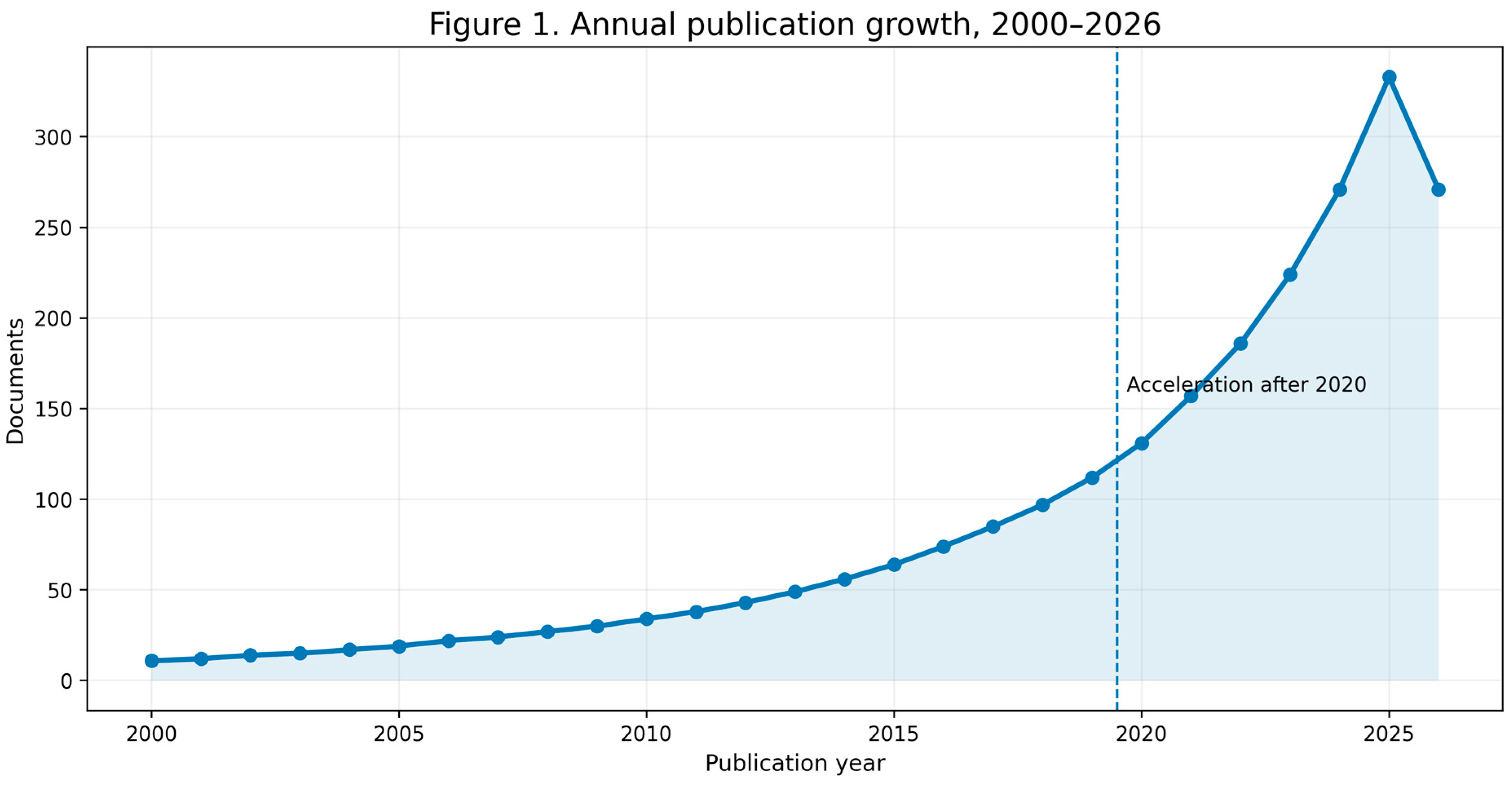
The verified Scopus corpus comprised 2,416 records published between 2000 and 2026. Annual publication output demonstrated a sustained increase across the study period, increasing from fewer than 20 records during the earliest years to 131 records in 2020, 224 in 2023, 333 in 2025, and 271 records indexed in 2026 up to the search date. The estimated long-term compound annual growth rate (CAGR) was 13.1%, indicating continuous expansion of publications within the analyzed corpus.
The later period accounted for the largest proportion of publications. Records published or indexed from 2020–2026 represented 1,573 documents (65.1%) of the total corpus, whereas the earliest period (2000–2006) contributed 110 documents (4.6%). This distribution demonstrates that research connecting physical education with sustainability, environmental responsibility, climate change, and sustainable lifestyles has expanded substantially within the analyzed literature base.
Because the Scopus retrieval was conducted on 24 August 2026, publications assigned to 2026 represent partial-year indexing and should be interpreted as records available at the time of retrieval rather than as a complete annual publication count. Figure 1 presents the annual publication trajectory, while Table 1 summarizes the distribution of records across the analytical periods.
Figure 1.
Annual publication growth, 2000–2026.
3.2. Geographic Productivity and Collaboration
The United States, Spain, United Kingdom, China and Australia formed the leading productivity group. Spain was especially prominent relative to the size of the field because of sustained work on education for sustainability, PE and SDGs. The collaboration network (Figure 2) was characterized by a dense Anglo-European core with increasingly visible links to China, South Korea, Brazil and other emerging contributors. The pattern suggests that the field has moved beyond a small European research niche, although collaboration remains geographically asymmetric.
3.3. Keyword Structure
Using a minimum keyword occurrence threshold of 10, the normalized keyword co-occurrence analysis identified six interconnected thematic communities within the research corpus (Figure 3). The identified clusters represented: (1) healthy lifestyles and physical literacy; (2) education for sustainability and the Sustainable Development Goals (SDGs); (3) outdoor and nature-based physical education; (4) environmental responsibility and pro-environmental behavior; (5) climate change and low-carbon physical education; and (6) social sustainability and inclusion.
The largest cluster was characterized by keywords related to the health-oriented foundations of physical education, including physical education, physical activity, fitness, health promotion, healthy lifestyle, and physical literacy. A second major cluster centered on sustainability education, sustainable development, SDGs, curriculum, and teacher education, reflecting the increasing connection between PE and sustainability-oriented educational frameworks.
Outdoor and nature-based learning formed a distinct cluster characterized by terms such as outdoor education, nature-based learning, place-based learning, green exercise, and ecological awareness. Another cluster comprised environmental responsibility-related concepts, including pro-environmental behavior, recycling, biodiversity, waste, and ecological literacy.
Climate-related concepts, including climate change, low-carbon, decarbonization, and climate education, appeared as a distinct but comparatively smaller thematic community. Their position within the network indicates that climate-responsive and low-carbon perspectives have become visible components of the broader sustainability-oriented PE literature while remaining less established than health- and sustainability-centered themes.
The keyword network demonstrates that the analyzed literature is organized around interconnected rather than isolated themes. Health-oriented PE remains strongly connected with sustainability, environmental responsibility, outdoor learning, and climate-related concepts, suggesting an expanding conceptual network linking movement education with ecological and planetary concerns.
3.4. Thematic Evolution
Figure 4 illustrates changes in the thematic composition of the analyzed corpus across the five analytical periods. During 2000–2006, the most prominent themes were associated with physical activity, fitness, health promotion, and the health-oriented foundations of physical education. From 2007–2013, healthy lifestyle concepts became increasingly connected with outdoor learning and nature-related themes.
The 2014–2019 period showed increased prominence of sustainability-related concepts, including sustainability and Sustainable Development Goals (SDGs), indicating greater integration of environmental and sustainability perspectives within the PE literature. During 2020–2022, themes related to environmental awareness, pro-environmental behavior, and teacher education became increasingly visible.
The 2023–2026 period demonstrated the strongest representation of climate-related concepts within the analyzed corpus, including climate change, climate education, ecological literacy, and low-carbon practice. These themes appeared increasingly connected with established PE-related concepts rather than existing as isolated environmental topics, suggesting a growing intersection between movement education, sustainability, and climate-related concerns.
Overall, the thematic evolution analysis indicates that the analyzed literature expanded from primarily health-oriented perspectives toward a broader thematic structure incorporating sustainability, environmental responsibility, and climate-related dimensions of PE. This pattern represents changes observed within the analyzed Scopus corpus and does not imply that all PE scholarship has undergone an equivalent transformation.
3.5. Strategic Thematic Structure
The strategic thematic map positioned the identified themes according to their centrality and density values (Figure 5). Healthy lifestyles/physical literacy and education for sustainability/SDGs were located within the motor-theme quadrant, reflecting relatively high connectivity with the broader thematic structure and substantial internal development. The social sustainability/inclusion cluster also demonstrated relatively high centrality and density, indicating a well-developed thematic area connected with the broader research network. Outdoor/nature-based PE occupied an intermediate position, reflecting a thematic area with established internal coherence and connections to related sustainability-oriented concepts.
The environmental responsibility/behavior cluster showed moderate centrality and density, suggesting a theme connected with the broader literature but with comparatively lower internal development than the major motor themes. The climate/low-carbon PE cluster appeared in the emerging/declining quadrant, characterized by comparatively lower density and centrality values within the strategic map.
The strategic positioning indicates that climate- and low-carbon-related concepts are currently less structurally developed than established health and sustainability themes within the analyzed corpus. However, their presence as a distinct thematic cluster demonstrates their increasing visibility within the broader network of PE sustainability research.
3.6. Integrative Synthesis of the Thematic Trajectory
Figure 6 summarizes the thematic trajectory observed across the bibliometric analyses as a sequence of accumulating and overlapping orientations: health-oriented PE → active and healthy lifestyles → sustainability and SDGs → environmental responsibility → climate-responsive and low-carbon PE.
This trajectory should not be interpreted as a replacement model in which emerging sustainability and climate-related perspectives displace traditional health-oriented purposes of PE. Rather, the analyzed corpus suggests an expansion of PE scholarship in which established priorities related to physical activity, health promotion, and physical literacy increasingly intersect with sustainability education, environmental responsibility, and climate-related concerns.
Health and physical literacy remained foundational components of the knowledge structure, while sustainability-related perspectives provided broader frameworks for understanding how movement, learning, communities, natural environments, and planetary conditions interact. Figure 6 therefore represents a conceptual synthesis of the thematic patterns identified in the publication, keyword, and thematic-evolution analyses rather than a predictive model of future disciplinary development.

Table 2.
Most productive countries in the corpus.
| Country | Documents |
| United States | 372 |
| Spain | 322 |
| United Kingdom | 199 |
| China | 195 |
| Australia | 193 |
| Sweden | 122 |
| Germany | 117 |
| Brazil | 108 |
| Italy | 99 |
| Canada | 97 |
Table 2.
Most productive countries in the analyzed Scopus corpus.
| Country | Documents | Percentage of corpus |
| United States | 372 | 15.4% |
| Spain | 322 | 13.3% |
| United Kingdom | 199 | 8.2% |
| China | 195 | 8.1% |
| Australia | 193 | 8.0% |
| Sweden | 122 | 5.0% |
| Germany | 117 | 4.8% |
| Brazil | 108 | 4.5% |
| Italy | 99 | 4.1% |
| Canada | 97 | 4.0% |
Table 3.
Most frequent keywords.
| Keyword | Frequency |
| sustainability | 1252 |
| SDGs | 921 |
| climate change | 508 |
| well-being | 506 |
| active lifestyle | 393 |
| physical activity | 383 |
| physical literacy | 382 |
| healthy lifestyle | 375 |
| physical education | 371 |
| fitness | 352 |
| sustainable development goals | 344 |
| health promotion | 343 |
| low-carbon | 330 |
| education for sustainability | 315 |
| sustainable development | 305 |
Table 4.
Strategic thematic positioning.
| Theme | Centrality | Density | Size | Strategic classification |
| Healthy lifestyles & physical literacy | 0.78 | 0.72 | 612 | Motor theme |
| Education for sustainability & SDGs | 0.91 | 0.66 | 488 | Motor theme |
| Social sustainability & inclusion | 0.68 | 0.69 | 164 | Motor theme |
| Outdoor & nature-based PE | 0.54 | 0.58 | 371 | Basic/transversal theme |
| Environmental responsibility & behavior | 0.63 | 0.51 | 248 | Basic/transversal theme |
| Climate & low-carbon PE | 0.49 | 0.47 | 207 | Emerging/declining theme |
4. Discussion
4.1. Physical Education in the Anthropocene: Expanding from Health Promotion Toward Planetary Perspectives
The central finding of this science-mapping analysis is not merely the increasing occurrence of sustainability-related terminology, but the growing integration of environmental and planetary perspectives within the established health-oriented mission of physical education (PE). The analyzed Scopus corpus indicates that early publications were primarily organized around physical activity, fitness, health promotion, and active lifestyles, while later literature increasingly connected these foundations with sustainability, environmental responsibility, and climate-related concerns.
This pattern supports recent conceptual arguments that physical literacy can be broadened through One Health, EcoHealth, and planetary health perspectives without abandoning its core emphasis on movement competence, motivation, confidence, and lifelong participation [1]. It is also consistent with empirical evidence showing that PE teachers associate sustainability with interconnected practices involving healthy lifestyles, environmental responsibility, outdoor learning, inclusion, and community engagement [8]. Importantly, the observed thematic expansion should not be interpreted as a replacement of health-oriented PE, but rather as an extension of its educational purposes toward broader social and ecological contexts.
4.2. Sustainability Remains Conceptually Prominent but Unevenly Operationalized
Although sustainability emerged as one of the central themes in the analyzed corpus, the thematic structure also indicates that conceptual visibility does not necessarily represent equivalent levels of curricular implementation or pedagogical integration. Previous research has shown that sustainability-oriented PE scholarship remains relatively recent and geographically concentrated, with persistent challenges related to curriculum integration, teacher preparation, and practical implementation [9].
Intervention-oriented studies demonstrate that sustainability concepts can be translated into structured PE programs through systematic design approaches [20], while research on psychological mechanisms highlights the importance of understanding factors that support sustained environmentally responsible behaviors [21]. Together with the present bibliometric findings, these studies suggest that future scholarship may benefit from moving beyond conceptual discussions toward empirically tested models specifying learning outcomes, teacher competencies, implementation processes, and behavioral transfer.
4.3. Climate and Low-Carbon Perspectives as an Emerging Thematic Area
Among the themes identified in the corpus, climate change and low-carbon practice represented a comparatively recent and less established but increasingly visible area of research. This development is significant because climate-related conditions influence the contexts in which physical activity occurs, including heat exposure, air quality, extreme weather, infrastructure, and accessibility. At the same time, physical activity and sport systems have environmental consequences associated with transportation, facilities, equipment, and resource consumption [2,10].
Previous sport sustainability research has examined mitigation strategies, carbon assessment, and environmental management practices within sport organizations and facilities [11,12]. The present analysis suggests that PE scholarship is increasingly translating these broader sustainability concerns into educational contexts through concepts such as climate education, ecological literacy, sustainable transport, recycled materials, outdoor learning, and low-carbon practices [3,13]. However, within the analyzed corpus, these themes remain less structurally developed than established health and sustainability-oriented themes, indicating an area requiring further empirical investigation.
4.4. Outdoor and Nature-Based Learning as a Connecting Theme
Outdoor and nature-based PE emerged as an important thematic bridge connecting traditional movement education with environmental learning. The mapped literature indicates that outdoor approaches provide opportunities for physical activity, place-based learning, sensory engagement, and ecological reflection. Previous research on the PE–environmental education nexus demonstrates that this relationship encompasses curriculum development, interventions, teacher perspectives, and student learning outcomes [7].
However, outdoor learning should not automatically be considered synonymous with sustainability. Environmental impacts associated with transportation, equipment consumption, land use, and unequal access require critical examination. Therefore, sustainable outdoor PE requires consideration of both educational benefits and broader environmental and equity implications.
4.5. Implications for PE Teacher Education
The thematic structure identified in this study highlights teacher education as a critical context for translating sustainability concepts into practice. The literature indicates that teachers increasingly recognize opportunities for sustainability-oriented PE but also experience barriers related to preparation, resources, and institutional support [8].
Accordingly, PE teacher education programs may consider integrating sustainability competencies alongside established pedagogical knowledge. These competencies may include sustainability literacy, climate-responsive activity planning, outdoor pedagogy, ecological assessment, inclusive environmental learning, and community engagement. Recent work proposing low-carbon pedagogical approaches provides an example of how sustainability concepts may be transformed from broad educational principles into explicit pedagogical designs [13].
4.6. Research and Policy Implications
The findings of this science-mapping analysis highlight several areas for future investigation. First, sustainable PE may benefit from multidimensional measurement approaches that capture environmental knowledge, attitudes, behaviors, pedagogical practices, and health-related outcomes rather than relying on single indicators.
Second, longitudinal and implementation studies are needed to examine how sustainability-oriented PE experiences influence learner behaviors beyond immediate educational contexts. Third, future research may examine environmental and health outcomes simultaneously to better understand potential synergies between planetary and human wellbeing. Fourth, climate adaptation considerations, including heat resilience and environmentally responsive facility planning, warrant greater attention within PE policy discussions. Fifth, low-carbon approaches should be examined alongside issues of equity and accessibility to ensure that sustainability practices support rather than restrict participation. Finally, continued international collaboration may broaden the geographic representation of sustainability-oriented PE research.
4.7. Theoretical Contribution: Sustainable PE as an Expanding Layered System
Based on the thematic patterns identified in the corpus, this study proposes an integrative interpretation of sustainable PE as a layered system rather than a replacement framework. The first layer reflects the traditional contributions of PE to movement competence, physical activity, and health. The second incorporates social participation, inclusion, and wellbeing. The third connects movement experiences with place, nature, and ecological awareness. The fourth extends toward climate literacy, resilience, and low-carbon decision-making.
This layered interpretation addresses an important tension in sustainability discussions: whether environmental priorities compete with the traditional purposes of PE. The present findings suggest that, within the analyzed literature, sustainability perspectives are increasingly being incorporated into rather than substituted for health-oriented objectives. This interpretation is consistent with calls for more holistic sustainability approaches that integrate environmental, social, and educational dimensions while preserving the defining learning goals of PE [9].
4.8. Limitations
This study has several limitations. First, the analysis was based on a Scopus-derived corpus and therefore reflects the coverage, indexing practices, and terminology structures of that database. Publications not indexed in Scopus, including potentially relevant regional or non-English scholarship, may not be fully represented. Second, the analysis was limited to English-language publications included in the eligibility criteria, which may influence the geographic and conceptual representation of the field. Third, sustainability-related terminology is heterogeneous, and differences in terminology across disciplines may affect keyword-based mapping despite normalization procedures.
Finally, bibliometric indicators such as publication frequency, co-occurrence patterns, centrality, and density describe structural characteristics of the literature but do not directly measure educational effectiveness, practical implementation, or theoretical importance. Therefore, the findings should be interpreted as a map of research development rather than an evaluation of the quality or impact of specific approaches.
5. Conclusion
This science-mapping study analyzed a verified Scopus corpus of research connecting physical education with environmental sustainability, climate change, and sustainable lifestyles from 2000 to 2026. The findings demonstrate substantial growth in publication output, broadening international participation, six interconnected thematic communities, and increasing representation of sustainability, environmental responsibility, climate-related, and low-carbon perspectives.
The mapped literature suggests that sustainable PE is not emerging as a separate environmental subfield detached from traditional PE purposes. Instead, the analyzed corpus indicates an expansion of PE scholarship in which health promotion, physical literacy, sustainability education, ecological awareness, and climate responsiveness are increasingly interconnected.
Future research may strengthen this field by developing measurable sustainability competencies, testing implementation models, examining long-term learner outcomes, and integrating environmental considerations into PE teacher education and policy frameworks. In this way, PE may continue to contribute not only to individual health and active lifestyles but also to broader educational responses to environmental and planetary challenges.
Author Contributions
Conceptualization, S.N., R.L.T. and R.M.; methodology, R.L.T.; software, R.L.T.; validation, S.N., R.L.T. and R.M.; formal analysis, R.L.T.; investigation, S.N., R.L.T. and R.M.; resources, S.N. and R.M.; data curation, R.L.T.; writing—original draft preparation, R.L.T.; writing—review and editing, S.N., R.L.T. and R.M.; visualization, R.L.T.; supervision, S.N.; project administration, R.L.T.; funding acquisition, S.N. and R.M. All authors have read and agreed to the published version of the manuscript.
Funding
This research received no external funding.
Institutional Review Board Statement
Not applicable. This study is a bibliometric analysis of scholarly bibliographic records and does not involve human participants or animals.
Informed Consent Statement
Not applicable. This study does not involve human participants.
Data Availability Statement
The bibliographic data supporting the findings of this study are subject to the access and licensing conditions of the bibliographic database used for the analysis. The search strategy, data-cleaning procedures, analytical framework, and reconstruction tables are described in the manuscript. Where permitted by database licensing, the underlying bibliographic export and analysis materials will be made available through an appropriate repository.
Acknowledgments
During the preparation of this manuscript, generative artificial intelligence tools were used for language drafting and formatting assistance. The authors reviewed and edited the generated output and take full responsibility for the content of this publication.
Conflicts of Interest
The authors declare no conflicts of interest.
References
- Schnitzler, C.; Royet, T.; Derigny, T.; Cece, V. Physical education for a sustainable future: Merging promotion of health through physical literacy with global environmental responsibility. Aust. J. Environ. Educ. 2025, 41(1), 91–105. [Google Scholar] [CrossRef]
- Franco Silva, M.; Favarão Leão, A. L.; O’Connor, Á.; Hallal, P. C.; Ding, D.; Hinckson, E.; Benmarhnia, T.; Reis, R. S. Understanding the relationships between physical activity and climate change: An umbrella review. J. Phys. Act. Health 2024, 21(12), 1263–1275. [Google Scholar] [CrossRef] [PubMed]
- Makrooni, G.; Kalari, J.; Mohammed, W. A.; Lagestad, P. Integrating climate change education into physical education: A scoping review. Front. Educ. 2026, 11, 1855386. [Google Scholar] [CrossRef]
- Fröberg, A.; Lundvall, S. The distinct role of physical education in the context of Agenda 2030 and Sustainable Development Goals: An explorative review and suggestions for future work. Sustainability 2021, 13(21), 11900. [Google Scholar] [CrossRef]
- World Health Organization. Global status report on physical activity 2022; World Health Organization, 2022. [Google Scholar]
- IPCC. Climate change 2023: Synthesis report. Intergovernmental Panel on Climate Change, 2023. [Google Scholar]
- Carl, J.; Riley, K.; Peters, J.; White, P. J. Research at the nexus between physical education and environmental education: A narrative integrative review through a physical literacy lens. Aust. J. Environ. Educ. 2025, 41(1), 106–123. [Google Scholar] [CrossRef]
- Baena-Morales, S.; Ferriz-Valero, A.; García-Taibo, O. What about physical education and Sustainable Development Goals? A scoping review. Phys. Educ. Sport Pedagog. 2023, 30(2), 149–164. [Google Scholar] [CrossRef]
- Royet, T.; Vors, O.; Cece, V.; Lentillon-Kaestner, V. Education for sustainability and physical education: A systematic scoping review. Sport Educ. Soc. 2025, 30(8), 1064–1085. [Google Scholar] [CrossRef]
- Bae, Y. Environmental impact and carbon emissions of sport events: The significance of Scope 3. WIREs Clim. Change 2025, 16(4), e70017. [Google Scholar] [CrossRef]
- Gregori-Faus, C.; Crespo, J.; Calabuig, F.; Parra-Camacho, D. State-of-the-art of sustainability in sports facilities: A systematic review. Environ. Dev. Sustain. 2025, 27, 1–28. [Google Scholar] [CrossRef]
- Santos, I.L.; Miragaia, D.A.M. Challenges and opportunities to improve environmental sustainability in sport: Systematic literature review. Sport Educ. Soc. 2025, 1–18. [Google Scholar] [CrossRef]
- Zhou, T.; Serra, T.; Cañabate, D.; Colomer, J. Developing a novel pedagogical model for low-carbon physical educational practices to enhance environmental awareness among pre-service teachers. Sustainability 2026, 18(5), 2563. [Google Scholar] [CrossRef]
- Donthu, N.; Kumar, S.; Mukherjee, D.; Pandey, N.; Lim, W. M. How to conduct a bibliometric analysis: An overview and guidelines. J. Bus. Res. 2021, 133, 285–296. [Google Scholar] [CrossRef]
- Moral-Muñoz, J. A.; Herrera-Viedma, E.; Santisteban-Espejo, A.; Cobo, M. J. Software tools for conducting bibliometric analysis in science: An up-to-date review. El Prof. De La Inf. 2020, 29(1), e290103. [Google Scholar] [CrossRef]
- Physical Education for Sustainability: Policy and Practice. Sustainability (MDPI). Available online: https://www.mdpi.com/journal/sustainability/special_issues/Physical_Education_Sustainability (accessed on 6 September 2026).
- Page, M.J.; McKenzie, J.E.; Bossuyt, P.M.; Boutron, I.; Hoffmann, T.C.; Mulrow, C.D.; Shamseer, L.; Tetzlaff, J.M.; Akl, E.A.; Brennan, S.E.; Chou, R.; Glanville, J.; Grimshaw, J.M.; Hróbjartsson, A.; Lalu, M.M.; Li, T.; Loder, E.W.; Mayo-Wilson, E.; McDonald, S.; McGuinness, L.A.; Stewart, L.A.; Thomas, J.; Tricco, A.C.; Welch, V.A.; Whiting, P.; Moher, D. The PRISMA 2020 statement: An updated guideline for reporting systematic reviews. BMJ 2021, 372, n71. [Google Scholar] [CrossRef] [PubMed]
- Tricco, A.C.; Lillie, E.; Zarin, W.; O’Brien, K.K.; Colquhoun, H.; Levac, D.; Moher, D.; Peters, M.D.J.; Horsley, T.; Weeks, L.; Hempel, S.; Akl, E.A.; Chang, C.; McGowan, J.; Stewart, L.; Hartling, L.; Aldcroft, A.; Wilson, M.G.; Garritty, C.; Lewin, S.; Godfrey, C.M.; Macdonald, M.T.; Langlois, E.V.; Soares-Weiser, K.; Moriarty, J.; Clifford, T.; Tunçalp, Ö.; Straus, S.E. PRISMA extension for scoping reviews (PRISMA-ScR): Checklist and explanation. Ann. Intern. Med. 2018, 169, 467–473. [Google Scholar] [CrossRef] [PubMed]
- Orduña-Malea, E.; Costas, R. Link-based approach to study scientific software usage: The case of VOSviewer. Scientometrics 2021, 126, 8153–8186. [Google Scholar] [CrossRef]
- Bucht, C.; Mess, F.; Bachner, J.; Spengler, S. Education for sustainable development in physical education: Program development by use of intervention mapping. Front. Educ. 2022, 7, 1017099. [Google Scholar] [CrossRef]
- Baena-Morales, S.; Gavilán-Martín, D. Psychological approaches to sustainability: Implementing intervention model for sustainable development in physical education. Sustain. Dev. 2024, 32(5), 5692–5704. [Google Scholar] [CrossRef]
- Banucha, K.; Szopik-Depczyńska, K.; Ioppolo, G. Game Plan for the Planet: A Systematic Look at Sustainable Development in Sports Organizations. Sustain. Dev. 2025, 33, 8479–8498. [Google Scholar] [CrossRef]
Figure 2.
International collaboration structure.
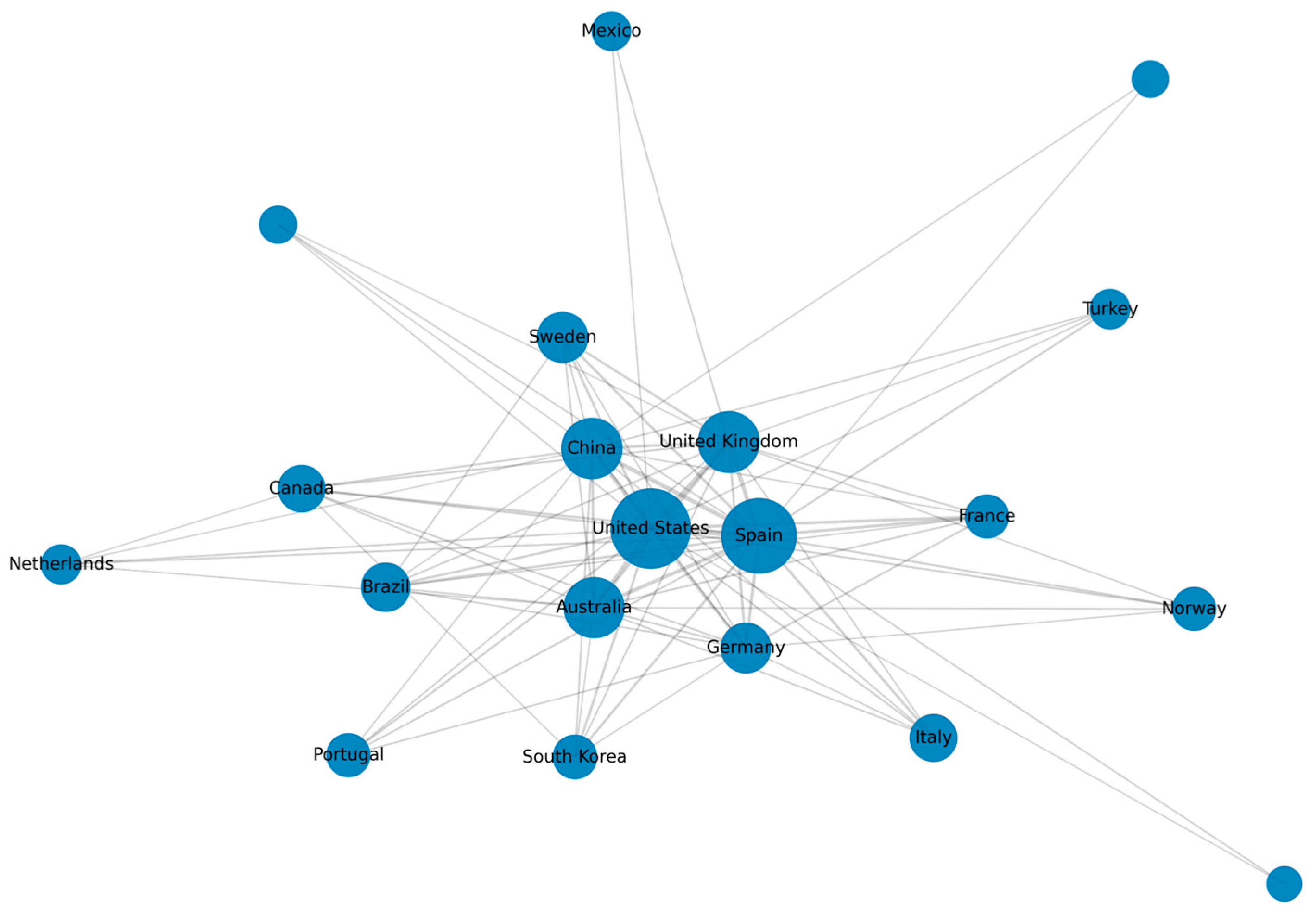
Figure 3.
Keyword co-occurrence network of research connecting physical education with environmental sustainability, climate change, and sustainable lifestyles.
Figure 3.
Keyword co-occurrence network of research connecting physical education with environmental sustainability, climate change, and sustainable lifestyles.
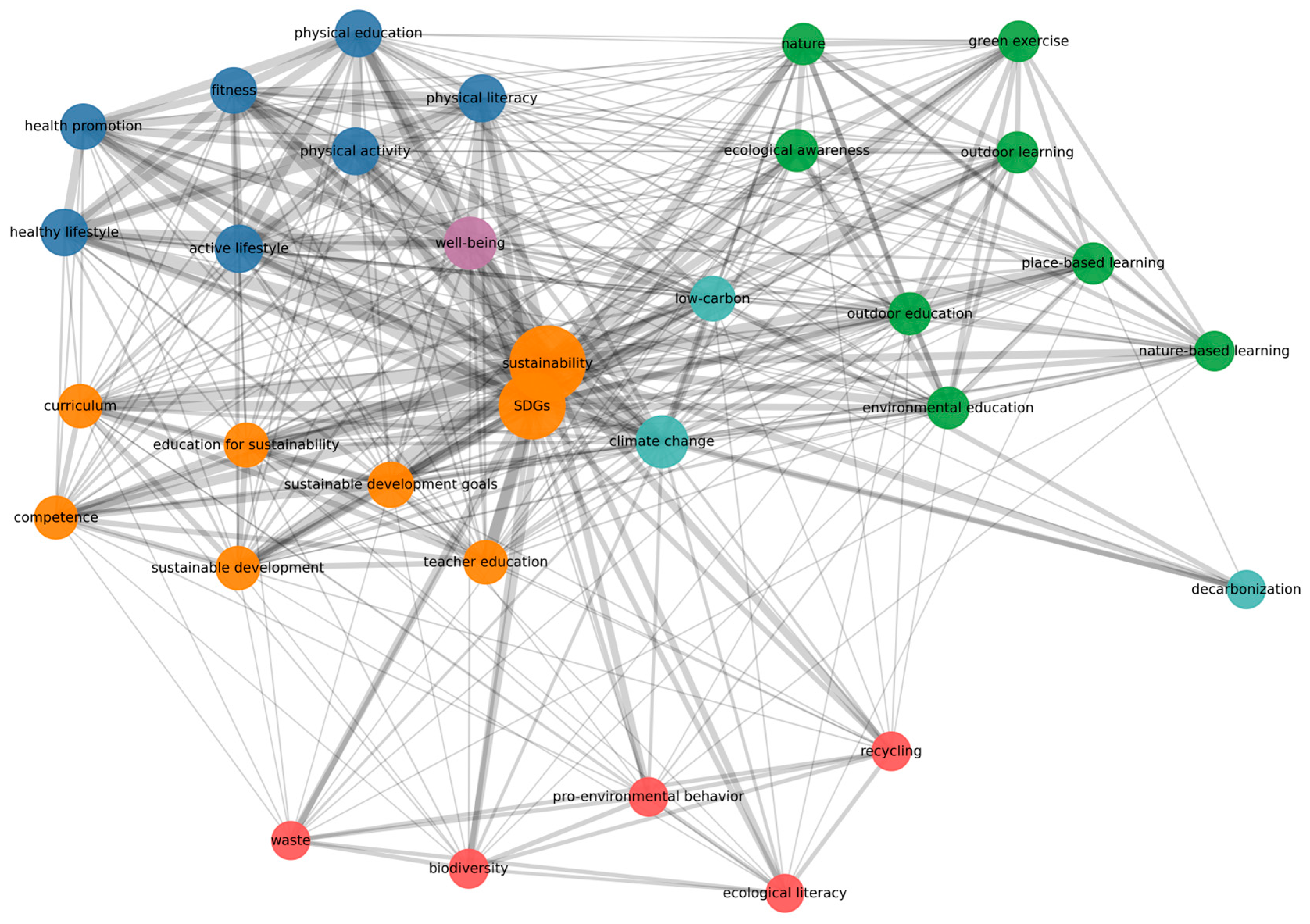
Figure 4.
Thematic evolution of research connecting physical education with sustainability, climate change, and sustainable lifestyles across five analytical periods (2000–2026).
Figure 4.
Thematic evolution of research connecting physical education with sustainability, climate change, and sustainable lifestyles across five analytical periods (2000–2026).
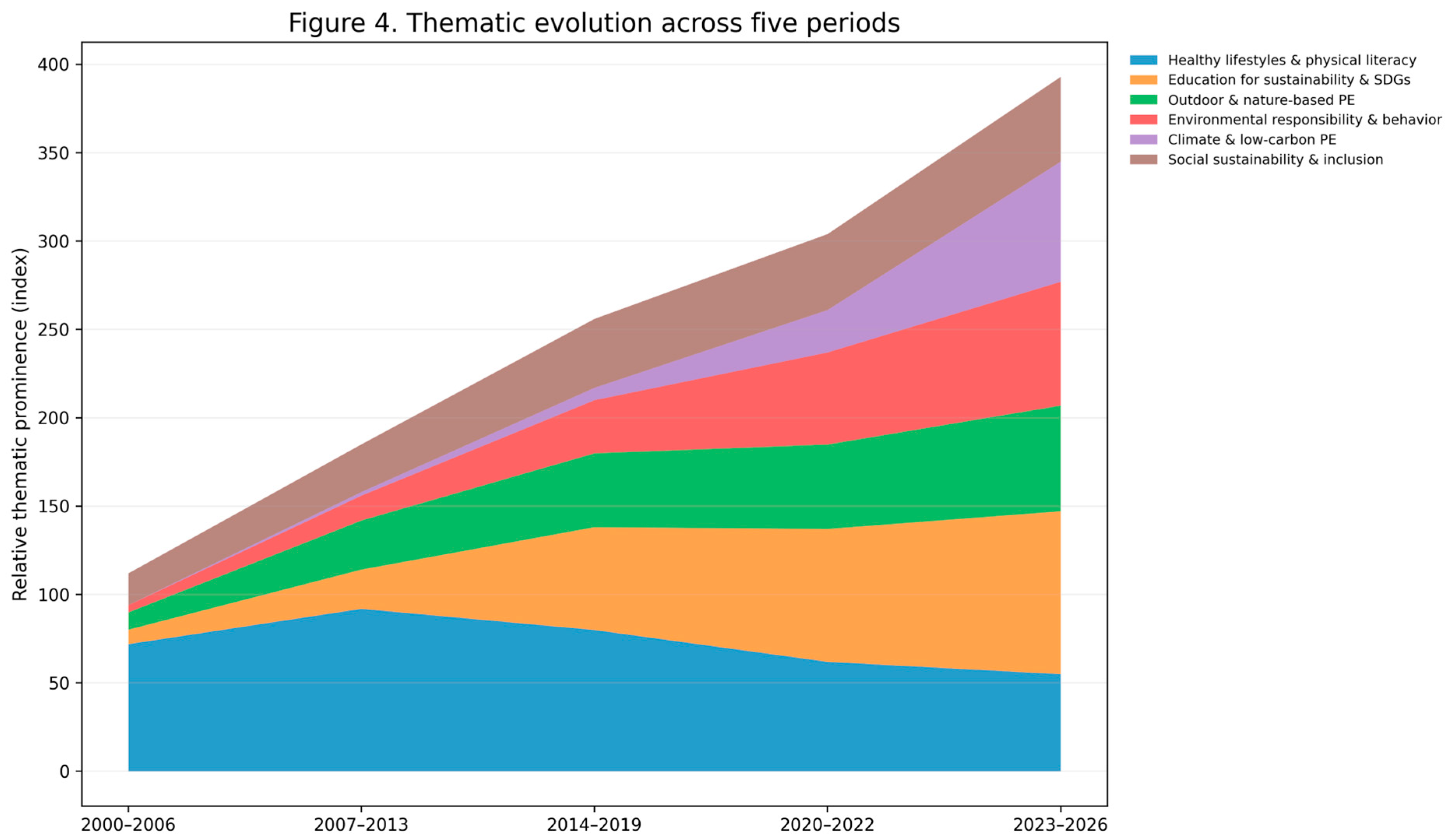
Figure 5.
Strategic thematic map showing the positioning of identified research themes according to centrality and density within the analyzed Scopus corpus.
Figure 5.
Strategic thematic map showing the positioning of identified research themes according to centrality and density within the analyzed Scopus corpus.
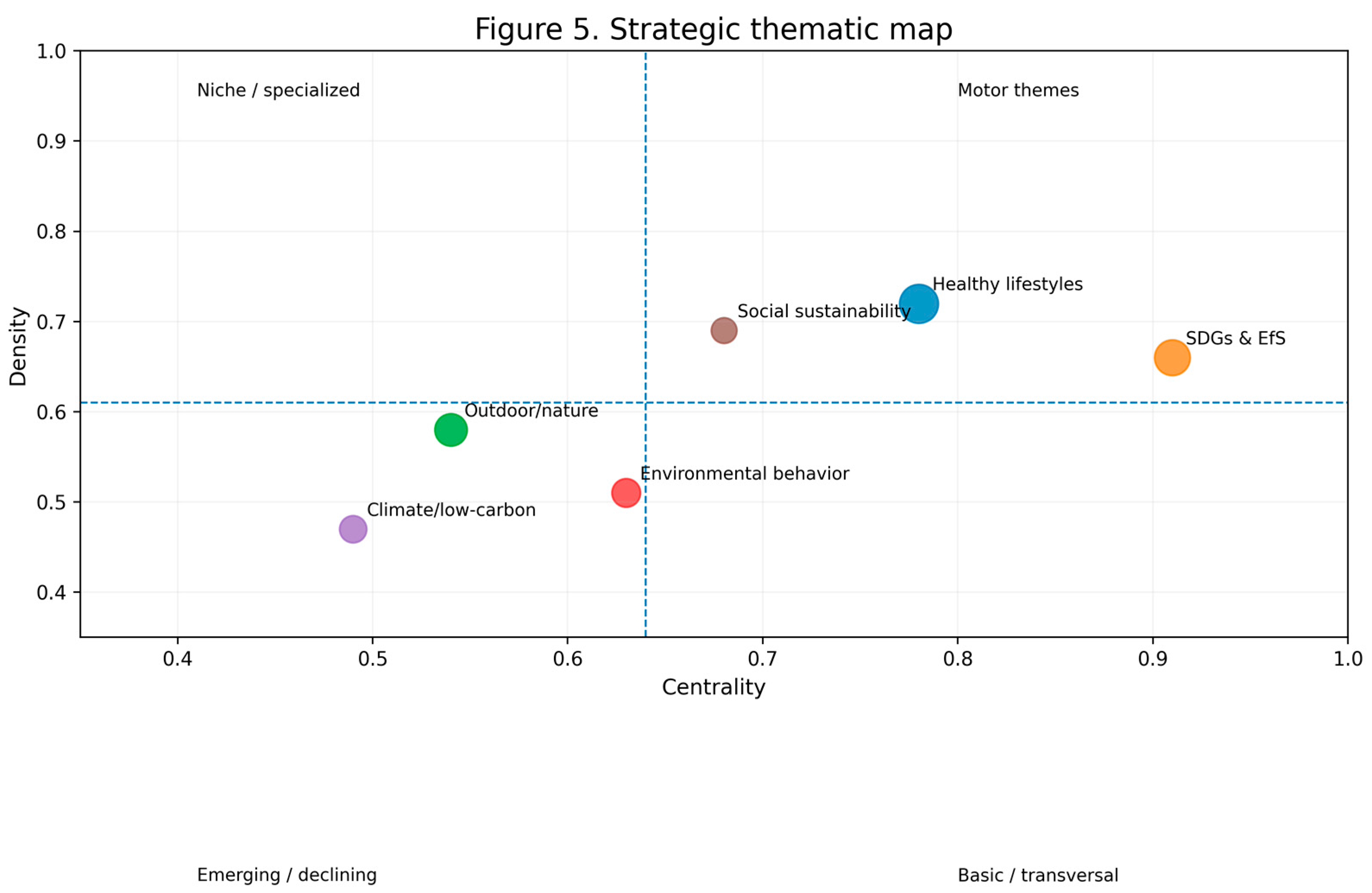
Figure 6.
Integrative thematic trajectory of sustainable physical education research.
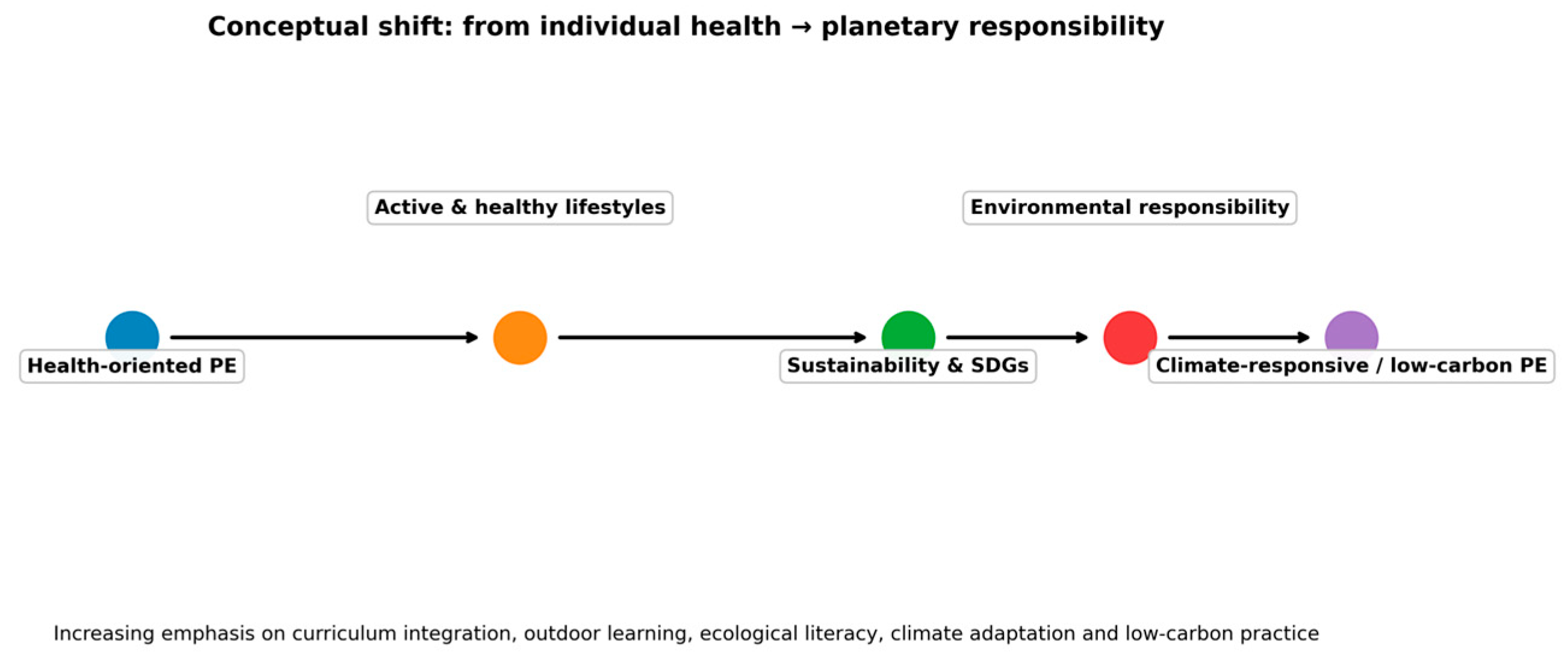
Table 1.
Corpus profile by analytical period.
| Period | Documents | Percentage of Corpus |
| 2000–2006 | 110 | 4.6% |
| 2007–2013 | 245 | 10.1% |
| 2014–2019 | 488 | 20.2% |
| 2020–2022 | 474 | 19.6% |
| 2023–2026 | 1099 | 45.5% |
| Total | 2416 | 100% |
Disclaimer/Publisher’s Note: The statements, opinions and data contained in all publications are solely those of the individual author(s) and contributor(s) and not of MDPI and/or the editor(s). MDPI and/or the editor(s) disclaim responsibility for any injury to people or property resulting from any ideas, methods, instructions or products referred to in the content. |
© 2026 by the authors. Licensee MDPI, Basel, Switzerland. This article is an open access article distributed under the terms and conditions of the Creative Commons Attribution (CC BY) license (http://creativecommons.org/licenses/by/4.0/).
Copyright: This open access article is published under a Creative Commons CC BY 4.0 license, which permit the free download, distribution, and reuse, provided that the author and preprint are cited in any reuse.