

Submitted:
09 October 2026
Posted:
10 October 2026
You are already at the latest version
Abstract
This study examines the link between sustainable corporate Innovation and digital business resilience in the face of global market disruptions from 2021 to 2026, and how managers respond. While previous studies have focused on the elements of sustainability and digital transformation or resilience, there is a lack of focus on the dynamic interplay between these elements within sectors and over time. This study draws on a framework of dynamic capabilities and organizational learning and suggests a proposed relationship between sustainable innovation and resilience outcomes that is mediated by managerial responses. A multiple-case study design is followed, with secondary data that are gathered from corporate reports, industry publications, and academic case studies in the manufacturing, services, and technology industries. Patterns around capability development and adaptation are identified through thematic analysis and cross-case synthesis. The results show that the managerial response is key to sustainable Innovation being realized as resilience, and that there are differences among sectors and a clear timeline of reactive to proactive and AI-based. The study is of theoretical significance because of the integration of sustainability, Innovation, and resilience.
Keywords:
sustainable innovation
; digital resilience
; dynamic capabilities
; managerial responses
; organizational learning
1. Introduction
1.1. Background & Context
The global business landscape is becoming more and more volatile owing to the interwoven disruptions like the Covid-19 pandemic, geopolitical tensions, supply chain breakdowns, and the rapid emergence of technological change driven by artificial intelligence. These disruptions have changed the way organizations function and have made businesses re-evaluate what they are doing to be more efficient (Karanika-Murray, Whysall, Liu-Smith, Feltbower, & Challans-Rasool, 2023). Organizations are now looking more towards resilience approaches focused on adaptability, agility and long-term sustainability, rather than cost reduction and operational efficiency. At the same time, digital transformation has gained momentum across all sectors, and it is one of the main catalysts for organizational change. The use of sophisticated tools like cloud computing, AI, big data analytics, and automation is becoming more common among firms to improve operational swiftness and decision-making processes.
This digital transformation has not only boosted efficiency but has also made businesses more flexible and adaptable when facing unexpected shocks and challenges (Browder, Dwyer, & Koch, 2024). At the same time, the relevance of Innovation for sustainability has grown amongst companies' strategies. Increased pressure on organizations to include the environment and society in their innovation process from governments, stakeholders and consumers. In this way, the sustainable corporate Innovation has emerged as a strategic objective, which is expressed in the economic dimension, which relates the economic performance to the environmental responsibility.
Consequently, digital business resilience is an essential skill of organizations. It is about the companies that already have a digital tool, and the way they prepare for disruptions, respond to them, and bounce back using that tool and adapting processes. In summary, these developments suggest that companies are making a paradigm shift from efficiency toward building resilience with greater connectivity between sustainability, Innovation, and digital transformation.
1.2. Research Problem
In spite of the increase in interest around sustainability, Innovation, and digital transformation, current literature still deals with these concepts one by one. The study of sustainable Innovation is mainly concerned with creating value in the environment and society. In contrast, the study on digital transformation is mainly concerned with the adoption of technology and operational efficiency (Rehman Khan, Ahmad, Sheikh, & Yu, 2022). Likewise, research on organizational resilience tends to focus on the survival and recovery of the organization without a clear focus on sustainability and Innovation. This disjointed perspective restricts the ability to understand in practice how organizations actually put sustainable corporate Innovation into practice as digital business resilience. Specifically, the mechanisms by which innovation-related sustainability efforts lead to adaptive and resilient outcomes in organizations in dynamic environments are not explained.
Also, current studies offer little understanding of how managers make decisions in times of crisis. Management determines how to react strategically to the changes in the environment and how to allocate resources to make these changes happen. Managing processes linking Innovation and resilience, however, have not been studied extensively (Pacheco, Moore, Brandl, & White, 2023). Most of the studies use cross-sectional data and only focus on a single industry, so that temporal changes and sectoral differences cannot be captured. The multi-period analysis of the disruptions is not robust enough, as there is no evidence of any evolution from 2021 to 2026, such as recovering from COVID, adjusting supply chains, or transforming through AI. This leaves a tremendous knowledge gap regarding resilience mechanisms' evolution across time and industries.
1.3. Research Gap
Although sustainable corporate Innovation, managerial response and digital business resilience are increasingly subjects of interest, researchers have failed to provide a combined framework into one explanatory model of sustainable corporate Innovation, managerial response and digital business resilience (Saxena, Seetharaman, & Shawarikar, 2024). The vast majority of studies focus on these constructs individually and provide little insight into how innovations that are meant to create sustainable results become actual outcomes for the organization. There is a definite need for longitudinal studies that follow the developing disruptions over the post-COVID era of time (2020–2021) and the new transformation period driven by AI (2021–2026). There are also limited comparisons across sectors, e.g., manufacturing, services and technology, as existing empirical studies tend to be confined to specific contexts. the mediation role of managerial responses has been under-explored. It can help explain the link between strategic decision-making and the cognitive interpretation on the one hand, and the transformation of sustainable innovations into resilience capabilities on the other. These gaps suggest the need for an integrated, multi-sector and temporally based analysis.
1.4. Research Questions
This study addresses the following research questions:
- RQ1: How does sustainable corporate innovation influence digital business resilience across organizations between 2021 and 2026?
- RQ2: How do managerial responses mediate the relationship between sustainable Innovation and digital business resilience in dynamic and uncertain environments?
- RQ3: How do resilience-building mechanisms differ across manufacturing, services, and technology sectors during periods of global disruption?
These research questions aim to develop a comprehensive understanding of the interaction between sustainability, Innovation, and resilience, while capturing temporal and sectoral variations in organizational responses to global market disruptions.
1.5. Research Objectives
This study aims to analyse the relationship between sustainable corporate innovation and the digital business resilience in the face of global disruption in two directions, (1) sustainable corporate Innovation and digital business resilience and (2) digital business resilience and sustainable corporate Innovation. Second, it analyses the mediating role of managerial responses between innovation and resilience outcomes. Third, it determines and examine sectoral disparities in the development of resilience between the manufacturing sector, services and technology industries. Lastly, it visualizes post-pandemic recovery and AI-influenced transformation periods between 2021 and 2026, to understand the time dynamic of resilience strategies. These goals are all geared toward building an integrated understanding of the dynamics of sustainability, Innovation, and resilience.
1.6. Significance of the Study
This study theoretically contributes by combining the concepts of Dynamic Capabilities Theory, Innovation Literature, and Organisational Resilience (AHACHMI, LAHFIDI, RHAZZANE, & TAMANINE, 2025). It offers multi-sector and multi-period evidence across the 2021–2026 disruption landscape, which is rare from an empirical point of view. In practice, the results support managers in creating effective resilience strategies based on sustainable Innovation and decision-making. The study provides policy guidance on how to back Innovation and sustainability growth agendas, from a policy perspective. The study contributes to the knowledge on building long-term resilience of organizations in increasingly volatile and technology-oriented environments, in general.
2. Literature Review & Theoretical Framework
2.1. Sustainable Corporate Innovation
Sustainable company innovation can be understood as the process of coming up with a new or improved product, process or business model that creates economic value in addition to lowering environmental footprints and improving social benefits (Ferlito & Faraci, 2022). The concept has been shifting from the narrow and traditional notions of eco-efficiency to a broader perspective that incorporates environmental sustainability, social responsibility and long-term competitive gain. Today, in management literature, sustainable Innovation is gaining more and more ground as a strategic competence, which will allow companies to meet regulatory requirements, the expectations of stakeholders, and the global challenge of sustainable Innovation (Afeltra, Alerasoul, & Strozzi, 2023). In most cases, sustainable Innovation is defined according to the three pillars of eco-innovation, process innovation, and social Innovation.
Yet, while sustainable corporate Innovation is beneficial, there are a number of critical challenges. One of the major issues is that green technologies and sustainable processes come with a big price tag, and implementing them can be costly for companies. Second, the challenge of reconciling short-term performance with long-term sustainability objectives can make it difficult to get management to commit. Thirdly, barriers to implementation, which include technological constraints, organizational capacities and resistance to change, may prevent effective adoption. As these challenges remind us, the process of turning sustainability intentions into innovation outcomes is not a simple one (Mead, Jeanrenaud, & Bessant, 2022). In general, sustainable corporate Innovation has moved from being a side project of corporate responsibility to a strategic priority. However, the effectiveness depends not only on technological adoption but also on the organizational capability, managerial decision-making and the wider institutional context in which firms are operating.
2.2. Digital Business Resilience
Digital business resilience is the capacity of an organization to absorb, adapt, recover and transform from a disruptive event, leveraging digital technologies and capabilities. It's more than just organizational resilience; it is a testament to the pivotal role of digital infrastructure and data-driven choices in guaranteeing company continuity and resilience (Sagar & Sagar, 2026). Today, digital resilience is recognized as a dynamic capability in research, as an ability to react to uncertainty while maintaining the stability of their research activities and strategic agility. One of the main factors of digital business resilience is the adoption of advanced digital technologies such as artificial intelligence (AI), cloud services, big data analytics and automation systems.
These technologies are designed to provide better organization-level sensing by allowing businesses to monitor in real time changes in the market, disruptions in the supply chain, and customer behaviour (Li, Chen, & Guo, 2025). Cloud computing ensures the flexibility and scalability of resources, which is vital for businesses to remain operational, while business analytics tools enable businesses to gain insights from huge amounts of data. AI also enhances the decision-making process by forecasting disruptions and enabling adaptive responses. These technologies collectively support the digitally-enabled resilience vision.
COVID-19 and global challenges are driving industry digital transformation at a much higher rate, emphasizing the need for digital resilience. The need for organizations to rapidly adopt remote working systems, digital supply chains and virtual customer engagement platforms arose (Ivanov, Dolgui, & Sokolov, 2022). In fact, this acceleration demonstrated that digital organizations have fared better in terms of sustaining their operations, continuing to engage with customers and in the ability to recover quickly from shocks. In such unpredictable environments, digital resilience has gone beyond a competitive edge and become a core business need. Digital business resilience is an iterative process of anticipating, coping, recovering and learning (Figure 1). While it has its benefits, digital business resilience comes with its challenges and risks. One of the key problems is that they are too reliant on digital systems, which makes them vulnerable to cyberattacks, system failures and data breaches.
Also, there is a risk that relying too heavily on automation and artificial intelligence decisions decreases human judgment in critical scenarios. Digital skills and digital inequality between firms are also contributing to the resilience output difference between industries/regions (Buyukyazici, 2024). the complexity of technologies and their cost of implementation can hinder the uptake, particularly for SMEs. In summary, the idea of digital business resilience is a fundamental change in thought about resilience from recovery to adapt and transform. The uptake of technology is not the only thing that is important; organizational skills, managerial decisions and a strategy of digital dependence and flexibility are also important.
2.3. Managerial Responses to Disruptions
Managerial reactions to disruptions describe the strategic decisions and mental processing that managers engage in as they interpret environmental uncertainty and direct the way that an organization adapts during times of change (Shafizadeh, 2024). In a world characterized by disruption, including pandemic, supply chain and technological shocks, managerial reactions have a key role to play in shaping whether firms survive or sustain their resilience. Four strategic response types have been identified in existing literature, retrenchment, perseverance, Innovation, and exit. Perseverance is the application of the same strategies to survive in the short term, and retrenchment is a process of cost-cutting and reducing resources. Responses based on Innovation involve modifying a business model, a product or a process in response to new circumstances. At the same time, exit is a withdrawal from markets or operations that are no longer viable (Geissdoerfer, Santa-Maria, Kirchherr, & Pelzeter, 2023).In strategic actions, managerial cognition and sense-making play a large role in the interpretation and response to disruptions. Managers are not only directly affected by the objective facts, but their perceptions, previous experiences and cognitive models also affect the decision-making process. Sense-making allows managers to make sense of ambiguous signals and to develop meaning from uncertainty to inform strategic decisions in a crisis.
Another important aspect of managerial response to disruptions is the reallocation of resources. Managers need to quickly allocate their financial, technological and human resources to areas of high priority like digital transformation, operational continuity and customer retention when confronted with uncertainty. The impact of this reallocation has a powerful impact on organizational resilience outcomes (Low & Cheah, 2025). But managerial reactions are not necessarily rational or optimal. One key constraint revealed by recent studies is the potential for managerial bias that may bias decision-making. The characteristics of cognitive biases, such as overconfidence, risk aversion and status quo bias, can result in late or insufficient responses, or suboptimal strategic decisions, which can ultimately impact the resilience capabilities. So, what about the role of managerial interpretation and behavioural tendencies in the success of organizations in dealing with disruption? In general, managerial responses serve as an important intervening variable between disruption in the environment and organizational resilience, driving the way that firms convert strategic intent into adaptive ability (Keskin, Tatoglu, Akgün, & Balak, 2026).
2.4. Dynamic Capabilities Theory
The original Dynamic Capabilities Theory by Teece is a simple theory to guide organizations in understanding how they can maintain a competitive advantage in an ever-changing environment. The theory is based on three basic processes, sensing, seizing and transforming. Sensing is a company's capacity to detect opportunities and threats from the external environment (Song et al., 2022). Seizing is about mobilizing resources to respond to opportunities identified, whereas transforming is about the ongoing renewal and reconfiguration of organizational assets to stay in tune with the environment. All these capabilities together contribute to a company's ability to successfully adapt during uncertainty and disruption. Dynamic capabilities are essential in digital transformation for organizations to integrate innovative technologies like AI, cloud computing, and data analytics into their strategic and operational workflows (Froehlich, Reinhardt, Schreiber, & Eberle, 2025). These technologies increase the ability of their sensing to collect real-time data and to scan the environment. They also enhance the ability to operate seizures by providing quicker decision-making and response of resources.
Digital integration is a driver towards capabilities transformation, allowing businesses to reimagine their business models, automate processes and increase the flexibility of business. In today's hyper-changing global economy, in the wake of the COVID-19 pandemic and amid the artificial intelligence revolution, the dynamic capacities of a company are even more relevant (Chowdhury, Chowdhury, Rahman, & Sunny, 2022). Dynamic capabilities help organizations cope with surprise events and disturbances, reconfigure resources and continue to operate in the event of a crisis. With all the shifting dynamics of supply chain disruptions, geopolitical uncertainty and fast technological advancements, static capabilities are no longer sustainable for performance.
However, Dynamic Capabilities Theory has been critically analysed, despite being an explanatory theory (Wilhelm, Maurer, & Ebers, 2022). Key limitations involve the appreciation of the ability of dynamic capabilities to be effective, which is dependent on the speed of the organization's learning. Organizations with slower learning capabilities can find it hard to capture change in the environment or quickly adapt their resources, which affects their ability to adapt. Moreover, the development of dynamic capabilities may be expensive and may require significant managerial and organizational resources, which may not be available in all firms (Kero & Bogale, 2023). In general, Dynamic Capabilities Theory helps to provide a comprehensive framework for understanding the process of digital transformation and environmental uncertainty in organizations and its role in learning speed and managerial capability in the resilience outcome.
2.5. Organizational Learning Theory
Organizational Learning Theory is the fundamental theory of organizational learning, knowledge acquisition and utilization to improve organizational performance and adapt to the changing environment. It is particularly crucial in today's digital transformation and business resiliency landscape regarding ongoing learning and the capacity to handle uncertainty and disruption (Hokmabadi, Rezvani, & De Matos, 2024). The concept of theory has two kinds of learning, namely single-loop learning and double-loop learning. Single-loop learning is the ability to identify and fix errors without changing the underlying norms, policies or assumptions in the organization. It's all about the incremental improvements and operational efficiency, and gives businesses the power to solve immediate problems quickly.
Reflecting and refining the organization's values, strategies and decision-making processes is more advanced and is called double loop learning. This is a more transformative learning, empowering companies to make significant changes in processes and adjust to significant environmental changes (Singer-Brodowski, 2025). In a world where the organization's ecosystem is uncertain, such as the COVID-19 pandemic, supply chain volatility, and fast technological developments, organizational learning is one of the survival mechanisms and an adaptive mode. One-loop learning gives companies a stable situation, but not for the long term, as they are not likely to adapt their internal processes to the changing external environment. Conversely, organizations that are skilled at double loop learning will be better positioned to adjust their approach, uptake digital technology and develop resilience skills (Mize, Lietzenmayer, & Beck, 2025). Organizational learning also involves learning from the disruption and failure.
Errors are now known as an effective means for businesses to get insight about their weaknesses and rectify them to improve their processes and increase their innovation potential. This learning is fundamental for the necessary adaptation, allowing companies to tweak and fine-tune their approach to new and evolving challenges (Antony et al., 2024). Furthermore, the relationship between organizational learning, Innovation, and resilience development is very strong. This ongoing learning process results in the creation of new knowledge, experimentation and adaptability, which aids in the development of new solutions and resilient organizational structures. The ones that do manage to effectively embed learning processes into their strategic and operational processes are more likely to be able to maintain performance in times of uncertainty and thus to be able to create long-term competitive advantages. Overall, OLT provides an important lens through which to view and understand how organizations survive and thrive in a changing world, through an ongoing process of knowledge transformation into capabilities for adaptation and resilience.
2.6. Conceptual Framework
In this research, the following integrated conceptual framework is proposed, which provides an explanation of how sustainable corporate Innovation manifests in digital business resilience via the mediating role of managerial responses in the event of global market disruptions. It is a multi-layered explanation of how firms adapt, innovate and become resilient in a context of uncertainty based on the dynamic capabilities theory and the organizational learning theory (Vladić, Maletič, & Maletič, 2025). Independent variable of the framework is sustainable corporate Innovation, which consists of eco-innovation, process innovation and social innovation practices. These innovation activities entail strategic and operational changes within the companies, but not necessarily on resilience. In contrast, managerial responses serve as a critical intervening process in how well innovation efforts are converted to adaptive organizational outcomes.
Managerial reactions consist of strategic decision-making and resource reallocation, as well as sense-making during disruption (Boe-Lillegraven, Georgallis, & Kolk, 2024). Digital business resilience (the dependent variable) is the ability of an organization to absorb, withstand and adapt to shocks and change its own business models with digital technologies. This includes AI, cloud computing, and data analytics features, improving organizational flexibility and responsiveness. The framework includes an optional moderator, environmental turbulence, which captures the magnitude of turbulence, especially due to COVID-19, geopolitical crises, and technological advances. The more turbulent the environment, the stronger the correlation between a manager's response and the resilience outcomes, as there will be a greater need for adaptive decision-making.
The model is supported by theoretical elements from the theories of dynamic capabilities, how firms sense, seize and transform resources and organizational learning, how knowledge creation and double-loop learning contribute to adaptation (Saidi, Grama-Vigouroux, Sellami, Ghamgui, & Rezaei, 2025). The mechanisms that enable firms to innovate in dynamic environments are continually supported by these theories. The conceptual framework is holistic and sequential, suggesting a link between sustainable Innovation and managerial responses and the subsequent digital business resilience within the context of environmental turbulence and organizational capabilities.
3. Methodology
3.1. Research Design
This study employs a multiple case study research design, which emphasizes the analysis of how managers of digital business can influence the sustainable corporate Innovation on resilience to global market disruptions. A case study approach is appropriate as the processes of building resilience are complex, context-specific, dynamic and can only be described partially by quantitative methods (Cantelmi, Di Gravio, & Patriarca, 2021). The study will address the period of 2021-2026, and three stages: Post-COVID Recovery (2021-2022), Supply Chain and Geopolitical Instability (2023-2024) and AI-enabled Transformation (2025-2026). This time-segmentation offers the opportunity to consider the modifications in the resilience of the organizations over time, based on the magnitude of the disruptions. Patterns identified in one case are transposed into other cases to facilitate the rigor in analysis and to broaden generalizations of the theory. This method is in line with replications-based case study research and provides opportunities to gain more insight into the process of building resilience capabilities within firms facing similar external stressors.
3.2. Case Selection
The study includes six companies: two companies from each sector, manufacturing, services and technology. This is due to sectoral diversity, which enables the comparison of resilience-building mechanisms in different industrial contexts. The selection of the firms for this case study is based on three factors: the firms must have more than 500 employees, must have experienced major global disruptions over the last five years (2021-2026), and must have sufficient publicly available information to analyse the firms. This guarantees that cases selected are informative and pertinent to the research agenda. Multiple sectors add to the explanatory power of the study and enable the detection of sector-specific strategies for resilience and similarities across the sectors (Wu, Hu, Wang, & Liu, 2025). The typical manufacturing companies are likely to suffer operational and supply chain disruptions, service companies will be impacted by changing demand and customer interactions, and technology companies will be under pressure of Innovation. This diversity improves the generalizability of the results of the study.
3.3. Data Collection
The data used in this study are from secondary data sources that are transparent, accessible and replicable. Sources of data include annual corporate reports, industry analysis reports, published case studies and trusted news archives (Alduais, 2024). These sources provide detailed insights into organizational strategies, the process of digital transformation, and the outcomes of resilience. The data collection timeframe is from 2021 to 2026, representing different phases in the world: post-pandemic recovery, Geopolitical uncertainty, Supply chain disruption, AI technology, etc. The coverage of time permits a study to be used to investigate organizational responses over time. A systematic data collection is used with a structured keyword search strategy. The words digital transformation, sustainable Innovation, organizational resilience and global disruption are important. This way, only pertinent and good-quality data will be analysed. In general, the utilization of secondary data sources can give triangulation and improve the validity of the findings with cross-verification of information on several platforms.
3.4. Data Analysis
This study identifies and analyses patterns in the qualitative data collected using a systematic approach, proposed by Braun and Clarke in 2002, known as thematic analysis. The analysis begins with the open coding of the raw data of the case materials, reports and secondary data, and initial concepts of 'sustainable innovation', 'managerial responses', and 'digital resilience' are picked up. Theme generation is done in the second phase by developing a set of conceptual categories from the codes. Themes are common themes of how organizations respond to disruption and how they become resilient via digital transformation and innovation practices. In the last step, theme refinement helps in having coherent, distinct and aligned themes in relation to the research goals. A cross-case synthesis approach is used to increase the analytical depth. This involves case analysis of individual companies (Halkias, Neubert, & Harkiolakis, 2023), identifying pathways, they have adopted to develop resilience, and between case analysis: explaining similarities/differences between manufacturing, services and technology companies. The outcome of the analytical process will be the patterns of resilience development (as well as the typologies of managerial responses) that will explain how sustainable Innovation translates into digital business resilience, in various contexts and over time (2021-2026).
3.5. Trustworthiness
Triangulation of multiple data sources, transparency of the audit trail in coding decisions, cross-case validation of emerging patterns and theoretical triangulation with the dynamic capabilities and organizational learning perspectives provide for trustworthiness. These strategies increase the credibility, dependability, and confirmability of the results.
3.6. Ethical Considerations
The data used in this study comes from secondary sources, such as reports that are open to the public and published case studies. There is no involvement of human participants and hence no need for ethical approval. The research is conducted assuming the principles of academic integrity, acknowledging and quoting the proper citations for all information utilized, and responsibly interpreting all data utilized.
4. Findings
4.1. Within-Case Analysis
4.1.1. Manufacturing Sector
Manufacturing shows resilience in its supply chain and continuity in its operations in the face of global disruptions from 2021 to 2026. They faced considerable turmoil in their value chain, raw material supply and logistics, particularly in the post-COVID and geopolitical crisis. Responding to this, organizations implemented diversified sourcing and bolstered supplier networks by lessening their reliance on one market. One of the main conclusions is that the pace of digital automation technologies, such as predictive maintenance systems and production lines integrated with the Internet of Things, as well as AI-based inventory management, is accelerating (Nagy, Valaskova, & Lazaroiu, 2026). Such technologies helped to increase the operational visibility and allowed for real-time decision making, thus making production more efficient and minimizing downtime when disruptions occurred.
Sustainability integration was another identified key strategic priority. Manufacturing companies were increasingly adopting eco-efficient production processes, energy optimization systems and circular economy principles, thus adopting operational resilience measures that are also environmentally responsible (Setyadi, Pawirosumarto, & Damaris, 2025). In this area, responses were mainly oriented towards a gradual shift towards digitalized and sustainable production systems and a stabilization of the operations. To summarise, the three main factors of manufacturing resilience are adapting to supply chains, adopting automation, and redesigning operations to make them sustainable processes.
4.1.2. Services Sector
In the services sector, there was a lot of change in the patterns and structures of customers' needs, employees' skills and service delivery. To keep customers engaged and running as an organization, this sector quickly adapted to a digital service model. The most significant change was the accelerated pace of the digital transformation of services, especially in the context of remote service delivery platforms, virtual communication systems and hybrid service models. One big component of what Customer Relationship Management (CRM) systems made possible was personalized interactions with customers and increased responsiveness.
Cloud-based solutions were sought in larger companies to increase these flexibilities, scalabilities, and data availability. These technologies were helping organizations to be responsive and to ensure continuity of services when uncertainty arose, due to changing customer needs. The managerial responses of the service companies were extremely customer-oriented, focused on maintaining customers' trust, satisfaction and engagement during times of disruption. Service companies were more flexible and more dependent on digital infrastructure than manufacturing companies. Overall, CRM optimization, cloud and digital transformation of service delivery models will all play a role in the overall increase in resilience for this sector.
4.1.3. Technology Sector
Technology showed the highest degree of adaptation and Innovation for resilience during the period of the study. In this sector, firms were already digitally-ready and were adapting to disruption by introducing innovations in short time frames and continuously making platform changes. Unlike manufacturing and services, technology companies viewed disruption as an opportunity to accelerate innovations, rather than recovery. One major discovery is the prevalence of AI-powered resilience mechanisms such as predictive analytics, automated product development processes, and machine learning decision systems.
These technologies could allow businesses to anticipate market changes, optimize digital ecosystems and assist in maximizing their scalability through uncertain times. Another key theme in terms of resilience in this sector was platform-based transformation (Floetgen et al., 2021). In order to bolster their competitive positions, firms built out digital ecosystems, included third-party developers, and improved platform interoperability. Managerial responses were very proactive experimentation, rapid scaling and ecosystem development. The tech industry is the most digitally advanced and adaptive industry when compared to the three industries studied, given that it is the most innovative and has a developing platform ecosystem and AI-based decision-making.
4.2. Cross-Case Analysis
Through the analysis of processes of digital business resilience in manufacturing firms, services and technology firms, the cross-case analysis shows different, but interrelated, patterns in building digital business resilience through sustainable corporate Innovation and managerial reactions. A comparison matrix highlights the differences between the sectors regarding types of innovations, digital tools, management strategies and resilience outcomes (Ma & Zhao, 2026). In terms of innovative type, the manufacturing companies are mainly concerned with eco-efficiency and process innovation, the service companies with customer-centric digital Innovation, and the technology companies with platform and AI-driven innovation. As for digital tools, manufacturing is heavy on IoT and predictive analytics, services are heavy on CRM systems and cloud platforms, and tech companies are heavy on AI, machine learning and blockchain-based ecosystems.

Table 1.
Cross-Case Comparison Matrix.
| Theme | Manufacturing | Services | Technology |
| Innovation focus | Eco-efficiency, process innovation | Customer-centric digital Innovation | Platform, AI-driven Innovation |
| Key digital tools | IoT, predictive analytics | CRM, cloud platforms | AI, machine learning, blockchain |
| Managerial response style | Operational stability, supply chain focus | Agility, customer retention | Experimentation, innovation-led |
| Resilience outcome | Operational robustness | Customer adaptability | Innovation scalability |
| Sustainability integration | Moderate | Moderate | High |
Responses also vary by sector in terms of managers. For manufacturing managers, it's stability and continuity and process agility; for service-sector managers, it's agility and customer retention; for technology managers, it is to be experimental and innovative. These differences directly impact resilience outcomes, with manufacturing firms becoming operationally robust, service firms becoming more adaptive to customers, and technology firms becoming more scalable for rapid Innovation (Nakandala, Yang, Lau, & Weerabahu, 2023). The pattern that dominates the results of the analysis is two. The first is that sustainability-driven resilience is not only visible in all sectors, but also that companies integrating environmental and social aspects into their innovation processes are able to create more stable long-term resilience outcomes. Second, there are clear differences in agility between industries. Technology companies are the most adaptable, services companies come in second and manufacturing companies are the least agile, with operational rigidity. Based on the cross-case analysis, the general view is that digital business resilience is not the same for all sectors, but is shaped by their sectoral innovation strategies, technological competencies, and managerial decision-making processes.
4.3. Key Findings Summary
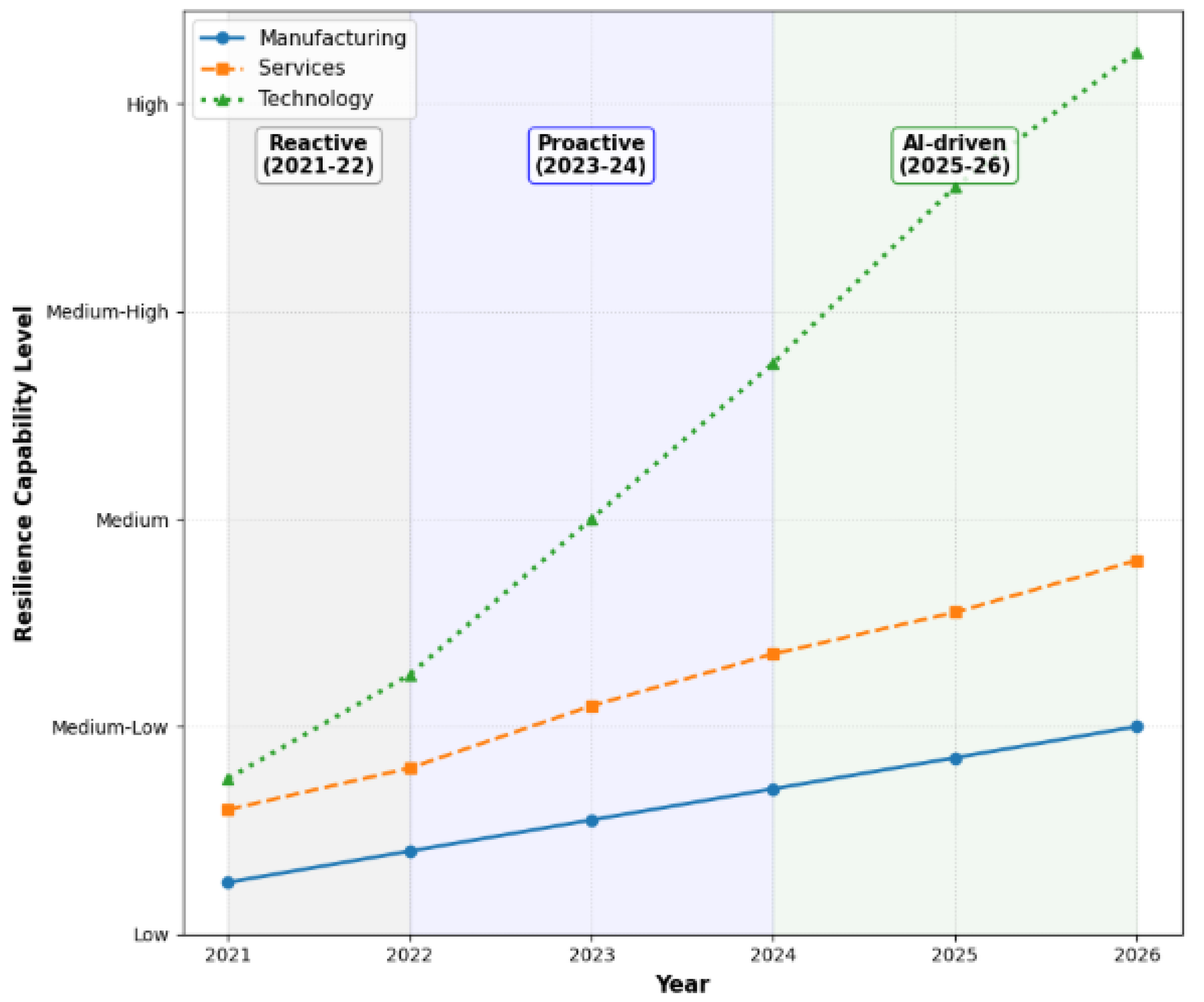
The results show that digital business resilience capabilities have a definite temporal evolution from 2021 to 2026. In 2021–2022, the main types of adaptive responses that organizations are taking relate to short-term survival, maintaining operational continuity, and quickening digital adoption to address the disruption caused by COVID-19. During this period, digital tools were used in an emergency instead of a strategic manner. In 2023-2024, companies shifted towards being proactive in building resilience, including investing in digital transformation, diversifying supply chains, and embedding sustainability principles in their innovation practices. Managerial responses became more formalized with increased focus on planning, forecasting and risk management. In 2025–2026, resilience strategies became more AI-driven and data-driven, with companies becoming more reliant on artificial intelligence, predictive analytics, and automated decision-making processes to predict disruptions better and optimize performance in real time (Sundström & Svärdsten, 2026). During this phase, the transition is towards intelligent and self-adaptive organization systems.
The study highlights the managerial mediation effect: managerial responses are a crucial link between sustainable corporate Innovation and digital business resilience. Resilience is not the direct result of Innovation; it is the interpretation, decision-making and allocation of resources made by managers that will bring resilience outcomes. Figure 2 shows the evolution of the resilience capabilities over time within each of the sectors. Lastly, there are differences in resilience pathways across sectors. Manufacturing companies look for operations to be stable, service companies look for adaptability to their customers, and technology companies look for scalability to Innovation. The disparities underscore the need to consider context and industry-specific dynamics when understanding resilience.
5. Discussion
5.1. Interpretation of Findings
The results of this research show that sustainable corporate Innovation has a positive impact on digital business resilience, but not in a direct linear way, rather by means of its intermediate role of managerial responses. This aligns and builds upon the dynamic capabilities theory that asserts that firms exhibit resilience when they sense, seize, and transform resources to deal with environmental turbulence (Nyamboga, 2026). The capacities presented in this study are operationalized by digital transformation, sustainability-based innovations, and adaptive managerial decisions. The findings also underscore the significance of managerial responses as a key enabler for Innovation to become resilience. Managers are an interpretive agent that influences firms' responses to the disruptions in ways of strategic choices, resource allocation, and sense-making processes. The results demonstrate that sustainable Innovation does not necessarily lead to resilience outcomes unless there is effective managerial interpretation, which has not been sufficiently explored in previous studies.
Moreover, the study validates the finding that the degree of resilience development is context-dependent and dependent on sectoral conditions and technological maturity. Industries show varying degrees of adaptation as seen in manufacturing, services and technology, which have different operational structures and digital readiness. The results indicate that digital business resilience is a result of the interplay of technological capability, sustainability-oriented Innovation, and managerial cognition.
5.2. Theoretical Contributions
This study is significant in three theoretical aspects. It combines sustainable corporate Innovation, digital transformation and organizational resilience in an integrated concept. Although the constructs have been studied individually before, this study shows that all constructs are closely linked and that sustainability-oriented Innovation forms a basis for enhanced resilience in digital environments. Second, the study contributes to the dynamic capabilities theory by adding the temporal and sectoral dimensions. The results also reveal that the sense, seize, and transform process develops over the various stages of disruption (2021–2026), which highlights that dynamic capabilities are not static but are continually shaped by the turbulence in the environment and the development of technology.
This builds on the theory by directly connecting it with digital business resilience outcomes (Chatterjee, Chaudhuri, & Vrontis, 2024). Thirdly, the study adds to the literature by finding that managing responses between the crisis and the operation is an underexplored area of study that is crucial to include in future research. The mechanisms that link innovation inputs with outputs of resilience are demonstrated to be managerial cognition, decision-making and resource orchestration. This emphasizes the human and behavioural aspect of resilience, complementing existing capability-based models.
5.3. Practical Implications
The results have a number of significant implications for management practice. In the first place, managers are urged to integrate a more sustainable way of innovating in their digital transformation programmes rather than as a standalone programme. The result is increased long-term sustainability and resilience since it provides environmental responsibility and operational flexibility (Settembre-Blundo, González-Sánchez, Medina-Salgado, & García-Muiña, 2021). Secondly, companies need to invest more in digital technologies, especially AI, cloud computing, and data analytics. They provide a powerful boost to real-time decision-making, operational agility, and predictive capabilities, which are crucial aspects of resilience in changing environments. Thirdly, strategies are needed at the sector level. Industrial companies need to be aware of the importance of digitalization and automation of their supply chains to ensure stability in their operations. Service companies need to invest in the customer-centric digital platform and CRM systems to become more adaptive.
AI-driven Innovation and expansion of the technology ecosystem should remain a key focus for technology companies seeking to stay competitive. Instead, managers need to be more proactive and learning-oriented in order to manage disruptions, which will require a constant adaptation, experimentation, and integration of sustainability in strategic decision-making. This is the first step to building resilient businesses to overcome unpredictable and volatile global markets.
5.4. Comparison with Prior Studies
This research is congruent and complementary to the work on digital transformation, resilience and innovativeness in the literature. In terms of digital transformation research, current studies highlight the importance of digital technologies like artificial intelligence, cloud computing, and data analytics in enhancing organizational efficiency and responsiveness (Oyekunle & Boohene, 2024). In line with this, this study confirms that digital technologies are important enablers of resilience. It builds on the existing literature, however, by demonstrating that, in addition to technology, managerial reactions are critical to turning digital capability into resilience outcomes, a topic that is under-researched in the field. In the literature on resilience, the concept of resilience is generally defined as the capacity of an organization to bounce back after disruption.
This is consistent with this study, but the results add to this understanding by emphasizing that resilience is a process and will be developed over time (2021-2026) through ongoing learning and adaptation. This is in contrast to the more traditional static or event-based understanding of resilience. In the field of innovation research, the direct relationship between Innovation and performance and competitiveness is the major focus of previous research. The Sustainable Corporate Innovation, on the other hand, is not directly creating digital resilience, according to this study (Isensee, Teuteberg, & Griese, 2023). Rather, it is mediated by managerial reactions, which suggests a more complex and nuanced relationship than has been previously indicated in the literature. Overall, this study adds to the debate taking place by bringing together the three streams and showing that digital business resilience is created by the interaction of Innovation, managers' cognition and development of digital capability, and not individual strategic factors.
6. Conclusion
6.1. Summary
In this study, the researcher investigated the mediating effect of managerial responses on the relationship between sustainable corporate Innovation and digital business resilience during the period of 2021-2026, when facing the disruptions of the global market. The study aimed to bridge a gap in the literature that combines the three concepts of sustainability, digital transformation and resilience in a unified analytical framework. The study employed a multiple-case study approach across three sectors of industry (manufacturing, services, and technology) to examine how companies thrive in dynamic and uncertain environments using innovation-based and digitally-enabled strategies. The results indicate that sustainable corporate Innovation does not directly lead to resilience, but rather through managerial action such as decisions, resource allocation, and sense-making. In addition, the resilience development process is sector-specific and evolves, from reactive resilience at the beginning stages to proactive resilience later in the process. Overall, the study reveals the interrelated nature of Innovation, management and digital capability in the context of organizational resilience.
6.2. Key Contributions
This study is a valuable theoretical, practical and policy contribution. It is theoretically a synthesis of sustainable corporate Innovation, dynamic capabilities, organizational learning and digital business resilience, and provides a mediating process of managerial responses that have not been included in the previous literature. It's also a contribution to the development of the dynamic capabilities theory by introducing the temporal and sectoral aspects to the development of resilience in the different phases of the disruption. Practically, the study is relevant to managers for designing resilience strategies, the focus being on sustainability in the digital transformation and on uncertainty in decision-making. It underscores the importance of investing in AI, cloud computing, and analytics for enhancing adaptive capacity. The study provides policymakers (government and institutions) with insights towards policy support for digital transformation and sustainability-driven innovation ecosystems. It puts forward the importance of sector-specific resilience strategies to boost competitiveness and stability in today's volatile global markets.
6.3. Recommendations
Sustainable Innovation must be part of the Digital Transformation strategy of Companies for long-term sustainability. Managers are advised to embrace decision-making based on data and reinforce their sensing, seizing and transformation skills to deal with disruptions effectively. Continued spending on new technologies such as AI, cloud systems, and predictive analytics is essential to agility. Policymakers should facilitate the building of digital infrastructure and promote innovative programmes for sustainability, particularly for SMEs. In addition, it is recommended that sector-specific resilience frameworks react to specific issues in manufacturing, services and technology sectors.
6.4. Future Research
For future studies, primary data collection techniques like interviews and surveys should be used to gain more managerial understanding of the processes that contribute to resilience. Comparative cross-country research is also advised to explore the impact of institutional and cultural factors on digital business resilience. New domains like AI systems for resilience, autonomous decision making and algorithmic management need to be explored. Studies of disruptions over time (longitudinal) would also help to understand the changing mechanisms of resilience better. Last, however, future studies should look at small and medium-sized enterprises (SMEs) as they are underrepresented in existing resilience literature but vulnerable in the event of a global shock.
References
- Afeltra, G.; Alerasoul, S. A.; Strozzi, F. The evolution of sustainable innovation: from the past to the future. Eur. J. Innov. Manag. 2023, 26(2), 386–421. [Google Scholar] [CrossRef]
- AHACHMI, M.; LAHFIDI, A.; RHAZZANE, S.; TAMANINE, R. Dynamic Capability Theory as a Foundation for Organizational Resilience: Key Factors Influencing Gastronomic Firms in the COVID-19 Context. Int. J. Account. Financ. Audit. Manag. Econ. 2025, 6(1), 23–44. [Google Scholar] [CrossRef]
- Alduais, F. Textual analysis of the annual report and corporate performance: evidence from China. J. Financ. Report. Account. 2024, 22(5), 1221–1252. [Google Scholar] [CrossRef]
- Antony, J.; Jalušić, D.; Bergweiler, S.; Hajnal, Á.; Žlabravec, V.; Emődi, M.; Marosi, A. C. Adapting to changes: a novel framework for continual machine learning in industrial applications. J. Grid Comput. 2024, 22(4), 71. [Google Scholar] [CrossRef]
- Boe-Lillegraven, S.; Georgallis, P.; Kolk, A. Sea change? Sense-making, firm reactions, and community resilience following climate disasters. J. Manag. Stud. 2024, 61(7), 3021–3051. [Google Scholar] [CrossRef]
- Browder, R. E.; Dwyer, S. M.; Koch, H. Upgrading adaptation: How digital transformation promotes organizational resilience. Strateg. Entrep. J. 2024, 18(1), 128–164. [Google Scholar] [CrossRef]
- Buyukyazici, D. Digital skills and industrial diversification of regions. Reg. Stud. Reg. Sci. 2024, 11(1), 583–598. [Google Scholar] [CrossRef]
- Cantelmi, R.; Di Gravio, G.; Patriarca, R. Reviewing qualitative research approaches in the context of critical infrastructure resilience. Environ. Syst. Decis. 2021, 41(3), 341–376. [Google Scholar] [CrossRef] [PubMed]
- Chatterjee, S.; Chaudhuri, R.; Vrontis, D. Digital resilience and new business models in the post-COVID-19 scenario: from B2B perspective in the era of knowledge economy. J. Enterp. Inf. Manag. 2024, 37(5), 1578–1602. [Google Scholar] [CrossRef]
- Chowdhury, T. E. C. T. E.; Chowdhury, R. C. R.; Rahman, M. M. R. M. M.; Sunny, A. R. S. A. R. From crisis to opportunity: How COVID-19 accelerated the global shift to online business. Pathfind. Res. 2022, 3(1), 18–18. [Google Scholar] [CrossRef]
- Ferlito, R.; Faraci, R. Business model innovation for sustainability: A new framework. Innov. Manag. Rev. 2022, 19(3), 222–236. [Google Scholar] [CrossRef]
- Floetgen, R. J.; Strauss, J.; Weking, J.; Hein, A.; Urmetzer, F.; Böhm, M.; Krcmar, H. Introducing platform ecosystem resilience: leveraging mobility platforms and their ecosystems for the new normal during COVID-19. Eur. J. Inf. Syst. 2021, 30(3), 304–321. [Google Scholar] [CrossRef]
- Froehlich, C.; Reinhardt, L. B.; Schreiber, D.; Eberle, L. Dynamic capabilities for digital transformation in an enterprise business. Benchmarking An. Int. J. 2025, 32(5), 1541–1558. [Google Scholar] [CrossRef]
- Geissdoerfer, M.; Santa-Maria, T.; Kirchherr, J.; Pelzeter, C. Drivers and barriers for circular business model innovation. Bus. Strategy Environ. 2023, 32(6), 3814–3832. [Google Scholar] [CrossRef]
- Halkias, D.; Neubert, M.; Harkiolakis, N. Multiple case study data analysis for doctoral researchers in management and leadership. SSRN 2023. [Google Scholar] [CrossRef]
- Hokmabadi, H.; Rezvani, S. M.; De Matos, C. A. Business resilience for small and medium enterprises and startups by digital transformation and the role of marketing capabilities—A systematic review. Systems 2024, 12(6), 220. [Google Scholar] [CrossRef]
- Isensee, C.; Teuteberg, F.; Griese, K. M. Success factors of organizational resilience: a qualitative investigation of four types of sustainable digital entrepreneurs. Manag. Decis. 2023, 61(5), 1244–1273. [Google Scholar] [CrossRef]
- Ivanov, D.; Dolgui, A.; Sokolov, B. Cloud supply chain: Integrating Industry 4.0 and digital platforms in the “Supply Chain-as-a-Service”. Transp. Res. Part E Logist. Transp. Rev. 160 2022, 102676. [Google Scholar] [CrossRef]
- Karanika-Murray, M.; Whysall, Z.; Liu-Smith, Y.-L.; Feltbower, C.; Challans-Rasool, E. Understanding organizational learning in a healthcare organization during sudden and disruptive change. Int. J. Workplace Health Manag. 2023, 16(4), 257–280. [Google Scholar] [CrossRef]
- Kero, C. A.; Bogale, A. T. A Systematic Review of Resource-Based View and Dynamic Capabilities of Firms and Future Research Avenues. Int. J. Sustain. Dev. Plan. 2023, 18(10). [Google Scholar] [CrossRef]
- Keskin, H.; Tatoglu, E.; Akgün, A. E.; Balak, D. Unveiling the nexus of organizational intelligence, resilience capacity and financial performance. Manag. Decis. 2026, 64(5), 1908–1939. [Google Scholar] [CrossRef]
- Li, P.; Chen, Y.; Guo, X. Digital transformation and supply chain resilience. Int. Rev. Econ. Financ. 99 2025, 104033. [Google Scholar] [CrossRef]
- Low, M. P.; Cheah, J.-H. Reimaging, reallocating, and repositioning organizational resources with the inclusion of employee-centered CSR for organizational resilience. Hum. Syst. Manag. 2025, 44(3), 548–561. [Google Scholar] [CrossRef]
- Ma, T.; Zhao, K. Research on the resilience path of digitally driven project-based organizations: configuration analysis based on multivalue-set qualitative comparative analysis. Eng. Constr. Archit. Manag. 2026, 33(4), 3025–3048. [Google Scholar] [CrossRef]
- Mead, T.; Jeanrenaud, S.; Bessant, J. Sustainability oriented innovation narratives: Learning from nature inspired innovation. J. Clean. Prod. 344 2022, 130980. [Google Scholar] [CrossRef]
- Mize, M.; Lietzenmayer, A.; Beck, G. Think Again: How Communication ePortfolios and Work-Based Learning Foster Resilience Through Double-Looping. 2025. [Google Scholar] [CrossRef]
- Nagy, M.; Valaskova, K.; Lazaroiu, G. Digitalization-based predictive maintenance systems, Internet of Things sensor networks, and machine intelligence algorithms for Industry 4.0/5.0 manufacturing processes. Systems 2026, 14(3), 281. [Google Scholar] [CrossRef]
- Nakandala, D.; Yang, R.; Lau, H.; Weerabahu, S. Industry 4.0 technology capabilities, resilience and incremental innovation in Australian manufacturing firms: a serial mediation model. Supply Chain Manag. An. Int. J. 2023, 28(4), 760–772. [Google Scholar] [CrossRef]
- Nyamboga, T. O. Strategic Thinking and Entrepreneurial Orientation as Drivers of Adaptive Resilience in Global Manufacturing SMEs: A Narrative Review of Dynamic Capabilities and Cross-Context Variations. F1000Research 15 2026, 344. [Google Scholar] [CrossRef] [PubMed]
- Oyekunle, D.; Boohene, D. Digital transformation potential: The role of artificial intelligence in business. Int. J. Prof. Bus. Rev. Int. J. Prof. Bus. Rev. 2024, 9(3), 1. [Google Scholar] [CrossRef]
- Pacheco, L. M.; Moore, E.; Brandl, K.; White, R. Exploring the resilience and innovation nexus–a call for interdisciplinary research; Emerald Publishing Limited, 2023; Vol. 20, pp. 98–102. [Google Scholar]
- Rehman Khan, S. A.; Ahmad, Z.; Sheikh, A. A.; Yu, Z. Digital transformation, smart technologies, and eco-innovation are paving the way toward sustainable supply chain performance. Sci. Prog. 2022, 105(4), 00368504221145648. [Google Scholar] [CrossRef] [PubMed]
- Sagar, M. R.; Sagar, S. R. The Impact of Data-Driven Decision Making on Organizational Resilience. Scriptora Int. J. Res. Innov. (SIJRI) 2026, 10–18. [Google Scholar] [CrossRef]
- Saidi, S.; Grama-Vigouroux, S.; Sellami, M.; Ghamgui, N.; Rezaei, M. How Double-Loop learning powers business model innovation in digital startups: mapping enablers across core dimensions. Strateg. Change 2025. [Google Scholar] [CrossRef]
- Saxena, P. K.; Seetharaman, A.; Shawarikar, G. Factors that influence sustainable innovation in organizations: A systematic literature review. Sustainability 2024, 16(12), 4978. [Google Scholar] [CrossRef]
- Settembre-Blundo, D.; González-Sánchez, R.; Medina-Salgado, S.; García-Muiña, F. E. Flexibility and resilience in corporate decision making: a new sustainability-based risk management system in uncertain times. Glob. J. Flex. Syst. Manag. 22 2021, Suppl 2, 107–132. [Google Scholar] [CrossRef] [PubMed]
- Setyadi, A.; Pawirosumarto, S.; Damaris, A. Sustainable operations strategy in the age of climate change: integrating green lean practices into operational excellence. Sustainability 2025, 17(13), 5954. [Google Scholar] [CrossRef]
- Shafizadeh, H. Decision-Making Under Uncertainty: How Organizations Adapt to Environmental Changes? J. Resour. Manag. Decis. Eng. 2024, 3(1), 4–10. [Google Scholar] [CrossRef]
- Singer-Brodowski, M. The potential of transformative learning for sustainability transitions: moving beyond formal learning environments. Environ. Dev. Sustain. 2025, 27(9), 20621–20639. [Google Scholar] [CrossRef]
- Song, J.; Lee, K.-B.; Zhou, Z.; Jia, L.; Cegielski, C.; Shin, S. I. Enhancing supply chain sensing capability through social media: an environmental scanning perspective. Inf. Technol. People 2022, 35(1), 367–391. [Google Scholar] [CrossRef]
- Sundström, A.; Svärdsten, F. Modes of strategic control: shifting dynamics between planning and control tools in strategy implementation. Public Manag. Rev. 2026, 28(4), 1062–1086. [Google Scholar] [CrossRef]
- Vladić, N.; Maletič, D.; Maletič, M. A systems perspective on sustainable leadership and innovation capability: building organizational resilience in a high-tech company. Systems 2025, 13(12), 1075. [Google Scholar] [CrossRef]
- Wilhelm, H.; Maurer, I.; Ebers, M. (When) are dynamic capabilities routine? A mixed-methods configurational analysis. J. Manag. Stud. 2022, 59(6), 1531–1562. [Google Scholar] [CrossRef]
- Wu, G.; Hu, Z.; Wang, H.; Liu, B. Adding sectors or strengthening ties? Adaptive strategies for cross-sector collaboration in disaster governance. Public Manag. Rev. 2025, 27(9), 2007–2029. [Google Scholar] [CrossRef]
Figure 1.
Digital Resilience Framework.
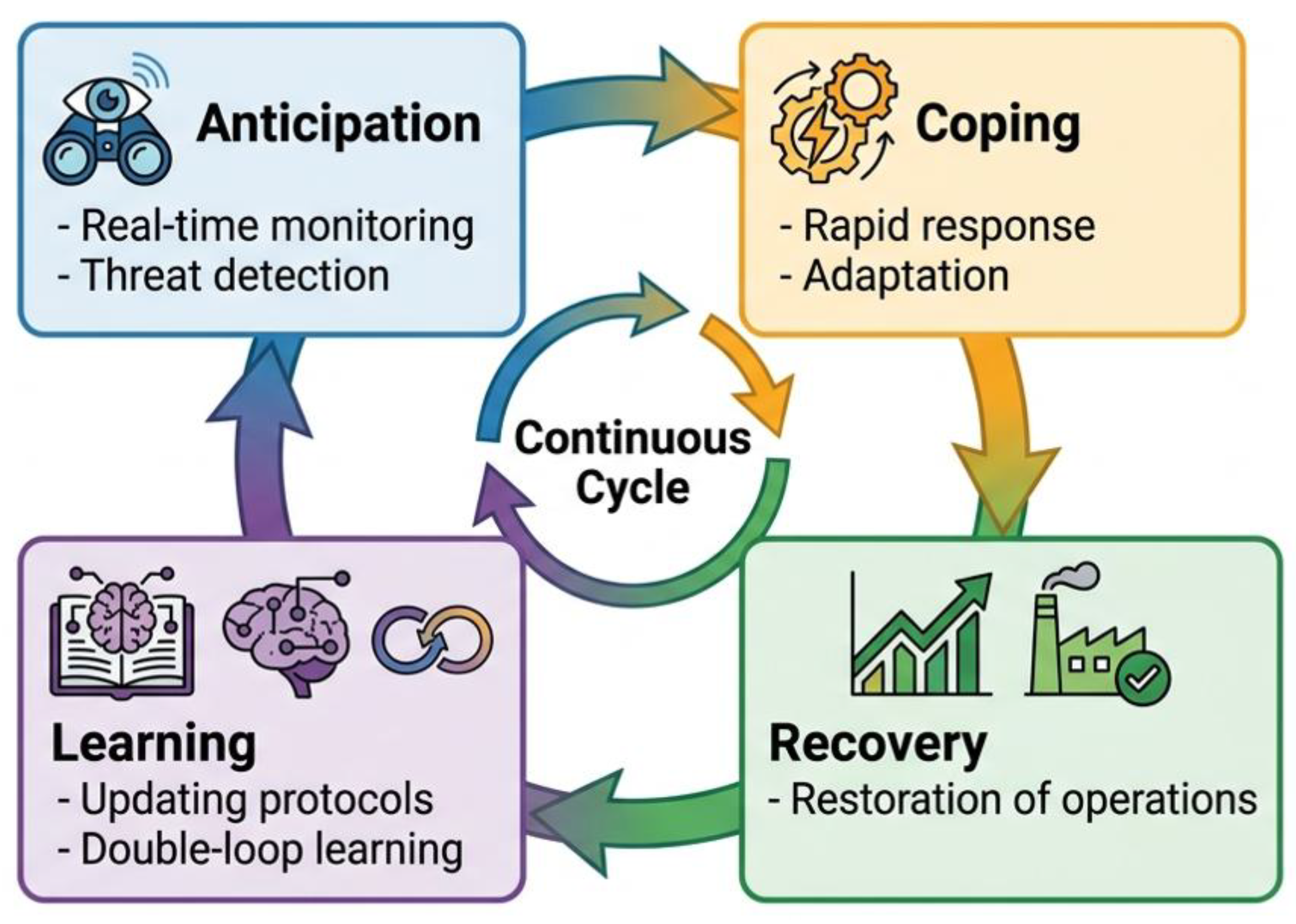
Figure 2.
Resilience Trajectory (2021–2026).
Disclaimer/Publisher’s Note: The statements, opinions and data contained in all publications are solely those of the individual author(s) and contributor(s) and not of MDPI and/or the editor(s). MDPI and/or the editor(s) disclaim responsibility for any injury to people or property resulting from any ideas, methods, instructions or products referred to in the content. |
© 2026 by the authors. Licensee MDPI, Basel, Switzerland. This article is an open access article distributed under the terms and conditions of the Creative Commons Attribution (CC BY) license (http://creativecommons.org/licenses/by/4.0/).
Copyright: This open access article is published under a Creative Commons CC BY 4.0 license, which permit the free download, distribution, and reuse, provided that the author and preprint are cited in any reuse.