
Submitted:
08 October 2026
Posted:
10 October 2026
You are already at the latest version
Abstract
Pathology laboratories are a critical dependency across almost every diagnostic and treatment pathway. Pathology laboratories support healthcare delivery through analysing blood, urine, faecal and tissue samples, informing clinical diagnosis and tailoring patient treatment. However, laboratories have unique vulnerabilities to extreme weather events. To analyse samples and provide timely results, laboratories need highly-controlled environments and timelines. EWE can disrupt these and, when pathology laboratories fail or slow down during EWE, many healthcare services are disrupted simultaneously. In this study we have reviewed the impacts of heatwaves and flooding on pathology laboratories in G20 and European Union countries and any adaptation strategies that laboratories have put in place to mitigate those impacts. The PRISMA guidance was followed for a systematic search strategy that identified 1,133 articles for screening. Seven of these were included after full-text screening. Together with an additional two articles from backward citation searches, a total of nine articles were included in this review. Three reviewers were involved in this process. We found reports of widespread impacts of heatwaves and flooding on pathology laboratory staff, equipment, operations and internal and external supply chains. The perspectives of patients were mostly absent. While there were examples of adaptations deployed, we found little evidence of systematic evaluation to determine the cost-benefit of these adaptations, their health consequences or their impacts on health inequalities. Climate change will lead to more intense, frequent, volatile and unpredictable extreme weather events in most countries, which will increase pathology laboratory disruptions and subsequent impacts on healthcare pathways and patients. This should be a call for further action and the development of frameworks to enable pathology laboratories to implement and evaluate adaptations to extreme weather events-related disruptions that minimise disruption and deliver resilient pathology service provision to support patient care.
Keywords:
adaptation
; climate change
; extreme weather events
; flooding
; heatwaves
; impact
; laboratory
; pathology
1. Introduction
Climate change is recognised as a fundamental determinant of global health. Anthropogenic climate change has already altered the frequency, intensity and duration of extreme weather events (EWEs), including heatwaves, heavy precipitation, flooding and severe storms [1]. This creates new challenges for the resilience of health systems. EWEs can damage infrastructure, disrupt transport and utilities and disrupt supply chains, whilst also increasing demand for healthcare services [2]. The consequences of these disruptions extend beyond the direct effects of environmental exposures on human health, to the capacity of health systems to maintain essential services during and after EWEs [3]. Consequently, building climate-resilient health systems is an increasingly important component of climate adaptation, requiring healthcare services to prepare, withstand, respond to and recover from climate-related disruption [2].
Pathology facilities are critical nodes in the diagnostic pathway. Pathology laboratories generate the analytical data underpinning diagnosis, risk stratification, treatment decisions and monitoring across virtually all areas of clinical practice. In the UK, pathology services underpin approximately 70% of NHS diagnoses, while more than 1.5 billion diagnostic tests are performed annually across the NHS.[4,5] These laboratories analyse blood, urine, faecal, swab and tissue specimens within highly controlled analytical environments and tight turn-around time requirements. Laboratory services are therefore fundamental to timely and appropriate healthcare delivery and cost NHS England £5 billion per annum – 2.5% of the NHS budget [6]. Disruption to pathology services can propagate rapidly through clinical pathways, resulting in delayed or unavailable diagnostic tests, consequently affecting diagnosis, treatment, patient outcomes and continuity of care.
Pathology laboratories have unique climate vulnerabilities. Extreme heat can increase cooling requirements and challenge the environmental conditions required for the storage of biological specimens, reagents, calibrators and other temperature-sensitive materials [7]. Flooding and severe storms can damage laboratory infrastructure and equipment, interrupt power and disrupt staff and specimen movement [7]. Climate-related disruption beyond the laboratory itself may also affect manufacturers, distributors and transport networks, create shortages of essential consumables and reduce the ability of laboratories to maintain diagnostic capacity [8].
The consequences of laboratory disruption can extend through diagnostic and treatment pathways. Delays or interruptions in diagnostic testing can postpone clinical decision-making and treatment, increase pressure on other components of healthcare delivery and compromise patients’ physical and mental health outcomes [9]. Furthermore, the effects of climate-related disruption are unlikely to be distributed equally [10]. Individuals and communities already experiencing socioeconomic disadvantage, geographic isolation or barriers to healthcare access may have fewer opportunities to obtain diagnostic services when local laboratory capacity is disrupted by EWEs [11]. Climate change may therefore compound pre-existing health inequalities by increasing both exposure to climate hazards and vulnerability to interruptions in essential diagnostic services [12]. Maintaining continuity of laboratory medicine should consequently be regarded as a component of equitable and resilient healthcare delivery [13].
To further compound a wicked problem, climate change can also increase demand for diagnostic testing. Changes in infectious disease patterns through warmer and wetter weather or the exacerbation of noncommunicable diseases during heatwaves and cold snaps can lead to increased diagnostic need at times of reduced operational capacity [14]. This interaction has implications not only for individual, local laboratories but for the resilience of healthcare systems. This further highlights the need to adapt pathology laboratories for more resilient diagnostics during and after EWE. Despite this, the specific impacts of climate change on pathology laboratories, and possible adaptations, remain underexplored in comparative health literature. This review synthesises the available evidence concerning the impacts of EWE on pathology laboratories in G20 and EU countries, alongside current adaptations. We include recommendations for further research to enable maintenance of reliable diagnostic services during periods of disruption for enhanced resilience, equity and continuity of healthcare services.
2. Methodology
A scoping review of articles published in scientific journals was conducted to map available evidence on the impact of heatwaves and floods on pathology laboratories in G20 and EU countries. We included articles published in peer reviewed journals from 1st January 2000 to 1st June 2026. This review was prepared according to the Preferred Reporting Items for Systematic Reviews and Meta-Analyses extension for Scoping Reviews (PRISMA-ScR) framework [15]. The databases searched were PubMed, Cochrane, Web of Science and CINAHL. The research question and search and analysis strategy was developed using the PEO (Population-Exposure-Outcome) framework [16].
2.1. Search Terms
The search terms used are given in Table 1. Search results from all sources were exported to Covidence for screening and removal of duplicates. Two independent reviewers screened papers for title and abstract and, subsequently, full text. Two independent reviewers extracted data from selected papers. In total three reviewers were involved in screening. Any disagreements were resolved through discussion between the three reviewers. Backward citation identified two further relevant articles, which were included in the extraction phase [17].
2.2. Inclusion and Exclusion Criteria
Inclusion criteria included articles published in peer reviewed journals investigating the impacts, outcomes or adaptations related to at least one flooding or heatwave event in pathology laboratories operating within G20 and European Union Countries. Exclusion criteria included studies conducted entirely outside the G20 and European Union Countries, studies investigating EWE unrelated to flooding or heatwaves and those published before January 2000. Grey literature and organisational reports were excluded.
2.3. Data Synthesis
Eligible publications were reviewed to extract the following data: author(s), year of publication, country, exposure (flooding or heatwave), teams involved in response, outcome, adaptation/resilience strategies/recommendations identified. Coding was done using NVivo. Given the methodological and contextual heterogeneity of included studies, a narrative synthesis using the four-stage framework of Popay et al., was conducted [18].
3. Results
3.1. Article Screening
The aim of this research was to investigate the impacts of heatwaves and flooding on pathology laboratories in G20 and EU countries, alongside any adaptation options reported in articles published in peer-reviewed journals. Our searches identified a total of 1,133 articles for initial screening. We excluded a total of 1,126 either at the title/abstract or at full-text screening stages, rendering seven articles for data extraction. Backward citation searches rendered an additional two articles for extraction (Figure 1).
The nine articles identified for data extraction included previous reviews and primary and cross-sectional studies (Table 1 and Supplementary file 1). The publication dates span over a decade, with six published within the last five years. Of the six G20 countries in the search results, impacts were most reported in the USA and the UK (33.3% and 22.2% of articles, respectively).

Table 2.
Summary of study characteristics (see Supplementary File 1 for details).
Table 2.
Summary of study characteristics (see Supplementary File 1 for details).
| Authors' Names | Year | Type of Publication | Country | Exposure |
|---|---|---|---|---|
| Obeagu and Bolo | 2025 | Narrative review | Brazil | Excessive Heat |
| Vasconcellos, Faddy, Merrolini | 2023 | Systematic review | Greece | Severe heatwaves |
| Van denakker, Al-Riyami, Feghall et al. | 2023 | Narrative review | United States of America | Hurricane Ian with anticipatory secondary flooding |
| Mario, Lasnier and Vaubourdolle | 2004 | Cross-sectional observatory research | France | Exceptional heatwave |
| Balfour, Stallone, Castagnaro, et al. | 2016 | Narrative review | United States of America | flooding |
| Corriero, Khan, Bassey, et al. | 2021 | Narrative review | India | flood water from burst glacier |
| Carmichael, Bickler, Kovats, et al. | 2012 | Narrative review | United Kingdom | heatwave |
| Hart and Wiencek | 2023 | Journal article | Europe and United States of America | heat waves |
| Greenblatt, Omosule, Agyare, et al. | 2025 | Narrative review | Canada, England, India | heatwaves, incessant rains, flood |
3.2. Impacts of Heatwaves on Laboratory Medicine
Of the nine studies included in this review, six reported impacts associated with heatwaves. We grouped impacts into five distinct categories, including workforce, samples and reagents, supply chains, equipment and infrastructure, and patients and communities (Table 3).
Carmichael et al. reported staff becoming unwell during a heatwave and discussed potential mental health effects, including post-traumatic stress disorder [19]. Staff mental health concerns were also discussed by Richard- Greenblatt et al. who described a strain on laboratory staff, indicating potential consequences for workforce well-being [20]. Mario et al. reported increased workload for pathology services during a heatwave, compounding impacts on staff [23]. Following the 2003 heatwaves in France, this study reported a pathology laboratory in Paris performing a higher number of electrolyte panels (+30.1%), troponin assays (+28.9%) and blood gas analyses (+58.6%), with significant increases in total laboratory files (+17.6%), when compared to typical summer levels [23].
Heat exposure can degrade samples and reagents. Vasconcelos et al. reported supply chain disruption to reagents and other supplies during heatwaves [21]. Hart et al. recorded temperatures up to 46.6 °C during storage in the USA, which can compromise sample and reagent quality [22]. Sample exposure to heat can invalidate routine pathology laboratory analyses such as aspartate aminotransferase, glucose, lactate dehydrogenase, phosphate and potassium tests [23].
Heatwaves can also cause equipment overheating and failure (IT, laboratory service disruption) [19]. Obeagu and Bolo described corrosion of lab instruments and reduced assay performance during periods that combine high temperatures and humidity [24]. Ultimately, these impacts lead to delayed diagnoses and treatment pathways, affecting patient and communities (Table 3).
3.3. Impacts of Flooding on Laboratory Medicine
Out of the nine studies included in this review, four reported impacts on pathology laboratories associated with flooding events, summarised in Table 4. Impacts on staff working conditions during and after flooding can be severe. Balfour et al. found a 75% decrease in the usable laboratory space following flooding of the laboratory of Staten University Hospital (USA) [25]. Laboratory staff worked with up to 2 inches of water on the floor and had to wear earplugs due to the additional noise of water pumps and dehumidifiers [25]. The laboratory had to be relocated to higher floors, increasing sample turn-around times and workload by 25% [25]. Flooding can also disrupt staff travel, as well as internal and external supply chains [21].
Reported impacts of flooding on equipment and infrastructure include equipment failure and loss of power and water supplies, forcing laboratory operations to shut down [20,25,26]. Additional costs resulting from these impacts on equipment included those associated with instrument revalidation, recalibration and quality checks [25]. Impacts on patients included the disruption of transport to healthcare facilities during EWE, the relocation of appointments and delays in restoring operations [20,25].
3.4. Adaptations to Flooding and Heatwaves
To illustrate the relative weight of the coverage and reporting of impacts and of adaptations related to heatwaves and flooding, we used a word cloud from the coded text in NVivo referring to EWE outcomes (Figure 2). Terms related to the five categories listed in Table 3 and Table 4 (staff, samples, supply chains, equipment and patients) were identified in the word cloud. Consistent with our findings in Table 3 and Table 4, we found that the balance between impacts vs. adaptations reported in the extracted literature was skewed towards the former.
Adaptations and preparedness measures were reported in five articles, ranging from laboratory-specific adaptations to wider healthcare service interventions. Heat-related adaptations included anticipatory approaches such as cool rooms maintained below 26°C [19,23]. Training initiatives were also reported [25]. Most of the reported responses to the impacts of EWEs on the laboratories or wider facilities were reactive (Table 3 and Table 4 and Supplementary File 1). We found evidence of implied or actual evaluation exercises of the adaptations in three out of the nine included articles. An example was an adaptation identified in Brazil to tackle the corrosion of equipment due to high temperature and humidity combinations with humidity-controlled environments using energy-efficient air conditioning and dehumidifiers. This was reported to reduce equipment failures and improve test accuracy, particularly for microbiological cultures, although evaluation was not reported in full [24]. Full evaluations could find co-benefits of climate adaptations for wider system efficiencies and overall performance. For example, following flooding of The Stanten Island University Hospital laboratory in the USA, their courier logistics system was upscaled for specimen transport [25], which could have led to co-benefits in wider internal and external supply chains. Another example was the response following flooding of the pathology laboratories in Franklin Hospital, USA, which included mock audits, revision of manuals and checklist overviews and resulted in successful institutional approvals and inspections [25]. These practices could also have had co-benefits in normal laboratory operations. Data availability to measure these and other outcomes is an important next step.
4. Discussion
Clinical laboratories are essential to diagnosis and the delivery of health care. The UNFCCC COP30 Belem Health Action Plan for the Adaptation of the Health Sector to Climate Change identified the need to tailor diagnostics for climate-adapted health systems [27]. The UNFCCC Global Goal on Adaptation calls for resilient diagnostic and surveillance services to maintain healthcare delivery and monitor climate-sensitive health risks during EWE [28,29]. The UK Health Security Agency (UKHSA) Health Effects of Climate Change in the UK report acknowledges that ‘[climate risks] can be exacerbated by lack of access to diagnostics [30]. This scoping review examined the effects of flooding and heatwaves on pathology laboratories, together with reported adaptations, across G20 and EU countries.
4.1. Impacts of Heatwaves and Flooding on Pathology Laboratories
Our findings show that heatwaves and flooding affect staff working conditions and wellbeing, samples and reagents, infrastructure, supply chains and patient services in different and overlapping ways. These impacts lead to increased workload, analysis backlogs and delays in diagnosis, which in turn affect patients’ health and wellbeing. Impacts of heatwaves on pathology laboratory staff included difficult working conditions and health and wellbeing issues and were compounded by increased demand during and after EWEs. During heatwaves, pathology laboratories received a higher number of requests for electrolyte tests and contributed to a higher number of heatstroke and dehydration diagnoses [23].
Pathology service disruptions have clinical and financial consequences and ultimately impact patient health outcomes and quality of life. The 2007 floods in Hull (UK) affected 20,000 people and were associated with poorer clinical outcomes among people with diabetes, attributed in part to less frequent laboratory blood glucose monitoring [11]. Following the July 2022 heatwave in Europe, an information technology outage at Guy’s and St Thomas’ hospitals in London reportedly cost £1.4 million and reduced diagnostic testing to 68% of typical July levels, delaying care and treatment. General practitioner testing services were also restricted, resulting in a backlog of 4,000 tests [31]. These examples illustrate how disruption to laboratory services may affect patients when health systems are already under increased pressure.
4.2. Adaptations of Pathology Laboratories and Health Facilities More Broadly
Responses in the literature were predominantly reactive, including laboratory relocation after damage, removal of floodwater and movement of electrical equipment from basements to upper floors [25]. Existing guidance provides practical recommendations for recovery and continuity of service after an EWE. Guidance from the Centers for Disease Control and Prevention emphasises instrument inspection and revalidation and replacement of contaminated reagents when reopening facilities after damage [34]. The Association of Public Health Laboratories’ guidance on laboratory flooding addresses continuity-of-operations planning, instrument revalidation and prevention of recurrent water events [33]. Literature on disaster risk management and critical infrastructure resilience has identified a distinction between reactive and anticipatory responses and suggests that hazard type may influence the timing and nature of laboratory responses [32]. Overall, reported adaptations in the analysed literature were fragmented, often reactive or described only at a high level, and seldom incorporated future climate scenarios. However, with EWEs becoming more common, there is a need to anticipate risk and mitigate where possible.
From the existing literature, we have identified several priorities for adaptation of pathology laboratories. These could address the physical protection of facilities, continuity of IT, electricity and cooling, contingency diagnostic capacity and geographically distributed laboratory networks, adequate staffing and contingency arrangements for critical reagents and consumables. Additional priorities identified in the literature include research on analyte thermal tolerance, incorporation of climate awareness into laboratory medicine curricula [22,33], and innovative and resilient specimen transport. On the latter point, technology may play a role in the future, such as the use of drones to transport samples and reagents. However, trials in England have revealed regulatory, technological and social barriers making drones not faster than road deliveries [35,36].
4.3. Urgent Research Gaps
Research and innovation of diagnostic procedures is essential to adapt pathology laboratories to climate change [37]. We have identified three clear research gaps in the literature, these are, the lack of patient perspectives, consideration of climate projections and formal evaluations. Firstly, we found little evidence suggesting that the impacts of pathology laboratory disruption on patients and their families and carers have been fully identified. Sample degradation and delays require repeated sampling (including taking blood samples), which can impose a disproportionate burden on those least able to accommodate additional appointments. The impacts of sample rejection can be costly and disruptive for patients and health systems. For example, a study in England calculated up to 76-hour longer hospital stays for patients with samples rejected due to incorrect results [38]. The combination of EWE risks, deprivation and pathology laboratory disruption affects health outcomes and worsens health inequalities. EWEs can act as threat multipliers and exacerbate health inequalities [39] because disadvantaged groups and those underserved by health systems often face worse EWE impacts too [38]. For example, floods and heatwaves increase demand on labs [40,41,42] and affect sample journeys from collection to labs, staff commute times and operations of labs serving disadvantaged communities. People who already face barriers to accessing healthcare often present to primary care with more advanced conditions [43,44]. Lab disruptions and delays can contribute to poorer health outcomes for these groups, who have tighter windows for diagnosis and treatment. Research should therefore examine whether laboratory disruptions and adaptations have different consequences across patient groups. Anderson et al. described online surveys as one approach to understanding the views of patients with lived experience, laboratory scientists, laboratory medical practitioners, policymakers, managers and supply and support workers [45,46].
Secondly, although path labs have business continuity plans, these rarely consider climate projections. The Climate Change Committee advises that health systems prepare for the EWE that will be experienced if global warming reaches 2°C above preindustrial levels by 2050, and consider 4°C adaptation planning [44,47]. EWE at 2°C global warming will increase pathology laboratory disruptions and costs delayed diagnoses and treatments; and patient and clinician burden from worsening health outcomes [48]. These projections emphasise the need to consider future conditions when planning laboratory adaptations.
Thirdly, it will be important to identify adaptations that provide good value-for-money and are feasible and acceptable for pathology laboratories and different organisational cultures. The reviewed studies rarely included full details of formal evaluations of adaptations. Research is needed to evaluate adaptation effectiveness, cost–benefit, transferability and effects on health inequalities. Further, these evaluations and translating climate and health language to financial incentives could address some of the challenges policymakers face in developing and implementing climate adaptation plans in different cultural and organisational contexts. Addressing these gaps would support the selection and implementation of measures to improve resilience of pathology laboratories to flooding and heatwaves.
4.4. Conclusions
This scoping review demonstrates that EWEs, such as flooding and heatwaves, disrupt pathology laboratory operations across G20 and EU countries by causing acute physical damage to infrastructure, equipment and specimens, and impacting staff working conditions and wellbeing. Interventions to adapt pathology laboratories to EWEs have been largely reactive and under-evaluated. Stakeholders’ and patients' input in defining the impacts of pathology disruptions on laboratory staff and patients and the choice of adaptations is underrepresented. While there are lessons to be learnt from successful interventions mapped out by this review, further research should urgently explore the gaps identified in this study to best address this lingering ‘wicked’ problem – which is most likely about to get worse.
Supplementary Materials
The following supporting information can be downloaded at the website of this paper posted on Preprints.org.
Author Contributions
Chinenye Nancy Kesieme- conceptualisation, screening, extraction, analysis, data curation, original draft, final writing and editing. Helena Adjoa Ntaamah Otoo- screening, extraction, conceptualisation, original draft, final writing and editing. Ann Hutchinson- supervision, conceptualisation, final writing and editing. Sean- supervision, conceptualisation, final writing and editing. Pedro Beltran- Alvarez- supervision, conceptualisation, screening, extraction, data curation, original draft, final writing and editing.
Funding
No funding source.
Conflicts of Interest
No conflict of interest declared.
References
- IPCC. Climate Change 2022: Impacts, Adaptation and Vulnerability- Potential impacts of climate change in the Uttarakhand Himalayas. IPCC ch3. Available online. 15 Sep 2026. Climate Change 2022: Impacts, Adaptation and Vulnerability | Climate Change 2022: Impacts, Adaptation and Vulnerability.
- World Health Organisation. The impact of climate change on human health [Internet]; World Health Organisation, 7 Apr 2008; Available online: https://www.who.int/news/item/07-04-2008-the-impact-of-climate-change-on-human-health.
- Watts, Nick; Adger, W Neil; Ayeb-Karlsson, Sonja; Bai, Yuqi; Byass, Peter; Campbell-Lendrum, Diarmid; Colbourn, Tim; Cox, Peter; Davies, Michael; Depledge, Michael; Depoux, Anneliese; Dominguez-Salas, Paula; Drummond, Paul; Ekins, Paul; Flahault, Antoine; Grace, Delia; Graham, Hilary; Haines, Andy; Hamilton, Ian; Johnson, Anne; Kelman, Ilan; Kovats, Sari; Liang, Lu; Lott, Melissa; Lowe, Robert; Luo, Yong; Mace, Georgina; Maslin, Mark; Morrissey, Karyn; Murray, Kris; Neville, Tara; Nilsson, Maria; Oreszczyn, Tadj; Parthemore, Christine; Pencheon, David; Robinson, Elizabeth; Schütte, Stefanie; Shumake-Guillemot, Joy; Vineis, Paolo; Wilkinson, Paul; Wheeler, Nicola; Xu, Bing; Yang, Jun; Yin, Yongyuan; Yu, Chaoqing; Gong, Peng; Montgomery, Hugh; Costello, Anthony. The Lancet Countdown: tracking progress on health and climate change. Lancet 2017, 389, 1151–64. [Google Scholar] [CrossRef]
- About IBMS. IBMS [Internet]. Available online: https://www.ibms.org/about-ibms.html.
- Forsman, R.W. Why is the laboratory an afterthought for managed care organizations? Clin. Chem. 1996, 42(5), 813–6. [Google Scholar] [CrossRef]
- BMS. Pathology Transformation Report - IBMS. 2026. Available online: https://www.ibms.org/resource/pathology-transformation-report.html.
- Extreme Heat May Increase Lab Cooling Requirements. Available online: https://www.epa.gov/system/files/documents/2024-06/epas-2024-2027-climate-adaptation-plan-508-compliant.pdf.
- EWE can disrupt lab supplies. Available online: https://documents1.worldbank.org/curated/en/099061025134515861/pdf/P180420-3b8a8f03-2cbc-4a24-a58e-700ecde830be.pdf.
- Bodansky, D.M.S.; et al. Potential cost savings by minimisation of blood sample delays on care decision making in urgent care services. Ann. Med. Surg. (Lond) 2017, 20, 37–40. [Google Scholar] [CrossRef] [PubMed]
- Parsons, E.S.; Jowell, A.; Veidis, E.; et al. Climate change and inequality. Pediatr. Res. 2025, 98, 1238–1245. [Google Scholar] [CrossRef] [PubMed]
- Ng, J.; Atkin, S.L.; Rigby, A.S.; Walton, C.; Kilpatrick, E.S. The effect of extensive flooding in Hull on the glycaemic control of patients with diabetes. Diabet. Med. 2011, 28(5), 519–24. [Google Scholar] [CrossRef] [PubMed]
- Sodano, B.; Destefanis, C.; Vecchi, S.; De Sario, M.; Di Girolamo, C.; Ricceri, F. Climate Change–Related extreme events and inequities in health outcomes: An umbrella review. Environ. Res. 2026, 305, 125008. [Google Scholar] [CrossRef] [PubMed]
- Arsad, F.S.; Hod, R.; Ahmad, N.; Ismail, R.; Mohamed, N.; Baharom, M.; et al. The Impact of Heatwaves on Mortality and Morbidity and the Associated Vulnerability Factors: A Systematic Review. IJERPH 2022, 19(23), 16356. [Google Scholar] [CrossRef] [PubMed]
- APHL. Leveraging Public Health Laboratory Science to Understand and Address Climate Change Health Impacts [Internet]. APHL;PHL Testing for Climate Change. Available online. 2023.
- Tricco, A.C.; Lillie, E.; Zarin, W.; O’Brien, K.K.; Colquhoun, H.; Levac, D.; et al. PRISMA Extension for Scoping Reviews (PRISMA-ScR): Checklist and Explanation. Ann. Intern Med. 2018, 169(7), 467–73. [Google Scholar] [CrossRef] [PubMed]
- Hosseini, M.S.; Jahanshahlou, F.; Akbarzadeh, M.A.; Zarei, M.; Vaez-Gharamaleki, Y. Formulating research questions for evidence-based studies. J. Med. Surg. Public Health 2024, 2, 100046. [Google Scholar] [CrossRef]
- Frandsen, T.F.; Eriksen, M.B. Supplementary strategies identified additional eligible studies in qualitative systematic reviews. J. Clin. Epidemiol. 2023, 159, 85–91. [Google Scholar] [CrossRef] [PubMed]
- Popay, J.; Roberts, H.; Sowden, A.; Petticrew, M.; Arai, L.; Rodgers, M.; et al. Guidance on the conduct of narrative synthesis in systematic reviews: A product from the ESRC Methods Programme [Internet]. Lancaster University. 2006. Available online: https://www.researchgate.net/doi/10.13140/2.1.1018.4643. [CrossRef]
- Carmichael, C.; Bickler, G.; Kovats, S.; Pencheon, D.; Murray, V.; West, C.; et al. Overheating and Hospitals - What do we know? JHA 2012, 2(1), 1. [Google Scholar] [CrossRef]
- Richard-Greenblatt, M.; Omosule, C.L.; Owusu Agyare, B.; Das, S.; Devine, C.; Mokomane, M.; et al. The Impact of Climate Change on Laboratory Medicine: A Global Health Perspective. Clin. Chem. 2025, 71(4), 438–44. [Google Scholar] [CrossRef] [PubMed]
- Vasconcelos, F.T.; Faddy, H.M.; Merollini, K.M.D.; Flower, R.L.P.; Dean, M.M.; Viennet, E. Impact of natural disasters and pandemics on blood supply: A systematic review. Health Sci. Rev. 2023, 7, 100087. [Google Scholar] [CrossRef]
- Hart, S.; Wiencek, J.R. Global Heatwaves Threaten Integrity of Patient Test Results: A Dire Warning for the Lab Medicine Community. J. Appl. Lab. Med. Available online. 2023, (5), 1002–1005. [Google Scholar] [CrossRef] [PubMed]
- Mario, N.; et al. Effect of August 2003 heat wave in France on a hospital biochemistry laboratory activity in Paris. Ann. Biol. Clin. 2004, 62(3), 356–60. [Google Scholar]
- Obeagu, E.I.; Bolo, B. Climate change and medical laboratory operations: Impacts, challenges, and adaptation strategies: A narrative review. Medicine 2025, 104(23), e42718. [Google Scholar] [CrossRef] [PubMed]
- Balfour, E.; Stallone, R.; Castagnaro, J.; Poczter, H.; Schron, D.; Martone, J.; et al. Strengths of the Northwell Health Laboratory Service Line. Acad. Pathol. 2016, 3, 2374289516650961. [Google Scholar] [CrossRef] [PubMed]
- Corriero, A.C.; Khan, F.M.A.; Bassey, E.E.; Bouaddi, O.; Dos Santos Costa, A.C.; Outani, O.; et al. Floods, landslides and COVID-19 in the Uttarakhand State, India: Impact of Ongoing Crises on Public Health. Disaster Med. Public Health prep. 2022, 16(6), 2279–82. [Google Scholar] [CrossRef] [PubMed]
- WHO. The Belem health action plan for the adaptation of the health sector to climate change [Internet]. WHO;The Belém health action plan for the adaptation of the health sector to climate change Available online. 2025. [Google Scholar] [CrossRef]
- UNFCCC. Global Goal on Adaptation.[Internet] UNFCCC. Report of the Conference of the Parties serving as the meeting of the Parties to the Paris Agreement on its fifth session. Addendum, Available online. 2023. [Google Scholar]
- UNCC. Global Goal on Adaptation; UNCC; Available online: https://unfccc.int/topics/adaptation-and-resilience/workstreams/gga.
- UKHSA. Climate change: health effects in the UK. 2023. Available online: https://www.gov.uk/government/publications/climate-change-health-effects-in-the-uk.
- NHS_Guy's_and_St_Thomas'_Foundation_Trust. 2023. Available online: https://www.guysandstthomas.nhs.uk/sites/default/files/2023-01/IT-critical-incident-review.pdf.
- Mah, A.Y.J.; Chapman, D.A.; Markowitz, E.M.; Lickel, B. Coping with climate change: Three insights for research, intervention, and communication to promote adaptive coping to climate change. J. Anxiety Disord. 2020, 75, 102282. [Google Scholar] [CrossRef] [PubMed]
- Cerceo, E.; Weinstein, H.N.W.; Wheat, S.; Sullivan, J.; Bevan, J.; Sorensen, C. Medical education competency frameworks for climate and planetary health: A scoping review. J. Clim. Change Health 2025, 25, 100488. [Google Scholar] [CrossRef] [PubMed]
- CDC. Guidance for reopening healthcare facilities after water and wind damage. cdc.gov [Internet]. 2025. Available online: https://www.cdc.gov/infection-control/hcp/reopen-health-facilities/water-wind-damage.html.
- Northumbria-Healthcare. 2024. Available online: https://www.northumbria.nhs.uk/media-centre/news-and-blogs/news-stories/partners-change-drone-site-northumbria-ensure-maximum-benefits-project.
- Wiltshire, M.; et al. The effects of drone transportation on blood component quality: A prospective randomised controlled laboratory study. Br. J. Haematol. 2024, 205(5), 2022–2030. [Google Scholar] [CrossRef] [PubMed]
- Nogueira, L.; Florez, N. The Impact of Climate Change on Global Oncology. Haematol. Oncol. Clin. N Am. Available online. 2024, 38, 105–121. [Google Scholar] [CrossRef] [PubMed]
- Bodansky, D.M.S.; et al. Potential cost savings by minimisation of blood sample delays on care decision making in urgent care services. Ann Med Surg (Lond) 2017, 20, 37–40. [Google Scholar] [CrossRef]
- Bennett, J.E.; et al. Vulnerability to the mortality effects of warm temperature in the districts of England and Wales. Nat. Clim. Change 2014, 4(4), 269–273. [Google Scholar] [CrossRef]
- Viennet, E.; et al. Blood under pressure: how climate change threatens blood safety and supply chains. Lancet Planet Health 2025, 9(4), e304–e313. [Google Scholar] [CrossRef] [PubMed]
- Flower, G.; et al. Extreme heat and cause-specific risk of hospital admission in the adult population in England: a case time series analysis. BMJ Open 2026, 16(6), e105321. [Google Scholar] [CrossRef] [PubMed]
- Marmot, M. Health equity in England: the Marmot review 10 years on. BMJ 2020, 368, m693. [Google Scholar] [CrossRef] [PubMed]
- James E. Bennett, M.B.; Fecht, Daniela; Elliott, Paul; Ezzati, Majid. Vulnerability to the mortality effects of warm temperature in the districts of England and Wales. Nat. Clim. Change 2014, 4, 269–273. [Google Scholar] [CrossRef]
- Bourgeois, A.; Horrill, T.; Mollison, A.; Stringer, E.; Lambert, L.K.; Stajduhar, K. Barriers to cancer treatment for people experiencing socioeconomic disadvantage in high-income countries: a scoping review. BMC Health Serv. Res. 2024, 24(1), 670. [Google Scholar] [CrossRef] [PubMed] [PubMed Central]
- Climate Change Committee. A well adapted UK-The fourth independent assessment of UK Climate risk (CCRA4-1A) [Internet]. CCC. 2026. Available online: https://www.theccc.org.uk/publication/a-well-adapted-uk/.
- Levermann, A. 'Climate free fall': why the biggest risk to our economies is yet to be recognized. Nature 2026, 655(8123), 571–573. [Google Scholar] [CrossRef] [PubMed]
- Sun, Y.; et al. Global supply chains amplify economic costs of future extreme heat risk. Nature 2024, 627(8005), 797–804. [Google Scholar] [CrossRef] [PubMed]
- Uras, F. Sustainable healthcare and medical laboratories: The impact of global collaborations between frameworks and initiatives. Clin. Biochem 2025, 138, 110945. [Google Scholar] [CrossRef] [PubMed]
Figure 1.
PRISMA chart showing the stages of article selection including search result, screening, full text reading and the final number of studies included in this review.
Figure 1.
PRISMA chart showing the stages of article selection including search result, screening, full text reading and the final number of studies included in this review.
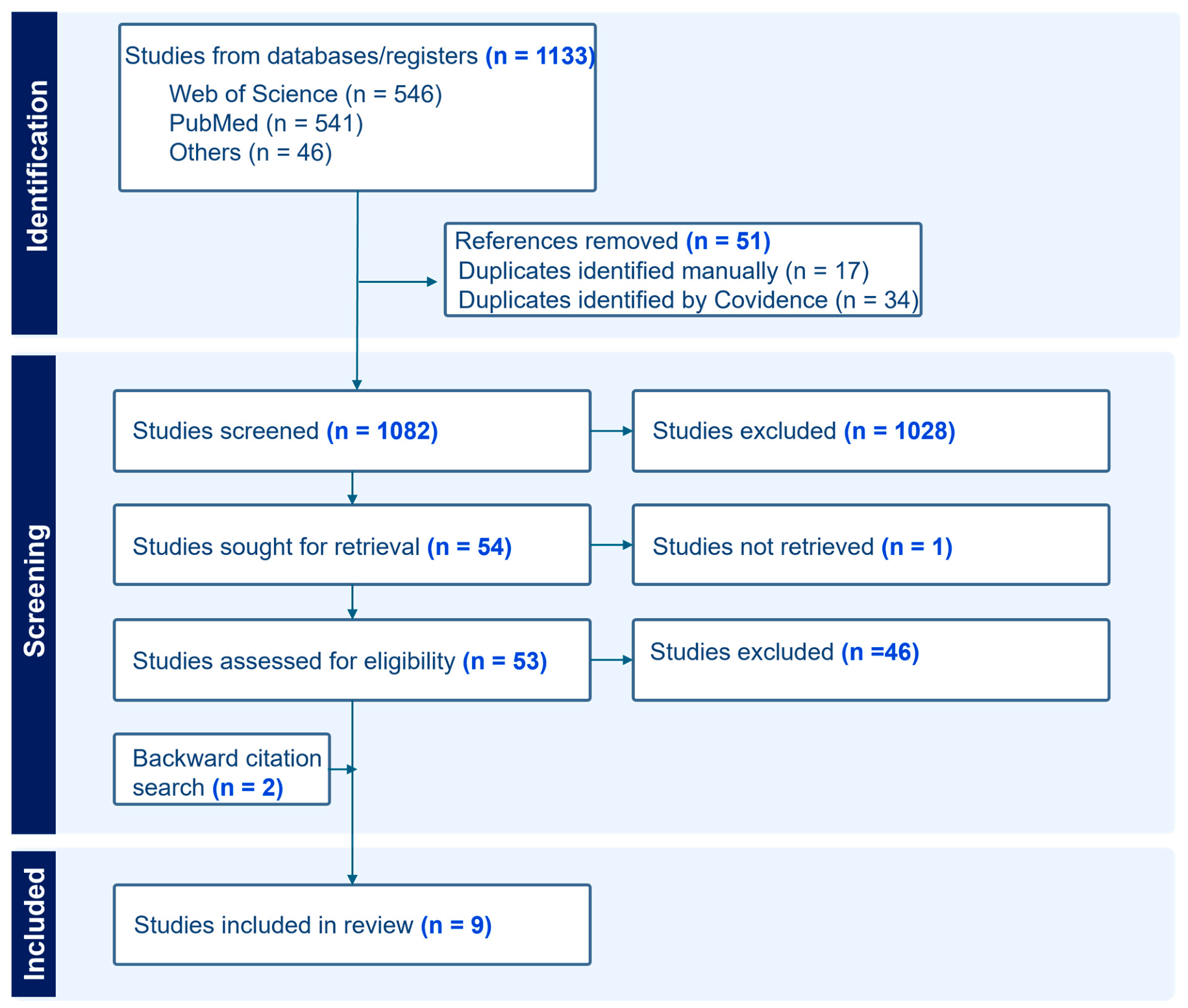
Figure 2.
Word cloud representing the most common terms in the coded text from extracted articles referring to heatwaves and flooding impacts or reported adaptations. Laboratory staff impact was also dominant, followed by equipment. Emphasis was placed on the microbiology laboratory at SIUH where the core staff embraced a 25% increase of workload.’Siuh’ refers to Stanten Island University Hospital [25].
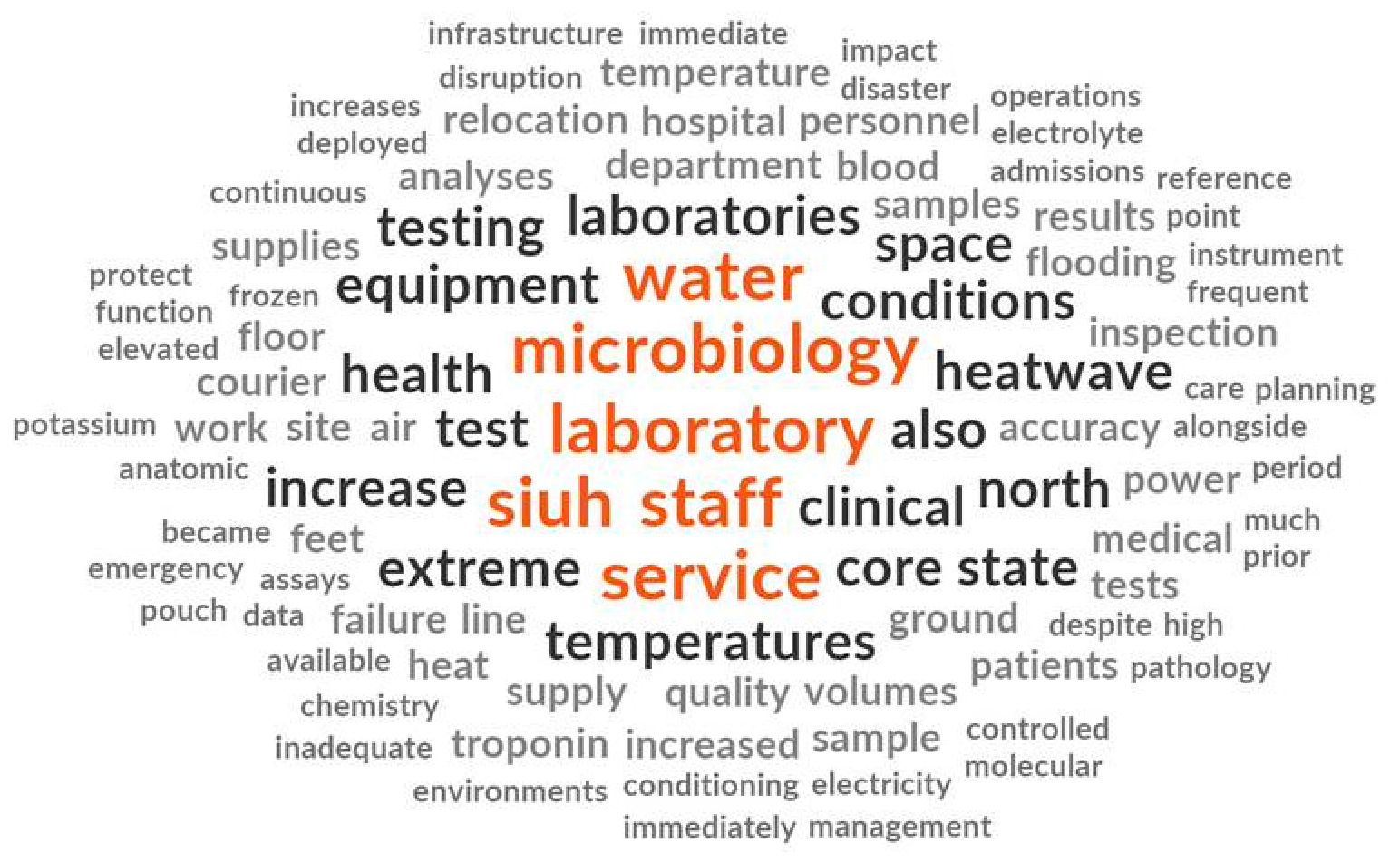
Table 1.
Search terms used for identification of articles.
| PEO Element | Search Concept | Search Terms and Boolean Operators |
|---|---|---|
| Population | Pathology and laboratory services | ("pathology laborator*" OR "clinical laborator*" OR "diagnostic laborator*" OR "pathology service*" OR "NHS laborator*" OR "laboratory service*" OR hematolog* OR haematolog* OR "blood transfusion" OR "transfusion service*" OR "microbiology laborat*" OR biochemistr* OR histopatholog* OR cytolog* OR immunolog* OR "laboratory medicine") |
| Population: geographical context | Countries and regions included in the review | ("United Kingdom" OR UK OR England OR Scotland OR Wales OR "Northern Ireland" OR NHS OR British OR "Great Britain" OR Australia OR Canada OR "Saudi Arabia" OR "South Korea" OR "United States" OR "South Africa" OR Turkey OR Turkiye OR India OR Russia OR Argentina OR Brazil OR Mexico OR France OR Italy OR Germany OR China OR Indonesia OR Japan OR Spain OR Latvia OR Portugal OR Belgium OR Holland OR Netherlands OR "The Netherlands" OR Poland OR Lithuania OR Estonia OR Ireland OR Finland OR Denmark OR Sweden OR Norway OR Hungary OR Austria OR Bulgaria OR Croatia OR Cyprus OR Greece OR Czechia OR Malta OR Luxembourg OR Romania OR Slovakia OR Slovenia) |
| Population: health-system context | Health systems and public health | (NHS OR "national health system*" OR "health system*" OR "healthcare system*" OR "health care system*" OR "public health") |
| Exposure | Flooding, extreme rainfall, and extreme heat | ("flood*" OR "flash flood*" OR "surface water flood*" OR "fluvial flood*" OR "groundwater flood*" OR "coastal flood*" OR "pluvial flood*" OR "inundation" OR "extreme rainfall" OR "storm surge" OR "extreme weather" OR "heatwave*" OR "heat wave*" OR "extreme heat" OR "high temperature*" OR "heat event*" OR "heat stress" OR "thermal stress" OR "heat-related" OR "heat alert*" OR "heat emergency") |
Table 3.
Summary of the impacts of heatwaves on pathology laboratories and reported adaptations.
| Category | Impact | Adaptation/Innovation |
|---|---|---|
| Workforce | Higher demand, increased workloads [23]. Strain on laboratory resources and staff 20 Staff unwell and laboratory work halted [19]. |
Air conditioning and cool rooms [19,23]. |
| Samples and reagents | Sample degradation and spoilage [24]. Inadequate storage of reagents and kits [20]. |
Reagents delivered in temperature-controlled packaging and with longer shelf life [20]. |
| Supply Chains | Impacted blood supply [21]. Disrupted supply chain [20]. |
Not specified |
| Equipment and Infrastructure | Equipment overheating and failure, including IT, lab service disruption [19,23] Corrosion of lab instruments and reduced assay performance [24]. |
Control environments with air-conditioning and/or dehumidifiers [23]. In Brazil, this reduced equipment failures and improved test accuracy [24]. Drills [20] |
| Patients and communities | Delayed diagnostic services. [20,24,25] Reliability of results [20]. Widened health inequalities for rural populations [20]. |
Not specified |
Table 4.
Summary of the impacts of flooding on pathology laboratories and reported adaptations.
| Category | Impact | Adaptation/innovation |
|---|---|---|
| Workforce | Costs and increased noise during water removal with pumps. Staff wearing ear plugs and rubber boots [25]. Increased demand, workload and turn-around times [25]. Workforce squeezed into any available office space [25]. | Mock audits [25]. Diversion of samples to offsite reference laboratory [25]. |
| Supply Chains | Supply chain disruptions [20], including blood supply [21]. | Not specified |
| Equipment or Infrastructure | Loss of power [20,26]. Need for instrument revalidation, recalibration, QC [25]. Equipment relocated from basements to upper floors [25]. |
Back-up generators Location at a higher elevation [25]. |
| Patients and communities | Transport disruption isolating patients and delaying care [20]. Laboratory relocation and diversion [25]. Delays in restoring operations [25]. |
Not specified |
Disclaimer/Publisher’s Note: The statements, opinions and data contained in all publications are solely those of the individual author(s) and contributor(s) and not of MDPI and/or the editor(s). MDPI and/or the editor(s) disclaim responsibility for any injury to people or property resulting from any ideas, methods, instructions or products referred to in the content. |
© 2026 by the authors. Licensee MDPI, Basel, Switzerland. This article is an open access article distributed under the terms and conditions of the Creative Commons Attribution (CC BY) license (http://creativecommons.org/licenses/by/4.0/).
Copyright: This open access article is published under a Creative Commons CC BY 4.0 license, which permit the free download, distribution, and reuse, provided that the author and preprint are cited in any reuse.