

Submitted:
08 October 2026
Posted:
10 October 2026
You are already at the latest version
Abstract
Neurodegenerative diseases, including Alzheimer's disease (AD), Parkinson's disease (PD) and other neurological disorders, are emerging as a major concern in public health in Gulf Cooperation Council (GCC) countries. The number of cases has increased over the years, but research and development has not matched the pace of demographic and healthcare shifts. Population surveillance is limited in Saudi Arabia, Oman, Qatar and the United Arab Emirates (UAE), with weak hospital-academia links, inadequate funding of research, deficits in subspecialist training, a paucity of research output, weak biobanking infrastructure and a young innovation ecosystem. This policy perspective introduces a cross-cutting policy approach to modify the existing scattered infrastructure into a functioning neurodegeneration research and innovation ecosystem. This can be accomplished via a combination of interdisciplinary training and workforce development, enhanced research strength, strengthened clinician–academic partnerships, larger clinical databases and biobanks, increased research funding, faster translation of biotech developments, and digital-health innovation. Incubation centres and public-private partnerships are crucial for achieving these objectives. GCC Health Council’s coordination throughout the region can align research priorities, allow studies in multiple countries, share data and bolster engagement with neurodegeneration initiatives at an international level. The proposed framework positions research institutes, universities, hospitals, industry and government as interconnected components of a translational ecosystem rather than isolated entities. This approach can help the four GCC countries convert existing healthcare investments and expanding scientific capacity into locally relevant discoveries and strengthen the region’s contribution to global neurodegeneration research.
Keywords:
neurodegenerative diseases
; Alzheimer’s disease
; Parkinson’s disease
; research collaboration
; hospital–academia partnership
; biobanking
; Gulf Cooperation Council
; public health policy
1. Introduction
Rapid demographic change across the Gulf Cooperation Council (GCC) is characterized by an increasing life expectancy and ageing population. This shift at the population level is increasing the relevance of age-associated neurological disorders. In Saudi Arabia, Oman, Qatar, and the United Arab Emirates (UAE), this shift is creating a major surge in the health and societal burden of Alzheimer’s disease (AD), Parkinson’s disease (PD) and other progressive neurological disorders. At the same time, substantial investments in healthcare, research, technology, and economic diversification will provide an opportunity to strengthen the region’s capability for neurodegeneration research and clinical translation. This article examines the emerging burden of neurodegenerative diseases, identifies key gaps in healthcare and research infrastructure, and proposes a coordinated policy framework to strengthen research capacity, clinical translation, and innovation across the four countries examined.
1.1. Neurodegeneration as a Growing Public Health Concern
Neurodegenerative disorders (NDs) affect several millions of patients across the globe with Alzheimer’s Disease (AD) being the leading cause of dementia and Parkinson’s Disease (PD) impacting about 10 million individuals across the world (ADI, 2021; Dorsey et al., 2018). Although nationally representative studies of PD in the GCC remain limited, Global Burden of Disease 2019 modelling estimates indicate a broadly similar age-standardised prevalence of PD across Qatar, Oman and Saudi Arabia (119, 112 and 107 cases per 100,000 population, respectively) (Safiri et al., 2023). Over the period 1990–2019 the modelled disease burden of PD rose by approximately 28% in Oman and 27.7% in Saudi Arabia, pointing to a substantial increase in impact even though absolute prevalence remains in the range of roughly 100–120 per 100,000. A limitation of the study is its reliance on modelled estimates. Reliance on modelled estimates limits country-specific interpretation and reinforces the need for population-based surveillance (Safiri et al., 2023).In Qatar, memory-clinic data reveal a substantial clinical burden of cognitive impairment and dementia, yet the limited availability of population-based studies leaves the magnitude and distribution of dementia across the wider population poorly defined (Al Hamad & Sathian, 2024). Likewise, the burden of dementia in Saudi Arabia is expected to increase substantially as demographics change, with genetic and metabolic factors potentially contributing to this increase. Genetic analyses have identified AD-associated variants, including APOE ε4, in Saudi patients with familial and sporadic AD. Metabolic factors are also relevant to the disease burden, with approximately 25% of Saudi adults aged 30 years and older living with diabetes.
The United Arab Emirates is distinctive in that expatriates constitute approximately 88% of the population (United Nations, 2022). GBD modelling indicates an increase in the prevalence of individuals suffering from dementia in the UAE by the year 2050. The factors driving it would be a growing population and aging. The increasing disease burden will be aggravated by challenges in diagnosing the disease. It is estimated that about 75% of individuals with dementia will go undiagnosed worldwide (GBD 2019 Dementia Forecasting Collaborators, 2022; ADI, 2021). In addition to AD and PD, there might be under-diagnosis or under-reporting of other diseases like ALS and Huntington’s disease (HD) in this region due to the different diagnosis capabilities and ability to recognize the disease (Logroscino et al., 2020). This increase in the number of cases requires an explicit strategy to combat neurodegeneration that not only negatively affects patients’ quality of life but also creates added pressure on the family and social systems.
1.2. Aging Populations and Rising Healthcare Costs
Neurodegenerative diseases have become widespread in the GCC due to shifts in age distributions. Life expectancy across all countries has increased from 2000 to 2020. Saudi Arabia’s life expectancy rose from 71 to 75 years, while life expectancy reached 80 years in Qatar and 78 years in both Oman and the United Arab Emirates (World Bank, 2022). As demographic aging throughout the GCC is expected in the next few decades, the incidence of age-related neurodegenerative diseases is gaining importance.
(United Nations, 2022). The aging process in the population represents the progress of medicine but also increases the prevalence of neurodegenerative diseases, for which age remains the key risk factor (Hou et al., 2019).
The impact on the economy is tremendous. The annual economic costs attributed to ADR globally are greater than one trillion dollars (World Health Organization [WHO], 2023), and include costs for medical care, management, and loss of productivity. Existing expenditure on health in GCC countries is already high (Saudi Arabia-1,147p.c.,Qatar−2,154 p.c., UAE-1,843p.c.,Oman−680 p.c.) (World Bank, 2022) but neurodegenerative disease specific cost remains poorly assessed. The cost of caring for dementia patients in the UAE, by the year 2040 is estimated to be more than $2 Billion yearly (including ward costs, medication (e.g., cholinesterase inhibitors) and the long term care) (ADI, 2021). Spending on health reforms is expected to reach $65 Billion in Saudi Arabia as part of its Vision 2030 strategy. Currently, neurodegenerative diseases are neglected relative to cardiovascular diseases and diabetes and that reflects in health spending allocation priorities (Kingdom of Saudi Arabia, 2021).
1.3. Lack of Integration Between Hospitals, Academia, and Industry
The GCC research landscape in neurodegeneration remains fragmented resulting in limited translation of findings into improved patient care. While some centers, such as KFSHRC in Riyadh, have established clinical and research capabilities, research output in neurodegenerative diseases remains suboptimal compared to other countries with established aging and neurodegeneration policies (Al-Marzouqi & Arabi, 2022). Universities in the GCC, such as King Saud University or Qatar University, have the academic capabilities, but clinical collaborations remain sporadic and not institutionalized (Alrajhi & Aydin,2019). Industry’s involvement in the development of new therapies for neurodegeneration is relatively low. Industry participation in the development of new neurodegeneration therapies is still somewhat modest. While several regional drug and biotech companies have already been engaged in the broader healthcare industry, their involvement in neurodegeneration product development, and research is limited (GCC Pharma Report, 2022).
This disparity is a result of an overall lack of translational research that enables “bench-to-bedside” integration needed for both the development of diagnostics tools, such as tau PET (positive/negative), or therapeutic development, such as anti-amyloid monoclonal antibodies. This integrated structure has been implemented in organizations such as NIH in the US, but not so far in the GCC (Zerhouni, 2005) Establishing such a structure will include cultural considerations as well as adapting to the prevailing top-heavy hierarchical management approach and risk-averse academic policies (Hesham Al Khashan et al., 2021)
1.4. Insufficient Funding for Neurodegeneration-Focused Research and Startups
Funding constraints compound these challenges. R&D intensity varies across GCC countries and remains below that of several research-intensive economies, although individual GCC states have made substantial recent investments in research and innovation (UNESCO Institute for Statistics, 2023). Neuroscience receives only a small share of this funding; Saudi Arabia’s National Science and Technology Plan (NSTP) allocated $10 million for neuroscience in 2022, far below the $2.8 billion allocated by the NIH (Kingdom of Saudi Arabia, 2022; NIH, 2023). This creates a barrier to the performance of basic research (e.g., synaptic pathology in Parkinson’s disease) and clinical trials, with just two trials for Alzheimer’s disease in the GCC for the years 2018 through 2023 (ClinicalTrials.gov, 2023).
Startups face even steeper hurdles, Biotech venture capital (VC) in the GCC totaled $200 million in 2022, with neurodegeneration-related investments negligible (MAGNiTT, 2023). Compare that to the US, in which neurodegenerative disease startups such as Denali Therapeutics raised $130 million in one funding round (Denali Therapeutics, 2018 The regulatory environment, coupled with limited support infrastructure for startups and a culture of risk averse investment, prevents the development of potentially useful innovations, such as AI-based diagnostics for PD. By utilizing the Triple Helix model of collaboration between universities, industries, and governments, this policy perspective outlines the development of an ecosystem for research and innovation that incorporates hospitals as key participants in clinical and translational research, taking into account the specific health and economic context of the GCC states of Saudi Arabia, UAE, Qatar, and Oman (Etzkowitz & Leydesdorff, 2000).
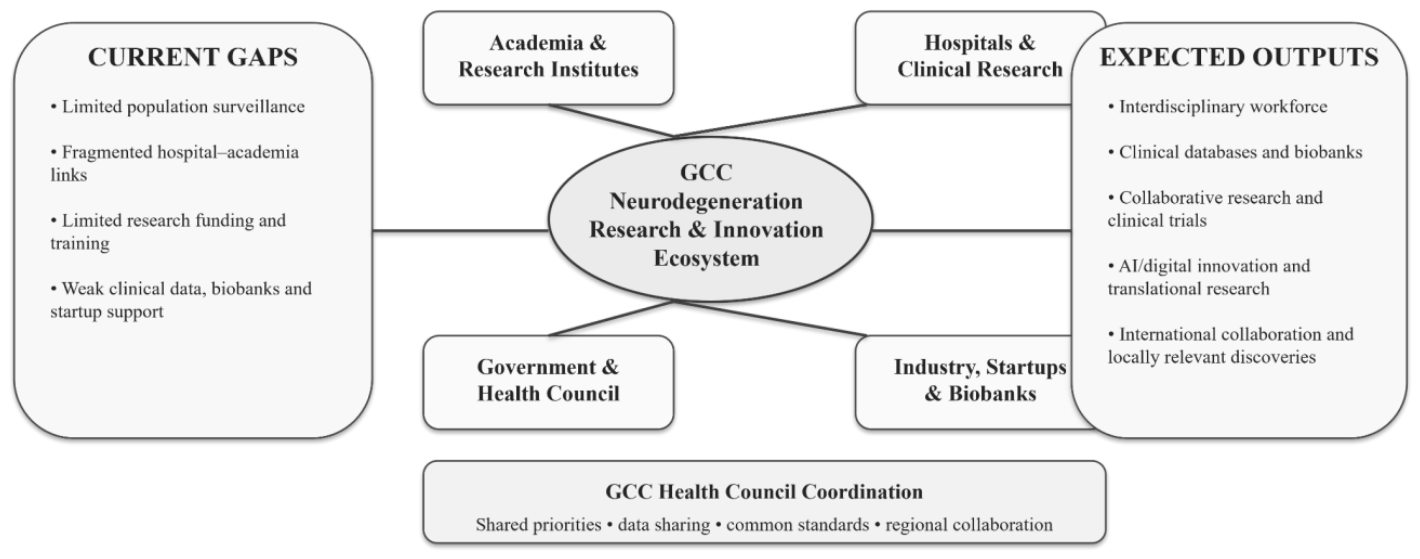
Figure 1.
Current Gaps and Proposed Integrated Neurodegeneration Research and Innovation Ecosystem in Saudi Arabia, Oman, Qatar, and the UAE.
Figure 1.
Current Gaps and Proposed Integrated Neurodegeneration Research and Innovation Ecosystem in Saudi Arabia, Oman, Qatar, and the UAE.
2. Restructuring Academia and Research Institutes
The increased prevalence of neurologic conditions in Saudi Arabia, Oman, Qatar, and the UAE makes it imperative to make far-reaching reforms to the higher education systems and research institutes to create an atmosphere that encourages innovations and research.
2.1. Incorporating Neurodegenerative Disease Research into Medical, Pharmacy, and Biotech Programs
As neurodegenerative diseases become increasingly prevalent in the GCC region, research into these conditions should be systematically integrated into medical, pharmacy and biotechnology curricula. Coverage currently varies across the region, indicating the need to assess training programmes for curriculum gaps. According to Hamdy et al. (2010), medical schools within the GCC emphasize basic sciences and diseases such as diabetes but overlook emerging issues like AD and PD. This is problematic as dementia cases in Saudi Arabia are forecasted to increase greatly until 2050 (Alzheimer’s Disease International [ADI], 2021). This challenge is compounded by the absence of specialist training programs. As noted by Safiri et al. (2023), most GCC curricula lack courses devoted to neurodegeneration.
In order to fill these gaps, a multi-factorial and targeted approach is being suggested. Firstly, the implementation of mandatory core modules on neurodegenerative disorders for under graduate medical students, and for neurology, psychiatrist and geriatric medicine residents in the top universities including King Saud University, Sultan Qaboos University, Qatar University and Khalifa University. Such modules should include the pathophysiology, epidemiology, diagnosis and treatment options of these disorders. Secondly, Universities should launch structured interdisciplinary research programmes that connect students and faculty from disciplines such as medicine, pharmacy, biotech and social sciences. For instance, the research programmes could study how the genetic risk factors prevalent in Arab populations, such as APOE 4, interact with care practices, which are local traditions. Third, clinical time should be extended through mandatory rotations in neurology and in our memory clinics. Contributing to partner teaching hospitals (e.g., Hamad Medical Corporation in Qatar) would enhance student learning by providing real-world patient encounters and support ongoing specialist education.Finally, a research curriculum should be incorporated into the training, by having students engage in supervised projects on fundamental mechanisms of our core disorders (e.g., amyloid- or synuclein-pathology). Early research exposure can foster interest and inspire the next generation of clinician scientists.
Barriers to neurodegeneration research improvement include a lack of resources and reluctance of the teachers to the substantial change in curriculum. However, phased implementation of the strategy coupled with government motivation and international collaboration (such as with the US National Institute of Neurological Disorders and Stroke) may help in overcoming such obstacles.
2.2. Introducing Interdisciplinary Training in AI, Bioinformatics, Precision Medicine, and Agentic AI for Neurodegeneration Research
Artificial intelligence (AI), bioinformatics, and precision medicine offer significant opportunities to advance neurodegeneration research through disease prediction, biomarker identification, genomic analysis, multimodal data integration, and clinical decision-making. According to McKinsey (2023), the implementation of AI could contribute up to $150 billion in economic value to GCC countries by 2030. However, the potential of AI within healthcare and biomedical research cannot be fully realised without developing the necessary computational and interdisciplinary skills among medical, pharmacy, biotechnology, and research professionals. Current educational programs often provide limited training in computational tools required for analysing complex genomic, imaging, and longitudinal clinical data or for predicting disease progression. This gap is reflected in the comparatively limited regional research output in bioinformatics and neuroscience, with Saudi Arabia, for example, ranked 39th globally in neuroscience research productivity (Alhibshi et al., 2020).
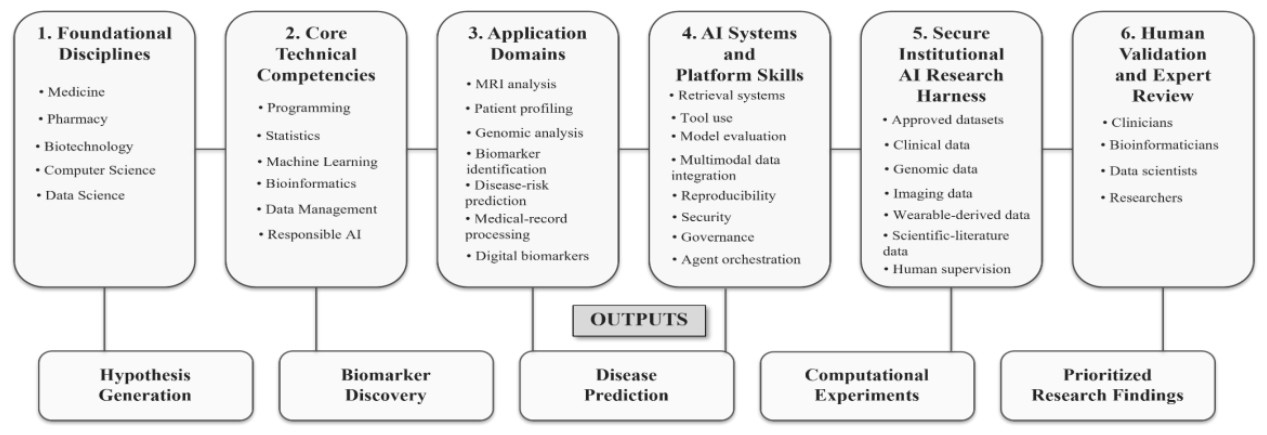
The proposed reforms call for an inter-disciplinary approach towards education in medicine, pharmacy, biotechnology, computer science and data science. The proposed reforms suggest two complementary structural changes. First, the current curricula in medicine, pharmacy, and biotechnology should incorporate specialized computational modules in the form of compulsory courses rather than voluntary electives to ensure that everyone graduating possesses at least basic AI literacy. Second, universities should develop dedicated interdisciplinary programs (joint degrees, dual-enrollment pathways, or shared research laboratories) for those students, who are a small subset of their graduates, who choose to pursue AI-based neurodegeneration research as their specialty. A fundamental aspect of the training includes studies in the principles of programming, statistics, machine learning, bioinformatics, management of data, and responsible AI. After that block of education students could move on to practical use of their knowledge by employing AI techniques for developing and validating models for MRI diagnostics, discovering biomarkers, predicting disease risks, creating patient profiles, and processing medical records automatically. Deep-learning methods like convolutional neural networks have shown promise in the analysis of MRI images and the detection of unusual findings linked to Alzheimer’s disease (Basaia et al., 2019). Training should also include machine-learning methods that predict diseases and classify patients (Dadu et al., 2022), the application of natural language processing in analyzing medical and patient-reported data (Purks et al., 2024), and the creation and utilization of digital biomarkers that were received from wearable devices (Sieberts et al., 2021).
Future training should extend beyond conventional AI model development to include agentic AI systems (multi-agent frameworks that can plan, use tools and iterate under human supervision) and AI research harnesses. Traditional AI education typically focuses on building a model for a single task, such as classifying an MRI scan or predicting disease progression. In contrast, agentic systems can coordinate multiple specialised models and tools to perform complex, multi-step research workflows. Under appropriate human supervision, these systems could retrieve and analyse scientific literature, process clinical and biomedical datasets, generate candidate hypotheses, execute approved computational analyses, compare findings, and continuously report potentially relevant results.
Training researchers to effectively design, use, evaluate, and supervise these systems could significantly change how neurodegeneration research is conducted. Researchers would need to understand not only machine learning and data analysis but also AI agent orchestration, tool use, retrieval systems, multimodal data integration, model evaluation, reproducibility, security, governance, and human-in-the-loop validation. This would enable medical and scientific researchers to effectively use AI as an integrated research environment rather than simply as an isolated analytical tool.
A particularly important application involves the development of specialised internal AI systems within hospitals and research institutions. Clinical, genomic, imaging, and patient data are highly sensitive and may not always be suitable for transfer to external AI platforms. Hospitals and research institutions could instead develop or deploy secure institution-controlled models capable of operating within approved infrastructure and alongside protected data environments, this characteristic of the Mayo Clinic Platform’s “data behind glass” model was that the clinical, imaging, and lab information is de-identified and stored in secure cloud environment while approved partners can only input their algorithms for training and validation of the models, but not transfer any kind of data (Mayo Clinic Platform, 2023). Where technically and legally appropriate, such systems could analyse de-identified electronic health records, neuroimaging data, genomic information, laboratory results, and wearable-derived behavioural and movement data without unnecessarily exposing sensitive information to external systems.
These specialised systems could form an AI research harness consisting of multiple agents or models with complementary functions. For example, one system could continuously monitor newly published research, while another could analyse approved institutional datasets for potential biomarkers or disease patterns. Other specialised agents could support genomic analysis, identify possible associations between clinical and biological variables, reproduce computational experiments, or prioritise hypotheses for further investigation. The resulting findings would remain subject to review and validation by clinicians, bioinformaticians, data scientists, and researchers before contributing to scientific or clinical decision-making.
Such an approach is particularly relevant to neurodegenerative diseases because research in this area requires the integration of diverse and longitudinal forms of data. Alzheimer’s disease, Parkinson’s disease, and related disorders involve complex interactions between genetic factors, imaging biomarkers, clinical symptoms, environmental influences, and behavioural changes over time. An appropriately governed agentic AI framework could help researchers continuously integrate these heterogeneous data sources and identify patterns or research questions that may be difficult to detect through isolated analyses. Rather than waiting for researchers to manually conduct individual analyses, approved computational workflows could operate continuously, processing newly available data and literature and presenting prioritised findings for human investigation. This could create a form of 24/7 AI-assisted research infrastructure, potentially accelerating the research cycle from data collection and analysis to hypothesis generation and validation.
Bioinformatics training should similarly emphasise genomic analysis, including the identification and interpretation of disease-associated variants, such as Parkinson’s disease-linked LRRK2 mutations, as well as protein structure and functional modelling using tools like AlphaFold (Jumper et al., 2021). Precision medicine modules could explore how genetic, clinical, and biomarker information can be integrated to support more personalized prevention and treatment strategies. This is particularly relevant to the GCC’s genetically diverse populations and the relatively high prevalence of consanguinity in some communities, which can influence the distribution and expression of inherited disorders and genetic risk factors (Al-Gazali & Hamamy, 2014).
Implementation could follow a progressive interdisciplinary model. Students would first develop foundational computational and biomedical knowledge before progressing to practical AI and bioinformatics applications. Advanced stages could focus on developing and evaluating specialised AI agents and research harnesses capable of working with multimodal biomedical data under secure and supervised conditions. As a result, the supervision of interdisciplinary projects can be executed by universities, hospitals, and tech companies. Together with shared AI training platforms, safe access to anonymized medical databases, mentoring of clinicians by data scientists, and competitive fellowships, these technical abilities can be turned into relevant research concerning neurodegenerative diseases.
Departments working together, like the medical and computer science departments at places like Qatar University, could allow for this approach to be executed through joint degree programs, workshops, research labs, and interdisciplinary training programs. Collaborating with tech companies and AI research groups could mean access to more expertise and AI technology. On a larger scale, this can relate to broader regional initiatives around digital health and AI, like UAE’s AI Strategy 2031.
Although there is plenty of promise for using such an interdisciplinary approach for training a more autonomous AI, there are big challenges including a low baseline knowledge among faculty members, high cost of infrastructure, lack of clinical databases access, and the requirement of good data governance and validation frameworks. Nevertheless, cooperation of universities, hospitals, governmental organizations, and IT companies may help to solve the problems mentioned. Ultimately, the objective should not simply be to train healthcare professionals to use individual AI tools, but to develop a new generation of interdisciplinary researchers capable of building, supervising, and critically evaluating secure AI-assisted research environments. By combining human scientific expertise with continuously operating computational systems, the GCC could establish research infrastructure capable of accelerating discoveries in neurodegeneration while maintaining human oversight, scientific validation, patient privacy, and ethical responsibility.
Figure 2.
Proposed Interdisciplinary Training Pathway for AI, Bioinformatics, Precision Medicine, and Neurodegeneration Research in the GCC.
Figure 2.
Proposed Interdisciplinary Training Pathway for AI, Bioinformatics, Precision Medicine, and Neurodegeneration Research in the GCC.
2.3. Establishing Centers of Excellence in Neurodegeneration Research
Establishing government-approved Centers of Excellence (CoEs) in neurodegeneration research would mark a major step in this reform, resolving the issue of the small number of research centers in the GCC. Although other institutions, such as King Saud University and King Abdulaziz University, are among the top contributing organizations to neuroscience research worldwide (Alrajhi et al.,2019), neurodegeneration centers remain scarce. The Saudi Dementia Research Center, which is affiliated with King Fahad Medical City, is in operation. Still, its output may not fulfill the needs of a full CoE (Al-Marzouqi & Arabi, 2022). The effectiveness of centralized hubs have been proved by multiple examples on a global scale, such as the UK Dementia Research Institute (DRI).
Proposed CoEs e.g., a “GCC Neurodegeneration Research Hub” at KAUST (Saudi Arabia) or Qatar University would focus on unraveling disease mechanisms, identifying biomarkers, and developing therapeutics. These hubs should be strategically located in universities with existing strengths e.g., UAE’s Khalifa University for its biotech focus or Oman’s Sultan Qaboos University for its pharmacology expertise. Government backing, which could be via ministries of health or education, would ensure sustainability, where the first funding will be done following the DRI’s £250 million scheme (UK DRI, 2018), with scaling in accordance to GCC budgets (for example, 50−100 million per center). Issues include red tape, significant launch runways, and the disconnection from the clinical setting. Incorporation of the CoEs into the national health policies, such as the Qatar National Health policies, and making mandatory hospital partnerships will overcome these problems.
2.4. Collaboration Within CoEs Between Neuroscientists, Clinicians, Data Scientists, and Policymakers
Effective functioning of CoE depends on effective multidisciplinary cooperation, which is currently poorly developed in the GCC because of the siloing of efforts (Hesham Al Khashan et al., 2021). For instance, KFSHRC in Riyadh is a highly successful hospital when it comes to treatment but it lacks research regarding neurodegenerative diseases relative to international peers.
Potential collaboration would involve neuroscientists for scientific work, clinicians for patient-oriented perspectives, data scientists for computational modeling, and policymakers for strategy development. Potential strategies include joint appointments (e.g., clinicians from Hamad Medical Corporation working together with researchers from Qatar University) or joint grant requirements for collaboration between clinicians and researchers. Partnerships with hospitals like KFSHRC or UAE’s Cleveland Clinic Abu Dhabi could facilitate bedside-to-bench feedback loops, expediting translation of findings into practice, as seen in the US Alzheimer’s Disease Research Centers. Policymaker involvement would align research with national priorities, such as Oman’s Health Vision 2050.
Governance structures, different levels of research motivation, resource competition, and varied decision-making processes may all serve to obstruct ongoing interdisciplinary cooperation. By providing financial incentives for collaboration and employing frameworks like the Network of Centers of Excellence in Neurodegeneration (CoEN, 2010), it may be possible to overcome these barriers and develop an integrated system of research.
2.5. Funding and Grant Mechanisms for Neurodegeneration Research
Funding shortages severely constrain GCC neurodegeneration research. The region allocates 0.5–1% of GDP to R&D far below the US’s 2.5% or Germany’s 3% with neuroscience receiving a sliver, e.g., $10 million in Saudi Arabia’s 2022 National Science and Technology Plan versus the NIH’s $2.8 billion (UNESCO Institute for Statistics, 2023; Kingdom of Saudi Arabia, 2022; NIH, 2023). Private sector investment is equally limited, with biotech VC totaling $200 million across the GCC in 2022 with negligible investment for neurodegeneration (MAGNiTT, 2023).
Proposed strategies include a government commitment to raise R&D spending to 1% of GDP by 2035, with a dedicated neuroscience allocation (e.g., $50 million annually per country). Private sector engagement could leverage firms like Saudi Aramco or Qatar Foundation, mirroring KAUST’s $10 million investment in solar startups (Al Tamimi & Company, 2017). A hybrid model government seed funding matched by private contributions would diversify resources, akin to Singapore’s biotech funding success (A*STAR, 2023).
Risk aversion and regulatory hurdles challenge private investment. Offering tax credits and aligning with economic diversification plans could incentivize participation and ensure sustained research support.
2.6. Incentivizing Researchers Through Competitive Grants and Fellowships
The GCC lacks robust mechanisms to incentivize neurodegeneration research, with few competitive grants specific to the field (ClinicalTrials.gov, 2023). This contrasts with models like the UK Research and innovation CoEN Pathfinder grants, which fund innovative neurodegeneration projects (UKRI, 2023). Scholar retention strategies are also needed as 60% of Saudi STEM PhDs work abroad (OECD, 2022).
The mechanisms proposed here include establishing competitive grant programs (e.g., “GCC Neurodegeneration Innovation Grants”) with an evaluation criteria which should be transparent. The evaluation should be based on novelty, feasibility, and potential impact. It should be supported by substantial and organized funding according to project scope and stage of development (e.g., $100,000–$1 million). Research fellowships for young scientists based on the model of NIH’s K99/R00 fellowship (NIH, 2023) would be a valuable resource as well to provide annual funding in disciplines such as AI-assisted diagnostics. Scholarships for Ph.D. students specializing in neuroscience and/or neurotechnology would develop a future workforce.
Transparency in the distribution of grants and competitive salaries abroad are challenges. Collaborations with international consortia (such as Alzheimer’s Disease Neuroimaging Initiative) and repatriation programs can be helpful in attracting more candidates.
3. Enhancing Hospital-Academia Interaction for Translational Research
Translational research acts as a bridge to help transform scientific discoveries into relevant clinical applications. The GCC is facing a rising burden of multiple neurodegenerative diseases. Alzheimer’s disease (AD) and Parkinson’s disease (PD) are the two major diseases which are increasing in the region. Translational research can help explain this problem. Despite advancements in the healthcare infrastructure, the Gulf Cooperation Council (GCC) region suffers from an apparent disconnect between hospitals and universities which hampers development of diagnostics, therapies and preventive strategies. This section will describe how to overcome this problem, create unified data platforms and biobanks, as well as combine medical education with research so that an advanced ecosystem for translational medicine can develop in accordance with specific social, economic and cultural conditions in the GCC.
3.1. Bridging the Gap Between Research and Clinical Practice
Collaboration between hospitals and universities is fundamental to translational research; however, the GCC currently falls short in this area, particularly for neurodegeneration studies. The esteemed establishments, such as King Faisal Specialist Hospital & Research Center (KFSHRC) in Riyadh, are renowned for excellent patient service and publication rate surpassing 500 per year; however, there were only 12 publications on AD published between 2015 and 2020, compared to the Massachusetts General Hospital, which published over 150 papers in the same timeframe (Al-Marzouqi & Arabi, 2022). Furthermore, universities in Qatar, such as Qatar University and Hamad Medical Corporation (HMC), have invested themselves broadly in health research, and as a result have had about 50 papers published between 2015 and 2023, not one of which is on the topic of neurodegeneration (HMC, 2023). The situation in Saudi Arabia is slightly better, but still far from satisfactory: Alrajhi et al. (2019) note that only 15% of collaborations between universities and hospitals generate peer-reviewed outputs, and neurodegeneration constitutes just 4% of all those outputs.
To address this, formal joint research initiatives are proposed. First, establish strategic partnerships via memoranda of understanding (MOUs) between flagship institutions e.g., King Saud University (KSU) with KFSHRC, or UAE University with Cleveland Clinic Abu Dhabi mandating co-led projects on neurodegeneration. These could include epidemiological studies to map AD prevalence across GCC populations or longitudinal analyses of PD motor symptoms, leveraging hospital patient cohorts and university research expertise. Second, create shared funding mechanisms, such as a “GCC Neurodegeneration Research Alliance Fund,” allocating $5–10 million annually to joint proposals, modeled on the NIH’s R01 grants, which support over 30,000 collaborative projects yearly (NIH, 2023). Third, host biannual symposia, such as the “GCC Translational Neuroscience Forum,” to align research agendas with clinical needs, drawing inspiration from the Alzheimer’s Association International Conference, which fosters 10,000+ annual collaborations (Alzheimer’s Association, 2023).
3.2. Creating National Databases for Neurodegeneration Patient Records and Biomarkers
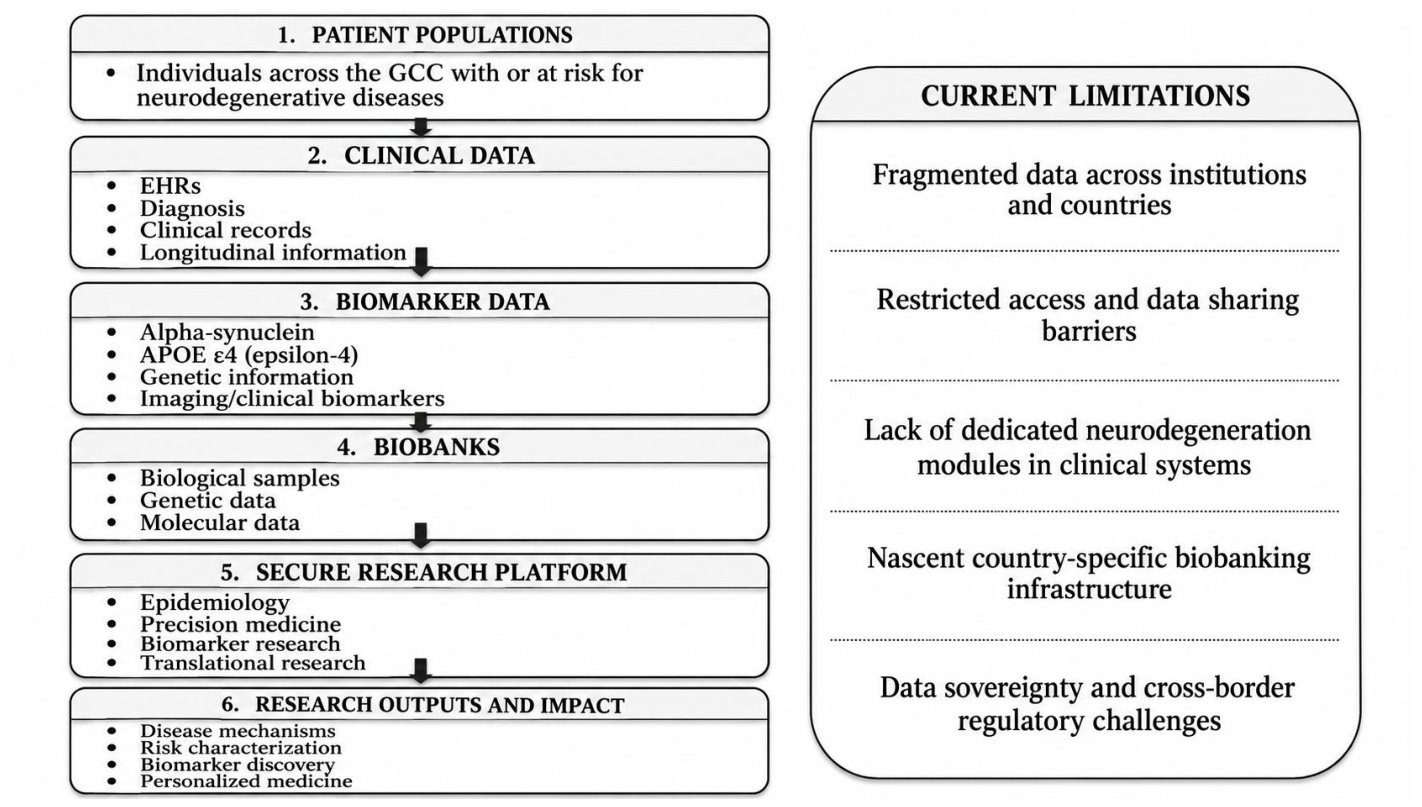
The absence of a dedicated neurodegeneration database in the Gulf Cooperation Council (GCC) hinders further development of extensive research and personalized medicine. In Saudi Arabia, the National Health information system collects general health information for about 30 million people; however, it does not have specific modules that include, for example, a monitoring system for AD patients or a biomarker of Parkinson’s disease, such as alpha-synuclein. Likewise, in the UAE, the Malaffi Health Information Exchange covers 90% of the hospitals, but neurodegeneration-related information is fragmented and less than 1,000 people are registered with AD (Malaffi, 2023). Qatar’s National Health Strategy includes electronic health records, but only 2% of records pertain to neurological conditions (Qatar Ministry of Public Health, 2023). This data scarcity limits epidemiological insights, a concern that is particularly important given the substantial diagnostic gap in dementia globally and the anticipated growth of the disease burden across ageing populations (ADI, 2021).
3.3. Open-Access Biobanks for Genetic and Molecular Research on Neurodegeneration
Biobanks are important sources of genetic and molecular studies, however GCC biobanks have low coverage and availability. For example, the Saudi Human Genome Project has sequenced over 100,000 genomes, including Alzheimer’s disease variants like APOE ε4, but it does not offer any access to those samples for further studies (SHGP, 2023). In Oman and the UAE, biobanking efforts are nascent, with no dedicated neurodegeneration focus, a gap that may be particularly relevant for region-specific genomic research, given the distinctive genetic architecture and prevalence of consanguinity in some GCC populations (Al-Gazali & Hamamy, 2014).
The European Brain Bank Network, with 10,000+ samples and 350+ annual publications, demonstrates the impact of open-access biobanks (EBBN, 2023). In the GCC, setup costs of $7–12 million per biobank could be funded via public-private consortia (e.g., Aramco, Sidra Medicine), building on initiatives like the UAE’s Genome Project. Donation of biological material and data sovereignty issues have posed certain difficulties in this respect. However, efforts like launching a public information campaign entitled “Biobanking for a Healthier Future” and working with Islamic scholars for ethical purposes could improve participation rates, thus allowing access to the molecular basis of neurodegeneration.
Figure 3.
Proposed Integrated Clinical Database, Biomarker, and Biobank Infrastructure for Neurodegeneration Research in the GCC.
Figure 3.
Proposed Integrated Clinical Database, Biomarker, and Biobank Infrastructure for Neurodegeneration Research in the GCC.
4. Promoting Neurodegeneration-Focused Startups and Innovation
Startups play a crucial role in the solution to the problem of increasing prevalence of neurodegenerative diseases such as Alzheimer’s disease, Parkinson’s disease, and similar diseases in the countries of Saudi Arabia, Oman, Qatar, and the United Arab Emirates. Despite the efforts of the Gulf Cooperation Council to diversify the economy and create an innovative technological environment, businesses operating in the field of neurodegenerative diseases remain relatively underdeveloped due to such limitations as lack of funding, regulatory barriers, and weak support for startups in the GCC region. This section shows various ways to create the efficient startup ecosystem, promote public-private partnerships, and create a scheme of support aimed at facilitating creation of innovative solutions in the field of diagnostics, therapies, and digital health.
4.1. Incubation Centers Focused on Neurodegeneration-Related Biotech and Digital Health Startups
Venture capital investment in the GCC reached $2.2 billion in 2022, of which only about 10% (~$200 million) went to biotech and health technology (MAGNiTT, 2023). In comparison, US investments in biotechnology reached $35 billion in 2022, and individual neurodegeneration startups have raised as much as $130 million in one round of funding (Denali Therapeutics, 2018). This discrepancy is rooted in the lack of specialized incubators in the GCC focused on developing ventures in neurodegeneration biotechnology and digital healthcare despite the increasing prevalence of Alzheimer’s and Parkinson’s disease.
To address this situation, various incubation facilities should be developed in specific areas including the King Abdullah University of Science and Technology (KAUST) in Saudi Arabia, Qatar Science and Technology Park (QSTP), and Dubai Silicon Oasis (DSO) in the United Arab Emirates (UAE). Their common features would be a “GCC Neurodegeneration Innovation Hub,” which will be equipped with required technology (wet labs, artificial intelligence centers) and staff, and will cooperate with hospitals (e.g., King Faisal Specialist Hospital and Research Centre). Focus areas would include biotech solutions (e.g., gene therapies targeting APOE ε4, prevalent in GCC populations) and digital health innovations (e.g., wearable sensors for PD motor tracking; Fereshtehnejad et al., 2021). Each center could support 10–15 startups annually, with initial capacities modeled on Singapore’s Biofoundry, which incubates 20+ biotech ventures yearly (A*STAR, 2023).
4.2. Government-Backed Startup Funding for AI-Driven Diagnostic Tools and Therapeutics
Artificial intelligence-enabled innovations show considerable potential in the diagnosis of neurodegenerative conditions, as machine learning algorithms can detect Alzheimer’s disease through magnetic resonance imaging with an accuracy of 95% (Hosny et al., 2018); however, funds may be lacking in this area for several startups in the Gulf region. Although the amount of financing allocated by governments for the development of technological startups is on the rise – Qatar Digital Incubation Center is allocated $20 million in 2022. and UAE Hub71 financed $100 million – the funds allocated for neurodegenerative diseases are currently insignificant (Qatar DIC, 2023; Hub71, 2023). This differs from the situation in the US, where the National Institutes of Health reported financing artificial intelligence healthcare startups with 500 million dollars in 2022 (NIH, 2023).
The GCC Neurodegeneration AI Innovation Fund is a proposed funding program. The proposal suggests an annual funding of $50 million to be dispersed throughout the four GCC countries, which would be managed by relevant organizations such as the Saudi Ministry of Investment or QDB. Funding will prioritize the use of AI-driven diagnostics, such as algorithms for early detection of PD through gait analysis and for drug discovery for AD. Grants ranging from $100,000 to $1 million are expected to support around 20 to 30 different startups each year, contributing to the GCC’s total $150 billion investment in AI technology. The key requirement for accessing funds will be collaboration with universities or hospitals. (e.g., HMC).
5. Policy Recommendations for Sustainable Neurodegeneration Research and Innovation
The sustainable growth of neurodegeneration studies and innovations in countries such as Saudi Arabia, Oman, Qatar, and the UAE requires an integrated policy framework beyond temporary projects to solve the increasing public health challenge of neurodegenerative diseases including Alzheimer’s disease (AD) and Parkinson’s disease (PD). As AD cases are predicted to triple in Saudi Arabia by 2050 (ADI, 2021) and the PD prevalence rate is 112.5 per 100,000 in Oman (Safiri et al., 2023), GCC requires increased efforts to support research and innovation. Nevertheless, there is no coherent strategy since expenditures on research and development make up 0.5-1% of GDP in contrast to 2.5% in the United States and 3% in Germany (UNESCO Institute for Statistics, 2023).
5.1. Establishing National Action Plans for Neurodegeneration Prevention and Treatment
5.1.1. Current Gaps
Despite rising dementia and Parkinson’s disease (PD) rates, the GCC lacks national action plans (NAPs) for neurodegeneration. In contrast to Saudi Arabia’s $500M National Diabetes Strategy, conditions like AD and PD remain unaddressed. The country specific estimate of dementia cases in Qatar is limited. Despite this, the estimates currently available suggest a rising clinical burden. Projections from GBD modelling with respect to UAE, indicate that by 2050, there will be a significant surge in dementia patients. This is largely a reflection of growing population and ageing rather than a comparable increase in age-standardised prevalence (GBD 2019 Dementia Forecasting Collaborators, 2022). Oman’s Health Vision 2050 includes neurological diseases; however, no further details have been provided. The public health system is underdeveloped, for instance, only 1 neurologist serves 100,000 residents in Saudi Arabia compared to 3.5 neurologists serving the same number of residents in America.
5.1.2. Proposed Framework
A “GCC Neurodegeneration Prevention and Treatment Plan” should span 20–25 years, aiming to reduce disease burden and enhance care by 2045. Key components:
- Prevention: Campaigns that promote healthy diets, exercise, and brain exercises are necessary to combat preventable causes of diseases such as diabetes, affecting 25% of the population in Saudi Arabia. The programs could use as a model the Mind Your Mind program that has been successfully introduced in Australia, and aim to achieve a 15% decrease in an incidence rate.
- Infrastructure: Establishing 50% more neurology clinics (from 20 to 30 in Saudi Arabia’s major hospitals), to address the needs of people living in remote areas, as they account for almost 40% of the GCC population.
- Research: Collaborate with universities within the ministries for clinical trials related to prevention (such as metformin for patients with diabetes). Clinical Infrastructure- Ministries of Health should work in partnership with key universities and teaching hospitals to build capacity for prevention and early-intervention clinical trials, such as trials for previously-tested interventions and existing medications (e.g., the neuroprotective properties of metformin in people with diabetes) or lifestyle interventions, including multidomain approaches. Standardised memory clinics and biomarker-eligible centres would also improve patient care and support researcher recruitment. Research Infrastructure- Investment is needed into research infrastructure that can provide local data (e.g., longitudinal cohorts, biobanks, neuroimaging facilities), and closer collaborations between universities, national research funding bodies and international consortia would help develop skills and allow Gulf-based researchers to contribute to, and benefit from, international research into dementia and Parkinson’s disease. Priority should be given to research into region-specific risk factors, genetic predispositions, and culturally-sensitive interventions.
- Monitoring: Form a GCC taskforce to report annually on prevalence, treatment access, and intervention outcomes using WHO metrics (e.g., 75% treatment coverage by 2030).
5.1.3. Implementation & Funding
An initial investment of $150–250M per country, with $50–75M annual maintenance, could be sourced from health budgets (e.g., Saudi Arabia’s $65B Vision 2030 health allocation), oil revenues, and public-private partnerships. A phased 5–20 year approach ensures feasibility. Regional coordination via the GCC Health Council is critical. GCC Health Council’s role would be to coordinate neurodegeneration research across the region on priority basis, facilitate studies in multiple countries, create interoperable data-sharing framework, coordinate initiatives for regional funding and develop standards for governing research and overseeing ethics which would be common for all the countries in the region. It would also develop regional indicators to track research funding, development of workforce, clinical-trial activity, data-resource development, and translation of research into clinical practice.
5.1.4. Addressing Research Funding Deficiencies
Current Deficit:
GCC R&D funding is 0.5–1% of GDP, with minimal neuroscience focus. For example, Saudi Arabia’s 2022 neuroscience allocation was $10M, compared to NIH’s $2.8B. GCC neuroscience publications are only 0.5% of the global total, despite high per-capita spending (e.g., $2,154 in Qatar).
Proposed Budget Reform:
Increase R&D to 1% of GDP by 2035-$700M annually in Saudi Arabia, $100M in Qatar, with 10–15% ($70–100M regionally) for neurodegeneration. Funding distribution:
- Basic Science: $25–35M for molecular studies at KAUST, UAE University, aiming to double neuroscience papers by 2030.
- Clinical Trials: $30–45M to increase AD trials from 2 to 25 by 2035.
- Infrastructure: $20–30M to expand biobank capacity to 50,000 samples (e.g., Qatar Biobank).
- Innovation: $10–15M for AI-based diagnostics and therapeutic startups aligned with UAE’s $1.5B AI strategy.
Sustainability:
Utilize sovereign funds like Saudi’s PIF ($700B) and UAE’s Mubadala ($284B), complemented by pharma industry contributions. A “Neurodegeneration Research Fund Act” could protect allocations, targeting 50 patents and 500 papers by 2035.
5.1.5. Advancing International Collaboration
Current Isolation:
GCC institutions are underrepresented in global neuroscience, producing far fewer papers (e.g., 150 in Saudi Arabia) than institutions like the UK DRI- UK Dementia Research Institute
(500+). Singapore and South Korea serve as examples of successful global integration.
Proposed Framework:
- Joint Research: $5–10M co-funded programs with global leaders (e.g., MPI, NIA).
- Tech Transfer: Import diagnostic tools (e.g., tau PET scans), doubling imaging capacity.
- Scholar Exchanges: Host 30–50 visiting researchers; send 20 GCC scholars abroad.
- Shared Labs: Establish regional outposts (e.g., NIA at KSU) with supercomputing access.
Funding & Logistics:
Launch with a $25–30M regional fund from education budgets. Annual neuroscience summits and GCC diplomatic channels can manage partnerships. Challenges like IP sharing and visa logistics can be mitigated with co-ownership agreements and streamlined “GCC Research Visas.”
- Travel Grants: $3K–6K per researcher for 75–100 GCC attendees at global events.
- Membership Subsidies: $15K–25K annually per institution to join top consortia.
- Publication Incentives: $5K–15K for authors contributing GCC data.
- Liaison Offices: At KSU and Qatar University to manage data sharing and applications.
- Research: Tauopathies, amyloid, etc.
- Neurotech: AI diagnostics and BCI development.
- Clinical Training: For clinician-researchers.
- Retention: 5–10 year service commitments in GCC institutions.
- AI: ML training for diagnostic purposes (e.g., MRI) for 6-9 months; annual output of 300-500 trainees.
- Biotech: Programs in drug design and gene editing that last 12-18 months; annual output of 300-500 trainees.
- Hybrid: Short blended training programs with yearly intake of 200-500 trainees.
- Target Groups: Clinicians, engineers, professionals with some working experience.
6. Conclusions
Currently, there is an increasing load of neurodegenerative diseases such as Alzheimer’s disease (AD), Parkinson’s disease (PD), and related disorders in the GCC countries. The necessary step to tackle this problem is to take a transformative approach in research & development and innovation. This review maps out an integrative framework to address this issue. It does that by suggesting integration of structural reforms and policy recommendations across academia, hospital-academia collaborations, startup companies, and long-term governmental strategies. The measures proposed in this review are built upon the data from research and development in the GCC region and they aim to bridge the existing gaps e.g., limited funding, fragmented academia-hospital collaboration, and an innovation landscape that is nascent. This can be done while leveraging the region’s economic strengths and national visions like Saudi Vision 2030. These reforms, taken together, respond to the GCC’s structural failings such as disconnected research ecosystems, insufficient funding (Saudi Arabia: USD10 million to NIH’s USD2.8 billion; NIH, 2023), and brain drain (60% of STEM PhDs from Saudi Arabia are located abroad; OECD, 2022) while conforming to the best practices around the world (e.g., UK Dementia Strategy; NHS, 2023). These efforts provide a road map for winning the title of a regional leader in neurodegeneration research and treatment.
6.1. Future Directions: Fostering Innovation, Better Data Sharing, and Funding Mechanisms
Looking ahead, the GCC must prioritize the following future directions to sustain and amplify these reforms. Fostering innovation remains paramount and building on the GCC’s expanding startup ecosystem which would support neurodegeneration research and development at a quick pace should be prioritized. Expanding AI-driven diagnostics, such as wearable technologies which would monitor PD-related gait abnormalities (Fereshtehnejad et al., 2021), alongside biotechnology-based approaches, including gene and cell therapies, will require dedicated incubation centres, sustained research funding, and stronger partnerships among academia, hospitals, industry, and technology developers. Emerging technologies, including quantum computing for drug discovery (IBM Research, 2023), could further strengthen therapeutic innovation and complement existing national investments in artificial intelligence, such as the UAE AI Strategy 2031, positioning the GCC to develop a more competitive neurotechnology and biotechnology ecosystem.
6.2. Synthesis and Vision
The following directions of the suggested policies, such as innovation, data sharing, and research funding would interlock within the integrated ecosystem. This would ensure that academia’s discoveries reach patients via hospitals and scale through industry, sustained by policy. By 2045, this could position the GCC as a global neurodegeneration research hub, thereby reducing disease burden by 25%. This would also help introduce 30+ therapies, and train 5,000 specialists. These directions would help realize a vision of health resilience and scientific leadership.
References
- Alzheimer’s Disease International, & McGill University. (2021). World Alzheimer report 2021: Journey through the diagnosis of dementia. https://www.alzint.org/resource/world-alzheimer-report-2021/ Alzheimer’s Disease International.
- Alzheimer’s Disease Neuroimaging Initiative. (2028). ADNI | Alzheimer’s Disease Neuroimaging Initiative. https://adni.loni.usc.edu/ ADNI.
- Al Khashan, H.; Abogazalah, F.; Alomary, S.; Nahhas, M.; Alwadey, A.; Al-Khudhair, B.; Alamri, F.; Aleisa, N.; Mahmoud, N.; Hassanein, M. Primary health care reform in Saudi Arabia: Progress, challenges and prospects. East. Mediterr. Health J. 2021, 27(10), 1016–1026. [Google Scholar] [CrossRef]
- Safiri, S.; Noori, M.; Nejadghaderi, S. A.; Mousavi, S. E.; Sullman, M. J. M.; Araj-Khodaei, M.; Singh, K.; Kolahi, A.-A.; Gharagozli, K. The burden of Parkinson’s disease in the Middle East and North Africa region, 1990–2019: Results from the Global Burden of Disease Study 2019. BMC Public Health 23 2023, 107. [Google Scholar] [CrossRef]
- Alrajhi, A. N.; Aydin, N. Determinants of effective university–business collaboration: Empirical study of Saudi universities. J. Ind.-Univ. Collab. 2019, 1(3), 169–180. [Google Scholar] [CrossRef]
- Al Tamimi & Company. (2017). R&D and innovations in the GCC countries: Recent updates. Available online: https://www.tamimi.com/law-update-articles/rd-and-innovations-in-the-gcc-countries-recent-updates.
- Dorsey, E. R.; Sherer, T.; Okun, M. S.; Bloem, B. R. The emerging evidence of the Parkinson pandemic. J. Park. Dis. 8 2018, Suppl. 1, S3–S8. [Google Scholar] [CrossRef]
- Data Study Group team. Data Study Group final report: UK Dementia Research Institute and DEMON Network; Zenodo, 2022. [Google Scholar] [CrossRef]
- European Brain Bank Network (EBBN). European Brain Bank Network for neurobiological studies in neurological and psychiatric disorders; CORDIS, European Commission, 1995–1997; Available online: https://cordis.europa.eu/project/id/CIPD940236.
- El Bitar, F.; Qadi, N.; Al Rajeh, S.; Majrashi, A.; Abdulaziz, S.; Majrashi, N.; Al Inizi, M.; Taher, A.; Al Tassan, N. Genetic study of Alzheimer’s disease in Saudi population. J. Alzheimer’s Dis. 2019, 67(1), 231–242. [Google Scholar] [CrossRef]
- Etzkowitz, H.; Leydesdorff, L. The dynamics of innovation: From national systems and “Mode 2” to a Triple Helix of university–industry–government relations. Res. Policy 2000, 29(2), 109–123. [Google Scholar] [CrossRef]
- GCC pharmaceutical market opportunity and clinical trials outlook 2030 . Kuick Research, n.d. Available online: https://www.kuickresearch.com/report-gcc-pharmaceutical-market.
- Al Hamad, H.; Sathian, B. Identifying dementia research priority for Qatar national dementia research plan: A cross-sectional survey. Nepal J. Epidemiol. 2024, 14(2), 1313–1322. [Google Scholar] [CrossRef]
- Hosny, A.; Parmar, C.; Quackenbush, J.; Schwartz, L. H.; Aerts, H. J. W. L. Artificial intelligence in radiology. In Nature Reviews Cancer; Nature, 2018; Volume 18, 8, pp. 500–510. [Google Scholar] [CrossRef]
- Hub71. Hub71: Abu Dhabi’s unique global tech ecosystem . n.d. Available online: https://www.hub71.com/impact/2024.
- Hou, Y.; Dan, X.; Babbar, M.; Wei, Y.; Hasselbalch, S. G.; Croteau, D. L.; Bohr, V. A. Ageing as a risk factor for neurodegenerative disease. In Nature Reviews Neurology; Nature, 2019; Volume 15, 10, pp. 565–581. [Google Scholar] [CrossRef]
- IBM Research. The first quantum computer dedicated to healthcare research . n.d. Available online: https://research.ibm.com/blog/ibm-cleveland-clinic-quantum-computer-install.
- Jumper, J.; Evans, R.; Pritzel, A.; Green, T.; Figurnov, M.; Ronneberger, O.; Tunyasuvunakool, K.; Bates, R.; Žídek, A.; Potapenko, A.; Bridgland, A.; Meyer, C.; Kohl, S. A. A.; Ballard, A. J.; Cowie, A.; Romera-Paredes, B.; Nikolov, S.; Jain, R.; Adler, J. ... Hassabis, D. (2021). Highly accurate protein structure prediction with AlphaFold. Nature, 596(7873), 583–589. [CrossRef]
- Kingdom of Saudi Arabia. (n.d.). Saudi Vision 2030. https://www.vision2030.gov.sa/ar/.
- Logroscino, G.; Piccininni, M.; Marin, B.; Nichols, E.; Abd-Allah, F.; Abdelalim, A.; Alahdab, F.; Asgedom, S. W.; Awasthi, A.; Chaiah, Y.; Daryani, A.; Do, H. P.; Dubey, M.; Elbaz, A.; Eskandarieh, S.; Farhadi, F.; Farzadfar, F.; Fereshtehnejad, S.-M.; Fernandes, E. ... Murray, C. J. L. (2018). Global, regional, and national burden of motor neuron diseases 1990–2016: A systematic analysis for the Global Burden of Disease Study 2016. The Lancet Neurology, 17(12), 1083–1097. https://doi.org/10.1016/S1474-4422(18)30404-6pmc.ncbi.nlm.nih.gov.
- MALAFFI. MALAFFI (2023): Reports . n.d. Available online: https://www.malaffi.ae/reports/.
- Mayo Clinic. Find clinical trials . n.d. Available online: https://www.mayoclinic.org/departments-centers/neurology/sections/clinical-trials/rsc-20117084.
- National Institutes of Health. Budget . 13 June 2025. Available online: https://www.nih.gov/about-nih/organization/budget.
- National Science Foundation. NSF Graduate Research Fellowship Program (GRFP) . n.d. Available online: https://www.nsf.gov/funding/opportunities/grfp-nsf-graduate-research-fellowship-program.
- Organisation for Economic Co-operation and Development. INES: Indicators of Education Systems Programme . n.d. Available online: https://www.oecd.org/en/about/programmes/ines.html.
- Al-Marzouqi, A. H.; Arabi, A. A. Research performance of the GCC countries: A comparative analysis of quantity and quality. Heliyon 2022, 8(11), e11309. [Google Scholar] [CrossRef]
- Qatar Ministry of Public Health. Ministry of Public Health—الصفحة الرئيسية . n.d. Available online: https://www.moph.gov.qa:443/arabic/Pages/default.aspx.
- UK Research and Innovation. Centres of Excellence in Neurodegeneration: Pathfinder Five . 25 October 2022. Available online: https://www.ukri.org/opportunity/centres-of-excellence-in-neurodegeneration-pathfinder-five.
- World Bank. World Bank Open Data . n.d. Available online: https://data.worldbank.org.
- Zerhouni, E. A. Translational and clinical science—Time for a new vision. In New England Journal of Medicine; New England Journal of Medicine, 2005; Volume 353, 15, pp. 1621–1623. [Google Scholar] [CrossRef]
- Zerhouni, E. A. Translational and clinical science—Time for a new vision. N. Engl. J. Med. 2005, 353(15), 1621–1623. [Google Scholar] [CrossRef]
- GBD 2019 Dementia Forecasting Collaborators. Estimation of the global prevalence of dementia in 2019 and forecasted prevalence in 2050: An analysis for the Global Burden of Disease Study 2019. Lancet Public Health 2022, 7(2), e105–e125. [Google Scholar] [CrossRef]
- United Nations. World population prospects 2022 . 2022. Available online: https://population.un.org/wpp/.
- World Bank. Life expectancy at birth, total (years). World Development Indicators. 2020. Available online: https://data.worldbank.org/indicator/SP.DYN.LE00.IN.
- World Health Organization. Global status report on the public health response to dementia . 2021. Available online: https://www.who.int/publications/i/item/9789240033245.
- Kingdom of Saudi Arabia. Vision 2030: Health sector transformation program . 2021. Available online: https://vision2030.ai/vision/programmes/health-sector-transformation/.
- GCC Pharma Report. Pharmaceutical industry outlook in the Gulf Cooperation Council . 2022. Available online: https://www.kuickresearch.com/report-gcc-pharmaceutical-market.
- UNESCO Institute for Statistics. SDG 9.5—Research & Development (R&D) indicators . In UNESCO DataHub; 2023; Available online: https://data.unesco.org/explore/dataset/uis004/.
- Kingdom of Saudi Arabia. National Science and Technology Plan: Annual report 2022 . 2022. Available online: https://npst.ksu.edu.sa/sites/npst.ksu.edu.sa/files/imce_images/Governing%20Rules%20Part-I%20%28English%29.pdf.
- ClinicalTrials.gov. Neurodegeneration trials in GCC countries [Data set]. U.S. National Institutes of Health, 2023. Available online: https://clinicaltrials.gov/.
- MAGNiTT. 2023 GCC venture capital report . 2023. Available online: https://magnitt.com/research/2023-mena-venture-investment-premium-report-50904.
- Denali Therapeutics. Denali Therapeutics announces first clinical trial application, key collaborations and $130M Series B . 25 August 2016. Available online: https://www.prnewswire.com/news-releases/denali-therapeutics-announces-first-clinical-trial-application-key-collaborations-and-130m-series-b-300317984.html.
- Hamdy, H.; Telmesani, A. W.; Al Wardy, N.; et al. Undergraduate medical education in the Gulf Cooperation Council: A multi-countries study (Part 1). Med. Teach. 2010, 32(3), 219–224. [Google Scholar] [CrossRef]
- McKinsey; Company. The state of AI in GCC countries—and how to overcome adoption challenges . 30 May 2023. Available online: https://www.mckinsey.com/capabilities/tech-and-ai/our-insights/the-state-of-ai-in-gcc-countries-and-how-to-overcome-adoption-challenges.
- Alhibshi, A. H.; Alamoudi, W. A.; Ul Haq, I.; Rehman, S. U.; Farooq, R. K.; Al Shamrani, F. J. Bibliometric analysis of neurosciences research productivity in Saudi Arabia from 2013–2018. Neurosciences 2020, 25(2), 134–143. [Google Scholar] [CrossRef]
- Basaia, S.; Agosta, F.; Wagner, L.; Canu, E.; Magnani, G.; Santangelo, R.; Filippi, M. Automated classification of Alzheimer’s disease and mild cognitive impairment using a single MRI and deep neural networks. NeuroImage Clin. 21 2019, 101645. [Google Scholar] [CrossRef]
- Dadu, A.; Satone, V.; Kaur, R.; et al. Identification and prediction of Parkinson’s disease subtypes and progression using machine learning in two cohorts. npj Park. Dis. 8 2022, 172. [Google Scholar] [CrossRef]
- Purks, J. L.; Arbatti, L.; Hosamath, A.; et al. Cognitive symptoms in cross-sectional Parkinson disease cohort evaluated by human-in-the-loop machine learning and natural language processing. Neurol. Clin. Pract. 2024, 14(5), e200334. [Google Scholar] [CrossRef]
- Sieberts, S. K.; Schaff, J.; Duda, M.; et al. Crowdsourcing digital health measures to predict Parkinson’s disease severity: The Parkinson’s Disease Digital Biomarker DREAM Challenge. npj Digit. Med. 4 2021, 53. [Google Scholar] [CrossRef]
- Mayo Clinic Platform. One data network to rule them all . 23 May 2023. Available online: https://www.mayoclinicplatform.org/2023/05/23/one-data-network-to-rule-them-all/.
- Al-Gazali, L.; Hamamy, H. Consanguinity and dysmorphology in Arabs. In Human Heredity; Karger Publishers, 2014; Volume 77, 1–4, pp. 93–107. [Google Scholar] [CrossRef]
- UK Government; Medical Research Council. New director and hub chosen for the UK’s new £250 million Dementia Research Institute . 14 December 2016. Available online: https://www.gov.uk/government/news/new-director-and-hub-chosen-for-the-uks-new-250-million-dementia-research-institute.
- Organisation for Economic Co-operation and Development. OECD Economic Outlook . In Issue 1 (No. 111); OECD Publishing, 2022; Volume 2022. [Google Scholar] [CrossRef]
- Hamad Medical Corporation. About Hamad Medical Corporation . 2023. Available online: https://www.hamad.qa/EN/About-Us/Pages/About-Us.aspx.
- Qatar Ministry of Public Health. National Health Strategy 2018–2022 progress . 2023. Available online: https://www.moph.gov.qa/.
- Saudi Human Genome Program. Saudi Human Genome Program: Research outputs . 2023. Available online: https://www.vision2030.gov.sa/en/explore/projects/the-saudi-genome-program.
- Agency for Science; Technology and Research (A*STAR). Accelerating deep tech venture creation and commercialisation through public-private co-investment and shared infrastructure . In Singapore Government; 2023; Available online: https://www.a-star.edu.sg.
- Fereshtehnejad, S. M.; Yao, C.; Pelletier, A.; Montplaisir, J. Wearable technologies in Parkinson’s disease: A systematic review. Mov. Disord. 2021, 36(8), 1745–1756. Available online: https://touchneurology.com/parkinsons-disease/journal-articles/wearable-technologies-for-parkinsons-disease-exploring-their-clinical-potential/.
- Qatar Digital Incubation Center. Digital Incubation Center funding overview . 2023. Available online: https://dic.motc.gov.qa/en.
- National Institutes of Health. NIH launches Bridge2AI program to expand the use of artificial intelligence in biomedical and behavioral research . 2023. Available online: https://www.nih.gov/news-events/news-releases/nih-launches-bridge2ai-program-expand-use-artificial-intelligence-biomedical-behavioral-research.
Disclaimer/Publisher’s Note: The statements, opinions and data contained in all publications are solely those of the individual author(s) and contributor(s) and not of MDPI and/or the editor(s). MDPI and/or the editor(s) disclaim responsibility for any injury to people or property resulting from any ideas, methods, instructions or products referred to in the content. |
© 2026 by the authors. Licensee MDPI, Basel, Switzerland. This article is an open access article distributed under the terms and conditions of the Creative Commons Attribution (CC BY) license.
Copyright: This open access article is published under a Creative Commons CC BY 4.0 license, which permit the free download, distribution, and reuse, provided that the author and preprint are cited in any reuse.