

Submitted:
06 October 2026
Posted:
09 October 2026
You are already at the latest version
Abstract
Obesity is a chronic disease that is a major risk factor for serious, long-term health complications. Glucagon-like peptide-1 receptor agonists (GLP-1RAs) are a class of pharmacotherapies that are highly effective in the treatment of obesity, producing weight loss of 15-20% or greater in clinical trials. Current clinical guidance recommends continued therapy to sustain these benefits; however, barriers including cost, limited access, and adverse effects may inhibit long-term use and contribute to high discontinuation rates. Abrupt discontinuation of GLP-1RA therapy is problematic as it is associated with significant weight regain and reversal of cardiometabolic improvements. Given the challenges associated with prolonged treatment, there is a critical need to develop evidence-based strategies that support patients who reduce or discontinue GLP-1RA therapy. This paper explores the scientific premise for structured dose-reduction approaches, coupled with behavioral and psychological interventions, to promote durable weight-loss maintenance following GLP-1RA therapy.
Keywords:
glucagon-like peptide-1 receptor agonist
; obesity
; weight loss maintenance
1. Introduction
Obesity is a chronic, multifactorial disease affecting 41.9% of US adults and is associated with increased risk of comorbidities and overall mortality [1]. Effective management involves long-term interventions, including lifestyle changes, bariatric surgery, and pharmacotherapy [2]. Historically, bariatric surgery has been the most effective intervention, yielding 25-35% total weight loss [3]. However, the novel pharmaceutical class of glucagon-like peptide-1 receptor agonists (GLP-1RA) are approaching similar levels of efficacy, making them an increasingly desirable treatment for obesity management.
GLP-1RA use has grown rapidly, with approximately one in eight US adults reporting having used a GLP-1RA medication [4]. Several GLP-1RA’s are approved for weight management, including liraglutide, semaglutide, and the dual glucose-dependent insulinotropic polypeptide (GIP)/GLP-1 receptor agonist tirzepatide. These medications promote weight loss through central and peripheral mechanisms that decrease appetite, increase satiety, delay gastric emptying, and improve glucose homeostasis [5]. Tirzepatide additionally activates GIP receptors, which further enhances weight loss and cardiometabolic outcomes through complementary metabolic effects [6]. Clinical trials have demonstrated significant weight reductions of approximately 6.4% [7], 14.9% [8], and 20.9% [9], with liraglutide, semaglutide, and tirzepatide, respectively, alongside significant improvements in cardiometabolic risk factors.
While these medications are highly effective, they present barriers, particularly the need for sustained use to maintain benefits because discontinuation frequently results in weight regain and reversal of cardiometabolic improvements [10,11,12,13]. However, long-term use is often limited by factors including medication cost, inconsistent insurance coverage, adverse effects, or patient preference, leading to high discontinuation rates in real-world practice [14,15,16]. As use of these medications continues to expand, clinicians may increasingly face patients for whom long-term therapy is not feasible or desirable. Yet evidence-based guidance for dose reduction or discontinuation to preserve long-term weight-loss remains limited.
This review examines barriers to long-term GLP-1RA therapy and summarizes current evidence for strategies to support weight-loss maintenance following treatment reduction or discontinuation. Specifically, we discuss the rationale for dose reduction and personalized dosing approaches, the potential role of oral GLP-1RAs and alternative anti-obesity medications, patient selection considerations, and behavioral interventions to support durable treatment outcomes following successful GLP-1RA therapy. Although liraglutide was the first GLP-1RA approved for chronic weight management, semaglutide and tirzepatide have become the most widely used agents due to their greater efficacy and convenience of use (e.g., weekly vs daily injection) [17,18]. Therefore, the discussion throughout this review focuses primarily on semaglutide and tirzepatide to provide the most actionable and clinically relevant insights.
2. Barriers to Lifelong GLP-1RA Therapy
2.1. Cost and Access
A primary barrier to GLP-1RA use is their high cost due to a lack of insurance coverage and previously, supply shortages. Many insurance plans may place additional requirements for coverage (e.g., body mass index [BMI] > 35) or failure on a cheaper medication (e.g., phentermine-topiramate) [19,20]. Without insurance, self-pay costs for semaglutide and tirzepatide can range from $299 to $449 per month when purchased from direct-to-consumer platforms such as LillyDirect and NovoCare Pharmacy [21,22]. In response to their rapid rise in use, the FDA placed these drugs on the shortages list in 2022, permitting the use of compounded formulations [23]. Subsequently, many individuals turned to compounded versions for their lower price and greater availability. However, compounded formulations are not FDA-approved and therefore are not subject to the FDA’s review for safety, efficacy, and quality [24]. Additionally, variability in compounding practices and limited clinician oversight raises concerns regarding accuracy, product quality, and risk of counterfeit products [23]. Further, following the resolution of the FDA-declared shortages, the agency clarified that compounded semaglutide and tirzepatide products that are essentially copies of commercially available FDA-approved products may violate sections 503A and 503B of the Federal Food, Drug, and Cosmetic Act, including some formulations containing additives such as vitamin B12. Considering these risks, the American Diabetes Association and Obesity Medicine Association advise against the use of compounded GLP-1Ras [25,26]. Because compounded GLP-1RA products are dispensed through multiple pharmacy pathways and are not systematically tracked, the prevalence of compounded GLP-1RA use remains difficult to quantify.
2.2. Heterogeneity of Response
Variability in weight loss response to GLP-1RA medications remains a significant and poorly understood challenge. Some individuals experience substantial weight reductions, while others demonstrate minimal response [27]. In the STEP-1 trial, 13.6% of participants receiving semaglutide failed to achieve at least 5% body weight loss after 68 weeks of treatment [8]. Similarly, in the SURMOUNT-1 trial, 15%, 11%, and 9% of participants receiving tirzepatide 5 mg, 10 mg, and 15 mg, respectively, did not achieve at least 5% weight loss after 72 weeks of treatment.9 This represents a presence of treatment under responders, while conversely, some individuals exhibit marked weight reductions and may be considered over responders [28]. Demographic and clinical characteristics associated with greater weight loss include female sex, younger age, higher baseline body weight and waist circumference, lower baseline glycated hemoglobin (HbA1c) levels, and White or European ancestry [27,28,29,30,31,32]. Among postmenopausal women, use of hormone replacement therapy (HRT) has also been associated with greater weight loss in response to GLP-1RA therapy [33,34]. While these associations exist, the determinants of over- and under-response remain insufficiently defined, emphasizing the need for further investigation to better predict treatment efficacy.
2.2.1. Gastrointestinal Side Effects
Gastrointestinal adverse effects are among the most common side effects affecting long-term GLP-1RA adherence, with up to 25-40% of users experiencing nausea and 10-20% reporting vomiting, diarrhea, or constipation [8,9,35]. These symptoms are typically worst during treatment initiation and dose escalation [36] and have been reported as less severe for tirzepatide [37]. While not fully understood, these effects may be a result of delayed gastric emptying and changes to intestinal motility and transit time [38].
2.2.2. Nutritional Status
GLP-1RAs have been shown to reduce energy intake by 25-35% [39,40,41]; however, it remains unclear whether this reduction is accompanied by improvements in diet quality. Because obesity is associated with poor baseline diet quality [42], substantially lower energy intake without improved dietary quality may increase the risk of nutrient inadequacies. One cross-sectional study of dietary intake in GLP-1RA users reported inadequate intake of several essential nutrients and found that total Healthy Eating Index (HEI) scores fell significantly below the recommended targets, with no differences by duration of GLP-1RA use [43,44]. These findings suggest that poor diet quality may persist during GLP-1RA therapy and highlights the need for concurrent nutrition intervention to minimize nutrient inadequacies.
2.3. Real-World Persistence
Discontinuation rates of GLP-1RA medications are high, with real world estimates in the range of 50% to 75% within 12 months [15]. Many of the barriers discussed previously contribute to treatment discontinuation [14,15,16,45,46], which is problematic due to the rapid weight regain observed after stopping therapy. Those who discontinue GLP-1RA therapy regain 10-15% of body weight, representing nearly all weight lost during treatment10,11 and exhibit regression toward baseline levels of previously improved cardiometabolic markers [10,11,12].
Given these consequences, patients should be counseled before initiating GLP-1RA therapy that discontinuation frequently results in reversal of both weight loss and cardiometabolic improvements. Because gastrointestinal adverse events are a common reason for discontinuation, clinicians should also provide anticipatory guidance on symptom management. Current recommendations emphasize dietary and behavioral modifications, including smaller portion sizes, eating slowly, avoiding lying down after eating, and tailoring food composition to individual tolerance [47]. Monitoring specific foods and meal timings that exacerbate symptoms can also help improve tolerability and reduce discontinuation. Despite these measures, a substantial proportion of patients may ultimately discontinue treatment, highlighting the need for evidence-based strategies that support long-term weight loss maintenance.
3. Framework for Post GLP-1RA Weight-Loss Maintenance
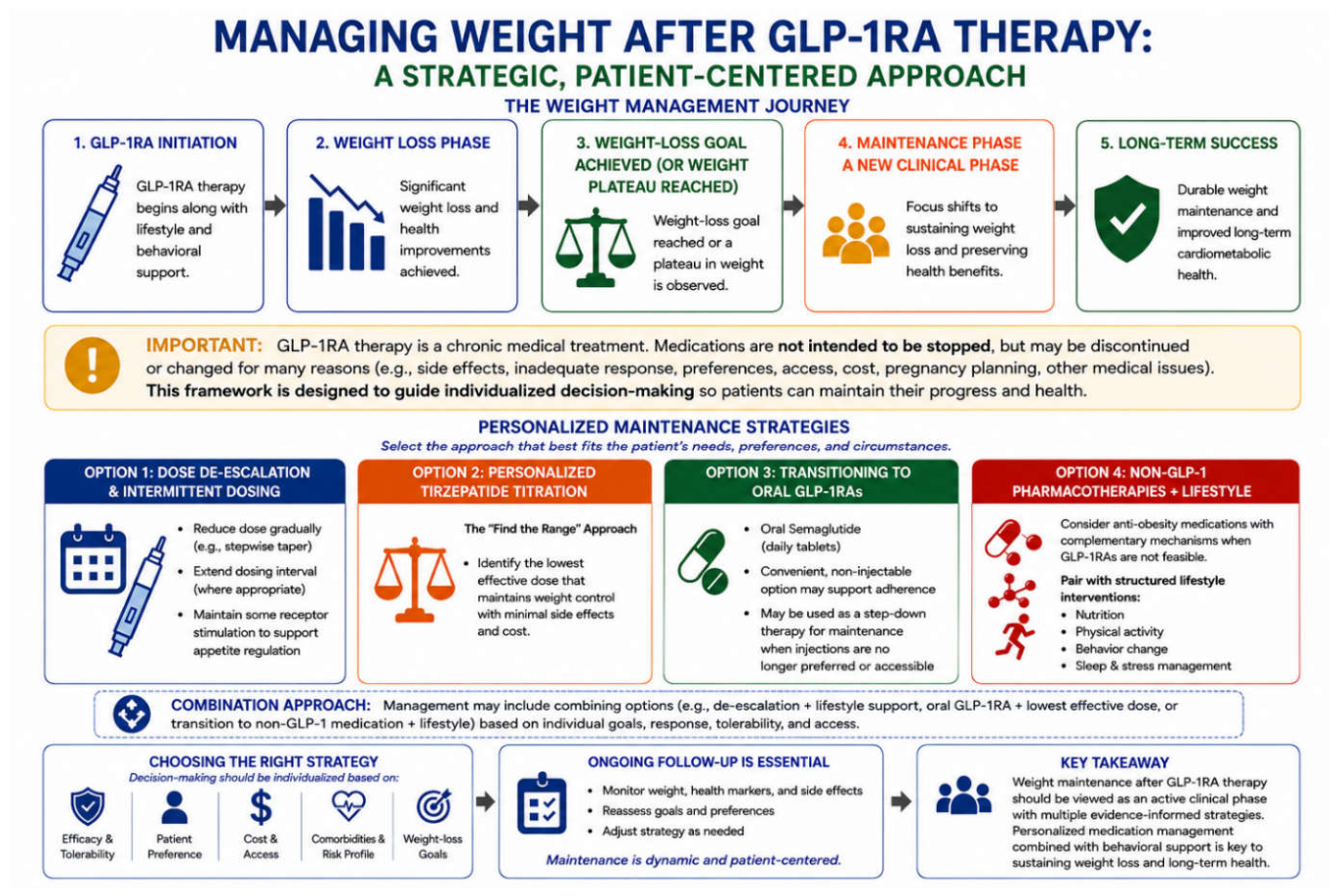
Although current clinical guidelines recommend continued GLP-1RA therapy to maintain weight loss, they provide little guidance on how to manage patients who cannot or choose not to remain on treatment [13]. As a result, identifying strategies that preserve therapeutic benefits while reducing medication burden is an important priority. Rather than viewing discontinuation as the end of obesity treatment, clinicians should consider weight-loss maintenance as an active phase of clinical management that requires individualized decision-making. As illustrated in Figure 1, multiple evidence-informed maintenance strategies may be considered based on treatment response, medication tolerability, body composition, cardiometabolic health, patient preferences, affordability, and long-term clinical goals. Potential approaches include personalized titration, reduced maintenance doses, intermittent dosing, or transition to alternative pharmacotherapies. Rather than abrupt cessation, these strategies aim to individualize treatment that balances efficacy, tolerability, cost, and long-term adherence and health maintenance, with the selection of a maintenance strategy guided by patient characteristics, treatment response, body composition, and clinical goals.
4. Pharmacologic Maintenance Strategies
4.1. Personalized Dose Titration
Standard dosing protocols for GLP-1RAs involve gradual titration to the maximum dose. Semaglutide is initiated at 0.25 mg weekly for four weeks, followed by stepwise increases every four weeks (0.5, 1.0, 1.7, and 2.4 mg) to a recommended maintenance dose of 1.7 or 2.4 mg weekly [48]. Tirzepatide follows a similar structure, beginning at 2.5 mg weekly and increasing in 2.5-mg increments at four-week intervals to a maximum of 15 mg weekly [49]. Dose-response data from tirzepatide trials demonstrate weight loss of 12-15%, 18.7-19.5%, and 19.7-20.9% at 5-, 10-, and 15-mg doses, respectively [9,50]. Although comparable dose-response data for semaglutide is limited, tirzepatide findings suggest that lower doses may be sufficient for weight-loss maintenance in some individuals [9].
Emerging evidence also supports personalized dosing strategies that tailor treatment intensity to individual response rather than automatically escalating to the maximum dose. In a retrospective cohort study of participants enrolled in a digital weight loss program combining semaglutide and intensive behavioral therapy (IBT), dose escalation was generally deferred when participants maintained >0.5% weekly weight loss and reported adequate control of hunger and satiety [51]. Under this approach, the mean semaglutide dose was 1.08 mg/week with a mean body weight loss of 16.4% after 64 weeks of treatment. By comparison, the landmark trial of semaglutide efficacy, STEP-1, reported that 89.6% of participants received the full 2.4-mg maintenance dose to achieve a mean weight reduction of 14.9% over 68 weeks [8]. Together, these findings suggest that individualized titration based on treatment response and tolerability may achieve comparable weight-loss outcomes at a lower dose than those used in traditional escalation protocols. Therefore, clinicians should routinely assess both efficacy and tolerability when determining dose adjustments, as some individuals may achieve meaningful weight reduction at lower doses.
4.2. Reduced Maintenance Dose
Evidence from trials of maintenance dosing supports the feasibility of dose-reduction strategies. The SURMOUNT-MAINTAIN trial evaluated the effects of continuing tirzepatide at the maximum tolerated dose (MTD; 10 or 15 mg), reducing the dose to 5 mg, or discontinuing treatment following a 60-week weight-loss period, with participants subsequently followed during a 52-week maintenance phase.52 Participants who continued tirzepatide maintained greater weight reduction than those assigned to placebo, with mean percent weight changes in baseline body weight at week 112 of -21.9%, -16.6%, and -9.9% in the MTD, reduced dose, and placebo groups, respectively. Among participants who had achieved a weight loss plateau, those continuing tirzepatide at the MTD maintained 96.5% of weight loss achieved during the initial intervention period, whereas those transitioned to the reduced dose maintained 67.9% of prior weight loss, compared with 42.8% in the placebo group. Cardiometabolic biomarkers also improved in both tirzepatide groups relative to placebo. Although maintenance of weight reduction was greatest with continued MTD treatment, clinically meaningful weight-loss maintenance was still observed with the reduced-dose regimen. This is important, as lower doses are associated with fewer adverse effects and reduced cost, potentially addressing barriers to long-term treatment adherence, particularly for patients paying out-of-pocket.
4.3. Intermittent Dosing
Intermittent dosing represents another strategy to reduce reliance on continuous therapy. One retrospective case series evaluated reduced-frequency dosing for weight loss maintenance following a weight loss plateau. Frequency of dosing was guided by patient preference, with more than half of patients electing to administer treatment once every two weeks [53]. During the maintenance phase, patients experienced additional reductions in body weight beyond their initial plateau (-2.3% ± 0.7%). Improvements in metabolic syndrome-related parameters, including prediabetes, triglycerides, high-density lipoprotein (HDL) cholesterol, and blood pressure were also maintained with reduced frequency dosing. Additional support for this approach comes from a case report describing two individuals who maintained meaningful weight loss despite less frequent dosing [54]. One patient sustained weight reduction by self-administering 1.7-mg semaglutide every 10-14 days, while another maintained substantial weight loss despite frequent treatment interruptions caused by tirzepatide supply shortages. These cases suggest that intermittent dosing may preserve weight-loss in select patients. Further investigation is needed to determine the safety and efficacy of such approaches.
4.4. Oral GLP-1RAs
Aside from dose reduction strategies, patients discontinuing subcutaneous GLP-1RA therapy may benefit from transitioning to oral GLP-1RAs. Available options include oral semaglutide and orforglipron, which were FDA approved for weight management in 2025 and 2026, respectively. In a phase 3 randomized controlled trial of once-daily oral semaglutide, body weight reductions were 15.1% and 13.6% with the 50-mg and 25-mg doses, along with improvements in cardiometabolic risk factors [55,56]. Similarly, in a clinical trial of orforglipron, participants receiving the medication once daily for 72 weeks achieved mean weight reductions of 7.5%, 8.4% and 11.2% with the 6-, 12-, and 36-mg doses, respectively, while also demonstrating improvements in cardiometabolic risk factors [57]. Side effects of oral GLP-1RAs are predominantly gastrointestinal, including nausea, constipation, diarrhea, and vomiting [55,57]. Like subcutaneous therapies, these symptoms are usually worst during dose escalation.
For patients wishing to discontinue subcutaneous therapy while maintaining the benefits of GLP-1RA treatment, oral formulations may provide an attractive option. Additionally, for patients who have achieved the desired weight-loss goals, transitioning to a lower-dose oral GLP-1RA may represent a strategy for long-term weight loss maintenance while reducing the risk of excessive weight loss with highly effective subcutaneous therapies. One study evaluating maintenance therapy with orforglipron after reaching a weight loss plateau while using subcutaneous tirzepatide or semaglutide provides preliminary evidence for this approach [58]. Participants who transitioned to orforglipron maintained 74.7% of their initial weight loss following tirzepatide treatment compared with 49.2% in the placebo group (treatment difference, 25.5%). Among participants previously treated with semaglutide, those receiving orforglipron maintained 79.3% of their initial weight loss compared with 37.6% in the placebo group (treatment difference, 41.7%). Maintenance therapy with orforglipron also preserved the cardiometabolic improvements achieved during prior subcutaneous GLP-1RA treatment. Oral semaglutide may represent another potential maintenance option; however, to our knowledge, no studies have evaluated transitioning patients from subcutaneous GLP-1RA therapy to oral semaglutide. From a practical standpoint, orforglipron may offer greater convenience because it can be taken at any time of day without regard to meals [59], whereas oral semaglutide must be taken on an empty stomach with up to 4 oz of plain water, followed by at least a 30-minute interval before eating, drinking, or taking other oral medications [60].
4.5. Alternative Anti-Obesity Medications
Non-GLP-1 anti-obesity medications represent an additional maintenance option for patients seeking to discontinue GLP-1RA therapy and may offer advantages related to cost, accessibility, or tolerability. Available alternatives include phentermine-topiramate, naltrexone-bupropion, and orlistat. Among these, phentermine-topiramate is generally considered the preferred alternative. Phentermine, a sympathomimetic amine anorectic [61], and topiramate, an anticonvulsant with weak carbonic anhydrase-inhibiting and glutamate receptor-antagonist properties [62], act together to suppress appetite and enhance satiety. Clinical trials demonstrate mean weight loss of 8-10% of baseline body weight during the first year of treatment, compared with approximately 1.2% in placebo groups [63,64]. Weight-loss magnitude declines after one year; however, continued therapy has been associated with long-term weight loss maintenance [65]. Additionally, phentermine-topiramate has been shown to reduce progression to T2DM in individuals with prediabetes or metabolic syndrome [66]. Common adverse effects include dry mouth, constipation, and paresthesia [63,64]. Despite these potential side effects, phentermine-topiramate remains a strong alternative for patients discontinuing GLP-1RA therapy because of its demonstrated efficacy in both weight loss and weight-loss maintenance.
Naltrexone-bupropion is considered a second-line pharmacotherapy for obesity, given its lower efficacy compared with GLP-1RAs and phentermine-topiramate, as well as its broader range of contraindications. Naltrexone, an opioid antagonist, is approved for treatment of alcoholism and opioid addiction [67,68], while bupropion is an antidepressant indicated for smoking cessation, depression, and seasonal affective disorder [69,70]. Their combined use is thought to promote weight loss through stimulation of hypothalamic pro-opiomelanocortin (POMC) neurons by bupropion and inhibition of opioid-mediated POMC autoinhibition by naltrexone [71]. Clinical trials demonstrate average weight loss of 4-5% compared with placebo [72,73,74,75]. The most common adverse effects include nausea, headaches, and constipation [72,73]. Although associated with broader contraindications, naltrexone-bupropion remains a viable option to support patients discontinuing GLP-1RA therapy.
Orlistat, another second-line pharmacotherapy for obesity, inhibits pancreatic lipase, reducing fat absorption and increasing fecal fat excretion [35]. Its use is limited by lower efficacy and high prevalence of gastrointestinal side effects. When combined with behavioral intervention, orlistat produces weight loss of 5-10 kg, compared to 3-6 kg achieved through behavioral intervention alone [76]. Common adverse effects include cramping, flatulence, fecal incontinence, oily spotting, and flatus with discharge, occurring in 15-30% of users [77,78]. While orlistat remains an available alternative to GLP-1RAs, its tolerability and lower efficacy make it less preferable than other pharmacologic options.
For patients seeking to discontinue subcutaneous GLP-1RA therapy and maintain weight-loss benefits, alternative pharmacotherapy may provide an effective strategy for maintaining weight-loss benefits. Oral GLP-1RAs may offer a means of preserving GLP-1 receptor agonism while improving convenience and accessibility, whereas phentermine-topiramate currently represents the most effective non-GLP-1 pharmacologic alternative. Medication selection should ultimately be individualized based on patient characteristics, contraindications, and treatment goals to ensure the most appropriate approach.
5. Patient Selection and Clinical Phenotyping
While evidence suggests that dose de-escalation and alternative maintenance strategies may preserve weight loss in some patients, these approaches may not be appropriate for everyone. Therefore, careful patient selection is critical, with maintenance strategies individualized according to treatment response, body composition, cardiometabolic health, treatment tolerability, affordability, and patient goals. Patients experiencing financial constraints, barriers to access, significant adverse effects, or excessive weight loss may be strong candidates for these strategies.
5.1. Cost, Access, and Treatment Tolerability
Medication cost remains a major barrier to sustained GLP-1RA use. Self-pay pricing for both subcutaneous and oral GLP-1RA therapies generally increase with dose, creating an opportunity for dose reduction to lower monthly treatment costs. For example, Lilly Direct prices tirzepatide from $299/month for 2.5 mg to $449/month for doses ≥7.5 mg, while Novo Nordisk prices semaglutide from $199/month at lower doses to $399/month at the highest available dose [21,79]. Similar dose-dependent pricing structures exist for oral GLP-1RA therapies, including oral semaglutide ($149 for lower doses, $299 for higher doses) and orforglipron ($149-$199 at lower doses, $299 at higher doses) [79,80]. Alternative pharmacotherapies may also provide lower-cost treatment options, with approximate monthly self-pay costs of $98 for phentermine-topiramate, $99 for naltrexone bupropion, and $85 for orlistat [81,82,83]. In addition to cost savings, lower doses may improve treatment tolerability surrounding gastrointestinal side effects and reduce risk of abrupt discontinuation due to symptoms.
5.2. Assessing Achievement of Therapeutic Goals
Patients who have achieved targeted weight loss and/or cardiometabolic outcomes may also be candidates for dose reduction or transition to alternative pharmacotherapies. However, determining when weight loss is sufficient remains challenging. Although BMI is commonly used to classify weight status, it has well-recognized limitations because it does not directly measure adiposity and does not account for age, sex, or racial differences that influence body composition.84 More recent clinical guidelines recommend confirming excess adiposity using additional anthropometric measures, such as waist circumference and waist-to-height ratio, alongside assessment of obesity-related complications and cardiometabolic risk factors [85,86]. Improvement in these measures may better identify patients who have achieved adequate therapeutic benefit and are appropriate candidates for weight-loss maintenance strategies, rather than relying on BMI alone. Additionally, assessing improvements in cardiometabolic labs and other risk factors (e.g., hypertension) provides a more comprehensive view of overall metabolic health. In tandem with these improvements, a patient should also demonstrate adequate physical activity and a healthy diet prior to dose reduction to improve likelihood of weight loss maintenance.
5.3. Identifying Excessive Weight Loss
Beyond achieving weight loss goals, consideration should also be given to excessive weight loss and its composition. Some individuals may be highly responsive to the medication and lose too much weight. Although defining excessive weight loss is challenging due to interindividual variability, assessment of BMI together with body composition may provide objective measures to inform individualized dose adjustments [87]. For example, patients who have reduced their BMI < 22 kg/m2 or reduced body fat percentage to <10% in men or <15% in women may warrant consideration of dose reduction to prevent excessive weight loss [88].
5.4. Body Composition and Lean Mass Preservation
A physiologic consequence of weight loss is a reduction in lean mass. If excessive, this loss can impair muscle strength, physical function and metabolic rate, thereby increasing the risk of sarcopenia and weight regain [89,90]. Lean mass accounts for approximately 35.2% and 25.4% of total weight loss during semaglutide and tirzepatide treatment, respectively [91]. This proportion is comparable to that observed with other weight loss interventions, including bariatric surgery (20-30%) [92,93] and lifestyle intervention (26.2%) [91]. Although the relative proportion of lean mass loss appears similar across modalities, the greater total weight loss achieved with GLP-1RAs may result in larger absolute reductions in lean mass, particularly relative to lifestyle intervention alone. Preservation of lean mass is particularly important in populations at elevated risk for sarcopenia, including older adults, postmenopausal women, patients with chronic kidney disease, etc. [94]. For these populations, individualized approaches that prioritize not only the quantity, but also the quality of weight loss may be warranted. Potential strategies include slower rates of weight loss achieved through dose adjustment, progressive resistance training at least 2–3 times per week, adequate dietary protein intake (approximately 1.2–1.6 g/kg/day), and serial body composition assessment (e.g., dual-energy X-ray absorptiometry [DXA]) to monitor changes in fat and lean tissue over time [91].
5.5. Behavioral Strategies for Durable Weight-Loss Maintenance
Obesity is a chronic disease requiring individualized treatment strategies, and although pharmacologic approaches are effective, durable weight-loss maintenance will likely depend on successful integration of medication management with behavioral intervention. Evidence from established weight loss interventions—including lifestyle modification and bariatric surgery—consistently identifies behavioral and psychological factors as the primary predictors of long-term weight loss maintenance. These include adherence to healthy dietary patterns, regular physical activity, and avoidance of maladaptive eating behaviors [95,96,97]. Although GLP-1RA therapy produces significant reductions in energy intake and body weight, it has not been shown to improve dietary quality or nutritional adequacy [43,44]. However, the changes in food related thoughts and behaviors during GLP-1RA therapy may offer a period where adoption of healthy behaviors may be more feasible.
Emerging evidence suggests that GLP-1RA therapy may create a behavioral window conducive to lasting habit formation, during which reduced hunger, food preoccupation, and maladaptive eating behaviors may increase receptivity to adopting sustainable dietary and lifestyle habits. Koide et al.98 demonstrated that GLP-1RA treatment suppressed external eating—the tendency to eat in response to environmental cues rather than physiological hunger and satiety signals [99,100]—and reduced emotional eating scores during the first three months of therapy; however, emotional eating scores returned to baseline by 12 months. This transient attenuation of maladaptive eating behaviors may represent a period of heightened receptivity during which individuals more readily adopt healthy dietary habits. If these habits are established during a period of neuroplasticity, they may be more likely to persist after GLP-1RA discontinuation, potentially improving long-term weight loss maintenance. Integration of nutrition counseling from a nutrition professional during this behavioral window may help support patients in establishing personalized, sustainable dietary habits that persist independent of GLP-1RA therapy.
5.6. Future Directions
The chronicity of obesity means that some patients will be unable to discontinue GLP-1RA therapy while maintaining its benefits. However, the persistently high discontinuation rates highlight an urgent need to identify strategies that optimize patient outcomes when therapy is reduced or stopped. Because these medications are relatively new, research is still needed to characterize evolving prescribing and utilization patterns and to identify strategies that best support patients during and after treatment cessation.
First, the rapidly evolving landscape of GLP-1RA access warrants further investigation. Little is known about the proportion of patients obtaining these medications through compounding pharmacies or how this has changed over time. Quantifying the prevalence of compounded GLP-1RA use and identifying the populations most likely to rely on these products will improve understanding of real-world treatment patterns, medication access, and safety.
From a pharmacologic perspective, future studies should evaluate the efficacy of tapering approaches, including dose de-escalation and intermittent dosing, in reducing weight regain. Research is also needed to determine whether alternative anti-obesity medications can help preserve weight loss apart from GLP-1RA therapy. With the emergence of oral GLP-1RA formulations, research should examine the feasibility of transitioning from subcutaneous to oral therapy, including dose-conversion strategies and their effectiveness for long-term weight maintenance. Finally, the potential for personalized dosing strategies warrants further investigation. To do so, it is important to understand factors that distinguish over-responders from under-responders to enable more precise titrations and improve individual outcomes.
Lifestyle interventions represent another critical area for future research. Future studies should also determine when maintenance interventions should begin and how behavioral and pharmacologic strategies can be integrated to maximize long-term success. Studies should examine the implementation of behavioral, dietary, and physical activity intervention during active GLP-1RA therapy to determine whether early adoption enhances long-term maintenance after medication cessation. Leveraging the period of improved appetite regulation during pharmacological treatment may enable the formation of sustainable habits that persist once therapy is withdrawn, improving long-term weight loss maintenance.
5.7. Conclusions
GLP-1RAs have transformed obesity treatment by producing clinically meaningful weight loss, however, long-term treatment is not feasible for all patients because of cost, access barriers, adverse effects, patient preference, etc. Discontinuation is associated with weight regain and loss of metabolic benefit, highlighting a critical need for evidence-based maintenance strategies. Ultimately, successful long-term obesity management will require individualized approaches that integrate pharmacologic and lifestyle interventions. Future prospective studies are needed to identify patients most likely to benefit from these strategies and to establish evidence-based guidelines that support durable weight-loss maintenance following GLP-1RA therapy. Advancing this evidence will support recognition of weight-loss maintenance as an active, individualized phase of obesity care, providing a more equitable, sustainable, and patient-centered framework for the use of GLP-1RA therapy in obesity care.
Funding
No funding was received for the preparation of this manuscript.
Acknowledgments
ChatGPT was used to assist with language development and figure creation. The authors take full responsibility for all content, interpretations, and accuracy.
Conflicts of Interest
The authors declare no conflicts of interest related to this work.
Abbreviations
| GLP-1RA | Glucagon-like peptide-1 receptor agonist |
| GIP | Glucose-dependent insulinotropic polypeptide |
| HbA1c | Hemoglobin A1c |
| HRT | Hormone replacement therapy |
| BMI | Body mass index |
| HEI | Healthy Eating Index |
| T2DM | Type 2 diabetes mellitus |
| MTD | Maximum tolerated dose |
| IBT | Intensive behavioral therapy |
| HDL | High-density lipoprotein |
| POMC | Pro-opiomelanocortin |
| DXA | Dual-energy X-ray absorptiometry |
References
- Emmerich, S.D.; Fryar, C.D.; Stierman, B.; Ogden, C.L. Obesity and Severe Obesity Prevalence in Adults: United States, August 2021–August 2023; Centers for Disease Control MMWR Office, 2024. [Google Scholar] [CrossRef] [PubMed]
- National Institute of Diabetes and Digestive and Kidney Diseases. Treatment for Overweight & Obesity. NIDDK. Available online: https://www.niddk.nih.gov/health-information/weight-management/adult-overweight-obesity/treatment (accessed on 21 August 2026).
- Sharew, B.; Kodur, N.; Corcelles, R.; Mauer, Y. Bariatric and Metabolic Surgery in the Adult Population. Mayo Clin. Proc. 2024, 99, 1631–1645. [Google Scholar] [CrossRef] [PubMed]
- Harris, E. Ultraprocessed Food Associated With Small Increase in Mortality. JAMA 2024. [Google Scholar] [CrossRef] [PubMed]
- Moiz, A.; Filion, K.B.; Tsoukas, M.A.; Yu, O.H.; Peters, T.M.; Eisenberg, M.J. Mechanisms of GLP-1 Receptor Agonist-Induced Weight Loss: A Review of Central and Peripheral Pathways in Appetite and Energy Regulation. Am. J. Med. 2025, 138, 934–940. [Google Scholar] [CrossRef] [PubMed]
- Thondam, S.K.; Daousi, C.; Wilding, J.P.H.; Holst, J.J.; Ameen, G.I.; Yang, C.; Whitmore, C.; Mora, S.; Cuthbertson, D.J. Glucose-dependent insulinotropic polypeptide promotes lipid deposition in subcutaneous adipocytes in obese type 2 diabetes patients: a maladaptive response. Am. J. Physiol. Metab. 2017, 312, E224–E233. [Google Scholar] [CrossRef] [PubMed]
- Rubino, D.M.; Greenway, F.L.; Khalid, U.; O’neil, P.M.; Rosenstock, J.; Sørrig, R.; Wadden, T.A.; Wizert, A.; Garvey, W.T.; STEP 8 Investigators; et al. Effect of Weekly Subcutaneous Semaglutide vs Daily Liraglutide on Body Weight in Adults With Overweight or Obesity Without Diabetes. JAMA 2022, 327, 138–150. [Google Scholar] [CrossRef] [PubMed]
- Wilding, J.P.H.; Batterham, R.L.; Calanna, S.; Davies, M.; Van Gaal, L.F.; Lingvay, I.; McGowan, B.M.; Rosenstock, J.; Tran, M.T.; Wadden, T.A.; et al. Once-Weekly Semaglutide in Adults with Overweight or Obesity. N. Engl. J. Med. 2021, 384, 989–1002. [Google Scholar] [CrossRef] [PubMed]
- Jastreboff, A.M.; Aronne, L.J.; Ahmad, N.N.; Wharton, S.; Connery, L.; Alves, B.; Kiyosue, A.; Zhang, S.; Liu, B.; Bunck, M.C.; et al. Tirzepatide Once Weekly for the Treatment of Obesity. New Engl. J. Med. 2022, 387, 205–216. [Google Scholar] [CrossRef] [PubMed]
- Aronne, L.J.; Sattar, N.; Horn, D.B.; Bays, H.E.; Wharton, S.; Lin, W.-Y.; Ahmad, N.N.; Zhang, S.; Liao, R.; Bunck, M.C.; et al. Continued Treatment With Tirzepatide for Maintenance of Weight Reduction in Adults With Obesity. JAMA 2024, 331, 38–48. [Google Scholar] [CrossRef] [PubMed]
- Wilding, J.P.H.; Batterham, R.L.; Davies, M.; Van Gaal, L.F.; Kandler, K.; Konakli, K.; Lingvay, I.; McGowan, B.M.; Oral, T.K.; Rosenstock, J.; et al. Weight regain and cardiometabolic effects after withdrawal of semaglutide: The STEP 1 trial extension. Diabetes Obes. Metab. 2022, 24, 1553–1564. [Google Scholar] [CrossRef] [PubMed]
- Rubino, D.; Abrahamsson, N.; Davies, M.; Hesse, D.; Greenway, F.L.; Jensen, C.; Lingvay, I.; Mosenzon, O.; Rosenstock, J.; Rudofsky, G.; et al. Effect of Continued Weekly Subcutaneous Semaglutide vs Placebo on Weight Loss Maintenance in Adults With Overweight or Obesity. JAMA 2021, 325, 1414–1425. [Google Scholar] [CrossRef] [PubMed]
- Celletti, F.; Farrar, J.; De Regil, L. World Health Organization Guideline on the Use and Indications of Glucagon-Like Peptide-1 Therapies for the Treatment of Obesity in Adults. JAMA 2026, 335, 434. [Google Scholar] [CrossRef] [PubMed]
- Rodriguez, P.J.; Zhang, V.; Gratzl, S.; Do, D.; Cartwright, B.G.; Baker, C.; Gluckman, T.J.; Stucky, N.; Emanuel, E.J. Discontinuation and Reinitiation of Dual-Labeled GLP-1 Receptor Agonists Among US Adults With Overweight or Obesity. JAMA Netw. Open 2025, 8, e2457349. [Google Scholar] [CrossRef] [PubMed]
- Do, D.; Lee, T.; Peasah, S.K.; Good, C.B.; Inneh, A.; Patel, U. GLP-1 Receptor Agonist Discontinuation Among Patients With Obesity and/or Type 2 Diabetes. JAMA Netw. Open 2024, 7, e2413172. [Google Scholar] [CrossRef] [PubMed]
- Kaplan, L.M.; Gudzune, K.; Ard, J.; Kumar, R.; Ahmad, N.N.; Kan, H.; Sims, T.J.; Poon, J.L.; King-Concialdi, K.; Beusterien, K.; et al. Perceptions of anti-obesity medications among people with obesity and healthcare providers in the US: Findings from the OBSERVE Study. Obesity 2025, 33, 1076–1086. [Google Scholar] [CrossRef] [PubMed]
- Uzoigwe, C.; Liang, Y.; Whitmire, S.; Paprocki, Y. Semaglutide Once-Weekly Persistence and Adherence Versus Other GLP-1 RAs in Patients with Type 2 Diabetes in a US Real-World Setting. Diabetes Ther. 2021, 12, 1475–1489. [Google Scholar] [CrossRef] [PubMed]
- Gasoyan, H.; Pfoh, E.R.; Schulte, R.; Le, P.; Rothberg, M.B. Early- and later-stage persistence with antiobesity medications: A retrospective cohort study. Obesity 2023, 32, 486–493. [Google Scholar] [CrossRef] [PubMed]
- Centers for Medicare; Medicaid Services. Weight loss drugs. Medicare.gov. Available online: https://www.medicare.gov/coverage/weight-loss-drugs (accessed on 25 June 2026).
- Aime, M.; Rhinehart, C.; Aungst, C. How to Find Out if GLP-1s Are Covered by Your Insurance - And What to Do Next. Available online: https://www.goodrx.com/conditions/weight-loss/glp-1-insurance-coverage?srsltid=AfmBOop8_YThSL9KANgB22iCmIGHr_B-kDV9a2EpV_JtWbm9UdXeU0RQ (accessed on 25 June 2026).
- Eli Lilly and Company. Zepbound - LillyDirect Medicine. Eli Lilly and Company. Available online: https://www.lilly.com/lillydirect/medicines/zepbound (accessed on February 2026).
- Novo Nordisk. Wegovy Price Guide. Novo Nordisk. Available online: https://www.novocare.com/content/dam/novonordisk/novocare/redesign/pdf/Wegovy_Price_Guide.pdf (accessed on February 2026).
- Mattingly, T.J.; Conti, R.M. Marketing and Safety Concerns for Compounded GLP-1 Receptor Agonists. JAMA Health Forum 2025, 6, e245015. [Google Scholar] [CrossRef] [PubMed]
- US Food and Drug Administration. FDA’s Concern with Unapproved GLP-1 Drugs Used for Weight Loss. 2026. Available online: https://www.fda.gov/drugs/drug-alerts-and-statements/fdas-concerns-unapproved-glp-1-drugs-used-weight-loss.
- Neumiller, J.J.; Bajaj, M.; Bannuru, R.R.; McCoy, R.G.; Pekas, E.J.; Segal, A.R.; ElSayed, N.A. Compounded GLP-1 and Dual GIP/GLP-1 Receptor Agonists: A Statement from the American Diabetes Association. Diabetes Care 2024, 48, 177–181. [Google Scholar] [CrossRef] [PubMed]
- Fitch, A.; Auriemma, A.; Bays, H.E. Compounded peptides: An Obesity Medicine Association Position Statement. Obes. Pillars 2023, 6. [Google Scholar] [CrossRef]
- Squire, P.; Naude, J.; Zentner, A.; Bittman, J.; Khan, N. Factors associated with weight loss response to GLP-1 analogues for obesity treatment: a retrospective cohort analysis. BMJ Open 2025, 15, e089477. [Google Scholar] [CrossRef] [PubMed]
- Venkatakrishnan, A.J.; Murugadoss, K.; Soundararajan, V. Decoding the hallmarks of GLP-1RA weight-loss super-responders. Biol. Methods Protoc. 2026, 11. [Google Scholar] [CrossRef] [PubMed]
- German, J.; Cordioli, M.; Tozzo, V.; Urbut, S.; Arumäe, K.; Smit, R.A.J.; Lee, J.; Li, J.H.; Janucik, A.; Ding, Y.; et al. Association between plausible genetic factors and weight loss from GLP1-RA and bariatric surgery. Nat. Med. 2025, 31, 2269–2276. [Google Scholar] [CrossRef] [PubMed]
- Heni, M.; Frühwald, L.; Karges, W.; Naudorf, M.; Niemöller, K.; Pagnia, F.; Reindel, J.; Seufert, J.; Ufer, G.; Wagner, C.; et al. Heterogeneity in response to GLP-1 receptor agonists in type 2 diabetes in real-world clinical practice: insights from the DPV register – an IMI-SOPHIA study. Diabetologia 2025, 68, 1666–1673. [Google Scholar] [CrossRef] [PubMed]
- Małecki, M.T.; Batterham, R.L.; Sattar, N.; Levine, J.A.; Rodríguez, Á.; Bergman, B.K.; Wang, H.; Ghimpeteanu, G.; Lee, C.J. Predictors of ≥15% Weight Reduction and Associated Changes in Cardiometabolic Risk Factors With Tirzepatide in Adults With Type 2 Diabetes in SURPASS 1–4. Diabetes Care 2023, 46, 2292–2299. [Google Scholar] [CrossRef] [PubMed]
- Pearson, E.R.; Del Prato, S.; Pavo, I.; Franco, D.R.; Zheng, J.; Nicolay, C.; Hemmingway, A.; Wiese, R.J.; Kahn, S.E. Predictors of Initial and Sustained Glycemic and Weight Response to Tirzepatide: A Post Hoc Analysis of SURPASS-4. Diabetes 2025, 74, 1850–1862. [Google Scholar] [CrossRef] [PubMed]
- Castaneda, R.; Bechenati, D.; Tama, E.; Gutierrez, R.R.; A Espinosa, M.; Villamarin, J.; I Rajjo, T.; Acosta, A.; Faubion, S.; Shufelt, C.; et al. The role of menopause hormone therapy in modulating tirzepatide-associated weight loss in postmenopausal women with overweight or obesity: a retrospective cohort study. Lancet Obstet. Gynaecol. Women's Health 2026, 2, e118–e128. [Google Scholar] [CrossRef]
- Hurtado, M.D.; Tama, E.; Fansa, S.; Ghusn, W.; Anazco, D.; Acosta, A.; Faubion, S.S.M.; Shufelt, C.L.M. Weight loss response to semaglutide in postmenopausal women with and without hormone therapy use. Menopause 2024, 31, 266–274. [Google Scholar] [CrossRef] [PubMed]
- Bray, G.; Ryan, D. Obesity in adults: Drug therapy. Available online: https://www.uptodate.com/contents/obesity-in-adults-drug-therapy (accessed on 16 December 2025).
- Wharton, S.; Davies, M.; Dicker, D.; Lingvay, I.; Mosenzon, O.; Rubino, D.M.; Pedersen, S.D. Managing the gastrointestinal side effects of GLP-1 receptor agonists in obesity: recommendations for clinical practice. Postgrad. Med. 2021, 134, 14–19. [Google Scholar] [CrossRef] [PubMed]
- Fahim, S.A.; Attia, Y.M.; Messiha, A.; Nabawy, A.Y.; Refaat, F.; El-Maadawy, W.H. Comparative safety and side effects of semaglutide and tirzepatide: Implications for clinical decision-making in obesity management. Biomed. Pharmacother. 2025, 193, 118731. [Google Scholar] [CrossRef] [PubMed]
- Nauck, M.A.; Meier, J.J. MANAGEMENT OF ENDOCRINE DISEASE: Are all GLP-1 agonists equal in the treatment of type 2 diabetes? Eur. J. Endocrinol. 2019, 181, R211–R234. [Google Scholar] [CrossRef] [PubMed]
- Christensen, S.; Robinson, K.; Thomas, S.; Williams, D.R. Dietary intake by patients taking GLP-1 and dual GIP/GLP-1 receptor agonists: A narrative review and discussion of research needs. Obes. Pillars 2024, 11, 100121. [Google Scholar] [CrossRef] [PubMed]
- Friedrichsen, M.; Breitschaft, A.; Tadayon, S.; Wizert, A.; Skovgaard, D. The effect of semaglutide 2.4 mg once weekly on energy intake, appetite, control of eating, and gastric emptying in adults with obesity. Diabetes Obes. Metab. 2020, 23, 754–762. [Google Scholar] [CrossRef] [PubMed]
- Blundell, J.; Finlayson, G.; Axelsen, M.; Flint, A.; Gibbons, C.; Kvist, T.; Hjerpsted, J.B. Effects of once-weekly semaglutide on appetite, energy intake, control of eating, food preference and body weight in subjects with obesity. Diabetes Obes. Metab. 2017, 19, 1242–1251. [Google Scholar] [CrossRef] [PubMed]
- Guo, X.; A Warden, B.; Paeratakul, S.; A Bray, G. Healthy Eating Index and obesity. Eur. J. Clin. Nutr. 2004, 58, 1580–1586. [Google Scholar] [CrossRef] [PubMed]
- Johnson, B.V.; Milstead, M.; Green, L.; Kreider, R.; Jones, R. Diet quality and nutrient distribution while using glucagon-like-peptide-1 receptor agonist: A secondary cross-sectional analysis. Obes. Pillars 2025, 16, 100195. [Google Scholar] [CrossRef] [PubMed]
- Johnson, B.; Milstead, M.; Thomas, O.; McGlasson, T.; Green, L.; Kreider, R.; Jones, R. Investigating nutrient intake during use of glucagon-like peptide-1 receptor agonist: a cross-sectional study. Front. Nutr. 2025, 12, 1566498. [Google Scholar] [CrossRef] [PubMed]
- Gleason, P.P.; Urick, B.Y.; Marshall, L.Z.; Friedlander, N.; Qiu, Y.; Leslie, R.S. Real-world persistence and adherence to glucagon-like peptide-1 receptor agonists among obese commercially insured adults without diabetes. J. Manag. Care Spec. Pharm. 2024, 30, 860–867. [Google Scholar] [CrossRef] [PubMed]
- Khan, S.S.; Ndumele, C.E.; Kazi, D.S. Discontinuation of Glucagon-Like Peptide-1 Receptor Agonists. JAMA 2025, 333, 113. [Google Scholar] [CrossRef] [PubMed]
- Gorgojo-Martínez, J.J.; Mezquita-Raya, P.; Carretero-Gómez, J.; Castro, A.; Cebrián-Cuenca, A.; de Torres-Sánchez, A.; García-De-Lucas, M.D.; Núñez, J.; Obaya, J.C.; Soler, M.J.; et al. Clinical Recommendations to Manage Gastrointestinal Adverse Events in Patients Treated with Glp-1 Receptor Agonists: A Multidisciplinary Expert Consensus. J. Clin. Med. 2022, 12, 145. [Google Scholar] [CrossRef] [PubMed]
- Wegovy (semaglutide) injection, for subcutaneous use: Prescribing information. U.S. Food and Drug Administration, 2021.
- ZEPBOUND (tirzepatide) injection. United States prescribing information. US Food and Drug Administration, 2023.
- Jastreboff, A.M.; le Roux, C.W.; Stefanski, A.; Aronne, L.J.; Halpern, B.; Wharton, S.; Wilding, J.P.; Perreault, L.; Zhang, S.; Battula, R.; et al. Tirzepatide for Obesity Treatment and Diabetes Prevention. New Engl. J. Med. 2025, 392, 958–971. [Google Scholar] [CrossRef] [PubMed]
- Seier, S.; Stamp-Larsen, K.; Jensen, S.B.K.; Torekov, S.S.; Gudbergsen, H. Treat to target in weight management with semaglutide: Real-world evidence from an eHealth clinic. Diabetes Obes. Metab. 2025, 27, 6979–6987. [Google Scholar] [CrossRef] [PubMed]
- Horn, D.B.; Aronne, L.J.; Wharton, S.; E Bays, H.; le Roux, C.W.; Srinath, R.; Gomez-Valderas, E.; Arad, A.D.; Das, S.; Dunn, J.P.; et al. Tirzepatide for maintenance of bodyweight reduction in people with obesity in the USA (SURMOUNT-MAINTAIN): a multicentre, double-blind, randomised, placebo-controlled trial. Lancet 2026, 407, 2305–2318. [Google Scholar] [CrossRef] [PubMed]
- Wong, M.; Wu, A.; Garhe, P.K.; Biermann, M. Reduced-Frequency GLP1 Therapy Maintains Weight, Body Composition, and Metabolic Syndrome Improvements: A Case Series. Obesity 2026, 34, 112–120. [Google Scholar] [CrossRef] [PubMed]
- Wu, C.C.; Cengiz, A.; Lawley, S.D. Less frequent dosing of GLP-1 receptor agonists as a viable weight maintenance strategy. Obesity 2025, 33, 1232–1236. [Google Scholar] [CrossRef] [PubMed]
- Knop, F.K.; Aroda, V.R.; Vale, R.D.D.; Holst-Hansen, T.; Laursen, P.N.; Rosenstock, J.; Rubino, D.M.; Garvey, W.T. Oral semaglutide 50 mg taken once per day in adults with overweight or obesity (OASIS 1): a randomised, double-blind, placebo-controlled, phase 3 trial. Lancet 2023, 402, 705–719. [Google Scholar] [CrossRef] [PubMed]
- Wharton, S.; Lingvay, I.; Bogdanski, P.; Vale, R.D.D.; Jacob, S.; Karlsson, T.; Shaji, C.; Rubino, D.; Garvey, W.T. Oral Semaglutide at a Dose of 25 mg in Adults with Overweight or Obesity. New Engl. J. Med. 2025, 393, 1077–1087. [Google Scholar] [CrossRef] [PubMed]
- Wharton, S.; Aronne, L.J.; Stefanski, A.; Alfaris, N.F.; Ciudin, A.; Yokote, K.; Halpern, B.; Shukla, A.P.; Zhou, C.; Macpherson, L.; et al. Orforglipron, an Oral Small-Molecule GLP-1 Receptor Agonist for Obesity Treatment. New Engl. J. Med. 2025, 393, 1796–1806. [Google Scholar] [CrossRef] [PubMed]
- Aronne, L.J.; Horn, D.B.; le Roux, C.W.; Chao, A.M.; Ho, W.; Halpern, B.; Griffin, R.; Xie, C.; Valderas, E.G.; Lee, C.J.; et al. Orforglipron for maintenance of body weight reduction: the double-blind, randomized phase 3b ATTAIN-MAINTAIN trial. Nat. Med. 2026, 32, 1–9. [Google Scholar] [CrossRef] [PubMed]
- Eli Lilly and Company. Foundayo™ (orforglipron) | Once-Daily Weight Management Pill | Oral GLP-1 RA. Available online: https://foundayo.lilly.com/ (accessed on 6 August 2026).
- Novo Nordisk. Wegovy® Pill Guide and Dosing Information. Available online: https://www.wegovy.com/obesity/starting-wegovy/starting-wegovy-pill.html (accessed on 6 August 2026).
- Smith, S.M.; Meyer, M.; E Trinkley, K. Phentermine/Topiramate for the Treatment of Obesity. Ann. Pharmacother. 2013, 47, 340–349. [Google Scholar] [CrossRef] [PubMed]
- Johnson, D.B.; Quick, J. Topiramate and Phentermine. StatPearls [Internet]. 2025. Available online: https://www.ncbi.nlm.nih.gov/books/NBK482165/.
- Allison, D.B.; Gadde, K.M.; Garvey, W.T.; Peterson, C.A.; Schwiers, M.L.; Najarian, T.; Tam, P.Y.; Troupin, B.; Day, W.W. Controlled-Release Phentermine/Topiramate in Severely Obese Adults: A Randomized Controlled Trial (EQUIP). Obesity 2012, 20, 330–342. [Google Scholar] [CrossRef] [PubMed]
- Gadde, K.M.; Allison, D.B.; Ryan, D.H.; Peterson, C.A.; Troupin, B.; Schwiers, M.L.; Day, W.W. Effects of low-dose, controlled-release, phentermine plus topiramate combination on weight and associated comorbidities in overweight and obese adults (CONQUER): a randomised, placebo-controlled, phase 3 trial. Lancet 2011, 377, 1341–1352. [Google Scholar] [CrossRef] [PubMed]
- Garvey, W.T.; Ryan, D.H.; Look, M.; Gadde, K.M.; Allison, D.; A Peterson, C.; Schwiers, M.; Day, W.W.; Bowden, C.H. Two-year sustained weight loss and metabolic benefits with controlled-release phentermine/topiramate in obese and overweight adults (SEQUEL): a randomized, placebo-controlled, phase 3 extension study. Am. J. Clin. Nutr. 2012, 95, 297–308. [Google Scholar] [CrossRef] [PubMed]
- Garvey, W.T.; Ryan, D.H.; Henry, R.; Bohannon, N.J.; Toplak, H.; Schwiers, M.; Troupin, B.; Day, W.W. Prevention of Type 2 Diabetes in Subjects With Prediabetes and Metabolic Syndrome Treated With Phentermine and Topiramate Extended Release. Diabetes Care 2014, 37, 912–921. [Google Scholar] [CrossRef] [PubMed]
- Anton, R.F. Naltrexone for the Management of Alcohol Dependence. New Engl. J. Med. 2008, 359, 715–721. [Google Scholar] [CrossRef] [PubMed]
- Johansson, B.A.; Berglund, M.; Lindgren, A. Efficacy of maintenance treatment with naltrexone for opioid dependence: a meta-analytical review. Addiction 2006, 101, 491–503. [Google Scholar] [CrossRef] [PubMed]
- A Ascher, J.; O Cole, J.; Colin, J.N.; Feighner, J.P.; Ferris, R.M.; Fibiger, H.C.; Golden, R.N.; Martin, P.; Potter, W.Z.; Richelson, E. Bupropion: a review of its mechanism of antidepressant activity. 1995, 56, 395–401. [Google Scholar] [PubMed]
- Foley, K.F.; DeSanty, K.P.; Kast, R.E. Bupropion: pharmacology and therapeutic applications. Expert Rev. Neurother. 2006, 6, 1249–1265. [Google Scholar] [CrossRef] [PubMed]
- Greenway, F.L.; Whitehouse, M.; Guttadauria, M.; Anderson, J.W.; Atkinson, R.L.; Fujioka, K.; Gadde, K.M.; Gupta, A.K.; O'NEil, P.; Schumacher, D.; et al. Rational Design of a Combination Medication for the Treatment of Obesity. Obesity 2009, 17, 30–39. [Google Scholar] [CrossRef] [PubMed]
- Greenway, F.L.; Fujioka, K.; Plodkowski, R.A.; Mudaliar, S.; Guttadauria, M.; Erickson, J.; Kim, D.D.; Dunayevich, E. Effect of naltrexone plus bupropion on weight loss in overweight and obese adults (COR-I): a multicentre, randomised, double-blind, placebo-controlled, phase 3 trial. Lancet 2010, 376, 595–605. [Google Scholar] [CrossRef] [PubMed]
- Apovian, C.M.; Aronne, L.; Rubino, D.; Still, C.; Wyatt, H.; Burns, C.; Kim, D.; Dunayevich, E. for the COR-II Study Group. A randomized, phase 3 trial of naltrexone SR/bupropion SR on weight and obesity-related risk factors (COR-II). Obesity 2013, 21, 935–943. [Google Scholar] [CrossRef] [PubMed]
- Wadden, T.A.; Foreyt, J.P.; Foster, G.D.; Hill, J.O.; Klein, S.; O'Neil, P.M.; Perri, M.G.; Pi-Sunyer, F.X.; Rock, C.L.; Erickson, J.S.; et al. Weight Loss With Naltrexone SR/Bupropion SR Combination Therapy as an Adjunct to Behavior Modification: The COR-BMOD Trial. Obesity 2011, 19, 110–120. [Google Scholar] [CrossRef] [PubMed]
- Caixas, A.; Albert, L.; Capel, I.; Rigla, M. Naltrexone sustained-release/bupropion sustained-release for the management of obesity: review of the data to date. Drug Des. Dev. Ther. 2014, 8, 1419–27. [Google Scholar] [CrossRef] [PubMed]
- LeBlanc, E.S.; O'COnnor, E.; Whitlock, E.P.; Patnode, C.D.; Kapka, T. Effectiveness of Primary Care–Relevant Treatments for Obesity in Adults: A Systematic Evidence Review for the U.S. Preventive Services Task Force. Ann. Intern. Med. 2011, 155, 434–447. [Google Scholar] [CrossRef] [PubMed]
- A Hollander, P.; Elbein, S.C.; Hirsch, I.B.; Kelley, D.; McGill, J.; Taylor, T.; Weiss, S.R.; E Crockett, S.; A Kaplan, R.; Comstock, J.; et al. Role of Orlistat in the Treatment of Obese Patients With Type 2 Diabetes: A 1-year randomized double-blind study. Diabetes Care 1998, 21, 1288–1294. [Google Scholar] [CrossRef] [PubMed]
- Padwal, R.S.; Rucker, D.; Li, S.K.; Curioni, C.; Lau, D.C. Long-term pharmacotherapy for obesity and overweight. 2003, 2003, CD004094. [Google Scholar] [CrossRef] [PubMed]
- NovoCare. Wegovy. Available online: https://www.novocare.com/patient/medicines/wegovy.html (accessed on 23 July 2026).
- Lilly. Foundayo. Available online: https://www.lilly.com/lillydirect/foundayo (accessed on 23 July 2026).
- VIVUS LLC. Multiple Ways to Save on Qsymia®. VIVUS LLC. Available online: https://qsymia.com/patient/multiple-ways-to-save (accessed on February 2026).
- Alkermes, I. Savings & Support. Alkermes, Inc. Available online: https://contravehcp.com/savings-and-support/ (accessed on February 2026).
- Orlistat Prices, Coupons, Copay Cards & Patient Assistance Drugs.com. Available online: https://www.drugs.com/price-guide/orlistat (accessed on 23 July 2026).
- Gilbert, O.; Gulati, M.; Gluckman, T.J.; Kittleson, M.M.; Rikhi, R.; Saseen, J.J.; Tchang, B.G. 2025 Concise Clinical Guidance: An ACC Expert Consensus Statement on Medical Weight Management for Optimization of Cardiovascular Health. JACC 2025, 86, 536–555. [Google Scholar] [CrossRef] [PubMed]
- Nadolsky, K.; Garvey, W.T.; Agarwal, M.; Bonnecaze, A.; Burguera, B.; Chaplin, M.D.; Griebeler, M.L.; Harris, S.R.; Schellinger, J.N.; Simonetti, J.; et al. American Association of Clinical Endocrinology Consensus Statement: Algorithm for the Evaluation and Treatment of Adults with Obesity/Adiposity-Based Chronic Disease – 2025 Update. Endocr. Pract. 2025, 31, 1351–1394. [Google Scholar] [CrossRef] [PubMed]
- Rubino, F.; E Cummings, D.; Eckel, R.H.; Cohen, R.V.; Wilding, J.P.H.; A Brown, W.; Stanford, F.C.; Batterham, R.L.; Farooqi, I.S.; Farpour-Lambert, N.J.; et al. Definition and diagnostic criteria of clinical obesity. Lancet Diabetes Endocrinol. 2025, 13, 221–262. [Google Scholar] [CrossRef] [PubMed]
- Bays, H.E.; Burridge, K.; Richards, J.; Fitch, A. Obesity Pillars roundtable: Excessive weight reduction with highly effective anti-obesity medications (heAOMs). Obes. Pillars 2022, 4, 100039. [Google Scholar] [CrossRef] [PubMed]
- Fitch, A.K.; Bays, H.E. Obesity definition, diagnosis, bias, standard operating procedures (SOPs), and telehealth: An Obesity Medicine Association (OMA) Clinical Practice Statement (CPS) 2022. Obes. Pillars 2022, 1, 100004. [Google Scholar] [CrossRef] [PubMed]
- Willoughby, D.; Hewlings, S.; Kalman, D. Body Composition Changes in Weight Loss: Strategies and Supplementation for Maintaining Lean Body Mass, a Brief Review. Nutrients 2018, 10, 1876. [Google Scholar] [CrossRef] [PubMed]
- Neeland, I.J.; Linge, J.; Birkenfeld, A.L. Changes in lean body mass with glucagon-like peptide -1-based therapies and mitigation strategies. Diabetes Obes. Metab. 2024, 26, 16–27. [Google Scholar] [CrossRef] [PubMed]
- Eisa, N.; Barood, O. Lean Mass Changes With Incretin Therapy Versus Lifestyle Intervention: A Systematic Review and Meta-Analysis of Randomised Controlled Trials. Diabetes Obes. Metab. 2026, 28, 4818–4827. [Google Scholar] [CrossRef] [PubMed]
- Tamboli, R.A.; Hossain, H.A.; Marks, P.A.; Eckhauser, A.W.; Rathmacher, J.A.; Phillips, S.E.; Buchowski, M.S.; Chen, K.Y.; Abumrad, N.N. Body Composition and Energy Metabolism Following Roux-en-Y Gastric Bypass Surgery. Obesity 2010, 18, 1718–1724. [Google Scholar] [CrossRef] [PubMed]
- Strain, G.W.; Gagner, M.; Pomp, A.; Dakin, G.; Inabnet, W.B.; Hsieh, J.; Heacock, L.; Christos, P. Comparison of weight loss and body composition changes with four surgical procedures. Surg. Obes. Relat. Dis. 2009, 5, 582–587. [Google Scholar] [CrossRef] [PubMed]
- Karakasis, P.; Patoulias, D.; Fragakis, N.; Mantzoros, C.S. Effect of glucagon-like peptide-1 receptor agonists and co-agonists on body composition: Systematic review and network meta-analysis. Metabolism 2024, 164. [Google Scholar] [CrossRef] [PubMed]
- Varkevisser, R.D.M.; van Stralen, M.M.; Kroeze, W.; Ket, J.C.F.; Steenhuis, I.H.M. Determinants of weight loss maintenance: a systematic review. Obes. Rev. 2018, 20, 171–211. [Google Scholar] [CrossRef] [PubMed]
- Athanasiadis, D.I.; Martin, A.; Kapsampelis, P.; Monfared, S.; Stefanidis, D. Factors associated with weight regain post-bariatric surgery: a systematic review. Surg. Endosc. 2021, 35, 4069–4084. [Google Scholar] [CrossRef] [PubMed]
- Althumiri, N.A.; Bindhim, N.F.; Al-Rayes, S.A.; Alumran, A. A Systematic Review Exploring Dietary Behaviors, Psychological Determinants and Lifestyle Factors Associated with Weight Regain After Bariatric Surgery. Healthcare 2024, 12, 2243. [Google Scholar] [CrossRef] [PubMed]
- Koide, Y.; Kato, T.; Hayashi, M.; Daido, H.; Maruyama, T.; Ishihara, T.; Nishimura, K.; Tsunekawa, S.; Yabe, D. Association between eating behavior patterns and the therapeutic efficacy of GLP-1 receptor agonists in individuals with type 2 diabetes: a multicenter prospective observational study. Front. Clin. Diabetes Healthc. 2025, 6, 1638681. [Google Scholar] [CrossRef] [PubMed]
- Schachter, S.; Goldman, R.; Gordon, A. Effects of fear, food deprivation, and obesity on eating. J. Pers. Soc. Psychol. 1968, 10, 91–97. [Google Scholar] [CrossRef] [PubMed]
- van Strien, T.; Cebolla, A.; Etchemendy, E.; Gutiérrez-Maldonado, J.; Ferrer-García, M.; Botella, C.; Baños, R. Emotional eating and food intake after sadness and joy. Appetite 2013, 66, 20–25. [Google Scholar] [CrossRef] [PubMed]
Figure 1.
Managing Weight After GLP-1RA Therapy: A Strategic, Patient-Centered Approach. Following successful weight lodss with glucagon-like peptide-1 receptor agonist (GLP-1RA) therapy, weight-loss maintenance should be viewed as a distinct phase of obesity management requiring ongoing, individualized clinical decision-making. Although GLP-1RA therapy is intended as a chronic treatment, medication modification or discontinuation may occur because of treatment response, tolerability, patient preferences, access, cost, pregnancy planning, or other clinical considerations. After weight-loss goals are achieved (or a weight plateau is reached), clinical management should transition from an emphasis on weight reduction to individualized long-term weight-loss maintenance, with the goals of preserving weight loss, cardiometabolic health, and treatment adherence whenever appropriate. Potential maintenance strategies include dose de-escalation or intermittent dosing, personalized titration to the lowest effective dose, transition to oral GLP-1 receptor agonists, or transition to alternative anti-obesity pharmacotherapy combined with continued lifestyle and behavioral support. These approaches are not mutually exclusive, and long-term management may involve combining or sequentially implementing multiple strategies as patient needs, treatment response, and clinical circumstances evolve. Selection of an appropriate strategy should be individualized according to treatment response, medication tolerability, body composition, cardiometabolic health, patient preferences, affordability and access, and long-term clinical goals. Because maintenance needs may evolve over time, regular follow-up and reassessment are essential to optimize long-term outcomes and sustain the weight-loss and metabolic benefits achieved during GLP-1RA therapy.
Disclaimer/Publisher’s Note: The statements, opinions and data contained in all publications are solely those of the individual author(s) and contributor(s) and not of MDPI and/or the editor(s). MDPI and/or the editor(s) disclaim responsibility for any injury to people or property resulting from any ideas, methods, instructions or products referred to in the content. |
© 2026 by the authors. Licensee MDPI, Basel, Switzerland. This article is an open access article distributed under the terms and conditions of the Creative Commons Attribution (CC BY) license (http://creativecommons.org/licenses/by/4.0/).
Copyright: This open access article is published under a Creative Commons CC BY 4.0 license, which permit the free download, distribution, and reuse, provided that the author and preprint are cited in any reuse.