

Submitted:
08 November 2026
Posted:
09 November 2026
You are already at the latest version
Abstract
The relationship between connective-tissue morphogenesis and the mechanical deterioration of supporting tissues during aging remains incompletely understood. We develop a conceptual framework, termed the reverse trajectory of developmental mechanical condensation, based on Poisson Contraction Theory (PCT). During development, growth-related displacement and evolving boundary constraints may generate tensile strain, transverse matrix contraction, local densification, and poroelastic fluid redistribution. During adult life, tissue architecture is maintained by an interplay of load transmission, matrix composition, cross-linking, cellular remodeling, and fluid balance. We hypothesize that age-related loss or redistribution of effective prestress, together with altered extracellular-matrix properties, can reduce the mechanical reserve of selected fascial and ligamentous systems. Increased compliance, creep, and site-specific structural failure may follow; rehydration or tissue expansion is predicted only when the local osmotic and hydraulic conditions permit it. A Two-Hit Framework distinguishes a systemic or regional decline in mechanical competence from accumulated local injury or loading. Pelvic organ prolapse, abdominal wall hernias, and age-related hyperkyphosis serve as contrasting applications rather than evidence of one proven common cause. The framework makes testable predictions concerning prestress, transverse strain, hydration, matrix composition, and creep, while recognizing that disc degeneration often involves loss rather than gain of water. PCT is offered as an integrative mechanobiological hypothesis, not as an established universal mechanism of aging.
Keywords:
aging
; fascia
; Poisson Contraction Theory
; transverse contraction
; poroelasticity
; mechanobiology
; pelvic organ prolapse
; hernia
; hyperkyphosis
; creep
1. Introduction
1.1. Development and Aging as Related Mechanical Questions
Developmental biology asks how an initially compliant tissue becomes an organized load-bearing structure; aging research asks why established structures lose functional competence. These processes involve distinct molecular programs, but both depend on extracellular-matrix (ECM) organization, boundary geometry, fluid exchange, and the transmission of mechanical forces. A potentially useful question is whether some forms of connective-tissue aging can be interpreted as movement away from a mechanically maintained configuration established during development. This proposal does not imply that mature tissues literally return to an embryonic state.
1.2. Developmental Condensation and Boundary Conditions
Fetal connective tissues undergo changes in hydration, matrix composition, collagen organization, and the arrangement of fascial planes (Toole, 2001; Cho et al., 2009; Kinugasa et al., 2008; Matsubara et al., 2009). Recognizable retroperitoneal fascial organization can be identified during the second trimester, but its timing is not proof of a particular physical cause. Within PCT, growth-related relative displacement acting across evolving anatomical anchors is proposed to produce tensile strains and associated transverse contraction. Such contraction can favor planar alignment and, when drainage is possible, may contribute to local densification. Cell-mediated matrix production and remodeling remain essential complementary mechanisms.
1.3. Why Aging Requires a Conditional, Tissue-Specific Model
The physical behavior of an aging connective tissue cannot be inferred from laxity alone. Some matrices become more compliant; others develop fibrosis or increased stiffness. Water content can rise locally, remain stable, or fall, as in many degenerating intervertebral discs (Urban & McMullin, 1988; Adams & Roughley, 2006). Consequently, the proposed reverse trajectory should be framed as a possible loss of mechanical organization and load-sharing capacity, not a universal reversal of fluid expulsion or an inevitable increase in water content.
1.4. Central Hypothesis and Scope
We hypothesize that reduced effective prestress and age-dependent changes in matrix structure can weaken tension-dependent fascial or ligamentous support and increase susceptibility to creep and focal failure. Whether this is accompanied by swelling depends on fixed-charge density, matrix permeability, hydraulic boundary conditions, and external loads. We apply a Two-Hit Framework to pelvic organ prolapse, abdominal wall hernia, and age-related hyperkyphosis, and identify observations that could distinguish this framework from competing explanations.
2. A Developmental Mechanical Framework for Fascial Organization
2.1. Material Conditions
Developing mesenchyme contains water, hyaluronan-rich extracellular material, cells, and an evolving collagen network (Toole, 2001). Tissue-scale mechanical responses depend on the collagen architecture, proteoglycans, cross-linking, cellular contractility, and hydraulic permeability. A poroelastic description captures the interaction of a deformable solid network and interstitial fluid (Mow et al., 1980); it does not imply that every tissue undergoes identical compaction. The transition to a fascial sheet should therefore be understood as coordinated physical and biological organization.
2.2. Origin and Transmission of Developmental Tension
Tensile loading can result when different tissues grow or move by different amounts while shared boundaries constrain their relative displacement. Sequential organ fixation, body-wall attachment, and matrix maturation could alter the geometry and magnitude of these stresses. The scaling of volume and surface area alone does not establish the existence or direction of tissue tension. Likewise, local fetal skeletal maturation or movement does not demonstrate a coherent body-wide tension field. The proposed field is therefore a modeling construct whose magnitude, direction, and developmental timing require direct testing (Ingber, 2003; Nowlan, 2015).
2.3. Poisson Contraction and Collagen Network Rearrangement
For a material under extension, the Poisson effect describes the coupled transverse deformation. We use “Poisson contraction” for the transverse reduction in dimension associated with tensile strain, reserving “compression” for compressive stresses, loading, or a clearly specified process of compaction. Collagen-gel studies have demonstrated strain-induced fiber alignment (Vader et al., 2009), and Ban et al. (2019) identified anomalously large apparent Poisson effects in particular collagen networks under specific test conditions. These results establish mechanical plausibility; they do not measure the effective Poisson ratio of fetal fascia or show that developmental fascia formation is uniquely caused by this mechanism. Fetal anatomical observations, including fascial organization around neurovascular structures (Kim et al., 2015), may motivate experiments but should not be treated as direct in vivo demonstrations of Poisson contraction.
2.4. Poroelastic Fluid Redistribution and Densification
Transverse contraction is a kinematic response, whereas fluid expulsion depends on pressure gradients, permeability, loading duration, and drainage boundaries. Under suitable constrained or multiaxial loading, the coupled solid–fluid response may produce local fluid efflux and densification. The term “syneresis” is used here descriptively for contraction-associated fluid separation rather than as an unavoidable outcome of tensile strain. Irreversible lamination further requires mechanisms such as matrix deposition, reorganization, cross-linking, or plastic deformation (Mow et al., 1980; Chaudhuri et al., 2020).
2.5. Donnan Swelling Pressure is Tissue-Dependent
Fixed negative charges on proteoglycans can contribute to osmotic swelling pressure in hydrated matrices, but their concentration varies greatly between tissues (Maroudas, 1976; Urban & McMullin, 1988). Fascial tissues cannot automatically be assigned the swelling behavior of cartilage or the intervertebral disc. At equilibrium, local volume and hydration reflect the interaction of osmotic forces, network elasticity, applied stress, and fluid exchange. Loss of transverse contraction alone is therefore insufficient to prove subsequent rehydration.
2.6. Mechanical Condensation Versus Thermodynamic Phase Separation
The term “developmental phase separation” is retained as a conceptual analogy for the emergence of regions with different density, anisotropy, and mobility. It should not be read as evidence that a thermodynamic phase transition or true two-phase coexistence has been established in fetal fascia. The more precise working description is mechanically assisted matrix organization and localized condensation. Persistently hydrated regions may participate in interfascial gliding, but their development also involves cellular, biochemical, and anatomical factors.
3. Aging as a Possible Reverse Trajectory of Mechanical Organization
3.1. What May Change with Age
Age-related changes include altered collagen turnover and cross-linking, elastin damage, cellular senescence, hormonal influences, muscle function, and remodeling of the extracellular matrix (Kirkwood, 2005). Such changes can alter stiffness, toughness, viscoelasticity, and force transmission in different directions. An observed increase in compliance does not necessarily indicate a reduction in total tissue stress; altered load paths can increase stress concentrations even when overall support deteriorates.
3.2. Effective Prestress and Mechanical Integration
The central mechanical variable in this hypothesis is effective prestress or mechanically transmitted tension within a particular supporting network, not an assumed measurable “whole-body tension” scalar. Loss of muscular support, altered posture, attachment integrity, or matrix connectivity may reduce useful load sharing. Conversely, fibrosis can increase stiffness while reducing functional mobility. Quantifying regional strain and force transmission is essential before attributing aging-related failure to declining Poisson contraction (Huijing, 2009; Ingber, 2003).
3.3. Fluid Balance and Re-Expansion as Conditional Outcomes
If reduced mechanical restraint occurs in a proteoglycan-rich, permeable matrix with preserved swelling pressure, an increase in hydration or transverse expansion may follow. In a matrix depleted of proteoglycans, however, the same loss of structural competence may coincide with reduced swelling pressure and dehydration. Thus a simple chain—loss of Poisson contraction → loss of syneresis → universal rehydration—is not physically valid. The model instead predicts tissue-specific changes depending on osmotic pressure, fluid access, material damage, and loading history (Antoniou et al., 1996; Urban & McMullin, 1988).
3.4. Creep and Failure of Mechanical Reserve
Creep denotes progressive deformation under sustained load and depends on viscoelasticity, poroelastic redistribution, material damage, and the amplitude and duration of loading. Reduced stiffness or loss of structural redundancy may amplify creep, even without increased tissue hydration (Solomonow et al., 2003; Woo et al., 1981). In this framework, abnormal creep and diminished load-bearing reserve are more general proposed intermediates between age-related matrix change and failure than are swelling or membrane thickening.
3.5. An Updated Causal Scheme
Developmental proposal: differential growth and boundary constraints → tensile strain → transverse Poisson contraction and fiber reorientation → conditional fluid redistribution and matrix consolidation → biologically stabilized fascial architecture. Adult maintenance: repeated physiological loading + ECM turnover + intact attachments → load sharing and structural competence. Aging-related failure proposal: altered ECM and/or reduced effective support → impaired force transmission and altered fluid balance → increased compliance or damage accumulation → creep and focal failure. Hydration change is a potential modifier, not a mandatory step; alternative paths include stiffening and dehydration.
4. The Two-Hit Framework
4.1. Systemic or Regional Vulnerability and Local Loading
To explain why dysfunction appears at particular sites, we distinguish two interacting classes of determinants. The first is a systemic or regional reduction in mechanical reserve, arising from aging, altered ECM composition, hormonal change, neuromuscular impairment, or pre-existing weakness. The second is a local load concentration or structural injury, such as childbirth-associated injury, incision, congenital aperture, or chronic repetitive loading. Clinical failure may occur when available local strength is exceeded; neither hit must be chronologically first, and some diseases may occur predominantly through one pathway.
4.2. Chronological Independence
Childbirth-related pelvic injury may occur decades before symptomatic prolapse; a pre-existing fascial defect can remain compensated while muscular and matrix support are adequate. Conversely, a new incision in a vulnerable abdominal wall can produce a short interval to hernia. These patterns are compatible with a Two-Hit Framework, but they are not proof of a unique PCT mechanism (DeLancey, 1992; Dietz, 2008).
4.3. Beyond a Single Universal Aging Mechanism
The Two-Hit Framework complements, rather than displaces, established epidemiological models. “Systemic hit” is not synonymous with universal fascial decompression: bone fragility, muscle weakness, impaired collagen quality, and geometry may dominate in different organs. The model is most informative when it predicts measurable tissue mechanics not already explained by age, parity, body mass index, or pre-existing injury.
4.4. Pelvic Organ Prolapse
Pelvic organ prolapse is associated with childbirth injury, levator ani defects, aging, connective-tissue characteristics, and other factors (DeLancey, 1992; Hendrix et al., 2002; Wu et al., 2014). A historical local injury may be tolerated until further loss of support increases tissue strain. PCT adds the prediction that altered prestress and transverse strain within the pelvic support network may accompany declining mechanical reserve. However, neither persistent Donnan-driven rehydration of pelvic fascia nor a uniform reduction of its Poisson response has been directly established. Prospective imaging and mechanical measurements are needed.
4.5. Abdominal Wall and Inguinal Hernias
Incisional and ventral hernias reflect failure of the abdominal wall under local loads, surgical disruption, matrix vulnerability, and patient-specific factors (Burger et al., 2004; Simons et al., 2009). Inguinal hernia has a different anatomical and epidemiological profile, and risk associations with body mass index do not simply mirror those for incisional hernia (Ruhl & Everhart, 2007). The mechanical framework may help organize these differences, but it should not treat all hernia types as one disease or equate intra-abdominal pressure with shear stress. Pressure can generate tensile stresses and concentrated forces around apertures; local geometry determines the resulting shear and failure mode.
4.6. Age-Related Hyperkyphosis
Hyperkyphosis can reflect vertebral fractures, disc degeneration, altered sagittal alignment, extensor muscle weakness, and ligamentous or other soft-tissue changes (Adams & Roughley, 2006; Katzman et al., 2010). The absence of visible vertebral fracture in some individuals suggests additional causes, but does not establish that primary fascial decompression caused their deformity. Importantly, intervertebral disc degeneration commonly involves progressive proteoglycan and water loss, contrary to a universal prediction of rehydration. The PCT-related hypothesis here is restricted to the contribution of impaired axial soft-tissue load sharing and time-dependent deformation; fracture genesis remains multifactorial.
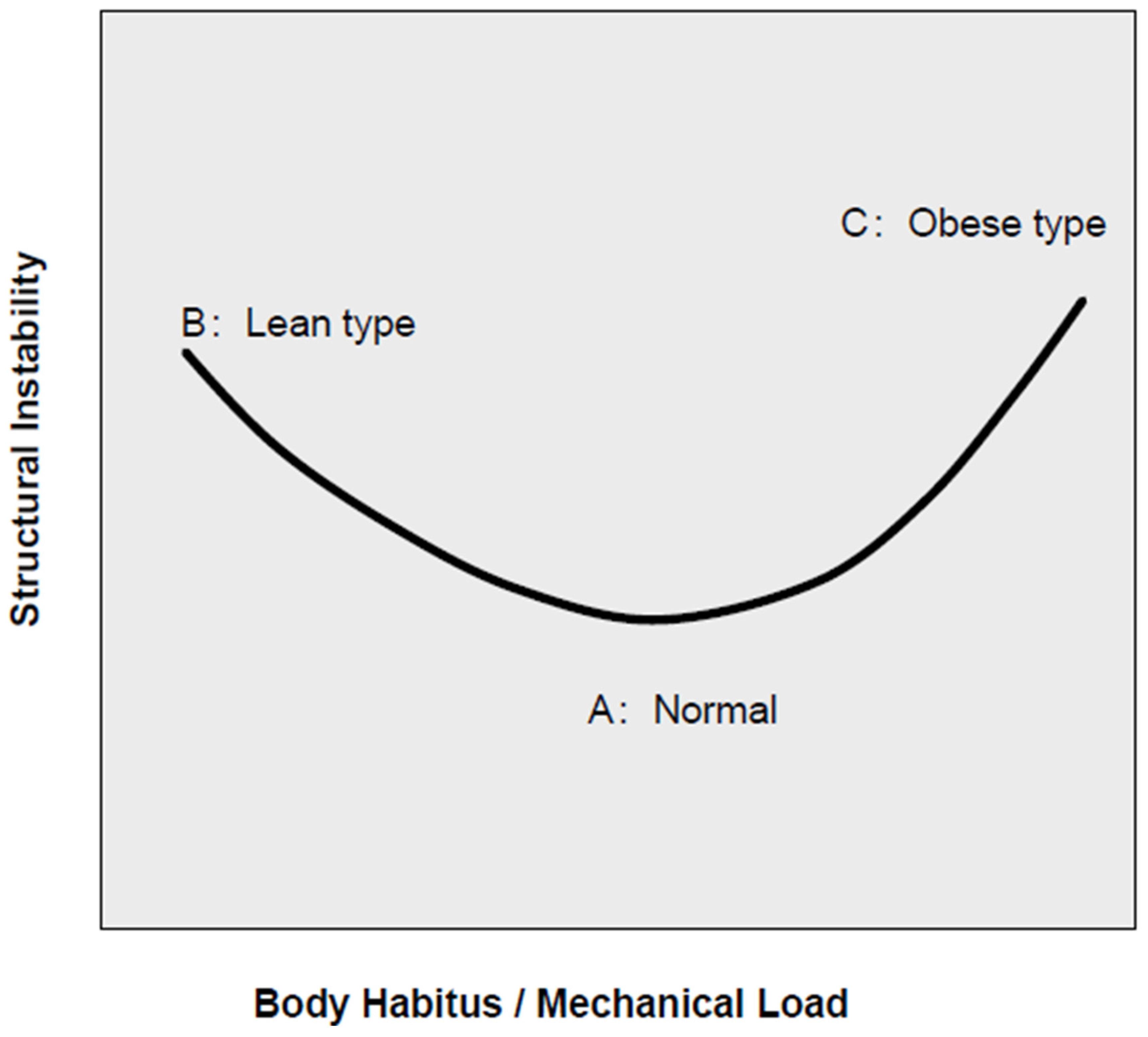
4.7. Tension–Loading Landscape and Body Habitus
A conceptual landscape can map available supporting capacity against applied or repetitive loading. Frailty may reduce muscular support and balance, whereas obesity may increase loading in certain anatomical regions. A U-shaped curve is one possible disease-specific outcome, not an established universal epidemiological pattern for prolapse, inguinal hernia, and spinal deformity. The hypothesis should be tested for each disorder using actual incidence data and adjustment for age, parity, prior surgery, smoking, and other confounders. The illustrations are conceptual predictions rather than fitted risk curves.
5. Clinical Implications and Discriminating Predictions
5.1. Measurements Required
The central claim can be tested using regional strain imaging, elastography interpreted alongside geometry, histological fiber orientation, proteoglycan quantification, tissue-water mapping, and controlled mechanical tests. “Tension loss” should be operationally defined through measured or modeled prestress, strain under standardized loads, and failure thresholds. Simple thickness or MRI signal alone cannot uniquely determine tissue hydration, stiffness, or Poisson response.
5.2. Experimental Model for a Supporting Membrane
A useful physical test would compare collagen- or fascia-mimetic networks under predefined tensile and multiaxial boundary conditions while recording transverse strain, pore pressure, effluent volume, and residual deformation. Loading history, cross-linking, proteoglycan concentration, and drainage conditions should be independently varied. Aging-like matrix alterations should be introduced separately from tension unloading. Demonstrating re-expansion after unloading is not sufficient: a discriminating test must show that the behavior exceeds what is predicted by an ordinary viscoelastic or swelling model without PCT-specific assumptions.
5.3. Longitudinal Disease Studies
For pelvic organ prolapse, follow regional support displacement, levator integrity, loading history, and biochemical matrix markers. For hernia, stratify by location and surgical history while measuring abdominal-wall geometry and collagen quality. For kyphosis, separate fracture-associated from fracture-free deformity and characterize disc hydration, sagittal alignment, muscle strength, and ligament properties. Longitudinal measurements are necessary to determine which variable precedes dysfunction rather than merely correlates with established disease.
5.4. Prevention and Therapeutic Interpretation
The proposed model does not establish that walking, stretching, or attempts to increase generalized fascial tension reverse structural aging. Physical activity may benefit muscular function and some musculoskeletal outcomes, but recommendations must rely on condition-specific clinical evidence. Mechanical interventions designed to alter loading or support could be studied, provided their expected effects on adjacent structures are considered. No clinical treatment is justified by the present hypothesis alone.
6. Discussion
6.1. What the Proposed Symmetry Does and Does Not Mean
The phrase “reverse rotation of developmental phase separation” is a metaphor for a partially opposite mechanical trajectory. Developmentally organized matrices may lose load-bearing competence, but aging does not reproduce embryonic mesenchyme and is not a time-reversed biological process. ECM synthesis, fibrosis, hydration, cell activity, and matrix damage proceed irreversibly and nonuniformly. The strongest, testable portion of the proposed symmetry is the relationship between boundary-constrained tension, transverse strain, and functional structural support—not a claim of universal thermodynamic reversibility.
6.2. Distinction Between Contraction, Compression, and Compaction
In the revised terminology, Poisson contraction denotes lateral deformation associated with tensile loading. This can arise in fibrous networks without a separately applied transverse compressive load. Compression remains appropriate for direct compressive stresses, vertebral compression fractures, and mechanically confined matrix regions. Compaction and poroelastic consolidation describe changes in density and fluid content, which require conditions beyond geometric transverse contraction. The name Poisson Contraction Theory is therefore more precise for the proposed tensile mechanism while preserving established mechanics terminology.
6.3. Alternative and Interacting Mechanisms
Cell-mediated traction, ECM synthesis and degradation, collagen cross-linking, elastin fragmentation, hormonal regulation, degenerative disc dehydration, muscle weakness, and osteoporosis can independently influence the clinical endpoints considered. PCT may help organize some tissue-scale mechanical consequences, but cannot be inferred from these diseases merely because tension and fascial structures are involved. Model comparison should determine whether the additional PCT-specific variables improve prediction beyond established mechanobiological explanations.
6.4. Limitations
This article is a hypothesis-driven perspective and reports no new experiments or patient-level observations. The existence and evolution of a continuous whole-body tensile network are not measured. A fetal Poisson contraction mechanism has not been directly demonstrated in vivo. The proposed role of syneresis is conditional on hydraulic and material constraints, and age-related changes in Donnan swelling pressure differ across tissues. The examples of prolapse, hernia, and hyperkyphosis have distinct etiologies, and proposed U-shaped relationships are illustrations rather than validated epidemiological laws. Figure legends have been retained as conceptual descriptions; the figures themselves must be supplied separately when submitting the manuscript.
6.5. Falsifiability and Future Directions
Findings that would challenge the model include stable or increased regional prestress despite worsening fascial support, absence of the predicted transverse strain under tensile loading, or failure of prestress metrics to improve prediction after conventional risk factors are considered. Repeatedly observing dehydration rather than rehydration would refute any strong universal swelling version of the hypothesis, although it would remain compatible with a narrower mechanical-reserve formulation. Quantitative coupled fiber-network and poroelastic models, accompanied by prospective imaging, can establish whether this framework generates clinically useful predictions.
7. Conclusions
Poisson Contraction Theory offers a testable way to examine how tensile boundary conditions, transverse matrix deformation, and fluid–solid coupling may contribute to the development and maintenance of selected fascial structures. Aging-related failure of supporting tissues may involve loss of effective load sharing, increased creep, and focal injury, but does not universally produce fluid accumulation or reversal of developmental condensation. A Two-Hit Framework can organize the interaction of systemic vulnerability and local loading across pelvic organ prolapse, abdominal hernia, and hyperkyphosis without claiming a proven single cause. The theory's value will depend on its ability to predict measurable deformation, hydration, material properties, and clinical failure more accurately than existing models.
Figure 1.
H-shaped suspended-membrane model. Conceptual comparison of (A) mechanically competent support under effective tensile loading, (B) central displacement associated with reduced load-sharing capacity or increased creep, and (C) local attachment failure under concentrated loading. Membrane thickness, color, and deformation are schematic; they do not indicate observed tissue hydration or a quantitative Poisson ratio. The original illustration, if reused, should be checked against this revised legend.
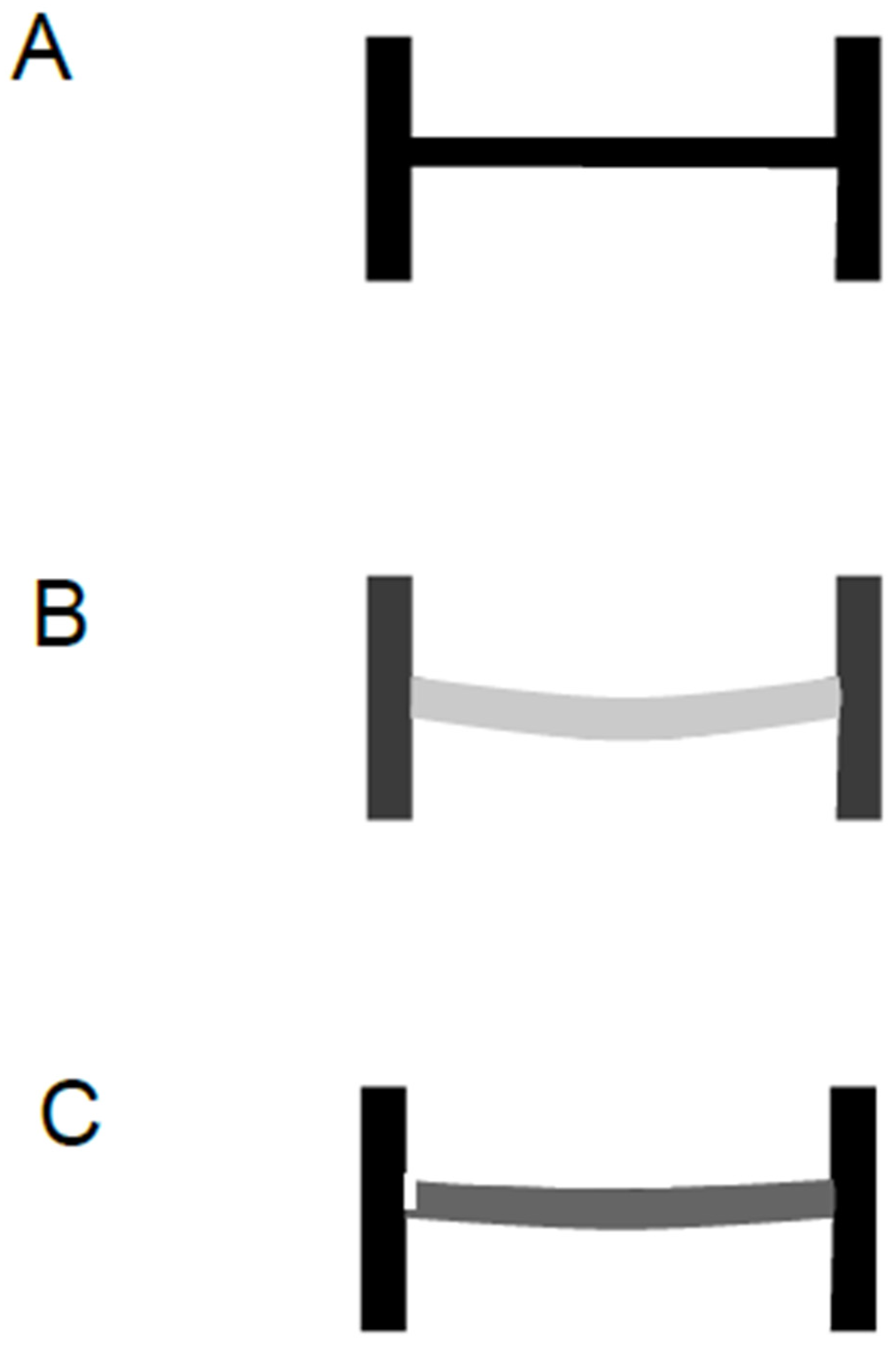
Figure 2.
Hypothesized load–capacity landscape. Illustrative, unvalidated relationship between effective mechanical support, repeated local loading, and risk of support failure. An apparent U-shaped relationship may occur in some populations or conditions but is not asserted as universal. Disease-specific epidemiological data are necessary to establish the shape of any actual association.
Funding
The author received no specific funding for this work.
Use of Generative AI and AI-Assisted Technologies
Generative AI tools, including ChatGPT, were used for language editing and manuscript revision, including clarification of scientific claims and organization of the text. Earlier manuscript versions reported use of Gemini and Microsoft Copilot. The author is responsible for assessing the accuracy of the content, confirming all bibliographic details, and approving the final submitted manuscript. This disclosure should be checked and completed by the author to reflect the tools actually used.
Conflicts of Interest
The author declares no conflicts of interest.
References
- Adams MA, Roughley PJ. What is intervertebral disc degeneration, and what causes it? Spine. 2006;31(20):2151–2161. [CrossRef]
- Antoniou J, et al. The human lumbar intervertebral disc: evidence for changes in the biosynthesis and denaturation of the extracellular matrix with growth, maturation, ageing, and degeneration. J Clin Invest. 1996;98(4):996–1003. [CrossRef]
- Ban E, Wang H, Franklin JM, Liphardt JT, Janmey PA, Shenoy VB. Strong triaxial coupling and anomalous Poisson effect in collagen networks. Proc Natl Acad Sci USA. 2019;116(14):6790–6799. [CrossRef]
- Burger JW, et al. Long-term follow-up of a randomized controlled trial of suture versus mesh repair of incisional hernia. Ann Surg. 2004;240(4):578. [CrossRef]
- Chaudhuri O, et al. Effects of extracellular matrix viscoelasticity on cellular behaviour. Nature. 2020;584:535–546. [CrossRef]
- Cho BH, et al. The fascial structures of the retroperitoneum: a topographical and histological study. J Anat. 2009;215(4):438–450.
- DeLancey JO. Anatomic aspects of vaginal eversion after hysterectomy. Am J Obstet Gynecol. 1992;166(6):1717–1728. [CrossRef]
- Dietz HP. Prolapse worsens with age, doesn’t it? Aust N Z J Obstet Gynaecol. 2008;48(6):587–591. [CrossRef]
- Hendrix SL, et al. Pelvic organ prolapse in the Women’s Health Initiative: gravity and gravidity. Am J Obstet Gynecol. 2002;186(6):1160–1166. [CrossRef]
- Huijing PA. Epimuscular myofascial force transmission: a historical review and implications for new research. J Biomech. 2009;42(1):9–21. [CrossRef]
- Ingber DE. Tensegrity I. Cell structure and hierarchical systems biology. J Cell Sci. 2003;116(7):1157–1173. [CrossRef]
- Katzman WB, et al. Age-related hyperkyphosis: its causes, consequences, and management. J Orthop Sports Phys Ther. 2010;40(6):352–360. [CrossRef]
- Kim JH, Kinugasa Y, Hwang SE, Murakami G, Cho BH. Denonvilliers’ fascia revisited. Surg Radiol Anat. 2015;37(2):187–197. [CrossRef]
- Kinugasa Y, et al. The surgical anatomy of the fascial structures of the pelvis. Clin Anat. 2008;21(6):548–556.
- Kirkwood TB. Understanding the odd science of aging. Cell. 2005;120(4):437–447. [CrossRef]
- Maroudas A. Swelling pressure versus collagen tension in normal and degenerate articular cartilage. Nature. 1976;260:808–809. [CrossRef]
- Matsubara A, et al. The fascial architecture of the retroperitoneum. J Anat. 2009;214(1):130–141.
- Mow VC, et al. Biphasic creep and stress relaxation of articular cartilage in compression? Theory and experiments. J Biomech Eng. 1980;102(1):73–84. [CrossRef]
- Nowlan NC. Biomechanics of foetal movement. Eur Cell Mater. 2015;29:1–21. [CrossRef]
- Ruhl CE, Everhart JE. Risk factors for inguinal hernia among adults in the US population. Am J Epidemiol. 2007;165(10):1154–1161. [CrossRef]
- Simons MP, et al. European Hernia Society guidelines on the treatment of inguinal hernia in adult patients. Hernia. 2009;13(4):343–403. [CrossRef]
- Solomonow M, et al. Biomechanics and electromyography of a cumulative lumbar disorder: response to static flexion. Clin Biomech. 2003;18(10):890–898. [CrossRef]
- Toole BP. Hyaluronan in morphogenesis. Semin Cell Dev Biol. 2001;12(2):79–87. [CrossRef]
- Urban JP, McMullin JF. Swelling pressure of the lumbar intervertebral discs: influence of age, spinal level, composition, and degeneration. Spine. 1988;13(2):179–187.
- Vader D, Kabla A, Weitz D, Mahadevan L. Strain-induced alignment in collagen gels. PLoS One. 2009;4(6):e5902. [CrossRef]
- Woo SL, et al. The biomechanical and biochemical properties of swine tendons—long term effects of exercise on the digital extensors. Biorheology. 1981;18(1):101–108.
- Wu JM, et al. Lifetime risk of stress urinary incontinence or pelvic organ prolapse surgery. Obstet Gynecol. 2014;123(6):1201–1206. [CrossRef]
Disclaimer/Publisher’s Note: The statements, opinions and data contained in all publications are solely those of the individual author(s) and contributor(s) and not of MDPI and/or the editor(s). MDPI and/or the editor(s) disclaim responsibility for any injury to people or property resulting from any ideas, methods, instructions or products referred to in the content. |
© 2026 by the authors. Licensee MDPI, Basel, Switzerland. This article is an open access article distributed under the terms and conditions of the Creative Commons Attribution (CC BY) license (http://creativecommons.org/licenses/by/4.0/).
Copyright: This open access article is published under a Creative Commons CC BY 4.0 license, which permit the free download, distribution, and reuse, provided that the author and preprint are cited in any reuse.