

Submitted:
03 October 2026
Posted:
07 October 2026
You are already at the latest version
Abstract
Background: Over-the-counter dietary supplements are commonly used by patients undergoing surgical procedures, but their perioperative effects are often incompletely characterized. S-adenosylmethionine (SAMe) is a widely available supplement used for several conditions, yet its potential effects on hemostasis and perioperative bleeding remain poorly understood. Objective: To map the available clinical and mechanistic evidence regarding SAMe, its related metabolic pathways, and potential effects on hemostasis and perioperative bleeding. Methods: We conducted a PRISMA-guided scoping review of PubMed, Google Scholar, Cochrane Library, and ClinicalTrials.gov. Studies evaluating SAMe or related components of one-carbon metabolism in relation to perioperative bleeding, coagulation, platelet function, endothelial function, or other physiologic pathways relevant to hemostasis were considered. Conclusions: No human clinical evidence directly linking SAMe supplementation to perioperative bleeding was identified. Existing literature provides limited mechanistic evidence that SAMe and related one-carbon metabolic pathways may influence physiologic processes relevant to hemostasis, but these findings do not establish an association with surgical bleeding. Further clinical and mechanistic studies are needed to characterize the perioperative safety of SAMe.
Keywords:
S-adenosylmethionine (SAMe)
; Mohs micrographic surgery
; postoperative hematoma
; dietary supplements
; perioperative bleeding
; homocysteine
; depression
1. Introduction
Over the counter (OTC) supplements are frequently used among patients undergoing procedures, yet their associated risks for bleeding remain under-recognized and poorly documented [1]. S adenosylmethionine (SAMe) is among popular OTC supplements, increasingly used for conditions such as depression, osteoarthritis, and liver disease [2]. Metabolites of SAMe including homocysteine have been associated with increased bleeding and spontaneous intracerebral hemorrhage [3,4]. Despite its widespread availability and physiologic potential for bleeding, risks associated with use of SAMe in surgical settings has not been evaluated [5]. We conducted a scoping review to assess clinical and mechanistic evidence regarding SAMe and perioperative bleeding following an unexpected postoperative hematoma in a patient taking SAMe.
1.1. Case Discussion
An 88-year-old man with a biopsy-proven stage IA melanoma (Figure 1A) underwent single-stage slow Mohs micrographic surgery resulting in a sizable surgical defect. Unexpected intraoperative bleeding was noted despite no known history of anticoagulant use or bleeding diathesis, and approximately 5 mL of blood was evacuated from the wound bed at the time of surgery. One week later, the defect was reconstructed with a cheek rotation flap and Burrow’s graft to optimize functional and cosmetic outcomes (Figure 1B).
Shortly after reconstruction, the patient developed a rapidly expanding postoperative hematoma that impaired vision (Figure 1C). Urgent decompression was performed using an improvised surgical drain technique, and more than 33 mL of blood was evacuated during several weeks of follow-up [6]. Upon further questioning, the patient disclosed that he had been splitting a SAMe tablet and taking one-half tablet twice daily. He denied alcohol use, prescription anticoagulants, antiplatelet agents, or other over-the-counter supplements associated with bleeding risk. Laboratory evaluation revealed mild macrocytic anemia with a normal platelet count, prothrombin time (PT), and activated partial thromboplastin time (aPTT). The surgical drain was removed on postoperative day 16, and the patient subsequently healed without further bleeding complications. At four months of follow-up, the reconstruction remained successful requiring only minimal revision surgery (Figure 1D).
2. Materials and Methods
A focused literature review was conducted in accordance with Preferred Reporting Items for Systematic Reviews and Meta-Analyses guidelines. PubMed, Google Scholar, Cochrane Library, and ClinicalTrials.gov were searched (Table A1). Inclusion criteria encompassed English-language human clinical studies as well as studies evaluating physiological impacts or mechanistic effects relevant to perioperative bleeding. Eligible articles examined SAMe and SAMe metabolites including homocysteine, folate, and vitamin B12, and their association with perioperative bleeding. Exclusion criteria included animal-model studies and articles that did not report on perioperative or surgical bleeding outcomes. The level of evidence for each study was independently assessed by two investigators using a modified Oxford Centre for Evidence-Based Medicine framework; discrepancies were resolved by a third investigator (Table A2).
3. Results
Of 928 publications identified, 23 articles underwent full-text review (Figure 2). No original human clinical studies directly evaluating SAMe-associated perioperative or cutaneous postoperative bleeding were identified beyond the present index case. To provide mechanistic and physiologic context, ten studies examining homocysteine modulation and related effects on hemostasis were included. Several human studies evaluated SAMe metabolites and related one-carbon metabolic pathways; however, none assessed surgical bleeding outcomes (Table 2).
4. Discussion
With the widespread use of over the counter (OTC) supplements among surgical patients, it is increasingly important that preoperative histories and medication reconciliation extend beyond prescription medications to include dietary supplements and wellness products. During surgical evaluation, supplements such as vitamin E, ginkgo, fish oil, and garlic are commonly screened because of their recognized effects on platelet function and hemostasis [2,3,4,7]. In contrast, SAMe has received comparatively little attention despite its widespread availability in the United States and its biologic activity within pathways relevant to endothelial function, methylation, and vascular homeostasis [5,8]. Although marketed as an OTC supplement in the United States, SAMe is available as the prescription medication ademetionine in several European countries [7].
In our case, a significant postoperative hematoma developed following cutaneous surgery in a patient without traditional bleeding risk factors or a known coagulopathy. Further investigation revealed the chronic use of enteric-coated SAMe, a supplement that had not been initially disclosed during the preoperative medication review. This observation highlights a persistent challenge in performing medical assessments, as many patients do not consider supplements to be medications and therefore may not report them unless specifically asked [7]. The case underscores the importance of obtaining a detailed supplement history when evaluating patients prior to dermatologic surgery.
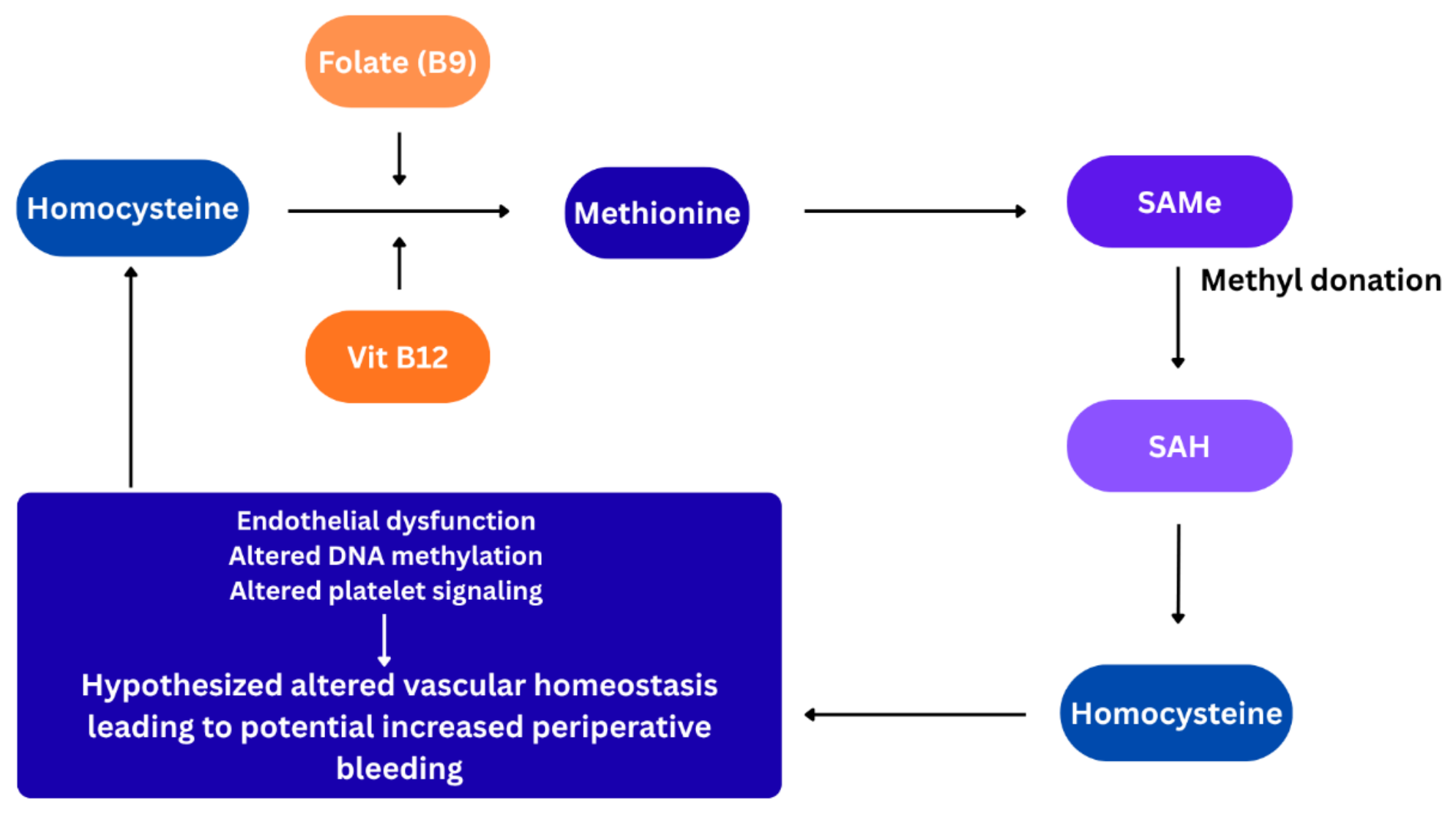
While no human clinical studies directly evaluated the association between SAMe and perioperative bleeding, several studies explore its metabolites in relation to hemostasis. SAMe supplementation may increase S-adenosylhomocysteine (SAH) and homocysteine concentrations, components of one-carbon metabolism, with downstream effects on endothelial function, vascular homeostasis, DNA methylation, and platelet signaling (Figure A1). The human literature identified in our review primarily demonstrated that folate and B-vitamin supplementation lower homocysteine, but this did not consistently result in corresponding changes in markers of vascular or coagulation function. Few studies found effects on pathways potentially relevant to hemostasis, including altered expression of coagulation-related proteins such as antithrombin following folic acid supplementation and improved endothelial reactivity following folinic acid supplementation. Notably, the only identified randomized trial directly evaluating SAMe supplementation did not demonstrate significant changes in homocysteine levels. Together, the available mechanistic evidence provides biologic context for our case of postoperative bleeding requiring surgical intervention and drain placement, while highlighting the need for further clinical investigation into the potential relationship between SAMe and perioperative bleeding.
5. Conclusions
Future studies should prioritize in-vitro platelet function assays and mechanistic studies evaluating the effects of SAMe on platelet activation, coagulation pathways, endothelial biology, and perioperative bleeding risk to establish causality and better define its effects on hemostasis. Given its plausibility to influence platelet behavior, a cautious approach would be to discontinue SAMe at least five days before cutaneous surgery, mirroring existing guidance for other OTC antithrombotic medications, until future studies can clarify its perioperative safety [3].
Author Contributions
Conceptualization, D.H.; methodology, A.C. and E.H.; writing—original draft preparation, A.C. and E.H.; writing—review and editing, A.C. and M.H.; visualization, A.C.; supervision, D.H. and M.H. All authors have read and agreed to the published version of the manuscript.
Funding
This research received no external funding.
Institutional Review Board Statement
Ethics approval was not required for this manuscript. The scoping review analyzed previously published literature, and the accompanying case report describes clinical care retrospectively. Written informed consent for publication of the case details was obtained from the patient.
Informed Consent Statement
Informed consent was obtained from all subjects involved in the study. Written informed consent has been obtained from the patient(s) to publish this paper.
Data Availability Statement
The information supporting this case report and scoping review is included in the article and its cited references. Additional patient-level clinical data are not publicly available to protect patient privacy. Further inquiries may be directed to the corresponding authors.
Acknowledgments
During the preparation of this work the author(s) used ChatGPT in order to streamline language and improve clarity. After using this tool/service, the author(s) reviewed and edited the content as needed and take(s) full responsibility for the content of the published article.
Conflicts of Interest
The authors declare no conflicts of interest.
Abbreviations
The following abbreviations are used in this manuscript:
| aPTT | Activated partial thromboplastin time |
| OTC | Over-the-counter |
| PRISMA | Preferred Reporting Items for Systematic Reviews and Meta-Analyses |
| PT | Prothrombin time |
| SAH | S-adenosylhomocysteine |
| SAMe | S-adenosylmethionine |
Appendix A

Table A1.
Search methods including utilized search terms in databases.
| Database | Search Strategy |
|---|---|
| PubMed | (“S-Adenosylmethionine”[MeSH] OR SAMe OR Ademetionine) AND (bleeding OR hemorrhage OR hematoma) AND “Dietary Supplements”[Mesh] |
| Google Scholar, Cochrane Library, and ClinicalTrials.gov | “S-Adenosylmethionine” AND “bleeding” AND “dietary supplements” |
Table A2.
Level of Evidence and Grade of Recommendation Scale.
| Level of Evidence | Therapy/prevention/etiology/harm | Grade of Recommendation |
|---|---|---|
| 1 | Individual randomized controlled trial | A |
| 2 | Controlled trial without randomization; prospective comparative cohort trial | B |
| 3 | Retrospective cohort study; case-control study | C |
| 4 | Case series, case report, questionnaire, and survey | D |
Figure A1.
Proposed mechanism linking SAMe metabolism to perioperative bleeding.
References
- Henley, J.; Brewer, J.D. Newer hemostatic agents used in the practice of dermatologic surgery. Dermatol. Res. Pract. 2013, 2013, 279289. [Google Scholar] [CrossRef]
- Collins, S.C.; Dufresne, R.G. Dietary supplements in the setting of mohs surgery. Dermatol. Surg. Off. Publ. Am. Soc. Dermatol. Surg. Al 2002, 28(6), 447–452. [Google Scholar] [CrossRef]
- Trager, M.H.; Gordon, E.R.; Humphreys, T.R.; Samie, F.H. Part 1: Management of antithrombotic medications in dermatologic surgery. J. Am. Acad. Dermatol. 2025, 92(3), 389–404. [Google Scholar] [CrossRef]
- Bottiglieri, T. S-Adenosyl-l-methionine (SAMe): from the bench to the bedside—molecular basis of a pleiotrophic molecule. Am. J. Clin. Nutr. 2002, 76(5), 1151S–1157S. [Google Scholar] [CrossRef]
- Mischoulon, D.; Alpert, J.E.; Arning, E.; Bottiglieri, T.; Fava, M.; Papakostas, G.I. Bioavailability of S -Adenosyl Methionine and Impact on Response in a Randomized, Double-Blind, Placebo-Controlled Trial in Major Depressive Disorder. J. Clin. Psychiatry 2012, 73(06), 843–848. [Google Scholar] [CrossRef]
- Hanson, M.; Easterly, J.; Harvey, D. Improvised drainage system for postoperative hematoma in resource-limited settings. JAAD Int. 2025, 24, 61–63. [Google Scholar] [CrossRef]
- Hensrud, D.D.; Engle, D.D.; Scheitel, S.M. Underreporting the use of dietary supplements and nonprescription medications among patients undergoing a periodic health examination. Mayo Clin. Proc. 1999, 74(5), 443–447. [Google Scholar] [CrossRef]
- Stanger, M.J.; Thompson, L.A.; Young, A.J.; Lieberman, H.R. Anticoagulant activity of select dietary supplements. Nutr. Rev. 2012, 70(2), 107–117. [Google Scholar] [CrossRef]
Figure 1.
Postoperative hematoma at the site of Mohs micrographic surgery in a patient taking SAMe. (A) Preoperative photo of the left cheek demonstrating the melanoma lesion prior to excision. (B) Immediate postoperative appearance after Mohs surgery and layered closure, showing no evidence of bruising, swelling, or hemostatic complications. (C) Postoperative day 3 image reveals a large, fluctuant hematoma with extensive ecchymosis involving the surgical site and surrounding periorbital region impeding vision. (D) Postoperative day 114, with significant improvement and resolution in soft tissue swelling and ecchymoses.
Figure 1.
Postoperative hematoma at the site of Mohs micrographic surgery in a patient taking SAMe. (A) Preoperative photo of the left cheek demonstrating the melanoma lesion prior to excision. (B) Immediate postoperative appearance after Mohs surgery and layered closure, showing no evidence of bruising, swelling, or hemostatic complications. (C) Postoperative day 3 image reveals a large, fluctuant hematoma with extensive ecchymosis involving the surgical site and surrounding periorbital region impeding vision. (D) Postoperative day 114, with significant improvement and resolution in soft tissue swelling and ecchymoses.
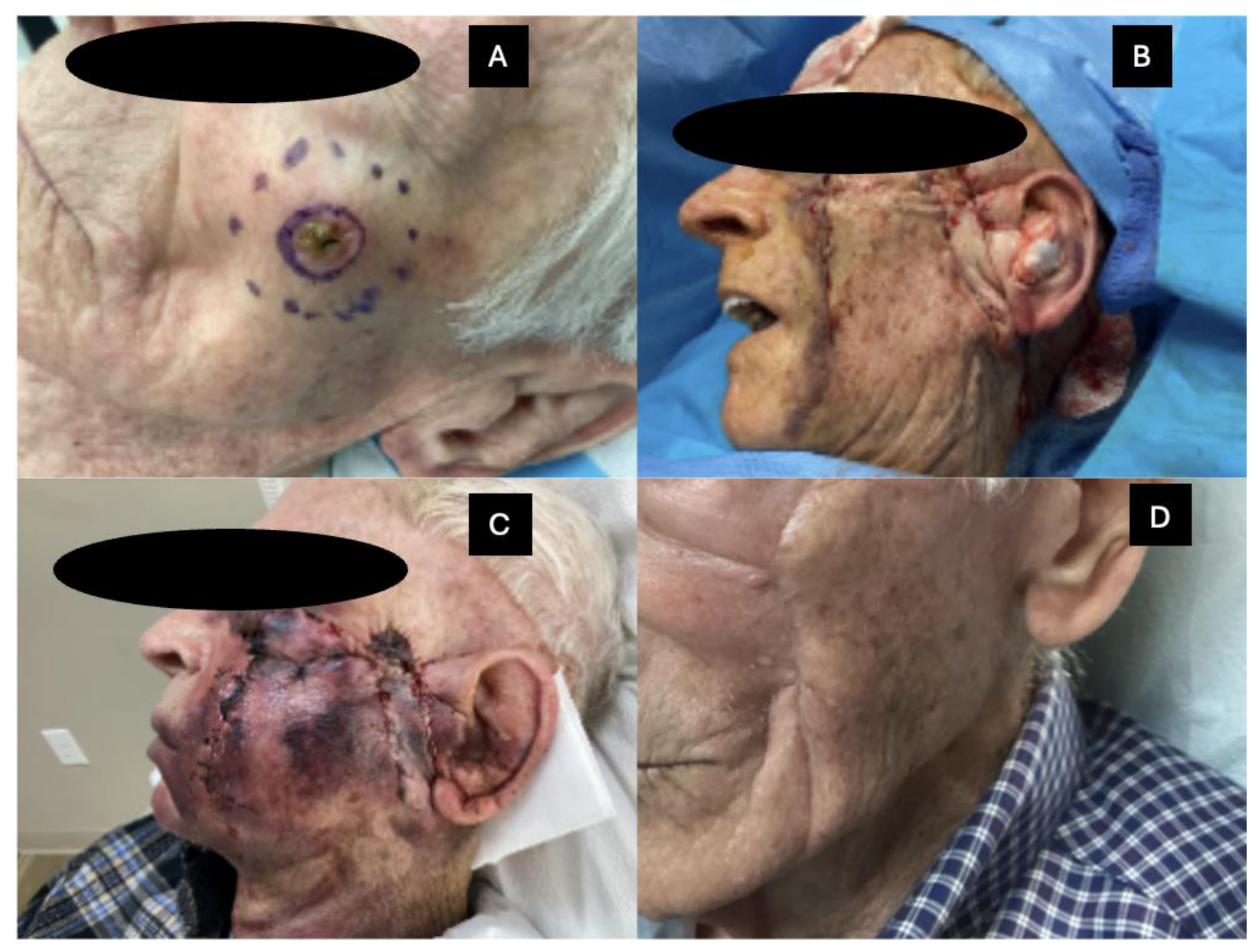
Figure 2.
PRISMA flow diagram illustrating the identification, screening, and exclusion process for studies assessing SAMe and perioperative bleeding risk.
Figure 2.
PRISMA flow diagram illustrating the identification, screening, and exclusion process for studies assessing SAMe and perioperative bleeding risk.
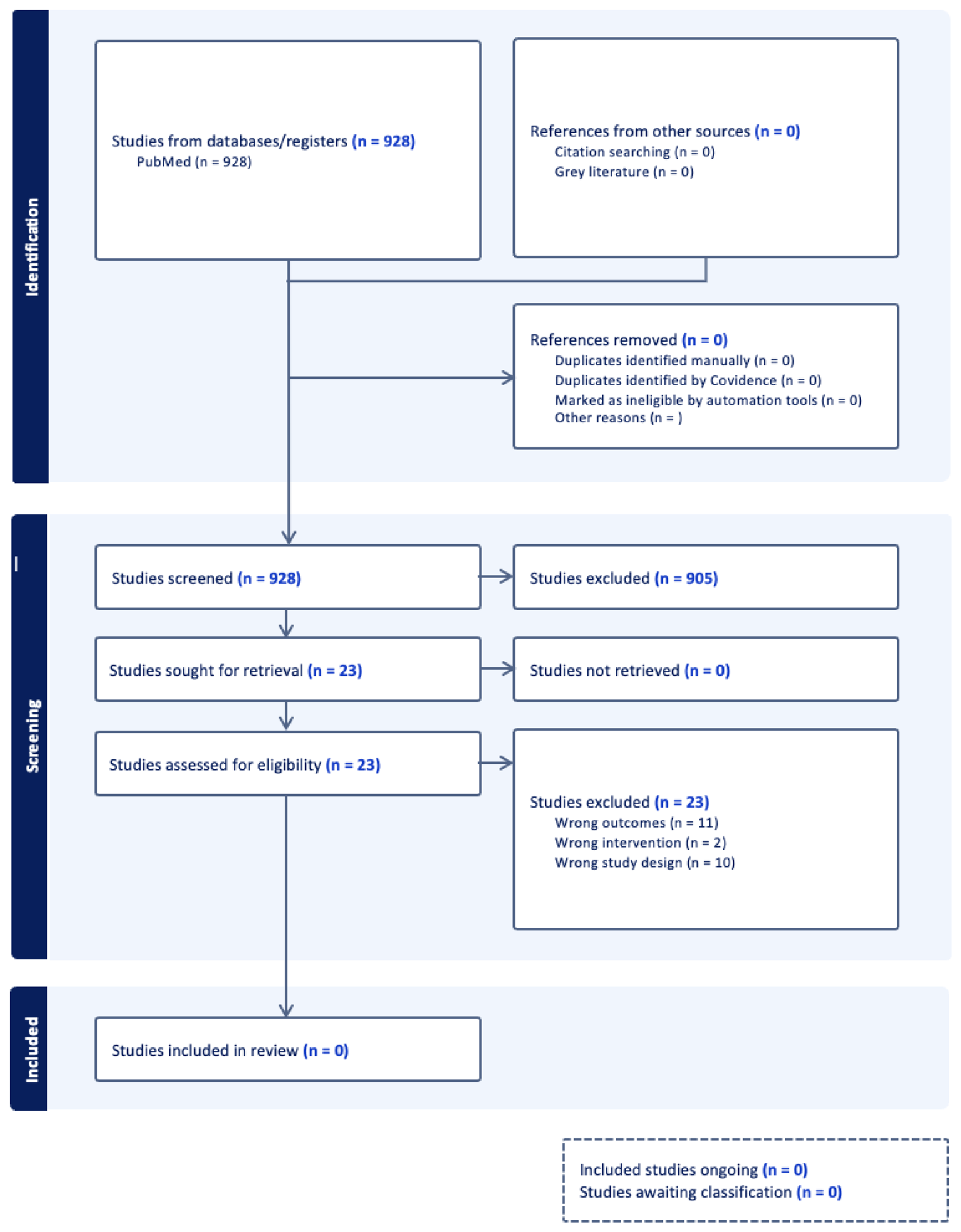
Table 2.
Summary of studies SAMe, folate-related methylation, and potential pro- or anti-thrombotic effects relevant to bleeding risk.
Table 2.
Summary of studies SAMe, folate-related methylation, and potential pro- or anti-thrombotic effects relevant to bleeding risk.
| Author & Year | Study Type | # of Patients | Compound(s) Studied | Mechanistic or Physiologic Outcome | Statistic |
|---|---|---|---|---|---|
| Duthie et al. (2010) | RCT | 61 | Folic acid 1.2mg/ day for 12 weeks | Folic acid altered expression of plasma proteins tied to coagulation and immune pathways (P < 0.05). | Hcy ↓ 22% (p=0.0005); 7 plasma proteins including C3, antithrombin, and α1-antitrypsin changed significantly (p < 0.05) |
| Grioletti et al. (2013) | RCT | 30 | Folinic acid 5mg/day x 4 weeks | Folinic acid improved endothelial reactivity (P < 0.05), linking one-carbon support to vascular function. | RH ↑ (p<0.05); Hcy ↓ 15%; r=–0.34 (p=0.07) |
| Hankey et al. (2004) | RCT | 285 | Folic acid 2.0 mg + B6 25 mg + B12 0.5 mg vs placebo | Vitamin therapy sustainedly lowered homocysteine (~3–4 µmol/L) without vascular improvement, underscoring need for clinical data. | Hcy ↓ 4.3 µmol/L (p<0.0001) |
| Holmes et al. (2011) | Meta-Analysis | 45,549* | Folate/B-vitamins (homocysteine-lowering) | Homocysteine-lowering trials (RR 0.94 [0.85–1.04]) showed biochemical but limited vascular benefit, revealing evidence gaps. | RR 0.94 (95% CI 0.85–1.04) |
| Leung et al. (2011) | RCT (secondary analysis) | 260 | Adherence to folic acid supplements | Higher folate-supplement adherence associated with lower homocysteine, supporting vitamin-mediated methylation control. | Folate ↑ 69% (p=0.04); Hcy ↓ 29% (p=0.03) |
| Mandaviya et al. (2014) | Review Article | - | Homocysteine & DNA methylation | Elevated homocysteine and SAH inhibit methyltransferases, causing DNA hypomethylation that may affect endothelial and platelet genes. | - |
| Murua et al. (2000) | RCT | 50 | Folic acid, B12, B6 (various regimens) | Folate/B₁₂/B₆ therapy reduced plasma homocysteine in elderly adults, demonstrating modifiable one-carbon metabolism. | Hcy ↓ (p<0.0001) |
| McCarty et al. (2019) | Narrative Review | - | Taurine, cysteine, folate, SAMe, betaine (H₂S pathway) | Proposes that sulfur amino acids influence platelet and vascular function through SAM-e and homocysteine balance. | - |
| Soda et al. (2018) | Narrative Review | - | Polyamine metabolism, gene methylation, one-carbon pathway | Describes how SAM-dependent methylation links one-carbon metabolism to gene regulation and vascular homeostasis. | - |
| Thompson et al. (2009) | RCT | 52 | SAMe 800mg/day) | SAMe 800 mg/day showed stable homocysteine and metabolic markers, confirming human methyl-cycle activity without adverse effects. | No significant. Hcy change; ALT ↓ (p<0.04), TC ↓ (p<0.04). |
Abbreviations: ALT, alanine aminotransferase; B₁₂, vitamin B₁₂ (cobalamin); CI, confidence interval; DNMT, DNA methyltransferase; Hcy, homocysteine; H₂S, hydrogen sulfide; N, number of human participants; RCT, randomized controlled trial; RH, reactive hyperemia; RR, relative risk; SAH, S-adenosylhomocysteine; SAM or SAM-e, S-adenosyl-L-methionine; TC, total cholesterol; wk, weeks; Δ, change from baseline. * Meta-analysis of 59 studies including more than 300,000 participants (≈47,000 from randomized trials).
Disclaimer/Publisher’s Note: The statements, opinions and data contained in all publications are solely those of the individual author(s) and contributor(s) and not of MDPI and/or the editor(s). MDPI and/or the editor(s) disclaim responsibility for any injury to people or property resulting from any ideas, methods, instructions or products referred to in the content. |
© 2026 by the authors. Licensee MDPI, Basel, Switzerland. This article is an open access article distributed under the terms and conditions of the Creative Commons Attribution (CC BY) license (http://creativecommons.org/licenses/by/4.0/).
Copyright: This open access article is published under a Creative Commons CC BY 4.0 license, which permit the free download, distribution, and reuse, provided that the author and preprint are cited in any reuse.