
Submitted:
03 October 2026
Posted:
07 October 2026
You are already at the latest version
Abstract
Relying on the gut-bone marrow bidirectional regulatory axis, the gut microbiota regulates systemic immune homeostasis and the bone marrow hematopoietic microenvironment through signaling molecules such as maintenance of the mucosal barrier, short-chain fatty acids, and tryptophan metabolites, thereby deeply participating in the entire evolution of hematological malignancies. Patients with hematological malignancies universally exhibit characteristic dysbiosis, including decreased gut microbial diversity, depletion of butyrate-producing beneficial bacteria, and overproliferation of opportunistic pathogens. This dysbiosis can drive the origin of malignant hematopoietic clones and disease progression, regulate the response efficiency of chemotherapy and cellular therapy, and determine the risk of fatal complications such as graft-versus-host disease, severe infections, and intestinal mucositis following allogeneic hematopoietic stem cell transplantation. This article systematically reviews the interaction mechanisms between the gut microbiota and hematological malignancies, disease-specific microbiota profiles, therapeutic regulation rules, and bottlenecks in clinical translation, providing a theoretical basis for personalized microbiota-targeted therapy in hematological malignancies.
Keywords:
gut microbiota
; hematological malignancies
; intestinal microbiota transplantation
; graft-versus-host disease
1. Introduction
Hematological malignancies are a group of clonal proliferative disorders originating from hematopoietic stem and progenitor cells, primarily encompassing core subtypes such as acute lymphoblastic leukemia (ALL), acute myeloid leukemia (AML), multiple myeloma (MM), lymphoma, and myelodysplastic syndromes (MDS) [1]. Unlike solid tumors, which are characterized by localized invasion and localized presentation, hematological malignancies are clinically defined by systemic involvement of the hematopoietic system, comprehensive disruption of innate and adaptive immunity, a high incidence of opportunistic infections, rapid disease progression, and complex, severe treatment-related adverse events, posing a grave threat to human blood system health and life safety [2]. In recent years, remarkable advancements have been achieved in the diagnosis and treatment of hematological malignancies. The precise optimization of traditional standardized chemotherapy regimens, the clinical popularization of novel targeted small-molecule drugs and monoclonal antibodies, as well as the clinical promotion of cutting-edge technologies—such as chimeric antigen receptor T-cell (CAR-T) immunotherapy and allogeneic hematopoietic stem cell transplantation (allo-HSCT)—have significantly enhanced disease remission rates and long-term survival in various hematological malignancies, greatly improving overall patient prognosis [3,4,5,6,7,8,9,10].However, in clinical practice, current diagnostic and therapeutic systems still face insurmountable bottlenecks. The efficacy of treating numerous refractory and relapsed hematological malignancies remains suboptimal. Furthermore, complications following allo-HSCT—such as acute and chronic graft-versus-host disease (GVHD), severe chemotherapy-induced intestinal mucosal injury, fatal bloodstream infections during the neutropenic phase, and delayed long-term immune reconstitution post-transplantation—remain the core risk factors leading to treatment failure, diminished quality of life, and long-term mortality, thereby becoming critical hurdles restricting precision diagnosis and treatment and the improvement of long-term prognosis in hematological malignancies [11,12,13]. Current clinical interventions largely focus on the direct eradication of tumor cells and the direct restoration of immune function, lacking exploration and intervention regarding the overall microecological regulatory mechanisms of the host, with a relative scarcity of non-invasive, early, and targetable novel diagnostic and therapeutic targets. Therefore, thoroughly exploring novel peripheral regulatory mechanisms underlying the initiation and progression of hematological malignancies, and identifying brand-new intervention targets capable of accurately predicting therapeutic efficacy, preventing and controlling complications, and improving long-term prognosis, have become urgent scientific issues in the field of hematological malignancies. The cross-border regulatory effects of the gut microecology provide a novel research direction and breakthrough point to address these challenges.
The gut is the most structurally complex, functionally core symbiotic microecosystem with the highest microbial abundance in the human body, forming a dynamic equilibrium system of symbiosis and mutual regulation with the host. It is profoundly involved in core physiological processes such as host material metabolism, immune development, barrier construction, and organ homeostasis regulation [14]. While previous studies largely focused on the regulatory role of gut microbiota in local intestinal diseases, metabolic disorders, and solid tumors, recent frontier research has confirmed the key biological effects of the gut-bone marrow bidirectional regulatory axis, completely subverting the traditional notion that gut microbiota acts solely within the local intestine [15]. This regulatory pathway transcends spatial barriers of anatomical structures: gut symbiotic microbes can remotely and targetedly regulate the structural remodeling and functional homeostasis of the bone marrow hematopoietic niche through multiple pathways, including the secretion of circulating small metabolic molecules, the mediation of systemic inflammatory cytokine release, and the regulation of immune cell migration and infiltration. Concurrently, abnormal alterations in the bone marrow hematopoietic microenvironment can also retroactively influence gut microbiota structure via systemic immune and metabolic feedback, forming a bidirectional closed-loop regulatory system that thoroughly connects gut microecological homeostasis with the physiological and pathological processes of the hematopoietic system [16]. Under physiological homeostasis, a structurally balanced and functionally intact gut symbiotic microbiota can continuously synthesize core active metabolites—such as short-chain fatty acids (SCFAs), tryptophan derivatives, and secondary bile acids—by decomposing host nutritional substrates including dietary fibers, amino acids, and bile acids [17]. These microbiota-derived signaling molecules not only maintain intestinal mucosal barrier integrity and inhibit local excessive intestinal inflammation, but also target the bone marrow microenvironment via blood circulation to regulate the quiescence status, self-renewal, and directed differentiation capacity of hematopoietic stem cells (HSCs), thereby shaping the body’s systemic immune tolerance and anti-tumor immune balance. This constitutes an essential peripheral regulatory system for maintaining normal hematopoietic function and sustaining human hematopoietic system homeostasis.
An increasing body of clinical and basic research confirms that gut microecological disorders are not secondary pathological changes following anti-tumor therapy for hematological malignancies, but rather primary core drivers participating in the initiation, evolution, and recurrence of hematological malignancies, which completely updates the academic community’s understanding of the pathogenesis of hematological malignancies [18,19,20]. Multiple controlled studies involving newly diagnosed patients with hematological malignancies who had not yet received chemo-radiotherapy or antibiotic intervention have demonstrated that significant gut dysbiosis exists at the very early stage of disease onset. This is primarily manifested as a marked decrease in overall microbial diversity, species structural imbalance, massive depletion of beneficial symbionts, and abnormal proliferation of opportunistic pathogens and pathobionts. This characteristic microbial disorder can induce systemic low-grade chronic inflammation via the gut leakiness effect, drive inflammatory remodeling of the bone marrow microenvironment, subsequently promote malignant mutations of hematopoietic stem and progenitor cells, and mediate malignant clonal proliferation. This forms a vicious cycle of dysbiosis-intestinal barrier damage-systemic chronic inflammation-bone marrow microenvironment malignant remodeling-exacerbated tumor progression, continuously propelling the onset and progression of hematological malignancies [21].Notably, different subtypes of hematological malignancies exhibit disease-specific microbial fingerprints, holding potential value for precise typing and targeted intervention: pediatric ALL is core-characterized by significant depletion of intestinal probiotics such as Bifidobacterium and immature microbial development [22]; patients with AML exhibit distinct cross-kingdom bacterial-fungal dysbiosis, with prominent characteristics of abnormal microbial metabolic pathway remodeling [23]; and patients with MM show an overall downregulation of the intestinal butyrate synthesis pathway, a sharp reduction in the abundance of butyrate-producing beneficial bacteria, with microbial metabolic levels closely correlating with disease staging and therapeutic response [24]. Meanwhile, the structural and functional characteristics of the gut microbiota can accurately predict treatment response and complication risks in hematological malignancies. Baseline gut microbiota diversity, beneficial bacterial abundance, and core metabolic levels can effectively predict patient chemotherapy remission rates, CAR-T cell therapy efficacy, GVHD grading and infection risks post-allo-HSCT, demonstrating tremendous potential for development as non-invasive, dynamic clinical biomarkers [25,26]. Currently, microbially targeted interventions have gradually been applied in the clinical adjuvant treatment of hematological malignancies. Intestinal microbiota transplantation (IMT) for the treatment of refractory acute GVHD [27,28,29,30,31,32], probiotics for the prevention of chemotherapy-induced diarrhea [33], and dietary regulation to improve pre-transplantation gut reserve [34] have all undergone multiple clinical studies. Overall, however, the clinical translation of gut microecology in the field of hematological malignancies still faces numerous unclarified key scientific issues and technological bottlenecks. These include the initiating molecular mechanisms by which gut microbial disorders mediate hematopoietic cell gene mutations and trigger tumorigenesis; the underlying immunological mechanisms of subtype-specific microbial dysbiosis across different hematological malignancies; the irreversible injury mechanisms of clinical antibiotics and chemotherapy drugs on beneficial gut microbiota; optimal target populations, intervention timing, and long-term infection risk prevention strategies for IMT intervention; and the feasibility of constructing personalized microbial diagnostic and therapeutic models using multi-omics integration technologies. Based on this, this article systematically reviews the physiological homeostasis regulation mechanisms of the gut microbiota, characteristic microbial dysbiosis phenotypes in hematological malignancies, core molecular pathways of microbiota-driven tumor initiation and progression, regulatory patterns of the microecology on the efficacy of various anti-tumor therapies, and the pathogenesis of microbiota-mediated transplantation-related complications. Furthermore, it summarizes the current clinical application status and translational bottlenecks of existing microecological intervention strategies, aiming to comprehensively elucidate the bidirectional interaction mechanism between gut microbiota and hematological malignancies, and to provide systematic theoretical support and practical references for the research, development, and clinical promotion of personalized microbially targeted therapies for hematological malignancies (as shown in Table 1 and Figure 1).
2. Gut Microbiota Functions and the Gut-Bone Marrow Axis Regulatory System
2.1. Core Physiological Functions of the Gut Microbiota
The gut symbiotic microbiota sustains host health by relying on interdependent core physiological functions: physical intestinal barrier protection, nutrient metabolism transformation, and the shaping of systemic innate and adaptive immune systems. (1) Construction and maintenance of physical and chemical barriers: Beneficial gut microbes stimulate intestinal epithelial goblet cells to secrete massive amounts of mucins, forming a dense intestinal mucous barrier that effectively protects the epithelium from luminal aggression. Meanwhile, substances such as SCFAs generated by microbial metabolism can upregulate the expression of host intestinal epithelial tight junction proteins, maintaining intestinal epithelial integrity and low permeability [35,36,37]. (2) Nutritional metabolism and long-range signal regulation: The human genome lacks specific glycoside hydrolases capable of degrading dietary fibers and plant polysaccharides, thus requiring gut anaerobic microbes to ferment indigestible carbohydrates into SCFAs, predominantly acetate, propionate, and butyrate. Among these, butyrate is not only the primary energy source for colonocytes but also a key signaling molecule regulating host epigenetic modifications and immune pathways. Furthermore, the microbiota participates in the conversion of tryptophan, cholesterol, and primary bile acids, generating small-molecule active metabolites such as indole derivatives and secondary bile acids. These substances can target distal organs via systemic circulation to exert physiological regulatory effects [38,39]. (3) Development and homeostatic shaping of the immune system: A healthy gut symbiotic microbiota is crucial for the development of the host’s innate and adaptive immune systems. Symbiotic microbiota synergistically induces the differentiation balance between regulatory T cells (Treg) and helper T (Th) cells, promoting intestinal and systemic immune tolerance while maintaining normal anti-infection and immune surveillance capacities.The composition of an individual’s gut microbiota is co-shaped by delivery mode, infant feeding patterns, regional dietary structures, age, antibiotic exposure history, and genetic background. Infancy represents a critical window for microbial colonization, whereas the gut microbiota structure of healthy adults tends to remain stable, experiencing only reversible minor fluctuations under external stimuli. However, once subjected to high-intensity antibiotic or chemo-radiotherapy strikes, this homeostasis collapses completely, and the recovery period is significantly prolonged [40,41].
2.2. Core Signaling Transduction Pathways of the Gut-Bone Marrow Axis
The gut-bone marrow axis establishes a bidirectional signal communication bridge between the gut microecology and the bone marrow hematopoietic niche, achieving regulation primarily through two transduction pathways.The first transduction pathway is the pro-inflammatory cytokine humoral conduction pathway: homeostasis imbalance in the microbiota induces low-grade inflammation of the intestinal mucosa, leading to the activation of mucosal macrophages and dendritic cells [42,43]. The resulting cytokines enter the systemic circulation via the portal vein, arrive at the bone marrow cavity, and directly act on bone marrow stromal cells and HSCs. This sustained inflammatory stimulation disrupts the resting homeostasis of HSCs, driving the stress-induced proliferation of hematopoietic stem and progenitor cells. Consequently, DNA replication errors continuously accumulate, substantially increasing the probability of gene mutations and providing the necessary conditions for the malignant clonal origin of hematological malignancies [44].The second pathway is the microbial metabolic small-molecule circulating delivery pathway: lipophilic small molecules—such as SCFAs, tryptophan indole metabolites, and secondary bile acids—are unconstrained by the vascular endothelial barrier and can directly infiltrate the bone marrow microenvironment, regulating the functions of bone marrow mesenchymal stem cells, osteoclasts, and bone marrow-resident immune cells to remodel the overall microenvironment of the hematopoietic niche. Under physiological homeostasis, butyrate produced by butyrate-producing beneficial bacteria can inhibit excessive bone marrow inflammation and maintain HSCs dormancy. Following microbiota disorder, pathogen-derived metabolites and endotoxins continuously pour into the bone marrow, fostering a pro-tumor, pro-inflammatory bone marrow microenvironment that accelerates malignant cell proliferation and infiltration [45] (as shown in Figure 2).
3. Characteristic Gut Microbiota Dysbiosis Phenotypes in Hematological Malignancies
3.1. Characteristics of Microbial Disorders in Patients with Hematological Malignancies
Compared with age- and sex-matched healthy control populations, patients with newly diagnosed hematological malignancies who have not received chemotherapy or targeted drug interventions already exhibit stable and reproducibly detectable gut microecological dysbiosis. This alteration represents a primary pathological change accompanying tumorigenesis rather than a secondary injury induced by chemo-radiotherapy or antibiotic interventions. Even in patients who achieve complete remission following induction chemotherapy, gut microbiota diversity struggles to recover to healthy baseline levels in the short term, with microbial reconstruction lagging behind clinical remission by months to years following treatments such as for AML [46,47,48].The core characteristics of microbial disorders in hematological malignancies include: (1) The overall abundance of SCFAs-producing beneficial microbiota is significantly depleted, with widespread decreases in the abundance of Bifidobacterium, Lactobacillus, and Bacteroides, and an overall downregulation of genes in the intestinal butyrate synthesis and metabolism pathway, leading to a substantial decline in the body’s anti-inflammatory and barrier-protective capacities. (2) Conditioned pathogens and potentially pathogenic bacteria—such as Proteobacteria, Enterococcaceae, and Streptococcus—exhibit massive abnormal expansion, and the overproliferation of Gram-negative bacteria results in persistently elevated peripheral blood endotoxin levels, sustaining systemic chronic inflammation. (3) The α-diversity of the gut microbiota (including the Shannon index, Simpson index, and species richness index) is significantly reduced, accompanied by a diminished microecological resilience against external perturbations. Once subjected to antibiotic strikes or chemotherapy-induced mucosal injury, the microbiota is highly susceptible to complete collapse, drastically increasing the risk of severe infections [49].
3.2. Distinct Microbial Fingerprints across Hematological Malignancy Subtypes
Influenced by the site of malignant clone origin, host immune defect types, and systemic inflammatory backgrounds, various hematological malignancies exhibit disease-specific microbial fingerprints, which can serve as potential non-invasive biomarkers for differential diagnosis and prognostic stratification.The characteristics of microbial fingerprints across different hematological malignancies are as follows: (1) ALL: Predominantly occurring in children and young adults and characterized by B-lymphocyte clonal malignancy, ALL presents with the most prominent humoral immunity defects. Its signature microbial alterations include the near-exhaustion of the genus Bifidobacterium, a compensatory increase in the abundance of Bacteroidetes, and the massive colonization of pathogenic Escherichia coli and Enterococcus faecalis. Follow-up data from pediatric cohorts show that the lower the abundance of Bifidobacterium, the higher the proportion of bone marrow primitive lymphocytes and tumor burden at initial diagnosis, accompanied by a significantly increased frequency of febrile neutropenia episodes during induction chemotherapy [50]. (2) AML: Originating from the malignant transformation of myeloid hematopoietic stem and progenitor cells, AML is characterized by earlier onset and more severe neutropenia, with the highest risk of intestinal invasive bacterial and fungal colonization. Its microbial features manifest as a sharp decline in the Firmicutes/Bacteroidetes ratio, the enrichment of nosocomial drug-resistant pathogens such as Pseudomonas aeruginosa and Klebsiella pneumoniae, and a synchronous increase in the abundance of intestinal fungi such as Candida albicans and Aspergillus. Cross-kingdom bacterial-fungal disorder is a unique microbial phenotype of AML. During the course of chemotherapy-induced remission, a persistently low microbial diversity can accurately predict the risks of induction failure and early relapse [51]. (3) Lymphoma: Lymphomas are frequently accompanied by systemic low-grade chronic inflammation, wherein concurrent persistent Epstein-Barr virus infection further exacerbates immune disorders. The characteristics of the gut microbiota are dominated by the diffuse expansion of Proteobacteria and the contraction of butyrate-producing Firmicutes. Patients with mucosa-associated lymphoid tissue lymphoma exhibit significantly higher colonization rates of Helicobacter pylori and intestinal Helicobacter species compared to other lymphoma subtypes, while an excessively high baseline abundance of Enterococcus faecalis in patients with diffuse large B-cell lymphoma directly diminishes the objective response rate to immunochemotherapy regimens [52]. (4) MM: Characterized by plasma cell malignant proliferation, osteolytic bone destruction, and chronic inflammatory infiltration of the bone marrow, MM patients exhibit a significantly decreased capacity for intestinal butyrate production, with drastic reductions in the abundance of Butyricicoccus and Faecalibacterium. Microbial disorders upregulate the bone marrow Th17/IL-17 pro-inflammatory pathway via the gut-bone marrow axis, exacerbating bone marrow inflammatory infiltration and bone damage. (5) MDS: Belonging to pre-phase myeloid hematopoietic failure malignancies with a protracted clinical course spanning several years, MDS features a slow accumulation of intestinal opportunistic pathogens driven by long-term mild immunosuppression. Its microbial alterations are relatively mild, dominated by the progressive reduction of beneficial bacteria and mild enrichment of Streptococcus, with the degree of microbiota disorder showing a positive correlation with the grading of the revised International Prognostic Scoring System [53].
3.3. Risk Factors Inducing Gut Microbiota Imbalance in Hematological Malignancies
Antibiotic exposure, high-intensity chemotherapy, nutritional intake imbalance, and persistent severe immunodeficiency are common inciting factors driving the continuous deterioration of the gut microbiota in patients with hematological malignancies. Broad-spectrum β-lactam and carbapenem antibiotics are first-line anti-infective agents in hematology; they indiscriminately eradicate gut beneficial symbionts, leaving only drug-resistant pathogens behind, and represent the primary factor causing an irreversible decrease in microbial diversity. Studies have shown that gut decontamination regimens prior to allo-HSCT lead to a reduction in patient microbial diversity of over 70% and double the risk of GVHD [54].Chemotherapy drugs, such as anthracyclines and alkylating agents, directly injure intestinal epithelial cells, disrupt the mucous barrier, and promote the adhesion and invasion of pathogens into the gut wall, further exacerbating gut leakiness and microbial translocation; Lactobacillus species almost completely disappear in patients with chemotherapy-induced diarrhea. Furthermore, patients with hematological malignancies often suffer from gastrointestinal symptoms and inadequate intake of proteins and dietary fibers, failing to provide fermentation substrates for beneficial bacteria, which results in a sustained deficiency of butyrate and forms a vicious cycle of nutritional deficit and microbial decline. Research has demonstrated that the severity of gut microbiota dysbiosis is closely correlated with tumor burden, disease staging, and prognosis, particularly lower microbial α-diversity and lower abundance of butyrate-producing bacteria [55].
4. Gut Microbiota Dysbiosis Drives the Initiation and Progression of Hematological Malignancies
4.1. Leaky Gut and Endotoxemia Mediate Systemic Chronic Inflammation
The homeostasis imbalance of the gut microbiota is not merely a concomitant manifestation of hematological malignancies, but actively participates in the entire process of malignant transformation, clonal expansion, and disease invasion of hematopoietic stem and progenitor cells through multiple molecular pathways. It drives the initiation and progression of hematological malignancies via core pathways such as leaky gut-induced chronic inflammation, metabolite-mediated epigenetic regulation, adaptive immune imbalance, and cross-kingdom synergy between fungi and bacteria.Intestinal barrier damage triggers a leaky gut and continuous endotoxin entry into the bloodstream, activating the TLR4/NF-κB pro-inflammatory signaling pathway [56]. Following microbial dysbiosis, butyrate-producing bacteria are depleted, the expression of tight junction proteins is down-regulated, and intestinal epithelial gaps open. A large amount of Gram-negative bacterial cell wall LPS penetrates the intestinal mucosa into the portal venous system, forming persistent low-grade endotoxemia. After reaching the bone marrow cavity via peripheral circulation, LPS binds to TLR4 receptors on the surface of HSCs and bone marrow macrophages, activating downstream NF-κB transcription pathways to massively transcribe and release pro-inflammatory cytokines. Continuous stimulation by chronic inflammatory cytokines forces HSCs to leave their resting state and enter an uninterrupted proliferation cycle, during which high-frequency DNA replication continuously accumulates random gene mutations.Concurrently, the inflammatory microenvironment up-regulates reactive oxygen species levels, exacerbating DNA oxidative damage and ultimately inducing driver gene mutations such as DNMT3A, NPM1, and FLT3 in hematological malignancies, thus completing the initial steps of the transformation of hematopoietic cells from normal to malignant clones. Malignant hematopoietic cells formed by gene mutations further secrete pro-inflammatory factors, reversely aggravating gut microbiota disorder and systemic inflammation, thereby constructing a positive-feedback malignant loop of “microbial dysbiosis → chronic inflammation → gene mutation → tumor proliferation → further microbial collapse” [57].
4.2. Microbial Metabolite-Mediated Epigenetic Regulation
The imbalance of microbial metabolites mediates abnormal epigenetic modifications and reshapes the pro-tumorigenic hematopoietic microenvironment in the bone marrow. As potent endogenous histone deacetylase (HDAC) inhibitors, SCFAs serve as core molecular bridges connecting the gut microecology to the host epigenome. Under physiological conditions, physiological concentrations of butyrate can cross cell membranes to enter bone marrow hematopoietic and immune cells, where it specifically binds to and inhibits the activity of core enzymes such as HDAC1/2, leading to a significant increase in the acetylation levels of lysine residues on the tails of histones (such as H3 and H4). This alteration in epigenetic modification relaxes chromatin structure, promoting the opening of promoter regions of tumor suppressor genes and antioxidant genes that are otherwise in a silenced state, thereby maintaining normal transcriptional activity and genomic stability [58].However, the beneficial gut microbiota in patients with hematological malignancies is severely impaired, resulting in a precipitous drop in the production of SCFAs such as butyrate. Following the loss of butyrate-mediated HDAC inhibition, the relative hyperactivity of histone deacetylases drives the chromatin conformation toward a tightly packed state, directly leading to the abnormal epigenomic silencing of multiple groups of tumor suppressor genes (such as DNA damage repair genes and cell cycle regulatory genes). Concurrently, proto-oncogenes are continuously and abnormally activated under the synergy of altered chromatin opening states and abnormal methylation, completely disrupting the transcriptional balance and driving hematopoietic cells toward the unlimited proliferative evolution of malignant clones.In addition to SCFAs, the perturbation of tryptophan and bile acid metabolic fluxes similarly reshapes the bone marrow microenvironment through epigenetics and signal transduction. Indole derivatives generated from tryptophan metabolism by the gut microbiota are high-affinity ligands for the aryl hydrocarbon receptor, which can further regulate the epigenetic modifications and gene transcription of immune cells and hematopoietic stem and progenitor cells in the bone marrow via the aryl hydrocarbon receptor signaling axis, thereby maintaining immune tolerance and microenvironmental homeostasis. Under conditions of microbial imbalance, the anti-inflammatory metabolic pathway of tryptophan is blocked, and pro-inflammatory metabolites accumulate, inducing abnormal epigenetic immune reprogramming.Furthermore, the gut microbiota mediates the conversion of primary bile acids into secondary bile acids. Secondary bile acids not only act as signaling molecules to regulate the directed differentiation of bone marrow mesenchymal stem cells, but also induce the transformation of bone marrow stromal cells into a pro-tumorigenic phenotype by activating downstream epigenetic and transcriptional regulatory networks such as the farnesoid X receptor or G protein-coupled receptors, secreting massive cytokines to drive the malignant progression of leukemia and myeloma cells [59].
4.3. Microbial Imbalance Suppresses the Body’s Anti-Tumor Innate Immune Responses
Gut microecological disorders disrupt the balance of Treg/Th17 cells and comprehensively suppress the body’s innate anti-tumor immune responses. A healthy gut microbiota can bidirectionally regulate the differentiation of CD4+ T-cell subsets; butyrate-producing bacteria and Bifidobacterium promote the proliferation of intestinal Treg cells, which secrete IL-10 to exert anti-inflammatory effects, whereas Bacteroidetes strains induce the differentiation of Th17 cells to maintain anti-infection capabilities.Under the condition of gut microbial imbalance in hematological malignancies, the depletion of beneficial bacteria leads to insufficient generation and functional defects of Treg cells. Simultaneously, the overproliferation of pathogens continuously stimulates the massive proliferation of Th17 cells, resulting in the excessive release of the pro-inflammatory cytokine IL-17. After migrating into the bone marrow microenvironment via the systemic circulation, these imbalanced T-cell subsets exert effects in two ways:On the one hand, IL-17 continuously induces chronic inflammatory infiltration in the bone marrow;On the other hand, the body fails to effectively initiate CD8+ cytotoxic T cell-mediated anti-tumor immunity, allowing malignant hematopoietic cells to evade immune surveillance and undergo sustained clonal expansion [60,61] (see Figure 3).
5. Gut Microbiota Regulation of Therapeutic Efficacy in Hematological Malignancies
The gut microbiota determines the anti-tumor response efficiency of chemotherapy, targeted therapy, and cellular immunotherapy, while also regulating the severity of chemotherapy-induced gastrointestinal adverse reactions, making it a critical host factor that cannot be ignored when influencing treatment outcomes in hematological malignancies. The gut microbiota not only directly affects the tumor-killing efficacy of chemotherapy, targeted therapy, and CAR-T cell therapy through drug biotransformation and metabolite release to regulate the body’s anti-tumor immune responses, but also participates in the maintenance of intestinal mucosal homeostasis. Microbial disorders exacerbate chemotherapy-related intestinal mucosal injury, diarrhea, and other gastrointestinal toxicities, amplifying the risk of treatment-related complications. Clinical cohorts have confirmed that decreased microbial diversity and the depletion of key symbionts are closely associated with poor therapeutic responses and adverse prognoses, suggesting that targeted interventions in gut microecology hold promise as a potential strategy for optimizing treatment outcomes and mitigating treatment toxicities in hematological malignancies [62,63].
5.1. Gut Microecology Influences Immunotherapy
Immune checkpoint inhibitors (ICIs) are now widely used in the treatment of hematological malignancies such as lymphoma, and gut microbiota composition is a core predictive biomarker determining the objective response rate of ICIs. Patients achieving higher anti-tumor response rates and longer progression-free survival following ICIs treatment benefit from enrichment in Bifidobacterium and Akkermansia, which enhance ICIs efficacy. Conversely, the enrichment of pathogens such as Proteobacteria and Enterococcus induces sustained low-grade inflammation, leading to primary resistance to ICIs; heavy use of broad-spectrum antibiotics disrupts the gut microbiota, significantly reducing the effective rate of subsequent ICIs treatment [64,65].CAR-T cell therapy is an important therapeutic approach for hematological malignancies. Gut microecology regulates the in vivo expansion, persistence duration, anti-tumor activity, and the incidence risks of cytokine release syndrome (CRS) and immune effector cell-associated neurotoxicity syndrome (ICANS) throughout the entire course of CAR-T cell therapy. Indole derivatives generated by microbial tryptophan metabolism can modify the epigenome of CD8+ T cells, enhancing CAR-T cell stemness, in vivo persistence, and tumor-killing capacity. The colonization of Lactobacillus can reduce peripheral blood pro-inflammatory cytokine peaks and alleviate the incidence of severe CRS and ICANS. Studies show that patients with well-preserved baseline microbial diversity and higher Bifidobacterium abundance prior to CAR-T infusion exhibit higher peak CAR-T expansion multiples and a significantly increased minimal residual disease negative conversion rate. In contrast, patients with excessive proliferation of intestinal Enterococcus and depleted microbial diversity are highly prone to grade 3 or higher CRS and ICANS, with premature CAR-T cell exhaustion leading to treatment failure. Optimizing the gut microbiota through microecological interventions has thus become an auxiliary strategy to enhance the safety and efficacy of CAR-T therapy [66,67].
5.2. Microbiota Intervention for Chemotherapy-Related Gastrointestinal Toxicity
Chemotherapy-related gastrointestinal toxicities, such as mucositis, nausea, and vomiting, are among the most common treatment-related adverse reactions, with gut microbiota disorders serving as their core inciting factor. After chemotherapy damages the intestinal epithelium, pathogens invade the mucosa, triggering inflammation and exudation, which induces severe diarrhea. Meanwhile, the depletion of beneficial bacteria leads to the loss of mucosal repair capacity, causing mucosal ulcers to persist and heal poorly.Studies show that oral administration of Lactobacillus rhamnosus GG and Bifidobacterium breve can significantly reduce the incidence of diarrhea and mucositis grading during chemotherapy for ALL and AML, while decreasing the frequency of antiemetic and antidiarrheal drug use. Probiotics can promote the proliferation of intestinal epithelial cells, accelerate the repair of mucosal injury following chemotherapy, shorten the length of hospital stay during the neutropenic period, and avoid the risk of probiotics inducing bacteremia and fungemia [68].
5.3. Bloodstream Infections and Microbiota Translocation
Bloodstream infection is one of the common and severe complications in patients with hematological malignancies, which can prolong hospital stays, delay anti-tumor therapy, and increase mortality rates. Approximately one-third of patients with fever and neutropenia develop bacteremia, and empirical antibiotic therapy is crucial for reducing patient mortality [69,70]. Following chemotherapy, patients with hematological malignancies experience a reduction in intraepithelial lymphocytes and immune cells, and the structure of gut-associated lymphoid tissue is disrupted, leading to microbiota translocation. In addition, the application of prophylactic antibiotic therapy and anti-tumor drug therapy severely alters microbiota diversity and damages the intestinal epithelium, thereby promoting microbiota translocation [71].The microbiota plays an important role in maintaining intestinal barrier function by stimulating T-cell activation, promoting the maturation of isolated lymphoid follicles, and producing various SCFAs and other microbial metabolites to sustain barrier function. In allo-HSCT patients, reduced microbiota diversity following antibiotic treatment for bloodstream infections is associated with poor prognosis in hematological malignancies. Furthermore, antibiotic therapy and anti-tumor drug therapy in patients with hematological malignancies can eradicate the microbiota, increase intestinal permeability, and induce microbiota translocation, resulting in bloodstream infections [72].
6. Gut Microbiota-Mediated Mechanisms of Complications Following Allo-HSCT
6.1. Dynamic Evolution Patterns of the Gut Microbiota Following Allo-HSCT
Changes in the gut microbiota during the allo-HSCT period determine patient prognosis and represent a hot research topic in the field of hematopoietic stem cell transplantation in recent years [73,74]. Throughout the entire cycle of allo-HSCT, the gut microbiota undergoes significant staged dynamic remodeling. Myeloablative conditioning regimens prior to transplantation and the prophylactic use of antibiotics in the gut lead to a decline in patient gut microbial diversity, with butyrate-producing beneficial bacteria being almost completely cleared, while Enterococcus faecalis, Klebsiella, and Candida become absolutely dominant colonizing microorganisms. During the hematopoietic reconstitution phase following hematopoietic stem cell infusion, the microbiota recovers slowly, but the microbiota structure of most patients fails to return to the healthy baseline within one year post-transplantation. Patients who develop GVHD and severe infections maintain a microbially diverse state that is permanently at an extremely low level, forming irreversible microecological damage [75,76].
6.2. Pathogenesis of Microbiota Disorder-Induced GVHD
Gut microbiota imbalance and intestinal barrier destruction are initiating factors for the onset of acute gastrointestinal GVHD. Myeloablative conditioning prior to stem cell transplantation destroys the intestinal epithelial-barrier, which, compounded by antibiotics eradicating beneficial symbionts, leads to the massive proliferation of intestinal pathobionts. Bacteria and their products continuously translocate into the mesenteric lymph nodes and peripheral blood. Translocated bacterial antigens are captured by host antigen-presenting cells, activating donor-derived allogeneic T lymphocytes. The activated T cells migrate to target organs such as the gut, liver, and skin, secreting massive amounts of pro-inflammatory cytokines to attack host normal tissues, thereby inducing acute GVHD, with the gut being the earliest and most frequently involved organ [77,78].Microbial differences often directly determine the incidence risk and severity of GVHD. Studies have shown that Enterococcus exacerbates GVHD potentially by increasing the expression of major histocompatibility complex class II molecules in the intestinal epithelium, providing a therapeutic window for targeting Enterococcus to prevent fatal GVHD [79]. For instance, elevated abundances of Enterococcus faecalis and Escherichia coli are strong predictive factors for acute intestinal GVHD; the higher their colonization amount, the higher the GVHD grading and the poorer the response to steroid therapy. Conversely, butyrate-producing Faecalibacterium prausnitzii and Roseburia can protect the gut to resist GVHD, as butyrate repairs intestinal tight junctions to reduce bacterial translocation and inhibit allogeneic activation of donor T cells, while also reducing local intestinal inflammation levels by secreting anti-inflammatory factors [80,81].The gut microbiota likewise affects the occurrence of chronic GVHD and the efficiency of long-term immune reconstitution post-transplantation. Chronic GVHD typically onset after 3 months post-allo-HSCT and is characterized by persistent autoimmune injury. Long-term microbial disorders during the transplantation period cause persistent low-grade inflammation in the body and the abnormal accumulation of memory T cells, which are important triggers for the persistence of chronic GVHD. Intestinal beneficial symbionts can continuously regulate bone marrow lymphoid hematopoiesis, promote B-cell reconstitution, and accelerate the recovery of the body’s humoral and cellular immunity. Patients with a collapsed microbiota exhibit a significantly prolonged immune reconstitution cycle, and a state of sustained immunodeficiency further amplifies chronic GVHD damage [82,83,84].
6.3. Microbiota Imbalance Leads to Post-Transplantation Infections
Following allo-HSCT, due to factors such as neutropenia, long-term use of glucocorticoids and immunosuppressants in patients, and compounded by the loss of barrier function in the gut microbiota, the incidence rates of invasive bacterial and fungal infections are substantially elevated, with microbial dysbiosis serving as the core inciting factor for recurrent infections [85]. Studies have demonstrated [86] a time-dependent difference in the relationship between the incidence of Clostridioides difficile infection and early complications as well as overall clinical outcomes following allo-HSCT, including critical variations in complication severity and mortality.The persistent colonization of intestinal drug-resistant Gram-negative bacteria and Enterococcus easily induces bloodstream infections and intra-abdominal infections [87]. The overproliferation of intestinal Candida can trigger esophageal candidiasis and invasive fungemia, progressing to septic shock in severe cases [88]. The lower the alpha diversity of the gut microbiota, the higher the risk of multidrug-resistant organism colonization. Preserving baseline microbial homeostasis can significantly enhance the body’s innate immunity. Implementing refined antibiotic management during allo-HSCT to maximize the preservation of gut beneficial microbial reserves serves as a foundational measure for the prevention and control of GVHD and infections [89,90] (see Figure 4).
7. Targeted Gut Microbiota Intervention Strategies
7.1. Clinical Application of Microecological Preparations
Based on the core role of the gut microbiota in hematological malignancies, microecological targeted methods—such as probiotic supplementation, IMT, synbiotics, and postbiotics—are gradually moving from basic research to routine clinical application. There are significant differences in the mechanisms of action, target populations, efficacy, and safety risks among various intervention methods, necessitating personalized selection based on the patient’s disease stage. Probiotics are the most widely used and safest first-line microecological intervention option in clinical practice, with commonly used strains including Lactobacillus rhamnosus GG, Bifidobacterium longum, Clostridium
butyricus, and Streptococcus salivarius [91,92].Lactobacillus rhamnosus is mostly used for the prevention and control of chemotherapy-induced gastrointestinal toxicities; Clostridium butyricus focuses on elevating in vivo butyrate levels, repairing intestinal barriers, and mitigating bone marrow inflammation; and Bifidobacterium longum is more suitable for immune regulation in populations at high risk for GVHD. The core safety hazard of probiotics is that patients with severe neutropenia and extensive mucosal damage carry an extremely low-probability risk of bacteremia; thus, in patients with severe mucositis, oral live bacterial preparations should be temporarily suspended and replaced with postbiotics.Prebiotics cannot be digested or absorbed by the human body, but can selectively serve as fermentation substrates for beneficial bacteria to promote the proliferation of endogenous butyrate-producing bacteria. They are often combined with probiotics to form synbiotics, exhibiting colonization efficiency superior to single probiotics, making them suitable for the long-term maintenance of gut homeostasis in hematological malignancy patients during the remission phase [93]. Clinical application studies of microecological preparations such as probiotics and synbiotics in patients with hematological malignancies are summarized in Table 2 [94,95,96,97,98].
7.2. Application of IMT in Hematological Malignancies
IMT is the most thorough and effective intervention method to reshape a disordered gut microbiota. By delivering a fecal microbiota suspension screened from healthy donors into the patient’s gut via gastroscopy, colonoscopy, or oral capsules, a healthy gut microecology can be comprehensively rebuilt. The primary indication for IMT in hematological malignancies is steroid-refractory acute intestinal GVHD [99,100], followed by its use in recurrent Clostridioides difficile infection post-transplantation and the clearance of multidrug-resistant organism intestinal colonization [101,102,103,104,105].
IMT is divided into allogeneic healthy donor IMT and autologous IMT. The patient’s own gut microbiota is preserved prior to allo-HSCT or chemotherapy and re-infused after radiotherapy and chemotherapy, avoiding the risk of allogeneic microbiota immune rejection and making it more suitable for microbiota repair following hematological malignancy therapy [106,107]. The current clinical limitations of IMT include: a lack of uniform standards for donor screening criteria, infusion dosages, and frequencies; the presence of minor adverse reactions such as occult pathogen transmission and transient gastrointestinal discomfort; and the need for large-sample, long-term follow-up verification regarding the long-term safety in severely immunosuppressed patients [108,109].
8. Challenges and Perspectives
Despite breakthrough progress in recent years regarding the interaction between the gut microbiota and hematological malignancies—with basic and clinical evidence supporting mechanisms such as the gut-bone marrow axis regulation, the pathogenic mechanisms of microbial dysbiosis, and the benefits of microecological interventions—the field as a whole remains in a transitional stage from basic research to clinical translation. Numerous research limitations, academic controversies, and implementation bottlenecks still need to be overcome, while breakthroughs in artificial intelligence, synthetic biology, and multi-omics sequencing iterations have simultaneously opened up broad new directions for disciplinary development. The limitations of current research are as follows:(1) Most clinical studies are single-center, small-sample retrospective cohorts, with a scarcity of large-sample, multicenter, double-blind randomized controlled clinical trials. The evidence-based medicine grading for probiotic and IMT interventions remains low, making it difficult to form unified clinical diagnosis and treatment guidelines. Variations in the baseline characteristics of enrolled populations, strain selections, and intervention durations across different studies lead to poor reproducibility of trial results.(2) Individual differences in the gut microbiota are extremely large. Race, geography, and dietary differences significantly alter the baseline composition of the microbiota, resulting in a lack of exclusive microbial profiles and intervention protocols tailored to native populations with hematological malignancies.(3) Most studies focus only on the surface characteristics of fecal microbiota, while research on intestinal mucosa-adherent microbiota, mycobiomes, and viromes is relatively scarce. The deep mechanisms of bacteria-fungi-virus interactions in regulating the hematopoietic system remain unclear.(4) The development of the microbiota as a non-invasive prognostic biomarker is still immature, and broadly promotable microbial prognostic scoring models have yet to be established, preventing its routine use for the stratified management of clinical patients.
In the future, the gut microbiota in the field of hematological malignancies will rapidly evolve toward personalized, precise, engineered, and intelligent frontiers:(1) AI-driven multi-omics integration for precise microbial diagnosis and treatment: Relying on artificial intelligence and machine learning algorithms to integrate big data from metagenomics, metabolomics, transcriptomics, and clinical phenotypes, an exclusive microbial fingerprint library for different subtypes of hematological malignancies will be constructed. Based on the patient’s baseline microbiota, response rates to chemotherapy and immunotherapy, as well as risks of GVHD and infection, can be automatically predicted, followed by the automated recommendation of personalized microecological intervention protocols to achieve precise microecological regulation.(2) Targeted genetic engineering of probiotics: Synthetic biology technologies will be utilized to engineer gut symbionts so that they can site-specifically secrete butyrate, anti-inflammatory cytokines, and tumor prodrug-converting enzymes, thereby exerting sustained anti-inflammatory, anti-tumor, and synergistic drug effects after colonizing the gut.(3) Establishment of personalized autologous microbiota banks: Patients with hematological malignancies will preserve their own healthy gut microbiota prior to chemotherapy and transplantation to establish a personal gut microbiota biological sample bank, which can then be re-infused upon demand after the completion of treatment to eliminate the risks of allogeneic IMT rejection and pathogen transmission.(4) Development of gut-bone marrow axis-targeted drugs: Small-molecule agonists will be developed based on key microbial metabolic targets, paving a non-invasive and safe brand-new auxiliary treatment path for patients with hematological malignancies.
Author Contributions
Writing—original draft preparation, Liuxiaoxuan; writing—review and editing, guozhi. All authors have read and agreed to the published version of the manuscript.
Funding
This study was supported by the Nanshan District Medical Key Discipline Construction Financial Support Project, the Shenzhen Medical Research Fund (B2402027), and the Open Research Project of Biomedicine and Health Laboratory in Shanxi Province (No. BHLSXKF2026008).
Institutional Review Board Statement
Not applicable.
Informed Consent Statement
Not applicable.
Data Availability Statement
No new data were created or analyzed in this study. Data sharing is not applicable to this article..
Acknowledgments
Not applicable.
Conflicts of Interest
The authors declare no conflicts of interest.
Abbreviations
The following abbreviations are used in this manuscript:
| ALL | acute lymphoblastic leukemia |
| AML | acute myeloid leukemia |
| MM | multiple myeloma |
| MDS | myelodysplastic syndromes |
| allo-HSCT | allogeneic hematopoietic stem cell transplantation |
| GVHD | graft-versus-host disease |
| SCFAs | short-chain fatty acids |
| HSCs | hematopoietic stem cells |
| IMT | Intestinal microbiota transplantation |
| Treg | regulatory T cells |
| HDAC | histone deacetylase |
| ICIs | Immune checkpoint inhibitors |
| CRS | cytokine release syndrome |
| ICANS | immune effector cell-associated neurotoxicity syndrome |
References
- Li, S.; Shi, L.; Zhao, L.; et al. Split-design approach enhances the therapeutic efficacy of ligand-based CAR-T cells against multiple B-cell malignancies. Nat. Commun. 2024, 15(1), 9751. [Google Scholar] [CrossRef] [PubMed]
- Johnson, N.A.; Zinzani, P.L.; Domingo-Domenech, E.; et al. Nivolumab plus brentuximab vedotin for relapsed/refractory diffuse large B-cell lymphoma. Future Oncol. 2026, 22(1), 93–99. [Google Scholar] [CrossRef] [PubMed]
- Magenau, J.M.; Frame, D.G.; Riwes, M.; et al. PD-1 inhibition for relapse after allogeneic transplantation in acute myeloid leukemia and myelodysplastic syndrome. Blood Adv. 2025, 9(15), 3878–3886. [Google Scholar] [CrossRef] [PubMed]
- Guo, Z.; He, M.; Liu, N.; et al. In vitro functional validation of anti-CD19 chimeric antigen receptor T cells expressing lysine-specific demethylase 1 short hairpin RNA for the treatment of diffuse large B cell lymphoma. Front Immunol. 2025, 15, 1521778. [Google Scholar] [CrossRef] [PubMed]
- Andreadis, C.; Bobek, O.; Hsi, E.D.; et al. Ibrutinib added to standard conditioning and as maintenance therapy following autologous hematopoietic stem cell transplantation for relapsed or refractory activated-B-cell type Diffuse Large B-cell lymphoma: primary analysis of the US intergroup double-blind randomized phase III study Alliance A051301/BMT-CTN 1201. Leuk. Lymphoma 2025, 66(10), 1903–1912. [Google Scholar] [CrossRef] [PubMed]
- Li, S.; Liu, L.; Liu, Z.; et al. Unique loop-structured CD19/CD22 bispecific CAR-T-cell therapy for patients with relapsed/refractory diffuse large B-cell lymphoma: an observational study. Antib. Ther. 2025, 9(1), 24–37. [Google Scholar] [CrossRef] [PubMed]
- Sehgal, A.; Hoda, D.; Riedell, P.A.; et al. Lisocabtagene maraleucel for R/R LBCL in patients not intended for HSCT: final results of the phase 2 PILOT study. Blood Adv. 2025, 9(15), 3694–3705. [Google Scholar] [CrossRef] [PubMed]
- Guo, Z.; Xian, X.; Xiang, X.; et al. Upfront autologous hematopoietic stem cell transplantation in patients with high-risk diffuse large B-cell lymphoma: A real-world multicenter study. J. Cancer Res. Ther. 2025, 21(2), 447–456. [Google Scholar] [CrossRef] [PubMed]
- Zeidner, J.F.; Sallman, D.A.; Récher, C.; et al. Magrolimab plus azacitidine vs physician’s choice for untreated TP53-mutated acute myeloid leukemia: the ENHANCE-2 study. Blood 2025, 146(5), 590–600. [Google Scholar] [CrossRef] [PubMed]
- Li, S.; Shi, L.; Guo, Q.; et al. BAFF-based trifunctional T-cell engagers trigger robust tumor immunity against B-cell malignancies. Protein Cell 2025, 16(12), 1017–1034. [Google Scholar] [CrossRef] [PubMed]
- Teshima, T.; Boelens, J.J.; Matsuoka, K.I. Novel insights into GVHD and immune reconstitution after allogeneic hematopoietic cell transplantation. Blood Cell Ther. 2023, 6(2), 42–48. [Google Scholar] [CrossRef] [PubMed]
- Khalil, Z.; Maher, S. The Impact of Microbiome Dysbiosis on Hematopoietic Stem Cell Transplantation Outcomes: A Review Article. Cureus 2024, 16(7), e63995. [Google Scholar] [CrossRef] [PubMed]
- Klinar, K.; Podgornik, H. Biomarkers of Endothelial Damage in Acute Graft-Versus-Host Disease After Allogenic Hematopoietic Stem Cell Transplantation: Methodological Challenges. J. Clin. Lab Anal. 2026, 40(15), e70290. [Google Scholar] [CrossRef] [PubMed]
- Yang, S.Y.; Han, S.M.; Lee, J.Y.; et al. Advancing Gut Microbiome Research: The Shift from Metagenomics to Multi-Omics and Future Perspectives. J. Microbiol. Biotechnol. 2025, 35, e2412001. [Google Scholar] [CrossRef] [PubMed]
- Matteini, F.; Florian, M.C. The gut-bone marrow axis: a novel player in HSC aging. Blood 2022, 139(1), 3–4. [Google Scholar] [CrossRef] [PubMed]
- Wells, C.; Robertson, T.; Sheth, P.; et al. How aging influences the gut-bone marrow axis and alters hematopoietic stem cell regulation. Heliyon 2024, 10(12), e32831. [Google Scholar] [CrossRef] [PubMed]
- Wang, J.; Zhu, N.; Su, X.; et al. Gut-Microbiota-Derived Metabolites Maintain Gut and Systemic Immune Homeostasis. Cells 2023, 12(5), 793. [Google Scholar] [CrossRef] [PubMed]
- Caserta, S.; Martino, E.A.; Skafi, M.; et al. The Gut Microbiota in Hematologic Malignancies: Mechanisms, Clinical Associations, and Translational Opportunities. Nutrients 2026, 18(9), 1400. [Google Scholar] [CrossRef] [PubMed]
- Guevara-Ramírez, P.; Cadena-Ullauri, S.; Paz-Cruz, E.; et al. Role of the gut microbiota in hematologic cancer. Front Microbiol. 2023, 14, 1185787. [Google Scholar] [CrossRef] [PubMed]
- Guevara-Ramírez, P.; Cadena-Ullauri, S.; Paz-Cruz, E.; et al. Gut Microbiota Disruption in Hematologic Cancer Therapy: Molecular Insights and Implications for Treatment Efficacy. Int. J. Mol. Sci. 2024, 25(19), 10255. [Google Scholar] [CrossRef] [PubMed]
- Chen, P.; Guo, J.; Wang, W.; et al. Refining the relationship between gut microbiota and common hematologic malignancies: insights from a bidirectional Mendelian randomization study. Front Cell Infect. Microbiol. 2024, 14, 1412035. [Google Scholar] [CrossRef] [PubMed]
- Peppas, I.; Ford, A.M.; Furness, C.L.; et al. Gut microbiome immaturity and childhood acute lymphoblastic leukaemia. Nat. Rev. Cancer 2023, 23(8), 565–576. [Google Scholar] [CrossRef] [PubMed]
- Nowicka, A.; Tomczak, H.; Szałek, E.; et al. Microbial Crosstalk with Therapy: Pharmacomicrobiomics in AML-One Step Closer to Personalized Medicine. Biomedicines 2025, 13(7), 1761. [Google Scholar] [CrossRef] [PubMed]
- Rodríguez-García, A.; Arroyo, A.; García-Vicente, R.; et al. Short-Chain Fatty Acid Production by Gut Microbiota Predicts Treatment Response in Multiple Myeloma. Clin. Cancer Res. 2024, 30(4), 904–917. [Google Scholar] [CrossRef] [PubMed]
- Uribe-Herranz, M.; Oliver-Caldés, A.; Martínez-Micaelo, N.; et al. Microbiota Shape Metabolic and Immune Determinants of CAR-T Therapy and Correlate with Outcomes in Myeloma. Blood Cancer Discov. 2025, 6(5), 484–504. [Google Scholar] [CrossRef]
- Gabrielli, G.; Shouval, R.; Ghilardi, G.; et al. Harnessing the Gut Microbiota to Potentiate the Efficacy of CAR T Cell Therapy. Hemasphere 2023, 7(9), e950. [Google Scholar] [CrossRef] [PubMed]
- Goloshchapov, O.V.; Chukhlovin, A.B.; Bakin, E.A.; et al. Fecal microbiota transplantation for graft-versus-host disease in children and adults: methods, clinical effects, safety. In Ter Arkh; Russian, 1 Sep 2020; Volume 92, 7, pp. 43–54. [Google Scholar] [CrossRef] [PubMed]
- Malard, F.; Loschi, M.; Huynh, A.; et al. Pooled allogeneic faecal microbiota MaaT013 for steroid-resistant gastrointestinal acute graft-versus-host disease: a single-arm, multicentre phase 2 trial. EClinicalMedicine 2023, 62, 102111. [Google Scholar] [CrossRef] [PubMed]
- Goeser, F.; Sifft, B.; Stein-Thoeringer, C.; et al. Fecal microbiota transfer for refractory intestinal graft-versus-host disease - Experience from two German tertiary centers. Eur. J. Haematol. 2021, 107(2), 229–245. [Google Scholar] [CrossRef] [PubMed]
- van Lier, Y.F.; Davids, M.; Haverkate, N.J.E.; et al. Donor fecal microbiota transplantation ameliorates intestinal graft-versus-host disease in allogeneic hematopoietic cell transplant recipients. Sci. Transl. Med. 2020, 12(556), eaaz8926. [Google Scholar] [CrossRef] [PubMed]
- Zhao, Y.; Li, X.; Zhou, Y.; Gao, J.; et al. Safety and Efficacy of Fecal Microbiota Transplantation for Grade IV Steroid Refractory GI-GvHD Patients: Interim Results From FMT2017002 Trial. Front Immunol. 2021, 12, 678476. [Google Scholar] [CrossRef] [PubMed]
- DeFilipp, Z.; Damania, A.V.; Kim, H.T.; et al. Third-party fecal microbiota transplantation for high-risk treatment-naïve acute GVHD of the lower GI tract. Blood Adv. 2024, 8(9), 2074–2084. [Google Scholar] [CrossRef] [PubMed]
- Ghidini, M.; Nicoletti, M.; Ratti, M.; et al. Lactobacillus Kefiri LKF01 (Kefibios®) for Prevention of Diarrhoea in Cancer Patients Treated with Chemotherapy: A Prospective Study. Nutrients 2021, 13(2), 385. [Google Scholar] [CrossRef] [PubMed]
- Andermann, T.M.; Fouladi, F.; Tamburini, F.B.; et al. A Fructo-Oligosaccharide Prebiotic Is Well Tolerated in Adults Undergoing Allogeneic Hematopoietic Stem Cell Transplantation: A Phase I Dose-Escalation Trial. Transpl. Cell Ther. 2021, 27(11), 932.e1–932.e11. [Google Scholar] [CrossRef] [PubMed]
- Tonetti, F.R.; Eguileor, A.; Llorente, C. Goblet cells: guardians of gut immunity and their role in gastrointestinal diseases. eGastroenterology 2024, 2(3), e100098. [Google Scholar] [CrossRef] [PubMed]
- Wang, Q.; Meng, Q.; Chen, Y.; et al. Interaction between gut microbiota and immunity in health and intestinal disease. Front Immunol. 2025, 16, 1673852. [Google Scholar] [CrossRef] [PubMed]
- Wang, R.; Yang, X.; Liu, J.; et al. Gut microbiota regulates acute myeloid leukaemia via alteration of intestinal barrier function mediated by butyrate. Nat. Commun. 2022, 13(1), 2522. [Google Scholar] [CrossRef] [PubMed]
- Koh, A.; De Vadder, F.; Kovatcheva-Datchary, P.; et al. From Dietary Fiber to Host Physiology: Short-Chain Fatty Acids as Key Bacterial Metabolites. Cell 2016, 165(6), 1332–1345. [Google Scholar] [CrossRef] [PubMed]
- Mukhopadhya, I.; Louis, P. Gut microbiota-derived short-chain fatty acids and their role in human health and disease. Nat. Rev. Microbiol. 2025, 23(10), 635–651. [Google Scholar] [CrossRef] [PubMed]
- Zeng, S.; Almeida, A.; Mu, D.; et al. Temporal variations of the gut microbiome in human health. Lancet Microbe 2026, 7(8), 101388. [Google Scholar] [CrossRef] [PubMed]
- Yan, H.; Baldridge, M.T.; King, K.Y. Hematopoiesis and the bacterial microbiome. Blood 2018, 132(6), 559–564. [Google Scholar] [CrossRef] [PubMed]
- Zhang, C.; Teng, X.; Cao, Q.; et al. Gut microbiota dysbiosis exacerbates heart failure by the LPS-TLR4/NF-κB signalling axis: mechanistic insights and therapeutic potential of TLR4 inhibition. J. Transl. Med. Correction in J Transl Med. 2025 Aug 22;23(1):954. doi: 10.1186/s12967-025-06943-z. 2025, 23(1), 762. [Google Scholar] [CrossRef] [PubMed]
- Saluja, S.; Bansal, I.; Bhardwaj, R.; et al. Inflammation as a driver of hematological malignancies. Front Oncol. 2024, 14, 1347402. [Google Scholar] [CrossRef] [PubMed]
- Zhang, D.; Gao, X.; Li, H.; et al. The microbiota regulates hematopoietic stem cell fate decisions by controlling iron availability in bone marrow. Cell Stem Cell 2022, 29(2), 232–247.e7. [Google Scholar] [CrossRef] [PubMed]
- Inglezou, L.M.; Konstantinidis, T.; Skeva, A.; et al. The Role of Gut Microbiota in Acute Myeloid Leukemia. J. Clin. Med. 2026, 15(10), 3571. [Google Scholar] [CrossRef] [PubMed]
- Wen, Y.; Jin, R.; Chen, H. Interactions Between Gut Microbiota and Acute Childhood Leukemia. Front Microbiol. 2019, 10, 1300. [Google Scholar] [CrossRef] [PubMed]
- Nowicka, A.; Gil, L. Microbial metabolomics in acute myeloid leukemia: From pathogenesis to treatment. Adv. Clin. Exp. Med. 2025, 34(7), 1201–1212. [Google Scholar] [CrossRef] [PubMed]
- Alvaro, M.E.; Caserta, S. Martino EAcGut Microbiota and Acute Myeloid Leukemia: State of the Art, Clinical Signals, and Translational Opportunities. Antibiotics 2026, 15(4), 417. [Google Scholar] [CrossRef] [PubMed]
- Sørum, M.E.; Boulund, U.; De Pietri, S.; et al. Changes in gut microbiota predict neutropenia after induction treatment in childhood acute lymphoblastic leukemia. Blood Adv. 2025, 9(7), 1508–1521. [Google Scholar] [CrossRef] [PubMed]
- Wang, H.; Zhang, Y.; Zhou, Q.; et al. Microbial metagenomic shifts in children with acute lymphoblastic leukaemia during induction therapy and predictive biomarkers for infection. Ann. Clin. Microbiol. Antimicrob. 2024, 23(1), 52. [Google Scholar] [CrossRef] [PubMed]
- Elkourashy, S.A.; Abu-El-Ruz, R.; Askar, M.Z.; et al. The microbiome-lymphoma Axis: A systematic review and Meta-analysis of gut Dysbiosis pattern in diffuse large B-cell lymphoma. Blood Rev. 2026, 75, 101341. [Google Scholar] [CrossRef] [PubMed]
- Jiang, H.; Zhao, X.; Zang, M.; et al. Gut Microbiome and Plasma Metabolomic Analysis in Patients with Myelodysplastic Syndrome. Oxid. Med. Cell Longev. 2022, 2022, 1482811. [Google Scholar] [CrossRef] [PubMed]
- Routy, B.; Letendre, C.; Enot, D.; et al. The influence of gut-decontamination prophylactic antibiotics on acute graft-versus-host disease and survival following allogeneic hematopoietic stem cell transplantation. Oncoimmunology 2016, 6(1), e1258506. [Google Scholar] [CrossRef] [PubMed]
- Shi, Z.; Li, M.; Zhang, C.; et al. Butyrate-producing Faecalibacterium prausnitzii suppresses natural killer/T-cell lymphoma by dampening the JAK-STAT pathway. Gut 2025, 74(4), 557–570. [Google Scholar] [CrossRef] [PubMed]
- Sayed, A.M.; Abdel-Fattah, M.M.; Arab, H.H.; et al. Targeting inflammation and redox aberrations by perindopril attenuates methotrexate-induced intestinal injury in rats: Role of TLR4/NF-κB and c-Fos/c-Jun pro-inflammatory pathways and PPAR-γ/SIRT1 cytoprotective signals. Chem. Biol. Interact. 2022, 351, 109732. [Google Scholar] [CrossRef] [PubMed]
- Cowan, C.M.; Pietras, E.M. From symbiote to bad neighbor: The intestinal microbiome as a driver of CHIP. Cell Stem Cell 2025, 32(7), 1036–1037. [Google Scholar] [CrossRef] [PubMed]
- Fernandez Sanchez, J.; Maknojia, A.A.; King, K.Y. Blood and guts: how the intestinal microbiome shapes hematopoiesis and treatment of hematologic disease. Blood 2024, 143(17), 1689–1701. [Google Scholar] [CrossRef] [PubMed]
- Deng, X.; Zhang, H.; Chen, W.D.; et al. Epigenetic orchestrator and drug enhancer: dual roles of butyrate in regulating post-translational modification and optimizing therapeutic delivery. Cell Commun. Signal 2025, 23(1), 501. [Google Scholar] [CrossRef] [PubMed]
- Calcinotto, A.; Brevi, A.; Chesi, M.; et al. Microbiota-driven interleukin-17-producing cells and eosinophils synergize to accelerate multiple myeloma progression. Nat. Commun. 2018, 9(1), 4832. [Google Scholar] [CrossRef] [PubMed]
- Wang, F.; Li, Y.; Yang, Z.; et al. Targeting IL-17A enhances imatinib efficacy in Philadelphia chromosome-positive B-cell acute lymphoblastic leukemia. Nat. Commun. 2024, 15(1), 203. [Google Scholar] [CrossRef] [PubMed]
- Dumitru, I.G.; Todor, S.B.; Ichim, C.; et al. A Literature Review on the Impact of the Gut Microbiome on Cancer Treatment Efficacy, Disease Evolution and Toxicity: The Implications for Hematological Malignancies. J. Clin. Med. 2025, 14(9), 2982. [Google Scholar] [CrossRef] [PubMed]
- Tu, J.; Yu, L.; Zou, R.; et al. Influence of the gut microbiome on lymphoma treatment: current evidence and future therapeutic directions. Ther. Adv. Med. Oncol. 2025, 17, 17588359251363207. [Google Scholar] [CrossRef] [PubMed]
- Casadei, B.; Conti, G.; Barone, M.; et al. Role of gut microbiome in the outcome of lymphoma patients treated with checkpoint inhibitors-The MicroLinf Study. Hematol. Oncol. 2024, 42(5), e3301. [Google Scholar] [CrossRef] [PubMed]
- Yi, M.; Jiao, D.; Qin, S.; et al. Manipulating Gut Microbiota Composition to Enhance the Therapeutic Effect of Cancer Immunotherapy. Integr. Cancer Ther. 2019, 18, 1534735419876351. [Google Scholar] [CrossRef] [PubMed]
- Lei, W.; Zhou, K.; Lei, Y.; et al. Gut microbiota shapes cancer immunotherapy responses. npj Biofilms Microbiomes 2025, 11(1), 143. [Google Scholar] [CrossRef] [PubMed]
- Lu, Y.; Yuan, X.; Wang, M.; et al. Gut microbiota influence immunotherapy responses: mechanisms and therapeutic strategies. J. Hematol. Oncol. 2022, 15(1), 47. [Google Scholar] [CrossRef] [PubMed]
- Chen, M.; Lan, H.; Huang, J.; et al. Can probiotics reduce chemotherapy-induced complications in leukemia patients? A systematic review and meta-analysis of randomized controlled trials. Nutr. Clin. Pract. 2026, 41(1), 62–73. [Google Scholar] [CrossRef] [PubMed]
- Bonazzetti, C.; Toschi, A.; Giannella, M. Managing multidrug resistant Gram-negative bacteraemia in immunocompromised hosts. Curr. Opin. Infect. Dis. 2026, 39(4), 281–295. [Google Scholar] [CrossRef] [PubMed]
- Davutoğlu, N.O.; Pektaş, G.; Pektaş, M.B. Clinical and microbiological characteristics of polymicrobial bloodstream infections in hematologic malignancy patients: a cross-sectional study. BMC Infect. Dis. 2026, 26(1), 335. [Google Scholar] [CrossRef] [PubMed]
- Hueso, T.; Ekpe, K.; Mayeur, C.; et al. Impact and consequences of intensive chemotherapy on intestinal barrier and microbiota in acute myeloid leukemia: the role of mucosal strengthening. Gut Microbes 2020, 12(1), 1800897. [Google Scholar] [CrossRef] [PubMed]
- Hsu, C.Y.; Almajidi, Y.Q.; Abohassan, M.; et al. Pharmacomicrobiomics in blood cancers: How the gut microbiome and its metabolites shape drug efficacy and toxicity. Crit. Rev. Oncol. Hematol. 2026, 221, 105229. [Google Scholar] [CrossRef] [PubMed]
- Bai, W.; Jiang, T.; Tang, L.; et al. A new anchor point for gut microbiome to regulate complications of allogeneic hematopoietic stem cell transplantation: oxidative stress. Exp. Hematol. 2025, 150, 104833. [Google Scholar] [CrossRef] [PubMed]
- Leardini, D.; Roberto, M.; Roggiani, S.; et al. Hematopoietic stem cell transplantation disrupts age-related gut microbiota signatures in pediatric and adult recipients. Bone Marrow Transplant. 2025, 60(12), 1611–1621. [Google Scholar] [CrossRef] [PubMed]
- Khuat, L.T.; Dave, M.; Murphy, W.J. The emerging roles of the gut microbiome in allogeneic hematopoietic stem cell transplantation. Gut Microbes 2021, 13(1), 1966262. [Google Scholar] [CrossRef] [PubMed]
- Weber, D.; Tariq, M.; Hazenberg, M.; et al. Microbiome, GvHD, and immune reconstitution in allogeneic hematopoietic cell transplantation. Bone Marrow Transplant. 2026, 61(4), 385–394. [Google Scholar] [CrossRef] [PubMed]
- Rafei, H.; Jenq, R.R. Microbiome-intestine cross talk during acute graft-versus-host disease. Blood 2020, 136(4), 401–409. [Google Scholar] [CrossRef] [PubMed]
- Hong, T.; Wang, R.; Wang, X.; et al. Interplay Between the Intestinal Microbiota and Acute Graft-Versus-Host Disease: Experimental Evidence and Clinical Significance. Front Immunol. 2021, 12, 644982. [Google Scholar] [CrossRef] [PubMed]
- Nguyen, C.L.; Funes, J.; Ghale, R.; et al. Enterococcus faecalis induces MHC-II expression by the intestinal epithelium during murine graft-versus-host disease. Blood 2026, 147(13), 1485–1497. [Google Scholar] [CrossRef] [PubMed]
- Godefroy, E.; Altare, F. Deciphering and harnessing gut microbiota-associated immune regulation in acute graft-versus-host disease. Curr. Opin. Immunol. 2025, 97, 102676. [Google Scholar] [CrossRef] [PubMed]
- Hao, W.; Stocker, N.; Gaugler, B.; et al. The Role of the Gut Microbiota in Allogeneic Hematopoietic Cell Transplantation. Am. J. Hematol. 2026, 101(8), 1980–1996. [Google Scholar] [CrossRef] [PubMed]
- Göttert, S.; Thiele Orberg, E.; Fan, K.; et al. The microbial metabolite desaminotyrosine protects against graft-versus-host disease via mTORC1 and STING-dependent intestinal regeneration. Nat. Commun. 2025, 16(1), 9282. [Google Scholar] [CrossRef] [PubMed]
- Wang, Q.; He, M.; Liang, J.; et al. Chinese guidelines for integrated diagnosis and treatment of intestinal microecology technologies in tumor application (2024 Edition). J. Cancer Res. Ther. 2024, 20(4), 1130–1140. [Google Scholar] [CrossRef] [PubMed]
- Wang, J.; Liang, J.; He, M.; et al. Chinese expert consensus on intestinal microecology and management of digestive tract complications related to tumor treatment (version 2022). J. Cancer Res. Ther. 2022, 18(7), 1835–1844. [Google Scholar] [CrossRef] [PubMed]
- Martín-Peña, A.; Aguilar-Guisado, M.; Espigado, I.; et al. Prospective study of infectious complications in allogeneic hematopoietic stem cell transplant recipients. Clin. Transplant. 2011, 25(3), 468–74. [Google Scholar] [CrossRef] [PubMed]
- Wang, W.; Wu, Y.; Chen, Y.; et al. Pre-transplant Clostridioides difficile infection predicts subsequent gastrointestinal GVHD and non-relapse mortality after allogeneic hematopoietic stem cell transplantation. Cell Transplant. 2026, 35, 9636897261461629. [Google Scholar] [CrossRef] [PubMed]
- Ferreira, A.M.; Moreira, F.; Guimaraes, T.; et al. Epidemiology, risk factors and outcomes of multi-drug-resistant bloodstream infections in haematopoietic stem cell transplant recipients: importance of previous gut colonization. J. Hosp. Infect. 2018, 100(1), 83–91. [Google Scholar] [CrossRef] [PubMed]
- Rolling, T.; Zhai, B.; Gjonbalaj, M.; et al. Haematopoietic cell transplantation outcomes are linked to intestinal mycobiota dynamics and an expansion of Candida parapsilosis complex species. Nat. Microbiol. 2021, 6(12), 1505–1515. [Google Scholar] [CrossRef] [PubMed]
- Vaitkute, G.; Panic, G.; Alber, D.G.; et al. Linking gastrointestinal microbiota and metabolome dynamics to clinical outcomes in paediatric haematopoietic stem cell transplantation. Microbiome 2022, 10(1), 89. [Google Scholar] [CrossRef] [PubMed]
- Liu, X.; Wang, J.; Zhang, H.; et al. Chinese guidelines on comprehensive assessment of clinical practice in hematopoietic stem cell transplantation. J. Cancer Res. Ther. 2026, 22(2), 248–259. [Google Scholar] [CrossRef] [PubMed]
- Ciurea, N.A.; Mahdi, L.; Graziani, A.; et al. Targeting the Human Gut Microbiota-Between Conventional Therapy and Precision Genetic Engineering. Nutrients 2026, 18(12), 1958. [Google Scholar] [CrossRef] [PubMed]
- Wang, Q.; Zhang, Y.; Cheng, X.; et al. Expert consensus on the use of oropharyngeal probiotic Bactoblis in respiratory tract infection and otitis media: available clinical evidence and recommendations for future research. Front Pediatr. 2025, 12, 1509902. [Google Scholar] [CrossRef] [PubMed]
- Paredes, J.; Schmiester, M.; Jenq, R.; et al. The intestinal microbiota as a key modulator of acute graft-versus-host disease. Nat. Rev. Cancer 2026, 26(5), 328–350. [Google Scholar] [CrossRef] [PubMed]
- Xiang, X.; He, M.; Li, X.; et al. Efficacy and Safety of Oropharyngeal Probiotic BP-OM1 on Respiratory Infection-Like Symptoms Among Patients With Lymphoma After Autologous Hematopoietic Stem Cell Transplantation: A Multicenter Randomized Controlled Pilot Study. Transpl. Proc. 2025, 57(4), 627–637. [Google Scholar] [CrossRef] [PubMed]
- Eghbali, A.; Ghaffari, K.; Khalilpour, A.; et al. The effects of LactoCare synbiotic administration on chemotherapy-induced nausea, vomiting, diarrhea, and constipation in children with ALL: A double-blind randomized clinical trial. Pediatr. Blood Cancer 2023, 70(6), e30328. [Google Scholar] [CrossRef] [PubMed]
- Mizutani, Y.; Kawamoto, S.; Takahashi, M.; et al. Efficacy and Safety of Synbiotics in Patients Undergoing Autologous Hematopoietic Stem Cell Transplantation: A Randomized, Double-blinded, Placebo-controlled Pilot Study. Intern Med. 2023, 62(20), 2949–2958. [Google Scholar] [CrossRef] [PubMed]
- Reyna-Figueroa, J.; Barrón-Calvillo, E.; García-Parra, C.; et al. Probiotic Supplementation Decreases Chemotherapy-induced Gastrointestinal Side Effects in Patients With Acute Leukemia. J. Pediatr. Hematol. Oncol. 2019, 41(6), 468–472. [Google Scholar] [CrossRef] [PubMed]
- Yoshifuji, K.; Inamoto, K.; Kiridoshi, Y.; et al. Prebiotics protect against acute graft-versus-host disease and preserve the gut microbiota in stem cell transplantation. Blood Adv. 2020, 4(19), 4607–4617. [Google Scholar] [CrossRef] [PubMed]
- Wang, Q.; Lei, Y.; Wang, J.; et al. Expert consensus on the relevance of intestinal microecology and hematopoietic stem cell transplantation. Clin. Transplant. 2024, 38(1), e15186. [Google Scholar] [CrossRef] [PubMed]
- Wang, Q.; Guo, Z.; Wu, Q.; et al. Guidelines for gut microbiota technology of the chinese anti-cancer association (2025 Edition). Holist. Integ Oncol. 2026, 5, 49. [Google Scholar] [CrossRef]
- Yang, K.; Du, J.; Huang, F.; et al. Fecal microbiota transplantation for refractory chronic graft-versus-host disease after allogeneic hematopoietic cell transplantation: a pilot open-label, non-placebo-controlled study. BMC Med. 2025, 23(1), 498. [Google Scholar] [CrossRef] [PubMed]
- Li, M.; Yuan, F.; Li, G.; et al. Clinical analysis of fecal microbiota transplantation for refractory acute gastrointestinal graft-versus-host disease after allogeneic hematopoietic stem cell transplantation: a five-year retrospective study. Cytotherapy 2026, 28(4), 102043. [Google Scholar] [CrossRef] [PubMed]
- Taur, Y.; Coyte, K.; Schluter, J.; et al. Reconstitution of the gut microbiota of antibiotic-treated patients by autologous fecal microbiota transplant. Sci. Transl. Med. 2018, 10(460), eaap9489. [Google Scholar] [CrossRef] [PubMed]
- Narang, H.; Talukdar, D.; Kumar, B.; et al. Fecal Microbiota Transplant and Multidrug-Resistant Organism Decolonization in Gastrointestinal Disease: A Randomized Clinical Trial. JAMA Intern Med. 2026, 186(6), 657–666. [Google Scholar] [CrossRef] [PubMed]
- Masetti, R.; Barbara, G.; Muratore, E.; et al. Fecal microbiota transplantation for decolonization from multidrug-resistant bacteria in pediatric allogeneic hematopoietic stem cell transplantation recipients: a retrospective real-world data study. Haematologica 2025, 110(12), 3150–3153. [Google Scholar] [CrossRef] [PubMed]
- Li, A.; Bowen, J.M.; Ball, I.A.; et al. Autologous Faecal Microbiota Transplantation to Improve Outcomes of Haematopoietic Stem Cell Transplantation: Results of a Single-Centre Feasibility Study. Biomedicines 2023, 11(12), 3274. [Google Scholar] [CrossRef] [PubMed]
- Bou Zerdan, M.; Niforatos, S.; Nasr, S.; et al. Fecal Microbiota Transplant for Hematologic and Oncologic Diseases: Principle and Practice. Cancers 2022, 14(3), 691. [Google Scholar] [CrossRef] [PubMed]
- Guo, Z.; He, M.; Shao, L.; et al. The role of fecal microbiota transplantation in the treatment of acute graft-versus-host disease. J. Cancer Res. Ther. 2024, 20(7), 1964–1973. [Google Scholar] [CrossRef] [PubMed]
- Liu, S.; Huang, Z.; Guo, Z. Fecal Microbiota Transplantation for Gastrointestinal Complications After Allogeneic Hematopoietic Cell Transplantation: A Systematic Review and Narrative Synthesis. Transpl. Cell Ther. 2026, 32(7), 909–923. [Google Scholar] [CrossRef] [PubMed]
Figure 1.
Panoramic mechanisms of gut microbiota in hematological malignancies.
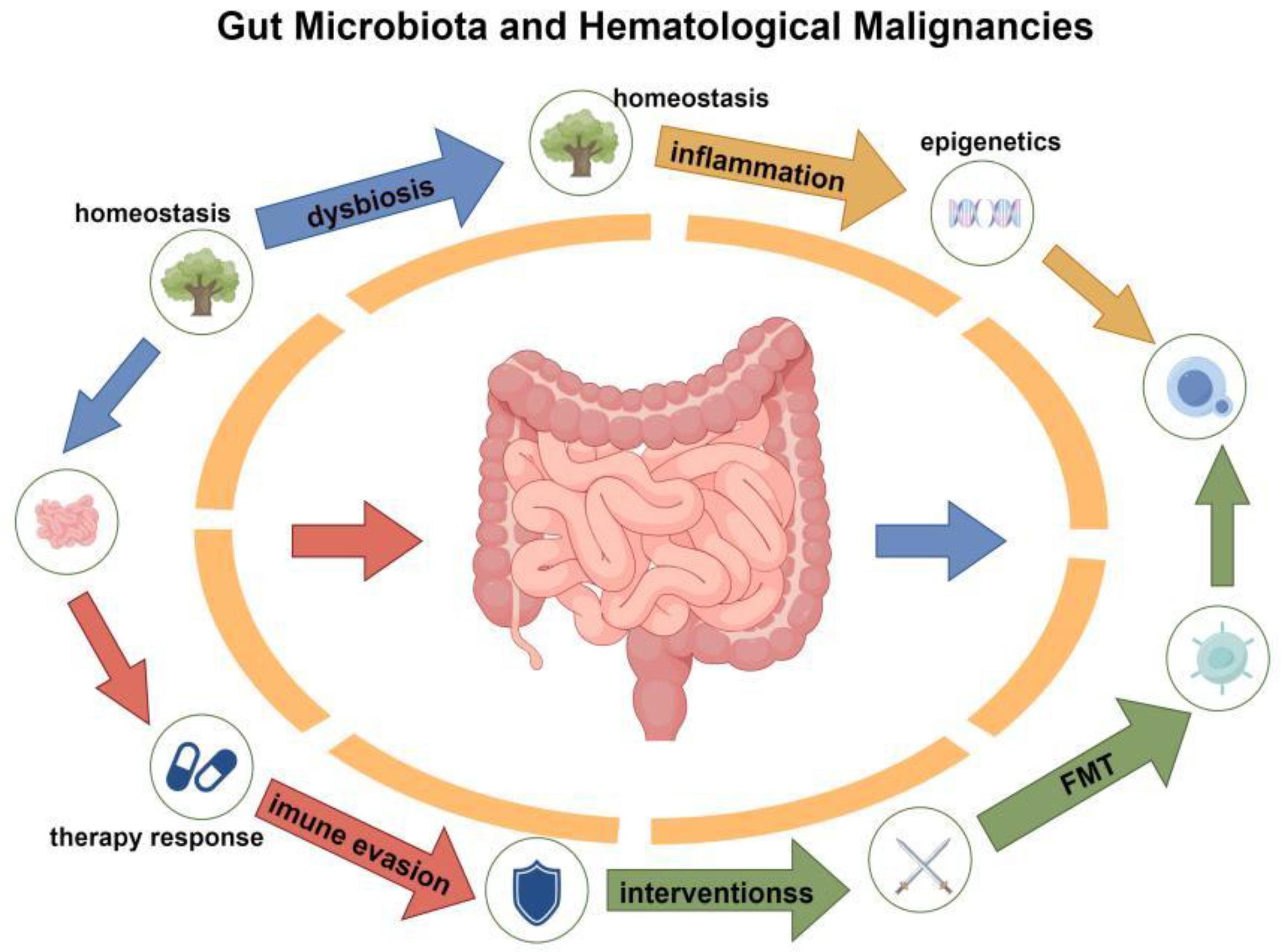
Figure 2.
Bidirectional regulatory mechanisms of the gut-bone marrow axis under physiological homeostasis.
Figure 2.
Bidirectional regulatory mechanisms of the gut-bone marrow axis under physiological homeostasis.
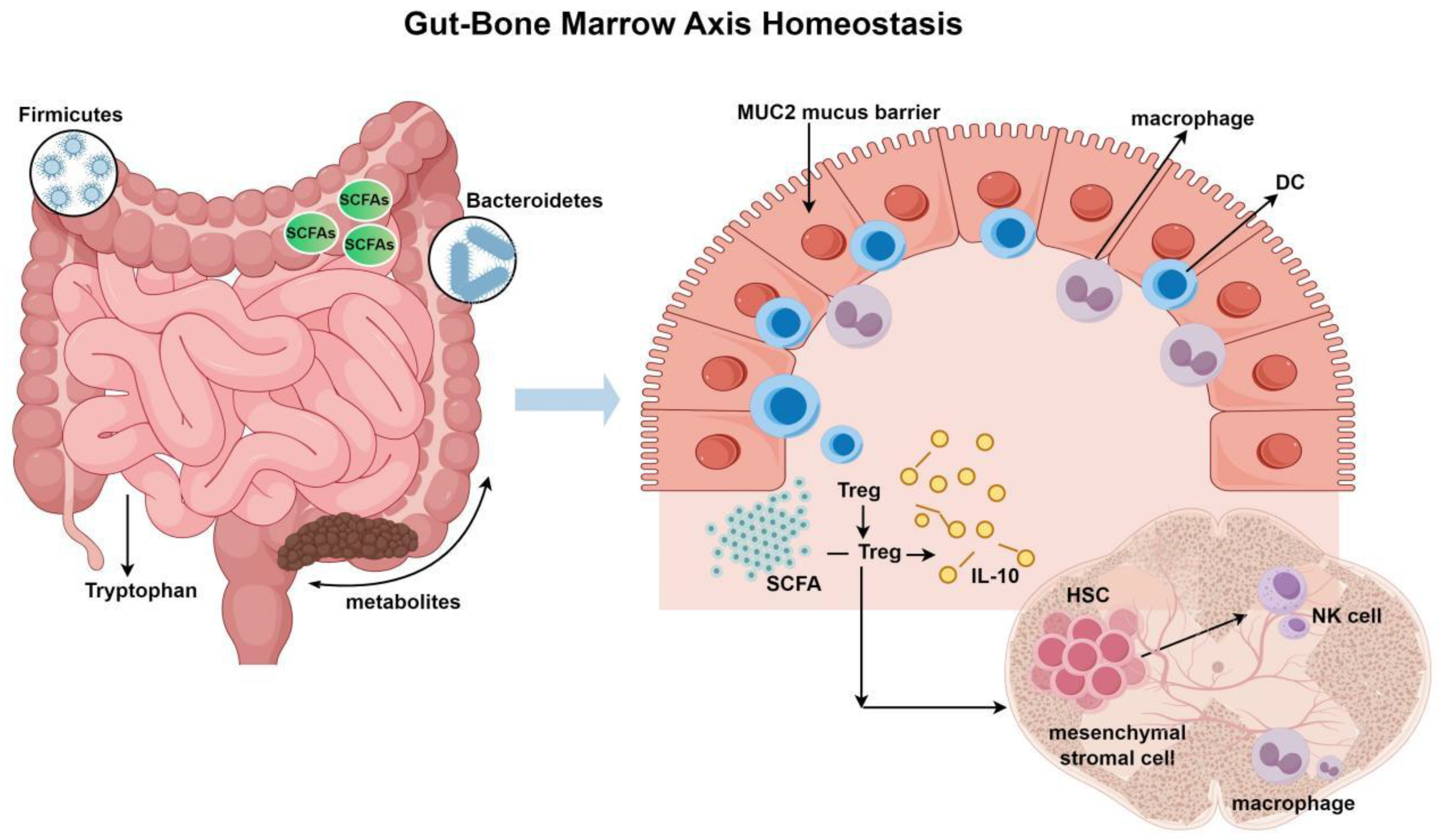
Figure 3.
Molecular pathways by which dysbiosis drives the progression of hematological malignancies.
Figure 3.
Molecular pathways by which dysbiosis drives the progression of hematological malignancies.
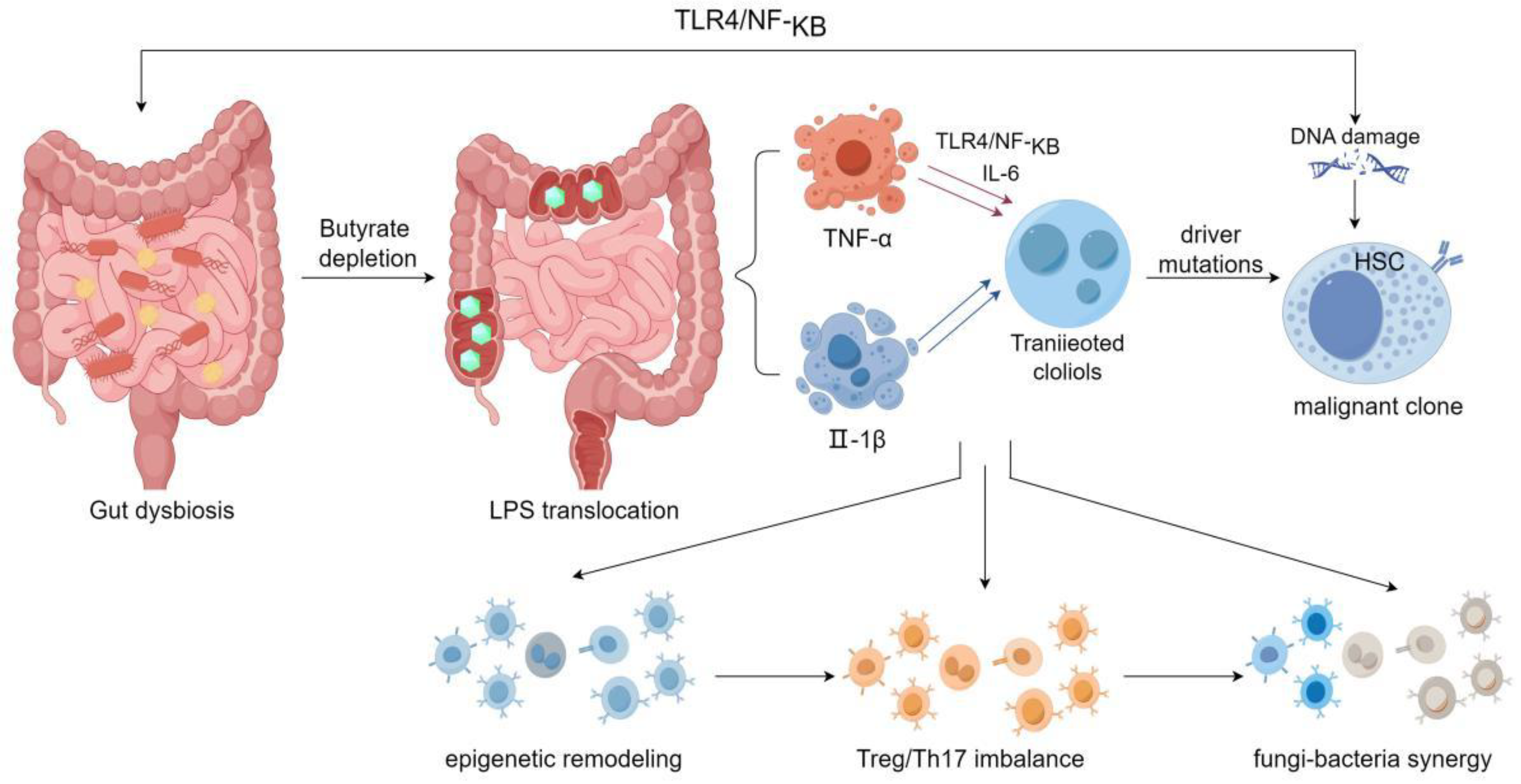
Figure 4.
Gut dysbiosis-induced GVHD and severe infections pre- and post-transplantation.
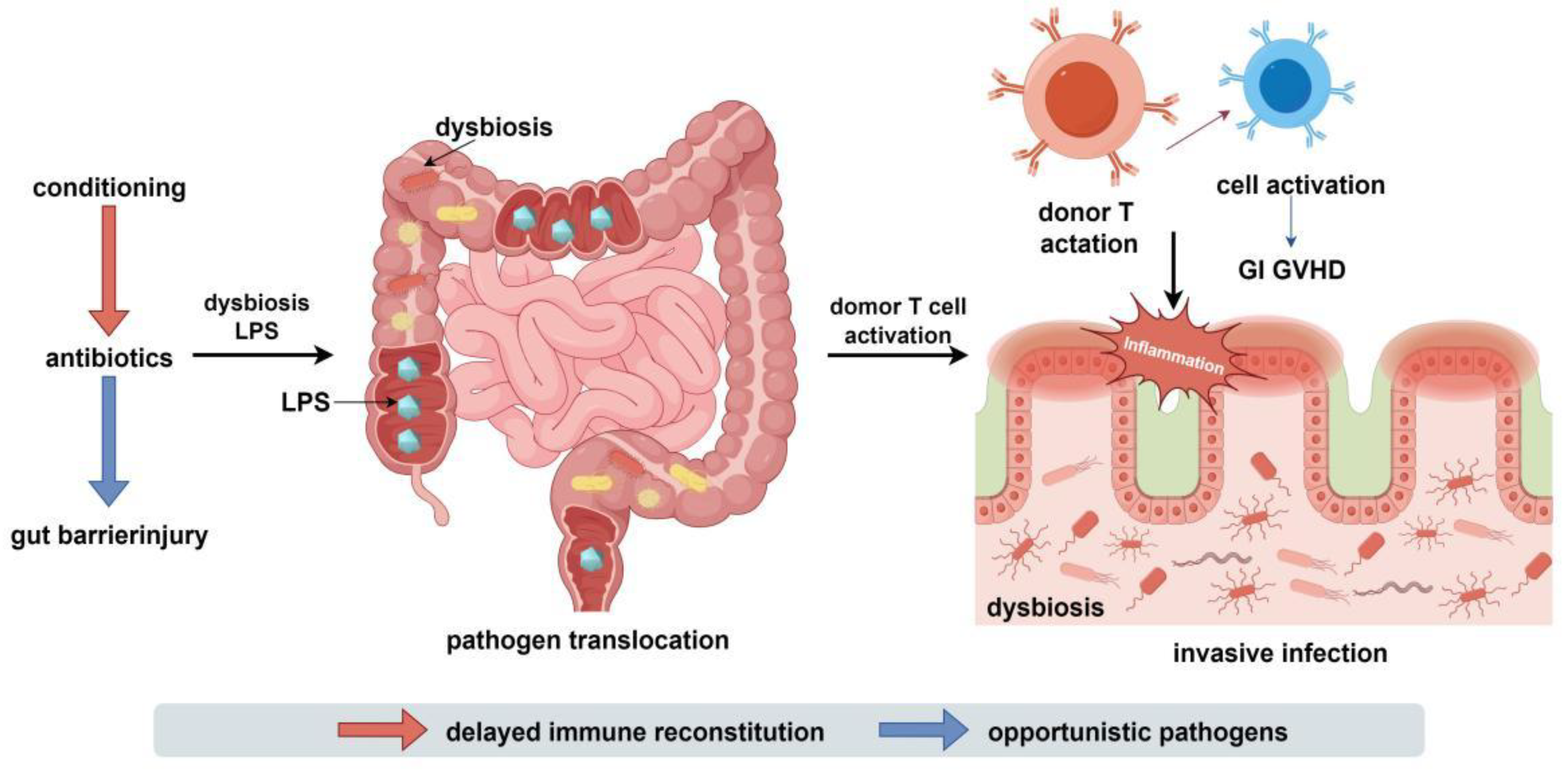

Table 1.
Clinical studies of IMT for acute GVHD.
| Study | IMT Patient Count (n) | GVHD Type | Efficacy Analysis | Safety Analysis |
| Goloshchapov OV et al., 2020[27] | 19 | Acute gastrointestinal GVHD | Complete response rates at 30, 60, and 90 days post-IMT were 8 patients (42%), 14 patients (74%), and 16 patients (84%), respectively. | No life-threatening adverse reactions occurred. |
| Malard F et al., 2023[28] | 24 | Acute gastrointestinal GVHD | The overall response rate at day 28 post-IMT was 38%, including 5 complete responses and 2 very good partial responses. | Cannot rule out relation to 5 infectious complications, including 3 cases of sepsis. |
| Goeser F et al., 2021[29] | 11 | Acute GVHD | 10 patients responded effectively after IMT, with a significant reduction in GVHD grading. | No intervention-related reactions were observed; mild side effects included 3 cases of abdominal pain and 1 case of vomiting. |
| van Lier YF et al., 2020[30] | 15 | Steroid-refractory/dependent GVHD | Complete clinical response was observed in 10 patients within 1 month post-IMT. | No obvious adverse reactions were observed. |
| Zhao Y et al., 2021[31] | 23 | Steroid-refractory/dependent GVHD | The IMT group showed lower event-free survival (HR=2.3, 95%CI,0.99–5.4;P=0.08), lower overall survival (HR=4.4, 95%CI,1.5–13.04;P=0.008), and lower mortality (HR=3.97; 95%CI,1.34–11.75;P=0.013). | The incidence of side effects was relatively mild. |
| DeFilipp Z et al., 2025[32] | 10 | Acute GVHD | The response rate of IMT was 90%. Initial clinical response was observed in 9 patients within one week, and the clinical response in complete responders was durable without recurrence. | Administered via oral IMT capsules, with no adverse reactions reported. |
Table 2.
Clinical studies of microecological agents in hematological malignancies.
| Study | Study Type | Study Subjects | Intervention Methods | Main Results |
| Xiang X et al., 2023[94] | Randomized controlled pilot trial | 16 lymphoma patients undergoing autologous hematopoietic stem cell transplantation | Probiotic group (n=7):Received oral BP-OM1 tablets (1 tablet per dose, 3 times daily) for 100 days during transplantation. Control group (n=9):Received no oropharyngeal probiotic intervention. |
No BP-OM1-related adverse events occurred. The incidence of respiratory tract infections was 28.57% in the probiotic group and 66.67% in the control group (P=0.131). |
| Eghbali et al., 2023[95] | Double-blind randomized controlled trial | 113 children with ALL | Intervention group (n=58): Synbiotics (5×10⁹CFU), oral, twice daily for 7 days. Control group (n=55):Equivalent placebo, oral, twice daily for 7 days. |
Significantly reduced chemotherapy-induced diarrhea, dropping to 0% on days 3–7 in the intervention group; significantly decreased the incidence of constipation by 14%–20% compared to the control group from day 3 to day 6 (P<0.05). |
| Mizutani et al., 2023[96] | Double-blind randomized controlled trial | 12 lymphoma patients undergoing autologous hematopoietic stem cell transplantation | Intervention group (n=6): Bifidobacterium BB536 combined with prebiotics (guar gum), oral, twice daily. Control group (n=6):Placebo (containing dextrin), oral, twice daily. |
Shortened the duration of grade ≥3 diarrhea (synbiotic group: 2.5 vs. placebo group: 6.5 days) and significantly shortened the length of hospital stay (31.5 vs. 43 days). |
| Reyna-Figueroa et al., 2019[97] | Double-blind randomized controlled trial | 60 pediatric patients with acute leukemia receiving chemotherapy | Intervention group (n=30): Probiotic supplementation, oral, administered continuously during chemotherapy. Control group (n=30):Equivalent placebo. |
Significantly reduced the overall incidence of chemotherapy-related gastrointestinal side effects in the probiotic group (P<0.05). Oral probiotic supplementation significantly decreased the risk of chemotherapy-induced diarrhea (RR=0.5, P=0.04), nausea (RR=0.5, P=0.04), and vomiting (RR=0.4, P=0.04) in children with acute leukemia. |
| Yoshifuji et al., 2020[98] | Prospective clinical study | Patients undergoing allo-HSCT | Intervention group:Prebiotics (resistant starch RS and mixed prebiotics GFO), oral, from conditioning chemotherapy to day 28 post-transplantation. Control group:Standard routine care control group. |
Shortened the duration of diarrhea (7 vs. 9 days) and severe oral mucositis (11 vs. 14 days) in the prebiotic group, while successfully maintaining gut microbiota diversity and butyrate-producing bacterial levels. |
Disclaimer/Publisher’s Note: The statements, opinions and data contained in all publications are solely those of the individual author(s) and contributor(s) and not of MDPI and/or the editor(s). MDPI and/or the editor(s) disclaim responsibility for any injury to people or property resulting from any ideas, methods, instructions or products referred to in the content. |
© 2026 by the authors. Licensee MDPI, Basel, Switzerland. This article is an open access article distributed under the terms and conditions of the Creative Commons Attribution (CC BY) license (http://creativecommons.org/licenses/by/4.0/).
Copyright: This open access article is published under a Creative Commons CC BY 4.0 license, which permit the free download, distribution, and reuse, provided that the author and preprint are cited in any reuse.