

Submitted:
02 October 2026
Posted:
06 October 2026
You are already at the latest version
Abstract
Prickly pear (Opuntia ficus-indica) fruits are recognized as valuable sources of bioactive compounds with potential health-promoting properties. However, the relationship between phytochemical composition and antidiabetic activity among different cultivars remains insufficiently characterized. This study evaluated the chemical composition, antioxidant capacity, and anti-hyperglycemic effects of juices obtained from three Mexican prickly pear cultivars (San Martín, Mandarina, and Vigor). Organic acids, sugars, total phenolic and total flavonoid content, betalains, and antioxidant capacity were determined using chromatographic and spectrophotometric methods. The antihyperglycemic activity of the juices was evaluated in healthy Wistar rats using oral glucose tolerance tests (OGTT), and the antidiabetic potential of the San Martín cultivar was assessed in a neonatal streptozotocin-induced type 2 diabetes (T2D) model. Ascorbic acid, oxalic acid, and malic acid were identified in all cultivars, with ascorbic acid being the predominant organic acid in San Martín and Mandarina cultivars juices. Mandarina cultivar exhibited the highest concentration of total phenolic compounds, whereas San Martín cultivar contained significantly greater levels of flavonoids and betalains. Antioxidant activity assessed by ABTS and FRAP assays confirmed the presence of highly active hydrophilic antioxidant compounds. Among the cultivars evaluated, only Mandarina and San Martín juices significantly attenuated postprandial hyperglycemia in healthy animals. Interestingly, freeze-drying abolished the antihyperglycemic effect of San Martín cultivar juice, suggesting degradation or modification of bioactive constituents during processing. In diabetic rats, sub-chronic administration of fresh San Martín cultivar juice significantly reduced blood glucose levels but failed to restore glucose tolerance. Altogether, these findings demonstrate that San Martín prickly pear cultivar juice represents a promising source of bioactive compounds with antihyperglycemic activity. The observed effects are likely associated with the synergistic action of flavonoids, betalains, phenolic compounds, and ascorbic acid. Further mechanistic studies and clinical investigations are warranted to elucidate the molecular pathways involved and evaluate its potential as a functional food for the management of T2D.
Keywords:
Opuntia ficus-indica
; betalains
; polyphenols
; oxidative stress
; antihyperglycemic activity
1. Introduction
The fruits of shrubs of the genus Opuntia (family Cactaceae) are called prickly pears or “tunas”. The prickly pear is an ovoid fruit with a thick pericarp; the pulp is juicy, sweet, and contains numerous seeds [1]. Mexico is the world's largest producer of prickly pears, accounting for 45% of global production [2]. Prickly pears are an important part of the group of functional foods due to their high antioxidant activity associated with high concentrations of betalains, polyphenols, and vitamin C [3]. These compounds have demonstrated a protective effect against certain degenerative diseases such as gastritis, hyperglycemia, atherosclerosis, and diabetes [4,5,6]; thereby they are known as bioactive compounds.
In 2021, the International Diabetes Federation (IDF) reported that there are 537 million adults (20-79 years old) with diabetes; which is projected to increase to 643 million in 2030 and to 783 million in 2045 [7]. Type 2 diabetes (T2D) is the most prevalent and constitutes one of the major health crises of our time. This chronic disease is characterized by hyperglycemia and oxidative stress [8,9] which ultimately lead to microvascular damage (retinopathy, nephropathy, neuropathy) and macrovascular damage (atherosclerotic ischemia), such as myocardial infarction, cerebrovascular lesions, and complications related to peripheral vascular disease, including diabetic foot syndrome [10]. Recently, the search for new therapeutic strategies for the treatment of T2D that can provide better glycemic control and reduce complications has been an ongoing effort. The numerous components of prickly pear cactus fruit can play different functional roles in the human body [11]. These compounds consist mainly of vitamins, minerals, fatty acids, and especially bioactive compounds that can exert various protective effects due to their antioxidant actions [12,13].
Although several studies have reported antioxidant and antidiabetic properties of Opuntia fruits, comparative information linking phytochemical composition with antihyperglycemic efficacy among Mexican cultivars remains limited. Therefore, in this work we hypothesized that differences in phytochemical composition among prickly pear cultivars determine their antioxidant capacity and antihyperglycemic activity, and that cultivars enriched in flavonoids, betalains and phenolic compounds would exert greater glucose-lowering effects. Accordingly, the juice of three prickly pear cactus fruit varieties was chemically characterized and evaluated the antihyperglycemic effect of one of the varieties in healthy rats, as well as its antidiabetic effect.
2. Materials and Methods
2.1. Plant Material and Experimental Design
Five kilograms of fruits from each prickly pear (Opuntia ficus-indica) cultivar, including two red varieties (San Martín and Vigor) and one yellow variety (Mandarina), were harvested in the municipality of San Martín de las Pirámides, State of Mexico, during August and September 2018. Fruits were selected based on uniform color, absence of mechanical damage and disease symptoms, including chilling injury, bruising, and insect damage.
Selected fruits were washed and disinfected by immersion in a chlorinated solution (200 ppm free chlorine) for 3 min. After air-drying, fruits were grouped into sets of three fruits, and each group was considered an experimental unit (EU). Subsequently, pulp was manually separated from each experimental unit, pressed, and filtered to remove seeds. The resulting juice from each cultivar and experimental unit was stored at -80°C until analysis. All chemical determinations were performed in triplicate.
2.2. Chemical Quality Parameters
2.2.1. Determination of Organic Acids
Prior to analysis, frozen juice samples from each cultivar were thawed and diluted (1:2, v/v) with distilled water. The diluted samples were centrifuged at 15,000 × g for 10 min at 4 °C and subsequently filtered through a 0.45 μm nylon membrane filter (Millex®, Millipore, Bedford, MA, USA). Organic acid analysis was performed according to the methodology described by [14], with minor modifications. Briefly, 20 μL of the filtered sample were injected into a high-performance liquid chromatography (HPLC) system (Agilent 1260 Series, Agilent Technologies, Santa Clara, CA, USA) equipped with a quaternary pump and a diode-array detector. Separation was carried out using an XTerra® MS C18 column (4.6 × 250 mm, 5 μm particle size; Waters Corporation, Milford, MA, USA). The mobile phase consisted of phosphate buffer (50 mM, pH 2.8) operating under isocratic conditions at a flow rate of 0.7 mL min-1. Detection was performed at 210 and 250 nm. Quantification of ascorbic, oxalic, and malic acids was achieved using external calibration curves prepared with analytical standards. Organic acid concentrations were expressed as mg of acid per liter of prickly pear juice (mg L-1).
2.2.2. Determination of Sugars
Sugar composition was determined according to the method described by [15]. A 20 μL aliquot of the filtered juice sample was injected into the HPLC system under the following chromatographic conditions: an Agilent Hi-Plex Ca column (7.7 × 300 mm, 8 μm particle size, 8% cross-linked), Milli-Q water as the mobile phase under isocratic elution, a flow rate of 0.6 mL min-1, and a column temperature maintained at 70 °C. Glucose and fructose concentrations were quantified by interpolation of peak areas against external calibration curves prepared with authentic standards. Results were expressed as grams of glucose or fructose per liter of prickly pear juice (g L-1).
2.2.3. Determination of Total Flavonoid Content (TFC)
Total flavonoid content was determined according to the method described by [16], with minor modifications to improve sample stability. Briefly, 500 μL of previously centrifuged prickly pear juice were mixed with 1.5 mL of ethanol and refrigerated for 15 min. The mixture was then centrifuged at 3,000 rpm for 15 min. Subsequently, 500 μL of the resulting extract were transferred to a test tube and mixed with 100 μL of 10% (w/v) aluminum chloride (AlCl₃), 100 μL of 1 M potassium acetate (CH₃COOK), and 2.8 mL of distilled water. The reaction mixture was incubated in the dark for 75 min at room temperature. Absorbance was measured at 415 nm using a UV-Vis spectrophotometer (Genesys 10S UV-Vis, Jenway, UK). Then, total flavonoid content was quantified using a quercetin calibration curve and expressed as milligrams of quercetin equivalents per liter of juice (mg QE L⁻¹).
2.2.4. Determination of Total Phenolic Content (TPC)
Prior to analysis, prickly pear juice samples were centrifuged at 15,000 × g for 10 min at 4 °C and subsequently diluted with methanol (1:40, v/v). Total soluble phenolic compounds were determined using the Folin-Ciocalteu method as described by [17]. Briefly, 100 μL of diluted sample were mixed with 150 μL of 1 N Folin-Ciocalteu reagent and incubated for 3 min. Subsequently, 1,000 μL of an alkaline mixture containing 0.4% NaOH and 0.2% Na₂CO₃ were added to the reaction mixture. The samples were incubated in the dark for 1 h at room temperature, and absorbance was measured at 750 nm using a UV-Vis spectrophotometer. Total phenolic content was quantified using a gallic acid standard curve and expressed as milligrams of gallic acid equivalents per liter of juice (mg GAE L⁻¹).
2.2.5. Determination of Betalain Content
Betalain concentration was determined following the methodology reported by [18]. Juice samples from each cultivar were first centrifuged at 15,000 rpm for 15 min at 4 °C to remove suspended pulp and mucilage. Subsequently, 1 mL of clarified juice was diluted with 100 mL of distilled water. The concentrations of betaxanthins (BX) and betacyanins (BC) were determined spectrophotometrically using a UV-Vis spectrophotometer (Genesys 10S UV-Vis, Jenway, UK) by measuring absorbance at 483 nm (A₄₈₃) and 535 nm (A₅₃₅), respectively. Betaxanthin and betacyanin concentrations were calculated according to the equations described by [18]. Total betalain content was expressed as milligrams of betalains per liter of prickly pear juice (mg L⁻¹).
Where:
BX or BC = betaxanthins or betacyanins, respectively
A = absorbance at 483 nm (A483) or 535 nm (A535)
DF = dilution factor
MW = molecular weight (339 g mol⁻¹ for betaxanthins and 550 g mol⁻¹ for betacyanins)
L = optical path length of the cuvette (cm)
ε = molar extinction coefficient (48,000 L cm⁻¹ mol⁻¹ for betaxanthins and 60,000 L cm⁻¹ mol⁻¹ for betacyanins)
2.3. Antioxidant Capacity
The extract prepared for total phenolic compound determination was also used to evaluate antioxidant capacity. Antioxidant activity was assessed using two complementary methods: the ABTS radical scavenging assay and the Ferric Reducing Antioxidant Power (FRAP) assay.
2.3.1. ABTS Assay
A stock solution of ABTS [2,2'-azino-bis (3-ethylbenzothiazoline-6-sulfonic acid)] was prepared at a concentration of 0.007 M and allowed to react for 16 h prior to analysis. Subsequently, 60 μL of the methanolic extract (juice/methanol) were mixed with 1,140 μL of ABTS working solution previously diluted with methanol to obtain an absorbance of approximately 1.1 at 734 nm. The reaction mixture was incubated in the dark for 25 min at room temperature, after which absorbance was measured at 734 nm using a UV-Vis spectrophotometer. Antioxidant capacity was quantified using a Trolox calibration curve and expressed as milligrams of Trolox equivalents per liter of prickly pear juice (mg TE L⁻¹).
2.3.2. FRAP Assay
Before the FRAP assay, three solutions were prepared separately: a) 300 mM acetate buffer adjusted to pH 3.6, b) 10 mM TPTZ [2,4,6-tris(2-pyridyl)-s-triazine], and c) 3.3 mM FeCl₃ solution. Then, the FRAP working reagent was freshly prepared by mixing acetate buffer, TPTZ solution, and FeCl₃ solution in a 10:1:1 ratio (v/v/v). The resulting mixture was incubated at 37 °C for 2 h before use.
For the actual assay, 30 μL of methanolic extract were mixed with 990 μL of freshly prepared FRAP reagent. The reaction mixture was incubated in the dark at room temperature for 55 min, and absorbance was subsequently measured at 593 nm. Antioxidant capacity was quantified using a Trolox standard curve and expressed as milligrams of Trolox equivalents per liter of prickly pear juice (mg TE L⁻¹).
2.4. Evaluation of Antihyperglycemic and Antidiabetic Activities in Wistar Rats
Healthy male Wistar rats (8 weeks old, 220-250 g) were used for the antihyperglycemic evaluation. All experimental procedures were conducted in accordance with the Mexican Official Standard NOM-062-ZOO-1999 for the care and use of laboratory animals. Animals were housed in acrylic cages under controlled environmental conditions (22 ± 1°C, 50 ± 10% relative humidity) with a 12 h light/12 h dark cycle and had free access to standard laboratory chow and water.
2.4.1. Antihyperglycemic Effect of Juices from Three Prickly Pear Cultivars
An Oral Glucose Tolerance Test (OGTT) was performed to evaluate the antihyperglycemic activity of prickly pear juices. Prior to the test, animals were fasted for 12-14 h. On the day of the experiment, body weight was recorded and baseline blood glucose levels (time 0) were measured using a glucometer (Accu-Chek®, Roche Diagnostics) from blood collected from the tail vein. Experimental groups consisted of 5-6 animals per group as follows:
Group 1: Control (anhydrous dextrose, 2 g kg⁻¹)
Group 2: Metformin (300 mg kg⁻¹)
Group 3: Mandarina prickly pear juice (1 mL/100 g body weight)
Group 4: San Martín prickly pear juice (1 mL/100 g body weight)
Group 5: Vigor prickly pear juice (1 mL/100 g body weight)
Metformin was administered orally 30 min before the glucose load, whereas prickly pear juices were administered 15 min before glucose administration. The metformin dose was selected according to previously published metformin tolerance test (MTT) protocols [19]. All treatments were delivered orally using an esophageal gavage cannula. Following treatment, animals received an oral glucose load of anhydrous dextrose (2 g kg⁻¹). Then, blood glucose concentrations were measured at 30, 60, 90, and 120 min after glucose administration, using approximately 1 µL of blood obtained from the tail vein. Glucose response curves were generated from OGTT data, and the area under the curve (AUC) was calculated using the trapezoidal method. Results are presented as mean ± standard error of the mean (SEM) and expressed as mg dL⁻¹.
2.4.2. Antihyperglycemic Effect of San Martín Prickly Pear Juice
2.4.2.1. Fresh San Martín Prickly Pear Juice
An Oral Glucose Tolerance Test (OGTT) was performed in healthy male Wistar rats (8 weeks old, 220-250 g) using fresh San Martin prickly pear juice. The same protocol described previously (see 2.4.1) was used. Treatments were as follows:
Group 1: Control (anhydrous dextrose, 2 g kg⁻¹)
Group 2: Metformin (300 mg kg⁻¹)
Group 3: Fresh San Martín prickly pear juice (1 mL/100 g body weight)
Group 4: Fresh San Martín prickly pear juice (0.5 mL/100 g body weight)
Group 5: Freeze-dried San Martín prickly pear juice (5 mg kg⁻¹)
AUC values were calculated using the trapezoidal rule and results were expressed as mean ± SEM (mg dL⁻¹).
2.4.2.2. Reconstituted Freeze-Dried San Martín Prickly Pear Juice
Freeze-dried San Martín prickly pear juice was obtained by vacuum freeze-drying using a Labconco FreeZone 6 freeze dryer (Labconco Corp., MO, USA). The resulting powder was stored at -20 °C until use. In brief, the antihyperglycemic activity of freeze-dried juice was evaluated by OGTT in healthy male Wistar rats as follows:
Group 1: Control (anhydrous dextrose, 2 g kg⁻¹)
Group 2: Metformin (300 mg kg⁻¹)
Group 3: Freeze-dried San Martín prickly pear juice (25 mg kg⁻¹)
Group 4: Freeze-dried San Martín prickly pear juice (100 mg kg⁻¹)
Group 5: Freeze-dried San Martín prickly pear juice (200 mg kg⁻¹)
Dose extrapolation between species was performed using the allometric scaling equation: human dose x animal dose x (body weight human /body weight animal) 0.7 [20]. AUC values were calculated using the trapezoidal rule and results were expressed as mean ± SEM (mg dL⁻¹).
2.4.3. Evaluation of the Antidiabetic Effect of San Martín Prickly Pear Juice
In this experimental assay, the type 2 diabetes (T2D) model described by [21] was employed. Neonatal male Wistar rats (2-3 days old, weighing 8-10 g) were randomly assigned to one of two experimental conditions. Control rats (CT) received an intraperitoneal (i.p.) injection of 0.1 M citrate buffer (pH 4.5), whereas diabetic rats (DB) received a single intraperitoneal injection of streptozotocin (STZ; 70 mg kg⁻¹) dissolved in the same citrate buffer. At 8 weeks of age, OGTT was performed to confirm the diabetic phenotype. Then, animals corresponding to CT and DB received sub-chronic oral treatment for 14 consecutive days. Treatments were administered daily at the same time of day. Experimental groups consisted of 5-6 animals per group as follows:
Group 1: CT-Vehicle (drinking water)
Group 2: CT-Metformin (300 mg kg⁻¹)
Group 3: CT-San Martín prickly pear juice (0.5 mL/100 g body weight)
Group 4: DB-Vehicle (drinking water)
Group 5: DB-Metformin (300 mg kg⁻¹)
Group 6: DB-San Martín prickly pear juice (0.5 mL/100 g body weight)
At the end of the treatment period, postprandial blood glucose levels were determined and a final OGTT was performed.
OGTT results are expressed as mean ± SEM and reported as blood glucose concentration (mg dL⁻¹).
2.5. Statistical Analysis
Statistical analyzes were performed using SigmaPlot software version 14.0 (Systat Software Inc., San Jose, CA, USA). Organic acid concentrations, flavonoid content, total phenolic compounds, antioxidant capacity, and AUC values were analyzed using one-way analysis of variance (ANOVA) followed by the Student-Newman-Keuls post hoc test. Comparisons of postprandial blood glucose concentrations measured at the end of the treatment period were performed using one-way ANOVA followed by Dunn’s multiple comparison test. On the other hand, OGTT glucose response data were analyzed using two-way ANOVA followed by the Student-Newman-Keuls post hoc test. The AUC obtained from the OGTT performed at 8 weeks of age in CT and DB animals were analyzed using Student’s t-test. Differences were considered statistically significant when P < 0.05.
3. Results
In this study, the potential functional and glucose-regulating properties of three prickly pear cultivars were addressed (Figure 1). Briefly, the phytochemical profiles of the juices were characterized by determining their organic acids, sugars, total phenolic and total flavonoid content, betalains, and antioxidant activity. Then, the relationship between these bioactive constituents and antihyperglycemic activity was investigated using oral glucose tolerance tests (OGTTs) in healthy male Wistar rats. Finally, the cultivar displaying the most favorable bioactive profile was selected for additional studies to determine the effect of freeze-drying on biological activity and to evaluate its efficacy in a streptozotocin-induced model of type 2 diabetes. The details of results obtained are presented below.
3.1. Phytochemical Composition of Prickly Pear Juices
To characterize the nutritional and functional composition of the three prickly pear cultivars, their organic acid profiles were determined by HPLC analysis. This approach revealed the presence of three organic acids in the juices of the three prickly pear cultivars: ascorbic, oxalic, and malic acids (Table 1). Ascorbic acid was the predominant organic acid in Mandarina and San Martín cultivar juices, reaching concentrations of 20.49 ± 0.78 and 26.85 ± 0.05 mg 100 mL⁻¹; respectively (Table 1). In contrast, oxalic acid was present at the highest concentrations in San Martín and Vigor cultivar juices, with values of 111 ± 3.26 and 124 ± 10.27 mg 100 mL⁻¹, respectively (Table 1). No significant differences were observed in malic acid concentration among cultivars; however, its concentration ranged from 15 to 19 mg 100 mL⁻¹ of juice (Table 1).
Glucose and fructose were identified in all three cultivars, with glucose being the predominant sugar in each case (Table 1). On the other hand, significant differences were observed in total phenols among cultivars. Mandarina exhibited the highest concentration of total phenolic compounds (1,603.24 ± 10.93 mg GAE L⁻¹), followed by Vigor (1,161.72 ± 14.30 mg GAE L⁻¹) (Table 1). In contrast, San Martín juice contained the highest flavonoid concentration (59.08 ± 0.07 mg QE L⁻¹), significantly exceeding the values observed in the other cultivars (Table 1).
In addition to phenolic compounds and flavonoids, prickly pear fruits are characterized by the presence of betalains, a group of nitrogen-containing pigments classified into yellow-orange betaxanthins and red violet betacyanins. Therefore, total betalain content was calculated as the sum of betaxanthins and betacyanins (Table 1). Significant differences were observed among cultivars. San Martín exhibited the highest concentrations of both betaxanthins and betacyanins, reaching 101.82 ± 0.02 and 252.69 ± 2.39 mg L⁻¹, respectively, significantly higher than those measured in Vigor and Mandarina cultivars juices. Overall, the three prickly pear cultivars exhibited distinct phytochemical profiles, differing in the concentration of organic acids, phenolic compounds, flavonoids, and betalains. Among the cultivars evaluated, San Martín was characterized by the highest flavonoid and betalain contents, whereas Mandarina showed the greatest concentration of total phenolic content. These compositional differences suggest cultivar-specific variations in the accumulation of bioactive constituents that may influence their functional and biological properties.
3.2. Antioxidant Capacity of Prickly Pear Juices
Since the three prickly pear cultivars exhibited distinct phytochemical profiles, particularly with respect to phenolic compounds, flavonoids, and betalains, the antioxidant capacity of the juices was evaluated to determine whether these compositional differences were reflected in their functional properties. Both ABTS and FRAP assays were used to measure the antioxidant capacity of the juices. These approaches confirmed the presence of hydrophilic antioxidant compounds capable of reducing the ABTS radical and ferric ions, respectively (Figure 2A and 2B). In the ABTS assay, Mandarina juice exhibited the highest antioxidant activity, reaching 212.65 mg Trolox equivalents per 100 mL of juice, significantly higher than the other cultivars (Figure 2A). San Martín juice showed the lowest ABTS scavenging activity, whereas Vigor displayed intermediate values. In contrast, no significant differences were detected among cultivars when antioxidant capacity was assessed using the FRAP assay (Figure 2B), despite Vigor showing a tendency toward greater ferric-reducing power. Overall, the antioxidant assays revealed cultivar-dependent differences in radical scavenging capacity, while ferric-reducing activity remained relatively similar among the three prickly pear juices, suggesting that distinct classes of bioactive compounds may contribute differently to the antioxidant properties measured by each method.
3.3. Screening of Antihyperglycemic Activity in Healthy Rats
Given the differences observed in phytochemical composition and antioxidant capacity among cultivars, their potential to modulate postprandial glucose levels was investigated. Thus, to identify the cultivar with the greatest glucose-lowering potential, the antihyperglycemic activity of the three prickly pear juices was evaluated in healthy rats using an oral glucose tolerance test (OGTT). The effects of juice administration on postprandial glucose response were assessed and compared with those of the antidiabetic drug metformin. Following oral glucose administration, Mandarina and San Martín cultivars juices (1 mL/100 g body weight) significantly attenuated postprandial hyperglycemia at 30 min compared with the control group (Figure 3A). However, analysis of the area under the glucose response curve (AUC) revealed no significant differences between any prickly pear juice treatment and the control group. As expected, only the positive control group receiving metformin showed a significantly lower AUC than the control group (Figure 3B). Both Mandarina and San Martín juices attenuated postprandial hyperglycemia during the early phase of the OGTT. Based on its superior flavonoid and betalain content and its antihyperglycemic activity, San Martín cultivar juice was selected for further investigation.
3.4. Effect of Freeze-Drying on the Antihyperglycemic Activity of San Martín Prickly Pear Juice
Given the promising antihyperglycemic activity exhibited by San Martín juice, additional experiments were conducted aimed to determine whether this bioactivity was retained after freeze-drying, a processing method commonly used to improve product stability and shelf life. In that sense, San Martín cultivar juice was freeze-dried, reconstituted, and subsequently assessed for antihyperglycemic activity using the OGTT model. The freeze-dried juice was evaluated for antihyperglycemic activity at doses of 25, 100, and 200 mg kg⁻¹. Surprisingly, none of the administered doses produced antihyperglycemic effects compared with the control group. Moreover, all three doses induced significantly higher blood glucose concentrations at 30 min during the OGTT compared with the control treatment (Figure 4A). Nevertheless, no significant differences were observed in AUC values among treatments (Figure 4B). In summary, freeze-dried San Martín juice did not preserve the antihyperglycemic activity observed in the fresh juice, suggesting that processing may alter compounds associated with glucose regulation.
Given the unexpected hyperglycemic responses observed with freeze-dried San Martín juice at doses of 25-200 mg kg⁻¹, an additional experiment was conducted using a lower dose (5 mg kg⁻¹). Simultaneously, the antihyperglycemic activity of fresh San Martín juice administered at 1.0 and 0.5 mL/100 g body weight was evaluated. Fresh juice significantly reduced blood glucose levels at 30 min during the OGTT at both tested doses compared with the control group. Interestingly, the lower dose of freeze-dried juice (5 mg kg⁻¹) failed to exert any antihyperglycemic effect (Figure 5A). Consistent with previous results, neither fresh juice nor freeze-dried juice significantly affected the AUC compared with the control group (Figure 5B). In summary, fresh San Martín juice consistently reduced postprandial glycaemia, whereas the freeze-dried preparation remained inactive even at a lower dose.
Collectively, these results suggest that the antihyperglycemic activity of San Martín prickly pear juice may depend on the integrity of heat- and oxidation-sensitive phytochemicals, which appear to be partially lost or altered during the freeze-drying process. This observation highlights the importance of processing conditions in preserving the biological activity of prickly pear-derived functional ingredients.
3.5. Effect of San Martín Prickly Pear Juice on Glucose Intolerance in Type 2 Diabetic Rats
Prior to evaluating the effects of San Martín prickly pear juice on glucose intolerance, it was essential to confirm the successful establishment of the diabetic phenotype in STZ (streptozotocin)-treated animals. Validation of the type 2 diabetic model ensured that the metabolic alterations characteristic of the disease, including impaired glucose tolerance and disrupted glucose homeostasis, were present before initiating the intervention. Therefore, an OGTT and AUC analysis were performed in control and diabetic rats to verify the development of glucose intolerance and to establish a baseline metabolic status against which the potential antidiabetic effects of San Martín juice could be accurately assessed.
At eight weeks of age, an Oral Glucose Tolerance Test (OGTT) was performed in both control (CT) and diabetic (DB) rats. DB animals exhibited marked glucose intolerance, as evidenced by significantly elevated blood glucose concentrations throughout the OGTT following glucose administration. Furthermore, blood glucose levels in DB rats failed to return to baseline values within the experimental period, in contrast to the CT group (Supplementary Figure 1). Consistent with these findings, the area under the glucose response curve (AUC) was significantly greater in DB rats than in CT animals, confirming that neonatal STZ administration successfully induced glucose intolerance and impaired glucose homeostasis, providing a suitable model for evaluating the antidiabetic effects of San Martín prickly pear juice.
Next, to evaluate the effect of subchronic treatment on basal/postprandial glycaemia, subchronic administration of San Martín prickly pear cultivar juice (0.5 mL/100 g body weight) produced a significant hypoglycemic effect in diabetic rats, reducing the hyperglycemia associated with the disease when compared with untreated diabetic animals (Figure 6). Similarly, diabetic rats receiving the positive control treatment (metformin, 300 mg kg⁻¹) exhibited significantly lower blood glucose concentrations than untreated diabetic rats (Figure 6). Taken together, subchronic administration of San Martín cultivar juice significantly reduced hyperglycemia in diabetic rats, demonstrating its capacity to improve glycemic control under diabetic conditions.
3.6. Hypoglycemic Effect of San Martín Prickly Pear Juice in Type 2 Diabetic Rats
To determine whether prolonged administration of San Martín prickly pear cultivar juice could improve glucose tolerance, a final OGTT was performed at the end of the treatment period. Despite its hypoglycemic effect on postprandial blood glucose levels, subchronic treatment with San Martín juice failed to reverse glucose intolerance in diabetic animals (Figure 7A). Accordingly, no significant differences were observed in AUC values among the treated diabetic groups and the untreated diabetic control group (Figure 7B
These findings indicate that although San Martín prickly pear juice effectively reduced postprandial hyperglycemia, the treatment duration and/or dose employed were insufficient to restore systemic glucose tolerance (Figure 7). Taken together, these findings indicate that San Martín prickly pear cultivar juice effectively attenuates hyperglycemia in diabetic rats but does not fully correct the impaired glucose tolerance associated with type 2 diabetes, suggesting that the beneficial effects of the juice are primarily associated with attenuation of hyperglycemia rather than complete recovery of glucose homeostasis.
4. Discussion
Besides providing carbohydrates, dietary fiber, minerals, vitamins, and organic acids, prickly pear fruits (O. ficus-indica) are an abundant source of phytochemicals, including phenolic compounds, flavonoids, betalains, carotenoids, and ascorbic acid, many of which exhibit potent antioxidants and anti-inflammatory properties [22,23]. Therefore, prickly pear has attracted increasing scientific attention because of its remarkable nutritional composition and its potential as a functional food for the prevention and management of chronic non-communicable diseases. Accumulating evidence indicates that these compounds contribute to the regulation of oxidative stress and glucose homeostasis, making Opuntia fruits particularly attractive as complementary dietary interventions for type 2 diabetes mellitus (T2D) [9,24,25]. In the present study, a comprehensive comparison of three Mexican O. ficus-indica cultivars was carried out by integrating phytochemical characterization, antioxidant capacity, and antihyperglycemic evaluation in both healthy and diabetic animal models. The results demonstrate marked cultivar-dependent differences in phytochemical composition that translated into distinct antioxidant and biological activities, emphasizing that the health-promoting properties of prickly pear depend not only on the concentration of individual compounds but also on their qualitative composition and synergistic interactions.
Cultivar-dependent phytochemical variability and antioxidant capacity
The nutritional importance of O. ficus-indica is particularly relevant considering the growing recognition of prickly pear as a functional crop cultivated in arid and semi-arid regions worldwide [26]. Mexico remains the principal producer of Opuntia, with thousands of hectares devoted to fruit production [2]; however, substantial cultivation also occurs in South America, the Mediterranean region, and North Africa [27,28,29]. Beyond its economic importance, prickly pear has become increasingly valued because its phytochemicals have been associated with antioxidant, anti-inflammatory, antihyperglycemic, cardioprotective, neuroprotective, and hepatoprotective activities [22,30]. Consequently, identifying cultivars with superior functional properties has become an important objective for both agriculture and nutritional science.
Although prickly pear fruits used in this study belong to the same species, they exhibited substantial differences in total phenolic and flavonoid content, betalain content, organic acids, and antioxidant capacity (Table 1). For instance, Mandarina cultivar presented the highest concentration of total phenolic content, whereas San Martín cultivar accumulated significantly greater concentrations of total flavonoid content and betalain content (Table 1). Factors like genetic background, maturity stage, agronomic practices, and environmental conditions such as temperature, solar radiation, water availability, and soil composition could be exerting influence on the biosynthesis and accumulation of bioactive metabolites [22,26,31,32,33]. Thus, the observations in this study, together with those previously published, reinforce the notion that phytochemical diversity represents one of the major determinants of the nutritional and functional value of prickly pear fruits.
Interestingly, measurements of antioxidant activity did not directly correlate to the concentration of individual phytochemicals (Figure 2). Although the San Martín cultivar contained the highest concentrations of total flavonoid content and betalain content, Mandarina cultivar exhibited significantly greater antioxidant capacity in the ABTS assay (Figure 2A), whereas no significant differences among cultivars were detected using the FRAP assay (Figure 2B). At first glance, this result appears contradictory; however, it underscores the limitations of interpreting antioxidant capacity based solely on the concentration of individual phytochemicals. The Folin-Ciocalteu assay estimates the overall reducing capacity of phenolic compounds but does not distinguish between individual phenolic structures, each possessing distinct antioxidant efficiencies [34,35]. Consequently, Mandarina cultivar may contain a greater proportion of highly reactive low-molecular-weight phenolics or polyhydroxylated flavonoids with superior radical-scavenging capacity despite its lower overall flavonoid concentration. Structural characteristics of flavonoids could be responsible to these findings. In brief, it is known that the antioxidant capacity of flavonoids depends largely on the number and position of hydroxyl groups attached to the aromatic rings, namely that polyhydroxylated flavonoids generally exhibit stronger radical-scavenging activity than glycosylated derivatives [36,37].
Besides phenolic compounds, vitamin C and betalains likely contributed substantially to the antioxidant properties observed in the present study (Figure 2). Ascorbic acid is one of the most effective water-soluble antioxidants present in fruits and vegetables, directly scavenging reactive oxygen and nitrogen species while regenerating oxidized vitamin E and preserving intracellular redox balance [38,39]. The relatively high concentrations of ascorbic acid detected in San Martín and Mandarina cultivars juices therefore likely enhanced their antioxidant capacity (Table 1). Likewise, betalains, including betanin and indicaxanthin, have demonstrated remarkable antioxidant activity through inhibition of lipid peroxidation, protection of cellular membranes, and preservation of endogenous antioxidant defenses [24,40]. Human and animal studies have shown that prickly pear consumption improves plasma antioxidant capacity, decreases oxidative damage, and enhances endogenous antioxidant enzyme activities, including superoxide dismutase and catalase [41,42,43]. Together, these observations indicate that antioxidant activity results from coordinated interactions among flavonoids, betalains, vitamin C, and numerous minor phytochemicals rather than from the action of any single compound. Consequently, these considerations may explain why total phenolic content was not directly correlated with antioxidant activity among the cultivars evaluated but rather reflected the complex interactions among multiple phytochemicals and the specific chemical mechanisms evaluated by each analytical method.
Relationship between phytochemical composition and antihyperglycemic activity
As stated before, the qualitative differences in phenolic composition may be more important than total phenolic abundance in determining biological activity [44]. Among the phytochemicals found in prickly pear fruits, flavonoids deserve particular attention because San Martín exhibited the highest flavonoid concentration despite not containing the highest amount of total phenolic compounds (Table 1). The biological relevance of these phytochemical differences became evident during the antihyperglycemic evaluation. Both Mandarina and San Martín cultivars juices significantly attenuated postprandial glycemic responses during the oral glucose tolerance test in healthy rats, demonstrating that multiple phytochemical profiles can exert beneficial metabolic effects despite their compositional differences (Figure 3).
The antihyperglycemic activity of San Martín juice can likely be explained by multiple complementary mechanisms. Polyphenols and flavonoids have been shown to inhibit intestinal α-amylase and α-glucosidase, thereby delaying carbohydrate digestion and reducing postprandial glucose absorption [45,46,47]. Also, these compounds have been shown to reduce oxidative stress by scavenging reactive oxygen species, chelating transition metals, and preventing lipid peroxidation while simultaneously regulating multiple signaling pathways involved in insulin sensitivity and glucose homeostasis [48,49,50]. Further, experimental studies have shown that flavonoids activate AMP-activated protein kinase (AMPK), stimulate GLUT4 translocation to skeletal muscle and adipose tissue membranes, suppress hepatic gluconeogenesis, preserve pancreatic β-cell viability, and inhibit inflammatory signaling mediated by NF-κB [45,47,51,52]. These complementary mechanisms likely explain why San Martín cultivar juice effectively reduced glycemia despite containing lower concentrations of total phenolic compounds than Mandarina cultivar (Table 1 and Figure 3). Therefore, San Martín cultivar was selected for subsequent studies because it combined elevated concentrations of flavonoids, betalains, and ascorbic acid, compounds that collectively possess extensive mechanistic evidence supporting antidiabetic activity; meaning that cultivar selection should not rely exclusively on total phenolic concentration but instead consider the entire phytochemical profile and the potential synergistic interactions among bioactive constituents.
Impact of freeze-drying on the antihyperglycemic activity of San Martin prickly pear juice
An unexpected but important finding was the complete loss of antihyperglycemic activity following freeze-drying of San Martín cultivar juice (Figure 4 and Figure 5). Freeze-drying is generally considered one of the most effective dehydration techniques for preserving thermolabile phytochemicals because water is removed under low-temperature vacuum conditions [53]. Nevertheless, this process may still promote oxygen exposure, enzymatic oxidation before freezing, disruption of the native food matrix, and changes in phytochemical bioavailability [54]. Betalains and vitamin C are particularly susceptible to oxidative degradation during processing, while alterations in polyphenol interactions and compound solubility may further reduce biological activity [53,55]. Consequently, the absence of antihyperglycemic effects after freeze-drying likely reflects disruption of the complex synergistic interactions among phytochemicals rather than degradation of a single bioactive constituent. This observation has important implications for the development of functional foods and nutraceuticals, highlighting that preservation of biological activity depends not only on retaining individual compounds but also on maintaining the integrity of the phytochemical matrix.
Antidiabetic effects of San Martín Juice in the neonatal STZ model
The beneficial effects of San Martín juice were further supported by the diabetic animal model. Subchronic administration significantly reduced fasting and postprandial blood glucose concentrations in neonatal streptozotocin-induced diabetic rats, confirming its hypoglycemic activity under diabetic conditions (Figure 6). However, treatment failed to restore normal glucose tolerance during the oral glucose tolerance test, as reflected by the absence of significant reductions in the glucose area under the curve (Figure 7). This observation suggests that the juice primarily modulates acute glycemic responses without substantially reversing the underlying metabolic disturbances characteristic of T2D. In other words, although San Martín cultivar juice effectively lowers blood glucose concentrations, it appears insufficient to completely restore the complex defects in glucose homeostasis associated with insulin resistance and pancreatic β-cell dysfunction. Several factors may account for these findings. The neonatal streptozotocin model reproduces numerous features of human T2D, including partial destruction of pancreatic β-cells, impaired insulin secretion, peripheral insulin resistance, chronic oxidative stress, and persistent low-grade inflammation [9,56]. Whereas antioxidant phytochemicals may alleviate oxidative injury and transiently improve glucose utilization, complete restoration of glucose tolerance would likely require substantial recovery of β-cell mass, improved insulin secretory capacity, and marked enhancement of peripheral insulin sensitivity [57]. Therefore, the treatment duration, administered dose, or severity of metabolic impairment may have exceeded the capacity of the phytochemicals to fully normalize glucose homeostasis. These findings suggest that the principal benefit of San Martín cultivar juice lies in improving glycemic control rather than reversing the fundamental pathophysiological alterations associated with diabetes.
5. Conclusion
Overall, the present study suggests the concept that the biological activity of O. ficus-indica results from the coordinated action of multiple phytochemicals acting through complementary molecular mechanisms. Rather than being determined by the concentration of a single metabolite or phytochemical class, antioxidant and antihyperglycemic activities may emerge from synergistic interactions among flavonoids, betalains, vitamin C, phenolic compounds, and other minor constituents that collectively regulate oxidative stress, inflammation, carbohydrate digestion, insulin signaling, and glucose transport. This integrated mode of action may explain why phytochemical composition proved to be a better predictor of biological activity than total phenolic content alone. Finally, it is important to emphasize that San Martín cultivar could be a promising functional food but not a replacement for pharmacological therapy.
6. Limitations and Perspectives
Among the major strengths of this work is the comprehensive comparison of three Mexican O. ficus-indica cultivars combining phytochemical characterization with antioxidant evaluation and in vivo antihyperglycemic assessment, providing new evidence supporting the functional value of these fruits. Nevertheless, several limitations should be acknowledged. Individual flavonoids and other phenolic constituents were not identified by LC-MS/MS, preventing the establishment of direct relationships between specific compounds and biological activity. Likewise, insulin concentrations, oxidative stress biomarkers, inflammatory cytokines, pancreatic histopathology, and molecular markers involved in glucose metabolism were not evaluated. Future investigations should integrate metabolomic profiling with analyzes of insulin secretion, HOMA-IR, AMPK activation, GLUT4 translocation, Nrf2 signaling, NF-κB inhibition, and antioxidant enzyme activities to clarify the molecular mechanisms underlying the observed effects. Finally, clinical intervention studies will be essential to determine whether the beneficial effects demonstrated in experimental models can be translated into meaningful improvements in glycemic control in individuals with type 2 diabetes. Such studies will facilitate the development of scientifically validated functional foods and nutraceutical products derived from promising Mexican prickly pear cultivars such as San Martín.
Supplementary Materials
The following supporting information can be downloaded at the website of this paper posted on Preprints.org, Figure 6.
Author Contributions
Methodology, Investigation, A.C.R-D; Resources, F.D.L-S & J.A.M-E.; Writing –Review & editing, Visualization, J.G-G.; writing—review and editing, L.L.R-V. and F.C.-S.; Visualization, Resources, F.C-S.; Original draft preparation, Conceptualization, methodology, formal analysis, V.H.O.-C.; Conceptualization, Validation, Writing – Original Draft Preparation, project administration, Funding Acquisition, L.L.R-V. All authors have read and agreed to the published version of the manuscript.
Funding
This research was funded by the Programa para el Desarrollo Profesional Docente (PRODEP) (L.L.R-V., grant numbers UAM-PTC-676).
Institutional Review Board Statement
“The animal study protocol was approved by the Institutional Review Board (or Ethics Committee) Universidad Autónoma Metropolitana-Iztapalapa (UAM-Iztapalapa) (protocol code 14605022/2021 and were conducted in accordance with the Guidelines for Care and Use of Experimental Animals.
Data Availability Statement
All data generated or analyzed during this study are included in the figures and/or tables/supplementary material of this article. Further inquiries can be directed to the corresponding authors.
Acknowledgments
The authors thank Dr. Ángeles Guerrero-Aguilera (UAM-I) for providing the experimental animals and Dr. Clara Cervantes Arista for collaborating on the analysis of samples.
Conflicts of Interest
The authors declare that they have no conflict of interest.
Abbreviations
The following abbreviations are used in this manuscript:
| OGTT | Oral glucose tolerance tests |
| T2D | Type 2 diabetes |
| IDF | International Diabetes Federation |
| HPLC | High-performance liquid chromatography |
| FRAP | Ferric Reducing Antioxidant Power |
| ABTS | 2,2'-azino-bis (3-ethylbenzothiazoline-6-sulfonic acid |
| AUC | Area under the curve |
| CT | Control rats |
| DB | Diabetic rats |
| STZ | Streptozotocin |
References
- Cota-Sánchez, J.H. Nutritional composition of the prickly pear (Opuntia ficus-indica) fruit. In Nutritional Composition of Fruit Cultivars; Elsevier Inc., 2015. [Google Scholar]
- Minatel, I.O.; Borges, C.V.; Ferreira, M.I.; Gomez, H.A.G.; Chen, C.Y.O.; Lima, G.P.P. Phenolic compounds: Functional properties, impact of processing and bioavailability. In Phenolic Compounds—Biological Activity; 2017; pp. 1–24. [Google Scholar]
- Mahmood, S. A narrative review on the phytochemistry, nutritional profile and properties of prickly pear fruit. Open Access J. Biog. Sci. Res. 2021, 7. [Google Scholar] [CrossRef]
- Juárez-Flores, B.I.; Aguirre-Rivera, J.R.; Zenteno-Ramírez, G.; Vargas-Morales, J.M.; Álvarez-Fuentes, G.; Godínez-Hernández, C.I.; Regalado-Rentería, E. Effects of juice of ten variants of prickly pear (Opuntia spp.) on the energy metabolism of Wistar rats with induced diabetes. Agro Product. 2025, 18. [Google Scholar] [CrossRef]
- Gouws, C.A.; Georgousopoulou, E.N.; Mellor, D.D.; McKune, A.; Naumovski, N. Effects of the consumption of prickly pear cacti (Opuntia spp.) and its products on blood glucose levels and insulin: A systematic review. Medicina 2019, 55, 138. [Google Scholar] [CrossRef] [PubMed]
- Teodoro, A.J. Bioactive compounds of food: Their role in the prevention and treatment of diseases. Oxid. Med. Cell. Longev. 2019, 2019, 3765986. [Google Scholar] [CrossRef] [PubMed]
- Sun, H.; Saeedi, P.; Karuranga, S.; Pinkepank, M.; Ogurtsova, K.; Duncan, B.B.; Stein, C.; Basit, A.; Chan, J.C.N.; Mbanya, J.C.; Pavkov, M.E.; Ramachandaran, A.; Wild, S.H.; James, S.; Herman, W.H.; Zhang, P.; Bommer, C.; Kuo, S.; Boyko, E.J.; Magliano, D.J. IDF Diabetes Atlas: Global, regional and country-level diabetes prevalence estimates for 2021 and projections for 2045. Diabetes Res. Clin. Pract. 2022, 183, 109119. [Google Scholar] [CrossRef] [PubMed]
- Ceriello, A. Glucose variability and diabetic complications: Is it time to treat? Diabetes Care 2020, 43, 1169–1171. [Google Scholar] [CrossRef] [PubMed]
- Yaribeygi, H.; Sathyapalan, T.; Atkin, S.L.; Sahebkar, A. Molecular mechanisms linking oxidative stress and diabetes mellitus. Oxid. Med. Cell. Longev. 2020, 2020, 8609213. [Google Scholar] [CrossRef] [PubMed]
- Nauck, M.A.; Wefers, J.; Meier, J.J. Treatment of type 2 diabetes: Challenges, hopes, and anticipated successes. Lancet Diabetes Endocrinol. 2021, 9, 525–544. [Google Scholar] [CrossRef] [PubMed]
- Wang, J.; Rani, N.; Jakhar, S.; Redhu, R.; Kumar, S.; Kumar, S.; Kumar, S.; Devi, B.; Simal-Gandara, J.; Shen, B.; Singla, R.K. Opuntia ficus-indica (L.) Mill.—Anticancer properties and phytochemicals: Current trends and future perspectives. Front. Plant Sci. 2023, 14, 1236123. [Google Scholar] [CrossRef] [PubMed]
- Albuquerque, T.G.; Pereira, P.; Silva, M.A.; Vicente, F.; Ramalho, R.; Costa, H.S. Prickly pear. In Nutritional Composition and Antioxidant Properties of Fruits and Vegetables; 2020; pp. 709–728. [Google Scholar]
- Carreira, V.P.; Padró, J.; Mongiardino Koch, N.; Fontanarrosa, P.; Alonso, I.; Soto, I.M. Nutritional composition of Opuntia sulphurea G. Don cladodes. Haseltonia 2014, 19, 38–45. [Google Scholar] [CrossRef]
- Nour, V.; Trandafir, I.; Ionica, M.E. HPLC organic acid analysis in different citrus juices under reversed phase conditions. Not. Bot. Horti Agrobot. Cluj.-Napoca 2010, 38, 44–48. [Google Scholar] [CrossRef]
- Aarland, R.C.; Bañuelos-Hernández, A.E.; Fragoso-Serrano, M.; Sierra-Palacios, E.D.C.; Díaz de León-Sánchez, F.; Pérez-Flores, L.J.; Rivera-Cabrera, F.; Mendoza-Espinoza, J.A. Studies on phytochemical, antioxidant, anti-inflammatory, hypoglycaemic and antiproliferative activities of Echinacea purpurea and Echinacea angustifolia extracts. Pharm. Biol. 2017, 55, 649–656. [Google Scholar] [CrossRef] [PubMed]
- Chang, C.C.; Yang, M.H.; Wen, H.M.; Chern, J.C. Estimation of total flavonoid content in propolis by two complementary colorimetric methods. J. Food Drug Anal. 2002, 10, 178–182. [Google Scholar] [CrossRef]
- Rodríguez-Verástegui, L.L.; Martínez-Hernández, G.B.; Castillejo, N.; Gómez, P.A.; Artés, F.; Artés-Hernández, F. Bioactive compounds and enzymatic activity of red vegetable smoothies during storage. Food Bioprocess Technol. 2016, 9, 137–146. [Google Scholar] [CrossRef]
- Stintzing, F. C.; Schieber, A.; Carle, R. Evaluation of colour properties and chemical quality parameters of cactus juices. Eur. Food Res. Technol. 2003, 216, 303–311. [Google Scholar] [CrossRef]
- Benedé-Ubieto, R.; Estévez-Vázquez, O.; Ramadori, P.; Cubero, F.J.; Nevzorova, Y.A. Guidelines and considerations for metabolic tolerance tests in mice. Diabetes Metab. Syndr. Obes. 2020, 13, 439–450. [Google Scholar] [CrossRef] [PubMed]
- Janhavi, P.; Divyashree, S.; Sanjailal, K.P.; Muthukumar, S.P. DoseCal: A virtual calculator for dosage conversion between human and different animal species. Arch. Physiol. Biochem. 2022, 128, 426–430. [Google Scholar] [CrossRef] [PubMed]
- Oidor-Chan, V.H.; Hong, E.; Pérez-Severiano, F.; Montes, S.; Torres-Narváez, J.C.; Del Valle-Mondragón, L.; Pastelín-Hernández, G.; Sánchez-Mendoza, A. Fenofibrate plus metformin produces cardioprotection in a type 2 diabetes and acute myocardial infarction model. PPAR Res. 2016, 2016, 8237264. [Google Scholar] [CrossRef] [PubMed]
- Giraldo-Silva, L.; Ferreira, B.; Rosa, E.; Dias, A.C.P. Opuntia ficus-indica fruit: A systematic review of its phytochemicals and pharmacological activities. Plants 2023, 12, 543. [Google Scholar] [CrossRef] [PubMed]
- Martins, M.; Ribeiro, M.H.; Almeida, C.M.M. Physicochemical, nutritional, and medicinal properties of Opuntia ficus-indica (L.) Mill. and its main agro-industrial use: A review. Plants 2023, 12, 1512. [Google Scholar] [CrossRef] [PubMed]
- Attanzio, A.; Restivo, I.; Tutone, M.; Tesoriere, L.; Allegra, M.; Livrea, M.A. Redox properties, bioactivity and health effects of indicaxanthin, a bioavailable phytochemical from Opuntia ficus-indica, L.: A critical review of accumulated evidence and perspectives. Antioxidants 2022, 11, 2364. [Google Scholar] [CrossRef] [PubMed]
- Unuofin, J.O.; Lebelo, S.L. Antioxidant effects and mechanisms of medicinal plants and their bioactive compounds for the prevention and treatment of type 2 diabetes: An updated review. Oxid. Med. Cell. Longev. 2020, 2020, 1356893. [Google Scholar] [CrossRef] [PubMed]
- Rodrigues, C.; Paula, C.D.; Lahbouki, S.; Meddich, A.; Outzourhit, A.; Rashad, M.; Pari, L.; Coelhoso, I.; Fernando, A.L.; Souza, V.G.L. Opuntia spp.: An overview of the bioactive profile and food applications of this versatile crop adapted to arid lands. Foods 2023, 12, 1465. [Google Scholar] [CrossRef] [PubMed]
- Alam-Eldein, S.M.; Omar, A.E.D.K.; Enn Omar, A.A. Cultivation and cultural practices of Opuntia spp. In Opuntia spp.: Chemistry, Bioactivity and Industrial Applications; Springer: Cham, 2021. [Google Scholar]
- González-Medrano, F. Las Zonas Áridas y Semiáridas de México y su Vegetación; Instituto Nacional de Ecología–Secretaría del Medio Ambiente y Recursos Naturales: Mexico City, Mexico, 2012; p. 194. [Google Scholar]
- Hernandez-Hernandez, T.; Brown, J.W.; Schlumpberger, B.O.; Eguiarte, L.E.; Magallón, S. Beyond aridification: Multiple explanations for the elevated diversification of cacti in the New World Succulent Biome. New Phytol. 2014, 202, 1382–1397. [Google Scholar] [CrossRef] [PubMed]
- El-Mostafa, K.; El Kharrassi, Y.; Badreddine, A.; Andreoletti, P.; Vamecq, J.; El Kebbaj, M.S.; Latruffe, N.; Lizard, G.; Nasser, B.; Cherkaoui-Malki, M. Nopal cactus (Opuntia ficus-indica) as a source of bioactive compounds for nutrition, health and disease. Molecules 2014, 19, 14879–14901. [Google Scholar] [CrossRef] [PubMed]
- De Santiago, E.; Domínguez-Fernández, M.; Cid, C.; De Peña, M.P. Impact of cooking process on nutritional composition and antioxidants of cactus cladodes (Opuntia ficus-indica). Food Chem. 2018, 240, 1055–1062. [Google Scholar] [CrossRef] [PubMed]
- Kuti, J.O. Antioxidant compounds from four Opuntia cactus pear fruit varieties. Food Chem. 2004, 85, 527–533. [Google Scholar] [CrossRef]
- Yeddes, N.; Chérif, J.K.; Guyot, S.; Sotin, H.; Ayadi, M.T. Comparative study of antioxidant power, polyphenols, flavonoids and betacyanins of the peel and pulp of three Tunisian Opuntia forms. Antioxidants 2013, 2, 37–51. [Google Scholar] [CrossRef] [PubMed]
- Everette, J.D.; Bryant, Q.M.; Green, A.M.; Abbey, Y.A.; Wangila, G.W.; Walker, R.B. Thorough study of reactivity of various compound classes toward the Folin-Ciocalteu reagent. J. Agric. Food Chem. 2010, 58, 8139–8144. [Google Scholar] [CrossRef] [PubMed]
- Prior, R.L.; Wu, X.; Schaich, K. Standardized methods for the determination of antioxidant capacity and phenolics in foods and dietary supplements. J. Agric. Food Chem. 2005, 53, 4290–4302. [Google Scholar] [CrossRef] [PubMed]
- Heim, K.E.; Tagliaferro, A.R.; Bobilya, D.J. Flavonoid antioxidants: Chemistry, metabolism and structure-activity relationships. J. Nutr. Biochem. 2002, 13, 572–584. [Google Scholar] [CrossRef] [PubMed]
- Rice-Evans, C.A.; Miller, N.J.; Paganga, G. Structure-antioxidant activity relationships of flavonoids and phenolic acids. Free Radic. Biol. Med. 1996, 20, 933–956. [Google Scholar] [CrossRef] [PubMed]
- Njus, D.; Kelley, P.M.; Tu, Y.J.; Schlegel, H.B. Ascorbic acid: The chemistry underlying its antioxidant properties. Free Radic. Biol. Med. 2020, 159, 37–43. [Google Scholar] [CrossRef] [PubMed]
- Sies, H.; Stahl, W. Vitamins E and C, beta-carotene, and other carotenoids as antioxidants. Am. J. Clin. Nutr. 1995, 62, 1315S–1321S. [Google Scholar] [CrossRef] [PubMed]
- Butera, D.; Tesoriere, L.; Di Gaudio, F.; Bongiorno, A.; Allegra, M.; Pintaudi, A.M.; Kohen, R.; Livrea, M.A. Antioxidant activities of Sicilian prickly pear (Opuntia ficus-indica) fruit extracts and reducing properties of its betalains: Betanin and indicaxanthin. J. Agric. Food Chem. 2002, 50, 6895–6901. [Google Scholar] [CrossRef] [PubMed]
- Khouloud, A.; Abedelmalek, S.; Chtourou, H.; Souissi, N. The effect of Opuntia ficus-indica juice supplementation on oxidative stress, cardiovascular parameters, and biochemical markers following yo-yo intermittent recovery test. Food Sci. Nutr. 2018, 6, 259–268. [Google Scholar] [CrossRef] [PubMed]
- Santos Díaz, M.D.S.; Barba de la Rosa, A.P.; Héliès-Toussaint, C.; Guéraud, F.; Nègre-Salvayre, A. Opuntia spp.: Characterization and benefits in chronic diseases. Oxid. Med. Cell. Longev. 2017, 2017, 8634249. [Google Scholar] [CrossRef] [PubMed]
- Tesoriere, L.; Butera, D.; Pintaudi, A.M.; Allegra, M.; Livrea, M.A. Supplementation with cactus pear (Opuntia ficus-indica) fruit decreases oxidative stress in healthy humans: A comparative study with vitamin C. Am. J. Clin. Nutr. 2004, 80, 391–395. [Google Scholar] [CrossRef] [PubMed]
- Williamson, G. The role of polyphenols in modern nutrition. Nutr. Bull. 2017, 42, 226–235. [Google Scholar] [CrossRef] [PubMed]
- Al-Ishaq, R.K.; Abotaleb, M.; Kubatka, P.; Kajo, K.; Büsselberg, D. Flavonoids and their anti-diabetic effects: Cellular mechanisms and effects to improve blood sugar levels. Biomolecules 2019, 9, 430. [Google Scholar] [CrossRef] [PubMed]
- Proença, C.; Ribeiro, D.; Freitas, M.; Fernandes, E. Flavonoids as potential agents in the management of type 2 diabetes through the modulation of α-amylase and α-glucosidase activity: A review. Crit. Rev. Food Sci. Nutr. 2022, 62, 3137–3207. [Google Scholar] [CrossRef] [PubMed]
- Vinayagam, R.; Xu, B. Antidiabetic properties of dietary flavonoids: A cellular mechanism review. Nutr. Metab. 2015, 12, 60. [Google Scholar] [CrossRef] [PubMed]
- Kim, Y.; Keogh, J.B.; Clifton, P.M. Polyphenols and glycemic control. Nutrients 2016, 8, 17. [Google Scholar] [CrossRef] [PubMed]
- Shahwan, M.; Alhumaydhi, F.; Ashraf, G.M.; Hasan, P.M.Z.; Shamsi, A. Role of polyphenols in combating type 2 diabetes and insulin resistance. Int. J. Biol. Macromol. 2022, 206, 567–579. [Google Scholar] [CrossRef] [PubMed]
- Williamson, G.; Sheedy, K. Effects of polyphenols on insulin resistance. Nutrients 2020, 12, 3135. [Google Scholar] [CrossRef] [PubMed]
- Babu, P.V.; Liu, D.; Gilbert, E.R. Recent advances in understanding the anti-diabetic actions of dietary flavonoids. J. Nutr. Biochem. 2013, 24, 1777–1789. [Google Scholar] [CrossRef] [PubMed]
- Johanns, M.; Hue, L.; Rider, M.H. AMPK inhibits liver gluconeogenesis: Fact or fiction? Biochem. J. 2023, 52 480, 105–125. [Google Scholar] [CrossRef] [PubMed]
- Ma, Y.; Yi, J.; Jin, X.; Li, X.; Feng, S.; Bi, J. Freeze-drying of fruits and vegetables in food industry: Effects on phytochemicals and bioactive properties attributes—A comprehensive review. Food Rev. Int. 2023, 39, 6611–6629. [Google Scholar] [CrossRef]
- Harguindeguy, M.; Fissore, D. On the effects of freeze-drying processes on the nutritional properties of food-stuff: A review. Dry. Technol. 2020, 38, 846–868. [Google Scholar] [CrossRef]
- Anuradha, C.V. Phytochemicals targeting genes relevant for type 2 diabetes. Can. J. Physiol. Pharmacol. 2013, 91, 397–411. [Google Scholar] [CrossRef] [PubMed]
- Khan, M.I. Stabilization of betalains: A review. Food Chem. 2016, 197, 1280–1285. [Google Scholar] [CrossRef] [PubMed]
- Christensen, A.A.; Gannon, M. The beta cell in type 2 diabetes. Curr. Diab. Rep. 2019, 19, 81. [Google Scholar] [CrossRef] [PubMed]
Figure 1.
Three prickly pear cultivars (Opuntia spp). From left to right: Mandarina, San Martín and Vigor (Opuntia ficus indica L.).
Figure 1.
Three prickly pear cultivars (Opuntia spp). From left to right: Mandarina, San Martín and Vigor (Opuntia ficus indica L.).
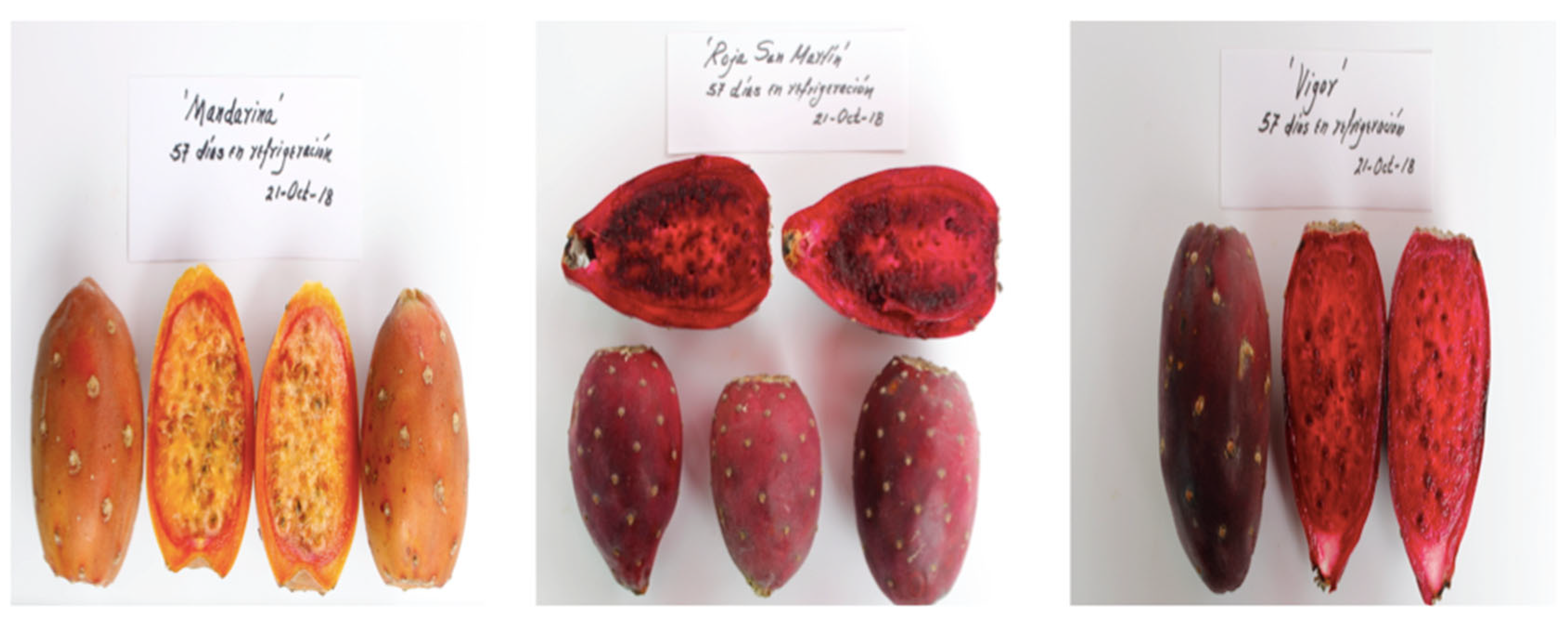
Figure 2.
Antioxidant capacity obtained from three varieties of prickly pear by two different methods. A) ABTS method and B) FRAP method. A= P< 0.05 Mandarina vs San Martín. One-way ANOVA followed by a post hoc Student Newman Keuls test n= 3 samples per group.
Figure 2.
Antioxidant capacity obtained from three varieties of prickly pear by two different methods. A) ABTS method and B) FRAP method. A= P< 0.05 Mandarina vs San Martín. One-way ANOVA followed by a post hoc Student Newman Keuls test n= 3 samples per group.
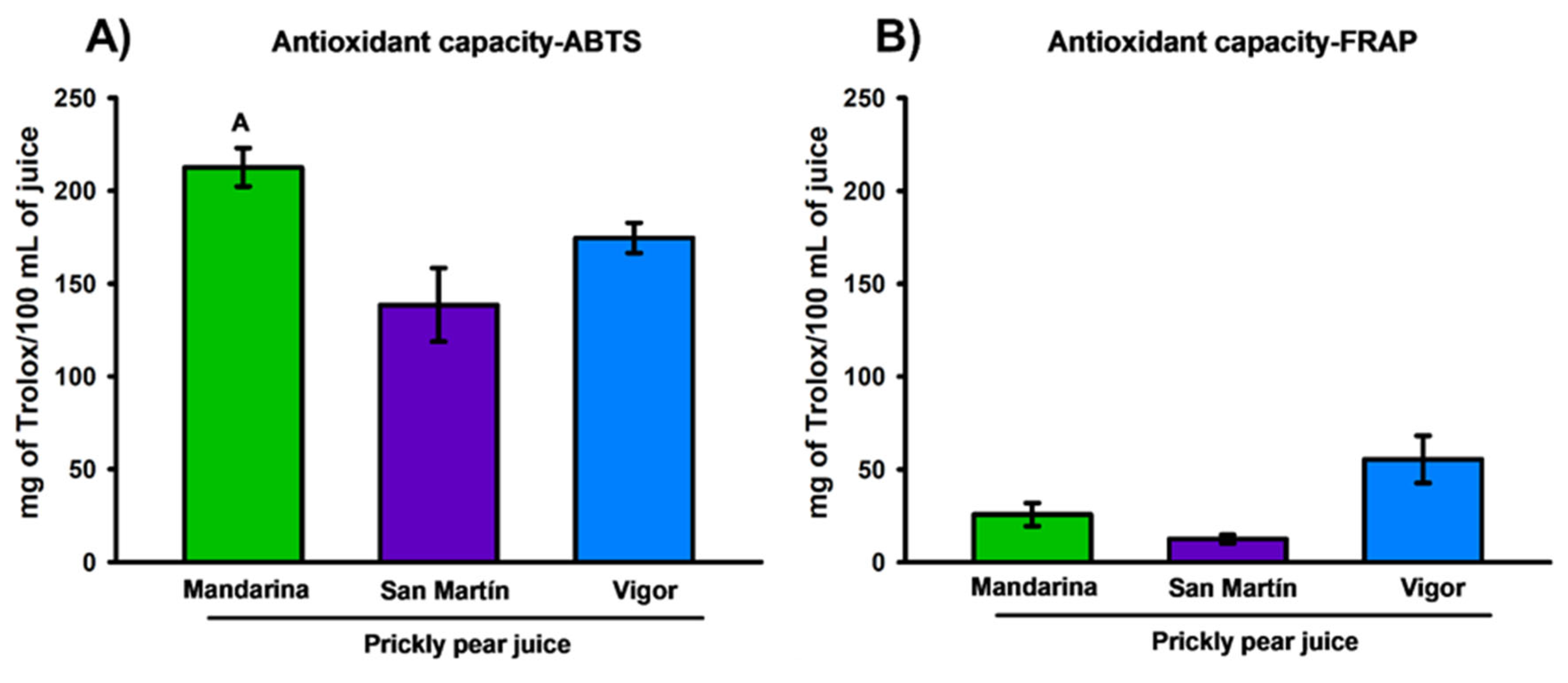
Figure 3.
Evaluation of the antihyperglycemic effect of juices from three varieties of Prickly Pear in healthy male Wistar rats. A) Oral Glucose Tolerance Test (OGTT). B) Area Under the Curve of the OGTT. A= P< 0.05 Metformin (300 mg/kg) vs control. B= P< 0.05 Mandarina Prickly Pear and San Martín Prickly Pear (1 mL mg/100 g) vs control. Two-way ANOVA and one-way ANOVA followed by a post hoc Student Newman Keuls test for OGTT and AUC, respectively. n= 5-6 rats per group.
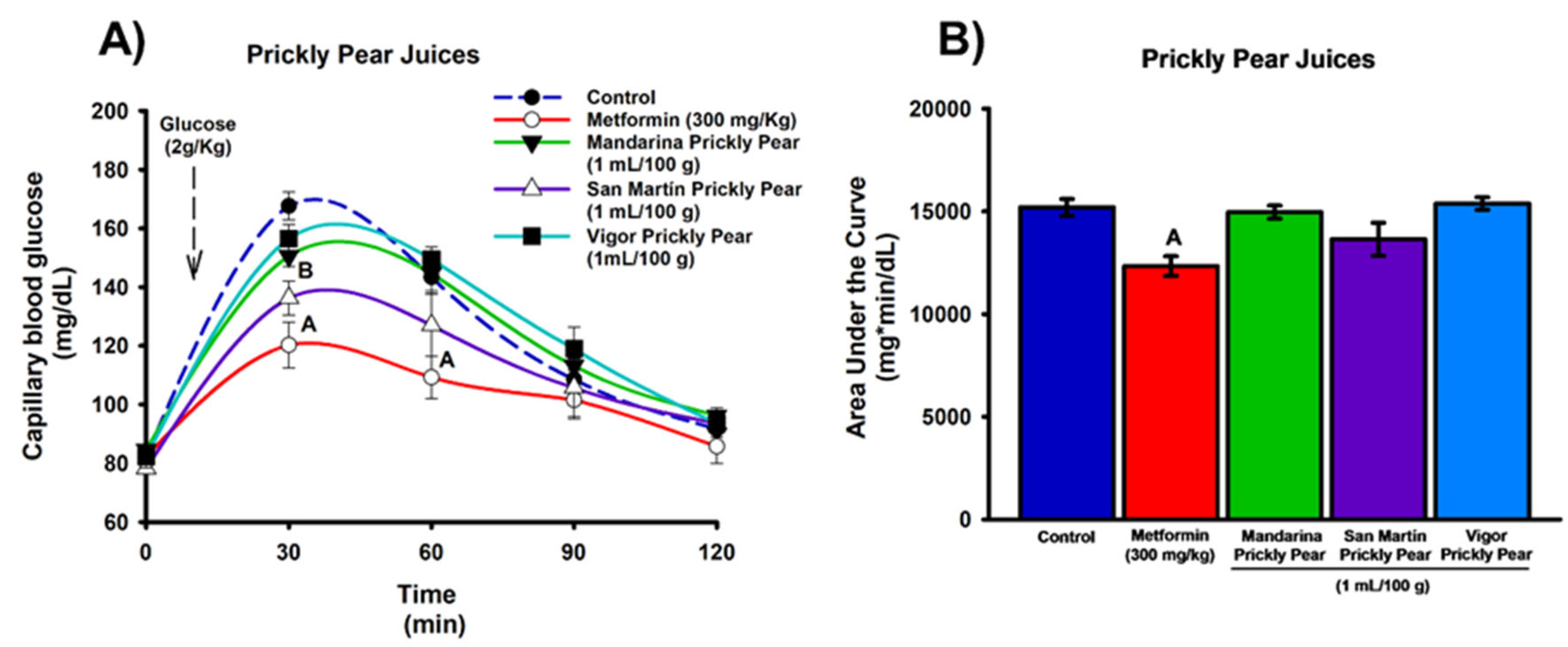
Figure 4.
Evaluation of the antihyperglycemic effect of San Martín Prickly Pear juice freeze-dried in healthy male Wistar rats. A) Oral Glucose Tolerance Test (OGTT). B) Area Under the Curve of the OGTT. A= P< 0.05 Metformin (300 mg/kg) vs control. B= P< 0.05 (Freeze-dried 25, 100, 200 mg/kg) vs control. Two-way ANOVA and one-way ANOVA followed by a post hoc Student Newman Keuls test for OGTT and AUC, respectively. n= 5-6 rats per group.
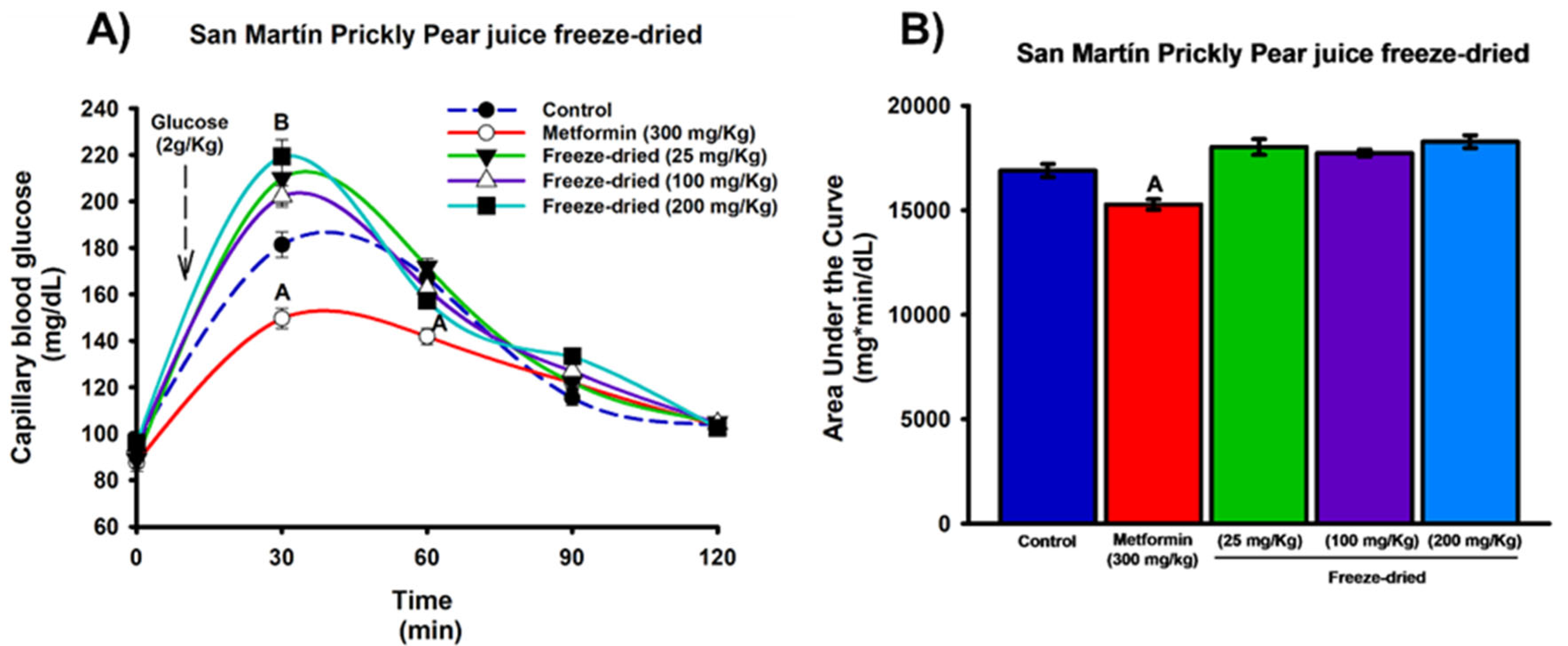
Figure 5.
Antihyperglycemic effect of San Martín Prickly Pear juice and freeze-dried in healthy male Wistar rats. A) Oral Glucose Tolerance Test (OGTT). B) Area Under the Curve of the OGTT. A= P< 0.05 Metformin (300 mg/kg) vs control. B= P< 0.05 Prickly Pear juice (1mL/100 g and 0.5 mL/100 g) vs control. Two-way ANOVA and one-way ANOVA followed by a post hoc Student Newman Keuls test for OGTT and AUC, respectively. n= 5-6 rats per group.
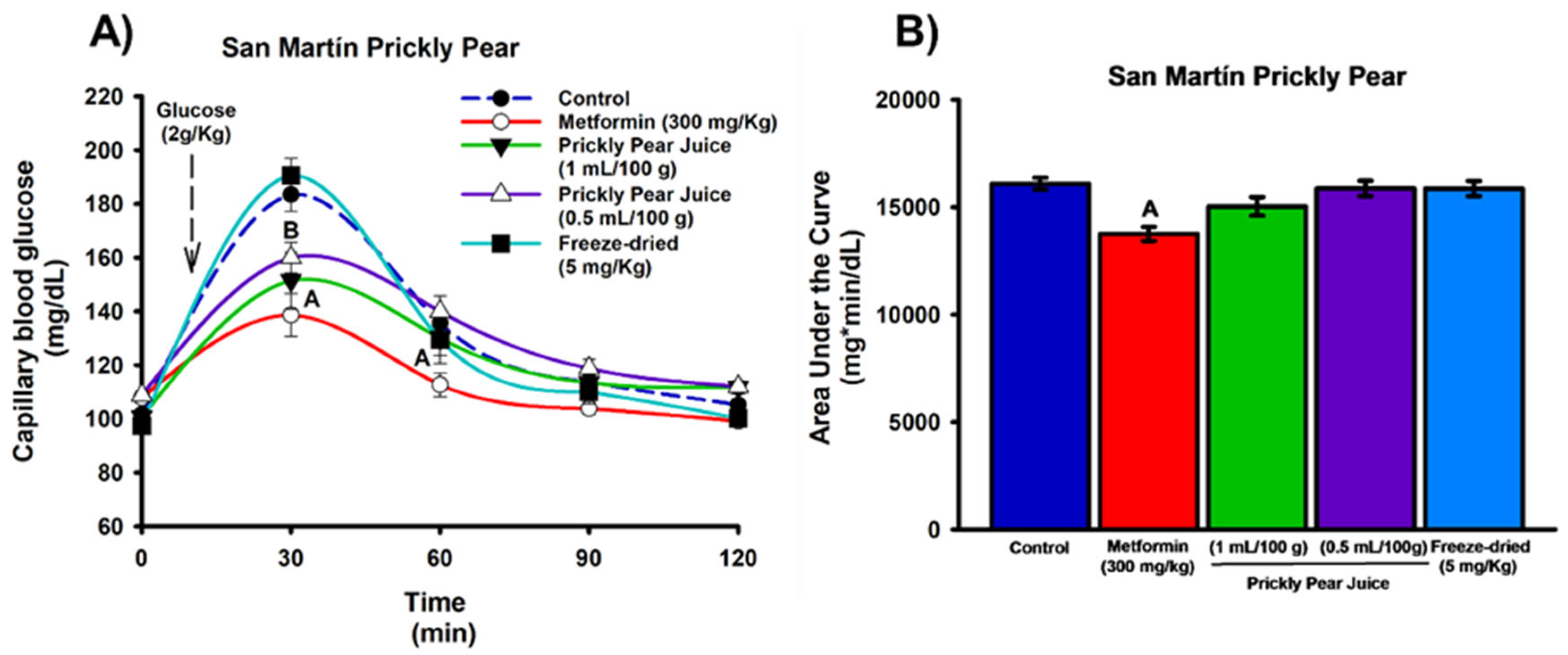
Figure 6.
Hypoglycemic effect by the administration of San Martin Prickly Pear juice in type 2 diabetic rats. A= P< 0.05 Diabetic rats vs Healthy rats; B= P< 0.05 DB+Metformin (300 mg/kg) vs Diabetic rats; C= P< 0.05 DB+ Prickly Pear juice (0.5 mL/100 g) vs Diabetic rats. One-way ANOVA followed by Dunn's Method. n= 5-6 rats per group.
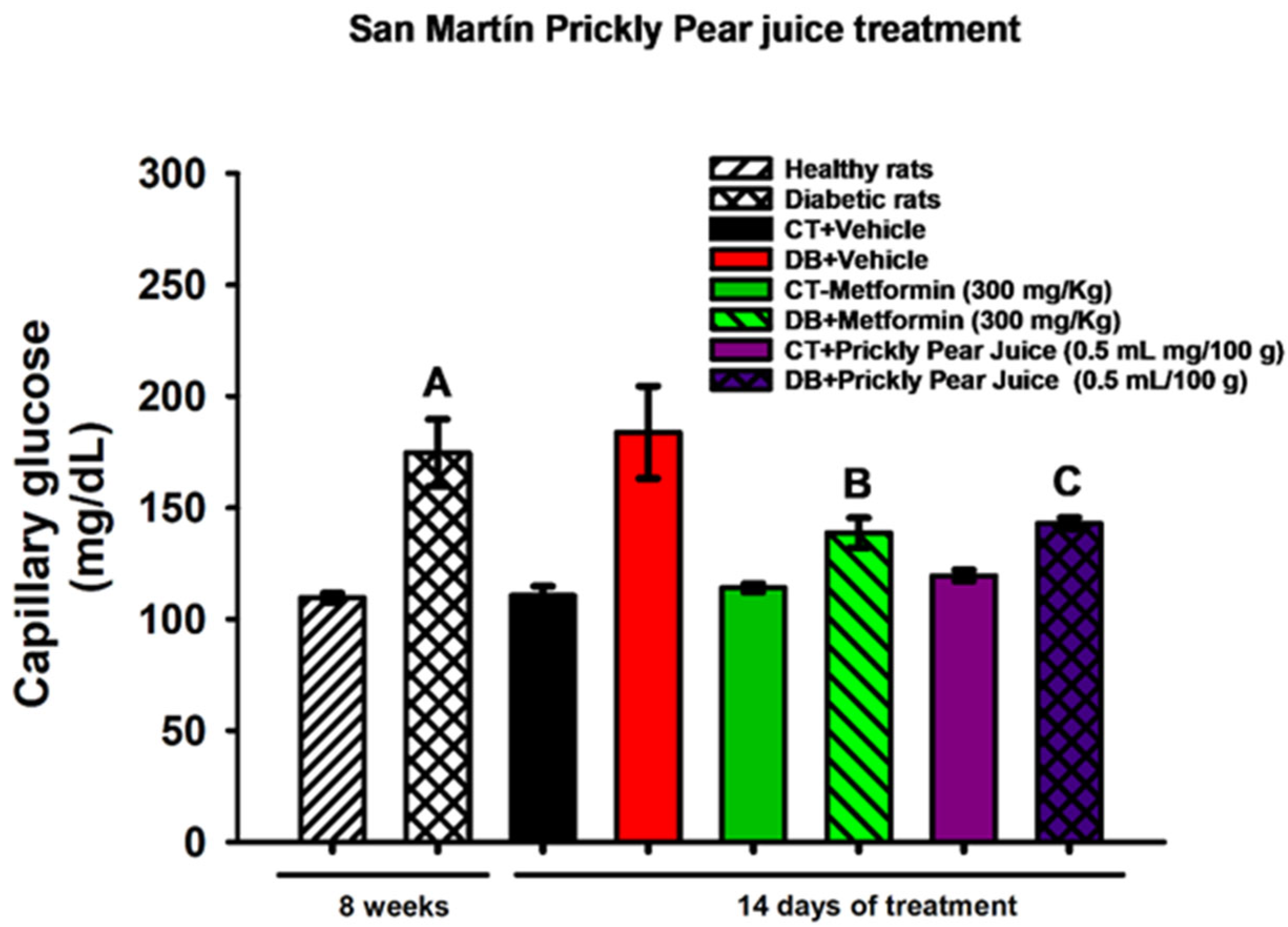
Figure 7.
Evaluation of reversal of glucose intolerance by administration of San Martin Prickly Pear juice in type 2 diabetic rats. A) Oral Glucose Tolerance Test (OGTT). B) Area Under the Curve of the OGTT. A= P< 0.05 DB-Vehicle, DB-Metformin (300 mg/kg) and DB-San Martín Prickly Pear juice (0.5 mL/100 g) vs control. Two-way ANOVA followed by a post hoc Student Newman Keuls test. n= 5-6 rats per group.
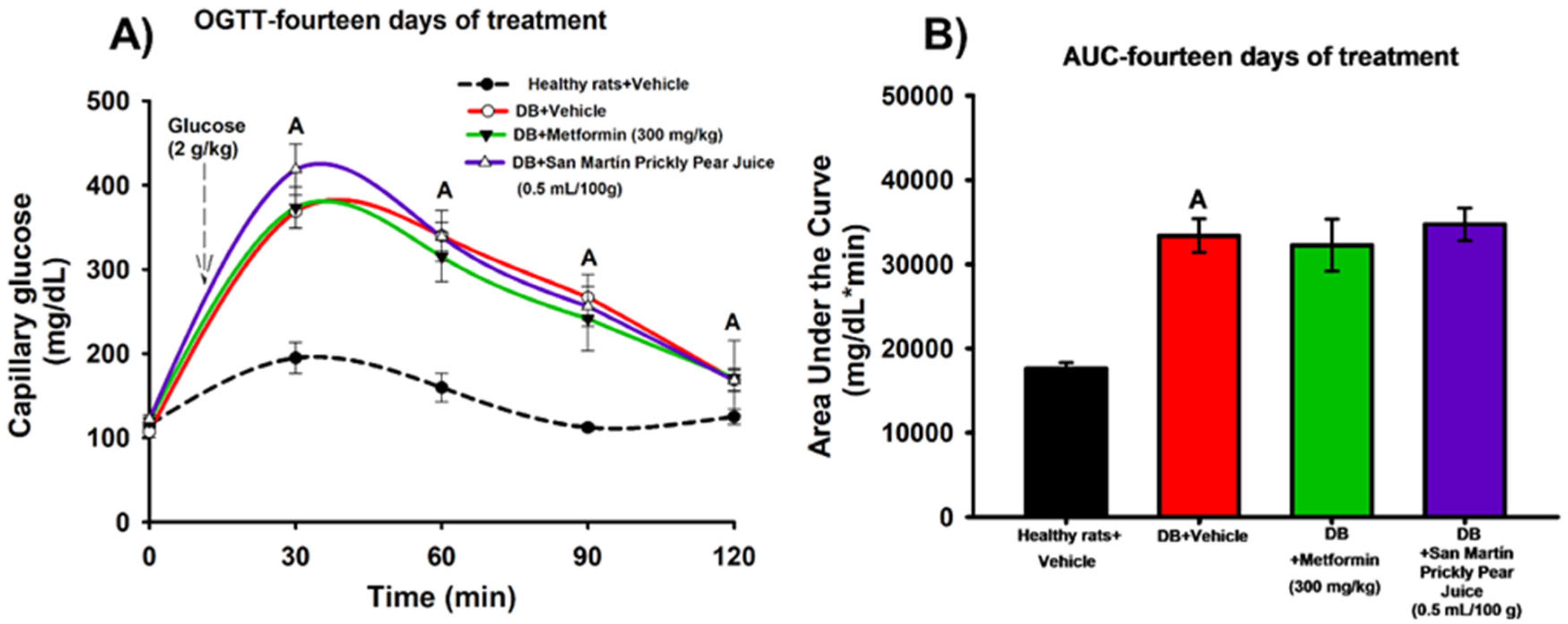

Table 1.
Quality parameters and chemical composition of juices from three prickly pear cultivars.
| Parameters | cv. Mandarina | cv. San Martín | cv. Vigor | |
|---|---|---|---|---|
| pH | 4.91 ± 0.01 | 4.85 ± 0.01 | 5.07 ± 0.02 | |
| Density (20°c) | g/L | 0.98 | 0.93 | 0.91 |
| Total soluble solids | °Brix | 15.7 ± 0.05 | 10.4 ± 0.1 | 10.37 ± 0.41 |
| Ascorbic acid | mg/100 mL | 20.49 ± 0.78 | 26.85 ± 0.5 | 11.78 ± 1.5 |
| Oxalic acid | mg/100 mL | 35 ± 0.18 | 111 ± 0.32 | 124 ± 1.02 |
| Malic acid | mg/100 mL | 15 ± 0.47 | 19 ± 0.47 | 15 ± 0.29 |
| Glucose | g/L | 60.78 ± 0.57A | 57.33 ± 0.64B | 52.78 ± 0.72 |
| Fructose | g/L | 46.96 ± 0.4 | 48.39 ± 0.69B | 45.36 ± 0.79 |
| Total phenols | mg GAE/L | 1603.24 ± 10.93A | 625.29 ± 3.95 | 1161.72±14.30D |
| Flavonoids | mg QE/L | 30.98 ± 2.56 | 59.08 ± 0.71C | 51.84 ± 0.26 |
| Betaxanthins | mg/L | 18.06 ± 0.75A | 101.82 ± 0.02B | 25.90 ± 1.65C |
| Betacyanin’s | mg/L | 14.67 ± 0.05A | 252.69 ± 2.39B | 46.75 ± 4.23C |
| Betalains | mg/L | 34.72 ± 0.77A | 354.51 ± 2.37B | 72.65 ± 3.47C |
Values are expressed as mean ± standard error of the mean (SEM). A= P< 0.05 Mandarina vs San Martín and Vigor. B= P< 0.05 San Martín vs Vigor. C= P< 0.05 San Martín vs Mandarina and Vigor. D= P< 0.05 Vigor vs San Martín and Mandarina. One-way ANOVA followed by Student-Newman-Keuls post hoc test; n= 3 samples per group.
Disclaimer/Publisher’s Note: The statements, opinions and data contained in all publications are solely those of the individual author(s) and contributor(s) and not of MDPI and/or the editor(s). MDPI and/or the editor(s) disclaim responsibility for any injury to people or property resulting from any ideas, methods, instructions or products referred to in the content. |
© 2026 by the authors. Licensee MDPI, Basel, Switzerland. This article is an open access article distributed under the terms and conditions of the Creative Commons Attribution (CC BY) license (http://creativecommons.org/licenses/by/4.0/).
Copyright: This open access article is published under a Creative Commons CC BY 4.0 license, which permit the free download, distribution, and reuse, provided that the author and preprint are cited in any reuse.