

Submitted:
02 October 2026
Posted:
06 October 2026
You are already at the latest version
Abstract
Background. Oral mucositis is a major toxicity of hematopoietic stem-cell transplantation (HSCT). Glucagon-like peptide-1 (GLP-1) signaling promotes epithelial repair and attenuates inflammation after high-dose chemotherapy, but its relationship to oral mucositis after transplantation is undefined. We hypothesized that semaglutide would be associated with a lower risk of stomatitis and oral mucositis, without increased xerostomia, and with fewer systemic complications. Methods. Using the TriNetX federated network, adults aged 18–90 with stem-cell transplant status (ICD-10-CM Z94.84) were classified as semaglutide-exposed or unexposed. Outcomes were assessed from day 30 after the index event, with a prespecified 90-day analysis for oral mucositis. Primary endpoints were stomatitis (K12) and ulcerative oral mucositis (K12.3). Secondary endpoints included dry mouth, dysgeusia, systemic inflammation, and mortality. One—to—one propensity matching was used to balance age, sex, race/ethnicity, diabetes, and comorbidities. Results. After matching 1,355 pairs, stomatitis occurred in 4.0% versus 10.6% (risk ratio [RR] 0.378, 95% CI 0.262–0.545; hazard ratio [HR] 0.476, 95% CI 0.323-0.700; P<0.001). At 90 days, oral mucositis occurred in 2.43% versus 8.39% (RR 0.29, 95% CI 0.189-0.446; HR 0.278, 95% CI 0.179–0.431; P<0.0001). Dry mouth and taste/smell disturbances did not differ. Exposed patients had lower risks of sepsis-spectrum inflammation (6.2% versus 13.1%), influenza/pneumonia (11.6% versus 23.8%), and death (6.7% versus 25.0%). Conclusions. Semaglutide exposure was associated with lower coded oral mucositis, without increased xerostomia, and with concordant reductions in infectious and mortality outcomes. These findings warrant prospective confirmation and do not establish a preventive indication.
Keywords:
semaglutide
; oral mucositis
; hematopoietic stem-cell transplantation
; GLP-1 receptor agonist
; propensity score matching
; stomatitis
Introduction
Oral mucositis (OM) remains one of the most frequent and debilitating toxicities of hematopoietic stem-cell transplantation (HSCT).[1,2] OM occurs in the majority of patients receiving higher dose conditioning and post-transplant cyclophosphamide contributes to severe pain, impaired oral intake, secondary infections, prolonged hospitalization, and increased treatment-related mortality.[3,4] Despite advances in supportive care, effective pharmacologic strategies that meaningfully reduce the incidence or severity of OM in the transplant setting remain limited.[5,6,7,8,9,10] Glucagon-like peptide-1 receptor agonists (GLP-1 RAs), including semaglutide, are widely used for type 2 diabetes and obesity. Kissow, et al in their preclinical studies, have demonstrated that GLP-1 signaling promotes intestinal epithelial repair and attenuates chemotherapy-induced mucosal injury [8]. Higher endogenous GLP-1 levels at the time of HSCT have also been associated with reduced systemic inflammation and lower risk of acute graft-versus-host disease. These observations raise the possibility that exogenous GLP-1 RA exposure could exert protective effects on both gastrointestinal and oral mucosa.[12] At the same time, emerging reports of xerostomia and other oral adverse effects with semaglutide introduce a competing concern that the drug might worsen oral mucosal integrity or secondary complications.[13] Real-world evidence examining the relationship between semaglutide exposure and oral mucositis or related outcomes specifically in HSCT recipients is lacking. Using a large federated electronic health record network, we therefore evaluated whether semaglutide exposure is associated with altered risks of oral mucositis, xerostomia, systemic infections, and mortality among patients with a history of hematopoietic stem-cell transplantation. We hypothesized that semaglutide exposure would be associated with a lower incidence of oral mucositis and related stomatitis, as well as reduced rates of systemic infectious complications and all-cause mortality, among propensity-matched HSCT recipients. The primary aim was to compare the risk of stomatitis and related lesions and of coded oral mucositis between semaglutide-exposed and non-exposed HSCT patients after propensity-score matching. Secondary aims were to evaluate associations with dry mouth, smell and taste disturbances, systemic inflammation including sepsis, influenza, and pneumonia, and all-cause mortality. Thus, several critical questions require answers:
- After propensity-score matching for key demographic and clinical covariates, is semaglutide exposure associated with a lower risk of stomatitis and related lesions and of oral mucositis among patients with a history of hematopoietic stem-cell transplantation?
- Does semaglutide exposure increase the risk of xerostomia or smell and taste disturbances in this population?
- Is semaglutide exposure associated with reduced rates of systemic inflammation, including sepsis, influenza, and pneumonia, and all-cause mortality after HSCT?
- Are the observed associations consistent across unmatched and propensity-matched analyses, supporting the robustness of any protective signal?
Methods
We conducted a retrospective cohort study using the TriNetX global federated health research network. The analysis was performed on the [Deprecated 11-20-2024] COVID-19 Research Network, which comprised 88 healthcare organizations contributing de-identified electronic health record data. The query was executed on 13 August 2026. Because only de-identified data were accessed, the study was exempt from institutional review board review under TriNetX governance protocols.
Two cohorts of adult patients aged 18 to 90 years with a documented diagnosis of stem-cell transplant status (ICD-10-CM Z94.84) were defined. Cohort 1 included patients who also had a record of semaglutide exposure (RxNorm 1991302), while Cohort 2 comprised patients with the same transplant status code but without any record of semaglutide. Before matching, Cohort 1 contained 1,355 patients, and Cohort 2 contained 49,965 patients. The index event was defined as the first occurrence of the cohort-defining criteria. Outcomes were assessed beginning 30 days after the index event and continuing indefinitely thereafter. Patients whose index event occurred more than 20 years before the query date were excluded.
The primary outcome was stomatitis and related lesions. Secondary oral outcomes included oral mucositis, dry mouth (xerostomia), and smell and taste disturbances. Systemic and transplant-relevant outcomes examined were all-cause mortality and systemic inflammation, including sepsis, influenza, and pneumonia. All outcomes were identified using corresponding ICD-10 diagnosis codes. Risk and survival analyses excluded patients who already carried the relevant outcome code before the start of the observation window.
To reduce confounding, 1:1 propensity-score matching was performed using nearest-neighbor methods without replacement. Covariates included age at index, sex, race and ethnicity, body-mass index, type 2 diabetes mellitus, and selected comorbidity categories. After matching, each cohort contained 1,355 patients, and standardized mean differences for key covariates were reduced below 0.1, indicating adequate balance. Baseline characteristics were summarized with means and standard deviations or medians and interquartile ranges for continuous variables and with frequencies and percentages for categorical variables. For each outcome, we calculated absolute risk, risk difference with 95% confidence interval, RR, odds ratio, Kaplan–Meier estimates of freedom from the outcome, log-rank tests, and HR with 95% confidence intervals derived from Cox proportional-hazards models. A two-sided p-value of less than 0.05 was considered statistically significant. All analyses were performed within the TriNetX analytics platform.
Results
Both cohorts were defined by stem-cell transplant status (ICD-10-CM Z94.84). In the unmatched network, the semaglutide-exposed HSCT cohort (n = 1,355) and the non-exposed HSCT cohort (n = 49,818) differed in underlying hematologic diagnoses. Multiple myeloma (C90.0) was common in both groups but slightly less frequent among semaglutide-exposed patients (342 [24%] versus 14,855 [30%]) (Table 1). Myeloma not in remission (C90.00) showed a similar pattern (300 [21%] versus 14,299 [29%]), whereas myeloma in remission (C90.01) showed a comparable pattern (124 [9%] versus 3,812 [8%]) (Table 1). Myeloid leukemia (C92) was recorded in 126 (9%) versus 6,308 (13%) patients, lymphoid leukemia (C91) in 47 (3%) versus 2,805 (6%), non-follicular lymphoma (C83) in 72 (5%) versus 3,590 (7%), and other or unspecified non-Hodgkin lymphoma (C85) in 51 (4%) versus 3,628 (7%) (Table 1).
Exposed patients were older (mean age 58.4 versus 54.8 years; standardized mean difference [Std Diff] 0.248), more often female (54.2% versus 42.6%; Std Diff 0.233), more frequently Black or African American (18.4% versus 12.0%; Std Diff 0.179), and had a markedly higher prevalence of type 2 diabetes mellitus (32.6% versus 7.7%; Std Diff 0.654) and higher body-mass index (35.0 versus 28.3 kg/m²; Std Diff 0.906) (Table 1).
External causes of morbidity (V00–Y99) were less common in the semaglutide group (3.5% versus 5.9%; Std Diff 0.113) (Table 1). After 1:1 propensity-score matching (n = 1,355 per arm), these differences were largely eliminated. Age, sex, race, ethnicity, type 2 diabetes (32.6% versus 31.2%; Std Diff 0.030), and BMI categories all had Std Diff values below 0.1, with only continuous BMI retaining a mild residual imbalance (Std Diff 0.218) (Table 1).

Table 1.
Baseline characteristics before and after 1:1 propensity-score matching.
| Characteristic | Before propensity-score matching | After 1:1 propensity-score matching | ||||||
|---|---|---|---|---|---|---|---|---|
| Semaglutide (n = 1,355) |
Non-semaglutide (n = 49,818) |
P | SMD | Semaglutide (n = 1,355) |
Non-semaglutide (n = 1,355) |
P | SMD | |
| Cohort-defining diagnosis | ||||||||
| Stem-cell transplant status (Z94.84), n (%) | 1,355 (100) | 49,818 (100) | — | — | 1,355 (100) | 1,355 (100) | — | — |
| Demographics used in matching* | ||||||||
| Age at index, years, mean ± SD* | 58.4 ± 12.6 | 54.8 ± 16.6 | <0.001 | 0.248 | 58.4 ± 12.6 | 58.5 ± 12.5 | 0.788 | 0.010 |
| Female sex, n (%)* | 734 (54.2) | 20,483 (42.6) | <0.001 | 0.233 | 734 (54.2) | 730 (53.9) | 0.877 | 0.006 |
| Male sex, n (%)* | 621 (45.8) | 27,560 (57.4) | <0.001 | 0.232 | 621 (45.8) | 623 (46.0) | 0.939 | 0.003 |
| Race* | ||||||||
| White, n (%) | 930 (68.6) | 35,110 (73.1) | <0.001 | 0.098 | 930 (68.6) | 922 (68.0) | 0.741 | 0.013 |
| Black or African American, n (%) | 249 (18.4) | 5,755 (12.0) | <0.001 | 0.179 | 249 (18.4) | 268 (19.8) | 0.353 | 0.036 |
| Asian, n (%) | 18 (1.3) | 1,304 (2.7) | 0.002 | 0.099 | 18 (1.3) | 17 (1.3) | 0.865 | 0.007 |
| Other race, n (%) | 52 (3.8) | 1,747 (3.6) | 0.695 | 0.011 | 52 (3.8) | 45 (3.3) | 0.469 | 0.028 |
| Unknown race, n (%) | 99 (7.3) | 3,862 (8.0) | 0.329 | 0.027 | 99 (7.3) | 100 (7.4) | 0.941 | 0.003 |
| Ethnicity* | ||||||||
| Hispanic or Latino, n (%) | 122 (9.0) | 3,654 (7.6) | 0.056 | 0.051 | 122 (9.0) | 112 (8.3) | 0.494 | 0.026 |
| Not Hispanic or Latino, n (%) | 1,100 (81.2) | 36,455 (75.9) | <0.001 | 0.130 | 1,100 (81.2) | 1,111 (82.0) | 0.586 | 0.021 |
| Unknown ethnicity, n (%) | 133 (9.8) | 7,945 (16.5) | <0.001 | 0.200 | 133 (9.8) | 132 (9.7) | 0.948 | 0.002 |
| Clinical covariates used in matching* | ||||||||
| Type 2 diabetes mellitus (E11), n (%)* | 442 (32.6) | 3,698 (7.7) | <0.001 | 0.654 | 442 (32.6) | 423 (31.2) | 0.434 | 0.030 |
| External causes of morbidity (V00–Y99), n (%)* | 48 (3.5) | 2,850 (5.9) | <0.001 | 0.113 | 48 (3.5) | 42 (3.1) | 0.520 | 0.025 |
| Body-mass index (not force-matched; residual imbalance) | ||||||||
| BMI, kg/m², mean ± SD | 35.0 ± 8.1 | 28.3 ± 6.5 | <0.001 | 0.906 | 35.0 ± 8.1 | 33.4 ± 6.4 | <0.001 | 0.218 |
| Underweight, 0–18.50 kg/m², n (%) | 10 (0.7) | 1,331 (2.8) | <0.001 | 0.155 | 10 (0.7) | 10 (0.7) | 1.000 | <0.001 |
| Normal, 18.50–24.90 kg/m², n (%) | 47 (3.5) | 8,793 (18.3) | <0.001 | 0.490 | 47 (3.5) | 39 (2.9) | 0.381 | 0.034 |
| Overweight, 25.00–29.90 kg/m², n (%) | 159 (11.7) | 11,439 (23.8) | <0.001 | 0.320 | 159 (11.7) | 155 (11.4) | 0.810 | 0.009 |
| Obese, ≥30 kg/m², n (%) | 515 (38.0) | 10,842 (22.6) | <0.001 | 0.341 | 515 (38.0) | 527 (38.9) | 0.636 | 0.018 |
| Underlying hematologic diagnoses (unmatched cohort profile; not used as matching covariates) | ||||||||
| Multiple myeloma (C90.0), n (%) | 342 (24) | 14,855 (30) | — | — | — | — | — | — |
| Myeloma not in remission (C90.00), n (%) | 300 (21) | 14,299 (29) | — | — | — | — | — | — |
| Myeloma in remission (C90.01), n (%) | 124 (9) | 3,812 (8) | — | — | — | — | — | — |
| Myeloid leukemia (C92), n (%) | 126 (9) | 6,308 (13) | — | — | — | — | — | — |
| Lymphoid leukemia (C91), n (%) | 47 (3) | 2,805 (6) | — | — | — | — | — | — |
| Non-follicular lymphoma (C83), n (%) | 72 (5) | 3,590 (7) | — | — | — | — | — | — |
| Other/unspecified non-Hodgkin lymphoma (C85), n (%) | 51 (4) | 3,628 (7) | — | — | — | — | — | — |
| Other aplastic anemias / marrow failure (D61), n (%) | 112 (8) | 10,303 (21) | — | — | — | — | — | — |
| Aplastic and other anemias (D60–D64), n (%) | 223 (16) | 14,711 (30) | — | — | — | — | — | — |
| Other anemias (D64), n (%) | 128 (9) | 6,120 (12) | — | — | — | — | — | — |
| Other disorders of blood/blood-forming organs (D70–D77), n (%) | 152 (11) | 9,858 (20) | — | — | — | — | — | — |
| Coagulation defects / hemorrhagic conditions (D65–D69), n (%) | 84 (6) | 5,583 (11) | — | — | — | — | — | — |
Adults with stem-cell transplant status (ICD-10-CM Z94.84) were identified from the TriNetX Global Health Research Network (query executed August 13, 2026). Matching covariates are marked with an asterisk (*) and were included in a 1:1 nearest-neighbor propensity-score matching model without replacement. A standardized mean difference (SMD) <0.10 was considered indicative of adequate covariate balance. BMI was not included as a force-matched covariate; continuous BMI remained incompletely balanced after matching (SMD = 0.218) and is therefore highlighted in bold italics. Hematologic diagnoses describe the unmatched source population and were not included as matching covariates; therefore, post-matching values are not reported for these characteristics. BMI category percentages may not sum to 100% because BMI data were unavailable for a subset of patients. Cohort denominators may vary slightly by characteristic because of differences in data completeness.
Abbreviations: BMI, body mass index; SMD, standardized mean difference; SD, standard deviation.
In the matched analysis using the original unrestricted follow-up window beginning 30 days after the index event, stomatitis and related lesions (K12) occurred in 37 of 926 semaglutide-exposed patients (4.0%) compared with 99 of 936 non-exposed patients (10.6%) (Figure 1a). This corresponded to a risk difference of -6.6 percentage points (95% CI -8.9 to -4.2; p < 0.001), a RR of 0.378 (95% CI 0.262-0.545), and an OR of 0.352 (95% CI 0.238-0.519) (Figure 1a, Table 2). Event-free survival was 92.96% versus 75.86% (log-rank p < 0.001), with a HR of 0.476 (95% CI 0.323-0.700) (Figure 1b, Table 3).
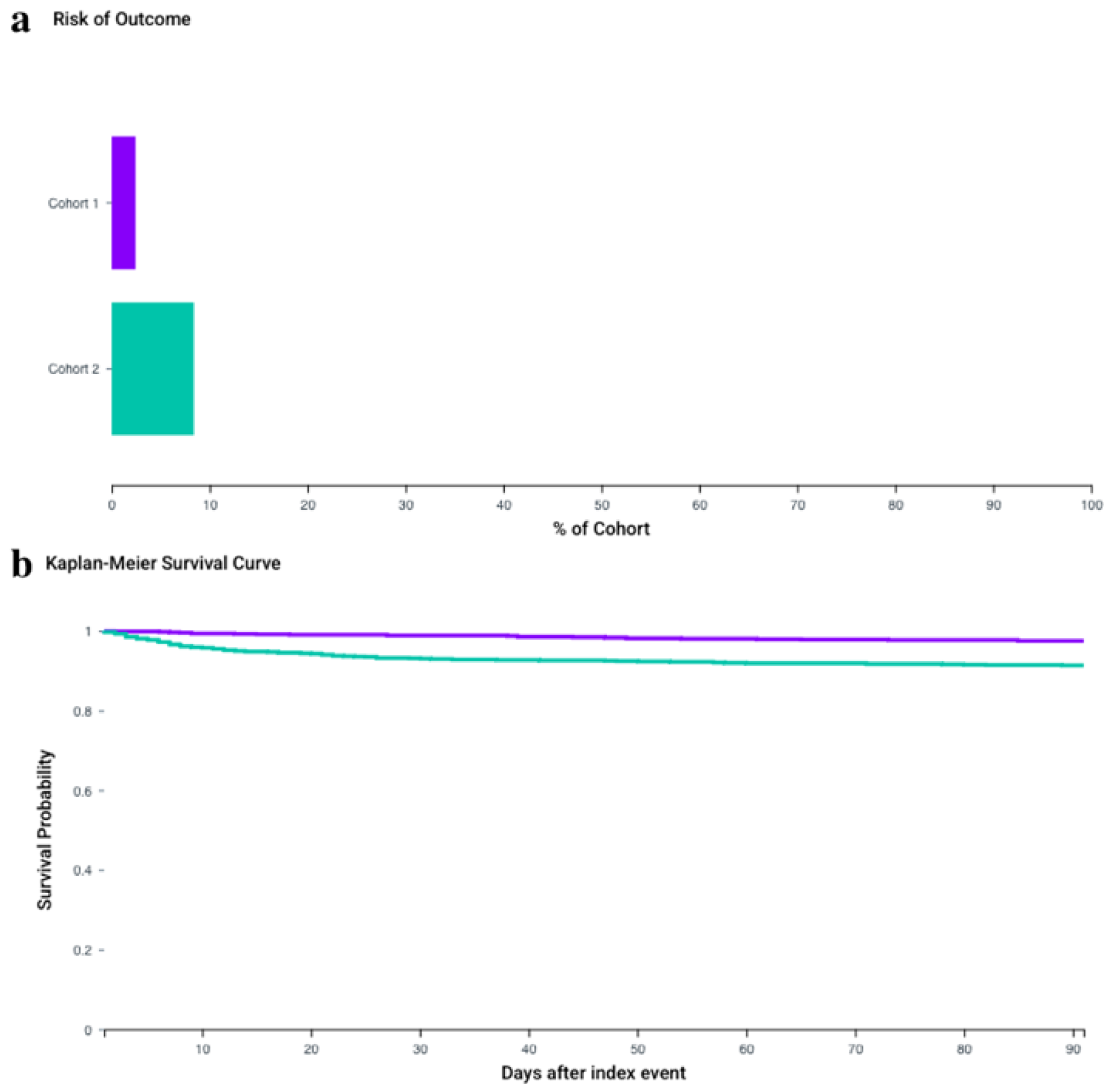
When the mucositis analysis was restricted to a three-month (90-day) observation window, a protective association emerged. Oral mucositis occurred in 25 of 1,027 semaglutide-exposed patients (2.43%) compared with 100 of 1,192 non-exposed patients (8.39%) (Figure 2a). The absolute risk difference was -5.96 percentage points (95% CI −7.79 to -4.12; z = -6.067; p < 0.0001), the RR was 0.29 (95% CI 0.189-0.446), and the OR was 0.272 (95% CI 0.174-0.426) (Figure 2a, Table 2). Event-free survival at 90 days was 97.46% in the semaglutide cohort and 91.31% in the comparison cohort (log-rank χ² = 37.527; df = 1; p < 0.0001) (Figure 2b, Table 3). The corresponding HR was 0.278 (95% CI 0.179-0.431) (Figure 2b, Table 3). Among patients who experienced the outcome, the mean number of mucositis instances did not differ (1.56 ± 1.23 versus 1.75 ± 2.00; t = -0.453; p = 0.651). A total of 448 patients in the semaglutide cohort and 283 patients in the non-exposed cohort were excluded from the three-month analysis because the outcome was already recorded before the start of the time window.
All-cause mortality remained substantially lower among semaglutide-exposed patients (86 of 1,276 [6.7%] versus 326 of 1,306 [25.0%]; RR 0.270, 95% CI 0.216–0.338; p < 0.001) (Figure 3a, Table 2). Overall survival was 78.68% versus effectively 0% at the end of the unrestricted window (log-rank p < 0.001; HR 0.396, 95% CI 0.310–0.506) (Figure 3b, Table 3). Dry mouth (2.6% versus 3.5%; p = 0.164) and smell and taste disturbances (1.7% versus 2.2%; p = 0.377) did not differ significantly (Figure 4 and Figure 5, Table 2 and Table 3). Systemic inflammation, including sepsis (6.2% versus 13.1%; RR 0.475; p < 0.001) and influenza and pneumonia (11.6% versus 23.8%; RR 0.488; p < 0.001), was lower with semaglutide exposure, with corresponding improvements in event-free survival (Figure 6 and Figure 7, Table 2 and Table 3).
Figure 3.
Risk and survival outcomes for all-cause mortality after propensity-score matching. a Risk of death in semaglutide-exposed (Cohort 1, purple) and non-exposed (Cohort 2, teal) patients, shown as percentage of cohort. b Kaplan-Meier curves showing overall survival in semaglutide-exposed (purple) and non-exposed (teal) patients by days after the index event.
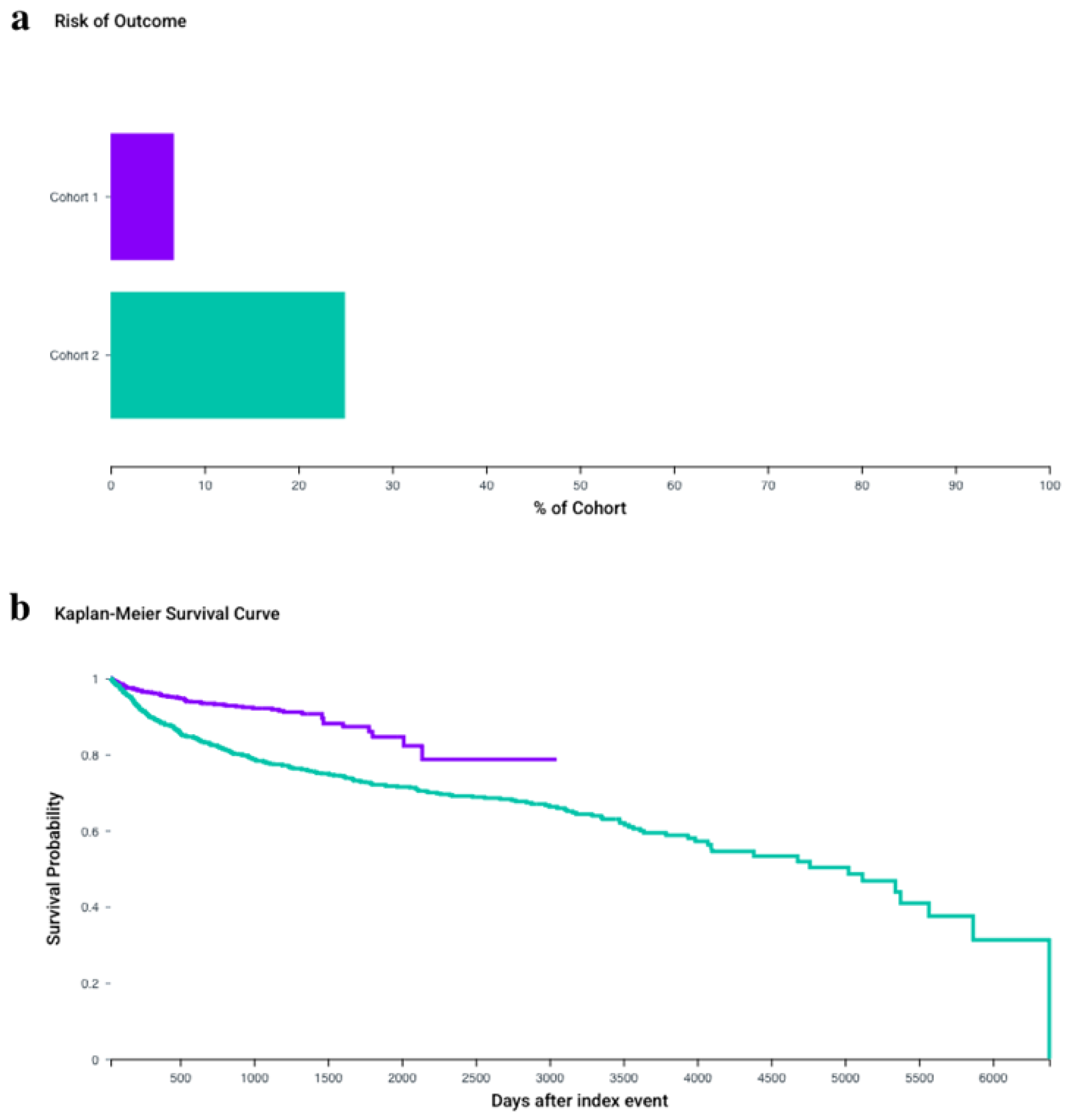
Figure 4.
Risk and event-free survival for dry mouth after propensity-score matching. a Risk of dry mouth in semaglutide-exposed (Cohort 1, purple) and non-exposed (Cohort 2, teal) patients, shown as percentage of cohort. b Kaplan-Meier curves showing event-free survival for dry mouth in semaglutide-exposed (purple) and non-exposed (teal) patients by days after the index event.
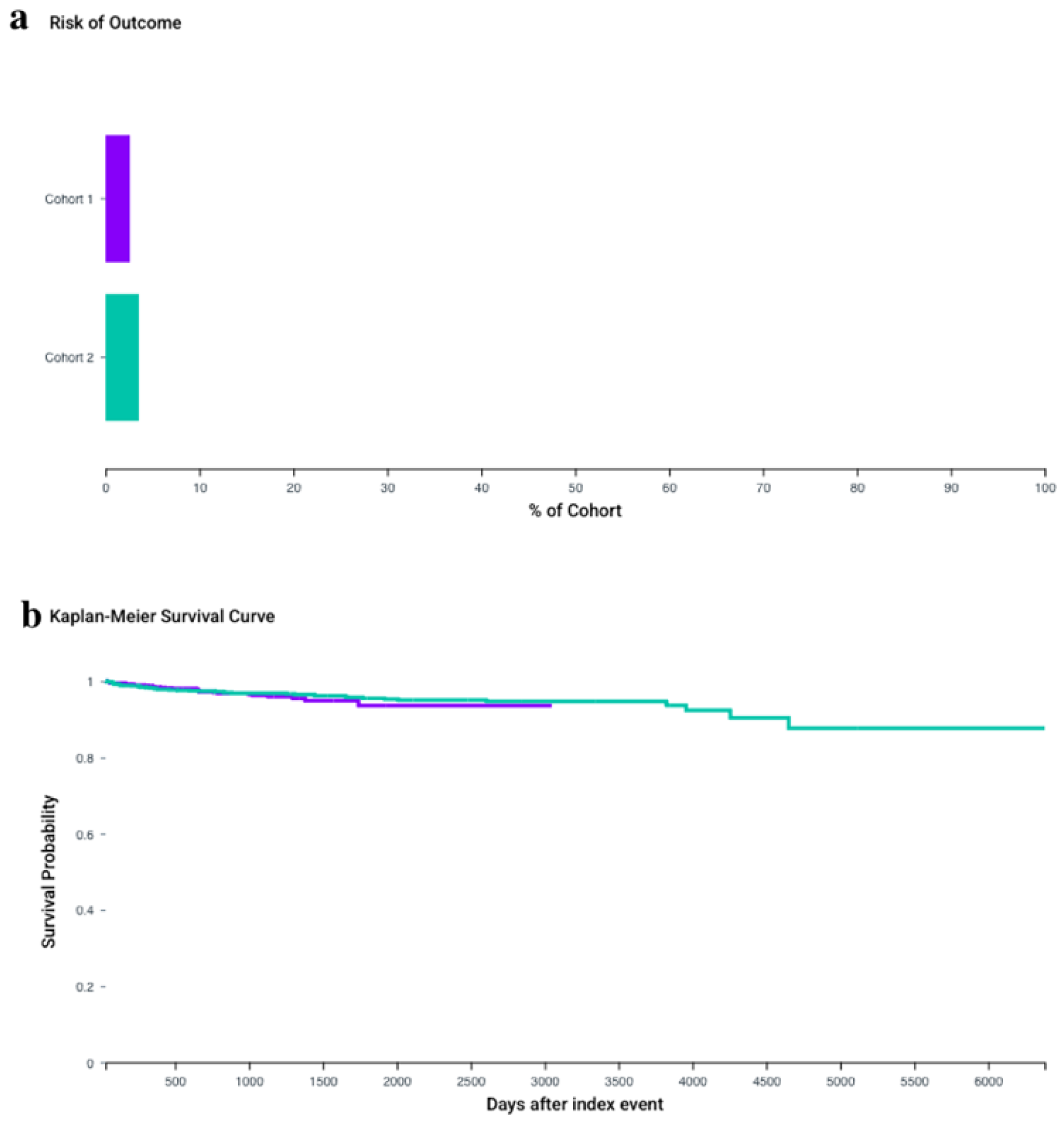
Figure 5.
Risk and event-free survival for smell and taste disturbances after propensity-score matching. a Risk of smell and taste disturbances in semaglutide-exposed (Cohort 1, purple) and non-exposed (Cohort 2, teal) patients, shown as percentage of cohort. b Kaplan-Meier curves showing event-free survival for smell and taste disturbances in semaglutide-exposed (purple) and non-exposed (teal) patients by days after the index event.
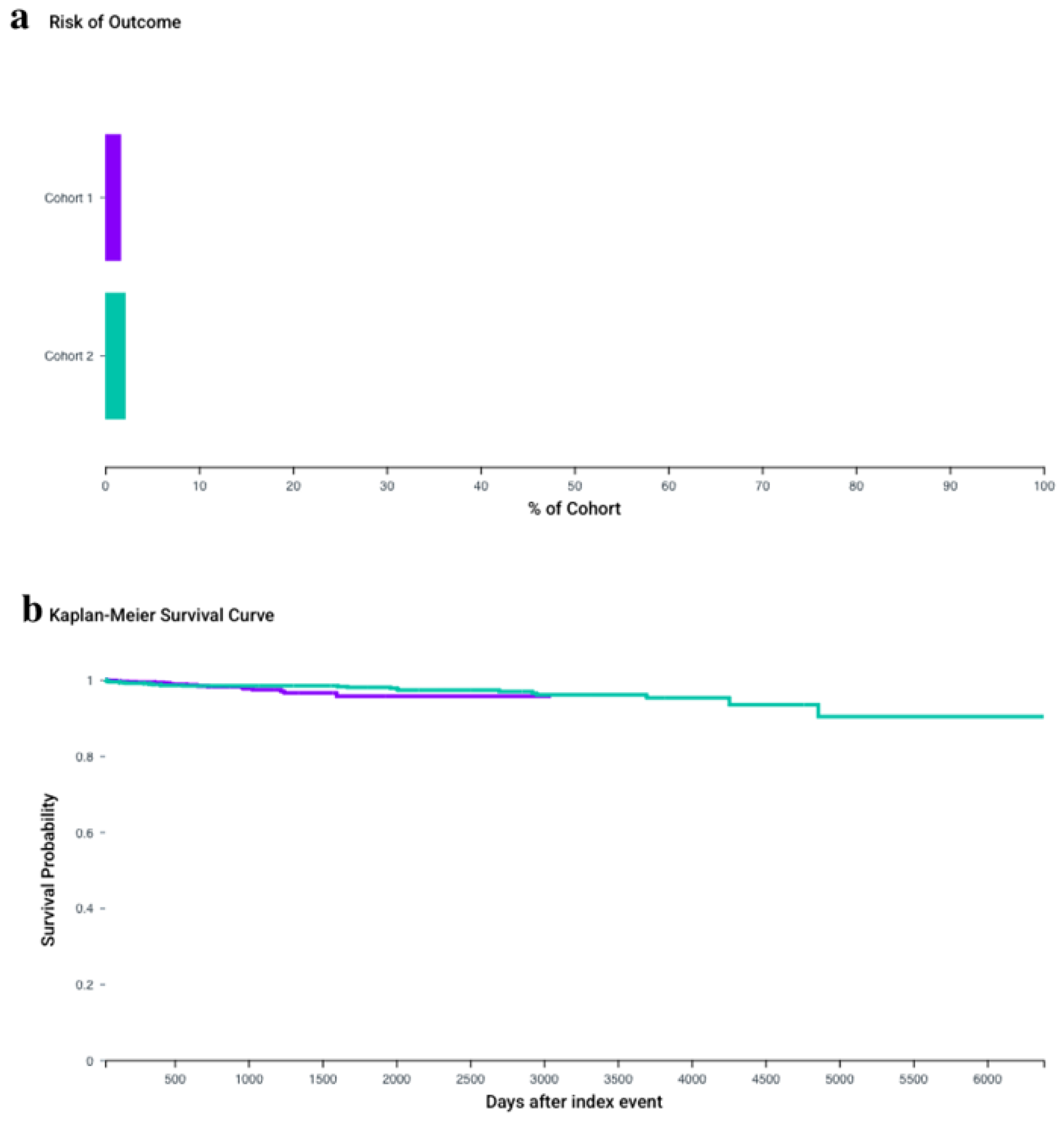
Figure 6.
Risk and event-free survival for systemic infection, including septicemia, after propensity-score matching. a Risk of systemic infection, including septicemia, in semaglutide-exposed (Cohort 1, purple) and non-exposed (Cohort 2, teal) patients, shown as percentage of cohort. b Kaplan-Meier curves showing event-free survival for systemic infection, including septicemia, in semaglutide-exposed (purple) and non-exposed (teal) patients by days after the index event.
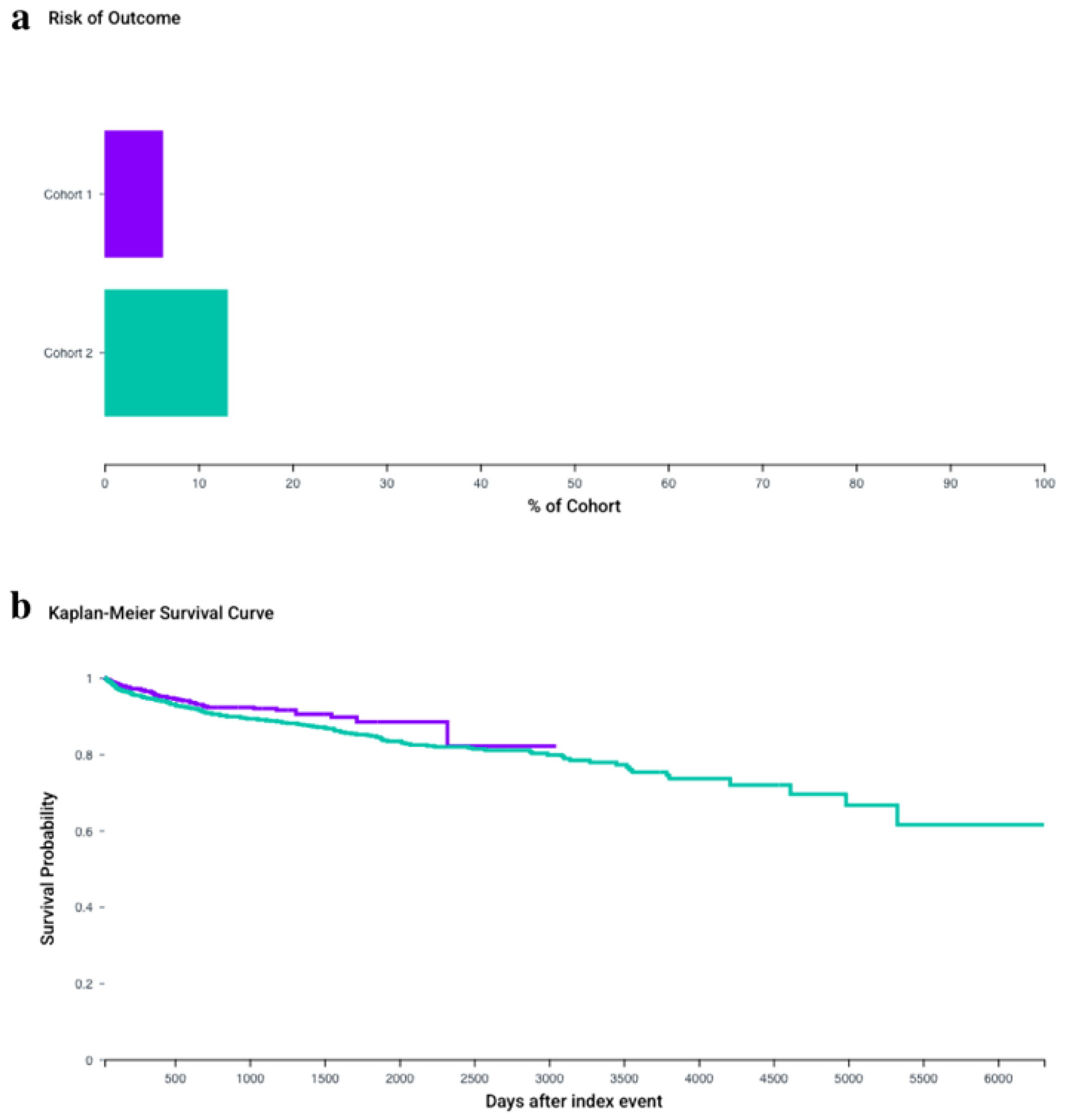
Figure 7.
Risk and event-free survival for influenza and pneumonia after propensity-score matching. a Risk of influenza and pneumonia in semaglutide-exposed (Cohort 1, purple) and non-exposed (Cohort 2, teal) patients, shown as percentage of cohort. b Kaplan–Meier curves showing event-free survival for influenza and pneumonia in semaglutide-exposed (purple) and non-exposed (teal) patients by days after the index event.
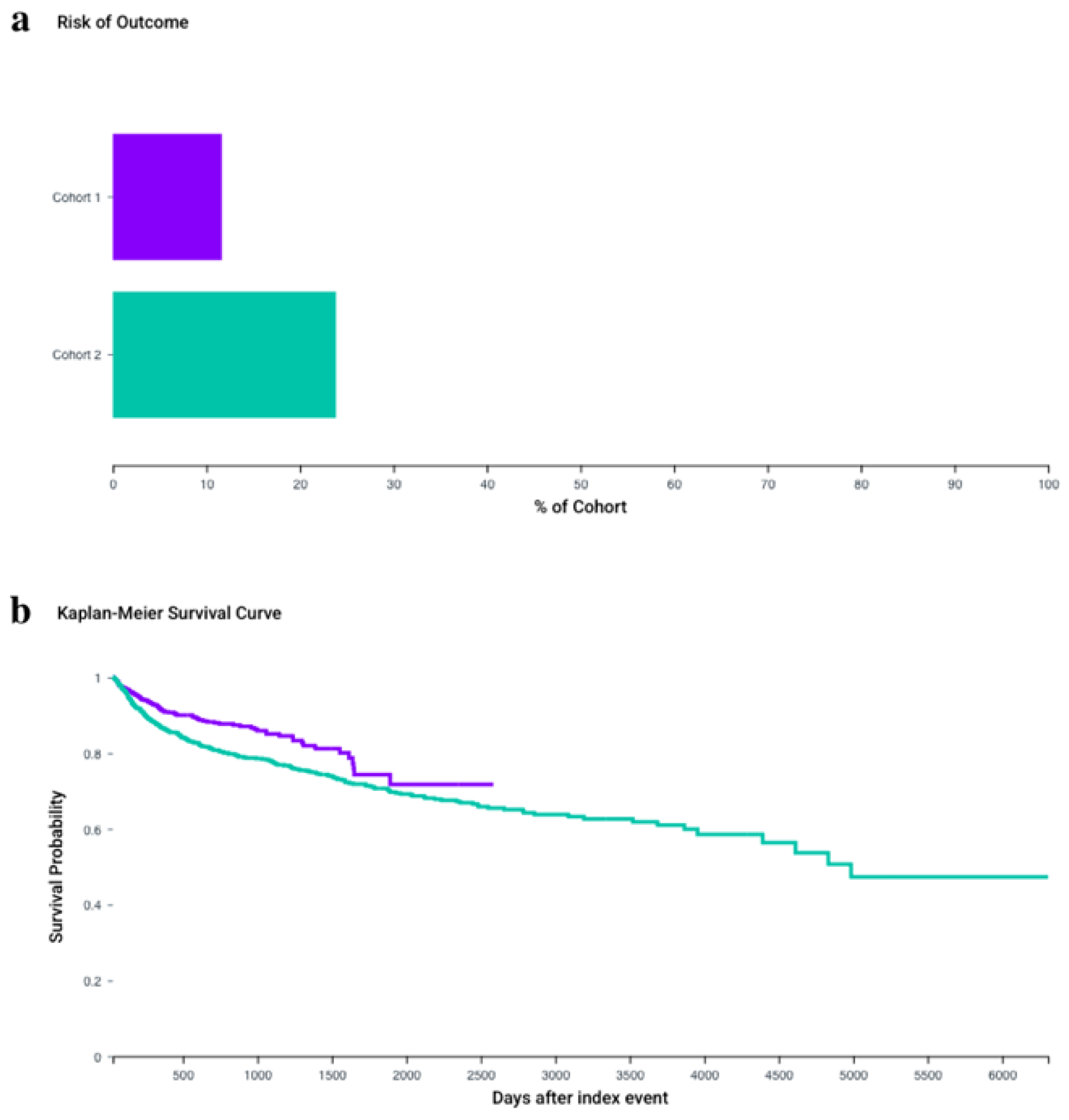
Figure 8.
Risk and event-free survival for fluid intake and weight loss after propensity-score matching. a Risk of fluid intake and weight-loss codes in semaglutide-exposed (Cohort 1, purple) and non-exposed (Cohort 2, teal) patients, shown as percentage of cohort. b Kaplan-Meier curves showing event-free survival for fluid intake and weight loss in semaglutide-exposed (purple) and non-exposed (teal) patients by days after the index event.
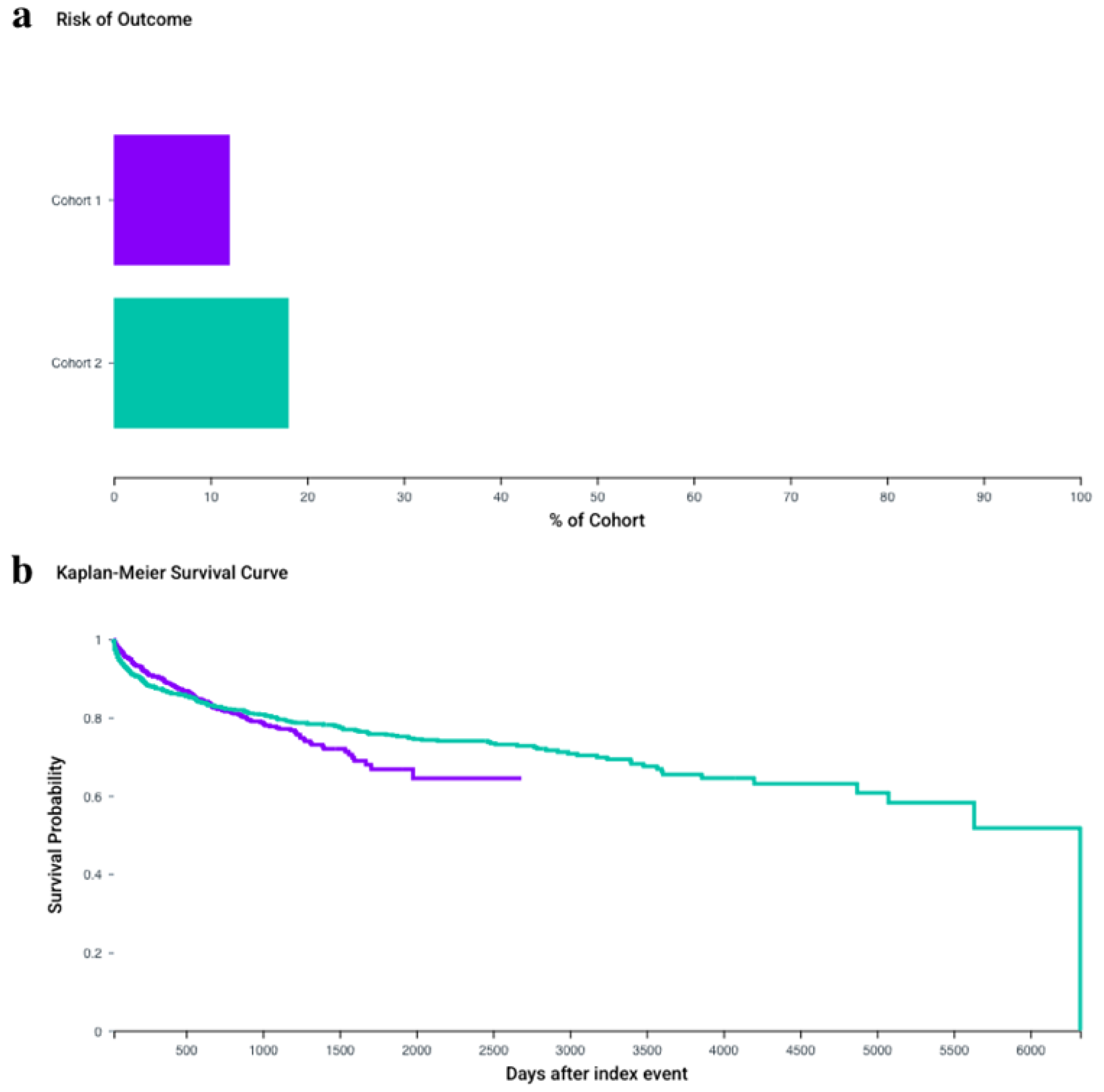
Figure 9.
Risk and event-free survival for candidal stomatitis after propensity-score matching. a Risk of candidal stomatitis in semaglutide-exposed (Cohort 1, purple) and non-exposed (Cohort 2, teal) patients, shown as percentage of cohort. b Kaplan-Meier curves showing event-free survival for candidal stomatitis in semaglutide-exposed (purple) and non-exposed (teal) patients by days after the index event.
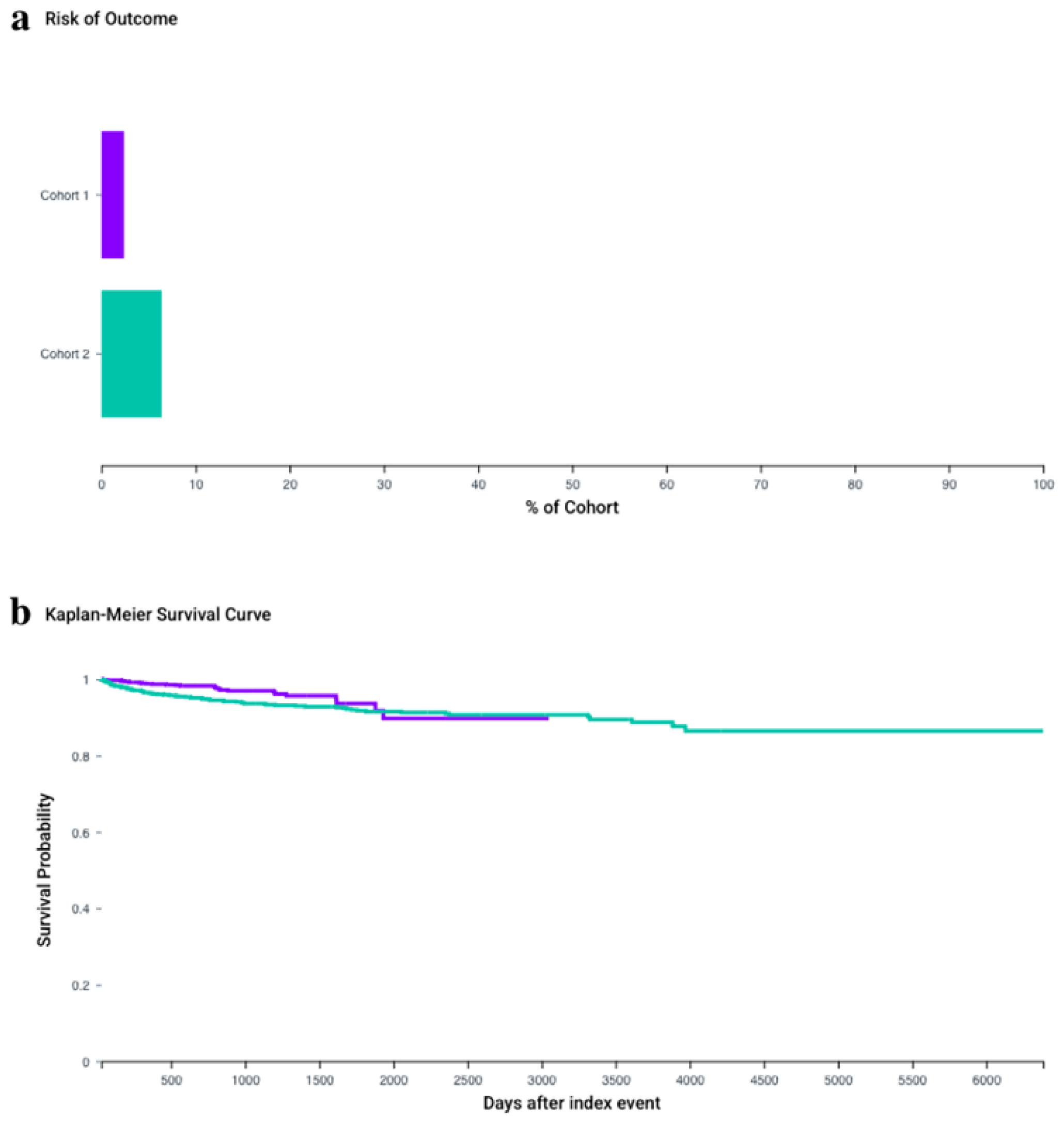
Table 2.
Risk of oral and systemic outcomes after 1:1 propensity-score matching between semaglutide-exposed and non-exposed patients with stem-cell transplant status.a,b.
Table 2.
Risk of oral and systemic outcomes after 1:1 propensity-score matching between semaglutide-exposed and non-exposed patients with stem-cell transplant status.a,b.
| Outcome | Semaglutide Events / N (Risk) | Non-Semaglutide Events / N (Risk) | Risk Differencec (95% CI) | Risk Ratio (95% CI) | Odds Ratio (95% CI) | P |
|---|---|---|---|---|---|---|
| Stomatitis and related lesions (K12) | 37 / 926 (4.0%) | 99 / 936 (10.6%) | −0.066 (−0.089, −0.042) | 0.378 (0.262–0.545) | 0.352 (0.238–0.519) | <0.001 |
| Oral mucositis, 3-month windowd | 25 / 1,027 (2.43%) | 100 / 1,192 (8.39%) | −0.060 (−0.078, −0.041) | 0.29 (0.189–0.446) | 0.272 (0.174–0.426) | <0.0001 |
| Dry mouth | 33 / 1,270 (2.6%) | 47 / 1,327 (3.5%) | −0.009 (−0.023, 0.004) | 0.734 (0.473–1.137) | 0.727 (0.462–1.142) | 0.164 |
| Smell and taste disturbances | 22 / 1,293 (1.7%) | 29 / 1,332 (2.2%) | −0.005 (−0.015, 0.006) | 0.782 (0.451–1.353) | 0.778 (0.444–1.361) | 0.377 |
| Systemic inflammation including sepsis | 73 / 1,172 (6.2%) | 165 / 1,258 (13.1%) | −0.069 (−0.092, −0.046) | 0.475 (0.365–0.618) | 0.440 (0.330–0.587) | <0.001 |
| Influenza and pneumonia | 99 / 850 (11.6%) | 264 / 1,107 (23.8%) | −0.122 (−0.155, −0.089) | 0.488 (0.395–0.604) | 0.421 (0.327–0.541) | <0.001 |
| Fluid intake / weight loss | 102 / 851 (12.0%) | 200 / 1,106 (18.1%) | −0.061 (−0.092, −0.029) | 0.663 (0.531–0.827) | 0.617 (0.477–0.798) | <0.001 |
| All-cause mortality | 86 / 1,276 (6.7%) | 326 / 1,306 (25.0%) | −0.182 (−0.209, −0.155) | 0.270 (0.216–0.338) | 0.217 (0.169–0.280) | <0.001 |
ᵃData derived from the TriNetX Global Health Research Network (query executed 13 August 2026). Abbreviations: CI, confidence interval; K12, ICD-10-CM code for stomatitis and related lesions; K12.3, ICD-10-CM code for ulcerative (oral) mucositis. ᵇRisk difference calculated as (risk in semaglutide-exposed group) - (risk in non-exposed group); negative values indicate lower risk among semaglutide-exposed patients. ᶜPatients with the outcome coded before the start of the observation window (day 30 after the index event) were excluded from the respective risk analysis.ᵈThe oral mucositis 3-month window reflects a prespecified analysis restricted to 90 days after the observation start, distinct from the unrestricted follow-up analysis reported in the row above.
Table 3.
Kaplan-Meier event-free survival estimates and Cox proportional-hazards ratios for oral and systemic outcomes after propensity-score matching.ᵃ.
Table 3.
Kaplan-Meier event-free survival estimates and Cox proportional-hazards ratios for oral and systemic outcomes after propensity-score matching.ᵃ.
| Outcome | Event-Free Survival Semaglutide | Event-Free Survival Non-Semaglutide | Log-rank P | Hazard Ratio (95% CI) | Proportionality P |
|---|---|---|---|---|---|
| Stomatitis and related lesions | 92.96% | 75.86% | <0.001 | 0.476 (0.323–0.700) | 0.182 |
| Oral mucositis, 3-month window | 97.46% | 91.31% | <0.0001 | 0.278 (0.179–0.431) | 0.0025* |
| Dry mouth | 93.58% | 87.64% | 0.650 | 1.114 (0.698–1.780) | 0.100 |
| Systemic inflammation including sepsis | 82.12% | 61.48% | 0.043 | 0.743 (0.557–0.991) | 0.895 |
| Influenza and pneumonia | 71.76% | 47.32% | 0.001 | 0.671 (0.529–0.851) | 0.167 |
| All-cause mortality | 78.68% | 0.00%† | <0.001 | 0.396 (0.310–0.506) | 0.266 |
ᵃData derived from TriNetX Global Health Research Network (query executed 13 August 2026). CI, confidence interval. ᵇEvent-free survival: Kaplan–Meier estimated probability of remaining free of the outcome at the end of follow-up. ᶜPatients with the outcome recorded before the observation window (day 30 post-index) were excluded. ᵈHazard ratios derived from Cox proportional-hazards models. ᵉAll-cause mortality value reflects overall survival at the end of extended follow-up; near-0% survival in the non-exposed group should be interpreted cautiously, given censoring sensitivity at this tail. *Proportional-hazards assumption violated for the 3-month mucositis model (χ² = 9.118, P = 0.0025); interpret this hazard ratio as an average effect, not a constant relative hazard.
In summary, after matching on demographic and diagnostic covariates, including type 2 diabetes and stem-cell transplant status, semaglutide exposure was associated with lower risk and higher event-free survival for oral mucositis in the dedicated three-month window (2.43% versus 8.39%; HR 0.278) (Figure 1, Table 2 and Table 3). Parallel reductions were observed in stomatitis, systemic inflammation, pneumonia, and mortality, with no significant increase in xerostomia or dysgeusia (Table 2 and Table 3).
Discussion
In this propensity-matched, real-world analysis of adults with stem-cell transplant status, we aimed to test whether semaglutide exposure is associated with a lower incidence of oral mucositis, related stomatitis, and other oral complications, and with concurrent reductions in systemic infectious complications and mortality. The findings broadly support our hypothesis. After matching, coded stomatitis and oral mucositis were substantially less frequent among semaglutide-exposed patients, event-free survival was higher, and the three-month mucositis analysis reproduced the same direction and magnitude of effect. Dry mouth and smell or taste disturbances were not increased. Parallel reductions were observed for systemic inflammation (including sepsis, influenza, and pneumonia), fluid intake and weight loss codes, and all-cause mortality. These associations were already present before matching and remained statistically robust after balancing age, sex, race, ethnicity, type 2 diabetes, and selected comorbidities.
The first aim concerned oral mucosal injury. In the matched analysis, stomatitis and related lesions (K12) were less frequent among semaglutide-exposed patients (Figure 1, Table 2). Restricting oral mucositis (K12.3) to a 90-day window, a horizon more aligned with the expected tempo of conditioning-related mucositis, yielded a large reduction (2.43% versus 8.39%; RR 0.29; HR 0.278; 90-day event-free survival 97.46% versus 91.31%) (Figure 2, Table 2 and Table 3). The concordance between a broader stomatitis construct assessed without a time restriction and a more specific ulcerative-mucositis code assessed within the expected clinical window reduces the likelihood that either signal is an artifact of a single coding choice or of late, unrelated oral diagnoses.[9,10,11,12] The 90-day analysis is clinically important because most transplant-related oral mucositis clusters in the first weeks after conditioning [13,14,15,16,17]; a protective association confined to distant follow-up would have been far less persuasive. Because K12.3 is coded specifically for ulcerative mucositis, cases captured by the broader K12 construct but not by K12.3 more likely reflect non-ulcerative or chronic stomatitis rather than conditioning-related mucosal injury.
These oral findings are biologically plausible. In murine 5-fluorouracil mucositis, exogenous GLP-1 preserved mucosal mass and villus height and reduced histologic severity to a degree comparable to GLP-2, whereas GLP-1 receptor blockade delayed recovery.[11] Endogenous GLP-1 and GLP-2 rose sharply after intestinal injury, supporting a physiologic repair axis rather than a purely pharmacologic curiosity.[11] In adults undergoing autologous transplantation, fasting GLP-1 increased after high-dose chemotherapy and tracked with systemic inflammation.[12] In pediatric allogeneic transplantation, higher day-0 GLP-1 levels were associated with faster citrulline recovery and lower C-reactive protein levels.[13] Proposed mechanisms include enhanced epithelial proliferation, reduced apoptosis, tighter junction integrity, attenuated cytokine signaling, and synergy with co-secreted GLP-2.[12,13] Direct evidence that these pathways operate in oral, as opposed to intestinal, epithelium remains limited, and that gap should temper causal inference.[12,13] Nonetheless, the concordance between preclinical mucosal protection, human transplant biomarker studies, and the present coded-outcome reductions is coherent.
The second aim asked whether semaglutide would increase xerostomia or dysgeusia, a competing concern given pharmacovigilance signals and case series of hyposalivation. After matching, dry mouth (2.6% versus 3.5%) and smell or taste disturbances (1.7% versus 2.2%) did not differ significantly, and event-free survival for dry mouth was similar (Figure 4, Table 2 and Table 3). This does not refute a salivary effect of GLP-1 receptor agonists in other populations; it indicates that, among propensity-matched HSCT recipients and using ICD-coded outcomes, any xerostomia signal was small relative to the reduction in mucositis. Under-ascertainment of dry mouth in electronic records is likely, so the absence of a coded increase should not be read as proof of salivary safety. It does, however, argue against the interpretation that reduced mucositis codes are simply the inverse of increased oral dryness coding.
The third aim addressed systemic complications. Matched reductions in systemic inflammation, including sepsis (RR 0.475), influenza and pneumonia (RR 0.488), nutritional or fluid-related codes (RR 0.663), and all-cause mortality (RR 0.270) form a coherent downstream pattern if mucosal barrier failure is an upstream driver of translocation, cytokine amplification, infection, and treatment-related death (Figure 3, Figure 6, Figure 7 and Figure 8), Table 2).[20,21,24,25,26] The mortality contrast was particularly large (6.7% versus 25.0%; HR 0.396) (Figure 3b, Table 3). That magnitude should be interpreted cautiously. Electronic “deceased” flags and ill-defined mortality codes over very long windows can inflate apparent survival differences, especially if follow-up intensity, competing risks, or loss to the network differ by exposure. Residual confounding by healthier metabolic phenotype, better outpatient engagement, or unmeasured fitness for GLP-1 therapy could also bias mortality downward. Even so, the directionally consistent infectious and inflammatory endpoints make a purely artifactual mortality signal less tenable.
The fourth aim concerned robustness across unmatched and matched analyses. Protective associations for mucositis, stomatitis, infections, and mortality were evident before matching, when diabetes and body mass index were markedly imbalanced [25], and they persisted after those covariates were aligned (Table 1). Persistence after matching argues that the oral signal is not solely an artifact of the metabolic profile that typically prompts semaglutide prescription. Residual imbalance in continuous body mass index (standardized difference of 0.218) and incomplete capture of socioeconomic and performance-status variables remain relevant (Table 1).[25,28,29] Body mass index categories, however, were well balanced after matching (Table 1).
Several limitations follow from the design. First, exposure was defined as any recorded semaglutide use plus transplant-status coding, rather than verified peri-conditioning administration, dose, duration, or adherence. Patients may have received semaglutide months or years away from the mucositis-risk window. Second, outcomes were ICD-coded, not graded by WHO or CTCAE instruments, and severity, duration, opioid use, and feeding-tube dependence could not be assessed.[30,31,32,33,34] Third, patients with pre-window outcome codes were excluded from risk analyses, which improves incidence estimation but can select a lower-risk residual cohort and does not fully solve left-censoring. Fourth, the three-month mucositis Cox model showed evidence of non-proportional hazards, so that HR should be treated as an average effect rather than a constant relative hazard. Fifth, the network was a deprecated COVID-era research set; coding intensity and follow-up may differ from contemporary oncology-specific networks. Sixth, healthy-user, confounding-by-indication, and immortal-time biases cannot be excluded. Seventh, multiple endpoints were examined without adjustment for multiplicity; secondary findings should be viewed as exploratory. Eighth, event-free survival estimates at the extreme tail of a multi-year window, particularly the near-zero survival probability for death in the comparator arm, are sensitive to censoring assumptions and should not be over-interpreted as long-term overall survival.
These limitations do not erase the internal consistency of the oral results. They do define what the study cannot claim: it cannot establish that initiating semaglutide during conditioning prevents clinically graded mucositis, cannot quantify the number-needed-to-treat under protocolized dosing, and cannot substitute for a randomized trial.
The findings are adjacent to the PROTECT trial (NCT06449625), a randomized, placebo-controlled phase 2 study of weekly semaglutide to reduce the severity of gastrointestinal mucositis after autologous transplantation for lymphoma.[35] PROTECT uses clinician-graded gastrointestinal mucositis as its primary endpoint and C-reactive protein and quality of life as secondary endpoints. The present analysis complements that program by examining oral rather than intestinal coding, a mixed autologous and allogeneic real-world population, and a broader set of infectious and mortality outcomes. If PROTECT confirms a gastrointestinal benefit, the current oral and systemic signals would support extending prospective assessment to standardized oral examinations, salivary flow, and infection endpoints. If PROTECT is neutral, residual confounding in observational data would become the more likely explanation of our associations.
Clinically, these data do not justify off-label initiation of semaglutide solely to prevent mucositis. They do support two narrower conclusions. Patients who already require a GLP-1 receptor agonist for diabetes or obesity and who proceed to transplantation do not, in this matched sample, show excess coded xerostomia or oral mucositis; if anything, mucosal and infectious codes are lower (Figure 1 and Figure 2, Figure 6 and Figure 7). Second, oral medicine and transplant teams should treat GLP-1 exposure as a covariate to capture in mucositis registries [28,29,30], because it may modify risk sufficiently to confound supportive-care trials if ignored.
Future work should specify the timing of exposure relative to conditioning, distinguish autologous from allogeneic platforms, match or stratify on hematologic diagnosis and conditioning intensity, and pair coded outcomes with graded oral assessments, citrulline or other barrier biomarkers, salivary flow, and adjudication of infection and death. Mechanistic studies of GLP-1 receptor expression and signaling in human oral epithelium would close an important translational gap. Until such data exist, the present study should be read as supportive real-world evidence that semaglutide exposure among patients with stem-cell transplant status is associated with lower coded oral mucositis at three months and over longer follow-up, without a detectable increase in coded dry mouth, and with concordant reductions in selected systemic complications.
Author Contributions
Zak Ahmed1, Kiera Kavcic2, Joel Epstein3, Kapil Meleveedu4, Parvathy Madhavan5, contributed to the interpretation of data, drafting, and critical revision of the manuscript. Andres Pinto6, Nicole Blijlevens7, Roberto Pili8; contributed to the interpretation of data, drafting, and critical revision of the manuscript. Poolakkad S. Satheeshkumar9 contributed to the design, conception, acquisition, interpretation of data, drafting, and critical revision of the manuscript. All authors have read and agreed to the published version of the manuscript.
Funding
This research received no external funding.
Institutional Review Board Statement
TriNetX, LLC, adheres to the Health Insurance Portability and Accountability Act (HIPAA). The analyzed data constitutes a secondary examination of pre-existing information, does not entail intervention or interaction with human subjects, and is de-identified in accordance with the de-identification requirement outlined in Section 164.514(a) of the HIPAA Privacy Rule. A qualified expert, as defined in Section 164.514(b)(1) of the HIPAA Privacy Rule, formally attests to the process of data de-identification. This official assessment by a competent expert was updated in December 2020.
Informed Consent Statement
Not applicable.
Data Availability Statement
This retrospective comparative cohort study utilized the TriNetX Global Health Research Network (data accessed 10 December 2025), a federated, HIPAA-compliant database that aggregates de-identified longitudinal electronic health records from over 90 predominantly U.S. healthcare organizations, encompassing more than 110 million patients.
Conflicts of Interest
The authors declare no conflicts of interest.
References
- Sonis, S.T.; Oster, G.; Fuchs, H.; Bellm, L.; Bradford, W.Z.; Edelsberg, J.; Hayden, V.; Eilers, J.; Epstein, J.B.; LeVeque, F.G.; Miller, C.; Peterson, D.E.; Schubert, M.M.; Spijkervet, F.K.; Horowitz, M. Oral mucositis and the clinical and economic outcomes of hematopoietic stem-cell transplantation. J. Clin. Oncol. 2001, 19, 2201–2205. [Google Scholar] [CrossRef] [PubMed]
- Gyurkocza, B.; Sandmaier, B.M. Conditioning regimens for hematopoietic cell transplantation: one size does not fit all. Blood 2014, 124, 344–353. [Google Scholar] [CrossRef] [PubMed] [PubMed Central]
- Stewart, S.; Robertson, C.; Pan, J.; Kennedy, S.; Haahr, L.; Manoukian, S.; Mason, H.; Kavanagh, K.; Graves, N.; Dancer, S.J.; Cook, B.; Reilly, J. Impact of healthcare-associated infection on length of stay. J. Hosp. Infect. 2021, 114, 23–31. [Google Scholar] [CrossRef] [PubMed]
- Jeon, C.Y.; Neidell, M.; Jia, H.; Sinisi, M.; Larson, E. On the role of length of stay in healthcare-associated bloodstream infection. Infect. Control Hosp. Epidemiol. 2012, 33, 1213–1218. [Google Scholar] [CrossRef] [PubMed] [PubMed Central]
- Riley, P.; Glenny, A.M.; Worthington, H.V.; Littlewood, A.; Fernandez Mauleffinch, L.M.; Clarkson, J.E.; McCabe, M.G. Interventions for preventing oral mucositis in patients with cancer receiving treatment: cytokines and growth factors. Cochrane Database Syst. Rev. 2017, 11, CD011990. [Google Scholar] [CrossRef] [PubMed] [PubMed Central]
- Blakaj, A.; Bonomi, M.; Gamez, M.E.; Blakaj, D.M. Oral mucositis in head and neck cancer: Evidence-based management and review of clinical trial data. Oral Oncol. 2019, 95, 29–34. [Google Scholar] [CrossRef] [PubMed]
- Franco, P.; Martini, S.; Di Muzio, J.; Cavallin, C.; Arcadipane, F.; Rampino, M.; Ostellino, O.; Pecorari, G.; Garzino Demo, P.; Fasolis, M.; Airoldi, M.; Ricardi, U. Prospective assessment of oral mucositis and its impact on quality of life and patient-reported outcomes during radiotherapy for head and neck cancer. Med. Oncol. 2017, 34, 81. [Google Scholar] [CrossRef] [PubMed]
- Chaudhry, H.M.; Bruce, A.J.; Wolf, R.C.; Litzow, M.R.; Hogan, W.J.; Patnaik, M.S.; Kremers, W.K.; Phillips, G.L.; Hashmi, S.K. The Incidence and Severity of Oral Mucositis among Allogeneic Hematopoietic Stem Cell Transplantation Patients: A Systematic Review. Biol. Blood Marrow Transplant. 2016, 22, 605–616. [Google Scholar] [CrossRef] [PubMed]
- Murphy, B.A. Clinical and economic consequences of mucositis induced by chemotherapy and/or radiation therapy. J. Support Oncol. 2007, 5, 13–21. [Google Scholar] [PubMed]
- Nguyen, D.T.; Shayani, S.; Palmer, J.; Dagis, A.; Forman, S.J.; Epstein, J.; Spielberger, R. Palifermin for prevention of oral mucositis in allogeneic hematopoietic stem cell transplantation: a single-institution retrospective evaluation. Support Care Cancer 2015, 23, 3141–3147. [Google Scholar] [CrossRef] [PubMed]
- Kissow, H.; Hartmann, B.; Holst, J.J.; Poulsen, S.S. Glucagon-like peptide-1 as a treatment for chemotherapy-induced mucositis. Gut 2013, 62, 1724–1733. [Google Scholar] [CrossRef] [PubMed]
- Ebbesen, M.S.; Kissow, H.; Hartmann, B.; Grell, K.; Gørløv, J.S.; Kielsen, K.; Holst, J.J.; Müller, K. Glucagon-Like Peptide-1 Is a Marker of Systemic Inflammation in Patients Treated with High-Dose Chemotherapy and Autologous Stem Cell Transplantation. Biol. Blood Marrow Transplant. 2019, 25, 1085–1091. [Google Scholar] [CrossRef] [PubMed]
- Ebbesen, M.; Kissow, H.; Hartmann, B.; Kielsen, K.; Sørensen, K.; Stinson, S.E.; Frithioff-Bøjsøe, C.; Esmann Fonvig, C.; Holm, J.C.; Hansen, T.; Holst, J.J.; Müller, K.G. Glucagon-Like Peptide-1 Is Associated With Systemic Inflammation in Pediatric Patients Treated With Hematopoietic Stem Cell Transplantation. Front Immunol. 2021, 12, 793588. [Google Scholar] [CrossRef] [PubMed] [PubMed Central]
- Barać, M.; Roganović, J. GLP-1 Receptor Signaling and Oral Dysfunction: A Narrative Review on the Mechanistic Basis of Semaglutide-Related Oral Adverse Effects. Biology 2025, 14, 1650. [Google Scholar] [CrossRef] [PubMed] [PubMed Central]
- Bijoch, J. Oral Health Implications of GLP-1 Receptor Agonists and Other Incretin-Based Therapies. J. Clin. Med. 2026, 15, 5358. [Google Scholar] [CrossRef] [PubMed] [PubMed Central]
- Shouval, R.; Kouniavski, E.; Fein, J.; Danylesko, I.; Shem-Tov, N.; Geva, M.; Yerushalmi, R.; Shimoni, A.; Nagler, A. Risk factors and implications of oral mucositis in recipients of allogeneic hematopoietic stem cell transplantation. Eur. J. Haematol. 2019, 103, 402–409. [Google Scholar] [CrossRef] [PubMed]
- Nakagaki, M.; Kennedy, G.A.; Gavin, N.C.; Clavarino, A.; Whitfield, K. The incidence of severe oral mucositis in patients undergoing different conditioning regimens in haematopoietic stem cell transplantation. Support Care Cancer 2022, 30, 9141–9149. [Google Scholar] [CrossRef] [PubMed] [PubMed Central]
- Vera-Llonch, M.; Oster, G.; Ford, C.M.; Lu, J.; Sonis, S. Oral mucositis and outcomes of allogeneic hematopoietic stem-cell transplantation in patients with hematologic malignancies. Support Care Cancer 2007, 15, 491–496. [Google Scholar] [CrossRef] [PubMed]
- Ali, M.; Kerio, A.A.; Khattak, T.A.; Hussain, M.; Khan, M.A.; Abbas, Y. Oral Mucositis in Patients Undergoing Hematopoietic Stem Cell Transplantation. J. Coll. Physicians Surg. Pak. 2023, 33, 804–808. [Google Scholar] [CrossRef] [PubMed]
- Blijlevens, N.M.; Donnelly, J.P.; De Pauw, B.E. Mucosal barrier injury: biology, pathology, clinical counterparts and consequences of intensive treatment for haematological malignancy: an overview. Bone Marrow Transplant. 2000, 25, 1269–1278. [Google Scholar] [CrossRef] [PubMed] [PubMed Central]
- van der Velden, W.J.; Herbers, A.H.; Netea, M.G.; Blijlevens, N.M. Mucosal barrier injury, fever and infection in neutropenic patients with cancer: introducing the paradigm febrile mucositis. Br. J. Haematol. 2014, 167, 441–452. [Google Scholar] [CrossRef] [PubMed]
- Mikulska, M.; Gualandi, F.; Anserini, P. Early and late complications of hematopoietic stem cell transplantation. Handb. Clin. Neurol. 2024, 202, 135–151. [Google Scholar] [CrossRef] [PubMed]
- Kumar, G.; Ahmad, S.; Taneja, A.; Patel, J.; Guddati, A.K.; Nanchal, R. Milwaukee Initiative in Critical Care Outcomes Research Group of Investigators. Severe sepsis in hematopoietic stem cell transplant recipients*. Crit. Care Med. 2015, 43, 411–421. [Google Scholar] [CrossRef] [PubMed]
- Eichhorn, S.; Rudin, L.; Ramasamy, C.; Varsani, R.; Padhi, P.; Nassour, N.; Meleveedu, K.; Epstein, J.B.; Semegran, B.; Pili, R.; Satheeshkumar, P.S. Elevated Likelihood of Infectious Complications Related to Oral Mucositis After Hematopoietic Stem Cell Transplantation: A Systematic Review and Meta-Analysis of Outcomes and Risk Factors. Cancers 2025, 17, 2657. [Google Scholar] [CrossRef] [PubMed] [PubMed Central]
- Dandoy, C.E.; Kim, S.; Chen, M.; Ahn, K.W.; Ardura, M.I.; Brown, V.; Chhabra, S.; Diaz, M.A.; Dvorak, C.; Farhadfar, N.; Flagg, A.; Ganguly, S.; Hale, G.A.; Hashmi, S.K.; Hematti, P.; Martino, R.; Nishihori, T.; Nusrat, R.; Olsson, R.F.; Rotz, S.J.; Sung, A.D.; Perales, M.A.; Lindemans, C.A.; Komanduri, K.V.; Riches, M.L. Incidence, Risk Factors, and Outcomes of Patients Who Develop Mucosal Barrier Injury-Laboratory Confirmed Bloodstream Infections in the First 100 Days After Allogeneic Hematopoietic Stem Cell Transplant. JAMA Netw. Open 2020, 3, e1918668. [Google Scholar] [CrossRef] [PubMed] [PubMed Central]
- See, I.; Iwamoto, M.; Allen-Bridson, K.; Horan, T.; Magill, S.S.; Thompson, N.D. Mucosal barrier injury laboratory-confirmed bloodstream infection: results from a field test of a new National Healthcare Safety Network definition. Infect. Control Hosp. Epidemiol. 2013, 34, 769–776. [Google Scholar] [CrossRef] [PubMed]
- Majhail, N.S.; Challa, T.R.; Mulrooney, D.A.; Baker, K.S.; Burns, L.J. Hypertension and diabetes mellitus in adult and pediatric survivors of allogeneic hematopoietic cell transplantation. Biol. Blood Marrow Transplant. 2009, 15, 1100–1107. [Google Scholar] [CrossRef] [PubMed]
- Mielcarek, M.; Gooley, T.; Martin, P.J.; Chauncey, T.R.; Young, B.A.; Storb, R.; Torok-Storb, B. Effects of race on survival after stem cell transplantation. Biol. Blood Marrow Transplant. 2005, 11, 231–239. [Google Scholar] [CrossRef] [PubMed]
- Sorror, M.L.; Storb, R.F.; Sandmaier, B.M.; Maziarz, R.T.; Pulsipher, M.A.; Maris, M.B.; Bhatia, S.; Ostronoff, F.; Deeg, H.J.; Syrjala, K.L.; Estey, E.; Maloney, D.G.; Appelbaum, F.R.; Martin, P.J.; Storer, B.E. Comorbidity-age index: a clinical measure of biologic age before allogeneic hematopoietic cell transplantation. J. Clin. Oncol. 2014, 32, 3249–3256. [Google Scholar] [CrossRef] [PubMed] [PubMed Central]
- Elad, S.; Cheng, K.K.F.; Lalla, R.V.; Yarom, N.; Hong, C.; Logan, R.M.; Bowen, J.; Gibson, R.; Saunders, D.P.; Zadik, Y.; Ariyawardana, A.; Correa, M.E.; Ranna, V.; Bossi, P. Mucositis Guidelines Leadership Group of the Multinational Association of Supportive Care in Cancer and International Society of Oral Oncology (MASCC/ISOO). MASCC/ISOO clinical practice guidelines for the management of mucositis secondary to cancer therapy. Cancer 2020, 126, 4423–4431, Erratum in Cancer 2021 127, 3700. https://doi.org/10.1002/cncr.33549. PMID: 32786044; PMCID: PMC7540329. [Google Scholar] [CrossRef]
- Hong, C.H.L.; Gueiros, L.A.; Fulton, J.S.; Cheng, K.K.F.; Kandwal, A.; Galiti, D.; Fall-Dickson, J.M.; Johansen, J.; Ameringer, S.; Kataoka, T.; Weikel, D.; Eilers, J.; Ranna, V.; Vaddi, A.; Lalla, R.V.; Bossi, P.; Elad, S. Mucositis Study Group of the Multinational Association of Supportive Care in Cancer/International Society for Oral Oncology (MASCC/ISOO). Systematic review of basic oral care for the management of oral mucositis in cancer patients and clinical practice guidelines. Support Care Cancer 2019, 27, 3949–3967. [Google Scholar] [CrossRef] [PubMed]
- McGuire, D.B.; Fulton, J.S.; Park, J.; Brown, C.G.; Correa, M.E.; Eilers, J.; Elad, S.; Gibson, F.; Oberle-Edwards, L.K.; Bowen, J.; Lalla, R.V. Mucositis Study Group of the Multinational Association of Supportive Care in Cancer/International Society of Oral Oncology (MASCC/ISOO). Systematic review of basic oral care for the management of oral mucositis in cancer patients. Support Care Cancer 2013, 21, 3165–3177. [Google Scholar] [CrossRef] [PubMed]
- Mohan, M.P.; Pili, R.; Epstein, J.B.; Rudin, L.; Eichhorn, S.; Satheeshkumar, P.S. Cancer treatment-induced ulcerative mucositis serves as a significant predictor of burden of illness including dysphagia, and associated disparities among hospitalized cancer patients. Support Care Cancer 2024, 33, 22. [Google Scholar] [CrossRef] [PubMed]
- Cheng, K.K.; Leung, S.F.; Liang, R.H.; Tai, J.W.; Yeung, R.M.; Thompson, D.R. Severe oral mucositis associated with cancer therapy: impact on oral functional status and quality of life. Support Care Cancer 2010, 18, 1477–1485. [Google Scholar] [CrossRef] [PubMed]
- Semaglutide in Auto-HSCT (PROTECT) [Internet]. Available online: https://clinicaltrials.gov/study/NCT06449625 (accessed on 24 Sept 2026).
Figure 1.
Risk and event-free survival for stomatitis and related lesions (K12) after propensity-score matching. a Risk of stomatitis and related lesions in semaglutide-exposed (Cohort 1, purple) and non-exposed (Cohort 2, teal) patients, shown as percentage of cohort. b Kaplan-Meier curves showing event-free survival for stomatitis and related lesions in semaglutide-exposed (purple) and non-exposed (teal) patients by days after the index event.
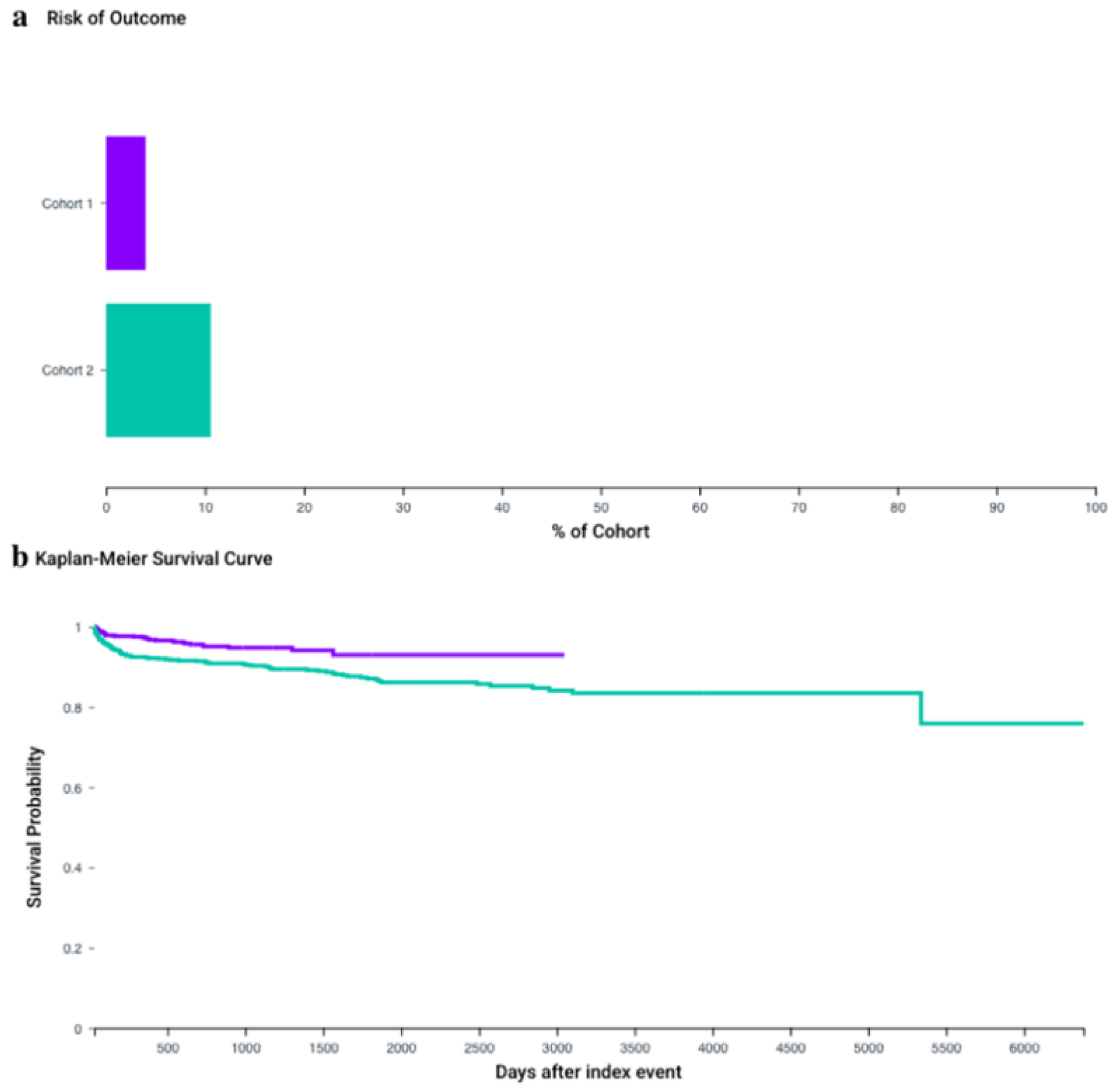
Figure 2.
Risk and event-free survival for oral mucositis (K12.3) after propensity-score matching. a Risk of oral mucositis in semaglutide-exposed (Cohort 1, purple) and non-exposed (Cohort 2, teal) patients, shown as percentage of cohort. b Kaplan-Meier curves showing event-free survival for oral mucositis in semaglutide-exposed (purple) and non-exposed (teal) patients by days after the index event.
Disclaimer/Publisher’s Note: The statements, opinions and data contained in all publications are solely those of the individual author(s) and contributor(s) and not of MDPI and/or the editor(s). MDPI and/or the editor(s) disclaim responsibility for any injury to people or property resulting from any ideas, methods, instructions or products referred to in the content. |
© 2026 by the authors. Licensee MDPI, Basel, Switzerland. This article is an open access article distributed under the terms and conditions of the Creative Commons Attribution (CC BY) license (http://creativecommons.org/licenses/by/4.0/).
Copyright: This open access article is published under a Creative Commons CC BY 4.0 license, which permit the free download, distribution, and reuse, provided that the author and preprint are cited in any reuse.