Submitted:
01 October 2026
Posted:
05 October 2026
You are already at the latest version
Abstract
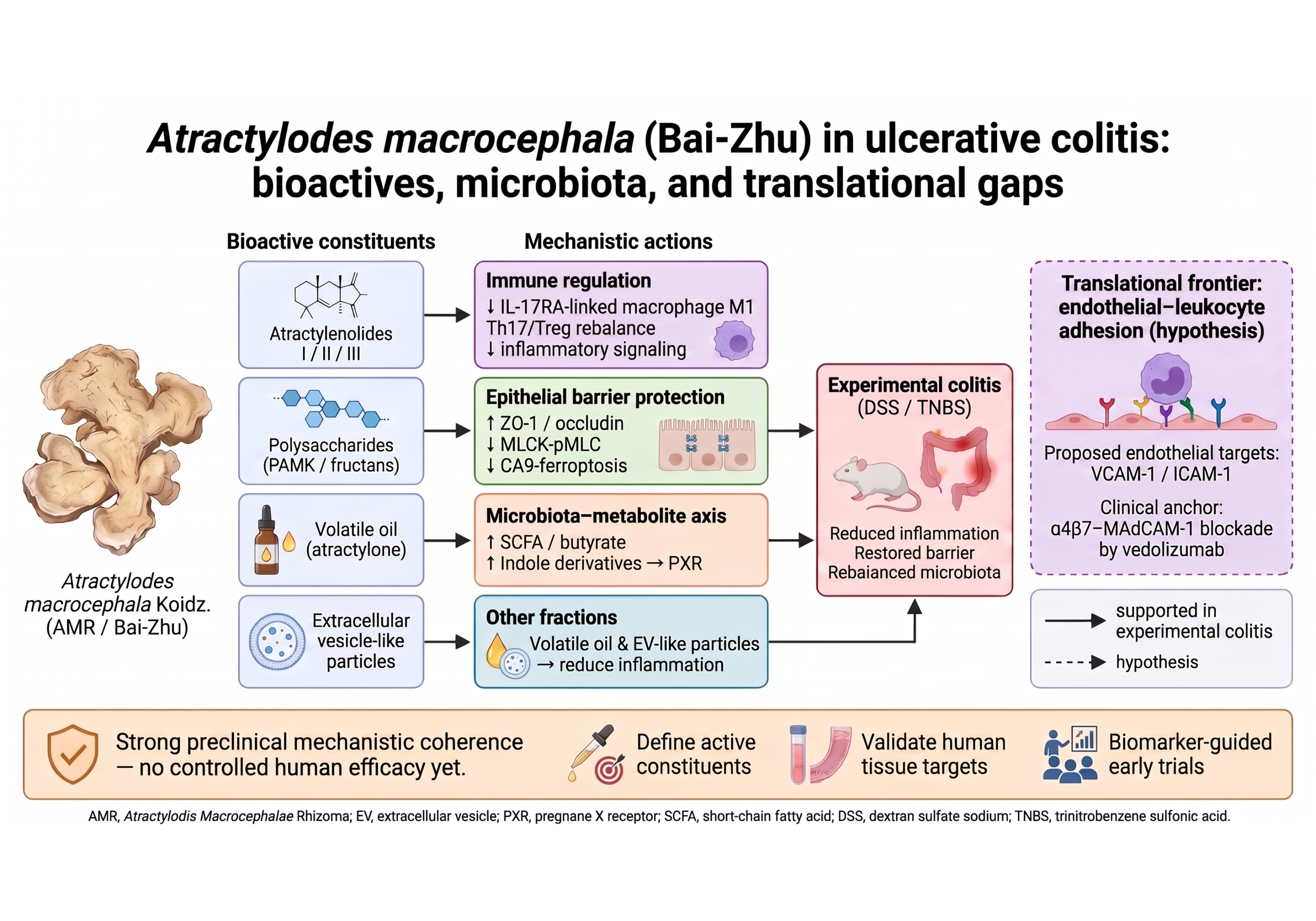
Atractylodes macrocephala Koidz. rhizome (Atractylodis Macrocephalae Rhizoma, AMR; Bai-Zhu) is a widely used medicinal plant, and its specialized metabolites are now being mapped onto defined molecular targets. Here we review, constituent by constituent, how AMR acts in ulcerative colitis (UC). The sesquiterpenoid lactones account for much of the activity: atractylenolide I protects the epithelial barrier (RhoA/ROCK/MLC; S100A9/AMPK/mTOR), reshapes intestinal metabolism and the microbiota (SPHK1/B4GALT2) and limits carbonic anhydrase IX-mediated ferroptosis, whereas atractylenolide II drives Nrf2-dependent antioxidant responses (in non-colitis models), and interleukin-17 receptor A is nominated as a candidate direct target of atractylenolide III—awaiting independent replication—through which it may curb macrophage M1 polarization. The polysaccharides rebalance Th17/Treg immunity and remodel the gut microbiota and its tryptophan metabolites through the pregnane X receptor, while the volatile oil and vesicle-like particles are likewise protective. We grade each mechanism by the strength of the underlying colitis-model evidence and stay explicit about what remains extrapolation. Controlled human trials are still lacking, with only very preliminary clinical observation to date. Finally, we single out endothelial-leukocyte adhesion—already exploited by anti-adhesion biologics—as the most tractable next step for translating these constituents toward the clinic.