
Submitted:
30 September 2026
Posted:
04 October 2026
You are already at the latest version
Abstract
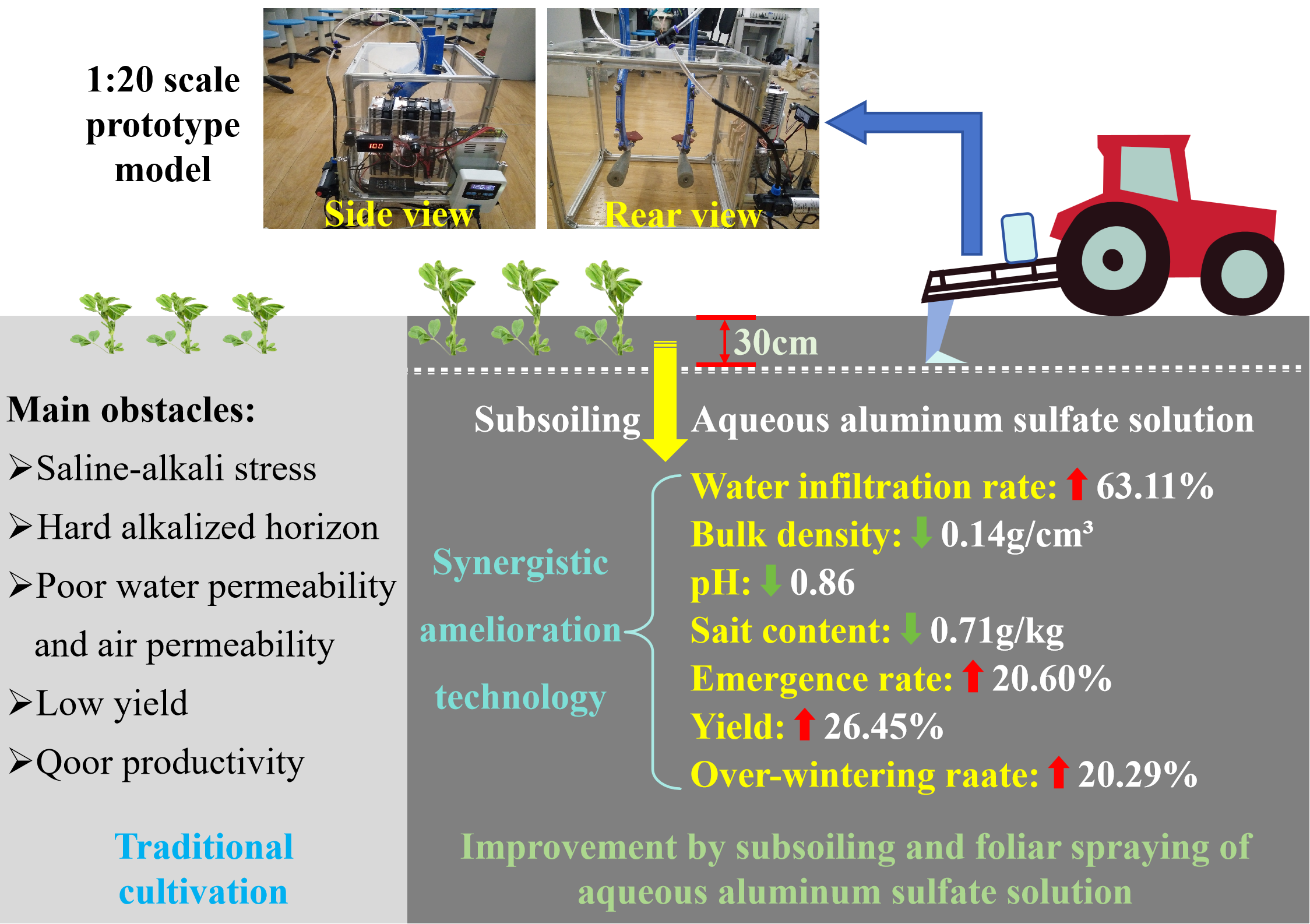
Soil degradation caused by soil salinization is an important factor affecting global food security. The soda saline–alkali soils in the Songnen Plain suffer from poor soil structure, hard topsoil and alkalized horizons, and high pH and Na⁺ concentrations, which pose a major threat to sustainable agricultural development. However, the development of demand-adapted agricultural machinery and agronomic technologies integrating physical and chemical amelioration remains a challenge for soda saline–alkali soil improvement under rain-fed dryland conditions. Based on the water solubility of aluminum sulfate, this study integrated novel equipment and technologies for efficient, engineering-oriented amelioration of soda saline–alkali soils. Experiment analysis of aluminum sulfate application rate experiments showed that the optimal amelioration effect was achieved at an ameliorant dosage of 0.6% of soil dry weight, with a pH reduction of 0.81 units. By means of installing liquid ameliorant spraying components on the base subsoiling machine, it was developed that integrated equipment for simultaneous subsoiling and ameliorant application across the entire plow layer was developed. Verification tests demonstrated that the soil disturbance coefficient, soil loosening degree, and coefficient of variation for liquid application uniformity among rows were 53.75%, 13.50%, and 4.83%, respectively; these operational performance indicators met the requirements of relevant industry standards. Comparisons of soil physicochemical properties under different amelioration treatments revealed that subsoiling combined with ameliorant spraying (SAS) outperformed subsoiling alone (S), surface ameliorant application (A), and the control (CK). Relative to CK, the SAS treatment increased soil water infiltration rate (WIR) by an average of 63.11%, reduced bulk density (BD) by 0.14 g/cm³, decreased pH by 0.86 units, and lowered soil salt content (SC) by 0.71 g/kg. Three-year field alfalfa cultivation experiments indicated that SAS increased alfalfa emergence rate, dry matter yield, and overwintering rate by 20.60%, 26.45%, and 20.29%, respectively, relative to CK. This study proposes an implementation strategy for integrated physical and chemical amelioration equipment and technologies for soda saline–alkali soils based on the SAS approach, which provides equipment, technical, and engineering application references for improving soil health, boosting crop yield, and promoting the efficient utilization of rain-fed soda saline–alkali land.
Keywords:
soda saline-alkali land
; subsoiling equipment
; amendment spraying
; synergistic amelioration
; alfalfa yield
1. Introduction
Soil salinization is one of the major stress factors restricting global agricultural production, environmental sustainability and food security, with 1.5×10⁶ km2 of cultivated land at risk of declining productivity each year [1]. The Songnen Plain is one of the three major concentrated distribution areas of soda saline-alkali soils worldwide, covering approximately 3.42 million hm2 of saline-alkali land, and the area of saline-alkali soils is expanding at a rate of 1.4% per annum [2,3,4]. The primary limiting soil factors in this region include compacted and hard topsoil, poor aeration and water permeability, high pH values and high contents of alkaline sodium salts. These soils exhibit combined salinization and alkalization characteristics accompanied by degraded soil physicochemical properties, which severely hinder the sustainable development of regional ecology and restrict the reliable improvement of soil productivity [5,6].Artificial cultivation of salt-tolerant alfalfa on soda saline-alkali land is a conventional strategy for dryland utilization of soils in this region. Statistics show that grassland area in this region reaches approximately 3.42×10⁶ km2, accounting for more than 19% of the total area of the Songnen Plain [7]. It is noteworthy that soda saline-alkali lands are mainly located in arid or semi-arid zones. Therefore, investigating amelioration schemes for soda saline-alkali soils under dryland conditions and promoting forage cultivation represents a feasible approach to preserve the original regional vegetation status and improve soil utilization efficiency [8,9].
Amelioration measures for saline-alkali soils mainly include physical, chemical and biological approaches, yet these strategies still have limitations [10]. Physical amelioration generally features a long remediation cycle and slow effectiveness [11]. Chemical amendments require large application rates; mixing amendments into the plough layer with heavy machinery incurs high economic costs, and over-application may trigger the risk of secondary salinization [12]. Biological amelioration remains mostly at the laboratory stage, and its adaptability for large-scale soil improvement needs further investigation [13]. For soda saline-alkali soil amelioration, the core objectives are to improve soil physicochemical properties, reduce soil pH and salt content, and enhance crop adaptability. Accordingly, the scientific design of integrated physical and chemical amelioration schemes is critical to achieve efficient, sustainable and engineering-scale integrated technologies for synergistic amelioration of soda saline-alkali land.
Previous studies have demonstrated that aluminum sulfate (Al3+), as an ameliorant for soda saline-alkali soils, can produce monomeric and polymeric aluminum species through Al3+ hydrolysis. This process promotes the flocculation of soil colloids, alleviates soil salinization, achieves combined physical and chemical amelioration effects, and reduces the toxic impacts of saline-alkali barriers on crops in soda saline-alkali soils [14,15,16]. Nevertheless, aluminum sulfate amelioration in western Jilin Province has been mostly applied to soda saline-alkali paddy fields. Under rain-fed dryland conditions, when dry aluminum sulfate powder is applied, natural precipitation acts as the medium for chemical reactions [17,18]. The amelioration effect only occurs after the aqueous aluminum sulfate solution infiltrates into the soil. Therefore, developing synergistic machinery and integrating technologies that combine mechanical subsoiling with aluminum sulfate solution application for soda saline-alkali soils under rain-fed dryland conditions has become critical for soil amelioration and yield improvement of artificial grasslands in this region.
To address the challenges of physical-chemical synergistic amelioration of soda saline-alkali soils, we developed an amelioration machine integrating subsoiling and full-plough-layer amendment spraying based on previous research [19]. Field experiments with alfalfa cultivation were conducted to investigate how different amelioration practices affect soil physicochemical properties and alfalfa growth. We hypothesized that: (1) the machine combining subsoiling and aluminum sulfate solution application can achieve effective amelioration across the whole plough layer; (2) the synergistic amelioration strategy can effectively improve the physicochemical properties of topsoil; (3) the synergistic amelioration strategy can promote alfalfa growth and achieve stable and increased yields. This study can provide machinery and technical support for soda saline-alkali soil amelioration, as well as engineering references for the efficient amelioration of rain-fed soda saline-alkali soils in the region. It is of great significance for the exploitation and utilization of soda saline-alkali soils in western Jilin Province and regional economic and social development.
2. Materials and Methods
2.1. Experimental Design
2.1.1. Aluminum Sulfate Application Rate
Analytical-grade aluminum sulfate (Al2(SO4)3) used in the experiment was purchased from Aladdin Reagent Company, Shanghai, China. Soil samples were collected in May 2024 from Qian’an County, Songyuan City, Jilin Province (44°38′54″N, 123°46′6″E) at a sampling depth of 0–30 cm. The soil in this area is typical soda saline-alkali soil (pH: 9.13, salt content: 4.86 g/kg). After sampling, soils were transported to the laboratory in sealed containers, air-dried, ground and sieved through a 100-mesh sieve for subsequent use. An electronic analytical balance (Shanghai Shunyu Hengping Scientific Instrument Co., Ltd.) was used to weigh soil samples and aluminum sulfate reagents. A soil testing and formulated fertilization instrument (Shandong Puchuang Instrument Co., Ltd.) was adopted to measure soil pH at a soil-to-water ratio of 1:5.
A 30-day static incubation experiment was carried out to investigate the response of soda saline-alkali soil pH to aluminum sulfate application rates. For each treatment, 30 g of soil was placed into a 100 mL plastic bottle. Analytical-grade aluminum sulfate powder was added at rates ranging from 0.1% to 0.9% of soil dry weight with an increment of 0.1%. A total of nine treatments were established, each with three replicates. The control treatment (CK, soil only) received no aluminum sulfate [20]. After thorough mechanical mixing, 60 mL of deionized water was added. The mixture was fully stirred with a glass rod and kept at room temperature beside an indoor window. Deionized water was supplemented periodically to maintain approximately 5 cm of water above the soil surface. The supernatant was collected after stirring, sedimentation and filtration on days 10, 20 and 30 for pH measurement(Figure 1).
2.1.2. Design of Key Components of the Subsoiler
To develop effective amelioration equipment and technologies for artificial grasslands on rain-fed soda saline-alkali land, the subsoiling shovel, liquid amendment application system and other components were improved and optimized based on the key subsoiling components previously developed by our research group [21]. This equipment enables the engineering application for rational amendment application in topsoil and plough-layer soil [22]. As shown in Figure 2a, the complete subsoiler consists of an amendment premix tank, liquid pump, liquid distribution pipes, spray nozzles and subsoiling shovels. To improve the water storage capacity of plough-layer soil after subsoiling operation, a bottle-shaped mole channel expansion device was installed at the bottom of each subsoiling shovel (Figure 2b and Figure 3c). The device has a flat-topped conical shape resembling a water bottle, with a total length of 300 mm. The small end diameter is 30 mm, the conical section is 100 mm long with a cone angle of 45°, and the rear cylindrical segment is 200 mm long with a large-end diameter of 50 mm. It exhibits good penetration stability and can form stable, compact mole channels that are resistant to collapse and damage. In addition, to meet the target of whole plough-layer soil amelioration, surface soil spray nozzles with the same quantity as the subsoiling shovels were mounted on the upper frame of the subsoiler (Figure 2c). The nozzles uniformly spray the amendment onto the soil surface as the machine advances.
The subsoiling shovel assembly acts as the critical soil-engaging component during subsoiling operations. Aiming at the comprehensive amelioration of plough-layer soil, the subsoiling shovel tip was modified into an integrated physical-chemical amelioration component equipped with liquid delivery tubes and a spraying system. Figure 3 presents the overall view of the field-tested subsoiler and schematic diagrams of its key components. The overall dimensions of the subsoiler are 3.2 m in length, 1.6 m in width and 1.75 m in height. The volume of the amendment tank fitted on the subsoiler is 1700 L. The subsoiling shovel is 75 cm high and 8 cm thick, with a 55-cm arc segment and an arrow-shaped shovel tip mounted on it. Three fan nozzles are arranged on the rear side of the subsoiling shovel, connected and fixed by liquid delivery tubes, to spray liquid amendment onto the plough-layer profile of the loosened soil (Figure 3b). To better neutralize saline-alkali substances leached to the subsoil by natural rainfall after subsoiling, two conical nozzles were installed at the tip of the subsoiling shovel (Figure 3c). This design increases the application rate of liquid amendment in the subsoil and mole channels after subsoiling, preventing the upward migration of saline-alkali components driven by transpiration, which would otherwise restrict crop growth. The aforementioned fan and conical nozzles were purchased from Shandong Chenbei Environmental Protection Equipment Engineering Co., Ltd.
2.1.3. Field Experiment
To verify the operational performance of the subsoiler, the horizontal reference line method was used to measure the soil disturbance coefficient and soil loosening degree after subsoiling. Measurements of the horizontal reference line, pre-tillage soil surface line, post-tillage soil surface line and actual bottom line of the subsoiling trench were carried out before and after subsoiling. The working depth was set to 30 cm. Three measurements were performed for each pass, with three passes tested in total. The spacing between adjacent passes was 2 m, and average values were calculated (Figure 4a). The subsoiler performance was evaluated against the data ranges specified in relevant national standards [23,24]. The calculation formulas are shown in Equation. (1)–(2):
where: P is soil loosening degree, %; Y is soil disturbance coefficient, %; Ah is the cross-sectional area from the post-subsoiling soil surface to the theoretical bottom of the subsoiling trench, cm2; Aq is the cross-sectional area from the pre-subsoiling soil surface to the theoretical bottom of the subsoiling trench, cm2; As is the cross-sectional area from the pre-subsoiling soil surface to the actual bottom of the subsoiling trench, cm2.
For the integrated amelioration technology combining subsoiling and amendment spraying for soda saline-alkali land, the subsoiler designed in this study can spray amendments onto the soil surface, cutting profile and subsoil of the plough layer while performing subsoiling operations. Combined with the previous research results of our group and the technical requirements of the synergistic amelioration equipment in this study [25], it is necessary to clarify the liquid pump pressure and amendment application rate corresponding to different forward speeds during operation. The calculation formulas are shown in Equation (3)–(5):
where: Ms is the dry mass of amendable soil by subsoiling per unit time, g; ρ is the average bulk density of soil at the experimental site, taken as 1.49 g/cm³; At is the amendable soil area by subsoiling per unit time; h is the subsoiling depth, taken as 30 cm; Ma is the total mass of aluminum sulfate required to amend the dry soil mass per unit time, g; K is the mass of aluminum sulfate required for amending unit mass of soil, g; Mw is the volume of aluminum sulfate solution required for amending unit mass of soil, L; S is the dissolution rate of aluminum sulfate under the experimental temperature (15 ℃), taken as 33.5%.
According to the research objective of the standardized physical chemical synergistic amelioration technology, it is necessary to evaluate the amendment application uniformity of the subsoiler [26]. In this study, flowmeters were installed at the inlet of the liquid pipeline corresponding to each subsoiling shovel, and the reading of each flowmeter per unit time was recorded as the liquid application rate of that working row during each test. A field static spraying test was carried out with an operating speed of 5.5 km/h and a spraying duration corresponding to a travel distance of 50 m. Seven working rows were measured, and the test was repeated five times. The average values were used to calculate the coefficient of variation for the consistency of amendment spraying volume for each working row equipped with a subsoiling shovel. The evaluation was performed in accordance with the technical specifications for quality assessment of subsoiling machinery specified in Chinese agricultural industry standards [23,24,27]. The calculation formulas are shown in Equation (6)–(8):
where: is the mean value of the average liquid application rate of corresponding working rows, L; Xi is the average liquid application rate of each working row for each measurement, L; n is the number of measured rows, which is 7 in this study; S is the standard deviation of liquid application rate among working rows, L; V is the coefficient of variation of liquid application rate among working rows.
To evaluate the residual effects of subsoiling and amendment application on soda saline-alkali land amelioration and crop adaptive growth, tillage treatments, alfalfa cultivation, growth status monitoring and tracking measurement of soil physicochemical properties were carried out from May 2024 to May 2026. The ambient temperature and precipitation during the experimental period are shown in Table S1 [28]. Four agronomic regimes for alfalfa planting, namely S, A, SAS and CK, were established as tillage treatments (Figure 4b). Each agronomic regime had three replicates. A 10 m buffer zone was arranged between adjacent treatments, and the area of each experimental plot was 120 m2. Prior to sowing at the experimental site, the above-mentioned tillage practices were implemented first, followed by topsoil rotary tillage using a rotary tiller at an operating depth of 15 cm. After soil compaction, mechanized sowing was performed on 23 May 2024 with an alfalfa precision seeder. The alfalfa cultivar Zhongmu No.1 (Jiuquan Daye Seed Industry Co., Ltd.), which is widely recognized in this region, was adopted. Fertilization and weed management for alfalfa were implemented following local high-yield field practices. Alfalfa sowing was only conducted in 2024, and subsequent trials relied on the perennial characteristics of alfalfa. No irrigation facilities were installed at the experimental site; only natural rainfall provided the necessary water for alfalfa growth. This setup was used to characterize the influences of agronomic strategies for forage cultivation on soil physicochemical properties and crop growth in soda saline-alkali land under rain-fed dryland conditions.
2.2. Soil and Alfalfa Measurements
2.2.1. Soil Physical Properties
To evaluate the effects of combined subsoiling and amendment application on soil physical properties, the 5-point sampling method was adopted to measure soil water infiltration rate and bulk density in plots under different agronomic treatments in October 2024 and October 2025. The average values of the two years were used as the evaluation dataset. During data collection, soil samples were taken at 5 cm depth intervals, with a total sampling depth of 30 cm, dividing the soil profile into six layers. The soil infiltration rate was measured using a double-ring infiltrometer (Figure 5) [29], and bulk density was determined by the core method [30].
2.2.2. Soil Chemical Properties
Soil pH and salt content (SC) are key indicators for evaluating the effectiveness of amelioration technologies during the reclamation of soda saline-alkali soil. In October 2024 and October 2025, soil samples from the 0–30 cm soil profile (5 cm per layer) were collected using the 5-point sampling method, placed in sealed bags and insulated containers, and transported back to the laboratory. After air-drying and sieving, soil pH was measured using a soil testing and formulated fertilization instrument at a soil-to-water ratio of 1:5, and soil salt content was determined by the gravimetric method.
2.2.3. Alfalfa Growth Status
Starting from the 5th day after sowing, the number of seedlings was recorded every two days until no significant increase in emergence was observed for three consecutive days. A 1 m2 metal frame was used to evaluate the emergence rate under different agronomic measures (seedling emergence was defined as the stage when cotyledons emerged from the soil and unfolded), with three replicates per treatment. The 1000-seed weight of alfalfa was determined before sowing. Combined with the sowing rate, the theoretical number of seeds sown within the sampling line was calculated, and the average value was used to derive the emergence rate of each treatment.
Alfalfa was harvested at the early flowering stage (approximately 10% of plants flowering in the field) on 15 August 2024 and 19 August 2025, with a stubble height of 5 cm. Three 1 m2 quadrats were randomly selected in each plot, and plants were cut at the stubble height. The harvested samples were brought back to the laboratory, treated at 105 °C for 30 min to inactivate enzymes, and then dried at 75 °C to constant weight for above-ground dry biomass determination.
The alfalfa overwintering rate was measured after the spring regreening stabilized (10 May) in 2025 and 2026. Before winter onset on 12 October, three 1 m2 quadrats were marked in each treatment plot using colored ropes. The number of surviving alfalfa plants within the marked quadrats was counted as the pre-winter baseline. In the following spring, the number of surviving alfalfa plants with new shoots sprouting from the crowns was counted in the same marked quadrats. The overwintering rate was calculated using the autumn and spring counting data.
2.3. Data Analysis
Data were recorded using Excel 2016 (Microsoft Corp., Redmond, WA, USA). Descriptive statistical analysis, analysis of variance (ANOVA) among different treatment groups and significance tests at p < 0.05 were performed using SPSS Statistics 26 (SPSS Inc., IBM Corp., Armonk, NY, USA) and Origin 2022 (OriginLab Corp., Northampton, MA, USA). Figures and tables were generated using Origin 2022.
3. Results
3.1. Effects of Aluminum Sulfate Application Rate on Soil pH
The response of soil pH to aluminum sulfate application rate exhibited an obvious fluctuating pattern. As shown in Figure 6, when the aluminum sulfate dosage increased from 0.1% to 0.5% of soil dry weight, the average reduction in soil pH was 0.57 units. At an aluminum sulfate application rate of 0.6%, the soil pH reduction reached 0.81 units. With further increases in dosage (0.7% to 0.9%), the average pH reduction was 0.59 units. It can be seen that there was a peak response of soil pH with increasing aluminum sulfate application rate. Specifically, the greatest reduction in soil pH occurred at an aluminum sulfate rate of 0.6% of soil dry weight. This application rate can serve as a reference operational parameter for the synergistic amelioration equipment combining subsoiling and amendment application.
This study revealed that the effect of aluminum sulfate dosage on the pH of soda saline-alkali soil fluctuates, and the relationship between them does not follow a simple linear decreasing trend, which is consistent with previous studies [31,32]. After aluminum sulfate application, hydrolyzed Al3+ releases H+ to neutralize soil alkalinity. Within the low dosage range, soil pH continuously decreases with rising application rates. As more amendment is added, carbonate, bicarbonate and other buffer components in the soil are gradually depleted, weakening soil buffering capacity. When aluminum sulfate is overapplied, hydroxyl polymerization of Al3+ occurs within the system, consuming part of the H+ and inhibiting further pH reduction. This leads to a slowed pH decline or slight rebound, resulting in the observed fluctuation of measured indicators. In addition, soda saline-alkali soil features strong spatial heterogeneity, with uneven distribution of alkali patches across the experimental field [33]. The initial alkalinity varies greatly among sampling positions, increasing the dispersion of measurements and aggravating the fluctuation of pH data. Therefore, continuously lowering soil pH merely by increasing aluminum sulfate application rate is impractical [34]. The optimal dosage should be precisely determined according to the target status of the soil to be ameliorated, so as to avoid fluctuating pH regulation effects, higher input costs and the risk of secondary salinization caused by over-application.
3.2. Operational Performance of the Synergistic Amelioration Equipment Integrating Subsoiling and Amendment Application
As shown in Figure 7, according to the statistical data of tillage depth and soil disturbance before and after subsoiling, the soil disturbance coefficient of the developed synergistic amelioration equipment was 53.75%, and the soil loosening degree was 13.50%. These values meet the key operational performance indicators specified in the industrial standards for combined subsoiling and land preparation machines.
Based on the soil disturbance coefficient shown in Figure 7, Equation (3)–(5), and the optimal aluminum sulfate application rate obtained in Section 3.1, combined with the commonly adopted forward speeds for subsoiling and the liquid pump pressure range of the developed machine, the required liquid pump pressure settings corresponding to the amendment application rate at each forward speed can be calculated, as presented in Table 1. This table provides key parameter guidance for the practical field operation of the synergistic amelioration equipment integrating subsoiling and amendment application.
To further verify the liquid amendment application performance of the developed machine, the measured coefficient of variation for liquid application consistency across working rows is shown in Figure 8. Overall, after the liquid pump for amendment application was turned on, the coefficient of variation of liquid application consistency for each working row tended to stabilize after 30 s. The average coefficient of variation of the seven working rows was 3.79%, which was 2.24% lower than the value of 6.23% recorded within the initial 25 s after pump startup. In the static test, the average coefficient of variation of liquid application consistency across working rows of the equipment was 4.83%, satisfying the requirements of the industrial standard. The reason for the pattern that the coefficient of variation first fluctuates and then stabilizes is that air remains inside the liquid delivery pipeline at the initial stage of pump operation, leading to fluctuating values of the coefficient of variation for liquid application consistency. Once the pipelines are fully filled with liquid, the coefficient of variation becomes stable [35].
The operational performance of the subsoiling implement is critical for evaluating the applicability of the developed equipment. Among these indicators, soil disturbance status after subsoiling and the coefficient of variation of liquid application consistency are key metrics to achieve effective subsoiling and precise material application [36,37]. The experimental tests verified the operational performance of the developed machine, which serves as synergistic amelioration equipment integrating subsoiling and amendment application for soda saline-alkali land. Key operational parameters for amendment application rate were determined, providing data references for the subsequent implementation of alfalfa agronomic practices.
3.3. Effects of Amelioration Treatments on Soil Physicochemical Properties
3.3.1. Soil Physical Properties
Figure 9 illustrates the effects of different alfalfa agronomic regimes on soil water infiltration rate (WIR). Overall, within the 0–30 cm plough layer, the ranking of WIR from high to low followed SAS > S > A > CK. Compared with the CK treatment, WIR values for SAS, S and A increased by 0.49, 0.16 and 0.06 mm/min, respectively. In terms of responses across soil depths, the increase in WIR was markedly greater in the subsoil layer (15–30 cm) than in the topsoil (0–15 cm). Compared with CK, the increment of WIR in both topsoil and subsoil under SAS treatment was 63.11% higher.
WIR is an important index characterizing soil texture and structure. One of the key functions of subsoiling is to improve rainwater storage capacity in dryland agriculture and supply water required for crop growth. Subsoiling of soda saline-alkali soil can alleviate poor soil structural conditions, facilitate hydrolysis, neutralization and other chemical reactions between chemical ameliorants and obstructive ions in soil, and improve the remediation efficiency of problems caused by hard and compacted topsoil and dense alkalized subsoil layers that otherwise lead to poor amelioration performance. Consistent with the findings of Yuan et al. [38], subsoiling in soda saline-alkali soil can effectively improve soil physical structure and promote the transport of soil water and salt, thereby supporting the optimization of soil chemical properties of soda saline-alkali soil.
Figure 10 illustrates the effects of different alfalfa agronomic regimes on bulk density (BD). Within the 0–30 cm soil profile, BD increased in the order SAS < S < A < CK. Compared with CK, the average reductions in BD under SAS, S and A treatments were 9.03%, 4.24% and 1.90%, respectively. The SAS treatment exhibited the most pronounced BD reduction, with a decrease of 0.14 g/cm³ relative to CK. When analyzed by soil depth, BD at 15–20 cm was higher than that at 10–15 cm for all treatments except CK. The A treatment showed the largest increment, with BD rising by 0.05 g/cm³.
Field-measured BD serves as an indicator for identifying the plow pan and alkalized layer formed by soil mechanical compaction [39]. Subsoiling disturbs topsoil mechanically, improves soil macroporosity and reduces BD, thereby promoting structural amelioration of soda saline-alkali soil. Similar to the findings reported by Li et al. [39], subsoiling can optimize the skeleton structure of compacted soil, increase soil fragmentation rate and facilitate the improvement of chemical properties in saline-alkali soil. Nevertheless, increases in both WIR and BD were observed in the subsoil layer (15–20 cm). This phenomenon occurred because rotary tillage was applied to break up the topsoil at a depth of 15 cm after subsoiling and before alfalfa sowing. The rotating rotary blades imposed physical compaction and mechanical extrusion on the subsoil, resulting in mechanical compaction of deep soil and restricting the improvement of soil structure [40]. Even so, subsoiling mitigated this adverse compaction effect to some extent.
3.3.2. Soil Chemical Properties
For the reclamation of soda saline-alkali soil, soil pH is a critical factor affecting crop yield. As shown in Figure 11, different amelioration measures exerted markedly different effects on soil pH. From the overall profile trend, the pH regulation effects differed significantly among treatments. The 0–15 cm layer was the primary zone for initial amendment action; the 15–25 cm layer represented the critical interval for amelioration response, with the 20–25 cm layer identified as the key zone for pH variation; the 25–30 cm layer exhibited a slower rate of pH reduction. The overall alkali reduction capacity of the treatments followed the order SAS > S > A > CK. The SAS treatment achieved the most prominent alkali-lowering effect, with an average pH reduction of 0.86 units across the entire soil profile. The S treatment ranked second, maintaining pH values steadily within the range of 8.25–8.92. The A treatment showed a weak alkali amelioration effect, and only slight pH reduction was observed in the topsoil.
Figure 12 illustrates the relationships between different amelioration measures and soil salt content (SC). Within the 0–30 cm soil layer, except for the CK group, the other three amelioration treatments reduced soil SC to varying degrees, and the salt reduction effect followed the order SAS > S > A. The SC under the SAS treatment was on average 0.71 g/kg lower than that of CK across the entire 0–30 cm soil profile and was the lowest among the four treatments. The SC values of the S treatment in each soil layer were intermediate between SAS and A. It can be concluded that SAS achieves salt desalination throughout the whole soil profile and significantly alleviates salt accumulation at the soil surface in soda saline-alkali soil. The S treatment exhibited prominent salt reduction only in the topsoil layer, while the salt-reducing effect of A was limited to the topsoil, with poor salt control performance in the subsoil.
The above results demonstrated that the SAS treatment reduced soil pH and SC across the entire 0–30 cm soil profile. This indicates that the synergistic amelioration approach combining subsoiling and amendment spraying can, on the one hand, improve soil aggregate structure, increase porosity and enhance water infiltration capacity. Meanwhile, it promotes the neutralization, replacement and downward translocation of saline-alkali components in soil with leaching water. Integrating physical and chemical amelioration effects, this approach achieves effective reclamation of soda saline-alkali soil [15,41].
3.4. Effects of Amelioration Measures on Alfalfa Growth
As shown in Figure 13, different amelioration measures exerted significant differences in alfalfa emergence rate. Among the four treatments, the SAS treatment yielded the highest average alfalfa emergence rate of 91.54%, followed by A, S and CK treatments with values of 84.81%, 82.66% and 70.95%, respectively. Compared with CK, the alfalfa emergence rate under SAS increased by 20.60%. Although A and S treatments increased emergence rate by 13.86% and 11.72% relative to CK, their alfalfa emergence rates were 6.73% and 8.88% lower than that of SAS, respectively.
Figure 14 illustrates the effects of different amelioration measures on alfalfa above-ground dry weight. The analysis revealed that amelioration treatment and year both significantly affected above-ground dry matter accumulation of alfalfa in soda saline-alkali soil. Overall, the above-ground dry weight of alfalfa under all treatments was higher in 2025 than in 2024, indicating that the alfalfa population gradually adapted to the saline-alkali environment with increasing planting years and biomass continuously increased. Across the two experimental years, the SAS treatment consistently produced the highest above-ground dry weight, while CK always had the lowest value.
In 2024, the average above-ground dry weight of alfalfa under CK was 1398.83 kg·hm−2; SAS reached 1837.91 kg·hm−2, representing an increase of 31.4% relative to CK. The above-ground dry weights under S and A treatments were 1492.25 kg·hm−2 and 1540.42 kg·hm−2, respectively. Both values were significantly higher than CK but significantly lower than SAS; the A treatment was slightly higher than the S treatment. In 2025, the above-ground dry weight under CK increased to 1619.43 kg·hm−2, and SAS further rose to 1966.93 kg·hm−2, an increment of 21.5% compared with CK. The S treatment exhibited a large increase in above-ground dry weight, reaching 1749.14 kg·hm−2 and exceeding the A treatment (1662.69 kg·hm−2). Although the biomass of the A treatment was higher than CK, its yield advantage weakened over the two years. The SAS treatment maintained the highest biomass level in both years. The among-replicate variation decreased in 2025, showing better stability of amelioration effect than in 2024.
Figure 15 shows the effects of different amelioration measures on alfalfa overwintering rate. The analysis indicated that alfalfa overwintering rate was significantly affected by amelioration treatments and exhibited interannual variation. Across the two experimental years, the SAS treatment consistently achieved the highest overwintering rate, while CK remained the lowest. Averaged over the two years, the alfalfa overwintering rate under SAS was 20.29% higher than that under CK. In 2024, the average overwintering rate of alfalfa in CK was only 73.07%. The highly alkaline environment of soda saline-alkali soil damages alfalfa root systems and reduces the accumulation of stress-resistant substances such as soluble sugars in roots. During overwintering, roots suffer combined damage from freezing injury and alkali stress, resulting in a high seedling mortality rate. The overwintering rate of SAS reached 90.92%, which was significantly higher than all other treatments. The overwintering rates of S and A were 83.25% and 76.85%, respectively; both were higher than CK but lower than SAS.
In 2025, the overwintering rate of CK slightly decreased to 69.66%, demonstrating that alkali stress persisted in unamended soda saline-alkali soil. With increasing years, alfalfa roots were subjected to long-term alkali stress, leading to further decline in overwintering capacity. The overwintering rate of SAS slightly increased to 92.40%, accompanied by a reduction in standard deviation among replicates. This reveals that SAS amelioration can stably improve the rhizosphere alkaline environment and protect alfalfa roots, maintaining a high overwintering capacity over two years; the stability of amelioration effects improved with time. The overwintering rate of S decreased to 80.34%, while that of A slightly increased to 79.13%, showing limited improvement in overwintering rate for A over the two years.
In summary, the inherent high alkali stress in native soda saline-alkali soil is the primary constraint limiting alfalfa emergence, stand establishment, dry matter accumulation and overwinter survival. The unamended control soil featured high alkalinity and strong spatial heterogeneity; persistent saline-alkali toxicity inhibited alfalfa seed germination and root growth, which ultimately resulted in the lowest emergence rate and biomass, together with progressively declining overwintering performance over years [28,42,43]. The SAS treatment effectively reduced soil pH across the 0–30 cm profile, especially in the subsoil layer, and markedly alleviated rhizosphere saline-alkali stress, creating favorable soil conditions for alfalfa emergence and root development. It sustained the highest emergence rate, above-ground dry weight and overwintering rate during the two experimental years, with advantages in both short-term growth promotion and long-term stress resistance, yielding the best comprehensive amelioration performance. Therefore, achieving full-profile and long-term regulation of soil alkalinity is the core key for alfalfa reclamation in soda saline-alkali soil, and SAS represents the optimal amelioration practice for alfalfa cultivation in this region.
4. Conclusions
This study targeted the practical production demands for integrated soil physical-chemical synergistic amelioration and forage agronomic technologies under rain-fed dry farming on soda saline-alkali land in the Songnen Plain. By optimizing the subsoiling implement and conducting experiments on chemical ameliorant application rates, combined with a three-year field trial of alfalfa cultivation under different amelioration treatments, this work developed synergistic amelioration equipment and suitable amelioration technologies for alfalfa planting in soda saline-alkali soil. The main conclusions are as follows:
(1) The developed physical-chemical synergistic amelioration equipment for soda saline-alkali land meets the requirements of industrial standards and practical agricultural production. According to the aluminum sulfate application rate experiment, the optimal amelioration effect was achieved at an ameliorant dosage of 0.6% of soil dry weight. Field subsoiling trials showed that the soil disturbance coefficient of the developed equipment was 53.75% and soil loosening degree was 13.50%. Static tests of liquid application consistency across working rows yielded an average coefficient of variation of 4.83%. Based on the key machine parameters and amendment application requirements, the equipment can ameliorate 2038 m2 of soil in a single pass.
(2) The synergistic agronomic amelioration practice (SAS) effectively improved the physicochemical properties of the entire plow layer. Field measurements demonstrated that WIR, BD, pH and SC in the 0–30 cm plow layer under SAS were superior to those under S, A and CK treatments. Compared with CK, SAS increased WIR by 63.11%, reduced BD by 0.14 g/cm³, lowered pH by 0.86 units, and decreased SC by 0.71 g/kg.
(3) The SAS synergistic agronomic practice promoted alfalfa growth and increased yield. The three-year field experiment revealed that compared with CK, SAS increased alfalfa emergence rate, yield and overwintering rate by averages of 20.60%, 26.45% and 20.29%, respectively. This indicates that the SAS technology can improve soil physicochemical properties while raising alfalfa yield and land productivity.
This study only experimentally analyzed soil conditions and plant growth for alfalfa grown under rain-fed dry farming on soda saline-alkali land. Future research will extend the test crops to dryland crops such as maize and soybean. By comparing the effects of the subsoiling-plus-amendment-spraying synergistic practice, including duration of application, application season and tillage depth, on soil physicochemical properties and crop yield in the Songnen Plain soda saline-alkali land, we will further clarify the regional adaptability and comprehensive benefits of the SAS equipment and technology.
Overall, the validated full-profile amelioration equipment integrating subsoiling and amendment spraying and its field performance demonstrate that the developed equipment and technologies for soda saline-alkali land amelioration can provide technical, equipment and engineering references to promote scientific soil amelioration and efficient land utilization in this region.
Supplementary Materials
The following supporting information can be downloaded at the website of this paper posted on Preprints.org, Figure S1: Air temperature and precipitation during alfalfa growing seasons from 2024 to 2026.
Author Contributions
Conceptualization, A.N.; methodology, A.N. and M.X.; software, D.F. and G.W.; validation, J.W., J.Y. and C.Q.; formal analysis, A.N. and H.W.; investigation, G.W. and C.Q.; resources, J.W.; data curation, A.N. and L.J.; writing—original draft preparation, A.N.; writing—review and editing, A.N., H.W. and L.J.; visualization, M.X.; supervision, W.F.; project administration, W.F. and J.W.; funding acquisition, W.F.
Funding
This work was supported by the Jilin Provincial Science and Technology Development Program (20260203113SF).
Data Availability Statement
The data that support the findings of this study are available from the corresponding author upon reasonable request.
Conflicts of Interest
The authors declare no conflicts of interest.
References
- Hassani, A.; Azapagic, A.; Shokri, N. Global predictions of primary soil salinization under changing climate in the 21st century. NATURE COMMUNICATIONS. 2021, 12, 6663. [CrossRef]
- Chen, L.; Zhou, G.X.; Feng, B.; Wang, C.; Luo, Y.; Li, F.; Shen, C.C.; Ma, D.H.; Zhang, C.Z.; Zhang, J.B. Saline-alkali land reclamation boosts topsoil carbon storage by preferentially accumulating plant-derived carbon. SCIENCE BULLETIN. 2024, 69, 2948-2958. [CrossRef]
- Liu, Y.J.; Fang, L.L.; Zhao, W.; Yang, C.X. Effects of Different Arbuscular Mycorrhizal Fungi on Physiology of Viola prionantha under Salt Stress. PHYTON-INTERNATIONAL JOURNAL OF EXPERIMENTAL BOTANY. 2023, 92, 55-69. [CrossRef]
- Bai, Y.F.; Fu, R.; Zhang, X.; Guan, Y.X. Soil Infiltration Capacity Affected by Salinization Degree in Soda Saline-Alkali Soils of the Songnen Plain, China. WATER. 2026, 18, 478. [CrossRef]
- Zhao, W.; Zhou, Q.; Tian, Z.Z.; Cui, Y.T.; Liang, Y.; Wang, H.Y. Apply biochar to ameliorate soda saline-alkali land, improve soil function and increase corn nutrient availability in the Songnen Plain. SCIENCE OF THE TOTAL ENVIRONMENT. 2020, 722, 137428. [CrossRef]
- Zhao, Y.Y.; Zhang, Z.Y.; Li, Z.H.; Yang, B.H.; Li, B.; Tang, X.D.; Lai, Y.W. Comprehensive study on saline-alkali soil amelioration with sediment of irrigation area in northeast China. ARABIAN JOURNAL OF CHEMISTRY. 2023, 16, 104608. [CrossRef]
- Fang, L.L.; Liu, Y.J.; Wang, Z.H.; Lu, X.Y.; Li, J.H.; Yang, C.X. Electrical Conductivity and pH Are Two of the Main Factors Influencing the Composition of Arbuscular Mycorrhizal Fungal Communities in the Vegetation Succession Series of Songnen Saline-Alkali Grassland. JOURNAL OF FUNGI. 2023, 9, 870. [CrossRef]
- Zhu, D.; Li, B.; Ao, L.; Liu, X.Q.; Zhang, M.M.; Sun, G.Y.; Ding, J.N.; Li, X. Cropping alfalfa for 18 years increases importance of fungi in multi-kingdom networks in saline-alkali soils. PEDOSPHERE. 2026, 36, 802-817. [CrossRef]
- Xiao, L.M.; Zhang, W.; Hu, P.L.; Xiao, D.; Yang, R.; Ye, Y.Y.; Wang, K.L. The formation of large macroaggregates induces soil organic carbon sequestration in short-term cropland restoration in a typical karst area. SCIENCE OF THE TOTAL ENVIRONMENT. 2021, 801, 149588. [CrossRef]
- Heng, T.; He, X.L.; Yang, L.L.; Xu, X.; Feng, Y. Mechanism of Saline-Alkali land improvement using subsurface pipe and vertical well drainage measures and its response to agricultural soil ecosystem. ENVIRONMENTAL POLLUTION. 2022, 293, 118583. [CrossRef]
- Matosic, S.; Birkás, M.; Vukadinovic, V.; Kisic, I.; Bogunovic, I. Tillage, Manure and Gypsum Use in Reclamation of Saline-Sodic Soils Agriculturae Conspectus Scientificus. 2018, 83, 131-138.
- Zhu, W.; Gu, S.G.; Jiang, R.; Zhang, X.; Hatano, R. Saline-Alkali Soil Reclamation Contributes to Soil Health Improvement in China. AGRICULTURE-BASEL. 2024, 14, 1210. [CrossRef]
- Xu, Y.W.; Li, Y.; Du, Y.Z.; Zhang, J.L.; Li, S.Y.; Zhang, C.; Ren, X.L.; Xu, Z.Q.; Xue, B.; Li, F.F. Boosting lattice oxygen reactivity via W-O coordination and electronic structure modulation in NiFe-LDH electrocatalysts. CHEMICAL ENGINEERING JOURNAL. 2025, 522, 168037. [CrossRef]
- Zhou, M.; Liu, X.B.; Meng, Q.F.; Zeng, X.N.; Zhang, J.Z.; Li, D.W.; Wang, J.; Du, W.L.; Ma, X.F. Additional application of aluminum sulfate with different fertilizers ameliorates saline-sodic soil of Songnen Plain in Northeast China. JOURNAL OF SOILS AND SEDIMENTS. 2019, 19, 3521-3533. [CrossRef]
- Chen, X.; Yang, S.Q.; Wen, X.Y.; Guo, F.Q.; Lou, S. Decision of Straw Deep Burial and Aluminum Sulfate Drip Irrigation in Soda Saline Soil Based on Grey Relation Analysis and TOPSIS Coupling. AGRONOMY-BASEL. 2024, 14, 3. [CrossRef]
- Gulaqa, A.; Yao, T.X.; Abdourazak, A.M.; Zhang, W.T.; Ajmal, M.; Mahmoud, G.; Abd, E.-R.; Jin, F. Influence of biochar and aluminum sulfate on rice growth and production in saline soil. Journal of Crop Improvement. 2023, 37, 1-20. [CrossRef]
- Zhao, X.M.; Zhu, M.L.; Guo, X.X.; Wang, H.B.; Sui, B.; Zhao, L.P. Organic carbon content and humus composition after application aluminum sulfate and rice straw to soda saline-alkaline soil. Environmental Science & Pollution Research. 2019, 26, 13746-13754. [CrossRef]
- Xiao, F.; Zhou, B.B.; Wang, H.B.; Duan, M.L.; Feng, L. Effects of different soil amendments on physicochemical property of soda saline-alkali soil and crop yield in Northeast China. International Journal of Agricultural & Biological Engineering. 2022, 15, 192-198. [CrossRef]
- Wang, J.L.; Jin, H.Y.; Liu, M.; Feng, W.Z.; Guo, Y.J.; Xu, T.Y. Analysis and experiment of the factors influencing the velocity of branch outlet in subsoiling shovel blade veined inner channel. Transactions of the Chinese Society of Agricultural Engineering. 2023, 39, 80-87. [CrossRef]
- Zhu, Z.Q.; Yu, M.M.; Gong, P.Y.; Zhou, J.; Song, H.T.; Zhou, J. In-situ formation of CaAl-layered double hydroxides with attapulgite for synergistic remediation of soda saline-alkali soil. Soil and Tillage Research. 2026, 262, 107240. [CrossRef]
- Wang, J.L.; Jiang, L.M.; Jin, H.Y.; Liu, M.; Feng, W.Z.; Guo, Y.J. Design and Experiment of Self-lubricating Drag Reduction Subsoilerfor Soda Saline-alkali Land Improvement. Journal of Agricultural Mechanization Research. 2025, 47, 131-138. [CrossRef]
- Kathirvel, K.; Thiyagarajan, R.; Manohar Jesudas, D. Development and Performance Evaluation of Two Row Subsoil Organic Mulch Cum Fertilizer Applicator. AMA- AGRICULTURAL MECHANIZATION IN ASIA AFRICA AND LATIN AMERICA. 2014, 45, 12-17.
- GB/T 24675.2-2024; Conservation tillage equipment—Part 2: Subsoiler. China Standards Press: Beijing, China, 2024. Available online: https://std.samr.gov.cn/gb/search/gbDetailed?id=173829859D491AA5E06397BE0A0AA311 (accessed on 20 October 2026).
- NY/T 1418-2021; Technical Specification for Quality Evaluation of Deep Tillage Machinery. Ministry of Agriculture and Rural Affairs: Agricultural Mechanization Sub-Technical Committee of the National Technical Committee on Agricultural Machinery Standardization: Beijing, China, 2021. Available online: https://down.foodmate.net/standard/sort/5/101895.html (accessed on 20 October 2026).
- Xiang, M.Q.; Jiang, L.M.; Wang, J.L. Design and Test of the Spray Self-run Drag Reduction Machine for Saline-Sodic Land. Journal of Agricultural Mechanization Research. 2019, 41, 166-170. [CrossRef]
- Zhang, Z.B.; Kou, H.Y.; Lv, J.K.; Si, J.C.; Lv, X.Y.; Wu, J.J.; Asghar, N.; Zhao, H.X.; Liu, Z.; Ning, T.Y. Subsoiling combined with straw mulching and microbial inoculants improves rhizosphere microenvironment and wheat yield in saline-alkali soil. Soil and Tillage Research. 2027, 265, 107434. [CrossRef]
- Aldoshin, N.; Manokhin, A.; Semin, V. Machines for intra-soil application of liquid organic fertiliz-ers. 2021.
- Hu, J.; Lv, Y.Q.; Zhao, S.Q.; Huang, Y.X.; Li, Q.; Zhou, D.W. Nitrogen-rich roots regulate microbial- and plant-derived carbon in alkali-saline soil under land-use conversions in the Songnen Plain. Soil and Tillage Research. 2025, 248, 106441. [CrossRef]
- Wang, L.Y.; Zhang, L.l. A Review on the Improvement of Saline-alkali Soil by Organic Fertilizer. Academic Journal of Science and Technology. 2024, 10, 10-11. [CrossRef]
- Jiang, L.M.; Ning, A.R.; Liu, M.; Zhu, Y.H.; Huang, J.W.; Guo, Y.J.; Feng, W.Z.; Fu, D.P.; Wang, H.B.; Wang, J.L. Effects of Tillage Practices on Soil Properties and Maize Yield in Different Types of Soda Saline-Alkali Soils. AGRICULTURE-BASEL. 2025, 15, 542. [CrossRef]
- Wang, N.; Guo, X.X.; Liu, J.H.; Zhao, L.P.; Wang, H.B.; Sui, B.; Zhao, X.M. Aluminum Sulfate and Straw Enhance Carbon Sequestration in Saline-Alkali Soils. AGRONOMY-BASEL. 2025, 15, 1200. [CrossRef]
- Chen, X.; Yang, S.Q.; Wen, X.Y. Simulation of sugar beet growth in saline-alkali land: Controlling the synergistic effect of aluminum sulfate irrigation on photosynthesis. EUROPEAN JOURNAL OF AGRONOMY. 2026, 172, 127851. [CrossRef]
- Zhu, Z.q.; Yu, M.m.; Gong, P.y.; Zhou, J.; Song, H.t.; Zhou, J. In-situ formation of CaAl-layered double hydroxides with attapulgite for synergistic remediation of soda saline-alkali soil. SOIL & TILLAGE RESEARCH. 2026, 262, 107240. [CrossRef]
- Chen, X.; Yang, S.Q.; Liu, R.M.; Wen, X.Y. Simulation of crop-soil coupling characteristics in saline-alkali land based on multi-temporal remote sensing inversion. AGRICULTURAL WATER MANAGEMENT. 2026, 332, 110506. [CrossRef]
- Fuadi, M.; Sutiarso, L.; Radi; Virgawati, S.; Nugraheni, P.H.T. Design of liquid fertilizer applicator based on Variable Rate Application (VRA) for Soybean. IOP Conference Series Earth and Environmental Science. 2019, 355, 012009. [CrossRef]
- Lopes, A.G.C.; Correia, T.P.d.S.; Lima, G.P.d.B.; Souza, I.D.d.; Taveira, W.M.C.F.; Pereira, G.G. OPERATIONAL PERFORMANCE OF AN AGRICULTURAL TRACTOR UNDER DIFFERENT TIRE INFLATION PRESSURES IN THE SUBSOILING OPERATION Revista de Agricultura Neotropical. 2020, 7, 59-64. [CrossRef]
- Sari, S.L.; Sofyan, E.T.; Yuniarti, A. Influence of phosphate and boron addition to mixed liquid fertilizer on the growth and yield of red chili cultivated in the subsoil layer. Kultivasi. 2024, 23, 155. [CrossRef]
- Yuan, J.; Feng, W.Z.; Jiang, X.M.; Wang, J.L. Saline-alkali migration in soda saline soil based on sub-soiling technology. DESALINATION AND WATER TREATMENT. 2019, 149, 352-362. [CrossRef]
- Sun, A.B.; Yu, N.; Han, Y.Y.; An, J.; Zou, H.T. Tillage and straw return alleviate soil compaction in Northeast China: From pore structure to root development and crop productivity. SOIL & TILLAGE RESEARCH. 2026, 256, 106917. [CrossRef]
- Altikat, S.; Celik, A. The effects of tillage and intra-row compaction on seedbed properties and red lentil emergence under dry land conditions. SOIL & TILLAGE RESEARCH. 2011, 114, 1-8. [CrossRef]
- Wang, Y.; Dou, S.; Wang, L.L.; Wu, J.S.; Wang, T.; Wang, C.Y.; Jiang, Z.D.; Ju, Z.S.; Wang, J.; Luo, M. Salinity Variability of Soda Meadow Alkaline Soil in Different Depths of Subsurface Pipe. POLISH JOURNAL OF ENVIRONMENTAL STUDIES. 2018, 27, 2801-2809. [CrossRef]
- Li, H.; Li, B.; Fang, Z.J.; Yang, Z.; Zhang, C.; Feng, C.L.; Jin, S.S.; Wang, S.Q.; Shi, W.Y. Physiological Response of Alfalfa Seedlings to Freeze-thaw or Freeze-thaw Versus Soda Saline-alkali Stress. Acta Agrestia Sinica. 2021, 29, 1469-1469. [CrossRef]
- Bai, G.Y.; He, F.; Shan, G.L.; Wang, Y.; Tong, Z.Y.; Cao, Y.L.; Yuan, Q.F. Effect of Saline Irrigation Water on Alfalfa Growth and Development in Saline-Alkali Soils. AGRONOMY-BASEL. 2024, 14, 2790. [CrossRef]
Figure 1.
Experimental study on the effect of aluminum sulfate application rate on the improvement of saline–alkali soils.
Figure 1.
Experimental study on the effect of aluminum sulfate application rate on the improvement of saline–alkali soils.
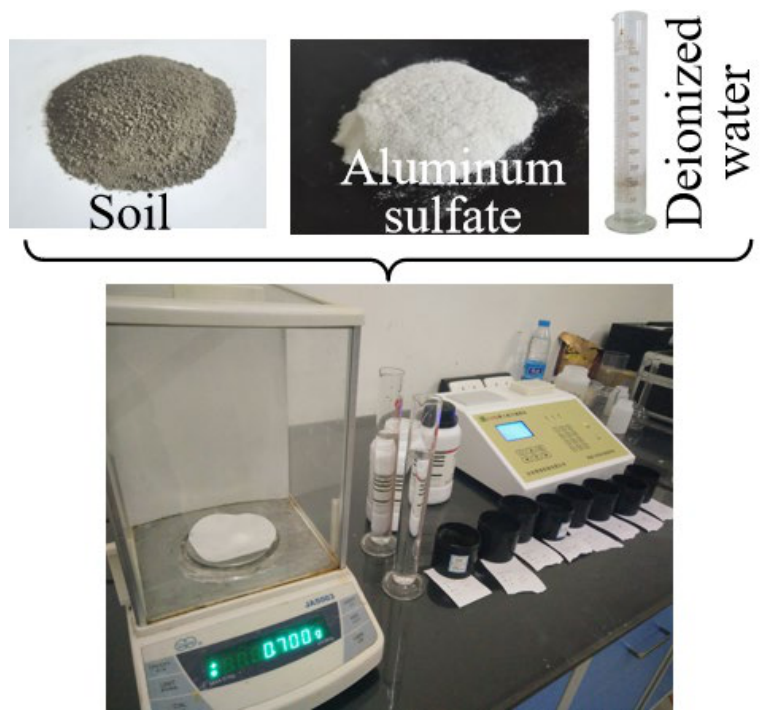
Figure 2.
The whole amendment-spraying subsoiler and its key components: (a) side view of the machine; (b) subsoiling shovel; (c) topsoil spraying device.
Figure 2.
The whole amendment-spraying subsoiler and its key components: (a) side view of the machine; (b) subsoiling shovel; (c) topsoil spraying device.
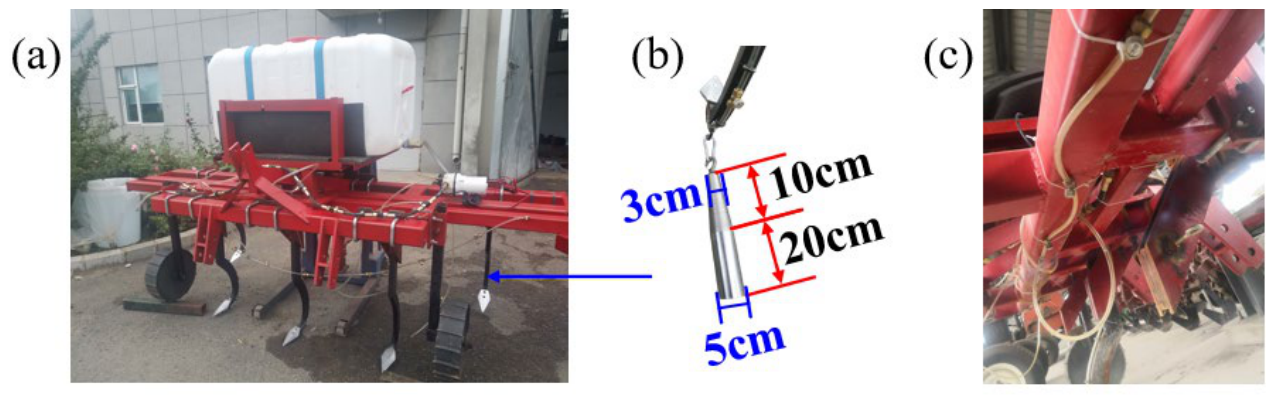
Figure 3.
Field test diagram of the amendment-spraying subsoiler and its key components: (a) field test of the whole machine; (b) 3D model of the subsoiling shovel assembly; (c) subsoiling shovel tip and subsoil expansion component.
Figure 3.
Field test diagram of the amendment-spraying subsoiler and its key components: (a) field test of the whole machine; (b) 3D model of the subsoiling shovel assembly; (c) subsoiling shovel tip and subsoil expansion component.
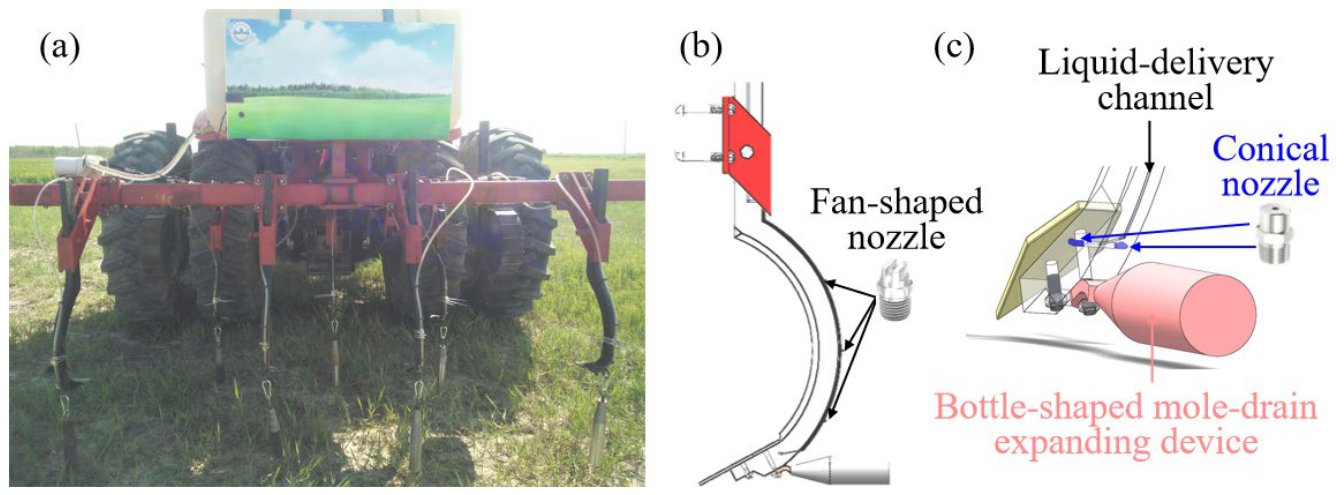
Figure 4.
Field experiment scheme for the developed equipment and alfalfa agronomic technology: (a) Working performance test of subsoiling equipment; (b) Experiment on the effects of different amelioration measures on soil properties and alfalfa growth. CK, control. SAS, subsoiling combined with ameliorant spraying. S, subsoiling. A, surface broadcasting of ameliorant.
Figure 4.
Field experiment scheme for the developed equipment and alfalfa agronomic technology: (a) Working performance test of subsoiling equipment; (b) Experiment on the effects of different amelioration measures on soil properties and alfalfa growth. CK, control. SAS, subsoiling combined with ameliorant spraying. S, subsoiling. A, surface broadcasting of ameliorant.
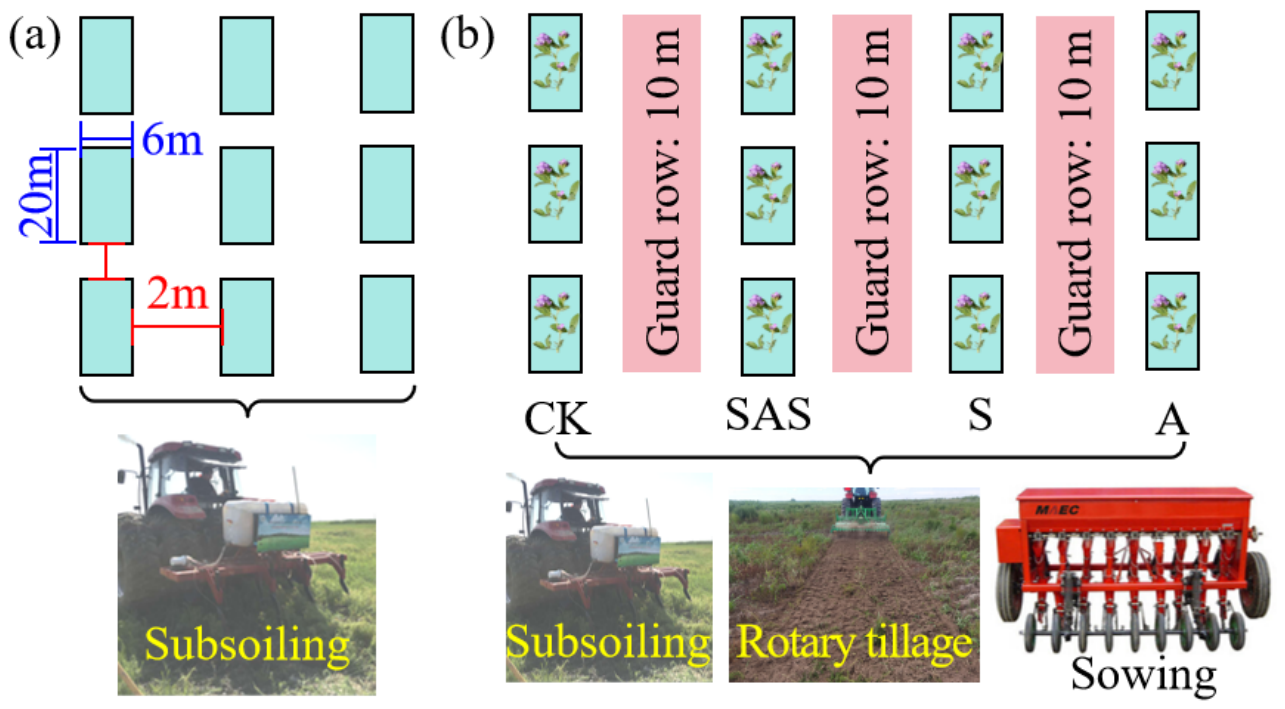
Figure 5.
The surface-mounted double-ring infiltrometer for soil water infiltration rate measurement.
Figure 5.
The surface-mounted double-ring infiltrometer for soil water infiltration rate measurement.
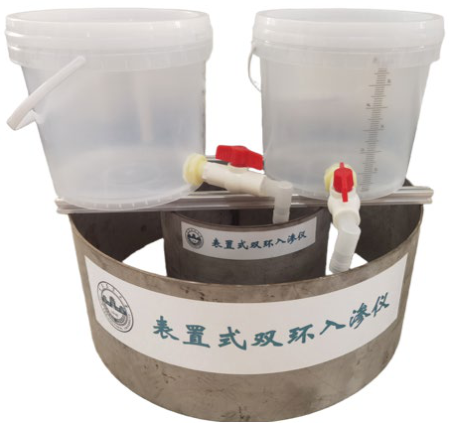
Figure 6.
Effects of aluminum sulfate application rate on pH of soda saline-alkali soil.
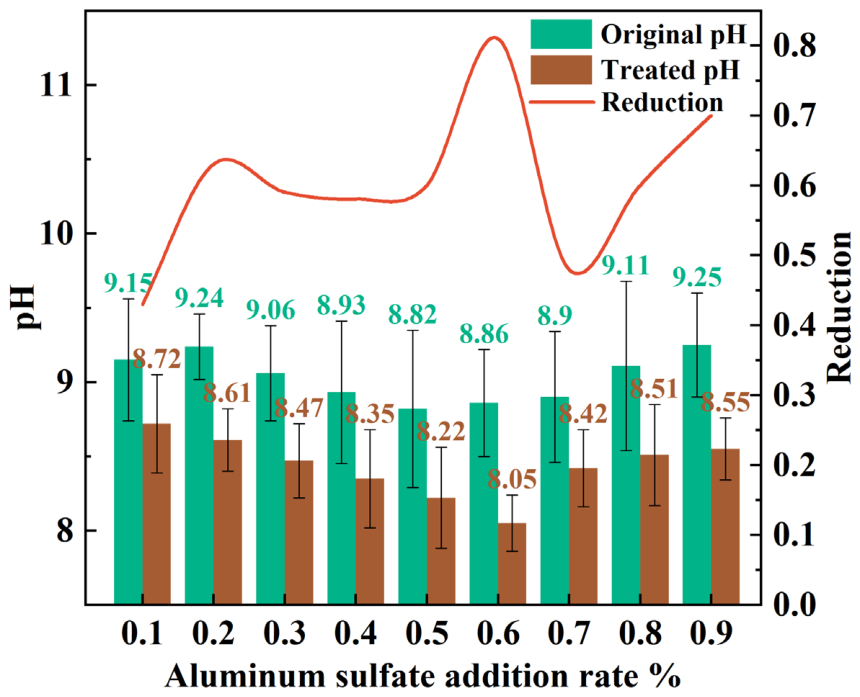
Figure 7.
Contour curves of soil disturbance interface before and after subsoiling.
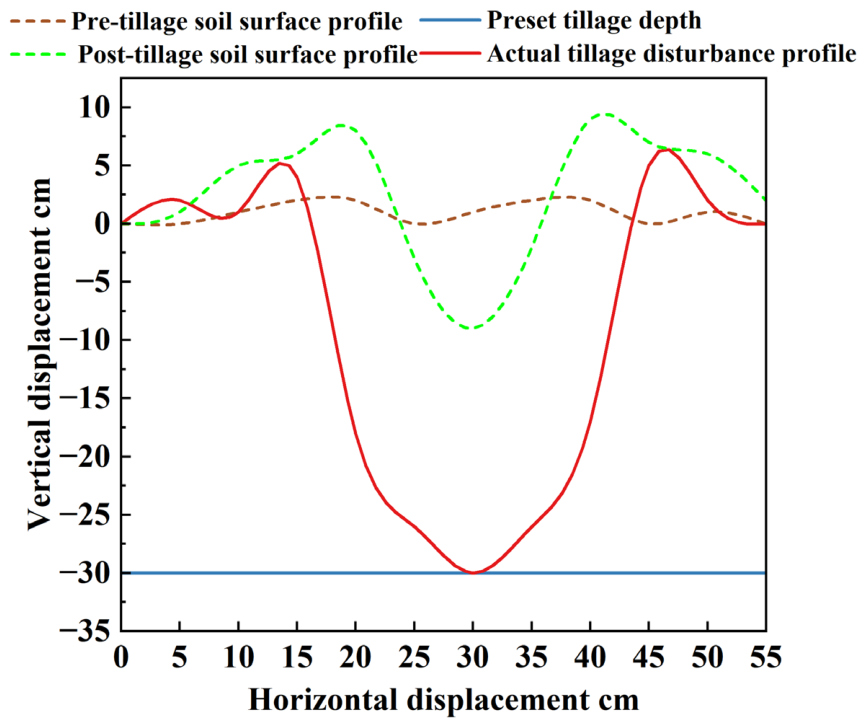
Figure 8.
Coefficient of variation of liquid application consistency among working rows.
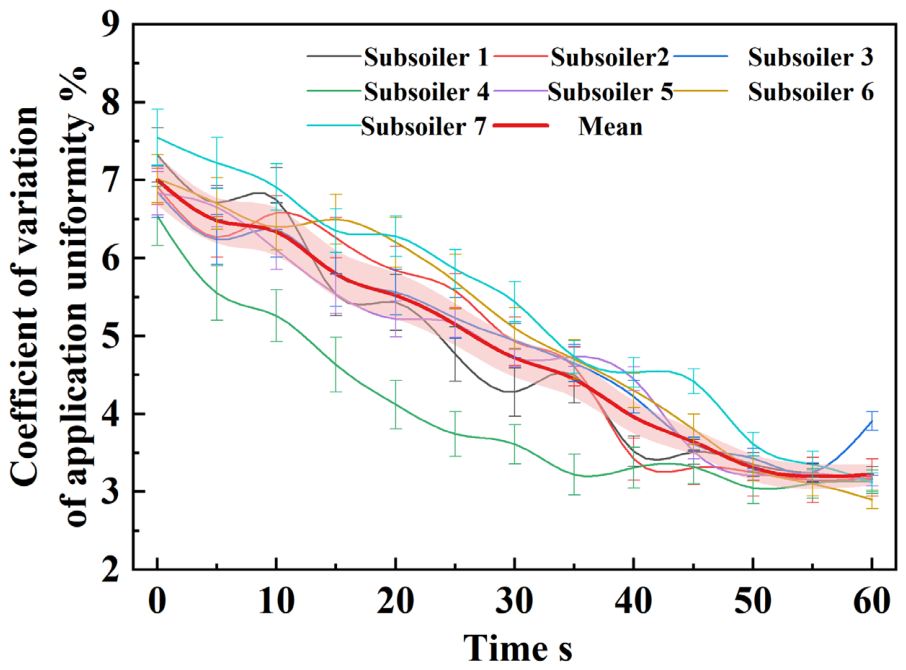
Figure 9.
Effects of different amelioration measures on soil WIR.
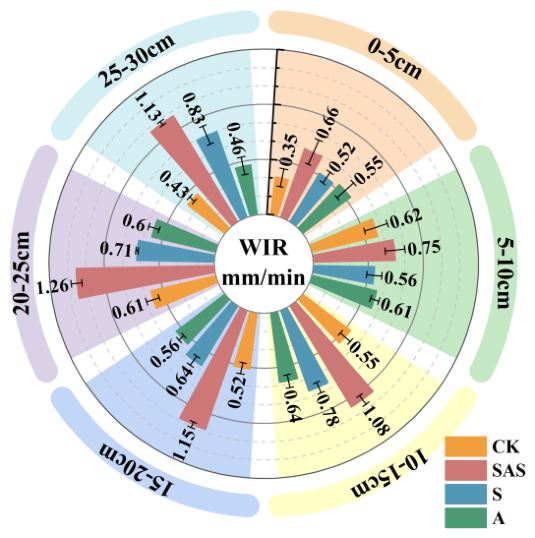
Figure 10.
Effects of different amelioration measures on soil BD.
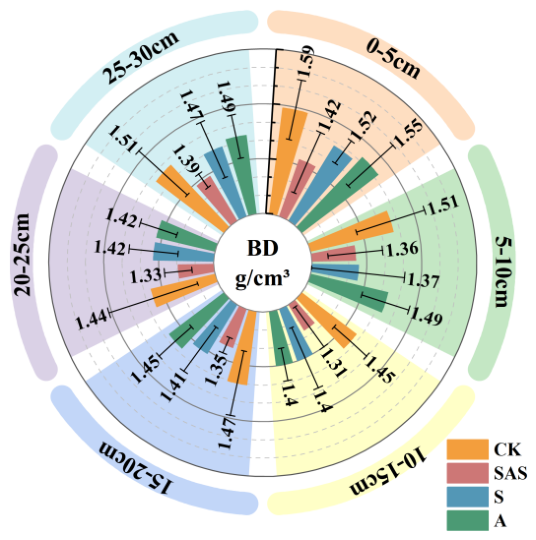
Figure 11.
Effects of different amelioration measures on soil pH.
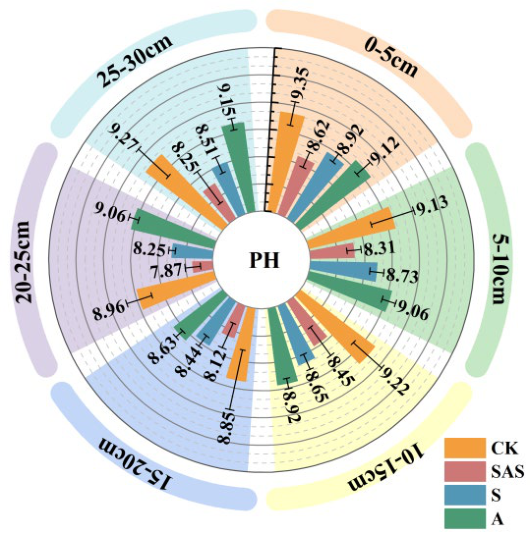
Figure 12.
Effects of different amelioration measures on soil SC.
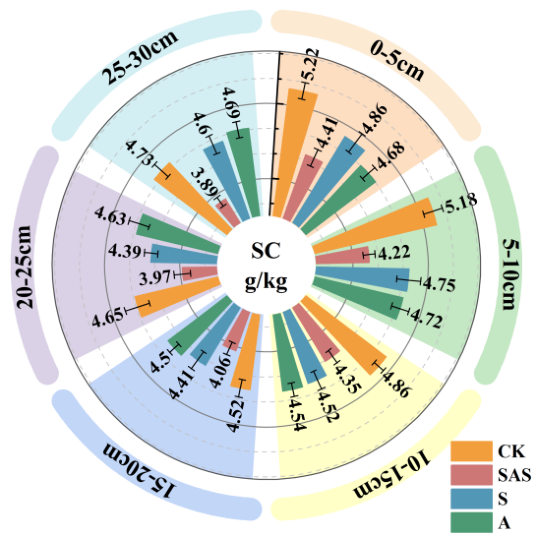
Figure 13.
Effects of different amelioration measures on alfalfa emergence rate.CK, control. SAS, subsoiling combined with ameliorant spraying. S, subsoiling. A, surface broadcasting of ameliorant. Different lowercase letters in the figure indicate significant differences among treatments according to Duncan’s multiple range test (p < 0.05, n = 3).
Figure 13.
Effects of different amelioration measures on alfalfa emergence rate.CK, control. SAS, subsoiling combined with ameliorant spraying. S, subsoiling. A, surface broadcasting of ameliorant. Different lowercase letters in the figure indicate significant differences among treatments according to Duncan’s multiple range test (p < 0.05, n = 3).
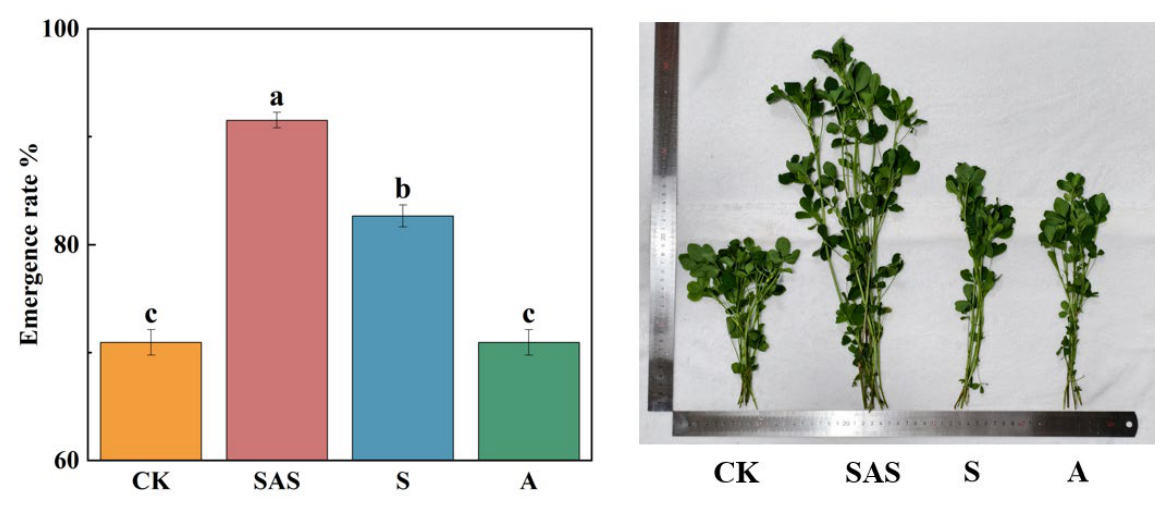
Figure 14.
Effects of different amelioration measures on alfalfa above-ground dry weight.CK, control. SAS, subsoiling combined with ameliorant spraying. S, subsoiling. A, surface broadcasting of ameliorant. Different lowercase letters in the figure indicate significant differences among treatments according to Duncan’s multiple range test (p < 0.05, n = 3).
Figure 14.
Effects of different amelioration measures on alfalfa above-ground dry weight.CK, control. SAS, subsoiling combined with ameliorant spraying. S, subsoiling. A, surface broadcasting of ameliorant. Different lowercase letters in the figure indicate significant differences among treatments according to Duncan’s multiple range test (p < 0.05, n = 3).
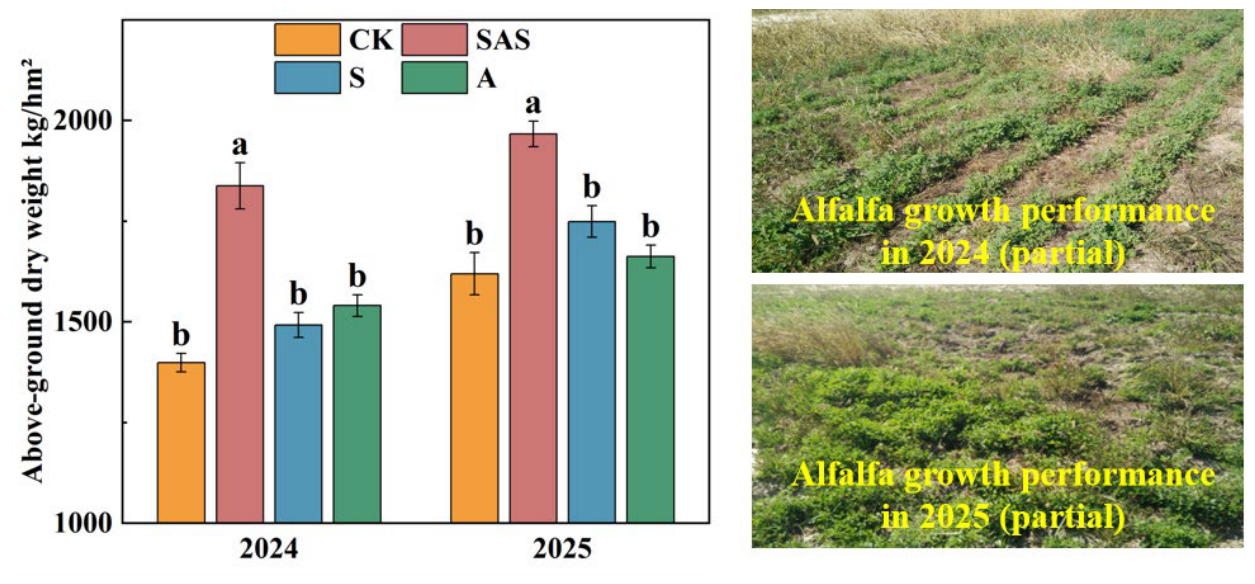
Figure 15.
Effects of different amelioration measures on alfalfa overwintering rate.CK, control. SAS, subsoiling combined with ameliorant spraying. S, subsoiling. A, surface broadcasting of ameliorant. Different lowercase letters in the figure indicate significant differences among treatments according to Duncan’s multiple range test (p < 0.05, n = 3).
Figure 15.
Effects of different amelioration measures on alfalfa overwintering rate.CK, control. SAS, subsoiling combined with ameliorant spraying. S, subsoiling. A, surface broadcasting of ameliorant. Different lowercase letters in the figure indicate significant differences among treatments according to Duncan’s multiple range test (p < 0.05, n = 3).
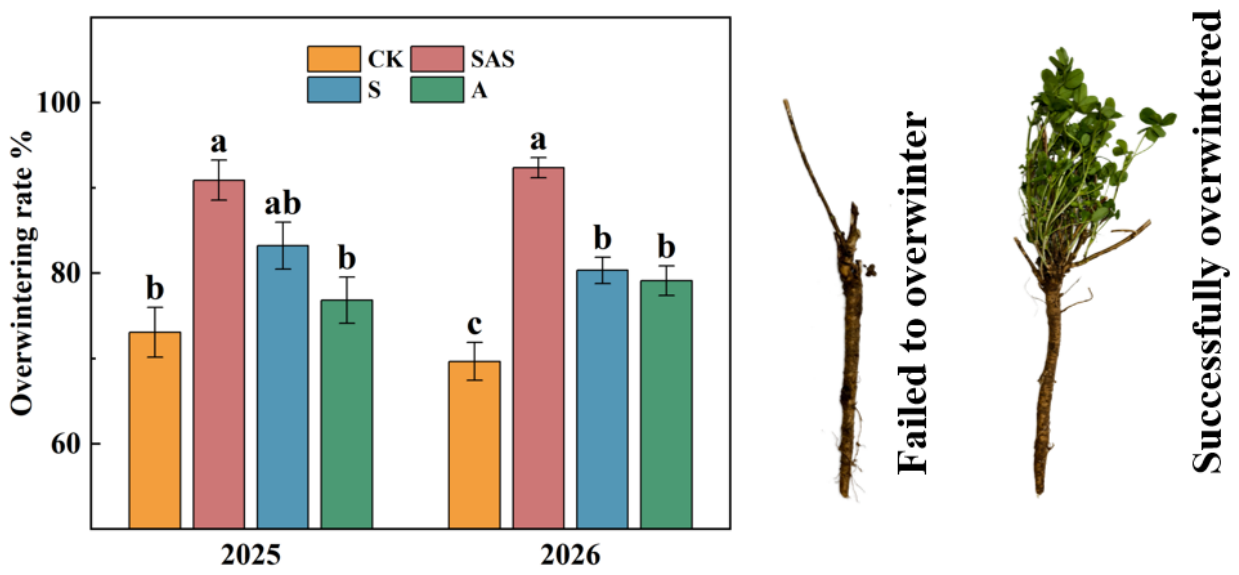

Table 1.
Parameter values of amendment application rate and liquid pump pressure under different operating speeds.
Table 1.
Parameter values of amendment application rate and liquid pump pressure under different operating speeds.
| Amendment application rate \ Liquid pump pressure | 0.5 MPa | 0.4 MPa | 0.3 MPa | 0.2 MPa | 0.1 MPa |
|---|---|---|---|---|---|
| 5.7 L/s | 8.2 | 7.8 | 7.2 | 6.7 | 6.0 |
| 4.4 L/s | 7.6 | 7.0 | 6.5 | 6.1 | 5.4 |
| 3.1 L/s | 6.6 | 6.2 | 5.8 | 5.5 | 4.5 |
| 2 L/s | 5.6 | 5.3 | 4.9 | 4.6 | 3.6 |
| 1.3 L/s | 4.7 | 4.2 | 4.0 | 3.4 | 2.8 |
| 0.9 L/s | 3.7 | 3.3 | 2.7 | 2.3 | 1.7 |
Disclaimer/Publisher’s Note: The statements, opinions and data contained in all publications are solely those of the individual author(s) and contributor(s) and not of MDPI and/or the editor(s). MDPI and/or the editor(s) disclaim responsibility for any injury to people or property resulting from any ideas, methods, instructions or products referred to in the content. |
© 2026 by the authors. Licensee MDPI, Basel, Switzerland. This article is an open access article distributed under the terms and conditions of the Creative Commons Attribution (CC BY) license (http://creativecommons.org/licenses/by/4.0/).
Copyright: This open access article is published under a Creative Commons CC BY 4.0 license, which permit the free download, distribution, and reuse, provided that the author and preprint are cited in any reuse.