
Submitted:
30 September 2026
Posted:
01 October 2026
You are already at the latest version
Abstract
Whole systems approaches have become prominent within physical activity (PA) policy, mostly reported on as individual projects. There is however limited evidence regarding how such approaches can be facilitated at scale by nation-wide agencies. This paper examines Public Health Scotland’s Systems-based Approach to Physical Activity Promotion, designed to support national-level PA strategy development. Using a case study design, three Scottish regions were purposively selected. Data were gathered via: an online survey; interviews with regional PA leads; and key stakeholders focus groups. Analysis combined thematic analysis with Pawson and Tilley’s realistic evaluation framework. The work suggested that whilst previous efforts had often been insufficiently systematic, strong historical foundations of PA partnership working and strategy development provided crucial contemporary support. Despite COVID-19 disrupting ongoing strategic work, participants described the post-pandemic period as a positive ‘reset’ that created opportunities for innovation. The Public Health Scotland framework was valued for offering a structured, practical, and evidence-informed process that balanced centralised systems thinking with local flexibility. Participants also approved of the inclusivity of the workshops, cross-sector collaboration, and the credibility of Public Health Scotland facilitation. Challenges included the complexity of systems concepts, sustaining stakeholder engagement, securing representation from senior decision-makers, and concerns regarding implementation capacity and resources. Our paper suggests that nationally facilitated, systems-informed approaches can effectively support the development of robust local PA strategies. However, strategy production represents only an initial outcome. Sustained implementation support, leadership, and long-term system stewardship are also required to translate aspirations into lasting population-level increases in PA.
Keywords:
whole systems approach
; physical activity
; strategic development
; national level development
Introduction
In the face of an inability to bring about significant increases in levels of population physical activity (PA), policymakers and practitioners have increasingly turned to a series of ‘systems-oriented’ values and practices (Rutter et al. 2019). Derived theoretically from founding ‘ecological’ resources that reflect an “interplay between environmental settings and biological and psychological factors” (Spence and Lee, 2003, pp. 20) and the associated notion of various PA ‘correlates’ (Bauman et al. 2002), these expressions have been expressed in several ways. Initially they were narrowly channelled through behaviourally oriented ‘social cognitive’, ‘humanistic’ and ‘dual process’ frameworks (Rhodes et al. 2019) before the need for more integrated, dynamic and macro-environmental perspectives was recognised (King et al. 2002). This was initially articulated theoretically via ‘socio-ecological’ resources (Giles-Corti and Donovan, 2002) and practically in relation to ‘partnerships for physical activity’ (Casey et al. 2009).
Drawing on the emergent prominence and popularity in general health policy of (variously), ‘systems theory’ (Komashie et al. 2021), ‘complex adaptive systems’ (Gomersall, 2018) and ‘soft systems methodology’ (Augustsson et al. 2020) resources, two key PA policy documents have established ‘whole systems’ approaches (WS) as the essential resources required to increase population levels of PA: the WHO’s 2018 Global action plan on physical activity 2018–2030; and ISPAH’s 2020 ‘Eight Investments That Work for Physical Activity’ framework. From this base, a wealth of related work has followed (Nau et al. 2022), spanning that which is: theoretical and aspirational (Machaczek et al. 2022); forms of empirical reporting (Forberger et al. 2022); through to the evaluation of WS-related outcomes (Shearn, 2022). Two particular features of this ground have been the exploration of WS ‘processes’ (Hall et al. 2021) and ‘implementation’ (Lobczowska et al. 2022).
In this context and building on both a project report (PHS, 2026) and related PA-focussed WS work within Scotland (Whitelaw et al. 2025), this paper reports on Scotland’s national public health agency, Public Health Scotland’s (PHS) initiative, A Systems-based approach to physical activity promotion (PHS, 2022a) that utilises WS methodology to foster PA-related strategic developments across the country (currently 16 regions).
It explores three regional case studies: Glasgow City (GC), Dumfries and Galloway (D&G) and Orkney Islands (OI). Not only does it examine localised WS implementation within these three domains, it also addresses the under-researched pragmatic issue of how WS approaches might be best facilitated ‘at scale’ by a central national agency across a whole jurisdiction (Greenhalgh et al. 2012). Furthermore, it seeks to enhance grounded ‘whole systems’ theory by deploying and reflecting on the utility of Pawson and Tilley’s (1997) ‘Realistic Evaluation’ framework as a potentially valuable complementary theoretical resource.
The work was structured around the following research questions: ‘what is the state of PA strategy development in the regions prior to the introduction of a systems-informed approach?’; ‘what strengths and challenges have been experienced during the development of a systems-informed approach?’; ‘what have been the strengths and challenges of the systems-informed approach itself?’; ‘what have been the strengths and challenges related to PHS’ involvement?’. These questions generated a series of substantive empirical themes: ‘the history of PA strategy’, ‘the effect of COVID-19’, ‘the systems-based approach itself’, ‘PHS’ specific involvement’ and ‘the publication of a PA strategy and the prospect of implementation’.
The paper is structured in the following way. It starts by setting out precedents within Scottish PA policy that ultimately led to the creation of a contemporary ‘systems-informed’ approach (‘Context’). It then describes the methodology that underpinned the empirical data collection and analysis (‘Methodology’). Next, a series of theoretical resources that were associated with the work’s empirical themes are set out (‘Theoretical resources’). Next, empirical insights are expressed in relation to a series of themes (‘Results’). These are then examined in relation to the identified theoretical resources (‘Discussion’). As a consequence of this analysis, the paper concludes by returning to re-address the set research questions, offering ways forward (‘Conclusion’).
Context
The roots of PA-based WS approaches
The origins of formalised PA policy in Scotland can be associated with 1998’s creation of a federalised Scottish Government within the United Kingdom (Meir et al. 2024). Powers associated with sport, health and education were part of this new ‘devolved settlement’ and in this context, two early publications created foundational PA policy: 1999’s Towards a healthier Scotland established PA as a topic priority and committed to setting up a Task Force that led to the publication in 2003 of Let’s Make Scotland More Active, Scotland’s first national PA strategy (Meir et al. 2024, pp. 193). In a five-year review of the work of this group, Halliday et al. (2013) note some successes in relation to national-level policy development, enhanced cross-sector working and some evidence of the initiation of local strategic activity.
However, echoing many of the themes that inform critical contemporary commentary on general WS approaches (Salway and Green, 2017), this review also highlighted concerns over the extent to which national-level policy intent was being practically reproduced in local contexts, as well as concerns of a more profound inability for PA strategy to be seen as pertinent to those outside traditional ‘health’ and ‘physical activity’ domains (Meir, 2025). Other commentators (Murray, 2013; Meir et al. 2024) identified a series of more specific critical themes: in the context of PA inequity, the depth and complexity of PA determinants and thus the significant challenge of getting those inactive active; the fragmented nature of the variety of sectors and organisations with a stake in PA with the need for stronger cross sector partnership working; and the prominence yet debatable role of ‘sport’ in realising broader PA outcomes, particularly the ‘legacy’ associated with major sporting events (such as Olympic and of particular significance to this paper, Commonwealth Games).
It is in this context that the systemic expressions of the above GAPA and ISPAH documents found immediate expression in the publication of a Scottish-specific document, A More Active Scotland (Scottish Government, 2018). This delivery plan that supported the establishment of a national-level systemic ‘Outcomes Framework’ reflected broad ecological values and favoured a ‘systems-based approach’ with expectations of achieving a ‘shared vision’ and ‘integration’. This was followed by the publication of two further systems-oriented documents: PHS’s A systems-based approach to physical activity in Scotland (PHS 2022a); ultimately forming the foundation of the Scottish Government’s Physical Activity For Health Scotland’s National Framework (Scottish Government 2024).
The ‘Systems-based approach to physical activity promotion’ report aimed to shift thinking, “towards strategic cross-sectoral efforts….to maximise limited resources and facilitate population levels of physical activity” (PHS 2022a, pp. 5). It established a ‘hybrid’ approach comprising an introduction to systems thinking alongside other associated policy aspirations: ‘evidence-based policy and practice’; ‘knowledge into action’, ‘improvement science’ and ‘outcome-focused planning’. This model formed the basis of the work reported here, with the aspiration of PHS being able to foster PA-based strategic across a whole country. Underpinning this foundation is a belief that whilst WS approaches have tended to be accepted in theory, the ability to fulfil this expectation both locally and nationally has been more difficult (Whitelaw et al., 2025). Therefore, as reflected in our research questions, there was a need to look at how this might be best achieved both locally and more importantly, at scale via national level facilitation and implementation.
The practicalities of the approach
Practically, the model is based on the delivery of two WS workshops, based on the staged ‘seven-step’ approach (PHS 2022a, pp. 16).
Figure 1.
PHS framework ‘A systems-based approach to physical activity in Scotland’.
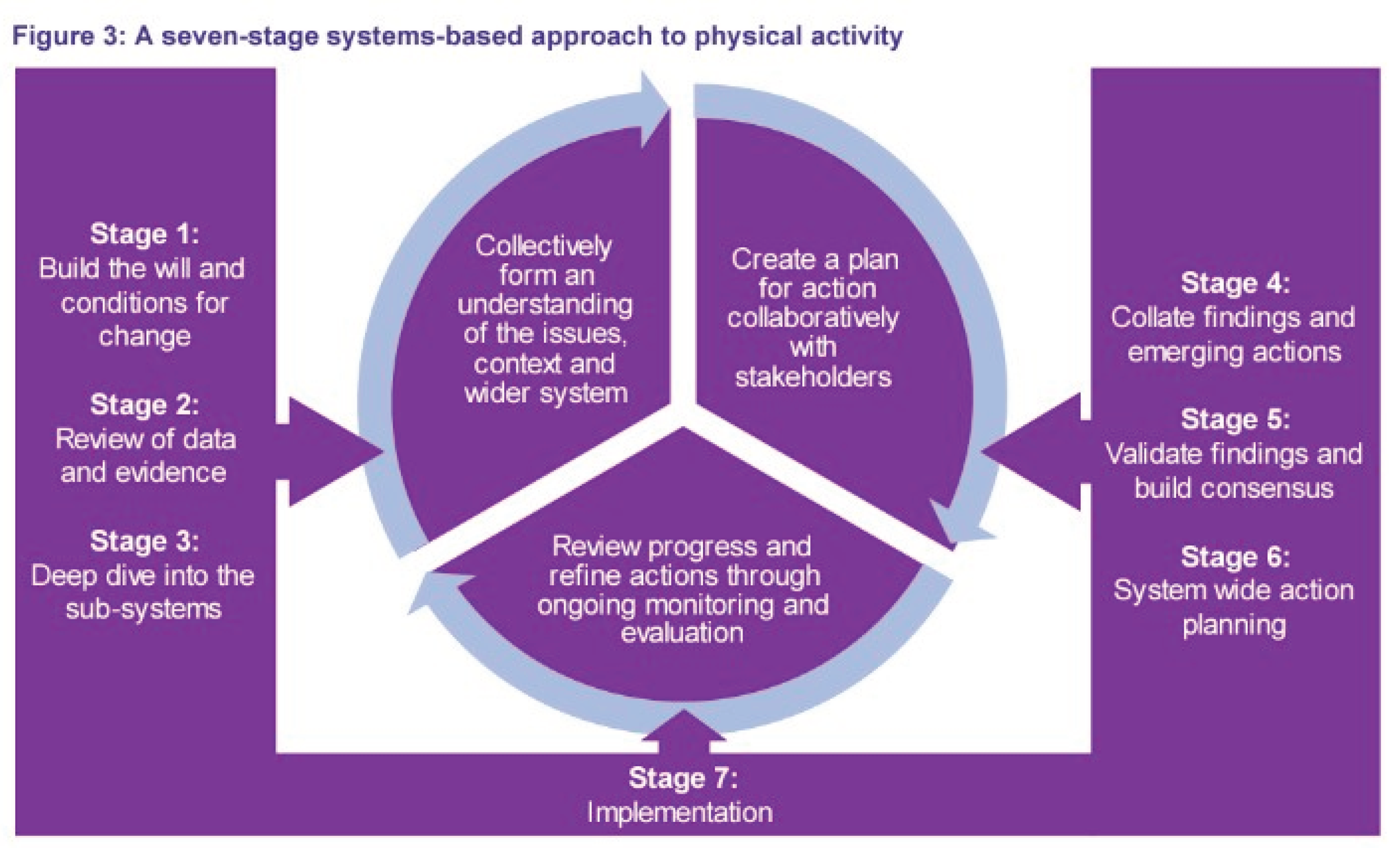
Workshop one accommodates stages 1-3 where the ‘will and conditions for change’ are founded in relation to inputs on: the PA system and strategic goals (‘to reduce inactivity and increase population levels of physical activity’); the eight strategic sub-systems (‘systems’, ‘places of learning’, ‘travel’, ‘places & spaces’, ‘health & social care’, ‘communications & public education’, ‘sport & recreation’ and ‘workplaces’); and the establishment of an ‘evidence base’ (from ISPAH’s ‘Eight Investments That Work for Physical Activity’ framework) against which the status of identified systems components are assessed. A ‘deep dive’ exercise that reviews existing work in each of the eight sub-systems is then undertaken based on the critical questions: ‘what is going well and should be retained’; ‘areas where progress is being made and improvements are required’ and ‘gaps that require development’. These insights are then fed into the workshop two - a system-wide planning session. Each identified element from workshop one is appraised using an ‘impact-feasibility’ matrix containing critical themes of ‘evidence’, ‘feasibility’, ‘achievability’, ‘acceptability’ and systemic ‘co-benefit’ potential. From this, priorities are identified and ‘next steps’ planning initiated.
Methodology
The work gained ethical approval from the University of Glasgow’s College of Social Science Ethics Committee (Ref: 400240145) and was conducted between March and May 2025. It was based on a policy-oriented case study approach (Pal, 2005). In conceptualising ‘policy analysis’ as an exercise in examining, “public problems in the here and now”, Pal (2025, pp. 228) notes that this case study method helpfully, “provides a vehicle for fully contextualized problem definition….and so can eventually inform more practical policy-analytic advice”. In this context, three regional cases were purposively sampled based on scale, geography, the presence of a significant level of past strategic PA work and having undertaken the PHS ‘Systems-based approach to physical activity’ process. As established above, they were: Glasgow City (as urban and large-scale); Dumfries & Galloway (as urban/rural and medium-scale); Orkney Islands (as remote-rural and smaller-scale).
The evaluation comprised three elements: an online survey with all participants in the PA Governance groups (see Appendix 1 for the structure); one-to-one interviews with the ‘Lead’ from the respective PA Governance groups (see Appendix 2 for the interview structure); and focus group interviews with key representatives from these groups (see Appendix 3 for the focus group structure). Participants in these groups were identified by the regional Lead and drawn from the various sub-systems identified within the PHS PA framework above. The GC focus group comprised of nine participants and took place online; one focus group with eight participants took place in-person for D&G; and two paired interviews comprising four participants took place online for OI.
Descriptive quantitative analysis was undertaken on the survey data, and qualitative analysis was undertaken using Braun and Clark’s (2021) thematic framework. Quotations below are marked in relation to the three case sources: Glasgow City (GC), Dumfries and Galloway (D&G) and Orkney Islands (OI); and whether this data came from interviews with the ‘Lead’ or ‘focus group’.
Building on the limited previous work that has deployed these resources both generally (Greenhalgh et al., 2023) and specifically within PA promotion (Willis et al. 2018), data were further analysed in relation to Pawson and Tilley’s (1997) ‘Realistic Evaluation’ framework with its desire to identify ‘what works in which circumstances and for whom?’, rather than simply ‘does this intervention work?’; Ryan et al. (2023, pp. 116) seeing this evaluative approach as being both under-used but particularly suited to the complexity of PA interventions.
Practically, this relates to: ‘context’ [‘history of PA strategy’, ‘the effect of COVID-19’]; as the nature of the actual intervention, ‘mechanisms’ [‘the systems-based approach itself’ & ‘PHS’ specific involvement’] and ‘outcomes’ [‘the publication of a PA strategy and the prospect of implementation’]. These are expressed as ‘context-mechanism-outcome’ (CMO) statements such as, ‘in this context, this particular mechanism helped actors generate those outcomes’ (or counter-factually did not). As well as substantive PA WS approach content drawing on a recognition that ‘realistic evaluation’ requires “more clarity….concerning the definitions of mechanisms and context” (Marchal et al. 2012), the paper also explores this fundamental ground.
Theoretical resources
Our general research domain and specific associated empirical themes set out above are underpinned by a series of foundational theoretical resources.
History (context)
First, the role of both general ‘policy legacies’ (Rayner, 2009) and particular historical organisational narratives (Maclean et al., 2014) are considered an under-represented (Berridge, 2018) though crucial element of policy analysis and any potential for subsequent change (Laczik et al. 2023). This is seen to operate via the “conservation of experience” (Levitt and March, 1988, pp. 328) and “sensemaking” (Hampel and Dalpiaz, 2023, pp. 1712) that ultimately provides, “invaluable knowledge about a policy area….in providing instructive parallels….a means to challenge existing paradigms and identify major paradigm shifts” (Haddon et al. 2015, pp. 2). Such perspectives are evident in the PA field (Mclaughlin et al. 2025).
One specific and contemporary aspect of this historical legacy cited in the work is the impact that COVID-19 had on policy. The general significance of ‘crises’ on policy is well recognised (Nohrstedt and Weible, 2010). As well as the predictable threats that these extraordinary events pose (Petridou et al. 2024), their potentially constructive basis is also recognised (Hogan and Feeney, 2012). For example, Kingdon (2011, pp. 133) sees crises as ‘focusing events’ that “bring problems to…attention”. So in Kingdon’s terms, crises are seen as offering up opportunities for ‘policy entrepreneurs’ to exploit the uncertainty of the circumstances and offer up innovative solutions.
These circumstances have been expressed in the specific context of PA and COVID-19 (Nobles et al. 2022). Again, whilst the immediate demands of an infectious disease pandemic were seen to have a “disruptive” impact on PA policy implementation (Mclaughlin et al. 2025, pp. 8), there is also a recognition that in this context, the value of PA has, “become increasingly important in the post-pandemic PA policy landscape” (Richards et al. 2024, pp. 1412).
The systems-based approach itself
The particular status of PHS’s approach exists in a wider context that attempts to capture the essence of what we consider a ‘system’ to be. Beyond the generalities that they contain a series of interacting elements, some feel that practice-based examples of WShave tended to overlook their nuanced and variable nature (Adams et al. 2014). In summary, a key tension is seen to exist between considering systems to be ‘real’ objects [classed ‘hard’] and/or more elusive, socially created ‘constructs’ [labelled ‘soft’] (Reynolds and Holwell 2020). The former suggests a relatively functional and pragmatic orientation towards obvious problems and solutions (Hester and Adams, 2017). The latter envisages more complex interpretations and circumstances with variable and contested interpretations of problems and solutions (Jebb et al. 2021). Variety also exists in relation to perceptions of the potential scope of such systematic intentions. Archetypal whole systems approaches seek to map and act upon the full extent of the systemic domain, whilst systems informed approaches adopt a more modest orientation of pragmatically establishing actionable parts of a system (Inyang et al. 2025).
Again, these generic insights are clearly visible within PA specific systems-based literature. Approaches have been predominantly ‘soft’ in their orientation (Nau et al. 2022) with an acceptance of their inherent variability (Nobles et al. 2022). The PHS’s relatively circumscribed ‘system informed’ approach is however in contrast to the predominantly holistic and comprehensive orientation that informs ‘whole systems’ approaches that map the full breadth of the various parts of a system and how they relate to each other (Rutter et al. 2019).
PHS’ specific involvement
Attention has been paid to how systems-based work can be most effectively nurtured. On the basis of there being, “nothing magical or mysterious about this”, Attwood et al. (2003, pp. 19) highlight the basic humanistic dimension of systems building, “involving all those who are part of the problem in creating and implementing the solutions”. Furthermore, Greenhalgh et al. (2012, pp. 540) characterise such relationships as optimally, “tied to individuals, embedded in relationships, and strongly value laden…(where) interpersonal relationships remain ‘warm’, the informal wheels are oiled”.
From this basis, a series of specific facilitatory principles are offered: process should be organic and based on the shared exploration and action-based learning (Greenhalgh et al. 2012); these interpretations should be focussed on the interconnectedness of parts and potential innovation (Girard et al. 2024); and that change should be seen as an adaptive ‘process’, not an ‘event’ (Attwood et al. 2003). Aligned with the complex, multi-faceted nature of ‘whole systems’, a broad overarching orientation is suggested, towards “meta-support for implementation” (Lessard et al. 2016, pp. 4).
Alongside these generalised positions, a host of more functional actions are envisaged including, setting goals and priorities, clarifying roles and responsibilities, building coalitions, developing strategy, and fostering innovation (Ottaway, 1983, pp. 376). Furthermore, Dogherty et al. (2012, pp. 4) see these functions as being expressed across facilitatory change ‘stages’: ‘planning’, ‘leading and managing’, ‘monitoring progress’, ‘ongoing implementation’, and ‘evaluation’.
One final dimension involved in facilitation centres on the function being located ‘externally’, ‘internally’ to the system, or a combination of both (Greenhalgh et al. 2012). In relation to WS approach change being particularly associated with innovation, the role of an external facilitator is seen as particularly significant, potentially providing, “a new perspective and questioning organisation rules and policies” in “adopting evidence-based behaviours/activities” (Girard et al. 2024, pp. 2). Any combination with internal change agents is also seen as constructive in that it gauges existing circumstances and ultimately supports dissemination and implementation of WS approach solutions (Westerlund et al. 2015).
These themes are evident in PA-specific literature (Lobczowska et al. 2022). The centrality of interconnected humanistic principles is expressed in relation to the need for the foundations of “established cross-sectoral relationships” as “strong foundations to build on” (Nobles et al. 2022, pp. 14). Likewise, Brinkley et al. (2025, pp. 14) recognise the adaptive nature of the WS approach as an “ongoing process” involving “shared working relationships”.
The publication of a PA strategy and the prospect of implementation
Recognising that each of our case studies directed WS approach activity towards the creation of a PA strategy with practical expectations, the concept of policy ‘implementation’ (May, 2013) becomes significant. The nature of implementation has been primarily characterised as being defined by various ‘enablers’ and ‘barriers’ (Nilsen, 2020) and these broad positions have been populated by more specific variables (Weiner, 2009) associated with notions of ‘capability’ and ‘capacity’ (May, 2013). At the broadest level, Nilsen and Bernhardsson (2019) highlight the significance of ‘contextual’ dimensions; such as access to change support; the availability of financial resources and an underlying ‘readiness to change’. To complement these influences, a series of more grounded features are suggested such as, a broadly conducive organizational climate, a willingness to embrace innovation, time availability, and effective leadership (Nilsen, 2020).
In a systems context, whilst such variables have traditionally been seen to be expressed as mechanistic ‘linear conceptualizations’ (Braithwaite et al. 2018), the recognition of more unpredictable, iterative approaches has over time become more prominent (Weiner, 2009), based on “fluidity, messiness, and even chaotic tendencies ….innovation often manifests not progressively in a step-by- step manner, but recursively, and always diverging from aspired-to pathways” (Braithwaite et al. 2018, pp. 3).
A series of associated features are suggested in the PA-specific literature (Forberger et al. 2022), for example: the significance of leadership (Nobles et al., 2022); adequate supportive resources (Richards et al. 2024); the need to extend strategic scope beyond traditional sport and/or health sectors (Mclaughlin et al. 2025); and shared policies, strategies, vision, and working relationships (Brinkley et al. 2025).
Results
Survey Insights
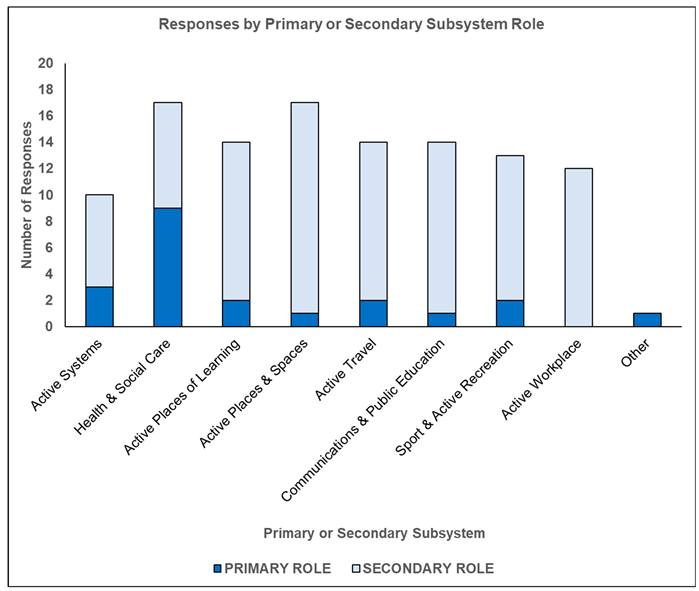
This attracted twenty-one responses [Glasgow City (6); Dumfries and Galloway (12); Orkney (3)]. Apart from ‘Active Workplaces’, ‘primary’ representation was achieved from each of the eight PA ‘sub-system’ areas (particularly ‘Health & Social Care’) and ‘secondary’ representation from all.

Table 1.
Representation across PA sub-systems.
Respondents were asked to assess the strength of various ‘strategic development processes’ associated with the PHS systems-based approach to PA framework. Positive responses were expressed – associated with both the overall concept and the immediate delivery of the workshops (for example, ‘vision’ and ‘expected outcomes’), though this position tends to weaken in relation to subsequent strategic features (for example, ‘implementation’ and ‘assessment of risk’). This may be attributable to simply not being able to predict future consequences or a reflection of a need to build-in implementation plans more implicitly to developmental processes, particularly in relation to the prioritisation of particular aspects of the ‘whole system’ (see Table 2).
Table value of the systems-based approach and the role played by PHS in supporting it were assessed. Mirroring the array above, views on the essential nature of the framework and its immediate delivery were positive. Again, these positions softened when associated with future implementation-oriented activity; as will be developed more later, this is particularly evident in relation to the potential for PHS to provide on-going support for the actual implementation of PA strategy (see Table 3 below).
One particular feature of the PHS systems-based approach was to complement the ‘systems informed’ theme with a range of more generic features associated with strategy development – for example, ‘evidence-based policy and practice’; ‘knowledge into action’, ‘improvement science’ and ‘outcome-focused planning’. Respondents were more aware of the features associated with systems (for example collaborative leadership and multisectoral partnerships) and less of the broader strategic principles, though there was still some degree of awareness of these dimensions (see Table 4 below).
Qualitative insights were also sought within this survey, and these are incorporated into the reporting of the case studies that follow.
Qualitative Insights
History of Pa Strategy
All of the case study regions had deep-rooted strategic histories relating initially to ‘sport’, ‘exercise’ and increasingly, approaches more broadly associated with ‘physical activity’. In the three cases, this provided a strong foundation for the immediate deployment of the PHS systems-based approach and potentially the next steps involved in strategic implementation. This related to general regional knowhow and the experience of key individuals who had been present over that period. Strong relationships between these regions and representatives from PHS and sportscotland was also considered to have provided underpinning capacity.
For GC, these roots went back to 2007. Drawing on the national policy foundation of 2003’s Let’s Make Scotland More Active, they published their own Let’s Make Glasgow More Active 2007-2012 strategy. This was largely led by the NHS and was developed in partnership with multiple stakeholders, focussing primarily on a relatively narrow ‘health’ and ‘sport’ focus. This was superseded by strategic actions associated with various high-profile ‘events’, initially and primarily the 2014 Commonwealth Games, followed by the European Football Championships (Euros) in 2020/21 and additionally the city being designated ‘European Capital of Sport’ in 2023. These events fostered what was termed a ‘legacy framework’ approach.
Across this time, formal reporting to Glasgow City Council was co-ordinated by a small but wide-ranging governance group (e.g., Education, Health and Social Care, the NHS, the third sector) and led by a key local government Councillor, with a small team responsible for tracking key indicators. As well as those specific to PA, these accommodated broader concerns like recruitment to PA related employment and levels of housing accommodation that were derived from the events. The breadth of the actions was seen by some as progressive and synonymous with what was to eventually be seen as the parts of a ‘systems informed approach’; one GC participant suggesting that the approach leading up to the Games was largely focused on health, physical activity, and NHS-funded projects, before shifting its emphasis more toward sport as the Games approached. Procedurally, the direct reporting into Council via the lead Councillor was seen as helpful strategically.
Similarly, strategic PA work in D&G had deep roots going back to the early 2010s. A multi-agency strategy was published at this time, led and populated mainly by NHS D&G and D&G Council staff and associated work. This was complemented subsequently by the formation of the strategic group, The Dumfries and Galloway Physical Activity Alliance (DGPAA). This acted as a forum for reporting, communication and information sharing for various PA related work in the region; for example, sport and leisure, active schools, active travel, and the early manifestation of work in health and social care. OI also had various iterations of ‘physical activity’ strategies going back to the 1990s. Again, previous strategies had tended to focus primarily on sport and was indicative of a long and strong relationship that OI had particularly developed with sportscotland.
Despite the broad potential that these precedents offered, a series of critical concerns were expressed across the three cases, suggestive of a need for a more robust ‘whole system’ strategic orientation. All felt that previous strategic processes had been relatively ad hoc and not particularly structured, comprehensive, or implementable. In GC, the lack of definable system-oriented sub-groups and associated areas of expertise was highlighted and a sense that these efforts did not quite amount to a ‘true’ strategy; the GC Lead feeling that “this wasn’t necessarily a formal strategy”. Here the softer term of foundational ‘collaboration’ was cited, a GC participant describing this instead as “people collaborating with an agenda”, which ultimately tended not to be extensively implemented.
In D&G, there were perceptions that the initial strategy had negligible impact and the DGPAA group had subsequently acted more as a passive reporting forum for existing NHS and Council based work rather than a proactive mechanism for creating and implementing new strategy. So whilst this partnership building process did nurture strong informal relationships, key weaknesses were highlighted, primarily that there were sector gaps in the Alliance and due to its largely operational basis, it lacked leadership ‘teeth’ in being able to actually enact strategy. This was reflected in the words of one focus group participant, “it never really felt like we got great traction forward”, without what the D&G Lead called “the required level of empowerment to drive the change”. In OI, in technical terms, one participant in a focus group also saw these early strategies as lacking action and direction, “more of a report document than a strategy”.
The Effect of COVID-19
All three cases cited the COVID pandemic as an important landmark in the engagement with the systems-based approach. In each, the immediate consequences of the pandemic were detrimental – acting against progress that was already being made in PA strategy domains. Here within this study, a variety of practitioners involved in PA-specific work had been removed from this work, being re-deployed to emergency COVID-specific tasks. This resulted in the effective cessation of any PA-related policy activity.
The post-COVID context did however offer various forms of ‘resets’ across the cases. In GC, the initial priority was to simply recover programmes and return them to pre-COVID levels, resulting in a tendency towards relatively conservative activity. The return to the ‘face-to-face’ nature of this early post-pandemic work was however seen as significant, providing networking interactions, a participant noting it was “valuable to step out of our silo and gain insight into city-wide activities”. In broader terms, a GC focus group participant described this as “a catalyst”, a “moment to say, okay….what does that future direction look like….what does that collective piece of work look like?”.
In D&G and in a context of previous D&G Physical Activity Alliance led work being perceived to be “drifting” (D&G Lead), the pandemic was again seen to provide “a natural break” (D&G Lead) from past work. In the words of a focus group interviewee, it created “a chance to stop…pause…and reflect where we are” and new work “organically come out of COVID” (D&G focus group). From a broader post-pandemic perspective, there was a feeling that the status of PA had politically been elevated, particularly the need for a strategic shift away from sport toward a focus on broader activity and associations with health and wellbeing.
Similar circumstances prevailed in OI. Strategic PA work stopped during the lockdown period but was quickly resumed post-pandemic via initial conversations with PHS and sportscotland. Whilst some of the original work was maintained, the significance of PHS’ systems-based approach was favoured as a “different way of looking at things” (OI Lead) and was considered to offer the potential to move “from sport to a more holistic view” (OI Lead).
In these contexts, the timely publication of the PHS systems-based approach document in 2022 appeared to have acted as a spur towards the re-invigoration of work in all the cases with an explicit drive towards a holistic, systems-informed approach.
The Systems-Based Approach Itself
Insights from across the cases suggested a number of constructive features associated with the work. Most discernibly, there was strong support for the structured nature of the PHS approach. In the context of potential complexity, having an explicit stage-based system framework was universally welcomed, seen as providing clarity in process and clear linkages to pragmatic practice consequences. For example, a qualitative comment from the survey from GC asserted, “there was a clear process that retains systems-based methods but translated into a clear step-by-step process which was realistic in practice”. This clarity was juxtaposed with D&G’s prior experience of another prominent whole systems approach within the Scottish Government’s ‘Early Adopters’ project, which was considered to be “based on pure systems science” and as such “so complex and so involved that the communication gets missed or you get miscommunication or misunderstanding or different perceptions of what’s expected” (D&G Lead). In contrast, the tempered ‘systems informed’ approach that PHS adopted was seen as more accessible, allowing the foregrounding of pragmatic, tangible, and immediate outcomes; for example, a focus group member in OI contended, “I think the whole systems approach has actually made the process clearer”.
Workshop culture was also seen as significant. The ‘safe’ in-person format was welcomed in all of the cases and seen to further foster effective communication and subsequently organic links in the PA domain. The significance of creating such a conducive context was particularly highlighted by the D&G Lead’s assertion that in whole-systems development, “a lot of it always comes down to people” and this was complemented by a view from an OI focus group participant’s view that there was “a real constructive buzz in the room between people” in their workshops. More pointedly, this constructive tone was associated with PHS placing themselves in a neutral ‘fair trading’ role, the OI Lead suggesting, “[The PHS Lead] wasn’t coming in and saying you need to do this…it was just a case of here’s a concept….this is how it works…what do you think?....do you think this would work for Orkney?”. The consequence of these foundations was that “people came on board or pivoted pretty quickly to this….to the new strategy idea” (OI Lead).
The mixed participant composition of the workshops (in relation to both sub-sectors and status) was also seen as productive. The workshops in all of the cases were viewed as inclusive and collaborative, bringing together people from different sectors and roles and allowing everyone to contribute. For example, a D&G focus group participant noted, “everyone [had] an opportunity to have their voice heard within the conversation” and in OI that “significant opportunities” had been created whereby people “stepped away from traditional silos and recognised how different systems are interlinked and how multiple teams can impact PA and well-being”. This was seen to foster mutual understanding of where each of their specific PA interests fitted into a broader PA system. In this context, a D&G focus group participant expressed, “as a sports system….we need to integrate with other systems in order to protect the resources and in order to profile, holistically, what sport can and does do, and this has allowed us to do it from a health perspective’. Likewise, the OI Lead contended, “it’s not just about grass pitches and swimming pools. […] it’s how people travel to work….you know….if you’re looking at roads development…how do we make it possible for people to walk, to cycle, to wheel….all those sorts of things that all come into physical activity and well-being”.
In terms of status, the workshops were generally seen to achieve an acceptable mix of strategic and operational colleagues. In the words of the D&G Lead, the “PHS system [was] developed with practitioners, not just policy makers and researchers, which is why you’ve seen such a good process in practice”. The OI case suggested a particularly strong representation of those with strategic roles, one focus group participant commenting that there were a surprising number of high-level people (suggesting a strong buy-in) but that it was also valuable to bring in the operational stakeholders who would ultimately deliver the strategy. In D&G, this mix was seen to result in the workshops, “bringing together like-minded people and increasing the number of people who have a strategic role and be able to allow PA work to be expressed at this level” (D&G Lead).
The final positive feature of the approach was the prominence of its ‘evidence-based’ element. Broadly, this was seen to provide a degree of decisional security and explicit links between global and local strategy. A qualitative comment within the GC survey highlighted the perceived significance this, particularly in identifying potentially innovative work: “having the evidence-based approach allows you to cut through ‘opinions’ and prevents the strategy being formed from work that was already planned”. Additionally, there was a view that PHS had taken nuanced and balanced stances in this respect – offering some central direction in relation to core ‘evidence’ but also accepting and encouraging local expressions and decisions; expressed by the D&G Lead as offering “a nice balance between being locally focused and practical….but also being evidence based”.
Some challenges associated with the approach were also identified. A few found it relatively complex and inaccessible, particularly in the initial stages. In GC, a focus group participant said it took them “five or six times” to understand it and in OI, one focus group participant felt, “there was one of the slides…..that it’s a bit scary….lots of lines” with the OI Lead noting that it had been, “difficult for some people to understand the systems-based approach…and how their area fed into it”.
Establishing and maintaining any engagement and motivation across the range of sectors/organisations/stakeholders was also at times considered difficult. The ability to initially create the system was sometimes challenging; for an example, a D&G focus group participant suggested, “there were some key partners that didn’t engage at all….we had some gaps in our list of people that we wanted to be there”. Attrition from the initial systems grouping was also occasionally an issue and attributed to various factors: basic capacity [“it’s just the reality of….people have got very busy and heavy workloads” (D&G Lead)]; employment flux [“staff who were assigned to this and then went on unplanned leave….or moved on to a new role” (GC focus group)] or the extended nature of the process [“it took a long time and they (stakeholders) didn’t necessarily always stick around to see the benefits”] (GC focus group)].
This issue was perhaps less prominent in the smaller and more concentrated D&G and OI domains. For example, in D&G, it was noted that, when it came to fostering collaboration, the region benefited from having a coterminous NHS and Local Government administration and a relatively condensed workforce where, “we’ve got a lot of people who know each other and work together well…and often appear at the same meetings” (D&G Lead). These conducive circumstances were also evident in OI, though (variously) the generally limited size of the available workforce, individuals having multiple (and potentially non-specific PA) roles and the existence of unfilled posts were recognised as being limiting, the OI Lead pointing out, “we’re a relatively small team….and authority….there’s lots of people that are doing lots of different things”. The GC case offered a different picture. The geographical scale and organisational complexity of the city of Glasgow (what the Lead called “the enormity of the agency”) was cited as causing issues when it came to identifying participants and then creating coherence between them. For example, the GG Lead pointed out that individuals in the same organisation came to the process being unaware of each other; “we also found that…at the deep dive…there would be people in the NHS and social care…and they don’t even actually know each other”.
Achieving full representation in each PA sub-system throughout the process was also not always possible and respondents were acutely aware of the challenging circumstances in which this work was taking place; for example, in relation to having limited staff capacity to contribute to such work [“there is the skills and attributes to be able to deliver this strategy…but there isn’t the capacity in their work time” (GC focus group)] and the exacting financial circumstances into which systems-based approach insights are expressed [“we’re all working with less resources” (GC focus group)], particularly in relation to asks for new investment and/or being able to dis- and re-invest across PA domains [“physical activity is competing against….lots of other things for investment and disinvestment (DG focus group)].
As well as achieving a quantitative critical mass at the workshops, all the cases experienced the challenge of involving the right people, particularly in relation to the strategic/operational balance and representation across all of the PA sub-systems. The composition and staged involvement of senior and operational participants was recognised as complex and at times contentious. Some saw the engagement of senior stakeholders from the onset as essential and felt that the identification of a single ‘strategic lead’ who would own and lead the implementation process would be constructive; in GC, a focus group member noted, “the strategy was led by a councillor….and respected directors held account through him…and there was also a very small team that just made sure that all the KPIs were reported back on”.
Others felt that such involvement was not necessarily essential in the early systems-based work and that the creativity required would come from operational colleagues who had ‘on-the-ground’ experience; for example, a participant in the D&G focus group felt, “at the end of the day….it’s folk doing the work that have the real insights into what’s best…what’s needed”. Similarly, a GC focus group participant felt that “even the person there was more senior….they would rely on what they’re being fed up by the specialists underneath them because they won’t be expected…cannot be expected to know what’s needed”.
However, across all cases, some did feel that senior colleagues were relatively under-represented in workshops and were concerned that this would result in operationally-oriented decisions in these sessions lacking strategic credibility and ultimately practical traction, for example: OI focus group [“people were maybe not…at the senior enough level….inputting at the right time”]; D&G focus group [“the direction of travel in D&G….does not always involve the most senior people and organisations”]; and GC focus group [“maybe….there weren’t enough senior people there at the workshops”]. In contrast, some in the OI focus groups felt that some attendees at the first meeting were perhaps in too senior; these were people who would not be involved in leading the process, and thus in the words of one participant, their presence, “gets the buy-in to the principle of it but doesn’t necessarily get the buy-in to the action”.
Furthermore, even in circumstances where productive senior representation had been achieved there was a concern that they may not have been fully representative of the range of PA sub-groups with some key partners not engaging; for example, a D&G focus group participant suggesting, “yes….there certainly were some people we’d like to have been there from the start…who weren’t…especially those who are decision-makers” and a GC focus group participant noted, “it’s quite challenging….just in terms of getting a level of good representation in all of the areas”.
Finally, the relationship between centrally driven guidance and local expressions and preferences was perceived to be complex and perhaps under-represented in the systems workshops. Whilst the foundational security the ‘evidence base’ provided was broadly welcomed in informing optimal ways forward, there were views that such insights should not be adhered to dogmatically; for example, “there are….occasions when central evidence base can be contradicted…with local perspectives of evidence” (GC focus group), “evidence’s obviously adapted for local need” (D&G Lead), “you need to recognise that there are different types of evidence” (OI focus group).
This issue was connected to a perception of some ambiguity over the appraisal of the actions derived from the ‘deep-dive’ exercise and the use of the ‘impact-feasibility’ matrix. The ‘feasibility’, ‘achievability’ and ‘acceptability’ dimensions of this resource were clearly seen to be aligned with the value of local perspectives; for example, a GC focus group member felt, “there did feel some flexibility when it came to deciding on priorities” and a D&G focus group participant believed that “local evidence and perspectives are really important”. The weight of the ‘evidence’ element was however evident, for example, a D&G focus group participant suggested, “we always need to make sure what we’re doing is evidence based” and a GC focus group member felt, “it was good that we were informed by the global action plan….so there’s a clear thread from the global evidence to the national to the local”. These assessments fed through into the types of activities that were ultimately included in theoretical systems and pragmatic strategies. This reflected elements that ranged from long-term profound and challenging expectations associated with policy through to relatively achievable practical ‘quick wins’.
Some expressed a view that fundamentally, they were unsure on what types of actions the system should highlight and focus on; for example, a GC focus group participant felt, “it was a bit unclear about what would be the best way to go…..the big impact stuff…or…being more realistic”. Relatedly, there was some uncertainty over what might be considered the ‘optimal’ type of interventions expected from the process, ranging from the ordering and consolidation of existing work through to expectations that the process would identify innovative ideas and systemic interactions. This was captured in a qualitative survey response from GC: “(I’m) not sure if more work is required locally to explore investment and disinvestment decisions related to actions within the new strategy….some people feel strategy should be bold while others are much more conservative (e.g., increase or maintain). The impact/feasibility assessment of actions explored this somewhat…..but not sure if a next step is needed to consider size/change in the totality of work being undertaken”.
PHS’ specific involvement
There was almost universal acclaim for the facilitation and support provided by PHS being seen as playing pivotal roles in the process. This related to both the favourable status of the organisation as well as the individual Lead PHS Officer. This was expressed in relation to a range of aspects.
First, PHS were seen to offer a high level of hands-on support. The GC Lead saw the PHS Lead’s involvement as “practically invaluable” with one GC focus group participant describing the relationship as “a critical friend….a partner who advised all the way through”. In D&G, this input was recognised as providing a “phenomenal level of support” (D&G Lead), with a D&G focus group participant feeling that it would have been “nightmare” without this input. In OI, the willingness of the PHS lead to come in person to the island to conduct the workshops face-to-face was particularly welcomed, generating initial enthusiasm during the crucial first workshop.
In broad terms, respondents felt that this helped to bring the WS approach group together and guide them through the process; articulated by the OI Lead as, “right to the very end….the PHS Lead was inputting”. This support in OI was particularly welcomed in that in the context of having a small public health team without a dedicated PA role, the PHS involvement mitigated against this limited capacity; for example, an OI focus group participant saw this as, “unbelievable support….where we don’t have a whole lot of resource”.
Beyond these practicalities, the reputational status of PHS was seen as crucial. For example, terms like “gravitas” and “expertise” (D&G focus group) and “esteem” and “leadership” in the PA domain (GC focus group) were frequently cited along with perceptions of benefits being a “neutral” and “independent” external agency facilitating the work that “provided reassurance” (D&G focus group). Some also felt that PHS’s ability to share experiences from other regions and give a view of the wider national picture was crucial; for example, a GC focus group participant felt, “it was great to feel part of something bigger…..learning lessons from other regions”.
The only concern in this domain related to the capacity that PHS would have to maintain involvement with multiple regions in the longer-term strategic implementation phase. The articulation between initial systems-building, strategy development and ultimate implementation was seen in all cases as an on-going, complex process with potential threats to the enactment of the strategy. For example, a D&G focus group participant saw the systems building element as “just the start” and an extended qualitative comment in the survey highlighted that “all efforts have been focused on getting the strategy written (which is actually the easy part as it is evidenced based and there’s not much to deviate from)….when actually most guidance and support is required for the action plan stage…this is where we need support to work together and agree priorities as a whole system”. A strong desire for PHS to have an on-going role in future implementation and crucially not to withdraw support was therefore expressed.
In this context of a recognition of limits on PHS capacity, some alternative ways of bridging this gap were expressed, for example: the potential for ‘peer’ networks where regions could mutually support each other, those with more advanced strategies could engage with regions at the earlier stages of their development [“some regions have built up quite a bit of expertise…that could be shared with others” (D&G Lead)]. The development of a guidance ‘toolkit’ was also suggested [“maybe an easy to use resource…could be created?” (GC focus group)].
The Publication of a Pa Strategy and the Prospect of Implementation
During the fieldwork, all of the cases reached the point of having completed formal strategies that were fully operational by the end of 2025: Glasgow’s ‘Active Glasgow A Physical Activity and Sport Strategy for Glasgow 2025-2035’; Dumfries and Galloway’s; ‘Dumfries and Galloway Council Physical Activity Strategy (2025)’; and OI’s ‘Orkney Physical Activity and Wellbeing Strategy and Action Plan (2025)’.
The PHS systems-based approach workshops were seen in all of the cases as critical for both simply getting to the point of having a PA strategy and more significantly, one that via the structuring around the eight ‘sub-systems, reflected a broad and systematic orientation to PA (which was felt to be lacking in previous strategic PA work).
In GC, the process was comprised of: a review of national and city strategies related to PA; participatory workshops; and interviews with key stakeholders. This created a ‘direction of travel’ document that formed the basis of a wider consultation exercise. The process was facilitated by Glasgow Life (an ‘arms-length’ charity from Glasgow City Council responsible for the culture and sport in the city), but in the spirit of a collaborative systems-based approach, was not seen as being ‘owned’ by them. As such, the new strategy was particularly framed within an innovative ‘health inequalities’ context with a desire to promote equity, diversity and inclusion in relation to improving access to physical activity opportunities [“an active society strengthens our neighbourhoods, promotes community cohesion, and helps address inequalities in education, employment, the environment, and the economy across Glasgow” (pp. 6)]. It also highlighted the role of PA in promoting environmental sustainability [“we are committed to integrating environmental protection into our physical activity and sport opportunities, ensuring that our programmes and facilities are designed to minimise environmental impact and contribute to the health and sustainability of our natural surroundings” (pp. 8)].
In D&G, again, the PHS systems-based approach workshops fed directly into the development of a formal PA strategy for the region. The two precedents of the general existence of the previous D&G Physical Activity Alliance plus a specific ‘best investment’ project (Kelly et al. 2017/2025) that sought to appraise existing PA interventions in the region was seen as a strong basis for this work. 2022 saw the mandating of a new PA strategy and an initial ‘Landscape mapping’ exercise was completed in 2023 using the PHS sub-systems as a foundation. This established the key policy documents, stakeholders and sub-systems leads. This in turn informed the composition of a ‘Physical Activity Oversight Group’ (initiated in February 2024) that was tasked to lead on translating the key systems-based approach insights into grounded strategic forms.
In OI, whilst sport continued to be one strategic element and as such a recognition that “priorities have not changed” (OI Lead), the systems informed principles shifted focus to “increasing physical activity across the board” (OI Lead). At the same time, a prioritisation exercise was undertaken; on the basis that, “we couldn’t include everything within the strategy because it would just become a huge, unwieldy document….(so) those top priorities are put in there” (OI Lead). In a context of wanting to “keep the process rolling…you didn’t want a massive delay [or] people lose momentum” (OI Lead), a series of Sub-groups were tasked to conduct the work of processing and developing the strategy — the “graft”, as one focus group participant described it.
As however alluded to above, a consistent theme across multiple stakeholders and cases was that there were still concerns about the extent to which theoretical actions might actually be implemented – particularly some uncertainty as to: where strategic lines would be directed; where they would be fed into; and to whom it would be reported. As such, there were many expressions around the notion that “this is just the start of the process” (GC focus group) and that there would need to be significant effort in maintaining interest and motivation in the local systems-based governance groups, in engaging with actual strategic and resource allocation processes and dealing with the potential barriers to change that may exist in these conservative, competitive and economically constrained circumstances.
Discussion
On the basis that Pawson and Tilley’s (1997) ‘Realistic Evaluation’ framework is considered a well-established analytical tool in: the general health service domain (Jagosh et al. 2022); whole systems work particularly (De Souza, 2022); and PA policy specifically (Willis et al. 2018), the ‘context-mechanism-outcome’ analytical framework is now used as a structure for our discussion.
Context
In Pawson and Tilley’s terms, a series of ‘contextual’ features were evident as pre-cursors of the instigation and implementation of WS approach-based PA work ‘mechanisms’ across the three cases. Greenhalgh and Manzano (2021, pp. 4-8) note a variety of contextual ‘types’, ranging from: material ‘things’ (e.g., supportive policy, organisational capacity, immediate crises) that directly ‘trigger’ or ‘block’ mechanisms and thereafter outcomes; through to a more dynamic and relational orientation where the contextual resources are relatively ‘immaterial’ (e.g., cross-institutional cultures and interpersonal relationships) that act as a wider-ranging ‘force’ in more generally articulating (or potentially not) with internal mechanisms.
The uncomplicated material nature of the contextual features of ‘PA policy precedents’ and ‘COVID’ were clearly evident. Participants routinely cited the international and national legacy documents listed above as significant supportive contextual resources (as ‘triggers’) and the materiality and severity of the COVID pandemic and the substantial effect it had in impeding existing PA development and displacing PA roles into emergency response roles (as ‘blocks’).
At the same time, more complex and looser articulations between external ‘contexts’ and internal ‘mechanisms’ were also apparent. In relation to past policy, its potential as a simple ‘trigger’ status was tempered. As recognised by Meir (2025), there was an acceptance that even in the existence of supportive policy, implementation is often problematic. This was expressed in relation to the recognition of ad hoc local PA strategic processes, weak supportive organisational structures and little actual impact on the ground. Here, the recognition that tangible policy objects need to be realised through deeper ‘policy legacies’ (Rayner, 2009) and ‘organisational narratives’ (Maclean et al. 2014) becomes significant and was evident in relation to the importance of long-term personal relationships between stakeholders in all of the cases with comparable colleagues in PHS and sportscotland.
Conversely, in these more complex circumstances, any assumption that the COVID-19 pandemic would act as a ‘block’ was disputed in all of the cases. Whilst conventionally, the gravity of the pandemic would suggest the obstruction of on-going strategic development, (Petridou et al. 2024), in keeping with Kingdon’s (2011) belief that crises can be disruptive and act as a ‘focusing event’, like other PA specific observations (Mclaughlin et al. 2025; Richards et al. 2024), COVID-19 was seen as an opportune event and a ‘reset’.
Mechanisms
In Pawson and Tilley’s ‘realistic’ terms, the above contextual socio-cultural conditions articulate with inner ‘mechanisms’. Again, varied visions of this concept are evident. Most straightforwardly, some see these as concrete actions, a “’to do’ list of program activities” (Astbury and Leeuw, 2010, pp. 367). Others define mechanisms as more intangible, underlying ‘ways of working’ that offer up ideas, approaches and opportunities - “inner (hidden) workings” (Pawson and Tilley, 1997, pp. 407). This latter position tends toward a belief articulated by Dixon-Woods’ (2014, pp. 98) that, “it is often impossible, close up, to distinguish mechanism from context”.
The ‘system’ of PHS’s approach was perhaps the most prominently cited ‘mechanism’. In the hard/soft systems differentiation set-out earlier (Reynolds and Holwell 2020) and aligned with the ‘mechanisms as things’ position cited above, some highlighted the tangible structure of the processes as providing clarity and a sense of security. This pragmatism was further enhanced with respect to PHS’s moderated and evidenced oriented ‘systems informed’ compared to ‘whole system’ approach (Inyang et al. 2025), where rather than the creation of a potentially overwhelming catalogue of potential actions, a limited number of priority and actionable areas for intervention were collectively identified.
As well as this structure, the softer notion of ‘mechanisms as process’ was also visible. Beyond system ‘nuts and bolts’, participants drew heavily on the humanistic, ethos (Attwood et al. 2003) and “staged-based” processes (Dogherty et al. 2012, pp. 4) described above, frequently articulating the significance of the culture of the workshops in relation to both: affirmative features (the inclusive and collaborative ethos across a variety of sectoral participants); and more challenging aspects (getting full and ‘right’ representation across all of the PA sub-systems and maintaining engagement and motivation across the whole WS approach process).
These themes extended into the particular role and status of PHS as part of a facilitative mechanism. As well as being seen as providing strong hands-on support via the application of the systems informed model and evidence-based insights, the perceived high-quality status of PHS was clearly a significant part of the change mechanism. This trust allowed a two-fold means of facilitating change: via its ‘external’ status, the scope to critically question existing circumstances and potentially prompt innovation; and as a consequence of strong ‘internal’ relations, the ability to do this in a grounded and viable way (Westerlund et al. 2015).
Outcomes
Pawson and Tilley (2001, pp. 323) have tended to approach outcomes in a relatively open-ended and non-judgemental way, suggesting the possibility of “divergent” endpoints. In public health terms, these in theory can be expressed in a variety of tiered ways, related for example to processes [such as, foundational systems knowledge and learning, improved systems functioning and degrees of systems implementation] through to deeper outcomes [for example, related to the creation of policy and strategy; environmental change and ultimately, improvements in population health] (Handler et al. 2001).
Given the long-term nature of WS approach processes (Stansfield et al. 2020), the tendency has been to focus on the former rather than latter forms and given that most immediately, this PHS project sought to foster local strategic developments, this was the principal expectation across the cases. In cultivating a heightened sense of systems-level coherence across a wider range of PA sub-systems and more practically, actually realising the creation of systems informed formal strategies, WS approach in each of the cases can be considered, in a bounded sense, as ‘successes’.
However, the prospective matter of ‘implementation’ (May, 2013) creates a more indefinite context, with a recognition of the ‘early stage’ nature of the WS approach work as well as various strategic and operational concerns. Most immediately, various ‘barriers’ suggested by Nilsen and Bernhardsson (2019) were acutely evident; for example, highly challenging funding circumstances and a fundamental conservatism in the system that acted against a ‘readiness to change’ (May, 2013). Yet optimistically, at this stage all of the cases were aware of theoretical ‘enablers’ (Nilsen, 2020) and the associated ‘capacity’ (May, 2013) required to implement the aspirations arising from the WS approach process and were making active attempts to address these. Externally, there was a recognition across all of the cases for the prospective need for having access to various forms of ‘change support’, particularly strong local leadership and most significantly, a maintained PHS presence throughout the implementation process. Equally, supportive external drivers associated with ‘history’ and ‘COVID’ were important and indicative of Dixon-Woods’ (2014) view of the indistinguishability between ‘mechanisms’ and ‘context’.
Conclusions
This paper describes work that explored the extent to which Public Health Scotland’s Systems-based approach to physical activity promotion approach has fostered physical activity-related strategic developments in three regional case studies. Its main limitation centres on the fact that the three purposively sampled cases were those with existing potential for WS approach-based PA change. The impact of the PHS WS approach-based intervention in cases lacking such fundamental capacity could arguably be significantly less. However, our approach was based on three principles: first, we wanted to tease out the fine detail of a limited number of (contrasting) case studies; second, we embraced the benefits of building on affirmative rather than deficit based case study insights is recognised as a productive means of policy and practice development (Shay and Sarra, 2025); and third, we were confident that PHS was also successfully engaging with a wider range of (non-sampled) regions.
Most immediately, our work suggests that the WS approach processes were locally well-received and pragmatically effective in initiating new and more comprehensive PA strategies. Building on Nobles et al. (2022, pp. 1) contention that their work was, “one of the first to evaluate a systems approach to increasing physical activity”, this paper suggests that this work is the first to offer insights into efforts to evaluate a centralised national-level systems approach to simultaneously increasing PA across multiple sites. So in relation to Nobles et al.’s (2022) deployment of ‘navigating the river(s) of systems change’ analogy, in the context of the crucial role of PHS, our work compliments these foundations by re-enforcing the significance of the need for “a facilitative, well-connected and knowledgeable guide (i.e., the lead organisation)”. Likewise, our work supports Nobles et al.’s (2022, pp. 1) assertion for the need for, “a flexible delivery approach that could respond to ever-changing nature of the river”. The crucial difference in this context is the nature of the ‘crew’. Whilst Nobles et al.’s (2022) vision is structured around singular ‘crews’, our work has portrayed the goal of marshalling change across multiple ‘crews’.
It has also provided more profound analytical insights into the ‘realistic’ nature of these processes in relation to what are termed ‘context-mechanism-outcome configurations’ (CMO) as a “useful heuristic…for unpacking generative causation…for coming to a clearer delineation of intervention resources and contexts” (Jagosh, 2019, pp. 369). A clear CMO configuration was evident. The ‘tangible’ (Greenhalgh and Manzano, 2021) ‘contextual’ existence of supportive international and national legacy PA policies and strategies coupled with local historical experiences of creating PA strategy can be seen as the secure foundation in which the relatively structured (Astbury and Leeuw, 2010) nature of PHS’s Systems-based approach coupled with conducive softer internal cultures (Pawson and Tilley, 1997) formed ‘mechanisms’ that resulted in immediate ‘outcomes’ in relation to the creation of foundational relationships, actual strategies and concrete plans for implementation.
The full rigor and validity of the reporting of such structured and affirmative CMO accounts have however been challenged; for example, Astbury (2013, pp. 390) recognises, “the potential dangers lurking in strict adherence to the CMO formula…implying that the relationship is simple, linear and easy to identify”. Of particular significance to this paper, this limitation is seen to be evident within the complexity of relatively open ‘whole systems’ work and their multifaceted relational interactions (De Souza, 2022, pp. 73). A more fluid, emergent, contingent and most importantly, falsifiable approach to CMO construction is therefore suggested (William, 2018)
Our work reflects on this ground in two ways. In relation to the role that COVID-19 as a ‘crisis’ played in strategic developments, it reversed the conventional expectations that such events ‘block’ strategic development, counterfactually the COVID-19 appeared to act as a ‘trigger’. More profoundly, despite the alignment of a range of theoretically conducive features in the ‘contextual’ (supportive policy) and ‘mechanism’ (effective WS approach) domains and in the face of profound structural ‘barriers’, a degree of concern still existed in relation to both the extent to which immediate localised change was the product of substantial PHS input and ultimately the extent to which longer-term more profound ‘outcomes’ might be achieved. In this sense, the WS approach might be seen as a ‘necessary but not sufficient’ condition for change (Gen and Conley Wright, 2015).
A series of wider pointers are possible. In practical terms, as suggested by Stansfield et al. (2020), there is a need to see WS approaches as a long-term implementation-oriented processes, not simply the product of the systems creation. Similarly, Lessard et al.’s, 2016 view of the need maintain external facilitation into this phase is re-enforced. Finally, the need to avoid approaching WS approach change in one-dimensional linear terms is suggested. Rather, in the spirit of seeking to concurrently align various systems elements (Kingdon, 2011), a more flexible, falsifiable and multi-faceted approach is suggested, variously, envisioning an ‘underpinning programme theory’, paying concurrent attention to the interplay between contexts and mechanisms, in this context, assessing the potential for input contribution or additionality, and seeking to recycle emerging insights into an, “iterative cycles of initiative adaptation” (Shearn, 2022, pp. 49).
Author Contributions
SW: Conceptualization, Methodology, Investigation (Interviews and Focus Groups), Formal Analysis, Validation, Writing – Original Draft, Writing – Review & Editing. MC: Investigation (Interviews and Focus Groups), Data Curation, Formal Analysis, Validation, Writing – Review & Editing. FJ: Writing – Review & Editing, Funding Acquisition. CT: Methodology, Investigation, Data Curation, Formal Analysis (Survey), Writing – Review & Editing.
Funding Information
The Work was Funded by Public Health Scotland.
Conflicts of Interest
FJ Funded the Research, was a Participant and Commented on Drafts of the Submission; CT Created and Analysed the Survey, was a Participant and Commented on Drafts of the Submission.
Ethics Statements
The Work Gained Ethical Approval from the University of Glasgow’s College of Social Science Ethics Committee (Ref: 400240145) and was Conducted Conforming to the Principles Therein.
Appendix 1. Survey Questionnaire
2. Sector Location: Council/NHS/Third Sector
General strategic development processes related to Physical Activity
| Strongly agree | Tend to agree | Neither agree nor disagree | Tend to disagree | Strongly disagree | |
| Generally the development of a PA Strategy has been constructive | |||||
| The core purpose/ vision is clear | |||||
| Expected outcomes are clear | |||||
| Key stakeholders/ organisations are involved | |||||
| There is a clear monitoring/evaluation plan | |||||
| Sufficient resources have been identified | |||||
| There is a clear implementation strategy | |||||
| Risks to the success of the strategy have been identified |
Two open-ended questions: what has been constructive about the development of the strategy?; what has been problematic about the development of the strategy?
3. Working specifically with Public Health Scotland
| Strongly agree | Tend to agree | Neither agree nor disagree | Tend to disagree | Strongly disagree | |
| Generally the PHS model/support has been constructive | |||||
| The PHS model/ support has been constructive in developing a core purpose/vision | |||||
| The PHS model/ support has been helpful in establishing expected outcomes | |||||
| The PHS model/ support has been helpful in identifying key stakeholders/ organisations | |||||
| The PHS model/ support has been helpful in developing a monitoring/ evaluation plan | |||||
| The PHS model/ support has been helpful in identifying supporting resources | |||||
| The PHS model/ support has been helpful in supporting an implementation strategy | |||||
| The PHS model/ support has been helpful in identifying risks to the success of the strategy |
Two open-ended questions: What has been supportive/helpful in working with PHS?; What has been problematic in working with PHS?
Appendix 2. Lead Officer Interviews
Can you tell us about the broad history/past trajectory of physical activity promotion strategy development in your region?
Specific prompts: have there been previous strategies?; has there been general activity in the absence of formal strategy?
What have been the nature of the development of the current physical activity promotion strategy and what have been the nature of the leadership required to do this?
Specific prompts: the nature of the local political context, the resources available; the nature of the stakeholders involved, the developmental processes used with respect to leadership processes?
What features of this ground have been constructive?; what features of this ground have been problematic with respect to leadership processes?
Specific prompts: in relation to specific features of strategic development (vision, mission, SWOT analysis, core values, goals, objectives, and action plans).
In general terms, what do you consider to be the key features of a ‘systems-based approach’?
Specific prompts and clarification: general knowledge of systems-based approaches; work through specific elements (collectively understanding of an issue, context and wider system, creation of a systems-based plan for joint/collaborative action, seeking synergies)
What do you consider to be the benefits/potential of ‘systems-based approach’ generally and in relation to a leadership role and implications?
Specific prompt: types of benefit (efficiency, creativity)
What do you consider to be the barriers to the use of a ‘systems-based approach’ generally and in relation to a leadership role and implications?
Specific prompt: types of barriers (over-complexity, competition between stakeholders)
What has been your perception of the utility of the specific Public Health Scotland model in relation to your role as a leader?
Specific prompts: possible types of benefit (efficiency, creativity, basic support)
What has been your perception of the utility of the associated support provided by Public Health Scotland in relation to your role as a leader?
Specific prompts: the nature of the practical support and ‘fit’ with local circumstances
Appendix 3. Focus Group
Can you tell us about the broad history/past trajectory of physical activity promotion strategy development in your region?
Specific prompts: have there been previous strategies?; has there been general activity in the absence of formal strategy?
What have been the nature of the development of the current physical activity promotion strategy?
Specific prompts: the nature of the local political context, the resources available; the nature of the stakeholders involved, the developmental processes used?
What features of this ground have been constructive?; what features of this ground have been problematic?
Specific prompts: in relation to specific features of strategic development (vision, mission, SWOT analysis, core values, goals, objectives, and action plans).
In general terms, what do consider to be the key features of a ‘systems-based approach’?
Specific prompts and clarification: general knowledge of ‘systems-based approaches’; work through specific elements (collectively understanding of an issue, context and wider system, creation of a systems-based plan for joint/collaborative action, seeking synergies)
What do you consider to be the benefits/potential of ‘systems-based approaches’ generally?
Specific prompt: types of benefit (efficiency, creativity)
What do you consider to be the barriers to the use of ‘systems-based approaches’ generally?
Specific prompt: types of barriers (over-complexity, competition between stakeholders)
What has been your perception of the utility of the specific Public Health Scotland model?
Specific prompts: possible types of benefit (efficiency, creativity, basic support)
What has been your perception of the utility of the associated support provided by Public Health Scotland?
Specific prompts: the nature of the practical support and ‘fit’ with local circumstances
References
- Adams K, Hester P, Bradley J, Meyers T, Keating C (2014) Systems theory: the foundation for Understanding systems. Systems Engineering 17(1):112–123. [CrossRef]
- Astbury B, Leeuw F (2010) Unpacking Black Boxes: Mechanisms and Theory Building in Evaluation. American Journal of Evaluation 31(3):363-381. [CrossRef]
- Astbury B (2013) Some reflections on Pawson’s Science of Evaluation: A Realist Manifesto. Evaluation 19(4):383–401. [CrossRef]
- Attwood M, Pedler M, Pritchard S, Wilkinson D (2003) How do we put these fine words into action? An overview of whole systems development In Attwood M, Pedler M, Pritchard S, Wilkinson D (eds.) Leading change: A guide to whole systems working, The Policy Press, Bristol. ISBN: 978-1861344496.
- Augustsson H, Churruca K, Braithwaite J (2020) Change and improvement 50 years in the making: a scoping review of the use of soft systems methodology in healthcare. BMC Health Services Research 20:1063. [CrossRef]
- Bauman A, Sallis J, Dzewaltowski D, Owen N (2002) Toward a Better Understanding of the Influences on Physical Activity The Role of Determinants, Correlates, Causal Variables, Mediators, Moderators, and Confounders. American Journal of Preventative Medicine 23(2S):5–14. [CrossRef]
- Berridge V (2018) Why policy needs history (and historians). Health Economics, Policy and Law 13(3–4):369–381. [CrossRef]
- Boswell J, Baird J, Taheem R (2021) The challenges of putting systems thinking into practice. International Journal of Health Policy & Management 10:290–292. [CrossRef]
- Braithwaite J, Churruca K, Long J, Ellis L, Herkes J (2018) When complexity science meets implementation science: a theoretical and empirical analysis of systems change. BMC Medicine 16:63. [CrossRef]
- Bramson R, Buss T (2002) Methods for Whole System Change in Public Organizations and Communities: An Overview of the Issues, Public Organization Review: A Global Journal 2:211–221. [CrossRef]
- Brinkley A, Cusimano K, Freeman P, Southall–Edwards R, Gladwell V (2025) It’s about collaboration’: a whole–systems approach to Understanding and promoting movement in Suffolk. Int J Behav Nutr Phys Activity 22:7:1–17. [CrossRef]
- Casey M, Payne W, Eime R (2009) Partnership and capacity-building strategies in community sports and recreation programs. Managing Leisure 14(3):167–176. [CrossRef]
- De Souza, D (2022) A critical realist approach to systems thinking in evaluation. Evaluation 28(1):72–90. [CrossRef]
- Dogherty E, Harrison M, Baker C, Graham I (2012) Following a natural experiment of guideline adaptation and early implementation: a mixed methods study of facilitation. Implementation Science 7:9. [CrossRef]
- Dumfries and Galloway (2025) Dumfries and Galloway Council Physical Activity Strategy (2025). https://dumfriesgalloway.moderngov.co.uk/documents/s68662/Physical%20Activity%20Strategy%20Covering%20Report%20FINAL.pdf Accessed 1/8/2026.
- Forberger S, Reisch L, Meshkovska B, Lobczowska K, Scheller D, Wendt J, Christianson L, Frense J, Steinacker J, Woods C, Luszczynska A, Zeeb H on behalf of the PEN consortium (2022) What we know about the actual implementation process of public physical activity policies: results from a scoping review. European Journal of Public Health 32(Supplement 4): iv59–iv65. [CrossRef]
- Foster-Fishman P, Nowell B, Yang H (2007) Putting the system back into systems change: a framework for understanding and changing organizational and community systems. American Journal of Community Psychology 39:197–215. [CrossRef]
- Gadsby E, Wilding H (2024) Systems thinking in, and for, public health. Health Promotion International 39:daae086. [CrossRef]
- Gen S, Conley Wright A (2015) Policy Capacity Is Necessary but Not Sufficient Comment on “Health Reform Requires Policy Capacity”. International Journal of Health Policy Management 4(12):837–839. [CrossRef]
- Giles-Corti B, Donovan R (2002) The relative influence of individual, social and physical environment determinants of physical activity. Social Science & Medicine 54:1793–1812. [CrossRef]
- Girard A, Doucet A, Lambert M, et al. (2024) What is known about the role of external facilitators during the implementation of complex interventions in healthcare settings? A scoping review. BMJ Open 14:e084883. [CrossRef]
- Glasgow Life (2025) Active Glasgow: A Physical Activity and Sport Strategy for Glasgow 2025-2035 https://www.glasgowlife.org.uk/media/r4gdvppv/active-glasgow-pyhsical-activity-sport-strategy-2025-2035.pdf Accessed 1-8-2026.
- Gomersall T (2018) Complex adaptive systems: a new approach for understanding health practices. Health Psychology Review 12(4):405-418. [CrossRef]
- Goodwin D et al. (2013) The role and status of evidence and innovation in the healthy towns programme in England. J Epidemiol Commun Health 67(1):106–112. [CrossRef]
- Greenhalgh T, Macfarlane F, Barton-Sweeney C, Woodward F (2012) “If We Build It, Will It Stay?” A Case Study of the Sustainability of Whole-System Change in London, The Milbank Quarterly 90(3):516–547. [CrossRef]
- Greenhalgh J, Manzano A (2021) Understanding ‘context’ in realist evaluation and synthesis, International Journal of Social Research Methodology 25(5):583–595. [CrossRef]
- Greenhalgh C, Williams G, Harrison A et al. (2023) Modified realist evaluation of a complex, multi-centred, multi-intervention programme. Journal of Public Health 45(1):i5–i9. [CrossRef]
- Haddon C, Devanny J, Forsdick C, Thompson A (2015) What Is the Value of History in Policymaking? AHRC/Institute for Government. www.instituteforgovernment.org.uk/sites/default/files/publications/Making%20History%20Work%20Report%20-%20Final_0.pdf Accessed 1-8-2026.
- Hall J, Bingham D, Seims A, Dogra S, Burkhardt J, Nobles J, McKenna J, Bryant M, Barber S, Daly-Smith A (2021) A whole system approach to increasing children’s physical activity in a multi-ethnic UK city: a process evaluation protocol. BMC Public Health 21:2296. https://10.1186/s12889-021-12255-w.
- Halliday E, Mutrie N, Bull F (2013) Getting Scotland on the move? Reflections on a 5-year review of Scotland’s national physical activity strategy. British Journal of Sports Medicine 47:1130–1132. [CrossRef]
- Handler A, Issel M, Turnock B (2001) A Conceptual Framework to Measure Performance of the Public Health System. American Journal of Public Health 91:1235–1239. [CrossRef]
- Hampel C, Dalpiaz E (2023) Confronting the Contested Past: Sensemaking and Rhetorical History in the Reconstruction of Organizational Identity. Academy of Management Journal 66(6):1711–1740. [CrossRef]
- Hester P, Adams K (2017) Systemic decision making: fundamentals for addressing problems and messes. Springer, Cham. ISBN: 9783319546711.
- Hogan J, Feeney S (2012) Crisis and Policy Change: The Role of the Political Entrepreneur. Risk, Hazards & Crisis in Public Policy 3(2):1–24. [CrossRef]
- Holmes B, Finegood D, Riley B, Best A (2012) Systems thinking in dissemination and implementation research. In: Brownson, R.C., Colditz, G.A., Proctor, E.K. (Eds.), Dissemination and Implementation Research in Health. New York: Oxford University Press, pp. 192–212. [CrossRef]
- Inyang E, Tweed E, Pollack R et al. (2025) Developing methods for systems-informed Health Impact Assessment (System-HIA) [version 1; peer review: 1 approved with reservations]. NIHR Open Res 5:11. [CrossRef]
- ISPAH (2020). Eight Investments That Work for Physical Activity. www.ISPAH.org/Resources Accessed 1-8-2026.
- Jagosh J (2019) Realist Synthesis for Public Health: Building an Ontologically Deep Understanding of How Programs Work, For Whom, and In Which Contexts, Annu. Rev. Public Health 40:361–72. [CrossRef]
- Jagosh J, Stott H, Halls S, et al. (2022) Benefits of realist evaluation for rapidly changing health service delivery. BMJ Open 12:e060347. [CrossRef]
- Jebb, S. et al. (2021) Systems-based approaches in public health: where next? Academy of Medical Sciences, London. https://researchportal.bath.ac.uk/en/publications/systems-based-approaches-in-public-health-where-next. Accessed 1-8-2026.
- Kelly P, McAdam C, Turner K (2017/2025) Best Investments for Physical Activity in Dumfries and Galloway (updated 2025). University of Edinburgh, Edinburgh. http://www.intelligenthealth.co.uk/wp-content/uploads/2015/09/0293-17-Best-investment-in-physical-activity-aug-2017.pdf. Accessed 1-8-2026.
- King A, Stokols D, Talen E, Brassington G, Killingsworth R (2002) Theoretical Approaches to the Promotion of Physical Activity Forging a Transdisciplinary Paradigm American Journal of Preventative Medicine 23(2S):15–25. [CrossRef]
- Kingdon, J. (2011) Agendas, Alternatives and Public Policies. Pearson Education, Bristol. ISBN-10: 020500086X.
- Komashie A, Ward J, Bashford T, et al. (2021) Systems approach to health service design, delivery and improvement: a systematic review and meta-analysis. BMJ Open 11:e037667. [CrossRef]
- Laczik A, Dabbous D, Patel J, Wilson E (2023). Good Policy Making: what can we learn from past policies? London: The Edge Foundation. https://www.edge.co.uk/documents/351/DD0983_-_Good_Policy_Making_report.pdf Accessed.
- Lessard S, Bareil C, Lalonde L, Duhamel F, Hudon E, Goudreau J, Lévesque L (2016) External facilitators and interprofessional facilitation teams: a qualitative study of their roles in supporting practice change. Implementation Science 11:97. [CrossRef]
- Levitt B, March J (1988) Organizational Learning. Annual Review of Sociology 14: 319-40. https://sjbae.pbworks.com/f/levitt_march_1988.pdf Accessed 1-8-2026. [CrossRef]
- Lobczowska K, Banik A, Romaniuk P et al. (2022) Frameworks for implementation of policies promoting healthy nutrition and physically active lifestyle: systematic review, International Journal of Behavioural Nutrition and Physical Activity 19:16. [CrossRef]
- Nobles J, Fox C, Inman-Ward A, Beasley T, Redwood S, Jago R, Foster C (2022) Navigating the river(s) of systems change: a multi-methods, qualitative evaluation exploring the implementation of a systems approach to physical activity in Gloucestershire, England. BMJ Open 12(8):1–16. [CrossRef]
- May C (2013) Towards a general theory of implementation. Implement Sci. 8(1):18. [CrossRef]
- Mclaughlin M, McCue P, Swelam B, Murphy J, Edney, S. (2025) Physical activity—the past, present and potential future: a state-of-the-art review Health Promotion International 40:daae175. [CrossRef]
- Machaczek K, Quirk H, Firth J et al. (2022) A whole systems approach to integrating physical activity to aid mental health recovery – Translating theory into practice. Mental Health and Physical Activity 23:100480. [CrossRef]
- Maclean M, Harvey C, Sillince J, Golant B (2014) Living up to the past? Ideological sensemaking in organizational transition. Organization 21(4):543–567. [CrossRef]
- Mclaughlin M, McCue P, Swelam B, Murphy J, Edney S (2025) Physical activity—the past, present and potential future: a state-of-the-art review. Health Promotion International 40:daae175. [CrossRef]
- Marchal B, van Belle S, van Olmen J, Hoerée T, Kegels G (2012) Is realist evaluation keeping its promise? A review of published empirical studies in the field of health systems research. Evaluation 18:192. [CrossRef]
- Meir D, Brown A, Macrae E, McGillivray D (2024) Country profile: sport and physical activity policy in Scotland. International Journal of Sport Policy and Politics 16(1):181-197. [CrossRef]
- Meir D (2025) What is the problem? A WPR analysis of physical activity policy in Scotland. International Journal of Sport Policy and Politics 17(2):345-362. [CrossRef]
- Murray A (2013) Physical inactivity—getting Scotland on the move. British Journal of Sports Medicine 47:191–2. [CrossRef]
- Nau T, Bauman A, Smith B, Bellew W (2022) A scoping review of systems approaches for increasing physical activity in populations. Health Research Policy and Systems 20:104. [CrossRef]
- Nilsen P, Bernhardsson S (2019) Context matters in implementation science: a scoping review of determinant frameworks that describe contextual determinants for implementation outcomes. BMC Health Services Research 19:189. [CrossRef]
- Nilsen P (2020) Overview of theories, models and frameworks in implementation science. In: Nilsen, P., Birken, S.A. (Eds.), Handbook on Implementation Science. Cheltenham: Edward Elgar, pp. 8–31. [CrossRef]
- Nohrstedt D, Weible C (2010) The Logic of Policy Change after Crisis: Proximity and Subsystem Interaction. Risk, Hazards & Crisis in Public Policy 1(2) Article 1:1-32. [CrossRef]
- Orkney Islands Council/NHS Orkney/Sportscotland/Public Health Scotland/Voluntary Action Orkney/Orkney Community Planning Partnership/Orkney 2025/The Pickaquoy Centre (2025) Orkney Physical Activity and Wellbeing Strategy and Action Plan https://www.orkney.gov.uk/media/ynxncypi/item-10-physical-activity-and-wellbeing-strategy-report-ia.pdf Accessed 1-8-2026.
- Ottaway R (1983) The Change Agent: A Taxonomy in Relation to the Change Process. Human Relations 36(4):361-392. [CrossRef]
- Pal L (2005). Case Study Method and Policy Analysis. In: Geva-May, I. (eds) Thinking Like a Policy Analyst. Palgrave Macmillan, New York. [CrossRef]
- Pawson R, Tilley N (2001) Realistic Evaluation Bloodlines. American Journal of Evaluation 22(3):317–324. [CrossRef]
- Petridou E, Sparf J, Zahariadis N, Birkland T (2024) Policy Entrepreneurs, Crises, and Policy Change, Cambridge: Cambridge University Press. https://publichealthscotland.scot/media/40038/final-phase1-evaluation-of-pa-systems-based-approach.pdf. [CrossRef]
- Physical Activity Task Force (2003) Let’s make Scotland more active: A strategy for physical activity. Edinburgh: Scottish Executive. https://www.gov.scot/binaries/content/documents/govscot/publications/strategy-plan/2018/07/active-scotland-delivery-plan/documents/00537494-pdf/00537494-pdf/govscot%3Adocument/00537 494.pdf Accessed 1-8-2026 Accessed 25-8-2026.
- Public Health Scotland (2022a) A systems-based approach to physical activity in Scotland. Edinburgh: PHS. https://publichealthscotland.scot/publications/a-systems-based-approach-to-physical-activity-in-scotland/ Accessed 1-8-2026.
- Public Health Scotland (2022b) Whole systems approach to diet and healthy weight: Final report. PHS, Edinburgh.
- https://publichealthscotland.scot/population-health/improving-scotlands-health/food-and-physical-activity/a-systems-based-approach-to-diet-and-healthy-weight/Accessed 1-8-2026.
- Public Health Scotland (2026) First Phase Evaluation: Implementation of a Systems-Based Approach to Physical Activity. PHS, Edinburgh.
- Rayner J (2009) Understanding Policy Change as a Historical Problem. Journal of Comparative Policy Analysis 11(1):83-96. [CrossRef]
- Reynolds M, Holwell S (2020) Introducing systems approaches. In: Reynolds M, Holwell S (eds) Systems approaches to managing change: A practical guide. Springer, Cham, pp 1–23. [CrossRef]
- Rhodes R, McEwan D, Rebar A (2019) Theories of physical activity behaviour change: A history and synthesis of approaches. Psychology of Sport & Exercise 42:100-109. [CrossRef]
- Richards J, Siefken K, Pratt, M et al. (2024) Navigating Physical Activity Promotion and Policy in the Post-COVID-19-Pandemic Era. Journal of Physical Activity and Health 21:1412-1422. [CrossRef]
- Rütten A, Frahsa A, Abel T, et al. (2019) Co-Producing active lifestyles as whole-system-approach. Health Promotion International 34(1):47–59. [CrossRef]
- Rutter H et al. (2017a) The need for a complex systems model of evidence for public health. The Lancet 390(10112):2602-2604. [CrossRef]
- Rutter H, Cavill N, Bauman A, Bull F (2019) Systems approaches to global and national physical activity plans. Bull World Health Organ 97:162–165. [CrossRef]
- Ryan L, Harris K, Henderson S (2023) Introducing Realist Evaluation within Sport and Leisure: A Realist Evaluation Case Study of the Youth Sport Trust Young Ambassador Programme. In Adams A, Harris K (eds.) Evaluation in Sport and Leisure, Routledge, London, pp.115-135. ISBN-10: 0367423707.
- Salway S, Green J (2017) Towards a critical complex systems approach to public health. Crit Public Health 27(5):523–524. 1. Background data. [CrossRef]
- Scottish Office (1999) Towards a Healthier Scotland: a white paper on health, The Scottish Office: Edinburgh. https://archive.org/details/b32220959 Accessed 1-8-2026 Case location: Glasgow/Orkney/D&G.
- Scottish Government (2024) Physical Activity For Health Scotland’s National Framework, Edinburgh: Scottish Government. https://www.gov.scot/publications/physical-activity-health-framework/ Accessed 1-8-2026.
- Shay M, Sarra G (2025). Case studies of strengths-based approaches in research. In M. Shay & G. Sarra (Eds.), Strengths-based approaches in Indigenous education: Research and practice. London, Routledge. [CrossRef]
- Shearn K (2022) The Evaluation of ‘Whole-of-Systems Approaches’ to Sport and Physical Activity In Adams A, Harris K (eds.) Evaluation in Sport and Leisure. Routledge, London ISBN-10: 0367423707.
- Spence J, Lee R (2003) Toward a comprehensive model of physical activity, Psychology of Sport and Exercise 4:7–24. [CrossRef]
- Stansfield J, South J, Mapplethorpe T (2020) What are the elements of a whole system approach to community-centred public health? A qualitative study with public health leaders in England’s local authority areas. BMJ Open 10:e036044. [CrossRef]
- Weiner B (2009) A theory of organizational readiness for change. Implement Sci 4:67. [CrossRef]
- Westerlund A, Garvare R, Höög E, Nyström M (2015) Facilitating system-wide organizational change in health care. International Journal of Quality and Service Sciences 7(1):72-89. [CrossRef]
- WHO (2018) Global action plan on physical activity 2018–2030: more active people for a healthier world. Geneva: WHO. https://www.who.int/publications/i/item/9789241514187 Accessed 1-8-2026.
- Williams M (2018). Making up mechanisms in realist research. In N. Emmel, J. Greenhalgh, A. Manzano, M. Monaghan, S. Dalkin (Eds.) Making up Mechanisms in Realist Research (pp. 25–40). London, Sage Publications. [CrossRef]
- Willis C, Reid S, Elliott C et al. (2018) A realist evaluation of a physical activity participation intervention for children and youth with disabilities: what works, for whom, in what circumstances, and how?, BMC Pediatrics 18:113. [CrossRef]
Table 2.
Perceptions of strategic developmental processes.
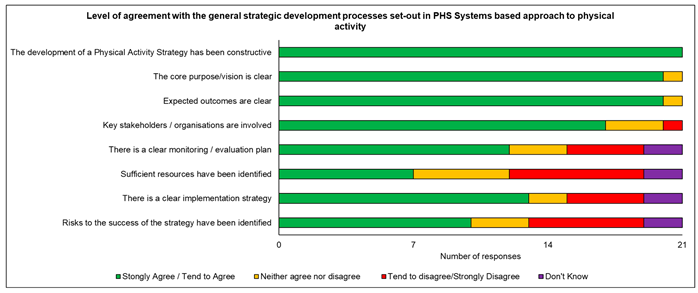
Table 3.
The role of Public Health Scotland.
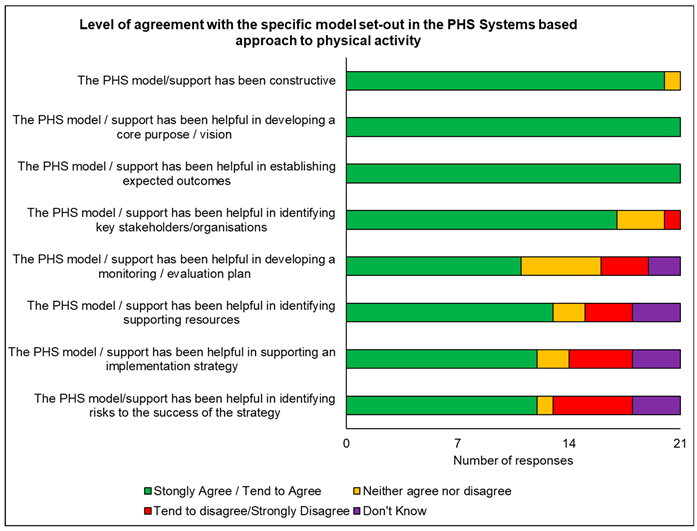
Table 4.
Strategic expectations associated with the PHS Systems-based approach framework.
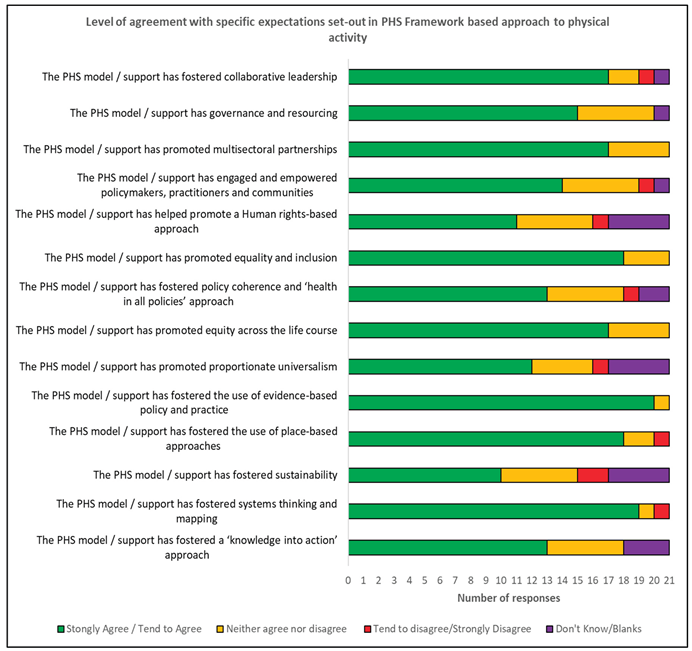
Disclaimer/Publisher’s Note: The statements, opinions and data contained in all publications are solely those of the individual author(s) and contributor(s) and not of MDPI and/or the editor(s). MDPI and/or the editor(s) disclaim responsibility for any injury to people or property resulting from any ideas, methods, instructions or products referred to in the content. |
© 2026 by the authors. Licensee MDPI, Basel, Switzerland. This article is an open access article distributed under the terms and conditions of the Creative Commons Attribution (CC BY) license.
Copyright: This open access article is published under a Creative Commons CC BY 4.0 license, which permit the free download, distribution, and reuse, provided that the author and preprint are cited in any reuse.