

Submitted:
30 September 2026
Posted:
01 October 2026
You are already at the latest version
Abstract
Introduction: Sexual dysfunction affects more than half of cancer survivors and often persists for years, yet most survivors receive neither assessment nor treatment. Although existing reviews describe the burden of sexual morbidity, few translate intervention evidence into a model that oncology services can routinely deliver. Objectives: To appraise the evidence for psychosexual rehabilitation interventions after cancer, organized by intensity of care, and to propose an evidence-based stepped-care model for survivorship practice. Methods: A narrative review was conducted of randomized trials, meta-analyses, systematic reviews and clinical practice guidelines addressing medical, physical, psychological, couple-based, digital and multimodal interventions for sexual problems in adult and young adult cancer survivors. Evidence was evaluated for methodological quality, effect size and applicability, and organized by level of care. Results: Low-intensity measures—including structured discussion, lubricants and moisturizers, topical lidocaine for dyspareunia, and brief clinician training—are inexpensive and supported by randomized or guideline evidence, though often insufficient alone. Evidence for two widely recommended physical interventions is weaker than assumed: scheduled phosphodiesterase-5 inhibitor rehabilitation after prostatectomy shows little benefit over on-demand use or placebo, and routine vaginal dilation during radiotherapy lacks trial support, although dilation after radiotherapy is associated with reduced stenosis. Psychological interventions yield small pooled effects across pelvic cancers but moderate effects in targeted trials, most clearly for therapist-guided internet-based cognitive behavioral therapy in breast cancer survivors, with sustained follow-up benefits. Couple-based telephone interventions demonstrate feasibility and medium-to-large effects in pilot trials, and a clinician-delivered multimodal intervention improved sexual satisfaction and quality of life after stem cell transplantation. Conclusions: Evidence supports matching the intensity of psychosexual care to patient need rather than offering either no care or uniform specialist referral. A five-step stepped-care model can integrate sexual health into routine, scalable survivorship practice. Comparative trials of stepped delivery and of contested physical interventions are now required.
Keywords:
neoplasms
; cancer survivors
; sexual dysfunction
; physiological
; sexual dysfunctions
; psychological
; psychosexual rehabilitation
; cognitive behavioral therapy
; couples therapy
; telemedicine
; stepped care
Introduction
Sexual dysfunction is among the most frequent and persistent consequences of cancer and its treatment. A meta-analysis of 39 studies involving 17,970 participants estimated a pooled prevalence of 54.0%, rising to 93.7% in gynecologic cancer, 59.2% in breast cancer and 57.4% in colorectal cancer [1]. These problems frequently last for years [2,3], are a leading unmet supportive care need[4] and are associated with greater use of primary care during follow-up [5]. Guidelines from the National Comprehensive Cancer Network, the American Society of Clinical Oncology and Cancer Care Ontario now ask oncology teams to raise sexual health routinely and to offer treatment [6,7,8], yet fewer than a quarter of survivors with sexual problems receive professional help [7].
The size of the problem is therefore well documented, and several reviews have described its epidemiology and mechanisms [3,9,10]. What remains less clear is how services should deliver care. Specialist sexual medicine and sex therapy are scarce, oncology teams have little time, and survivors’ needs range from brief information to intensive, multidisciplinary treatment. Offering all survivors specialist care is unaffordable; offering none perpetuates the current gap.
This review addresses that delivery question. Rather than surveying sexual health after cancer as a whole, it focuses on psychosexual rehabilitation: the staged process of restoring sexual function, sexual well-being and intimacy after cancer treatment. Its objectives are to appraise the evidence for rehabilitation interventions, organized by the intensity of care they require, and to integrate that evidence into a stepped-care model that matches the intensity of care to each survivor’s needs.
Methods
This narrative review drew on targeted searches of bibliographic databases and on reference lists of key reviews and guidelines. Eligible sources were randomized and controlled trials, meta-analyses and systematic reviews of interventions for sexual problems in adult or adolescent and young adult cancer survivors, together with clinical practice guidelines and studies that directly informed service delivery, such as studies of barriers and clinician training. Interventions were grouped into five categories: communication and brief counseling, medical and physical rehabilitation, individual psychosexual therapy, couple-based therapy, and digital or multimodal delivery. Evidence was appraised qualitatively for study design, sample size, effect size, durability and applicability across cancer types. Epidemiological and mechanistic studies were included only where they informed the choice or targeting of interventions. The stepped-care model was derived by mapping each intervention to the lowest level of care at which it can be delivered effectively, using the extended PLISSIT framework as the organizing structure [11,12].
Why a Rehabilitation Framework Is Needed
Mechanisms Define the Targets of Rehabilitation
Cancer-related sexual dysfunction is biopsychosocial. Surgery can injure autonomic and cavernous nerves; pelvic radiotherapy produces progressive fibrosis, vascular compromise and vaginal stenosis; and chemotherapy, oophorectomy and endocrine therapies suppress gonadal function [3,9]. After radical prostatectomy, cavernous nerve injury is followed by reduced penile oxygenation and structural change that can lead to veno-occlusive dysfunction [13]. Androgen deprivation therapy (ADT), used at some point by more than half of men with prostate cancer, causes loss of libido, erectile dysfunction and genital atrophy [14,15], and adjuvant endocrine therapy for breast cancer induces or worsens the genitourinary syndrome of menopause [16]. Newer treatments have not removed this burden: robotic surgery and more targeted radiotherapy have not produced the expected reduction in sexual dysfunction, and aromatase inhibitors and chemoradiation for anal cancer carry substantial sexual morbidity [3].
Psychological and relational factors shape how these physical changes are experienced. Body image disturbance, depression, anxiety and relationship strain are common [9,17], and coping and the quality of the relationship strongly influence whether sexual rehabilitation succeeds [7]. In men receiving ADT, sexual bother and relationship intimacy may be more modifiable than erectile function itself [18], and couples who renegotiate intimacy beyond intercourse adapt better than those who stop all sexual activity [19]. Rehabilitation must therefore target function, distress and the relationship together. Table 1 summarizes the principal problems by cancer type and the corresponding rehabilitation targets.
The Care Gap
In a survey of 916 patients, 71.8% reported that cancer treatment had affected their sexual function, but only 35.5% had been asked about it by an oncologist and 22.2% had received a sexual health questionnaire; 74% considered such discussion essential [38]. The gap was patterned by sex: 49.8% of patients with breast cancer, compared with 15.4% of patients with prostate cancer, were never told that treatment could affect their sexual health [38]. Among patients with colorectal cancer, 55% received no information about sexual effects and 71% never raised the topic themselves [30]. Clinicians cite lack of training, time and referral options, and concern about causing offense; patients wait for clinicians to raise the subject, producing a stalemate [39,40]. These barriers indicate that the main problem is one of delivery rather than a lack of effective treatment.
Evidence for Rehabilitation Interventions
Key intervention studies are summarized in Table 2, grouped by the level of care at which each intervention can be delivered.
Communication and Brief Counseling
The first step in rehabilitation is a conversation. Guidelines agree that the oncology team should initiate discussion of sexual health during treatment planning and at follow-up, assess concerns when they arise and refer to multidisciplinary care when needed [6,7]. Brief clinician training is effective: in a review of educational interventions, a training session of about 30 minutes increased how often oncology providers discussed sexual issues, and a two-year program for more than 200 oncology nurses and physicians improved their self-reported knowledge; standardized patient questionnaires also improved communication [41]. Discussion itself may be therapeutic: after bone marrow transplantation, about half of recipients reported that sexuality had never been discussed, and those who had discussed it reported fewer sexual difficulties three years later [33]. Practical guides now provide scripts and algorithms for inquiry and first-line management [39].
Medical and Physical Rehabilitation
Women
For vulvovaginal dryness and dyspareunia, regular use of vaginal moisturizers and lubricants is simple, inexpensive and supported by randomized evidence, including trials in women receiving adjuvant endocrine therapy [16,44]. These measures are often insufficient for moderate or severe pain. In a randomized trial in breast cancer survivors, topical lidocaine applied to the vulvar vestibule before intercourse reduced median pain scores from 8 to 1, whereas pain remained moderate with saline and lubricant; after two months of open-label use, 90% of participants reported comfortable penetration [20]. Low-dose vaginal estrogen is an option when local nonhormonal measures fail, after individual discussion of risks with the treating oncologist [25], and pelvic floor physical therapy is an additional tool for pain and muscle dysfunction [10,25].
Vaginal dilator therapy after pelvic radiotherapy illustrates the gap between recommendation and evidence. A Cochrane review found no reliable evidence that routine dilation during radiotherapy prevents stenosis or improves quality of life, although observational data associated frequent dilation after radiotherapy with less self-reported stenosis [27]. In a prospective study of 53 women, a year of dilation reduced stenosis grade, and the proportion who reported that their vagina no longer felt too small for intercourse rose from 11.5% to 60.9% [42]. A recent review of regimens supports starting dilation 1 to 4 weeks after radiotherapy, three times weekly for 5 to 10 minutes, for at least 6 to 12 months [28]. Because adherence is poor, dilation is best presented as a supported choice within rehabilitation rather than a standalone prescription [25].
Men
Phosphodiesterase type 5 inhibitors (PDE5Is) are first-line treatment for erectile dysfunction after prostate cancer treatment [10]. Penile rehabilitation, the scheduled use of PDE5Is or other measures to preserve erectile tissue after surgery, has been widely adopted [45], but the evidence is weak. A Cochrane review of eight randomized trials with 1,699 participants found that scheduled PDE5Is may have little or no effect on short-term self-reported potency compared with placebo or on-demand use (very low-certainty evidence), with no long-term data [24], and the largest trial found no long-term benefit of daily or on-demand dosing over placebo [13]. On-demand PDE5Is, intracavernosal injection, intraurethral therapy, vacuum devices and penile prostheses remain effective treatments for established dysfunction [10,45]. For men receiving ADT, interventions that address sexual bother and intimacy, rather than erections alone, are more likely to improve well-being [15,18].
Individual Psychosexual Therapy
Psychological treatment has the strongest trial evidence in breast cancer. In a randomized trial of 169 breast cancer survivors with a diagnosed sexual dysfunction, therapist-guided internet-based cognitive behavioral therapy (CBT) improved overall sexual functioning (effect size 0.43), sexual desire (0.72), arousal (0.50), lubrication (0.46), sexual distress (0.59) and body image (0.45) compared with a waiting-list control [21], and the improvements were maintained at 3 and 9 months [43]. A group psychoeducational intervention addressing body image, sexuality and partner communication was effective in a randomized trial of women with breast cancer [46], and a protocolized group program showed large within-group effects on sexual function, satisfaction and distress [47].
Across cancer types, effects are more modest. A meta-analysis of 13 controlled studies of psychosocial interventions in pelvic cancer (1,541 participants) found a small pooled effect (standardized mean difference 0.24, 95% confidence interval 0.05–0.42) [29], and a systematic review of 34 intervention studies in breast cancer survivors found heterogeneous designs and outcomes [44]. The difference between targeted and pooled estimates suggests that psychological interventions work best when directed at survivors with an identified problem and delivered with sufficient intensity, which supports a stepped rather than universal approach.
Couple-Based Therapy
Because sexual problems after cancer affect both partners, couple-based interventions are a logical extension of rehabilitation. Intimacy Enhancement, a four-session telephone program combining cognitive behavioral couple therapy with sex therapy techniques, was feasible and acceptable in a pilot trial of 23 couples affected by colorectal cancer[31] and produced medium-to-large effects on sexual outcomes for breast cancer survivors in a pilot trial of 29 couples;[22] a fully powered trial is under way [48]. For couples facing ADT, qualitative work supports couple-focused education that encourages flexible intimacy and discourages avoidance [19].
Digital and Multimodal Delivery
Remote delivery addresses scarcity of specialists, distance and embarrassment. A systematic review found that online interventions combining education, interactive components, cognitive behavioral strategies and self-monitoring improved sexual function and interest, although only four studies were eligible [49]. Internet-based CBT for breast cancer survivors provides the strongest example of durable remote treatment [21,43], and telephone delivery extends couple therapy [22,31]. Multimodal care delivered by trained oncology clinicians is also promising: in a randomized trial after hematopoietic stem cell transplantation, an intervention combining assessment, education and individualized treatment (lubricants, medication and intimacy exercises) improved satisfaction with sex, sexual interest, orgasm, erectile function, vaginal discomfort, quality of life, anxiety and depression at 3 and 6 months [34]. This trial is important for the model proposed below because it shows that nonspecialist clinicians can deliver effective rehabilitation when they are trained and given a structure.
A Stepped-Care Model of Psychosexual Rehabilitation
Stepped care offers the least intensive effective intervention first and moves patients to more intensive care when needed. The extended PLISSIT model, which begins with explicit permission-giving and moves through limited information and specific suggestions to intensive therapy, with review and reflection at each stage, provides a natural structure [11,12]. Building on this structure and the evidence reviewed above, we propose a five-step model (Figure 1; Table 3).
Step 0: Anticipatory care for all patients. At treatment planning, the oncology team gives permission to discuss sexual health, explains likely effects of the proposed treatment and, for patients of reproductive age, discusses fertility and offers fertility preservation counseling [6,37]. This step is needed because many patients are not told about sexual and fertility effects: in a survey of young men with cancer, only 60% recalled being told about infertility and 51% had been offered sperm banking [50].
Step 1: Routine brief screening. At follow-up visits, a brief standardized question or checklist identifies sexual concerns and related distress [6,39]. Screening should assess distress, body image and relationship context as well as function [17,18].
Step 2: Limited information and specific suggestions. Survivors with mild or recent problems receive targeted advice from trained oncology physicians, nurses or allied professionals: lubricants and moisturizers, topical lidocaine for dyspareunia, supported dilator use after pelvic radiotherapy, on-demand PDE5Is, pelvic floor exercises and referral to reputable self-help or digital resources [10,20,28,49]. Brief training makes this step feasible within routine clinics [41].
Step 3: Structured rehabilitation. Survivors with persistent problems or significant distress receive a structured intervention matched to the main problem: individual CBT, which can be delivered online;[21] couple-based therapy, which can be delivered by telephone;[22] pelvic floor physical therapy;[25] or multimodal clinician-delivered rehabilitation [34].
Step 4: Specialist multidisciplinary sexual medicine. Survivors with complex or refractory problems, such as severe dyspareunia or stenosis, erectile dysfunction that does not respond to first-line treatment, loss of desire on ADT with relationship breakdown, or co-occurring psychiatric disorder, are referred to a multidisciplinary team including sexual medicine, gynecology or urology, pelvic physiotherapy, psychiatry or psychology and sex therapy [7,8].
Movement between steps is guided by explicit criteria: persistent distress after 8 to 12 weeks at a given step, failure of first-line measures, severe physical findings, or complexity that exceeds the competence of the current team. Survivors may enter at any step according to need, and a stepped-down review after successful treatment prevents unnecessary long-term specialist care.
Adapting the Model to Specific Populations
Adolescents and young adults. Cancer at this stage of development can disrupt sexual identity, body image and partnering [35]. In the AYA HOPE cohort, 49% reported negative effects of cancer on sexual function one year after diagnosis, and 70% of these persisted a year later, with gender differences in whether fertility preservation had been discussed [36]. For this group, Step 0 should integrate fertility counseling, and Steps 2 and 3 should address dating, disclosure and body image.
Men receiving ADT and their partners. Because function is unlikely to be fully restored during ADT, rehabilitation should emphasize sexual bother, intimacy and couple adaptation from Step 0 onward [15,18,19].
Sexual and gender minority survivors. A systematic review of 64 studies found that research has focused on breast and prostate cancer and has rarely included transgender people [51], and sexual minority survivors report poorer access to care, which is associated with worse quality of life [52]. The model should use inclusive screening language that does not assume a particular sexual orientation, gender identity, anatomy or relationship structure, and should address specific needs such as the effects of treatment for anal cancer on sexual function in gay and bisexual men [53].
Implementation and Research Priorities
Implementing stepped care requires training for oncology teams, simple screening embedded in electronic records, locally mapped referral pathways and sustainable funding for specialist steps [7,41]. Digital CBT and telephone couple therapy can expand Step 3 capacity where specialists are scarce [22,49]. Research priorities follow directly from the evidence reviewed. Pragmatic trials should compare stepped delivery with usual care and with direct specialist referral, including cost-effectiveness. Adequately powered randomized trials are needed to settle the value of penile rehabilitation and of post-radiotherapy dilation regimens [24,27]. Interventions should be tested in cancer types other than breast cancer, in men, in sexual and gender minority survivors and in low- and middle-income settings, where access to specialist care is most limited [29,51]. Finally, outcomes should include sexual distress, relationship quality and partner well-being, not only function.
Conclusions
Effective interventions for sexual problems after cancer exist across a range of intensities, from brief information and topical treatment to internet-based CBT, couple therapy and multidisciplinary care. Evidence for some widely recommended physical interventions, particularly scheduled penile rehabilitation and routine dilation during radiotherapy, is weaker than often assumed, whereas targeted psychological and couple-based interventions show consistent benefit. Organizing these interventions in a stepped-care model, with anticipatory care for all patients, routine screening, oncology-delivered first-line care and escalation to structured and then specialist treatment, offers a practical way to close the gap between evidence and practice and to make psychosexual rehabilitation a routine part of survivorship care.
References
- Dahouri, A.; Hosseinzadeh, M.; Sahebihagh, M.H. Prevalence of sexual dysfunction and narrative synthesis of associated factors in patients with different type of cancer: a systematic review and meta-analysis. BMC Cancer 2026, 26(1). [Google Scholar] [CrossRef] [PubMed]
- Smedsland, S.K.; Vandraas, K.F.; Falk, R.S.; et al. Sexual health in long-term breast cancer survivors: a comparison with female population controls from the HUNT study. Breast Cancer Res. Treat. 2023, 201(3), 479–488. [Google Scholar] [CrossRef] [PubMed]
- Schover, L.R.; van der Kaaij, M.; van Dorst, E.; Creutzberg, C.; Huyghe, E.; Kiserud, C.E. Sexual dysfunction and infertility as late effects of cancer treatment. EJC Suppl. 2014, 12(1), 41–53. [Google Scholar] [CrossRef] [PubMed]
- Schubach, K.; Niyonsenga, T.; Turner, M.; Paterson, C. Experiences of sexual well-being interventions in males affected by genitourinary cancers and their partners: an integrative systematic review. Support Care Cancer 2023, 31(5), 265. [Google Scholar] [CrossRef] [PubMed]
- Urquhart, R.; Nishimagizwe, P.; Lethbridge, L.; Kendell, C. Primary care visits are higher amongst adults who report sexual dysfunction concerns after cancer treatment. Sci. Rep. 2026. [Google Scholar] [CrossRef] [PubMed]
- Sanft, T.; Day, A.T.; Goldman, M.; et al. NCCN guidelines insights: survivorship, version 2.2024. J. Natl. Compr. Canc Netw. 2024, 22(10), 648–658. [Google Scholar] [CrossRef] [PubMed]
- Schover, L.R. Sexual quality of life in men and women after cancer. Climacteric 2019, 22(6), 553–557. [Google Scholar] [CrossRef] [PubMed]
- Barbera, L.; Zwaal, C.; Elterman, D.; et al. Interventions to address sexual problems in people with cancer. Curr. Oncol. 2017, 24(3), 192–200. [Google Scholar] [CrossRef] [PubMed]
- Bober, S.L.; Varela, V.S. Sexuality in adult cancer survivors: challenges and intervention. J. Clin. Oncol. 2012, 30(30), 3712–3719. [Google Scholar] [CrossRef] [PubMed]
- Agrawal, L.; O’Riordan, L.; Natale, C.; Jenkins, L.C. Enhancing sexual health for cancer survivors. Am. Soc. Clin. Oncol. Educ. Book. 2025, 45(3), e472856. [Google Scholar] [CrossRef] [PubMed]
- Annon, J.S. The PLISSIT model: a proposed conceptual scheme for the behavioral treatment of sexual problems. J. Sex. Educ. Ther. 1976, 2(1), 1–15. [Google Scholar] [CrossRef]
- Taylor, B.; Davis, S. The extended PLISSIT model for addressing the sexual wellbeing of individuals with an acquired disability or chronic illness. Sex. Disabil. 2007, 25(3), 135–139. [Google Scholar] [CrossRef]
- Fode, M.; Ohl, D.A.; Ralph, D.; Sønksen, J. Penile rehabilitation after radical prostatectomy: what the evidence really says. BJU Int. 2013, 112(7), 998–1008. [Google Scholar] [CrossRef] [PubMed]
- Higano, C.S. Sexuality and intimacy after definitive treatment and subsequent androgen deprivation therapy for prostate cancer. J. Clin. Oncol. 2012, 30(30), 3720–3725. [Google Scholar] [CrossRef] [PubMed]
- Walker, L.M.; Robinson, J.W. The unique needs of couples experiencing androgen deprivation therapy for prostate cancer. J. Sex. Marital Ther. 2010, 36(2), 154–165. [Google Scholar] [CrossRef] [PubMed]
- Franzoi, M.A.; Agostinetto, E.; Perachino, M.; et al. Evidence-based approaches for the management of side-effects of adjuvant endocrine therapy in patients with breast cancer. Lancet Oncol. 2021, 22(7), e303–e313. [Google Scholar] [CrossRef] [PubMed]
- Raggio, G.A.; Butryn, M.L.; Arigo, D.; Mikorski, R.; Palmer, S.C. Prevalence and correlates of sexual morbidity in long-term breast cancer survivors. Psychol. Health 2014, 29(6), 632–650. [Google Scholar] [CrossRef] [PubMed]
- Donovan, K.A.; Gonzalez, B.D.; Nelson, A.M.; Fishman, M.N.; Zachariah, B.; Jacobsen, P.B. Effect of androgen deprivation therapy on sexual function and bother in men with prostate cancer: a controlled comparison. Psychooncology 2018, 27(1), 316–324. [Google Scholar] [CrossRef] [PubMed]
- Walker, L.M.; Robinson, J.W. Sexual adjustment to androgen deprivation therapy: struggles and strategies. Qual. Health Res. 2012, 22(4), 452–465. [Google Scholar] [CrossRef] [PubMed]
- Goetsch, M.F.; Lim, J.Y.; Caughey, A.B. A practical solution for dyspareunia in breast cancer survivors: a randomized controlled trial. J. Clin. Oncol. 2015, 33(30), 3394–3400. [Google Scholar] [CrossRef] [PubMed]
- Hummel, S.B.; van Lankveld, J.J.D.M.; Oldenburg, H.S.A.; et al. Efficacy of internet-based cognitive behavioral therapy in improving sexual functioning of breast cancer survivors: results of a randomized controlled trial. J. Clin. Oncol. 2017, 35(12), 1328–1340. [Google Scholar] [CrossRef] [PubMed]
- Reese, J.B.; Smith, K.C.; Handorf, E.; et al. A randomized pilot trial of a couple-based intervention addressing sexual concerns for breast cancer survivors. J. Psychosoc. Oncol. 2019, 37(2), 242–263. [Google Scholar] [CrossRef] [PubMed]
- Sanda, M.G.; Dunn, R.L.; Michalski, J.; et al. Quality of life and satisfaction with outcome among prostate-cancer survivors. N Engl. J. Med. 2008, 358(12), 1250–1261. [Google Scholar] [CrossRef] [PubMed]
- Philippou, Y.A.; Jung, J.H.; Steggall, M.J.; et al. Penile rehabilitation for postprostatectomy erectile dysfunction. Cochrane Database Syst. Rev. 2018, 10(10), CD012414. [Google Scholar] [CrossRef] [PubMed]
- Huffman, L.B.; Hartenbach, E.M.; Carter, J.; Rash, J.K.; Kushner, D.M. Maintaining sexual health throughout gynecologic cancer survivorship: a comprehensive review and clinical guide. Gynecol. Oncol. 2016, 140(2), 359–368. [Google Scholar] [CrossRef] [PubMed]
- Carter, J.; Penson, R.; Barakat, R.; Wenzel, L. Contemporary quality of life issues affecting gynecologic cancer survivors. Hematol. Oncol. Clin. North Am. 2012, 26(1), 169–194. [Google Scholar] [CrossRef] [PubMed]
- Miles, T.; Johnson, N. Vaginal dilator therapy for women receiving pelvic radiotherapy. Cochrane Database Syst. Rev. 2014, (9), CD007291. [Google Scholar] [CrossRef] [PubMed]
- Cordes, S.; Tveit, M.; Cigna, S. Vaginal dilator regimen for radiation-induced vaginal stenosis. J. Sex. Med. 2025, 22. [Google Scholar] [CrossRef]
- Ask, S.; Schildmeijer, K.; Kaldo, V.; Hellström, A. The effect of psychosocial interventions for sexual health in patients with pelvic cancer: a systematic review and meta-analysis. Acta Oncol. 2024, 63, 230–239. [Google Scholar] [CrossRef] [PubMed]
- Milbury, K.; Cohen, L.; Jenkins, R.; Skibber, J.M.; Schover, L.R. The association between psychosocial and medical factors with long-term sexual dysfunction after treatment for colorectal cancer. Support Care Cancer 2013, 21(3), 793–802. [Google Scholar] [CrossRef] [PubMed]
- Reese, J.B.; Porter, L.S.; Regan, K.R.; et al. A randomized pilot trial of a telephone-based couples intervention for physical intimacy and sexual concerns in colorectal cancer. Psychooncology 2014, 23(9), 1005–1013. [Google Scholar] [CrossRef] [PubMed]
- Yi, J.C.; Syrjala, K.L. Sexuality after hematopoietic stem cell transplantation. Cancer J. 2009, 15(1), 57–64. [Google Scholar] [CrossRef] [PubMed]
- Mosher, C.E.; Redd, W.H.; Rini, C.M.; Burkhalter, J.E.; DuHamel, K.N. Physical, psychological, and social sequelae following hematopoietic stem cell transplantation: a review of the literature. Psychooncology 2009, 18(2), 113–127. [Google Scholar] [CrossRef] [PubMed]
- El-Jawahri, A.; Reese, J.B.; Traeger, L.; et al. Randomized trial of a multimodal intervention to enhance sexual function and quality of life (QOL) in hematopoietic stem cell transplant (HSCT) survivors. J. Clin. Oncol. 2024, 42((16) suppl, 12003. [Google Scholar] [CrossRef]
- Cherven, B.; Sampson, A.; Bober, S.L.; et al. Sexual health among adolescent and young adult cancer survivors: a scoping review from the Children’s Oncology Group Adolescent and Young Adult Oncology Discipline Committee. CA Cancer J. Clin. 2021, 71(3), 250–263. [Google Scholar] [CrossRef] [PubMed]
- Smith, A.W.; Keegan, T.; Hamilton, A.; et al. Understanding care and outcomes in adolescents and young adults with cancer: a review of the AYA HOPE study. Pediatr. Blood Cancer 2019, 66(1), e27486. [Google Scholar] [CrossRef] [PubMed]
- Quinn, G.P.; Bayefsky, M.J.; Cherven, B.; et al. Update and new advances in fertility preservation and cancer. CA Cancer J. Clin. 2025, 75(6), 602–629. [Google Scholar] [CrossRef] [PubMed]
- Ilori, T.; Gerber, K.; Burke, S.; et al. Intimacy after diagnosis: navigating sexual health conversations and disparities among cancer survivors. Am. J. Hosp. Palliat. Care 2026. [Google Scholar] [CrossRef] [PubMed]
- Bober, S.L.; Reese, J.B.; Barbera, L.; et al. How to ask and what to do: a guide for clinical inquiry and intervention regarding female sexual health after cancer. Curr. Opin. Support Palliat. Care 2016, 10(1), 44–54. [Google Scholar] [CrossRef] [PubMed]
- Krouwel, E.M.; Albers, L.F.; Nicolai, M.P.J.; et al. Discussing sexual health in the medical oncologist’s practice: exploring current practice and challenges. J. Cancer Educ. 2020, 35(6), 1072–1088. [Google Scholar] [CrossRef] [PubMed]
- Albers, L.F.; Palacios, L.A.G.; Pelger, R.C.M.; Elzevier, H.W. Can the provision of sexual healthcare for oncology patients be improved? A literature review of educational interventions for healthcare professionals. J. Cancer Surviv. 2020, 14(6), 858–866. [Google Scholar] [CrossRef] [PubMed]
- Charatsi, D.; Vanakara, P.; Evaggelopoulou, E.; et al. Vaginal dilator use to promote sexual wellbeing after radiotherapy in gynecological cancer survivors. Medicine 2022, 101(4), e28705. [Google Scholar] [CrossRef] [PubMed]
- Hummel, S.B.; van Lankveld, J.J.D.M.; Oldenburg, H.S.A.; et al. Internet-based cognitive behavioral therapy realizes long-term improvement in the sexual functioning and body image of breast cancer survivors. J. Sex. Marital Ther. 2018, 44(5), 485–496. [Google Scholar] [CrossRef] [PubMed]
- Seav, S.M.; Dominick, S.A.; Stepanyuk, B.; et al. Management of sexual dysfunction in breast cancer survivors: a systematic review. Womens Midlife Health 2015, 1, 9. [Google Scholar] [CrossRef] [PubMed]
- Clavell-Hernández, J.; Wang, R. The controversy surrounding penile rehabilitation after radical prostatectomy. Transl. Androl. Urol. 2017, 6(1), 2–11. [Google Scholar] [CrossRef] [PubMed]
- Rowland, J.H.; Meyerowitz, B.E.; Crespi, C.M.; et al. Addressing intimacy and partner communication after breast cancer: a randomized controlled group intervention. Breast Cancer Res. Treat. 2009, 118(1), 99–111. [Google Scholar] [CrossRef] [PubMed]
- Carpenter, K.M.; Holmes, H.M.; Conroy, K.; Black, L.L. Sexual health and relationship enhancement (SHARE) for women with breast cancer: results from a clinical trial. J. Sex. Med. 2023, 20. [Google Scholar] [CrossRef]
- Reese, J.B.; Zimmaro, L.A.; Lepore, S.J.; et al. Evaluating a couple-based intervention addressing sexual concerns for breast cancer survivors: study protocol for a randomized controlled trial. Trials 2020, 21(1), 173. [Google Scholar] [CrossRef] [PubMed]
- Kang, H.S.; Kim, H.K.; Park, S.M.; Kim, J.H. Online-based interventions for sexual health among individuals with cancer: a systematic review. BMC Health Serv. Res. 2018, 18(1), 167. [Google Scholar] [CrossRef] [PubMed]
- Schover, L.R.; Brey, K.; Lichtin, A.; Lipshultz, L.I.; Jeha, S. Knowledge and experience regarding cancer, infertility, and sperm banking in younger male survivors. J. Clin. Oncol. 2002, 20(7), 1880–1889. [Google Scholar] [CrossRef] [PubMed]
- Pratt-Chapman, M.L.; Alpert, A.B.; Castillo, D.A. Health outcomes of sexual and gender minorities after cancer: a systematic review. Syst. Rev. 2021, 10(1), 183. [Google Scholar] [CrossRef] [PubMed]
- Boehmer, U.; Gereige, J.; Winter, M.; Ozonoff, A. Cancer survivors’ access to care and quality of life: do sexual minorities fare worse than heterosexuals? Cancer 2019, 125(17), 3079–3085. [Google Scholar] [CrossRef] [PubMed]
- Kamen, C. Lesbian, gay, bisexual, and transgender (LGBT) survivorship. Semin Oncol. Nurs. 2018, 34(1), 52–59. [Google Scholar] [CrossRef] [PubMed]
Figure 1.
Stepped-care model of psychosexual rehabilitation after cancer. Care begins with anticipatory information for all patients and routine screening, and the intensity of intervention increases only when needed. Arrows indicate stepping up when criteria are met and stepping down when goals are achieved. Adaptations for adolescents and young adults, men receiving androgen deprivation therapy and sexual and gender minority survivors apply at every step. CBT cognitive behavioral therapy, PDE5I phosphodiesterase type 5 inhibitor.
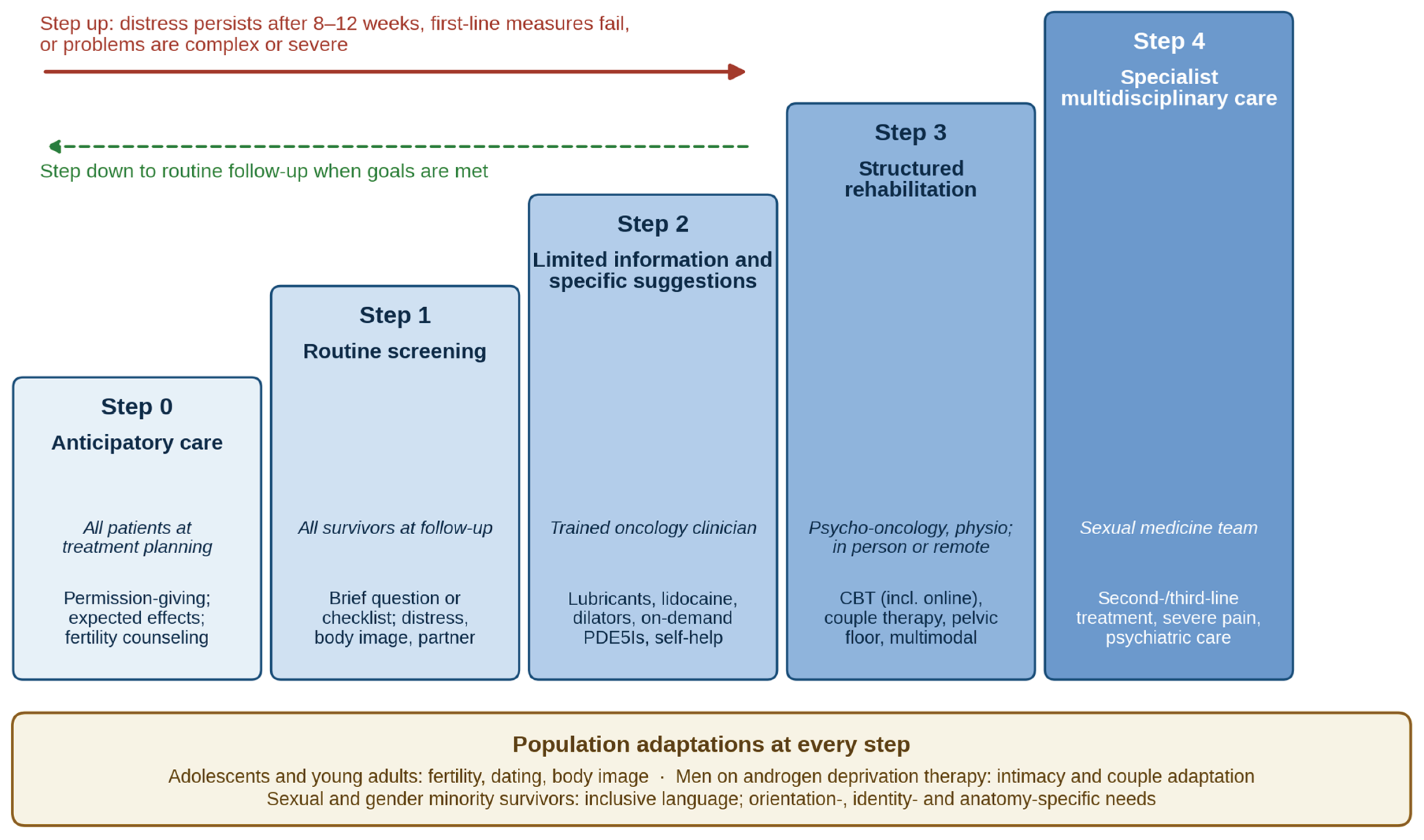

Table 1.
Principal sexual sequelae by cancer type and corresponding rehabilitation targets.
| Cancer type | Principal sexual sequelae | Rehabilitation targets |
|---|---|---|
| Breast | Endocrine therapy–related vulvovaginal atrophy, dyspareunia, low desire, body image disturbance; problems persist 8 years after diagnosis[2,16] | Vaginal moisturizers and lubricants, topical lidocaine, internet-based CBT, couple-based therapy[20,21,22] |
| Prostate | Erectile dysfunction after surgery or radiotherapy; loss of libido, genital atrophy and distress with ADT; effects on partners[14,15,23] | On-demand PDE5Is and second-line erectile aids; focus on sexual bother and intimacy during ADT[18,24] |
| Gynecologic | Treatment-induced menopause, vaginal stenosis and shortening, dyspareunia, reduced desire and arousal[25,26] | Supported dilator use after radiotherapy, pelvic floor therapy, local hormonal and nonhormonal therapy, psychosexual therapy[27,28,29] |
| Colorectal and anal | Long-term dysfunction after abdominoperineal resection or pelvic radiotherapy, stoma-related body image concerns[30] | Proactive information, couple-based telephone therapy[30,31] |
| Hematologic (HSCT) | Persistent dysfunction, painful intercourse and body image concerns, especially in women[32,33] | Clinician-delivered multimodal rehabilitation[34] |
| Adolescent and young adult | Disrupted sexual development, body image, partnering and fertility[35,36] | Fertility counseling at diagnosis; age-appropriate psychosexual support[35,37] |
ADT androgen deprivation therapy, CBT cognitive behavioral therapy, HSCT hematopoietic stem cell transplantation, PDE5I phosphodiesterase type 5 inhibitor.
Table 2.
Selected evidence for psychosexual rehabilitation interventions, by level of care.
| Intervention | Population | Design (n) | Main findings | Level of care |
|---|---|---|---|---|
| Clinician training in sexual health communication | Oncology professionals | Review of educational interventions | Brief training increased frequency of sexual health discussions[41] | Steps 0–2 |
| Topical lidocaine vs saline, with lubricant | Breast cancer survivors with dyspareunia | RCT (46) | Median pain score fell from 8 to 1 with lidocaine vs 5.3 with saline and lubricant[20] | Step 2 |
| Scheduled PDE5I penile rehabilitation | Men after radical prostatectomy | Cochrane review, 8 RCTs (1,699) | Little or no effect on short-term potency; very low-certainty evidence[24] | Step 2 (on-demand use) |
| Vaginal dilation | Women after pelvic radiotherapy | Cochrane review; prospective cohort (53) | No trial evidence for routine dilation during radiotherapy; less stenosis with dilation after radiotherapy[27,42] | Steps 2–3 |
| Internet-based CBT (therapist-guided) | Breast cancer survivors with sexual dysfunction | RCT (169) | Improved sexual function (d = 0.43), desire (0.72), distress (0.59), body image (0.45); maintained at 9 months[21,43] | Step 3 |
| Psychosocial interventions (various) | Pelvic cancers | Meta-analysis, 13 studies (1,541) | Small pooled effect, SMD 0.24[29] | Steps 2–3 |
| Intimacy Enhancement (telephone couple therapy) | Breast and colorectal cancer couples | Pilot RCTs (29 and 23 couples) | Feasible; medium-to-large effects on sexual outcomes[22,31] | Step 3 |
| Multimodal clinician-delivered intervention | HSCT survivors | RCT | Improved sexual satisfaction, function, quality of life, anxiety and depression at 3 and 6 months[34] | Step 3 |
CBT cognitive behavioral therapy, HSCT hematopoietic stem cell transplantation, PDE5I phosphodiesterase type 5 inhibitor, RCT randomized controlled trial, SMD standardized mean difference.
Table 3.
Stepped-care model of psychosexual rehabilitation: content, providers and criteria for stepping up.
Table 3.
Stepped-care model of psychosexual rehabilitation: content, providers and criteria for stepping up.
| Step | Who delivers | Content | Criteria for stepping up |
|---|---|---|---|
| 0. Anticipatory care | Treating oncology team | Permission-giving; information about expected sexual effects; fertility counseling and preservation for patients of reproductive age | All patients proceed to routine screening at follow-up |
| 1. Routine screening | Oncology team, survivorship clinic, primary care | Brief question or checklist at follow-up visits; assessment of distress, body image and relationship context | Any sexual concern or distress identified |
| 2. Limited information and specific suggestions | Trained oncology physician or nurse, allied health professional | Lubricants, moisturizers, topical lidocaine, supported dilator use, on-demand PDE5Is, pelvic floor exercises, self-help and digital resources | Persistent problem or distress after 8–12 weeks; moderate-to-severe symptoms |
| 3. Structured rehabilitation | Psycho-oncology, pelvic physiotherapy, trained clinicians; in person, by telephone or online | Individual CBT (including internet-based), couple-based therapy, pelvic floor physical therapy, multimodal rehabilitation | Failure of structured treatment; complex physical or psychiatric problems; relationship breakdown |
| 4. Specialist multidisciplinary care | Sexual medicine, gynecology or urology, psychiatry, sex therapy | Second- and third-line erectile treatments, management of severe stenosis or pain, psychiatric treatment, intensive sex or couple therapy | Step down to routine follow-up when goals are met |
CBT cognitive behavioral therapy, PDE5I phosphodiesterase type 5 inhibitor. Survivors may enter at any step according to need.
Disclaimer/Publisher’s Note: The statements, opinions and data contained in all publications are solely those of the individual author(s) and contributor(s) and not of MDPI and/or the editor(s). MDPI and/or the editor(s) disclaim responsibility for any injury to people or property resulting from any ideas, methods, instructions or products referred to in the content. |
© 2026 by the authors. Licensee MDPI, Basel, Switzerland. This article is an open access article distributed under the terms and conditions of the Creative Commons Attribution (CC BY) license (http://creativecommons.org/licenses/by/4.0/).
Copyright: This open access article is published under a Creative Commons CC BY 4.0 license, which permit the free download, distribution, and reuse, provided that the author and preprint are cited in any reuse.