

Submitted:
29 September 2026
Posted:
30 September 2026
You are already at the latest version
Abstract
This study investigates how integrated zero-emission mobility systems can support environmental preservation and sustainable transport transitions, in tourism-intensive coastal areas. Using the European LIFE for Silver Coast project as a real-world case study, the research addresses the limited empirical evidence concerning the implementation and governance of a multimodal electric mobility ecosystem in environmentally fragile territories. The study adopts a mixed qualitative–quantitative methodology combining environmental monitoring data, mobility simulations, avoided-emission scenarios, and lifecycle-based environmental assessment to evaluate the impacts of a multimodal and intermodal electric mobility system integrating electric land vehicles, experimental photovoltaic-powered e-boats, and a digital Integrated Mobility Platform (IMP). Results demonstrate that the coordinated deployment of zero-emission transport modes contributes to measurable reductions in pollutant emissions and private vehicle dependency, while improving territorial accessibility and sustainable tourism mobility. The findings further highlight the role of platform-based coordination in facilitating the diffusion and social acceptance of sustainable mobility innovations. From a theoretical perspective, the study contributes to innovation management and sustainability transition research by conceptualizing LFSC place-based systemic eco-innovation model paradigm aligned with the Society 5.0 paradigm, where technological innovation, environmental governance, and user-centered mobility services converge within a collaborative regional ecosystem.
Keywords:
sustainable mobility
; smart mobility systems
; innovation management
; multimodal transport
; intermodal transport
; electric mobility
; zero-emission vehicles
; society 5.0
; eco-innovation
1. Introduction
The scientific debate regarding “sustainability” has grown in the last 15 years. This has been reinforced by developments in customer demands and a firm’s stakeholders requirements, which apply growing pressure on businesses to implement sustainable initiatives and to measure, monitor, and report sustainability performances (Cillo et al., 2019).
Ambient air pollution is the leading environmental health risk factor globally. The European Union and its Member States are taking a number of actions in order to reduce the negative impact of transport on health and the environment (Pietrzak and Pietrzak, 2020).
The European transport sector has achieved significant reductions in the emissions of certain major air pollutants mainly due to the introduction of emissions standards, financial measures, alternative fuels, and transport avoidance measures (European Environment Agency, 2019).
Climate Change and pollution are current issues (Panwar et al., 2011) and energy production has to depend on Renewable Energy Sources (RESs) (Amrouche et al., 2016; Kartal et al., 2023; Hren et al., 2023). The introduction of Zero-Emission Vehicles (ZEVs) gives a better air quality and Climate Change mitigation (Tsai et al., 2023; Rosales-Tristancho et al., 2022; Logan et al., 2022). In recent years, the integration of ZEVs, smart mobility systems, and digital coordination platforms has accelerated the transition toward more sustainable, multimodal, and user-centered mobility ecosystems.
In the LFSC, ‘LIFE for Silver Coast’ European Project (Amendola et al., 2022; Capillo et al., 2022; Capillo et al., 2019), coordinated by POMOS, a sustainable multimodal and intermodal mobility system is developed aiming at the environmental preservation of the ‘Silver Coast’, an area in Italy characterized by significant touristic and naturalistic interest.
Digitalization and integrated mobility platforms are increasingly recognized as strategic enablers of sustainable transport systems, allowing the coordination of multimodal services, environmental monitoring activities, and user-oriented mobility solutions.
In that context, the LFSC Project constitutes a relevant case study integrating fleets of e- bikes, e-scooters, e-cars, e-VANs and experimental e-boats within a sustainable multimodal mobility ecosystem (Ferrandino et al., 2022; Ferrandino et al., 2020; Capillo et al., 2022)
LFSC aimed at reducing pollutant emissions caused by intense mobility in the Italian coastal area of ‘Costa Argento’ (Tuscany Region), by fostering more sustainable patterns based on the shift from the concept of owning a means of transport to that of accessing integrated mobility services, while ensuring local economic growth. The objective was allowing inhabitants and tourists to access either individual or public electric transport services depending on personal mobility needs and destinations.
Despite the increasing availability of zero-emission vehicles and smart mobility technologies, empirical evidence concerning the implementation and governance of integrated multimodal electric mobility ecosystems in environmentally fragile and tourism-intensive coastal areas remains limited. Existing studies frequently focus either on technological aspects of electric mobility or on general smart city frameworks, while limited attention has been devoted to place-based mobility ecosystems integrating environmental monitoring, digital coordination platforms, multimodal transport services, and collaborative governance structures.
This paper addresses this gap by analyzing the LIFE for Silver Coast (LFSC) project as an illustrative case of place-based eco-innovation. The study investigates how technological innovation, environmental monitoring, multimodal mobility integration, and public–private collaboration converge to support sustainable mobility transitions within fragile tourism ecosystems. From a theoretical perspective, the paper contributes to innovation management and sustainability transition literature by conceptualizing LFSC as a collaborative regional mobility ecosystem enabled through digital integration, stakeholder engagement, and multimodal zero-emission transport systems. By integrating innovation diffusion theory with stakeholder and public-private partnerships perspectives, this paper contributes to the ongoing debate on feasible and replicable frameworks for sustainable smart mobility transitions.
2. Literature Review
2.1. Sustainable and Smart Mobility in Tourism
The literature review shows that the growing interest in the environment and sustainable development has highlighted the necessity to adopt a wide perspective when searching for transport solutions, particularly the need for broad stakeholder involvement in the process of sustainable transport planning, as well as in the support of decisions on transport initiatives (Litman and Burwell, 2006; Schmale et al., 2015; Barfod, 2018).
Tourism mobility represents a particularly critical dimension of sustainable transport due to the environmental impacts generated by seasonal travel demand and the strong dependence on private vehicles in tourism-intensive regions. Previous studies highlight that tourist motivations and environmental attitudes significantly influence mobility behaviors and the adoption of sustainable transport solutions (Ma et al., 2018; Chow et al., 2017; Cheung, 2017)
A particularly relevant dimension of sustainable transport research concerns the role of innovation in increasing transport efficiency, accessibility and environmental sustainability (Szymanska et al., 2021). In this perspective smart mobility systems are increasingly recognized as integrated ecosystems combining digital technologies, multimodal transport services, and user-centered mobility solutions.
Smart mobility generally refers to the integration of Information and Communication Technologies (ICTs), electric mobility solutions, digital platforms, and intelligent transport systems aimed at improving transport sustainability, operational efficiency, and user accessibility.
In parallel, the advent of Society 5.0 has introduced a human-centered perspective on technological innovation, where digital technologies and smart infrastructures are leveraged to support sustainable development and improve societal well-being (Konno and Schillaci, 2021).
Society 5.0 emphasizes the integration of technological innovation, knowledge management, and digital ecosystems in order to create sustainable and collaborative socio-technical systems. Within this framework, mobility services become increasingly interconnected through data-driven infrastructures and digital coordination platforms. The convergence between Society 5.0, sustainable innovation, and digital transformation has generated growing academic interest, particularly regarding the role of smart technologies and collaborative ecosystems in enabling sustainable mobility transitions (Troisi et al., 2024; Cillo et al., 2022). Digitalization processes increasingly support the integration of mobility services, environmental monitoring systems, and user-oriented platforms capable of optimizing transport management and accessibility (Brennen and Kreiss, 2016).
The adoption of new technologies such as, Artificial Intelligence (AI), Big Data, Blockchain, and Internet of Things (IoT) infrastructures further contributes to the development of intelligent and sustainable transport ecosystems (Munim et al., 2020)
Several studies have attempted to bridge the gap between sustainable and smart mobility by proposing integrated transport solution and autonomous mobility technologies, (Müller-Eie and Kosmidis, 2023). However, empirical evidence concerning multimodal electric mobility ecosystems implemented in tourism-intensive and environmentally fragile coastal regions remains limited.
One of the most relevant sustainability challenges associated with tourism mobility concerns greenhouse gas emissions (Martin et al., 2019). Previous studies estimate that transport activities account for a substantial share of tourism-related CO2 emissions (the tourism industry is directly responsible for 5% of the total volume of CO2 emissions). Furthermore, 75% of that percentage is attributed to mobility (UNWTO–UNEP–WMO, 2008).
2.2. Theoretical Links with Innovation Diffusion
The literature on sustainable mobility increasingly emphasizes the importance of participatory and systemic approaches in transport planning and innovation governance (Litman and Burwell, 2006; Schmale et al., 2015). In this context, the theory of diffusion of innovation (Rogers, 2003) provides a valuable interpretative framework for understanding the adoption dynamics of sustainable mobility systems.
According to Rogers (2003), the adoption of innovations is influenced by factors such as relative advantage, compatibility, observability, trialability, and perceived complexity. The LFSC project embodies many of the key characteristics that Rogers suggests positively influence the adoption of an innovation. The environmental and experiential benefits of the multimodal electric mobility system are perceived as superior to those of traditional internal combustion vehicles, creating a clear relative advantage. The compatibility of the system with visitors’ behavior, tourist motivations and attitudes towards sustainability, as also highlighted in our study, favored its acceptance, while environmental monitoring activities and simulations of the impact of emissions made the results obtained observable and demonstrable. The gradual implementation of the project in the three municipalities involved, together with the possibility of directly experiencing the services through shared mobility solutions, allowed for widespread and participatory experimentation, in line with the dynamics of gradual and adaptive learning.
The interaction between individual and organizational factors that influence the adoption of innovations is also strongly reflected in the models proposed by Moore and Benbasat (1991), who highlight the importance of subjective perceptions of the usefulness, compatibility and visibility of innovations in the context of use. From this point of view, the IMP (Integrated Mobility Platform) is a central element of the project, as it allows users to access, monitor and optimize their journeys in an integrated and personalized way, thus improving the usability of the service.
Furthermore, as emphasized by Karahanna et al. (1999), image perception, demonstrable results and consistency with personal values play an essential role in facilitating o continuous use of the technology.
Furthermore, the adoption of sustainable innovations often depends not only on functional performance, but also on users’ environmental values, social norms, and identity-related motivations (Ozaki, 2011). The LFSC project addresses these dimensions by combining environmental preservation objectives with user-centered sustainable mobility services.
2.3. LFSC as a Driver of Replication and Institutional Innovation
The LFSC model can also be interpreted through the perspective of collaborative governance and public–private partnerships (PPPs) The cooperation between public and private actors can be analyzed in light of the bandwagon effect concept (Abrahamson and Rosenkopf, 1993), according to which the adoption of a solution by some subjects generates an imitative and competitive dynamic that pushes other actors to adopt similar solutions in order to keep up with emerging technological and reputational standards. This mechanism becomes particularly effective when supported by collaborative governance arrangements such as PPPs, which facilitate sustainability-oriented innovation through the synergistic involvement of actors with complementary roles, resources, and competencies (Cheng et al., 2021). From this perspective, the LIFE for Silver Coast project extends beyond the implementation of a sustainable.
From this perspective, the LIFE for Silver Coast project extends beyond the implementation of a sustainable mobility system and can be viewed as a catalyst for a broader transformation in innovation culture and the governance of tourism related mobility services.
The involvement of public institutions ensured an explicit focus on environmental and social sustainability objectives, contributing to the legitimacy of the initiative and enhancing its potential replicability in other territorial contexts (Ma et al., 2020). The partnership’s ability to mobilize material resources, technical expertise, and local consensus proved essential for strengthening the resilience and long-term continuity of the model. Indeed, recent research shows that the effectiveness of PPPs in terms of sustainability depends not only on the allocation of investments, but also on the quality of the participatory process and the sharing of strategic objectives between the public and private sectors (Shen et al., 2016).
The LFSC case can therefore be framed as a systemic innovation initiative in which the local territory functions as a living laboratory for sustainable transformation, particularly in environmentally sensitive coastal and lagoon ecosystems. Evidence from other sustainability-oriented sectors similarly demonstrates that local partnerships can compensate for institutional and financial limitations by fostering shared governance mechanisms based on environmental awareness, experimentation, and inter-organizational cooperation (Manos et al., 2014). In the LFSC project, the synergy between local authorities, research institutions, and private operators enabled the overcoming of fragmented sectoral approaches and supported the development of an integrated vision combining public services, sustainable mobility, and territorial tourism development.
In summary, although the literature provides increasing insights into smart mobility, sustainable transport systems, innovation diffusion, and collaborative governance, empirical studies integrating these dimensions within real-world multimodal mobility ecosystems remain limited.
This gap is particularly evident in environmentally sensitive and tourism-intensive territories, where technological innovation, environmental preservation, and stakeholder coordination must be addressed simultaneously.
Accordingly, the LFSC project represents a valuable empirical setting for investigating how environmental, technological, and governance dimensions can be integrated within a place-based sustainable mobility ecosystem, generating insights for both innovation management and sustainability transition research.
3. Project Objectives
This study analyses the LFSC case study to investigate the potential benefits of implementing a multimodal and intermodal electric mobility eco-system in an environmentally sensitive coastal area. Particular attention is devoted to environmental, economic and social impacts; as well as to issues of replicability, transferability, stakeholder cooperation, innovation potential and policy implication.
The Silver Coast, located in Southern Tuscany, includes the municipalities of Monte Argentario, Orbetello, Isola del Giglio, Magliano in Toscana and Capalbio. The area is characterized by a unique environmental heritage, including protected wetlands and biodiversity-rich ecosystems that host numerous migratory bird species. Nearby protected areas, such as the Regional Park of Maremma, further increase the ecological value of the territory The three main municipalities involved in the project host approximately 29,000 residents and attract up to 300,000 tourists annually, many of whom stay for several days.
Such significant tourism flow generate considerable mobility demand and associated environmental pressures. Existing public transport services, consisting primarily of a railway connection terminating in Orbetello and a limited bus network, are often insufficient to satisfy local mobility needs, resulting in a strong dependence on private vehicles. This dependency is particularly evident during peak tourism periods, when road congestion, parking demand, and transport-related emissions increase substantially.
In response of this challenges, LFSC was designed to contribute to the reduction of pollutants and CO2 emissions through the implementation of a more sustainable mobility system.
The project sought to combine the advantages of public transport with the flexibility of individual mobility services, encouraging a transition from private vehicle ownership toward access-based mobility solutions.
Within this framework, residents and tourists can access different transport options according to their specific travel needs and destinations.
An additional objective was to improve accessibility to areas that are difficult to reach through traditional public transport, thereby enhancing the valorization of environmental and cultural assets while supporting sustainable territorial development. The project also aimed to improve the overall livability of the territory for both residents and visitors through the adoption of low-impact transport solutions.
In the longer term, the project is expected to generate positive environmental, social, and economic effects through the progressive expansion of sustainable mobility services, the promotion of off-season tourism, and the creation of new opportunities for local businesses and employment.
Previous studies suggest that the diffusion of shared mobility services may contribute to a reduction in vehicle ownership rates, generating economic savings for users while reducing the spatial footprint associated with private vehicle use and parking demand (Bucsky and Juhász, 2022).
Finally, the technological and organizational solutions developed within LFSC were conceived as potentially replicable and transferable approaches capable of addressing similar mobility challenges in other environmentally sensitive territories.
LFSC Mobility System Architecture
The project has designed and deployed, through demonstrations, a multimodal and intermodal mobility network in the three coastal towns, constituted by an electric sharing mobility system (e- cars, e-mopeds, e-bikes), two e-Vans, which have integrated the current local public transport supply and four experimental e-boats (Ferrandino et al., 2022; Ferrandino et al., 2020; Capillo et al., 2022). In particular, the service had the following characteristics:
- 80 E-bikes have been put in operation as ‘point-to-point’ service, with rentals starting and ending at e-bike parking (brick-boxes or e-racks);
- 20 E-scooters and 14 e-cars have been operated in ‘free flow scheme’ within a wide geographical area;
- 2 E-Vans constituted an ‘on-demand’ service at tourist facilities, carrying passengers to beaches;
- 4 E-boats to link the city of Orbetello with the beaches of Feniglia and Giannella across the lagoon were manufactured and tested as experimental prototypes.
Users accessed the system through an integrated mobility platform (IMP) allowing to:—book land vehicles, get information about points of interest—plan the trip via an integrated route planning—monitor environmental data provided by the four fixed probes installed in the three municipalities as well as by the mobile ones installed on cars.
The study’s objective is also to review smart mobility strategies and concrete measures for a delicate environment and to evaluate the detected smart mobility measures in terms of feasibility and manageability, as well as contribution to sustainable mobility goals.
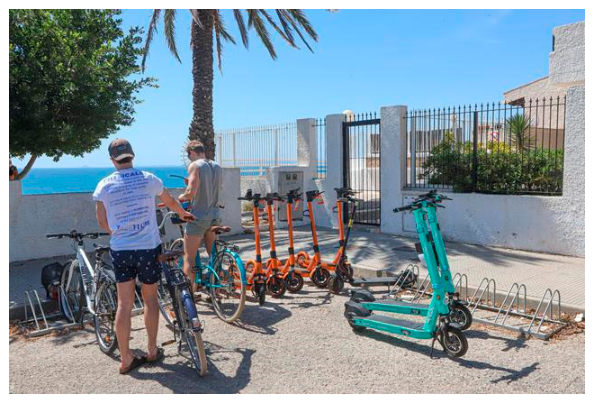
Figure 1.
Electric mobility services deployed in the LIFE for Silver Coast project, including e-bikes, e-scooters, e-cars and charging infrastructure.
Figure 1.
Electric mobility services deployed in the LIFE for Silver Coast project, including e-bikes, e-scooters, e-cars and charging infrastructure.
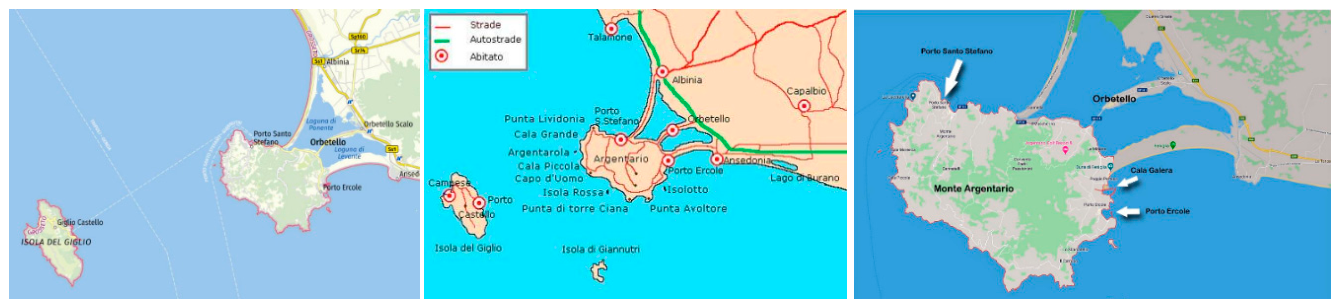
Figures 2–4.
Study area and deployment of the LIFE for Silver Coast multimodal electric mobility system across the three demonstration municipalities.
Figures 2–4.
Study area and deployment of the LIFE for Silver Coast multimodal electric mobility system across the three demonstration municipalities.
4. Methodology
The choices regarding the modes of operation for the new mobility services have led to the following design choices regarding the means of transportation to be used:
- Car Sharing: implemented with 14 5-seat cars. The vehicles are distributed in the territories of the three Municipalities;
- Scooter Sharing: implemented with 20 enclosed single-seater electric scooters (thus not requiring a helmet). The scooters are distributed in the territories of the Municipalities of Monte Argentario and Orbetello;
- Bike Sharing: implemented with 65–80 pedal-assist bicycles, they are distributed in the territories of the Municipalities of Monte Argentario and Orbetello;
- eVANs: for the implementation of a shuttle service without intermediate stops between the Orbetello Scalo station and the center of Orbetello. Two VANs with overall 18 seats are used.
Cars and scooters are thought to use a network of charging stations installed in the territories of the three Municipalities. Specifically, these charging stations are between 3 kW and 22 kW (respectively for scooter and car charging). The LIFE for Silver Coast envisages the development of an initially tourist-oriented but also open to other service, monitoring, and territorial enhancement activities, sustainable multimodal/intermodal mobility system (Lisena et al., 2016).
The small experimental fleet of boats, designed for navigation in inland waters (lagoons), in order to obtain the widest range of technical evaluation and opportunities, is composed by 4 e-boats with the following sizes:
- 1 e-boat (Valentino III class): 9.90 meters (maximum „overall” length) and 4.05 meters (maximum „overall” width). With these dimensions, the e-boat can transport up to a maximum of 10 people when used in inland waters;
- 2 e-boats (Valentino II class): 9.20 meters (maximum „overall” length) and 2.40 meters (maximum „overall” width). With these dimensions, the e-boat can transport up to a maximum of 8 people when used in inland waters;
- 1 e-boat (Valentino I class): 6.20 meters (maximum „overall” length) and 2.40 meters (maximum „overall” width). With these dimensions, the e-boat can transport up to a maximum of 6 people when used in inland waters.
With the above dimensions, the boats can nominally transport up to a maximum of 18/20 people when used in inland waters, but for safety reasons, during the experiments they took a maximum of ten people on board. This design choice is consistent with the mobility needs identified for tourist travels. In the perspective of sustainable innovation, also extended to the low environmental impact of all parts constituting the boats, particular attention has been given to the materials used for their construction.
All boats are electrically powered, equipped with integrated photovoltaic covers to extend their navigation autonomy and power onboard services, with advanced electronic instrumentation and the possibility of accommodating onboard sensors suitable for monitoring environmental parameters. The „pontoon” hull shape, especially designed for inland watercraft, allows easy onboard accessibility even for people with disabilities. It also enables extensive use of the boats not only as passenger transport but also as service vehicles for other activities and operations (transport of small vehicles, environmental monitoring, maintenance and surveillance, water sanitation, etc.). The powers involved for lake boats are rather low (about 5 kW per motor, with a peak of 10 kW, with a high torque up to nominal 600 Nm with a peak of 1200 Nm, due to the low maximum speed of 80 rpm) to allow long autonomies with moderate-sized battery packs, but still sufficient to maneuver the boat in case of see breeze or excessive vegetation in the water. The e-boats are also designed to be equipped with innovative batteries specifically designed for nautical use.
Project coordination activities were managed by the University of Rome “La Sapienza”, which was responsible for technical supervision, activity coordination, communication among partners, and overall project implementation.
For collection of transport and mobility data two main tasks were performed: 1) on-field collection of data about traffic flows, parking use, public transport use (trains, buses), 2) online survey about mobility habits of residents, tourists and workers. Both these tasks were performed during the summer in the first phase of the project, in order to collect information when the tourist season (and thus the presence of road users) is at its maximum.
The on-field collection of data was performed in the three cities involved in the project: Orbetello, Monte Argentario and Isola del Giglio. The following data were especially collected and analyzed:
- Traffic flows: counting of the number of vehicles passing through a road section during pick- hours in the morning and in the afternoon;
- Parking use: the number of vehicles parked during a period of time in the main parking areas of the three cities were counted (2 parking areas for each city). Counting was divided based on the vehicles’ categories;
- Public transport use: the number of persons getting on and off from buses and trains were counted in specific days of the week. For buses the main bus stops in the three cities were selected. Both urban and extra-urban buses were considered. For trains, counting was done at the train station of Orbetello.
Collected data were analyzed and used to compile the Local Travel Plan (TPL).
Another important task focused on the creation of a network of local stakeholders to support the project activities regarding: planning and design of new mobility services, communication of the project activities and demos to be realized. Approximately 50 stakeholders, including tourism operators, local businesses, associations, and public authorities, were involved throughout the project through interviews, workshops, and consultation activities aimed at supporting the design and implementation of the mobility services. Furthermore, citizens have been constantly involved by both communication/dissemination activities and on-field analyses to investigate specific issues; about this latter point, it can be mentioned the citizens involvement in the four questionnaire surveys carried-out to evaluate the overall performance of the demonstrations and better focus on current and future mobility patterns. The network constituted a body which was extended along the project duration. The final objective was to collect opinion of stakeholders about:
- Possible planning solutions for the new mobility services (i.e., location, business model, operational model);
- Possible barriers to implementation and operation of the new mobility services.
Consultations with stakeholders were performed in the first phase of the project by mean of face-to- face interviews. Stakeholder were asked to provide their contribution in term of potentialities and criticalities of the project activities. Results of interviews were used to finalize the planning of new mobility services.
In particular, stakeholders expressed a positive feeling towards scooter-sharing as mean to reach zones of the territory not suitable for bikes or cars (i.e., hilly zones or with small roads). It was also highlighted as existing ‘traditional’ scooter rental constituted a successful service. Therefore, the e- scooters were also perceived as valuable mode to further increase the positive environmental impact, compared to a mobility system without this kind of vehicles. The consequent decision by the project consortium to demonstrate also a scooter sharing service was accompanied by the proposal of reducing the initially estimated number of bicycles in order not to incur in additional costs.
The local travel plan also provided indications on the type of services to be demonstrated:
- Car-sharing and scooter-sharing deployed as free-floating services (with limited pickup and return areas);
- Bike-sharing deployed as point to point service (i.e., pick-up and return at parking);
- Shuttle VAN deployed as a frequency service with a stop at the train station of Orbetello and a stop in the city center of Orbetello;
- Electric boats deployed as point to point services with specific timetable.
The following number of vehicles and infrastructures was indicated for the mobility system:
- 14 electric cars;
- 80 electric bicycles;
- 20 electric scooters;
- 2 electric VANs (use as bus services);
- 4 experimental electric boats;
- 66 brick-boxes to store and pick-up / deliver the bicycles;
- 13 recharging pole stations for cars and scooters;
- 1 recharging pole station for shuttle VANs;
- 4 recharging pole stations for e-boats.
The approach followed can be seen as a contribution to European Green Deal objectives, sustainable tourism policies, transport decarbonization strategies, and smart mobility initiatives. By considering the main European strategies in the three fields and related objectives, the main intentions of the LFSC concern the following positive impacts:
- Strengthening of local tourism;
- Air quality improvement;
- CO2 and pollutant emission reduction;
- Diversification of touristic offer;
- Improved accessibility to the territory;
- Data collection and analysis through digitalization.
This is accompanied by general recommendations, serving as guidelines, to secure or strengthen positive impacts in the future.
Moreover, a contribution to energy efficiency policies has been made by exploring energy management paradigms related to e-boats connected to MGs. In the context of the energy transition study field, e-boats have been considered as small MGs (or Nanogrids), since they are equipped with PV generators (the PV roofs), electrical load (the engines), energy storage (the battery packs) and a point of coupling to and external grid (the charging interfaces). The latter is supposed to be the dock MG, which comprehends a PV generator, a battery pack and a point of coupling to the Main Grid. Thus, optimal strategies for shorter e-boat charging times and less stress on the battery packs have been explored.
4.1. Project Innovations
In the following, reasons why LFSC leads to an improved tourist travel experience and represents a multimodal/intermodal smart mobility system are laid out by considering the main project innovations.
4.2. Special Paddle-Wheels
The innovative part of LFSC lies in different features aimed at guaranteeing an excellent tourist transport experience. First of all, the e-boats paddle wheels, designed by POMOS, have an high torque and low angular speed. That aspect makes it possible to reduce disturbance to aquatic ecosystems and contribute to environmental preservation, flora and fauna under the lagoon shallow waters by maintaining the commercial speed of 4 kn, in the meantime. Finally, noise pollution is significantly reduced contributing to provide silent and relaxing trips on the lagoons.
4.3. PV Roof e-Boats
The e-boats, whose class is named “Valentino” (designed by POMOS) are equipped with PV roofs and Energy Storage Systems (ESSs), being them Zero Emission Vessels. That feature preserves the naturalistic area but also improves the quality of trips from the tourist point of view, that is not disturbed by engine exhausts.
4.4. Energy Efficiency
Since the “Valentino” e-boat architecture is properly a nano electrical grid with Renewable Energy Sources (RESs) generators, it can be considered a Microgrid (MG). Consequently, optimization algorithms can be developed, tested and applied on for avoiding green energy waste and maximizing driving experience. In other words, each e-boat is predisposed to increase its energy efficiency more and more, resulting in a furtherly increased quality of service.
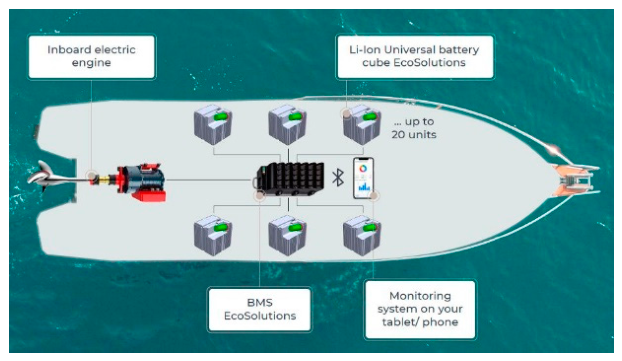
Figure 5.
Electrical architecture of the photovoltaic-powered e-boat conceived as a nano-grid integrating photovoltaic generation, battery storage, and energy management systems.
Figure 5.
Electrical architecture of the photovoltaic-powered e-boat conceived as a nano-grid integrating photovoltaic generation, battery storage, and energy management systems.
4.5. Autonomous Driving
As a research opportunity but also as an interesting attraction for future passengers, longest e-boat, named “Valentino III”, counts four paddle wheels and each one is connected to an independent electric engine. Thus, the boat can turn quickly and, in addition, it can be equipped with an autonomous driving system, similarly to quadcopters, that POMOS develops through Artificial Intelligence and Machine Learning (ML) techniques.
4.6. Innovative Batteries
An innovative prototype of long-life batteries has been designed and tested in the laboratory for future trials, with the aim of replacing the traditional lithium-ion technology batteries installed in e-boats during the LFSC Project (Itani and De Bernardinis, 2023).
The main feature of such batteries is relying on oxidation-reductive coupling of non-rare and noncritical metals and to be free of lithium, cobalt and cadmium as well as acid electrolytes. This involves one total reliability in relation to security needs and rather bland requirements on control electronics and on charging systems. More precisely, it is not required the creation of complex BMS (Battery Management Systems), as it happens for the systems of accumulation enough on lithium (Itani and De Bernardinis, 2023).
From the point of view of energy capacity, the current cell in a prototype form of 30 Ah it manifests a density energy close to 50W/Kg, which is close enough to the most common lithium accumulators (about 70W/Kg). Also, the duration in terms of time and number of cycles of charge/discharge are close to characteristics of the standard lithium batteries, while the construction costs are significantly lower.
4.7. Environmental Data Collection Platform and IMP
In order to collect environmental data during the project (especially during the new mobility services operation), a platform where these data can be stored and analyzed has been designed. In particular, having identified as solution the integration with the Integrated Mobility Platform (IMP). This web application, as well as other functions, was intended to manage all the mobility services and provide end-users with an interface to plan trips, book services and pay for their use. The design consisted in defining the best way of realizing such integration.
Sensors to collect environmental data were installed both in fixed stations and, in some experiments, also in vehicles. Data were transmitted to the collection platform integrated with the IMP. Overcoming the platform issues, proper software for environmental data processing and analysis has been synthesized. The software is in charge of calculating averages and standard deviations in air pollutant and climate-changing pollutants emissions, comparing those values to dangerous fixed thresholds and also comparing those figures between different time intervals. Finally, the software presents results graphically. A further analysis carried out based on a different approach, i.e., assumptions about ICE vehicle mileages substituted by e-vehicles (Molenbruch et al., 2021). This latter analysis, presents also the environmental impact in relation to potential future scenarios, with specific reference to transport policies. The analysis performed to evaluate the impact of demonstrations addressed also socio-economic aspects (investigated by survey questionnaires and interviews) including:
- user mobility behavior;
- user and non-user perception and of the services (i.e., social acceptance, usefulness);
- user satisfaction (i.e., satisfaction against several criteria);
- financial considerations (i.e., adequacy of fares, willingness to pay).
5. Experimental Results
LFSC is an articulated and complex project that addresses the ambitious creation of an entire multimodal and intermodal electric mobility system, mainly oriented towards the needs of advanced and sustainable tourism, taking into consideration results of environmental benefit, technological innovation and experimentation. In this session, we focus on the results regarding air quality preservation through the use of the environmental data collection platform (previously described) for processing experimental data.
5.1. Air Monitoring
Three dedicated monitoring stations collect data about air pollutants and greenhouse emissions. Data are processed and analysed through a proper algorithm developed for the purpose. The latter loads raw data coming from the monitoring stations returns mean, minimum and max values of the air pollutant emissions. Moreover, peak emissions values are compared to the ARPAT (Regional Agency for Environmental Protection of Tuscany) thresholds (Figures 6 and 7).
5.2. Tourist Travels Simulation
The ICT platform provides transport information to support emissions evaluation and also for assessing the mobility system efficiency. Transportation data were collected during the peak tourist season from June to September 2022 (Table 1), firstly to estimate the number of system users under full operational conditions and consequently quantify the equivalent distance travelled by internal combustion engine (ICE) vehicles potentially replaced by zero-emission vehicles (ZEVs).Furthermore, dedicated surveys were conducted to investigate the factors influencing users’ mobility choices and travel behavior.
In a further phase of the analysis, projections of the mobility system were developed according to four hypothetical scenarios:
- ○
- Scenario 1 (Baseline Scenario), referring to the transport data measured during the 2022 operating season; Scenario 2, involving seasonal operation of e-boats and e-buses and three alternative assumptions regarding off-season mileage for e-cars and e-scooters: Option a (off season mileage of e-scooters and e-cars as 20% of summer season);
- ○
- Option b (off season mileage of e-scooters and e-cars as 40% of summer season);
- ○
- Option c (off season mileage of e-scooters and e-cars as 50% of summer season);
- ○
- Scenario 3 based on Scenario 2 with a 50% increase in the e-car and e-scooter fleet;
- ○
- Scenario 4 based on Scenario 2 with a 100% increase in the e-car and e-scooter fleet.
A more detailed analysis was carried out for the e-boat service.
The estimation of the average number of passengers transported per trip along the Giannella and Feniglia routes represented the most critical parameter.
Official tourism statistics provided by ISTAT were therefore adopted as a proxy for estimating seasonal occupancy levels.
As shown in Table 2, the alpha ratio was calculated as the ratio between monthly tourist arrivals and arrivals recorded during August, corresponding to the peak tourist month.
This ratio was assumed to represent the seasonal occupancy rate of the e-boats.
Therefore, average value n of passengers carried per travel per month are evaluated by 1 as the product of the fill rate f (‘alpha ratio’) by the e-boats maximum capacity c presented in Table 3, as reported in the request for approval certificate.
𝑛 = 𝑓 ∙ 𝑐
The average among the values of n for all Summer months is estimated and considered as the average passengers carried per travel.
‘Tot veh.km avoided’ T is the result of the computation based on the equations 2, 3, 4 and 5:
𝑃i = 𝑛i ∙ 𝑏
𝑣i = 𝑃i ∙ 𝑙
𝐷i = 𝑣i ∙ 𝑑i ∙ 𝑘
𝐷tot = 𝐷Giannella + 𝐷Feniglia
Confronto con la tabella originale
| Mese | α 2019 | α 2024 |
| Jun | 76.5% | 81.8% |
| Jul | 83.1% | 94.1% |
| Aug | 100.0% | 100.0% |
| Sep | 53.2% | 56.9% |
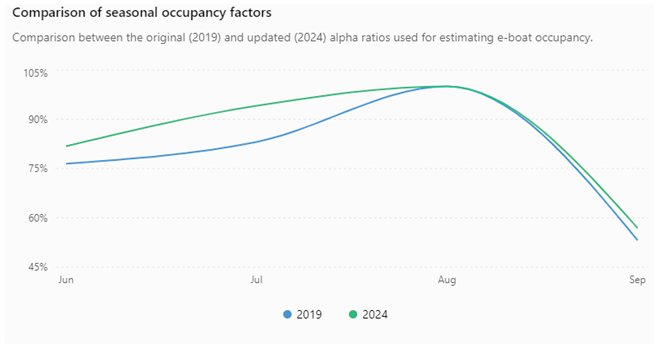
Monthly tourist arrivals recorded in the municipalities of Orbetello, Monte Argentario and Isola del Giglio were used to estimate seasonal occupancy factors for the e-boat service. The alpha ratio was calculated as the ratio between monthly arrivals and arrivals recorded in August, corresponding to the peak tourist month.
where Pi is the total e-boat passengers per day for the i-path (Giannella or Feniglia), n is the average passengers carried per travel for the i-path (Giannella or Feniglia), b is the number of boat travels per day (assumed according to the technical features of e-boats, their batteries and charging stations), vi is the number of vehicles (internal combustion) avoided per day for the i-path (Giannella or Feniglia), l is cars load factor (average value in Italy), Di is the total travel distance per day for the i-path
(Giannella or Feniglia) in km, di is the distance of one single i-path (Giannella or Feniglia) in km, measured through Google Maps, k is the number of Summer days and Dtot is the total travel distance per day in km.
Air emissions are calculated with 6, with reference to the ARPAT emission factors in E is the emission in kg or t, D is the total travel distance in km and μ is the emission factor of the j-pollutant in g/km.
𝐸 = 𝐷 ∙ 𝜇
E is the emission in kg or t, D is the total travel distance in km and μ is the emission factor of the j- pollutant in g/km.
Emissions for the scenarios with e-boats result to be five times lower than the same without them, proving that they represent an important contribution to the project.

Table 4.
Emission factors.
| Substance | Emission Factor [g/km] |
|---|---|
| CO | 3,35 |
| NOx | 0,68 |
| NMVOC | 0,46 |
| CH4 | 0,04 |
| PM | 0,03 |
| CO2 | 203,60 |
5.3. Life Cycle Assessment (LCA)
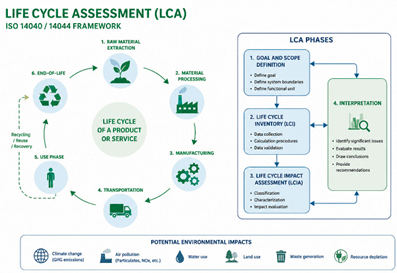
The LCA methodology was applied in accordance with ISO 14040 and ISO 14044 standard. The mobility system was modelled as a product system including material, energy, transport, waste and emission flows. evaluating the ‘inventory analysis’ that leads to the ‘impact assessment’ (Liu et al., 2023). At the end of the analysis, the achieved information is processed and interpretated with the aim of drawing conclusions. The LCA of the LFSC includes transportation and operational emissions. The latter come from frictions due to breaks and tires. In conclusion, Particulates (PM2.5 and PM10) emitted by friction are comparable to the avoided emissions from internal combustion engine probably because ZEVs are heavier than the former such that frictions are more consistent. The same result is achieved for other pollutant substances, as shown in Table 5. „Overall, the LFSC system achieves a positive environmental balance, as the avoided emissions exceed those generated throughout the life cycle of the mobility system. The results confirm the potential contribution of integrated electric mobility systems to improving air quality and supporting sustainable tourism in environmentally sensitive coastal areas.”
6. Analysis and Discussion
The overall aim of LFSC was contributing to solve problems caused by intense mobility in the area of interest, focusing on reduction of pollutants emission, therefore contributing to the protection of the local environment as well as to a more sustainable tourism and local economic development.
The project confirmed its potential in contributing to the improvement of local air quality and the mitigation of transport-related climate change. This has been estimated by analyzing both the demonstrations run and potential scenarios of development of the future mobility system. In particular, the scenarios are characterized by assumptions related to: implementation of the e-boat service; increase of the mileage travelled by shared e-vehicles; increase of the circulating electric vehicle fleets. The estimation of avoided pollutants and CO2 emissions has been conducted by assuming that some e-vehicles (e-scooter and e-cars) substitute trips otherwise made by ‘conventional’ ICE (Internal Combustion Engine) vehicles and applying average emission factors.
The Life Cycle Analyses carried-out confirmed the sustainability of the deployed electric mobility system, also taking into consideration the operation of vehicle repositioning in the free flow sharing schemes (Liu et al., 2023).
The implementation of the multimodal/intermodal electric mobility system (with more than 3,000 rentals across the demonstrations), as confirmed by the questionnaire surveys conducted, contributed to improve the overall local accessibility, with consequent socio-economic benefits in relation to both residents and tourists (Jonuschat et al., 2015). In fact, the possibility to reach destinations otherwise not reachable (because of poor public transport service and/or the unavailability of an owned vehicle) on the one hand contribute to the overall livability of the area and, on the other, to a greater competitiveness and attractiveness of the territory. According to the surveys conducted at the end of each demonstration, the system received a wide appreciation by the users, with frequent indication about the opportunity of its extension.
The contribution of the project to European policies related to transport and tourism has been discussed previously. In particular, the increase of accessibility to the area can be considered as an expansion of the touristic offer and, in the future, could imply a more sustainable distribution of touristic flows on the territory, with potential positive economic impact in terms of new activities and businesses. Furthermore the ‘environmental friendliness’ of the smart mobility system could also constitute, if probably valorized, a further element of attraction for a type of tourism more conscious and sensible to the issues of climate change and preservation of the environment (Bakhsh-Baloch et al., 2023).
The financial performance of the various transport services highlights challenges in terms of sustainability. The bike-sharing and e-scooter services present respectively a very positive and good performance with summer utilization rates; however, in off-season periods such utilization rates need to be increased. Car-sharing, on the other hand, presents a negative performance despite an excellent utilization rate, due to strong seasonality, which can be improved with difficulty. Therefore, for sharing services, the two main factors for making budgets active are increasing the utilization rate and decreasing the investment cost of vehicles. This constitutes the main input informing future decision on this kind of service in the area by administrations and providers.
6.1. Analysis of Environmental Benefits
The smart mobility system allowed to improve air quality conditions and contributed to transport decarbonization by shifting the current touristic and local demand towards environmental friendly means of transport (electric mobility).
The analysis carried-out for a first demo estimated a saving of about 950 kg of fuel and avoided pollutant emissions in the range of 0.5 kg–39 kg, depending on the type of pollutant. The net benefit in terms of CO2 saved emissions was quantified in about 2.4 tons. The second analysis of a following second demo estimated a saving of about 1.5 tons of fuel and avoided pollutant emissions in the range of 0.5 kg–52 kg, depending on the type of pollutant. The net benefit in terms of CO2 saved emissions was quantified in about 3.8 tons. Besides the demonstration, the estimation was carried out also for different potential scenarios of enhancement and expansion of the future e- mobility service. Such scenarios show a significant potential in terms of further reduction of both pollutant and CO2 emissions.
6.2. Analysis of Economic Benefits
LFSC was recognized to create added value for the territory by both end-users and local business operators (especially those hosting vehicles during the demos), contributing to increase (in conjunction with communication activities) the attractiveness of the overall touristic supply. Furthermore, the project increased the accessibility to areas otherwise difficult to be reached and this can be considered as an expansion of the touristic offer. Such aspects, which could be further strengthened by a suitable expansion of the e-mobility system, are expected to have a positive impact on local economy, by both consolidating existing business and creating new business opportunities. In particular, besides tourism-related activities, the expansion of the e-mobility system is expected to imply also work opportunities strictly linked to the management of the mobility services; during the project such impact has been limited, due to the small scale of demo activities. A suitable expansion of the system is also expected to generate economic benefits in terms of congestion reduction and consequent time saving for people.
6.3. Analysis of Social Benefits
The project had positive impacts first of all in terms of better local health conditions, through the air quality improvement (although of small scale). At global level it contributed to decarbonize transport activities and mitigate the related negative impacts. Furthermore, the increase of accessibility to the territory contributed to increase citizens’ quality of life and ensure a higher level of equity in social opportunities. The magnitude of such impacts is expected to increase with the future development of the system, which should also allow to reduce congestion, therefore creating huge social value in terms of time savings for people.
6.4. Limitations and Future Research
Despite the promising results of the LFSC project, some limitations need to be recognized. First, the economic sustainability of shared e-mobility services is hampered by seasonal variability, which limits the possibilities for long-term economic planning. This critical issue requires further research on pricing models, off-season incentives, and revenue diversification strategies (Bucsky and Juhász, 2022). Second, the study relies primarily on data from a single pilot phase, supplemented by simulation models. Although the analysis is multifaceted, the results would benefit from future longitudinal surveys capable of monitoring actual behavioral changes and changes in emissions over time (Liu et al., 2023). Third, the specific geographic and ecological context of the Silver Coast may limit the generalizability of the results. Replication of a similar mobility system in non-coastal areas or highly urbanized settings would likely require significant design modifications. Finally, although the project introduced advanced solutions such as smart batteries and autonomous navigation systems, further empirical studies are needed to assess their scalability, lifecycle performance, and maintenance requirements (Bakhsh-Baloch et al., 2023). Future research should explore how user behaviors, system economics, and local policies interact in determining the effectiveness and replicability of sustainable and smart mobility solutions in different spatial and demographic contexts.
6.5. Managerial Implications
The LIFE for Silver Coast (LFSC) project offers several relevant insights for innovation managers and policy makers interested in implementing sustainable transportation solutions in tourism-intensive territories. First, the importance of early and ongoing stakeholder involvement emerged as a critical success factor. Through the establishment of a Local Travel Plan Network (LTPN), the project ensured alignment between local governments, private operators and community stakeholders (Bina and Biassoni, 2023). This participatory governance model emerges as a replicable approach to foster adherence and maintain operational coherence in territories characterized by institutional and functional fragmentation. Second, the integration of a digital platform (Integrated Mobility Platform - IMP) for the management of multimodal and intermodal services-including land and sea transport-demonstrates the importance of investing in interoperable ICT systems. These platforms improve service coordination, data-driven decision making, and user usability, and can be further developed through adaptive technologies and usage behavior analysis (Capillo et al., 2022). Third, the economic sustainability of such systems-especially in seasonal destinations-remains a significant challenge. As observed in the LFSC pilot project, services such as car sharing have struggled to achieve annual sustainability despite high usage during the summer period (Bucsky and Juhász, 2022). Future implementations should explore hybrid financing models that combine public subsidies, user fees, and sponsorship. In addition, a modular fleet size and seasonal adjustments could help optimize operating costs. Finally, from a strategic innovation management perspective, the LFSC case highlights how successful implementation of eco-innovations depends not only on technical readiness, but also on the organizational ability to align environmental goals with local economic incentives and user-experience-centered design (Cheng et al., 2021; Shen et al., 2016).
6.6. Replicability, Transferability, Cooperation
The different components of the smart e-mobility system present a high likelihood of market uptake. This is confirmed by the fact that, during the project, some of them (i.e., sharing services and related parking systems) has been already deployed in several municipalities which started cooperating with the project partners. For what concerns the multimodal/intermodal system as a whole (i.e., including both land-vehicles and boats) it can contribute to solve transport problems and mitigate related environmental challenges necessarily in contexts with analogous geographical characteristics; during the project two potential business cases to deploy the project system in different sites have been identified. However, the deployment of the mobility services, in particular those in sharing, presents diversified challenges in terms of financial sustainability, which have been investigated during the project and for which potential countermeasures could be proposed.
6.7. Best Practice Lessons
The stakeholder engagement since the early stages provided significant added value to the project activities, in particular in terms of: better understanding of local needs and conditions; design of mobility services; assessment of the social acceptance and impact of the project; data collection.
6.8. Innovation and Demonstration Value
The European funding allowed to overcome the scarcity of financial resources of municipalities and enable citizens to make experience with a new mobility paradigm and technology. The direct experience of users and non-users is a key factor in energy transition, as it can contribute to overcome the barriers constituted by traditional habits and lack of knowledge. European funding also constituted a fundamental additional source for research and development activities of all the other project members. For service providers it also allowed to mitigate the business market risk.
6.9. Policy Implications
The project contributed to achieve some objectives of European policies in the fields of tourism and mobility, namely: strengthening of local tourism; air quality improvement; CO2 and pollutants emission reduction; diversification of touristic offer; improved accessibility to the territory; data collection and analysis through digitalization.
6.10. Theoretical Contribution to Innovation Management
The case of the LFSC project makes a significant theoretical contribution to the innovation management literature by demonstrating how systemic eco-innovation can emerge from a coordinated deployment of existing technologies within a localized governance ecosystem. Rather than viewing zero-emission vehicles (ZEVs) and smart grids as isolated innovations, the project highlights the crucial role of integrated service systems, stakeholder networks, and adaptive digital platforms (Caputo et al., 2019; Del Giudice et al., 2023). The initiative’s success in stakeholder coordination and digital integration reflects central dimensions of strategic innovation management, and aligns with Rogers’ (2003) theory of innovation diffusion, according to which observability, compatibility, and perceived benefit are key determinants of adoption. The Integrated Mobility Platform (IMP) and visible environmental benefits have increased the acceptance and reputational value of the initiative, creating the conditions for wider diffusion (Moore and Benbasat, 1991; Abrahamson and Rosenkopf, 1993). Furthermore, the user-oriented approach of the LFSC project reflects a growing recognition that the adoption of sustainability depends not only on functional utility, but also on consistency with values, norms, and personal identities (Karahanna et al., 1999; Ozaki, 2011). Thus, the project represents a form of demand-side innovation management, capable of activating behavioral, institutional and spatial levers.
The collaborative architecture of the project-which connects technological development, public-private governance, and user behavior-ultimately contributes to the evolving debate about how regional innovation ecosystems can promote sustainable transitions (Ma et al., 2020).
7. Conclusions
The different novelties produced by the development of innovation (from production to delivery to strategies and marketing) should generate positive economic, social, and environmental results (Debashree et al., 2019; Troisi et al., 2021).
All businesses are finding it difficult to figure out how to enhance the environment and society. The positive and negative aspects of inventions are a topic of discussion among innovation management academics (Del Giudice et al., 2023).
Sustainability-oriented innovation stems from the integration of product innovation, process innovation, organizational innovation, and is based on the creation of novelties at environmental, economic and social levels (Klewitz and Hansen, 2014; Caputo et al., 2021).
The LFSC project improves tourist experience through air quality and transport innovation by realizing a sustainable mobility system in the “Silver Coast”. Thanks to the introduction of ZEVs, air quality is preserved, with a negligible amount of pollutant emissions due to vehicles wear. In particular, the introduction of “Valentino” class e-boats in the lagoons helps avoiding many internal combustion engine vehicles trips, resulting in a notable reduction of air pollutant emissions. Continuous monitoring and robust data analyses give resilience to the project continuation. Innovative paddle-wheels make lagoon trips be silent and comfortable and preserve flora and fauna as well. An energy management strategy, implemented by the energy efficiency technologies described above, is a very interesting added value to the project, since the more energy is saved, the less emissions are produced.
LFSC represents a consistent case study about sustainability in the field of Smart Grids. Consistent with emerging smart and sustainable mobility paradigms, the project demonstrates how innovative transport solutions and digital infrastructures can jointly improve air quality, accessibility, and the quality of tourist mobility services.
A relevant technical-scientific contribution has been made, since some project results have been adopted by the PNR 2021-2027 (Italian National Research Program) in the Climate, Energy and Sustainable Mobility Sector. To be precise, electric multimodal/intermodal mobility and sustainable tourism have been the major study fields the project activities have been focused on. Those arguments have been also introduced in the Italian PNRR—National Center of Sustainable Mobility—SPOKE 9 (Urban Mobility). In addition, research activities carried on several study fields. More in deep, Vehicle-to-Grid (V2G) Energy Management strategies for Microgrids (MGs) have been implemented considering e-boats as critical nodes. Furthermore, autonomous navigation Artificial Intelligence (AI) paradigms have been also explored.
Finally, Environmental Monitoring and Life-Cycle Assessment methodologies and results have been faced (Amendola et al., 2022; Capillo et al., 2022; Capillo et al., 2019).
For what concerns the European added-value delivered, LFSC addressed the societal challenges towards a smart, green, efficient and integrated transport system in European cities by deploying, through a multi-purpose approach, an e-mobility system able to improve air quality, traffic conditions, contribute to transport decarbonization as well as to the achievement of the European policy objectives in relation to sustainable tourism, as confirmed by the growing scientific and policy interest in sustainable tourism, transport decarbonization, and integrated mobility systems. The case study LFSC investigated in detail all factors allowing the replication of project activities, clearly identifying the aspects to be improved and the conditions to be ensured, with specific attention to the business model. Potential business cases to replicate the multimodal/intermodal system in other sites have been identified and some components of the e-mobility system have been already deployed in other municipalities. Finally, the overall strategy adopted has also taken into consideration the results of previous research and innovation projects, while the networking and communication activities have increased the transnational character of the LIFE for Silver Coast project.
This paper enhances understanding in innovation management through the examination of a real-life project where technological, organizational, and governance innovations combine to deliver sustainability-based solutions. The LIFE for Silver Coast (LFSC) project transforms established technologies—including electric vehicles and digital mobility platforms—into a customized intermodal and multimodal framework adapted to the characteristics of environmentally sensitive, tourism-oriented coastal regions (Capillo et al., 2022; Amendola et al., 2022). This reconfiguration allows managers to observe the implementation and adaptation of innovations within a specific regional and institutional context, contributing to the literature on place-based innovation (Manos et al., 2014). The project showcases systemic eco-innovation (Klewitz and Hansen, 2014) through its integration of advanced technological solutions—such as e-boats with photovoltaic propulsion and energy storage systems—within a broader organizational and digital architecture enabled by the Integrated Mobility Platform (IMP). This approach aligns with emerging models of innovation management that transcend product or process innovation to emphasize service ecosystems and data-driven infrastructure (Caputo et al., 2021; Del Giudice et al., 2023). LFSC also operates as a demonstrator of technology governance systems shaped through public-private collaboration. The strategic partnership between municipalities, research institutions, and private operators exemplifies how sustainability-oriented innovation can be supported by shared financial risk, institutional legitimacy, and cooperative governance (Cheng et al., 2021; Shen et al., 2016). As a result, the project aligns sustainability aims with technological feasibility, user adoption, and long-term operational performance.
Through the lens of innovation diffusion theory (Rogers, 2003; Moore and Benbasat, 1991), the paper analyzes how visible environmental benefits and service usability enhance adoption among users and stimulate interest among peer municipalities (Abrahamson and Rosenkopf, 1993). Elements such as perceived compatibility, observability, and social value have reinforced behavioral changes in modal choice and attitudes toward sustainable mobility (Karahanna et al., 1999; Ozaki, 2011), contributing to demand-side perspectives on innovation management. The LFSC project incorporates three foundational innovation management dimensions into a collaborative framework: technical development, stakeholder coordination, and user-centered solution design. It provides a replicable example of how locally embedded innovations can be guided by institutional capacities, cultural readiness, and environmental constraints (Ma et al., 2020; Bina and Biassoni, 2023). In conclusion, the LFSC project demonstrates that sustainable innovation in tourism mobility is not merely a function of technology deployment, but a product of strategic alignment, participatory governance, and system-level integration. Through the convergence of technical innovation, organizational adaptation, and stakeholder engagement, this project presents a tangible model of sustainable transport suited to the needs of fragile ecosystems and tourism-intensive areas. Its contribution to innovation management literature lies in highlighting how public-private ecosystems can foster environmental transitions while maintaining replicability and strategic flexibility. Future research should investigate the scalability of integrated mobility ecosystems across different territorial contexts and assess their resilience under evolving environmental, technological, and regulatory conditions.
Declarations
All authors declare that they have no conflicts of interest.
This study involved the collection of data from human participants through surveys and interviews conducted in the context of a publicly funded mobility demonstration project. Participation was voluntary, and all respondents provided informed consent prior to their inclusion in the study. The data were collected and analyzed in anonymized form, and no personally identifiable information was recorded or processed.
References
- Abrahamson, E., and Rosenkopf, L. (1993). Institutional and competitive bandwagons: Using mathematical modeling as a tool to explore innovation diffusion. Academy of Management Review, 18(3), 487–517. [CrossRef]
- Ajanovic, A. (2023). Electricity vs hydrogen in the transition towards sustainable mobility, Oxford Open Energy, Volume 2. [CrossRef]
- Amendola, C., La Bella, S., Joime, G.P., Frattale-Mascioli, F.M., Vito, P. (2022). An Integrated Methodology Model for Smart Mobility System Applied to Sustainable Tourism. Adm. Sci., 12(1). [CrossRef]
- Archer, B., Fletcher, J. (1996). The economic impact of tourism in the Seychelles, Annals of Tourism Research, Volume 23, Issue 1, 1996, Pages 32-47. [CrossRef]
- Bakhsh-Baloch, Q., Naseeb-Shah, S., Iqbal, N., Sheeraz, M., Asadullah, M., Mahar, S., Umar-Kan, (2023). Impact of tourism development upon environmental sustainability: a suggested framework for sustainable ecotourism, Environmental Science and Pollution Research, 30:5917–5930. [CrossRef]
- Barfod, M.B. (2018). Supporting sustainable transport appraisals using stakeholder involvement and MCDA, Transport, 33, 1052–1066. [CrossRef]
- Bartoloni, S., Calò, E., Marinelli, L., Pascucci F., Dezi, L. Carayannis, E. Revel G.M., Gregori, G.L. (2022). Towards designing society 5.0 solutions: The new Quintuple Helix - Design Thinking approach to technology, Technovation, Volume 113, 102413. [CrossRef]
- Bina, M., Biassoni, F. (2023). Travel experience and reasons for the use and nonuse of local public transport: A case study within the community interregional project SaMBA (Sustainable Mobility Behaviors in the Alpine Region), Sustainability, 15, 16612. [CrossRef]
- Bows, A., Upham, P., Anderson, K. (2006). Growth Scenarios for EU and UK Aviation: Contradictions with Climate Policy, Tyndall Centre Working, Paper 84, Tyndall Centre, London, UK.
- Brennen, J.S. and Kreiss, D. (2016). Digitalization, in Jensen, K.B., Rothenbuhler, E.W., Pooley, J.D. and Craig, R.T. (Eds), The International Encyclopedia of Communication Theory and Philosophy, Wiley-Blackwell, Chichester, pp. 556–566.
- Bucsky, P., Juhász, M. (2022). Is car ownership reduction impact of car sharing lower than expected? A Europe wide empirical evidence, Case Studies on Transport Policy, 10, 2208–2217. [CrossRef]
- Capillo, A., London, M., Frattale-Mascioli, F.M. (2022). An Intermodal Approach of a Sustainable and Touristic Mobility System for a Quality of Life Improvement. Conference Transport, Tourism and Sustainable Development (SIET), Varese, Italy.
- Capillo, A., Mancini, A., Anniballi, L., Giorgi, D., Frattale-Mascioli, F.M. (2019). Challenges to Climate Change in the LIFE for Silver Coast Project, 59th ERSA Congress, Lyon, France.
- Capillo, A., Ferrandino, E., De Santis, E., Frattale-Mascioli, F.M., Rizzi, A. (2022). Synthesis of an Evolutionary Fuzzy Multi-Objective Energy Management System for an Electric Boat. IJCCI 2022, pages 199-208. [CrossRef]
- Caputo, F., Garcia-Perez, A., Cillo, V. and Giacosa, E. (2019). A knowledge-based view of people and technology: directions for a value co-creation-based learning organisation, Journal of Knowledge Management, Vol. 23 No. 7, pp. 1314–1334. [CrossRef]
- Caputo, F., Magni, D., Papa, A., Corsi, C. (2021). Knowledge hiding in socioeconomic settings: Matching organizational and environmental antecedents, Journal of Business Research, Volume 135, October 2021, Pages 19-27. [CrossRef]
- Chadee, D.D., Mattsson, J. (1996). An Empirical Assessment of Customer Satisfaction in Tourism, The Service Industries Journal, Volume 16, Issue 3, 305–320. [CrossRef]
- Cheng, Z., Wang, H. M., Xiong, W., Zhu, D. J., and Cheng, L. (2021). Public-private partnership as a driver of sustainable development: Toward a conceptual framework of sustainability-oriented PPP. Environment, Development and Sustainability, 23(1), 1043–1063. [CrossRef]
- Cheung, L.T.O. (2018). A segmentation analysis of participants’preferences in the selection of an ecotourism-training course, Journal of Ecotourism, Volume 17, Issue 2, 123–139. [CrossRef]
- Chow, A.S.Y., Cheng, I.N.Y., Cheung, L.T.O. (2017). Self-determined travel motivations and ecologically responsible attitudes of nature-based visitors to the Ramsar wetland in South China, Annals of Leisure Research, 22(4). 1-20. [CrossRef]
- Cillo, V., Gregori, G.L., Daniele, L.M., Caputo, F. and Bitbol-Saba, N. (2022). Rethinking companies’ culture through knowledge management lens during Industry 5.0 transition, Journal of Knowledge Management, Vol. 26 No. 10, pp. 2485–2498. [CrossRef]
- Cillo, V., Petruzzelli, A. M., Ardito, L., and Del Giudice, M. (2019). Understanding sustainable innovation: A systematic literature review, Corporate Social Responsibility and Environmental Management, 26(5), 1012-1025. [CrossRef]
- Del Giudice, M., Scuotto, V., Orlando, B., Mustillki, M., (2023). Toward the human—Centered approach. A revised model of individual acceptance of AI, Human Resource Management Review, Volume 33, Issue 1. [CrossRef]
- Del Giudice, M., Scuotto, V., Papa, A. and Singh, S.K. (2023). The ‘bright’side of innovation management for international new ventures, Technovation, Vol. 125. [CrossRef]
- Del Val Roman, J.L. (2016). Industria 4.0: la transformacion digital de la industria, in Valencia: Conferencia de Directores y Decanos de Ingenierıa Informatica, Informes CODDII.
- Ekiz, E.H., and Bavik, A. (2008). Scale development process: service quality in car rental services, The Electronic Journal of Business Research Methods, Volume 6, Issue 2, pp. 133–146.
- European Council—Council of the European Union—COP28, “World climate action summit”, Dubai, United Arab Emirates, 1-2 December 2023. https://www.consilium.europa.eu/en/meetings/international-summit/2023/12/01-02/.
- European Environment Agency (2016). Towards clean and smart mobility Transport and environment in Europe, Available online: https://www.eea.europa.eu/signals/signals- 2016/articles/ transport-and-public-health.
- Ferrandino, E., Capillo, A., De Santis, E., Frattale-Mascioli, F.M., Rizzi, A. (2022). A Comparison between Crisp and Fuzzy Logic in an Autonomous Driving System for Boats, 2022 IEEE International Conference on Fuzzy Systems (FUZZ-IEEE), Padua, Italy 2022.
- Ferrandino, E., Capillo, A., Frattale-Mascioli, F.M., and Rizzi, A. (2020). Nanogrids: A smart way to integrate public transportation electric vehicles into smart grids, 12th International Joint Conference on Computational Intelligence, volume 16. [CrossRef]
- Goldman, T., Gorham, R (2006). Sustainable urban transport: Four innovative directions, Technology in Society, 28, 261–273. [CrossRef]
- Goudarzi, A., Ghayoor, F., Waseem, M., Fahad, S., Traore, I. (2022). A Survey on IoT-Enabled Smart Grids: Emerging, Applications, Challenges, and Outlook, Energies, 15(19). [CrossRef]
- Hopkins, D. (2020). Sustainable mobility at the interface of transport and tourism: Introduction to the special issue on Innovative approaches to the study and practice of sustainable transport, mobility and tourism, Journal of Sustainable Tourism, Volume 28, Issue 2, 225–239. [CrossRef]
- Hren, R., Vujanović, A., Van Fan, Y., Jaromír Klemeš, J., Krajnc, D., Čuček, L. (2023). Hydrogen production, storage and transport for renewable energy and chemicals: An environmental footprint assessment, Renewable and Sustainable Energy Reviews, 173. [CrossRef]
- Itani, K., De Bernardinis, A. (2023). Review on new generation batteries technologies: trends and future directions, Energies, 16, 7530. [CrossRef]
- Karahanna, E., Straub, D. W., and Chervany, N. L. (1999). Information technology adoption across time: A cross-sectional comparison of pre-adoption and post-adoption beliefs. MIS Quarterly, 23(2), 183–213. [CrossRef]
- Kartal, M.T., Samour, A., Adebayo T.S., Depren S.K. (2023). Do nuclear energy and renewable energy surge environmental quality in the United States? New insights from novel bootstrap Fourier Granger causality in quantiles approach, Progress in Nuclear Energy, 155. [CrossRef]
- Klewitz, J., and Hansen E.G. (2014). Sustainability-oriented innovation of SMEs: a systematic review, Journal of Cleaner Production, Volume 65, 15, Pages 57-75. [CrossRef]
- Konno, N. and Schillaci, C.E. (2021). Intellectual capital in Society 5.0 by the lens of the knowledge creation theory, Journal of Intellectual Capital, Vol. 22 No. 3, pp. 478–505. [CrossRef]
- Iora, P. G. (2016). Tecnologie per la mobilità sostenibile. Veicoli elettrici, ibridi e a fuel cell. Società Editrice Esculapio, ISBN-13978-8874889945.
- Lerch, C. and Gotsch, M. (2015). Digitalized product-service systems in manufacturing firms: a case study analysis, Research-technology Management, Vol. 58 No. 5, pp. 45–52. [CrossRef]
- Lisena, V., Paschero, M., Gentile, V., Amicucci, P., Rizzi, A., Frattale-Mascioli, F.M. (2016). A new method to restore the water quality level through the use of electric boats, 2016 IEEE International Smart Cities Conference (ISC2), Trento, Italy 2016.
- Litman, T., Burwell, D. (2006). Issues in sustainable transportation, International Journal of Global Environmental, Issues 6(4), 331-347. [CrossRef]
- Liu, F., Shafique, M., Luo, X. (2023). Literature review on life cycle assessment of transportation, Environmental Technology and Innovation, 32, 103343. [CrossRef]
- Logan, K.G., Nelson, J.D., Hastings, A. (2022). Low emission vehicle integration: Will National Grid electricity generation mix meet UK net zero?, Proceedings of the Institution of Mechanical Engineers. Part A: Journal of Power and Energy, 236(1):159-175. [CrossRef]
- Ma, A.T., Chow, A.S., Cheung, L.T., Liu, S. (2018). Self-determined travel motivation and environmentally responsible behaviour of Chinese visitors to national forest protected areas in South China, Global Ecology and Conservation, vol. 16, e00480. [CrossRef]
- Maldonado-Silveira, A., Munhoz, P.A., da Costa, D.F., Kowal-Chinelli, C., Azevedo-Guedes, A.L., Neves dos Santos, J.A., da Silva, S., and Soares, P. (2020). Smart mobility: The main drivers for increasing the intelligence of urban mobility, Sustainability, 12(24), 10675. [CrossRef]
- Ma, H. Y., Zeng, S. X., Lin, H., and Zeng, R. C. (2020). Impact of public sector on sustainability of public-private partnership projects. Journal of Construction Engineering and Management, 146(1), 04019092. [CrossRef]
- Manos, B., Partalidou, M., Fantozzi, F., Arampatzis, S., and Papadopoulou, O. (2014). Agro-energy districts contributing to environmental and social sustainability in rural areas: Evaluation of a local public-private partnership scheme in Greece. Renewable and Sustainable Energy Reviews, 29, 85–95. [CrossRef]
- Martín, J.M.M., Martínez, J.M.G., Moreno, V.M. and Rodríguez, A.S. (2019). An Analysis of the Tourist Mobility in the Island of Lanzarote: Car Rental Versus More Sustainable Transportation Alternatives, Sustainability, 11, 739. [CrossRef]
- Molenbruch, Y., Braekers, K., Hirsch, P., Oberscheider, M. (2021). Analyzing the benefits of an integrated mobility system using a matheuristic routing algorithm, European Journal of Operational Research, 290, 81–98. [CrossRef]
- Moore, G. C., and Benbasat, I. (1991). Development of an instrument to measure the perceptions of adopting an information technology innovation. Information Systems Research, 2(3), 192–222. [CrossRef]
- Mostafa, N., Ramadan, H.S.M., Elfarouk, O. (2022). Renewable energy management in smart grids by using big data analytics and machine learning, Machine Learning with Applications, 9. [CrossRef]
- Müller-Eie1, D., and Kosmidis, I. (2023). Sustainable mobility in smart cities:a document study of mobility initiatives of mid-sized Nordic smart cities, European Transport Research Review, n. 36. [CrossRef]
- Munim, Z.H., Dushenko, M., Jimenez, V.J., Shakil, M.H. and Imset, M. (2020). Big data and artificial intelligence in the maritime Industry: a bibliometric review and future research directions, Maritime Policy and Management, 47 (5): 577–597. [CrossRef]
- Ould-Amrouche, S,, Rekioua, D., Rekioua, T.S., Bacha, S. (2016). Overview of energy storage in renewable energy systems, International Journal of Hydrogen Energy, 41(45): 20914-27. [CrossRef]
- Panwar, N.L., Kaushikb, S.C, Kotharia, S. (2011). Role of renewable energy sources in environmental protection: A review, Renewable and Sustainable Energy Reviews, 15(3):1513-24. [CrossRef]
- Parida, V., Sjodin, D. and Reim, W. (2019). Reviewing literature on digitalization, business model innovation, and sustainable industry: past achievements and future promises, Sustainability, Vol. 11 No. 2, p. 391. [CrossRef]
- Pietrzak, K., Pietrzak, O., (2020). Environmental Effect of Electromobility in a Sustainable Urban Public Transport, Sustainability, 12, 1052. [CrossRef]
- Prasanta-Kumar, D., Chrisovalantis, M., Debashree, D., Soumyadeb, C., Fouad-Ben, A. (2019). The Impact of Lean Management Practices and Sustainably-Oriented Innovation on Sustainability Performance of Small and Medium-Sized Enterprises: Empirical Evidence from the UK, British Journal of Management. [CrossRef]
- Rajasekaran, A.S., Azees, M., Al-Turjman, F. (2022). A comprehensive survey on security issues in vehicle-to-grid networks, Journal of Control and Decision, Pages 150-159. [CrossRef]
- Rogers, E. M. (2003). Diffusion of innovations (5th ed.). Free Press.
- Rosales-Tristancho, A., Brey, R., Carazo, A.F., Javier-Brey, J. (2022). Analysis of the barriers to the adoption of zero-emission vehicles in Spain, Transportation Research Part A: Policy and Practice, 158, 19-43. [CrossRef]
- Rothenbuhler, E.W., Pooley, J.D., Jensen, K.B. and Craig, R.T. (2016). The international encyclopedia of communication theory and philosophy, Eds. John Wiley and Sons, Chichester, UK, (pp. 1– 11).
- Rücker, F., Schoeneberger, I., Wilmschen, T., Chahbaz, A., Dechent, P., Hildenbrand, F., et al. (2022). A Comprehensive Electric Vehicle Model for Vehicle-to-Grid Strategy Development, Energies 2022, 15(12). [CrossRef]
- Savastano, M., Zentner, H., Spremić, M. and Cucari, N., (2022). Assessing the relationship between digital transformation and sustainable business excellence in a turbulent scenario, Total Quality Management and Business Excellence. [CrossRef]
- Schmale, J., von Schneidemesser, E., Dörrie, A. (2015). An integrated assessment method for sustainable transport system planning in a middle sized German city, Sustainability, 7, 1329– 1354. [CrossRef]
- Shen, L., Tam, V. W. Y., Gan, L., Ye, K., and Zhao, Z. (2016). Improving sustainability performance for public-private-partnership (PPP) projects. Sustainability, 8(3), 289. [CrossRef]
- Sklyar, A., Kowalkowski, C., Tronvoll, B. and Sorhammar, D. (2019). Organizing for digital servitization: a service ecosystem perspective, Journal of Business Research, Vol. 104, pp. 450–460. [CrossRef]
- Szymanska, E., Panfiluk, E., and Kiryluk H. (2021). Innovative solutions for the development of sustainable transport and improvement of the tourist accessibility of peripheral areas: the case of the Białowieza forest region”, Sustainability, 13, 2381. [CrossRef]
- Tight, M.R., Bristow, A.L., Pridmore, A., May, A.D. (2005). What is a sustainable level of CO2 emissions from transport activity in the UK in 2050?, Transport Policy, Volume 12, Issue 3, Pages 235-244. [CrossRef]
- Troisi, O., Visvizi, A. and Grimaldi, M. (2021). The different shades of innovation emergence in smart service systems: the case of Italian cluster for aerospace technology, Journal of Business and Industrial Marketing, Vol. ahead-of-print No. ahead-of-print. [CrossRef]
- Troisi, O., Visvizi, A. and Grimaldi, M. (2024). Rethinking innovation through industry and society 5.0 paradigms: a multileveled approach for management and policy-making, European Journal of Innovation Management, Vol. 27 No. 9, pp. 22–51. [CrossRef]
- Troisi, O., Visvizi, A., Grimaldi, M., (2023). Digitalizing business models in hospitality ecosystems: toward data-driven innovation, European Journal of Innovation Management, Vol. 26 No. 7, pp. 242–277. [CrossRef]
- Tsai, C., Chang, T., Hsieh, I.L. (2023). Evaluating vehicle fleet electrification against net-zero targets in scooter-dominated road transport, Transportation Research Part D: Transport and Environment, 114. [CrossRef]
- Van Bommel, E., Edelman, D. and Ungerman, K. (2014). Digitizing the consumer decision journey, McKinsey Quarterly, Vol. 6 June, pp. 1–8.
- United Nations—Regional Information Centre for Western Europe: Climate: highlights of COP28. https://unric.org/en/climate-highlights-of-cop28/ (accessed 14/12/2023).
- UNWTO–UNEP–WMO (2008). Climate Change and Tourism: Responding to Global Challenges, UNWTO, Madrid, Spain.
- Jakobsen, K., Mikalsen, M., Lilleng, G., (2023). A literature review of smart technology domains with implications for research on smart rural communities, Technology in Society, 75, 102397. [CrossRef]
- Jonuschat, H., Stephan, K. and Schelewsky, M. (2015). Understanding Multimodal and Intermodal Mobility, Sustainable Urban Transport (Transport and Sustainability, Vol. 7), Emerald Group Publishing Limited, Leeds, pp. 149–176. [CrossRef]
- Justin, F., Peter, G., Stonier, A.A. and Iderus, S. (2022). Vehicle to Grid and Grid to Vehicle Technology in a Micro-Grid using PI Controller, 2022 International Conference on Green Energy, Computing and Sustainable Technology (GECOST), Miri Sarawak, Malaysia 2022.
- Waligo, V.M., Clarke, J. and Hawkins, R. (2013). Implementing sustainable tourism: A multi- stakeholder involvement management framework, Tourism Management, vol. 36, pp. 342– 353. [CrossRef]
| 1 |
Results presented in this section derive from simulation-based calculations developed using observed transport data and tourism statistics. The estimated values are intended to support the comparative assessment of alternative mobility scenarios and should not be interpreted as deterministic predictions. |
Table 1.
Assumption for avoided emissions evaluation.
| Project Parameters | Value |
|---|---|
| Summer season days | 122 |
| Cars load factor | 1,50 |
| Boats travels per day—Giannella | 4 |
| Boats travel per day—Feniglia | 4 |
| Average passengers carried per travel-Giannella | 8,34 |
| Average passengers carried per travel-Feniglia | 6,26 |
| Tot pax Giannella | 33,36 |
| Tot pax Feniglia | 25,02 |
| Vehicles avoided Giannella | 22,24 |
| Vehicles avoided Feniglia | 16,68 |
| Veh.Km avoided Giannella/summer season [km] | 23.337,34 |
| Veh.km avoided Feniglia/summer season [km] | 7.530,36 |
| Tot veh.km avoided [km] | 30.867,71 |
| Orbetello-Giannella [km] | 8,60 |
| Orbetello-Feniglia (Tombolo) [km] | 3,70 |
Table 2.
1 Tourist arrivals in accommodation facilities and calculation of alpha ratio (Project Area, 2024).
Table 2.
1 Tourist arrivals in accommodation facilities and calculation of alpha ratio (Project Area, 2024).
| Period | Arrivals in Accommodation Facilities (2024) | Alpha Ratio |
|---|---|---|
| Jan-2024 | 1,871 | - |
| Feb-2024 | 1,967 | - |
| Mar-2024 | 5,925 | - |
| Apr-2024 | 18,590 | - |
| May-2024 | 32,804 | - |
| Jun-2024 | 56,116 | 81.8% |
| Jul-2024 | 64,582 | 94.1% |
| Aug-2024 | 68,628 | 100.0% |
| Sep-2024 | 39,046 | 56.9% |
| Oct-2024 | 10,367 | - |
| Nov-2024 | 3,537 | - |
| Dec-2024 | 2,092 | - |
Table 3.
E-boats max capacities.
| E-Boat Class | Length [m] | Width [m] | Maximum Passenger Capacity |
|---|---|---|---|
| Valentino I | 6.20 | 2.40 | 6 |
| Valentino II | 9.20 | 2.40 | 8 |
| Valentino II | 9.20 | 2.40 | 8 |
| Valentino III | 9.90 | 4.05 | 10 |
Table 5.
Comparison between lifecycle emissions and avoided emissions.
| Substance | Emissions [kg] | Avoided Emissions (par. 1.3—Worst Scenario -) [kg] | Avoided Emissions (par. 1.3—Best Scenario -) [kg] |
|---|---|---|---|
| PM | 1,00 | 0,45 | 2,08 |
| NOx | 0,14 | 10,62 | 49,51 |
| CO | 0,18 | 52,18 | 243,18 |
| NMVOC | 0,20 | 7,23 | 33,71 |
Disclaimer/Publisher’s Note: The statements, opinions and data contained in all publications are solely those of the individual author(s) and contributor(s) and not of MDPI and/or the editor(s). MDPI and/or the editor(s) disclaim responsibility for any injury to people or property resulting from any ideas, methods, instructions or products referred to in the content. |
© 2026 by the authors. Licensee MDPI, Basel, Switzerland. This article is an open access article distributed under the terms and conditions of the Creative Commons Attribution (CC BY) license.
Copyright: This open access article is published under a Creative Commons CC BY 4.0 license, which permit the free download, distribution, and reuse, provided that the author and preprint are cited in any reuse.