

Submitted:
25 September 2026
Posted:
29 September 2026
You are already at the latest version
Abstract
Background: Phenol matrixectomy is widely utilised to manage onychocryptosis. Concerns regarding its safety in pregnancy and breastfeeding persist, despite limited direct evidence of adverse events. Previous work by the authors suggested that systemic phenol dosage to a pregnant woman during nail surgery was negligible; however, a subsequent review of that publication identified a mathematical calculation error and an underestimation of phenol dose.Methods: We conducted a narrative critical review in 2022, drawing on clinical, toxicological, occupational, and epidemiological literature, including original work. We recalculated exposure estimates and contextualised them against established toxicological thresholds.Results: Epidemiological studies demonstrate widespread background exposure to a range of phenolic compounds during pregnancy, with inconsistent associations with adverse outcomes. Animal studies indicate developmental toxicity at high systemic doses. Corrected calculations demonstrate that phenol exposure during nail surgery may be substantially higher than we previously reported; however, actual systemic phenol absorption remains unknown. Conclusion: Phenol exposure during matrixectomy remains a risk-uncertain intervention because the lack of pharmacokinetic data prevents definitive risk assessment.
Keywords:
nail surgery
; pregnancy
; breastfeeding
; phenol
; toxicology
; matrixectomy
; exposure modelling
Introduction
Phenol (monohydroxybenzene) (C₆H₅OH) is the parent of the class of chemicals containing one or more hydroxyl groups attached to an aromatic ring (Weber, Weber and Weber, 2020), see Figure 1. Also known as carbolic acid, it is the simplest phenolic compound; many of its derivatives are natural substances widely distributed throughout the environment (Agency for Toxic Substances and Disease Registry (ATSDR), 2008). Phenol is systemically bioavailable, absorbed via dermal, inhalational, and oral routes, and is associated with both local and systemic toxicity (Bruce, Santodonato and Neal, 1987).
Chemical matrixectomy with phenol causes protein denaturation and coagulative necrosis of the nail matrix and is an established and effective intervention for ingrown toenails, with widespread evidence supporting its role in reducing recurrence rates (Bostanci, Gürgey and Ekmekci, 2001; Boberg, Frederiksen and Harton, 2002; Eekhof et al., 2012; Exley et al., 2023b, 2023a). Although the available evidence suggests that phenol exposure at non-toxic levels is unlikely to adversely affect foetal development (UK Health Security Agency, 2024), uncertainty persists about phenol’s safety during pregnancy and breastfeeding despite its use for many decades (Iglesias et al., 2008; Becerro De Bengoa Vallejo et al., 2012; Robinson, 2025). This creates a clinical paradox: phenol is both commonly encountered and poorly researched for procedural use during pregnancy. Previous work by the authors (Reilly, Ousey and Blandford, 2022) concluded that exposure during nail surgery was negligible; however, a re-evaluation has identified a fundamental error in the exposure estimate.
This study aims to critically re-evaluate phenol exposure in nail surgery by correcting prior modelling errors and contextualising the revised exposure within available toxicological and clinical evidence. This paper adopts a critical narrative review approach, focusing on:
- Toxicological data on phenol exposure
- Occupational and environmental exposure literature
- Previously published exposure calculations in podiatric contexts
- Recalculation of phenol dose using corrected physical parameters
Methods
We conducted searches between January 2022 and March 2026. Sources were selected for relevance to phenol toxicology, pregnancy exposure, occupational exposure, and clinical use in matrixectomy. Literature sources included:
- Electronic databases (MEDLINE, EMBASE, CINAHL, AMED)
- Reference lists from key studies
- Toxicological and regulatory reports
Search terms included combinations of:
phenol, pregnancy, breastfeeding, toxicology, exposure
Given the heterogeneity of available evidence, a structured narrative synthesis approach rather than a formal meta-analysis. Exposure modelling was re-derived using:
- manufacturer data for phenol swab volume
- density-based conversion to mass
- scenario-based absorption estimates
Phenol exposure in context
Environmental and background exposure
Phenols are consistently detected in human biological samples. Large cohort studies (Walkley, Pagnotto and Elkins, 1961; Wolff et al., 2008; Philippat et al., 2012, 2014; Chen et al., 2013; Tang et al., 2013; Guidry et al., 2015; Vélez, Arbuckle and Fraser, 2015; Ashrap et al., 2018; Ferguson et al., 2018; Aker et al., 2019; Barkoski et al., 2019; Nakiwala et al., 2020; Rolland et al., 2020; Zhang et al., 2021; Jedynak et al., 2022) demonstrate high detection rates (>90%) in pregnant populations with repeated exposure throughout gestation. Much of this literature concerns a broad range of phenolic compounds rather than monohydroxybenzene specifically, limiting direct applicability to procedural phenol exposure. Some phenols, notably pentachlorophenol and benzophenone-3, have been associated with foetal growth parameters and endocrine disruption. However, findings are inconsistent and reflect chronic low-dose exposure, limiting comparability with procedural exposure.
Occupational and clinical exposure
Clinical exposure in dermatology (e.g. phenol peels) demonstrates that phenol can be systemically absorbed through skin, with toxicity observed at higher doses (Landau, 2008). Occupational exposure studies demonstrate that phenol vapour is detectable during matrixectomy but generally remains below workplace exposure limits (Iglesias et al., 2008). However, that study primarily assesses airborne concentration rather than dermal absorption.
Toxicological evidence
Animal studies outlined in our earlier paper (Reilly, Ousey and Blandford, 2022) demonstrated dose-dependent developmental toxicity, including reduced foetal weight and structural abnormalities at high exposure levels. These effects are typically observed in the presence of maternal toxicity and at doses substantially exceeding environmental exposure levels. Human data remain limited and inconclusive. Studies of occupational exposure to organic solvents, including phenols, suggest possible associations with adverse pregnancy outcomes, although causality is unclear (Rosen Vollmar et al., 2023).
Correction of exposure calculations
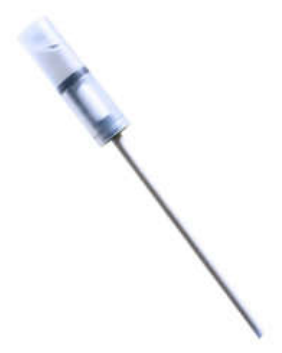
In the UK, phenol swabs, originally marketed as EZ swabs but now as Swab-it, contain 0.15 mL and 0.20 mL of 89% phenol USP (DLT Podiatry Supplies, no date), see Figure 2. It is a Class IIa licensed medical device manufactured in accordance with ISO 13485.
The authors’ original work assumed that each phenol swab contained 0.178 mL of 89% phenol, yielding 0.178 mg per swab (if 100% of the phenol is transferred). The mistake was a unit-conversion error between mL and mg, compounded by failure to account properly for the concentration expression and density. The corrected calculation is:
Density:
- 1.05 g/mL = 1050 mg/mL (Valeant Pharmaceuticals North America, 2015)
Phenol concentration:
- 89% × 1050 mg/mL = 934.5 mg/mL
Doses:
- 0.15 mL × 934.5 mg/mL = 140.175 mg
- 0.20 mL × 934.5 mg/mL = 186.9 mg
The phenol is typically delivered using two to three swabs or applicators for three minutes before irrigation and lavage of the nail sulcus (Exley et al., 2024). Therefore, the dose for three swabs is:
- 0.15 mL (140.2 mg) × 3 = 420.5 mg
- 0.20 mL (186.9 mg) × 3 = 560.7 mg
This is approximately 800–1,050-fold higher than previously reported (≈ three orders of magnitude.
Applied vs systemic dose
Applied phenol does not equate to systemic exposure. During matrixectomy:
- Some phenol remains on the swab
- Some phenol evaporates
- Some phenol is partially neutralised by tissue proteins
- Some phenol is removed during irrigation
While phenol is known to be readily absorbed through the skin and mucosa, no published data currently quantify the fraction absorbed into the systemic circulation or plasma phenol levels post-procedure. Phenol is rapidly detoxified and eliminated, limiting systemic toxicity following small, localised exposures. The systemic toxicology thresholds reported by ATSDR are exceeded at exposure levels higher than those encountered in controlled podiatric nail surgery (Agency for Toxic Substances and Disease Registry (ATSDR), 2008). Systemic toxicity described in occupational cohorts reflects prolonged exposure and is not directly translatable to the small-volume, localised application used in nail surgery. However, even when corrected, the systemic absorbed dose during nail matrixectomy remains unknown, as key variables (tissue absorption, volatilisation, and procedural loss) are unquantified. Comparisons with tolerable daily intake (TDI) thresholds are methodologically inappropriate without accounting for route-specific pharmacokinetics. Phenol does not accumulate significantly in lipid-rich tissues, suggesting limited long-term retention (Bruce, Santodonato and Neal, 1987). Neither perinatal death rates nor prevalence of malformations were significantly increased in the retrospective study of pregnancy outcome among university laboratory employees in Sweden conducted by Axelsson et al. between infants whose mothers were exposed to solvents and those who were not. (Axelsson, Lutz and Rylander, 1984).
Breastfeeding considerations
Studies demonstrate detectable phenols in infant urine and breast milk. Neonatal metabolism is immature, particularly with respect to CYP2E1 activity, suggesting reduced capacity to metabolise phenol in early life (Johnsrud, 2003). Evidence on phenol transfer into breast milk is limited, but the authors’ earlier work concluded that, because phenol must cross multiple physiological membranes, phenol-contaminated breast milk is unlikely to affect the baby.
Discussion
Phenol is rapidly absorbed via dermal, inhalational, and oral routes, with systemic effects reported within minutes at high exposure levels. However, it is also rapidly detoxified through hepatic conjugation to sulphate and glucuronide metabolites, which are less toxic and are predominantly excreted in the urine within 24-hours (Bruce, Santodonato and Neal, 1987). Distribution studies demonstrate limited accumulation in lipid-rich tissues, suggesting minimal long-term retention. While high-dose exposure is associated with significant toxicity, the relevance of these findings to podiatric practice is limited, given the small, localised doses used in nail surgery. Much of the phenol toxicology literature is derived from industrial or mixed-exposure models, limiting direct applicability to nail surgery. The key issue is not the total dose applied, but the proportion of phenol that enters the maternal circulation. Current evidence suggests that:
- Phenol has the potential for systemic toxicity
- Developmental toxicity occurs at sufficiently high doses
- Human evidence is inconclusive
Although not clearly teratogenic, phenol is fetotoxic at high doses, supporting cautious use in pregnancy (Bruce, Santodonato and Neal, 1987), although at doses unlikely to be administered during nail surgery. Pregnancy testing is a routine practice for elective surgery (National Institute for Health and Care Excellence (NICE)., 2016). The authors posit that if phenol were especially dangerous to a foetus, pregnancy testing would be mandatory prior to its use. This review identifies a critical limitation in previous work: underestimating phenol exposure due to misinterpretation of units. Our 2022 paper was further limited by its narrative review design, methodological weaknesses, speculative reasoning in parts, and several unsupported clinical recommendations. These issues weaken the strength of its conclusions. Corrected calculations indicate that the procedural phenol load is substantially higher than previously reported. However, the systemic absorption of phenol following nail surgery - and its effect on the foetus - remains unknown.
Conclusion
This paper corrects a previously published underestimation of phenol exposure during matrixectomy and clarifies the distinction between applied and systemic dose, addressing an area of ongoing clinical uncertainty in pregnancy and breastfeeding. While phenol exposure during matrixectomy is higher than previously estimated, the lack of systemic absorption data prevents definitive conclusions about safety. Phenol matrixectomy should therefore be approached with cautious clinical judgement, pending further research. Phenol matrixectomy in pregnancy and breastfeeding should be considered a risk-uncertain intervention. Clinicians should therefore:
- undertake individualised risk-benefit assessment
- provide informed consent
- consider alternative techniques
- minimise exposure where possible
Future research
Priority areas include:
- Biomonitoring studies (urinary phenol pre/post procedure)
- Pharmacokinetic modelling of dermal absorption
- Occupational exposure correlation with systemic levels
- Prospective pregnancy outcome studies
Authors contributions
IR conceived the paper’s aim and format. All authors made substantial contributions to the final version. Authors' information: INR: https://orcid.org/0000-0002-2786-5739.
Funding
this research did not receive any grant from funding agencies in the public, commercial, or not-for-profit sectors.
References
- Agency for Toxic Substances and Disease Registry (ATSDR). Toxicological Profile for Phenol, 2008.
- Aker, A.M.; Ferguson, K.K.; Rosario, Z.Y.; Mukherjee, B.; Alshawabkeh, A.N.; Calafat, A.M.; Cordero, J.F. “A repeated measures study of phenol, paraben and Triclocarban urinary biomarkers and circulating maternal hormones during gestation in the Puerto Rico PROTECT cohort”. In Environmental Health: A Global Access Science Source; BioMed Central Ltd., 2019; Vol. 18, No. 1. [Google Scholar] [CrossRef]
- Ashrap, P.; Watkins, D.J.; Calafat, A.M.; Ye, X.; Rosario, Z.; Brown, P.; Vélez-Vega, C.M. “Elevated concentrations of urinary triclocarban, phenol and paraben among pregnant women in Northern Puerto Rico: Predictors and trends”. In Environment International; Elsevier Ltd, 2018; Vol. 121, pp. 990–1002. [Google Scholar] [CrossRef]
- Axelsson, G.; Lutz, C.; Rylander, R. “Exposure to solvents and outcome of pregnancy in university laboratory employees”; British Journal of Industrial Medicine, 1984; Vol. 41, No. 3, pp. 305–312. [Google Scholar] [CrossRef]
- Barkoski, J.M.; Busgang, S.A.; Bixby, M.; Bennett, D.; Schmidt, R.J.; Barr, D.B.; Panuwet, P. “Prenatal phenol and paraben exposures in relation to child neurodevelopment including autism spectrum disorders in the MARBLES study”. In Environmental Research; Academic Press Inc., 2019; Vol. 179. [Google Scholar] [CrossRef]
- Becerro De Bengoa Vallejo, R.; Losa Iglesias, M.E.; Jules, K.T.; Trepal, M.J. “Renal excretion of phenol from physicians after nail matrix phenolization: An observational prospective study”; Journal of the European Academy of Dermatology and Venereology, 2012; Vol. 26, No. 3, pp. 344–347. [Google Scholar] [CrossRef]
- Boberg, J.S.; Frederiksen, M.S.; Harton, F.M. “Scientific analysis of phenol nail surgery”; Journal of the American Podiatric Medical Association, 2002; Vol. 92, No. 10, pp. 575–579. [Google Scholar]
- Bostanci, S.; Gürgey, E.; Ekmekci, P. “Chemical Matricectomy with Phenol for the Treatment of Ingrowing Toenail: A Review of the Literature and Follow-up of 172 Treated Patients”; Acta Derm Venereol, 2001; Vol. 81, pp. 181–183. [Google Scholar]
- Bruce, R.M.; Santodonato, J.; Neal, M.W. “Summary review of the health effects associated with phenol”. Toxicology and Industrial Health 1987, No. 3(4), 535–568. [Google Scholar] [CrossRef]
- Chen, X.; Chen, M.; Xu, B.; Tang, R.; Han, X.; Qin, Y.; Xu, B. “Parental phenols exposure and spontaneous abortion in Chinese population residing in the middle and lower reaches of the Yangtze River”. In Chemosphere; Elsevier Ltd, 2013; Vol. 93, No. 2, pp. 217–222. [Google Scholar] [CrossRef]
- DLT Podiatry Supplies. “Swab-it”. n.d. Available online: https://www.dltpodiatry.co.uk/Phenol-Swab-it (accessed on 16.04.26).
- Eekhof, J.A.H.; Van Wijk, B.; Neven, A.K.; van der Wouden, J.C. “Interventions for ingrowing toenails”. In Cochrane Database of Systematic Reviews; Wiley, 2012; Vol. 4, No. 4. [Google Scholar] [CrossRef]
- Exley, V.; Jones, K.; O’Carroll, G.; Watson, J.; Backhouse, M. “A systematic review and meta-analysis of randomised controlled trials on surgical treatments for ingrown toenails part I: recurrence and relief of symptoms”. In Journal of Foot and Ankle Research; BioMed Central Ltd, 1 December 2023a. [Google Scholar] [CrossRef]
- Exley, V.; Jones, K.; O’Carroll, G.; Watson, J.; Backhouse, M. “A systematic review and meta-analysis of randomised controlled trials of surgical treatments for ingrown toenails part II: healing time, post-operative complications, pain, and participant satisfaction”. In Journal of Foot and Ankle Research; BioMed Central Ltd, 1 December 2023b. [Google Scholar] [CrossRef]
- Exley, V.; Jones, K.; Watson, J.; Backhouse, M. “A survey of the treatment and management of ingrown toenails by UK podiatrists: A cross-sectional survey”. In Journal of Foot and Ankle Research; John Wiley and Sons Inc, 2024; Vol. 17, No. 2. [Google Scholar] [CrossRef]
- Ferguson, K.K.; Meeker, J.D.; Cantonwine, D.E.; Mukherjee, B.; Pace, G.G.; Weller, D.; McElrath, T.F. “Environmental phenol associations with ultrasound and delivery measures of fetal growth”. In Environment International; Elsevier Ltd, 2018; Vol. 112, pp. 243–250. [Google Scholar] [CrossRef]
- Guidry, V.T.; Longnecker, M.P.; Aase, H.; Eggesbø, M.; Zeiner, P.; Reichborn-Kjennerud, T.; Knudsen, G.P. “Measurement of total and free urinary phenol and paraben concentrations over the course of pregnancy: Assessing reliability and contamination of specimens in the Norwegian mother and child cohort study”. In Environmental Health Perspectives, Public Health Services, US Dept of Health and Human Services; 2015; Vol. 123, No. 7, pp. 705–711. [Google Scholar] [CrossRef]
- Iglesias, M.E.L.; De Cabo, J.V.; Traspaderne, J.T.; Franco, J.A.; Alonso, M.B.; De Bengoa Vallejo, R.B. “Safety of phenol vapor inhalation during performance of chemical matrixectomy to treat ingrown toenails”; Dermatologic Surgery, 2008; Vol. 34, No. 11, pp. 1515–1519. [Google Scholar] [CrossRef]
- Jedynak, P.; Rolland, M.; Pin, I.; Thomsen, C.; Sakhi, A.K.; Sabaredzovic, A.; Philippat, C. “Pregnancy Exposure to Phenols and Anthropometric Measures in Gestation and at Birth”. In Epidemiology; Lippincott Williams and Wilkins, 2022; Vol. 33, No. 5, pp. 616–623. [Google Scholar] [CrossRef]
- Johnsrud, E.K. “Human Hepatic CYP2E1 Expression during Development”. In Journal of Pharmacology and Experimental Therapeutics; American Society for Pharmacology & Experimental Therapeutics (ASPET), 2003; Vol. 307, No. 1, pp. 402–407. [Google Scholar] [CrossRef]
- Landau, M. “Chemical peels”; Clinics in Dermatology, 2008; Vol. 26, No. 2, pp. 200–208. [Google Scholar] [CrossRef]
- Nakiwala, D.; Vernet, C.; Lyon-Caen, S.; Lavorel, A.; Rolland, M.; Cracowski, C.; Pin, I. “Use of personal care products during pregnancy in relation to urinary concentrations of select phenols: A longitudinal analysis from the SEPAGES feasibility study”. In International Journal of Hygiene and Environmental Health; Elsevier GmbH, 2020; Vol. 227. [Google Scholar] [CrossRef]
- National Institute for Health and Care Excellence (NICE). “Routine preoperative tests for elective surgery NICE guideline”. 2016. Available online: www.nice.org.uk/guidance/ng45 (accessed on 16.04.26).
- Philippat, C.; Botton, J.; Calafat, A.M.; Ye, X.; Charles, M.A.; Slama, R. “Prenatal exposure to phenols and growth in boys”. In Epidemiology; Lippincott Williams and Wilkins, 2014; Vol. 25, No. 5, pp. 625–635. [Google Scholar] [CrossRef]
- Philippat, C.; Mortamais, M.; Chevrier, C.; Petit, C.; Calafat, A.M.; Ye, X.; Silva, M.J. “Exposure to phthalates and phenols during pregnancy and offspring size at birth”; Environmental Health Perspectives, 2012; Vol. 120, No. 3, pp. 464–470. [Google Scholar] [CrossRef]
- Reilly, I.N.; Ousey, J.; Blandford, T. “A literature review of the use of phenol for nail matrix ablation on pregnant and breastfeeding patients: implications for safe use”; The Journal of the International Foot & Ankle Foundation, 2022; Vol. 1, No. 8, pp. 1–8. [Google Scholar]
- Robinson, B. “A Review of Occupational Safety of Phenol Use in Podiatric Practice”. In Podiatry Today; Oxford University Press (OUP), 1 December 2025. [Google Scholar] [CrossRef]
- Rolland, M.; Lyon-Caen, S.; Sakhi, A.K.; Pin, I.; Sabaredzovic, A.; Thomsen, C.; Slama, R. “Exposure to phenols during pregnancy and the first year of life in a new type of couple-child cohort relying on repeated urine biospecimens”. In Environment International; Elsevier Ltd, 2020; Vol. 139, pp. 1–13. [Google Scholar] [CrossRef]
- Rosen Vollmar, A.K.; Weinberg, C.R.; Baird, D.D.; Wilcox, A.J.; Calafat, A.M.; Deziel, N.C.; Johnson, C.H. “Urinary phenol concentrations and fecundability and early pregnancy loss”. In Human Reproduction; Oxford University Press, 2023; Vol. 38, No. 1, pp. 139–155. [Google Scholar] [CrossRef]
- Tang, R.; Chen, M.J.; Ding, G.D.; Chen, X.J.; Han, X.M.; Zhou, K.; Chen, L.M. “Associations of prenatal exposure to phenols with birth outcomes”; Environmental Pollution, 2013; Vol. 178, pp. 115–120. [Google Scholar] [CrossRef]
- UK Health Security Agency. “Phenol: general information”, GOV.UK. 1 October 2024. Available online: https://www.gov.uk/government/publications/phenol-general-information (accessed on 12 April 2026).
- Valeant Pharmaceuticals North America. Phenol EZ Swabs. 2015. Available online: https://imgcdn.mckesson.com/CumulusWeb/Click_and_learn/SDS_9PEDNL_PHENOL_EZ_SWAB_89_30CT.pdf (accessed on 16.04.26).
- Vélez, M.P.; Arbuckle, T.E.; Fraser, W.D. “Female exposure to phenols and phthalates and time to pregnancy: The Maternal-Infant Research on Environmental Chemicals (MIREC) Study”. In Fertility and Sterility; Elsevier Inc., 2015; Vol. 103, No. 4, pp. 1011–1020.e2. [Google Scholar] [CrossRef]
- Walkley, J.E.; Pagnotto, L.D.; Elkins, H.B. “The measurement of phenol in urine as an index of benzene exposure”; American Industrial Hygiene Association Journal, 1961; Vol. 22, No. 5, pp. 362–367. [Google Scholar] [CrossRef]
- Weber, M.; Weber, M.; Weber, V. “Phenol”. In Ullmann’s Encyclopedia of Industrial Chemistry; Wiley, 2020; pp. 1–20. [Google Scholar] [CrossRef]
- Wolff, M.S.; Engel, S.M.; Berkowitz, G.S.; Ye, X.; Silva, M.J.; Zhu, C.; Wetmur, J. “Prenatal phenol and phthalate exposures and birth outcomes”; Environmental Health Perspectives, 2008; Vol. 116, No. 8, pp. 1092–1097. [Google Scholar] [CrossRef]
- Zhang, Y.; Mustieles, V.; Williams, P.L.; Yland, J.; Souter, I.; Braun, J.M.; Calafat, A.M. “Prenatal urinary concentrations of phenols and risk of preterm birth: exploring windows of vulnerability”. In Fertility and Sterility; Elsevier Inc., 2021; Vol. 116, No. 3, pp. 820–832. [Google Scholar] [CrossRef]
Figure 1.
phenol chemical structure (C₆H₅OH).
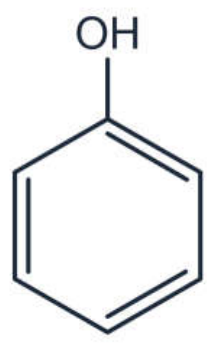
Figure 2.
https://www.dltpodiatry.co.uk/Phenol-Swab-it.
Figure 2.
https://www.dltpodiatry.co.uk/Phenol-Swab-it.
Disclaimer/Publisher’s Note: The statements, opinions and data contained in all publications are solely those of the individual author(s) and contributor(s) and not of MDPI and/or the editor(s). MDPI and/or the editor(s) disclaim responsibility for any injury to people or property resulting from any ideas, methods, instructions or products referred to in the content. |
© 2026 by the authors. Licensee MDPI, Basel, Switzerland. This article is an open access article distributed under the terms and conditions of the Creative Commons Attribution (CC BY) license.
Copyright: This open access article is published under a Creative Commons CC BY 4.0 license, which permit the free download, distribution, and reuse, provided that the author and preprint are cited in any reuse.