
Submitted:
25 September 2026
Posted:
29 September 2026
You are already at the latest version
Abstract
Background Despite established pharmacological treatments, menstrual and climacteric complaints remain highly prevalent among women in Germany, suggesting that conventional therapies - hormonal contraceptives and hormone replacement therapy - may not fully meet patients’ needs. However, real-world data on the prescription of herbal medicinal products are scarce. Objective To analyze utilization patterns of synthetic therapies and HMPs in real-world gynecological care. Design Repeated cross-sectional observational study. Methods Prescription data were derived from the drug project of the Scientific Institute of Private Health Insurance (WIP), including all prescriptions from 2019 to 2022 for menstrual or climacteric complaints assigned to ATC codes G03A, G03C, G03F or G02CP. Persons under 12 years of age were excluded. In total, 2.8 million prescriptions were analyzed using resource-oriented methodological approaches and descriptive statistics. Key Results Hormone Preparations (G03) accounted for 91.5% of all prescriptions, while gynecological HMPs (G02) represented only 8.5%. Following an initial decline until 2021, the use of hormones nearly returned to baseline, whereas prescriptions of HMPs showed a continuous downward trend. Among women aged 12-25 years, HCs (G03A) predominated (92.2%), with HMPs (G02CP-01; -02; -05; -07) accounting for 7.8%. The proportion of HMPs increased steadily with age and surpassed synthetic hormonal preparations among women aged over 60 years (59.1% vs. 40.8%). For climacteric ailments, HRT medications (G03C, G03F) were predominant across all age groups (>90%), whereas HMPs (G02CP-03; -04; -53) remained below 10%, peaking among women aged 41-65 years (8.8%).
Keywords:
menstrual complaints
; menopausal complaints
; patterns in drug utilization
; pharmacological therapies
; claims data
; private health insurance
Key Points
- In Germany 2019-2022, hormone preparations accounted for 91.5% of prescriptions among privately insured women, while herbal medicinal products (HMPs) accounted for 8.5%.
- For menstrual complaints, hormonal contraceptives predominated among women, whereas the proportion of HMPs increased with age and exceeded that of hormonal contraceptives among women >60 years.
- For menopausal complaints, hormone replacement therapy accounted for more than 90% of prescriptions across all age groups, while HMP use remained below 10% and declined over the study period.
- These findings highlight the predominance of hormonal therapies in gynaecological care and the need for research on patient preferences, health literacy, prescribing rationales, and the potential underreporting of HMP use.
Introduction
Despite the range of pharmacological treatment options available in Germany, menstrual and menopausal ailments remain highly prevalent.
According to a representative survey conducted by forsa in 2024, 67% of women aged 14 to 50 years reported suffering menstrual pain (1). Menopausal symptoms are also very common, occurring in approximately 80% of women in Germany between the ages of 46 and 60, according to a study conducted in 2013 (2).
In Germany accessibility to pharmacological treatment options is generally regarded as very good (3). However, the discrepancy between the frequency of complaints and the accessibility of pharmacological therapy raises the question of how gynaecological drugs are used in the real world of everyday practice.
Current guidelines recommend hormone preparations for the medical treatment of menstrual and menopausal symptoms (4, 5). The treatment of menstrual complaints with contraceptives may constitute off-label use (5) if the specific product is not approved for that indication. However, many products already cover the alleviation of these complaints within their market authorization.
In addition, analgetics are used for menstrual-related lower abdominal pain, but they are not recommended for long-term use (6). For the treatment of menopausal symptoms, the current guideline recommends hormone replacement therapy (HRT) as the first-line option for managing vasomotor complaints (4), owing to its well-documented efficacy (7, 8). However, both – hormonal contraceptives and HRT - are associated with a considerable risk of adverse effects (9-15). The ongoing debate regarding the potential risks associated with hormonal preparations has, led to a growing interest in alternative therapeutic approaches. In this context, HMPs are increasingly being considered as complementary or substitute treatment options for gynaecological complaints (16). HMPs, whose efficacy has been proven by numerous clinical studies (16) and even in the real world of everyday practice by patient-reported outcomes (17), are also available for the treatment of these complaints.
As a pharmacological treatment alternative, current guidelines acknowledge the use of standardized extracts from Actaea racemosa L. (rhizome) as a potentially effective therapeutic option for menopausal complaints, characterized by a low risk of adverse effects and a low rate of treatment discontinuation (4). A similar guideline recommendation for the treatment of menstrual symptoms does not yet exist, although standardized extracts of Vitex agnus-castus L. (fruits) have shown considerable efficacy in clinical studies (18, 19).
These HMPs are, in contrast to HRT and hormonal contraceptives available over the counter in pharmacies and are typically used for self-medication.
Previous studies on the utilization of gynaecological drugs have focused on prescriptions for hormonal contraceptives and hormone replacement therapy in the context of data analyses by statutory health insurance companies. According to reports from statutory health insurance, prescriptions for oral contraceptives have continuously declined since 2014, a trend primarily attributed to increasing awareness among women of potential adverse effects (20, 21). However, since 2004, statutory health insurance companies no longer reimburse gynaecological HMPs (BGBI. I 2003, p. 2190). Therefore, a direct comparison of HMPs (G02) and hormonal gynaecological drugs (G03) based on data from statutory health insurance data is not possible.
Furthermore, to date, no evaluations of the use of gynaecological HMPs have been conducted, which has prevented a comprehensive picture of the real-world pharmacological treatment for gynaecological complaints. Insights into the question of how, despite very good access to gynaecological drugs, the prevalence of gynaecological complaints remains high may be gained through the analysis of health insurance utilization data. Such analyses can help identify potential gaps in healthcare provision and contribute to their closure.
In order to map pharmacological therapy for gynaecological complaints comprehensively - including HMPs - drug-related reimbursement data from private health insurance companies (PHIs) can be used (22). The utilization figures from PHI allow for more comprehensive analyses of the medication supply for gynaecological complaints, as medically prescribed HMPs (part of the over-the counter products) are also reimbursed in addition to hormone preparations, provided that physician confirms the medical necessity and issues a prescription for the HMPs.
The WIP dataset was utilized to examine trends in the use of HMPs and synthetic hormone preparations for the treatment of gynaecological complaints between 2019 and 2022. The findings of this study offer important insights into current pharmacological treatment approaches for gynaecological conditions and highlight the actual role of HMPs in everyday medical practice.
Methods
Data Source
Pharmaceutical prescription data from 18 private health insurance companies (PHI-18-Index), provided by the drug project of Scientific Institute of Private Health Insurance (WIP), were analysed to assess prescribing trends.
The prescriptions were assigned based on the dispensing date in the pharmacies, allowing retrospectively submitted claims to be correctly allocated to the corresponding calendar year. This approach is called the resource-oriented method (23).
Study Design
This study analysed the claims of drug packages utilized for the management of gynaecological complaints, specifically menstrual and menopausal symptoms, using data from the PKV-18-Index for the years 2019 to 2022.
Data selection was performed according to the criteria detailed below, with all medications classified according to the Anatomical Therapeutic Chemical (ATC) classification system.
Data Selection and Extraction
Inclusion Criteria:
- utilization of drug packages in the observational period between 2019 and 2022
Exclusion Criteria:
- male insured persons
- age ≥12 years
-
all ATC codes except:
- -
- G03A (hormonal contraceptives for systemic use)
- -
- G03C (oestrogens)
- -
- G03F (gestagens and oestrogens in combination)
- -
- G02CP (other herbal gynaecological products)
Upon applying the specified inclusion and exclusion criteria, a total of 2.8 million drug packages met the criteria and were subsequently included in the analyses (Figure 1).
Statistical Analysis
All analyses were conducted using a descriptive approach. Absolute and relative frequencies were calculated to summarize the distribution of prescriptions across age groups, time periods, and medication categories. Given the aggregated nature of the data, no inferential statistical testing was performed.
Data management and statistical analyses were carried out using R (version 4.4.3; R Foundation for Statistical Computing, Vienna, Austria) within the RStudio environment. Graphical visualizations and figures were generated using GraphPad Prism (version 10.6.1; GraphPad Software, San Diego, CA, USA).
Results
Of the total population of 8.7 million privately insured individuals, 2.78 million were women aged 12 and older between 2019 and 2022; this corresponds to an external validity of 94.2% for the deliberately selected sample.
General Trends in Claims Between Synthetic Hormones and Herbal Medicinal Products (HMPs)
A total of 2.8 million drug packages were dispensed to privately insured women for the treatment of gynaecological complaints, including menstrual and menopausal complaints. Most of these packages (91.5%, n=2,566,038) were hormone preparations (G03), while the remaining 8.5% (n=237,266) were HMPs (G02).
Starting from the high annual level of 2019 (n=662,014) a downward trend in claims of hormone preparations was observed until 2021 (decreasing by 5.7% to n=623,039), before there was a renewed increase in 2022 (n=653,648), nearly reaching the 2019 level (Figure 2A). In contrast, utilization of gynaecological HMPs declined steadily over the study period, with reductions of 1.9% from 2019 to 2020, 4.8% from 2020 to 2021, and 6.5% from 2021 to 2022 (Figure 2B).
Between 2019 and 2022 over half a million (n=568,454) drug packages were dispensed for the treatment of menstrual symptoms. Of these, 81% (n=460,330) were hormone preparations (G03A), while 19% (n=108,124) were HMPs (G02CP01, G02CP02, G02CP05, G02CP07). For hormone preparations, a downward trend was observed in the first three years of the observation period, with a 13.9% decrease in the number of packages dispensed, followed by a 4.0% increase in 2022. Claims of HMPs also declined, between 2019 and 2020, but the number of packages continued to decline by a total of 5.2% until 2022 (Figure 3).
A substantially larger proportion, around 2.3 million drug packages (n=2,234,850), were dispensed for the treatment of menopausal symptoms. The vast majority of these (94.2%, n=2,105,708) were preparations used for hormone replacement therapies (G03C, G03F), whereas only a small fraction (5.8%; n=129,142) were gynaecological HMPs (G02CP03, G03CP04, G02CP53).
Between 2019 and 2021, the number of drug packages dispensed for hormone replacement therapy (G03C, G03F) declined by nearly 5%, followed by an increase of 5.8% up to 2022. By the end of the observation period in 2022, the total number of packages prescribed and dispensed exceeded that of 2019. In contrast, the utilization of HMPs (G02CP03; G02CP04; G02CP53) for the treatment of menopausal symptoms declined continuously, with a cumulative reduction of more than one quarter (-20.9%) compared to the initial year 2019 (Figure 4).
Factors Influencing Claims
Drugs for the Treatment of Menstrual Complaints
Recipients of hormonal contraceptives (G03A) were, on average, 6.7 years younger than recipients of HMPs (G02CP01, G02CP02, G02CP05, G02CP07), with a mean age of 40.6 years. An age-dependent preference for synthetic versus HMPs among privately insured women was consistently observed throughout the entire study period.
In the youngest age group (12-25 years), the pill predominated, accounting for an average of 92.2% of all packages dispensed, while HMPs comprised only 7.8%. Among young adults (26-39 years), the proportion of HMPs increased to an average of 25.6%, accompanied by a corresponding decrease in the share of the pill.
This trend continued among women aged 40-60 years, where the proportion of HMPs has increased to 35.6%, while the use of hormonal contraceptives declined but still accounted for the majority (64.4%). A reversal in the ratio of both types of medication was observed only among women over 60 years of age. In this age group, HMPs predominated for the first time, representing 59.2% of all packages dispensed, whereas the share of the pill decreased to 40.8% (Figure 5).
The timely trend in claims of HMPs (G02CP01, G02CP02, G02CP05, G02CP07) for the treatment of menstrual complaints exhibited a bimodal age distribution. The first maximum was observed among women aged 12 to 22 years, with an average of approximately 750 packages dispensed per year. This was followed by a decline in prescription and utilization during subsequent age groups, before a renewed increase was observed from the age of 30 onwards. This upward trend culminated in a second peak among women aged 45 to 50 years, with an average annual number of around 1,000 packages. After the age of 50, the use of HMPs declined steadily, and from the age of 70 onwards, they were only rarely utilized for menstrual complaints (Figure 6A).
In contrast, the utilization of hormonal contraceptives (G03A) followed a unimodal age pattern. Similar to HMPs, the majority of packages were utilized again between the ages of 12 and 22, with the maximum being around 15,000 packages per year, which is 20 times higher than the number of HMPs. From the age of 25 onwards, a marked decline was observed, with annual utilization dropping to fewer than 2.500 packages among women aged 25 to 55 years. Beyond the age of 60, only few claims were documented (Figure 6B).
Drugs for the Treatment of Menopausal Complaints
In the years between 2019 and 2022 privately insured women receiving hormone preparations (G03C, G03F) had a mean age of 57.1, while women claiming HMPs (G02CP03, G03CP04, G03CP53) were on average 60 years old. The use of hormone replacement therapy accounted for well over 90% of the total between 2019 and 2022, across all age groups. The proportion of HMPs remained below 10% in all age groups, reaching its highest level of 8.8% among women aged 41-65 years (Figure 7).
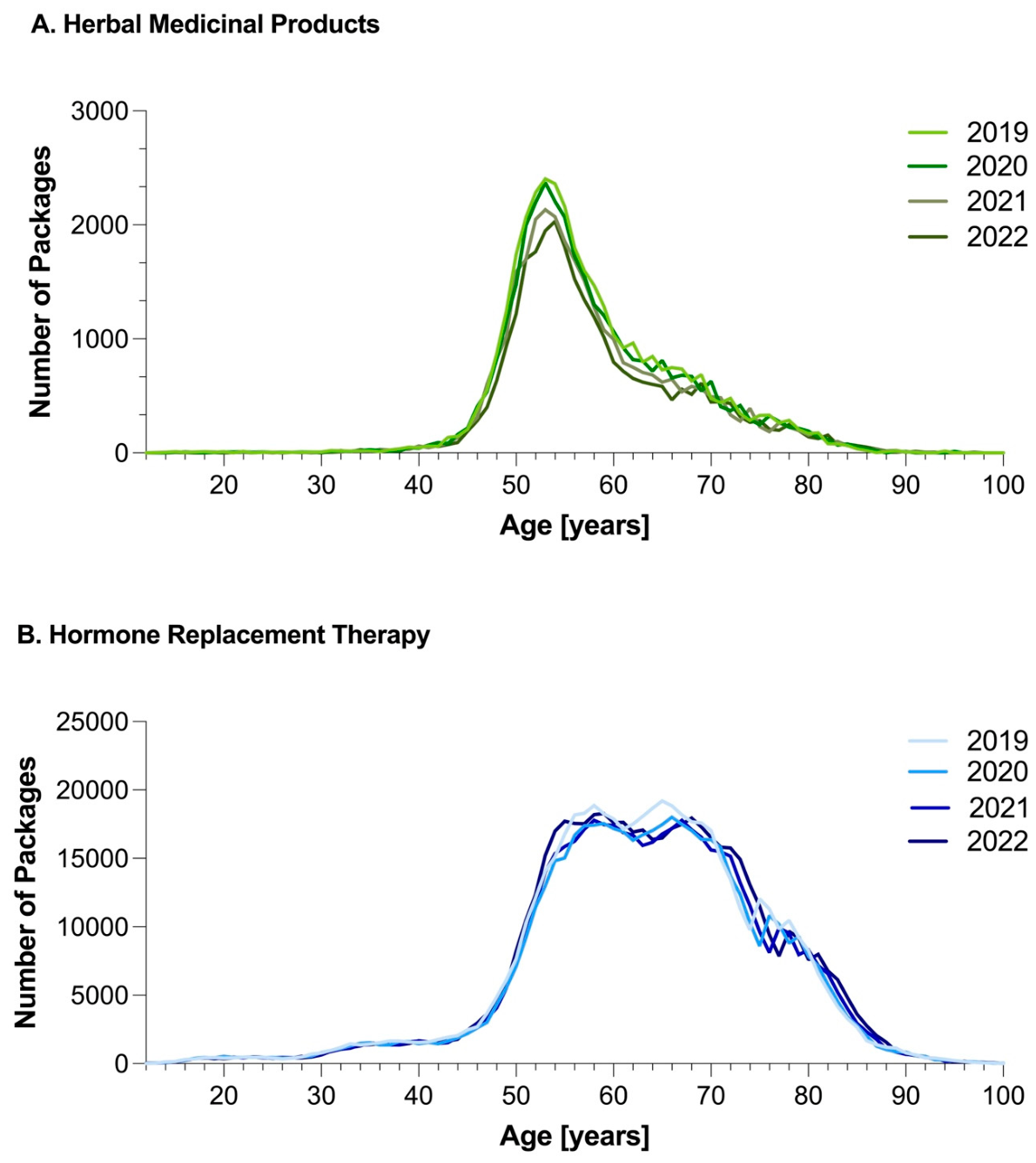
Women with menopausal symptoms only started using HMPs (G02CP03, G02CP04, G02CP53) from the age of approximately 45 years onwards. The highest annual usage was recorded among women aged between 50 and 60, with around 2,000 packages dispensed. From the age of 60 onwards, a continuous decline in claims was observed up to the age of 90. After that, HMPs were only used sporadically (Figure 8A).
Regarding hormone preparations (G03C, G03F), a slight increase was initially observed from the age of 30. This trend continued until around the age of 42, with the number of packages remaining below 2,500 per year. Among women aged 45 and above, claims increased significantly, reaching the first peak at approximately 17,500 packages in the 50-60 age group. After a brief minimal decline in the 60-62 age group, there was a renewed increase to the previous level of 17,500 packs among 65-70-year-olds. After that, usage declined again until the age of 74, before a slight increase was observed in the 75-82 age group. Among women aged 83 and above, the use of hormone preparations declined continuously and stabilized at a low level between the ages of 95 and 100 (Figure 8B).
Discussion
Our analysis of private health insurance utilization figures shows that synthetic hormone preparations (G03) were clearly dominating compared to gynaecological HMPs (G02) in the years 2019-2022. One of the reasons for this could be that treating physicians tend to prescribe hormonal therapies for gynaecological complaints in privately insured women, even though a prescription for HMPs would be reimbursable for these women (24). However, the regulation requires that the treating physician be convinced of the efficacy and safety of the drug, or that the treatment be recommended in the guidelines. Despite positive clinical results, the use of HMPs for menstrual complaints (primary dysmenorrhea) is not recommended here. In contrast, although an isopropanolic extract of Actaea racemosa L. is recommended for menopausal symptoms (4) hormone preparations still predominate in terms of utilization.
It can therefore be assumed that prescriptions for HMPs are based either on the individual convictions of doctors or on the explicit wishes of patients. However, women with gynaecological complaints often feel inhibited about openly expressing their own treatment preferences, especially when it comes to HMPs (25). Another reason for the low usage figures could be that privately insured individuals are unaware of the possibility of reimbursement for over-the-counter HMPs and therefore either use HMPs less frequently or purchase them in pharmacies without a prescription due to their status as non-prescription drugs. Consequently, the actual use of HMPs among privately insured women may be higher than reflected in the claims data analysed in this study.
The decline in the use of hormone preparations (G03) between 2019 and 2021, as seen in our results, may be due to the impact of the COVID-19 pandemic and a decline in doctor visits by around a quarter (26). This pattern continues for HMPs (G02) through 2022.
It is striking that in the 12 to 25 age group of insured persons, more gynaecological drugs (G03A and G02CP01; G02CP02; G02CP05; G02CP07) are generally used. The reason for this could be that the cycle is still irregular and sometimes painful shortly after menarche (average age of menarche in Germany: 12.8 years (27)), thus constituting a relevant indication for treatment (28, 29).
Hormone preparations (G03A) are usually used for this purpose because they are reimbursed for contraception in young women of reproductive age and can also alleviate the symptoms (5). As the reproductive phase progresses, the cycle regulates itself, but dysmenorrhea may continue to occur and require pharmacological therapy. In good agreement, our results show that privately insured women in all age groups of the reproductive phase use gynaecological drugs, with the proportion of HMPs (G02CP01; G02CP02; G02CP05; G02CP07) increases compared to hormonal contraceptives (G03A). This could be due to characteristics of the HMPs as they do not affect fertility and may support the desire of bearing a child. In addition, the use of hormonal contraceptives carries an increased risk of thromboembolic complications (30) and potential other contraindications with advancing age. In line with this, a decline in usage is also evident among statutory health insurance providers (20, 21). HMPs do not cause these risks and can also be used in early menopause for cycle-related complaints such as intermenstrual or heavy painful bleeding. Our results show that even after the reproductive phase (from around the age of 60), hormonal contraceptives continue to be used to a lesser extent, which is likely not due to the treatment of menstrual complaints, but rather to menopausal symptoms.
We observed that over ninety percent of privately insured women in our sample across all age groups use hormone replacement therapy (G03C; G03F) and less than one-tenth use HMPs (G02CP03, G02CP04, G02CP53). This illustrates that hormonal therapy options are preferred in practice, even though the efficacy and safety of herbal medicines for menopausal symptoms have been proven in several clinical studies and are even recommended in the S3 guideline.
In the 41 to 65 age group, in which menopausal symptoms such as hot flashes, sleep disturbances, or mood swings frequently occur (31), we found the highest relative proportion of herbal medicines (an average of 8.8% over the study period). In contrast, HRT is used across an even broader age group, namely 41 to 80 years. This use of HRT corresponds exactly to the recommendations in the S3 guideline for the prevention of postmenopausal osteoporosis (4).
Strengths and Limitations
Overall, the available analyses of aggregate private health insurance claims provide a structured overview of care patterns for gynaecological complaints in everyday practice. In particular, the use of hormone preparations in comparison to HMPs could be presented in a differentiated manner.
The underlying dataset is large and comprises detailed demographic information, enabling stratified analyses across relevant population subgroups. In contrast to statutory health insurance data, privately insured claims data also capture reimbursed over-the-counter HMPs when prescribed by a physician, thereby allowing for a more comprehensive assessment of HMP utilization.
The data exhibit high external validity for privately insured persons in Germany from 2019 onwards. Additionally, the longitudinal structure of the dataset facilitates the analysis of temporal trends and changes in prescribing patterns over time.
Nevertheless, the data basis is subject to methodological limitations: only aggregated data was available for the analyses, which is why no statements can be made about individual medication courses or combined therapies. In addition, privately insured individuals can decide for themselves whether to submit invoices; this often means that smaller, less expensive services are less likely to be submitted, which can lead to systematic underreporting (32). Especially since HMPs (G02) are also available over the counter in pharmacies, their actual use in gynaecological care may be underreported compared to hormone preparations (G03).
Another limitation is that the analyses are based on operationalization using ATC codes and do not include diagnoses (ICD-10 codes). As a result, prescription cannot be clearly assigned to specific indications and may lead to limited indication-specific interpretation of the prescribed medications. For example, analgetics prescribed for menstrual complaints cannot be identified as such in our analysis.
Although privately insured individuals represent 10% of the German population, inferential conclusions about the PHI subpopulation to the general population must be drawn thoroughly and with caution.
Conclusions
In conclusion, synthetic hormonal preparations predominated in the management of gynaecological complaints among privately insured women in Germany from 2019 to 2022, while HMPs remained underrepresented despite partial guideline support. This discrepancy likely reflects a combination of physician prescribing practices, regulatory requirements, limited patient awareness of reimbursement options, and potential underreporting due to over-the-counter use. Although the use of HMPs increased with age, hormonal therapies remained the primary treatment across all age groups.
Future research should investigate patient preferences, health literacy, and prescribing rationales to support a more balanced and individualized integration of HMPs into gynaecological care.
Author’s Contributions
AD (first author) data handling, data analysis, presentation of results, drafting and writing of the manuscript, substantial contribution to the conception, design and interpretation of the data, approval of the final version for submission. AJS (co-authors) substantial contribution to the conception, design and interpretation of the data, critical revision of the manuscript for important intellectual content, approval of the final version for submission. COJ (co-author) transfer of data and substantial contribution to the conception, design and interpretation of the data, critical revision of the manuscript for important intellectual content, approval of the final version for submission. BEB (corresponding author) conceptualization of the study, supervision of the project, drafting of the manuscript, writing of the manuscript, presentation of results, approval of the final version for submission.
Funding
The authors (AD, AJS, BB) affiliated at Goethe University; Institute of Pharmaceutical Biology are funded by Dr. Willmar-Schwabe.
Acknowledgments
The authors would like to thank the Scientific Institute of Private Health Insurance (WIP) for their valuable cooperation and support in providing access to the data used in this study.
Conflicts of Interest Disclosure
CJ is an employee of the Association of Private Health Insurance (Verband der Privaten Krankenversicherung, PKV) and received a traveling grant from the “Plant for Health Foundation” in 2025. The remaining authors declare that they have no competing interests.
Availability of Data and Material
The dataset supporting the findings of this study is held by the Wissenschaftliches Institut der Privaten Krankenversicherung (WIP) and is not publicly available due to third-party ownership restrictions. Access to the raw data may be requested directly from the WIP. The analytical syntax used to generate the results is available from the corresponding author upon reasonable request.
Ethics Approval Statement
The data are transmitted to the WIP in fully pseudonymized form. Tracing or re-identification of individuals is not possible. The procedure complies with the General Data Protection Regulation (GDPR). Approval by an ethics committee was not required.
Patient Consent Statement
Not Applicable.
Consent for publication
All authors approve the final version of the manuscript for submission.
List of Abbreviations
AOK – Allgemeine Ortskrankenkasse (Germany) ATC – Anatomical Therapeutic Chemical ClassificationHMP – Herbal Medicinal Product
HRT – Hormone Replacement TherapyICD-10 – International Classification of Diseases, 10th Revision
PHI – Private Health InsuranceWIP – Scientific Institute of Private Health Insurance Wissenschaftliches Institut der Privaten Krankenversicherung, GermanyVTE – Venous Thromboembolism
References
- AOK-Bundesverband eGbR. Regelschmerzen: Hintergründe, Auswirkungen und Wissen. 2024. [Google Scholar] [PubMed]
- Buhling, K.J.; Daniels, B.V.; Studnitz, F.S.; Eulenburg, C.; Mueck, A.O. The use of complementary and alternative medicine by women transitioning through menopause in Germany: results of a survey of women aged 45-60 years. Complement Ther. Med. 2014, 22(1), 94–8. [Google Scholar] [CrossRef] [PubMed]
- OECD. Health at a Glance 2025: OECD Indicators; OECD Publishing: Paris, 2025. [Google Scholar]
- AWMF Registry No. 015-062; Guideline of the DGGG. Peri- and Postmenopause - Diagnosis and Intervenions (S3 Level). 2020.
- AWMF Registry No. 015/015; Guideline of the DGGG. Hormonal Contraception (S3- Level). 2019.
- AWMF Registry No. 016-001; Guideline of the DGPFG e.V. Chronic Abdominal Pain in Women (2k Level). 2022.
- Gaudard, A.M.I.S.; Silva de Souza, S.; Puga, M.E.S.; Marjoribanks, J.; da Silva, E.M.K.; Torloni, M.R. Bioidentical hormones for women with vasomotor symptoms. Cochrane Database Syst. Rev. 2016, 2016(8). [Google Scholar] [CrossRef] [PubMed]
- MacLennan, A.H.; Broadbent, J.L.; Lester, S.; Moore, V. Oral oestrogen and combined oestrogen/progestogen therapy versus placebo for hot flushes. Cochrane Database Syst. Rev. 2004, 2009(1). [Google Scholar] [CrossRef] [PubMed]
- Bundesinstitut für Arzneimittel und Medizinprodukte (BfArM). Hormonale Kontrazeptiva und venöse Thrombosen. 2009. [Google Scholar]
- Bundesinstitut für Arzneimittel und Medizinprodukte (BfArM). Rote-Hand-Brief zu kombinierten hormonalen Kontrazeptiva, einschließlich Informationsmaterialien: Risiko von venösen Thromboembolien 2014.
- Bundesinstitut für Arzneimittel und Medizinprodukte (BfArM). Rote-Hand-Brief zu dienogest- und ethinylestradiolhaltigen Kontrazeptiva: Risiko venöser Thromboembolien. 2018. [Google Scholar]
- Bundesinstitut für Arzneimittel und Medizinprodukte (BfArM). Rote-Hand-Brief zu hormonalen Kontrazeptiva: Neuer Warnhinweis zu Suizidalität als mögliche Folge einer Depression unter der Anwendung hormoneller Kontrazeptiva 2019.
- Bundesinstitut für Arzneimittel und Medizinprodukte (BfArM). Rote-Hand-Brief zu kombinierten hormonalen Kontrazeptiva: Verordnung solcher mit dem niedrigsten Risiko für venöse Thromboembolien und Nutzung des behördlich beauflagten Schulungsmaterials. 2021. [Google Scholar]
- Manson, J.E.; Aragaki, A.K.; Rossouw, J.E.; Anderson, G.L.; Prentice, R.L.; LaCroix, A.Z.; et al. Menopausal Hormone Therapy and Long-term All-Cause and Cause-Specific Mortality: The Women's Health Initiative Randomized Trials. JAMA 2017, 318(10), 927–38. [Google Scholar] [PubMed]
- Rossouw, J.E.; Anderson, G.L.; Prentice, R.L.; LaCroix, A.Z.; Kooperberg, C.; Stefanick, M.L.; et al. Risks and benefits of estrogen plus progestin in healthy postmenopausal women: principal results From the Women's Health Initiative randomized controlled trial. JAMA 2002, 288(3), 321–33. [Google Scholar] [CrossRef] [PubMed]
- Salm, S.; Rutz, J.; van den Akker, M.; Blaheta, R.A.; Bachmeier, B.E. Current state of research on the clinical benefits of herbal medicines for non-life-threatening ailments. Front Pharmacol. 2023, 14, 1234701. [Google Scholar] [CrossRef] [PubMed]
- Drebka, A.; Scholl, A.J.; Ochs, T.; Kelber, O.; Mösges, R.; Raskopf, E.; et al. Patient-reported therapeutic benefits of herbal medicinal products in the treatment of gynecological ailments. BMC Complement. Med. Ther. 2025, 25(1). [Google Scholar] [CrossRef] [PubMed]
- Committee on Herbal Medicinal Products (HMPC). Assessment report on Vitex agnus-castus L., fructus 2018.
- Committee on Herbal Medicinal Products (HMPC). European Union herbal monograph on Vitex agnus-castus L., fructus 2018.
- AOK-Bundesverband eGbR. AOK-Analyse: Nur noch 25 Prozent der unter 22-jährigen Frauen und Mädchen lassen sich die Pille verschreiben. 2024. [Google Scholar] [PubMed]
- AOK-Bundesverband eGbR. Immer weniger junge Frauen verhüten mit der klassischen Pille. 2022. [Google Scholar]
- Jacke, C. O.; Wild, F. Arzneimittelversorgung von Privatversicherten 2023 Köln. 2023. [Google Scholar]
- Jacke, C.O.; Schaarschmidt, J.; Begerow, T. Das Auswahlverfahren von PKV-Daten bestimmt das Ergebnis: zum Unterschied zwischen Einreichungs- und Inanspruchnahmeverhalten. Gesundheitsökonomie Qual. 2025. [Google Scholar] [CrossRef]
- Verband der Privaten Krankenversicherung e.V. (PKV-Serviceportal). Available online: https://www.privat-patienten.de/arzneien-und-hilfsmittel/arzneimittel/.
- Jouanny, C.; Abhyankar, P.; Maxwell, M. A mixed methods systematic literature review of barriers and facilitators to help-seeking among women with stigmatised pelvic health symptoms. BMC Womens Health 2024, 24(1), 217. [Google Scholar] [CrossRef] [PubMed]
- Zentralinstitut für kassenärztliche Vereinigung; Mangiapane, S.; Kretschmann, J.; C, T.; D. vS. Veränderung der vertragsärztlichen Leistungsinanspruchnahme während der COVID-Krise. Trendreport 2022. [Google Scholar]
- Kahl, H.; Schaffrath Rosario, A.; Schlaud, M. Sexuelle Reifung von Kindern und Jugendlichen in Deutschland. Bundesgesundheitsblatt-Gesundheitsforschung-Gesundheitsschutz 2007, 50(5-6), 677–85. [Google Scholar] [CrossRef] [PubMed]
- Skrenkova, J. Postmenarcheal irregularities in menstrual cycle in adolescent girls. Cas. Lek. Cesk 2018, 157(7), 343–9. [Google Scholar] [PubMed]
- Anthon, C.; Steinmann, M.; Vidal, A.; Dhakal, C. Menstrual Disorders in Adolescence: Diagnostic and Therapeutic Challenges. J. Clin. Med. 2024, 13(24). [Google Scholar] [CrossRef] [PubMed]
- Nightingale, A.L.; Lawrenson, R.A.; Simpson, E.L.; Williams, T.J.; MacRae, K.D.; Farmer, R.D.T. The effects of age, body mass index, smoking and general health on the risk of venous thromboembolism in users of combined oral contraceptives. Eur. J. Contracept. Reprod. Health Care 2009, 5(4), 265–74. [Google Scholar]
- Hochschule für Wirtschaft und Recht Berlin. Deutsche Volkswirtschaft leidet unter den Wechseljahren 2024. 2025. Available online: https://www.hwr-berlin.de/aktuelles/neuigkeit/detail/4510-deutsche-volkswirtschaft-leidet-unter-den-wechseljahren.
- Stallmann, C.; Achstetter, K.; Goldhahn, L.; Hengel, P.; Kortmann, M.; Köppen, J.; et al. Versichertenbezogene ambulante Rechnungsdaten der privaten Krankenversicherung – Teil 2: Datenentstehung und Datenfluss. Das. Gesundheitswesen 2025. [Google Scholar] [CrossRef] [PubMed]
Figure 1.
Overview of data selection for claims from 2019 to 2022 among female insured persons aged ≥12 years, including drug packages from ATC groups G03A, G03C, G03F and G02CP. A total of 2.8 million packages were reimbursed during this period. .
Figure 1.
Overview of data selection for claims from 2019 to 2022 among female insured persons aged ≥12 years, including drug packages from ATC groups G03A, G03C, G03F and G02CP. A total of 2.8 million packages were reimbursed during this period. .
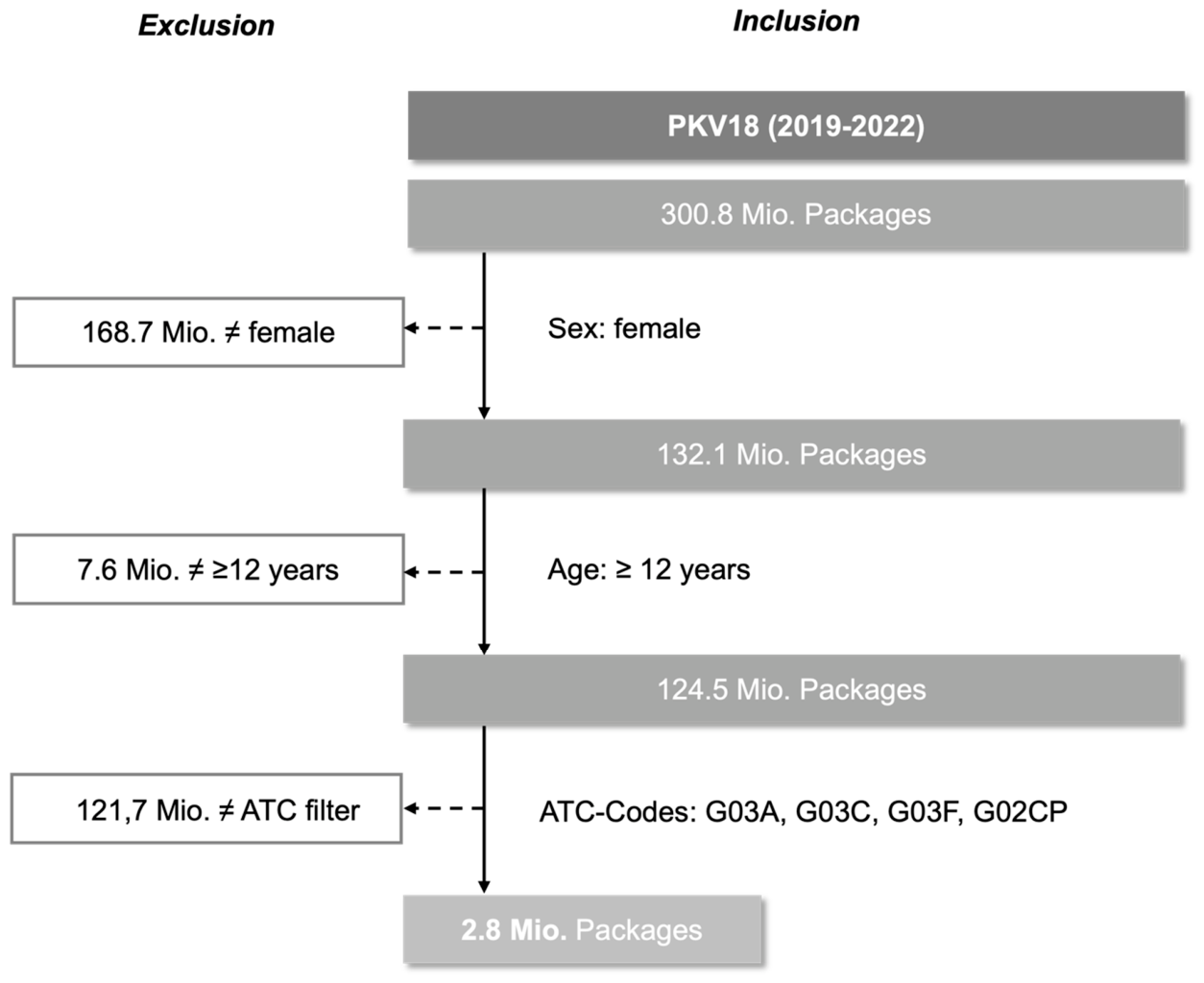
Figure 2.
Annual claims of A) hormone preparations (G03; blue) and B) herbal medicinal products (G02; green) for the treatment of gynaecological ailments from 2019 to 2022.
Figure 2.
Annual claims of A) hormone preparations (G03; blue) and B) herbal medicinal products (G02; green) for the treatment of gynaecological ailments from 2019 to 2022.
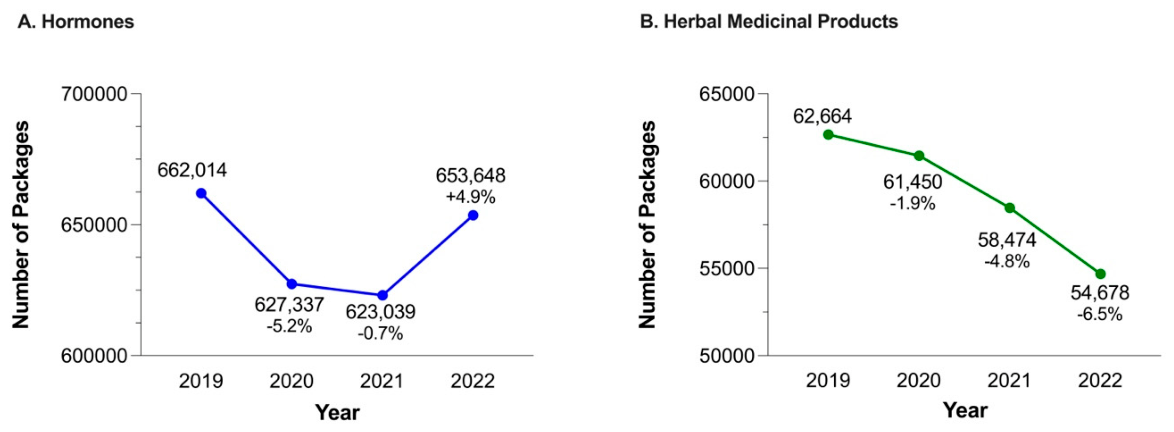
Figure 3.
Time trends in the claims of synthetic hormone preparations (G03A; blue) and HMPs (G02CP01, G02CP02, G02CP05, G02CP07; green) for contraception purposes and for the management of menstrual complaints.
Figure 3.
Time trends in the claims of synthetic hormone preparations (G03A; blue) and HMPs (G02CP01, G02CP02, G02CP05, G02CP07; green) for contraception purposes and for the management of menstrual complaints.
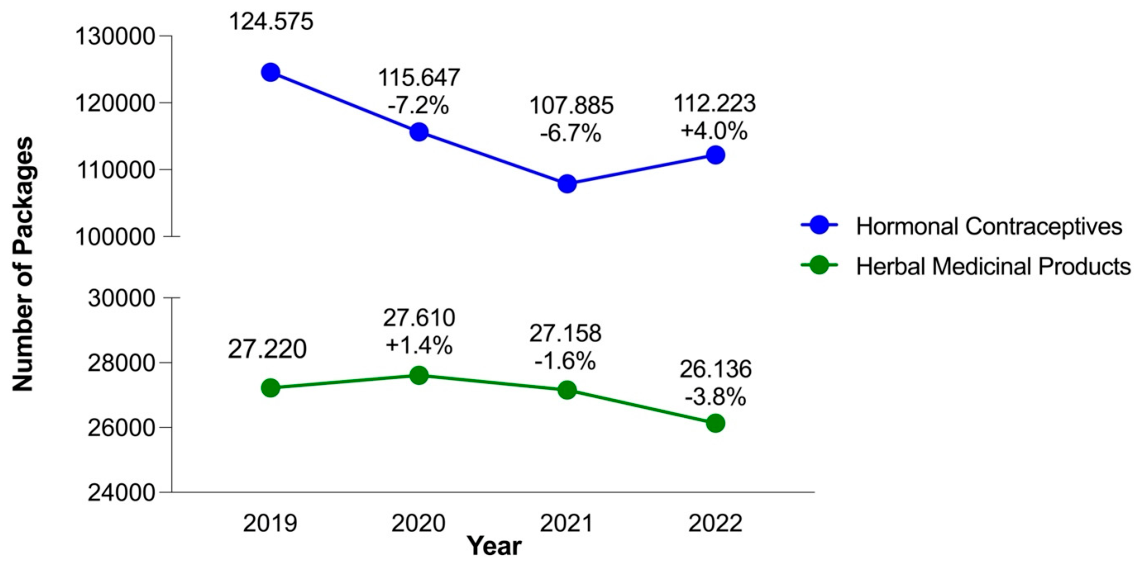
Figure 4.
Time trends in the claims of hormone preparations (G03C, G03F; blue) and gynaecological HMPs (G02CP03, G02CP04, G02CP53, green).
Figure 4.
Time trends in the claims of hormone preparations (G03C, G03F; blue) and gynaecological HMPs (G02CP03, G02CP04, G02CP53, green).
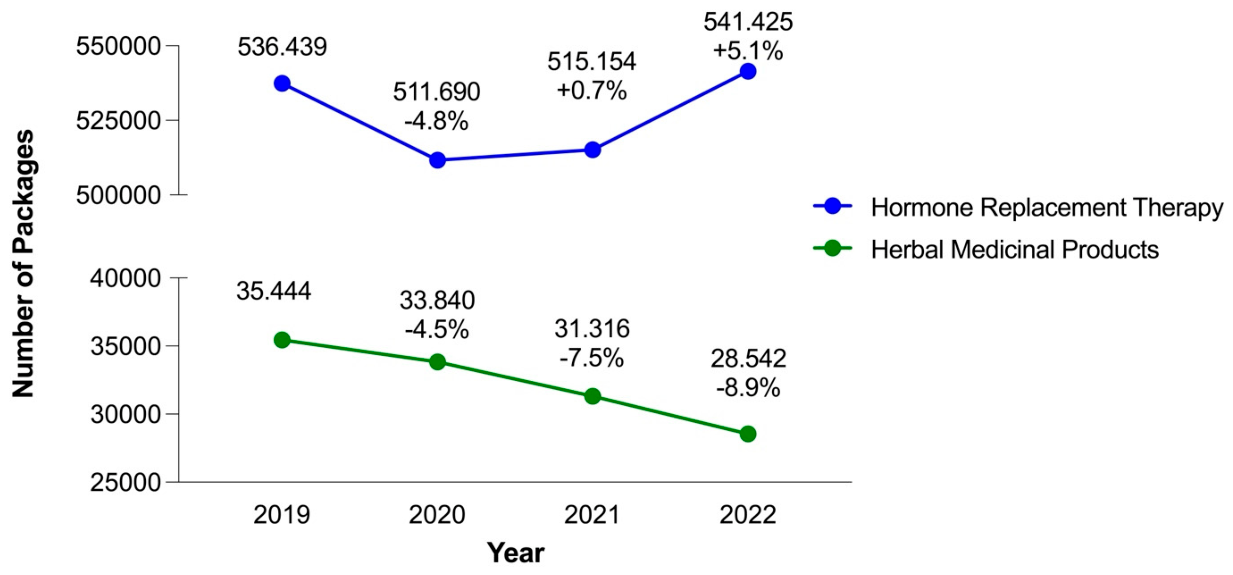
Figure 5.
Share of HMP packages (G02CP01, G02CP02, G02CP05, G02CP07; green) and hormonal contraceptives (G03A; blue) dispensed.
Figure 5.
Share of HMP packages (G02CP01, G02CP02, G02CP05, G02CP07; green) and hormonal contraceptives (G03A; blue) dispensed.
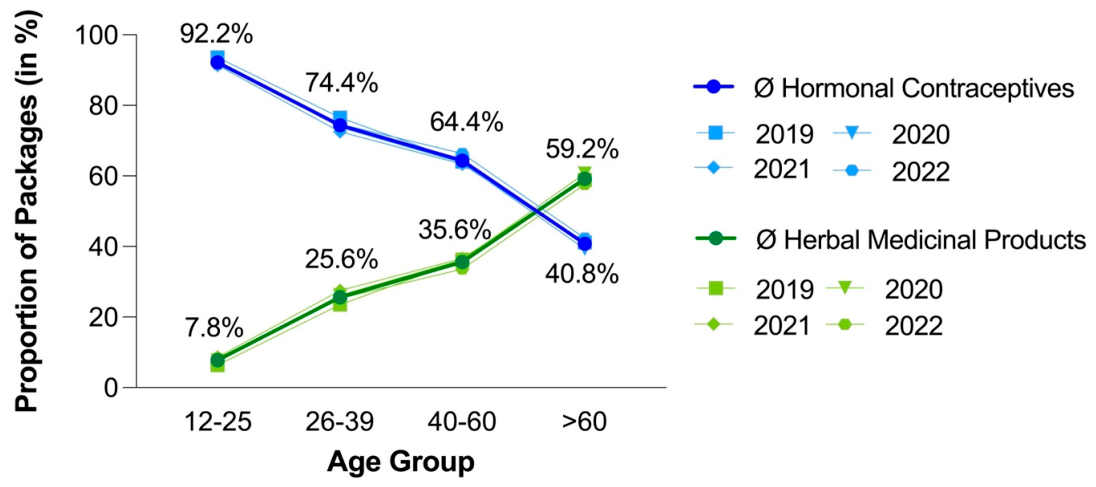
Figure 6.
Annual trends (2019-2022) in the claims of (A) HMPs (G02CP01, G02CP02, G02CP05, G02CP07) and (B) hormonal contraceptives (G03A).
Figure 6.
Annual trends (2019-2022) in the claims of (A) HMPs (G02CP01, G02CP02, G02CP05, G02CP07) and (B) hormonal contraceptives (G03A).
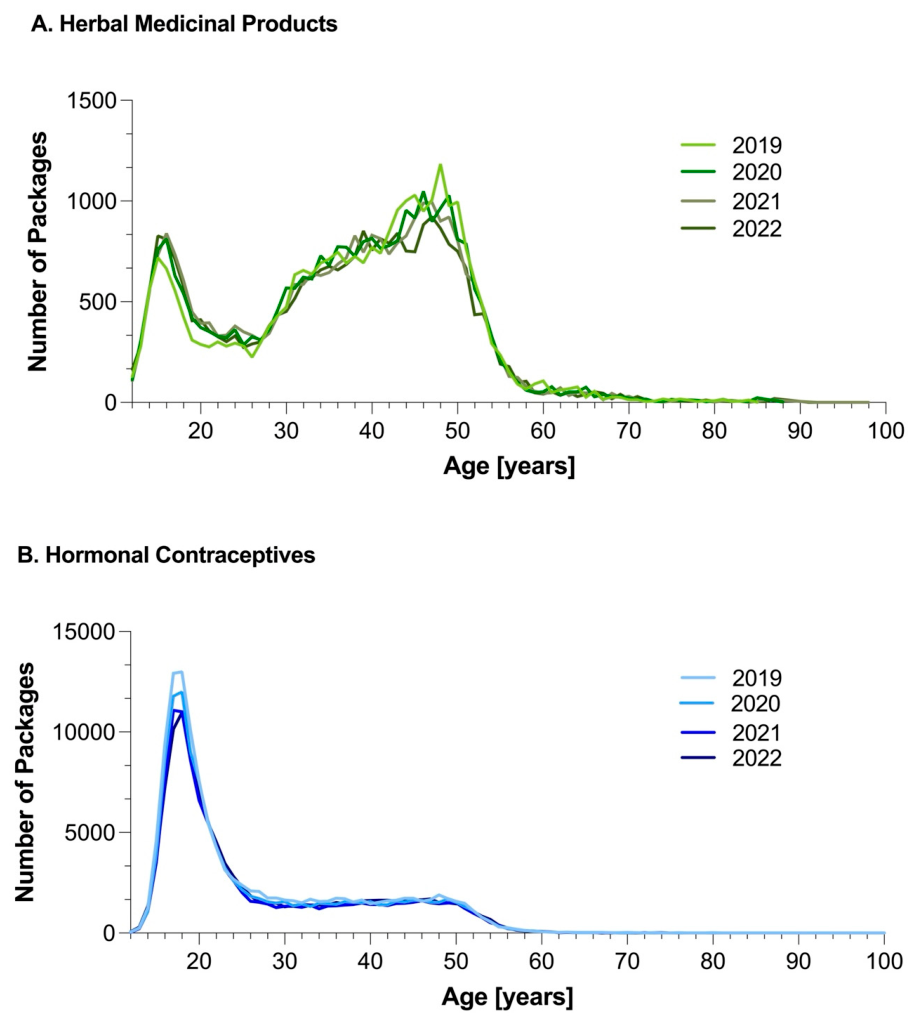
Figure 7.
Share of HMP packages (G02CP03, G02CP04, G02CP53; green) and hormone replacement therapy (G03C, G03F; blue) dispensed.
Figure 7.
Share of HMP packages (G02CP03, G02CP04, G02CP53; green) and hormone replacement therapy (G03C, G03F; blue) dispensed.
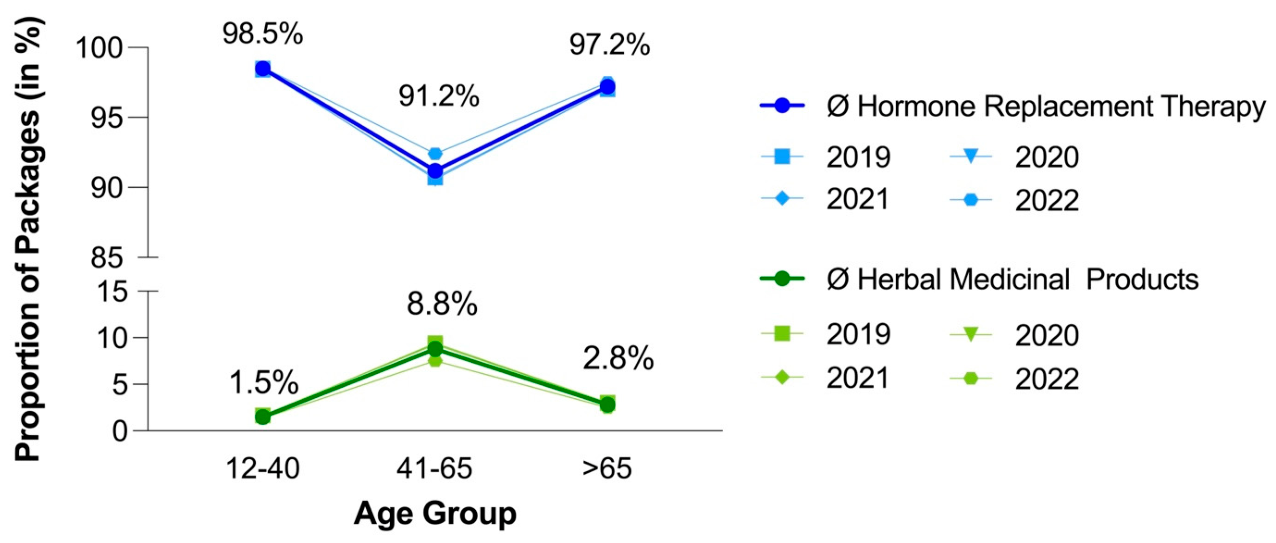
Figure 8.
Annual trends (2019-2022) in the use of (A) HMPs (G02CP03, G02CP04, G02CP53) and (B) hormone replacement therapy (G03C, G03F), differentiated by recipient age.
Figure 8.
Annual trends (2019-2022) in the use of (A) HMPs (G02CP03, G02CP04, G02CP53) and (B) hormone replacement therapy (G03C, G03F), differentiated by recipient age.
Disclaimer/Publisher’s Note: The statements, opinions and data contained in all publications are solely those of the individual author(s) and contributor(s) and not of MDPI and/or the editor(s). MDPI and/or the editor(s) disclaim responsibility for any injury to people or property resulting from any ideas, methods, instructions or products referred to in the content. |
© 2026 by the authors. Licensee MDPI, Basel, Switzerland. This article is an open access article distributed under the terms and conditions of the Creative Commons Attribution (CC BY) license (http://creativecommons.org/licenses/by/4.0/).
Copyright: This open access article is published under a Creative Commons CC BY 4.0 license, which permit the free download, distribution, and reuse, provided that the author and preprint are cited in any reuse.