

Submitted:
23 September 2026
Posted:
24 September 2026
You are already at the latest version
Abstract
Background: Eosinophilic esophagitis (EoE) is a chronic, immune-mediated disease characterized by esophageal dysfunction and eosinophil-predominant inflammation. Its increasing recognition in children and risk of progressive remodeling demand effective, sustainable treatment. Methods: We conducted a narrative review of PubMed/MEDLINE, Embase, and Cochrane Library publications through 2026. Pediatric clinical studies, systematic reviews, meta-analyses, and international guidelines addressing dietary, pharmacological, and biologic therapies were qualitatively synthe-sized, with selected adult evidence included when pediatric data were unavailable. Results: Empiric elimination diets remain effective first-line options, with step-up strategies reducing unnecessary restriction and treatment burden. Elemental diets achieve histological remission in more than 90% of patients but are limited by palatability, cost, and adherence. Allergy test-directed diets have low predictive value and are not routinely recommended. Proton pump inhibitors and swallowed top-ical corticosteroids are established first-line therapies with favorable safety profiles. Real-world evidence suggests that treatment choice depends on age, phenotype, local practice, and family preference, whereas comparative effectiveness data remain limited. Dupilumab, the first biologic approved for EoE, produces substantial histological and endoscopic improvement across pediatric age groups and is particularly relevant for difficult-to-control disease or coexisting type 2 conditions. Other targeted agents reduce eosinophilia, but symptomatic benefit and pediatric evidence remain inconsistent. Conclusion: Pediatric EoE management should combine shared decision-making with objective histological monitoring and attention to growth, nutrition, adherence, and quality of life. Future research should define optimal treatment sequencing and maintenance, validate noninvasive biomarkers, and establish the long-term safety and effectiveness of emerging therapies in diverse pediatric populations and clinical settings.
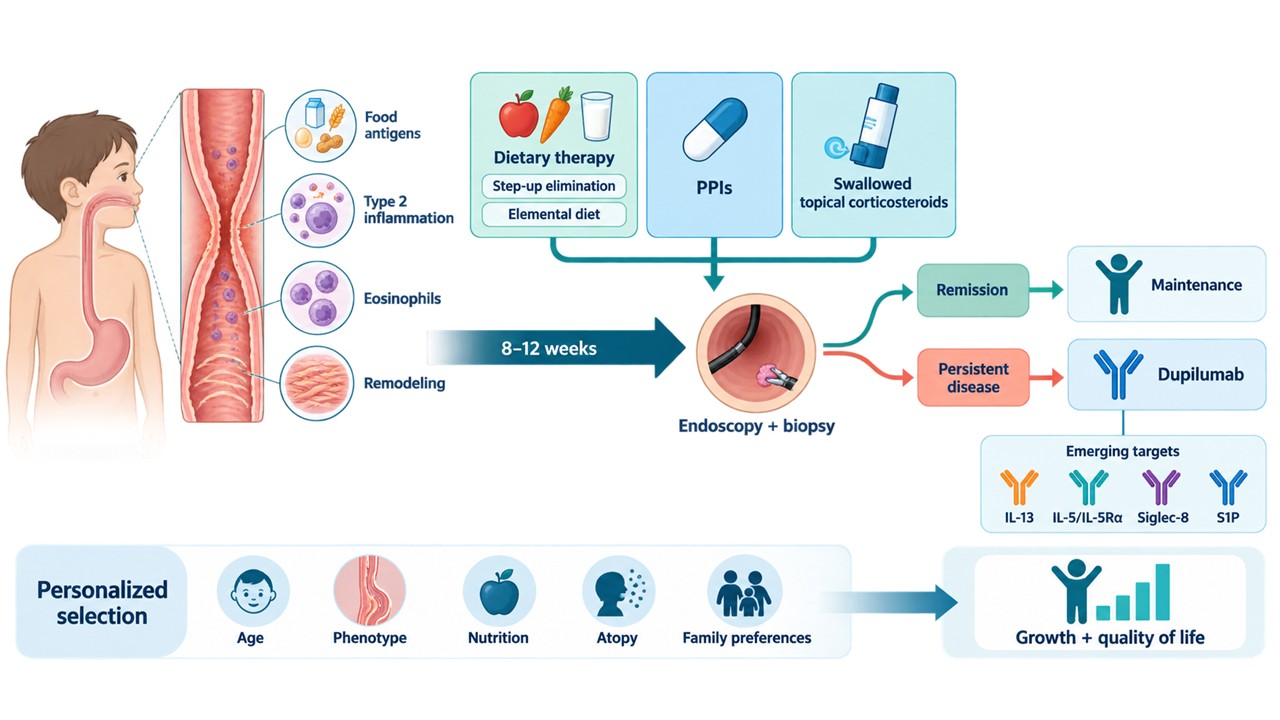
Keywords:
eosinophilic esophagitis
; pediatric EoE
; elimination diets
; proton pump inhibitors
; swallowed topical corticosteroids
; dupilumab
1. Introduction
Eosinophilic esophagitis (EoE) is a chronic, immune-mediated inflammatory disease of the esophagus, defined clinically by symptoms of esophageal dysfunction and histologically by eosinophil-predominant inflammation of the esophageal mucosa (at least 15 eosinophils per high-power field) [1]. Over the past two decades, the reported incidence and prevalence of EoE have risen substantially worldwide, and the disease is now recognized as an important cause of chronic esophageal morbidity in children and adolescents [2].
EoE arises from a complex interplay among genetic susceptibility, impaired epithelial barrier function, and a type 2 helper T-cell (Th2)-mediated immune response, most often triggered by food antigens and, to a lesser extent, environmental allergens [1,3]. Its clinical presentation varies with age: infants and young children commonly present with feeding difficulties, poor growth, vomiting, or abdominal pain, whereas older children and adolescents more often develop dysphagia and food impaction [4,5]. Early diagnosis and effective treatment are essential because persistent inflammation can promote esophageal remodeling, progressive fibrosis, and stricture formation, thereby increasing long-term morbidity and impairing quality of life [4]. EoE also frequently coexists with atopic conditions, including asthma, atopic dermatitis, and IgE-mediated food allergy. Although cow’s milk and wheat are among the most frequently implicated dietary triggers, aeroallergens such as house dust mites, molds, and seasonal pollens may also contribute to disease activity [5].
The goals of EoE management are to induce and maintain clinical and histological remission, prevent disease progression and fibrostenotic complications, and preserve normal growth, nutritional status, and quality of life. First-line treatment has traditionally comprised dietary and pharmacological approaches. Proton pump inhibitors (PPIs) [6] and swallowed topical corticosteroids (STCs) [7] are established pharmacological options, while elimination diets remain highly effective, particularly in pediatric patients [8]. Advances in the understanding of EoE immunopathogenesis have also enabled the development of targeted biologic therapies, expanding treatment options for patients with severe or refractory disease [9].
Against this rapidly evolving therapeutic landscape, a comprehensive appraisal of available management strategies is timely. The distinctive contribution of this narrative review is its pediatric-focused integration of dietary, pharmacological, and biologic therapies within a single clinically oriented framework. In addition to summarizing efficacy and safety data, the review compares the practical advantages and limitations of established and emerging treatments, including their effects on growth, nutritional status, adherence, treatment burden, and quality of life. Particular attention is given to step-up elimination diets, real-world treatment selection, pediatric dosing considerations, dupilumab, and investigational targeted therapies. By identifying unresolved questions concerning comparative effectiveness, long-term safety, biomarkers, and treatment sequencing, this narrative review aims to support shared decision-making and facilitate the transition toward individualized, mechanism-based care for children and adolescents with EoE.
2. Methods
This narrative review summarizes current evidence on the management of pediatric EoE. A narrative approach was selected to enable a broad, clinically oriented synthesis of therapeutic strategies, international guideline recommendations, emerging treatments, and real-world pediatric evidence. Because the objective was to provide an interpretative overview rather than conduct a formal systematic review or quantitative comparison of treatment outcomes, the review was not performed in accordance with PRISMA reporting guidelines, and no meta-analysis was undertaken.
A structured literature search was conducted in PubMed/MEDLINE, Embase, and the Cochrane Library to identify English-language studies published up to 2026. The search combined relevant keywords with Medical Subject Headings (MeSH) and Emtree terms related to “eosinophilic esophagitis,” “children,” “pediatric patients,” “treatment,” “dietary therapy,” “elimination diet,” “proton pump inhibitors,” “swallowed topical corticosteroids,” “biologic therapy,” and “dupilumab.” Reference lists of relevant reviews, guidelines, and included articles were also examined to identify additional publications of potential interest.
Priority was given to original research articles, randomized and nonrandomized clinical trials, prospective and retrospective cohort studies, systematic reviews, and meta-analyses addressing the treatment of EoE in pediatric populations. Studies were selected according to their relevance to the review objectives, methodological quality, clinical applicability, and contribution to the assessment of treatment efficacy and safety. Publications outside the scope of the review, articles with insufficient methodological detail, unsupported expert opinions, and methodologically weak studies were excluded.
Evidence derived exclusively from adult populations was generally excluded. However, when robust pediatric data were unavailable, selected adult studies were considered if the investigated biological mechanisms, therapeutic targets, or clinical findings were judged to be relevant and potentially applicable to pediatric EoE. This exception was used primarily when evaluating emerging pharmacological and biologic therapies for which pediatric evidence remains limited. Case reports were not routinely included and were considered only when they provided clinically relevant information on novel or insufficiently studied therapies.
To ensure consistency with contemporary standards of care, the evidence synthesis incorporated recommendations from major international clinical practice guidelines and consensus statements. These included guidance issued by the European Society for Paediatric Gastroenterology, Hepatology and Nutrition (ESPGHAN), the North American Society for Pediatric Gastroenterology, Hepatology and Nutrition (NASPGHAN), and the American College of Gastroenterology (ACG). Findings were synthesized qualitatively, with emphasis on treatment efficacy, safety, pediatric dosing, nutritional implications, feasibility, adherence, quality of life, and applicability to routine clinical practice.
3. Dietary Therapy in Pediatric Eosinophilic Esophagitis
Dietary therapy is a well-established treatment for pediatric EoE, with substantial evidence supporting its ability to induce histological and clinical remission [10]. Unlike pharmacological therapy, dietary treatment aims to identify and remove the foods that drive esophageal inflammation. Three principal strategies are used: empiric elimination diets (EEDs), targeted elimination diets (TEDs), and elemental diets. Selection should be individualized according to disease severity, patient age, nutritional status, family preferences, available resources, and the anticipated effects of dietary restriction and repeated endoscopic assessment.
3.1. Empiric Elimination Diets
EEDs involve removing foods commonly associated with EoE, followed by sequential food reintroduction and endoscopic assessment with esophageal biopsies to identify individual triggers. Dietary management has progressively shifted from highly restrictive regimens toward less restrictive, step-up approaches designed to reduce nutritional and psychosocial burdens while improving adherence and quality of life [11,12,13].
The six-food elimination diet (SFED) is the most extensively studied empiric approach. It excludes the food groups most frequently implicated in EoE: cow’s milk, wheat or gluten-containing cereals, eggs, soy or legumes, peanuts and tree nuts, and fish and seafood. Clinical studies have demonstrated that the SFED can induce histological and symptomatic remission in a substantial proportion of patients, with an estimated overall histological remission rate of approximately 63.9% [14].
Despite its efficacy, the SFED can be difficult to implement and sustain in routine practice. Adherence may be affected by social, cultural, religious, and economic factors, as well as by the need for careful meal planning and specialist nutritional support. Prolonged dietary restriction and the lengthy food-reintroduction process may adversely affect nutritional adequacy, psychosocial well-being, family dynamics, and health-related quality of life. In addition, the need for repeated endoscopies to evaluate treatment response and identify trigger foods increases the procedural and healthcare burden [14,15,16].
Less restrictive approaches have therefore been investigated. A prospective multicenter study found that a four-food elimination diet (FFED), excluding cow’s milk, wheat, eggs, and soy, induced histological remission in approximately 64% of participants [17]. During food reintroduction, cow’s milk was identified as the most frequent trigger, followed by eggs, wheat, and soy. Most responders were sensitive to only one food, supporting the use of more selective dietary strategies [17].
Because cow’s milk is the most frequently identified food trigger in pediatric EoE, single-food elimination has received increasing attention [18]. Comparative studies of cow’s milk elimination and STCs have reported slightly lower histological remission rates with dietary therapy but favorable symptom control and quality-of-life outcomes among patients treated with diet alone [19]. More recently, a multisite randomized trial directly compared one-food and four-food elimination diets in children with EoE, providing further support for beginning treatment with a less restrictive dietary intervention in appropriately selected patients [20].
This evidence has contributed to the development of step-up dietary therapy, which aims to achieve disease control while minimizing unnecessary food exclusions and their effects on nutrition and quality of life [11]. Treatment generally begins with the elimination of one or two common trigger foods. A one-food elimination diet (OFED) most commonly excludes cow’s milk, whereas a two-food elimination diet (TFED) typically excludes cow’s milk and wheat. Clinical and histological responses are then assessed by endoscopy and esophageal biopsy. If remission is not achieved, additional food groups are progressively eliminated, advancing to an FFED and, when necessary, an SFED [11].
Compared with immediate use of an SFED, the step-up approach reduces initial dietary burden, limits unnecessary food exclusions, and may decrease the number of endoscopic procedures required to identify causative foods. It can therefore facilitate adherence and help preserve nutritional status and quality of life, particularly in children [10,11]. In the multicenter 2-4-6 study, which included both pediatric and adult patients, histological remission was achieved in 43% of participants after a TFED. Cumulative remission rates increased to 60% following escalation to an FFED and to 79% following subsequent escalation to an SFED [11]. Compared with starting directly with an SFED, this sequential strategy reduced the number of endoscopic procedures and shortened the diagnostic process by approximately 20%. Furthermore, more than 90% of patients who responded to a TFED or FFED had only one or two food triggers, reinforcing the rationale for beginning with a less restrictive regimen [11].
Current ESPGHAN guidelines recommend empiric elimination diets as a first-line therapeutic option for pediatric EoE. The number and type of foods excluded should be individualized according to patient characteristics, nutritional considerations, and family preferences [21]. When a step-up strategy is selected, the guidelines suggest prioritizing the elimination of cow’s milk, eggs, and wheat-containing cereals, either individually or in combination, according to the clinical context [21].
3.2. Targeted Elimination Diets
TEDs use allergy testing—including skin prick testing and serum-specific IgE measurement—to identify foods for exclusion. Although attractive in principle, this approach has limited clinical utility because EoE is not primarily an IgE-mediated disorder and available allergy tests do not reliably identify the foods responsible for esophageal inflammation. Pediatric studies have not demonstrated superior outcomes with allergy test-directed diets compared with empiric cow’s milk elimination; indeed, test-directed strategies have been associated with lower rates of symptomatic and histological remission [18].
Accordingly, current ESPGHAN guidelines advise against the routine use of allergy testing to direct food elimination in children with EoE [21]. Allergy evaluation nevertheless remains clinically important when an immediate IgE-mediated food allergy is suspected or when food reintroduction may place the patient at risk of an acute allergic reaction.
3.3. Elemental Diets
Elemental diets consist exclusively of amino acid-based formulas (AAFs) and eliminate exposure to intact dietary proteins. They are the most effective dietary intervention for inducing histological remission in pediatric EoE, with reported remission rates exceeding 90% [22]. Their efficacy also supports the central role of food antigens in the pathogenesis of the disease.
Despite their high efficacy, elemental diets have important practical limitations. Poor palatability can substantially reduce adherence, particularly among older children and adolescents, and some patients may require nasogastric or gastrostomy feeding to maintain adequate intake. Additional barriers include high cost, restricted access, disruption of normal eating and social activities, and the need for prolonged food reintroduction accompanied by repeated endoscopic assessments [23]. These factors limit the feasibility of elemental diets as routine first-line therapy.
Consequently, ESPGHAN and the Italian Society of Pediatric Gastroenterology, Hepatology and Nutrition (SIGENP) reserve elemental diets for selected clinical situations. These include severe or refractory disease, failure of empiric dietary or pharmacological treatment, the need to clarify whether food antigens are driving persistent inflammation, very young children in whom formula-based feeding is feasible, and patients already receiving enteral nutrition through a gastrostomy [21].
The principal characteristics, advantages, limitations, and recommended clinical roles of empiric, targeted, and elemental dietary strategies are summarized in Table 1.
4. Pharmacological Therapy
Pharmacological therapy is a cornerstone of EoE management and is used alongside dietary interventions and endoscopic and histological monitoring. Current guidelines from the ESPGHAN and the ACG recognize PPIs, STCs, and dupilumab as effective therapeutic options [21,24]. These treatments act on different components of disease pathogenesis and vary in their route of administration, efficacy, safety profile, cost, and monitoring requirements. Treatment selection should therefore be individualized according to patient age, disease severity and phenotype, comorbidities, previous treatment response, adherence, and patient and family preferences [21,24].
4.1. Proton Pump Inhibitors
PPIs are among the most frequently prescribed pharmacological treatments for pediatric EoE and are recommended as a first-line therapeutic option alongside dietary elimination and STCs [21,24]. Their widespread use reflects their oral administration, accessibility, generally favorable safety profile, and ability to induce clinical and histological remission in a substantial proportion of children.
Historically, response to PPI therapy was used to distinguish EoE from gastroesophageal reflux disease (GERD)-associated esophageal eosinophilia. Patients who achieved remission with PPIs were classified as having PPI-responsive esophageal eosinophilia and were initially considered to have a condition distinct from EoE. Subsequent studies demonstrated that PPI-responsive and PPI-nonresponsive patients share similar clinical, endoscopic, histological, and molecular characteristics. Accordingly, a response to PPI therapy is no longer considered a diagnostic criterion or a means of excluding EoE. PPIs are now regarded as a treatment for patients with established disease rather than as a diagnostic test [21].
The therapeutic effects of PPIs extend beyond gastric acid suppression. Experimental studies have demonstrated that these agents exert direct anti-inflammatory effects, including inhibition of signal transducer and activator of transcription 6 (STAT6)-mediated signaling and suppression of eotaxin-3 expression in esophageal epithelial cells [25,26]. Eotaxin-3 is a key chemokine involved in eosinophil recruitment and activation and represents an important molecular feature of EoE [26]. By reducing eotaxin-3 expression and attenuating type 2 inflammatory signaling, PPIs may decrease esophageal eosinophilia independently of their effects on acid reflux. Recognition of these properties has contributed to the repositioning of PPIs from a diagnostic intervention to an established induction treatment for EoE [26].
PPIs may also contribute to restoration of esophageal epithelial barrier integrity. Epithelial barrier dysfunction plays a central role in EoE pathogenesis because disruption of epithelial tight junctions facilitates the penetration of food and environmental antigens and amplifies local type 2 immune responses [27]. Experimental evidence suggests that PPIs can improve epithelial barrier function, modulate interactions between epithelial cells and eosinophils, and reduce the expression of inflammatory mediators, thereby potentially limiting persistent mucosal inflammation [28].
PPI induction therapy is generally administered for 8–12 weeks, after which treatment response should be assessed clinically and through endoscopy with esophageal biopsies [21,24]. Symptom improvement alone is insufficient to establish remission because clinical manifestations do not always correlate with the severity of histological inflammation. If clinical and histological remission is achieved, treatment may be continued at a reduced maintenance dose, with subsequent monitoring tailored to the individual patient.
ESPGHAN provides age- and weight-adjusted pediatric PPI regimens expressed as omeprazole-equivalent doses [21]. When another PPI is prescribed, the dose should be adjusted according to its relative potency. Higher doses are generally used during the induction phase, particularly in patients with severe inflammatory or fibrostenotic disease, whereas lower doses may be sufficient for maintenance after remission has been achieved. The ESPGHAN-suggested induction and initial maintenance regimens for pediatric EoE are summarized in Table 2.
PPIs are generally well tolerated in children. Potential concerns associated with prolonged administration include alterations in the intestinal microbiome, increased susceptibility to enteric infections, and reduced absorption of micronutrients such as magnesium and vitamin B12. Possible associations with impaired bone mineralization have also been reported [29]. However, much of the evidence regarding long-term adverse effects is derived from observational studies and may be affected by residual confounding. The absolute risk of clinically significant complications appears low, particularly when PPIs are prescribed at appropriate doses and their continued indication is periodically reassessed.
Because EoE is a chronic disease and inflammation commonly recurs after treatment withdrawal, maintenance therapy may be appropriate for patients who respond to PPIs. Long-term management should include periodic evaluation of treatment efficacy, adherence, ongoing clinical need, and potential adverse effects. In patients with sustained clinical and histological remission, dose reduction to the lowest effective regimen may be considered rather than routine discontinuation [21,30].
4.2. Swallowed Topic Corticosteroids
STCs are among the most effective pharmacological treatments for pediatric EoE. Current guidelines from the ESPGHAN and the ACG recommend STCs as a first-line therapeutic option [21,24]. They may be prescribed as monotherapy or incorporated into an individualized treatment strategy that also considers PPIs and dietary interventions. Treatment selection should account for disease severity and phenotype, previous therapeutic response, concomitant atopic disease, patient and family preferences, and the feasibility of long-term adherence.
The rationale for using STCs is based on the central role of type 2 inflammation in EoE pathogenesis. This inflammatory response is characterized by increased expression of interleukin (IL)-4, IL-5, and IL-13, recruitment of eosinophils to the esophageal mucosa, epithelial barrier dysfunction, and progressive tissue remodeling. Corticosteroids suppress multiple components of this inflammatory cascade, reducing eosinophilic infiltration and the expression of proinflammatory cytokines. Budesonide and fluticasone propionate are the agents most commonly used in pediatric practice [7].
These medications are administered as swallowed topical preparations to maximize contact with the esophageal mucosa while limiting systemic absorption and the risk of systemic corticosteroid-related adverse effects [31]. Treatment effectiveness depends partly on formulation, administration technique, and mucosal contact time. Patients and caregivers should therefore receive clear instructions regarding correct preparation and administration to ensure adequate esophageal exposure.
Budesonide is commonly administered as an oral viscous suspension or slurry prepared using a vehicle that increases viscosity and prolongs mucosal contact. Commercially prepared oral suspensions or orodispersible formulations may also be used where available and appropriate. Fluticasone propionate is generally delivered through a metered-dose inhaler; the medication is sprayed into the mouth and swallowed rather than inhaled. Pharmacokinetic and clinical evidence suggests that viscous budesonide may provide longer esophageal contact than aerosolized fluticasone, although both agents can induce clinical and histological remission when administered correctly [7,32].
ESPGHAN recommends STCs as a first-line option for inducing remission in children with EoE [21]. Induction treatment is generally administered for 8–12 weeks, followed by clinical assessment and repeat endoscopy with esophageal biopsies. Endoscopic and histological reassessment is necessary because symptom improvement may not accurately reflect resolution of mucosal inflammation. In patients who achieve remission, continued therapy at an appropriate maintenance dose may reduce the risk of inflammatory recurrence and disease progression.
Recommended doses vary according to the corticosteroid used, patient age, disease severity, and whether treatment is intended for induction or maintenance. ESPGHAN-suggested pediatric regimens for swallowed fluticasone propionate and budesonide are summarized in Table 3 [21].
STCs are generally well tolerated in children. The most frequently reported adverse effect is esophageal or oral candidiasis, which is often asymptomatic and detected incidentally during follow-up endoscopy [33]. Symptomatic candidiasis usually responds to standard antifungal therapy and does not generally require permanent discontinuation of the corticosteroid. Patients should nevertheless be assessed for compatible symptoms, and the oral cavity and esophagus should be examined during clinical and endoscopic follow-up when appropriate.
Potential adrenal suppression is an important consideration during long-term treatment. Clinically significant adrenal insufficiency appears to be uncommon; however, biochemical evidence of adrenal suppression has been documented in some pediatric patients receiving prolonged STC therapy [34]. The risk may be greater among children receiving higher doses or multiple corticosteroid preparations, including inhaled, intranasal, topical, or systemic corticosteroids for coexisting atopic conditions.
Long-term monitoring should therefore be individualized according to cumulative corticosteroid exposure and patient-specific risk factors. Regular assessment of linear growth and pubertal development is appropriate for all children receiving prolonged treatment. Evaluation of adrenal function may also be considered in patients receiving high-dose or extended therapy, those exposed to corticosteroids through multiple routes, and those with clinical features suggestive of adrenal insufficiency [34,35].
Overall, STCs remain a cornerstone of pediatric EoE management because they combine high anti-inflammatory efficacy with topical delivery and a generally favorable safety profile. Appropriate formulation, administration technique, endoscopic and histological monitoring, and individualized safety surveillance are essential to optimize clinical and histological disease control while minimizing treatment-related risks [21,33].
5. Comparison of Proton Pump Inhibitors, Swallowed Topical Corticosteroids, and Dietary Therapy
PPIs, STCs, and empiric elimination diets are all recommended as first-line treatment options for EoE. However, their inclusion as first-line therapies does not imply equivalent efficacy for every patient. These approaches differ in their mechanisms of action, administration, safety considerations, nutritional and psychosocial effects, monitoring requirements, cost, and treatment burden. In clinical practice, treatment selection is therefore influenced by patient age, disease phenotype and severity, comorbidities, previous therapeutic response, local expertise and resources, and patient and family preferences.
Real-world data from the EUREOS EoE CONNECT registry provide insight into the factors that influence initial treatment selection in pediatric EoE. The analysis included 393 children and adolescents, of whom 72% received PPIs as first-line therapy. STCs and elimination diets were prescribed less frequently [36]. The predominance of PPIs likely reflects their oral administration, widespread availability, comparatively low cost, and generally favorable safety profile.
Treatment selection varied according to clinical characteristics. STCs were more frequently prescribed to patients with fibrotic endoscopic features, possibly because clinicians considered these patients to have more advanced or severe disease requiring potent anti-inflammatory treatment. Dietary therapy was used more frequently in children younger than 12 years, potentially reflecting the greater feasibility of implementing and supervising dietary restrictions in younger patients, as well as a desire to limit long-term pharmacological exposure. PPIs were preferentially prescribed to patients with predominantly inflammatory phenotypes. Treatment patterns also differed geographically, with Italian centers prescribing STCs more frequently than other participating European centers [36].
Differences were also observed in treatment outcomes. Combined clinical and histological remission was reported in 66% of patients treated with STCs, compared with 44% of those receiving PPIs and approximately 42% of those managed with elimination diets [36]. These findings suggest a possible discrepancy between prescribing frequency and observed effectiveness, because PPIs were the most frequently selected treatment despite lower combined remission rates than STCs.
However, these results should not be interpreted as definitive evidence of the superiority of one treatment. The registry analysis was observational, treatment allocation was not randomized, and the groups may have differed in disease severity, phenotype, age, adherence, treatment protocol, and follow-up. Confounding by indication and variation among participating centers may therefore have influenced the reported outcomes. Moreover, the effectiveness of dietary therapy is particularly dependent on the type and extent of food elimination, access to dietetic support, family adherence, and the timing of endoscopic reassessment.
The registry findings nevertheless demonstrate that real-world treatment decisions are shaped by factors extending beyond comparative efficacy. PPIs may be preferred when ease of administration, affordability, and a favorable safety profile are priorities. STCs may be particularly appropriate when potent anti-inflammatory treatment is required or when dietary therapy is impractical. Elimination diets may be favored by families seeking a nonpharmacological approach, provided that adequate nutritional supervision and endoscopic monitoring are available.
No single first-line strategy is optimal for all children with EoE. Initial treatment should be selected through shared decision-making that considers disease phenotype and severity, patient age, nutritional status, coexisting atopic conditions, expected adherence, treatment burden, and family preferences. Clinical symptoms should be assessed together with endoscopic and histological findings because symptomatic improvement alone may not reflect control of mucosal inflammation. A personalized approach, followed by objective reassessment and timely modification of ineffective therapy, is therefore essential to optimize outcomes and prevent long-term disease progression [36].
6. New and Emerging Therapies
The growing understanding of the molecular mechanisms underlying EoE has facilitated the development of therapies that selectively target type 2 inflammatory pathways. These agents represent an important advance for patients with severe disease, persistent inflammation despite conventional treatment, treatment-related adverse effects, or substantial difficulty adhering to dietary or pharmacological regimens. Among the biologic agents investigated for EoE, dupilumab is currently the only therapy specifically approved for the disease [21]. Several additional biologic and small-molecule therapies remain under clinical investigation.
6.1. Dupilumab
Dupilumab is a fully human monoclonal antibody directed against the alpha subunit of the IL-4 receptor (IL-4Rα). Because IL-4Rα is shared by the IL-4 and IL-13 receptor complexes, dupilumab inhibits signaling mediated by both cytokines. IL-4 and IL-13 are central drivers of type 2 inflammation and contribute to several pathogenic features of EoE [37].
In particular, IL-13 promotes esophageal epithelial barrier dysfunction, stimulates eotaxin-3 expression, enhances eosinophil recruitment, and contributes to tissue remodeling and fibrosis [38]. Blocking IL-4 and IL-13 signaling therefore targets upstream mechanisms of EoE pathogenesis rather than only suppressing downstream inflammatory consequences. This mechanism also provides a rationale for the potential simultaneous control of EoE and other type 2 inflammatory disorders.
The efficacy of dupilumab was established in the pivotal phase III LIBERTY EoE TREET trial, which enrolled adolescents and adults with active EoE. Weekly dupilumab significantly improved histological and symptomatic outcomes compared with placebo, inducing histological remission in approximately 60% of treated patients [39]. Treatment also reduced peak esophageal eosinophil counts, improved endoscopic severity scores, and favorably modified transcriptomic markers of type 2 inflammation [39].
Subsequent evidence extended these findings to younger children. In the phase III EoE KIDS trial, conducted in children aged 1–11 years, approximately 68% of patients receiving a higher-exposure dupilumab regimen achieved histological remission at week 16, representing a marked improvement over placebo [40]. Reductions in esophageal eosinophilia were accompanied by improvements in endoscopic findings and other measures of disease activity. Collectively, the adolescent, adult, and pediatric trials demonstrate that IL-4 and IL-13 signaling plays a clinically relevant role across age groups [39,40].
Current ESPGHAN and ACG guidelines recognize dupilumab as an important option for patients who have an inadequate response to conventional therapies, including PPIs, dietary treatment, and STCs [21,24]. It may also be considered when these approaches are not tolerated, are contraindicated, or impose an unacceptable treatment burden. In clinical practice, dupilumab may be particularly valuable for children with severe or persistent inflammatory disease, frequent relapse, corticosteroid dependence, fibrostenotic complications, or difficulty maintaining dietary restrictions [21,36].
Dupilumab is administered by subcutaneous injection according to a body-weight-based schedule. Initial regulatory approvals covered patients aged 12 years and older with a body weight of at least 40 kg. Following the positive results of the EoE KIDS trial, the US Food and Drug Administration expanded the indication to include children aged 1–11 years who met the applicable weight criteria [21,40]. Recommended dosing varies by body weight, with administration ranging from every 2 weeks to once weekly. The weight-based pediatric dosing regimens for dupilumab are summarized in Table 4.
Dupilumab may provide additional benefits for patients with coexisting type 2 inflammatory disorders, including moderate-to-severe atopic dermatitis, asthma, chronic rhinosinusitis with nasal polyposis, and other allergic comorbidities. In appropriately selected patients, a single biologic therapy may therefore improve several manifestations of type 2 inflammation and reduce the cumulative burden of multiple treatments [41,42].
The available evidence suggests that the therapeutic benefits of dupilumab are maintained while treatment is continued. However, EoE is a chronic disease, and the optimal duration of biologic therapy has not been established. Important uncertainties remain regarding sustained remission after discontinuation, the feasibility of dose-interval extension, predictors of response, and the optimal positioning of dupilumab relative to dietary therapy, PPIs, and STCs [43]. Further pediatric studies are required to determine whether selected patients can safely reduce or discontinue treatment after achieving stable clinical, endoscopic, and histological remission.
Dupilumab has demonstrated a generally favorable safety profile in clinical trials and studies of other type 2 inflammatory diseases. The most frequently reported adverse events include injection-site reactions, conjunctivitis, upper respiratory tract symptoms, and transient peripheral eosinophilia. Serious treatment-related adverse events have been uncommon, and no major safety signals have emerged from clinical development programs [44]. Nevertheless, long-term real-world safety data in children with EoE remain limited, emphasizing the importance of continued pharmacovigilance and post-marketing surveillance.
The introduction of dupilumab has substantially expanded the therapeutic landscape of pediatric EoE and represents an important step toward mechanism-based treatment. Its efficacy across age groups, targeted mode of action, and potential benefits for coexisting atopic disease make it a valuable option for selected children with difficult-to-control EoE. However, treatment decisions should also consider the need for long-term injections, cost, access, patient and family preferences, and the limited evidence regarding treatment withdrawal. As additional agents targeting IL-13, IL-5, Siglec-8, and other inflammatory pathways enter clinical development, therapy is expected to become increasingly individualized according to disease phenotype, molecular endotype, comorbidities, and previous treatment response [21].
6.2. Anti-IL-13 Therapies
IL-13 is a central mediator of EoE pathogenesis. It promotes epithelial barrier dysfunction, induces eotaxin-3 expression, facilitates eosinophil recruitment, and contributes to tissue remodeling and fibrosis. IL-13 has therefore emerged as an attractive therapeutic target, particularly because its inhibition may interfere with upstream inflammatory mechanisms rather than solely reducing eosinophil numbers.
Cendakimab (RPC4046) and dectrekumab (QAX576) are monoclonal antibodies that directly target IL-13. Both agents have demonstrated biological activity in adults with active or corticosteroid-refractory EoE. Cendakimab reduced esophageal eosinophilia and improved endoscopic disease severity, although symptomatic improvement was more modest. Dectrekumab also reduced tissue eosinophilia and favorably affected molecular markers of disease activity [45,46]. Both agents were generally well tolerated in early clinical studies. However, pediatric data are not currently available, and their efficacy, optimal dosing, long-term safety, and position within pediatric treatment algorithms remain to be established.
6.3. Direct Eosinophil-Targeting Biologics
Eosinophilic infiltration of the esophageal mucosa is a defining histological feature of EoE. Several biologic agents have therefore been developed to inhibit eosinophil development, survival, recruitment, or activation by targeting IL-5, the IL-5 receptor alpha subunit (IL-5Rα), or sialic acid-binding immunoglobulin-like lectin 8 (Siglec-8). Although these therapies consistently reduce tissue eosinophilia, histological improvement has not always been accompanied by meaningful symptomatic benefit. This dissociation suggests that symptoms may also be influenced by mast-cell activity, epithelial dysfunction, tissue remodeling, fibrosis, and altered esophageal biomechanics.
Reslizumab is a monoclonal antibody that neutralizes IL-5. In a large multicenter randomized controlled trial involving children and adolescents with moderate-to-severe EoE, reslizumab produced substantial dose-dependent reductions in peak esophageal eosinophil counts. Reductions approached approximately 67% in the higher-dose groups, but symptomatic improvement during the controlled phase was limited and did not clearly differ from placebo [48]. Longer-term follow-up nevertheless suggested sustained reductions in symptoms such as dysphagia, abdominal pain, and vomiting in some patients. Treatment was generally well tolerated, with no major treatment-related safety signals identified during extended exposure [47].
Mepolizumab is another IL-5-neutralizing monoclonal antibody. Studies involving pediatric and adult populations have shown that mepolizumab significantly reduces esophageal eosinophilic inflammation, but complete histological remission occurs in only a minority of patients and symptomatic improvement is inconsistent [49,50]. Subgroup analyses in adolescents and adults suggested that patients with a shorter disease duration and fewer previous esophageal dilations may experience greater symptomatic benefit. These observations raise the possibility that eosinophil-directed therapy may be more effective before advanced fibrostenotic remodeling develops, although this hypothesis requires prospective confirmation [50].
Benralizumab binds IL-5Rα and induces rapid, nearly complete eosinophil depletion through enhanced antibody-dependent cellular cytotoxicity [51,52]. In a phase III randomized controlled trial that included adults and adolescents, benralizumab produced histological remission in nearly 90% of treated patients. However, this pronounced histological response was not accompanied by a significant improvement in dysphagia symptoms compared with placebo [53]. These findings indicate that eliminating eosinophils alone may be insufficient to reverse all clinically relevant components of established EoE.
Lirentelimab (AK002) targets Siglec-8, an inhibitory receptor expressed predominantly on eosinophils and mast cells. By acting on both cell populations, lirentelimab offers a broader strategy than selective IL-5 pathway inhibition. In the phase II/III KRYPTOS study, which included adults and adolescents, lirentelimab induced histological remission in nearly 90% of treated patients [54]. Nevertheless, the primary symptomatic endpoint was not achieved. Adolescents showed a trend toward greater clinical improvement than adults, but the available evidence remains insufficient to establish efficacy in pediatric practice. Additional age-specific trials are needed to determine whether simultaneous modulation of eosinophils and mast cells provides clinically meaningful benefits in children and adolescents [54].
6.4. Other Emerging Biologic and Targeted Therapies
Several other biologic and small-molecule therapies have been investigated in EoE, although the supporting evidence remains limited and is derived predominantly from adult studies.
Omalizumab is a monoclonal antibody directed against immunoglobulin E (IgE). Controlled studies in adults have not demonstrated consistent improvements in esophageal eosinophilia or clinical symptoms. An earlier open-label study reported histological remission in a small subgroup that included pediatric patients, suggesting that IgE-dependent mechanisms may contribute to disease activity in selected individuals [55]. However, the overall evidence does not support the routine use of omalizumab for EoE, and reliable biomarkers for identifying potential responders have not been established.
Therapies that regulate lymphocyte trafficking represent another emerging approach. Etrasimod is an oral modulator of sphingosine-1-phosphate (S1P) receptors that reduces the migration of activated lymphocytes, including type 2 helper T cells, into inflamed tissues [56,57]. In the phase II VOYAGE trial, etrasimod reduced esophageal eosinophilia and improved symptoms, with benefits maintained during extended treatment. Symptomatic effects appeared more pronounced in patients without previous esophageal dilation, potentially indicating greater efficacy before the development of advanced fibrostenotic disease [56]. Etrasimod was generally well tolerated in the study population, but dedicated pediatric trials have not yet established its efficacy or safety in children with EoE.
Evidence for therapies targeting leukocyte adhesion and trafficking remains particularly limited. Vedolizumab and natalizumab have been associated with improvement in isolated adult case reports, but the absence of controlled studies prevents meaningful conclusions regarding their efficacy or safety in EoE [58,59]. Their systemic immunological effects and the availability of better-supported alternatives further limit their current clinical relevance.
Infliximab, a monoclonal antibody directed against tumor necrosis factor alpha (TNF-α), has also been evaluated in severe adult EoE. Available evidence indicates inconsistent symptomatic improvement without a meaningful reduction in tissue eosinophilia [60]. Infliximab is therefore not considered an effective treatment for EoE and is not recommended for routine clinical use.
Overall, investigational therapies have frequently produced substantial reductions in esophageal eosinophilia without parallel improvements in symptoms. This discrepancy highlights the biological complexity of EoE and indicates that eosinophil depletion alone may not adequately address epithelial dysfunction, mast-cell activation, fibrosis, dysmotility, or symptom perception. Future trials should therefore assess multidimensional outcomes—including symptoms, histology, endoscopic findings, esophageal function, quality of life, and long-term remodeling—while enrolling sufficient numbers of pediatric patients to support age-specific conclusions.
The mechanisms of action, populations studied, principal findings, and current status of these emerging therapies in pediatric EoE are summarized in Table 5.
7. Unmet Needs and Future Research Priorities
Despite substantial advances in the understanding and treatment of EoE, several unmet needs continue to limit the delivery of individualized, evidence-based care to children and adolescents.
A major priority is the identification and validation of reliable biomarkers of disease activity, treatment response, and long-term prognosis. Current monitoring continues to depend largely on repeated upper gastrointestinal endoscopy with esophageal biopsies. Although this remains the reference standard for assessing histological activity, it is invasive, resource-intensive, and particularly burdensome for children and their families. Moreover, clinical symptoms do not always correlate with the severity of mucosal inflammation, limiting their reliability as an isolated measure of treatment response. Minimally invasive or noninvasive biomarkers capable of accurately reflecting histological activity could reduce the need for repeated endoscopy, facilitate closer monitoring, and support more timely treatment adjustment.
Comparative effectiveness represents another important research priority. PPIs, STCs, elimination diets, and dupilumab have all demonstrated efficacy, but adequately powered head-to-head randomized trials remain scarce. Consequently, the relative benefits and limitations of these therapies across different pediatric phenotypes are not fully defined. Studies directly comparing treatment strategies should evaluate not only clinical and histological remission but also endoscopic improvement, durability of response, nutritional outcomes, adherence, treatment burden, cost-effectiveness, and health-related quality of life. Such evidence is needed to develop treatment algorithms that account for disease severity, inflammatory or fibrostenotic phenotype, atopic comorbidities, patient age, and family preferences.
The optimal approach to maintenance therapy also remains uncertain. EoE is a chronic disease, and discontinuation of effective treatment is frequently followed by recurrent inflammation. However, the appropriate duration of maintenance therapy, criteria for dose reduction, feasibility of extending treatment intervals, and conditions under which treatment can be safely discontinued have not been established. Prospective studies should determine whether maintenance strategies can be individualized according to depth and duration of remission, disease phenotype, or biomarker profiles.
Long-term treatment safety requires particular attention in pediatric populations. Children may receive PPIs, STCs, biologic agents, or combinations of these therapies for many years during critical periods of growth and development. Further longitudinal studies are needed to evaluate the effects of chronic therapy on linear growth, pubertal development, adrenal function, bone health, micronutrient status, immune development, infection risk, and quality of life. The cumulative effects of exposure to multiple corticosteroid preparations are especially relevant in children with asthma, allergic rhinitis, or atopic dermatitis.
Important uncertainties also persist in dietary management. The optimal duration and intensity of elimination diets, most effective sequence for food reintroduction, and best methods for identifying individual food triggers remain incompletely defined. Research should also address the long-term nutritional, behavioral, social, and psychological effects of restrictive diets. Standardized protocols for dietetic assessment, nutritional supplementation, food reintroduction, and endoscopic monitoring could reduce variation in practice and improve adherence and safety. Less invasive methods of monitoring dietary response would substantially reduce the procedural burden associated with identifying causative foods.
The natural history of pediatric EoE requires further clarification. Factors that predict progression from an inflammatory phenotype in childhood to fibrostenotic disease in adolescence or adulthood remain poorly understood. Longitudinal cohorts following patients from diagnosis into adult care are needed to identify clinical, endoscopic, histological, genetic, and molecular predictors of disease progression. Such studies should also determine whether early and sustained control of inflammation can prevent or delay esophageal remodeling, fibrosis, and stricture formation.
Evidence supporting emerging therapies in children remains limited. Many targeted agents have been evaluated primarily in adults, while pediatric data are often restricted to small cohorts, subgroup analyses, or early-phase trials. Dedicated pediatric studies are required to establish age-appropriate efficacy, safety, pharmacokinetics, dosing, and long-term outcomes. Trials should include sufficient numbers of children across different age and weight groups and should assess outcomes that are meaningful to patients and families. Expanding the therapeutic armamentarium is particularly important for children with severe, refractory, corticosteroid-dependent, or fibrostenotic disease who do not achieve adequate control with currently available treatments.
Further research is also needed to identify clinically relevant EoE phenotypes and molecular endotypes. A better understanding of the mechanisms driving disease heterogeneity could enable clinicians to match patients with the therapy most likely to be effective, reduce reliance on empirical treatment selection, and avoid prolonged exposure to ineffective interventions. Integration of clinical characteristics, histological findings, molecular signatures, atopic comorbidities, and treatment-response data may ultimately support a precision-medicine approach.
Addressing these priorities will require coordinated multicenter studies, standardized outcome definitions, age-appropriate patient-reported measures, and long-term follow-up extending into adulthood. Progress in these areas could reduce dependence on invasive monitoring, improve therapeutic selection, prevent disease progression, and lessen the nutritional, psychosocial, and healthcare burdens of pediatric EoE. Ultimately, these advances are essential to translate expanding biological knowledge into durable disease control and improved quality of life for affected children and their families.
8. Conclusions
Pediatric EoE is a chronic, immune-mediated disease that requires early recognition, objective assessment, and sustained treatment to control inflammation and prevent esophageal remodeling and fibrostenotic complications. Advances in the understanding of disease pathogenesis have substantially expanded the therapeutic armamentarium. Dietary elimination, PPIs, and STCs remain established first-line options, while dupilumab has introduced an effective mechanism-based treatment for selected patients with difficult-to-control disease. Additional biologic and targeted agents may further broaden treatment possibilities, although their role in pediatric practice remains to be defined.
No single therapeutic strategy is appropriate for every child. Treatment should be individualized according to age, disease severity and phenotype, nutritional status, atopic comorbidities, previous treatment response, safety considerations, psychosocial and socioeconomic circumstances, anticipated adherence, and patient and family preferences. Because symptoms do not consistently reflect mucosal inflammation, clinical improvement should be evaluated together with endoscopic and histological findings. Shared decision-making and regular objective reassessment are essential to identify ineffective treatment promptly, minimize unnecessary restrictions or medication exposure, and determine the lowest-burden strategy capable of maintaining remission.
Optimal care requires coordinated multidisciplinary involvement from pediatric gastroenterologists, allergists, dietitians, pathologists, nurses, psychologists when appropriate, and primary care professionals. Patients and caregivers should remain active partners throughout treatment selection, monitoring, dietary reintroduction, and long-term follow-up. This collaborative approach is particularly important because therapeutic burden, repeated endoscopy, restrictive diets, and chronic medication use can substantially affect growth, nutrition, family life, and quality of life.
Important uncertainties remain regarding noninvasive biomarkers, comparative treatment effectiveness, optimal maintenance duration, treatment de-escalation, predictors of response, and the long-term safety of biologic therapy in children. Prospective pediatric studies and longitudinal cohorts extending into adulthood are needed to determine whether early and sustained inflammatory control can alter the natural history of EoE and prevent fibrostenotic progression.
The management of pediatric EoE is moving from empiric treatment toward increasingly personalized, mechanism-based care. Integrating disease phenotype, objective measures of activity, comorbidities, treatment burden, and family priorities offers the best opportunity to achieve durable remission while preserving normal growth and quality of life. Continued therapeutic innovation, combined with rigorous pediatric evidence and multidisciplinary care, should further improve the long-term outlook for children and adolescents with EoE.
Author Contributions
M.N. and L.I. wrote the first draft of the manuscript; E.P. and B.M. performed the literature review; S.E. revised the manuscript, supervised the project, and gave a substantial scientific contribution. All authors have read and agreed to the published version of the manuscript.
Funding
This research received no external funding.
Institutional Review Board Statement
Not applicable.
Informed Consent Statement
Not applicable.
Data Availability Statement
No new data were created or analyzed in this study. Data sharing is not applicable to this article.
Conflicts of Interest
The authors declare no conflict of interest.
References
- Ryu, S.; Lee, K.H.; Tizaoui, K.; Terrazzino, S.; Cargnin, S.; Effenberger, M.; et al. Pathogenesis of Eosinophilic Esophagitis: A Comprehensive Review of the Genetic and Molecular Aspects. Int. J. Mol. Sci. 2020, 21(19). [Google Scholar] [CrossRef] [PubMed]
- Hahn, J.W.; Lee, K.; Shin, J.I.; Cho, S.H.; Turner, S.; Shin, J.U.; et al. Global Incidence and Prevalence of Eosinophilic Esophagitis, 1976-2022: A Systematic Review and Meta-analysis. Clin. Gastroenterol. Hepatol. 2023, 21(13), 3270–3284.e77. [Google Scholar] [CrossRef] [PubMed]
- 3.; Underwood, B.; Troutman, T.D.; Schwartz, J.T. Breaking down the complex pathophysiology of eosinophilic esophagitis. Ann. Allergy Asthma Immunol. 2023, 130(1), 28–39. [Google Scholar] [CrossRef] [PubMed]
- Shaheen, N.J.; Mukkada, V.; Eichinger, C.S.; Schofield, H.; Todorova, L.; Falk, G.W. Natural history of eosinophilic esophagitis: a systematic review of epidemiology and disease course. Dis. Esophagus 2018, 31, doy015. [Google Scholar] [CrossRef] [PubMed]
- Roh, J.H.; Ryoo, E.; Tchah, H. Clinical Manifestations of Eosinophilic Esophagitis in Children and Adolescents: A Single-Center, Matched Case-Control Study. Pediatr. Gastroenterol. Hepatol. Nutr. 2020, 23(4), 319–28. [Google Scholar] [CrossRef] [PubMed]
- Gutiérrez-Junquera, C.; Fernández-Fernández, S.; Cilleruelo, M.L.; Rayo, A.; Echeverría, L.; Borrell, B.; et al. Long-term Treatment With Proton Pump Inhibitors Is Effective in Children With Eosinophilic Esophagitis. J. Pediatr. Gastroenterol. Nutr. 2018, 67(2), 210–6. [Google Scholar] [CrossRef] [PubMed]
- Chan, J.; Flynn, D.M.; Gordon, M.; Parmar, R.; Moolenschot, K.; Jackman, L.; et al. Swallowed topical steroid therapy for eosinophilic oesophagitis in children: practical, evidence-based guidance by the BSPGHAN Eosinophilic Oesophagitis Working Group. BMJ Paediatr. Open 2024, 7 8, e002467. [Google Scholar] [CrossRef] [PubMed]
- Ebanks, A.R. Diet Therapy in Pediatric Eosinophilic Esophagitis: A Pathway to Histologic Remission. Pediatr. Ann. 2025, 54(8), e269–73. [Google Scholar] [CrossRef] [PubMed]
- Musburger, B.G.; Gonzalez Echeandia, M.; Suskind, E.L.; Suskind, D.L.; Zheng, H.B.; Mark, D. Current and Emerging Therapies for Eosinophilic Esophagitis (EoE): A Comprehensive Review. Pharmaceutics 2025, 17, 753. [Google Scholar] [CrossRef] [PubMed]
- Arias, Á.; Tejera-Muñoz, A.; Gutiérrez-Ramírez, L.; Molina-Infante, J.; Lucendo, A.J.; EUREOS Guidelines Committee. Efficacy of Dietary Therapy for Eosinophilic Esophagitis in Children and Adults: An Updated Systematic Review and Meta-Analysis. Nutrients 2024, 16, 2231. [Google Scholar] [CrossRef] [PubMed]
- Molina-Infante, J.; Arias, Á.; Alcedo, J.; Garcia-Romero, R.; Casabona-Frances, S.; Prieto-Garcia, A.; et al. Step-up empiric elimination diet for pediatric and adult eosinophilic esophagitis: The 2-4-6 study. J. Allergy Clin. Immunol. 2018, 141(4), 1365–72. [Google Scholar] [CrossRef] [PubMed]
- Molina-Infante, J.; Mata-Romero, P.; Martín-Holgado, D. New approaches to diet therapy for eosinophilic esophagitis. Curr. Opin. Gastroenterol. 2023, 12 39(4), 315–9. [Google Scholar] [CrossRef] [PubMed]
- Molina-Infante, J. Nutritional and Psychological Considerations for Dietary Therapy in Eosinophilic Esophagitis. Nutrients 2022, 14, 1588. [Google Scholar] [CrossRef] [PubMed]
- Lucendo, A.J. Meta-Analysis-Based Guidance for Dietary Management in Eosinophilic Esophagitis. Curr. Gastroenterol. Rep. 2015, 17(10), 464. [Google Scholar] [CrossRef] [PubMed]
- Chehade, M.; Hiremath, G.S.; Zevit, N.; Oliva, S.; Pela, T.; Khodzhayev, A.; et al. Disease Burden and Spectrum of Symptoms that Impact Quality of Life in Pediatric Patients with Eosinophilic Esophagitis. Gastro Hep Adv. 2024, 3(8), 1054–68. [Google Scholar] [CrossRef] [PubMed]
- Meyer, R.; Godwin, H.; Dziubak, R.; Panepinto, J.A.; Foong, R.-X.M.; Bryon, M.; et al. The impact on quality of life on families of children on an elimination diet for Non-immunoglobulin E mediated gastrointestinal food allergies. World Allergy Organ J. 2017, 10(1), 8. [Google Scholar] [CrossRef] [PubMed]
- Molina-Infante, J.; Arias, A.; Barrio, J.; Rodríguez-Sánchez, J.; Sanchez-Cazalilla, M.; Lucendo, A.J. Four-food group elimination diet for adult eosinophilic esophagitis: A prospective multicenter study. J. Allergy Clin. Immunol. 2014, 134(5), 1093–9.e1. [Google Scholar] [CrossRef] [PubMed]
- Wechsler, J.B.; Schwartz, S.; Arva, N.C.; Kim, K.-Y.A.; Chen, L.; Makhija, M.; et al. A Single-Food Milk Elimination Diet Is Effective for Treatment of Eosinophilic Esophagitis in Children. Clin. Gastroenterol. Hepatol. 2022, 20(8), 1748–1756.e11. [Google Scholar] [CrossRef] [PubMed]
- Kruszewski, P.G.; Russo, J.M.; Franciosi, J.P.; Varni, J.W.; Platts-Mills, T.A.E.; Erwin, E.A. Prospective, comparative effectiveness trial of cow’s milk elimination and swallowed fluticasone for pediatric eosinophilic esophagitis. Dis. Esophagus 2016, 29(4), 377–84. [Google Scholar] [CrossRef] [PubMed]
- Kliewer, K.L.; Abonia, J.P.; Aceves, S.S.; Atkins, D.; Bonis, P.A.; Capocelli, K.E.; et al. One-food versus 4-food elimination diet for pediatric eosinophilic esophagitis: A multisite randomized trial. J. Allergy Clin. Immunol. 2025, 155(2), 520–32. [Google Scholar] [CrossRef] [PubMed]
- Amil-Dias, J.; Oliva, S.; Papadopoulou, A.; Thomson, M.; Gutiérrez-Junquera, C.; Kalach, N.; et al. Diagnosis and management of eosinophilic esophagitis in children: An update from the European Society for Paediatric Gastroenterology, Hepatology and Nutrition (ESPGHAN). J. Pediatr. Gastroenterol. Nutr. 2024, 79(2), 394–437. [Google Scholar] [CrossRef] [PubMed]
- Lucendo, A.J.; Molina-Infante, J. Dietary therapy for eosinophilic esophagitis: chances and limitations in the clinical practice. Expert Rev. Gastroenterol. Hepatol. 2020, 14(10), 941–52. [Google Scholar] [CrossRef] [PubMed]
- Peterson, K.A.; Boynton, K.K. Which patients with eosinophilic esophagitis (EoE) should receive elemental diets versus other therapies? Curr. Gastroenterol. Rep. 2014, 16(1), 364. [Google Scholar] [CrossRef] [PubMed]
- Dellon, E.S.; Muir, A.B.; Katzka, D.A.; Shah, S.C.; Sauer, B.G.; Aceves, S.S.; et al. ACG Clinical Guideline: Diagnosis and Management of Eosinophilic Esophagitis. Am. J. Gastroenterol. 2025, 120(1), 31–59. [Google Scholar] [CrossRef] [PubMed]
- Park, J.Y.; Zhang, X.; Nguyen, N.; Souza, R.F.; Spechler, S.J.; Cheng, E. Proton pump inhibitors decrease eotaxin-3 expression in the proximal esophagus of children with esophageal eosinophilia. PLoS ONE 2014, 9(7), e101391. [Google Scholar] [CrossRef] [PubMed]
- Cheng, E.; Zhang, X.; Huo, X.; Yu, C.; Zhang, Q.; Wang, D.H.; et al. Omeprazole blocks eotaxin-3 expression by oesophageal squamous cells from patients with eosinophilic oesophagitis and GORD. Gut 2013, 62(6), 824–32. [Google Scholar] [CrossRef] [PubMed]
- Nguyen, N.; Fernando, S.D.; Biette, K.A.; Hammer, J.A.; Capocelli, K.E.; Kitzenberg, D.A.; et al. TGF-β1 alters esophageal epithelial barrier function by attenuation of claudin-7 in eosinophilic esophagitis. Mucosal Immunol. 2018, 11(2), 415–26. [Google Scholar] [CrossRef] [PubMed]
- Gautam, R.; Lal, M.; Carroll, M.C.; Mrozek, Z.; Trachsel, T.; Beers, J.; et al. Proton pump inhibitors modulate esophageal epithelial barrier function and crosstalk with eosinophils. Pediatr. Allergy Immunol. 2026, 37(3), e70315. [Google Scholar] [CrossRef] [PubMed]
- Cohen, S.; Bueno de Mesquita, M.; Mimouni, F.B. Adverse effects reported in the use of gastroesophageal reflux disease treatments in children: a 10 years literature review. Br. J. Clin. Pharmacol. 2015, 80(2), 200–8. [Google Scholar] [CrossRef] [PubMed]
- Freedberg, D.E.; Kim, L.S.; Yang, Y.-X. The Risks and Benefits of Long-term Use of Proton Pump Inhibitors: Expert Review and Best Practice Advice From the American Gastroenterological Association. Gastroenterology 2017, 152(4), 706–15. [Google Scholar] [CrossRef] [PubMed]
- Dohil, R.; Newbury, R.; Fox, L.; Bastian, J.; Aceves, S. Oral viscous budesonide is effective in children with eosinophilic esophagitis in a randomized, placebo-controlled trial. Gastroenterology 2010, 139(2), 418–29. [Google Scholar] [CrossRef] [PubMed]
- Dellon, E.S.; Woosley, J.T.; Arrington, A.; McGee, S.J.; Covington, J.; Moist, S.E.; et al. Efficacy of Budesonide vs Fluticasone for Initial Treatment of Eosinophilic Esophagitis in a Randomized Controlled Trial. Gastroenterology 2019, 157(1), 65–73.e5. [Google Scholar] [CrossRef] [PubMed]
- Lucendo, A.J.; Arias, Á.; Álvarez-Bueno, C.; Martínez-Vizcaino, V.; Redondo-Cavero, I. EUREOS EoE Guidelines Committee. Comparative Efficacy and Safety of Swallowed Topical Corticosteroids in Eosinophilic Esophagitis: A Network Meta-Analysis. J. Clin. Med. 2025, 14, 7823. [Google Scholar] [PubMed]
- Harel, S.; Hursh, B.E.; Chan, E.S.; Avinashi, V.; Panagiotopoulos, C. Adrenal Suppression in Children Treated With Oral Viscous Budesonide for Eosinophilic Esophagitis. J. Pediatr. Gastroenterol. Nutr. 2015, 61(2), 190–3. [Google Scholar] [CrossRef] [PubMed]
- Yeh, C.-Y. Impact of swallowed topical steroid treatment on growth in children with eosinophilic esophagitis. J. Allergy Clin. Immunol. 2015, 135(2), AB44. [Google Scholar] [CrossRef]
- Navarro, P.; Feo-Ortega, S.; Casabona-Francés, S.; Gutiérrez-Junquera, C.; Savarino, E.V.; Amorena, E.; et al. Determinant factors for first-line treatment choice and effectiveness in pediatric eosinophilic esophagitis: an analysis of the EUREOS EoE CONNECT registry. Eur. J. Pediatr. 2024, 183(8), 3567–78. [Google Scholar] [CrossRef] [PubMed]
- Rothenberg, M.E. Molecular, genetic, and cellular bases for treating eosinophilic esophagitis. Gastroenterology 2015, 148(6), 1143–57. [Google Scholar] [CrossRef] [PubMed]
- Blanchard, C.; Mingler, M.K.; Vicario, M.; Abonia, J.P.; Wu, Y.Y.; Lu, T.X.; et al. IL-13 involvement in eosinophilic esophagitis: transcriptome analysis and reversibility with glucocorticoids. J. Allergy Clin. Immunol. 2007, 120(6), 1292–300. [Google Scholar] [CrossRef] [PubMed]
- Dellon, E.S.; Rothenberg, M.E.; Collins, M.H.; Hirano, I.; Chehade, M.; Bredenoord, A.J.; et al. Dupilumab in Adults and Adolescents with Eosinophilic Esophagitis. N Engl. J. Med. 2022, 387(25), 2317–30. [Google Scholar] [CrossRef] [PubMed]
- Chehade, M.; Dellon, E.S.; Spergel, J.M.; Collins, M.H.; Rothenberg, M.E.; Pesek, R.D.; et al. Dupilumab for Eosinophilic Esophagitis in Patients 1 to 11 Years of Age. N Engl. J. Med. 2024, 390(24), 2239–51. [Google Scholar] [CrossRef] [PubMed]
- Tomás-Pérez, M.; Trisán Alonso, A.; Montoro-Ferrer, A.; Domínguez-Ortega, J.; Galindo-Bonilla, P.A.; Clar Castelló, M.; et al. Concomitant Efficacy of Dupilumab in Treating Eosinophilic Esophagitis and Type 2 Asthma. J. Investig. Allergol. Clin. Immunol. 2024, 34(6), 412–4. [Google Scholar] [CrossRef] [PubMed]
- Paller, A.S.; Pinter, A.; Wine Lee, L.; Aschoff, R.; Zdybski, J.; Schnopp, C.; et al. Efficacy and Safety of Dupilumab Treatment with Concomitant Topical Corticosteroids in Children Aged 6 Months to 5 Years with Severe Atopic Dermatitis. Adv. Ther. 2024, 41(3), 1046–61. [Google Scholar] [CrossRef] [PubMed]
- Scatigna, G.; Iadecola, A.; Piersanti, M.; Di Nardo, G.; Mennini, M. Less Can Be Enough: Sustained Remission of Pediatric Eosinophilic Esophagitis With Low-Frequency Dupilumab. Clin. Case Rep. 2026, 14(5), e72457. [Google Scholar] [CrossRef] [PubMed]
- Langley, R.G.; Gherardi, G.; Coleman, A.; Ardeleanu, M.; Rodríguez-Marco, A.; Levy, S.; et al. The Safety Data of Dupilumab for the Treatment of Moderate-to-Severe Atopic Dermatitis in Infants, Children, Adolescents, and Adults. Am. J. Clin. Dermatol. 2025, 26(6), 981–1002. [Google Scholar] [CrossRef] [PubMed]
- Hirano, I.; Collins, M.H.; Assouline-Dayan, Y.; Evans, L.; Gupta, S.; Schoepfer, A.M.; et al. RPC4046, a Monoclonal Antibody Against IL13, Reduces Histologic and Endoscopic Activity in Patients With Eosinophilic Esophagitis. Gastroenterology 2019, 156(3), 592–603.e10. [Google Scholar] [CrossRef] [PubMed]
- Rothenberg, M.E.; Wen, T.; Greenberg, A.; Alpan, O.; Enav, B.; Hirano, I.; et al. Intravenous anti-IL-13 mAb QAX576 for the treatment of eosinophilic esophagitis. J. Allergy Clin. Immunol. 2015, 135(2), 500–7. [Google Scholar] [CrossRef] [PubMed]
- Markowitz, J.E.; Jobe, L.; Miller, M.; Frost, C.; Laney, Z.; Eke, R. Safety and Efficacy of Reslizumab for Children and Adolescents With Eosinophilic Esophagitis Treated for 9 Years. J. Pediatr. Gastroenterol. Nutr. 2018, 66(6), 893–7. [Google Scholar] [CrossRef] [PubMed]
- Spergel, J.M.; Rothenberg, M.E.; Collins, M.H.; Furuta, G.T.; Markowitz, J.E.; Fuchs, G., 3rd; et al. Reslizumab in children and adolescents with eosinophilic esophagitis: results of a double-blind, randomized, placebo-controlled trial. J. Allergy Clin. Immunol. 2012, 129(2), 456–63, 463.e1-3. [Google Scholar] [CrossRef] [PubMed]
- Assa’ad, A.H.; Gupta, S.K.; Collins, M.H.; Thomson, M.; Heath, A.T.; Smith, D.A.; et al. An antibody against IL-5 reduces numbers of esophageal intraepithelial eosinophils in children with eosinophilic esophagitis. Gastroenterology 2011, 141(5), 1593–604. [Google Scholar] [CrossRef] [PubMed]
- Dellon, E.S.; Peterson, K.A.; Mitlyng, B.L.; Iuga, A.; Bookhout, C.E.; Cortright, L.M.; et al. Mepolizumab for treatment of adolescents and adults with eosinophilic oesophagitis: a multicentre, randomised, double-blind, placebo-controlled clinical trial. Gut 2023, 72(10), 1828–37. [Google Scholar] [CrossRef] [PubMed]
- Dellon, E.S.; Spergel, J.M. Biologics in eosinophilic gastrointestinal diseases. Ann. Allergy Asthma Immunol. 2023, 130(1), 21–7. [Google Scholar] [CrossRef] [PubMed]
- Kolbeck, R.; Kozhich, A.; Koike, M.; Peng, L.; Andersson, C.K.; Damschroder, M.M.; et al. MEDI-563, a humanized anti-IL-5 receptor alpha mAb with enhanced antibody-dependent cell-mediated cytotoxicity function. J. Allergy Clin. Immunol. 2010, 125(6), 1344–1353.e2. [Google Scholar] [CrossRef] [PubMed]
- Rothenberg, M.E.; Dellon, E.S.; Collins, M.H.; Bredenoord, A.J.; Hirano, I.; Peterson, K.A.; et al. Eosinophil depletion with benralizumab for eosinophilic esophagitis. N Engl. J. Med. 2024, 53 390(24), 2252–63. [Google Scholar] [CrossRef] [PubMed]
- Dellon, E.; Chehade, M.; Genta, R.M.; Leiman, D.A.; Peterson, K.A.; Spergel, J.; et al. S446 results from KRYPTOS, a phase 2/3 study of lirentelimab (AK002) in adults and adolescents with EoE. Am. J. Gastroenterol. 2022, 117(10S), e316–7. [Google Scholar] [CrossRef]
- Loizou, D.; Enav, B.; Komlodi-Pasztor, E.; Hider, P.; Kim-Chang, J.; Noonan, L.; et al. A pilot study of omalizumab in eosinophilic esophagitis. PLoS ONE 2015, 10(3), e0113483. [Google Scholar] [CrossRef] [PubMed]
- Dellon, E.S.; Collins, M.H.; Bredenoord, A.J.; Philpott, H.; Biedermann, L.; Dulcine, M.; et al. Etrasimod as a treatment for eosinophilic oesophagitis (VOYAGE): a double-blind, placebo-controlled, randomised, phase 2 trial. Lancet Gastroenterol. Hepatol. 2025, 10(7), 622–33. [Google Scholar] [CrossRef] [PubMed]
- Marsolais, D.; Yagi, S.; Kago, T.; Leaf, N.; Rosen, H. Modulation of chemokines and allergic airway inflammation by selective local sphingosine-1-phosphate receptor 1 agonism in lungs. Mol. Pharmacol. 2011, 79(1), 61–8. [Google Scholar] [CrossRef] [PubMed]
- Nhu, Q.M.; Chiao, H.; Moawad, F.J.; Bao, F.; Konijeti, G.G. The Anti-α4β7 Integrin Therapeutic Antibody for Inflammatory Bowel Disease, Vedolizumab, Ameliorates Eosinophilic Esophagitis: a Novel Clinical Observation. Am. J. Gastroenterol. 2018, 113(8), 1261–3. [Google Scholar] [CrossRef] [PubMed]
- Beales, I.L.P. Resolution of Refractory Eosinophilic Esophagitis with the Leukocyte-Trafficking Inhibitor Natalizumab. Dig. Dis. Sci. 2019, 64(9), 2688–9. [Google Scholar] [CrossRef] [PubMed]
- Straumann, A.; Bussmann, C.; Conus, S.; Beglinger, C.; Simon, H.-U. Anti-TNF-alpha (infliximab) therapy for severe adult eosinophilic esophagitis. J. Allergy Clin. Immunol. 2008, 122(2), 425–7. [Google Scholar] [CrossRef] [PubMed]

Table 1.
Dietary strategies for pediatric eosinophilic esophagitis: eliminated foods, advantages, limitations, and clinical recommendations.
Table 1.
Dietary strategies for pediatric eosinophilic esophagitis: eliminated foods, advantages, limitations, and clinical recommendations.
| Dietary therapy | Foods eliminated | Main advantages | Main limitations | ESPGHAN recommendation |
| OFED | Cow’s milk | High adherence, less nutritional risk, fewer endoscopies if successful | Lower remission than broader diets | Step-up food elimination in case of failure |
| TFED | Cow’s milk, wheat | Improved efficacy over OFED | Greater dietary restriction | Step up option. |
| FFED | Cow’s milk, wheat, egg, soy/legumes | Higher remission rates | Reduced adherence; nutritional monitoring required | Step-up option. |
| SFED | Milk, wheat, egg, soy/legumes, peanuts/tree nuts, fish/seafood | Highest remission rates among EEDs | Highly restrictive, difficult adherence, significant nutritional impact, multiple endoscopies required; | Step up option. Reserved as first-line therapy for selected patients. |
| Elemental diet | Exclusive amino acid-based formula | Highest histologic remission (>90%) | Poor palatability, high cost, psychosocial burden | Reserved for refractory cases |
| Allergy test-directed diet | Elimination based on skin prick tests, atopy patch tests, or specific IgE results. | Personalized in theory | Poor predictive value | Not routinely recommended |
Adapted from ref. [10,11,18,21,22,23]. Abbreviation: EED, empiric elimination diet; ESPGHAN, European Society for Paediatric Gastroenterology, Hepatology and Nutrition; FFED, four-food elimination diet; IgE, immunoglobulin E; OFED, one-food elimination diet; SFED, six-food elimination diet; TFED, two-food elimination diet.
Table 2.
ESPGHAN-suggested proton pump inhibitor dosing for pediatric eosinophilic esophagitis, expressed as omeprazole-equivalent doses.
Table 2.
ESPGHAN-suggested proton pump inhibitor dosing for pediatric eosinophilic esophagitis, expressed as omeprazole-equivalent doses.
| Age group | Induction dose (mild/non-stricturing disease) | Induction dose (severe/stricturing disease) | Initial maintenance dose |
| 1–3 years | 1 mg/kg twice daily | 1–2 mg/kg twice daily | 1 mg/kg once daily |
| 4–10 years | 1 mg/kg twice daily (max 60 mg/day) | 1–2 mg/kg twice daily (max 60 mg/day) | 0.5–1 mg/kg/day (max 30 mg/day) |
| 11–18 years | 1 mg/kg twice daily (max 80 mg/day) | 1–2 mg/kg twice daily (max 80 mg/day) | 1 mg/kg once daily (morning dosing; max 40 mg/day) |
Adapted from ref. [21].
Table 3.
ESPGHAN-suggested induction and initial maintenance doses of swallowed topical corticosteroids for pediatric eosinophilic esophagitis.
Table 3.
ESPGHAN-suggested induction and initial maintenance doses of swallowed topical corticosteroids for pediatric eosinophilic esophagitis.
| Drug | Age group | Induction dose (mild/non-stricturing disease) | Induction dose (severe/stricturing disease) | Initial maintenance dose |
| Fluticasone propionate | 1–3 years | 88–250 μg once daily | 88–250 μg twice daily | 44–125 μg once daily |
| 4–10 years | 250 μg once daily–250 μg twice daily | 500 μg once daily–500 μg twice daily | 250–500 μg once daily (occasionally 125 μg twice daily) | |
| 11–18 years | 500 μg once daily–500 μg twice daily | 500 μg twice daily–500 μg three times daily | 500 μg once daily | |
| Budesonide | 1–3 years | 0.5 mg once daily–0.5 mg twice daily | 0.5 mg twice daily | 0.25 mg once daily–0.5 mg twice daily |
| 4–10 years | 1 mg once daily | 1 mg twice daily | 0.5–1 mg once daily | |
| 11–18 years | 1 mg twice daily | 1–2 mg twice daily | 0.5–1 mg once daily |
Table 4.
Weight-based dupilumab dosing regimens for pediatric eosinophilic esophagitis.
| Age group | Induction dose (mild/non-stricturing disease) | Induction dose (severe/stricturing disease) | Initial maintenance dose |
| >1 year, 15–30 kg | 200 mg every 2 weeks | 200 mg every 2 weeks | 200 mg every 2 weeks |
| 30–40 kg | 300 mg every 2 weeks | 300 mg every 2 weeks | 300 mg every 2 weeks |
| >40 kg | 300 mg weekly | 300 mg weekly | 300 mg weekly |
Table 5.
Emerging biologic and targeted therapies investigated for eosinophilic esophagitis: mechanisms, principal findings, and status of pediatric evidence.
Table 5.
Emerging biologic and targeted therapies investigated for eosinophilic esophagitis: mechanisms, principal findings, and status of pediatric evidence.
| Therapeutic target | Drug | Population studied | Main findings | Pediatric evidence/ Current status |
| IL-13 | Cendakimab (RPC4046) | Adults with steroid-refractory EoE | Reduced esophageal eosinophilia and improved endoscopic features; modest symptom improvement. | No pediatric studies available. |
| Dectrekumab (QAX576) | Adults | Reduced eosinophilic infiltration and improved dysphagia scores in a small RCT. | No pediatric studies available. | |
| IL-5 | Reslizumab | Children (5–18 years) | Marked reduction in eosinophil counts (~67%); limited symptom improvement during the RCT; sustained symptom benefit observed in the open-label extension. Well tolerated. | Largest pediatric experience; not approved for EoE. |
| Mepolizumab | Children and adults | Significant reduction in esophageal eosinophilia, but inconsistent histologic remission and symptom improvement. Earlier disease may respond better. | Pediatric studies available; not approved for EoE. | |
| IL-5 receptor α | Benralizumab | Adolescents and adults | High rate of histologic remission (~87%) but no significant improvement in dysphagia | Adolescents included in phase 3 trial; not approved for EoE. |
| Siglec-8 (CD33) | Lirentelimab (AK002) | Adults and adolescents | Histologic remission in nearly 90% of patients; primary symptom endpoint not achieved, although adolescents showed a trend toward greater benefit. | Limited adolescent data; further pediatric studies needed. |
| IgE | Omalizumab | Adults and small pediatric cohort | Controlled studies failed to show clear benefit, histologic remission was observed in a subset of pediatric patients. | Evidence insufficient; not recommended. |
| S1P1,4,5 receptor | Etrasimod | Adults | Reduced eosinophilia and improved symptoms over 52 weeks; well tolerated. | Pediatric studies ongoing/pending. |
| α4β7/α4 integrins | Vedolizumab / Natalizumab | Adults | Limited to isolated case reports; efficacy remains uncertain. | No pediatric evidence. |
| TNF-α | Infliximab | Adults | Variable symptom improvement without histologic remission. | Not considered an effective therapy for EoE. |
Disclaimer/Publisher’s Note: The statements, opinions and data contained in all publications are solely those of the individual author(s) and contributor(s) and not of MDPI and/or the editor(s). MDPI and/or the editor(s) disclaim responsibility for any injury to people or property resulting from any ideas, methods, instructions or products referred to in the content. |
© 2026 by the authors. Licensee MDPI, Basel, Switzerland. This article is an open access article distributed under the terms and conditions of the Creative Commons Attribution (CC BY) license (http://creativecommons.org/licenses/by/4.0/).
Copyright: This open access article is published under a Creative Commons CC BY 4.0 license, which permit the free download, distribution, and reuse, provided that the author and preprint are cited in any reuse.