

Submitted:
24 September 2026
Posted:
24 September 2026
You are already at the latest version
Abstract
Nursing students often face incivility during clinical placements while applying their classroom learning in real-world settings under the supervision of registered nurses. These experiences can be particularly challenging for students who are young and lack professional experience, leaving them vulnerable to stress and feelings of isolation, potentially affecting students’ self-efficacy in managing tasks and challenges.
This study explored the relationship between nursing students’ experiences of workplace incivility and perceptions of their self-efficacy when dealing with workplace incivility. A cross-sectional survey was conducted between August 2020 and January 2021 with 244 domestic and international nursing students who had completed at least one clinical placement, to measure the prevalence of incivility and students’ perceived self-efficacy in managing such experiences. Descriptive and bivariate analysis using Spearman’s rank correlation and the Mann-Whitney U test were conducted. Findings indicated that nursing students experienced high levels of incivility, which had a significant, moderate inverse relationship with self-efficacy, and a positive relationship with clinical placements. Domestic students reported significantly higher levels of incivility, while international students demonstrated significantly higher self-efficacy. Students with prior healthcare employment experienced significantly higher levels of incivility than those without such experience. A notable correlation also suggested that higher self-efficacy was associated with lower perceptions of incivility, indicating that students who feel confident in their ability to handle challenges are less likely to be affected by incivility. These findings highlight the importance of fostering self-efficacy in nursing students as a protective factor against incivility.
Keywords:
nursing students
; self‐efficacy
; incivility
; nursing education
1. Introduction
In Australia and around the world, workplace incivility is widespread, significant, and pervasive. Despite the nursing profession having a reputation for providing care to others, increasingly, the literature indicates that this care does not necessarily extend to colleagues, resulting in workplace incivility [1,2]. Clark and Springer [3] defined incivility as, “rude or disruptive behaviours, which often result in physiological or psychological distress for people involved and, if left unaddressed, may progress to a threatening situation” (p. 320). Even though the intention to harm is vague, incivility in the nursing environment is detrimental to practice and toxic to the profession [4].
2. Background
Extensive research has been conducted on experienced nurses’ incivility towards nursing students during hospital clinical practica [5,6,7,8]. Nursing is a demanding profession in which staff and students are frequently involved in dynamic professional and nonprofessional interactions. With constant changes in patient acuity, staff turnover, and increasing workloads, these interactions can be very taxing in busy, acute clinical settings [9]. In Australia, the nursing baccalaureate program requires students to spend a minimum of 800 hours in Australian clinical settings as part of their three-year curriculum [10]. In these environments, students apply the theory and skills they learn in the classroom and simulated environments to real-world settings while under the supervision of registered nurses [11]. Many nursing students are school leavers with little life experience or professional skills. Their vulnerability and lack of workplace experience leave them unable to cope effectively with adversity and confrontational negative behaviour, especially from co-workers whose job it is to support and guide them [12]. The presence of overt and covert uncivil behaviours disrupts the norms of cooperation, mutual respect, and trust among nursing students, resulting in physiological and psychosocial distress [11]. This may also prevent students from feeling a sense of belonging or from being able to form and maintain relationships within the nursing team (Patel & Chrisman, 2020). The negative socialisation that nursing students may experience in clinical settings can result in the perpetuation of a cycle of incivility in their nursing careers [13], which may negatively impact other nurses, patients, and healthcare organisations [14].
Workplace incivility is also widespread in nursing academia and can adversely affect the educational experience [15]. Baker [16] initially found that negative nursing culture can be learned in nursing school and manifests in uncivil behaviour in professional nursing practice, hindering a student’s ability to become a caring and compassionate nurse [17]. Thomas et al. [18] subsequently noted that nursing incivility persists because most nurses perceive these behaviours as normal, especially in the early stages of their career. Despite nursing being considered one of the most trusted professions, and requiring practitioners to adhere to codes of ethics, most undergraduate nursing students experience incivility during their training, which may recur when they become qualified nurses [19].
However, it has been demonstrated that people with high levels of self-efficacy beliefs in coping may more likely persist, work diligently and confidently, and invest their energy into managing environmental demands rather than expending energy managing consequent stress [20]. Self-efficacy refers to a person’s self-confidence in their capabilities to perform a task and achieve the desired outcome [21]. Thus, when student nurses perceive discourteous interactions that violate norms of mutual respect, their self-efficacy can decrease, reducing their motivation, personal growth and capacity to change. Nurses with a sense of empowerment and self-efficacy experience fewer ill effects from workplace incivility [22]. Increased self-efficacy helps people to problem solve, helping them acquire a sense of control of their environment and improve their performance [23].
Self-confidence is an important component of self-efficacy. It is a necessary attribute for nursing students and new nurses and is critical for efficient provision of patient care [24,25]. Self-confidence in the transitioning period is crucial, and newly qualified graduate nurses agreed that they lacked confidence when they entered the profession as graduates [26,27]. Ulrich et al. [28] assert that there is a connection between confidence and competence, stating that “the application of competence … requires self-confidence” (p. 373). A lack of self-confidence could affect patient care [28]. Stressors like workplace incivility will further affect the self-efficacy beliefs of nurses [29].
A thorough understanding of how incivility affects nursing students is vital because of its impact on their educational experiences and future careers. By understanding the factors that influence self-efficacy and identifying the link between incivility and self-efficacy, educators and institutions can tailor interventions to boost students’ confidence and resilience and take proactive steps to create a supportive and positive learning environment. This study’s results aim to offer insights into how to enhance nursing students’ self-efficacy, which can, in turn, contribute to ensuring the preparation of well-rounded, resilient, and competent nursing professionals.
3. Aims
The aim of this study was to explore the relationship between the self-efficacy beliefs of nursing students and their reported experiences of workplace incivility, providing insights into how these experiences may affect their learning and professional development. The study was also designed to determine the prevalence of workplace incivility among nursing students and other factors affecting the perceptions of workplace incivility and related self-efficacy beliefs.
4. Methods
4.1. Design
A quantitative, cross-sectional, online survey was conducted, employing the Qualtrics platform to collect data on nursing students’ experiences of workplace incivility and their perceived self-efficacy in managing it. This design was selected as it allows for the efficient collection of data on the prevalence of, and associations between, these variables across a single point in time, consistent with recommendations for exploratory prevalence studies of this kind [30].
4.2. Study Setting and Sampling
Bachelor of Nursing students enrolled at Federation University were invited to participate in the online survey, with participation being entirely voluntary. The nursing student population represented domestic students from rural, regional, and metropolitan Victoria and international students from Asia. Participants were required to have completed at least one clinical placement to be eligible to participate in the study. Assuming a significance level of p< 0.05, a population proportion difference of 0.5 for incivility, and a level of accuracy at 95% confidence, the minimum estimated sample size required for the prevalence study was 338 participants [30].
4.3. Data Collection
The initial recruitment for a school-wide prevalence study about workplace incivility was undertaken among all nursing students (1st year, 2nd semester, 2nd and 3rd years) who were enrolled in an undergraduate nursing program across three campuses of the University. Bachelor of Nursing students were invited to participate in the online survey, with participation being entirely voluntary. The proposed recruitment emails were sent through student emails and the Bachelor of Nursing (BN) Learning Management System (LMS) after obtaining permission from the Dean of the School and the course coordinators on all three campuses. A school-wide survey of all enrolled undergraduate nursing students was conducted in Semester 2 (August to January) 2020/2021, using the Qualtrics online survey platform. This study focused on the prevalence rates of incivility among nursing students and their perceived self-efficacy in dealing with workplace incivility. A researcher-developed Nursing Incivility Questionnaire (NIQ) was utilised to obtain data about students’ encounters with uncivil behaviours in their day-to-day student life, at university and on clinical placement. A PSE Scale was also used to assess students’ self-perceived efficiency in dealing with workplace incivility.
4.4. Data Collection Instruments
The online survey instrument comprised three sections: personal profile data items; the NIQ; and the PSE Scale.
4.4.1. Personal Profile Data
Demographic and other profile data were collected, including age, sex, year of commencement of nursing study, country of origin, employment status, work setting, and the number of clinical placements.
4.4.2. Nursing Incivility Questionnaire (NIQ)
The Nursing Incivility Questionnaire is a researcher-developed instrument with items grouped into ten incivility behaviour domains. It was used to obtain data about students’ encounters with uncivil behaviours in their daily nursing student lives, at university and during clinical placement, and the frequency with which they have encountered it from the sources, included in the NIQ; classmates, clinical educators, lab educators, buddy nurses, managers, allied health workers and physicians. On a five-point, ordinal scale, the frequency of uncivil behaviour in the previous 12 months was estimated: Frequently (once or more each week); Often (a few times each month); Sometimes (a few times each 6 months); Rarely (a few times in 12 months); or Never (Not at all). Workplace incivility was defined in the NIQ questionnaire as being ‘low-intensity deviant workplace behaviour that is characteristically rude, disrespectful, and discourteous, displaying a lack of regard to others’ (Supplementary Material Part A).
Elements of the Uncivil Behaviour in Clinical Nursing Education (UBCNE) tool were adapted for use in the NIQ with its author, Dr Anthony’s, permission. The tool was reported as being easily administered with good internal consistency (Anthony et al., 2014). Additionally, uncivil behaviours in nursing, primarily described in the landmark study on cognitive rehearsal training to address workplace incivility [31] and otherwise cited in the literature, were incorporated into the 10 domains of the NIQ (Table 1) [32]. These behaviours include nonverbal innuendo, such as eye-rolling or sighing, which conveys indirect disapproval; verbal affronts, involving direct insults or sarcastic remarks meant to embarrass or belittle; and undermining behaviour, which includes actions like refusing help or discriminating to weaken confidence. Additionally, backstabbing entails deceitful criticism behind someone’s back, while withholding information involves intentionally omitting essential details. Sabotage is the deliberate attempt to hinder someone’s success, and infighting refers to unwanted competition and arguments within a group. Failure to respect privacy involves prying into or disclosing personal matters, and broken confidence occurs when private information is shared despite promises of secrecy. Finally, scapegoating singles out individuals for blame or negative treatment. These behaviours collectively highlight the pervasive nature of incivility in nursing environments.
4.4.3. Perceived Self-Efficacy (PSE) Scale
Self-efficacy refers to a person’s self-confidence in their capabilities to perform a task and achieve a desired outcome in each situation, which is a necessary attribute for nursing students and new nurses [25]. Nursing students’ PSE in dealing with uncivil behaviours was measured using an adapted version of the validated, five-item, seven-point Likert-type PSE Scale (Supplementary Material Part B), which has been applied in several settings [46,47,48]. The scale was most recently determined to be a single factor scale with a high Cronbach’s alpha of .91 [47].
4.5. Data Analysis
Descriptive statistics were employed to describe, organise, and summarise the characteristics of the study sample and data. Of the 338 students who began the survey, 244 completed it in full; the remaining 94 exited before responding to the substantive survey items and so provided no data that could be compared with completers. A bivariate analysis based on the data characteristics was conducted using Spearman’s rank correlation and the Mann-Whitney U test. As a sensitivity analysis, given that the non-parametric tests were used because of skewed data, key comparisons and associations were additionally examined using their parametric equivalents (independent-samples t-tests and Pearson’s correlation); these produced results consistent with the non-parametric analyses reported here, both in direction and statistical significance. All statistical procedures were conducted using Microsoft Excel® and SPSS (version 27; IBM Corp [49]. Prior to analyses, data were examined to determine if the assumptions of statistical tests were met. The data was stratified by age, sex, year of study, country of origin, and clinical background to examine whether statistically significant differences were found between these groups. Inferential statistics were used to analyse the main study’s variables to interpret data and determine if the study’s results and conclusions were justified in answering the research questions [50]. Exploratory factor analysis using a Principal Axis Factoring (PAF) extraction was performed to psychometrically validate the NIQ. An oblique (direct oblimin) rotation was used because it produces a more realistic representation of the data [51]. A scree plot and eigenvalues were employed to determine the best fitting factor solution. Factor loadings below 0.3 were considered too low and subsequently removed. Cronbach’s coefficient alpha was used to evaluate internal reliability, with values of at least 0.70 indicating adequate internal consistency [52,53]. Once a factor structure and reliability were established, data was screened and cleaned for missing data, with normality and outliers subsequently assessed.
A statistical analysis of the personal variables and the perceptions of uncivil behaviours were completed. Descriptive statistics were performed using means (M) and standard deviations (SD) for continuous data (Table 2) and proportions for categorical data and were reported by way of frequencies and percentages. Primary analyses were performed using the Mann-Whitney U test and Spearman’s rank correlation.
Cohen’s [54] conventions were used to interpret the magnitude of effect for Spearman’s rank correlation coefficients (ρ), with 0.1 to 0.3 being small, 0.3 to 0.5 being moderate, and 0.5 to 1.0 being large. Additionally, Cohen’s [54] conventions were used to evaluate the strength of effect sizes for Cohen’s d (0.2 = small, 0.5 = medium, and 0.8 = large) and partial eta-squared (η2; 0.01 = small, 0.059 = medium, and 0.138 = large). Statistical significance was set at p < 0.05.
4.6. Ethical Considerations
This research adhered to the guidelines of the National Statement on Ethical Conduct in Human Research (2007, updated in 2018) developed jointly by the National Health and Medical Research Council, The Australian Research Council and Universities Australia. Formal ethical approval (Project Number: A20-086) was obtained from Federation University Human Research Ethics Committee (HREC) in August 2020 to conduct the study. Prior to providing consent, eligible participants were informed of the study’s purpose and procedures, including that participation was voluntary and that anyone could withdraw at any time without any negative consequences. Participants’ responses were de-identified to ensure anonymity and confidentiality.
5. Results
5.1. Sample Socio-Demographics
Three hundred and thirty-eight participants responded to the online survey, representing 11.9% of the population of Bachelor of Nursing students at Federation University, with 244 (8.7%) completing the full questionnaire and being included in the final analysis. The survey’s participants were predominantly female (89.8%), and 78.3% were domestic students, which was similar in profile to the university’s population of undergraduate nursing students. The median age of participants was 28 years (M= 31.8, SD=11.4) within a range of 18-61 years. Almost two-thirds (64.8%) were previously employed in healthcare, primarily in part-time (51.6%) and casual (36.9%) employment (Table 2).
5.2. Exploratory Factor Analysis (EFA)
Data from 244 participants were included for the EFA. Response patterns for all NIQ items were positively skewed, with median scores falling across 1 and 2 (range 1 to 5) and mean scores ranging from 1.25 to 2.13. This indicated that most respondents reported minimal workplace incivility with relevance to the context of each item. As such, non-parametric inter-item correlations were calculated using Spearman’s rho. All correlations were found to be significant (p < .001). Bartlett’s test of sphericity was significant (χ2 = 5703.57, df = 465, p < .001), implying that the items were not orthogonal. The Kaiser-Meyer-Olkin (KMO) measure of sampling adequacy was .953, indicating that the strength of the partial correlation between the variables was strong. Therefore, EFA was suitable to use.
EFA using a PAF extraction was performed on the 31 NIQ items, with an oblique (direct oblimin) rotation applied to the Spearman’s rho correlational matrices. An examination of the scree plot (Figure 1) and the variance table (Table 3) demonstrated the considerable dominance of the first factor, with an eigenvalue of 15.42 explaining almost 50% of the total variance, with three lesser factors just above the threshold eigenvalue of 1.0. Despite some cross-loadings on the lesser factors, all items had sufficient loadings on the dominant first factor, ranging from .36 to .89, supporting the determination of a single-factor solution comprising all NIQ items.
To further support a single factor solution, Cronbach’s alpha coefficients were generated from the unstandardised item scores (Table 3).
The corrected item total indicates the pairwise correlation between each item and the remaining items in the NIQ. The average inter-item covariances were similar across all items and the overall alpha for the NIQ was very high (0.969). Removing any item would have reduced the overall alpha of the scale, as indicated in the final column (Table 4).
5.3. Sources and Frequency of Incivility
Of the seven sources of incivility, buddy nurses were the primary sources of all forms of incivility, although failure to respect privacy and broken confidences were experienced at somewhat similar rates and frequencies by classmates, clinical educators and managers as buddy nurses (Table 5).
The greatest proportions of survey respondents reporting exposure to incivility in the previous 12 months by type of incivility were 51.3% (non-verbal innuendo), 39.4% (undermining behaviours), 36.8% (withholding information), 31.6% (sabotage), 30.5% (verbal affronts), 27.1% (backstabbing), 23.9% (infighting/bickering), 18.2% (scapegoating), 11.7% (broken confidences) and 10.5% (failure to respect privacy) (Supplementary Material Part C).
5.4. Correlational and Comparative Analyses
Spearman’s rank correlations were performed to examine the relationships between nursing incivility, PSE, age, year of nursing studies, and number of placements (Table 6).
Most notably, nursing incivility had a statistically significant, moderate inverse relationship with PSE (ρ = -.38, p < .001). Mann-Whitney U-Tests were employed to compare the differences between key categorical variables (gender, domestic vs. international origin and healthcare employment) for nursing incivility and PSE (Table 7). Mann-Whitney U tests were used to test the differences in incivility and self-efficacy between males and females. Incivility (U = 2681, p = .867) was not found to differ significantly between males (n = 25, M = 51.92, SD = 23.46) and females (n = 219, M = 49.16, SD = 20.44). Similarly, self-efficacy (U = 2702, p = .915) did not differ between males (n = 25, M = 21.64, SD = 7.53) females (n = 219, M = 21.88, SD = 7.05). Of note, there were no statistically significant differences by gender in relation to nursing incivility or PSE.
Mann-Whitney U tests were used to test the differences in incivility and self-efficacy between domestic and international students. Experiences of incivility by domestic students (n = 191, M = 50.71, SD = 20.80) were significantly higher (U = 4000, p < .05, Cohen’s d = 0.28) than their international counterparts (n = 53, M = 44.87, SD = 20.03). Self-efficacy beliefs were significantly lower (U = 3903, p < .05, Cohen’s d = 0.40) for domestic students (n = 191, M = 21.24, SD = 7.08) when compared to their international counterparts (n = 53, M = 24.06, SD = 6.72). Comparisons between groups also found that those who have had prior employment in a healthcare setting (Cohen’s d = 0.36, p < 0.05) reported significantly higher incivility than their counterparts (Table 7).
Mann-Whitney U tests were used to test the differences in incivility and self-efficacy between those currently employed in healthcare versus those not currently employed in healthcare. Those currently employed in healthcare (n = 158, M = 51.86, SD = 22.23) reported significantly higher experiences of incivility (U = 5494, p < .05) when compared to their non-healthcare counterparts (n = 86, M = 45.00, SD = 16.91). Conversely, self-efficacy beliefs (U = 6287, p = .336) were similar between those currently employed in healthcare (n = 158, M = 22.09, SD = 7.26) and their non-healthcare counterparts (n = 86, M = 21.42, SD = 6.77) (Table 7).
Mann-Whitney U tests were used to test the differences in first-year students who were employed in healthcare 12 months prior to their nursing enrolment versus those who were not employed in healthcare 12 months prior to their nursing enrolment. Experiences of incivility (U = 243, p < .001) were significantly higher for first-year students employed in healthcare prior to nursing studies (n = 18, M = 52.11, SD = 18.96) when compared to their non-healthcare counterparts (n = 54, M = 37.35, SD = 10.52). Conversely, self-efficacy beliefs (U = 381, p = .172) were similar between first-year students employed in healthcare prior to nursing studies (n = 18, M = 20.72, SD = 7.07) and those that were not (n = 54, M = 23.31, SD = 6.43) (Table 7).
As a sensitivity check, the key comparisons and associations reported above were repeated using their parametric equivalents (independent-samples t-tests and Pearson’s correlation) in place of the Mann-Whitney U test and Spearman’s rho. The parametric results were consistent with the non-parametric analyses reported above in both direction and statistical significance, supporting the robustness of these findings.
6. Discussion
This current study examined undergraduate nursing students’ experiences of workplace incivility and perceptions of their self-efficacy when dealing with it. The results of this study support those of previous research, demonstrating that undergraduate nursing students experience high levels of incivility during their education. In the current study, incivility was prevalent, supporting the findings of a national Australian study by Budden et al., (2017) who had reported 50% of nursing students experienced workplace incivility. Incivility is a significant issue in nursing workplaces, resulting in a less nurturing environment for the students [55]. Inexperience as a new learner and being young could more likely make nursing students vulnerable and relatively powerless and targets for workplace incivility [22,56].
In the current study, exposure to incivility was negatively correlated with PSE. Self-efficacy beliefs, a core psychological resource, were lower in students who reported higher levels of exposure to workplace incivility, a pattern that, in the wider literature, has been linked to negative emotions and psychological exhaustion. This association may plausibly extend to students’ motivation to learn and their ability to perform effectively day to day, although the present cross-sectional data cannot confirm this direction of effect [57]. Using the protective nature of self-efficacy, Consiglio et al. [58] suggested that nurses would cope more effectively with organisational constraints and challenges, thereby preventing emotional exhaustion and cynicism. Based on the results of the current study, it may be reasonable to assert that more self-efficacious nursing students tend to approach workplace incivility situations in a more active, positive, and persistent manner.
The number of placements and nursing years were also correlated with incivility perceptions in the current study. This finding is consistent with research by Birks et al. [12], and Minton and Birks [59]. By the time student nurses reach senior years, they would have gained a better understanding of workplace norms and behavioural expectations for trust, respect and justice, with increased training and placement opportunities. Therefore, they are more sensitive to breaches of professional civility. Kim and Glomb [60] demonstrated that people with higher cognitive abilities are more likely to develop self-confidence and competence, which may then result in victimisation or discrimination for others. Nurses who are at a higher year level are associated with additional patient assignments, expanded responsibilities and higher expectations, which might also contribute to instances of stress-based incivility [55,61].
The present study’s findings revealed that those nursing students who were employed in healthcare reported significantly higher levels of incivility than those employed outside of healthcare. Interestingly, the self-efficacy beliefs of those currently employed in healthcare were similar to those of their ‘non-healthcare colleagues’. First-year nursing students who worked in healthcare prior to studying nursing experienced significantly higher levels of incivility than students who did not work in healthcare prior to studying nursing. However, first-year students employed in healthcare prior to pursuing nursing studies had similar self-efficacy beliefs to those who had not been employed in healthcare. This may have been because nursing students who had not been employed in healthcare prior to enrolling in nursing studies may not have understood that their experiences were representative of incivility, and it is possible that novice nurses assume that these behaviours are normal and be reluctant to speak up [62].
The current study’s demographic analysis revealed that workplace incivility was not gender-specific; however, it did find a positive correlation between age and the experiences of workplace incivility among students. Age was found to have a significant small association with nursing incivility experiences, while age was not associated with perceived self-efficacy. The results partially echo those of another Australian study by Curtis et al. [63], in which it was concluded that neither age nor gender affected workplace incivility perceptions or experiences. Similarly, Gallo [64] and Clarke et al. [61] found no correlation between age and gender and perceptions of incivility. In their earlier study, Pearson and Porath [65] concluded that workplace incivility affects men and women equally, while more recent studies suggested that women are subjected to workplace incivility and mistreatment more frequently [66,67], resulting in greater emotional distress. Compared to their male counterparts, female employees are believed to exhibit a lesser level of withdrawal from the workplace due to their greater tolerance of uncivil behaviour [68]. The research indicates that women are more likely than men to initiate incivility against women [69] and to experience “female-instigated” incivility than “male-instigated” incivility [70] (p. 363).
Domestic students in this study experienced more incivility and had lower self-efficacy beliefs compared to their international counterparts. All international participants in this study were nursing students from Asia, a region often characterised in the cross-cultural literature as more collectivist in orientation. In collectivist societies, the person is understood primarily as a member of a group, and maintaining good relationships with others is of great importance, which may make individuals more tolerant of low-intensity discourteous behaviour [71,72,73,74] and less susceptible to the negative effects of incivility [75]. Behaviour regarded as uncivil in individualistic cultures, such as in the United States, Northern European countries, and Australia [75,76,77], may not be considered discourteous by a collectivist society [78]. Historically, marginalised groups may be conditioned to tolerate uncivil behaviour due to their race or may adopt coping strategies to avoid interactions that could result in incivility (Evans & Moore, 2015; Smith et al., 2021; Ruvalcaba et al., 2018). The findings were consistent with those of Ruvalcaba et al. [80], who found that domestic students perceived uncivil behaviour more strongly than English as a second language (ESL) students. This could also be attributed to language inadequacy or cultural differences, causing international (ESL) students to struggle to understand ‘verbal innuendo’ and ‘nonverbal innuendo’ or any other uncivil behaviours.
The current study examined seven sources or instigators of workplace incivility, including classmates, clinical educators, lab educators, buddy nurses, managers, allied health workers, and physicians. Buddy nurses, or nurses assigned to work with students, were found to be primarily responsible for workplace incivility. Nurse to student relationships must be collegial because positive and negative experiences can both impact students’ clinical experiences and the development of professional self-images [11,18]. Nurse leaders are primarily responsible for establishing a climate and culture within an organisation that promotes equal treatment for all its employees. Nursing leaders should set an example and introduce positive changes at all levels to maintain a healthy work environment. They need to identify instances of uncivil behaviour and respond, intervene, and aid affected employees. By fostering positive interactions, a learning environment can be created that encourages learning and the acquisition of new skills, which can contribute to developing a professional identity. Nursing students often experience increased incivility during clinical placements. This can lead to stress and burnout, have detrimental effects on their general clinical training, hinder their learning, and influence their career choices [81].
A nursing student’s desire to belong to the profession is more robust than their desire to provide quality patient care as “…their strong belief that belonging is a prerequisite for clinical learning” [82]. Positive or negative experiences at work can influence employee and job satisfaction, both impacting professional identity development [83]. It has been shown that incivility and an impaired sense of belonging are associated with depression and low self-esteem [18,84,85,86,87]. Some student nurses will develop a negative view of the nursing profession because of negative role models, while some assume that incivility is the norm in the field [5,42].
Students who experience uncivil interactions often feel stressed and helpless. Due to the hierarchical nature of hospitals, they may feel vulnerable, resulting in dissatisfaction with clinical placements [88,89]. There will be a negative impact on self-esteem and self-efficacy, disrupting the learning environment and hindering the development of character and professional identification [4,5]. Managers, educators, and administrators are responsible for creating an environment that fosters mutual respect and trust among their staff. Nurse leaders need to understand that workplace incivility affects the psychological and physiological well-being of nurses [81]. Victimisation can have a detrimental effect on the quality of life for the victim and for patient care. According to Thomas et al. [18], nursing students reported feeling unprepared for dealing with incivility during clinical experiences, as well as experiencing behavioural and emotional harm as a result of such encounters. Most nursing students and newly graduated nurses remain silent when faced with incivility due to confusion about their situation. They are afraid to report because they fear more mistreatment or being negatively evaluated [90].
A debriefing process could be used to enhance real-time learning by facilitating reflective practice and to explore methods for effectively overcoming future challenges. Nursing management is also responsible for fostering an environment of respect and civility in the workplace, and this should be achieved by establishing a culture of open discussion [91]. Nurse managers should encourage and implement careful and nurturing behaviour in the clinical setting. A culture of civility should be introduced to incoming student nurses, along with identifying the nature of incivility that they might encounter. Besides talking about the support with which the nurses are provided, the type of uncivil behaviours which they need to report, if encountered, also need to be stipulated. Assuring anonymity and confidentiality might reduce the fear of retribution and remove the hesitation to report [91].
6.1. Limitations
The study’s findings must be viewed in light of some potential limitations. As this survey was cross-sectional in nature, this design cannot capture changes over time; only associations between variables can be reported, and causation cannot be imputed. Although a maximum representation of students was expected in the sample, local COVID-19-related conditions and restrictions affected the participation rate. A larger sample size may have provided more precise estimates of student workplace incivility. While the NIQ was a researcher-developed instrument with limitations, the reliability and construct validity of NIQ were supported in the analyses. While the generalisability of the findings cannot be assured, the sample profile was nonetheless broadly representative of the student population in a university with a broad student base across metropolitan, regional, and rural settings. Of the 338 students who responded to the survey, 244 (72.2%) completed the questionnaire in full and were retained for analysis; the remaining incomplete responses were excluded listwise. As this comparison could not fully rule out non-response bias, and as the achieved sample (n = 244) fell below the a priori minimum of 338 required for the prevalence estimate, findings relating to the prevalence of incivility should be interpreted with some caution. Similarly, the international student subgroup was both small (n = 53) and drawn entirely from Asia; findings relating to this subgroup should not be generalised to “international students” more broadly and Nurse Educator Submissionshould be interpreted as specific to this sample rather than as evidence of a broader domestic/international or cultural effect.
7. Conclusions
The primary aim of this study was to investigate the relationship between workplace incivility and the perceived self-efficacy beliefs of nursing students. The study’s results indicate that half of the respondents had experienced workplace incivility during their nursing education and that workplace incivility negatively correlated with PSE. In this study, it was evident that buddy nurses were the primary perpetrators of all forms of incivility. However, failure to respect privacy and broken confidences were experienced at roughly the same rate and frequency from classmates, clinical educators, and nurse managers. There appears to be a moderate association between higher self-efficacy beliefs and a lower perception of workplace incivility among students. This implies that self-efficacious nursing students are more likely to succeed in their academic endeavours, manage their emotions, and face new challenges as they advance in their careers.
Workplace incivility contributes to poorer self-efficacy beliefs in nursing students, which can result in negative individual and organisational outcomes. Therefore, it is essential to develop the psychological resource of self-efficacy in nursing students and newly qualified nurses to prevent negative emotions from developing and resulting in emotional exhaustion. It is imperative that education and training sessions designed to improve self-efficacy skills are implemented as part of the nursing curriculum and evaluated to determine the extent to which these sessions meet the needs of the people who work within the nursing profession.
This study validated a multicomponent incivility instrument, NIQ, in a moderate-sized sample of nursing undergraduate students at one university. Despite supportive evidence for a single-factor solution, further psychometric evaluation of the instrument is warranted, including in larger, multi-institutional samples and across other healthcare disciplines.
Supplementary Materials
The following supporting information can be downloaded at the website of this paper posted on Preprints.org, Supplementary File A: Nursing Incivility Questionnaire (NIQ); Supplementary File B: Perceived Self-Efficacy Scale; Supplementary File C: Frequency of Exposure to Incivility Types by Source; Supplementary File D: STROBE checklist.
Author Contributions
Conceptualization, B.N.M, L.L and D.H.; methodology, B.N.M, L.L and D.H.; validation, B.N.M, L.L and D.H.; formal analysis, B.N.M, L.L and D.H.; investigation, B.N.M, L.L and D.H.; resources, B.N.M, L.L and D.H.; data curation, B.N.M, L.L and D.H.; writing—original draft preparation, B.N.M, L.L and D.H.; writing: review and editing, B.N.M, L.L and D.H.; visualization, B.N.M, L.L and D.H.; supervision, L.L and D.H.; project administration, B.N.M, L.L and D.H. All authors have read and agreed to the published version of the manuscript.
Funding
This research received no external funding.
Institutional Review Board Statement
The study was conducted in accordance with the Declaration of Helsinki and approved by the Federation University Human Research Ethics Committee (HREC), Australia in June 2020 (A20-086).
Informed Consent Statement
Informed consent was obtained from all subjects involved in the study.
Data Availability Statement
The data supporting the findings of this study are summarised in the manuscript and Supplementary Materials. Additional deidentified data may be made available by the corresponding author upon reasonable request, subject to institutional and ethical restrictions.
Public Involvement Statement
No public involvement in any aspect of this research.
Guidelines and Standards Statement
This manuscript was prepared in accordance with the STROBE Statement (Strengthening the Reporting of Observational Studies in Epidemiology) for reporting cross-sectional research.
Use of Artificial Intelligence
AI or AI-assisted tools were not used in drafting any aspect of this manuscript.
Acknowledgments
The lead author was supported by an Australian Government Research Training Program (RTP) Stipend and an RTP Fee-Offset Scholarship through Federation University Australia. The authors would like to acknowledge Dr Kyle Miller for his statistical assistance throughout the analysis and the undergraduate nursing students who participated in this study.
Conflicts of Interest
The authors declare no conflicts of interest.
References
- Croft, K.R.; Cash, A.P. Deconstructing contributing factors to bullying and lateral violence in nursing using a postcolonial feminist lens. Contemp. Nurse 2012, 42, 226–242. [Google Scholar] [CrossRef] [PubMed]
- McPherson, P.; Buxton, T.G. In their own words: Nurses countering workplace incivility. Nurs. Forum 2019, 54, 455–460. [Google Scholar] [CrossRef] [PubMed]
- Clark, C.M.; Springer, P.J. Academic nurse leaders’ role in fostering a culture of civility in nursing education. J. Nurs. Educ. 2010, 49, 319–325. [Google Scholar] [CrossRef] [PubMed]
- Holtz, H.K.; Rawl, S.M.; Draucker, C. Types of faculty incivility as viewed by students in bachelor of science in nursing programs. Nurs. Educ. Perspect. 2018, 39, 85–90. [Google Scholar] [CrossRef] [PubMed]
- Ahn, Y.-H.; Choi, J. Incivility experiences in clinical practicum education among nursing students. Nurse Educ. Today 2019, 73, 48–53. [Google Scholar] [CrossRef] [PubMed]
- Naseri, V.; Pour, M.B.; Atashzadeh-Shoorideh, F.; Emami, P. Nursing students’ experience of incivility behaviours and its correlation with their nursing professional values: A cross-sectional descriptive study. Nurs. Open 2022. [Google Scholar] [CrossRef] [PubMed]
- Patel, S.E.; Chrisman, M.; Russell, C.L.; Lasiter, S.; Bennett, K.; Pahls, M. Cross-sectional study of the relationship between experiences of incivility from staff nurses and undergraduate nursing students’ sense of belonging to the nursing profession. Nurse Educ. Pract. 2022, 62, 103320. [Google Scholar] [CrossRef] [PubMed]
- Thomas, C.A. Stifled learning: Nursing students’ experience of incivility in clinical education. J. Christ. Nurs. 2018, 35, 106–111. [Google Scholar] [CrossRef] [PubMed]
- Lancaster, G.; Kolakowsky-Hayner, S.; Kovacich, J.; Greer-Williams, N. Interdisciplinary communication and collaboration among physicians, nurses, and unlicensed assistive personnel. J. Nurs. Scholarsh. 2015, 47, 275–284. [Google Scholar] [CrossRef] [PubMed]
- Anderson, C.; Moxham, L.; Broadbent, M. Recognition for registered nurses supporting students on clinical placement: A grounded theory study. Aust. J. Adv. Nurs. 2020, 37, 13–19. [Google Scholar] [CrossRef]
- Anthony, M.; Yastik, J. Nursing students’ experiences with incivility in clinical education. J. Nurs. Educ. 2011, 50, 140–144. [Google Scholar] [CrossRef] [PubMed]
- Birks, M.; Cant, R.P.; Budden, L.M.; Russell-Westhead, M.; Özçetin, Y.; Tee, S. Uncovering degrees of workplace bullying: A comparison of baccalaureate nursing students’ experiences during clinical placement in Australia and the UK. Nurse Educ. Pract. 2017, 25, 14–21. [Google Scholar] [CrossRef] [PubMed]
- Wright, M.; Hill, L.H. Academic incivility among health sciences faculty. Adult Learn. 2014, 26, 14–20. [Google Scholar] [CrossRef]
- Sanner-Stiehr, E.; Ward-Smith, P. Lateral violence in nursing: Implications and strategies for nurse educators. J. Prof. Nurs. 2017, 33, 113–118. [Google Scholar] [CrossRef] [PubMed]
- Condon, B.B. Incivility as bullying in nursing education. Nurs. Sci. Q. 2015, 28, 21–26. [Google Scholar] [CrossRef] [PubMed]
- Baker, S.L. Nurse educator orientation: Professional development that promotes retention. J. Contin. Educ. Nurs. 2010, 41, 413–417. [Google Scholar] [CrossRef] [PubMed]
- Schaeffer, A. The effects of incivility on nursing education. Open J. Nurs. 2013, 3, 178–181. [Google Scholar] [CrossRef]
- Thomas, J.; Jinks, A.; Jack, B. Finessing incivility: The professional socialisation experiences of student nurses’ first clinical placement, a grounded theory. Nurse Educ. Today 2015, 35, e4–e9. [Google Scholar] [CrossRef] [PubMed]
- Nixon, J. Looking at the culture of nursing through fresh eyes. Nurs. N. Z. 2014, 20, 26–27. [Google Scholar] [CrossRef] [PubMed]
- Pisanti, R.; van der Doef, M.; Maes, S.; Lombardo, C.; Lazzari, D.; Violani, C. Occupational coping self-efficacy explains distress and well-being in nurses beyond psychosocial job characteristics. Front. Psychol. 2015, 6, 1143. [Google Scholar] [CrossRef] [PubMed]
- Benight, C.C.; Bandura, A. Social cognitive theory of posttraumatic recovery: The role of perceived self-efficacy. Behav. Res. Ther. 2004, 42, 1129–114. [Google Scholar] [CrossRef] [PubMed]
- D’Ambra, A.M.; Andrews, D.R. Incivility, retention and new graduate nurses: An integrated review of the literature. J. Nurs. Manag. 2014, 22, 735–742. [Google Scholar] [CrossRef] [PubMed]
- Simosi, M. The moderating role of self-efficacy in the organizational culture--training transfer relationship. Int. J. Train. Dev. 2012, 16, 92–106. [Google Scholar] [CrossRef]
- Fida, R.; Laschinger, H.K.S.; Leiter, M.P. The protective role of self-efficacy against workplace incivility and burnout in nursing: A time-lagged study. Health Care Manag. Rev. 2018, 43, 21–29. [Google Scholar] [CrossRef] [PubMed]
- Kassem, A.H. Bullying behaviors and self efficacy among nursing students at clinical settings: Comparative study. J. Educ. Pract. 2015, 6, 25–36. Available online: https://eric.ed.gov/?id=EJ1086369.
- Mammen, B.; Hills, D.J.; Lam, L. Newly qualified graduate nurses’ experiences of workplace incivility in Australian hospital settings. Collegian 2018, 25, 591–599. [Google Scholar] [CrossRef]
- Ortiz, J. New graduate nurses’ experiences about lack of professional confidence. Nurse Educ. Pract. 2016, 19, 19–24. [Google Scholar] [CrossRef] [PubMed]
- Ulrich, B.; Krozek, C.; Early, S.; Ashlock, C.H.; Africa, L.M.; Carman, M.L. Improving retention, confidence, and competence of new graduate nurses: Results from a 10-year longitudinal database. Nurs. Econ. 2010, 28, 363–376. [Google Scholar] [PubMed]
- Halpin, Y.; Terry, L.M.; Curzio, J. A longitudinal, mixed methods investigation of newly qualified nurses’ workplace stressors and stress experiences during transition. J. Adv. Nurs. 2017, 73, 2577–2586. [Google Scholar] [CrossRef] [PubMed]
- Kraemer, H.C.; Blasey, C.M. How Many Subjects? Statistical Power Analysis in Research, 2nd ed.; SAGE Publications: Thousand Oaks, CA, USA, 2015. [Google Scholar] [CrossRef]
- Griffin, M. Teaching cognitive rehearsal as a shield for lateral violence: An intervention for newly licensed nurses. J. Contin. Educ. Nurs. 2004, 35, 257–263. [Google Scholar] [CrossRef] [PubMed]
- Mammen, B.N.; Lam, L.; Hills, D. Evaluating the impact of an educational intervention with cognitive rehearsal training on preparing pre-registration nursing students to respond to workplace incivility. Nurse Educ. Today 2025, 150, 1–8. [Google Scholar] [CrossRef] [PubMed]
- Bloom, E.M. Horizontal violence among nurses: Experiences, responses, and job performance. Nurs. Forum 2019, 54, 77–83. [Google Scholar] [CrossRef] [PubMed]
- Hoffman, R.L.; Chunta, K. Workplace incivility: Promoting zero tolerance in nursing. J. Radiol. Nurs. 2015, 34, 222–227. [Google Scholar] [CrossRef]
- Purpora, C.; Blegen, M.A. Job satisfaction and horizontal violence in hospital staff registered nurses: The mediating role of peer relationships. J. Clin. Nurs. 2015, 24, 2286–2294. [Google Scholar] [CrossRef] [PubMed]
- Shorey, S.; Wong, P.Z.E. A qualitative systematic review on nurses’ experiences of workplace bullying and implications for nursing practice. J. Adv. Nurs. 2021, 77, 4306–4320. [Google Scholar] [CrossRef] [PubMed]
- Cheung, T.; Lee, P.H.; Yip, P.S.F. The association between workplace violence and physicians’ and nurses’ job satisfaction in Macau. PLoS ONE 2018, 13, 1–20. [Google Scholar] [CrossRef] [PubMed]
- Kile, D.; Eaton, M.; Valpine, M.; Gilbert, R. The effectiveness of education and cognitive rehearsal in managing nurse-to-nurse incivility: A pilot study. J. Nurs. Manag. 2019, 27, 543–552. [Google Scholar] [CrossRef] [PubMed]
- Halim, U.A.; Riding, D.M. Systematic review of the prevalence, impact and mitigating strategies for bullying, undermining behaviour and harassment in the surgical workplace. Br. J. Surg. 2018, 105, 1390–1397. [Google Scholar] [CrossRef] [PubMed]
- Benmore, G.; Henderson, S.; Mountfield, J.; Wink, B. The Stopit! programme to reduce bullying and undermining behaviour in hospitals. J. Health Organ. Manag. 2018, 32, 428–443. [Google Scholar] [CrossRef] [PubMed]
- Clements, J.M.; King, M.; Nicholas, R.; Burdall, O.; Elsey, E.; Bucknall, V.; Awopetu, A.; Mohan, H.; Humm, G.; Nally, D.M. Bullying and undermining behaviours in surgery: A qualitative study of surgical trainee experiences in the United Kingdom (UK) & Republic of Ireland (ROI). Int. J. Surg. 2020, 84, 219–225. [Google Scholar] [CrossRef] [PubMed]
- Clark, C. Creating and Sustaining Civility in Nursing Education, 2nd ed.; Sigma Theta Tau International: Indianapolis, IN, USA, 2017. [Google Scholar]
- Schwarz, L.M.; Leibold, N. Education as an intervention toward recognizing and eliminating incivility. Creat. Nurs. 2017, 23, 232–241. [Google Scholar] [CrossRef] [PubMed]
- Lasater, K.; Mood, L.; Buchwach, D.; Dieckmann, N.F. Reducing incivility in the workplace: Results of a three-part educational intervention. J. Contin. Educ. Nurs. 2015, 46, 15–15. [Google Scholar] [CrossRef] [PubMed]
- Chang, H.; Cho, S.-H. Workplace violence and job outcomes of newly licensed nurses. Asian Nurs. Res. 2016, 10, 271–276. [Google Scholar] [CrossRef] [PubMed]
- Hastings, R.P.; Brown, T. Behavior problems of children with autism, parental self-efficacy, and mental health. Am. J. Ment. Retard. 2002, 107, 222–232. [Google Scholar] [CrossRef] [PubMed]
- Hills, D. Relationships between aggression management training, perceived selfefficacy and rural general hospital nurses’ experiences of patient aggression. Contemp. Nurse 2008, 31, 20–31. [Google Scholar] [CrossRef] [PubMed]
- Lee, F. Violence in A&E: The role of training and self-efficacy. Nurs. Stand. 2001, 15, 33–38. [Google Scholar] [CrossRef] [PubMed]
- IBM Corp. IBM SPSS Statistics for Windows, Version 27.0; IBM Corp: Armonk, NY, USA, 2020. [Google Scholar]
- Trochim, W.; Donnelly, J.P. The Research Methods Knowledge Base, 3rd ed.; Atomic Dog/Cengage Learning: Mason, OH, USA, 2008. [Google Scholar]
- Fabrigar, L.R.; Wegener, D.T. Exploratory Factor Analysis; Oxford University Press: New York, NY, USA, 2012. [Google Scholar]
- Nunnally, J.C. An overview of psychological measurement. In Clinical Diagnosis of Mental Disorders: A Handbook; Wolman, B.B., Ed.; Springer US: New York, NY, USA, 1978; pp. 97–146. [Google Scholar] [CrossRef]
- Streiner, D.L. Starting at the beginning: An introduction to coefficient alpha and internal consistency. J. Personal. Assess. 2003, 80, 99–103. [Google Scholar] [CrossRef] [PubMed]
- Cohen, J. Statistical Power Analysis for the Behavioral Sciences, 2nd ed.; Erlbaum: Hillsdale, NJ, USA, 1988. [Google Scholar]
- MacDonald, C.M.; Hancock, P.D.; Kennedy, D.M.; MacDonald, S.A.; Watkins, K.E.; Baldwin, D.D. Incivility in practice—incidence and experiences of nursing students in eastern Canada: A descriptive quantitative study. Nurse Educ. Today 2022, 110, 105263. [Google Scholar] [CrossRef] [PubMed]
- Seibel, L.M.; Fehr, F.C. “They can crush you”: Nursing students’ experiences of bullying and the role of faculty. J. Nurs. Educ. Pract. 2018, 8, 66–76. [Google Scholar] [CrossRef]
- Budden, L.M.; Birks, M.; Cant, R.; Bagley, T.; Park, T. Australian nursing students’ experience of bullying and/or harassment during clinical placement. Collegian 2017, 24, 125–133. [Google Scholar] [CrossRef]
- Consiglio, C.; Borgogni, L.; Alessandri, G.; Schaufeli, W.B. Does self-efficacy matter for burnout and sickness absenteeism? The mediating role of demands and resources at the individual and team levels. Work Stress 2013, 27, 22–42. [Google Scholar] [CrossRef]
- Minton, C.; Birks, M. “You can’t escape it”: Bullying experiences of New Zealand nursing students on clinical placement. Nurse Educ. Today 2019, 77, 12–17. [Google Scholar] [CrossRef] [PubMed]
- Kim, E.; Glomb, T.M. Get smarty pants: Cognitive ability, personality, and victimization. J. Appl. Psychol. 2010, 95, 889–901. [Google Scholar] [CrossRef] [PubMed]
- Clarke, C.M.; Kane, D.J.; Rajacich, D.L.; Lafreniere, K.D. Bullying in undergraduate clinical nursing education. J. Nurs. Educ. 2012, 51, 269–276. [Google Scholar] [CrossRef] [PubMed]
- Smith, C.R.; Palazzo, S.J.; Grubb, P.L.; Gillespie, G.L. Standing up against workplace bullying behavior: Recommendations from newly licensed nurses. J. Nurs. Educ. Pract. 2020, 10, 35. [Google Scholar] [CrossRef]
- Curtis, J.; Bowen, I.; Reid, A. You have no credibility: Nursing students’ experiences of horizontal violence. Nurse Educ. Pract. 2007, 7, 156–163. [Google Scholar] [CrossRef] [PubMed]
- Gallo, V.J. Incivility in nursing education: A review of the literature. Teach. Learn. Nurs. 2012, 7, 62–66. [Google Scholar] [CrossRef]
- Pearson, C.M.; Porath, C.L. On the nature, consequences and remedies of workplace incivility: No time for “nice”? Think again. Acad. Manag. Exec. 2005, 19, 7–18. [Google Scholar] [CrossRef]
- Porath, C.; Pearson, C. How toxic colleagues corrode performance. Harv. Bus. Rev. 2009, 87. [Google Scholar]
- Young, K.A.; Hassan, S.; Hatmaker, D.M. Towards understanding workplace incivility: Gender, ethical leadership and personal control. Public Manag. Rev. 2021, 23, 31–52. [Google Scholar] [CrossRef]
- Loi, N.M.; Loh, J.M.I.; Hine, D.W. Don’t rock the boat: The moderating role of gender in the relationship between workplace incivility and work withdrawal. J. Manag. Dev. 2015, 34, 169–186. [Google Scholar] [CrossRef]
- Derks, B.; Van Laar, C.; Ellemers, N. The queen bee phenomenon: Why women leaders distance themselves from junior women. Leadersh. Q. 2016, 27, 456–469. [Google Scholar] [CrossRef]
- Gabriel, A.S.; Butts, M.M.; Yuan, Z.; Rosen, R.L.; Sliter, M.T. Further understanding incivility in the workplace: The effects of gender, agency, and communion. J. Appl. Psychol. 2018, 103, 362. [Google Scholar] [CrossRef] [PubMed]
- Hofstede, G. Culture’s Consequences: Comparing Values, Behaviors, Institutions and Organizations across Nations, 2nd ed.; Sage Publications: Thousand Oaks, CA, USA, 2001. [Google Scholar]
- Jelavić, S.R.; Aleksić, A.; Braje, I.N. Behind the curtain: Workplace incivility---Individual actors in cultural settings. Sustainability 2021, 13, 1–14. [Google Scholar] [CrossRef]
- Rousseau, D.M.; Manning, J.; Denyer, D. Evidence in management and organizational science: Assembling the field’s full weight of scientific knowledge through syntheses. Acad. Manag. Ann. 2008, 2, 475–515. [Google Scholar] [CrossRef]
- Triandis, H.C. Individualism and Collectivism, 1st ed.; Routledge: New York, NY, USA, 1995. [Google Scholar] [CrossRef]
- Welbourne, J.L.; Gangadharan, A.; Sariol, A.M. Ethnicity and cultural values as predictors of the occurrence and impact of experienced workplace incivility. J. Occup. Health Psychol. 2015, 20, 205. [Google Scholar] [CrossRef] [PubMed]
- De Mooij, M.; Hofstede, G. Cross-cultural consumer behavior: A review of research findings. J. Int. Consum. Mark. 2011, 23, 181–192. [Google Scholar] [CrossRef]
- Neuliep, J.W. Uncertainty and anxiety in intercultural encounters. The International Encyclopedia of Interpersonal Communication, 2015. [Google Scholar] [CrossRef]
- Montgomery, K.; Kane, K.; Vance, C.M. Accounting for differences in norms of respect: A study of assessments of incivility through the lenses of race and gender. Group Organ. Manag. 2004, 29, 248–268. [Google Scholar] [CrossRef]
- Evans, L.; Moore, W.L. Impossible burdens: White institutions, emotional labor, and micro-resistance. Soc. Probl. 2015, 62, 439–454. [Google Scholar] [CrossRef]
- Ruvalcaba, J.G.; Welch, S.; Carlisle, J. ESL versus non-ESL nursing students’ perceptions of incivility in the clinical setting. J. Nurs. Educ. 2018, 57, 720–726. [Google Scholar] [CrossRef] [PubMed]
- Mammen, B.N.; Lam, L.; Hills, D. Newly qualified graduate nurses’ experiences of workplace incivility in healthcare settings: An integrative review. Nurse Educ. Pract. 2023, 69, 103611. [Google Scholar] [CrossRef] [PubMed]
- Levett-Jones, T.; Lathlean, J. Belongingness: A prerequisite for nursing students’ clinical learning. Nurse Educ. Pract. 2008, 8, 103–111. [Google Scholar] [CrossRef] [PubMed]
- Milisen, K.; De Busser, T.; Kayaert, A.; Abraham, I.; de Casterlé, B.D. The evolving professional nursing self-image of students in baccalaureate programs: A cross-sectional survey. Int. J. Nurs. Stud. 2010, 47, 688–698. [Google Scholar] [CrossRef] [PubMed]
- Cockshaw, W.D.; Shochet, I.M.; Obst, P.L. General belongingness, workplace belongingness, and depressive symptoms. J. Community Appl. Soc. Psychol. 2013, 23, 240–251. [Google Scholar] [CrossRef]
- Lasiter, S.; Marchiondo, L.; Marchiondo, K. Student narratives of faculty incivility. Nurs. Outlook 2012, 60, 121–126. [Google Scholar] [CrossRef] [PubMed]
- Marchiondo, K.; Marchiondo, L.A.; Lasiter, S. Faculty incivility: Effects on program satisfaction of BSN students. J. Nurs. Educ. 2010, 49, 608–614. [Google Scholar] [CrossRef] [PubMed]
- Wing, T.; Regan, S.; Spence Laschinger, H.K. The influence of empowerment and incivility on the mental health of new graduate nurses. J. Nurs. Manag. 2015, 23, 632–643. [Google Scholar] [CrossRef] [PubMed]
- Borrott, N.; Day, G.E.; Sedgwick, M.; Levett-Jones, T. Nursing students’ belongingness and workplace satisfaction: Quantitative findings of a mixed methods study. Nurse Educ. Today 2016, 45, 29–34. [Google Scholar] [CrossRef] [PubMed]
- Kim, H.S.; Kim, M.Y.; Cho, M.K.; Jang, S.J. Effectiveness of applying flipped learning to clinical nursing practicums for nursing students in Korea: A randomized controlled trial. Int. J. Nurs. Pract. 2017, 23, e12574. [Google Scholar] [CrossRef] [PubMed]
- Boucaut, R.; Knobben, L. Occupational health and safety incidents at a university school of nursing: A retrospective, descriptive appraisal. Nurse Educ. Pract. 2020, 44, 102776. [Google Scholar] [CrossRef] [PubMed]
- Ota, M.; Lam, L.; Gilbert, J.; Hills, D. Nurse leadership in promoting and supporting civility in health care settings: A scoping review. J. Nurs. Manag. 2022, 30, 4221–4233. [Google Scholar] [CrossRef] [PubMed]
Figure 1.
Iterated Principal Factor Analysis Scree Plot.
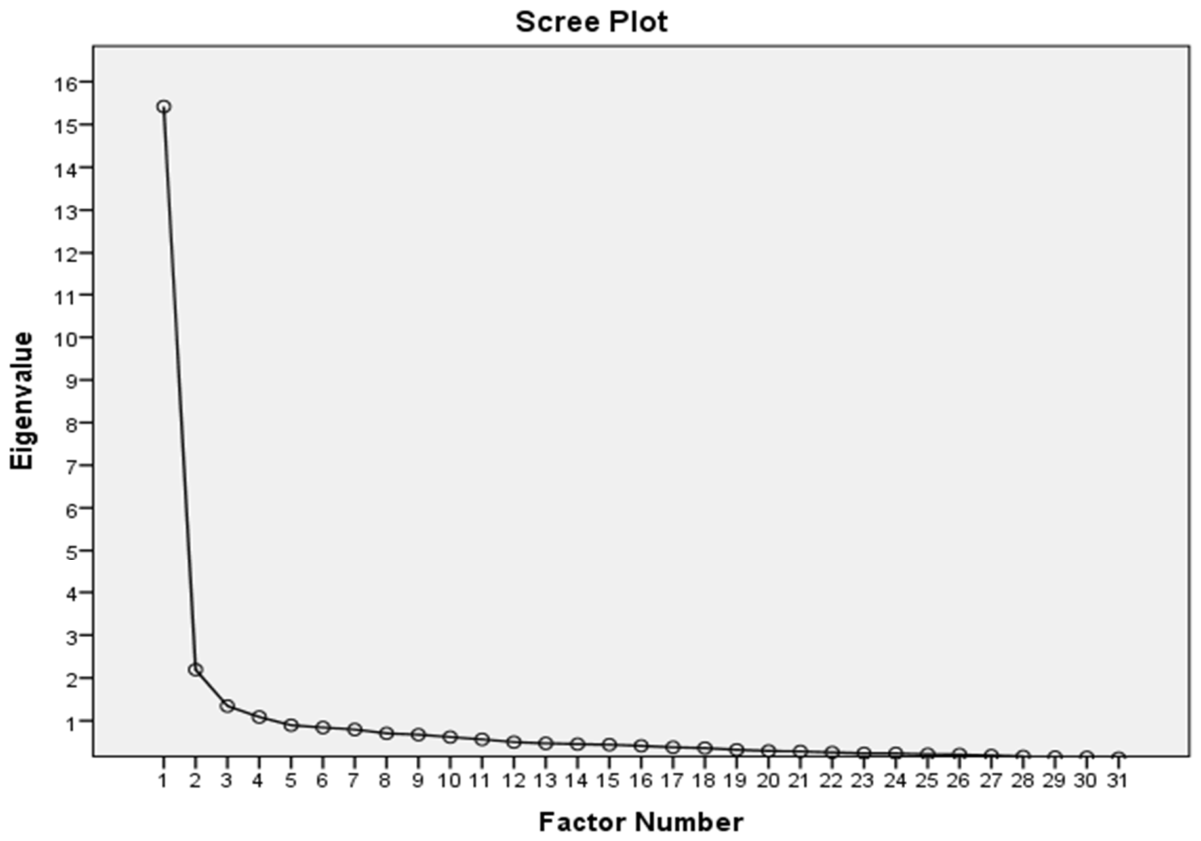

Table 1.
Commonly Discussed Uncivil Behaviours [32].
Table 1.
Commonly Discussed Uncivil Behaviours [32].
| Uncivil Behaviour/s | Meaning | Examples of the behaviour | References |
| Nonverbal innuendo | Innuendo is a subtle or indirect derogatory remark, and nonverbal innuendo implies the indirect nonverbal negative behaviours about a person or thing, usually of an uninteresting and disapproving nature. | Eye-rolling, walking away from the person while he or she was talking, sighing and appearing annoyed when a question was asked, make the person feel or their questions were not important, appeared bored when receiving a report from them and ignore them. | [33,34,35,36]. |
| Verbal affronts | Mean to insult someone, face to face, verbally, which could be a deliberate insult or a hostile encounter. | Embarrassing the person in front of others, raising their voice while speaking, making insulting and sarcastic jokes/remarks and saying belittling opinions. | [35,37,38]. |
| Undermining behaviour | Is behaviour that makes someone feel harassed, subverted, weakened, offended or makes them feel less confident, and that affects their work. | Appearing annoyed and angry when asked for help, telling the person they were incompetent, refusing to help, and discriminating against racial, ethnic, sexual, age or on the religious basis. | [39,40,41]. |
| Backstabbing | Is the action of criticising someone in a deceitful manner despite pretending friendship with him or her. | Talking behind the persons back, spreading rumours or gossip, complaining to others about an individual and not speaking directly to that individual. | [34,38]. |
| Withholding information | Is the action of not passing on pertinent information that the person should be aware of. | Giving an incomplete report which, is essential for the efficient completion of job involved. | [42]. |
| Sabotage | Is deliberate attempt to destroy or prevent the success of someone. | Accusing someone of deeds that they did not know, humiliating them publicly, fail to give the credit where credit was due. and assigning tasks or patient loads or impossible deadlines. | [34,38]. |
| Infighting | Is unwanted competition and arguments in the group. | Complaining and arguing about the person’s critical thinking, their clinical decisions, and holding pertinent information so that they can’t succeed. | [38,43]. |
| Failure to respect privacy | Means unwanted prying into somebody else’s life, disrupting their privacy and tarnishing their dignity. | Disclosing and discussing personal matters of co-workers to other staff or in front of other people. | [42]. |
| Broken confidence | When a private matter is not kept a secret even after the person has requested to keep it confidential. | Breaking confidence by not keeping a secret. | [44]. |
| Scapegoating | Is the practice of singling out a person and consequent negative treatment. | Blaming somebody else for the mistakes, or faults of others. | [33,45]. |
NIQ was first assessed for face validity by consulting with experts from the same university who were experienced in working with cases of incivility in the workplace. Following this, the reliability, construct validity and factor structure of the NIQ were determined using Cronbach’s alpha and exploratory factor analysis. This was necessary as the NIQ was fundamentally a newly developed scale.
Table 2.
Participant Demographic Data (n = 244).
| Variable | Sample Size (n) | Percentages (%) |
| Sex (N=244) Male Female |
25 219 |
10.2% 89.8% |
| Nationality Status Domestic International |
191 53 |
78.3% 21.7% |
| Employment Healthcare Non-Healthcare |
158 86 |
64.8% 35.2% |
| Job Status (N=157) Full-Time Part-Time Casual |
18 81 58 |
11.5% 51.6% 36.9% |
| Work Setting Public Private NGO Mixed |
56 70 7 24 |
35.7% 44.6% 4.4% 15.2% |
| Employment 12 Months Prior to Nursing Employed Not Employed Not Applicable |
18 54 172 |
7.4% 22.1% 70.5% |
| Clinical Speciality of Last Nursing Placement (N = 185) Medical Surgical Emergency Department Intensive Care Unit Rehabilitation Mental Health Geriatric Evaluation & Management Aged Care Other |
45 29 14 3 24 31 4 13 22 |
24.3% 15.7% 7.6% 1.5% 13% 16.7% 2.1% 7.2% 11.9% |
Table 3.
Total Variance Explained.
| Factor | Initial Eigenvalues | Extraction Sums of Squared Loadings | Rotation Sums of Squared Loadingsa | ||||
| Total | % of Variance | Cumulative % | Total | % of Variance | Cumulative % | Total | |
| 1 | 15.418 | 49.735 | 49.735 | 15.027 | 48.474 | 48.474 | 11.428 |
| 2 | 2.192 | 7.073 | 56.808 | 1.813 | 5.847 | 54.322 | 9.805 |
| 3 | 1.344 | 4.334 | 61.142 | .992 | 3.198 | 57.520 | 9.223 |
| 4 | 1.087 | 3.506 | 64.649 | .632 | 2.039 | 59.559 | 9.344 |
| 5 | .896 | 2.889 | 67.538 | ||||
| 6 | .842 | 2.715 | 70.252 | ||||
| 7 | .796 | 2.566 | 72.818 | ||||
| 8 | .704 | 2.270 | 75.089 | ||||
| 9 | .676 | 2.179 | 77.268 | ||||
| 10 | .620 | 1.999 | 79.267 | ||||
| 11 | .564 | 1.819 | 81.086 | ||||
| 12 | .502 | 1.618 | 82.705 | ||||
| 13 | .472 | 1.524 | 84.228 | ||||
| 14 | .453 | 1.462 | 85.690 | ||||
| 15 | .441 | 1.423 | 87.113 | ||||
| 16 | .414 | 1.336 | 88.449 | ||||
| 17 | .379 | 1.223 | 89.672 | ||||
| 18 | .362 | 1.169 | 90.841 | ||||
| 19 | .322 | 1.037 | 91.878 | ||||
| 20 | .296 | .956 | 92.834 | ||||
| 21 | .281 | .908 | 93.742 | ||||
| 22 | .261 | .841 | 94.583 | ||||
| 23 | .239 | .770 | 95.353 | ||||
| 24 | .237 | .765 | 96.117 | ||||
| 25 | .216 | .698 | 96.816 | ||||
| 26 | .211 | .679 | 97.495 | ||||
| 27 | .187 | .602 | 98.098 | ||||
| 28 | .167 | .538 | 98.636 | ||||
| 29 | .150 | .483 | 99.119 | ||||
| 30 | .147 | .475 | 99.594 | ||||
| 31 | .126 | .406 | 100.000 | ||||
Extraction Method: Principal Axis Factoring. a. When factors are correlated, sums of squared loadings cannot be added to obtain a total variance.
Table 4.
Descriptive Statistics and Reliability Analysis of NIQ (n = 244).
| M | SD | Item-Total Correlation | Interitem Covariance | Cronbach’s Alpha if Item Deleted | |
| NIQ1.1 | 1.97 | 1.15 | .677 | .518 | .968 |
| NIQ1.2 | 1.77 | 1.03 | .710 | .486 | .968 |
| NIQ1.3 | 2.07 | 1.13 | .775 | .580 | .967 |
| NIQ1.4 | 2.13 | 1.13 | .732 | .547 | .968 |
| NIQ1.5 | 1.96 | 1.12 | .695 | .516 | .968 |
| NIQ1.6 | 1.90 | 1.09 | .684 | .497 | .968 |
| NIQ2.1 | 1.59 | 0.84 | .735 | .416 | .968 |
| NIQ2.2 | 1.50 | 0.87 | .731 | .427 | .968 |
| NIQ2.3 | 1.50 | 0.84 | .681 | .384 | .968 |
| NIQ3.1 | 1.64 | 0.97 | .678 | .442 | .968 |
| NIQ3.2 | 1.87 | 1.02 | .793 | .539 | .967 |
| NIQ3.3 | 1.30 | 0.70 | .612 | .289 | .968 |
| NIQ3.4 | 1.63 | 0.91 | .738 | .451 | .968 |
| NIQ3.5 | 1.33 | 0.78 | .508 | .267 | .969 |
| NIQ4.1 | 1.78 | 1.11 | .758 | .558 | .967 |
| NIQ4.2 | 1.65 | 1.05 | .747 | .519 | .967 |
| NIQ4.3 | 1.32 | 0.74 | .596 | .300 | .968 |
| NIQ5.1 | 1.75 | 1.01 | .619 | .420 | .968 |
| NIQ5.2 | 1.68 | 0.98 | .677 | .441 | .968 |
| NIQ5.3 | 1.67 | 1.01 | .737 | .498 | .968 |
| NIQ6.1 | 1.36 | 0.80 | .729 | .390 | .968 |
| NIQ6.2 | 1.34 | 0.75 | .746 | .376 | .968 |
| NIQ6.3 | 1.66 | 1.03 | .777 | .531 | .967 |
| NIQ6.4 | 1.63 | 1.06 | .780 | .548 | .967 |
| NIQ7.1 | 1.42 | 0.85 | .732 | .414 | .968 |
| NIQ7.2 | 1.40 | 0.84 | .745 | .418 | .968 |
| NIQ7.3 | 1.37 | 0.83 | .800 | .446 | .967 |
| NIQ8.1 | 1.25 | 0.68 | .623 | .285 | .968 |
| NIQ9.1 | 1.27 | 0.64 | .570 | .247 | .969 |
| NIQ10.1 | 1.39 | 0.77 | .673 | .349 | .968 |
| NIQ10.2 | 1.34 | 0.74 | .672 | .337 | .968 |
No further attempts were made to rotate the factor solution, and a single total score for each participant’s NIQ responses was used for subsequent analyses.
Table 5.
Sources of Incivility (n = 244).
| Variable | Minimum | Maximum | Mean ± SD |
| Classmates | 10 | 36 | 12.40 ± 4.40 |
| Clinical Educators | 10 | 36 | 12.08 ± 4.37 |
| Lab Educators | 10 | 36 | 11.05 ± 2.97 |
| Buddy Nurses | 10 | 45 | 14.68 ± 6.43 |
| Managers | 10 | 45 | 12.60 ± 5.75 |
| Allied Health Workers | 10 | 36 | 11.55 ± 3.43 |
| Physician | 10 | 31 | 11.51 ± 3.01 |
Table 6.
Spearman’s Rank Correlation between Key Demographic and Outcome Variables.
| Variable | M± SD | 1 | 2 | 3 | 4 | 5 |
| 1. Nursing Incivility | 49.44 ± 20.74 | 1 | ||||
| 2. Perceived Self-Efficacy | 21.85 ± 7.09 | -.38*** | 1 | |||
| 3. Age | 31.75 ± 11.42 | .18** | .01 | 1 | ||
| 4. Year of nursing studies | 2.20 ± 0.78 | .38*** | .02 | .36*** | ||
| 5. Number of Placements | 2.49 ± 1.68 | .32*** | <0.01 | .32*** | .87*** | 1 |
Table 7.
Differences between Key Categorical Variables for Nursing Incivility and PSE.
| Variable (n) | Nursing Incivility | PSE | ||||
| M | SD | p-value | M | SD | p-value | |
| Male (25) | 51.92 | 23.46 | 0.876 | 21.64 | 7.53 | 0.915 |
| Female (219) | 49.16 | 20.44 | 21.88 | 7.05 | ||
| Domestic (191) | 50.71 | 20.80 | <0.05 | 21.24 | 7.08 | <0.05 |
| International (53) | 44.87 | 20.03 | 24.06 | 6.72 | ||
| Employed in HC (158) | 51.86 | 22.23 | <0.05 | 22.09 | 7.26 | 0.336 |
| Not Employed in HC (86) | 45.00 | 16.91 | 21.42 | 6.77 | ||
Disclaimer/Publisher’s Note: The statements, opinions and data contained in all publications are solely those of the individual author(s) and contributor(s) and not of MDPI and/or the editor(s). MDPI and/or the editor(s) disclaim responsibility for any injury to people or property resulting from any ideas, methods, instructions or products referred to in the content. |
© 2026 by the authors. Licensee MDPI, Basel, Switzerland. This article is an open access article distributed under the terms and conditions of the Creative Commons Attribution (CC BY) license (http://creativecommons.org/licenses/by/4.0/).
Copyright: This open access article is published under a Creative Commons CC BY 4.0 license, which permit the free download, distribution, and reuse, provided that the author and preprint are cited in any reuse.