

Submitted:
23 September 2026
Posted:
24 September 2026
You are already at the latest version
Abstract
Background: Rural populations experience healthcare disparities, including workforce shortages, geographic isolation, limited access to specialty services, and adverse social determinants of health. These challenges are particularly evident in South Dakota, where nearly half of the population resides in rural or frontier communities. Because of these unique challenges associated with rural life, preparing nurses to work in rural America is critical in preparing a workforce capable of meeting the unique healthcare needs of this population. Methods: This article describes how South Dakota State University College of Nursing, located within a rural land-grant institution, has developed and adapted educational programs, workforce initiatives, community partnerships, and re-search programs to address persistent rural health challenges across the state and region. The College of Nursing (CON) includes three campus locations: Brookings, Sioux Falls, and Rapid City and includes undergraduate and graduate nursing education. Nursing education is designed to allow students to blend their nursing education with South Dakota's unique rural environment. Results: The CON offers multiple pathways into the profession, including traditional and accelerated Bachelor of Science in Nursing (BSN) pro-grams, an online BSN option utilizing a train-in-place model, master's-level nursing education and administrator programs, Doctor of Nursing Practice (DNP) programs, and PhD education. Through strategic academic-practice partnerships and federally funded work-force initiatives, the college prepares nurses for rural practice across primary care, acute care, long-term care, and underserved settings. Additional initiatives support Native American student success, rural workforce recruitment and retention, oral health outreach, care coordination for children and youth with special healthcare needs, and research focused on workforce well-being, workplace violence, and healthcare access. Conclusions: A multi-site college of nursing can serve as a model for improving rural healthcare access, strengthening the nursing workforce, and addressing the complex and persistent health needs of rural and frontier populations. South Dakota State Universi-ty CON demonstrates how innovative educational delivery models, community partnerships, and targeted workforce initiatives can contribute to sustainable rural healthcare solutions.
Keywords:
rural health
; nursing education
; workforce development
; frontier health
; rural nursing
; health disparities
; academic-practice partnerships
; land-grant university
; community partnered research
1. Introduction
The United States experienced improved health outcomes and lower mortality rates in the first two decades of the 21st century; however, when comparing rural areas with urban/metropolitan areas, health disparities become apparent and are well-established. In fact, the gap between urban and rural mortality rates tripled between 1999 and 2019 [1]. Health disparities in rural areas have been attributed to numerous barriers to rural residents accessing quality healthcare, such as healthcare workforce shortages, greater distance to healthcare services exacerbated by a lack of reliable transportation, and lack of broadband internet with speeds fast enough to support telehealth [2]. Furthermore, rural counties have worse social determinants of health than urban areas [3], such as higher rates of uninsured residents, higher poverty rates, lower educational levels [2], lower average incomes, and fewer available jobs [4]. These factors contribute to rural residents having lower health literacy rates than their urban counterparts leading to reluctance to seek healthcare, difficulty understanding how to navigate the healthcare system, and challenges in communicating with healthcare professionals [2].
On average, 20% of the United States population resides in a rural area [5] experiencing these barriers to accessing quality healthcare. In South Dakota (SD), nearly one-half of the state’s approximately 1 million residents live in a rural area of the state. SD ranks 8th in the nation in highest percentage of rural residents and 8th in lowest population density [6], meaning that the approximately 500,000 rural residents are geographically distant from each other, a community, and healthcare services. In fact, a recent study found that rural cancer care patients in SD travel 60-300 miles round trip to access care. This is compounded by other transportation considerations, such as weather, having a reliable vehicle, driver, and money to travel these distances [7].
As the most trusted, meaning ethical and honest, profession in the nation for two and a half decades [8], nursing has the position and ability to improve access and quality of rural healthcare [9]. Since 1862, land-grant universities have had the mission and responsibility to bring higher education and services to the state’s residents while also addressing the needs of communities. One of the challenges in the 21st century for land-grant universities is meeting rural community needs in the context of a predominantly urban America [10]. Hence, colleges or schools of nursing at land-grant universities, especially those in rural states, are uniquely positioned to address and solve these rural healthcare challenges. An exemplar will be presented on how a college of nursing at the state’s land-grant university not only has responded to their rural community needs but has continuously adapted to changes in the rural landscape of SD and healthcare.
1.1. Defining Rural
Rural is defined by using the Health Resources & Services Administration (HRSA) definition which considers, in part, non-metropolitan counties and primary Rural-Urban Commuting Area (RUCA) codes 4 – 10, and population density of 35 people or fewer per square mile as rural [5]. In the state of SD, located in the upper Midwest of the United States, the majority of the 66 counties are classified as rural (29 counties) or frontier (34 counties). Frontier is defined as less than six people per square mile [11]. In a state with such significant rurality and approximately half of the population living in these rural and frontier areas [12], a multi-pronged approach to address persistent health and healthcare challenges is required.
1.2. Rural Healthcare Access and Quality
The healthcare landscape in SD includes 39 critical access hospitals, 1 rural emergency hospital, 57 rural health clinics, and 38 Federally Qualified Health Centers [13]. The state experiences significant health professional shortages with most of the state designated as medically underserved areas (97%) and/or health professional shortage areas (88%) with the entire state being designated as mental health professional shortage areas [14].
The healthcare workforce shortage in rural SD is expounded by the decreasing working age population in rural areas, leaving older residents without access to healthcare services. Additionally, as the rural population decreases, they are more likely to be geographically isolated from others, including family, friends, communities, and healthcare professionals [7]. While access to healthcare and isolation vastly affect rural residents, healthcare professionals also lack access to other healthcare professionals for consultation and often practice in isolation [7].
1.3. Social Determinants of Health
Any approach to addressing rural healthcare challenges must consider the social determinants of health (SDOH) that impact the healthcare received by rural residents. Those living in rural areas experience less access to resources, incomes lower than their urban counterparts, and lower education levels [15]. In SD, the 2024 poverty rate was 7.5% in urban areas compared to 13.8% in rural areas [16]. Additionally, the state is home to nine federally recognized American Indian tribes who experience severe economic disparities including substantially higher poverty rates, 22-48% [11] and unemployment rates as high as 89% [17]. This is a vast difference from the state average poverty rate of 10% [11] and unemployment rate of 2% [18].
2. Rural Workforce Supply
The supply of all health professionals except Licensed Practical Nurses (LPNs) in rural areas is lower per 10,000 population than in urban areas [19]. For example, compared to urban settings, which have 31.2 physicians per 10,000 people, rural areas have a mere 13.1 physicians per 10,000 people [20]. Additionally, more than half of rural physicians aged 50 and older are projected to retire by 2030, adding to a 23 percent decline in the rural workforce. This projected shortage exemplifies the existing and long-standing challenges of delayed care and increased travel distances for the rural population [20].
Nationally, the rural nursing workforce is older, less diverse, less educated, and receives a lower salary than their urban counterparts [21]. This equates to a looming rural nursing workforce crisis as the older, thus more experienced nurses retire [21], and the population ages and requires more healthcare [22]. Projections by the Bureau of Labor Statistics indicate almost 200,000 RN openings annually through 2034. The number of openings is attributed to nurses transitioning to other careers or exiting the workforce through retirement [23]. According to the SD Department of Labor and Regulation [24], there are projected to be 1,028 registered nurse (RN) openings annually through 2032, representing a 13.2% increase in total employment for RNs in the state. According to Nursing Education [25], SD will rank third in the USA for a nursing workforce shortage by 2030 with a projected shortage of 14%.
An often-forgotten workforce in healthcare is nursing assistants (NAs) who provide a significant amount of direct care, especially in long-term care (LTC). NAs help with activities of daily living such as bathing, dressing, toileting, eating, and ambulating [26]. NAs also assist with transferring, repositioning, taking vital signs, and serving as a liaison between the resident and their nurse [27]. Though the terms certified nursing assistant (CNA) and NA are often used interchangeably, it is important to note that a CNA is considered a NA who obtains a state certification through a training program and exam. The specific requirements vary by state [28]. We will use the broad term of NA, which includes certified and non-certified NAs.
Most NAs within the United States do not have any post-secondary education, are female, and people of color. Furthermore, NAs earn low incomes [29]. The rural setting includes additional unique challenges for NAs including a risk of health disparities related to lower socioeconomic status as well as decreased healthcare specialist access [30]. Rural areas have fewer NAs available to care for older adults compared to urban areas as indicated by a lower NA ratio to older adult population [31], further exacerbating the staffing crisis in rural areas. The NA shortage has been attributed to low pay and recruitment difficulties. Furthermore, the COVID-19 pandemic worsened already high turnover rates [32].
2.1. Rural Nursing Workforce Solutions
Consistent with the university’s land-grant mission, the College of Nursing (CON) plays a vital role in advancing the health and well-being of individuals and communities across SD, the region, and the nation [33]. As a leader in nursing education, the CON graduates nearly half of the state’s nurses prepared at the Bachelor of Science level (BSN) and has a longstanding history of adapting its programs to meet evolving healthcare workforce needs. The five-semester BSN program has traditionally been offered through standard (2.5-year) and accelerated (1-year) options across three geographically dispersed locations, with two in eastern SD and one in western SD, approximately 390 miles from the main campus. Face-to-face BSN education at all three locations, combined with fully online graduate programs, demonstrates the CON’s continued commitment to expanding access to nursing education across the state.
In response to SD’s nursing workforce needs, particularly in rural and medically underserved areas, the CON has implemented multiple strategies to expand access to nursing education and address identified workforce gaps. These efforts include graduate programs aligned with state healthcare needs, such as psychiatric/mental health offerings for BSN- and master’s-prepared nurses, as well as refresher courses for RNs and LPNs seeking professional recertification. Further, the CON offers a pathway for nurses prepared at the associates degree level (ADN) to earn a bachelor’s degree through the RN to BSN program. Most recently, CON launched online delivery of its BSN program in spring 2026. With the capacity to admit 24 students annually, the online BSN program expands access to high-quality nursing education for individuals who may otherwise be unable to relocate or regularly travel to a campus-based program. Designed as a “train-in-place” model, the program uses innovative online and distance-learning technologies to allow a substantial portion of students’ didactic, lab, and simulation learning to be completed remotely, providing flexibility for students balancing education with work, family, agricultural, and community responsibilities.
The online BSN program ensures consistent competency development through a standardized blend of in-person experiences, innovative technology-enhanced learning, and community-based clinical education. Each semester, students attend immersion experiences at the closest of the CON’s three sites to complete specialty nursing clinicals, high-fidelity simulations, and skills that require direct faculty supervision and hands-on competency validation. Advancements in virtual reality, distance simulation, and other educational technologies allow students to complete additional skills practice, assessments, and simulated clinical experiences remotely while remaining in their home communities. Students also complete approximately 400 of the 480 required clinical hours off campus through partnerships with rural and community healthcare organizations, providing direct patient-care experiences close to home. Together, these approaches maintain standardized, high-quality nursing education while reducing unnecessary travel, strengthening community partnerships, and preparing students to practice in rural and medically underserved communities.
The CON has a longstanding history of securing federal funding through HRSA to support the recruitment and retention of nurses in rural communities. Recruitment focuses on attracting healthcare professionals to current and future workforce opportunities, while retention focuses on sustaining that workforce within rural facilities and communities [34]. Innovative approaches that address both recruitment and retention are essential to strengthening the rural nursing workforce. Both the SD Department of Health [14] and the World Health Organization’s (WHO) Workforce 2030 strategy [35] identify education and workforce training as important strategies for addressing healthcare workforce shortages.
2.1.1. Rural Nursing Solution – Rural Fellowship
The Rural Nurse Fellow Program offered by the SDSU CON provides an opportunity for senior nursing students to complete a 144-hour preceptorship experience (capstone/directed study) in a rural healthcare facility. The program is designed to provide exposure to rural healthcare, understand issues facing rural healthcare providers, and allow nursing students to develop the specific skills necessary for practicing in rural hospitals. Following completion of the program, students are designated as a Rural Nurse Fellow. Over 100 students from the CON have participated in this program.
2.1.2. Rural Nursing Solution - Primary Care
Supported by a HRSA grant, Impacting Models of Practice and Clinical Training for Registered Nurses and Students (IMPACT-RNS) was implemented in 2018. The goal of the project was to increase nursing student clinical training in rural primary care to increase rural nurse education and practice, increase quality and retention, and recruit students to serve as RNs in rural primary care post-graduation. Since grant funding ended in 2023, the project has continued and is now funded by CON donors. IMPACT-RNS is open to all university nursing students who have a desire to learn more about rural primary care and underserved populations. Students complete 48 clinical hours during their 4th semester and 54 clinical hours during their 5th semester. Over 90 students from the CON have participated in this program.
2.1.3. Rural Nursing Solution – Native American Nursing Education Center
The CON further demonstrates the commitment to meeting the needs of rural healthcare through the Native American Nursing Education Center (NANEC). NANEC’s mission is to provide a nurturing and collaborative environment and aims to promote recruitment and retention among Native American students by providing financial, academic, social, and cultural services. The center provides comprehensive support to students while in nursing programs, such as childcare, food, gas, tutoring, traditional ceremonies, and mentorship from Lakota elders who are nurses. NANEC mentors approximately 30 students each year who participate in the pre-nursing, standard, accelerated, RN-BSN, and doctorate programs. NANEC’s comprehensive student support has had remarkable success increasing BSN graduates per year from an average of 3.15 (2015-2020) to 7.6 (2020-2026), including an 83% retention rate and 100% NCLEX pass rate. Across all nursing programs, there have been 67 graduates (2015-2026) with 59 (88%) practicing in SD and 37 (55%) practicing in Native American healthcare facilities.
2.1.4. Rural Nursing Solution - Acute Care
PREPARE-RNS, Partnering to Address the Critical Nursing Shortage in South Dakota, is a part of the Nurse Education Practice Quality and Retention – Registered Nurse Training Program (NEPQR-RNTP) through HRSA. This multi-year program focuses on preparing pre-licensure Bachelor of Science in nursing (BSN) students for careers in rural acute care settings while providing education on topics such as the SDOH, health equity, and health literacy.
This is an academic – clinical partnership between this land grant institution and a regional health system with a large rural footprint. Pre-licensure students are selected through an application process to participate in this program. Students in this program complete over 80 hours of clinical in a rural acute care facility followed by a 144-hour 1:1 experience with a nurse preceptor in a rural acute care facility during the last year of the nursing program, providing students with a unique look into rural practice. In addition to clinical experiences, PREPARE-RNS students participate in an ECHO Professional Development model, participating in over 10 hours of education and training with subject matter experts on the SDOH, health equity, and health literacy. This program is modeled after similar rural training track programs in medical education which support the idea that medical students being exposed to rural training opportunities are more likely to practice in a rural area compared to students who do not participate in these experiences [36,37,38]. Students selected for this program receive tuition and travel support as many rural experiences require greater travel distances than traditional clinical opportunities offered within the nursing program. Currently, this grant is in its final year. Over half of the participants in this program accepted employment in rural facilities at graduation.
2.1.5. Rural Nursing Solutions - Acute and Long-Term Care
RETAIN-RNS, Partnering to Expand and Retain South Dakota’s Nursing Workforce in Acute and Long-Term Care Settings, is a part of the HRSA Nurse Education Practice Quality and Retention – Workforce Expansion Program. Currently in its first year of funding, this multi-year program seeks to prepare pre-licensure BSN students for careers in rural acute and long-term care settings and continues the academic – clinical partnership developed through PREPARE-RNS. Specifically, this grant seeks to expand the nursing workforce by increasing the number of RNs prepared to practice in rural acute care and long-term care settings, enhance nursing education and training with didactic and experiential learning opportunities emphasizing rural practice, health equity, and cultural competence. An additional aim is to strengthen clinical training infrastructure by developing and supporting nurse preceptors, clinical faculty, and sustainable academic-practice partnerships. Modeled after PREPARE-RNS, this program includes over 84 clinical hours in rural acute care followed by a 144 hour 1:1 preceptor experience in a rural acute setting. In addition, students complete a summer clinical immersion program (SCIP) which includes 40 hours of training in rural long-term care and 40 hours of training in rural acute care. The summer experiences focus on students working closely with BSN-prepared nurses in rural settings to gain an understanding of the specific roles of BSN-prepared nurses. Students also participate in five Project ECHO sessions focused on cultural competency, SDOH, health equity, policy and advocacy, and sustainable solutions and community assets, which include discussion on community health workers as a key member of the healthcare team. This program will consist of five cohorts of 8 students each. The first cohort began the program Summer 2026.
Growing Underserved Communities through Innovation, Development, and Education for Registered Nurses and Students (GUIDE-RNS) is a grant program funded through the Health Resources and Services Administration (HRSA) Nurse Education Practice Quality and Retention – Workforce Expansion Program. The program is currently in its first year, and the purpose is to develop and deploy a training program for BSN nursing students, expand academic-practice partnerships, and collaborate with practice partners to develop, implement, and sustain innovative teaching strategies. The program focuses on preparing students to care for individuals in rural and underserved communities in acute and long-term care settings. The program provides didactic instruction to all nursing students, including distance simulation, SDOH, and health equity. The didactic information provides all students with insight into what to consider when caring for patients in rural or underserved settings. SD is largely rural; therefore, this information is crucial for all students planning to stay here, as they will care for individuals from these settings.
Students in the GUIDE-RNS program receive 80 additional hours of clinical, comprising screen-based, virtual, and hands-on simulation experiences, as well as clinical experiences in rural or underserved acute and long-term care settings. Students complete these additional hours across three semesters in the nursing program. Of the 80 hours, 48 hours are spent in the clinical setting, while 32 hours are spent completing simulation education. The hours in the clinical setting are split between acute and long-term care, with students completing 24 hours in each. A total of 46.5 hours is spent in the long-term care setting. Students are 1:1 with a preceptor during their time in the clinical setting, allowing them to work with individuals from rural and underserved communities. This allows students to gain unique perspectives on caring for individuals while working in these environments. Education is also provided to current RNs as part of their preceptor role for the students through Nursing Continuing Professional Development (NCPD) activities. These NCPD opportunities include distance simulation, SDOH, health equity, and facilitating students. The NCPD opportunities will be made available to all nurses across SD once the first round of preceptors has been trained. Currently, 20 students have been enrolled in the program, with plans to admit an additional 120 over the next 3 years.
The Rural Nurse Fellow program, IMPACT-RNS, and NANEC efforts have been designed, implemented, and sustained by the CON resulting in 290 nursing students being trained in rural healthcare. PREPARE-RNS trained an additional 33 students and will transition into the RETAIN-RNS effort which will train 40 students. As GUIDE-RNS is implemented, 140 students will gain experience in rural healthcare. This equates to nearly 500 nursing students being trained for rural practice, see Figure 1. NANEC and PREPARE-RNS have data indicating that these students are likely to practice in rural settings.
As a land-grant institution, the mission of SDSU is to offer “a rich academic experience through inspired, student-centered education, creative activities and research, innovation and engagement that enhances the quality of life in South Dakota, the region, the nation, and the world” [39]. These opportunities for nursing students reflect the university’s mission while also supporting rural workforce development in a predominantly rural upper Midwestern state. These experiences help to develop a nursing workforce prepared to address the social determinants of health for those residing in rural and underserved communities.
3. Environmental and Occupational Health Challenges
Burnout among healthcare professionals remains a critical threat to workforce stability, quality of care, and health system sustainability, with nearly half of clinicians reporting frequent burnout and an increasing proportion considering leaving the profession [40]. Burnout is associated with impaired clinical decision-making, reduced communication effectiveness, and diminished capacity, placing both healthcare workers and patients at risk [41]. These challenges are amplified in rural settings, where healthcare workers face unique occupational stressors including workforce shortages, broad scope-of-practice demands, limited specialty support, scarce resources, and rapidly evolving technologies without proportional infrastructure or training [42,43].
3.1. Burnout
Despite the magnitude of burnout among healthcare professionals, particularly in rural regions of the U.S., most existing research on healthcare worker stress and burnout relies on retrospective self-report surveys and burnout inventories [41,44,45]. While informative, these approaches are inherently reactive and do not capture the dynamic physiologic stress and physical fatigue experienced during real-world clinical work. This limitation is particularly consequential in rural healthcare settings, where unanticipated workload fluctuations and limited staffing create sustained physiologic demands that may not be fully captured by traditional assessments. As a result, organizations often lack timely, objective indicators that could support early identification of burnout risk and inform proactive interventions [41]. None of the previous studies measured physiologic stressors of participants across different areas of practice [46]. Twenty-four percent of the orthopedic faculty and resident surgeons had a negatively trending heart rate variability (HRV) as their clinical rotation progressed, indicating increasing physiologic strain and burnout risk [46]. A systematic review concluded that 11 of the 17 studies had statistically significant findings on HRV responses to staged stress-generating situations [47]. While two independent reviewers completed the screening, review, and quality evaluation to reduce bias and improve reliability, the study took place in a simulation, a standardized setting with planned stress-triggering events, which may not produce the same physiologic stress responses as an unplanned stressful event (Peabody et al.). Huang and colleagues [48] found a statistically significant relationship between participants’ mental and physical fatigue and their heart rate (HR), HRV, and intervals between successive heartbeats (RR intervals), which are all commonly used in physiologic monitoring. However, fatigue experienced by each participant completing a fatigue-inducing quiz may differ from that in the natural work environment.
Wearable biosensors provide a promising approach to address this gap by enabling continuous, real-time measurement of physiologic stress responses and physical exertion during clinical practice. Prior studies demonstrate that physiologic markers such as HRV and skin temperature are sensitive to stress and workload demands in healthcare settings [49,50]. A scoping review of 74 studies concluded that electrodermal activity (EDA) wearables can accurately predict perceived stress or stress-related behavior with an average accuracy of 82.6% [51], Despite these findings, the comparability of the studies is limited given the variations in EDA processing methods and the perceived stress measurement used (Klimek et al.).
Finally, while there have been methods used in the past to examine how physiologic stress and fatigue are related to longer-term occupational outcomes, they have rarely been applied in rural clinical environments or integrated with validated burnout measures. Members of the CON have sought to add to the research in this area by testing wearable biosensors on nursing students in a simulated environment. Wearing the biosensors in this environment allows the investigators to test the acceptability and feasibility of the wearable biosensors in relation to performing clinical skills, considering patient privacy, and following hygiene best practices.
3.1.1. Burnout Measurement
To better understand fatigue and cognitive load in nursing students in high-fidelity simulation learning environments, a pilot study used wearable physiological sensors, ECG (electrocardiogram), and GSR (galvanic skin response) to detect HRV and electrodermal activity in BSN students [52]. The study found increased GSR peaks and higher heart rate variability at key simulation points, including task changes and the start and end of the simulation. These findings suggest that simulation demands may contribute to cognitive load or fatigue. They also offer insight into the stress healthcare workers may experience in practice, which may affect patient safety, well-being, and burnout. Future studies include measuring multisensorial physiological biomarkers among healthcare workers using ECG, GSR, eye-trackers, EMG (electromyography), and EEG (electroencephalogram), with a focus on rural healthcare workers, to determine the unique contributors to stress and burnout (Zweifel et al.). Investigators determined that the wearables used in this study will not be acceptable for healthcare professionals in a practice setting due to the inability to wear them during certain clinical skills and breaks in hygiene best practices.
3.1.2. Burnout in Long-Term Care Nursing Assistants
LTC NAs encounter numerous challenges within their occupation including staffing issues, burnout, and high turnover. NAs in U.S. LTC facilities are facing a critical staffing crisis, impacting staff well-being, as well as resident care quality [32]. NAs experience stress within their role, including attributes of formal caregiver burden [53]. Burnout occurs frequently within the NA population [54]. Rural LTC NAs experience this stress and burnout, as well as traumatic events [55]. Researchers at this upper Midwestern University completed a hermeneutic phenomenological study that explored the experience of NAs with traumatic events in the rural, LTC workplace [55]. Interviews were completed with nine NAs who told of their traumatic experiences. Their strength and compassion, yet vulnerability and a specific need for support emerged from the interviews [55]. Within the workplace, traumatic events and burnout can ultimately affect turnover and care quality [56,57,58]. Future research at this upper Midwestern university is ongoing to better understand what NAs experience and to develop methods to address burnout, turnover, and care quality.
3.2. Workplace Violence
Nurses often enter nursing to help people. Facing violence from the very people they care for can be unsettling and even cause moral distress [59]. Nurses are put into the difficult position of identifying how to care for patients’ needs and navigating the risk of verbal, emotional, and physical injury to themselves. A nurse having to abandon a patient for self-preservation, conflicts with the nurses’ duty to care [59]. Previous studies suggest workplace violence (WPV) can cause burnout, stress, and depression [60]. Additionally, besides the psychological stress and injury, WPV contributes to nurses missing days at work and leaving the nursing workforce [61].
The Occupational Safety and Health Administration (OSHA) [62] describes WPV as acts or threats of violence including physical violence, harassment, and other threatening behaviors occurring in the workplace. Working with people who may be volatile or unstable, or working in isolated areas have been identified as factors which increase the risk of violence for some workers [62]. Ongoing research is bringing to light the ongoing negative impact WPV is having on the nursing workforce. In general, those working in healthcare settings are more likely to experience WPV compared to other workers and are five times more likely to suffer an injury related to workplace violence when compared to workers overall [63]. According to the National Database on Nursing Quality Indicators, two nurses are assaulted every hour [64]. The impact of WPV on nurses, combined with the staggering occurrence rates, is motivating research and regulatory change.
Violence to nursing staff can come from an array of aggressors. In 2001, the Injury Prevention Research Center at the University of Iowa, developed a typology of workplace violence through a panel of national experts that includes four types based on the aggressor-victim relationship:
- Type I – Criminal Intent
- Type II – Customer/Client
- Type III – Work-on-Worker
- Type IV – Personal Relationship
These categories help to differentiate the causes and inform potential solutions. The Type II violence, caused from patients and/or visitors, is the most common cause of workplace violence for healthcare facilities [61]. Type III violence, where the aggressor is a fellow staff member, remains widespread in the healthcare areas and is being researched heavily [65]. Even with the available literature, additional research and collaboration is needed [66]. Delaney et al. [67] reveal five key overlooked areas including competing ethical demands, lack of proactive engagement, and systemic barriers, suggesting that a single evidenced-based intervention protocol to address type II violence remains unobtainable. Therefore, WPV remains a priority for the CON, and research is being conducted with the type II WPV on the lived experience of rural ED nurses dealing with type II violence, on post-incident debrief tools, and with Type III on incivility.
3.2.1. Workplace Violence Type II - Rural/Urban Comparison
Emergency departments (ED) see violent patients and yet, unlike clinics that can administratively dismiss these patients, per EMTALA the ED must screen all patients seeking care. Less is known about WPV in rural healthcare settings, in part because it is thought to be underreported due to the unique factors of caring for a rural population [68]. There is some overlap in urban and rural areas as to why WPV is underreported including the belief that violence is an expected occupational hazard and inconsistent data collection [69,70,71]. Additionally, many studies on WPV are completed in urban settings, rather than rural, making it more challenging to understand the unique rural healthcare environment [72].
Two faculty members at this upper Midwest university completed a descriptive, phenomenological study to learn more about WPV, specifically the experiences of nurses in rural EDs in SD. A total of ten registered nurses, all employed in Critical Access Hospitals across SD, participated in this study [73].
The five themes which emerged were: isolation, familiarity with patients, reliance on law enforcement, preparation or lack thereof, and chemical influence on patients. Two themes, isolation and familiarity with patients, were unique to nurses practicing in a rural setting. While security staff are common in larger urban facilities, it was found that participants in this study did not have security staff within their facility. Rather, nurses had a heavy reliance on law enforcement, which is an interconnected theme. However, some participants expressed that law enforcement was not always available when needed as most rural areas have a small number of law enforcement officers monitoring a large geographical area. Study participants also identified that at times, law enforcement officers are on call at night, meaning the officer must be called in to respond to violence in the ED [73].
Familiarity with patients was another common theme expressed by participants. This familiarity was identified as both positive and negative. Participants recognized the positive in being familiar with a patient as this could potentially defuse the situation. However, participants also recognized that being familiar with a patient often led to rationalizing the behavior (i.e., the patient isn’t always violent) or hesitancy to involve law enforcement [73].
This study added to the literature information about the unique perspective of the rural ED nurses’ experiences with WPV. Recommendations based on this work include continuing to raise awareness about WPV and developing reporting tools. Additionally, the need for enhanced training to prepare and debrief after a violent event were identified [73].
3.2.2. Workplace Violence - NAs
NAs practicing in LTC face barriers in addressing WPV including appropriate ways to address injuries, violence, and lack of training. NAs have a high rate of injury and illness, often related to their physically demanding job [27]. NAs, including those in the rural setting, face WPV, however, the culture of addressing WPV in the LTC setting is one of acceptance with minimal administrative support [55,74]. NAs have described specific traumatic events they face in the rural LTC setting, including verbal or physical abuse from residents [55]. Rural LTC NAs face a lack of appropriate training for difficult resident behaviors, dementia, and violence [55,74].
3.2.3. Workplace Violence Solution – Post-Incident Debrief Strategies
Violence still occurs and unit managers struggle with effective post-incident actions even though post-incident debriefing is an organizational responsibility per OSHA guidelines and Joint Commission Standards [75]. Structured post-incident debrief protocols have been demonstrated to boost recovery and rebuild a sense of safety [66]. Yet significant literature gaps exist to guide post-incident care [75]. Considering many rural facilities already have staffing constraints and limited seasoned staff, having experienced staff to provide feedback and teaching post-violence encounters is even more scarce. Through a PhD student’s dissertation efforts, the CON is working to address this issue by developing and studying a self-reflection tool to be used post-incident. This tool, based on a validated de-escalation of aggression assessment tool, would be used to allow the registered nurse and nursing student to rate how they performed when attempting to de-escalate a situation against structured criteria. Using a screen-based virtual aggression simulation, nursing students experience an aggressive encounter unfolding through sequential scenes and are asked to submit their considerations and responses to each video. Study results are anticipated to be published in the summer of 2027. The aim is for this tool to be available for nurse leaders to facilitate a standard post-incident learning and growth and boost staff’s feeling of hope in addressing future incidences.
3.2.4. Workplace Violence Solution – Nursing Education
WPV solutions are not designed to have the nursing staff stray from their purpose, but rather to provide them with the skills and knowledge to respond effectively to these incidences that maintain the core mission of nursing [67]. Training on health and safety is one of OSHA’s five core [76] WPV prevention components and ensures staff are aware of the WPV risks, understand how to protect themselves, and reduce the likelihood of WPV occurrences and injury.
Nursing students in the clinical setting are new to the hospital environment and culture, feel powerless, and are more likely to tolerate violence from patients [77]. Combined with the trend of nursing units being overwhelmed and a subsequent lack of support for students, nursing students are at an increased risk of suffering from WPV and require support, training, and oversight. A literature review on WPV training for nursing students found that this investment in didactic, role-playing, or simulation training pays off [78]. Positive results were seen in quantitative outcomes such as awareness, skill acquisition, self-efficacy, and confidence as well as qualitative acceptance of the training. The authors encouraged the continued research and development in this area but also published a mandate that WPV training be incorporated in all undergraduate and graduate schools of nursing to promote the safety and well-being of these students.
The CON continues to prioritize preparing nursing students for healthcare settings by providing WPV education in their curriculum and evaluating the effectiveness of this training. Core curriculum includes content on WPV. The virtual aggression simulation within the debrief studies above is being utilized to educate students on de-escalation practices.
3.2.5. Workplace Violence Solution - NAs
Solutions to the challenges that rural LTC NAs face are multi-faceted. Rural LTC NAs are passionate about their roles, despite facing lack of support within their workplace [55]. This is promising because it indicates NAs want to work in their occupation, caring for residents. While there is not an extensive amount of research on rural LTC NAs, many solutions proposed in urban settings can be applied to the rural setting.
Solutions can be aimed at recruitment and retention and include training, resources, compensation, and mental health support. To address staffing issues related to recruitment, recommended interventions include appropriate marketing, networking, and stipends [32]. Further, to enhance retention, peer support programs, personal resiliency training, workplace culture training, and professional development enhancement should be implemented [32]. Collaboration amongst LTC facilities, colleges and universities, and other education programs can allow for adequate training. However, this may require additional funding through grants or other resources [79]. In addition, training NAs within facilities, as opposed to training through a program outside of the organization, may result in a higher NA retention rate, specifically with novice NAs [80].
Offering financial incentives, as well as providing increased compensation and adequate benefits can reduce workforce shortages, [79]. Further, to address compensation, policy changes related to Medicaid reimbursement should be considered, as the facility itself is often limited by outside regulations that then affect NA pay [32].
Mental health support and the prioritization of well-being and health are essential in reducing turnover and ultimately, ensuring quality resident care [32]. Self-compassion training has demonstrated a positive change in nursing home NAs’ skills in coping with stressors such as increased workload, decreased staffing and support from coworkers, resident behaviors, and feeling as though they aren’t valued team members [81]. Mindfulness-based interventions may also be beneficial for LTC NAs’ mental health [82]. Rural LTC NAs have suggested grief circles or debriefing interventions to assist with the aftermath of traumatic events that occur in rural LTC [55].
NAs experience many occupational challenges, yet there is little research specifically aimed at identifying rural LTC NAs’ occupational challenges and solutions. Ultimately, more research needs to be conducted with rural LTC NAs to identify additional methods of support for this unique population, focusing on staffing, coping, education, and management support [55].
3.3. Workplace Incivility
Workplace incivility, WPV Type III, is not a new concept. However, since the COVID-19 pandemic, there has been heightened awareness of this issue, especially in healthcare. According to Andersson & Pearson [83], workplace incivility is defined as deviant behavior that is low intensity with an ambiguous intent to harm. Lack of respect for others, eyerolling, withholding information, and being discourteous or rude are examples of incivility and violate traditional workplace norms [83,84]. Incivility impacts not only the nurse or healthcare worker experiencing incivility, but also negatively affects the organization and patient safety. Nurses may opt to leave their job, or the workforce, leading to a loss of experienced nurses and potential short staffing [85].
3.3.1. Workplace Incivility - Rural/Urban Comparison
While it is known that workplace incivility is a problem in healthcare, less is known about the relationship among workplace incivility, resilience, and the healthcare environment in rural and urban settings. Three faculty members at SDSU sought to determine if differences in incivility existed between rural and urban healthcare settings. Additionally, faculty sought to better understand the impact of incivility on job satisfaction for nurses, nurses’ intent to leave, and quality of patient care and safety [86]. This study utilized a descriptive correlational design using survey data collected from RNs, LPNs, and advanced practice registered nurses (APRNs) with a SD nursing license. The survey included two instruments: the Short-Negative Acts Questionnaire (SNAQ) and the Connor-Davidson Resilience Scale (CD-RISC) which measured workplace incivility and nurse resilience respectively. In addition, demographic information, including highest degree earned, years of nursing experience, geographic location, intent to leave nursing position, and quality of nursing care were also collected [86].
Surveys were completed by 625 participants with 342 participants completing the survey in its entirety. The sample was overwhelmingly female (90.1%) and white/Caucasian (91.2%). The majority were employed full-time (81.9%) and in an urban setting (51.2%). Based on the mean SNAQ (17.4, SD 8.04) and CD-RISC scores (29.23, SD 6.19), there was a significant negative correlation between workplace incivility and resilience (p = 0.001). While not significant (p=0.12), workplace incivility was higher for rural nurses (M = 18.09) than for urban nurses (M = 16.74). Nurses with graduate degrees in nursing, while not statistically significant, had higher levels of incivility (M=18.15, Sd=9.219) and resilience (M=30.28, SD=6.824). Several predictors of workplace incivility were significant, including job satisfaction (p=0.0003) and workplace incivility since the COVID-19 pandemic (p=0.001). There was one significant predictor of resilience (job satisfaction, p=0.01); with higher resilience scores indicating higher job satisfaction [86].
This study added to the literature on the relationship between workplace incivility and resilience in rural and urban areas in one Midwestern state. Implications of this study for nursing, especially those in rural nursing support the need for decreasing workplace incivility and improving job satisfaction by focusing efforts on addressing uncivil behaviors that can threaten quality and safety for staff and patients [86].
Environmental and occupational health challenges in rural settings include healthcare workplace violence and incivility. While workplace incivility is not unique to rural healthcare, the response and impact may be felt differently. By creating intentional education on workplace violence and incivility for nursing students and listening to the voices of rural nurses and CNAs, innovative strategies to address these concerns in rural healthcare can be developed.
4. Unique Populations Within the Rural Population
Nursing care in rural settings requires an understanding of the unique healthcare needs, resources, and challenges faced within these communities. This extends beyond caring for individual patients but focuses on addressing the needs of entire communities and populations, emphasizing culturally sensitive and community-driven solutions [87]. SD’s rural population includes culturally distinct groups such as Hutterite colonies, whose lifestyle and cultural traditions may influence health behaviors and healthcare utilization. Beyond cultural considerations, rural nurses must also address population health priorities, such as reducing barriers to oral healthcare access and improving care for children and youth with special health care needs (CYSHCN) [88,89].
5. Discussion
As SD’s land-grant university, SDSU is continually leading the way to address SD community needs, including improving rural healthcare through a variety of education, partner, and research strategies. Through several HRSA funded programs and the NANEC, educating nursing students on and for rural healthcare practice has been a long-standing and successful priority. Gaining experience in caring for individuals in rural settings has led many of these nursing students to work in a rural healthcare facility after graduation. Thus, showing how important it is to provide experiential hands-on learning opportunities for individuals to understand what it is like to work in these rural areas.
Partnerships are essential to any successful program, and the CON has been building impactful partnerships with facilities across SD. These partnerships provide students with clinical experiences in several different areas of nursing. Furthermore, the partnerships with rural healthcare facilities have grown over the last 4 years, and students are getting more opportunities to explore rural nursing in an area where they would like to work after graduation. In addition, the expansion of the online program has led to many students having the opportunity to complete their education and clinical experiences close to home, thus relieving barriers and stressors they may encounter. When nursing students have these opportunities, it allows them to experience the benefits and unique challenges one encounters when working in a rural healthcare setting.
Addressing the needs of the future and current healthcare workforce in the rural setting is essential to ensure adequate care is provided to the rural population, whether it is in long-term care, outpatient settings, the community itself, or within critical access hospitals. By researching and then identifying supportive interventions against workplace violence and burnout, there will be a greater emphasis on rural healthcare workers’ well-being. This will positively impact the quality of care that healthcare workers are able to provide to the rural community.
Additionally, the healthcare needs of unique populations within rural communities highlight the importance of not only addressing workforce shortages and access challenges alone, but engaging in partnerships that support the specific cultural, social, and system-level challenges that influence health outcomes and create barriers to care. Sustainable improvements in rural healthcare require approaches that are developed through meaningful partnerships with communities and are responsive to locally identified needs. Key features of successful community-engaged rural health initiatives include identifying and responding to community needs, providing services of value, community leadership and innovation, reputation and trust, consistency, and knowledge sharing and program adaptation [102].
Education related to SDOH has also been completed by all nursing students attending this university. This information provides a wealth of knowledge for the students to help them understand the different aspects that impact patients and their ability to access and receive healthcare services. The CON is currently working on ways to disperse this information to all healthcare professionals across the state of SD.
The SDOH encountered in these settings are seen by the healthcare professionals in their personal lives as well. This can be found in many forms, including the lack of mental health care which they may seek due to challenges in the workplace. Additionally, they may see it in the lack of care available for their children and family. These SDOH are what may be keeping individuals who grew up in rural areas from earning a nursing degree and practicing within the communities they know so well.
SDSU CON is paving a road of access to higher education for rural residents by fostering relationships with rural healthcare facilities so nursing students can complete their clinical close to home. The CON’s strategies address the SDOH of our students who are more likely to practice as a nurse in their rural community. These students have personal and professional experience with SDOH, living in rural areas, and with rural healthcare challenges. This makes them ideal, trusted individuals to address the persistent rural health challenges and improve access to safe, quality care close to home.
5.1. Recommendations
Nursing education is at the forefront of combatting the rural healthcare crisis. Universities, especially land-grant universities, need to act and seek partnerships with rural communities and healthcare entities to address persistent rural health challenges, including the nursing workforce shortage in these areas. Finding ways to provide opportunities and encourage students to experience rural healthcare as well as bringing higher education to rural residents is essential to improving rural health.
While SDSU has worked hard to become a leader and increase the nursing workforce in rural areas, there is still much that needs to be done. Opportunities need to continue to be offered for students to complete training in these rural environments and should be expanded so students can achieve more hours in these rural communities. Education surrounding SDOH should be expanded and offered in a variety of ways throughout the student’s education. Regardless of where a student works, they have a great chance of encountering a patient who may have a barrier or stressor related to SDOH that may impact them.
Work needs to be done to ensure a safe working environment for individuals across all areas of healthcare in both rural and urban settings to keep the workforce strong. With the nursing shortage expected to continue over the next several years, more thorough education needs to be provided to equip future nurses with the skills needed to handle WPV challenges when they arise. Students need to be prepared to work in any environment, and rural nursing should be no different. The authors encourage continued research and development in this area but also a published mandate that WPV training be incorporated in all undergraduate and graduate schools of nursing to promote the safety and well-being of these students.
6. Conclusions
This multi-site CON models how to address the complex, persistent healthcare needs of rural and frontier populations. SDSU’s CON shows how innovative educational delivery models, community partnerships, targeted workforce initiatives, and research can strengthen the rural nursing workforce, improve access to healthcare, and support sustainable solutions for rural and frontier communities. These efforts highlight nursing education programs’ potential to advance rural health and address longstanding healthcare disparities.
Author Contributions
All authors contributed to the conceptualization, writing of original draft manuscript, and reviewing and editing the final manuscript. All authors have read and agreed to the published version of the manuscript.
Funding
Some of the research discussed in this manuscript received the following funding: 1) IMPACT-RNS funded by HRSA, grant number UK1HP31729 2) PREPARE-RNS funded by HRSA, grant number US6HP47221 3) RETAIN-RNS funded by HRSA, grant number TR8HP55413 and 4) GUIDE-RNS funded by HRSA, grant number TR8HP55276 and 5) Sigma Theta Tau Phi Chapter research grant.
Institutional Review Board Statement
Two types of projects are reported in this essay: 1) program evaluation which does not require a review by an IRB and 2) research. For the latter, please refer to the original publications for IRB approvals.
Informed Consent Statement
Two types of projects are reported in this essay: 1) program evaluation which does not require an informed consent statement and 2) research. For the latter, please refer to the original publications for informed consent processes.
Data Availability Statement
Two types of data are reported in this essay: 1) program evaluation data which is not available to external entities and 2) research data. For the latter, please refer to the original publication for availability of data.
Acknowledgments
GenAI has been used for the purposes of text condensing and clarity.
Conflicts of Interest
The authors declare no conflicts of interest.
Abbreviations
The following abbreviations are used in this manuscript:
| CON | College of Nursing |
| DNP | Doctor of Nursing Practice |
| HRSA | Health Resources and Services Administration |
| RUCA | Rural-Urban Committing Area |
| SDOH | Social Determinants of Health |
| LPN | Licensed Practical Nurse |
| LTC | Long Term Care |
| RN | Registered Nurse |
| BSN | Bachelor of Science in Nursing |
| NA | Nursing Assistant |
| CNA | Certified Nursing Assistant |
| ADN | Associate Degree in Nursing |
| IMPACT-RNS | Impacting Models of Practice and Clinical Training for Registered Nurses and Students |
| NANEC | Native American Nursing Education Center |
| PREPARE-RNS | Partnering to Address the Critical Nursing Shortage in South Dakota |
| RETAIN-RNS | Partnering to Expand and Retain SD Nursing Workforce in Acute and Long- term Settings |
| GUIDE-RNS | Growing Underserved Communities through Innovation, Development, and Education for Registered Nurses and Students |
| NCPD | Nursing Continuing Professional Development |
| HRV | Heart Rate Variability |
| HR | Heart Rate |
| EDA | Electrodermal Activity |
| ECG | Electrocardiogram |
| GSR | Galvanic Skin Response |
| EMG | Electromyography |
| EEG | Electroencephalogram |
| ED | Emergency Department |
| WPV | Workplace Violence |
| OSHA | Occupational Safety and Health Administration |
| EMTALA | Emergency Medical Treatment and Labor Act |
| CYSHCN | Children and Youth with Special Healthcare Needs |
| CBPR | Community-Based Participatory Research |
References
- Cross, S. H.; Califf, R. M.; Warraich, H. J. Rural-Urban Disparity in Mortality in the US From 1999 to 2019. JAMA 2021, 325(22), 2312–2314. [Google Scholar] [CrossRef]
- Rural Health Information Hub (RHIHub). Healthcare access in rural communities. 2026. Available online: https://www.ruralhealthinfo.org/topics/healthcare-access#barriers (accessed on 14 September 2026).
- Weeks, W. B.; Chang, J. E.; Pagán, J. A.; Lumpkin, J.; Michael, D.; Salcido, S.; Kim, A.; Speyer, P.; Aerts, A.; Weinstein, J. N.; Lavista, J. M. Rural-urban disparities in health outcomes, clinical care, health behaviors, and social determinants of health and an action-oriented, dynamic tool for visualizing them. PLoS Glob. Public Health 2023, 3(10), e0002420. [Google Scholar] [CrossRef]
- South Dakota Department of Health. Rural health transformation program project narrative. 2025. Available online: https://doh.sd.gov/media/lyfbrd2k/sd_rhtproject-narrative-final.pdf (accessed on 14 September 2026).
- Health Resources; Services Administration (HRSA). How we define rural. U.S. Department of Health and Human Services, 2026. Available online: https://www.hrsa.gov/rural-health/about-us/what-is-rural (accessed on 14 September 2026).
- World Population Review. Most Rural States in the U.S. 2026. Available online: https://worldpopulationreview.com/state-rankings/most-rural-states (accessed on 14 September 2026).
- Varilek, B. M.; Mollman, S. Healthcare professionals’ perspectives of barriers to cancer care delivery for American Indian, rural, and frontier populations. PEC Innov. 2023, 4, 100247. [Google Scholar] [CrossRef]
- Walker, A. Nursing ranked the most honest & ethical profession for the 25th year in a row. 2026. Nurse.org. Available online: https://nurse.org/articles/nursing-ranked-most-honest-profession/ (accessed on 14 September 2026).
- National Academies of Sciences; Engineering; and Medicine (NASEM). The future of nursing 2020–2030: Charting a path to achieve health equity; Available online; Flaubert, J. L., Le Menestrel, S., Williams, D. R., Wakefield, M. K., Eds.; National Academies Press, 2021; (accessed on 14 September 2026). [Google Scholar] [CrossRef]
- Gavazzi, S. M.; Gee, E. G. Land-grant universities for the future: Higher education for the public good; Johns Hopkins University Press, 2018. [Google Scholar]
- Health Resources; Services Administration (HRSA); Maternal; Child Health. Overview of the state – South Dakota; U.S. Department of Health and Human Services, 2025; Available online: https://mchb.tvisdata.hrsa.gov/Narratives/Overview/e6c1dfba-74b5-4137-a514-ad5f52663123 (accessed on 14 September 2026).
- Avelino, M. South Dakota’s rural migration cycle: Not just moving out, many are moving in. South Dakota News Watch. 2025. Available online: https://www.sdnewswatch.org/south-dakota-rural-population-rapid-city-moving-us-census/ (accessed on 14 September 2026).
- Rural Health Information Hub (RHIHub). South Dakota. 2026. Available online: https://www.ruralhealthinfo.org/states/south-dakota (accessed on 14 September 2026).
- South Dakota Department of Health. State health assessment. 2023. Available online: https://doh.sd.gov/media/ismiygrl/sha-final.pdf (accessed on 14 September 2026).
- Rural Health Information Hub (RHIHub). Social Determinants of Health for rural people. 2026. Available online: https://www.ruralhealthinfo.org/topics/social-determinants-of-health (accessed on 14 September 2026).
- Rural Health Information Hub (RHIHub). Poverty, 2024. 2026. Available online: https://www.ruralhealthinfo.org/charts/60 (accessed on 14 September 2026).
- Re-Member. Building a better today with the Oglala Lakota Nation. 2024. Available online: https://www.re-member.<i>org/ </i> (accessed on 14 September 2026).
- South Dakota Department of Labor and Regulation. Labor market information center: Overview of the labor market. 2026. Available online: https://dlr.sd.gov/lmic/overview.aspx (accessed on 14 September 2026).
- Rural Health Information Hub. Rural healthcare workforce. 2026. Available online: https://www.ruralhealthinfo.org/topics/health-care-workforce (accessed on 14 September 2026).
- National Rural Health Association. About rural health care. 2026. Available online: https://www.ruralhealth.us/about-us/about-rural-health-care (accessed on 14 September 2026).
- Martin, B.; Reid, M.; O’Hara, C. A detailed examination of the rural registered nurse and licensed practical nurse/licensed vocational nurse populations: Evidence to support holistic workforce planning. J. Nurs. Regul. 2024, 15(1), 56–64. [Google Scholar] [CrossRef]
- American Association of Colleges of Nursing (AACN). Fact sheet: Nursing shortage. 2026. Available online: https://www.aacnnursing.org/Portals/0/PDFs/Fact-Sheets/Nursing-Shortage-Factsheet.pdf?ver=DIMnYdSmY2XJOpnOtYI9NQ%3d%3d (accessed on 14 September 2026).
- U.S. Bureau of Labor Statistics. Occupational outlook handbook: Registered nurses. Office of Employment and Unemployment Statistics, 2025. Available online: https://www.ruralhealthinfo<i>.</i>org/topics/healthcare-access#barriers (accessed on 14 September 2026).
- South Dakota Department of Labor and Regulation. Labor market information center: Hot careers data. 2024. Available online: https://dlr.sd.gov/lmic/hot_careers_data.aspx (accessed on 14 September 2026).
- Education, Nursing. States that will need nurses the most by 2030. 2026. Available online: https://nursingeducation.org/blog/states-that-will-need-nurses-the-most-by-2030/ (accessed on 14 September 2026).
- Chidambaram, P.; Burns, A. A look at nursing facility characteristics in 2025. 2025. KFF. Available online: https://www.kff.org/medicaid/a-look-at-nursing-facility-characteristics/ (accessed on 14 September 2026).
- U.S. Bureau of Labor Statistics. Nursing assistants and orderlies. Occupational Outlook Handbook. 2025. Available online: https://www.bls.gov/ooh/healthcare/nursing-assistants.htm (accessed on 14 September 2026).
- American Red Cross. Certified nurse assistant (CNA) classes & nurse assistant training (NAT). 2026. Available online: https://www.redcross.org/take-a-class/lp/certified-nursing-assistant-nat (accessed on 14 September 2026).
- PHI. Direct care workers in the United States: Key facts 2025. 2025. Available online: https://www.phinational.org/resource/direct-care-workers-in-the-united-states-key-facts-2025/ (accessed on 14 September 2026).
- Rural Health Information Hub. Rural health disparities. 2025. Available online: https://www.ruralhealthinfo.org/topics/rural-health-disparities (accessed on 14 September 2026).
- Dill, J.; Henning-Smith, C.; Zhu, R.; Vomacka, E. Who will care for rural older adults? Measuring the direct care workforce in rural areas. J. Appl. Gerontol. 2023, 42(8), 1800–1808. [Google Scholar] [CrossRef]
- Dobbs, A.; Taylor, M.; Lott, A.; Little, N.; Renzi-Hammond, L.M.; Beer, J.M.; Emerson, K.; Heckman, T.; Harris, C. A looming disaster: The certified nursing assistant staffing shortage. Gerontologist 2025, 65. [Google Scholar] [CrossRef]
- South Dakota State University College of Nursing (SDSU CON). College of nursing mission, vision, and values. 2026. Available online: https://www.sdstate.edu/nursing/nursing-mission-vision-values (accessed on 14 September 2026).
- Rural Health Information Hub (RHIHub). Recruitment and retention for rural health facilities. 2026. Available online: https://www.ruralhealthinfo<i>.</i>org/topics/rural-health-recruitment-retention (accessed on 14 September 2026).
- World Health Organization. Global strategy on human resources for health: Workforce 2030; World Health Organization, 2016; Available online: https://iris.who.int/server/api/core/bitstreams/3ef6ee65-42fa-4d2b-9c75-d55b2df17f9a/content (accessed on 14 September 2026).
- Bandaru, V.; Goodhart, C.; York, J.; Robertson, O.; McDaniel, K.; Cacao, G.; Garza, J.; Holland, J.; Alam, N. West Tex. J. Med. 4(1). Available online: https://westtexasjom.org/index.php/wtjm/article/view/68 (accessed on 14 September 2026).
- Patterson, D.G.; Shipman, S.A.; Pollack, S.W.; Andrilla, C.H.A.; Schmitz, D.; Evans, D.V.; Peterson, L.E.; Longenecker, R. Growing a rural family physician workforce: The contributions of rural background and rural place of residency training. Health Serv. Res. 2023, 59(1), e14168. [Google Scholar] [CrossRef]
- Wendling, A.L.; Phillips, J.; Short, W.; Fahey, C.; Mavis, B. Thirty years training rural physicians: Outcomes from the Michigan State University College of Human Medicine rural physician program. Acad. Med. 2016, 91(1), 113–119. [Google Scholar] [CrossRef]
- South Dakota State University Office of the President. Pathway to Premier 2030. 2026. Available online: https://www.sdstate.edu/office-president/pathway-premier-2030 (accessed on 14 September 2026).
- Nigam, J. A. S.; Barker, R. M.; Cunningham, T. R.; Swanson, N. G.; Chosewood, L. C. Vital signs: Health worker–perceived working conditions and symptoms of poor mental health-Quality of Worklife Survey, United States, 2018-2022. MMWR Morb. Mortal. Wkly. Rep. 2023, 72(44), 1197–1205. [Google Scholar] [CrossRef]
- Batanda, I. Prevalence of burnout among healthcare professionals: A survey at Fort Portal Regional Referral Hospital. Ment. Health Res. 2024, 3(16). [Google Scholar] [CrossRef]
- U.S Centers for Disease Control and Prevention. About rural health. 2024. Available online: https://www.cdc.gov/rural-health/php/about/index.<i>html </i> (accessed on 14 September 2026).
- Malik, M.; Penalosa, M.; Busch, I. M.; Burhanullah, H.; Weston, C.; Weeks, K.; Connors, C.; Michtalik, H. J.; Everly, G.; Wu, A. W. Rural healthcare workers’ well-being: A systematic review of support interventions. Fam. Syst. Health 2024, 42(3), 355–374. [Google Scholar] [CrossRef]
- Habeger, A. D.; Connell, T. D.J.; Harris, R. L.; Jackson, C. Promoting burnout prevention through a socio-ecological lens. Del. J. Public Health 2022, 8(2). [Google Scholar] [CrossRef]
- Lisser, R.; Lauderdale, J.; Dietrich, M.S.; Ramanujam, R.; Stolldorf, D.P. The social ecology of burnout: A framework for research on nurse practitioner burnout. Nurs. Outlook 2024, 72. [Google Scholar] [CrossRef]
- Jevsevar, D. S.; Molloy, I. B.; Gitajn, I. L.; Werth, P. M. Orthopaedic surgeon physiological indicators of strain as measured by a wearable fitness device. J. Am. Acad. Orthop. Surg. 2021, 29(24), e1378–e1386. [Google Scholar] [CrossRef]
- Peabody, J.; Ryznar, R.; Ziesmann, M.; Gillman, L.; Ryznar, R.; Gillman, L. A systematic review of heart rate variability as a measure of stress in medical professionals. Cureus 2023, 15(1). [Google Scholar] [CrossRef]
- Huang, S.; Li, J.; Zhang, P.; Zhang, W. Detection of mental fatigue state with wearable ECG devices. Int. J. Med. Inform. 2018, 119, 39–46. [Google Scholar] [CrossRef]
- Herborn, K. A.; Graves, J. L.; Jerem, P.; Evans, N. P.; Nager, R.; McCafferty, D. J.; McKeegan, D. E. Skin temperature reveals the intensity of acute stress. Physiol. Behav. 2015, 152, 225–230. [Google Scholar] [CrossRef]
- Kim, H. G.; Cheon, E. J.; Bai, D. S.; Lee, Y. H.; Koo, B. H. Stress and heart rate variability: a meta-analysis and review of the literature. Psychiatry Investig. 2018, 15(3), 235. [Google Scholar] [CrossRef]
- Klimek, A.; Mannheim, I.; Schouten, G.; Wouters, E. J. M.; Peeters, M. W. H. Wearables measuring electrodermal activity to assess perceived stress in care: A scoping review. Acta Neuropsychiatr. Available online. 2023, 37(e19), 1–11. (accessed on 14 September 2026). [Google Scholar] [CrossRef]
- Zweifel, A.; Nguyen, P.; Brennan, B.; Lichtenberg, M. Wired for performance: Using wearable physiological sensors to decode cognitive load in healthcare simulation. In Simulation Technology and Operations Resource Magazine; The Society for Simulation in Healthcare, 2025; Available online: https://www.ssih.org/news/wired-performance-using-wearable-physiological-sensors-decode-cognitive-load-healthcare.
- Kunkle, R.; Chaperon, C.; Popejoy, L.L.; Struwe, L.; Wengel, S.; Berger, A.M. Understanding formal caregiver burden in nursing assistants in nursing homes: A mixed methods approach. Res. Gerontol. Nurs. 2023, 16(5), 231–240. [Google Scholar] [CrossRef]
- Molero Jurado, M.D.M.; Perez-Fuentes, M.D.C.; Gazquez Linares, J.J.G.; Simon Marquez, M.D.M.; Martos Martinez, A. Burnout risk and protection factors in certified nursing aides. Int. J. Environ. Res. Public Health 2018, 15(6), 1116. [Google Scholar] [CrossRef]
- Carlson, N.; Brown, R.; Foland, K.; Isaacson, M. The raging river: Certified nursing assistants’ experiences in rural, long-term care. Online J. Rural Nurs. Health Care 2025, 25(1), 72–98. [Google Scholar] [CrossRef]
- Fisher, E.; Cardenas, L.; Kieffer, E.; Larson, E. Reflections from the “forgotten front line”: A qualitative study of factors affecting wellbeing among long-term care workers in New York City during the COVID-19 pandemic. Geriatr. Nurs. 2021, 42, 1408–1414. [Google Scholar] [CrossRef]
- Kennedy, K.A.; Applebaum, R.; Bowblis, J.R. Facility-level factors associated with CNA turnover and retention: Lessons for the long-term services industry. Gerontologist 2020, 60(8), 1436–1444. [Google Scholar] [CrossRef]
- Pickering, C.E.Z.; Nurenberg, K.; Schiamberg, L. Recognizing and responding to the “toxic” work environment: Worker safety, patient safety, and abuse/neglect in nursing homes. Qual. Health Res. 2017, 27(12), 1870–1881. [Google Scholar] [CrossRef]
- Dunsford, J.; Simpson, C. “They leave crying”: An exploration of moral distress in nurses facing workplace violence. Nurs. Ethics 2026, 9697330261465861. [Google Scholar] [CrossRef]
- Fiorino, F. S.; Oliveri, C.; Vivarelli, S.; Fenga, C. The rising tide of workplace violence in the healthcare sector: a global scoping review of burden, determinants, and prevention strategies (2021–2025). Front. Public Health 2026, 14, 1851734. [Google Scholar] [CrossRef]
- Gillespie, G. L.; Tamsukhin, S. Why won’t it stop: Workplace violence in emergency care. J. Emerg. Nurs. 2023, 49(3), 310–316. [Google Scholar] [CrossRef]
- Occupational Safety and Health Administration. Workplace violence. Available online: https://www.osha.gov/workplace-violence (accessed on 14 September 2026).
- U.S. Bureau of Labor Statistics. Workplace violence in healthcare, 2018 . 2020. Available online: https://www.bls.gov/iif/factsheets/workplace-violence-healthcare-2018.htm (accessed on 14 September 2026).
- Ganey, Press. On average, two nurses are assaulted every hour, new Press Ganey analysis finds. 2022. Available online: https://www.pressganey.com/resources/news/on-average-two-nurses-are-assaulted-every-hour-new-press-ganey-analysis-finds<i>/ </i> (accessed on 14 September 2026).
- Crawford, C. L.; Chu, F.; Judson, L. H.; Cuenca, E.; Jadalla, A. A.; Tze-Polo, L.; Kawar, L. N.; Runnels, C.; Garvida, R. An integrative review of nurse-to-nurse incivility, hostility, and workplace violence: A GPS for nurse leaders. Nurs. Adm. Q. 2019, 43(2), 138–156. [Google Scholar] [CrossRef]
- Qasem, I.; Gillespie, G. L. Intervention and strategies to prevent workplace violence from patients and visitors against nurses: An integrative review. J. Adv. Nurs. 2026, 82(5), 4786–4799. [Google Scholar] [CrossRef]
- Delaney, K. R.; Peters, K.; Clements, P. T.; Warma, K. R.; McKinney, C. Five topics overlooked in workplace violence discussions in health care settings. AACN Adv. Crit. Care. 2026, 37(1), 52–62. [Google Scholar] [CrossRef]
- Howard, C.; Kramer, A.; Noonan, D. Preventing violence against rural health care workers. 2024. Available online: https://www.ruralhealth.us/nationalruralhealth/media/documents/advocacy/policy%20brief/nrha-policy-brief-violence-against-healthcare-workers-final.pdf (accessed on 14 September 2026).
- Arnetz, J. The Joint Commission’s new and revised workplace violence prevention standards for hospitals: A major step forward toward improved quality and safety. Jt. Comm. J. Qual. Patient Saf. 2022, 48(4), 241–245. [Google Scholar] [CrossRef]
- Brous, E. Workplace violence. Am. J. Nurs. 2018, 118(10), 51–55. [Google Scholar] [CrossRef]
- Lim, M.C.; Jeffree, M.S.; Saupin, S.S.; Giloi, N.; Lukman, K.A. Workplace violence in healthcare settings: The risk factors, implications, and collaborative preventive measures. Ann. Med. Surg. 2022, 78, 103727. [Google Scholar] [CrossRef]
- Lukens, J. Violence against hospital workers: Growing awareness, rural interventions, and why it still goes unreported. 2019. Available online: https://www.ruralhealthinfo.org/rural-monitor/violence-against-hospital-workers (accessed on 14 September 2026).
- Garren-Grubbs, T.; Hendrick, L. Rural emergency department nurses’ experiences with workplace violence. Online J. Rural Nurs. Health Care. 2023, 23(2), 91–107. [Google Scholar] [CrossRef]
- Xiao, C.; Winstead, V.; Townsend, C.; Jablonski, R.A. Certified nursing assistants’ perceived workplace violence in long-term care facilities: A qualitative analysis. Workplace Health Saf. 2021, 69(8), 366–374. [Google Scholar] [CrossRef]
- Ferriman, E.; Hessler, K. L.; Grubaugh, M. L. Workplace violence postincident care for nurses: A descriptive study. J. Nurs. Adm. 2026, 56(3), 155–161. [Google Scholar] [CrossRef]
- Occupational Safety and Health Administration (OSHA). Guidelines for preventing workplace violence for healthcare and social service workers. 2015. Available online: https://www.osha.gov/sites/default/files/publications/osha3148.pdf (accessed on 14 September 2026).
- Dafny, H. A.; McCloud, C.; Pearson, V.; Brown, S.; Phillips, C.; Waheed, N.; Freeling, M.; Parry, Y. K.; Champion, S. Nursing students’ experience of workplace violence in clinical practice: A qualitative systematic review. J. Clin. Nurs. 2023, 32(17–18), 6136–6164. [Google Scholar] [CrossRef]
- Solorzano Martinez, A. J.; De Oliveira, G. C. Workplace violence training programs for nursing students: A literature review. J. Am. Psychiatr. Nurses Assoc. 2021, 27(5), 361–372. [Google Scholar] [CrossRef]
- McCoy, S.; Dunbar, J.; Pierre, L. Rural long-term care services and supports. National Rural Health Association. Available online: https://www.ruralhealth.us/getmedia/c0dabc4c-7c0b-4246-8755-283753805a6d<b><i>/</i>2024</b>-NRHA-Rural-Long-Term-Care-policy-brief.pdf (accessed on 14 September 2026).
- Barnable, T.; Hoogestraat, E.; Hardie, D.; Anderson, A.; Meier, M.; Dixon, K.; Thomas, H.; Wynn, C.; Pate, M.; LeTexier, J. Impact of in-facility nursing assistant training on CNA retention in long-term care. J. Nurses Prof. Dev. 2026, 42(1), 17–22. [Google Scholar] [CrossRef]
- Lathren, C.; Sheffield-Abdullah, K.; Sloane, P.D.; Bluth, K.; Hickey, J.V.T.S.; Wretman, C.J.; Philips, L.P.; Zimmerman, S. Certified nursing assistants’ experiences with self-compassion training in the nursing home setting. Geriatr. Nurs. 2021, 42, 1341–1348. [Google Scholar] [CrossRef]
- Young, C.C.; Kesler, S.; Walker, V.G.; Johnson, A.; Harrison, T.C. An online mindfulness-based intervention for certified nursing assistants in long-term care. J. Holist. Nurs. 2023, 41(2), 130–141. [Google Scholar] [CrossRef]
- Andersson, L.M.; Pearson, C.M. Tit for tat? The spiraling effect of incivility in the workplace. Acad. Manag. Rev. 1999, 24(3), 451–471. [Google Scholar] [CrossRef]
- Farrell, J.A. Empowering nurses to build a culture of civility. J. Radiol. Nurs. 2022, 41(2), 136–138. [Google Scholar] [CrossRef]
- Belvins, S. Impact of civility in nursing. MedSurg Nurs. 2015, 24(6), 379–380. [Google Scholar]
- Garren-Grubbs, T.; Brown, R.; Emery, K. Relationship among nursing workplace incivility, resilience, and the healthcare environment in rural and urban settings. J. Nurs. Adm. 2026, 56(3), 142–147. [Google Scholar] [CrossRef]
- Matthews, K. A.; Spears, K. S.; Anderson-Lewis, C. Rural health disparities: Contemporary solutions for persistent rural public health challenges. Prev. Chronic Dis. Public Health Res. Pract. Policy 2025, 22. [Google Scholar] [CrossRef]
- Barac, M.; Scaletty, S.; Hassett, L. C.; Stillwell, A.; Croarkin, P. E.; Chauhan, M.; Chesak, S.; Bobo, W. V.; Athreya, A. P.; Dyrbye, L. N. Wearable technologies for detecting burnout and well-being in health care professionals: Scoping review. J. Med. Internet Res. 2024, 26, e50253. [Google Scholar] [CrossRef]
- South Dakota Oral Health Coalition. South Dakota oral health plan 2022-2027. 2022. Available online: https://doh.sd.gov/media/vjre1jfj/oral-health-plan-2022-2027.pdf (accessed on 14 September 2026).
- U.S. Department of Health and Human Services. What is the difference between Medicare and Medicaid? 2022. Available online: https://www.hhs.gov/answers/medicare-and-medicaid/what-is-the-difference-between-medicare-medicaid/index.html (accessed on 14 September 2026).
- Health Resources and Service Administration Maternal and Child Health (HRSA MCH). Children and youth with special health care needs (CYSHCN). 2025. Available online: https://mchb.hrsa<i>.</i>gov/programs-impact/focus-areas/children-youth-special-health-care-needs-cyshcn (accessed on 14 September 2026).
- Walker, D. K.; Perrin, J. M.; Wells, N.; Vessey, J. A.; DiFazio, R. L. Children and youth with special health care needs: Progress towards more family-centered systems of care. Matern. Child Health J. 2025, 29(8), 1027–1046. [Google Scholar] [CrossRef]
- Stille, C. J.; Coller, R. J.; Shelton, C.; Wells, N.; Desmarais, A.; Berry, J. G. National research agenda on health systems for children and youth with special health care needs. Acad. Pediatr. 2022, 22 (2 Supplement, S1–S6. [Google Scholar] [CrossRef]
- American Academy of Pediatrics. Medical home. 2025. Available online: https://www.aap.org/en/practice-management/medical-home/medical-home-overview/what-is-medical-home<i>/ </i> (accessed on 14 September 2026).
- Adler, J.; Weinberg, S.; O’Connor, J.; Lomangino, S.; Arellano, O.; Cope, E. Thriving in school: School-based mental health for children and youth with special health care needs (CYSHCN). 2025. Available online: https://academyhealth.org/sites/default/files/ah_sbmh_environmental_scan_report.pdf (accessed on 14 September 2026).
- Phillips, B.; Carpenter, R. Community reintegration: Children with special healthcare needs in rural areas. J. Pediatr. Nurs. 2023, 73, e285–e292. [Google Scholar] [CrossRef]
- Phillips, B.; Haynes, I.; Charnik, A. Impact of sociodemographics and home and community-based services on the wellbeing of rural caregivers of children and youth with special healthcare needs: An exploratory study. Child Care Health Dev. 2025, 51(6), e70168. [Google Scholar] [CrossRef]
- Simmons, P.; Sump, C.; Kenyon, C.; Riddell, T.; Vasan, A. Bridging the distance: Improving support for rural children with special health care needs. Hosp. Pediatr. 2024, 14(11), e500–e502. [Google Scholar] [CrossRef]
- Data Resource Center for Child and Adolescent Health. National survey of children’s health. 2024. Available online: https://www.nschdata<i>.</i>org/browse/survey?s=2&y=59&r=43;_43_3221 (accessed on 14 September 2026).
- Israel, B. A.; Schulz, A. J.; Parker, E. A.; Becker, A. B. Community-based participatory research: Policy recommendations for promoting a partnership approach in health research. Educ. Health 2001, 14(2), 182–197. [Google Scholar] [CrossRef]
- Riccardi, M. T.; Pettinicchio, V.; Di Pumpo, M.; Altamura, G.; Nurchis, M. C.; Markovic, R.; Stojanović, M.; Rosi, L.; Damiani, G. Community-based participatory research to engage disadvantaged communities: Levels of engagement reached and how to increase it. A systematic review. Health Policy 2023, 137, 104905. [Google Scholar] [CrossRef]
- Jones, D.; McAllister, L.; Dyson, R. Service-learning partnerships: Features that promote transformational and sustainable rural and remote health partnerships and services. Aust. J. Rural Health 2017, 26(2), 88–85. [Google Scholar] [CrossRef]
- Bobo, S.; Dyrbye, W. V.; Athreya, L. N. Wearable technologies for detecting burnout and well-being in health care professionals: Scoping review. J. Med. Internet Res. 2024, 26, e50253. [Google Scholar] [CrossRef]
- Gillespie, G. L.; Berry, P. Qualitative analysis of workplace assault outcomes from the perspectives of emergency nurses. J. Emerg. Nurs. 2023, 49(3), 450–460. [Google Scholar] [CrossRef]
- South Dakota Department of Health. Maternal and child health program needs assessment report. 2025. Available online: https://doh.sd.gov/media/vjjn4otj/mch-needs-assessment-report_2025.pd<i>f</i> (accessed on 14 September 2026).
- Yosep, I.; Mardhiyaht, A.; Hendrawati, H.; Hendrawati, S. Interventions for reducing negative impacts of workplace violence among health workers: A scoping review. J. Multidiscip. Healthc. Available online. 2023 16, 1409–1421. (accessed on 14 September 2026). [Google Scholar] [CrossRef]
Figure 1.
College of Nursing Efforts to Train Nursing Students in Rural Healthcare.Note. Dark blue: Nursing students who have completed rural training thus far. Light blue: Nursing students who will complete rural training.
Figure 1.
College of Nursing Efforts to Train Nursing Students in Rural Healthcare.Note. Dark blue: Nursing students who have completed rural training thus far. Light blue: Nursing students who will complete rural training.
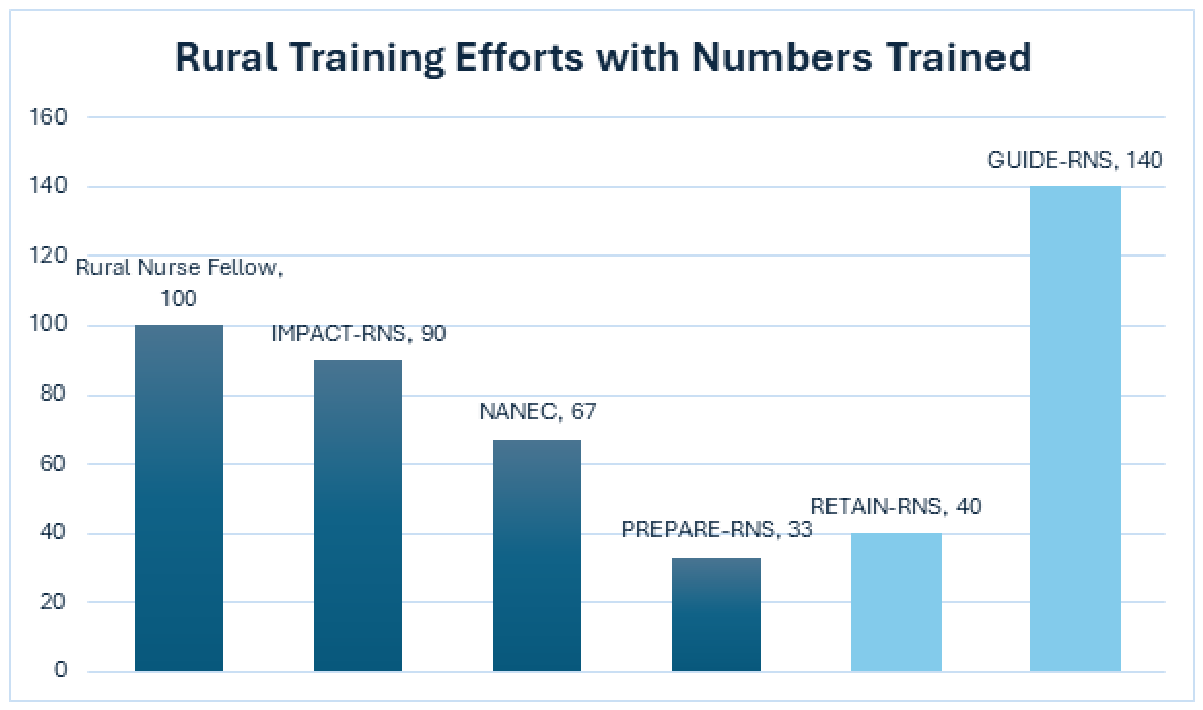
Disclaimer/Publisher’s Note: The statements, opinions and data contained in all publications are solely those of the individual author(s) and contributor(s) and not of MDPI and/or the editor(s). MDPI and/or the editor(s) disclaim responsibility for any injury to people or property resulting from any ideas, methods, instructions or products referred to in the content. |
© 2026 by the authors. Licensee MDPI, Basel, Switzerland. This article is an open access article distributed under the terms and conditions of the Creative Commons Attribution (CC BY) license.
Copyright: This open access article is published under a Creative Commons CC BY 4.0 license, which permit the free download, distribution, and reuse, provided that the author and preprint are cited in any reuse.