Submitted:
23 September 2026
Posted:
24 September 2026
You are already at the latest version
Abstract
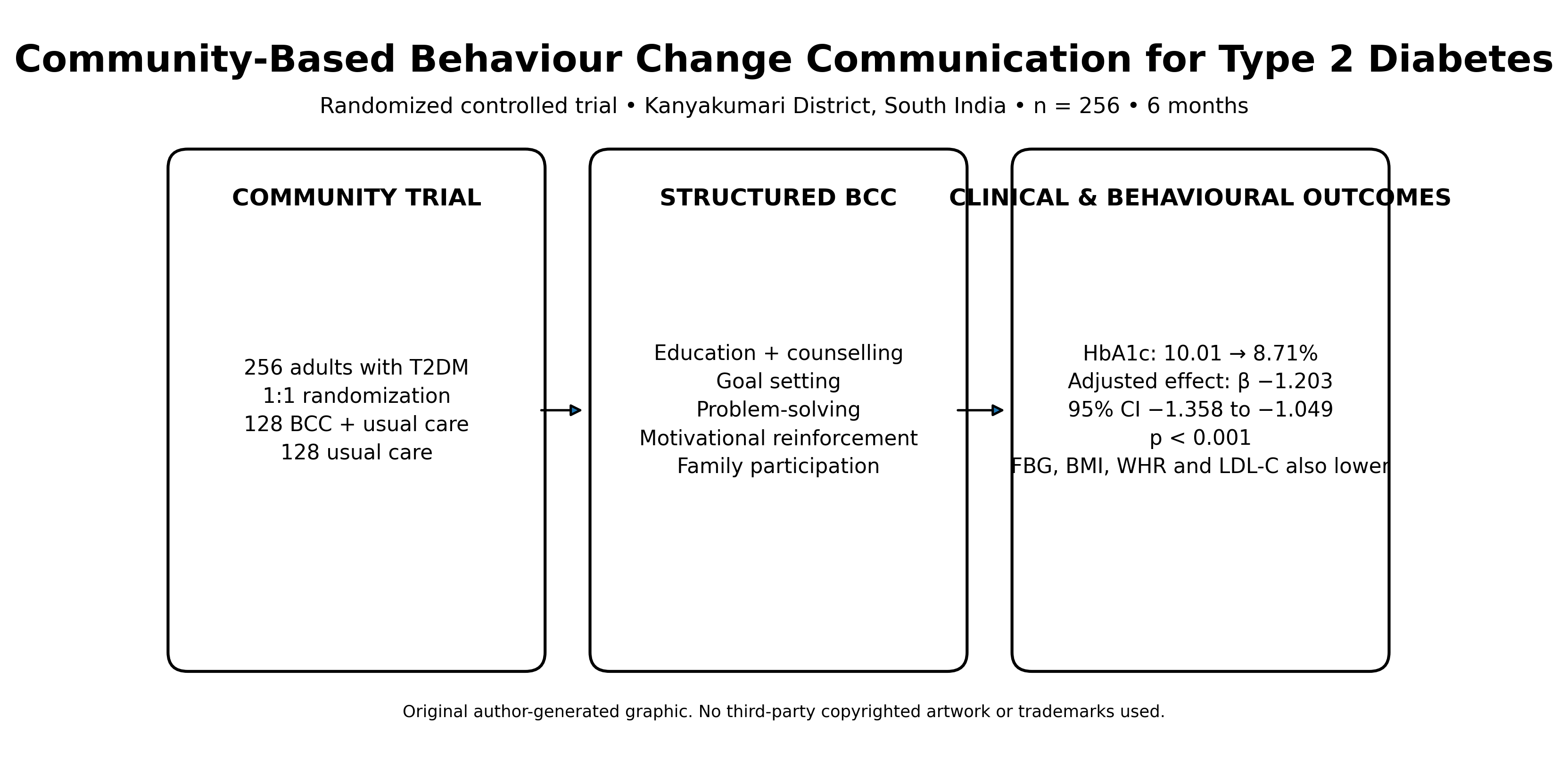
Background/Objectives: Type 2 diabetes mellitus (T2DM) requires sustained self-management between clinical encounters, yet structured behavioural support is not consistently available in routine community and primary-care settings. We evaluated whether adding a structured community-based Behaviour Change Communication (BCC) programme to usual care improved glycaemic control, cardiometabolic outcomes, and self-management behaviours among adults with T2DM in South India. Methods: In this parallel-group randomized controlled trial, 256 adults with physician-diagnosed T2DM in Kanyakumari District, Tamil Nadu, were allocated 1:1 to six months of structured BCC plus usual care (n = 128) or usual care alone (n = 128). The primary outcome was six-month glycated haemoglobin (HbA1c). Secondary outcomes included fasting blood glucose (FBG), body mass index (BMI), waist ratio, low-density lipoprotein cholesterol (LDL-C), and diabetes-related behaviours. The trial was prospectively registered (CTRI/2019/09/021122). Results: All 256 randomized participants completed six-month assessment. Mean HbA1c changed from 10.01 ± 2.38% to 8.71 ± 1.30% in the intervention group and from 9.84 ± 2.41% to 9.80 ± 2.14% in the control group. The unadjusted six-month between-group difference was −1.09 percentage points (95% CI −1.52 to −0.66; p < 0.001). In the baseline-adjusted analysis, the HbA1c treatment effect was β = −1.203 (95% CI −1.358 to −1.049; p < 0.001). FBG, BMI, waist-to-hip ratio, and LDL-C were also lower in the intervention group at follow-up. Self-reported dietary adherence, fruit and vegetable intake, physical activity, and favourable tobacco- and alcohol-related behaviours improved markedly in the intervention arm, whereas the control group did not show significant improvement comparable to the intervention group. Conclusions: Structured community-based BCC improved glycaemic and cardiometabolic outcomes and supported diabetes self-management over six months. The findings support BCC as a potentially useful component of community-oriented chronic-care delivery. Longer-term implementation, fidelity, resource, and economic outcomes require prospective evaluation.