
Submitted:
23 September 2026
Posted:
24 September 2026
You are already at the latest version
Abstract
Background: Quantification of levonorgestrel (LNG) remaining is crucial for understanding drug release, effectiveness, and potential for extended use beyond the labeled duration of contraceptive implants. The current study aimed to compare and characterize in vivo rate of LNG released from two types of implants, Femiplant (FP) and Levoplant (LP) users in Bangladesh. Methods: Between July and December 2025, explant sets were collected from reproductive age women who had an implant removed at four family planning settings and residual LNG was quantified using a validated reverse-phase high-performance liquid chromatography (RP-HPLC) method. Baseline LNG load was also determined from six unused implants of both FP and LP. Release kinetics were analyzed to identify the models that best fit the data. We determined Pregnancy rates using Pearl Index and recorded self-reported side-effects. Results: Mean baseline LNG load for FP and LP were 152.15 mg and 149.98 mg, respectively. Mean LNG residual per set of explants was 21.40 ± 3.05 (95% CI: 20.11–22.69) and 21.63 ± 2.70 (95% CI: 20.49–22.77), while LNG (%) of 76.0 ± 1.2 (95% CI: 75.5-76.8) and 74.3±1.5 (95% CI:73.5-75.1) were released from FP and LP, respectively. Additionally, f1 (difference factor) and f2 (similarity factor) estimated were 11.7 (95% CI: 9.5-17.8) and 62.5 (95% CI: 55.6-76.8) for fresh FP and LP, respectively. No pregnancy and serious adverse effect were observed, except implant related side effects such as irregular menstruation and bleeding pattern change. Overall satisfaction was 90.7% for FP, and 96.8% for LP and all participants continued implants for three years. Conclusion: FP could perform clinically similarly to LP as a long-acting reversible contraceptive implant demonstrating contraceptive effectiveness, safety, and acceptability with respective duration of action.
Keywords:
contraceptive implant
; femiplant
; levoplant
; release kinetics
; RP-HPLC
; Bangladeshi women
Introduction
Levonorgestrel (13β-ethyl-17α-hydroxy-18,19-dinorpregn-4-en-20-yn-3-one), a synthetic progestogen, is used in various birth control systems as a natural progesterone hormone, including emergency oral contraceptive pills (EOCPs), combined oral contraceptives (COCs) with ethinylestradiol, injectables, silicone-based long-acting reversible contraceptive (LARC) implants, and intrauterine device systems (IUDs), etc. [1,2]. Among these formulations, LNG-releasing contraceptive implants or implantable contraceptives consist of small, non-biodegradable, flexible rods resembling matchsticks that are inserted subdermally into the upper arm, providing a steady release of low-dose progestin. This is an effective hormonal treatment used to control menstrual complaints and endometriosis [3]. LNG implants primarily work by stopping ovulation, the release of eggs from the ovaries, and by thickening cervical mucus to block sperm from reaching the eggs. They are easily reversible, with fertility returning within days after removal. Additionally, these devices can be safely placed during the immediate postpartum period, ensuring reliable contraceptive coverage. The benefits of these implants include long-term contraception, low doses of highly effective hormones, and quick restoration of fertility after removal [4,5,6].
In 2020, Femiplant, a locally manufactured subdermal implant in Bangladesh, similar to Jadelle of Bayer Healthcare, and Levoplant of Shanghai Dahua Pharmaceuticals Company Limited, were approved by the Directorate General of Drug Administration (DGDA) and incorporated into the national family planning program under the Directorate General of Family Planning (DGFP) for three years of contraception [7,8,9,10].
In this report, we aimed to compare and characterize the release profiles of LNG through a rigorous comparative explant analysis using the validated RP-HPLC method on FD and LP implants from reproductive-aged women attending different family planning settings in Bangladesh, which helps better understand its release rate, contraceptive effectiveness, and potential for extended use beyond the labeled duration.
Materials and Methods
Study Design and Sampling
Between July and December 2025, explant sets from the women of reproductive age following three years of implant insertion were collected at Dhaka Medical College Hospital (DMC), Mohammadpur Fertility Services and Training Centre (MP), Sonargaon Upazila Health Complex (SG) and Keraniganj Upazila Health Complex (KN) from the two cohorts of study participants. The first cohort was grouped as 24 women using FP, and the second one, a similar number of participants contributing LP for long-acting contraception (Figure 1). The duration of implant use was recorded from the Implant Register Book in various family planning settings. After removal, the collected explants were kept in a plastic zipper bag and then rinsed following a contraceptive implant decontamination protocol developed by the University of North Carolina Infectious Diseases Research Laboratory involving submerging the explants in a 10% chlorine bleach or water solution for 10 minutes, rinsing the explants in distilled water, and drying at room temperature [11]. The explants were then analyzed for residual LNG content using a validated RP-HPLC technique. In parallel, six fresh implant sets of FP and LP were also analyzed for LNG quantification using the same validated method.
Sample Preparation for Explants
The dried explants were cut into small fragments of 1 mm. The cut fragments equivalent to two rods were transferred to a 100 mL volumetric flask. Sixty milliliters of reagent-grade chloroform were added, and the mixture was sonicated for 20 minutes. It was then allowed to stand for at least one hour, cooled to room temperature, and finally diluted with chloroform to the mark. Then the solution was filtered with Whatman filter paper and 0.5mL solution was transferred into a 100 mL dried volumetric flask followed by evaporation to dryness. After that, 60 ml of mobile phase (acetonitrile) was poured, sonicated for 10 minutes, and the final volume was obtained and filtered for analysis by a 0.22-micron syringe filter.
Sample Preparation for Implants
≈44 ±0.5 mm long unused fresh implants containing 150 mg of LNG were collected from the supplier. Average weight was determined (≈228 ± 2 mg), and three implant rods (of each type) were taken and cut into small fragments (~1 mm in length). The cut pieces equivalent to two rods were shifted to a volumetric flask, 60 mL of reagent-grade chloroform was mixed, sonicated for 10-20 minutes and allowed to stand for at least one hour, and then diluted with chloroform to a 100 mL volume. Then it was filtered with Whatman filter paper and transferred 0.5 ml solution into a 100 ml dried volumetric flask and evaporated to dryness. 60 ml of mobile phase (acetonitrile) was poured, sonicated for 10 minutes, and the final volume was obtained. Lastly, this solution had been filtered for analysis by a 0.2 μm syringe filter and the obtained concentration was 7.5 ppm. Assay of all the samples was carried out by injecting them into the HPLC following system suitability and other conditions.
Chromatographic Analysis
By using the Waters RP-HPLC system, equipped with a UV/UV-VIS detector, all the analysis was performed. LNG separation was accomplished with the help of a C18 column of 250 × 4.6 mm dimensions, 5 μm-sized particles in an isocratic mode of mobile phase composed of water and acetonitrile in the ratio of 30:70 (v/v). The drug elution was conducted at room temperature ± 2°C, flow rate of 1.0 mL/minute, injection volume of 50 μL, and a total run time of 12 minutes at 240 nm detection wavelength. Before injecting blank solution as well as sample solution, the HPLC system had been equilibrated for almost one hour by degassing with the mobile phase. The blank solution was then passed through a 0.22 μm syringe filter and finally injected to ensure that there was no interference from the solvent.
Data Analysis
The reported release data from both FP and LP explants were analyzed with different kinetic models. The simulations were compared to the observed data, and adjusted R-squared values were used to measure the goodness of fit. The physiological plausibility and the possibility of model extension are also considered. We also compared LNG release profiles by calculating the similarity factor, a nonparametric statistic intended to compare drug release profiles [12].
Efficacy, Safety and Acceptability
During the final year of both FP and LP implantation, we calculated the primary efficacy using the Pearl Indices as the number of pregnancies per 100 women-years of follow-up. Efficacy was measured using the reported pregnancy Pearl Indices with 95% confidence intervals (CI) based on a Poisson model. Additionally, the study participants were interviewed about the side effects of both implants used and serious adverse effects (SAEs) were documented. Moreover, we assessed acceptance of the implants by defining the percentage of the participants discontinuing the device as per WHO guidelines.
Results
A total of forty-eight reproductive aged women of 18-45 years, meeting the eligibility criteria for contraceptive subdermal implant insertion, participated in this study. Implant rods from the forty-eight participants, amounting to 48 sets of explants, were collected for residual LNG analysis when they had visited the family planning settings for implant removal at the end of three years of duration. The baseline characteristics of the study participants who had received both types of implants (FP and LP) are shown in Table 1.
In our study, the obtained mean residual LNG content was 21.40 ± 3.05 (95% CI: 20.11–22.69) and 21.63 ± 2.70 (95% CI: 20.49–22.77) per set of explants for FP and LP, respectively after three years of implantation (Table 2). The mean percentage of LNG released was 76.0±1.2 (95% CI:75.5-76.8) and 74.3±1.5 (95% CI:73.5-75.1) from FP and LP, respectively at the end of same duration from the study participants.
The average baseline LNG load was 152.15 mg for FP and 149.98 mg for LP (p=0.2), as shown in Figure 2. Additionally, the findings of the mean LNG released from unused FP and LP implant on the 1st, 2nd, 3rd, 4th, 5th, 6th, and 7th day is shown in Figure 3. Moreover, f1 (difference factor) and f2 (similarity factor) values estimated for FP and LP were 11.7 (95% CI: 9.5-17.8) and 62.5 (95% CI: 55.6-76.8), respectively.
Not a single pregnancy from each of the implant users during our study period was identified, corresponding to a Pearl Index of 0 per 100 woman-years. In addition, only a SAE (epileptic seizure) were noted, although that was not implant related. However, irregular menstruation and change in bleeding pattern were observed initially among the women after both of the implant insertion. Overall participant’s satisfaction was 90.7% for FP, and 96.8% for LP and they expressed interest to recommend for others. All of the study women continued the implants for three years.
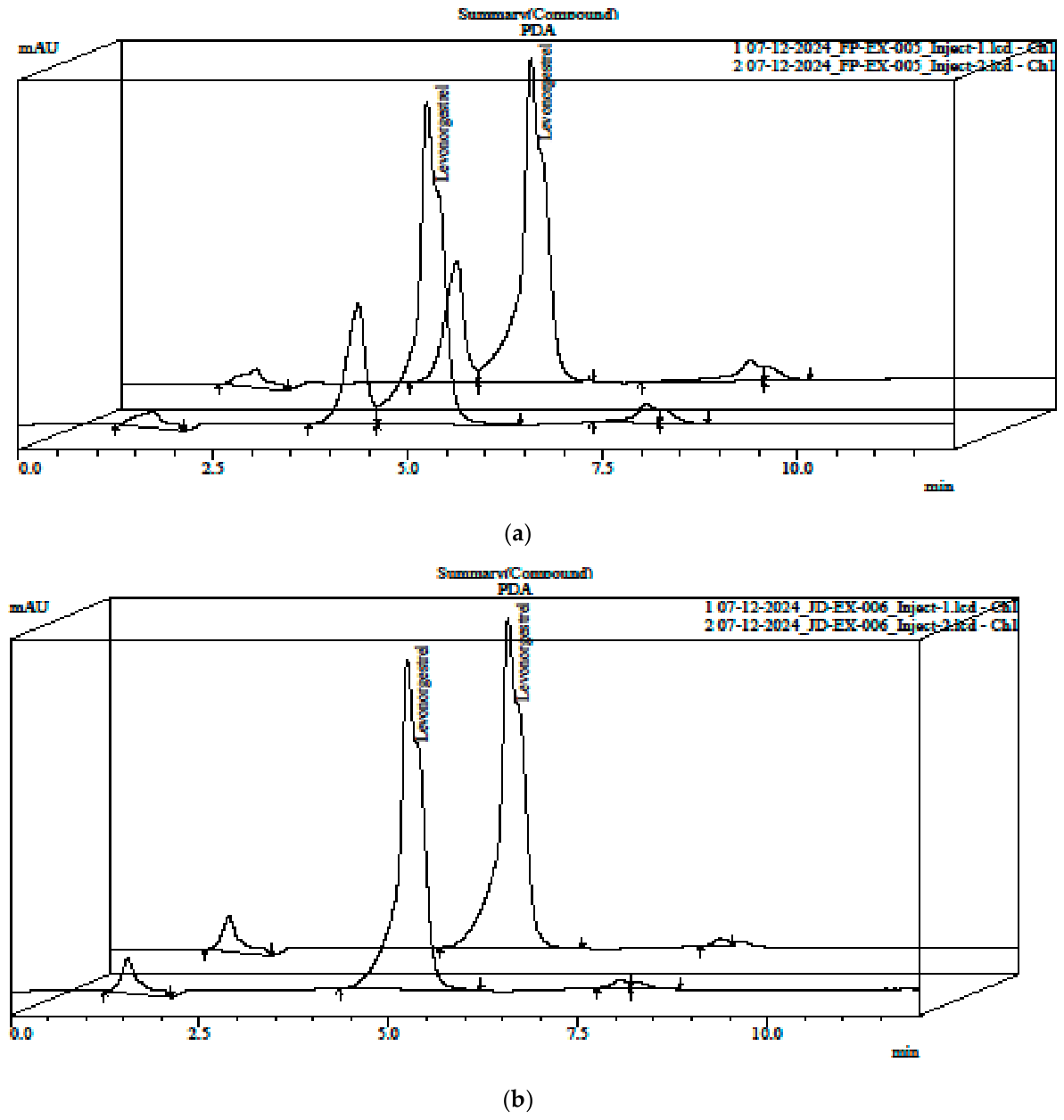
Figure 4.
(a) Representative HPLC chromatogram for LNG assay from FP explant. (b) Representative HPLC chromatogram for LNG assay from LP explant.
Figure 4.
(a) Representative HPLC chromatogram for LNG assay from FP explant. (b) Representative HPLC chromatogram for LNG assay from LP explant.
Discussion
Our study assessed and compared the residual content of LNG and in vivo drug release profile from explant rods of two types of contraceptive subdermal implants, FP and LP, after three years of use among the reproductive-age women in Bangladesh. All the participants were included and equally distributed between the two implant types, with comparable socio-demographic characteristics. The majority of women were aged between 18-24 years, with normal BMI, and mostly from middle- or low-income groups, suggesting that both contraceptive options were being retrieved by a representative segment of the users under the national family planning program in Bangladesh. Their sociodemographic characteristics align with national trends of implant users reported in the previous studies [13].
Hence, the study outcomes show that FP and LP released approximately more than three-fourths of the total LNG load from the both implants after the same duration of use. However, our findings showed that the estimated rate of release for FP was almost similar to that of LP at the end of three years. These results are consistent with previous pharmacokinetics and in vivo release studies, indicating that LNG release from two-rod contraceptive subdermal implants usually declines over time, but the rate and extent may slightly vary depending on formulation, polymer composition, rod design, and manufacturing process [14]. In addition, both FP and LP are composed of two silicone elastomer rods containing 75 mg of LNG in each rod; however, slight differences in matrix formulation or silicone penetrability could describe the marginally higher cumulative release rate observed in FP [15]. The study results exhibited that the baseline LNG load measured in both types of unused implants for FP and LP remained within the product specifications (±10% of the labeled amount of 150 mg), and no statistically significant difference was found between the two implant type at 5% level of significance (p=0.2). This result confirms batch-to-batch uniformity and adherence to GMP standards in both of the implant formulations [16].
Furthermore, the fit factors (f₁ and f₂) used in this study for the release kinetics comparison between FP and LP fresh implants confirmed whether the release profile of FP was equivalent to LP or not. According to FDA and EMA guidelines, f₁ < 15 and f₂ > 50 indicate a similar release profile [16,17]. Hence, the obtained findings evidently exhibit that FP and LP have comparable in vivo release characteristics. These findings confirm that the locally manufactured LNG implant, FP maintains a release performance and likely therapeutic equivalence comparable to that of the WHO prequalified implant, LP. Comparable bioavailability and sustained release are critical to ensuring contraceptive efficacy. In our another report, studies have shown that LNG serum concentrations remain above the minimum contraceptive threshold of 200 pg/mL throughout a three-year period for both FP and LP as well as other similar types of implants [18,19]. Thus, the slightly higher release percentage observed in FP users may still be fine within the effective range without compromising safety or duration of efficacy [20]. The study findings exhibited high contraceptive efficacy, acceptable safety and self-reported user satisfaction, and pharmacokinetic parameters consistent with earlier studies reported on the LNG implant [21].
Overall, the study findings support the therapeutic equivalence and quality consistency of FP compared to LP after three years of clinical use. This equivalence is significant for Bangladesh’s public health context, as FP provides a cost-effective, locally produced alternative to WHO prequalified imported implant, LP while maintaining comparable performance and reliability. Future research may focus on the pharmacokinetic evaluation of serum LNG concentrations over time and long-term contraceptive outcomes beyond three years.
Conclusions
Explant analysis provides valuable insights into their performance and long-term effects, indicating both FP and LP maintain the release of LNG effectively from subdermal implants at therapeutic levels for the duration of intended use, typically up to three years. In addition, the study findings highlight the consistency in hormonal release, with women experiencing effective contraception throughout the lifespan of the method. Overall, the study outcomes support success of both implants as a long-term contraceptive option, reinforcing their role in family planning and reproductive health in Bangladesh. This type of research continues to inform clinical practices and enhance patient counseling regarding the implant use.
Author Contributions
Conceptualization: AKLK and EH, methodology: AKLK and SN; formal analysis: AKLK and SAS writing: original draft preparation, AKLK; writing review and editing, AKLK, SAS and JF. All authors have read and agreed to the published version of the manuscript.
Funding
This research was self-funded by the corresponding author.
Institutional Review Board Statement
The study protocol had been thoroughly revised and reviewed by the ethical review committee of the Faculty of Pharmacy, Dhaka University, and received ethical approval (Ref. No. Fa.Ph.E/047/2025). Study participants were informed about the study in detail, and they agreed to give written or verbal consent to participate in the study. Data collection procedures have been maintained in accordance with the ethical principles outlined in the Declaration of Helsinki, as adopted by the World Medical Association.
Informed Consent Statement
NA.
Data Availability Statement
All data and materials are accessible upon request from the corresponding author.
Acknowledgments
The authors are grateful to the study women, Techno Drugs Ltd. and all the family planning centers under DGFP, GOB, for their generous support.
Conflicts of Interest
The authors declare no conflict of interest.
References
- Cirrincione, L. R.; Penchala, S. D.; Scarsi, K. K.; Podany, A. T.; Winchester, L. C.; Back, D. J.; Khoo, S. H.; Fletcher, C. V.; Siccardi, M.; Else, L. J. Development, validation and utilization of a highly sensitive LC-MS/MS method for quantification of levonorgestrel released from a subdermal implant in human plasma. J. Chromatogr. B, Anal. Technol. Biomed. Life Sci. 2018, 1084, 106–112. [Google Scholar] [CrossRef] [PubMed]
- Scarsi, K. K.; Darin, K. M.; Chappell, C. A.; Nitz, S. M.; Lamorde, M. Drug-Drug Interactions, Effectiveness, and Safety of Hormonal Contraceptives in Women Living with HIV. Drug Saf. 2016, 39(11), 1053–1072. [Google Scholar] [CrossRef] [PubMed]
- Bahamondes, L.; Bahamondes, M. V.; Juliato, C. R. T. Subdermal contraceptive implants. Best Pract. Res. Clin. Obstet. Gynaecol. 2025, 100, 102604. [Google Scholar] [CrossRef] [PubMed]
- Lutful Kabir, A.K.; Nahar, S.; Hossain, E. A mixed-methods cross-sectional study on early contraceptive implant removal and its associated factors among women implanted attending family planning settings in Bangladesh. Contracept. Reprod. Med. 2026, 11, 10. [Google Scholar] [CrossRef] [PubMed]
- Hossain, E.; Kabir, A. K. L. Comparison Between Levonorgestrel and Etonogestrel Implants, the Two Silicone-Based Long-Acting Reversible Subdermal Contraceptives. Med. Pharmacol. OA 2026, 4(1), 01–05. [Google Scholar]
- Bahamondes, L.; Fernandes, A. Long-acting reversible contraceptive (LARC) methods. Best Pract. Res. Clin. Obstet. Gynaecol. 2018, 46, 1–12. [Google Scholar]
- Bayer Oy. Levoplant® (levonorgestrel implant) product information; Bayer Oy: Turku, Finland, 2016. [Google Scholar]
- Shanghai Dahua Pharmaceuticals Co. Ltd. Levoplant/Sino-implant II product information; Shanghai, China, 2019. [Google Scholar]
- Techno Drugs Limited. Femiplant product information; Dhaka, Bangladesh, 2021. [Google Scholar]
- Directorate General of Drug Administration (DGDA); Government of Bangladesh. Approval record for Femiplant (levonorgestrel implant). 2021. [Google Scholar]
- Callahan, R.L.; Taylor, D.; Jenkins, D.W.; et al. In vivo release of levonorgestrel from Sino-implant (II)- an innovative comparison of explant data. Contraception 2015, 92(4), 350–355. [Google Scholar] [CrossRef] [PubMed]
- Kim, S.; Cicali, B.; Pressly, M.; Da Silva, L.; Wendl, T.; Vozmediano, V.; Schmidt, S.; Cristofoletti, R. Model-Based Analysis of In Vivo Release Data of Levonorgestrel Implants: Projecting Long-Term Systemic Exposure. Pharmaceutics 2023, 15(5), 1393. [Google Scholar] [CrossRef] [PubMed]
- National Institute of Population Research and Training (NIPORT); ICF. Bangladesh Demographic and Health Survey; Dhaka, Bangladesh, and Rockville, Maryland, USA, 2022. [Google Scholar]
- Sivin, I.; Campodonico, I.; Diaz, S.; Croxatto, H. B.; Miranda, P.; Wan, L. The performance of levonorgestrel rod and Norplant® contraceptive implants: A 5-year randomized study. Hum. Reprod. 2021, 16(9), 1905–1912. [Google Scholar]
- World Health Organization (WHO). Levonorgestrel-releasing implants: A WHO technical consultation on contraceptive implants; WHO: Geneva, 2015. [Google Scholar]
- U.S. Food and Drug Administration (FDA). Guidance for Industry: Dissolution Testing of Immediate Release Solid Oral Dosage Forms; 2020. [Google Scholar]
- European Medicines Agency (EMA). EMA/CPMP/EWP/QWP/1401/98 Rev.1; Guideline on the Investigation of Bioequivalence. 2015.
- Kabir, A.K.L.; Uddin, M.N.; Rony, S.R.; et al. LC-MS/MS method development, validation, and application for levonorgestrel assay from contraceptive implants in Bangladeshi women. Sci. Rep. 2026. [Google Scholar] [CrossRef]
- Begum, N.; Hossain, M.; Islam, R. Determinants of contraceptive implant use among women in Bangladesh: An analysis of the BDHS 2017–18. BMC Women's Health 2020, 20(1), 214. [Google Scholar]
- Darney, P. D.; Patel, A.; Rosen, K.; Shapiro, L. S.; Kaunitz, A. M. Safety and efficacy of a single-rod etonogestrel implant (Implanon): Results from 11 international clinical trials. Fertil. Steril. 2019, 91(5), 1646–1653. [Google Scholar]
- Lutful Kabir, A.K.; Rahman, S.; Rony, S. R.; et al. Safety, efficacy, and acceptability of two-rod contraceptive implant among women implanted attending family planning settings in Bangladesh, PREPRINT available at. Res. Sq. 2026. [Google Scholar] [CrossRef] [PubMed]
Figure 1.
Flow diagram for the enrollment of study women contributing to FP and LP explants at different family planning settings in Bangladesh.
Figure 1.
Flow diagram for the enrollment of study women contributing to FP and LP explants at different family planning settings in Bangladesh.
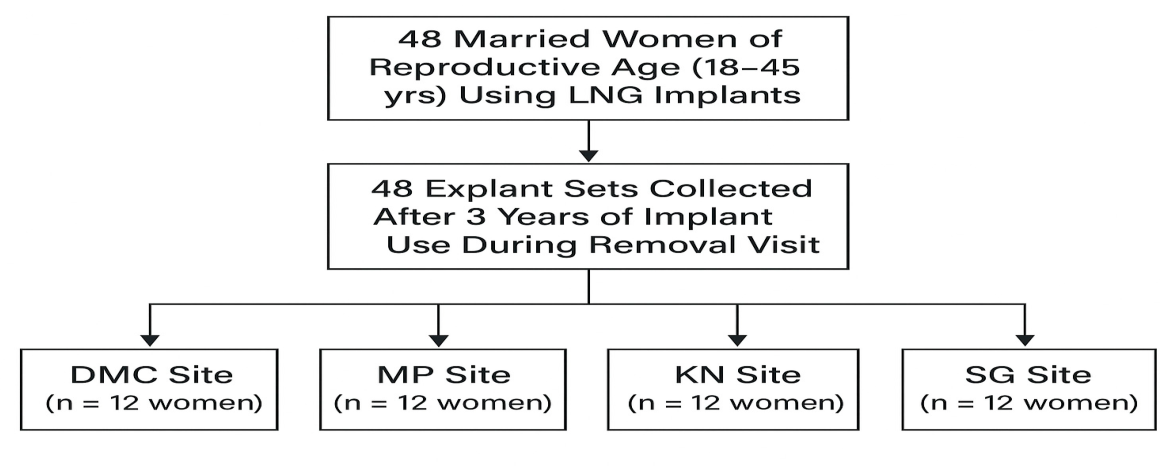
Figure 2.
Estimated baseline LNG load for FP and LP against the labeled amount of 150 mg.
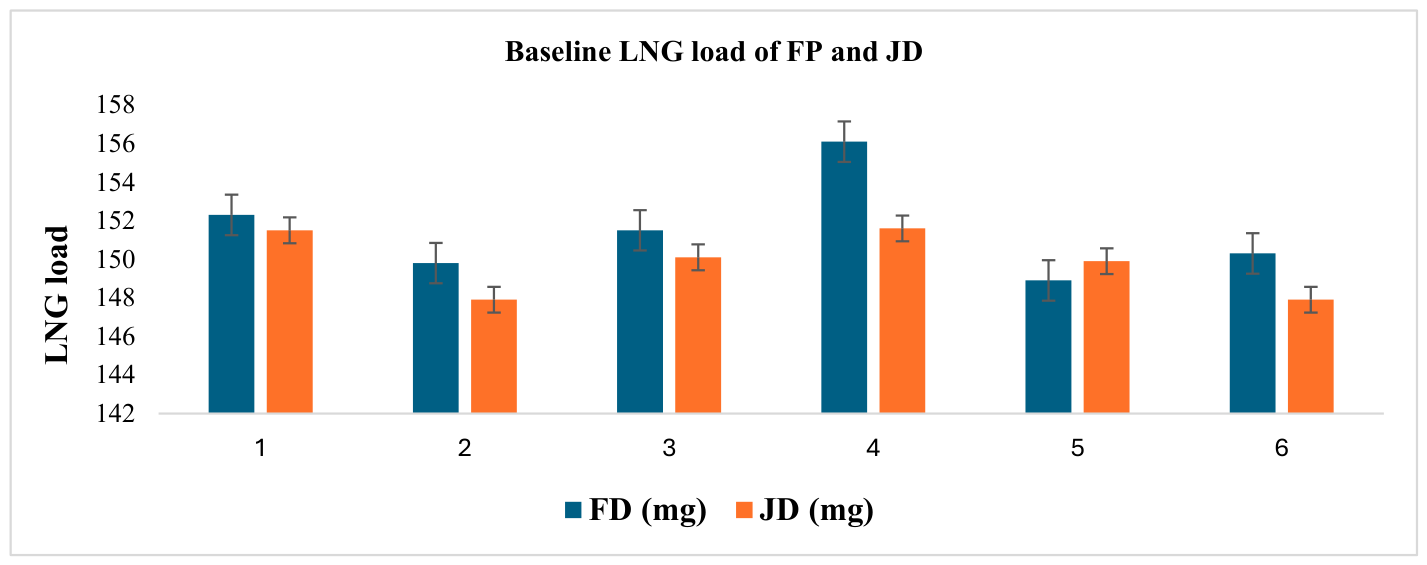
Figure 3.
Release comparison of LNG from unused FP and LP.
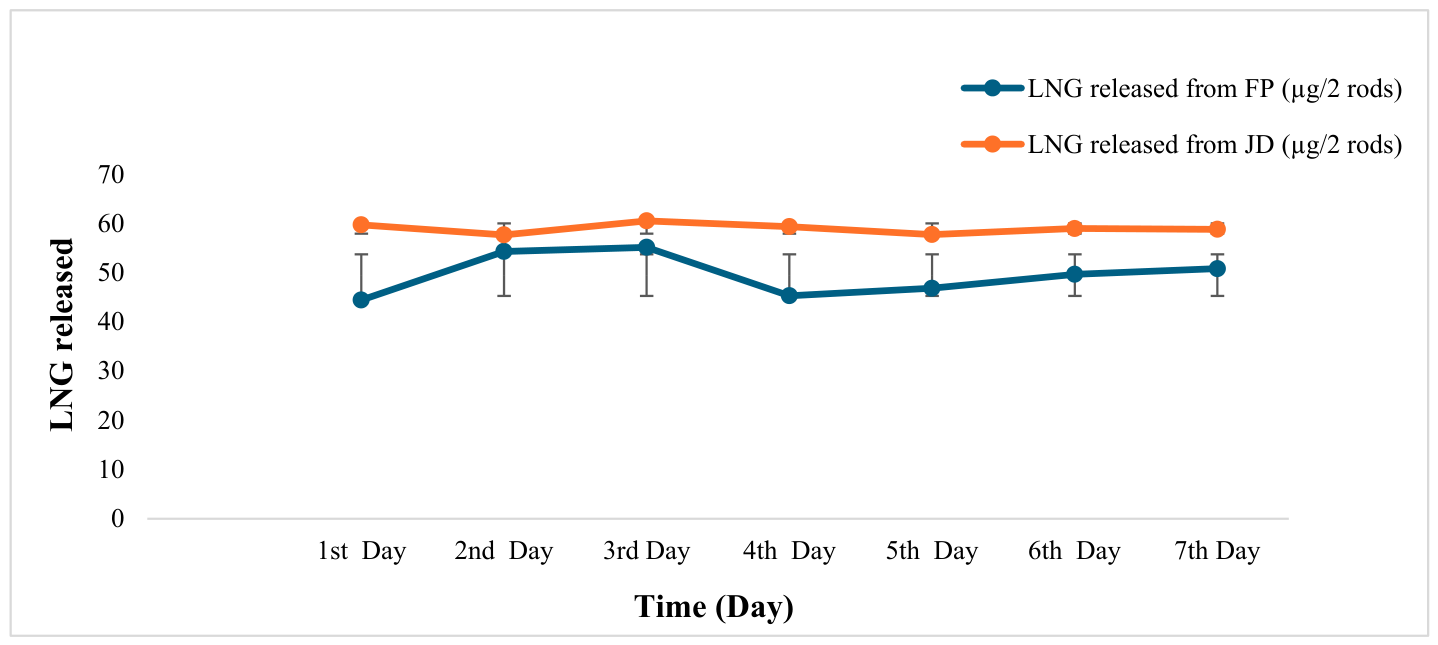

Table 1.
Baseline characteristics of the study participants contributing to FP and LP implants.
| Age (years) | FP_N (%) | LP_N (%) |
|---|---|---|
| 18-24 | 19 (79.1) | 18 (75.0) |
| 25-30 | 4 (16.6) | 4 (16.6) |
| >30 | 1 (4.1) | 2 (8.3) |
| BMI | ||
| Normal (< 25 kg/m2) | 23 (95.8) | 22 (91.6) |
| Overweight/obesity (>25 kg/m2) | 1 (4.1) | 2 (8.3) |
| Educational status | ||
| No formal education | 6 (25.0) | 5 (20.8) |
| Primary | 14 (58.3) | 15 (62.5) |
| Secondary | 2 (12.5) | 3 (8.3) |
| Higher secondary and above | 2 (4.1) | 1 (8.3) |
| Employment status | ||
| Housewife | 13 (54.1) | 14 (58.3) |
| Service | 9 (37.5) | 8 (33.3) |
| Others | 2 (8.3) | 2 (8.3) |
| Economic status | ||
| Low | 11 (45.8) | 12 (50.0) |
| Medium | 12 (50.0) | 11 (45.8) |
| High | 1 (4.1) | 1 (4.1) |
| Residential status | ||
| Rural | 10 (41.6) | 11 (45.8) |
| Urban | 14 (58.3) | 13 (54.1) |
Table 2.
Mean LNG residual per explant set from the participants after three years of implantation.
| Sample ID | Residual LNG (mg) | Sample ID | Residual LNG (mg) | Sample ID |
Residual LNG (mg) | Sample ID |
Residual LNG (mg) |
|---|---|---|---|---|---|---|---|
| FP1 | 21.5 | FP13 | 22.1 | JP1 | 22.5 | JP13 | 20.9 |
| FP2 | 22.3 | FP14 | 21.5 | JP2 | 22.0 | JP14 | 23.3 |
| FP3 | 24.6 | FP15 | 23.6 | JP3 | 24.5 | JP15 | 22.6 |
| FP4 | 23.5 | FP16 | 22.5 | JP4 | 23.1 | JP16 | 23.5 |
| FP5 | 15.2 | FP17 | 21.2 | JP5 | 25.2 | JP17 | 19.2 |
| FP6 | 21.3 | FP18 | 24.3 | JP6 | 21.8 | JP18 | 23.3 |
| FP7 | 21.7 | FP19 | 24.1 | JP7 | 21.5 | JP19 | 20.7 |
| FP8 | 22.5 | FP20 | 25.5 | JP8 | 21.3 | JP20 | 23.5 |
| FP9 | 13.5 | FP21 | 17.5 | JP9 | 14.5 | JP21 | 21.5 |
| FP10 | 24.8 | FP22 | 21.5 | JP10 | 22.9 | JP22 | 23.8 |
| FP11 | 18.3 | FP23 | 16.9 | JP11 | 15.8 | JP23 | 16.4 |
| FP12 | 22.1 | FP24 | 21.6 | JP12 | 21.7 | JP24 | 23.6 |
Disclaimer/Publisher’s Note: The statements, opinions and data contained in all publications are solely those of the individual author(s) and contributor(s) and not of MDPI and/or the editor(s). MDPI and/or the editor(s) disclaim responsibility for any injury to people or property resulting from any ideas, methods, instructions or products referred to in the content. |
© 2026 by the authors. Licensee MDPI, Basel, Switzerland. This article is an open access article distributed under the terms and conditions of the Creative Commons Attribution (CC BY) license (http://creativecommons.org/licenses/by/4.0/).
Copyright: This open access article is published under a Creative Commons CC BY 4.0 license, which permit the free download, distribution, and reuse, provided that the author and preprint are cited in any reuse.