

Submitted:
22 September 2026
Posted:
24 September 2026
You are already at the latest version
Abstract
Prader–Willi syndrome (PWS) is an imprinting disorder characterized by severe hypotonia, poor suck, failure to thrive and hypogonadism\hypogenitalism noted during infancy with hyperphagia, severe obesity, and metabolic dysregulation onset in early childhood. Inhibition of methionine aminopeptidase 2 (METAP2) using Beloranib, a fumagillin analog inhibits angiogenesis and associated with decreased adiposity, reduced appetite and body weight in clinical trials of obese individuals with and without PWS. However, clinical trials using Beloranib were discontinued following reports of thromboembolic events and deaths. To better characterize the biological mechanisms underlying METAP2 and related METAP1, we performed a comprehensive silico analysis of genetic and curated protein interactive networks with initial observations from STRING and compared with Pathway Commons and BioGRID interactive gene and protein web-based programs. The studies revealed that METAP2 is centrally embedded within networks governing cytoplasmic translation, ribosomal biogenesis, post-translational protein maturation, ubiquitin-mediated proteostasis, and lipid biology. METAP2 showed strong associations with ribosomal proteins, deubiquitinating enzymes and sphingolipids, as components of the vascular wall, along with metabolic regulation. Identification of risk factors and use of next-generation METAP2 inhibitors such as ZGN-1061with improved safety profiles and combined careful thrombotic risk identification and stratification with monitoring would be critical in the future for selected patient populations.
Keywords:
Prader-Willi syndrome (PWS)
; methionine aminopeptidase 2 (METAP2)
; Beloranib
; obesity
; hyperphagia
; thrombotic events
; in silico integrated genetic-protein analysis
1. Introduction
Prader-Willi syndrome (PWS) is a rare obesity-related genetic disorder due to errors in genomic imprinting with lack of expression of genes inherited from the paternal chromosome 15q11-q13 region (e.g., [1]). The most common cause is a paternal 15q11-q13 deletion followed by maternal uniparental disomy 15 or both 15s from the mother [1,2,3,4,5]. Hence, an imprinting center controls the expression of imprinted genes in the chromosome 15q11-q13 region. Key clinical findings include infantile hypotonia, a poor suck, failure to thrive and hypogonadism/hypogenitalism. Short stature and small hands/feet due to growth and other hormone deficiencies are recognized in early childhood along with onset of hyperphagia and life-threatening obesity, if uncontrolled. Cognitive and behavioral problems include tantrums, compulsions, anxiety, and skin picking. In adults, cardiorespiratory issues are the most common cause of death, while other causes include blood clots and infections [1,2,3,4,6,7].
The loss of paternally expressed genes and transcripts within the 15q11-q13 region, including paternally expressed SNURF-SNRPN genes, the SNORD116 cluster and MAGEL2 [8]. SNRPN is key in encoding a complex assembling of spliceosomal snRNP units required for mRNA processing, cellular events, splicing and binding required for detailed protein production and variation, neurodevelopment, immunodeficiency and cell migration. MAGEL2 is active in the regulation of retrograde transport and promotion of endosomal assembly, oxytocin and reproduction including circadian rhythm, transcriptional activity and appetite [8].
Genomic, transcriptomic and functional studies have led to a better understanding of dysregulation of hypothalamic signaling, neuroendocrine pathways, mitochondrial metabolism, ribosomal function, and protein translation involved in energy homeostasis, insulin signaling, adipogenesis, and inflammatory pathways which are reported in PWS tissues and cellular models (e.g., [8,9]). The imprinted SNRPN-SNURF and related genes in the chromosome 15q11-q13 are involved in complex spliceosomal snRNP assemblies required in mRNA processing, splicing and binding needed for detailed protein production and variation [4,8,9]. This includes several genes known to play important roles in eating behavior through the hypothalamus such as pro-opiomelancortin (POMC), melanocortin 4 receptor (MC4R), leptin and ghrelin (www,omim.org; www.genecards.org) [4,8,9] which are not located in the 15q11-q13 region. POMC neurons in the hypothalamus regulate eating behavior and energy by promoting satiety with the release of peptides such as MC4R and alpha MSH (melanocyte stimulating hormone) to help suppress appetite. Other neuroendocrine pathways, mitochondrial metabolism, ribosomal function, and protein translation are further involved in energy homeostasis, insulin signaling, adipogenesis, and inflammatory pathways Molecular abnormalities contribute to hyperphagia, reduced energy expenditure, abnormal body composition, and metabolic dysfunction impact on treatment and clinical outcomes [1,2,3,4,8,9].
Management of Prader-Willi syndrome requires a multidisciplinary approach that includes strict environmental control of food access, dietary supervision, physical activity, behavioral interventions, hormone replacement when indicated, and treatment of obesity-related comorbidities. Numerous pharmacologic strategies have been evaluated, including glucagon-like peptide-1 receptor agonists, oxytocin and oxytocin analogs, diazoxide choline controlled-release, melanocortin receptor agonists, cannabinoid receptor modulators, and other agents targeting hypothalamic appetite regulation and metabolic pathways. (e.g., [10,11]). Several therapies have shown some improvements in hyperphagia, body weight, or food-related behaviors in subsets of individuals with PWS, clinical responses have generally been variable with only one drug meeting FDA approval [12]. Limitations have prompted continued investigation of alternative therapeutic targets over the years, included methionine aminopeptidase 2 (METAP2) inhibition to better address the underlying metabolic and neurobiological abnormalities contributing to hyperphagia and obesity in PWS [10,11].
Beloranib is a fumagillin analogue originally developed as an anti-angiogenic agent for cancer therapy because of its ability to inhibit endothelial cell proliferation through selective inhibition of methionine aminopeptidase 2 (METAP2) (e.g., [13,14,15]). Fumagillin, a natural product isolated from Aspergillus fumigatus, was initially recognized for its antimicrobial properties before its anti-angiogenic effects were identified. Structural modification of fumagillin led to the development of Beloranib, which retained potent METAP2 inhibitory activity while exhibiting improved pharmacologic properties thought suitable for clinical investigation (e.g., [14,15,16]). METAP2 is an intracellular metalloprotease that catalyzes the co-translational removal of N-terminal methionine residues from newly synthesized proteins, a step required for proper protein maturation, stability, localization, and function (e.g., [13,14,15,16]). Although initially investigated for its anti-angiogenic properties, subsequent studies demonstrated that METAP2 also occupied a central role in metabolic regulation. Pharmacologic inhibition of METAP2 suppresses adipocyte differentiation, enhances lipolysis and fatty acid oxidation, reduces hepatic lipid synthesis, improves insulin sensitivity, and decreases food intake without proportionally reducing lean body mass (e.g., [14,15,16]). These metabolic effects were consistently observed in experimental animal models and later translated into meaningful reductions in body weight and adiposity in clinical trials involving obesity and type 2 diabetes, prompting investigation of Beloranib as a potential treatment for severe hyperphagia and obesity in individuals with Prader-Willi syndrome (e.g., [14,15,16]).
Beloranib was subsequently evaluated in a cohort of subjects with PWS in a clinical trial conducted by Zafgen to treat hyperhagia and obesity [17] and assessed effectiveness, while examining safety and tolerability. This trial included a 26-week treatment period in both adolescent and adult individuals with PWS. It was prompted by earlier findings that demonstrated meaningful weight reduction accompanied by decreased appetite in obese subjects without PWS when treated with Beloranib [14,15]. Beloranib treatment was promising as it produced significant weight loss at 0.5 to 1.0 kg per week, but unfortunately 2 of 114 participants with PWS died from blood clots and the trial was discontinued although one participant had a history of blood clots also found in other family members [17]. To further investigate the biological processes, molecular functions and pathways affected by Beloranib and role in obesity treatment, we undertook an in-silico analysis of METAP2 to better understand genetic and protein mechanisms and focus on PWS, a rare obesity-related disorder [2,4,17,18,19] to identify risk factors that could impact treatment.
2. Materials and Methods
2.1. Searchable Literature and Web-Based Programs and Databases
2.1.1. Literature and Websites Queried
Literature sources were searched and investigated by focusing on keywords “methionine aminopeptidase 2 (MetAP2)”, “Beloranib”, “protein and gene interactions and variants” and “Prader-Willi syndrome (PWS)” using PUBMED (www.pubmed.org) in humans (Homo sapiens) only (e.g., accessed on 23 December 2025). Other searchable sites included genes and proteins with functions using Online Mendelian Inheritance in Man (OMIM) (www.omim.org), UniProt (www.uniport.org), Ensembl (www.ensembl.org), Gene Cards (www.genecards.org) and Gene Reviews (www.genereviews.org) (e.g., accessed 23 December 2025).
2.1.2. Searchable Web-Based Programs and Databases Queried
STRING Integrated Programs and Databases
We used STRING integrated program (version 12.5) and databases (https://string-db.org) as the key source (e.g., [20,21,22,23]) (e.g., accessed 23 December 2025). This well-established program was used in 125 peer-reviewed studies published in the literature when searching string-db in PUBMED to avoid other programs with ‘string’ in the title and accessed on 28 June 2026. Several reports found included our research group (e.g., [8,24,25,26,27,28,29]) indicating expertise and acceptance of investigations.
The STRING program uses an R interface statistical package for protein-protein interaction and functional enrichment analysis to report differences. These methods identify biological pathways or functions in tiered analytical format that are over-represented in a given list of proteins when compared to a background set. STRING integrates various data sources including both experimental and computational predictions to enhance reliability.
Key aspects of the enrichment methods are input data searched by the program and provides a list of identified or potentially interactive proteins (e.g., with METAP2 or related METAP1 in our study) and statistically calculates the significance of the observed associations between input proteins and known pathways or functions. The output typically includes enriched pathways and significance scores with visualizations/illustrations to help interpret the data. The results are then downloaded when searching for a specific protein, for example, METAP2 or METAP1. The ‘Legend’ key embedded in the program was selected to identify the description for each of the inter-related proteins in a tiered format (10, 20 or 30 interactive proteins) and the ‘Analysis’ key for specific protein interactions grouped as biological processes, molecular functions, etc. No other statistical computer-based program was used in our study besides searchable programs BioGRID (https://thebiogrid.org) for protein-protein interactions for comparisons with STRING and Pathway Commons (www.PathwayCommons.org) for identifying gene-gene associations. No experimental or wet-based laboratory assays were undertaken or carried out in our research study.
The data ascertained by STRING formulates computational predictions of comprehensive objective protein networks encompassing both functional and physical interactions. It adjusts for false discovery and generates p-values and visualizes the interface for interpreting interactive protein-protein associations. Query and visualization also enables the identification of potential regulatory nodes, signaling cascades, and functional clusters relevant to gene expression and disease mechanisms. The interactions may be either direct (physical) or indirect (functional) protein associations which are derived from genomic context predictions, high-throughput laboratory experiments, automated text mining of scientific literature, and other databases including conserved gene co-expression patterns. Potential regulatory protein nodes are identified and characterized through functional clustering and signaling cascades relevant to gene expression and disease mechanisms. Identified protein clusters are then linked to Gene Ontology for biological processes, molecular functions, and cellular components, as well as KEGG and Reactome pathways.
Four analytical metrics were provided by the STRING platform including Count in Network (CIN) which represents the number of proteins within the analyzed network associated with a specific biological term or pathway. Strength reflects the magnitude of enrichment by comparing the observed number of proteins associated with a term to the number expected in a randomly generated network of equal size. False Discovery Rate (FDR) assesses the statistical significance of enrichment and estimates the probability of Type I (false-positive) errors, with p-values corrected for multiple hypothesis testing. Signal is calculated as a weighted harmonic mean from the observed-to-expected ratio and −log(FDR), providing a balanced measure for ranking enriched terms across both large and small functional categories. The analytical and resultant findings were then compared with other computer programs such as BioGRID protein-protein interactive network and Pathway Commons for gene-gene interactions involving METAP2. Additional methodological details and their computations are available through STRING database documentation (https://string-db.org) or from literature citations (e.g., [20,21]).
Pathway Commons Web-Based Program for Gene-Gene Interactions
Pathway Commons (https://www.pathwaycommons.org/) is a separate program utilized to identify and disseminate biological pathway and interactive data from gene-gene functional interactions and regulatory networks. It provides detailed representation of a variety of biological concepts including biochemical reactions, gene regulatory networks and genetic interactions with illustrations when querying specific genes such as METAP2. It provides a shared resource for publishing, distributing, querying and analyzing pathway information (e.g., [8,19,27,28,30]) and focuses on biological and molecular mechanisms that enable insight regarding conserved networks and pathways relevant to health and diseases.
Biological General Repository for Interaction Datasets (BioGRID) Program for Analysis of Protein-Protein Interactions
The searchable BioGRID web-based program and database (https://thebiogrid.org/) was used to identify or validate related functional protein-protein interactions and networks. It analyzes protein-protein GO biological processes, GO molecular functions and cellular components, similar to the STRING program (e.g., [8,19,28,31]).
3. Results
3.1. STRING Protein-Protein Interactions, Functions, and Analysis
The STRING in silico program was used to collectively identify and analyze protein and genetic mechanisms related to METAP2 and generate the top protein-protein associations with accompanying summary tables and figures. STRING offers three-tiered network categories with the first-tier consisting of the ten highest-confidence direct protein interactors (Figure 1) while the second-tier represents the 20 top associated proteins. The third-tier includes the top 30 associated proteins found in the search. All analyses used STRING default confidence thresholds. Table 1 includes both related METAP2 proteins and description of the top ten associated proteins. Six of the top interactive proteins were ribosomes and involvement of sphingolipids followed by protein translation, production and degradation. Table 2 describes the predicted functions for METAP2 using the first-tier highest-confidence proteins.
For METAP2 and related-METAP1 using STRING analysis, the METAP1 protein interacted with METAP2 by showing the highest confidence score of 0.991 obtained from databases and text mining categories. This was followed by RPL5 with a score of 0.905 obtained from co-expression and experiments with DEGS2 and DEGS1 having very similar scores of 0.897 and 0.896, respectively, related to gene fusion and protein hybrid. These two related derived proteins and UCHL5 interact solely with METAP2 as shown in Figure 1.
The second-tier STRING analysis with METAP2 showed 20 associated proteins with 115 meaningful edges predicted functions, including 10 proteins illustrated in Figure 1. For example, the coiled-coil domain containing protein 124 (CCDC124) is required for progression of late cytokinetic stages with Pelota homolog (PELO) used for chromosomal segregation during cell division. Death associated protein like-1 (DAPL1) plays a role in apoptosis while nascent polypeptide associated complex subunit alpha 2 (NACA2) prevents wrong targeting of secretory polypeptides in the endoplasmic reticulum. Nascent polypeptide associated complex subunit alpha (NACA) prevents wrong targeting of secretory endoplasmic reticulum polypeptides. Testis expressed protein 48 (TEX48) plays a role in spermatogenesis while mitochondrial ribosomal protein S6 (MRPS6) protein helps in mitochondrial protein synthesis. Peptide deformalize (PDF) protein removes the formyl group of newly synthesized proteins while transport protein Sec61 subunit alpha isoform 2 (SEC61A2) plays a role in insertion of secretory and membrane polypeptides in the endoplasmic reticulum. Lastly, H0YIJ7 is an uncharacterized protein.
In the third-tier STRING analysis, 30 associated proteins were targeted with 325 edges and predicted functions included 20 proteins found in the first and second-tier analysis. The new identified proteins included Ribosomal protein L36a (RPL36A) and RPL36A-HNRNPH2 belonging to the eukaryotic ribosomal protein eL42 and AT-hook transcription factor (AKNA) domain containing 1 (AKNAD1). Eukaryotic translation initiation factor 5A-1 like (EIF5AL1) is a mRNA-binding protein involved in translation elongation and interferon-related development regulator 2 (IFRD2) is a nuclear protein that represses translation. Ribosomal protein L22 like 1 (RPL22L1) belongs to the eukaryotic ribosomal protein eL42 while signal recognition particle 19kDa protein (SRP19) mediates binding. Ribosome biogenesis protein NSA2 homolog (NSA2) is involved in the biogenesis of the 60S ribosomal subunit. Importantly, protein LLP homolog (LLPH) regulates dendritic and spine growth with synaptic transmission.
Figure 2 presents STRING Gene Ontology (GO) biological process analysis of METAP2-associated genes performed to characterize functions and cellular pathways most strongly represented within the METAP2 interactive network. Enriched processes provided insight into molecular mechanisms, potentially underlying therapeutic effects of METAP2 inhibition, particularly those related to protein synthesis, post-translational modification, and cellular protein homeostasis. Additional enriched processes included large ribosomal subunit biogenesis and assembly, amide biosynthetic processes, and protein initiator methionine removal with peptidyl-methionine modification. This is consistent with the known role of METAP2 in co-translational protein maturation. Regulatory pathways involve negative regulation of ubiquitin-dependent protein catabolic processes, protein ubiquitination, and neddylation suggesting a link between MetAP2 activity and proteostasis control. Furthermore, less prominent but notable enrichment, was observed for p53-mediated signal transduction, indicating potential connections to cell cycle or stress-response pathways.
The dot size in Figure 2 reflects the gene count, while color denotes false discovery rate (FDR), and the x-axis represents the enrichment signal. These collectively demonstrate that METAP2-related networks are tightly coupled to translational control and protein quality regulation. In general, the interaction scores in STRING do not represent the given interaction, but instead are meant to express approximate confidence, on a scale of zero to one for the association being true (e.g., [20,21]).
When undertaking STRING analysis with a separate, but related METAP1 protein, the highest rated interactive protein was METAP2, which co-translationally removes the N-terminal methionine from nascent or early proteins essential for stability, signaling and maturation. Six of ten interactive proteins for METAP1 were in common with METAP2. These were ribosomal proteins (e.g., RPL5, RPL35, PRL23, RPL23A, RP11, RP53) found with co-expression and expression from data sources. Its score was 0.991. The strongest edge score for METAP2 involved gene fusion for both DEGS1 and DEGS2 which may occur in nature by translocation and forming a single hybrid gene and protein product. However, the related DEGS1 and DEGS2 hybrid protein complex impacts sphingolipids and vascular wall development noted in METAP2 studies, but these related genes were not found with METAP1. In addition, the top biological process for METAP1 related to METAP2 was cytoplasmic translation and the top molecular function was rRNA bindind. The top cellular component was cytosolic ribosome, the top KEGG pathway was ribosome, the top Reactome pathway was viral mRNA translation, and the top disease-gene association was Diamond-Blackfan anemia, as seen with METAP2.
3.2. Pathway Commons Gene-Gene Interactions and Functions
The Pathway Commons analysis for METAP2 found 24 other related or interactive genes as shown in Figure 3. Interactions between genes and proteins were categorized into distinct types based on their nature of association. Binding interactions refer to physical associations where two or more molecules directly attach to each other, typically forming a complex that may be essential for signal transduction, structural support, or enzymatic activity. Modification interactions represent biochemical changes to a protein which can alter the protein’s function such as post-translational crucial in regulating signaling pathways and cellular responses. The other category encompasses a range of functional associations that do not fall strictly under binding or modification. Gene co-expression patterns are also rated.
As noted in Figure 3, the cellular tumor antigen p53 (TP53) gene that encodes a tumor suppressor protein such as TP53 responds to cellular stress by inducing apoptosis, cell cycle arrest, and changes in metabolism followed by tumor necrosis factor receptor superfamily member 19 (TNFRSF19), sorting nexin 29 (SNX29) and transcription initiation factor subunit 1 (TAF1). The actin-like protein 6A (ACTL6A) is involved in vesicular transport, chromatin remodeling, and spindle orientation.
Other involved genes were signal recognition particle subunit SRP72 (SRP72) which encodes a ribonucleoprotein complex that mediates targeting proteins in the endoplasmic reticulum; vesicle-associated membrane protein-associated protein A (VAPA) encoding a type IV membrane protein; signal transducer and activator of transcription 5a (STAT5A) as a part of the STAT family of transcription factors while the glyceraldehyde 3-phosphate dehydrogenase (GAPDH) encodes a protein that catalyzes the reversible oxidative phosphorylation of glyceraldehyde 3-phosphate in the presence of inorganic phosphate and nicotinamide adenine dinucleotide. ATP-dependent RNA helicase (DHX29) functions in translational initiation while protein SFI1 homolog (DRG1) encodes a protein that allows phosphate binding activity while MAPK-regulated corepressor-interacting protein 1 (MCRIP1) is involved in regulation of epithelial to mesenchymal transition, also potentially playing a role in our study. Histone H3 (H3-4) encodes a basic nuclear protein for nucleosome structure of the chromosomal fiber while protein delta homolog 2 (DLK2) encodes a protein that enables notch binding activity. Furthermore, double stranded RNA binding protein Staufen homolog 1 (STAU1) encodes staufen involved in transport of mRNAs while the heterogenous nuclear ribonucleoprotein Q (SYNCRIP) encodes a ribonucleoprotein (hnRNP). Serine/Threonine protein kinase mTOR (MTOR) encodes a kinase that mediates cell response to stress involved in protein synthesis and regulation of actin cytoskeleton. Ankyrin repeat and SOCS box protein 6 (ASB6) encodes a structural ankyrin protein. Large ribosomal subunit protein L15 (RPL15) encodes ribosomes with other genes encoding 60S ribosomal proteins (RPL17, RPL18, RPL11 and RPL12). Furthermore, Gene Ontology biological processes generated by STRING illustrate the impact of METAP2 gene-protein functions and interactions related to the summary of signal/gene count and findings noted in Figure 3.
3.3. BioGRID Protein-Protein Interactions and Functions
The BioGRID (Biological General Repository for Interaction Datasets) program identifies and validates protein-protein and genetic interactions compared with other in silico programs and databases. BioGRID is a freely accessible database of physical and genetic interactions used to study protein-protein interactions [31] in which METAP2 was investigated. This program analyzes Gene Ontology (GO) biological processes, GO molecular functions and GO cellular components. GO biological processes include both N-terminal protein amino acid and peptidyl-methionine modification, along with phototransduction, protein processing, and regulation of rhodopsin mediated signaling pathway as the top significantly listed process. GO molecular functions included aminopeptidase activity and GO cellular components included cytoplasm.
4. Discussion
4.1. Selected Clinical Trials
Clinical trial experience with METAP2 inhibitors including Beloranib have been reported for weight loss, glucose control and type 2 diabetes. An example was a multicenter randomized double-blind placebo-controlled clinical trial assessed the efficacy and safety of Beloranib in 153 individuals without PWS but having obesity and type 2 diabetes during a 26-week study with twice weekly subcutaneous injections [32]. The endpoint was a change in weight from baseline to week 26 with observed meaningful weight loss and improvement in HbA1c. There was an imbalance of venous thromboembolism events in this study in those treated with Beloranib versus placebo with one Beloranib-treated individual experiencing a non-fatal pulmonary embolism.
Shoemaker et al. [33] also reported a phase 2 randomized, placebo-controlled trial of Beloranib for the treatment of hypothalamic injury associated obesity (HIAO) which results from damage to the hypothalamus often from surgical removal or treatment of tumors in the region including craniopharyngioma. Intractable weight gain and cardiometabolic consequences that occur in those affected. They studied efficacy, safety and tolerability of Beloranib treatment for 4 to 8 weeks in 14 patients with a mean age of 32 years, BMI of 43 and weight of 126 kg. They were randomized to receive Beloranib or placebo subcutaneously twice weekly for 4 weeks with an optional 4-week open label extension with the primary endpoint of change in weight from baseline. Adverse events were mild to moderate and no patients who received Beloranib elected to discontinue treatment. Beloranib treatment led to progressive weight loss comparable to non-PWS obese subjects in other studies indicating a novel mechanism for treating obesity.
Conversely, a second methionine aminopeptidase 2 (METAP2) inhibitor or ZGN-1061 was studied for glucose control and weight and reported by Wentworth et al. [34] in non-PWS overweight and obese individuals. The clinical trial was phase 2 randomized, placebo-controlled with subcutaneous injections using either a placebo or ZGN-1061 every third day for 12 weeks. They undertook efficacy and safety evaluations with the primary measure of a change in HbA1c which was significantly reduced along with weight loss at 12 weeks. The incidence of adverse events was balanced across the treatment groups but due to safety issues in other studies, the drug was discontinued.
4.2. In Silico Integrated Genetics and Protein Analysis of METAP2
Before interpreting the biological and protein implications of METAP2 and METAP1, several limitations were noted. Our study was based on updated information and pathway enrichment using in silico integrated genetic programs to identify associations rather than causal mechanisms at the time of access (e.g., December 2025) thereby representing initial observations. The interactive networks analyzed show aggregated evidence across multiple tissues, disease states, and experimental systems but should not be interpreted only as PWS-specific molecular networks as obesity was the common factor among PWS and non-PWS participants.
Our study characterized the interactive landscape of METAP2 and evaluated its relationship with proteins and genes identified through STRING, Pathway Commons, and BioGRID analyses. We sought to identify molecular processes enriched within the METAP2 interactive network and assess whether processes overlapped with pathways relevant to obesity, hyperphagia, and thrombotic risks in PWS based on clinical trials with Beloranib, primarily using the STRING analytical program. We showed a highly interconnected METAP2 network primarily involved in protein synthesis, translational control, ubiquitin-mediated regulation, lipid metabolism and sphingolipids; all biologically relevant to hyperphagia, obesity and treatment with metabolic dysregulation seen in PWS. Hence, abnormal METAP2 gene variants in individuals with PWS could also lead to an unexpected response to Beloranib.
METAP2 shares its core enzymatic function with METAP1, namely the removal of N-terminal methionine residues from nascent polypeptides. However, STRING analysis demonstrated that METAP2 exhibits a distinct interaction profile, while METAP1 is broadly required for ribosomal protein and cell cycle progression with ribosomal function. Most interactive proteins found in METAP2 were also present when using STRING analysis of METAP1; however, the DEGS1 and DEGS2 hybrid protein was not found in the METAP1 study. METAP2 showed strong associations with ribosomal proteins, ubiquitin-related enzymes, and lipid-regulatory proteins, indicating a more specialized role in translational efficiency and metabolic regulation. This functional divergence may explain why pharmacologic inhibition of METAP2 produces pronounced metabolic effects without globally suppressing protein synthesis [16,35].
A striking feature of the METAP2 interactive network was an extensive association with ribosomal proteins needed for protein production. These proteins contribute to ribosome assembly, rRNA binding, and peptide chain elongation required for normal protein production which could have important health consequences. METAP2 inhibition from Beloranib treatment could lead to deranged ribosomal formation, function and protein processing with errors in biological processes including ribosomal large subunit biogenesis (see Figure 2), key disturbances reported in PWS [8]. These findings could further contribute to METAP2 performance and adverse outcomes with METAP2 inhibitors in PWS requiring more research. Compared with these structural ribosomal components, METAP2 also functions as a post-translational modifier, acting upstream to ensure proper maturation of newly synthesized proteins, potentially including endothelial cell stability and red blood cell function in certain disease states. Additionally, METAP2 is overly expressed in endothelial tissue and erythroid cells [e.g., www.genecards.org]. The enrichment of ribosomal pathways (KEGG and Reactome) suggests that METAP2 inhibition may alter translational efficiency rather than completely halting protein synthesis. This distinction is clinically important, as it supports the observed ability of Beloranib to reduce adiposity while preserving basal metabolic rate [8,10,17] but again raises a concern about vascular and lymphatic vessel development and blood clots.
METAP2 interacts with proteins involved in degradation, but maybe disturbed with treatment, notably UCHL5, a deubiquitinating enzyme associated with the 26S proteasome. Unlike ribosomal proteins that promote synthesis, UCHL5 regulates protein stability by removing polyubiquitin chains [36]. The co-enrichment of negative regulation of protein ubiquitination and ubiquitin ligase inhibitor activity suggests that METAP2 may act at the intersection of protein synthesis and degradation. This balance between synthesis and turnover appears to be relevant in adipose tissue, vascular wall development and blood clots, particularly in high-risk patients such as PWS with obesity, inadequate physical activity and exercise, increased inflammation, and inadequate liquid intake, along with limited intake of nutrient and mineral sources due to a restricted diet and caloric intake. Alterations in proteostasis or protein production may also influence lipid storage, adipocyte differentiation, metabolic signaling, and vascular anatomy when compared with UCHL5 which directly modifies ubiquitin chains and processing of selective protein degradation [37]. METAP2 also appears to exert a broader regulatory effect by influencing the pool of mature proteins available for downstream metabolic pathways and health-related functions.
Among the non-ribosomal interactors, the fused DEGS1/DEGS2 protein hybrid stands out due to sphingolipid metabolism and vascular wall development. It also regulates ceramide and sphingosine levels, which are key mediators of nerve cells, insulin sensitivity, adipocyte function and angiogenesis to allow vascular supply, along with growth, number and size of adipocytes and stability. Unlike ribosomal or proteasomal proteins, DEGS1/DEGS2 directly influences lipid signaling pathways. This association between METAP2 and sphingolipid desaturases supports METAP2 inhibition in producing metabolic effects through altered lipid oxidation and adipose tissue signaling, rather than simple appetite suppression alone. This distinction may further explain the sustained weight loss and reduction in fat mass observed in Beloranib-treated obese individuals with or without PWS.
Pathway Commons analysis showed METAP2 is functionally linked to genes involved in cellular stress responses and growth regulation, including interactive TP53, MTOR, STAT5A, and GAPDH. Compared with structural ribosomal genes, these signaling molecules integrate nutrient availability, energy status, and cellular stress, all could be related to obesity in PWS or non-PWS subjects sharing similar co-morbidities. MTOR signaling is central to appetite regulation and protein synthesis, suggesting that METAP2 inhibition may indirectly modulate mTOR-dependent pathways relevant to hyperphagia and obesity with associated findings.
Compared with associated proteins, METAP2 occupies a unique position within the translational and metabolic network. Ribosomal proteins maintain protein synthesis while ubiquitin-related proteins regulate degradation. METAP2 modulates protein maturation at a critical regulatory step. This positioning likely underlies the clinical efficacy of METAP2 inhibition in reducing hyperphagia and obesity in PWS and other conditions. Although Beloranib is no longer used for treatment, the literature findings may reinforce METAP2 as a high-value therapeutic target. Future METAP2-related inhibitors may benefit with less inhibition and improved safety profiles and detailed monitoring while preserving the metabolic advantages demonstrated in earlier trials despite thrombosis requiring more attention.
4.3. Blood Clots and Coagulopathy
The classic framework explaining thrombosis is the Virchow’s triad, which includes endothelial injury, abnormal blood flow, and hypercoagulability [38]. Damage or dysfunction of the vascular endothelium promotes platelet adhesion and activation of the coagulation cascade. Abnormal blood flow, such as venous stasis reduces the clearance of activated clotting factors and increases local clot formation. Hypercoagulability may also arise from inherited conditions like Factor V Leiden or acquired states such as obesity, inflammation, dehydration, malignancy, hormonal influences, or prolonged immobility, many of these seen in PWS. Together, these factors can lead to excessive thrombin generation, fibrin deposition, and stabilization of platelet rich clots, which can obstruct blood vessels and result in significant thromboembolic events. These events reported during Beloranib clinical trials in both obese individuals with and without PWS could be interpreted within the biological and clinical context of obesity and comorbidities rather than assumed to be a direct effect of METAP2 inhibition alone [39].
At the molecular level, METAP2 is primarily embedded within networks governing protein translation, post-translational modification, and metabolic regulation, rather than coagulation or platelet activation. STRING and BioGRID analyses showed that METAP2 interacts mainly with ribosomal proteins (e.g., RPL5, RPL11, and others), translational regulators, and ubiquitin-associated proteins such as UCHL5. Genes identified through Pathway Commons analysis such as TP53, MTOR, STAT5A, and GAPDH, along with DEGS1/DEGS2 in STRING analysis may provide further insight into Beloranib and thrombotic events. TP53 and MTOR are central regulators of cellular stress, growth, and metabolism, while STAT5A integrates hormonal and metabolic signaling. Evidence supporting DEGS1 and DEGS2 gene fusion and protein hybrid product that impacts sphingolipids and endothelial-vascular wall development, membrane integrity, metabolic signaling and thrombotic events are of importance requiring more research. Furthermore, obesity is associated with increased circulating ceramides and altered sphingolipid metabolism, linked to impaired endothelial nitric oxide bioavailability, increased oxidative stress, vascular inflammation, and reduced endothelial repair capacity. Vascular endothelium in PWS may already exist in a compromised physiological state before pharmacologic intervention.
Collectively, the findings show thrombotic events in Beloranib-treated obese individuals with or without PWS that could relate to multifactorial causes rather than only a direct consequence of METAP2 inhibition. However, individuals with PWS have a greater number of potentially contributing factors. METAP2 may be a biologically valid therapeutic target while underscoring the need for enhanced thrombotic risk stratification and careful monitoring with screening in future trials, if undertaken. These should include screening potential clinical trial participants for thrombophilia and gene defects, obesity-related risk factors, a positive family history and early signs of blood clots, if enrolled.
Despite the initial promising role of Beloranib in treating obesity in clinical trials in obese subjects with or without PWS including hypothalamic obesity, its clinical use was halted due to adverse thrombotic events. Alternatively, other MetAP2 inhibitors may retain therapeutic benefit with improved safety profiles such as ZGN-1061. Next-generation METAP2 inhibitors may have a lower risk effect on endothelial cell proliferation and coagulation relative to Beloranib. A lower intracellular drug accumulation and shorter duration of enzyme inhibition in newer drugs may alter drug administration, timing and dosage to change outcome. For example, Moon [16] reported on studies involving METAP2 inhibition and role in regulating lipid metabolism, energy balance and protein synthesis. METAP2 inhibitor ZGN-1061 was highlighted and other agents suggested such as indazole with improved selectivity and reduced off-target toxicity. Newer therapeutic agents may achieve weight loss and glycemic control with a lower risk of endothelial damage and thrombotic complications.
MetAP2 inhibition is highly dependent on inhibitor reversibility, binding kinetics, and tissue distribution, which determines downstream metabolic versus vascular effects. Excessive or prolonged MetAP2 blockades can disrupt endothelial cell homeostasis, whereas partial or transient inhibition is sufficient to modulate lipid metabolism, hepatic gluconeogenesis, and insulin sensitivity. The review by Moon [16] indicated that metabolic benefits can be achieved at exposure levels below those associated with anti-angiogenic activity, suggesting a clear dissociation between efficacy and vascular toxicity. The importance of optimizing dose, duration, and molecular scaffold selection was stressed when targeting MetAP2, particularly in populations with pre-existing thrombotic risk such as individuals with PWS and related clinical findings, specifically comorbidities and risk factors associated with obesity in the general population including decreased activity, chronic illnesses, diabetes, inflammation, cardio-pulmonary issues, caloric intake and diets.
Reintroduction of MetAP2 inhibitors into clinical trials, if considered, would require rigorous screening of participants for thrombotic risks and include extensive longitudinal safety monitoring with surveillance and shorter treatment intervals. Prior to enrollment, participants should undergo comprehensive genetic screening for inherited and acquired thrombophilia, such as Factor V Leiden, prothrombin G20210A mutations, deficiencies in protein C, protein S, and antithrombin, as well as assessment of personal and family histories of venous thromboembolism. Baseline laboratory evaluation may include coagulation profiles, D-dimer levels to monitor for early blood clots, fibrinogen, platelet counts and inflammatory markers to establish individual risk profiles. However, in a PWS cohort, Matesevac et al. [40] reported no significant differences in D-dimer concentrations according to age, sex, genetic subtype, body mass index, edema history, or family history of thrombosis. D-dimer values did not reliably identify individuals at increased baseline thrombotic risk, indicating that D-dimer lacked sufficient sensitivity and specificity as routine screening in asymptomatic patients with PWS. Consequently, normal D-dimer concentrations should not be interpreted as excluding an increased thrombotic risk in this population, nor should isolated elevations necessarily indicate active thrombosis because obesity, inflammation, infection, recent surgery, trauma, and other comorbid conditions may independently increase D-dimer concentrations. However, serial D-dimer measurements may have greater value when obtained in conjunction with changes in clinical status or symptoms suggestive of venous thromboembolism. Greater emphasis should be placed on careful participant screening and selection, comprehensive assessment of inherited and acquired thrombophilic risk factors, optimization of hydration and mobility, monitoring for edema and cardiopulmonary complications. Such an integrated approach may better mitigate thromboembolic risk while preserving the substantial metabolic benefits associated with METAP2 inhibition, thereby supporting future evaluation of Beloranib or likely newer METAP2 inhibitors with improved vascular safety profiles in carefully selected individuals with PWS and potentially in other rare genetic obesity-related disorders (e.g., [18,19]).
4.4. Angiogenesis, Endothelial Biology, and Thrombotic Risk
Beloranib was originally developed as an anti-angiogenic agent with inhibition of METAP2 and well-established effects on endothelial cell proliferation and vascular remodeling [39]. The biological significance of DEGS1/ DEGS2 gene fusion and protein hybrid with interactions with METAP2 and regulation of sphingolipid metabolism, ceramide and sphingosine derivatives, vascular integrity, inflammatory signaling, and angiogenic responses (e.g., [41,42]). The observed association between METAP2 and sphingolipid regulatory pathways may provide a biologically plausible connection between METAP2 inhibition and vascular adverse events and enrichment of ribosomal proteins, and related translational regulators with implications extending beyond protein synthesis. For example, ribosomal dysfunction and TP53 activation contribute to disorders such as myelodysplastic syndromes which are associated with altered hematopoiesis, vascular complications, and increased thromboembolic risk. Furthermore, the role of pharmacogenetics and cytochrome P450 drug metabolism enzymes in PWS should also be assessed [43].
Platelets are also key in blood clot development and errors that lead to coagulopathy. Platelets express a functional ubiquitin proteosome system with platelet lysates containing ubiquitin-protein deubiquitinase activity for USP14 and UCHL5 that hydrolyze both Lys48 and Lys63 polyubiquitin conjugates (e.g., [42]). Of interest, UCHL5 is a ubiquitin protease found associated with METAP2, specifically cleaves Lys-48-linked polyubiquitin chains. Protein ubiquitination controls many intracellular processes including transcriptional activation, cell cycle progression and signal transduction involving enzymes that add or remove ubiquitin to and from protein thereby regulating protein degradation by proteasomes. Hence, platelets play a role in coagulation [44] and endothelial biology and angiogenesis. These factors are impacted by obesity and may further complicate cellular and systemic stress as have noted with high C-reactive protein levels in PWS and non-syndromic obesity [45].
5. Conclusions, Limitations and Future Directions
Our in silico investigation provided evidence from genomic and functional information using an integrated approach for METAP2, an intracellular metalloprotease that removes methionine residues and factors in influencing vascular wall and fat metabolism. Our in siico study identified and characterized genes and interactive protein networks related to hyperphagia and obesity that could relate to both syndromic and non-syndromic obesity. Other studies in PWS also show the role of mechanisms for POMC and related peptides in appetite control involving the hypothalamus when disturbed leading to obesity and metabolic dysfunction involving detailed altered protein production, processing and interactions [8,9]. In PWS, the imprinted SNURP-SNURF and other genes from the chromosome 15q11-q13 region are involved in ribosomes, and complex splicesomal snRNP assemblies required in mRNA processing and production with other genes outside of chromosome 15 (e.g., POMC) controlling eating behavior and energy with several other clinical findings seen in PWS [4,8,9]. Clinical trials with Beloranib, an METAP2 inhibitor, showed weight loss and glucose control in non-syndromic obesity and reduced hyperphagia and weight in a cohort of genetically confirmed participants with PWS, but unfortunately two participants in the PWS study died from blood clots and the trials were discontinued. One deceased PWS participant had a prior history and positive family history of blood clots. Those with non-PWS obesity and type 2 diabetes showed non-fatal thrombotic events at a higher level than those taking placebo.
By using multiple bioinformatics platforms, we demonstrated that METAP2 may occupy a central regulatory position at the interface of ribosomal formation and translational control, post-translational protein maturation, ubiquitin-mediated proteostasis, and lipid production with metabolic signaling. PWS is also recognized with defects of ribosomal biogenesis impacting protein production. These pathways and outcomes appear to be relevant to the clinical phenotype of PWS including obesity and co-morbidities and may explain the metabolic efficacy and weight loss observed with METAP2 inhibition. Additional research should be considered with related agents having potentially less impact on risk factors related to blood clots such as ZNG-1061 or other next generation METAP2 inhibitors, as discussed for weigh reduction and glucose control.
METAP2 is functionally distinct from its homolog METAP1 and is preferentially linked to ribosomal machinery, sphingolipid metabolism, and protein quality control rather than global suppression of protein synthesis. STRING or other in silico analysis using Pathway Commons, or BioGRID did not appear to identify a direct relationship with coagulation, platelet activation, or fibrinolytic pathways, but factors involved in thromboembolic events were observed such as sphingolipid’s role in the vascular wall. Baseline thrombotic risks are also inherent in PWS including severe obesity, dehydration, nutritional deficits, hypotonia, reduced mobility, edema, sleep-disordered breathing and cardiopulmonary disease.
Several limitations of our study are acknowledged. First, in silico network analyses rely on updated curated databases and predictive models of existing information that change overtime and therefore cannot substitute for direct functional or conventual laboratory setting with clinical evaluations. New protein interactions, pathway associations, and functional annotations may be refined or expanded. Second, individual genetic variability, including rare METAP2 or related gene variants and their effects on protein function and expression may alter interactions and pathways. Unique genetic factors playing a role in obesity and PWS [8,9] could influence therapeutic response to mediations including pharmacogenetics [43] with induced adverse risks. Finally, our observations did not establish causality, but rather, generated information and questions that would require further studies beyond the scope of this report. We anticipate more research with METAP2 inhibitors with lower risks for thrombosis to include reversible or lower-affinity compounds to address adverse events as evidence to lose weight, improve glucose control and reduce hyperphagia in obese individuals with and without PWS reported in clinical trials were promising.
Plans for strict recruitment, safety measures and drug administration with intermittent use and surveillance are needed, specifically addressing barriers and limitations in rare genetic disorders, such as PWS [19]. Such an approach may mitigate vascular risk while preserving the substantial metabolic benefits of METAP2 inhibition including reduction of hyperphagia and weight loss in PWS, other rare genetic-related obesity disorders and endogenous obesity.
In summary, future investigations should focus on continued development and evaluation of next-generation METAP2 inhibitors that preserve the metabolic efficacy demonstrated with Beloranib while minimizing vascular and thromboembolic complications. The novel METAP2 inhibitor ZGN-1061 was specifically designed to improve the therapeutic index through altered pharmacokinetic and pharmacodynamic properties and demonstrated significant improvements in glycemic control, body weight, and insulin sensitivity in preclinical models without the endothelial toxicity observed with earlier compounds. These findings translated into early-phase clinical evaluation, where ZGN-1061 exhibited an acceptable safety profile, dose-proportional pharmacokinetics, and evidence of metabolic activity without treatment-related thromboembolic events, supporting the concept that selective or reversible METAP2 inhibition may dissociate metabolic benefits from vascular toxicity. Furthermore, recent network meta-analyses of pharmacologic obesity therapies continue to demonstrate that substantial and sustained weight reduction remains difficult to achieve with currently available medications, emphasizing the continued need for novel therapeutic targets and mechanisms of action. These observations support continued investigation of METAP2 as a biologically relevant target for obesity and hyperphagia, particularly in rare genetic disorders such as Prader-Willi syndrome. Future studies should combine next-generation METAP2 inhibitors with comprehensive molecular characterization, pharmacogenomic analyses, and rigorous thrombotic risk stratification to identify patients most likely to benefit while minimizing adverse vascular outcomes [46,47,48].
Funding
Acknowledgement of National Institute of Health (NIH) and National Institute of Child Health and Human development (NICHD): Grant number U54-HD06122 and the Prader-Willi Syndrome Association (PWSA|USA).
Institutional Review Board Statement
Not applicable.
Informed Consent Statement
Not applicable.
Data Availability Statement
All data have been included in the manuscript.
Conflicts of Interest
The authors declare no conflicts of interest.
References
- Bittel, D.C.; Butler, M.G. Prader-Willi syndrome: clinical genetics, cytogenetics and molecular biology. Expert Rev. Mol. Med. 2005, 7(14), 1–20. [Google Scholar] [CrossRef] [PubMed] [PubMed Central]
- Butler, M.G.; Miller, J.L.; Forster, J.L. Prader-Willi Syndrome - Clinical Genetics, Diagnosis and Treatment Approaches: An Update. Curr. Pediatr. Rev. 2019, 15(4), 207–244. [Google Scholar] [CrossRef] [PubMed] [PubMed Central]
- Cassidy, S.B.; Schwartz, S.; Miller, J.L.; Driscoll, D.J. Prader-Willi syndrome. Genet Med. Epub. 2012, 14(1), 10–26. [Google Scholar] [CrossRef] [PubMed]
- Butler, M.G.; Lee, P.D.K.; Whitman, B.Y. Management of Prader-Willi syndrome, 4th ed.; Springer Nature: Cham, Switzerland, 2022. [Google Scholar]
- Butler, M.G.; Hartin, S.N.; Hossain, W.A.; Manzardo, A.M.; Kimonis, V.; Dykens, E.; Gold, J.A.; Kim, S.J.; Weisensel, N.; Tamura, R.; Miller, J.L.; Driscoll, D.J. Molecular genetic classification in Prader-Willi syndrome: a multisite cohort study. J. Med. Genet. 2019, 56(3), 149–153. [Google Scholar] [CrossRef] [PubMed] [PubMed Central]
- Butler, M.G. Prader-Willi syndrome: current understanding of cause and diagnosis. Am. J. Med. Genet. 1990, 35(3), 319–32. [Google Scholar] [CrossRef] [PubMed] [PubMed Central]
- Butler, M.G.; Manzardo, A.M.; Heinemann, J.; Loker, C.; Loker, J. Causes of death in Prader-Willi syndrome: Prader-Willi Syndrome Association (USA) 40-year mortality survey. Genet Med. 2017, 19(6), 635–642. [Google Scholar] [CrossRef] [PubMed] [PubMed Central]
- Butler, M.G. Clinical Presentation, Genetics, and Laboratory Testing with Integrated Genetic Analysis of Molecular Mechanisms in Prader-Willi and Angelman Syndromes: A Review. Int. J. Mol. Sci. 2026, 27(3), 1270. [Google Scholar] [CrossRef] [PubMed] [PubMed Central]
- Godler, D.E.; Singh, D.; Butler, M.G. Genetics of Prader-Willi and Angelman syndromes: 2024 update. Curr. Opin. Psychiatry Epub. 2025, 38(2), 95–100. [Google Scholar] [CrossRef] [PubMed]
- Miller, J.L.; Strong, T.V.; Heinemann, J. Medication Trials for Hyperphagia and Food-Related Behaviors in Prader-Willi Syndrome. Diseases 2015, 3(2), 78–85. [Google Scholar] [CrossRef] [PubMed] [PubMed Central]
- Mahmoud, R.; Kimonis, V.; Butler, M.G. Clinical Trials in Prader-Willi Syndrome: A Review New drug approved for hyperphagia in Prader-Willi syndrome. In Int J Mol Sci;Lancet Diabetes Endocrinol; Butler, M.G., Ed.; 21 Jan 2023; Volume 24, 3) 13(7, pp. 2150 547–549. [Google Scholar] [CrossRef] [PubMed] [PubMed Central]
- Butler, M.G. New drug approved for hyperphagia in Prader-Willi syndrome. Lancet Diabetes Endocrinol. Epub. 2025, 13(7), 547–549. [Google Scholar] [CrossRef] [PubMed]
- Howland, R.H. Aspergillus, angiogenesis, and obesity: the story behind beloranib. J. Psychosoc. Nurs. Ment. Health Serv. 2015, 53(3), 13–6. [Google Scholar] [CrossRef] [PubMed]
- Goya Grocin, A.; Kallemeijn, W.W.; Tate, E.W. Targeting methionine aminopeptidase 2 in cancer, obesity, and autoimmunity. Trends Pharmacol. Sci. Epub. 2021, 42(10), 870–882. [Google Scholar] [CrossRef] [PubMed]
- Joharapurkar, A.A.; Dhanesha, N.A.; Jain, M.R. Inhibition of the methionine aminopeptidase 2 enzyme for the treatment of obesity. Diabetes Metab. Syndr. Obes. 2014, 7, 73–84. [Google Scholar] [CrossRef] [PubMed] [PubMed Central]
- Moon, D.O. MetAP2 as a Therapeutic Target for Obesity and Type 2 Diabetes: Structural Insights, Mechanistic Roles, and Inhibitor Development. Biomolecules 2024, 14(12), 1572. [Google Scholar] [CrossRef] [PubMed]
- McCandless, S.E.; Yanovski, J.A.; Miller, J.; Fu, C.; Bird, L.M.; Salehi, P.; Chan, C.L.; Stafford, D.; Abuzzahab, M.J.; Viskochil, D.; Barlow, S.E.; Angulo, M.; Myers, S.E.; Whitman, B.Y.; Styne, D.; Roof, E.; Dykens, E.M.; Scheimann, A.O.; Malloy, J.; Zhuang, D.; Taylor, K.; Hughes, T.E.; Kim, D.D.; Butler, M.G. Effects of MetAP2 inhibition on hyperphagia and body weight in Prader-Willi syndrome: A randomized, double-blind, placebo-controlled trial. Diabetes Obes. Metab. 2017, 19(12), 1751–1761. [Google Scholar] [CrossRef] [PubMed] [PubMed Central]
- Duis, J.; Butler, M.G. Syndromic and Nonsyndromic Obesity: Underlying Genetic Causes in Humans. Adv. Biol. (Weinh) 2022, 6(10), e2101154. [Google Scholar] [CrossRef] [PubMed]
- Butler, M.G.; Silvey, S.; van Bosse, H.J.P. Barriers, Limitations, and Experiences with Clinical Trials-Treatment in Rare Diseases with Prader-Willi Syndrome as an Example. Genes 2025, 16(12), 1436. [Google Scholar] [CrossRef] [PubMed] [PubMed Central]
- Szklarczyk, D.; Gable, A.L.; Lyon, D.; Junge, A.; Wyder, S.; Huerta-Cepas, J.; Simonovic, M.; Doncheva, N.T.; Morris, J.H.; Bork, P.; Jensen, L.J.; Mering, C.V. STRING v11: protein-protein association networks with increased coverage, supporting functional discovery in genome-wide experimental datasets. Nucleic Acids Res. 2019, 47(D1), D607–D613. [Google Scholar] [CrossRef] [PubMed] [PubMed Central]
- Szklarczyk, D.; Kirsch, R.; Koutrouli, M.; Nastou, K.; Mehryary, F.; Hachilif, R.; Gable, A.L.; Fang, T.; Doncheva, N.T.; Pyysalo, S.; Bork, P.; Jensen, L.J.; von Mering, C. The STRING database in 2023: protein-protein association networks and functional enrichment analyses for any sequenced genome of interest. Nucleic Acids Res. 2023, 51(D1), D638–D646. [Google Scholar] [CrossRef] [PubMed] [PubMed Central]
- Wang, B.; Fu, C.; Wei, Y.; Xu, B.; Yang, R.; Li, C.; Qiu, M.; Yin, Y.; Qin, D. Ferroptosis-related biomarkers for Alzheimer’s disease: Identification by bioinformatic analysis in hippocampus. Front Cell Neurosci. 2022, 16, 1023947. [Google Scholar] [CrossRef] [PubMed] [PubMed Central]
- Lei, L.; Zhenzhong, L.; Lin, L.; Bo, P. Uncovering the pathogenesis of microtia using bioinformatics approach. Int. J. Pediatr. Otorhinolaryngol. Epub. 2017, 99, 30–35. [Google Scholar] [CrossRef] [PubMed]
- Rafi, S.K.; Butler, M.G. The 15q11.2 BP1-BP2 Microdeletion (Burnside-Butler) Syndrome: In Silico Analyses of the Four Coding Genes Reveal Functional Associations with Neurodevelopmental Phenotypes. Int. J. Mol. Sci. 2020, 21(9), 3296. [Google Scholar] [CrossRef] [PubMed] [PubMed Central]
- Barakat, A.J.; Butler, M.G. Genetics of anomalies of the kidney and urinary tract with congenital heart disease: A review. Clin. Genet. 2024, 106(6), 667–678. [Google Scholar] [CrossRef] [PubMed]
- Genovese, A.C.; Butler, M.G. PTEN Gene and Autism: Genetic Underpinnings and Neurodevelopmental Impacts. Genes 2025, 16(9), 1061. [Google Scholar] [CrossRef] [PubMed] [PubMed Central]
- Silvey, S.; Lovell, S.; Butler, M.G. RNA Polymerase I Dysfunction Underlying Craniofacial Syndromes: Integrated Genetic Analysis Reveals Parallels to 22q11.2 Deletion Syndrome. Genes 2025, 16(9), 1063. [Google Scholar] [CrossRef] [PubMed] [PubMed Central]
- Francis, L.; Butler, M.G. Integrated Genetic and Protein Mechanisms Underlying Glucagon-like Peptide-1 Receptor Agonists in Treating Diabetes Mellitus and Weight Loss. Curr. Issues Mol. Biol. 2025, 47(12), 1007. [Google Scholar] [CrossRef] [PubMed] [PubMed Central]
- Hossain, W.A.; Butler, M.G. Identification and molecular functional analysis of genes associated with addiction using integrated genetic web-based programs and databases. Front. Genet. 2026, 17, 1763510. [Google Scholar] [CrossRef] [PubMed]
- Bhowmick, P.; Roome, S.; Borchers, C.H.; Goodlett, D.R.; Mohammed, Y. An Update on MRMAssayDB: A Comprehensive Resource for Targeted Proteomics Assays in the Community. J. Proteome Res. 2021, 20(4), 2105–2115. [Google Scholar] [CrossRef] [PubMed] [PubMed Central]
- Stark, C.; Breitkreutz, B.J.; Reguly, T.; Boucher, L.; Breitkreutz, A.; Tyers, M. BioGRID: a general repository for interaction datasets. Nucleic Acids Res. 2006, 34(Database issue), D535–9. [Google Scholar] [CrossRef] [PubMed] [PubMed Central]
- Proietto, J.; Malloy, J.; Zhuang, D.; Arya, M.; Cohen, N.D.; de Looze, F.J.; Gilfillan, C.; Griffin, P.; Hall, S.; Nathow, T.; Oldfield, G.S.; O’Neal, D.N.; Roberts, A.; Stuckey, B.G.A.; Yue, D.; Taylor, K.; Kim, D. Efficacy and safety of methionine aminopeptidase 2 inhibition in type 2 diabetes: a randomised, placebo-controlled clinical trial. Diabetologia Epub. 2018, 61(9), 1918–1922. [Google Scholar] [CrossRef] [PubMed]
- Shoemaker, A.; Proietto, J.; Abuzzahab, M.J.; Markovic, T.; Malloy, J.; Kim, D.D. A randomized, placebo-controlled trial of beloranib for the treatment of hypothalamic injury-associated obesity. Diabetes Obes. Metab. 2017, 19(8), 1165–1170. [Google Scholar] [CrossRef] [PubMed]
- Wentworth, J.M.; Colman, P.G.; Zafgen Study Group. The methionine aminopeptidase 2 inhibitor ZGN-1061 improves glucose control and weight in overweight and obese individuals with type 2 diabetes: A randomized, placebo-controlled trial. Diabetes Obes. Metab. 2020, 22(7), 1215–1219. [Google Scholar] [CrossRef] [PubMed]
- Wu, L.; Wu, C.; He, S.; Chen, Y.; Zhang, Y.; Xu, H.; Ling, Q.; Zhang, Z.; Sun, T.; Yao, S.; Ren, Y.; Lai, H.; Yang, G. METAP2 inhibits K48-linked ubiquitination of YTHDF2 to promote ovarian cancer progression. Oncogene Epub. 2025, 44(46), 4505–4519. [Google Scholar] [CrossRef] [PubMed]
- Yang, Y.; Cao, L.; Guo, Z.; Gu, H.; Zhang, K.; Qiu, Z. Deubiquitinase UCHL5 stabilizes ELK3 to potentiate cancer stemness and tumor progression in pancreatic adenocarcinoma (PAAD). Exp. Cell Res. 2022, 421(2), 113402. [Google Scholar] [CrossRef] [PubMed]
- Deol, K.K.; Crowe, S.O.; Du, J.; Bisbee, H.A.; Guenette, R.G.; Strieter, E.R. Proteasome-Bound UCH37/UCHL5 Debranches Ubiquitin Chains to Promote Degradation. Mol. Cell 2020, 80(5), 796–809.e9. [Google Scholar] [CrossRef] [PubMed] [PubMed Central]
- Lowe, G.D. Virchow’s triad revisited: abnormal flow. Pathophysiol. Haemost. Thromb. 2003 Sep-2004 Dec, 33(5-6), 455–7. [Google Scholar] [CrossRef] [PubMed]
- Esa, R.; Steinberg, E.; Dror, D.; Schwob, O.; Khajavi, M.; Maoz, M.; Kinarty, Y.; Inbal, A.; Zick, A.; Benny, O. The Role of Methionine Aminopeptidase 2 in Lymphangiogenesis. Int. J. Mol. Sci. 2020, 21(14), 5148. [Google Scholar] [CrossRef] [PubMed] [PubMed Central]
- Matesevac, L.; Miller, J.L.; McCandless, S.E.; Malloy, J.L.; Bohonowych, J.E.; Vrana-Diaz, C.; Strong, T.V. Thrombosis Risk History and D-dimer Levels in Asymptomatic Individuals with Prader-Willi Syndrome. J. Clin. Med. 2022, 11(7), 2040. [Google Scholar] [CrossRef] [PubMed] [PubMed Central]
- Wong, M.S.T.; Thomas, T.; Lim, J.Y.; Kam, S.; Teo, J.X.; Ching, J.; Goh, C.Y.J.; Jamuar, S.S.; Lim, W.K.; Koh, A.L. DEGS1 -related leukodystrophy: a clinical report and review of literature. Clin. Dysmorphol. Epub 2023 May 1. 2023, 32(3), 106–111. [Google Scholar] [CrossRef] [PubMed]
- Gupta, N.; Li, W.; McIntyre, T.M. Deubiquitinases Modulate Platelet Proteome Ubiquitination, Aggregation, and Thrombosis. Arterioscler. Thromb. Vasc. Biol. 2015, 35(12), 2657–66. [Google Scholar] [CrossRef] [PubMed] [PubMed Central]
- Forster, J.; Duis, J.; Butler, M.G. Pharmacogenetic Testing of Cytochrome P450 Drug Metabolizing Enzymes in a Case Series of Patients with Prader-Willi Syndrome. Genes 2021, 12(2), 152. [Google Scholar] [CrossRef] [PubMed] [PubMed Central]
- Manne, B.K.; Weyrich, A.S. Deubiquitinases Modulate Rapid Functional Responses in Platelets. Arterioscler. Thromb. Vasc. Biol. 2015, 35(12), 2489–90. [Google Scholar] [CrossRef] [PubMed]
- Butler, M.G.; Bittel, D.C.; Kibiryeva, N.; Garg, U. C-reactive protein levels in subjects with Prader-Willi syndrome and obesity. Genet Med. 2006, 8(4), 243–8. [Google Scholar] [CrossRef] [PubMed] [PubMed Central]
- Malloy, J.; Zhuang, D.; Kim, T.; Inskeep, P.; Kim, D.; Taylor, K. Single and multiple dose evaluation of a novel MetAP2 inhibitor: Results of a randomized, double-blind, placebo-controlled clinical trial. Diabetes Obes. Metab. 2018, 20(8), 1878–1884. [Google Scholar] [CrossRef] [PubMed] [PubMed Central]
- Burkey, B.F.; Hoglen, N.C.; Inskeep, P.; Wyman, M.; Hughes, T.E.; Vath, J.E. Preclinical Efficacy and Safety of the Novel Antidiabetic, Antiobesity MetAP2 Inhibitor ZGN-1061. J. Pharmacol. Exp. Ther. 2018, 365(2), 301–313. [Google Scholar] [CrossRef] [PubMed]
- Morsali, M.; Poorolajal, J.; Shahbazi, F.; Vahidinia, A.; Doosti-Irani, A. Pharmaceutical Therapies for the Treatment of Obesity: A Network Meta-analysis. Clin. Ther. 2023, 45(7), 671–678. [Google Scholar] [CrossRef] [PubMed]
Figure 1.
STRING protein-protein interaction with first-tier network for the METAP2 gene and encoded protein with functional interactions involving 10 associated protein nodes and 32 edges. Their predicted functional interactions include shared biological processes, pathways and molecular functions (https://string-db.org). Network nodes represent proteins with splice isoforms or post-translational modifications collapsed into each node for all proteins produced by a single protein-coding gene. Edges represent protein-protein associations that are considered specific and meaningful, or proteins jointly contributing to a shared function based on predicted interactions, gene fusions and co-occurrence, text-mining, co-expression and protein homology dependent on STRING analysis (e.g., [20,21]).
Figure 1.
STRING protein-protein interaction with first-tier network for the METAP2 gene and encoded protein with functional interactions involving 10 associated protein nodes and 32 edges. Their predicted functional interactions include shared biological processes, pathways and molecular functions (https://string-db.org). Network nodes represent proteins with splice isoforms or post-translational modifications collapsed into each node for all proteins produced by a single protein-coding gene. Edges represent protein-protein associations that are considered specific and meaningful, or proteins jointly contributing to a shared function based on predicted interactions, gene fusions and co-occurrence, text-mining, co-expression and protein homology dependent on STRING analysis (e.g., [20,21]).
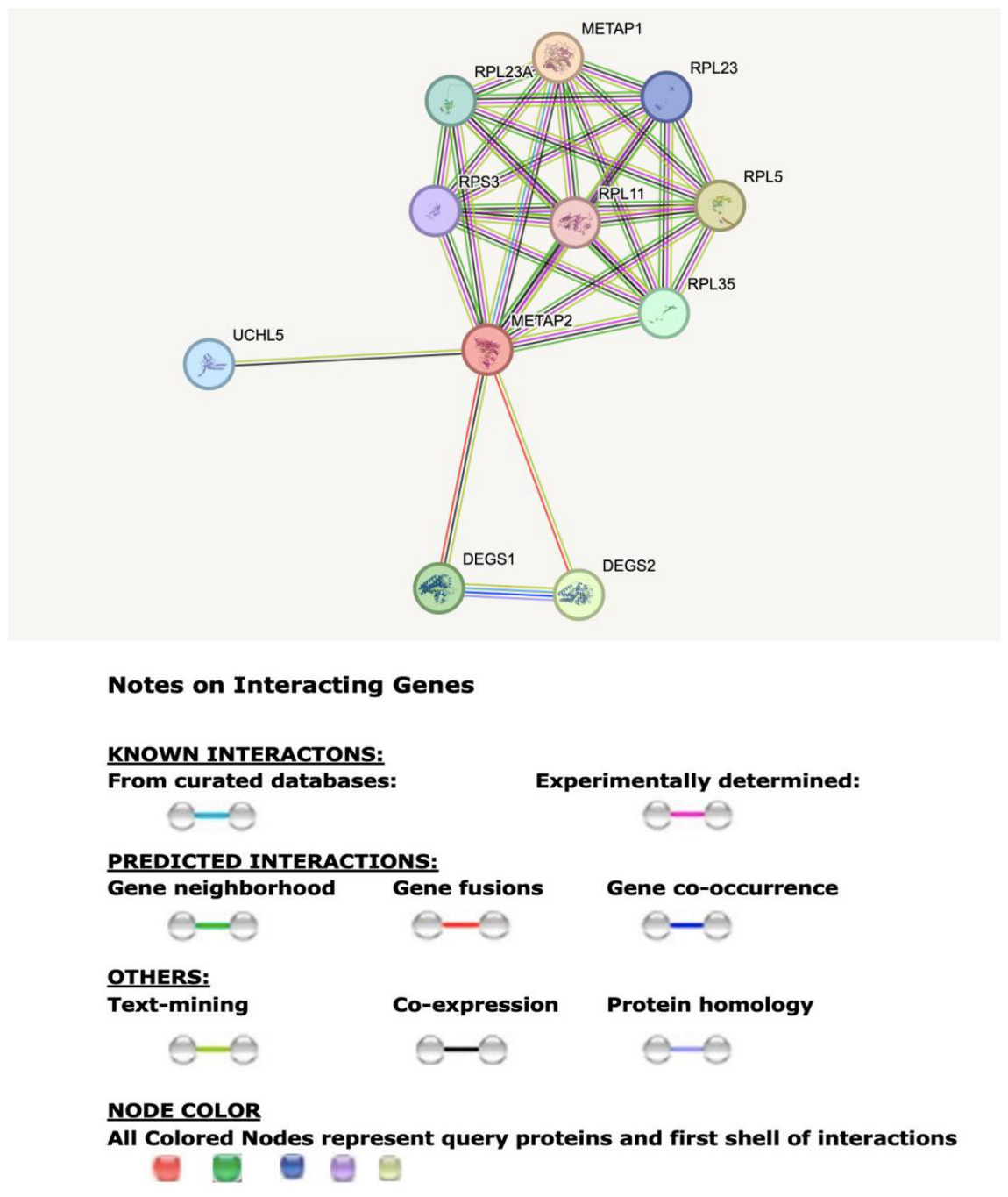
Figure 2.
Gene Ontology (GO) biological process enrichment analysis highlights a strong overrepresentation of pathways related to protein synthesis and post-translational regulation. The most significantly enriched term was cytoplasmic translation, indicating a central role for MetAP2-associated genes in ribosomal and translational machinery.
Figure 2.
Gene Ontology (GO) biological process enrichment analysis highlights a strong overrepresentation of pathways related to protein synthesis and post-translational regulation. The most significantly enriched term was cytoplasmic translation, indicating a central role for MetAP2-associated genes in ribosomal and translational machinery.
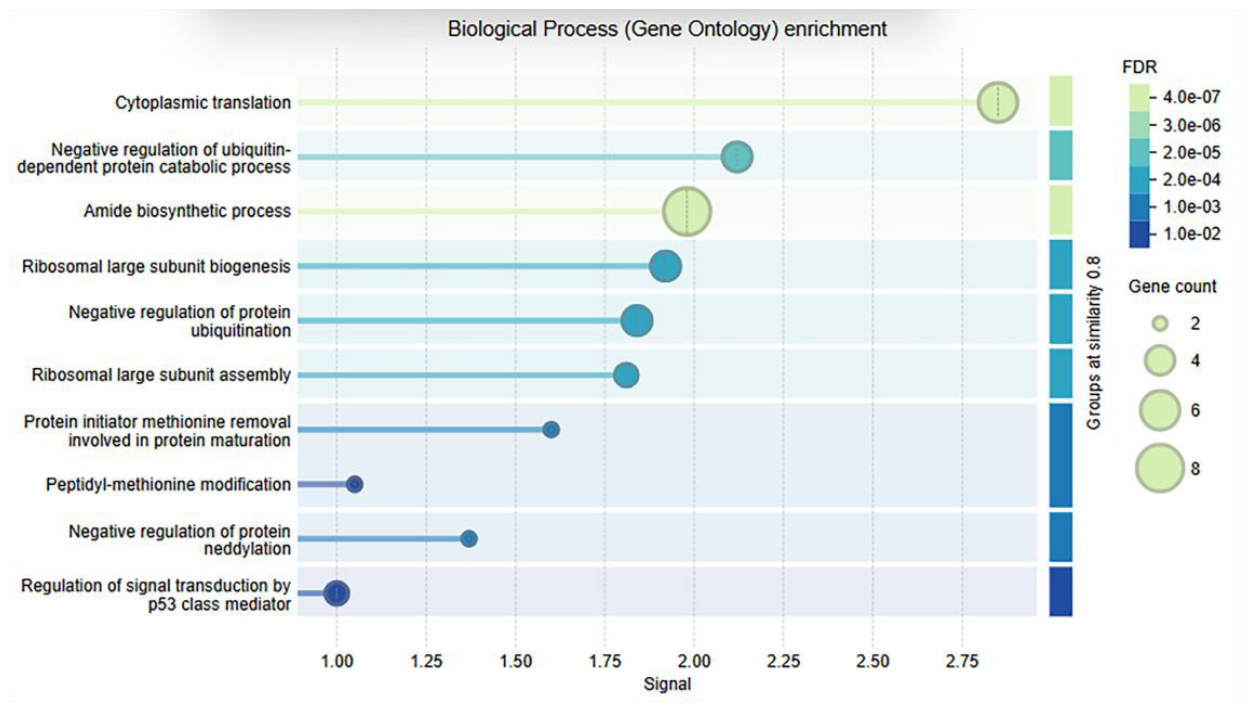
Figure 3.
Path. y Commons METAP2 gene-gene functional interactions determined via binding (blue lines), co-expression (orange lines), and other interactions (gray lines) represent multiple co-expression patterns. The METAP2 gene is highly related to G protein coupled receptor signaling and activation of adenylate cyclase with energy expenditure. This involves increased intracellular cAMP. Of the 24 genes associated with METAP2, 15 showed binding ability, 16 for modification or co-expression patterns and 7 with other interactions (accessed 23 December 2025).
Figure 3.
Path. y Commons METAP2 gene-gene functional interactions determined via binding (blue lines), co-expression (orange lines), and other interactions (gray lines) represent multiple co-expression patterns. The METAP2 gene is highly related to G protein coupled receptor signaling and activation of adenylate cyclase with energy expenditure. This involves increased intracellular cAMP. Of the 24 genes associated with METAP2, 15 showed binding ability, 16 for modification or co-expression patterns and 7 with other interactions (accessed 23 December 2025).
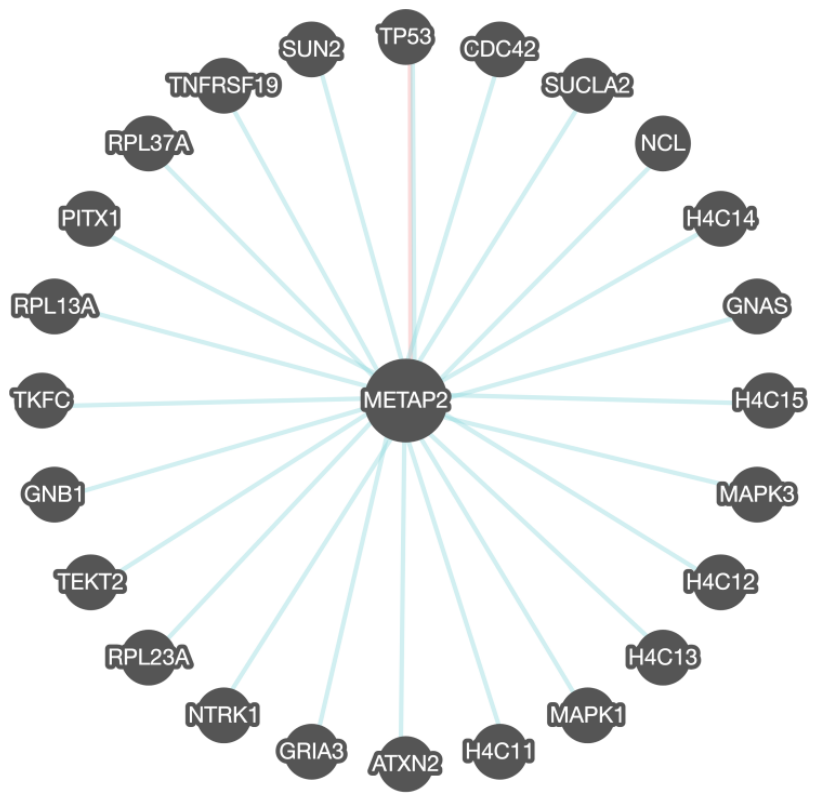

Table 1.
Protein symbols and description of top ten significantly associated proteins in the first-tier STRING analysis for METAP2 *.
Table 1.
Protein symbols and description of top ten significantly associated proteins in the first-tier STRING analysis for METAP2 *.
| Protein symbol | Description |
| METAP1 | Methionine aminopeptidase 1 translationally removes the N-terminal methionine from nascent proteins. The N-terminal methionine is cleaved when the second residue in the primary sequence is small and uncharged. This is required for normal progression through the cell cycle. |
| RPL5 | Ribosomal protein L5 is a component of the ribosome, a large ribonucleoprotein complex responsible for the synthesis of proteins in the cell. The small ribosomal subunit (SSU) binds messenger RNAs (mRNAs) and translates the encoded message by selecting cognate aminoacyl-transfer RNA (tRNA) molecules. |
| DEGS2 | Delta (4)-desaturase/C4-monooxygenase DES2 is a bifunctional enzyme that acts as both a sphingolipid delta (4)-desaturase and a sphingolipid C4-monooxygenase. This is a sphingolipid, a compound of vascular wall and endothelial cells. |
| DEGS1 | Sphingolipid delta (4)-desaturase DES1 contains sphingolipid-delta-4-desaturase activity in which it converts D- erythro-sphingosine to D-erythro-sphingosine (E-sphing-4-enine). It belongs to the fatty acid desaturase type 1 family DEGS subfamily. |
| RPL35 | Ribosomal protein L35 is a component of the large ribosomal subunit. |
| RPL23A | Ribosomal protein L23a is a component of the ribosome, a large ribonucleoprotein complex responsible for the synthesis of proteins in the cell. Binds a specific region on the 26S rRNA and may promote p53/TP53 degradation possibly through the stimulation of MDM2-mediated TP53 polyubiquitination. |
| UCHL5 | Ubiquitin carboxyl-terminal hydrolase isozyme L5, a protease that specifically cleaves Lys-48-linked polyubiquitin chains. Deubiquitinating enzyme associated with the 19S regulatory subunit of the 26S proteasome and a putative regulatory component of the INO80 complex. |
| RPL23 | Ribosomal protein L23. |
| RPS3 | 40S ribosomal protein S3 is involved in translation as a component of the 40S small ribosomal subunit. It has endonuclease activity and plays a role in repair of damaged DNA. Cleaves phosphodiester bonds of DNAs containing altered bases with broad specificity and cleaves supercoiled DNA more efficiently than relaxed DNA. Displays high binding affinity for 7,8-dihydro- 8-oxoguanine (8-oxoG), a common DNA lesion caused by reactive oxygen species (ROS). |
| RPL11 | Ribosomal protein L11 is a component of the ribosome, a large ribonucleoprotein complex responsible for the synthesis of proteins in the cell. The small ribosomal subunit (SSU) binds messenger RNAs (mRNAs) and translates the encoded message by selecting cognate aminoacyl-transfer RNA (tRNA) molecules. The large subunit (LSU) contains the ribosomal catalytic site termed the peptidyl transferase center (PTC), which catalyzes the formation of peptide bonds, thereby polymerizing the amino acids delivered by tRNAs into a polypeptide chain. |
* STRING website (www.string-db.org)(accessed 23 December 2025; version 12.5).
Table 2.
STRING: predicted functions for METAP2 with first-tier analysis of ten associated protein nodes *.
Table 2.
STRING: predicted functions for METAP2 with first-tier analysis of ten associated protein nodes *.
| Biological Process (Gene Ontology) | ACIN | BStrength | CSignal | DFDR |
| Cytoplasmic transaction | 6 of 123 | 1.94 | 2.85 | 4.93e-07 |
| Negative regulation of ubiquitin-dependent protein catabolic process | 4 of 51 | 2.15 | 2.12 | 6.92e-05 |
| Amide biosynthetic process | 8 of 536 | 1.43 | 1.98 | 4.93e-05 |
| Ribosomal large subunit biogenesis | 4 of 74 | 1.99 | 1.92 | 0.00013 |
| Negative regulation of protein ubiquitination | 4 of 84 | 1.93 | 1.84 | 0.00017 |
| Molecular Function | CIN | Strength | Signal | FDR |
| rRNA binding | 5 of 67 | 2.13 | 2.92 | 9.87e-07 |
| Structural constituent of ribosome | 6 of 169 | 1.8 | 2.56 | 9.87e-07 |
| Ubiquitin ligase inhibitor activity | 3 of 9 | 2.78 | 2.36 | 4.66e-05 |
| Sphingolipid delta-4 desaturase activity | 2 of 2 | 3.25 | 1.64 | 0.0011 |
| 5S rRNA binding | 2 of 10 | 2.55 | 1.12 | 0.0092 |
| KEGG Pathway | CIN | Strength | Signal | FDR |
| Ribosome | 5 of 131 | 1.83 | 2.43 | 2.18e-06 |
| Reactome Pathway | CIN | Strength | Signal | FDR |
| Viral mRNA Translation | 6 of 88 | 2.09 | 3.67 | 1.04e-8 |
| Peptide chain elongation | 6 of 88 | 2.09 | 3.67 | 1.04e-8 |
| Eukaryotic Translation Termination | 6 of 92 | 2.07 | 3.64 | 1.04e-8 |
| Selenocysteine synthesis | 6 of 94 | 2.07 | 3.64 | 1.04e-8 |
| Disease-gene Association | CIN | Strength | Signal | FDR |
| Diamond-Blackfan anemia | 3 of 36 | 2.17 | 1.21 | 0.0054 |
*STRING website (www.string-db.org). ACIN (Count in network) indicates how many proteins in network are annotated with a particular term and how many proteins in total (in network and in the background) have this term assigned to this variable, per category (Biological Process, Molecular Function, etc.). BStrength (Log10(observed/expected). This measure describes how large the enrichment effect is with the ratio between i) the number of proteins in the network that are annotated with a term and ii) the number of proteins expected to be annotated with this term in a random network of the same size. CSignal is defined as a weighted harmonic mean between the observed/expected ratio and -log (FDR). FDR or false discovery rate tends to emphasize larger terms, due to their potential for achieving lower p-values, while the observed/expected ratio highlights smaller terms, which have a high foreground to background ratio but cannot achieve low FDR values due to their size. DFDR is a statistical measure that examines the significance of enrichment. Shown are p-values corrected for multiple testing within each category. All FDR derived values in Table 2 are significant at p<0.05.
Disclaimer/Publisher’s Note: The statements, opinions and data contained in all publications are solely those of the individual author(s) and contributor(s) and not of MDPI and/or the editor(s). MDPI and/or the editor(s) disclaim responsibility for any injury to people or property resulting from any ideas, methods, instructions or products referred to in the content. |
© 2026 by the authors. Licensee MDPI, Basel, Switzerland. This article is an open access article distributed under the terms and conditions of the Creative Commons Attribution (CC BY) license.
Copyright: This open access article is published under a Creative Commons CC BY 4.0 license, which permit the free download, distribution, and reuse, provided that the author and preprint are cited in any reuse.