

Submitted:
22 September 2026
Posted:
23 September 2026
You are already at the latest version
Abstract
Background/Objectives: The VA Emergency Medicine Addiction Hotline (VEMAH) is a real-time telehealth addiction consult service for Veterans Health Administration (VHA) providers in acute-care settings. VEMAH launched in May 2023 across eight Veterans Integrated Service Network 22 (VISN 22) facilities, expanding to 17 total VHA sites over 3 years. Results: Over 38 months (May 7, 2023 through July 23, 2026), the service completed 2,154 encounters, including real-time e-consults, direct patient tele-care, care coordination, proactive tele-outreach, and provider education. The most common indications for consultation were opioid- and alcohol-related concerns. Pain-related concerns accounted for about 11% of all encounters. VEMAH providers focused on proactive outreach, substance use disorder (SUD) pharmacotherapy interventions, and coordinating care with local SUD services for ongoing treatment. Conclusions: We describe the feasibility of implementing and scaling a real-time telehealth addiction consult service across VHA acute care settings. A descriptive comparison of ED OSI dashboard trends before and after VEMAH implementation showed positive concurrent trends in naloxone and buprenorphine prescribing within VISN 22, though these observations are hypothesis-generating rather than confirmatory. These findings support VEMAH as a scalable model for extending addiction care access across VHA acute-care settings.
Keywords:
addiction
; telehealth
; emergency medicine
; opioid
; alcohol
; stimulants
; naloxone
; buprenorphine
; veteran
; substance use disorders
; chronic pain
; opioid safety
1. Introduction
Drug overdose remains a leading public health concern in the United States. Overdose deaths increased substantially over the past two decades, reaching an estimated peak of about 108,000 annual deaths in 2022 [1]. Although overdose mortality has since begun to decline, the burden remains considerable. Preliminary data from the Centers for Disease Control and Prevention still predict over 65,000 drug overdose deaths during the 12-month period ending in February 2026 [2], highlighting the need for access to evidence-based substance use disorder treatment and overdose prevention services.
The shortage of addiction specialists and several social determinants of health (e.g., unstable housing, economic insecurity and income disparity, food insecurity, violent crime, neighborhood disinvestment, and being in a healthcare access desert) are key contributors to the ongoing overdose crisis in the United States. Veterans are disproportionately affected by accidental opioid-related overdose compared with the general population [3].
The VHA is a major stakeholder in efforts to respond to the opioid epidemic among Veterans and has pioneered several initiatives intended to reduce opioid-related morbidity and mortality [4]. In 2014, VHA became the first national health care system to implement opioid overdose education and naloxone distribution programs throughout its clinical sites [5]. However, uptake of naloxone distribution practices has remained variable within VHA emergency departments (EDs), and many Veterans at risk for opioid overdose do not receive naloxone during an acute-care encounter [6].
In addition to naloxone, the medications for opioid use disorder (MOUD) buprenorphine and methadone have been shown to reduce drug-related and all-cause mortality by over two-fold [7]. EDs hold an important position in the care of patients with untreated opioid use disorder (OUD) and provide an opportunity to initiate MOUD at a critical point in the patient’s treatment trajectory. Despite longstanding Department of Veterans Affairs and Department of Defense clinical practice guidelines recommending MOUD as first-line treatment for OUD, they remain underused within VHA acute-care settings [6].
Prior research examining barriers and facilitators to MOUD initiation and naloxone distribution among clinicians in VHA EDs and urgent care centers identified several barriers, including the perception that initiating OUD treatment falls outside the traditional scope of emergency care, staffing concerns, educational gaps, limited follow-up infrastructure, and uncertainty regarding which clinician should assume responsibility for prescribing [6]. Clinicians generally viewed MOUD as an effective treatment; however, many reported that educational interventions alone did not provide sufficient real-time support when evaluating and treating individual patients with OUD. These findings suggested a need for clinical support systems that could provide addiction expertise at the point of care. Specifically, a real-time addiction consultation model could address educational barriers and uncertainty about treatment decisions for complex patients for providers with limited access to local addiction expertise during acute care encounters.
These barriers may be particularly important during evenings, nights, and weekends, when local addiction treatment resources are less readily available. Several real-time SUD consultation models exist outside of VA and informed VEMAH’s design. Telephone lines such as the UCSF National Clinician Consultation Center’s Substance Use Warmline and the OHSU Addiction Consult Line offer free, real-time SUD guidance, but both are limited to weekday business hours and operate outside the VA electronic medical record [8]. Programs like the BridgetoTreatment.org (formerly CA Bridge) have developed SUD-focused clinical resources for emergency and inpatient settings and promoted improved care coordination through their SUD Navigator Program [9]. However, they do not provide real-time consultations, and the resources are not VHA-specific.
VEMAH adapted the UCSF and OHSU consultation model, added a care coordination arm inspired by the Bridge SUD navigator program, and tailored both specifically for VHA. What distinguishes VEMAH from other available resources is the combination of providers familiar with VA-specific clinical workflows, access to a patient’s VA medical record during the encounter, and direct work with VA facilities to build durable referral pathways from acute care to outpatient SUD care.
In May 2023, the VEMAH was implemented as a proposed solution to address these identified gaps in acute care settings. VEMAH was designed to provide EDs and inpatient clinics with real-time access to an addiction specialist for assistance with the evaluation and management of substance use disorders, focusing on SUD pharmacotherapy interventions. This implementation report describes the development, expansion, and clinical activities of VEMAH and presents descriptive trends in naloxone distribution and buprenorphine initiation following initial implementation at 8 VHA facilities.
2. Materials and Methods
VEMAH Implementation
From January to May 2023, a 5-month pre-implementation plan for the VEMAH Pilot Program was conducted. The service launched on May 7, 2023, corresponding with the third quarter of the U.S. government fiscal year 2023 (Q3FY23). We organized this planning process using the Implementation Mapping framework, which structures implementation strategy development across five tasks: (1) conducting a needs assessment; (2) identifying implementers and specifying objectives; (3) selecting implementation strategies; (4) producing implementation protocols and materials; and (5) planning for evaluation [10].
Conduct a Needs Assessment
We conducted a literature review to identify barriers and facilitators to substance use disorder (SUD) treatment in EDs. Although most available literature focused on OUD, the findings were deemed applicable to other SUDs. A summary of the barrier and facilitator themes from our literature review is listed in Table 1.
Identifying Implementers and Specify Objectives
Stakeholder buy-in for VEMAH was coordinated by three ED physicians with an addiction background (MC, CS, ZB). Key stakeholders for each of the eight facilities in VISN 22 were identified, including the (medical center director, chief of staff, ED chief, mental health or SUD chief, ED social worker lead, and ED pharmacist lead), along with other staff who directly interact with patients facing SUD issues. These stakeholders were engaged throughout planning and implementation to provide input on local workflow and guide VEMAH’s integration into existing clinical processes. Following the initial stakeholder meeting, local champions at each site completed a questionnaire outlining available local SUD infrastructure and mapped the patient journey from initial ED check-in to discharge or hospitalization, including the initial assessment, provider interventions, disposition decision-making, and post-discharge care arrangements. This process facilitated a tailored VEMAH implementation addressing perceived gaps in care and synergizing with existing workflows.
Select Implementation Strategies
The needs assessment identified barrier and facilitator themes that guided our selection of six implementation strategies to develop the VEMAH pilot: (1) expanding the ED scope of practice through low-barrier access to an addiction specialist; (2) providing access to standardized treatment protocols; (3) augmenting on-site staffing through a telemedicine hub-and-spoke model; (4) creating VHA ED-specific addiction resources; (5) normalizing SUD treatment as a component of ED care to reduce stigma; and (6) leveraging secure-messaging technology for improved care coordination between VHA providers.
Produce Implementation Protocols and Materials
We developed implementation protocols and materials to support the VEMAH pilot, which included template standard operating procedures (SOPs), electronic medical record (EMR) order menus, VHA telehealth resources, SUD treatment protocols, patient and provider education materials, and clinical decision-support tools. A dedicated Teams channel served as the central repository for all these implementation protocols and materials, providing VISN 22 clinicians with a single point of access. Microsoft Teams’ end-to-end encryption capabilities facilitated the exchange of protected health information (PHI) among VHA clinicians. Dedicated group chats with ED providers from each participating VISN 22 facility were established on the Teams platform, connecting on-site clinicians directly with the on-call addiction hotline provider and eliminating the need for a physical pager.
To reduce variability in ordering practices, a barrier identified in our needs assessment, we developed templated clinical workflows and SUD order sets. At several facilities, these order sets were embedded directly into local EMR builds to ease the ordering burden on clinicians and promote a standardized approach to SUD care across VISN 22 facilities.
Outside of individual case consultations, VEMAH aimed to build broader clinician comfort in acute SUD care through two parallel processes. First, VEMAH promoted education-only encounters, allowing clinicians to contact the hotline with general addiction-related questions even without a specific patient in mind. Second, VEMAH providers helped develop clinically focused, enduring educational content. This enduring content was developed in partnership with the VHA Addiction Scholars Program [11], which produced accredited material integrated into the Veterans Affairs Talent Management System (VA TMS) for asynchronous access. VEMAH providers promoted the Addiction Scholars Program through the Teams channels and shared links to the enduring content alongside the daily pearls. The daily “addiction pearls,” consisted of brief, practical posts on managing acute-care SUD issues that could be reviewed during a busy shift, with links to longer-form material for independent learning (https://www.blog.numose.com/vemah-pearls-blog).
Plan for Evaluation
Implementation outcomes, including encounter volume, clinical indications, and prescribing trends, are reported in the Results section.
VEMAH Workflow
The initial VEMAH implementation plan focused on supporting EDs [Figure 1]. Patients were identified through the Emergency Department Information System (EDIS) patient tracker software, referral from an on-site ED clinician, or review of existing dashboards identifying ED patients with possible untreated opioid use disorder. After evaluating the patient, the on-site clinician determined whether an acute SUD-related need was present and whether input from VEMAH was needed. To request a consultation, the frontline clinician contacted the VEMAH provider to discuss the case and develop a treatment plan. The VEMAH provider documented the consultation and recommendations in the EMR, while the frontline clinician was responsible for implementing the plan.
VEMAH also provided direct-to-patient telehealth care, including through telephone-based follow-up after acute-care encounters. As the service matured, direct patient care expanded beyond follow-up originating from ED encounters to include proactive outreach to Veterans with possible untreated OUD identified through the ED OSI dashboard or referred through the Virtual Outreach Low-Threshold (VOLT) Clinic, an initiative at one VEMAH facility that identified cases of potential untreated OUD [12]. Beyond these referral-based leads, VEMAH providers also proactively identified patients by scanning the EDIS patient tracker board, and initiated encounters based on leads referred by local VHA providers outside a formal consultation request. Together, these proactively initiated encounters, alongside on-site clinician-initiated consultations, comprised the two primary pathways by which VEMAH engaged with patients.
As VEMAH’s reach through these pathways grew, participating facilities were given the option to extend services to hospitalists and outpatient clinicians. The goal of extending VEMAH services across care settings was to support continuity of SUD treatment beyond the index ED visit.
Although VEMAH used a standardized core workflow, services were adapted to fit local facility needs in collaboration with on-site stakeholders. In general, VEMAH integrated into existing outpatient SUD services at each site, providing real-time support and expertise as needed. At the Greater Los Angeles (GLA) site, for example, this meant integrating with the VOLT Clinic to support proactive outreach to Veterans with possible untreated OUD.
Descriptive Evaluation Methods
We conducted a descriptive evaluation of the VEMAH pilot from its initial launch on May 7, 2023, through July 23, 2026. VEMAH launched in May 2023 as Phase 1, an eight-facility pilot across VISN 22, with these sites launching simultaneously. VEMAH later expanded to 17 total VHA sites over 3 years through a staggered Phase 2 rollout, in which facilities adopted varying degrees of VEMAH services; this expansion phase is outside the scope of the present report. This report therefore focuses on the eight VISN 22 facilities that comprised the Phase 1 pilot, restricting the descriptive analysis to avoid conflating the two implementation phases.
Measures
Encounter data: VEMAH encounter data were obtained from the program’s operational case tracker, which was maintained by VEMAH providers for quality-improvement monitoring. Encounters were categorized as initial acute-care encounters, follow-up encounters, proactive outreach, or other. Proactive outreach included Veterans identified through the VHA ED OSI dashboard and outreach conducted in collaboration with the VOLT Clinic. Education-only encounters did not involve a specific patient and provided general clinical guidance on a SUD topic. Education-only encounters were tracked as an overlapping encounter characteristic. Primary encounter indications were categorized by type of chief concern reported by on-site provider, obtained from ED OSI dashboard, or chart review.
Naloxone distribution and buprenorphine initiation data: data were obtained from the national VHA ED OSI dashboard, a quality-improvement resource derived from VHA electronic health record data. For naloxone, the dashboard identifies patients at risk for opioid-related overdose who had not received naloxone within the preceding year and reports the proportion prescribed naloxone during the ED or urgent care encounter. For buprenorphine, the dashboard identifies patients with possible untreated OUD and reports the proportion receiving qualifying treatment initiation during the encounter. We examined these facility-level prescribing trends because VEMAH implementation extended beyond specific patient encounters and included ED faculty presentations, daily addiction medicine “pearls,” and repeated exposure to acute addiction care practices.
Analysis: Encounter characteristics and selected clinical activities were summarized using frequencies and percentages. For the ED OSI measures, data were reported by federal fiscal-year quarter (FYQ). FY22 Q1 through FY23 Q2 was considered the pre-implementation period and FY23 Q3 through FY26 Q3 the post-implementation period. The May 7, 2023, VEMAH launch fell within FY23 Q3 (FY23 Q3 start date is April 1, 2023). Quarterly rates and fitted trendlines were examined descriptively for VISN 22 and compared to national VHA facilities (excluding VISN 22) as a descriptive baseline for broader prescribing trends during the same period.
3. Results
VEMAH Implementation
On May 7, 2023, VEMAH launched across eight VISN 22 facilities: Albuquerque, Greater Los Angeles, Loma Linda, Long Beach, Phoenix, Prescott, San Diego, and Tucson. VEMAH expanded in phases, with Eastern Colorado and Ann Arbor launching in January 2024, Pittsburgh in April 2024, and Chicago (Jesse Brown VA) in October 2024. Additional sites launched in Oklahoma City, Omaha, Manchester, Northern California, and Columbia, South Carolina, between January and May 2025. Overall, 17 facilities implemented the VEMAH service [Table 2].
As VEMAH expanded beyond VISN 22, participating facilities were able to adapt the service to local needs. This included expanding referrals to hospitalists and outpatient clinicians at selected sites.
Encounter Volume and Facility Engagement
From May 7, 2023, through July 23, 2026, VEMAH completed 2,154 encounters within VISN 22 facilities.
Among VISN 22 facilities, GLA accounted for the largest number of encounters (n=775; 36%), followed by San Diego (n=318; 15%), Long Beach (n=282; 13%), Tucson (n=214; 10%), Loma Linda (n=201; 9%), Phoenix (n=151; 7%), Prescott (n=119; 6%), and Albuquerque (n=94; 4%) [Table 3].
Most VEMAH encounters were initial consultations occurring during an acute-care episode in an emergency department or inpatient setting (n=1,469; 68%). Follow-up encounters occurring after the index acute-care visit accounted for 452 encounters (21%). Proactive outreach of patients not in acute care settings accounted for 204 encounters (10%), comprised of 96 ED OSI dashboard outreach encounters and 108 outreach encounters conducted in collaboration with the VOLT Clinic, and the remaining 29 encounters (1%) were categorized as other encounter types [Table 4].
Encounter Initiator and Educational Activities
Most encounters were proactively initiated (n=1,396; 65%) by VEMAH addiction hotline clinicians (e.g., ED OSI/VOLT leads, EDIS patient-tracker leads, follow-up encounters, etc.). On-site ED clinicians initiated the second most encounters (n=649; 30%), followed by outpatient non-SUD clinicians (n=45; 2%), on-site hospitalists (n=36; 2%), and outpatient SUD clinicians (n=28; 1%).
Of the 2,154 encounters, 91 (4%) were education-only interactions that did not involve direct evaluation or treatment of a specific patient.
Primary Encounter Indications
The most common primary encounter indications were opioid-related (n=902; 42%) and alcohol-related concerns (n=734; 34%). Pain-related concerns accounted for 243 encounters (11%), while few consultations were for stimulant-related concerns (n=89; 4%). The remaining encounters included encounters in which a primary indication was not documented or could not be determined (n=93; 4%), proactive chart review resulting in no intervention (n=38; 2%), sedative-hypnotic-related concerns (n=19; 1%), and other concerns (n=36; 2%).
The other category included cannabis-related concerns (n=8); ketamine-, diphenhydramine-, or psychiatric-related concerns without an active SUD treatment need (n=8); nicotine-related concerns (n=4); and unsuccessful outreach attempts that did not reach the Veteran (n=16) [Table 5].
Opioid-Related Encounters
Among 902 encounters with a primary opioid-related indication, including 22 for kratom, buprenorphine was initiated in 119 encounters (13%). MOUD was not initiated in 783 encounters (87%) [Table 6]. Reasons for not initiating included cases in which patient was already receiving MOUD and no adjustment was required (n= 75; 10%). MOUD initiation was deferred in 45 encounters (6%) due to patient being admitted to the hospital or transferred to a residential withdrawal management program. MOUD refills comprised 52 encounters (7%). MOUD was indicated but the patient declined in 44 encounters (5%). MOUD was not clinically indicated in 42 encounters (5%), and preference for methadone over buprenorphine in the absence of a defined ED methadone protocol occurred in 13 encounters (2%). Finally, 63 encounters (8%) reflected other reasons (see Table 6 footnote). No listed pharmacotherapy disposition was available for the remaining 449 opioid-related encounters (57%).
Of the 119 buprenorphine initiations, 80 were for the primary indication of OUD (67%), 31 for a primary pain-related concern (26%), and 8 for kratom withdrawal management (7%) [Table 7].
Alcohol-Related Encounters
Among the 734 encounters for an alcohol-related concern, medication for alcohol use disorder (MAUD) or other alcohol-focused intervention was initiated in 129 encounters (18%) [Table 8]. This included naltrexone in 73 encounters (10%), acamprosate in 15 (2%), gabapentin in 14 (2%), and an intervention categorized as other in 27 encounters (4%). The other category primarily reflected cases in which MAUD was recommended but not initiated during the index encounter because of prioritization of acute alcohol withdrawal management, patient-directed discharge before treatment discussion, planned initiation at a receiving residential withdrawal-management program, or barriers related to VA eligibility or pharmacy access.
In 70 encounters (10%), the patient was already receiving MAUD and no adjustment was required. In 83 encounters (11%), VEMAH recommended MAUD, but the medication was not ordered by the on-site treating clinician. In 21 encounters (3%), the patient declined MAUD. No listed medication disposition was available for the remaining 431 alcohol-related encounters (59%).
Naloxone Distribution Encounters
In 201 encounters (9%), VEMAH recommended naloxone for harm reduction in patients with an opioid or stimulant use disorder who had not received a naloxone prescription within the prior year.
Naloxone and Buprenorphine Prescribing Trends in VEMAH Facilities
Naloxone prescribing increased in both VISN 22 and national VHA facilities outside VISN 22 during the observation period [Figure 2 and Figure 3]. In VISN 22, the proportion of at-risk patients prescribed naloxone increased from 20.63% in FY23 Q2, immediately before VEMAH implementation, to 28.79% in the launch quarter and 50.33% by FY26 Q3. Over the same period, the national rate increased from 17.52% to 19.93% and then to 40.87%. The post-implementation trendline was steeper in VISN 22 than in the national benchmark.
Buprenorphine initiation among patients identified as having untreated OUD also increased over time, although quarterly rates were more variable [Figure 4]. In VISN 22, initiation increased from 5.52% in FY23 Q2 to 6.58% in the launch quarter and 8.69% by FY26 Q3. National VHA facilities outside VISN 22 increased from 6.61% to 7.15% and then to 8.99% over the same period. VISN 22 demonstrated a relatively flat to downward pre-implementation trendline followed by an upward post-implementation trendline, while the national benchmark showed a more gradual increase [Figure 5].
4. Discussion
In this report, we describe the development and clinical activities of VEMAH over its first 38 months of operation in VISN 22. The service initially launched across the eight sites in VISN 22 and completed 2,154 encounters within those facilities during this period. Although VEMAH was initially designed as a real-time e-consultation service for ED providers, the model evolved to include direct patient tele-care, proactive outreach (e.g., ED OSI/VOLT leads, EDIS leads, follow-up encounters, etc.), education-only encounters, and referrals from other providers. This report focused on VISN 22 facilities because these sites launched simultaneously and offered a consistent core service. The one notable exception was GLA, which partnered with the VOLT Clinic for proactive outreach, a service not available in other VISN 22 facilities.
VEMAH engagement varied by facility. GLA and San Diego accounted for about half of all VISN 22 encounters, possibly reflecting VEMAH provider on-site presence. For context, four of six VEMAH providers were based out of GLA, one in San Diego, and the remaining provider was based in Loma Linda.
Most encounters were proactively initiated by VEMAH providers rather than frontline ED clinicians, a surprising result given that VEMAH intentionally maintained service awareness through a daily “addiction pearl” posted to each facility’s Teams channel, which served the dual purpose of reminding on-shift clinicians that the service existed and offering brief SUD education. VEMAH was originally designed around a reactive, real-time consultation model, consistent with most published SUD consultation literature, but daily caseload proved highly variable in practice, resulting in a pivot to a more proactive workflow. Data on proactive consultation models are limited, but the available evidence is promising and consistent with our experience. The START trial found that proactive outreach of patients with untreated OUD doubled inpatient MOUD initiation and improved 30-day linkage to care [13]. Within VHA, a proactive tele-outreach model using electronic health record-based case-finding to identify and engage Veterans with untreated OUD was associated with a 10-percentage-point increase in system-wide MOUD adoption over two years, findings that closely parallel VEMAH’s own proactive case-identification approach [12].
Several factors may also help explain the relatively smaller proportion of clinician-initiated consultations, including variable awareness of VEMAH, differing integration into ED workflows, clinician confidence managing SUD without real-time consultation, reliance on VEMAH’s own proactive case-identification process, case timing outside VEMAH’s hours of operation, or unread Teams messages.
National ED-based estimates suggest that approximately 4% to 11% of adult ED visits involve an SUD [14]. Suggesting that the 2,154 encounters VEMAH performed reflect only a fraction of potential need. This gap likely reflects some combination of patients not recognized as having a SUD, on-site providers managing straightforward SUD cases without VEMAH input, and variability in provider awareness of VEMAH service. Opioid-related concerns were the most common primary indication for VEMAH consultation, followed by alcohol-related concerns. This differs from a population-based VHA survey reporting alcohol use as more prevalent than opioid use [15]. Possible explanations include lower clinician confidence managing OUD over AUD, greater regulatory and monitoring requirements with MOUD prompting more opioid-related consults, or straightforward alcohol presentations being managed without VEMAH input. Interestingly, approximately 11% of encounters (n=243) were primarily pain-related, accounting for a larger share than stimulant-related encounters (n=89; 4%), despite stimulant use being a more traditional focus of addiction medicine, and stimulant use disorder’s high prevalence in the VISN 22 region. Of the 119 VEMAH-supported buprenorphine initiations, 31 (26%) were for a primary pain-related indication rather than OUD. This is consistent with our clinical observations and a proposed model of a bidirectional relationship between chronic pain and substance use, in which each condition may motivate, exacerbate, and maintain the other [16]. Behaviors noted in patients with chronic pain are sometimes conflated with addiction-related behavior. The two constructs overlap but are not equivalent, and neither pain nor SUD management should be assumed to fall within the other’s scope by default. VEMAH was developed as an addiction-focused service, but the volume of pain-related concerns it received raises the question of how best to serve these patients, whether by pairing VEMAH’s evaluation with a pain medicine evaluation, by cultivating bidirectional expertise so that each specialty can manage some degree of the other’s domain, or some combination of both. This is consistent with published literature supporting multidisciplinary pain-addiction collaboration. Recent care delivery models, including interdisciplinary consultation services and collaborative and stepped care models, have demonstrated potential in improving pain and SUD outcomes and building clinician confidence in managing both conditions [17]. Whatever the solution, any service addressing this gap should aim to deliver it in real time to fit the needs of patients presenting to acute-care settings.
Supporting initiation of evidence-based pharmacotherapy was a primary goal of VEMAH, since it was felt to be the most likely value-add of a single telehealth-based acute-care encounter. However, recommending SUD treatment did not always result in SUD pharmacotherapy initiation; treatment was sometimes declined by the patient, deferred to residential withdrawal management, or not ordered by the on-site clinician despite a VEMAH recommendation. For buprenorphine specifically, several factors may have resulted in deferred initiation, including insufficient withdrawal severity; the complexity of low-dose buprenorphine initiation protocols; limited access to extended-release formulations; and the limited capacity of general inpatient units to provide SUD-specific monitoring.
One example of the complexity behind why some recommendations went unimplemented involves patient preference. In 13 opioid-related encounters (2%), buprenorphine initiation was declined due to patient’s preference for methadone. In these cases, MOUD initiation was deferred given the absence of a defined ED-methadone initiation protocol, despite this practice being permitted under the DEA’s ’72-hour rule’ (21 CFR 1306.07(b)). For these patients, formal pathways for ED-initiated methadone to transition to ongoing treatment in VA and community opioid treatment programs are needed. One VEMAH facility recently initiated an ED-methadone protocol in November 2025, through which VEMAH has facilitated 4 ED methadone starts at time of this writing, offering an example of this practice within VHA.
An important component of VEMAH implementation extended beyond each patient encounter. Before launch, the program was introduced at each VISN 22 ED faculty meeting. After implementation, clinicians received daily addiction medicine “pearls” via shared Microsoft Teams chats, asynchronous educational resources, and the option to contact VEMAH for education-only questions. Educational efforts did more than transmit clinical knowledge, they aimed to normalize SUD care as a routine component of acute care, an effect consistent with prior work showing that addiction consult services can shift how hospital providers and trainees understand and engage with SUD, reframing it from a moral failing to a treatable medical illness [18] and reshaping the hidden curriculum around addiction care [19].
To indirectly assess whether the non-patient encounter VEMAH activities were associated with provider practice change, we examined buprenorphine and naloxone prescribing trends across VEMAH facilities. In VISN 22, the pre-VEMAH implementation trendline for buprenorphine initiation was flat to downward before shifting post-VEMAH implementation upward; naloxone distribution similarly increased post-VEMAH implementation. A second signal emerged from comparing VISN 22 to the national benchmark over the same period. For both measures, the post-VEMAH implementation trendline was steeper within VISN 22 than nationally, most prominently for naloxone. These descriptive patterns do not establish that VEMAH caused the observed changes, but they provide rationale for future evaluations.
Limitations
This report has several limitations. The VEMAH data was obtained from a self-reported encounter tracker. As the service progressed, some variables were adjusted, and VEMAH providers did not complete all fields consistently. The service tracked encounters rather than individual patients. While the VEMAH service was launched simultaneously across the eight VISN 22 facilities, the process was also adaptive depending on facility-specific factors, making direct comparisons challenging. Additionally, this report did not assess implementation outcomes commonly used to evaluate new clinical services, such as whether clinicians and Veterans found VEMAH acceptable and appropriate for their needs, whether the service was delivered as originally designed, how many eligible clinicians or Veterans it actually reached, or the cost of implementation. Therefore, feasibility is inferred primarily from encounter volume, sustained operation, and expansion to additional facilities, rather than from prospectively collected implementation measures.
The case-tracker did not follow post-encounter outcomes, so these data provide an incomplete snapshot. Similarly, the ED OSI dashboard relies on VHA electronic health record data and may misclassify some patients as untreated or at risk. It is important to highlight that changes in naloxone distribution and buprenorphine initiation cannot be attributed to VEMAH. The comparison of National VHA to VISN 22 facilities served as a descriptive benchmark and not a formal control group, as multiple nationwide trends, VHA initiatives, and policy changes occurred concurrently during the pre- and post-VEMAH implementation period. These trends should be interpreted as descriptive signals to investigate in the future, not as evidence of intervention effectiveness.
Finally, our report reflects results from a collection of VA facilities in the southwestern United States and may not be generalizable to other regions or to non-VA care settings.
5. Conclusions
We demonstrate the feasibility of implementing and scaling a real-time telehealth addiction consult service for VHA acute-care providers. Over 38 months, VEMAH grew from 8 to 17 facilities nationally and expanded beyond real-time e-consultations to include direct virtual patient care, proactive outreach, and clinician education. A descriptive comparison of ED OSI dashboard trends before and after VEMAH implementation showed positive concurrent trends in naloxone and buprenorphine prescribing within VISN 22, though these observations are hypothesis-generating rather than confirmatory. Future efforts should focus on understanding facility-level variation, how best to serve patients presenting with pain-related concerns, barriers to implementing VEMAH treatment recommendations, and the relationship between VEMAH exposure and SUD prescribing practices.
Author Contributions
Conceptualization, M.C., C.S., Z.B., C.K., H.A. and N.D.; methodology, M.C., C.S., Z.B., C.K., H.A., N.D. and D.L.; formal analysis, N.D. and D.L.; investigation, A.E. and J.D.; data curation, A.E. and J.D.; original draft writing, M.C., A.E. and J.D.; review and editing, M.C., A.E., J.D., Z.B., C.K., H.A., F.C.A., D.L., N.D. and C.S.; visualization, A.E., J.D. and D.L.; supervision, M.C. and C.S.; project administration, A.E., M.C. and C.S.; funding acquisition, C.S. All authors have read and agreed to the published version of the manuscript.
Funding
This quality improvement study was funded by the Veterans Health Administration (VHA) Office of Mental Health and Suicide Prevention.
Institutional Review Board Statement
Ethical review and approval were waived for this study because it was conducted as a quality improvement initiative and was determined to constitute non-research activity by the Veterans Health Administration Specialty Care Program Office and the Greater Los Angeles Institutional Review Board.
Informed Consent Statement
Not applicable.
Data Availability Statement
Data for this quality improvement project were derived from a self-reported patient tracker and Emergency Department Opioid Safety Initiative dashboards. All data were de-identified prior to analysis, and the quality improvement team did not access any protected health information. The underlying data are not publicly available due to Veterans Health Administration data governance and institutional restrictions, but de-identified data may be made available from the corresponding author upon reasonable request, subject to approval.
Acknowledgments
The authors acknowledge Drs. Jennifer Burden, Ashley Engels, Joseph Liberto, and Dominick DePhilippis of the VHA Office of Mental Health and Suicide Prevention for their ongoing support and funding of this project, as well as Drs. Friedhelm Sandbrink and Timothy Atkinson of the VHA National Pain Management, Opioid Safety, and PDMP Program Office for providing the initial seed funding that made the pilot project possible. The authors also wish to thank Greater Los Angeles ED leadership, including Dr. Kian Preston-Suni, Dr. Thomas Blair, and Dr. Sabrina Tennant, for their administrative support and for providing protected time for ED faculty to staff VEMAH, along with the broader ED faculty for their continued support of VEMAH providers. Sincere thanks are also extended to Tele-Emergency Care leadership, including Dr. Lisa Zhao, Dr. Chad Stadheim, and Dr. Aaron Pannier, for their support of the program. The authors are especially grateful to Laney Hartman, whose invaluable contributions to program implementation, expansion, and overall administrative support were instrumental to VEMAH’s success; the program could not have run without her. Finally, the authors thank VISN 22 Clinical Resource Hub leadership for their support of the program. During the preparation of this manuscript, the authors used the U.S. Department of Veterans Affairs version of Claude Sonnet 5 (Anthropic), for the purpose of improving grammar and clarity. The authors have reviewed and edited the output and take full responsibility for the content of this publication.
Conflicts of Interest
The authors declare no conflicts of interest.
Abbreviations
The following abbreviations are used in this manuscript:
| VEMAH | VA Emergency Medicine Addiction Hotline |
| VHA | Veterans Health Administration |
| VISN 22 | Veterans Integrated Service Network 22 |
| SUD | Substance Use Disorder |
| ED OSI | Emergency Department Opioid Safety Initiative |
| ED | Emergency Department |
| OUD | Opioid Use Disorder |
| MOUD | Medications for Opioid Use Disorder |
| SOPs | Standard Operating Procedures |
| EMR | Electrical Medical Record |
| PHI | Protected Health Information |
| VA TMS | Veteran Affairs Talent Management System |
| EDIS | Emergency Department Information System |
| VOLT | Virtual Outreach Low-Threshold |
| GLA | Greater Los Angeles |
| SPCO | Specialty Care Office |
| MAUD | Medications for Alcohol Use Disorder |
References
- Garnett, M.F. (2024). Drug Overdose Deaths in the United States, 2003-2023. CDC Stacks Public Health Publications, National Center for Health Statistics (U.S.). 522. [CrossRef] [PubMed]
- (August 31, 2026). “Overdose Prevention Data Channel.” CDC Overdose Prevention. Retrieved July 22, 2026. Available online: https://www.cdc.gov/overdose-prevention/data-channel/index.html.
- Bohnert, A. Accidental Poisoning Mortality Among Patients in the Department of Veterans Affairs Health System. Med. Care 2011, 49(4), 393–396. [Google Scholar] [CrossRef] [PubMed]
- Wyse, J.J. Medications for opioid use disorder in the Department of Veterans Affairs (VA) health care system: Historical perspective, lessons learned, and next steps. Subst. Abus. 2018, 39(2), 139–144. [Google Scholar] [CrossRef] [PubMed]
- Oliva, E.M. Veterans Health Administration Opioid Overdose Education and Naloxone Distribution National Support and Development Workgroup. Opioid overdose education and naloxone distribution: Development of the Veterans Health Administration’s national program. J. Am. Pharm. Assoc. JAPhA 2003, 57(2S), S168–S179. [Google Scholar] [CrossRef] [PubMed]
- Sassoon, C. Barriers and facilitators to implementing medications for opioid use disorder and naloxone distribution in Veterans Affairs emergency departments. Acad. Emerg. Med. 2023, 30(4), 289–298. [Google Scholar] [CrossRef] [PubMed]
- Sordo, L. Mortality risk during and after opioid substitution treatment: systematic review and meta-analysis of cohort studies. BMJ 2017, 357, J1550. [Google Scholar] [CrossRef] [PubMed]
- University of California, S.F. “Substance Use Resources.” National Clinician Consultation Center. Retrieved August 17, 2026. Available online: https://nccc.ucsf.edu/clinical-resources/substance-use-resources/.
- (2025). “Bridge.” Retrieved August 17, 2026. Available online: https://bridgetotreatment.org.
- Fernandez, M.E. Implementation Mapping: Using Intervention Mapping to Develop Implementation Strategies. Front Public Health 2019, 7, 158. [Google Scholar] [CrossRef] [PubMed]
- Basrai, Z. Improving Healthcare Professionals’ Access to Addiction Medicine Education Through VHA Addiction Scholars Program. West. J. Emerg. Med. 2024, 25(4), 465–469. [Google Scholar] [CrossRef] [PubMed]
- Lawrence, D. Proactive Tele-Outreach to Increase Adoption of Medications for Opioid Use Disorder in a Large Health Care System. Subst. Use Addctn. J. 2026. [Google Scholar] [CrossRef] [PubMed]
- Ober, A.J. Hospital Addiction Consultation Service and Opioid Use Disorder Treatment: The START Randomized Clinical Trial. JAMA Intern. Med. 2025, 185(6), 624–633. [Google Scholar] [CrossRef] [PubMed]
- Peterson, C. Assessment of Annual Cost of Substance Use Disorder in US Hospitals. JAMA Netw. Open 2021, 4(3). [Google Scholar] [CrossRef] [PubMed]
- Hoggart, K.J. Prevalence of substance use and substance-related disorders among US veterans health administration patients. Drug Alcohol Depend. 2021, 225. [Google Scholar] [CrossRef] [PubMed]
- Ditre, J.W. A reciprocal model of pain and substance use: Transdiagnostic consideration, clinical implications, and future directions. Annu. Rev. Clin. Psychol. 2019, 15, 503–528. [Google Scholar] [CrossRef] [PubMed]
- Edwards, K.A. Recent advances in the treatment of chronic pain and substance use disorders. Curr. Opin. Psychol. 2025, 62. [Google Scholar] [CrossRef] [PubMed]
- Englander, H.; et al. ““We’ve Learned It’s a Medical Illness, Not a Moral Choice”: Qualitative Study of the Effects of a Multicomponent Addiction Intervention on Hospital Providers’ Attitudes and Experiences.”. J. Hosp. Med. 2018, 13(11), 752–758. [Google Scholar] [CrossRef] [PubMed]
- Balasanova, A.A. Rewriting the Hidden Curriculum via Addiction Consult Services: Meeting Patients Where They Are At. J. General. Intern. Med. 2023, 38, 2194–2197. [Google Scholar] [CrossRef] [PubMed]
Figure 1.
VEMAH Flowchart.
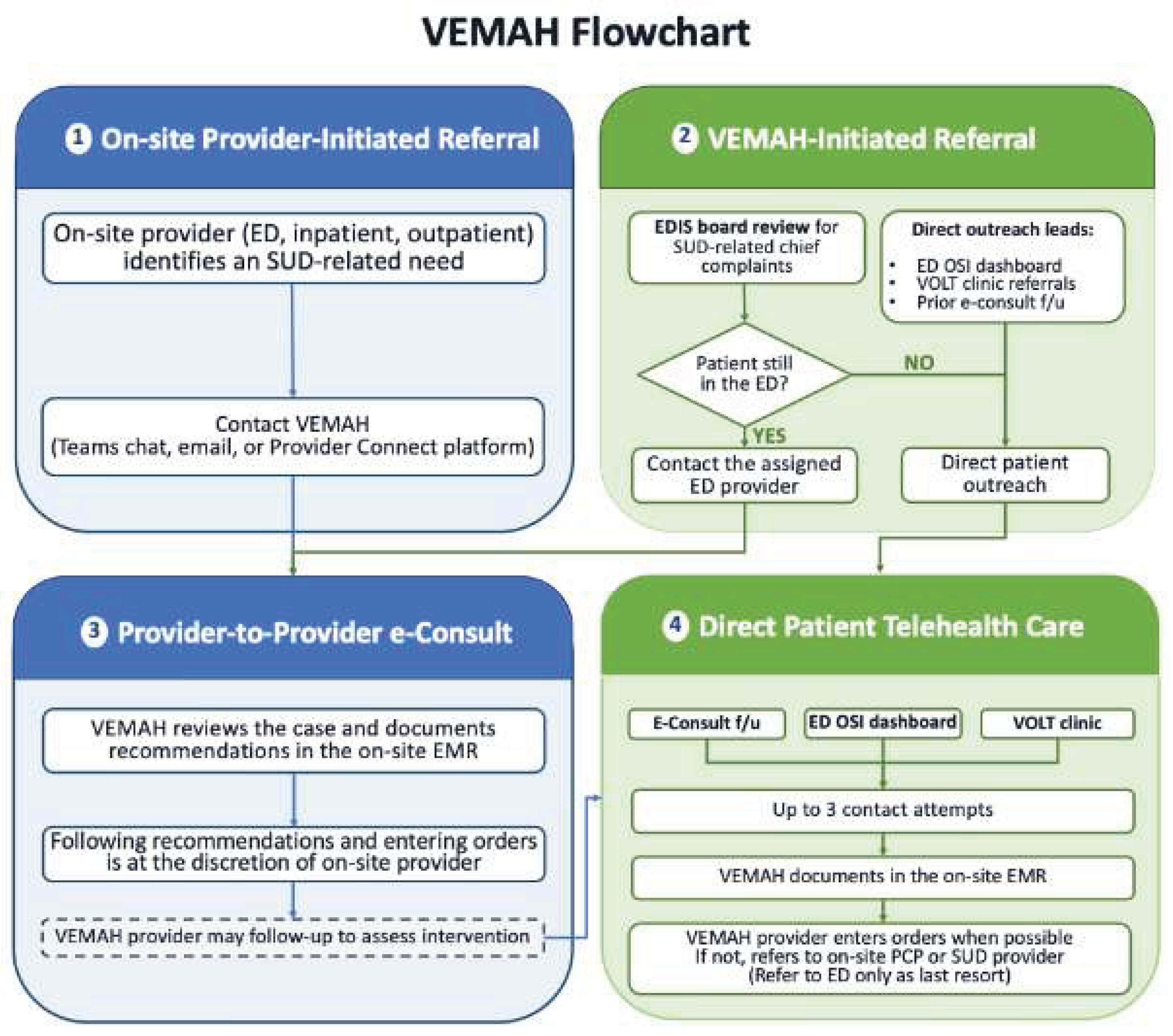
Figure 2.
Naloxone Distribution in VISM 22. Note: Quarterly percentage of at-risk patients prescribed naloxone during a VHA emergency department or urgent care encounter from FY22 Q1 through FY26 Q3. VEMAH launched in VISN 22 during FY23 Q3. Solid lines represent observed quarterly rates and dotted lines represent fitted linear trends within the pre-implementation and post-implementation periods. Data were obtained from the VHA Emergency Department Opioid Safety Initiative dashboard.
Figure 2.
Naloxone Distribution in VISM 22. Note: Quarterly percentage of at-risk patients prescribed naloxone during a VHA emergency department or urgent care encounter from FY22 Q1 through FY26 Q3. VEMAH launched in VISN 22 during FY23 Q3. Solid lines represent observed quarterly rates and dotted lines represent fitted linear trends within the pre-implementation and post-implementation periods. Data were obtained from the VHA Emergency Department Opioid Safety Initiative dashboard.
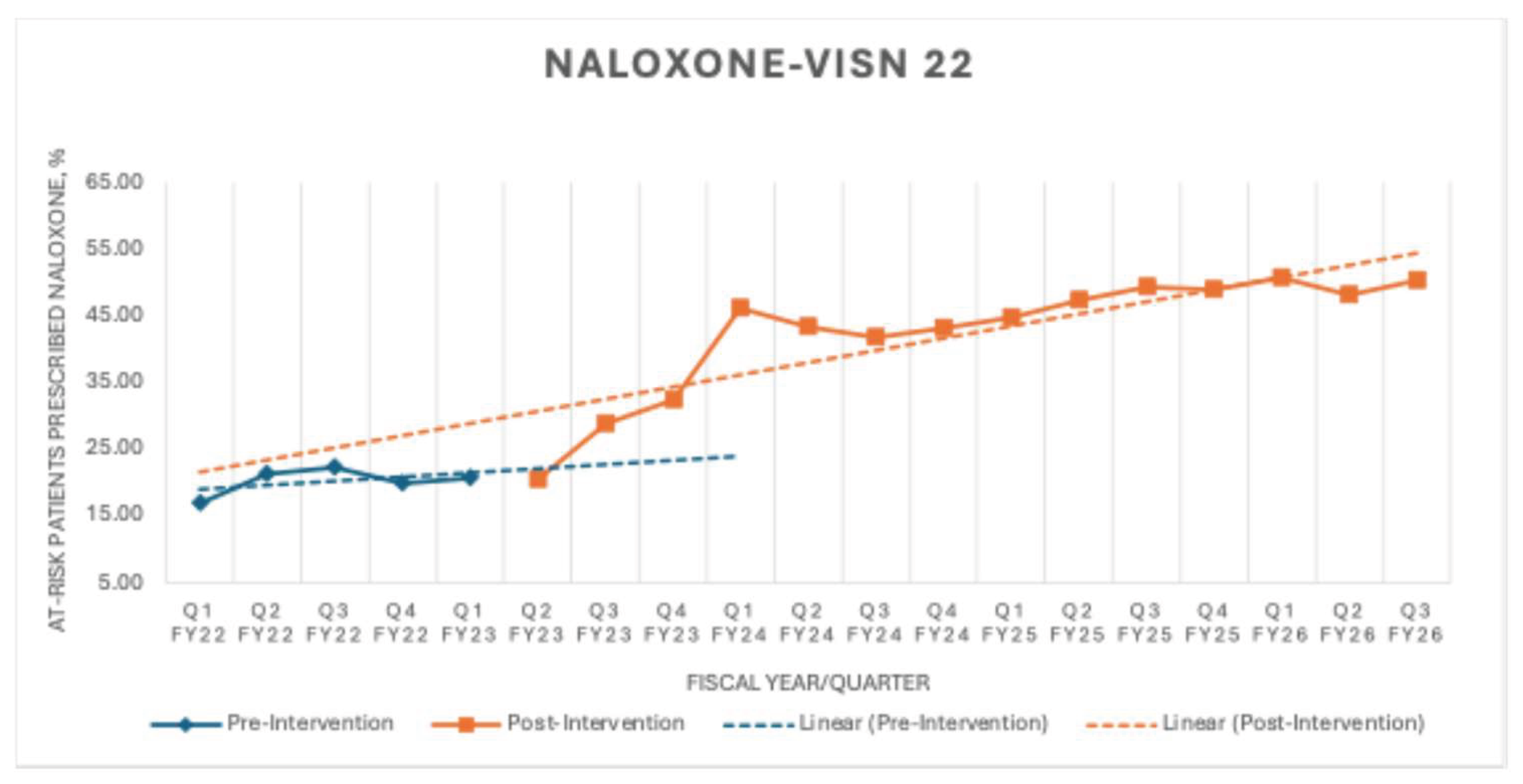
Figure 3.
Naloxone Distribution Nationally (Excluding VISN 22). Note: Quarterly percentage of at-risk patients prescribed naloxone during a VHA emergency department or urgent care encounter from FY22 Q1 through FY26 Q3. FY23 Q3 corresponds to the quarter in which VEMAH launched in VISN 22. Solid lines represent observed quarterly rates and dotted lines represent fitted linear trends within the pre-implementation and post-implementation periods. Data were obtained from the VHA Emergency Department Opioid Safety Initiative dashboard.
Figure 3.
Naloxone Distribution Nationally (Excluding VISN 22). Note: Quarterly percentage of at-risk patients prescribed naloxone during a VHA emergency department or urgent care encounter from FY22 Q1 through FY26 Q3. FY23 Q3 corresponds to the quarter in which VEMAH launched in VISN 22. Solid lines represent observed quarterly rates and dotted lines represent fitted linear trends within the pre-implementation and post-implementation periods. Data were obtained from the VHA Emergency Department Opioid Safety Initiative dashboard.
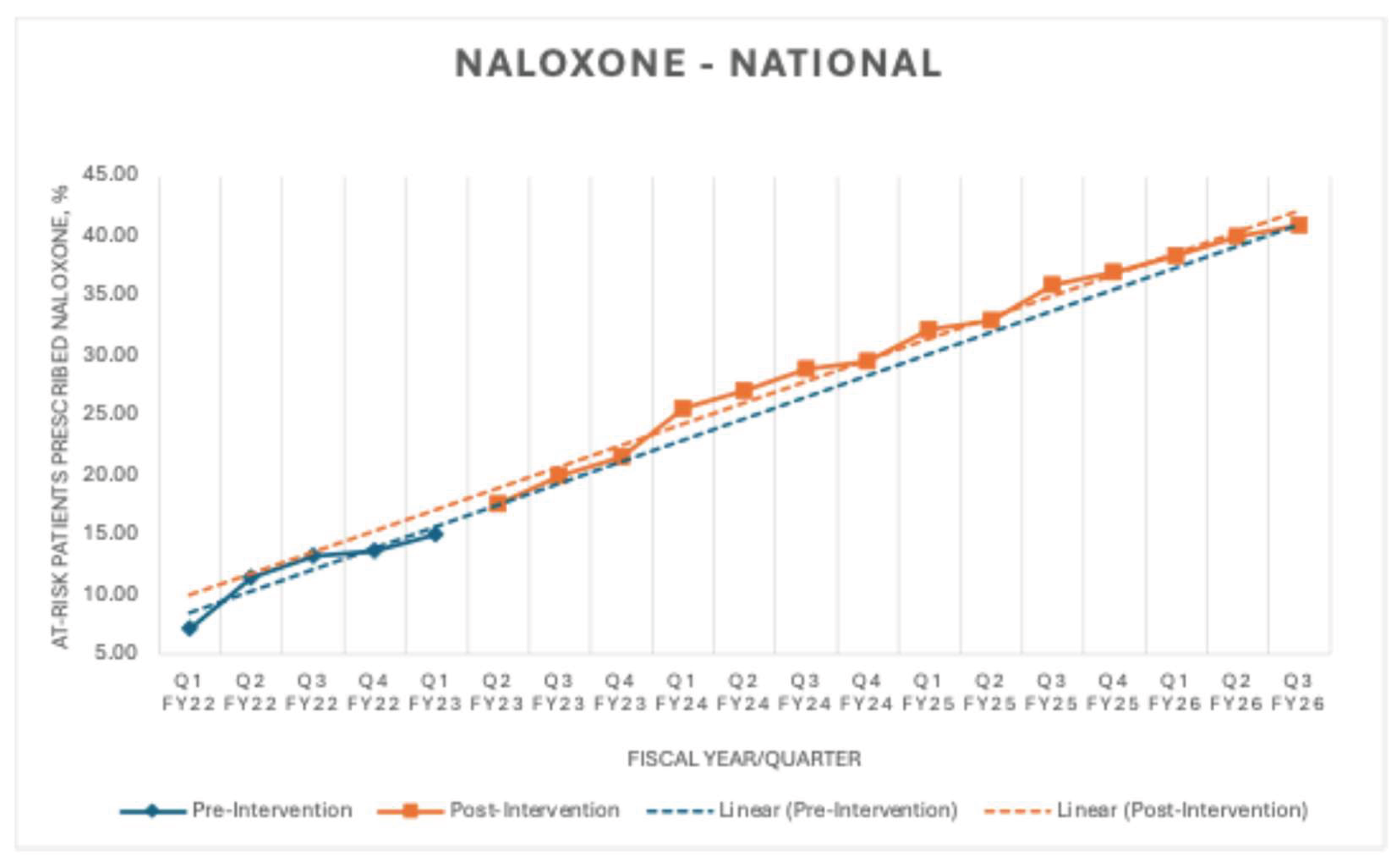
Figure 4.
Buprenorphine Initiation in VISN 22. Note: Quarterly percentage of patients identified by the VHA Emergency Department Opioid Safety Initiative dashboard as having untreated opioid use disorder who received buprenorphine initiation during an emergency department or urgent care encounter from FY22 Q1 through FY26 Q3. VEMAH launched in VISN 22 during FY23 Q3. Solid lines represent observed quarterly rates and dotted lines represent fitted linear trends within the pre-implementation and post-implementation periods.
Figure 4.
Buprenorphine Initiation in VISN 22. Note: Quarterly percentage of patients identified by the VHA Emergency Department Opioid Safety Initiative dashboard as having untreated opioid use disorder who received buprenorphine initiation during an emergency department or urgent care encounter from FY22 Q1 through FY26 Q3. VEMAH launched in VISN 22 during FY23 Q3. Solid lines represent observed quarterly rates and dotted lines represent fitted linear trends within the pre-implementation and post-implementation periods.
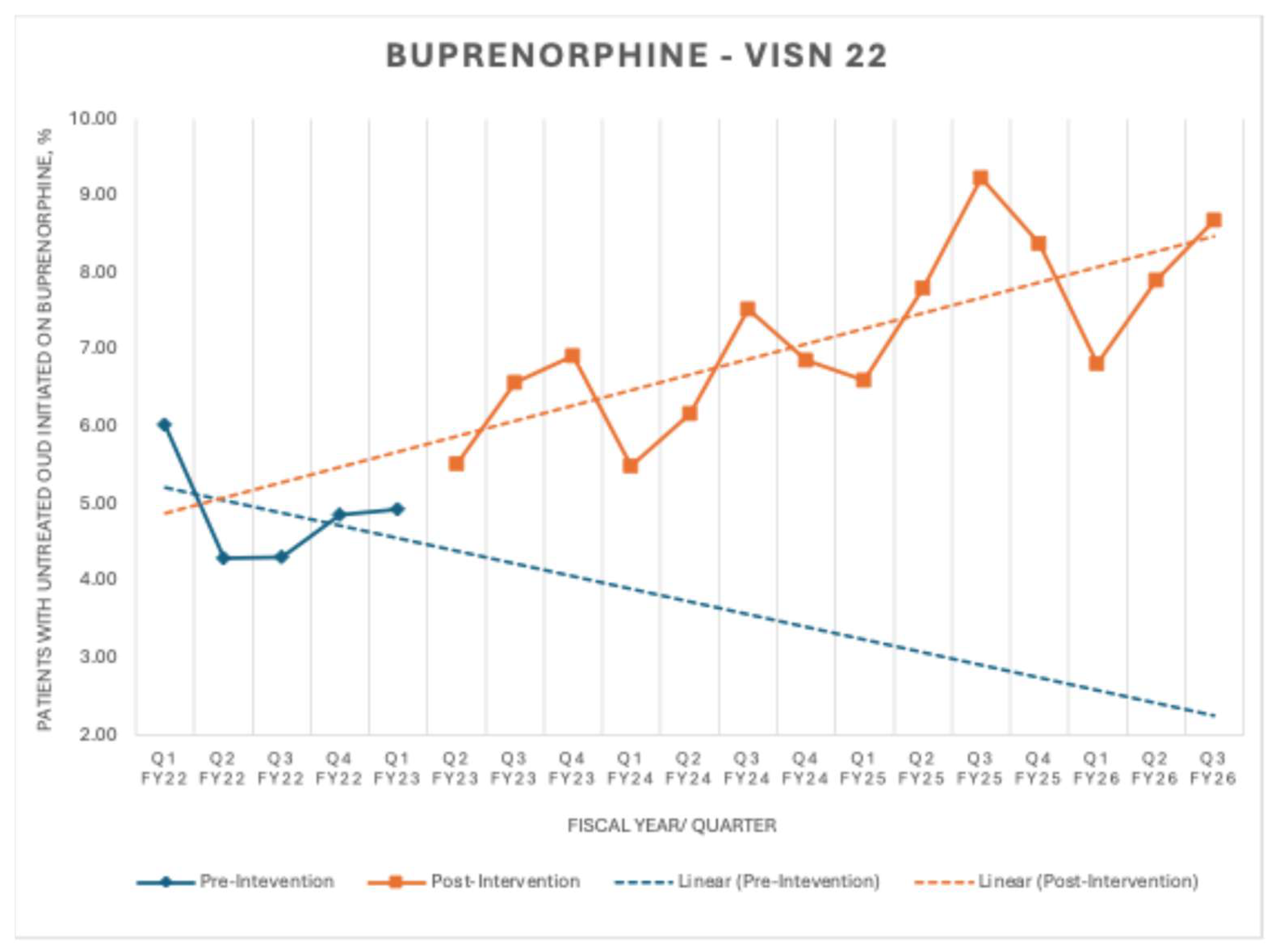
Figure 5.
Buprenorphine Initiation in National Facilities (Excluding VISN 22).
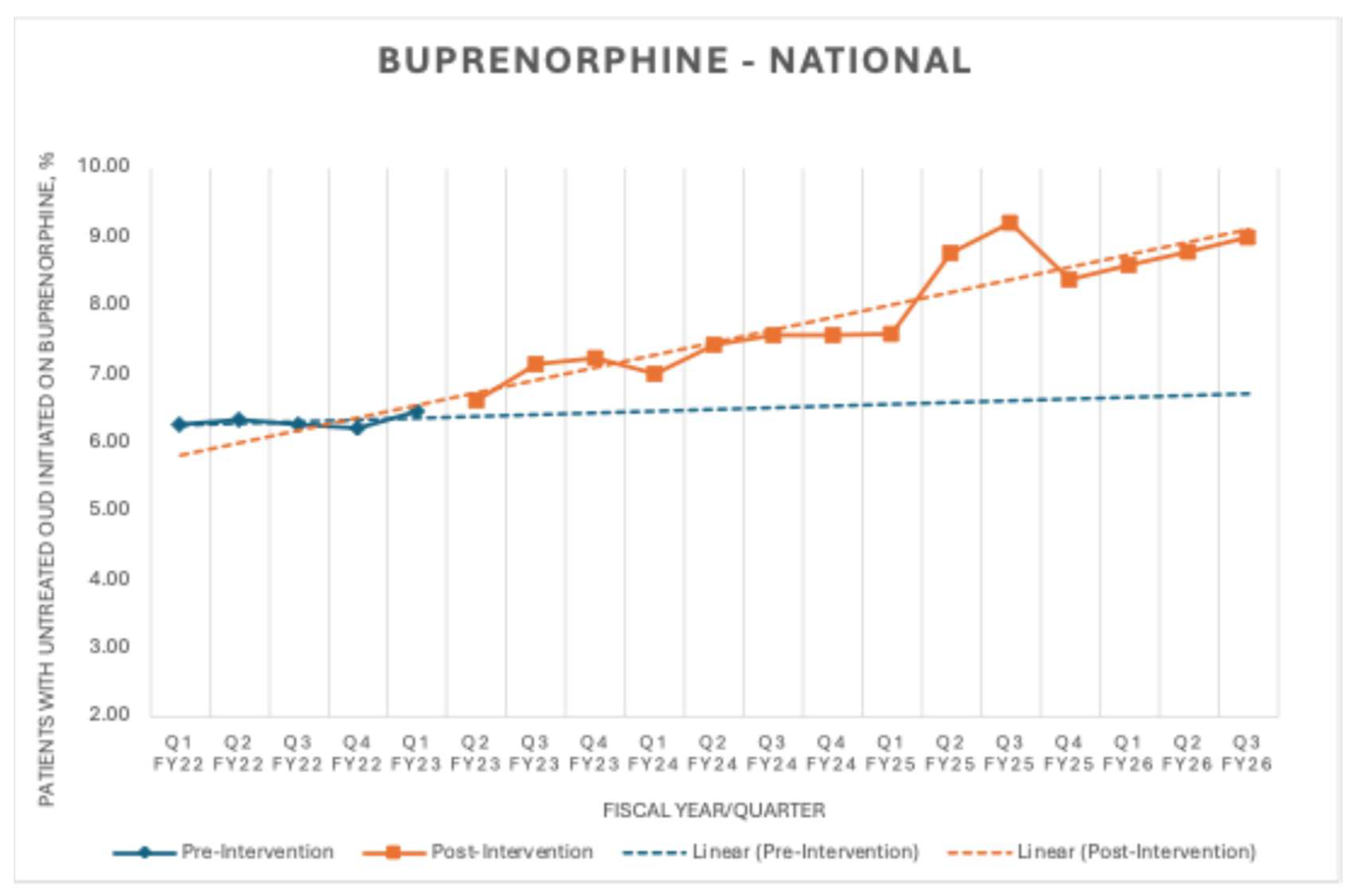

Table 1.
Barriers and Facilitators Informing VEMAH Implementation.
| Category | Theme | Description |
|---|---|---|
| Barrier | Perceived scope | ED providers view treatment of OUD as outside the traditional scope of emergency care. |
| Barrier | Lack of protocols | Limited standardized workflows for acute withdrawal management and ED-MOUD. |
| Barrier | Staffing constraints | Insufficient staffing or specialty support to manage OUD. |
| Barrier | Educational gaps | Limited clinician familiarity with opioid withdrawal management, and MOUD. |
| Barrier | Stigma | Persistent stigma toward patients with SUD and addiction treatment. |
| Barrier | System-level barriers | Challenges related to timely SUD follow-up and care coordination with outpatient SUD services. |
| Facilitator | Support systems | Availability of social work, peer support, and other integrated SUD services. |
| Facilitator | Technology | Use of electronic order sets, clinical decision-support tools, and telehealth platforms. |
| Facilitator | Training availability | Access to ED-specific SUD education and continuing professional development. |
Table 2.
Phased Implementation of VEMAH Across VHA Facilities.
| Facility | Formal launch date | Implementation Phase |
|---|---|---|
| Albuquerque | May 7, 2023 | Initial VISN 22 |
| Greater Los Angeles | May 7, 2023 | Initial VISN 22 |
| Loma Linda | May 7, 2023 | Initial VISN 22 |
| Long Beach | May 7, 2023 | Initial VISN 22 |
| Phoenix | May 7, 2023 | Initial VISN 22 |
| Prescott | May 7, 2023 | Initial VISN 22 |
| San Diego | May 7, 2023 | Initial VISN 22 |
| Tucson | May 7, 2023 | Initial VISN 22 |
| Eastern Colorado | January 24, 2024 | Expansion site |
| Ann Arbor | January 25, 2024 | Expansion site |
| Pittsburgh | April 1, 2024 | Expansion site |
| Chicago (Jesse Brown) | October 22, 2024 | Expansion site |
| Oklahoma City | January 13, 2025 | Expansion site |
| Omaha | January 22, 2025 | Expansion site |
| Manchester (Urgent Care) | January 22, 2025 | Expansion site |
| Northern California | March 7, 2025 | Expansion site |
| Columbia (South Carolina) | May 8, 2025 | Expansion site |
Table 3.
Distribution of VEMAH Encounters Across VISN 22 Facilities.
| VISN 22 Facility | n (%) |
|---|---|
| Greater Los Angeles | 775 (36%) |
| San Diego | 318 (15%) |
| Long Beach | 282 (13%) |
| Tucson | 214 (10%) |
| Loma Linda | 201 (9%) |
| Phoenix | 151 (7%) |
| Prescott | 119 (6%) |
| Albuquerque | 94 (4%) |
| Total | 2,154 (100%) |
Table 4.
Characteristics of VEMAH Encounters in VISN 22 (May 7, 2023–July 23, 2026).
| Characteristic | N (%) |
|---|---|
| Facility group | |
| VISN 22 facilities | 2,154 (100%) |
| Encounter type | |
| Initial acute-care encounter | 1,469 (68%) |
| Follow-up encounter | 452 (21%) |
| ED OSI or VOLT outreach | 204 (10%) |
| Other | 29 (1%) |
| Encounter initiator | |
| VEMAH addiction hotline provider | 1,396 (65%) |
| On-site ED provider | 649 (30%) |
| Outpatient non-SUD provider | 45 (2%) |
| On-site hospitalist | 36 (2%) |
| Outpatient SUD provider | 28 (1%) |
Table 5.
Primary Indication for VEMAH Encounters*.
| Primary Indication | n (%) |
|---|---|
| Opioid-related concern (including kratom) | 902 (42%) |
| Alcohol-related concern | 734 (34%) |
| Pain-related concern | 243 (11%) |
| Primary indication could not be determined | 93 (4%) |
| Stimulant-related concern | 89 (4%) |
| Proactive chart review resulting in no intervention (no active SUD) | 38 (2%) |
| Other* | 36 (2%) |
| Sedative-hypnotic-related concern (including gabapentinoids, z-drugs, phenibut) | 19 (1%) |
| Total | 2,154 (100%) |
* Note: Other concerns included cannabis-related concerns (n=8); ketamine-, diphenhydramine, or psychiatric-related concerns without an active SUD treatment need (n=8); nicotine-related concerns (n=4); and unsuccessful outreach attempts that did not reach the Veteran (n=16).
Table 6.
Documented Reasons for Non-initiation of MOUD.
| Reason Buprenorphine was not Initiated | n (%) |
|---|---|
| No listed pharmacotherapy disposition | 449 (57%) |
| Already receiving MOUD; no intervention needed | 75 (10%) |
| Other* | 63 (8%) |
| Already on MOUD; requesting refill only | 52 (7%) |
| Initiation deferred due to patient admitted to hospital or transferred to residential withdrawal management | 45 (6%) |
| MOUD indicated but patient declined any MOUD | 44 (6%) |
| MOUD not indicated** | 42 (5%) |
| Patient declined buprenorphine and preferred methadone; no defined ED methadone initiation protocol, MOUD deferred | 13 (2%) |
| Total | 783 (100%) |
*Note: Other reasons for non-initiation included failed outreach attempts or patients who eloped before treatment could be discussed or initiated, encounters where the patient was not a candidate for home initiation due to clinical timing (e.g., insufficient withdrawal severity) or unstable housing, pain-management coordination in patients without a primary OUD focus, patients who opted for methadone treatment through an outside opioid treatment program, GLA ED methadone initiation (n=4), patients already stable on buprenorphine prescribed outside VHA, and clinical determinations that OUD criteria were not met. **Note: MOUD not indicated included encounters coded as opioid-related but without an active opioid use disorder requiring pharmacotherapy, such as naloxone-focused harm-reduction consults, positive OUD screens that did not meet OUD criteria on direct patient evaluation, OUD in remission, patients already stable on prior MOUD regimens, non-opioid substance use (e.g., stimulant, cannabis, or alcohol-only presentations), and care-coordination or follow-up encounters without a pharmacotherapy question.
Table 7.
VEMAH-Supported New Buprenorphine Initiation.
| Primary Indication | n (%) |
|---|---|
| Opioid use disorder | 80 (67%) |
| Pain-related concern | 31 (26%) |
| Kratom withdrawal management | 8 (7%) |
| Total | 119 (100%) |
Table 8.
Pharmacotherapy Interventions Among Alcohol-Related Encounters.
| Intervention or disposition | n (%) |
|---|---|
| No listed pharmacotherapy disposition | 431 (59%) |
| MAUD recommended but not ordered by on-site clinician | 83 (11%) |
| Naltrexone initiated | 73 (10%) |
| Already receiving MAUD; no adjustment required | 70 (10%) |
| Other medication or intervention initiated* | 27 (3%) |
| Patient declined MAUD | 21 (3%) |
| Acamprosate initiated | 15 (2%) |
| Gabapentin initiated | 14 (2%) |
| Total | 734 (100%) |
*Note: Other medication or intervention initiated included phenobarbital-based and benzodiazepine-based withdrawal management, combination pharmacotherapy regimens, and buprenorphine transition for comorbid chronic pain with planned AUD pharmacotherapy.
Disclaimer/Publisher’s Note: The statements, opinions and data contained in all publications are solely those of the individual author(s) and contributor(s) and not of MDPI and/or the editor(s). MDPI and/or the editor(s) disclaim responsibility for any injury to people or property resulting from any ideas, methods, instructions or products referred to in the content. |
© 2026 by the authors. Licensee MDPI, Basel, Switzerland. This article is an open access article distributed under the terms and conditions of the Creative Commons Attribution (CC BY) license (http://creativecommons.org/licenses/by/4.0/).
Copyright: This open access article is published under a Creative Commons CC BY 4.0 license, which permit the free download, distribution, and reuse, provided that the author and preprint are cited in any reuse.