
Submitted:
21 September 2026
Posted:
22 September 2026
You are already at the latest version
Abstract
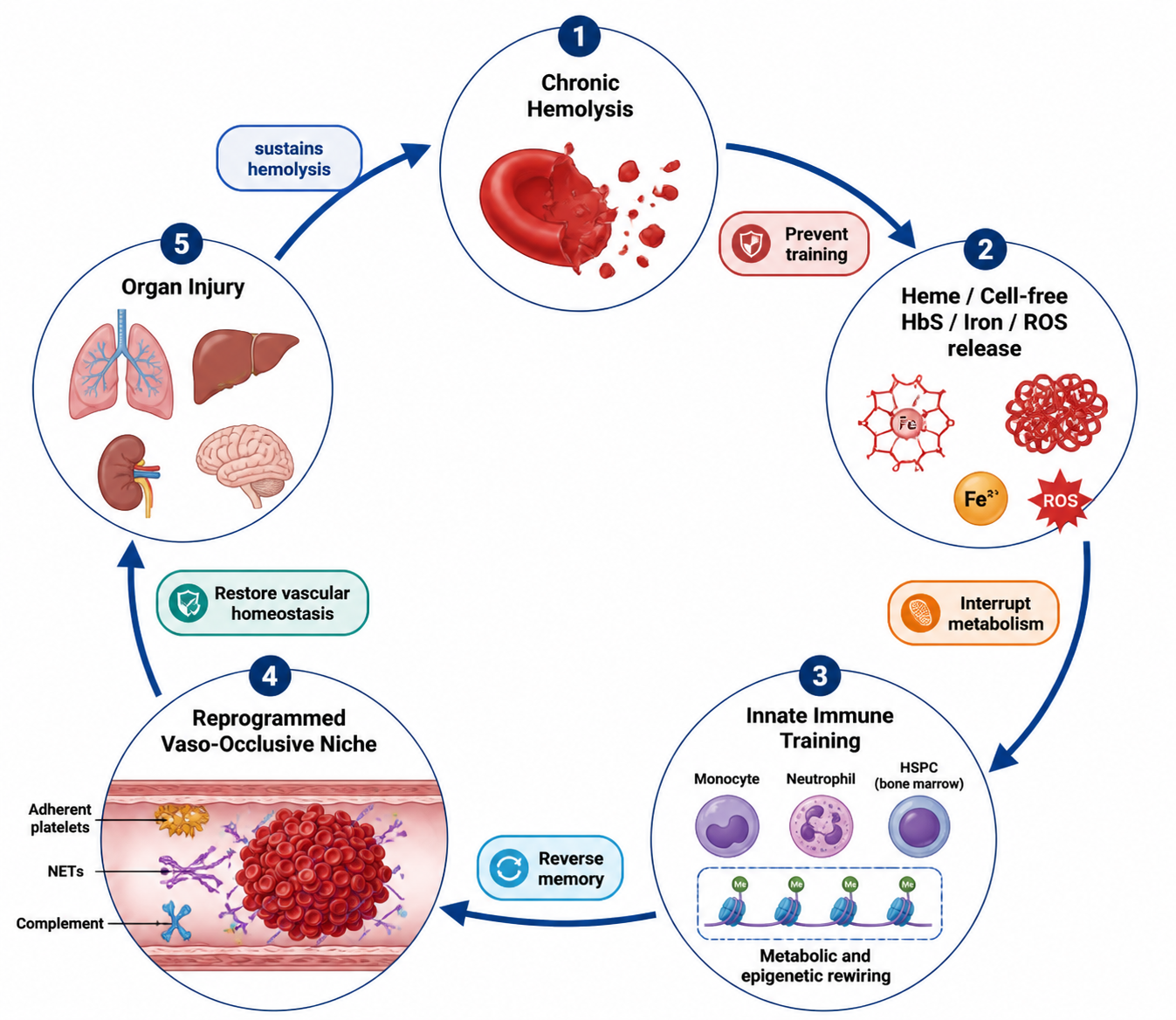
Background: Sickle cell disease (SCD) is a condition of persistent inflammation and coagulation that includes both haemolysis, vaso-occlusion and organ damage result from this interplay. However, does not by itself, account for the variation in disease severity among individuals. Objectives: To examine whether trained immunity can be a potential mechanistic framework connecting chronic haemolysis to the long-term vaso-inflammatory activity in SCD, and therapeutic implications as well as knowledge gaps. Methods: Narrative review of recent literature synthesis on trained immunity. Results: Recent findings suggest that labile heme, cell-free Haemoglobin S, oxidative stress, and damage signals can activate the innate immune system, and contribute to the promotion of metabolic, transcriptional, and epigenetic changes. These changes could exacerbate the activation of the endothelium, neutrophil extracellular traps, and platelet-leukocyte interactions, complement activation, immunothrombosis, and further vaso-occlusion. Possible interventions include heme scavenging, manipulation of IL-1β and TLR4/MD-2 signaling, and the use of BTK inhibitors as well as changing metabolic or epigenetic programs. Yet, direct evidence of bona fide trained immunity in human sickle cell disease remains limited. Conclusion: The mechanism of trained immunity could provide a testable mechanistic framework that explains the continued activation of an immune system in SCD. Although the concepts of functional recall responses, sustained metabolic, epigenetic, and progenitor cell reprogramming in trained immunity cannot yet be established as a therapeutic target without direct demonstration.
Keywords:
trained immunity
; sickle cell disease
; haemolysis
; immunometabolism
; epigenetics
; vaso-occlusion
; innate immune memory
; immunothrombosis
Copyright: This open access article is published under a Creative Commons CC BY 4.0 license, which permit the free download, distribution, and reuse, provided that the author and preprint are cited in any reuse.