

Submitted:
20 September 2026
Posted:
21 September 2026
You are already at the latest version
Abstract
Radio frequency (RF) for wireless systems is widely installed across applications such as mobile communications, maritime networks, smart factors, and smart homes because of their easy setup compared to wired system. Nevertheless, potential health concerns associated with RF waves exposure have driven interest in optical camera communication (OCC) using visible light as a safer alternative. Concurrently, artificial intelligence (AI) is transforming automation and complex problem-solving across IoT, smart farming, and smart home ecosystems. In this study, we propose a Camera On–Off Keying (C-OOK) scheme that incorporates YOLO26n for multi-user, which supports for light source detection and tracking, along with a Denoising AutoEncoder (DAE) algorithm to assist the decoding process in long-range and mobile environments. This approach improves a traditional C-OOK by supporting multi-user simultaneously, increasing distances, and lowering bit error rate (BER). Experimental results demonstrate reliable communication up to 25 meters considering mobile environment.
Keywords:
Denoising AutoEncoder
; IoT
; YOLO26n
; OCC
; C-OOK
; DAE
1. Introduction
IoT technologies have develop increasingly integrated into various features of routine, as well as smart homes, maritime communication networks, smart agriculture, and smart factories [1]. IoT enables physical objects to link to another devices through connectivity protocols that support information transmission [2]. These connectivity technologies can involve multiple entities, including IoT devices, microcontroller units (MCUs), animals, and humans, allowing them to communicate and interact automatically with minimal human interposition. In the era of Industry 4.0, IoT has become an essential system for real-time communication between people, electronic devices, and their surroundings. Nevertheless, most current conventional IoT systems (LoRa, ZigBee, Wi-Fi, and Sigfox) deploy based on radio frequency (RF) signals, raising concerns about potential health impacts [3]. Such concerns are particularly important in sensitive environments, such as schools and hospitals, where children and patients may be more vulnerable. Consequently, researchers have increasingly discovered alternative communication technologies that can reduce or eliminate the reliance on RF signals for specific requests. One good candidate is the use of visible light as a medium for wireless data transmission. Optical Wireless Communication (OWC) has attracted considerable attention as a substitute communication system for RF system and can be broadly characterized into three major approaches: Visible Light Communication (VLC), Light Fidelity (Li-Fi), and Optical Camera Communication (OCC). VLC and Li-Fi typically employ photodiodes to detect signals in the power of light emitted by LEDs, whereas optical camera communication utilizes image sensors as optical receivers. Both global-shutter and rolling-shutter image sensors have been widely adopted in OCC technologies [4]. Selecting a suitable OCC scheme is closely related to the characteristics of the image sensor used as the receiver. Compared to the conventional RF- technologies, OWC provides some significant advantages:
- Safety for Human due to non-EMI: Unlike RF waves, that make potential health risks for human health with electromagnetic inter-ference (EMI), visible light waves are non-electromagnetic and entirely safe for human health if we support non-flicker methods [5].
- Increasing Bandwidth: The visible light spectrum offers higher bandwidth over 1,000 times than the conventional RF spectrum, providing higher data transmission capacity and spectrum availability.
- High security: Visible light provides enhanced physical security and transmission efficiency when a line-of-sight (LOS) channel is maintained.
Based on the potential of Optical Wireless Communication, a lot of industry companies and academic university have promoted significant efforts for OWC standardization, starting with the IEEE 802.15.7-2011 standard [6] for VLC and progressing to updated IEEE 802.15.7-2018 specification [7]. Due to the advances in LED manufacturing, we may establish LEDs as an optimal next-generation optical transmission platform, which offer the low power consumption, long operating life, and high-frequency switching capabilities necessary for high data transmission [8,9]. In contrast to the RF systems, which generate electromagnetic interference (EMI) [10,11] with potentially adverse effects on neurological health, OWC systems proposed an EMI-free system instead of RF system for sensitive environments [12]. VLC and Li-Fi utilize photodiodes (PDs) as receivers to collect high-speed LED intensity modulation [13], leveraging advanced techniques such as pulse density modulation [14,15] and Multiple-Input Multiple-Output (MIMO) architectures [16,17] to achieve ultra-high data rates. However, photodiode-based OWC reveals a lot of limitations in long range, maximum distance at approximately 10 meters with specialized optical lenses [18], and suffers severe signal degradation under long distance and outdoor environments. Besides that, Optical Camera Communication (OCC) employs image sensors as receivers, achieving long-range up to 200 meters [19]. The data rate of OCC depends on camera parameters [20,21]: global shutter cameras require frame rate and packet rate synchronization based on Nyquist theorem, whereas rolling shutter cameras leverage line-by-line readout speeds to achieve higher sampling rates. By controlling camera parameters—including camera focal length, exposure time, and signal-to-noise ratio (SNR)—OCC can reduce effects from mobile environments and long distance due to the SNR decreasing, which is limited in PDs based OWC.
Region of Interest (RoI) methods allow the tracking of multi-source in OCC technologies. Nevertheless, RoIs methods become challenging when rolling shutter effects produce alternating black-and-white stripe patterns across the image frame. C-OOK modulation, introduced in IEEE 802.15.7-2018 [6], provides high speed but operates at limited distance with high BER. Although subsequent this scheme variants [22,23] incorporated matched filtering to extend communication distances and lower BER, these approaches fail to maintain reliable performance in mobile environments, as detailed in bellow. In this study, we recommend Deep Learning to instead of the conventional algorithms for C-OOK system for long-range, multi-user in mobile environments.
The rest of the paper is organized as follows: Section 2 represents contributions of this paper. The system architecture of Denoising AutoEncoder for data decoder and YOLO26n for object detection were presented in section 3. In Section 4, the implementation results are presented at long distances based on DAE. Finally, Section 5 concludes this paper.
2. Our Contributions
This study presents a deep learning for light source tracking and DAE algorithm to assist the decoding process in C-OOK system considering multi-user. This approach aims to maximize data throughput while minimizing BER under challenging long-range and mobile conditions. The contributions of our work are summarized below:
- Support for frame rate variation effect: Frame Rate Variation in camera can cause packet missing and synchronization missing between the LED and camera. To resolve this, we proposed Sequence Numbers (SN) into each packet payload, allowing the system to identify frame-rate in the receiver side and packet-rate in the transmitter side.
- Missing packet detection: By applying SN into each packet, the receiver can detect the missing packet in undersampling case. The receiver will compare the SNs in consecutive frames. If the SNs of consecutive frames are not continue, we can make sure that the missing packet was detected.
- Merging data packet: By applying SN into each packet, the receiver can reduce the redundant packet and merge the payload packet in oversampling case. The receiver will merge the SNs in consecutive frames and reduce the repeating packet with same SN values.
- Enhanced Mobility Support: C-OOK schemes work based on rolling shutter effect then it is highly sensitive to motion effect. YOLO26n model support real-time detection and tracking of multiple LEDs, even in mobile environments.
- Increasing OCC performance: by applying Denoising AutoEncoder, we can reduce the optical channel effect in OCC system, the SNR will be improved. From that, we can easily decode data instead of the conventional technologies.
3. System Architecture
Optical Camera Communication (OCC) systems transmit data by modulating the optical intensity of LEDs, relying on efficient modulation schemes to maximize link performance. Among these techniques, OOK is the simplest and most prevalent form of Amplitude-Shift Keying (ASK), encoding binary "1" and "0" using optical "on" and "off" states, respectively. In this work, we present C-OOK scheme which deploys deep learning to perform both LED tracking and signal decoding. By applying Deep learning network, the proposed architecture substantially improves communication reliability and performance compared to conventional C-OOK systems. Figure 1 illustrates the overall architecture of Deep Learning-assisted C-OOK modulation scheme for IoT system.
3.1. LED Detection Based on YOLO26n
Region of Interest (RoI) algorithms are widely deployed for target detection and tracking [24,25,26], typically relying on feature- and object-level extraction. Nevertheless, C-OOK work for the rolling shutter effect, the data was collected in camera as alternating bright and dark stripe patterns representing the binary bits "1" and "0". The presence of many stripes in each image makes a lot of problems for conventional RoI algorithms. It is exacerbated in mobile environments due to motion blur and long distance. DL model based on Convolutional Neural Networks (CNNs) have demonstrated exceptional capability across computer vision tasks, including localization, tracking, and feature reconstruction. Among CNN models, You Only Look Once (YOLO) algorithms [27,28,29,30] emerges as a state-of-the-art structure for real-time object detection and tracking.
In this paper, we customize and train a YOLO26n network [31,32,33,34] for LED detection and tracking under rolling shutter and mobile conditions. To evaluate the model's performance, a dataset was collected from real-environment daytime and nighttime under mobile conditions. The resulting dataset contains 1,000 manually labeled images encompassing both non-blurred and motion-blurred samples with different exposure times. The YOLO26n model includes 7 to 9 convolutional layers for detection and tracking. The final layer utilizing 42 filters to improve feature extraction and classification accuracy. With conventional RoI algorithm, we can obtain multiple white stripes instead of LED position as with the Deep Learning model. By deploying Deep Learning model, the communication performance can be enhanced in comparison with RoI in a mobile environment. To evaluate the stability of the proposed system under frame rate variation effect, we were performed using some rolling shutter camera models to verify its adaptability to different operating conditions. The use of different hardware platforms allowed for a comprehensive evaluation of communication performance via multiple camera parameters. Besides, the use of camera models assists to obtain more representative dataset, thereby improving the detection performance. The YOLO model was trained an NVIDIA GeForce RTX 3050 over 100 epochs. The training results are shown in Figure 2.
3.2. Denoising AutoEncoder for Data Decoder
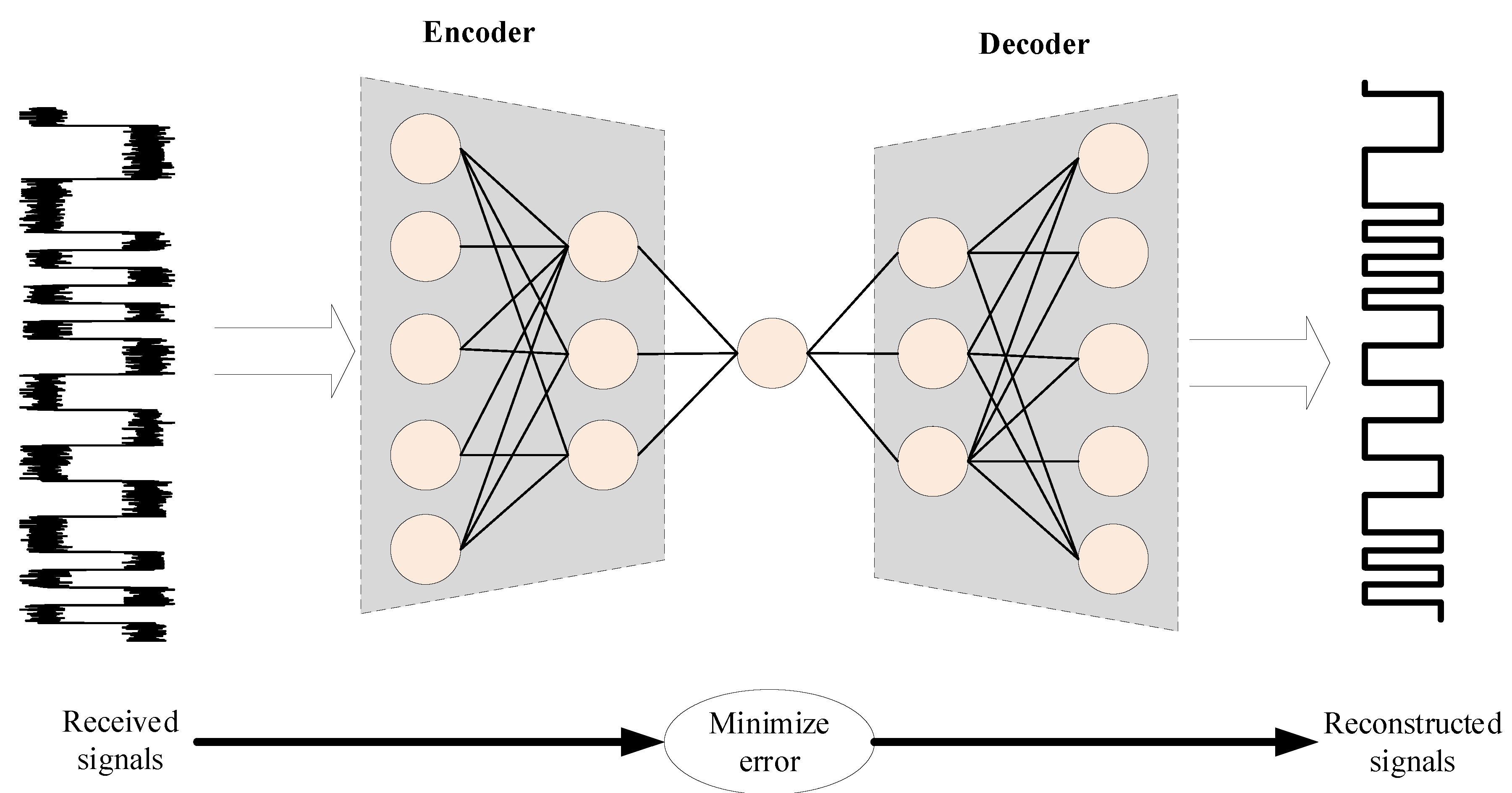
The zeros crossing method proposed in [21] determines the ON/OFF signal levels from captured images. However, selecting an appropriate threshold becomes challenging under low-SNR conditions. As illustrated in Figure 3(a), the method performs effectively over long transmission distances, where the SNR is relatively low. However, when the SNR value is low, the distinction between the ON and OFF states becomes clearer after Denoising Autodecoder. As show in Figure 3(b), we can make sure that the DAE can regenerate the signal without noise. Although the matched filter performs well in low-SNR environments, its effectiveness is significantly affected by image blur under mobile conditions. In particular, relative movement between the LED and camera introduces image blurring, which can lead to inter-symbol interference (ISI) and thus degrade the performance of the OCC system. By applying DAE as Figure 4, we can easily detect the threshold values, as shown in Figure 3(b). However, it is difficult to accurately detect the threshold values in Figure 3(a). Therefore, DAE is helpful for the OCC decoder, especially in mobile environments and over long transmission distances.
After LED detection, OCC waveforms were extracted within the LED regions based on YOLO26n. The C-OOK signals are collected by investigating the central region of each detected LED. And the frame start position and threshold level for each LED are easily determined after the DAE [35] blocks as show in Figure 3(b). 7,000 images are collected with rolling-shutter cameras considering different distances of 1, 5, 10, 15, 20, and 25 m under 3 m/s velocities. To mitigate overfitting for model, a relatively DEA system consisting of 2 hidden layers has employed in encoder/decoder of Autoencoding Denoising as Figure 4. When using more than 5 hidden layers for DAE, the model appears overfit, resulting in reduced Precision on dataset. Figure 4 demonstrations Autoencoding Denoising (DAE) algorithm to support decoding for mobile and long-range environments, designed to increase OCC performance in mobile environments.
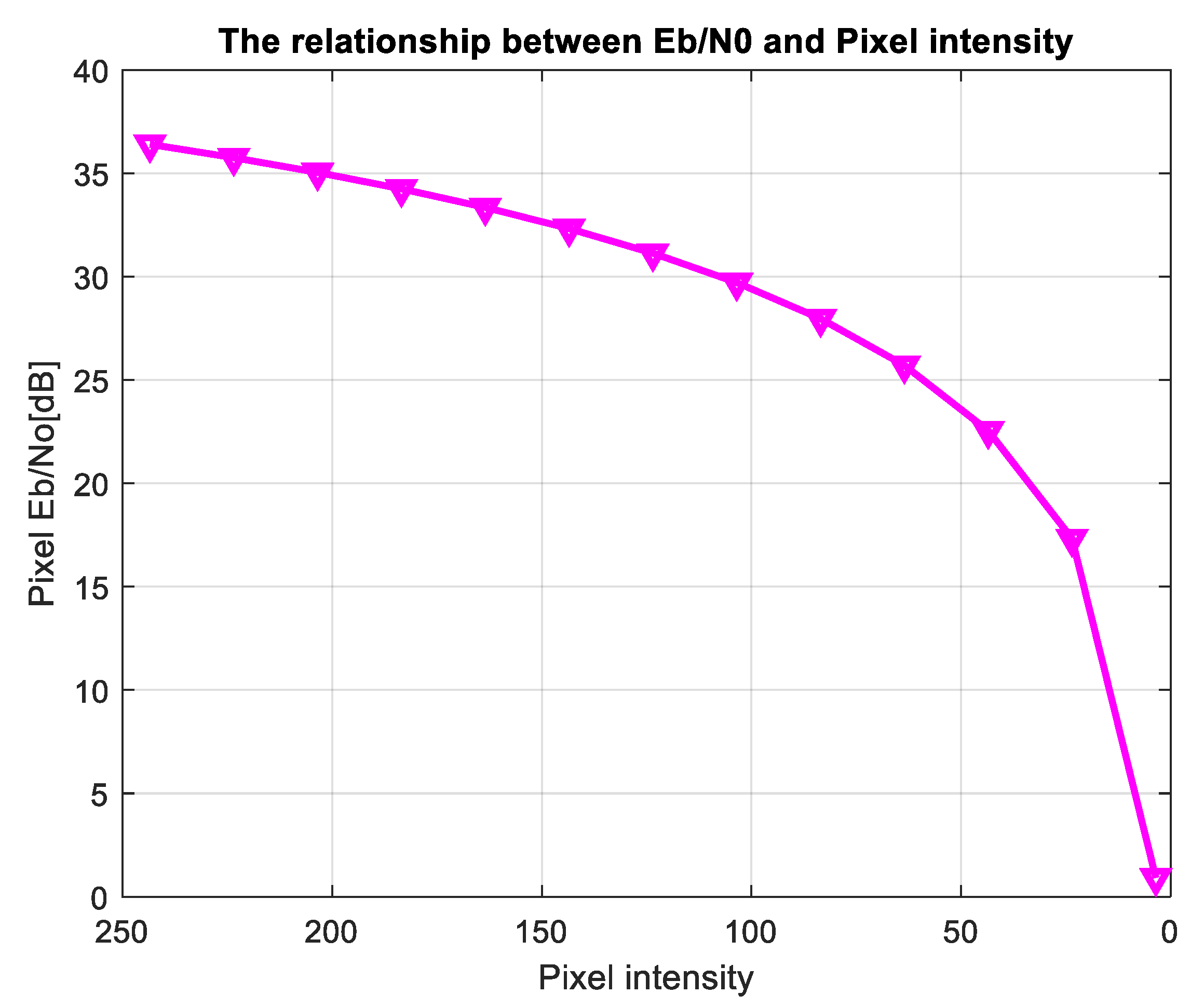
Figure 5.
The correlation between pixel intensity and Pixel Eb/N0.
4. Implementation Results
4.1. Fundamental of OOK Modulation
Noise in a pixel can be modeled according to [21] as follows:
where s represents a pixel intensity, a noise variance was presented as , a denotes as mark/space powers. , are fitting parameters. The pixel at receiver side was presented as following:
where is a bit energy, is a noise power spectral density, and denotes the ratio between the camera exposure time and the bit duration. The parameters , are experimentally derived fitting constants. A relationship between pixel intensity and pixel .
4.2. Proposed System
Once the camera's frame rate is double as high as a transmitter's data packet rate, oversampling occurs, leading to we have to support data redundancy and payload merging issues. To resolve frame rate variation, a Sequence Number (SN) is inserted into the Data Structure (DS). By evaluating SNs in each packet, the receiver can reduce the duplicate packets with identical SNs and combines payloads with consecutive SN values (n-1, n, n+1) as shown in Figure 6(a). Conversely, undersampling occurs when a camera frame rate drops below the transmitter's packet rate, resulting in missing packets. SNs enable missing packet detection by identifying non-sequential gaps in consecutive frames in Figure 6(b). The number of packets can detect in undersampling case depending on the SN length; for instance, a 3-bit SN can detect up to 8 lost payloads. To evaluate camera parameter impacts and optimize SN length, the DAE network was deployed across multiple cameras with C-OOK scheme. The quantized signal intensity profiles are detailed in Figure 7 with four links setups, while Figure 9 depicts the receiver interface displaying real-time LED tracking with four links in transmitter side, and decoded text output. After 7,000 training iterations, the LED detection based on YOLO26n attained an average loss of approximately 0.11. Empirical field testing under daytime and nighttime environments at the mobility velocity of 3 m/s demonstrated the viability of the approach. As shown in Figure 9, the bit error rate versus communication distances of DAE-assisted data decoding and without DAE were represented considering mobility.
Figure 6.
(a) Algorithm for detecting missing packets and (b) Algorithm for packet merging.
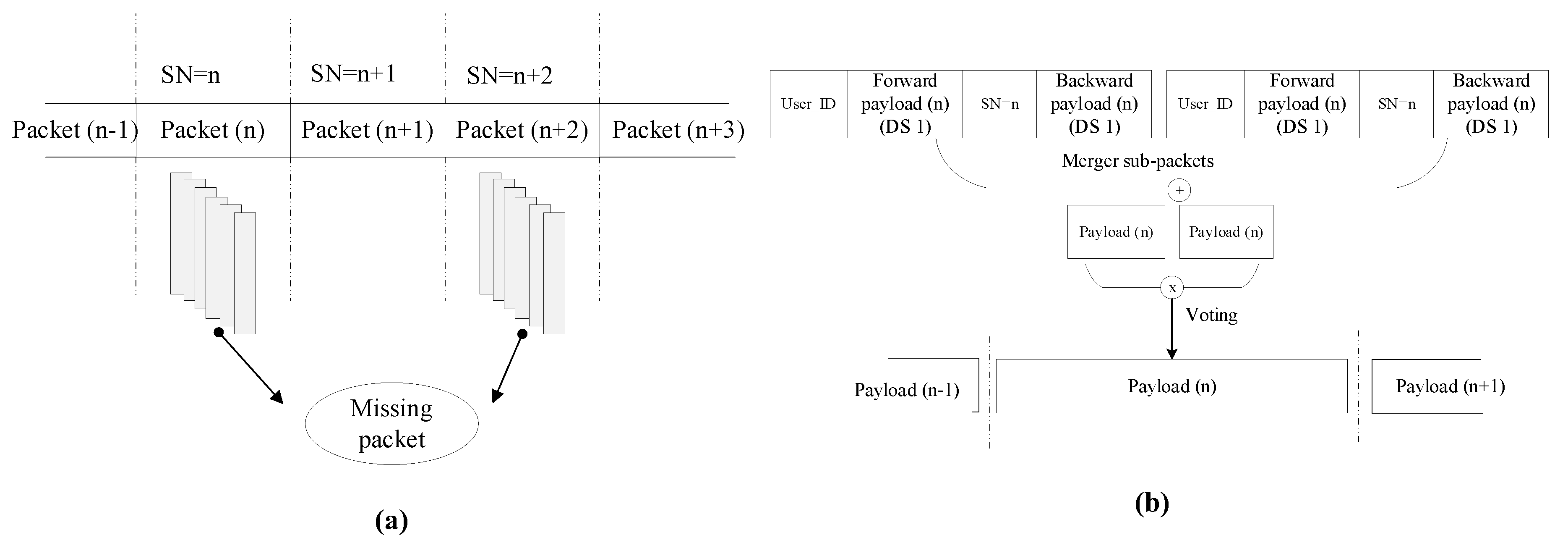
Figure 7.
Quantized intensity profile of C-OOK signals with 4 links.
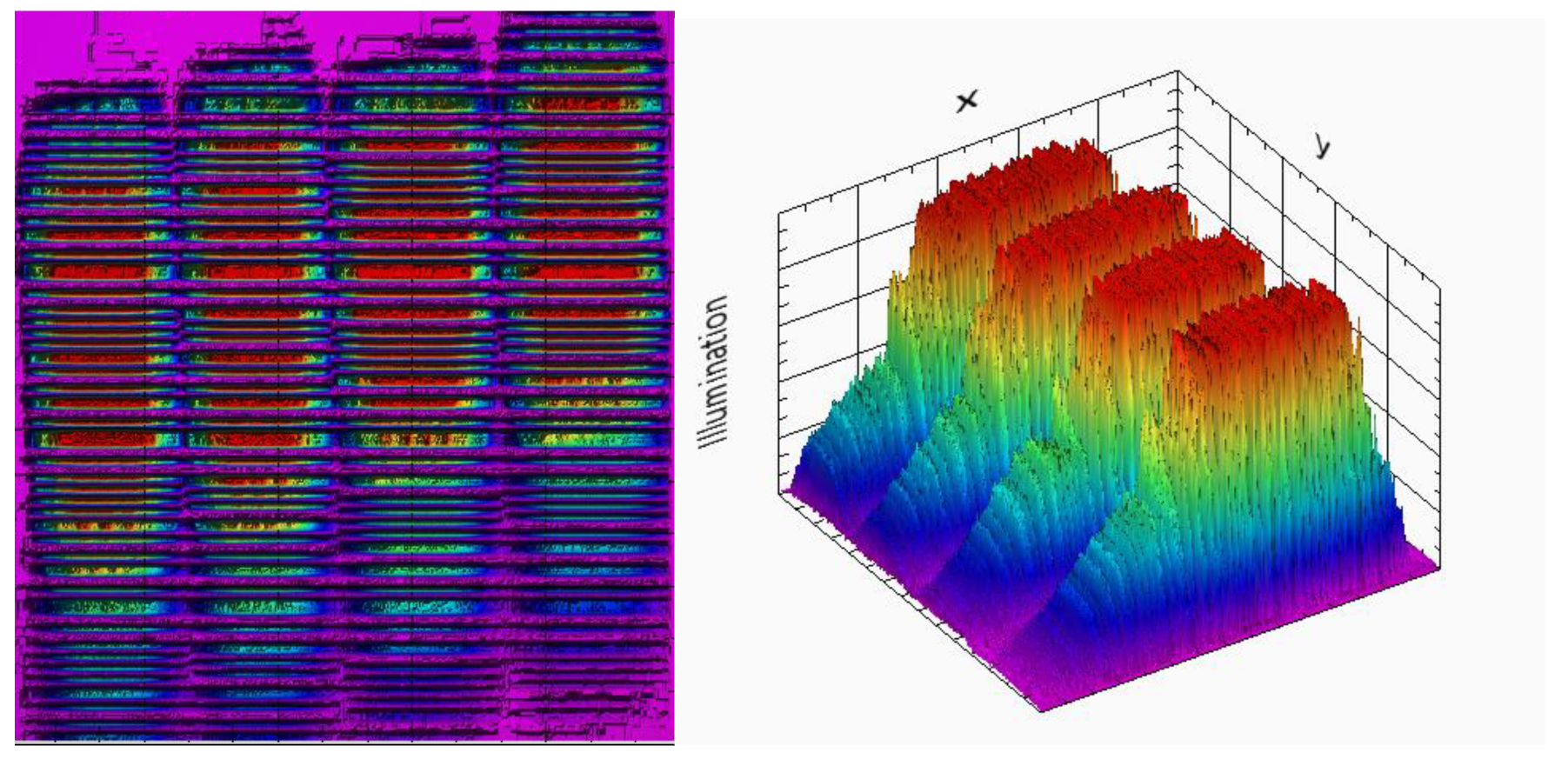
Figure 8.
The receiver interfaces.
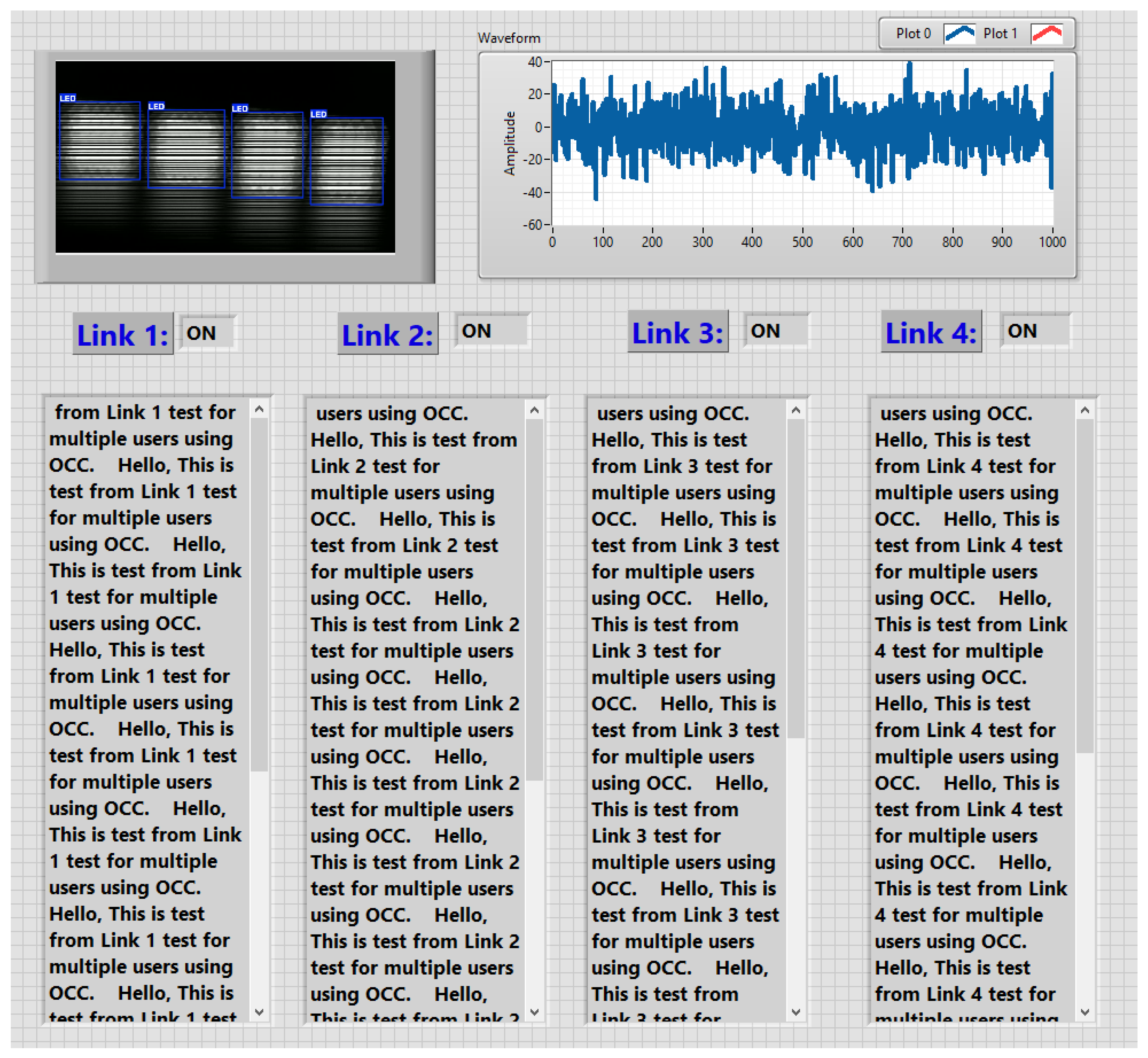
Figure 9.
BER values of C-OOK scheme with/without DAE decoder versus distance at a speed of 3 m/s.
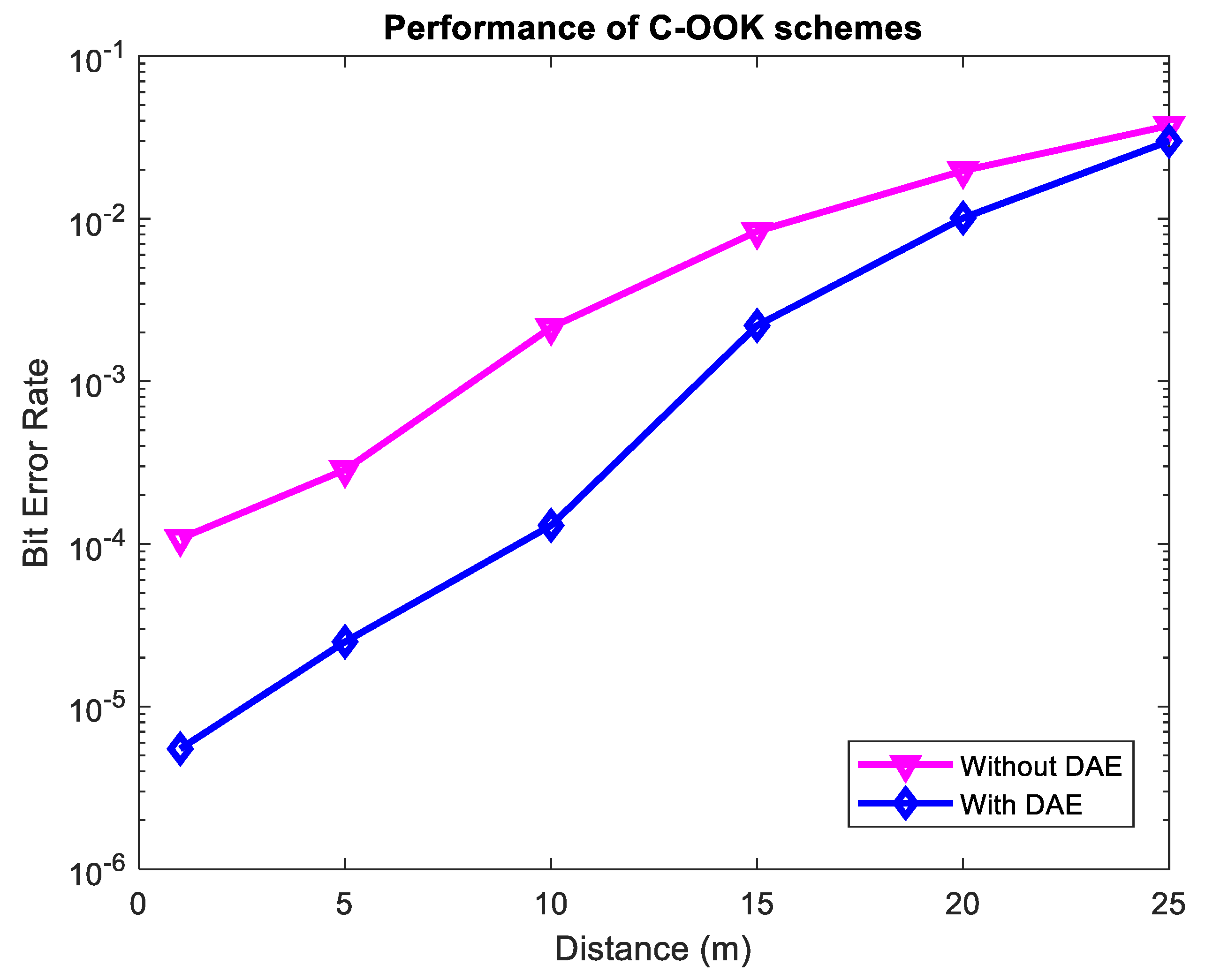
The experimental OCC setup operates at an optical clock rate of 10 kHz using Manchester line coding paired with Hamming code (15,11) and Forward Error Correction (FEC), driving a transmitter array of four 12V, 3W LEDs. Data is transmitted with 60 packages per second to match a rolling-shutter camera receiver (FL3-U3-13S2C-CS) operating at 60 frames per second (fps). This configuration yields peak uncoded and coded data throughputs of 14.4 kbps and 10.56 kbps, respectively considering four links supports simultaneously. As illustrated in Figure 9, evaluating Bit Error Rate (BER) against transmission distance confirms that the DAE-assisted decoder achieves a significant performance improvement over conventional decoders under identical camera settings and environmental conditions. While throughput can be scaled by extending packet lengths or expanding the transmitter LED size, optical clock and packet rates must be jointly optimized with camera specifications, communication range, and frame resolution to maintain continuity for the OCC connection. The proposed deep learning architecture fulfills two stages: ensuring robust LED detection and assisting signal decoding, to enhance system performance in long-range and mobile environments. Specifically, the customized YOLO26n model achieves 98% detection accuracy under mobility conditions of 3 m/s in a for links setup. A video demonstration of the system operating at a 10-meter is provided in the supplementary materials.
5. Conclusions
This paper proposes an IoT-OCC system based on a C-OOK scheme for mobile environments. The proposed system applies deep learning for LED tracking and data decoding to reduce the bit error rate. To mitigate the effects of camera frame rate variations, a sequence number (SN) is inserted into each transmitted packet. The SNR increases as the exposure time increases; however, the system bandwidth decreases accordingly. Therefore, the exposure time should be carefully controlled. Furthermore, deep learning is employed to improve system performance in mobile scenarios. The detection and tracking performance of the OCC system can be enhanced by applying YOLO26n instead of the conventional RoI-based approach. In addition, DAE-assisted data decoding demonstrates superior performance compared with conventional methods, particularly in long-distance transmission and multi-user scenarios.
Supplementary Materials
The following supporting information can be downloaded at: Preprints.org. The supplementary material video shows the implementation of our proposed scheme at a distance of 10 m with four links.
Author Contributions
All authors contributed to this paper: H.N proposed the idea and L.C implementation methodology; N.H supervised the work and provided funding support.
Funding
This research is funded by Hanoi University of Science and Technology (HUST) under project number T2025-PC-049.
Conflicts of Interest
The authors declare no conflicts of interest.
References
- Yalli, J. S.; et al. A Systematic Review for Evaluating IoT Security: A Focus on Authentication, Protocols and Enabling Technologies. IEEE Internet Things J. 2025, vol. 12(no. 12). [Google Scholar] [CrossRef]
- Naeem, M. A.; Ud Din, I.; Meng, Y.; Almogren, A.; Rodrigues, J. J. P. C. Centrality-Based On-Path Caching Strategies in NDN-Based Internet of Things: A Survey. IEEE Commun. Surv. Tutor. 2025, vol. 27(no. 4), 2621–2657. [Google Scholar] [CrossRef]
- Hirata, et al. Model Variability in Assessment of Human Exposure to Radiofrequency Fields. IEEE J. Microwaves 2026, vol. 6(no. 2), 502–518. [Google Scholar] [CrossRef]
- Nguyen, H.; Utama, I. B. Krishna Yoga; Jang, Y. M. Enabling Technologies and New Challenges in IEEE 802.15.7 Optical Camera Communications Standard. IEEE Commun. Mag. 2024, vol. 62(no. 3), 90–95. [Google Scholar] [CrossRef]
- Kour, H.; Jha, R. K.; Jain, S. Green and Safe 6G Wireless Networks: A Hybrid Approach. IEEE Trans. Green Commun. Netw. 2024, vol. 8(no. 4), 1729–1741. [Google Scholar] [CrossRef]
- IEEE-SA. IEEE Std 802.15.7-2011-IEEE Standard for Local and Metropolitan Area Networks-Part 15.7: Short-Range Wireless Optical Communication Using Visible Light; IEEE-SA: Piscataway, NJ, USA, 2011. [Google Scholar]
- IEEE-SA. IEEE Std 802.15.7-2018- IEEE Standard for Local and metropolitan area networks--Part 15.7: Short-Range Optical Wireless Communications; IEEE-SA: Piscataway, NJ, USA, 2018. [Google Scholar]
- Pathak, P.H.; Feng, X.; Hu, P.; Mohapatra, P. Visible light communication, networking, and sensing: A survey, potential and challenges. IEEE Commun. Surv. Tutor. 2015, 17, 2047–2077. [Google Scholar] [CrossRef]
- Salmento, M. L. G.; Soares, G. M.; Alonso, J. M.; Braga, H. A. C. A Dimmable Offline LED Driver With OOK-M-FSK Modulation for VLC Applications. IEEE Trans. Ind. Electron. 2019, vol. 66(no. 7), 5220–5230. [Google Scholar] [CrossRef]
- Zhang, X.; Xu, K.; Xu, N.; Li, W. Electromagnetic Interference Diagnosis of RF Circuits Based on Near Field Scanning. In Proceedings of the 2023 IEEE 7th International Symposium on Electromagnetic Compatibility (ISEMC), Hangzhou, China, 2023. [Google Scholar]
- Tan, K.S.; Hinberg, I.; Wadhwani, J. Electromagnetic interference in medical devices: Health Canada’s past current perspectives and activities. In Proceedings of the IEEE International Symposium Electromagnetic Compatibility, Montreal, QC, Canada, 13–17 August 2001; pp. 1283–1284. [Google Scholar]
- Ong, Z.; Rachim, V.P.; Chung, W.Y. Novel electromagnetic-interference-free indoor environment monitoring system by mobile camera-image-sensor-based VLC. IEEE Photonics J. 2017, 9, 1–11. [Google Scholar] [CrossRef]
- Haas, H.; Yin, L.; Wang, Y.; Chen, C. What is LiFi? J. Light. Technol. 2015, 34, 1533–1544. [Google Scholar] [CrossRef]
- Ali, A.Y.; Zhang, Z.; Zong, B. Pulse position and shape modulation for visible light communication system. In Proceedings of the International Conferences Electromagnetics Advanced Application, Palm Beach, FL, USA, 3–8 August 2014; pp. 546–549. [Google Scholar]
- Videv, S.; Haas, H. Practical space shift keying VLC system. In Proceedings of the IEEE Wireless Communication Networking Conferences, Istanbul, Turkey, 6–9 April 2014; pp. 405–409. [Google Scholar]
- Deng, P.; Kavehrad, M. Real-time software-defined single-carrier QAM MIMO visible light communication system. In Proceedings of the Integrated Communications Navigation and Surveillance (ICNS), Herndon, VA, USA, 19–21 April 2016; p. 5A3-1–5A3-11. [Google Scholar]
- Cai, H.B.; Zhang, J.; Zhu, Y.J.; Zhang, J.K.; Yang, X. Optimal constellation design for Indoor MIMO visible light communications. IEEE Commun. Lett. 2016, 20, 264–267. [Google Scholar] [CrossRef]
- Ayyash, M.; Elgala, H.; Khreishah, A.; Jungnickel, V.; Little, T.; Shao, S.; Rahaim, M.; Schulz, D.; Hilt, J.; Freund, R. Coexistence of WiFi and LiFi toward 5G: concepts, opportunities, and challenges. IEEE Commun. Mag. 2016, 54, 64–71. [Google Scholar] [CrossRef]
- Nguyen, H.; Al-Imran; Jang, Y.M. Survey of next-generation optical wireless communication technologies for 6G and Beyond 6G. ICT Express 2025, Volume 11(Issue 3). [Google Scholar] [CrossRef]
- Nguyen, H.; Jang, Y.M. Experimental Demonstration of Deep Learning-Based HS2PSK-OFDM Scheme for Optical Camera Communication. ICT Express, 2025. [Google Scholar]
- Luo, P.; Zhang, M.; Ghassemlooy, Z.; Zvanovec, S.; Feng, S.; Zhang, P. Undersampled-Based Modulation Schemes for Optical Camera Communications. IEEE Commun. Mag. 2018, vol. 56(no. 2), 204–212. [Google Scholar] [CrossRef]
- IEEE Standard for Local and Metropolitan Area Networks - Part 15.7: Short-Range Optical Wireless Communications Amendment 1: Higher Rate, Longer Range Optical Camera Communication (OCC)," in IEEE Std 802.15.7a-2024 (Amendment to IEEE Std 802.15.7-2018), <bold>2024</bold>.
- Nguyen, V.L.; Tran, D.H.; Nguyen, H.; Jang, Y.M. An Experimental Demonstration of MIMO C-OOK Scheme Based on Deep Learning for Optical Camera Communication System. Appl. Sci. 2022, 12, 6935. [Google Scholar] [CrossRef]
- Lin, H.; Si, J.; Abousleman, G.P. Region-of-interest detection and its application to image segmentation and compression. In Proceedings of the 2007 International Conference on Integration of Knowledge Intensive Multi-Agent Systems, Waltham, MA, USA, 30 April–3 May 2007. [Google Scholar]
- Lin, Guo-Shiang; Tuan, Nguyen-Minh; Chen, Wen-Jan. Detecting region of interest for cadastral images in Taiwan. Multimedia Tools and Applications; 2017. [Google Scholar]
- Cheng, Y.; Yang, P.; Zhang, N.; Hou, J. Edge-Assisted Lightweight Region-of-Interest Extraction and Transmission for Vehicle Perception. In Proceedings of the 2023 IEEE Global Communications Conference, Kuala Lumpur, Malaysia, 2023; pp. 1054–1059. [Google Scholar]
- Isa, I.S.; Rosli, M.S.A.; Yusof, U.K.; Maruzuki, M.I.F.; Sulaiman, S.N. Optimizing the Hyperparameter Tuning of YOLOv5 for Underwater Detection. IEEE Access 2022, 10, 52818–52831. [Google Scholar] [CrossRef]
- Diwan, T.; Anirudh, G.; Tembhurne, J.V. Object detection using YOLO: Challenges, architectural successors, datasets and ap-plications. Multimed. Tools Appl. 2023, 82, 9243–9275. [Google Scholar] [CrossRef]
- Li, Y.; Zhang, X.; Wang, Z.; Wei, H. The Vanishing-Truth Patch: A Scale-Adaptive Vanishing Attack for Anchor-Based YOLO Detectors. IEEE Geosci. Remote Sens. Lett. 2026, vol. 23, 6013305–6013305. [Google Scholar] [CrossRef]
- Kaleem, Z. Lightweight and Computationally Efficient YOLO for Rogue UAV Detection in Complex Backgrounds. IEEE Trans. Aerosp. Electron. Syst. 2025, vol. 61(no. 2), 5362–5366. [Google Scholar] [CrossRef]
- He, Lh.; Zhou, Yz.; Liu, L.; et al. Research on object detection and recognition in remote sensing images based on YOLO26n. Sci. Rep. 2025, 15, 14032. [Google Scholar] [CrossRef]
- Luo, Y.; Wu, A.; Fu, Q. MAS-YOLO26n: An Improved Underwater Object Detection Algorithm Based on YOLO26n. Sensors 2025, 25, 3433. [Google Scholar]
- Zhuo, S.; et al. SCL-YOLO26n: A Lightweight Object Detection Network for Low-Illumination Environments. IEEE Access 2025, vol. 13, 47653–47662. [Google Scholar] [CrossRef]
- Liao, Y.; Li, L.; Xiao, H.; Xu, F.; Shan, B.; Yin, H. YOLO-MECD: Citrus Detection Algorithm Based on YOLO26n. Agronomy 2025, 15, 687. [Google Scholar] [CrossRef]
- Alrayes, F. S.; Zakariah, M.; Amin, S. U.; Khan, Z. Iqbal; Helal, M. Intrusion Detection in IoT Systems Using Denoising Autoencoder. IEEE Access 2024, vol. 12, 122401–122425. [Google Scholar] [CrossRef]
Figure 1.
Deep Learning-assisted C-OOK modulation scheme for IoT system.
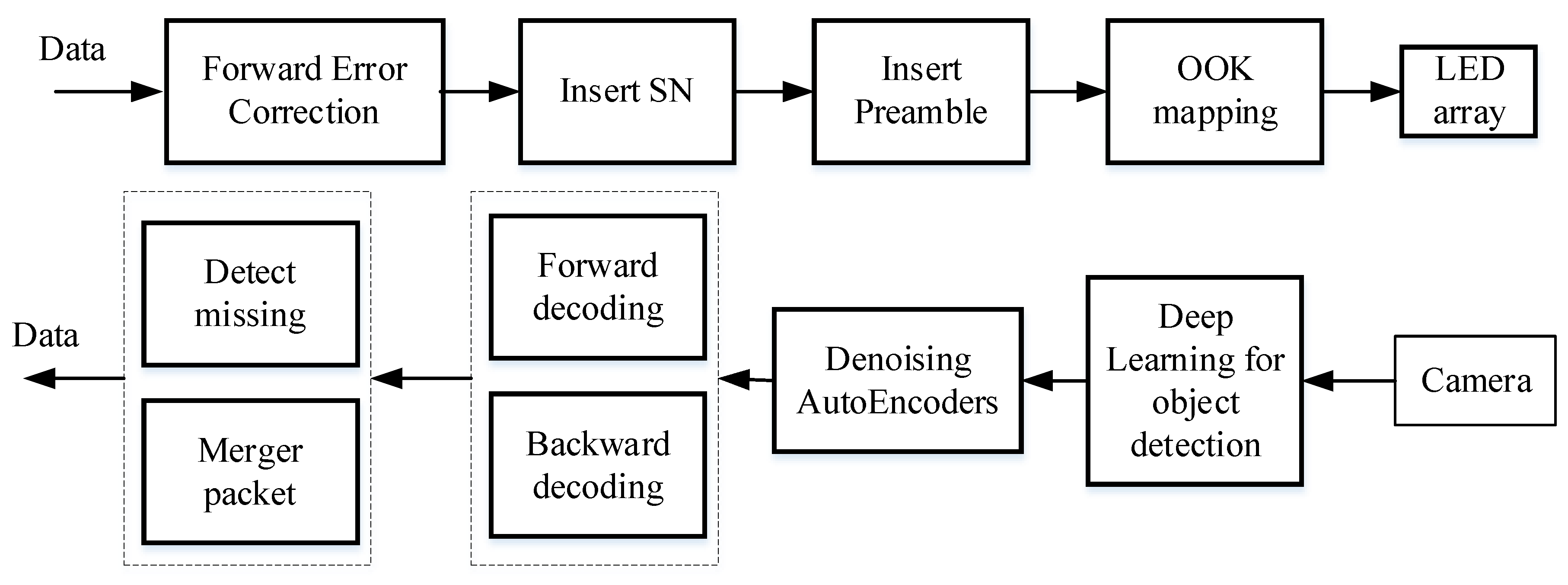
Figure 2.
Object Detection based on YOLO26n.
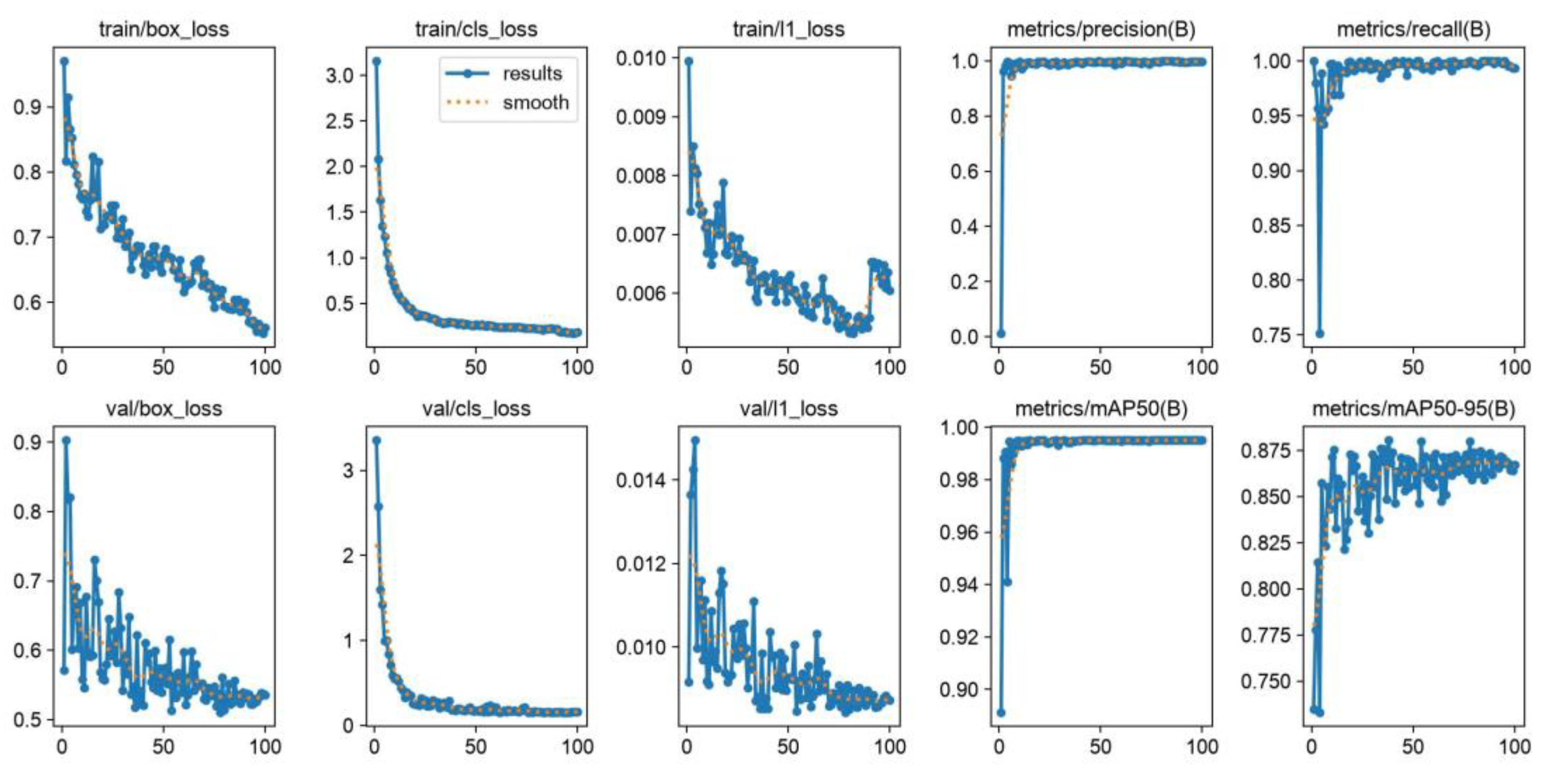
Figure 3.
C-OOK signals at long distance (a) without DAE and (b) with DAE.
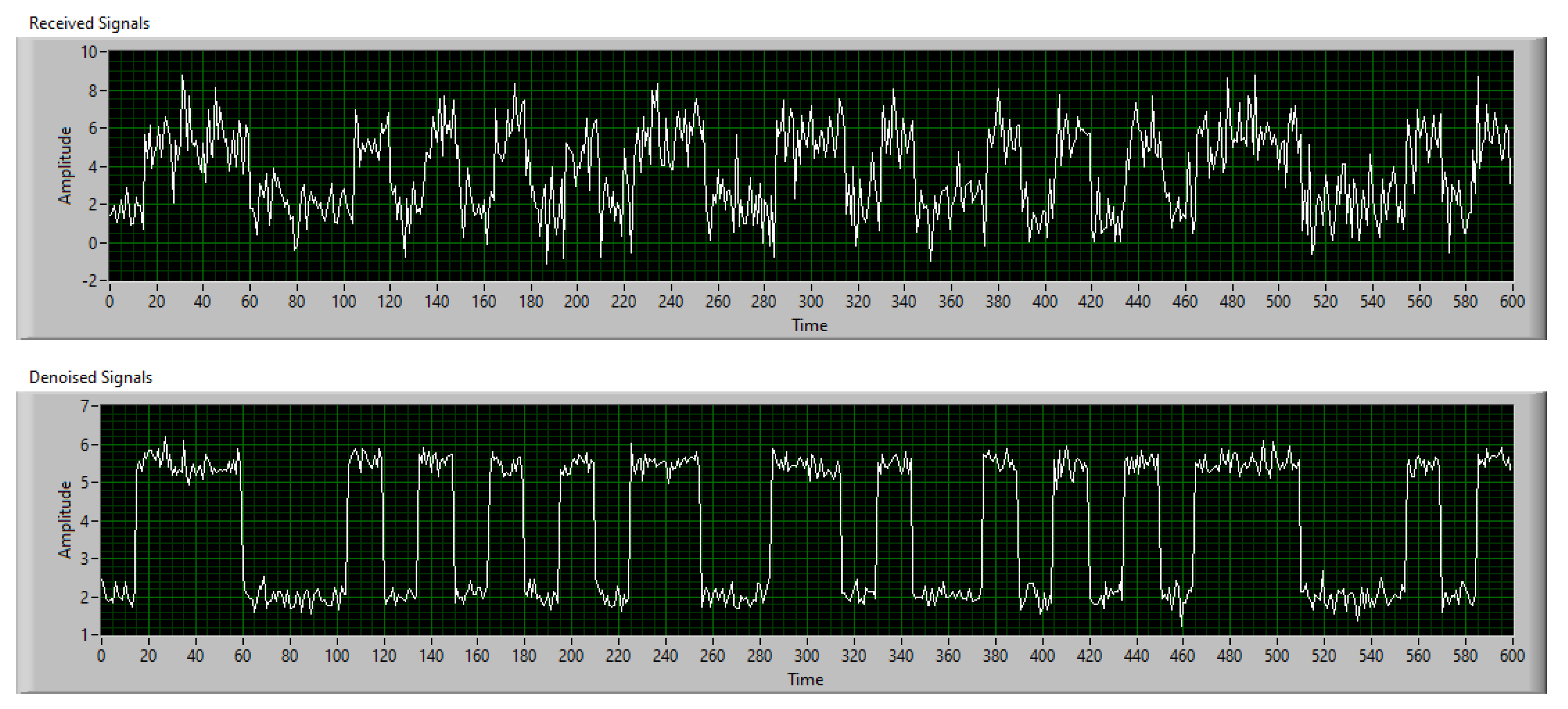
Figure 4.
Autoencoding Denoising for decoder.
Disclaimer/Publisher’s Note: The statements, opinions and data contained in all publications are solely those of the individual author(s) and contributor(s) and not of MDPI and/or the editor(s). MDPI and/or the editor(s) disclaim responsibility for any injury to people or property resulting from any ideas, methods, instructions or products referred to in the content. |
© 2026 by the authors. Licensee MDPI, Basel, Switzerland. This article is an open access article distributed under the terms and conditions of the Creative Commons Attribution (CC BY) license (http://creativecommons.org/licenses/by/4.0/).
Copyright: This open access article is published under a Creative Commons CC BY 4.0 license, which permit the free download, distribution, and reuse, provided that the author and preprint are cited in any reuse.